Spring 2024 Itinerary and Trip Notes
Overview: A three-week road trip through the best of South Africa, with roughly equal time spent in Kruger National Park, the Garden Route, and Cape Town.
Itinerary: Kruger National Park (6 days split between two safari lodges) > Garden Route (4 days) > Struisbaai (1 day) > Hermanus (1 day) > Franschhoek (2 days) > Cape Town (4 days).
Bottom Line: Our first trip to South Africa almost didn’t happen, at least by the time we finally made it. Truth be told, I was practically shamed into moving it up. Over the last several years of my professional career, I worked closely with a local South African firm on a joint venture to bring the ShotSpotter gunshot detection system to the Kruger to mitigate the poaching of rhinos, an endangered species and one of Africa’s treasures. My business partner in that venture, Ian — a man I respected and liked very much — had been pressing me for a couple years to come visit. When I mentioned that in passing to another South African I met traveling, their response was “And you haven’t gone yet!? When a South African extends such an invitation, it’s serious and very rude not to act. You must go immediately!” Properly scolded, we adjusted our travel plans and made it our next trip.
It was the best possible thing we could have done. South Africa must be the most underrated country to visit in the world. It’s certainly no secret to many Europeans who routinely escape south during the winter for the warm climate, wonderful food, natural beauty, friendly, down to earth people, and, of course, the only place on Planet Earth to see virtually all the large wild animals you would normally only see at the zoo in their natural habitat. It is, without question, a very long way from the States — almost 24 hours of flying from San Francisco — which is why we took three days in Istanbul on the way to get acclimated to the time zone before our arrival. Ian essentially created the blueprint of our itinerary for us, advising us where to go and in what order, and it was perfect — the best of South Africa.
| Days | Destination | Where We Stayed |
|---|---|---|
| Days 1-6 | Kruger National Park | See lodging details below |
There are many, many different options for experiencing a wildlife safari in and around Kruger National Park, as there are in the many famous safari hotspots throughout South Africa and other African countries. All, no doubt, have something to offer depending on your tastes and budget, i.e. comfort vs roughing it, crowds vs. exclusivity, and so forth.
So why Kruger? For us, this was easy. Not only is it one of the largest game reserves in all of Africa and home to virtually all of the large animals and birds one wants to see on safari, it is also where I had worked (albeit remotely) with local rangers on their anti-poaching efforts. Ian recommended three private game concessions, two of which were prohibitively expensive for us, and the third — Jock Safari Lodge — that fit the bill perfectly and also happened to be ground zero for the anti-poaching program. Jock’s general manager suggested we spend three days there and three days at a second lodge he recommended in another region of the park. So that is exactly what we did.
| Duration | Destination | Where We Stayed |
|---|---|---|
| 3 days | South Kruger NP | Jock Safari Lodge |
| 3 days | Central Kruger NP | Hamilton’s Tented Camp |
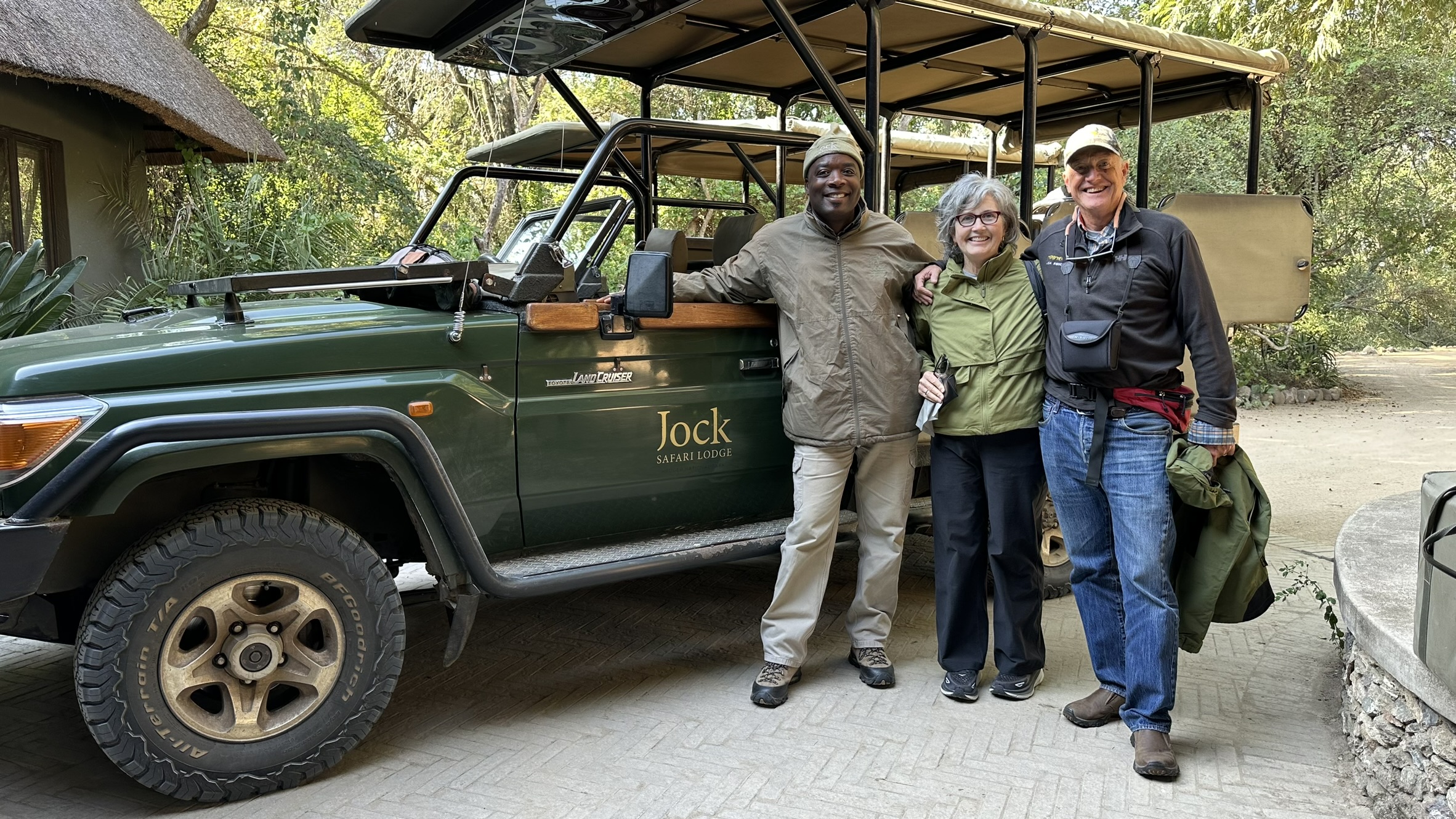
After catching a red eye from Istanbul to Johannesburg (almost 14 hours, counting the connection through Doha), we hopped the one-hour flight on Safari Air to the tiny Skukuza airport in Kruger National Park. There we were met by a guide from Jock Safari Lodge, where we would spend the next three days. Spoiler alert: this was by far my favorite of the two lodges we experienced (read my review here).
Jock Safari Lodge was the first private concession in the Kruger. It was named for the canine hero of Sir Percy Fitzpatrick’s classic tale set in the African bush, Jock of the Bushveld. Unlike many safari lodges, Jock’s main compound encompassing the lodge, suites, restaurant and bar, pool, spa and gift shop is fenced, so you can wander around safely on your own. It is a first-class operation all the way, offering two game drives a day, outstanding meals and service, sundowners in the bush, and more. Their efforts in wildlife conservation are second to none, and their specific focus on combatting rhino poaching was of special interest to me. Meeting the rangers with whom I’d only had indirect contact in years past was a real privilege.
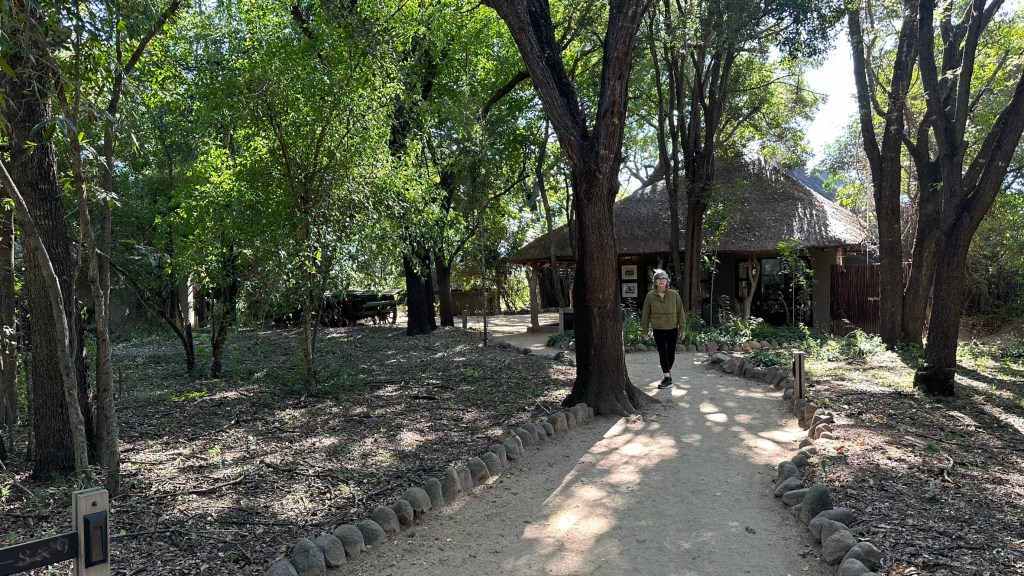
Lodge grounds 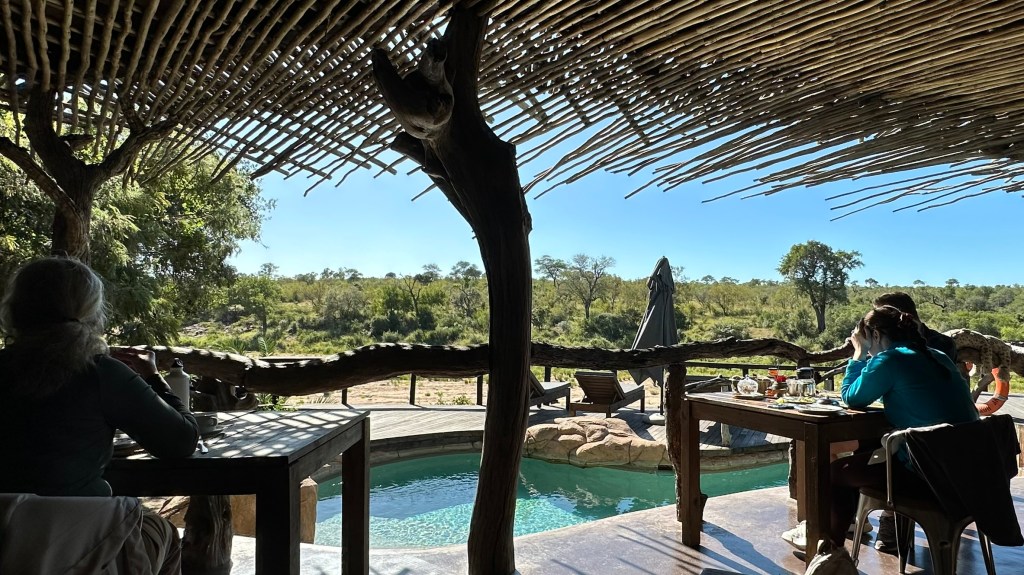
Riverside restaurant & pool 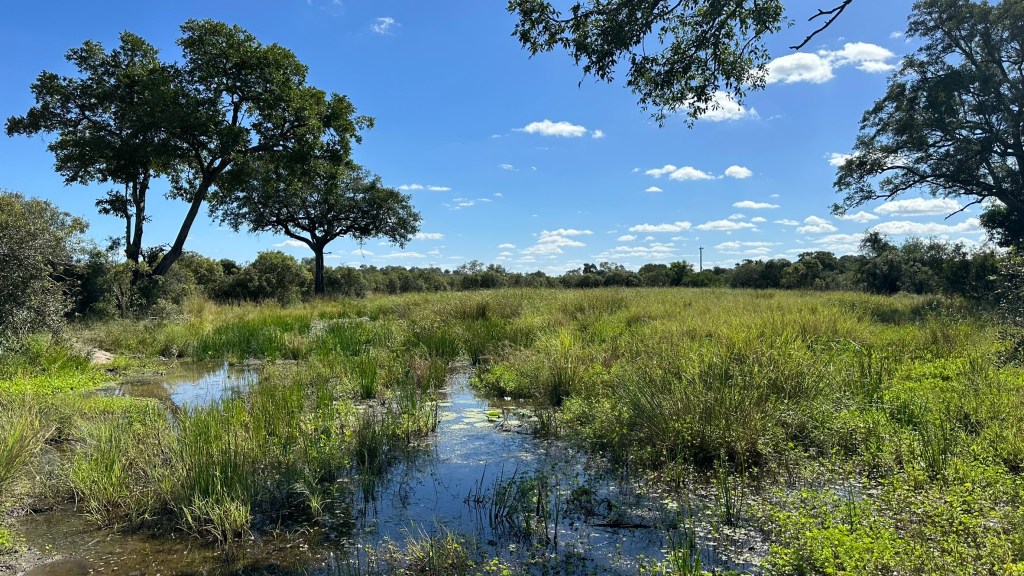
Wetlands in the bush 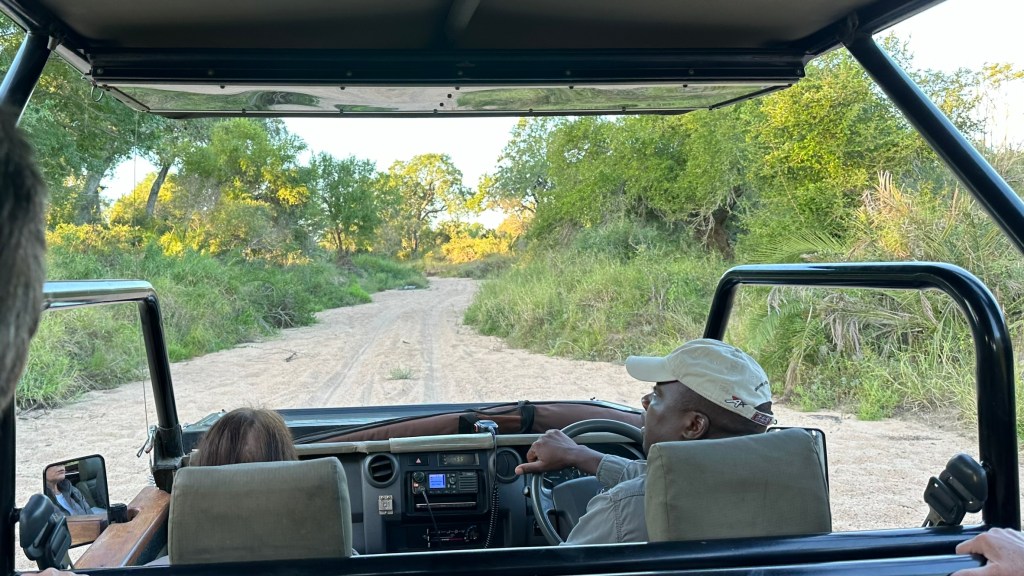
Off road safari 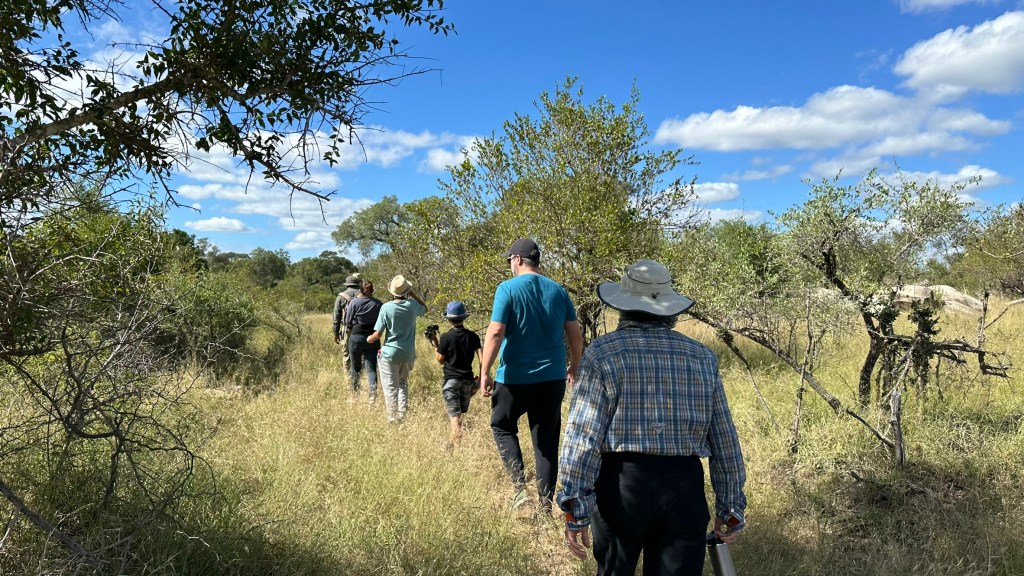
A walk in the bush. Single file in silence. 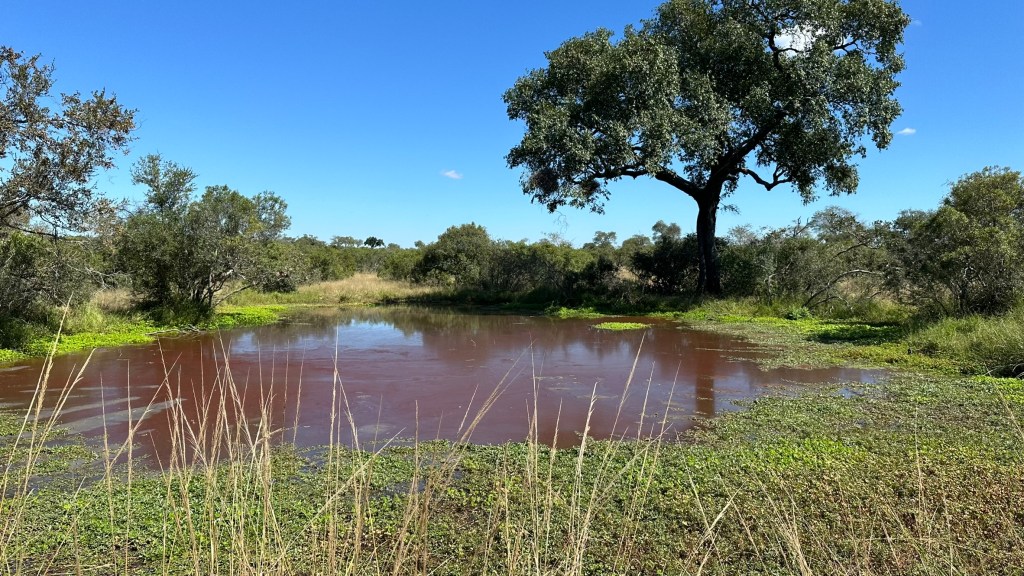
Iron rich water 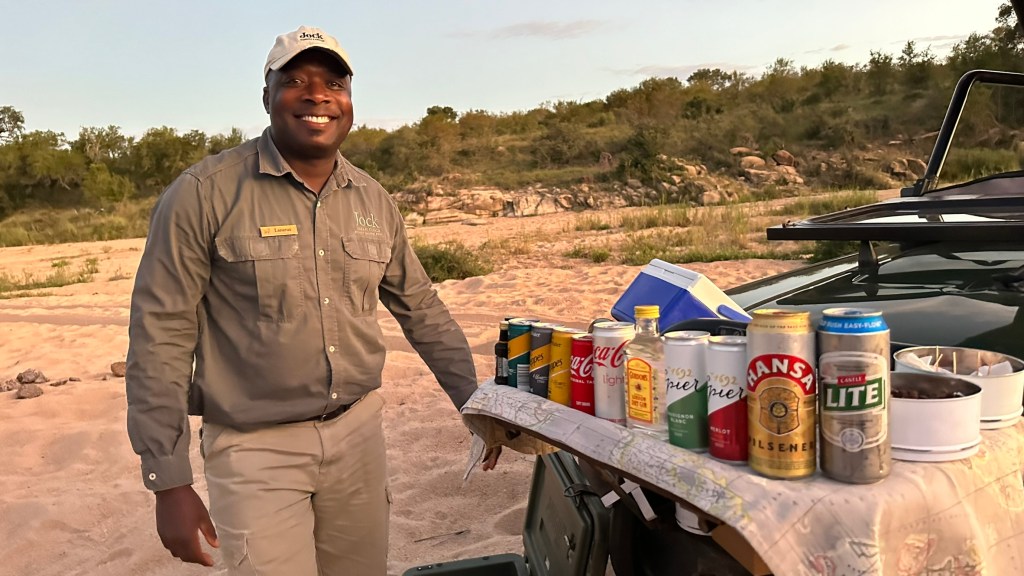
Sundowners in the bush 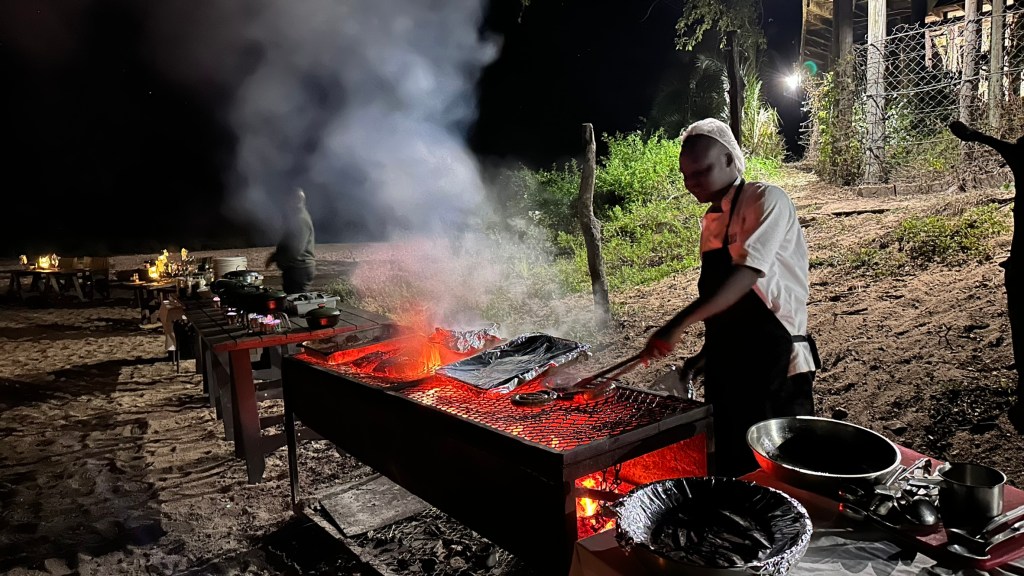
Braai on the beach 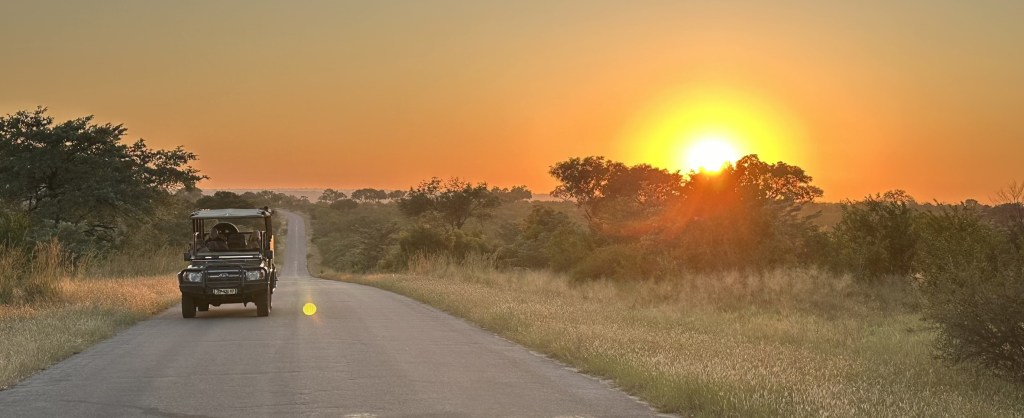
Public road beyond Jock’s property 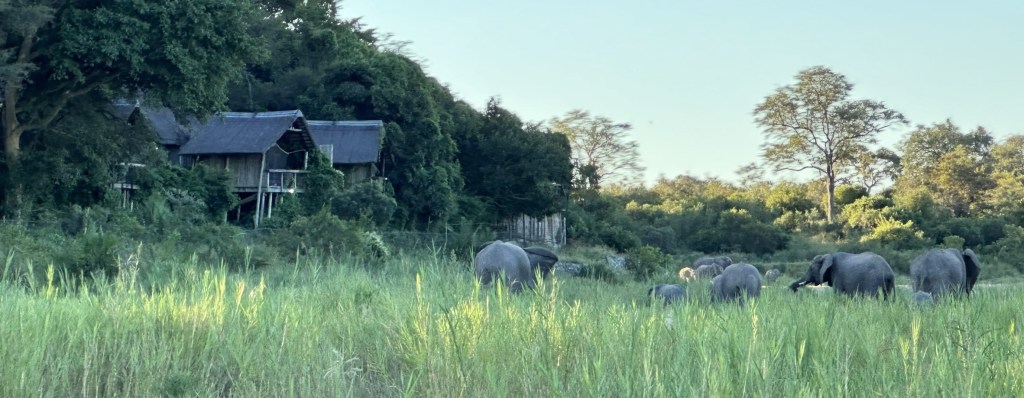
Neighbors outside Jock’s cabins
Here are some of the other interesting characters we met, including all of the Big Five. Notable observations and fun facts:
- Impala are the most populous of all the bush animals and the main diet for virtually every predator. The guides refer to the large groups of impala as “the MacDonalds of the bush”. A single ram will control a harem of 30 females or more, while the other males get none. Then they get eaten.
- The Cape Buffalo, aka the Black Death, is one the Big Five. The one pictured below is a “dugga boy”, an old male who’s been kicked out of the breeding herd by younger, stronger males. He will never mate again, which makes him permanently pissed off, and reputedly the most dangerous animal in the bush.
- White Rhino, also one of the Big 5, is an endangered species due to poaching for their horns. Rangers routinely remove all but the stumps of their horns to make them less attractive to poachers. Anti-poaching efforts are still ongoing, but the population is slowly on the rise.
- The Steenbok is the smallest of the antelope family and the only antelope that is monogamous and mates for life.
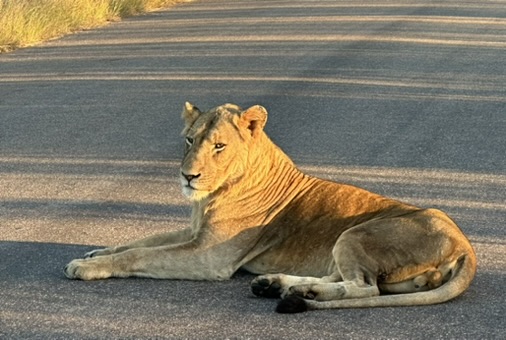
The King 
Impala 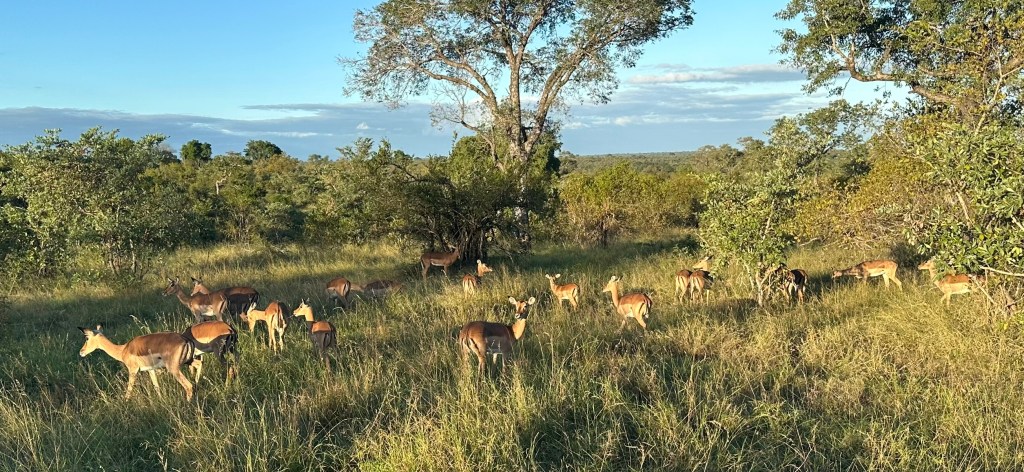
“MacDonald’s of the bush” 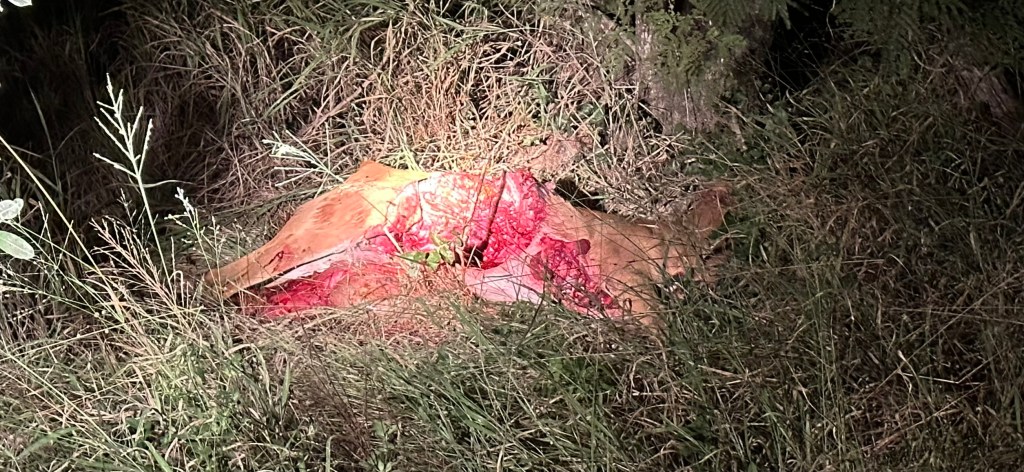
Fresh kill 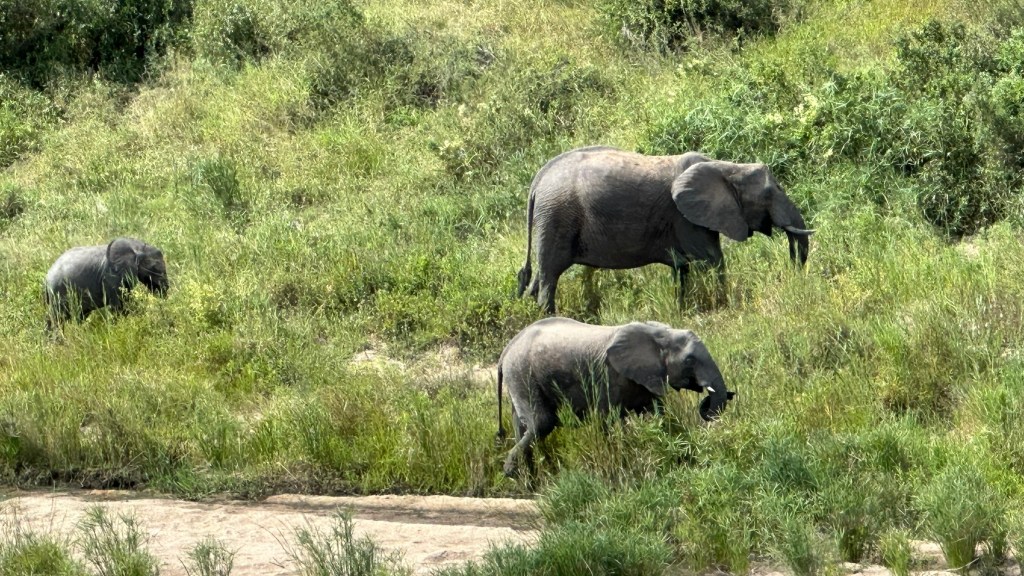
Elephants outside our deck 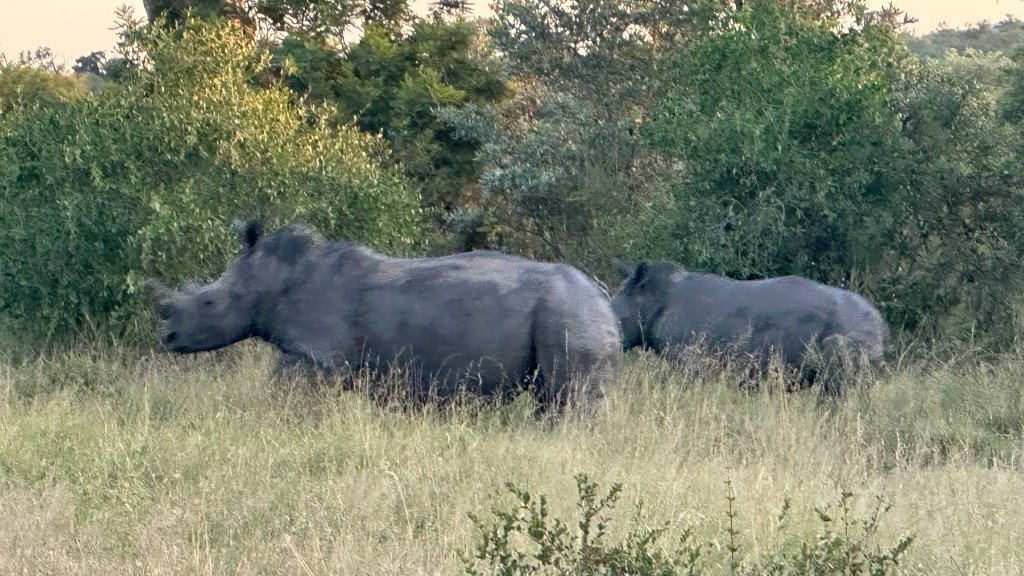
Rhino mom & baby 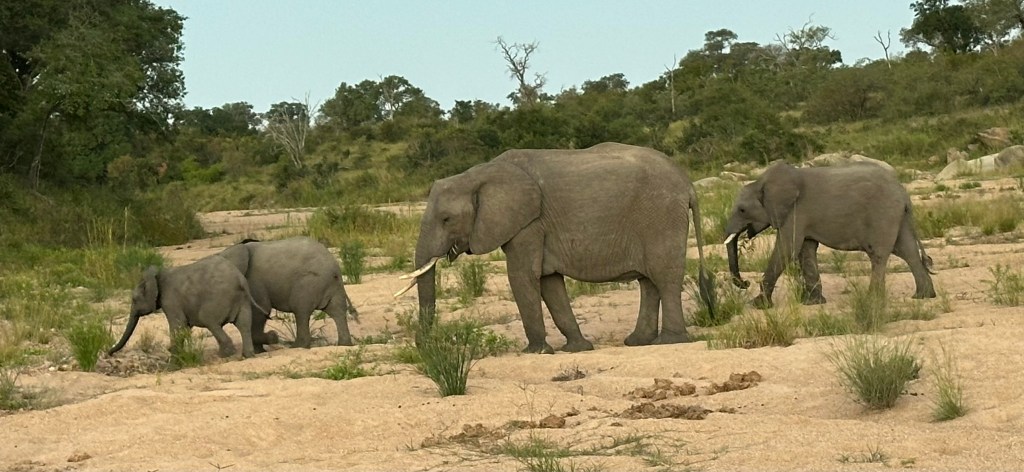
Elephants in the river 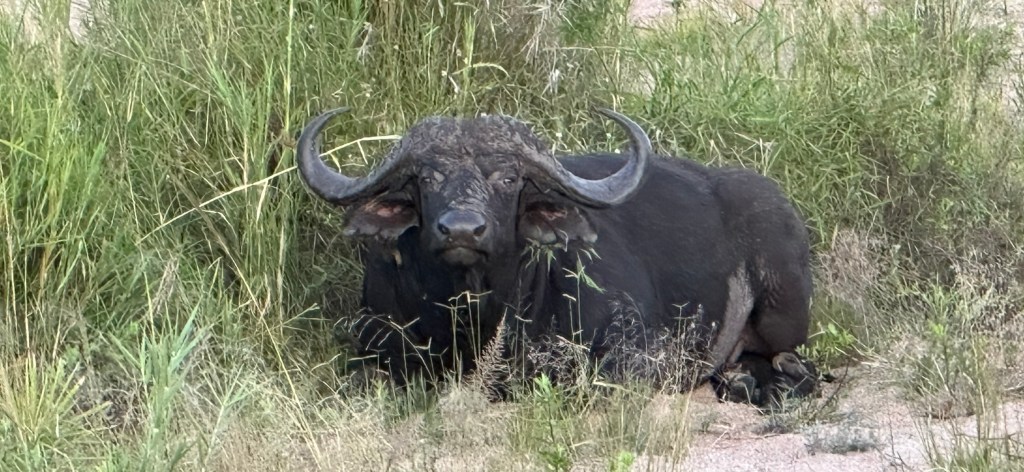
Cape Buffalo, aka Black Death 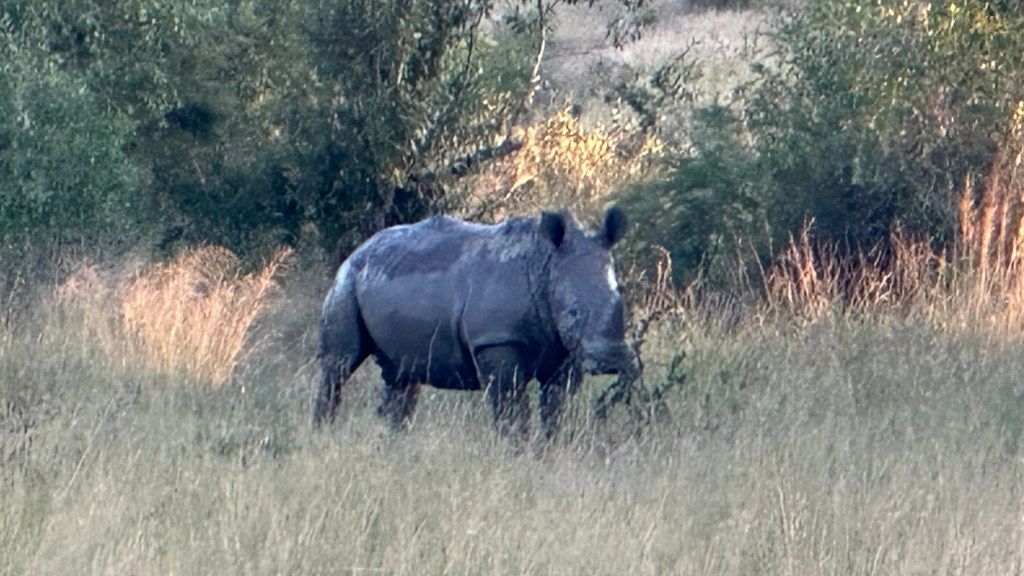
White rhino 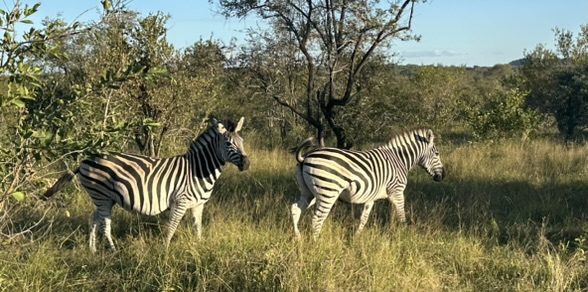
Zebra 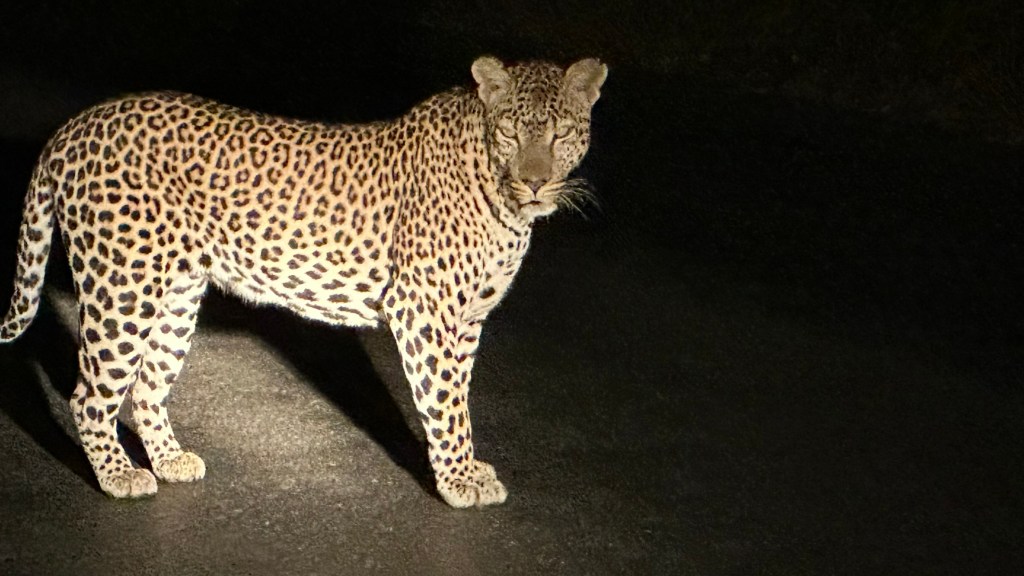
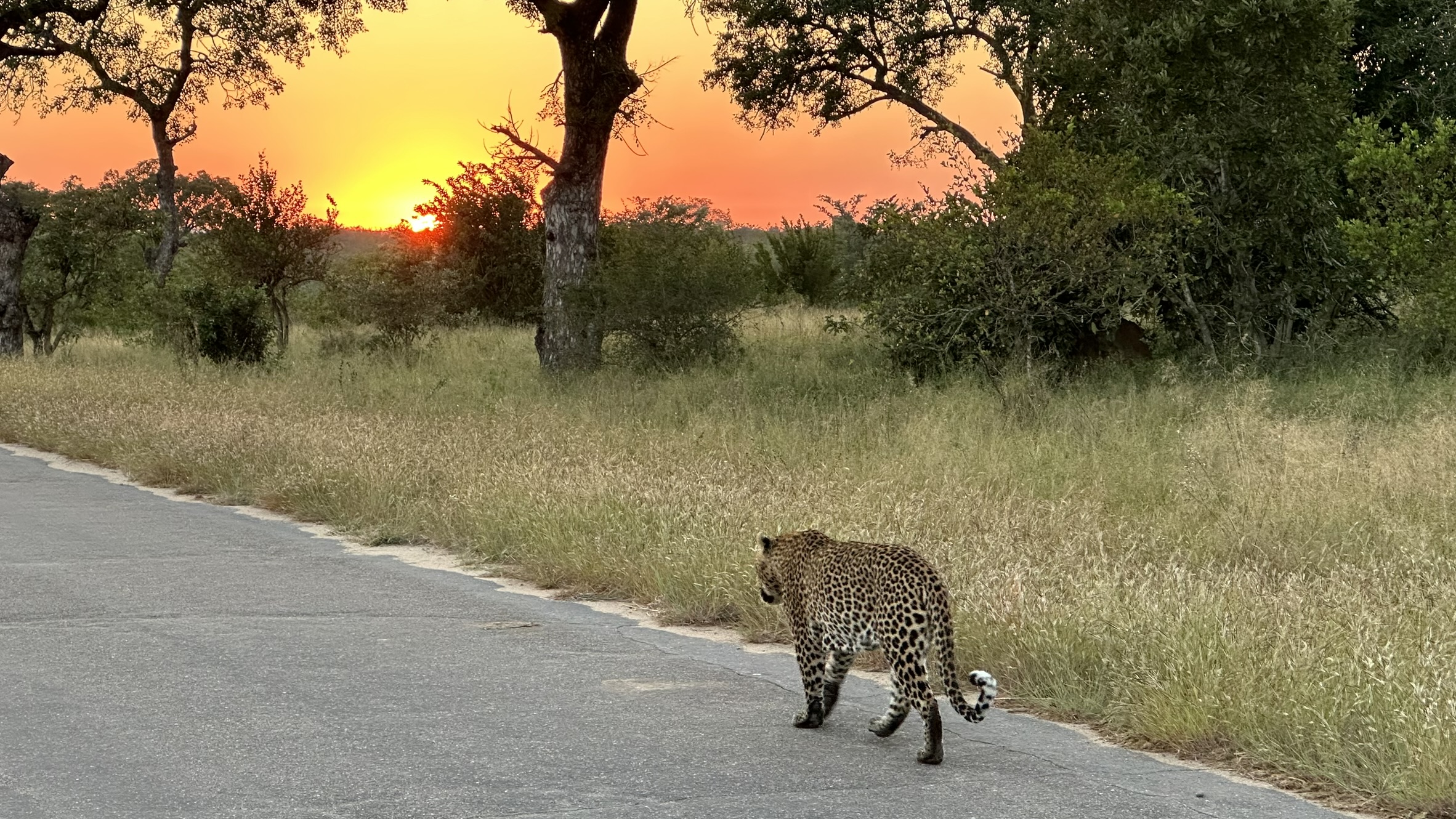
The elusive leopard 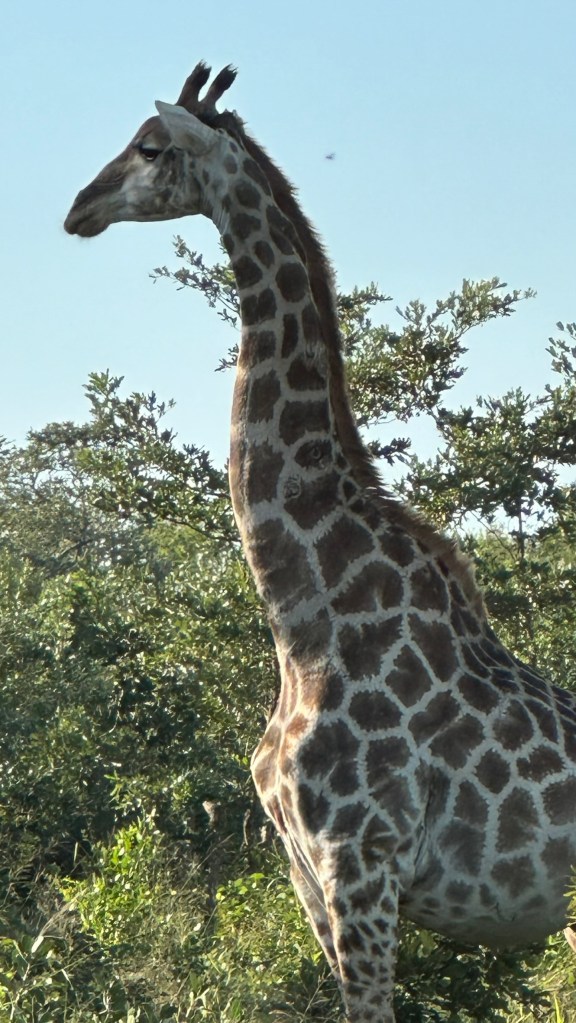
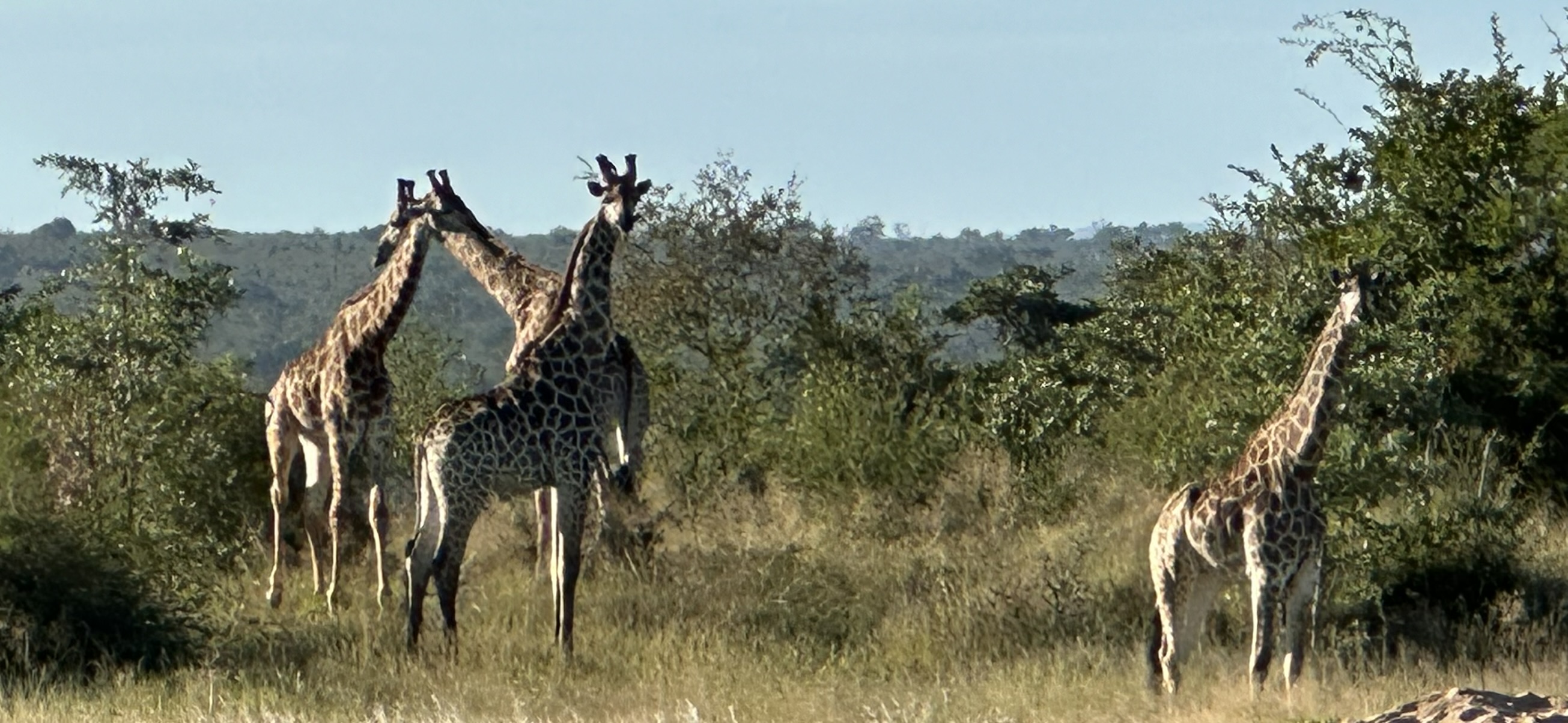
Giraffe 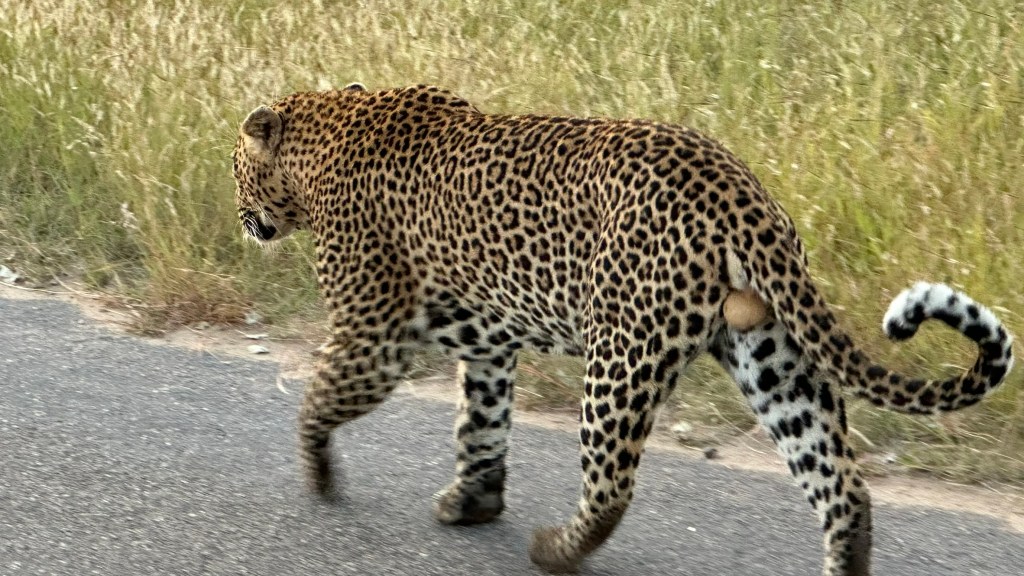
Male leopard 
It’s a cat, after all 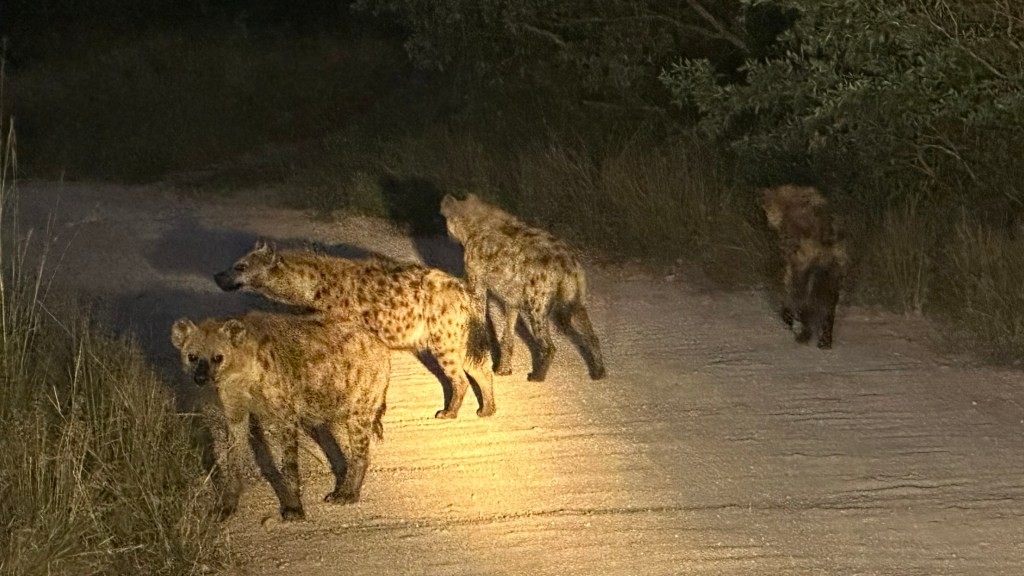
Pack of hyenas 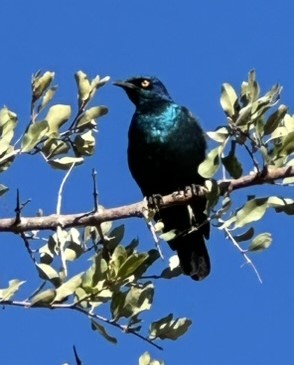
Cape Glossy Starling 
Warthog 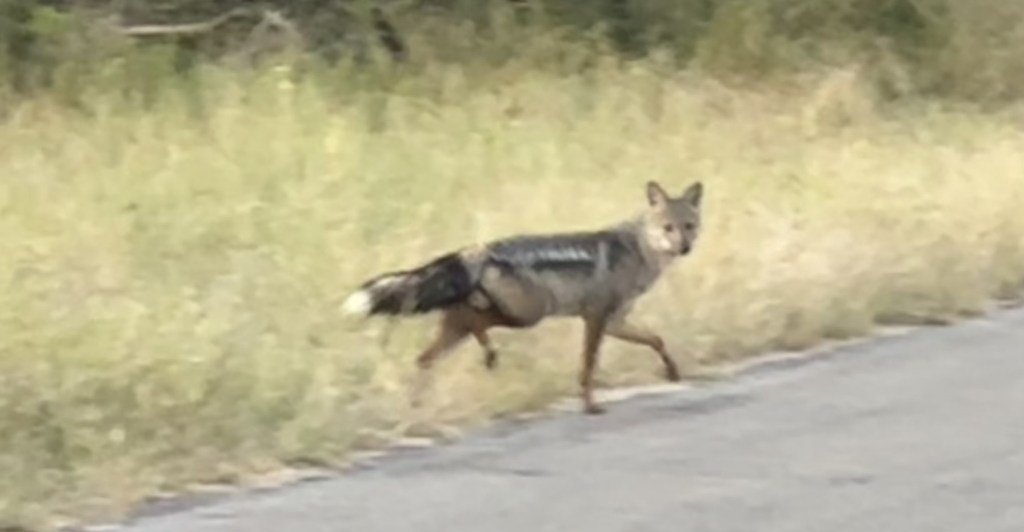
The jackal 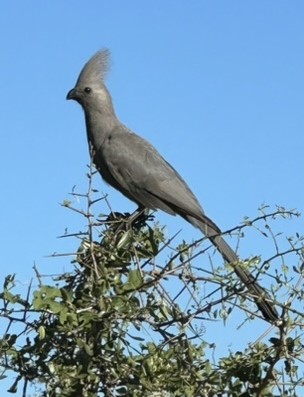
Grey Lourie, aka “Go Away Bird” 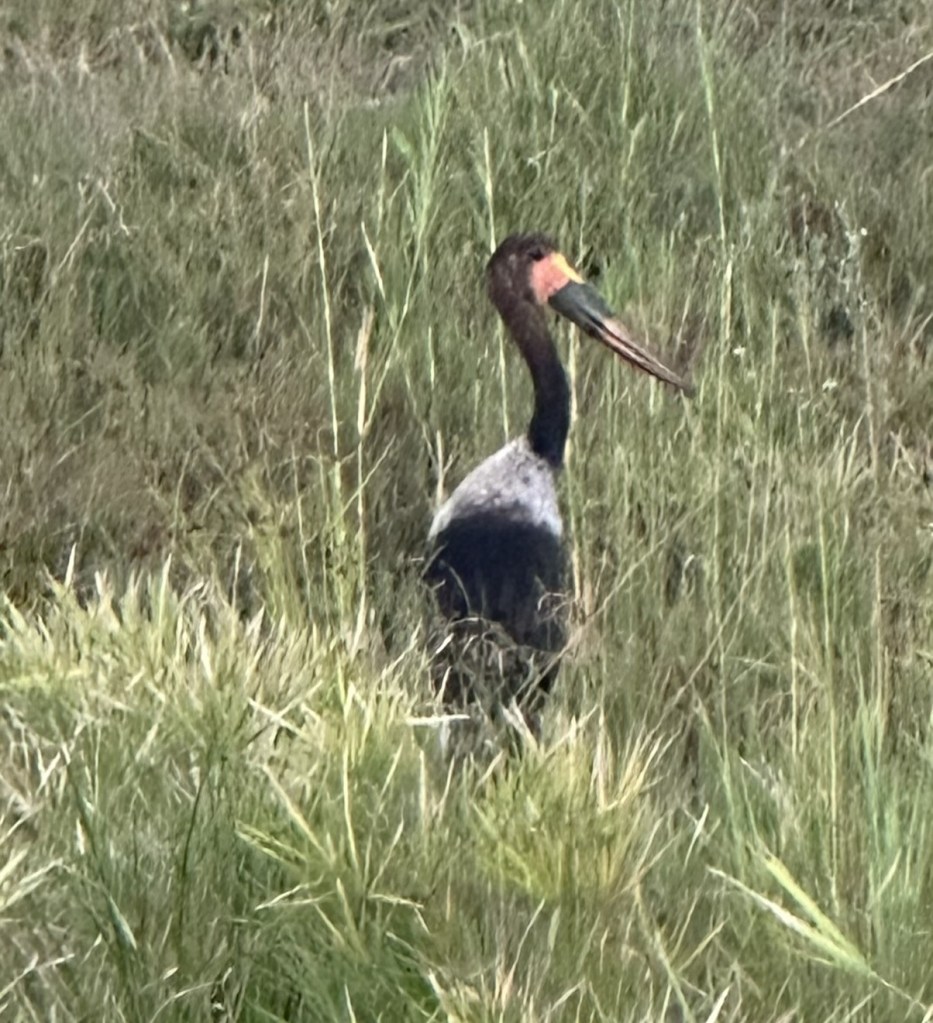
Saddle-billed Stork, 5′ tall 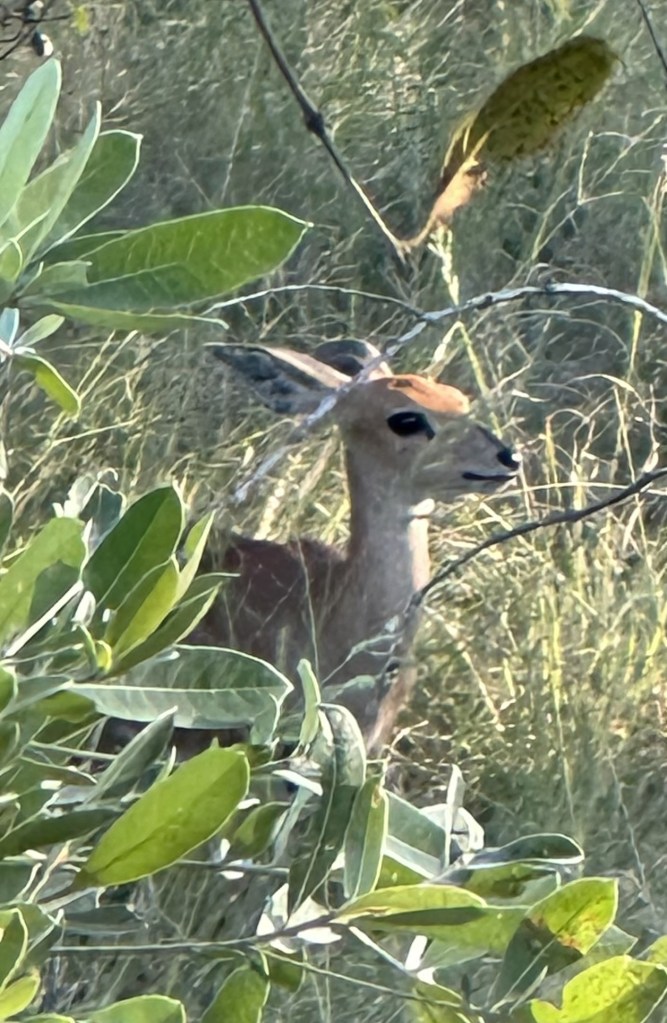
Steenbock 
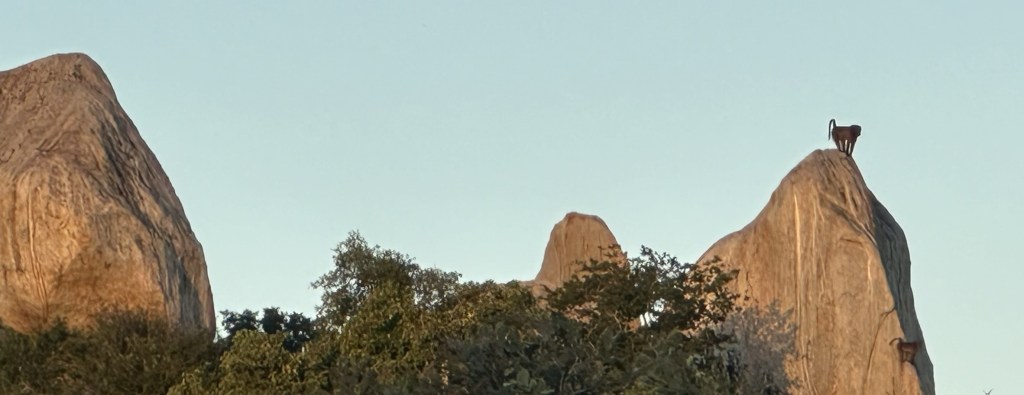
Baboon
For our last three days in the Kruger, we chose Hamiltons Tented Camp, a very different experience than Jock with a more open landscape, a couple different animal sightings — the only place we saw a cheetah, for example — and a small but beautiful lodge. The lodge itself was very luxurious and service was excellent and attentive, though not being fenced guests were not allowed to wander about without an escort after dark. All the game drives were limited to public roads as well, which was a bit disappointing after our excellent experience at Jock. Here’s my TripAdvisor review.
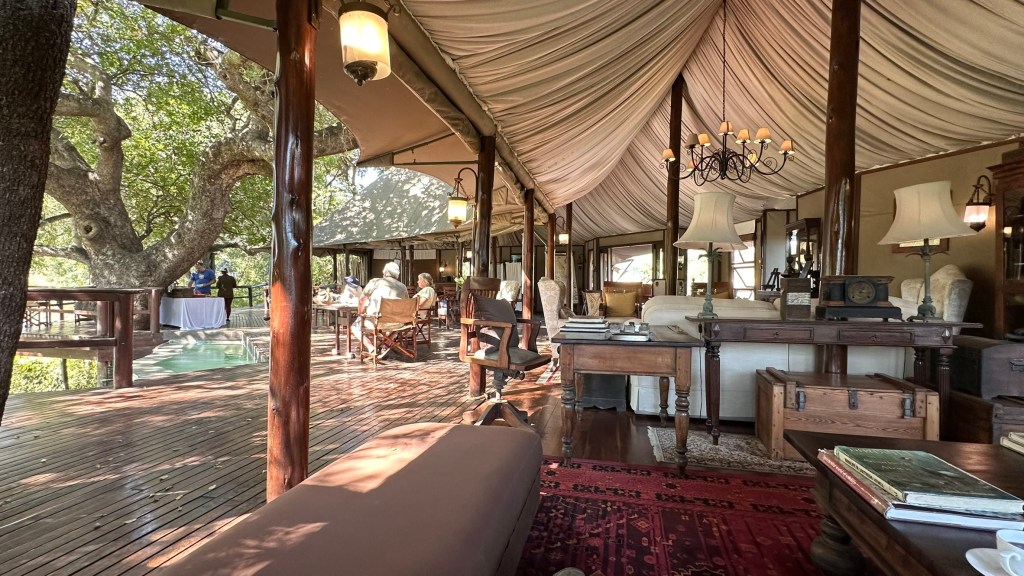
Hamilton’s Tented Camp 
Deck overlooking the river 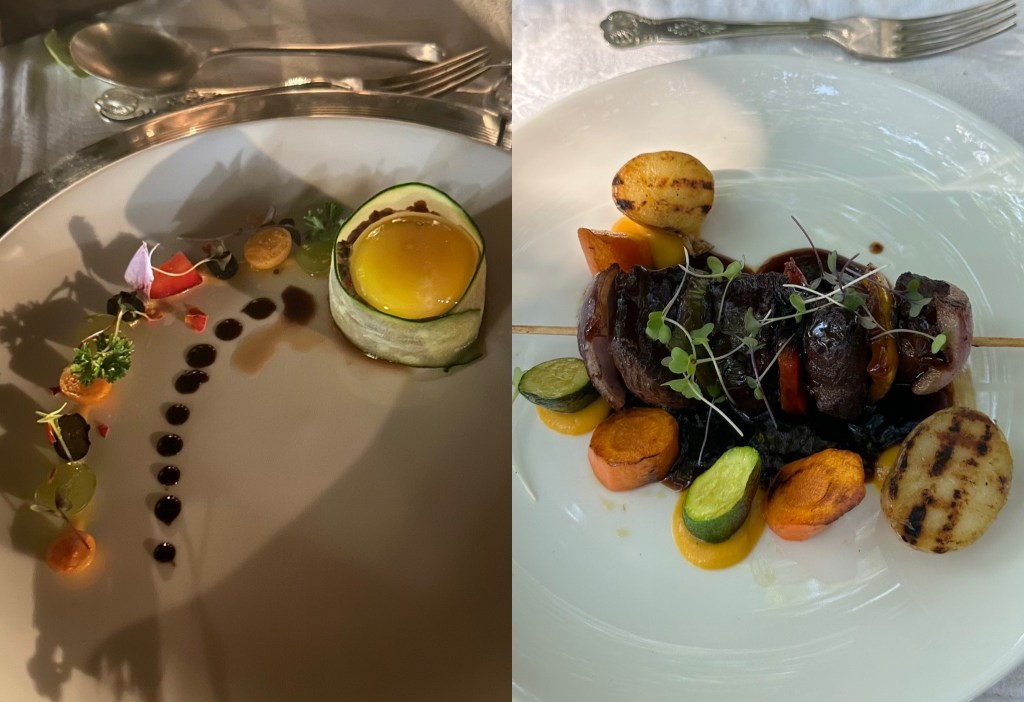
Fine dining, including ostrich steak 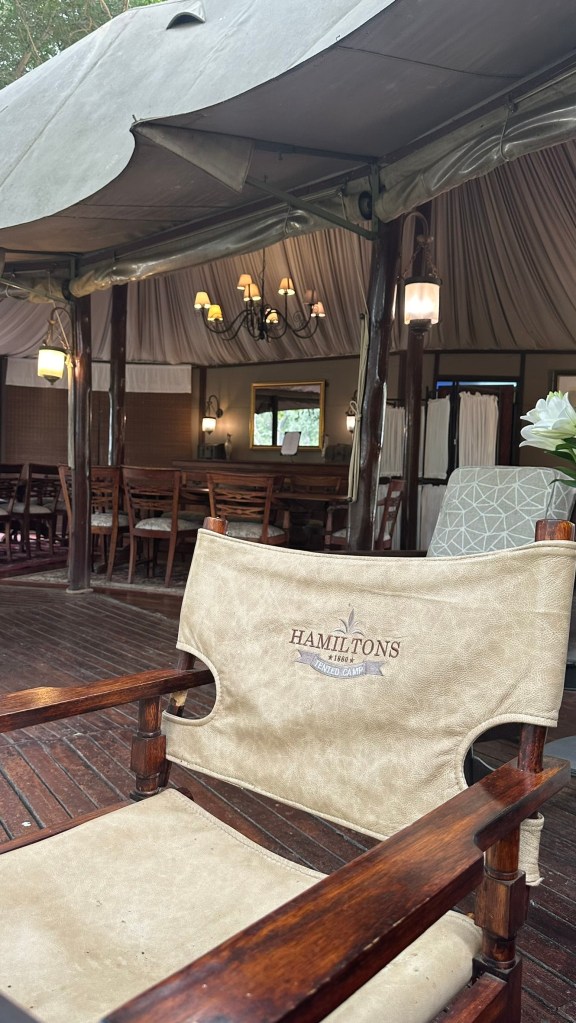

Hippos just off the deck 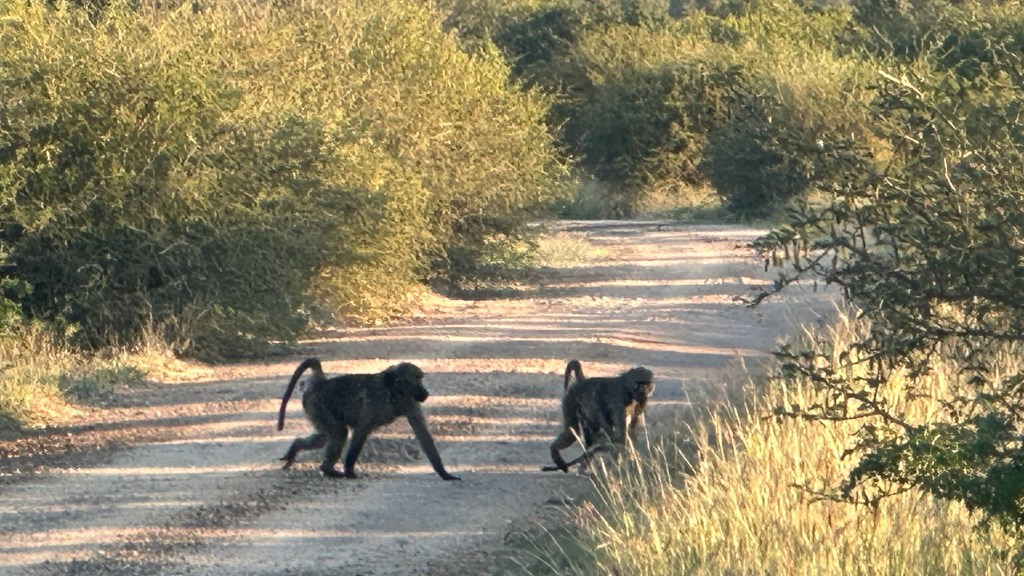
Baboon crossing 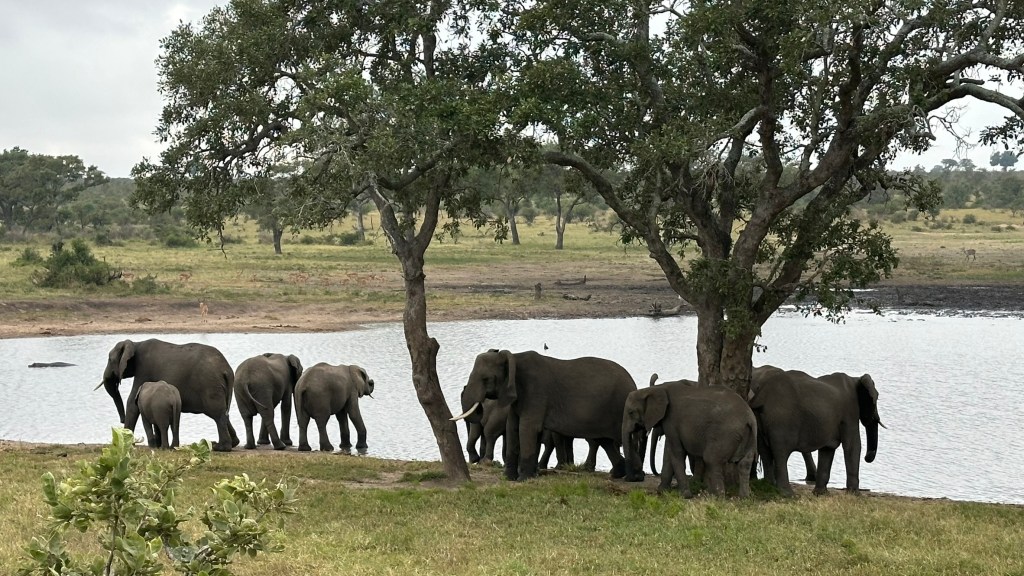
Lots of elephants 
Hitching a ride 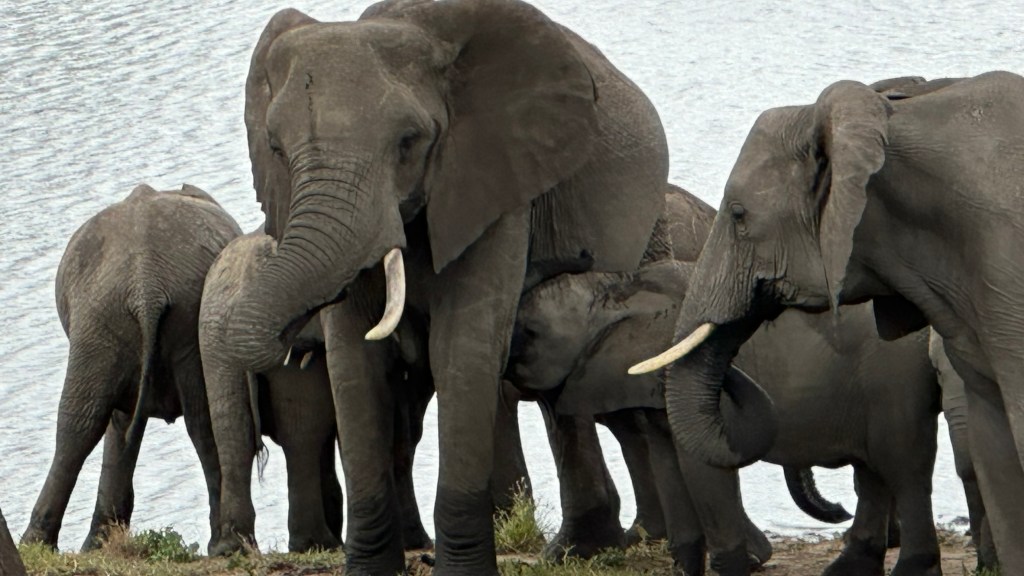
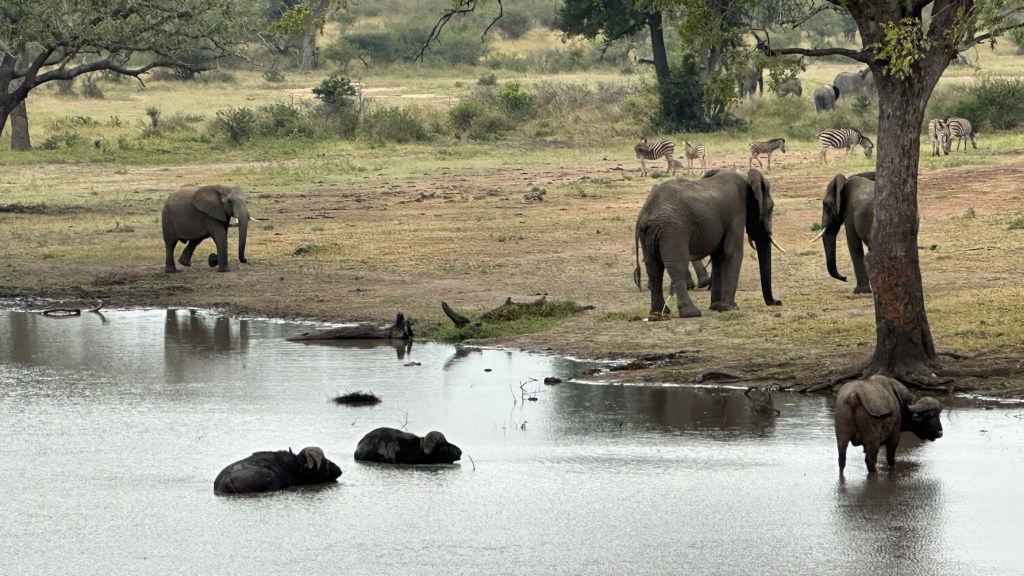
Elephants, Hippo and Cape Buffalo 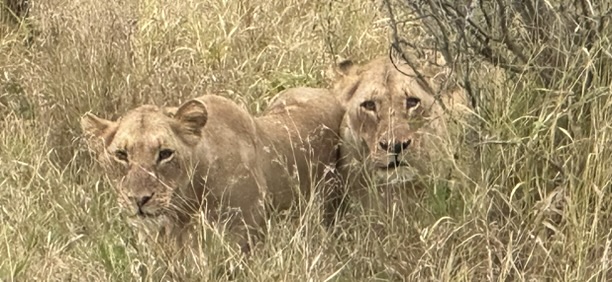
Two lionesses on the hunt 
Kudus, a large type of antelope 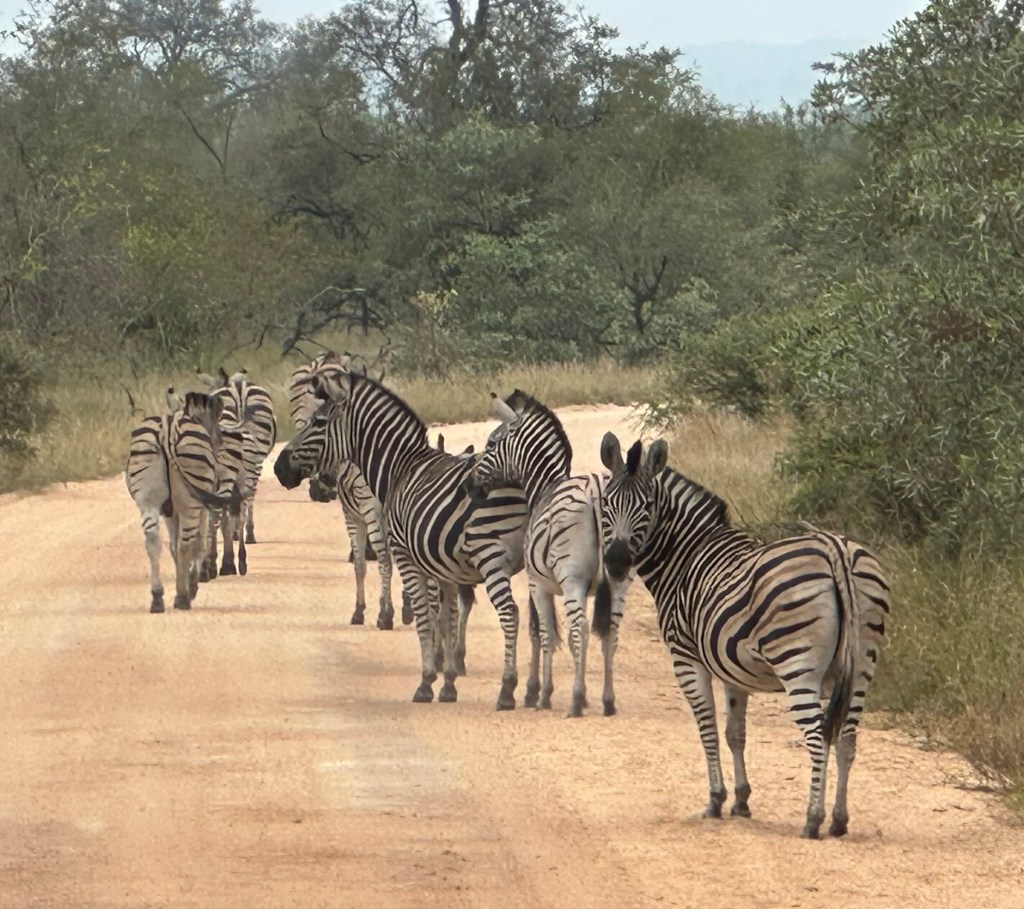
Lots of zebras 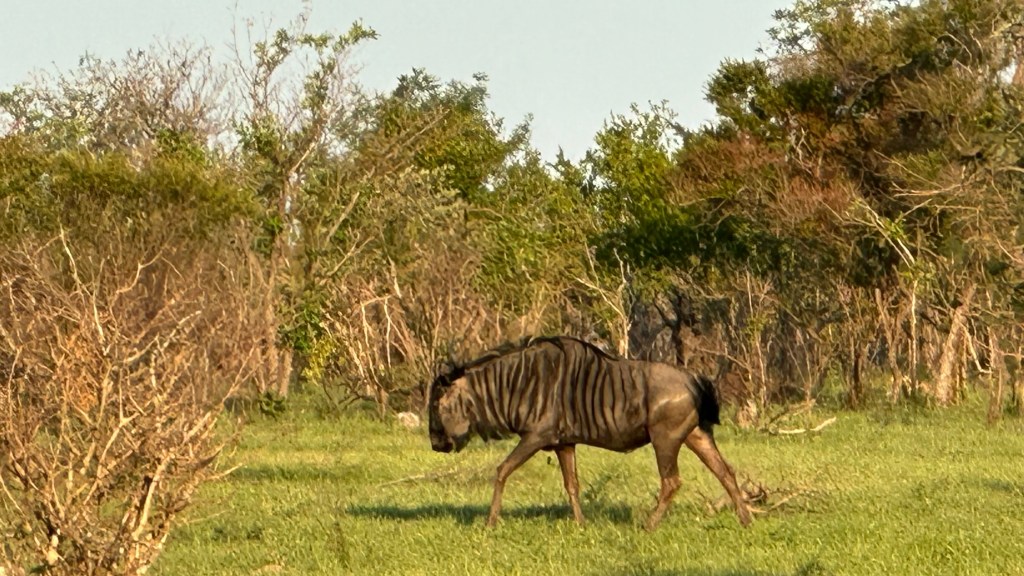
Wildebeest 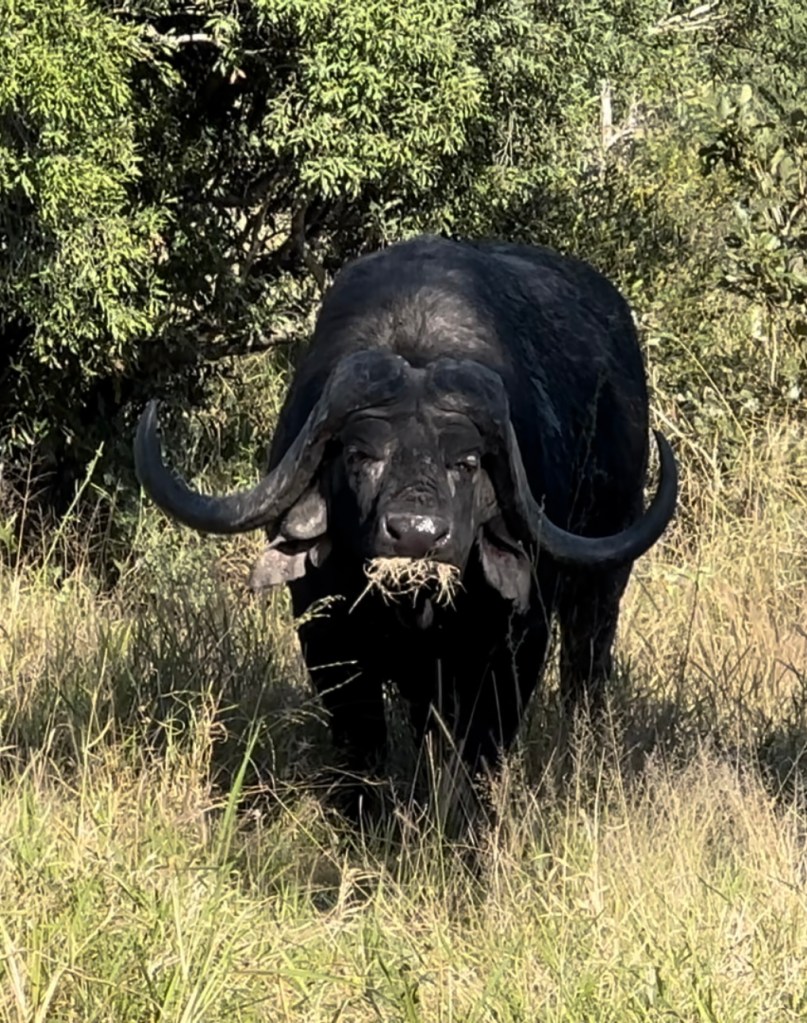
Cape Buffalo 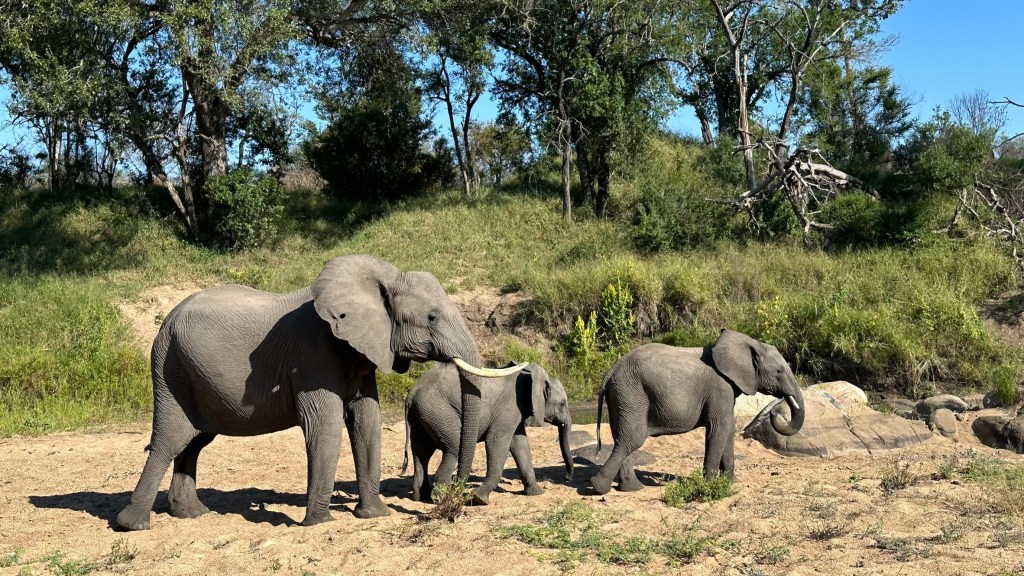
Elephant family 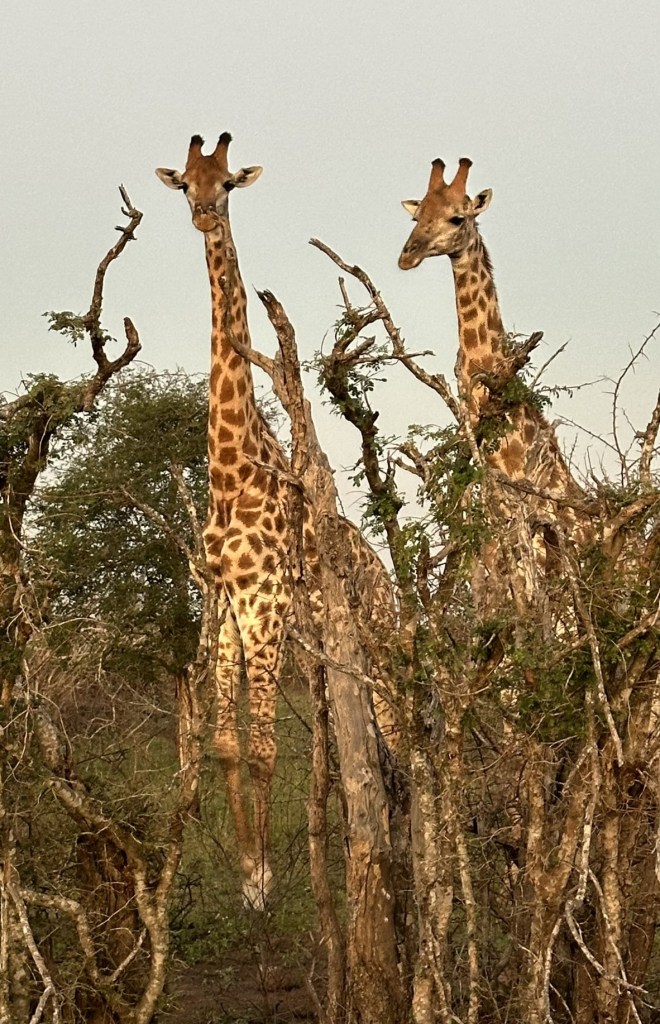
Lots of giraffes 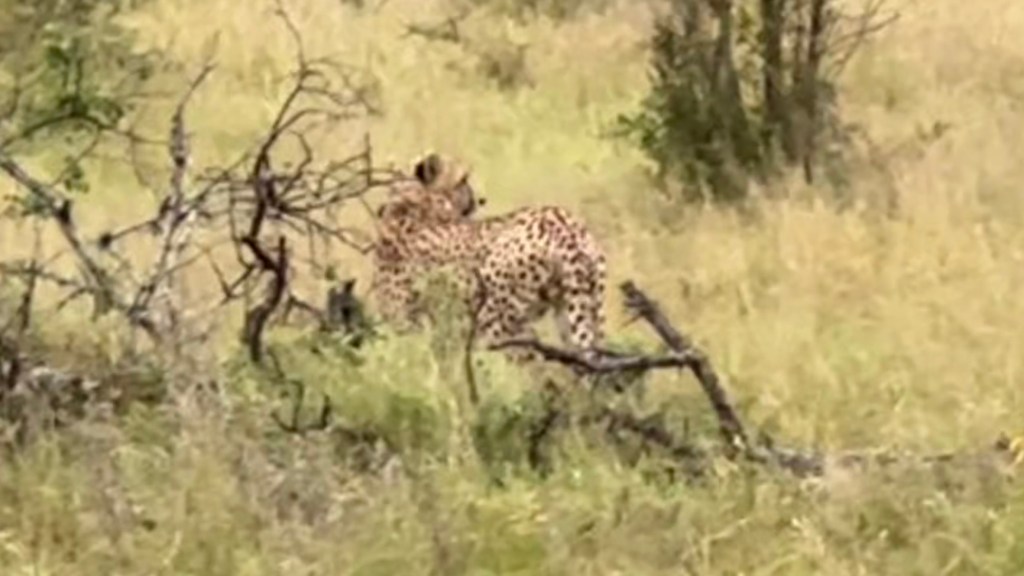
Rare cheetah sighting 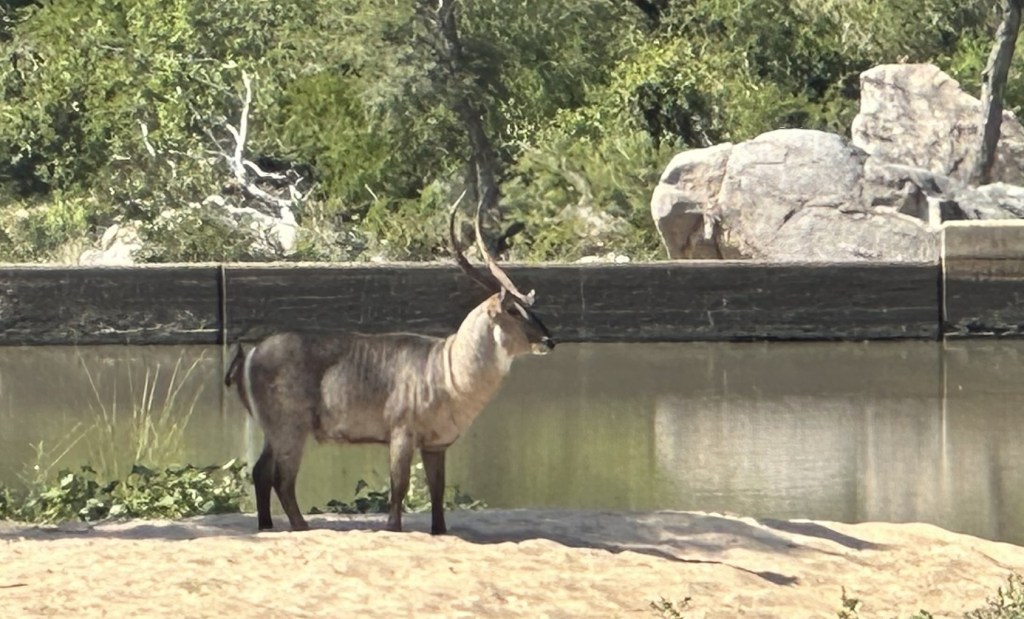
Water Buck 
Cuckoo bird 
Gecko 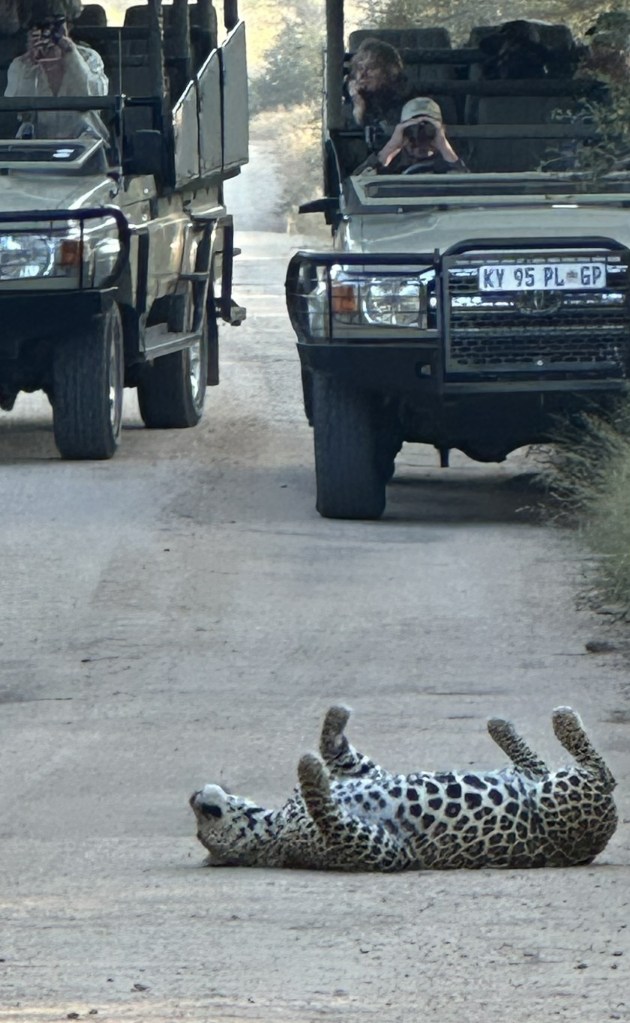
Leopard getting a stretch 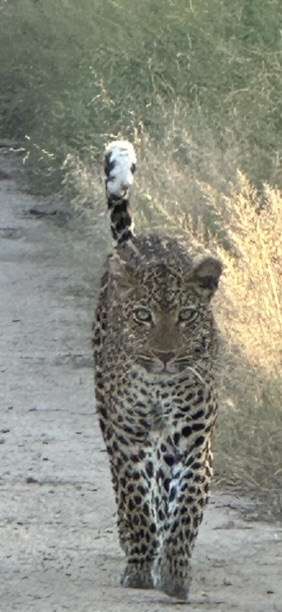
Look at those eyes! 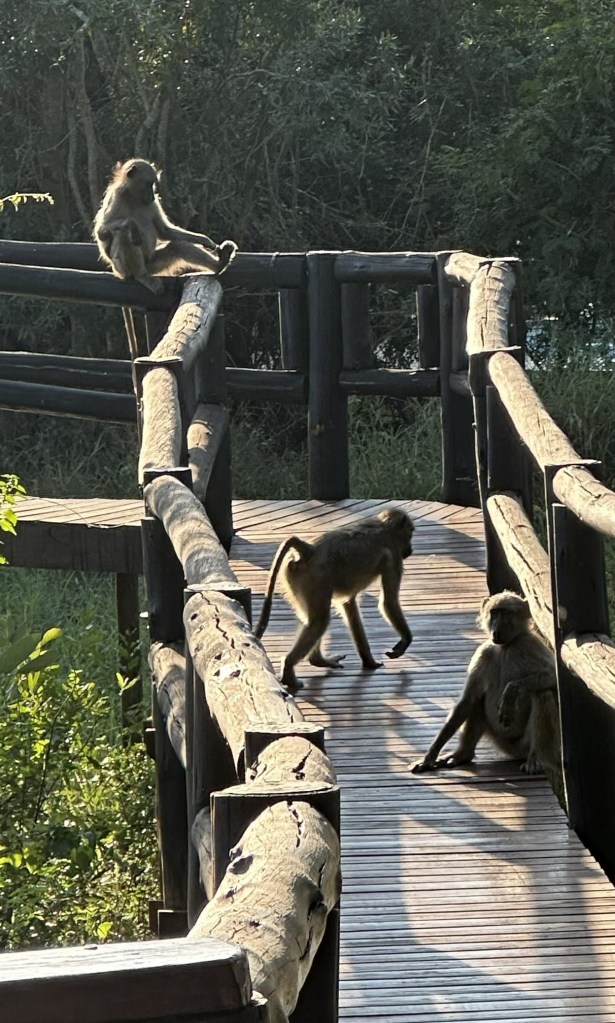
Monkeys at the lodge 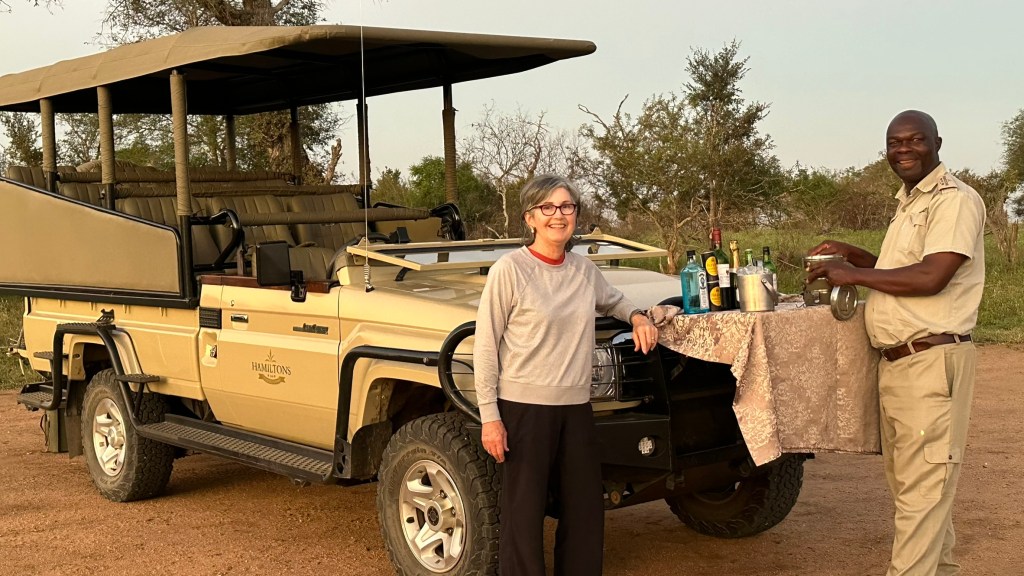
Sundowners 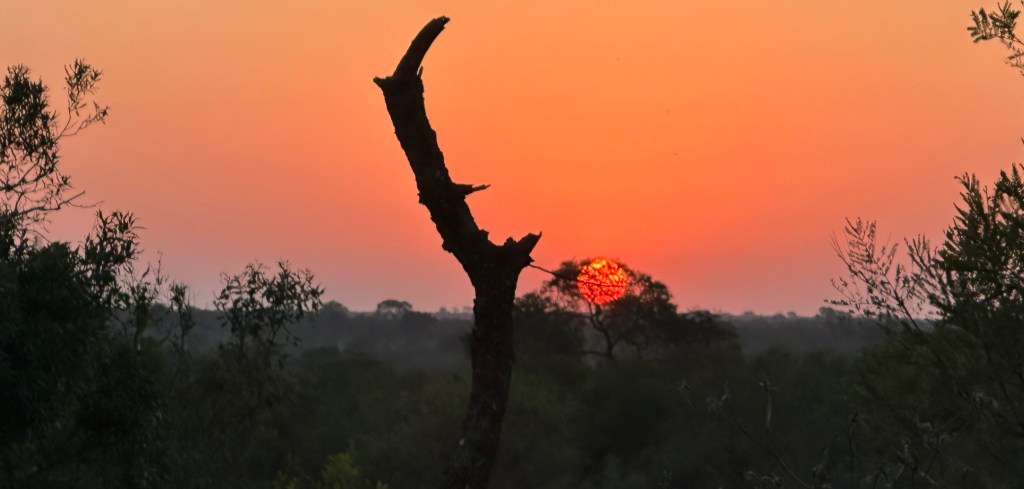
African sunset
After six days and 12 game drives, we felt both fortunate and elated to have just about seen it all… we missed only the wild dogs, which are now increasingly scarce.
| Days 7-10 | Garden Route | See lodging details below |
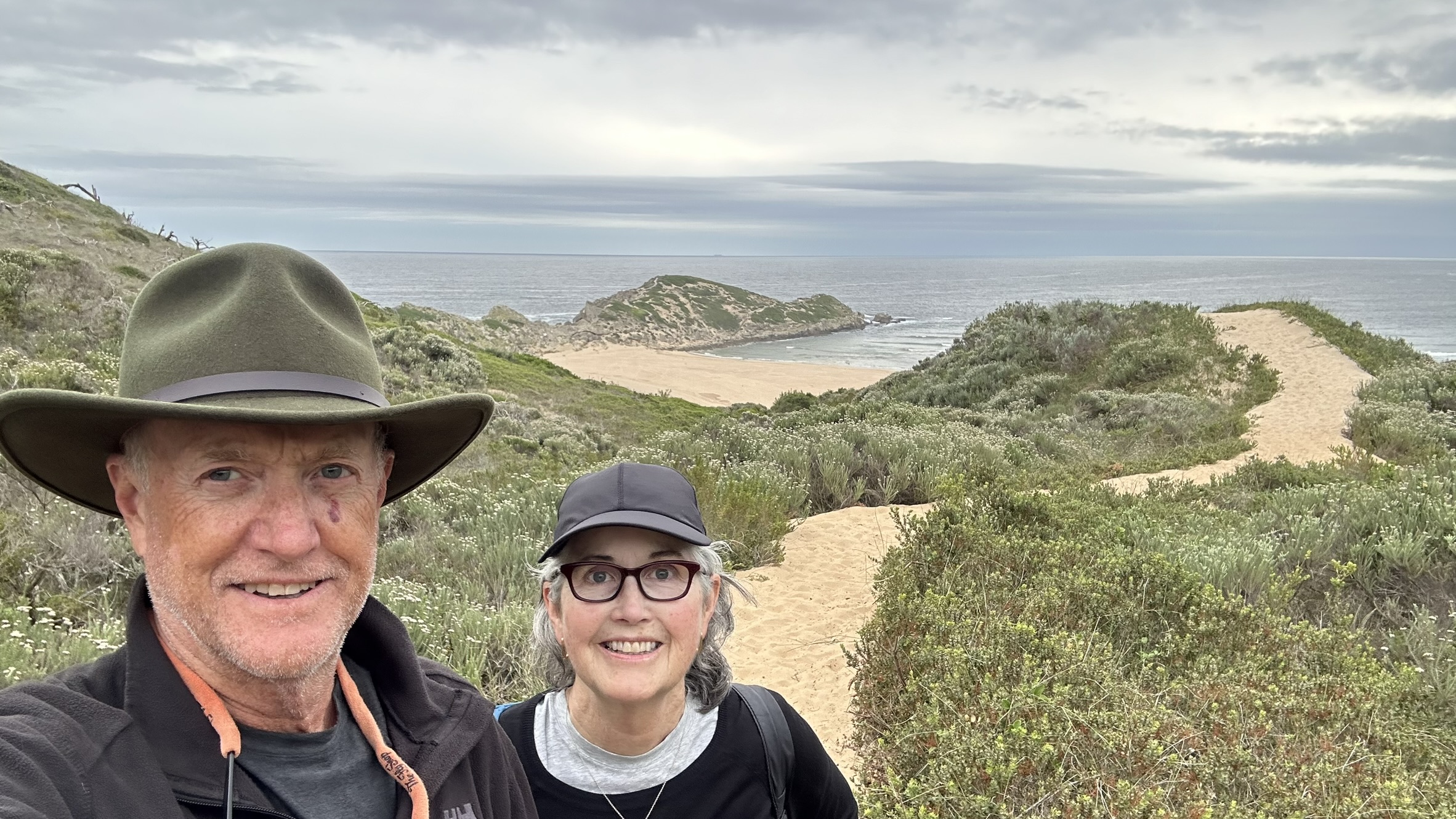
Following our six-day safari adventure, we switched it up for a completely different perspective of South Africa, flying two hours south to the seaside town of George along South Africa’s southern coast. This was where we started our four-day road trip along the Garden Route, a 190-mile stretch of coastline framed by the Indian ocean and wild, rugged coastline (more than a little reminiscent of California’s Big Sur), and lush, densely forested mountains rising seemingly straight from the sea, and lots of small, idyllic towns.
We spent our first night in Wilderness, a cool, laidback beach town with a distinct hippie/surfer vibe just outside George before driving to the eastern end of the Route and slowly working our way back, spending two more nights based in a treetop lodge in the middle of the forest between Nature’s Valley and Plettenberg Bay, and one night in Knysna, a quaint town at the head of a huge coastal lagoon. If you’re heading this way, give the Garden Route at least a week; I wish we’d had more time to explore this beautiful region.
| Duration | Destination | Where We Stayed |
|---|---|---|
| 1 day | Wilderness | Haus am Strand |
| 2 days | Nature’s Valley | Trogon House & Forest Spa |
| 1 day | Knysna | Villa Afrikana |
It was something of a long travel day getting out of the Kruger, connecting through Johannesburg and making it to George just before sunset. We picked up a rental car and headed straight to Haus am Strand, a bright yellow house with lovely gardens above a beautiful beach just 15 minutes from the airport. We didn’t want a long drive given our late arrival, and this fit the bill perfectly. We only stayed the night and the next morning before hitting the road, but this place was definitely worth two or three days. Highlights:
- Haus am Strand was super cute, comfortable and perfectly situated an easy 10-minute walk from town. You can walk the long beach straight from the backyard. Read my review here.
- Dinner at Ilali, an Italian restaurant in town, was really good.
- Green Shed Roasters has the best coffee in Wilderness and was an awesome, funky hangout in its own right. Perfect place to start the day.
With more time, enticing activities include hiking in the Wilderness section of Garden Route National Park, especially the moderately challenging Giant Kingfisher trail leading to a waterfall, kayaking the Kaaimans River, or hiking to the Map of Africa, a landmark with panoramic views over peaks and the river valley.
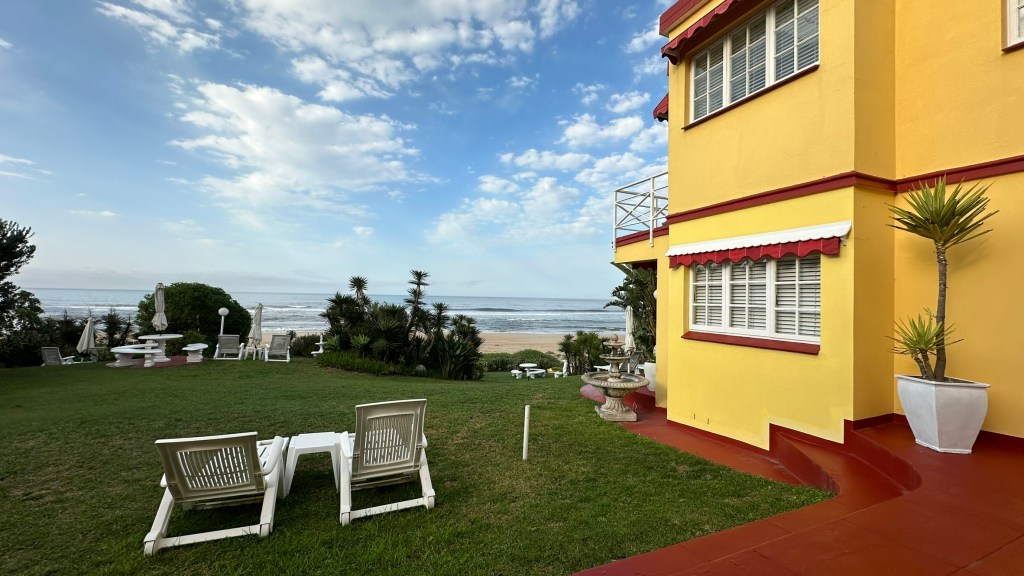
Haus Am Strand 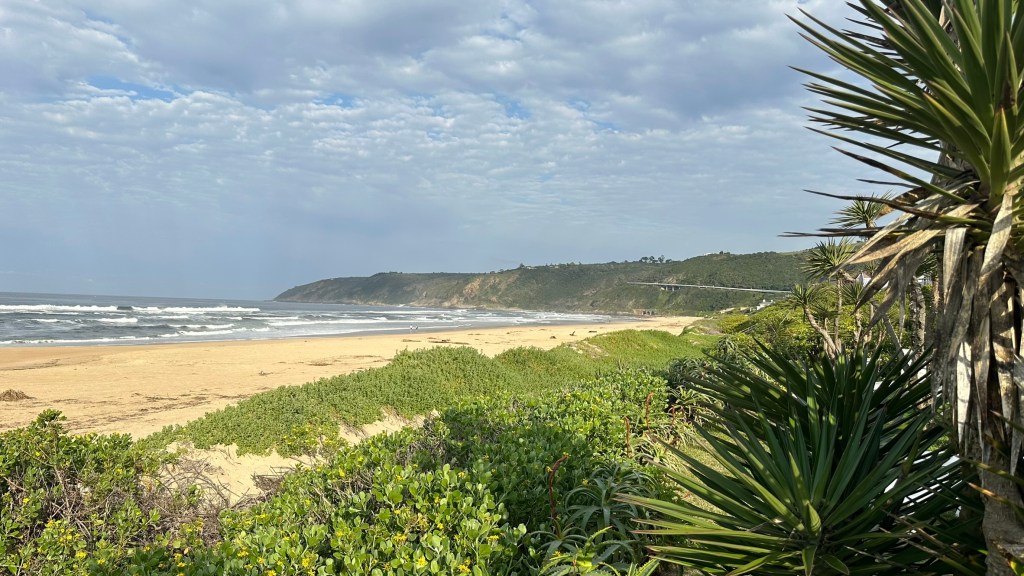
Wilderness Beach from the back lawn 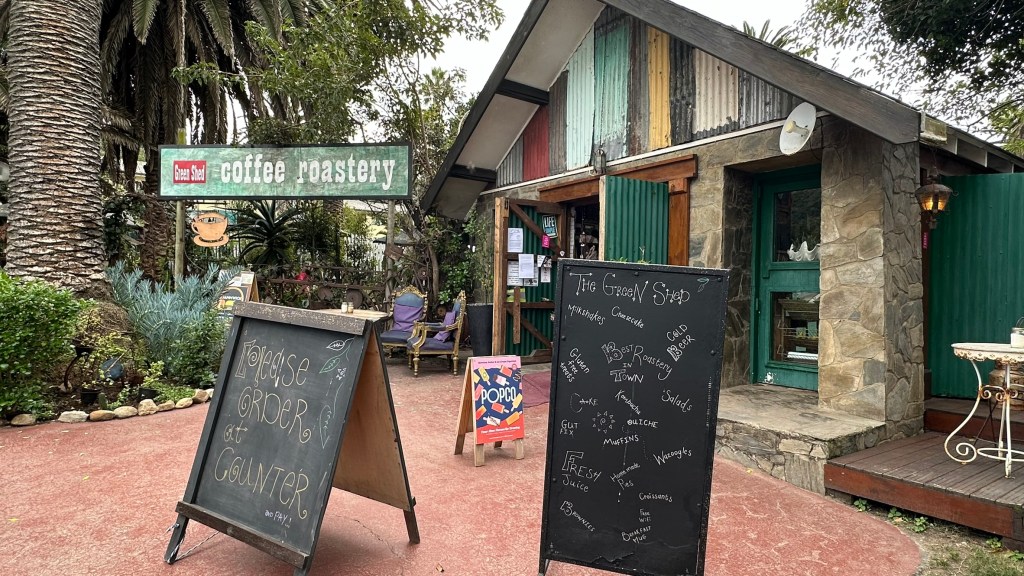
Green Shed Roasters 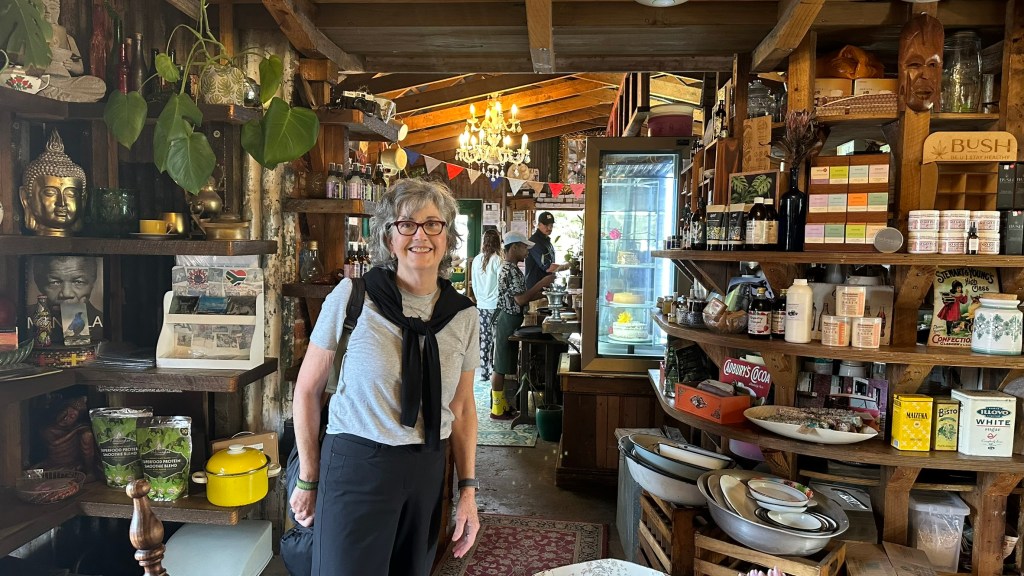
Green Shed Roasters
After breakfast in Wilderness, we started our two-hour drive east along the coast highway. Our first stop was Wild Oats Community Farmers Market in Sedgefield, renowned as a “must visit” on Saturday mornings. We were welcomed by the sound of the Grateful Dead’s “Ripple” filling the air; all we could do was nod our heads in appreciation. In addition to the farmers market, which had the normal fare of produce, meat, flowers, homemade jams and sweets, and so forth but with a distinctly South African twist, there was a cool arts and crafts market nearby as well.
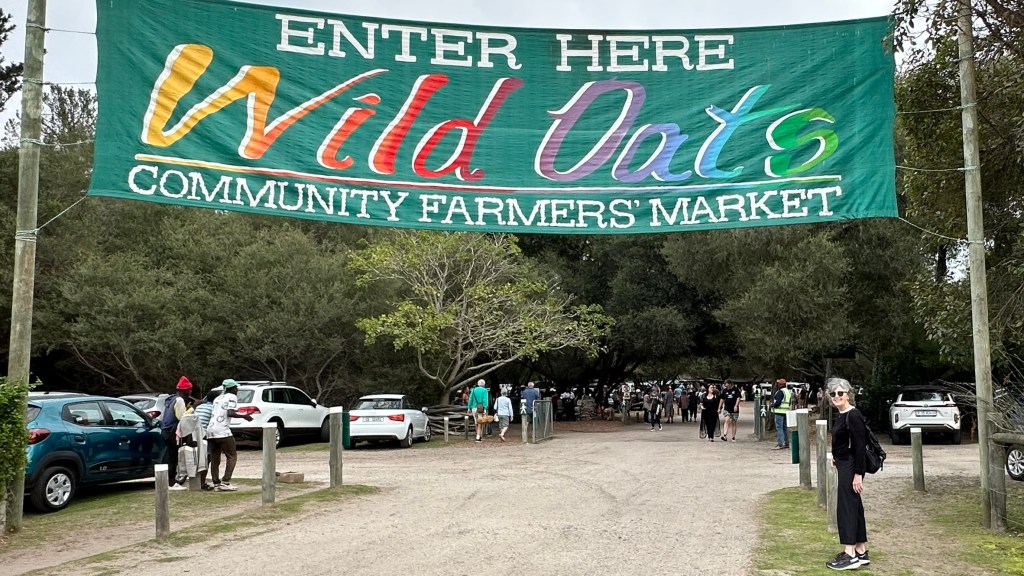
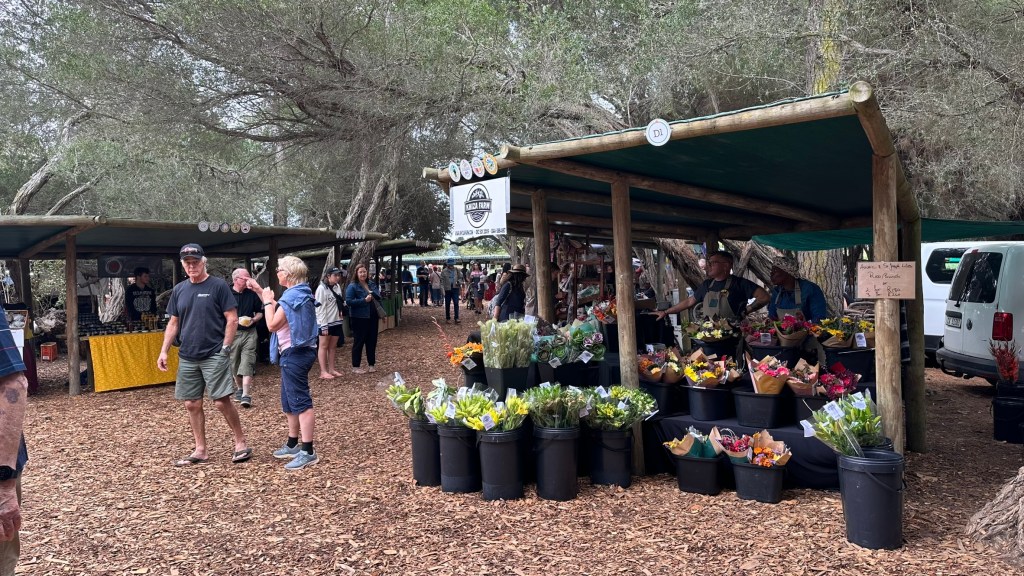
The flower stall 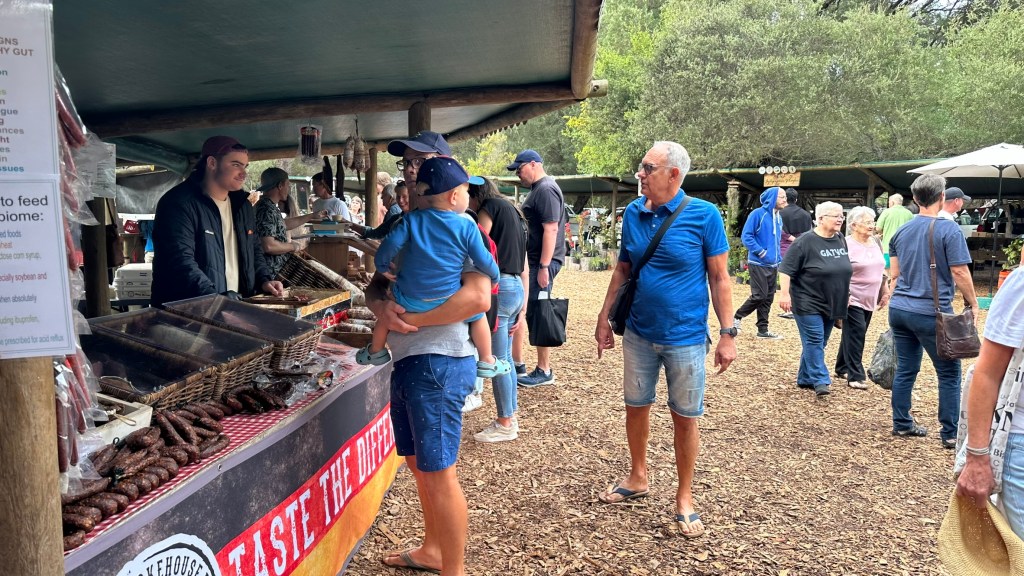
Biltong and meat sausages 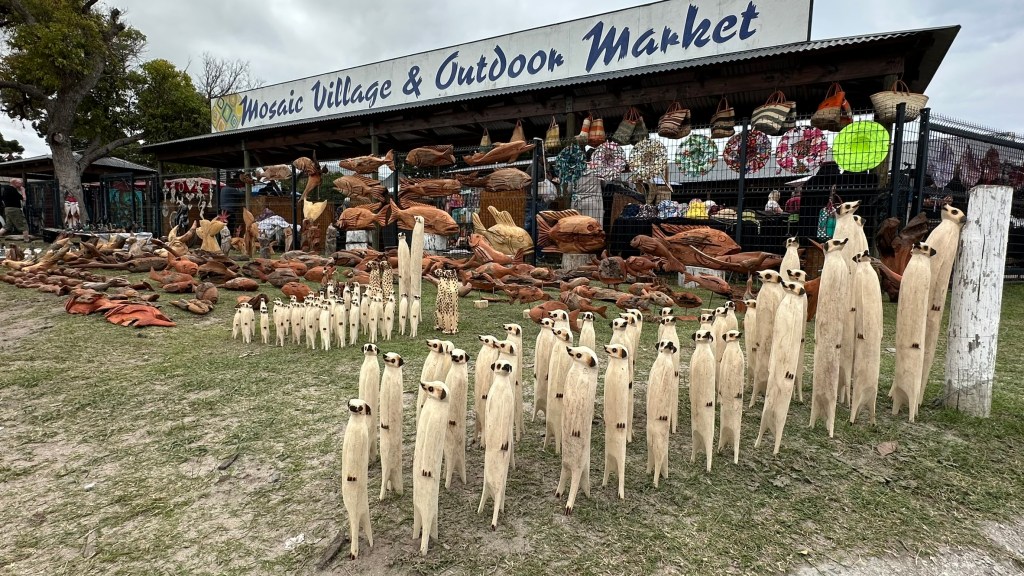
Meerkat carvings 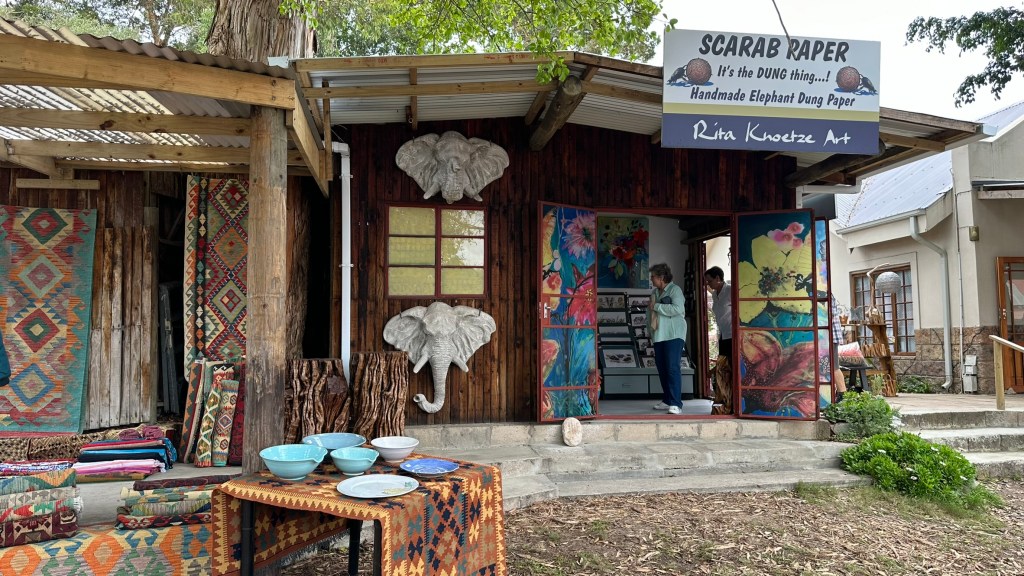
Tapestries and… elephant dung paper? 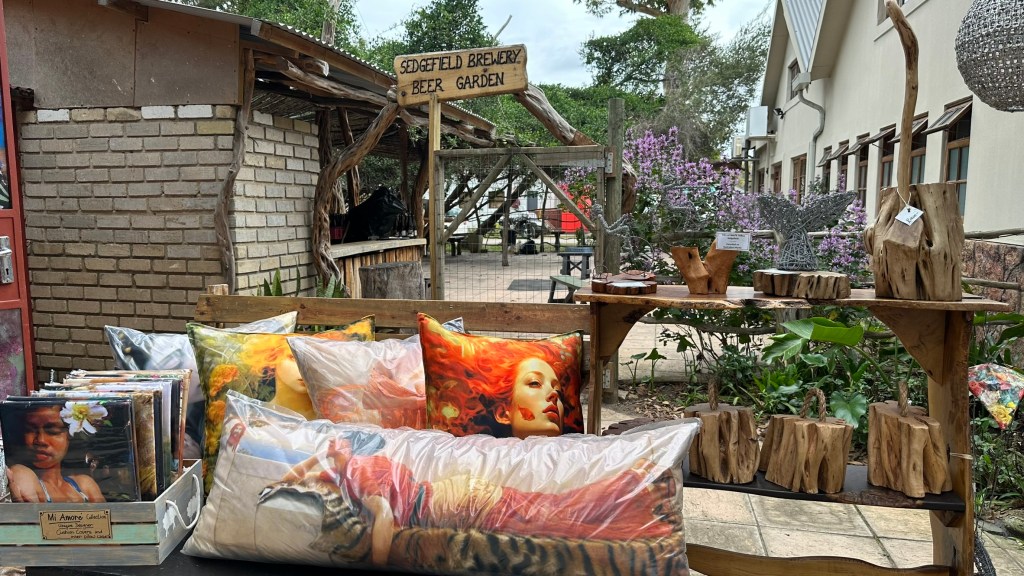
An hour down the road, we arrived in Plettenberg Bay, known throughout the Western Cape for its beaches, hiking trails, watersports and, depending on the season, migrating whales. We enjoyed a nice lunch at the Fat Fish before heading 10 minutes south to our first serious destination, Robberg Nature and Marine Preserve. Our 5.5km hike out the Robberg peninsula and back took us along cliffs, amazing beaches, an island reachable by sand bridge, and thousands of seals.
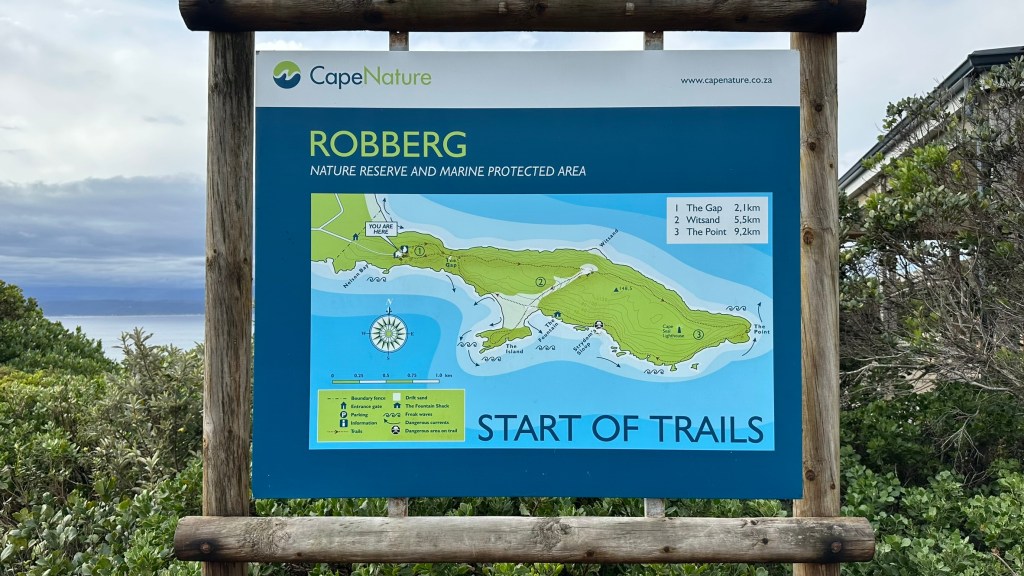
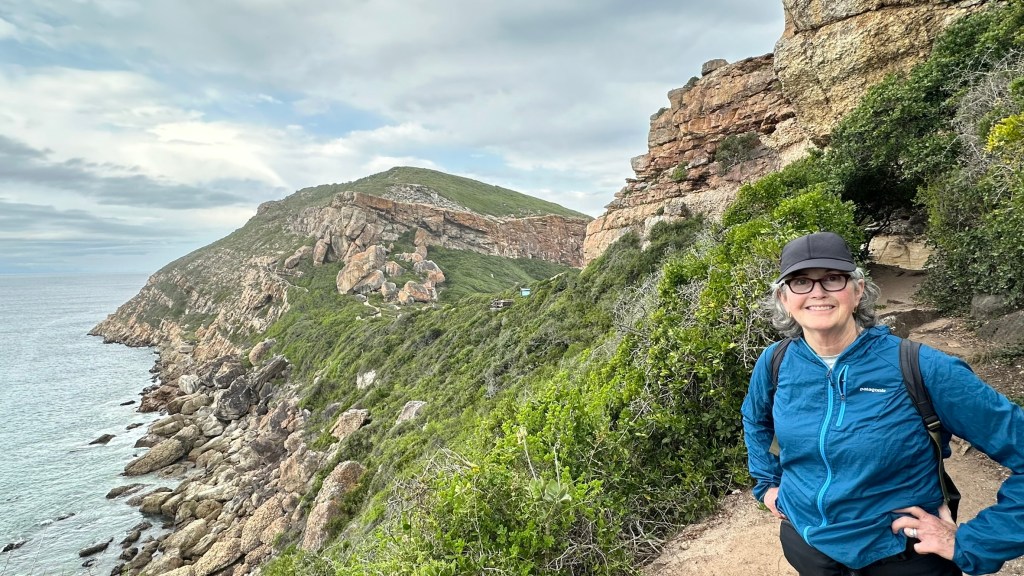
Hitting the trail 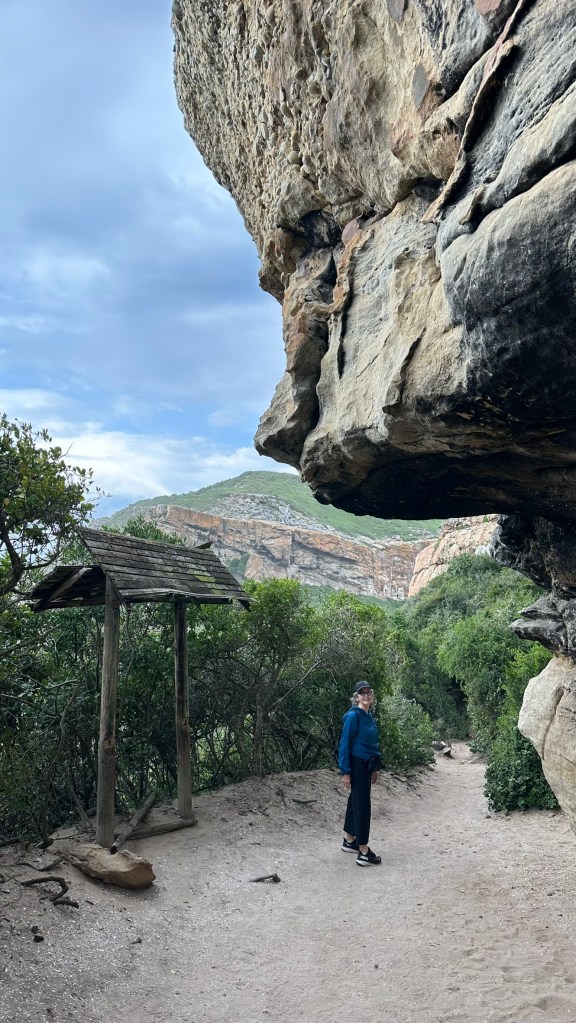
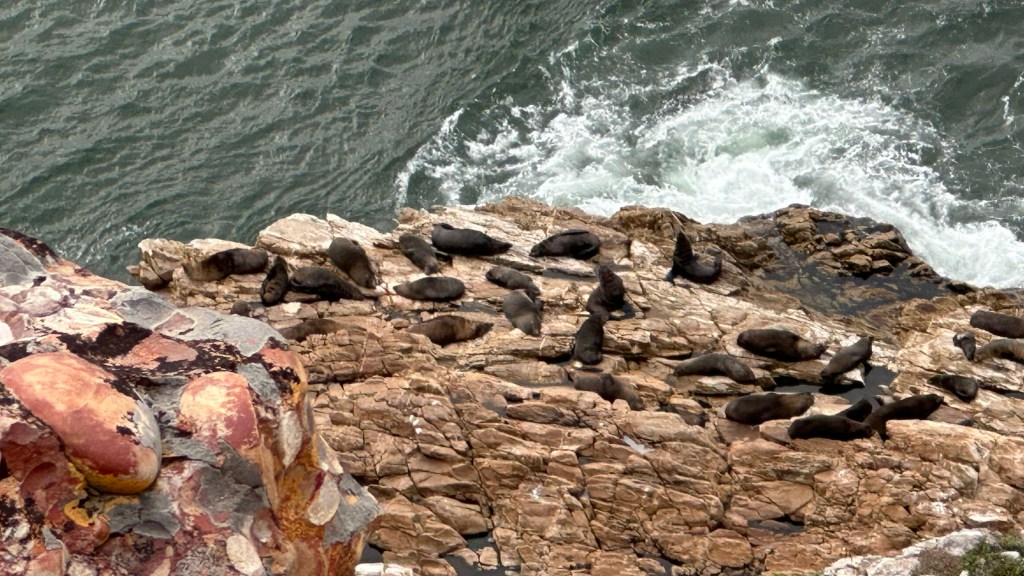
Seal colony 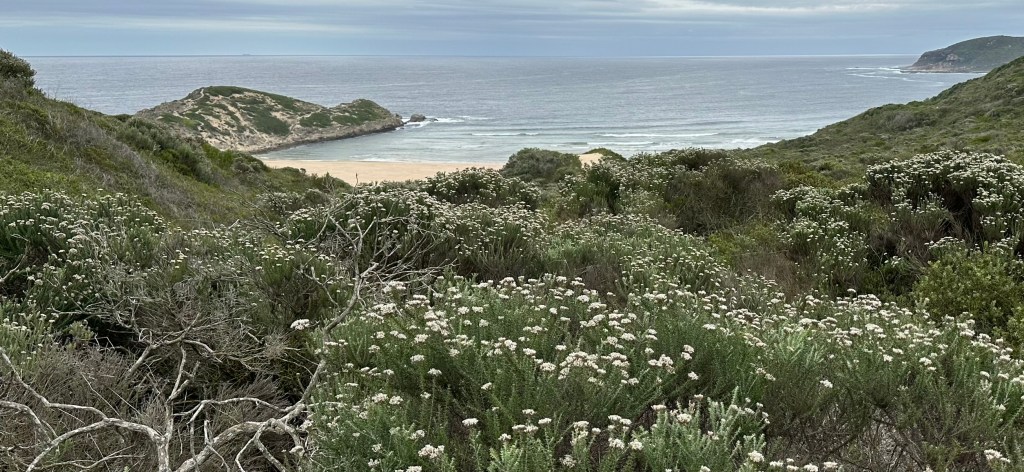
View over the fynbos to Robberg’s island 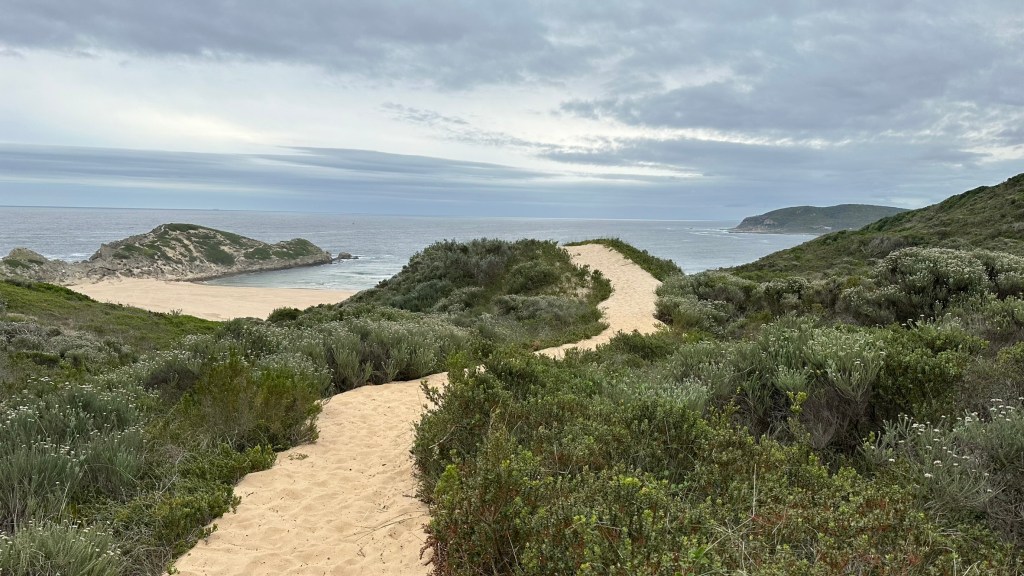
Trail to Robberg Island 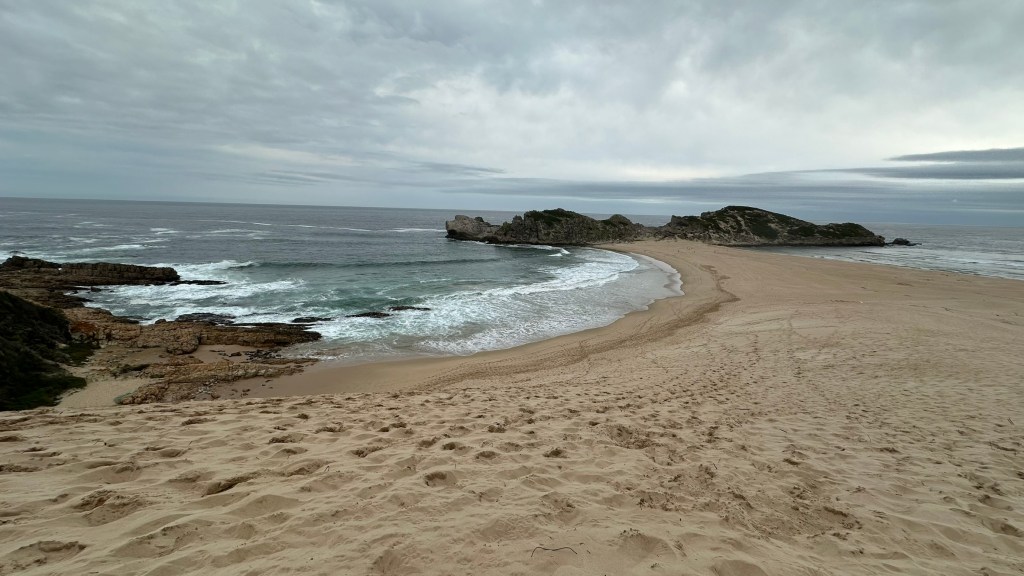
Sand bridge to Robberg Island 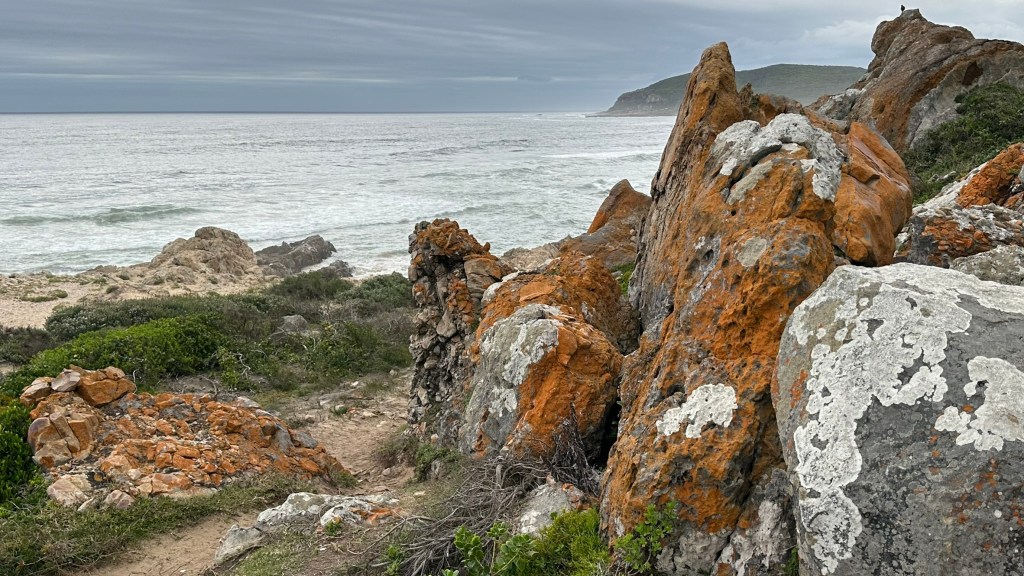
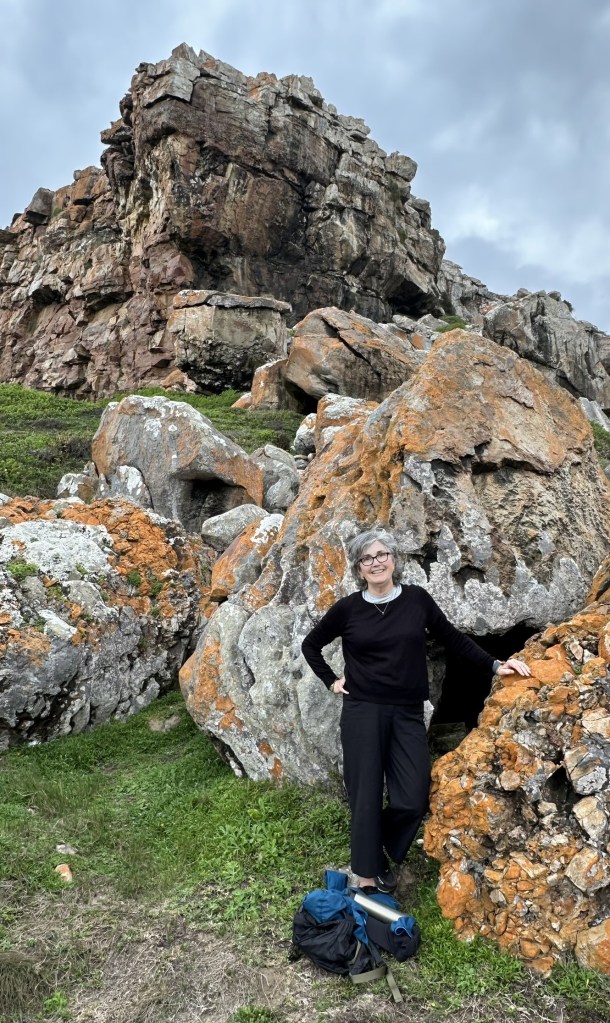
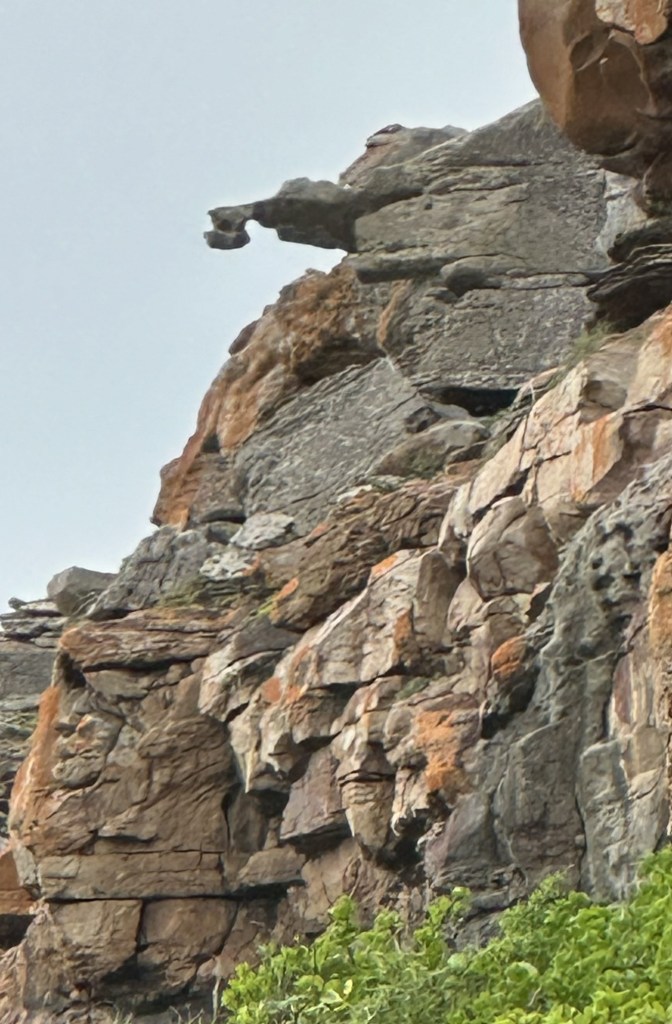
Trogon House & Forest Spa, our base for the next two days, is literally perched in a dense forest 30 minutes down the road from Plettenberg Bay. The last mile was a pretty sketchy drive (four-wheel drive strongly recommended) along the perimeter of the Monkeyland primate sanctuary. The main lodge is a stunning bit of architecture built entirely of stone, wood, and glass — something slightly akin to a Frank Lloyd Wright creation — as were its four luxurious suites suspended in the treetops. Fireside dinners at the lodge were terrific, a good thing as driving a long distance at night was not in the cards. Best of all, we were the only guests and had a chef and butler all to ourselves. Read my review here.
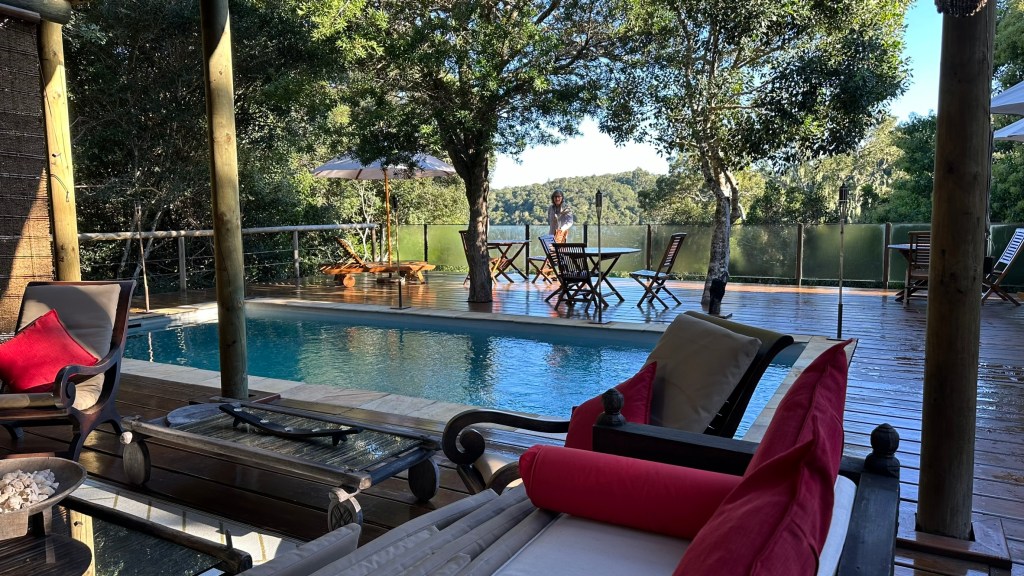
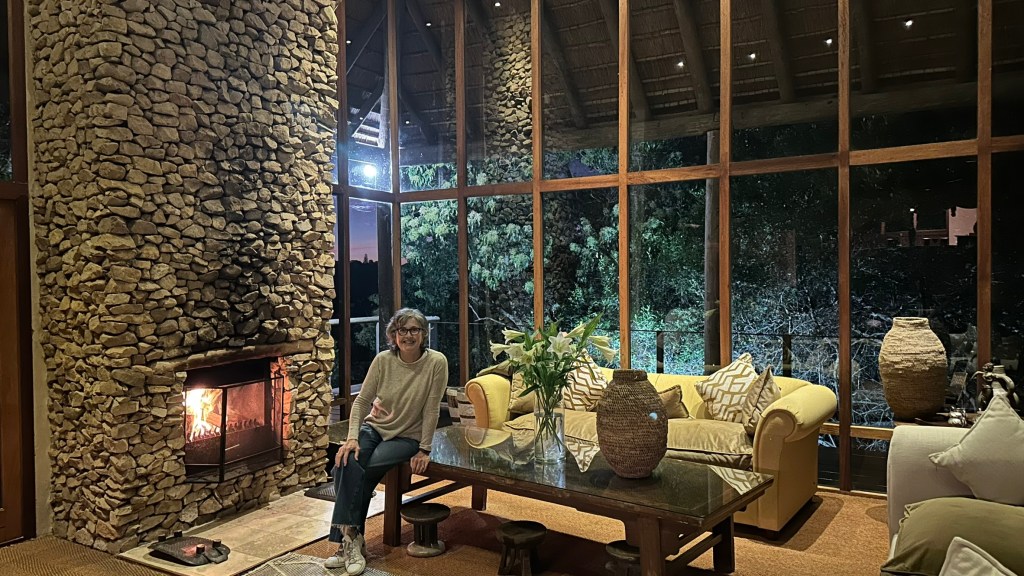
From here, we spent two days exploring the Nature’s Valley, Storms River, and Tsitsikamma National Park. This entire area encompasses about 30 miles of rugged coastline, mountains, and dense forest and is a veritable paradise for nature lovers and outdoor enthusiasts. Highlights during our stay here:
- Day hike to the mouth of Storms River with its famous suspension bridge. The deep narrow gorge where Storms River meets the Indian Ocean is popular with kayakers, and the gorge interior can only be accessed by boat — there are no trails. The hike featured lots of colorful flora, birds and an encounter with local rodent, the Dassie, aka the Cape Rock Hyrax.
- Our friend, Ian, tipped us off to another great hike along the coastal trail from Nature’s Valley beach to the Salt River, which has its own secluded beach at the big bend in the river. This trail can only be used at low tide; we returned using a forest trail over the top of the hill.
- Lunch at the funky Blue Rocks Cafe and Beach Bar in Nature’s River was cool.
- Lunch and wine tasting at Bramon’s Wine Farm in the nearby village of the Crags was even better. Branam specializes in Methode Cap Classique, a sparkling wine. While not usually my taste, it was pretty good, as was the pot of mussels.
With more time, we would have loved to hike a good part of the Otter Trail, the oldest hiking trail in country that takes five days to cover from end to end and considered by some to be among the best hiking trails in the world. We would have liked to explore more of Tsitsikamma National Park, as well.
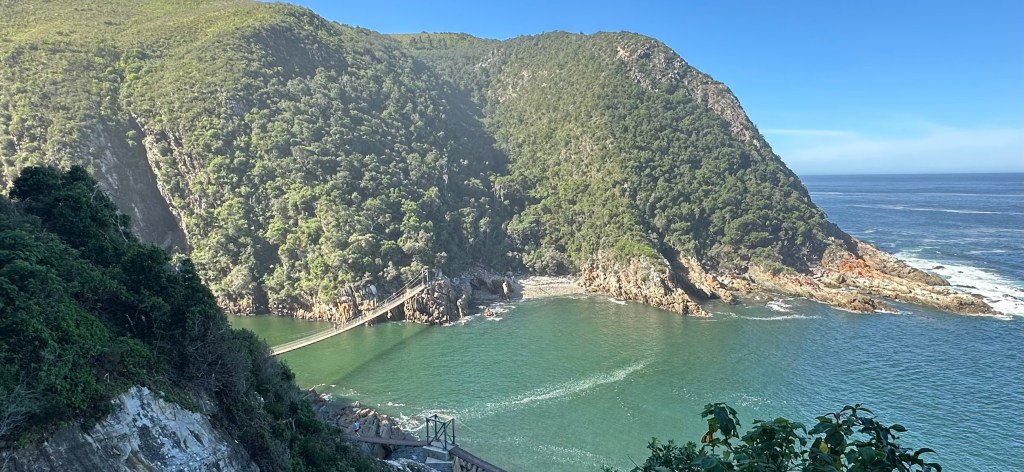
Storms River mouth 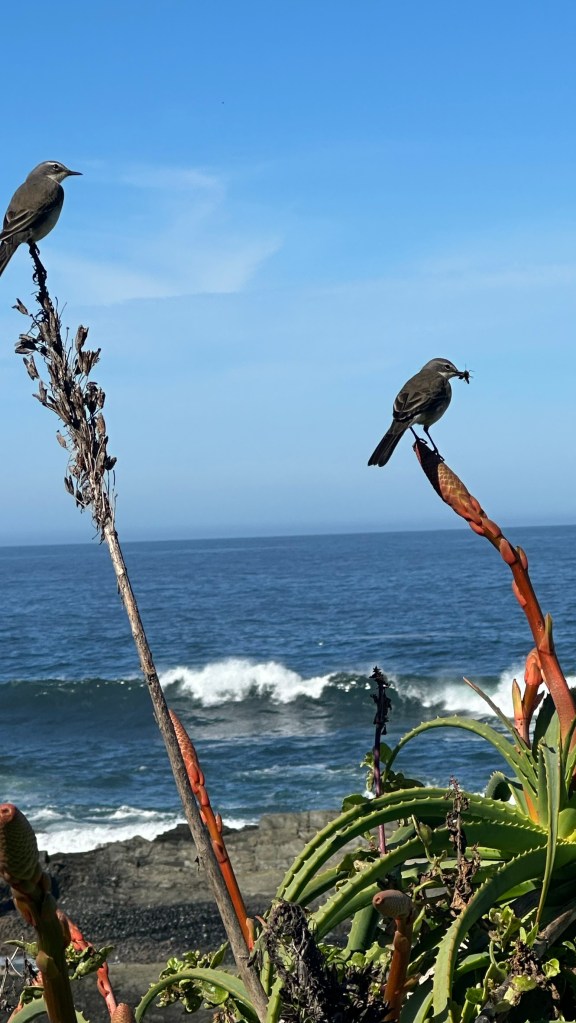
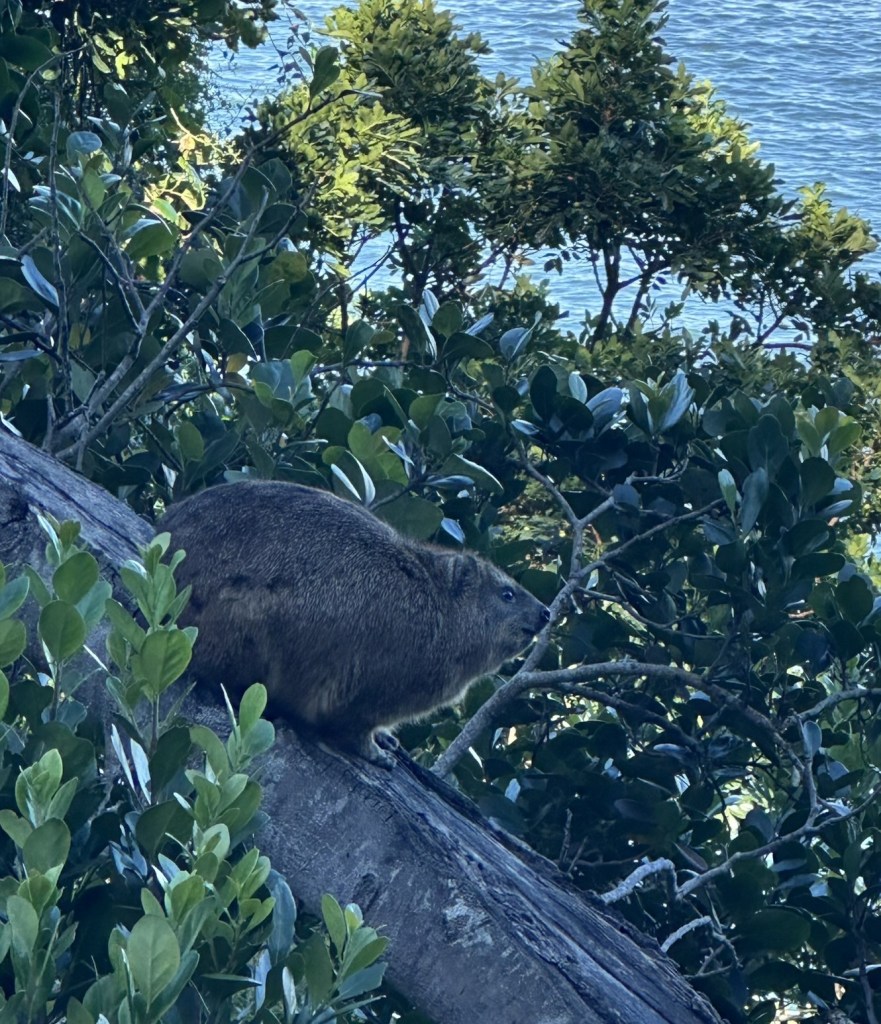
The Dassie 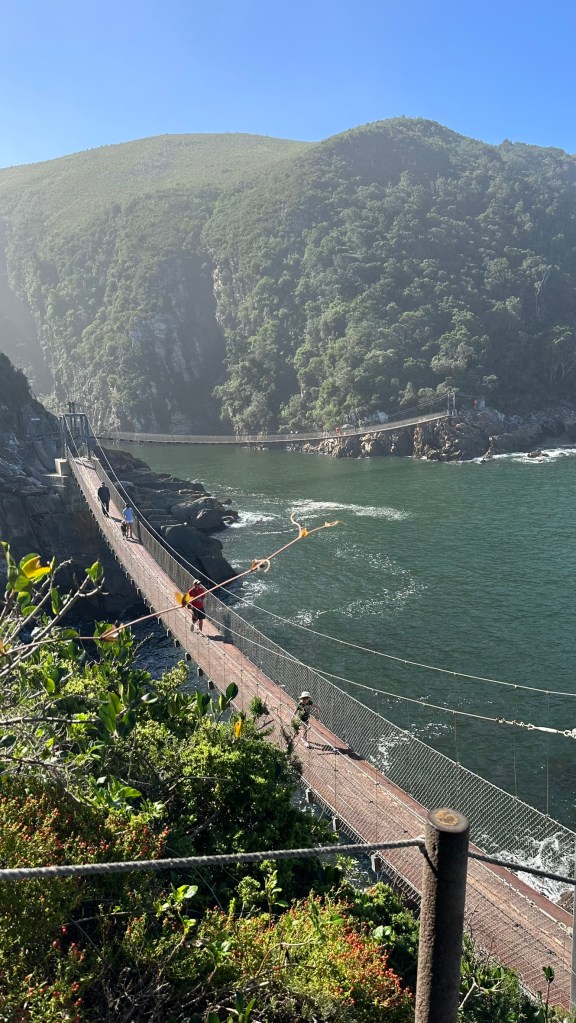
Storms River suspension bridge 
Storms River gorge 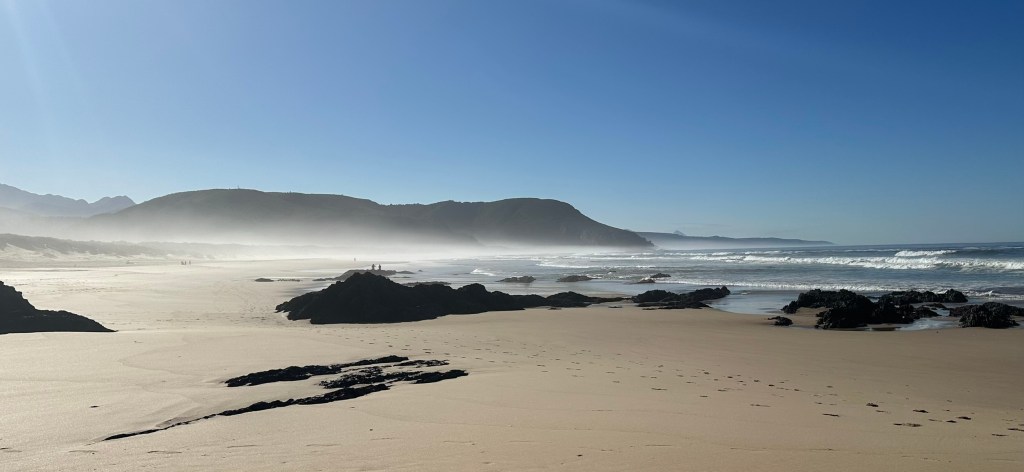
Nature’s Valley Beach 
Nature’s Valley coastal trail 
“The Gulley”, impassible at high tide 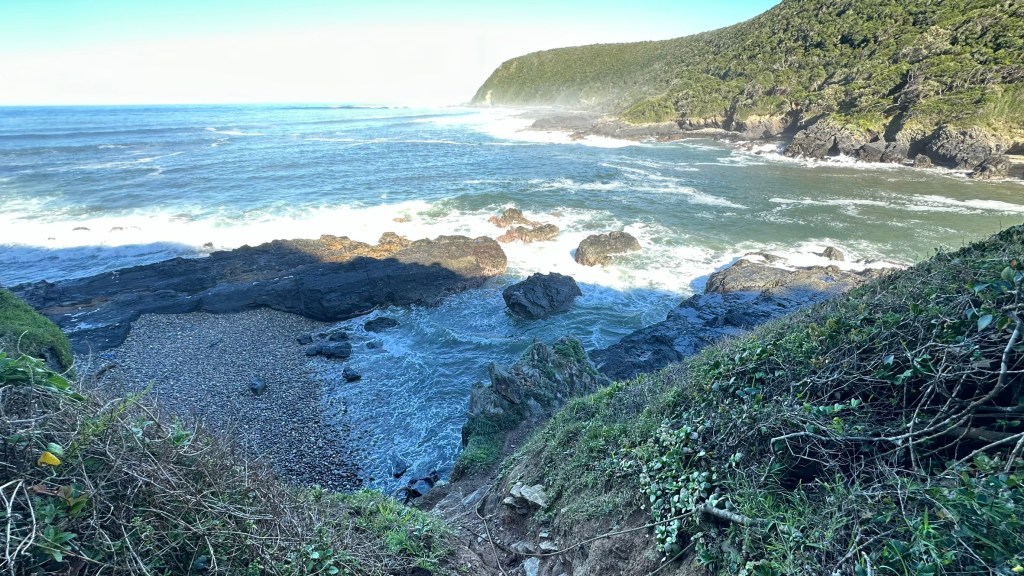
Mermaid’s Cove 
Salt River from the trail 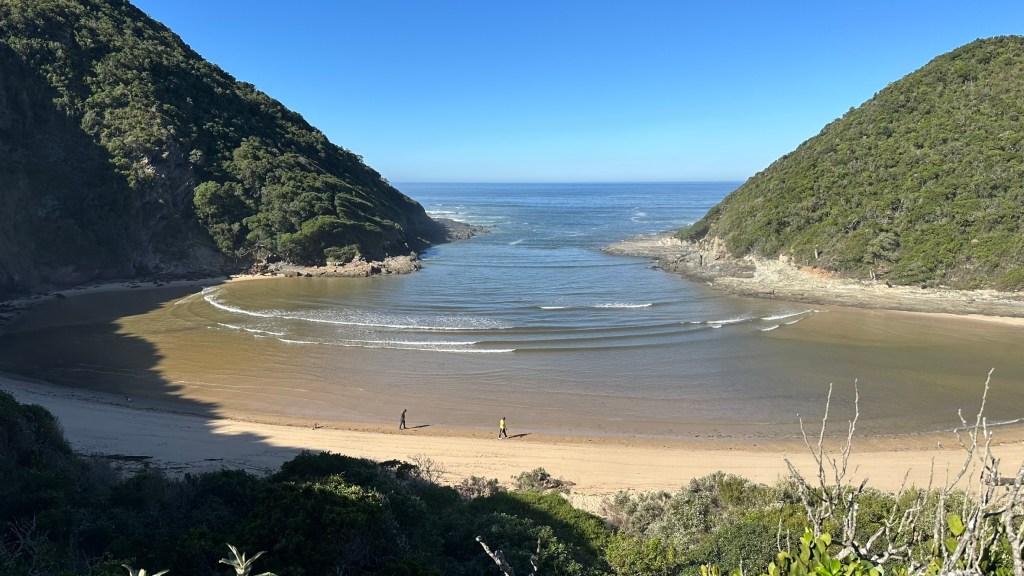
Overlooking Salt River beach 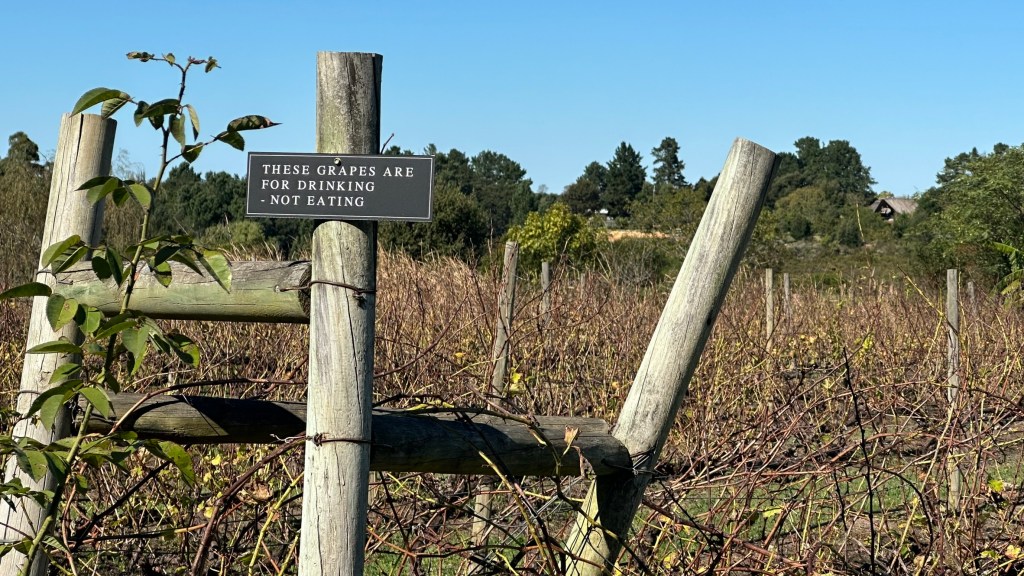
Bramon’s Wine Farm 
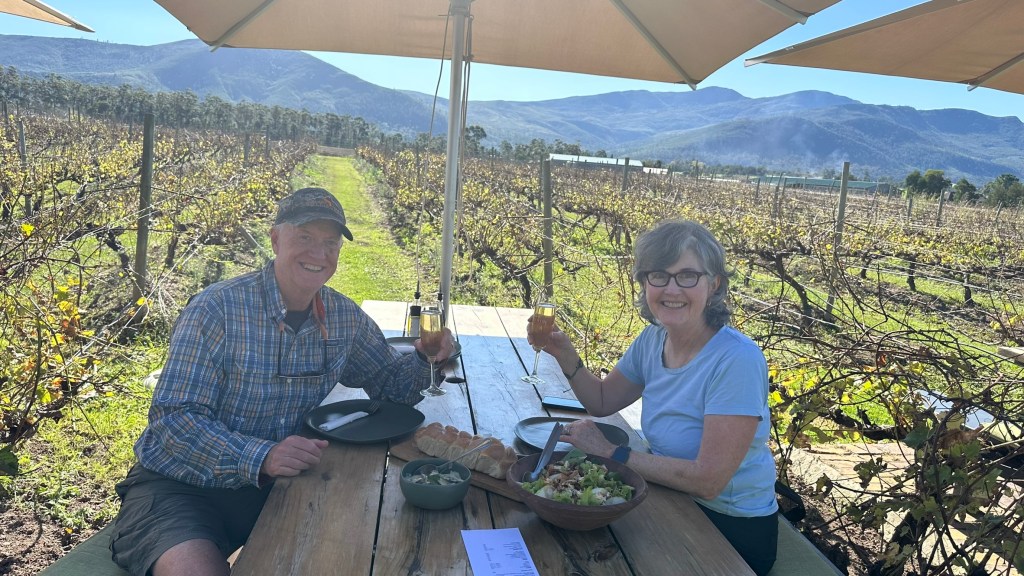
Lunch in the vineyards
We started our return journey westward with an overnight stop in Knysna, an hour down the road. This route passes through beautiful forest with several potential stops, including the Raptor Rescue Plett, Knysna Elephant Park, and the Garden of Eden, a short, board-walked trail through old growth forest right off the highway.
During the summer, Knysna is bustling with tourists — perhaps the most popular spot on the Garden Route. This late in the season, Knysna was fairly quiet. Again, with more time, Knysna would merit another couple of days for any number of activities: exploring the rugged headlands surrounding the narrow inlet between the Knysna River and Indian Ocean, kayaking the river and lagoon, relaxing at Noetzie or Brenton beaches, or any of the great hikes in the Diepwalle Forest section of Garden Route National Park. Highlights during the day we had:
- Our one-night stay at Villa Afrikana was one of Michelle’s favorites on the trip; read my review here.
- During our Garden of Eden walk, we came along a fellow with a small, pop-up “art stand” where he was selling colorful handmade, wire-and-bead animal “sculptures”. There was virtually no foot traffic and he was happy we stopped to look, then sad when we left without buying. Feeling a little remorseful, we went back and his sadness turned to ecstacy when bought a couple souvenirs from friends and family. He said it was his best sales day in a month, and his profit would go directly to feeding his own family. True or not, it was a very nice feeling.
- The Knysna Gin Distillery was an excellent, rustic bar and distillery featuring its own gin. Sadly, being a late season weekday, the place was deserted except for us and the bartender, and she was closing early. Still, I enjoyed my martini, chatting up the bartender, and imagining the place with a little more energy.
- Waterfront dinner at Sirocco on Thiesen Island had good seafood and a nice view over Knysna Lagoon. (My first choice, Freshline Fisheries, was closed.)

View of the lagoon from our bedroom 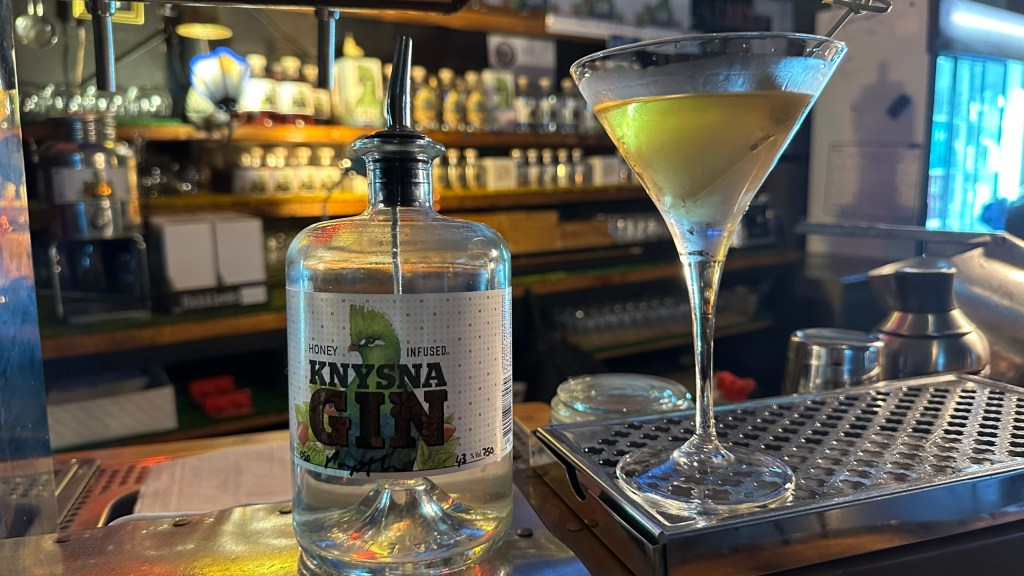
Knysna Gin
| Days 11-14 | Western Cape between Garden Route and Cape Town | See lodging details below |
As much as we would have loved a few more days exploring the Garden Route, it was time to start making our way toward Cape Town. My local guru, Ian, had recommended a couple stops along the way: a night each in the coastal towns of Struisbaai and Hermanus followed by two days in Franschhoek, heart of the West Cape wine lands.
Struisbaai
Struisbaai is an unassuming little fishing town with a family of local Stingrays that hang out if the harbor, and Cape Agulhas next door is the southernmost tip of the African continent, where the Indian and Atlantic oceans meet. Hermanus, on the other hand, is a charming, upscale coastal town with breathtaking scenery, known for Southern Right Whale watching (June to November, none for us) and Great White shark cage diving (none of that either, thanks). Franschhoek was absolutely beautiful, from our wine farm stay at La Providence to our wine tram tasting experience to the lovely restaurants and art galleries in town.
| Duration | Destination | Where We Stayed |
|---|---|---|
| 1 day | Struisbaai / L’Agulhas | Agulhas Ocean House B&B |
| 1 day | Hermanus | One Marine Drive |
| 2 days | Franschhoek | La Providence Farm |
The four-hour drive from Knysna took us past the Garden Route towns of Wilderness, George, and Mossel Bay and several other smaller beach towns along the way. I really wanted to drive the famous Seven Passes Road between Knysna and Wilderness, renowned for its magnificent scenery, but it would have added almost an hour on an unpaved mountain road, something my better half was not keen on. So, we stuck with the nicely paved N2 highway. Leaving Mossel Bay, the route heads inland away from the coast for a couple hours. One of the more startling sights was passing shockingly impoverished shanty towns along the route, a clear sign of the socio-economic disparities that still sadly mark much of South Africa today.
While Struisbaai was the destination of record for our first stop, we ended up lodging in nearby L’Agulhas, just a couple miles down the road, attracted by the more secluded and peaceful Agulhus Ocean House B&B facing the ocean. It was a great choice (read my review here). Highlights:
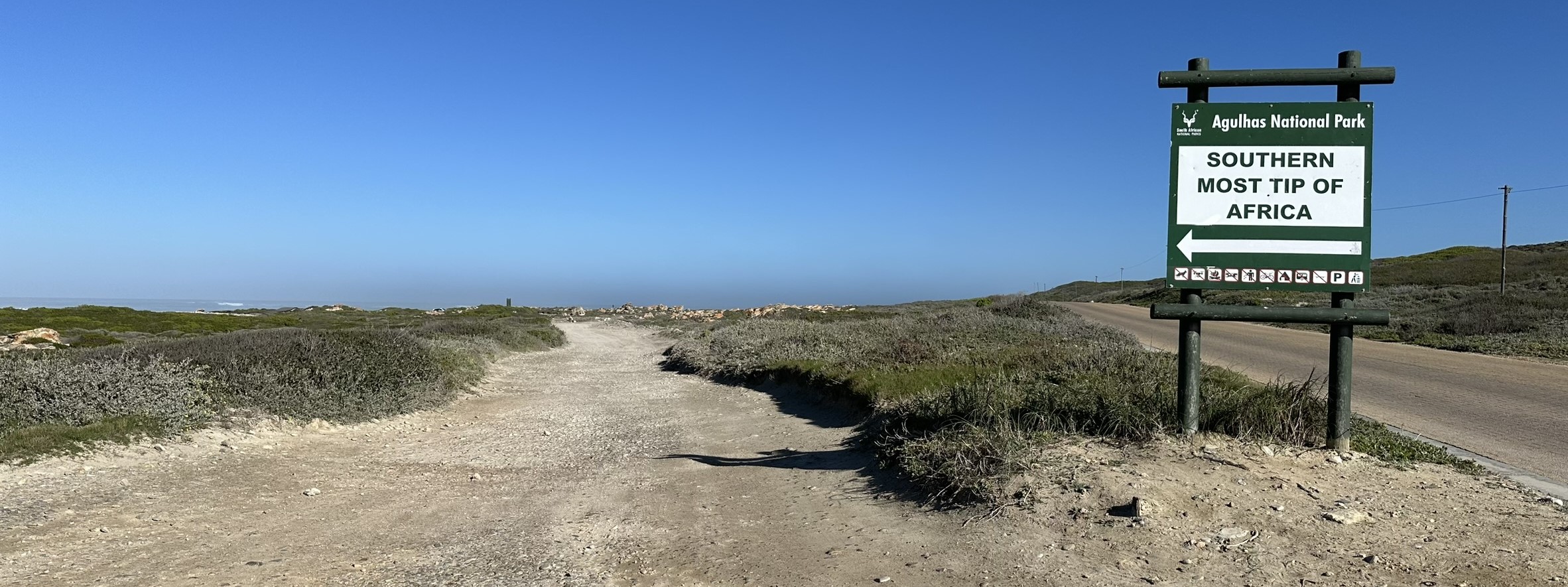
- Visiting the southernmost tip of Africa (it’s not the Cape of Good Hope, as many believe), where the Indian Ocean meets the Atlantic, may sound like checking a box, but it was still pretty cool and something we were eager to see. (Just one year earlier, we stood at the spot where the Indian Ocean meets the Pacific, Kangaroo Island, Australia!)
- There is not much going on in tiny L’Agulhas, but dinner at Zuidste Kaap, the self-proclaimed “southernmost restaurant and pub in Africa” was a pleasure. The restaurant’s open, wood-beamed ceilings and stone fireplace lent a welcoming ambiance, and the tiny dive bar in the back was clearly the local hangout.
- The locals like to talk up their little harbor, where commercial fishermen set out and return with their catch. The draw, though, is a resident Stingray named “Parrie”. We saw the harbor, strolled to the end of the breakwater, but alas no Parrie.
- Back in Struisbaai, Michael Collins Irish Pub was the only true bar in town. So, of course we liked it. The locals were friendly and more than happy to shoot the bull.
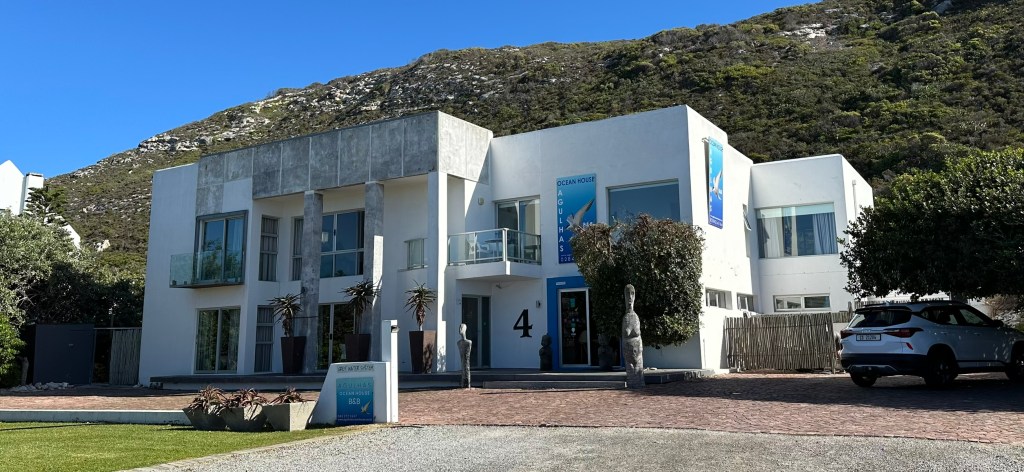
Agulhas Ocean House 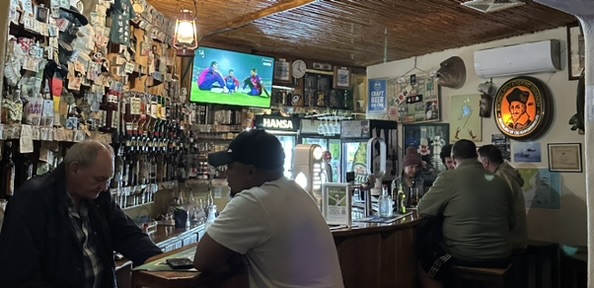
Zuidste Kaap bar 
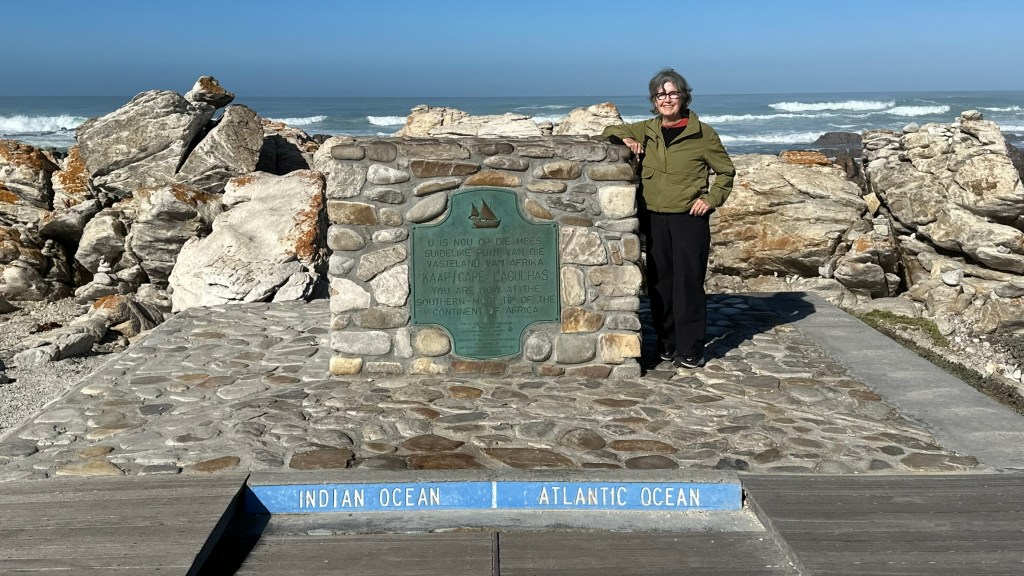
Southernmost point 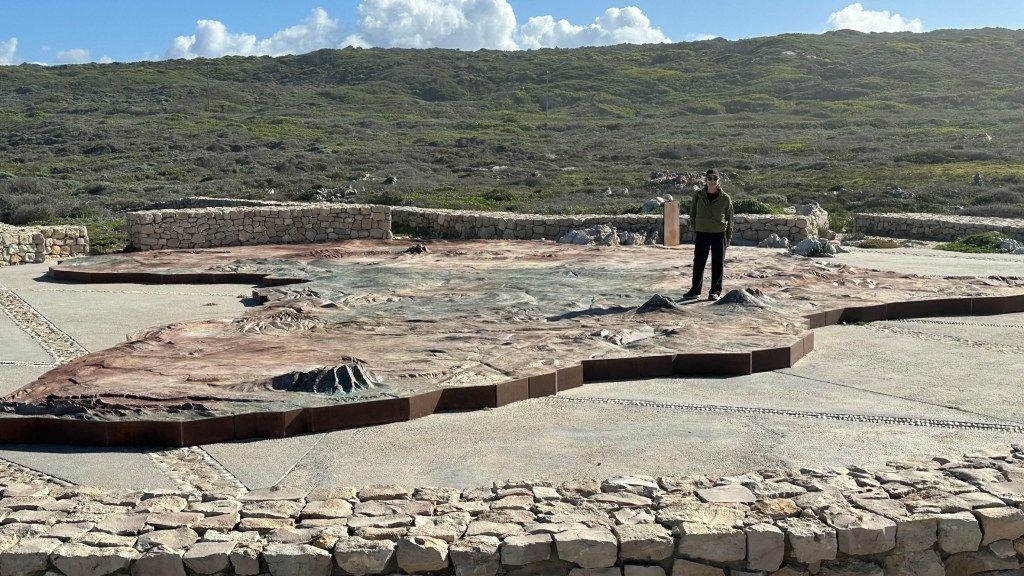
Map of Africa monument 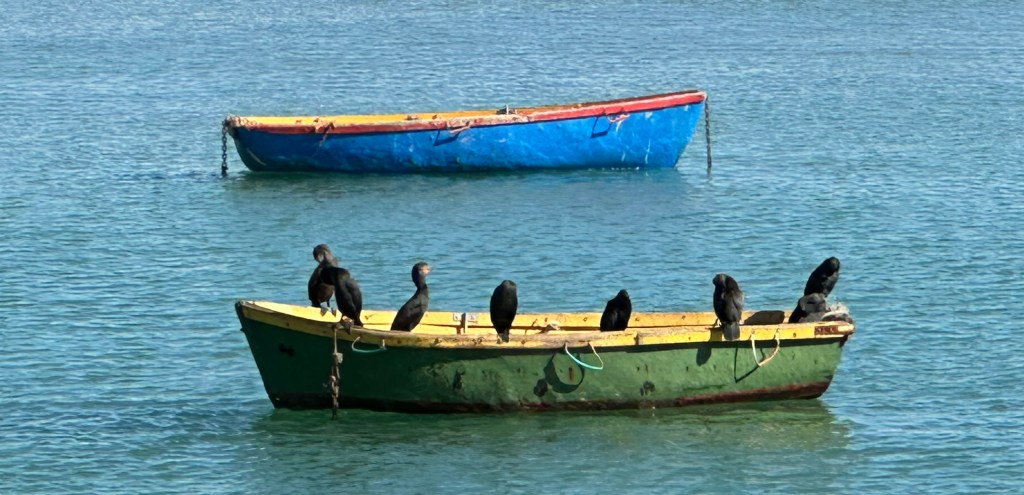
Denizens at the harbor
Hermanus
Our next stop, Hermanus, is just 90 minutes down the road. About 3/4 of the way there, we passed through the fishing town of Gansbaai, known far and wide for its huge population of Great White sharks. It is said to be one of the most popular shark-cage-diving sites in the world. Interestingly, we were told the sharks were not around this time of year, not that I had any interest myself.
Hermanus is a popular weekend getaway or holiday destination for South Africans from around Cape Town, evident by the many nicely dressed people all over the streets and restaurants in town. It could be a little sister to California’s Carmel-by-the-Sea, very pretty. One night was just fine for us, though it would be easier to spend a couple days here than, say, Struisbaai. Highlights:
- Bientang’s Cave is a popular restaurant built literally into the cliff walls along Walker Bay fronting Hermanus. We made it just in time for lunch. Sort of a “must do” at least once while in Hermanus, with good food and the amusing sight of waves crashing at the feet of diners at tables on the rocks below. Reservations are a must during high season.
- The Hermanus Cliff Path is a moderately challenging, 11-mile hiking trail that hugs the seaside cliffs fringing Hermanus. The path crossed directly in front of our lodge, and while we only hiked a bit of it, it did afford some beautiful views of the rugged coastline and pounding surf.
- Michelle was happy to see a thriving little shopping district along the waterfront, with cute boutiques of all kinds to poke around in. For some reason I can’t explain, I don’t recall finding any interesting pubs in town.

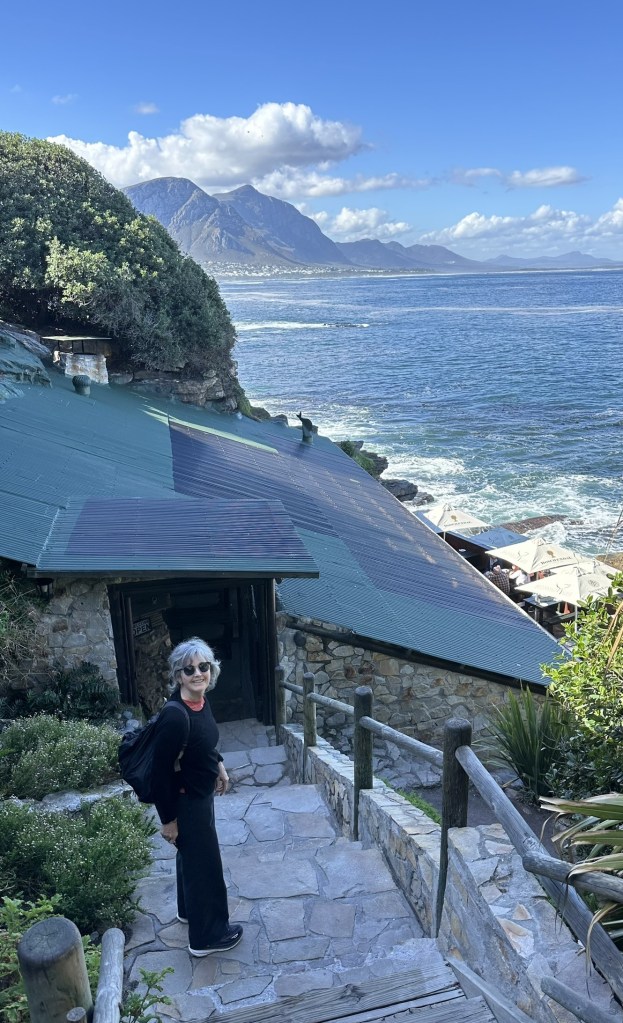
Heading down to Bientang’s 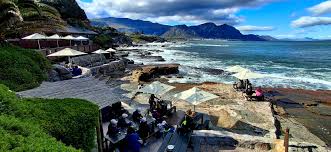
Bientang’s Cave 
Hermanus Cliff Path view 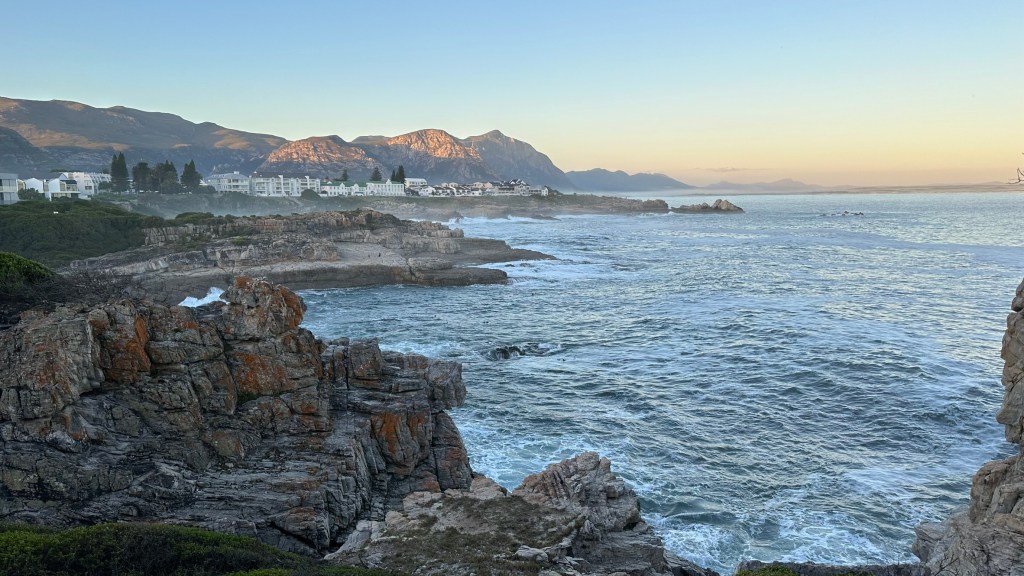
Walker Bay in the morning
So, after a couple consecutive one-night stands, we hit the road once again heading for Franschhoek in Western Cape’s Winelands region. South Africa doesn’t get the international recognition it deserves for excellent wines, though it is hardly a secret either. Most in the wine production and tourism is centered in three towns: Stellenbosch, Paarl and Franschhoek.
Franschhoek
Franschhoek came recommended by my friend, Ian, and now I know why. It is perfectly situated at the head of a deep valley, surrounded on three sides by mountains. It looks and feels a bit like California’s Napa Valley with dozens of wineries, including nine surviving from the original Huguenot settlers who immigrated from France in the 1700’s and 1800’s and introduced winemaking to the region. The charming town is known as a foodie destination, filled with high end restaurants, art galleries and shops, and Dutch colonial architecture. We very much enjoyed our two days here. Highlights:
- Our stay at La Providence Farm could not have been better. The estate is large but not too large, with 10 suites scattered among three buildings situated throughout the beautiful grounds, and a separate building with dining room, lounge, bar and terrace by the pool. The views of vineyards and the surrounding mountains were drop dead gorgeous. We were the only guests and had the entire place to ourselves. Here’s my TripAdvisor review.
- We celebrated our arrival with lunch and wine tasting at Eikehof wine estate, one of the oldest in Franschhoek, now in its fifth generation of family ownership. It was my favorite of all the wine estates we would visit, and yes, I wrote a review.
- Eikehof’s Cape Ruby is called a “Ford” because Portugal won’t allow it to be called Port, though it’s made exactly the same way. The original 1942 Ford truck sits on the property next to the outdoor picnic tables.
- The Franschhoek Wine Trolley may seem kitschy but it’s a pretty effective way to see several wineries without driving. There are four different lines, each of which hits eight wineries. We picked three on the Red Line:
- Atlas Swift, best known for their Chardonnays. In addition to their excellent wines, we enjoyed a nice chat with the owner and winemaker, Welma Smith. We picked up a bottle to go.
- Dieu Donne (God Given), which we picked principally as a lunch spot, famed for its high vantage point and spectacular vistas. Sadly, the restaurant was closed and dense cloud cover meant no view, but we found their Merlots and Cabernets to be fantastic.
- Rickety Bridge was the most commercial feeling of the estates we visited, with a combined tasting room and gift shop, but they had nice Cabs as well.
- A couple of dinner splurges at Epice ($$$$) and L’Orangerie ($$-$$$) were both extravagant and sumptuous. Epice’s 10-course menu was over the top, almost too much food, but oh so good. L’Orangerie was a bit more relaxed but still terrific. If you don’t mind $$$$, these are both great picks.
- The town of Franschhoek is both walkable and delightful. Favorite sights and stops included the 175-year-old Dutch Reformed Church, the Elephant & Barrel Village Pub (hey, I wanted a beer!), and the Vineyard Gallery, where we fell in love with a Carla Bosch painting which we promptly bought and brought home with us.
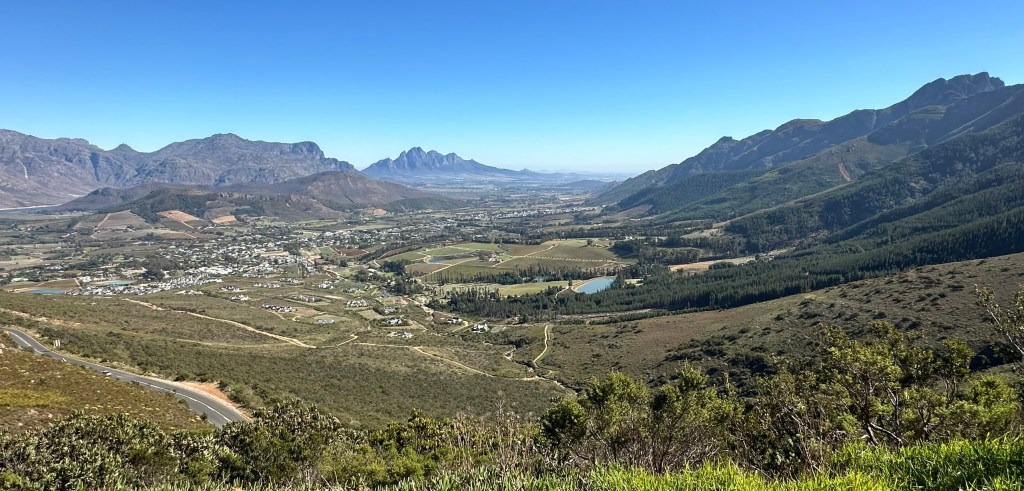
Crossing Franschhoek Pass 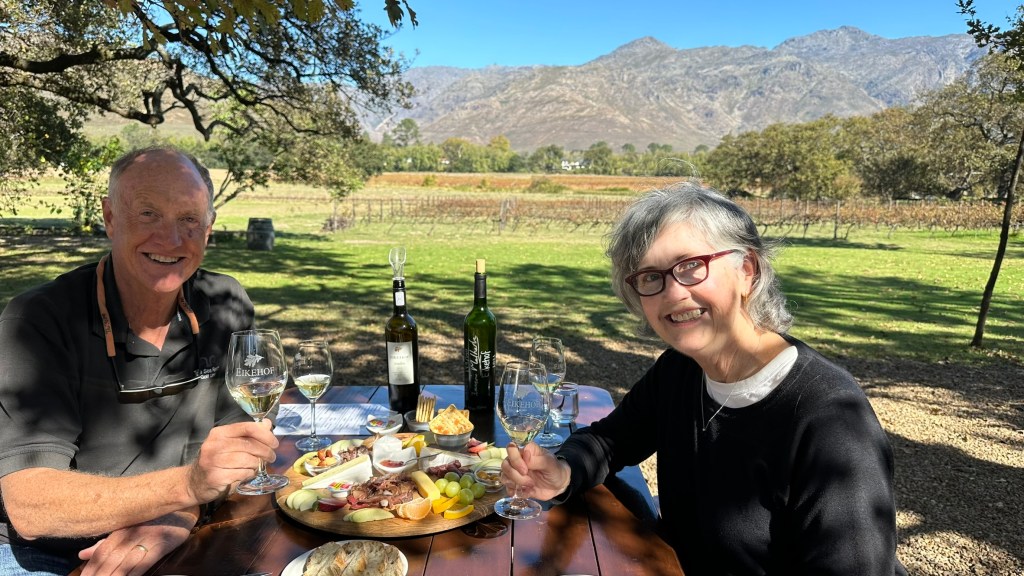
Eikehof Wine Estate 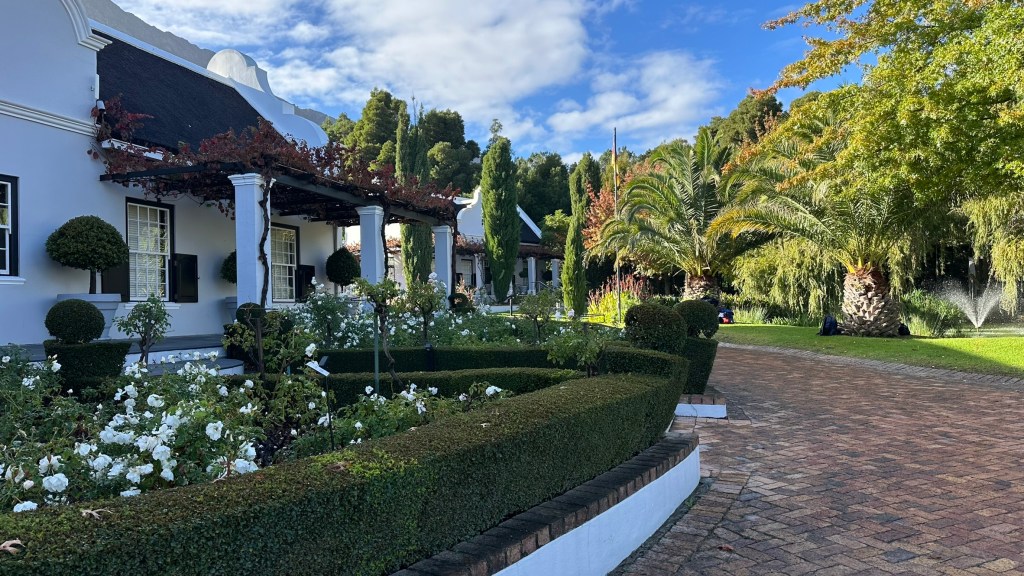
La Providence 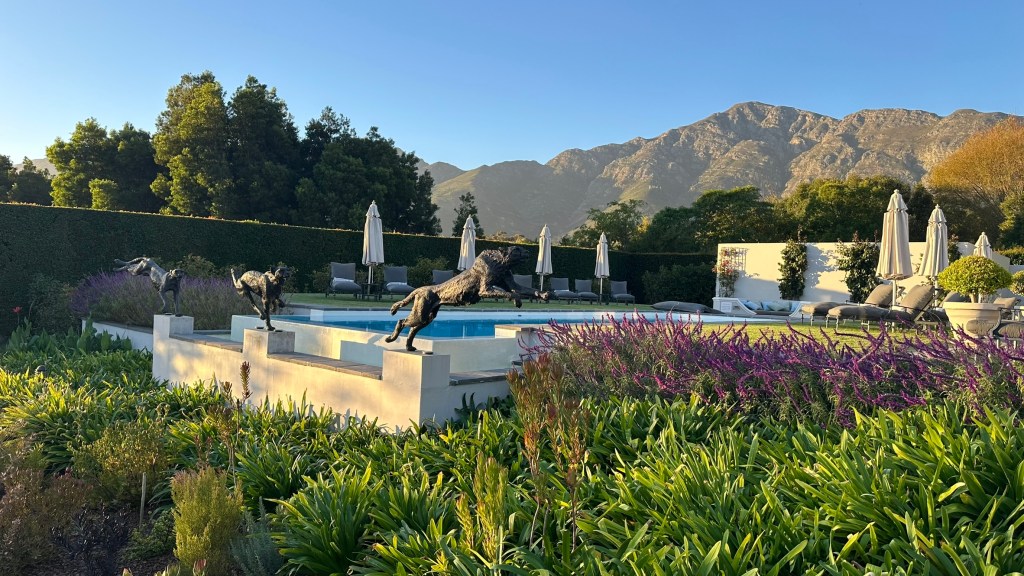
La Providence 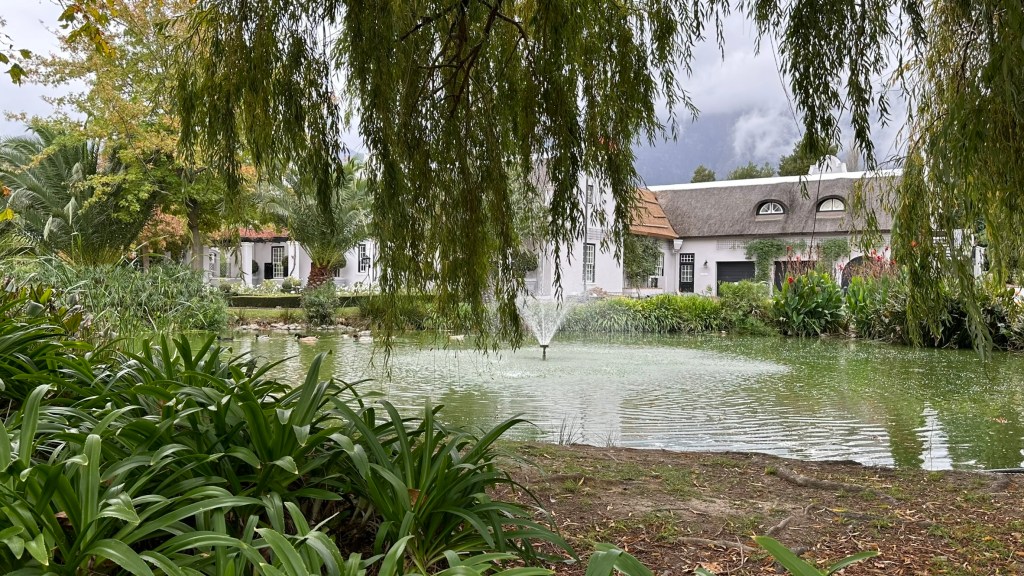
La Providence 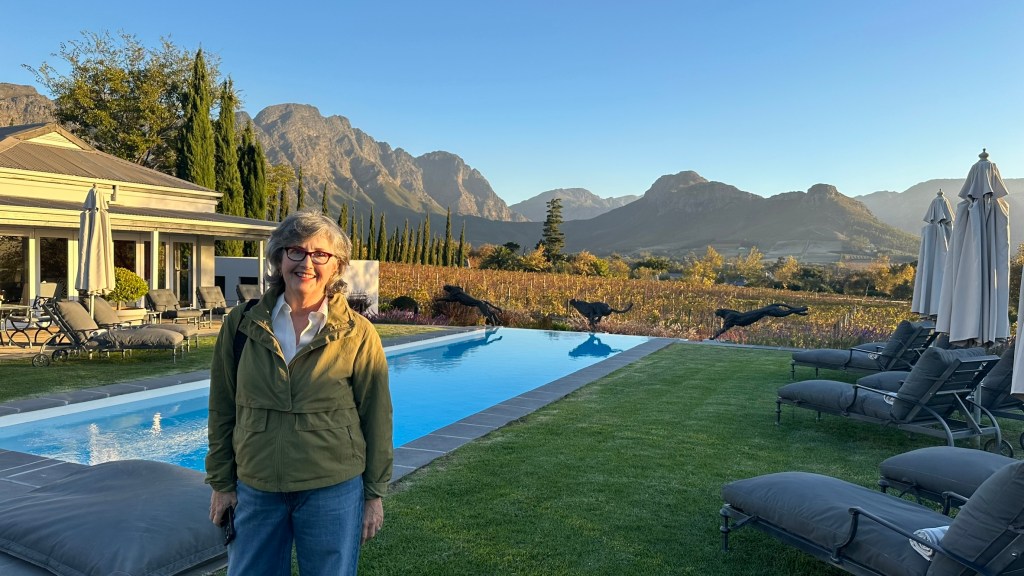
La Providence 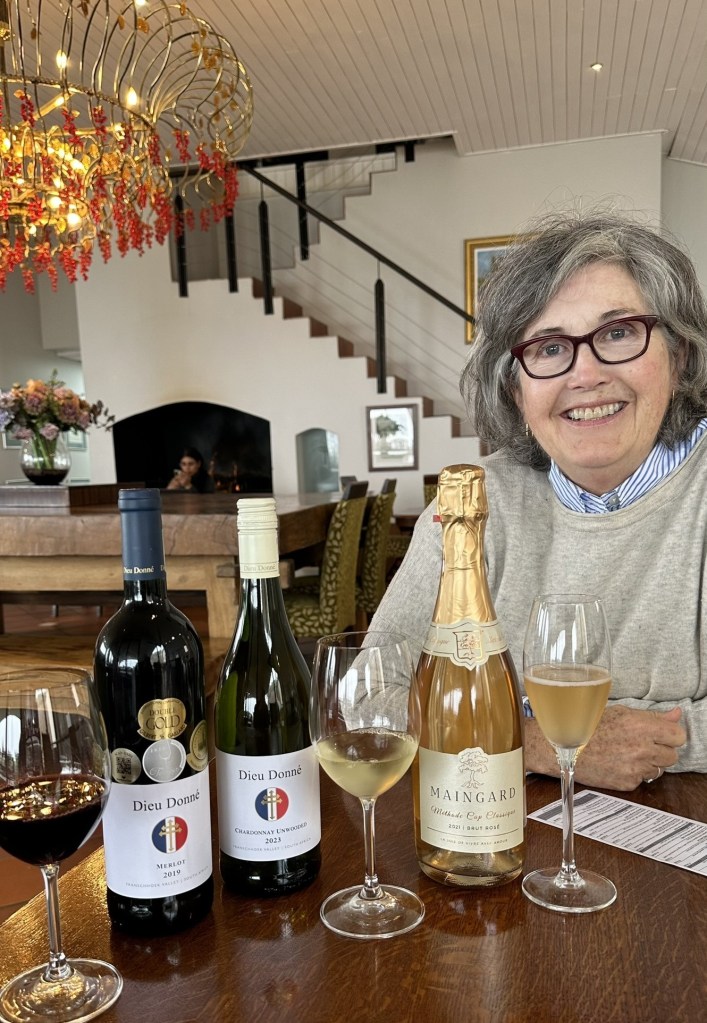
Dieu Donne’s excellent wines 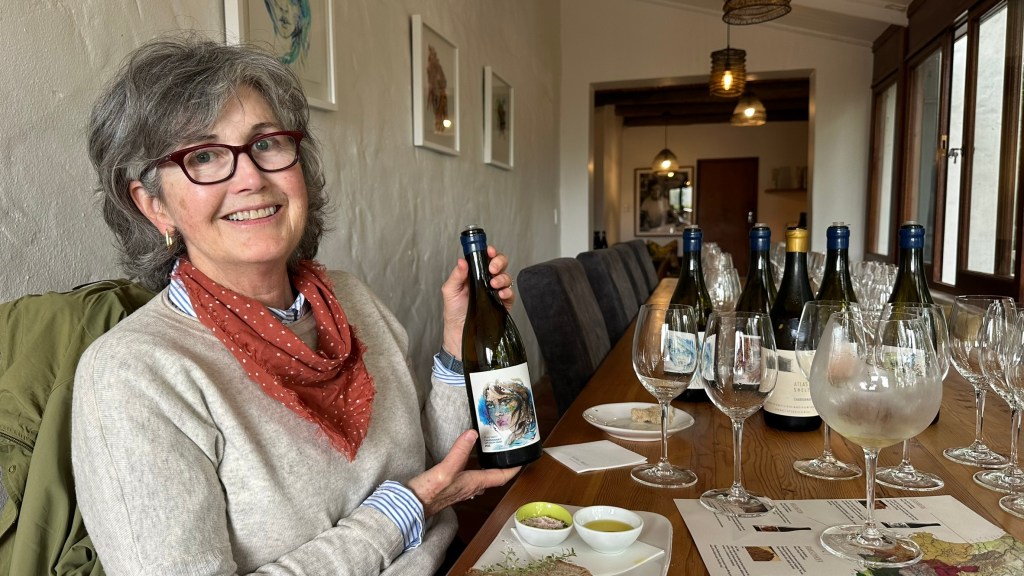
Atlas Swift Chardonnay 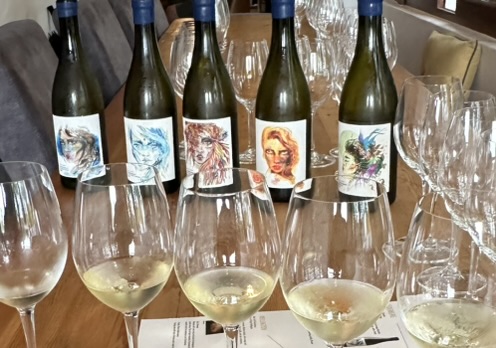
Pretty maids all in a row 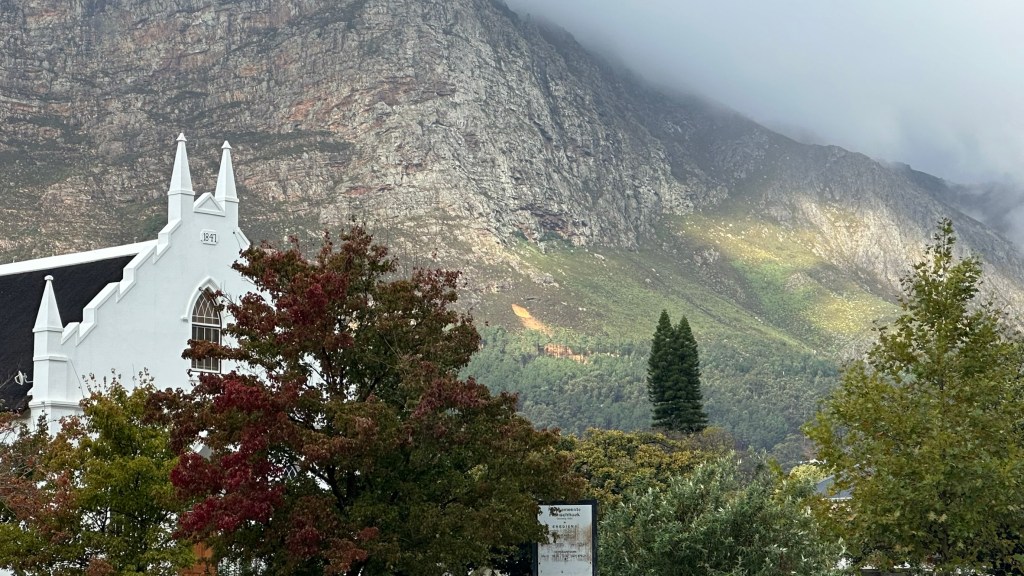
Fall colors in Franschhoek 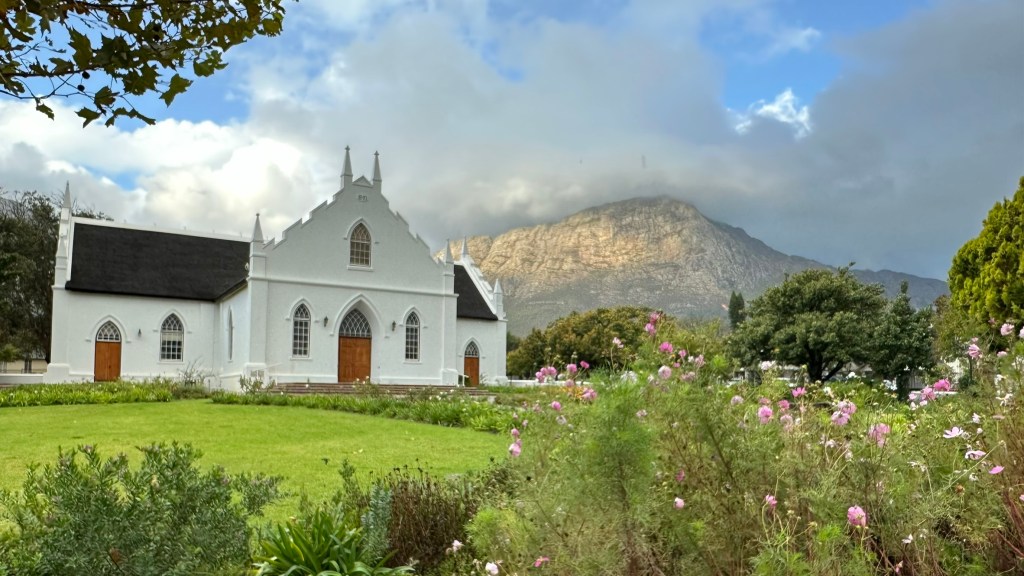
Old Dutch Colonial Church 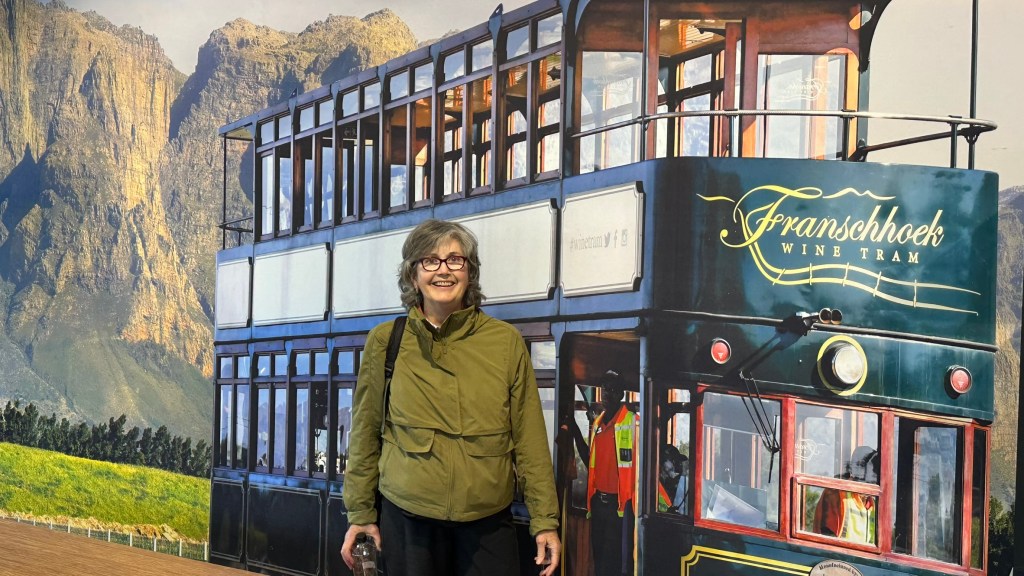
Okay, it’s a mural 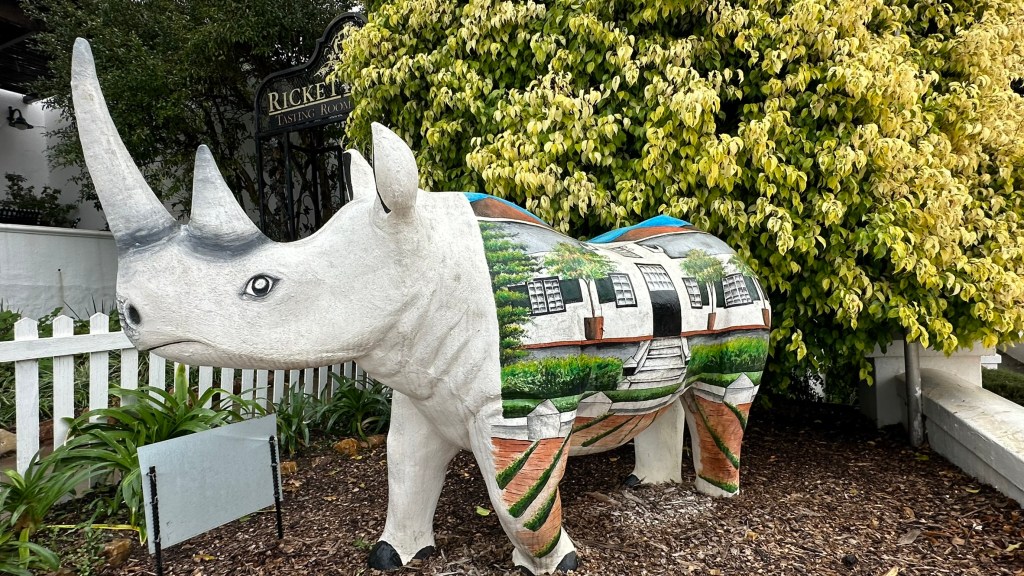
Rickety Bridge art 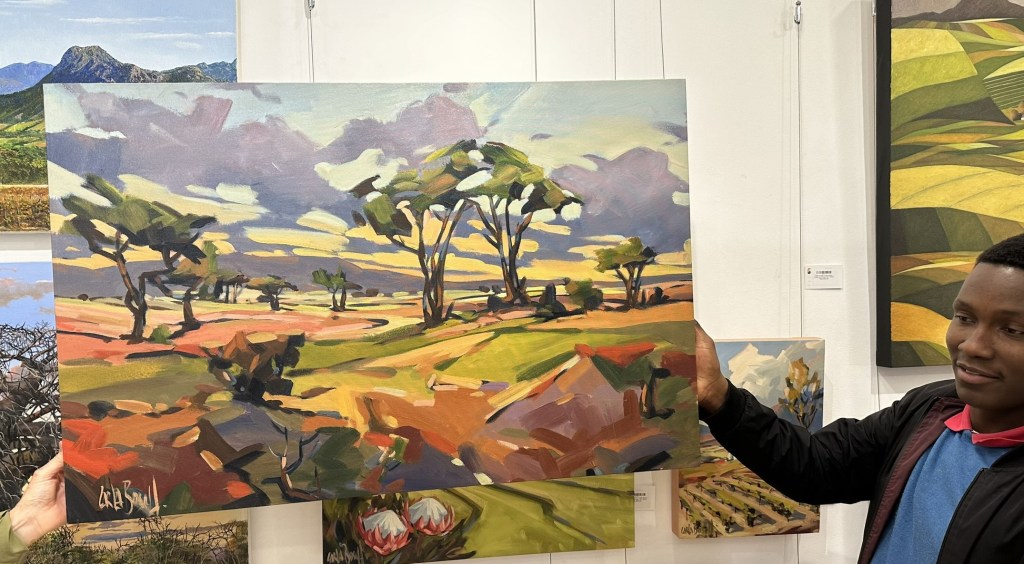
We’ll take it! 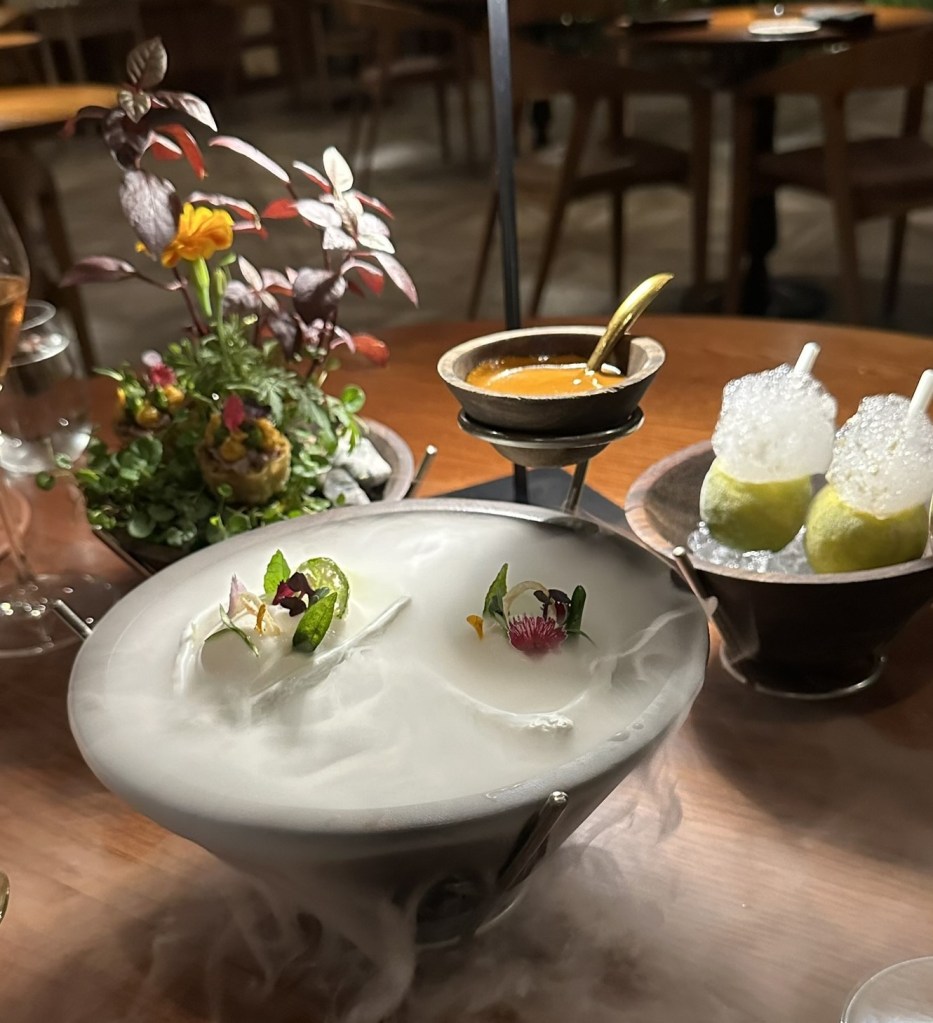
One of the 10 courses at Epice 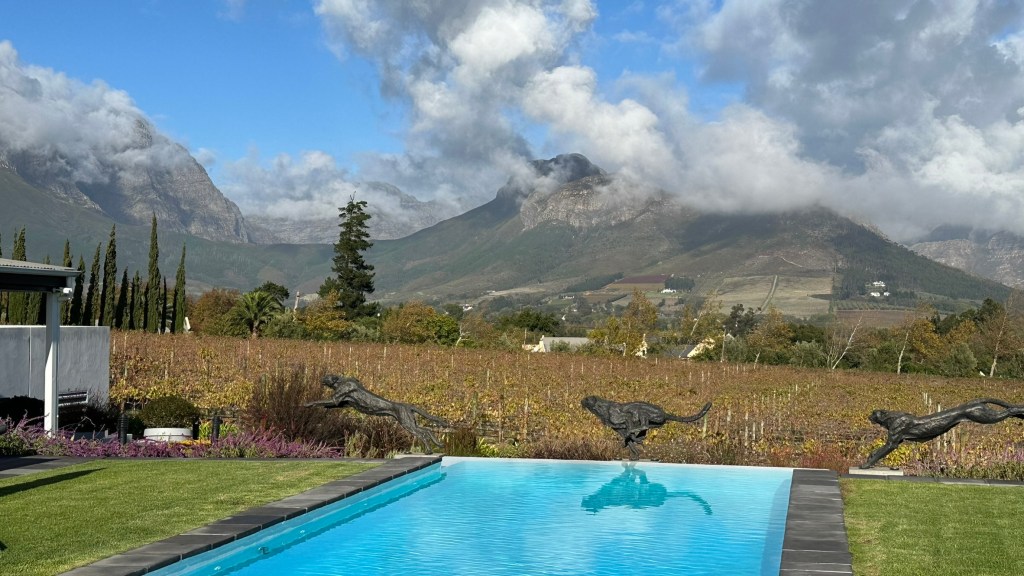
It just doesn’t get old
| Days 15-18 | Cape Town | Cape Heritage Hotel |
Leaving Franschhoek for Cape Town after our two-days of bliss, we made of couple of worthwhile stops along the way: Babylonstoren, a huge farm and wine complex renowned for its massive fruit and vegetable gardens, and the Stellenbosch Village Market, the local farmers market and craft fair that draws people from all around on Saturday mornings.

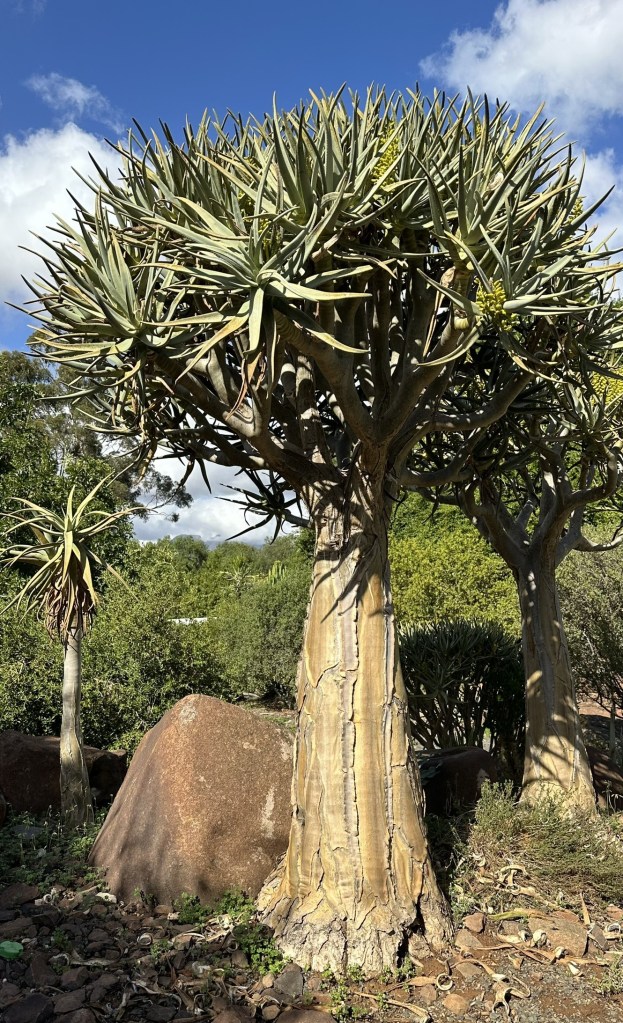
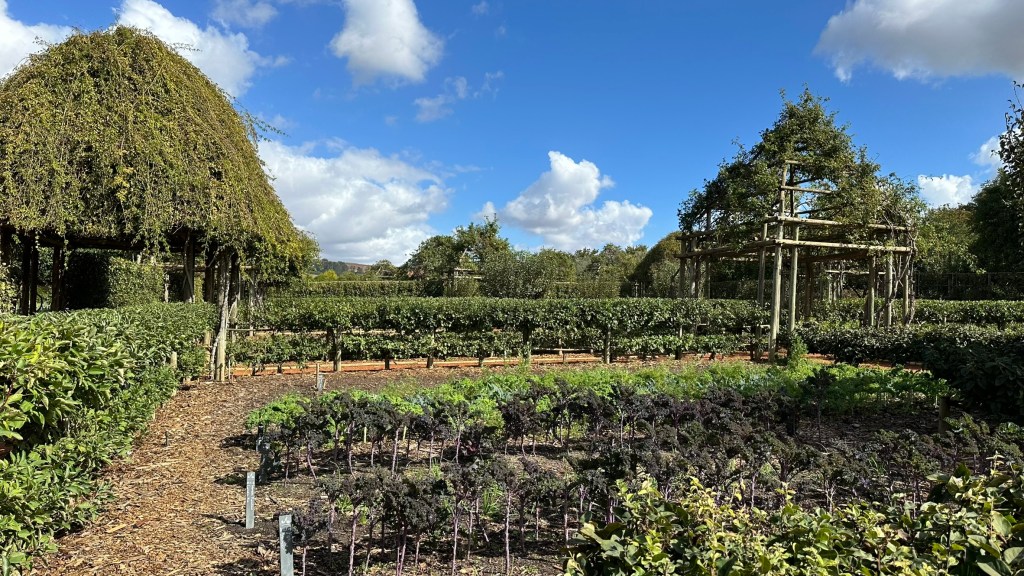
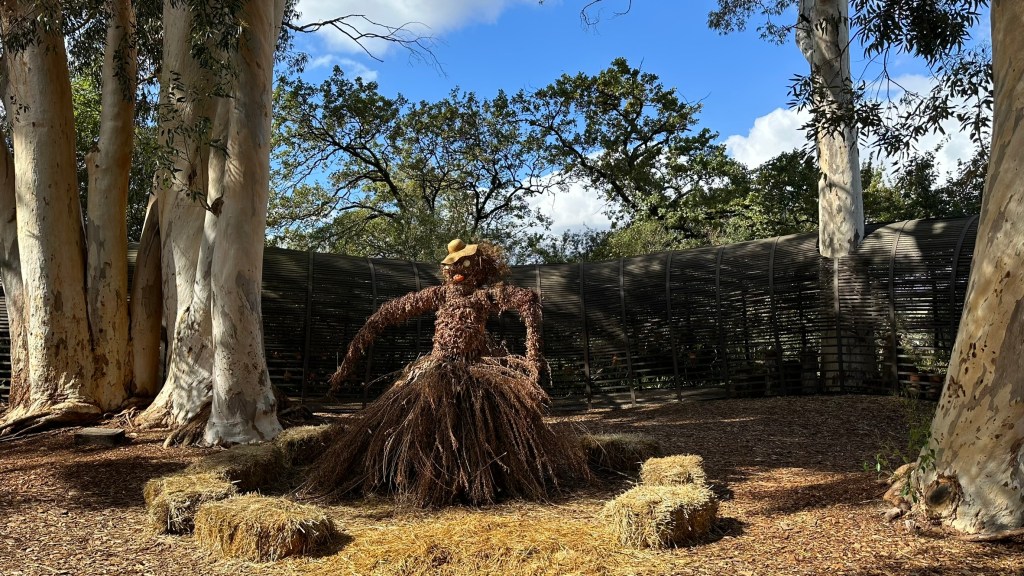
After a quick lunch at the Village Market, we continued down the road to Cape Town, where we would finish up our nearly 3-week greatest hits tour of South Africa. The highways were now bigger and wider, and 45 minutes later — after passing the poverty-stricken, crime ravaged neighborhoods of the Cape Flats — we arrived at our hotel in Cape Town’s CBD district. My local connection, Ian, lives in Cape Town and had recommended the V&A Waterfront, but we opted for the CBD for its central location and relative cornucopia of things to do and see — shopping for Michelle, more restaurants and nightlife for both of us — and the V&A struck me as being a bit too much like San Francisco’s Fishermans Wharf: fine to see as a tourist but not really where I want to stay. I had read good things about the Cape Heritage Hotel and liked its historic charm; here’s my review.
Cape Town is a world-class city, brimming with natural beauty and urban delights. From stunning mountains and beaches to vibrant neighborhoods, an incredibly scenic coastal drive, fantastic food, amazing hospitality, even penguins, it has it all. In many ways, it is easy to compare to Sydney or San Francisco. Its dramatic setting—framed by Table Mountain and stretching down the Cape Peninsula to the Cape of Good Hope—offers endless opportunities for exploration.
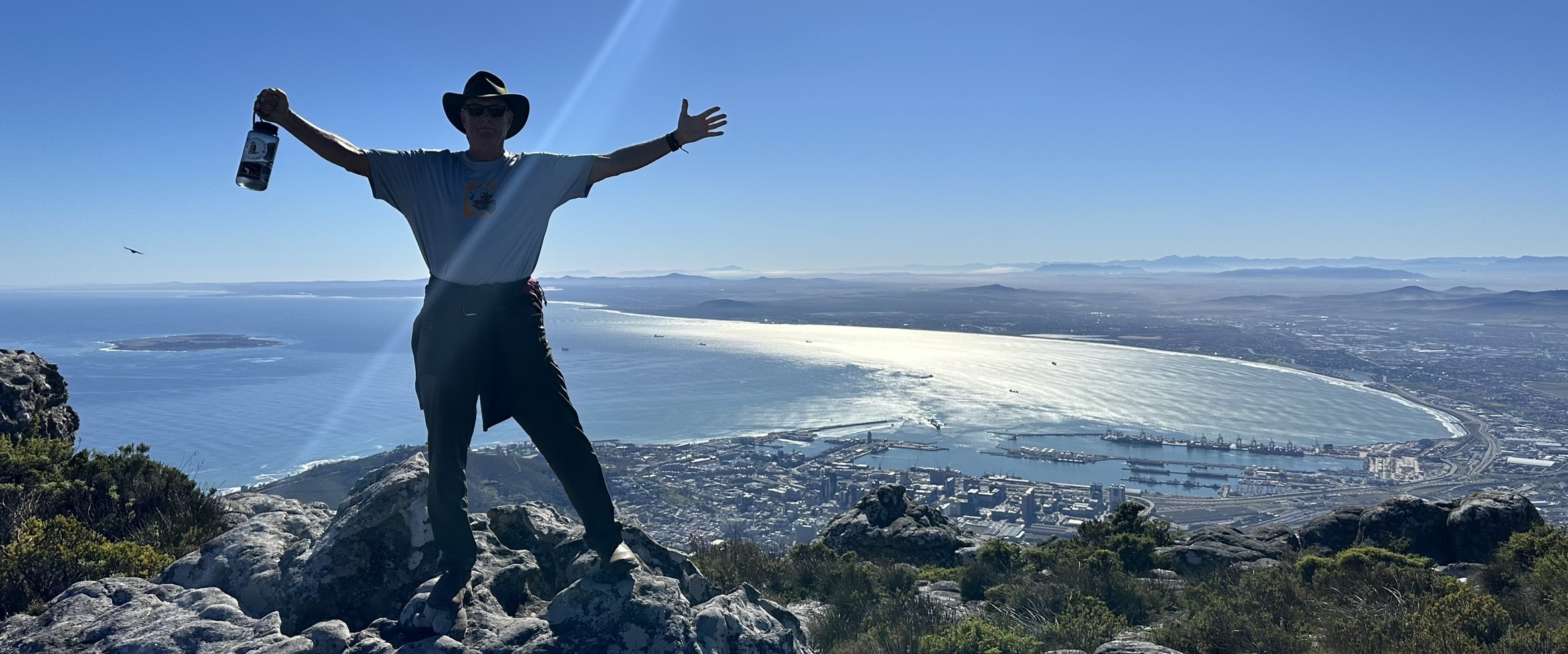
Four days in Cape Town felt just right; three would have been too short, but a week or more would be ideal for those who enjoy big cities. Highlights:
- Kirstenbosch National Botanical Garden is acclaimed as one of the world’s best botanic gardens. It was certainly the most beautiful I’ve ever seen. Set against the eastern slopes of Table Mountain, it was first established in the early 1900’s by Henry Welch “Harold” Pearson, the newly established chair of Botany at the South African College. Among other delights, a treetop walkway built on lightweight metal supports offers great, birds eye views and sways when you walk it. Pearson’s grave marker in the garden reads “If ye seek his Monument, look around”.
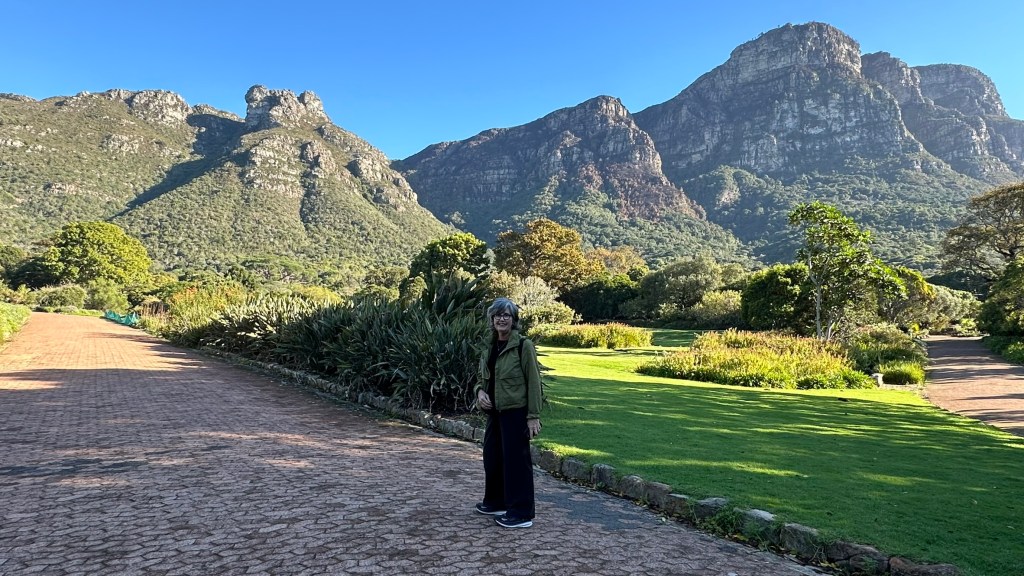
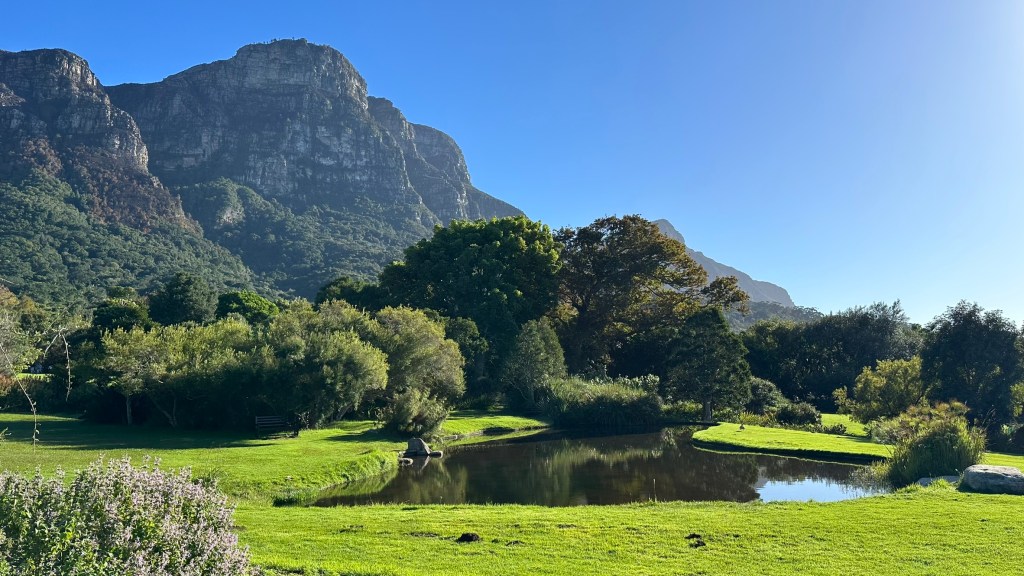
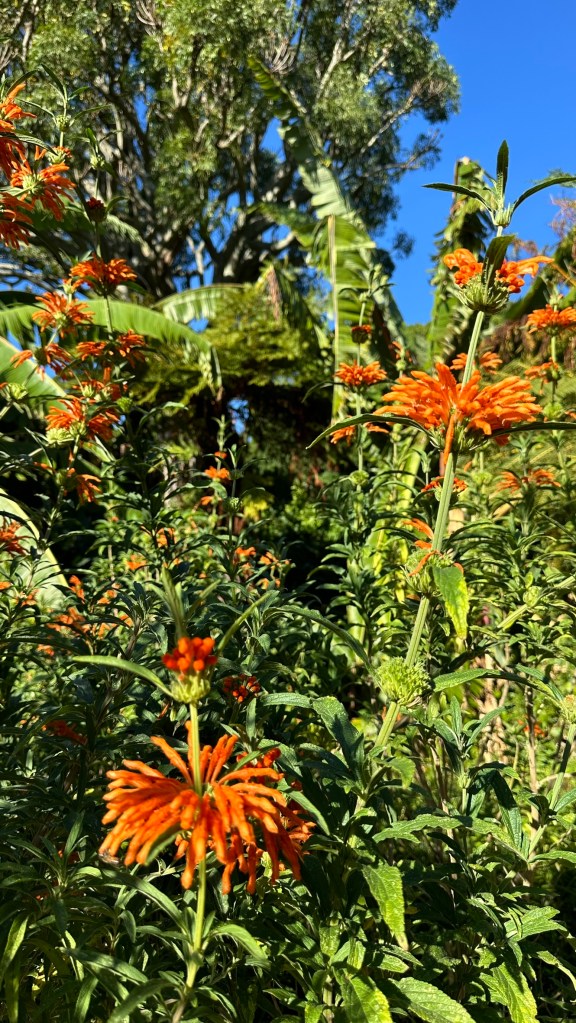

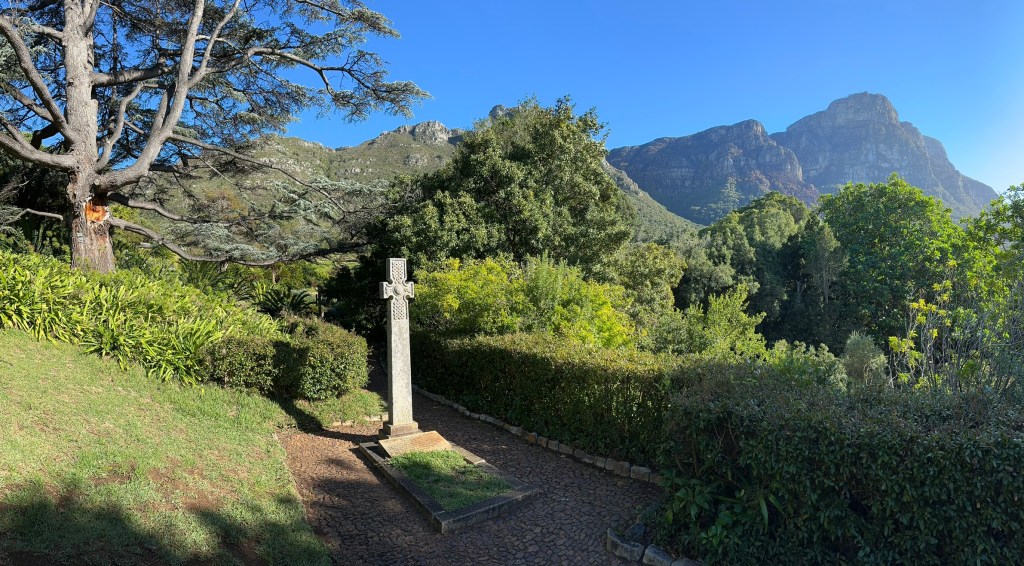
Harold Pearson’s grave 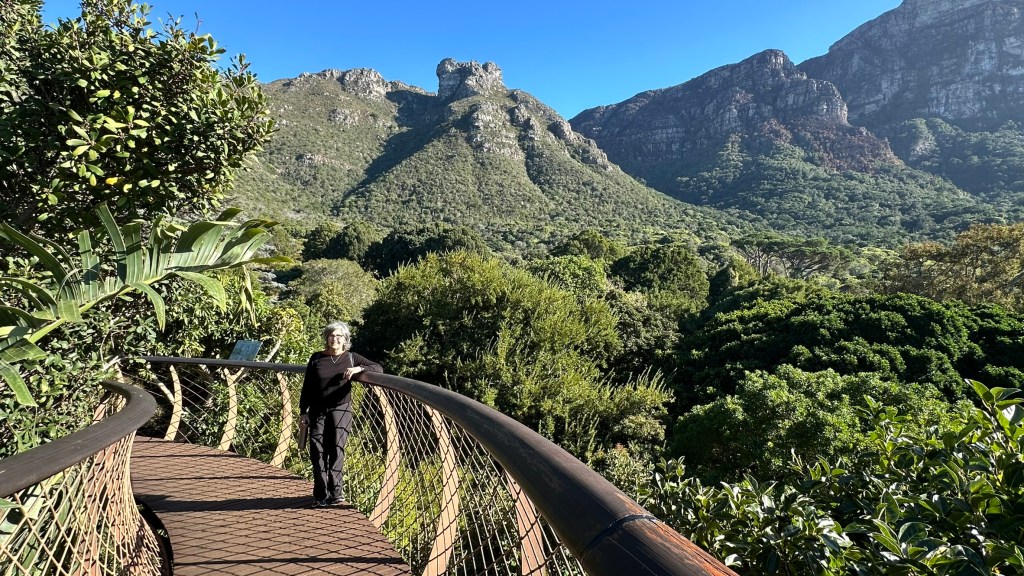
Treetop walkway
- Driving a loop around the Cape Peninsula took an entire day but was well worth it. We started early with a stop at Kirstenbosch National Botanical Garden, then made additional stops in pretty Kalk Bay, Boulder’s Beach (home to a colony of African penguins), and the Cape of Good Hope. Our drive back to Cape Town took us along the spectacular Chapman Peak Drive, Beach and the 12 Apostles, a row of monoliths towering over the coast road and Atlantic Ocean.
- Kalk Bay is a picturesque fishing village tucked between the mountains and False Bay. Ian suggested we stop here for the great coffee, pastries and harbor view at the Olympia Cafe. Great call!
- The Cape of Good Hope is the southwestern most point of the African continent (not the southernmost point, as noted earlier). Like its geographical counterpart, South America’s Cape Horn, the cape has been a major waypoint for seafarers going back centuries. The bones of many a sunken ship lie at the bottom of the ocean here. There is a great hike from the point to the New Cape Point Lighthouse on the eastern side of the narrow peninsula.
- Fresh mussels, grilled octopus, fries, great beer and live music on a sun-drenched patio at the Fisherman’s Garden in the seaside village of Kommetjie made for the perfect late lunch stop driving back up the Atlantic side of the Cape.
- Chapmans Peak Drive, overlooking Hout Bay, is one of the most spectacular drives anywhere, similar to California’s Big Sur highway but only 9 kilometers long. I could not resist stopping on the Chapman Peak Road to watch the wind ripping the tops off the waves with gusts to 50mph. I could barely open the car door without losing a limb!
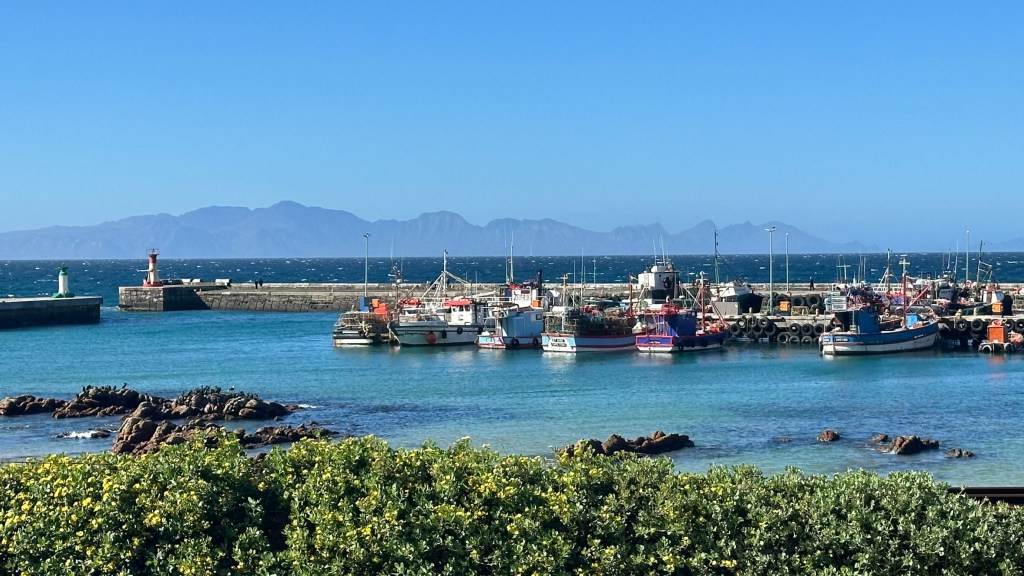
Kalk Bay’s pretty harbor 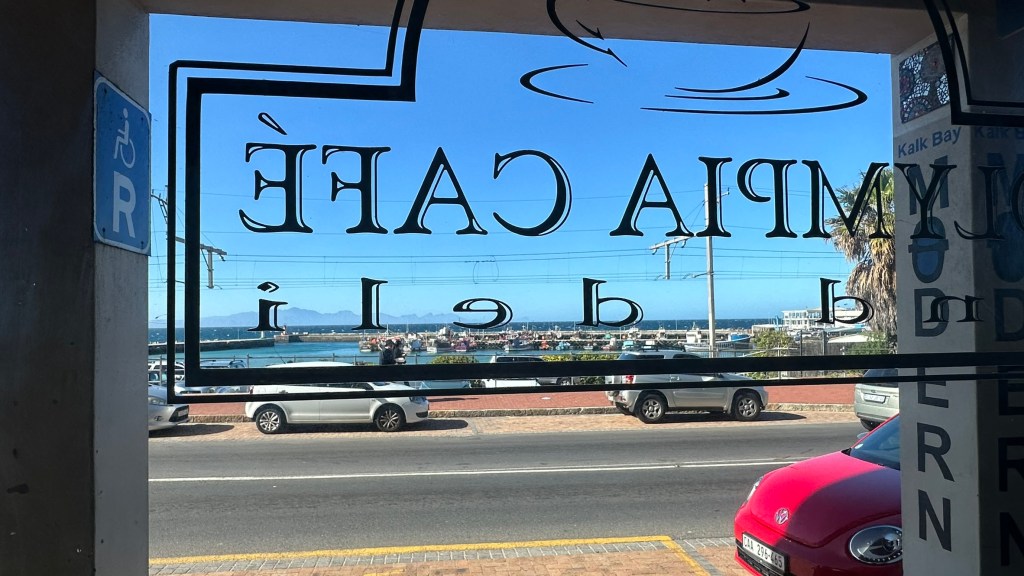
Olympia Cafe in Kalk Bay 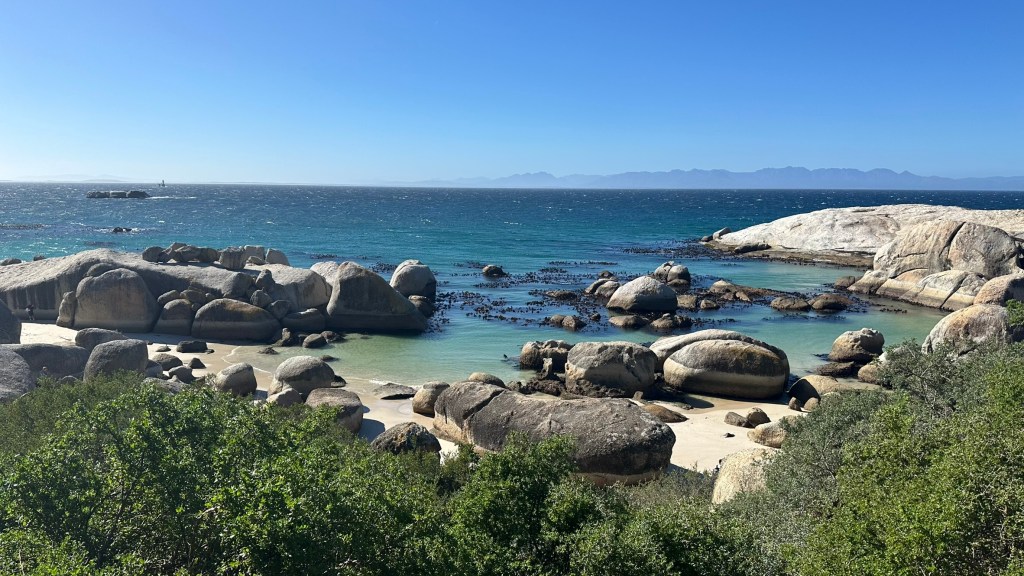
Boulders Beach 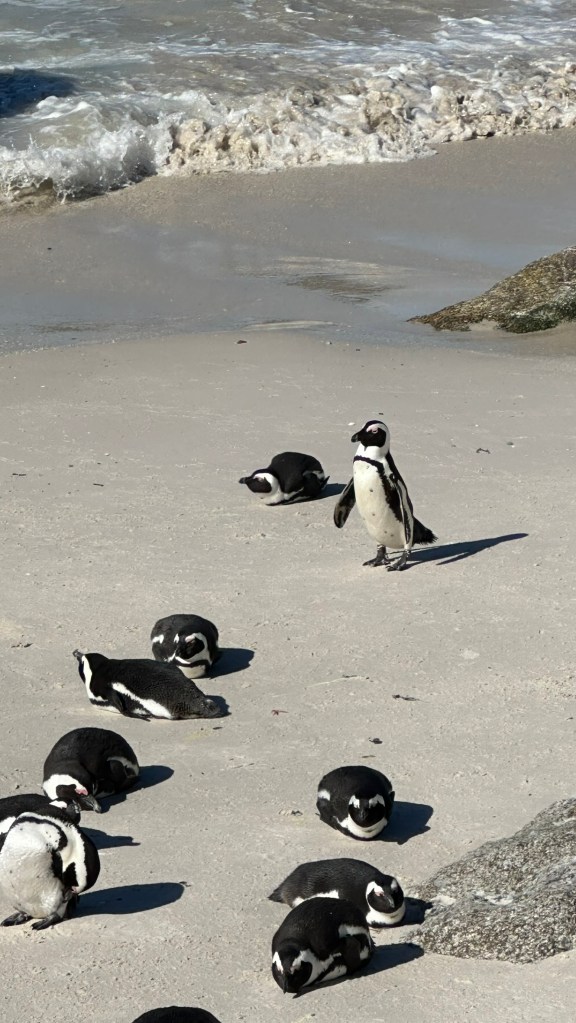
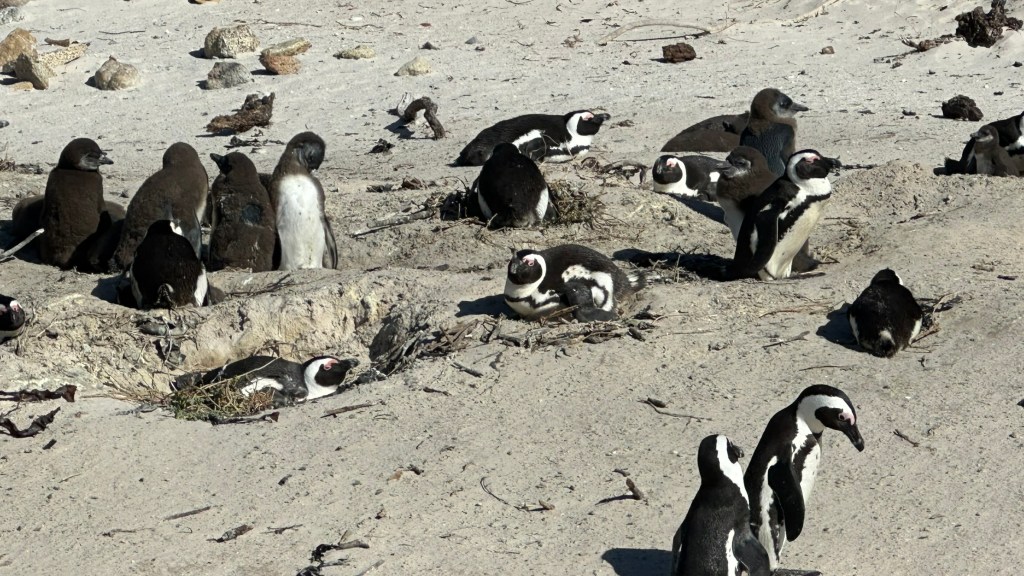
African Penguins 
Road to the Cape thru Table Mountain NP 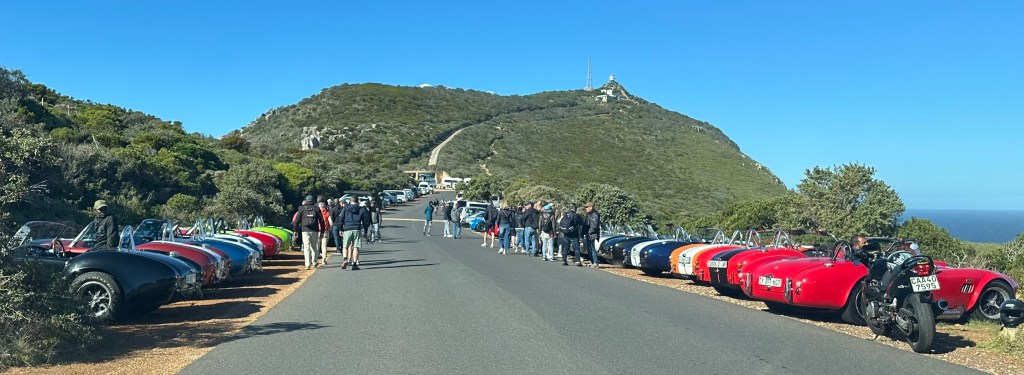
Cape Point Lighthouse… 
…attracts a lot of classic Ford Cobras! 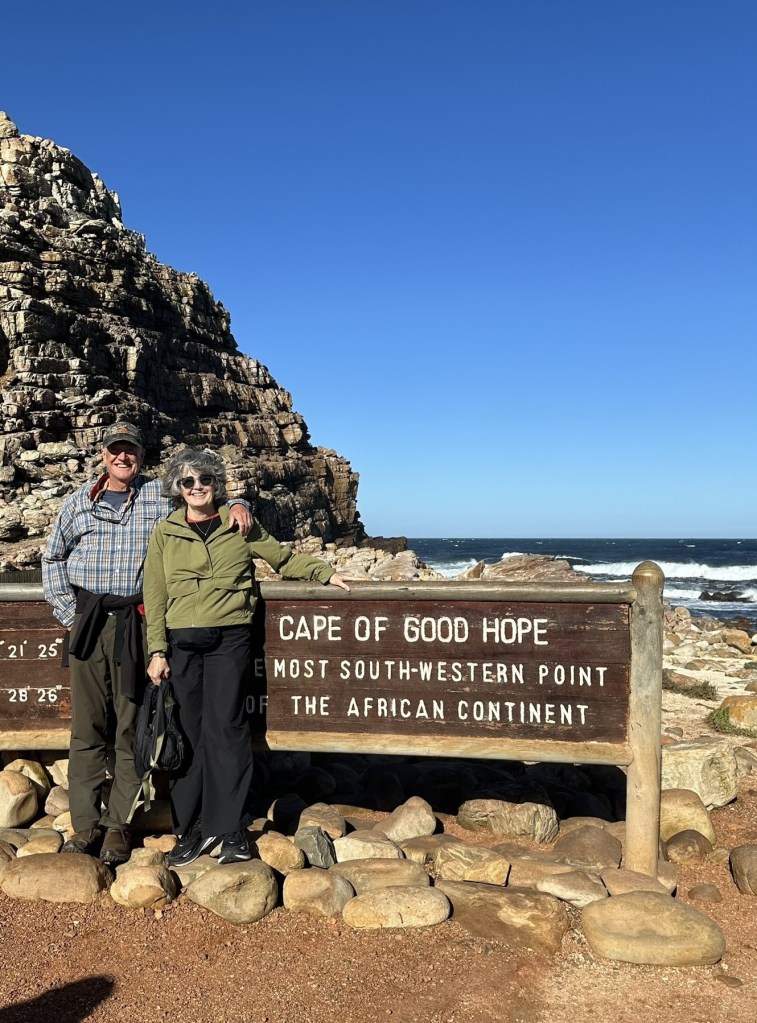
Southwestern most point (not southernmost) 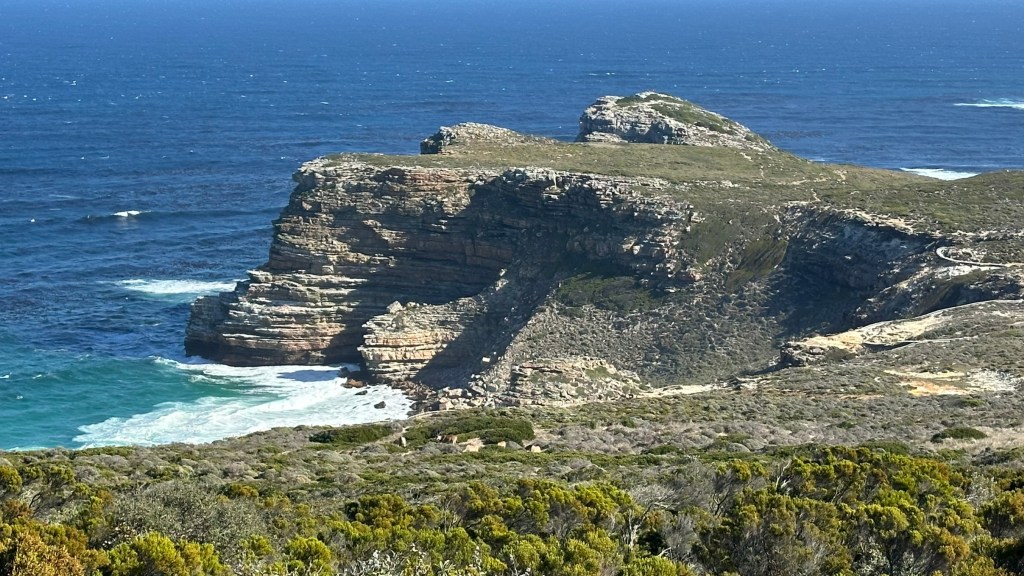
Cape of Good Hope 
Good times at Fisherman’s Garden 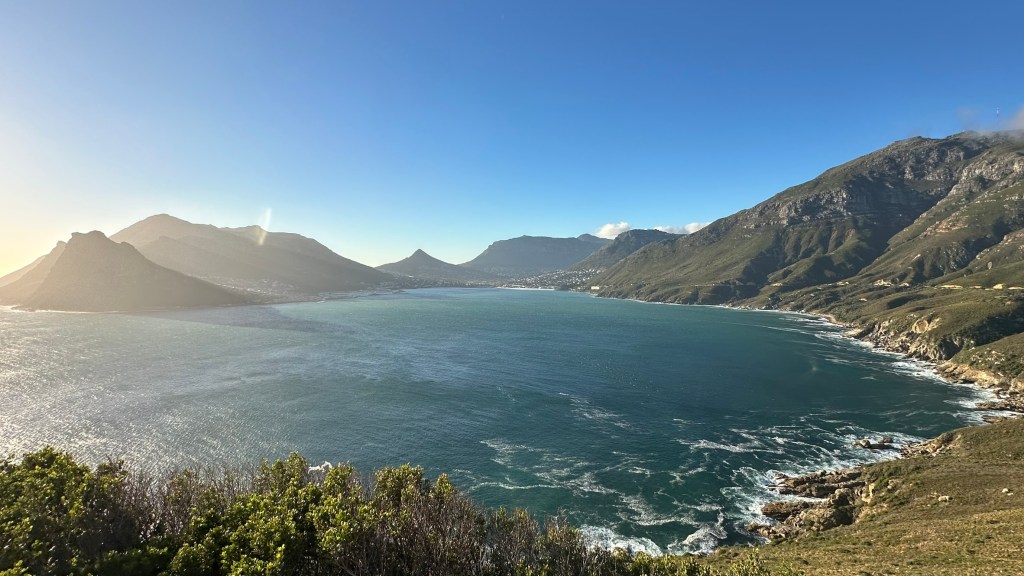
Hout Bay and Chapman’s Peak Road 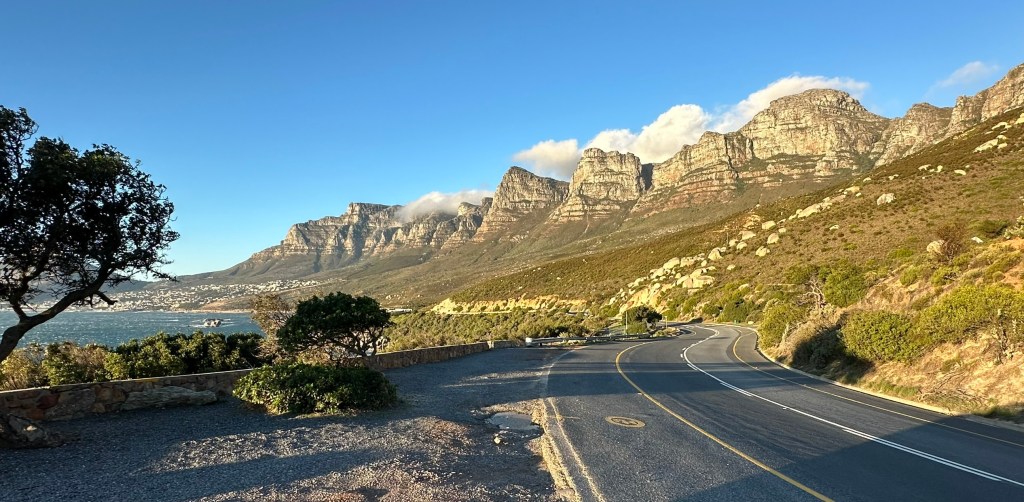
12 Apostles
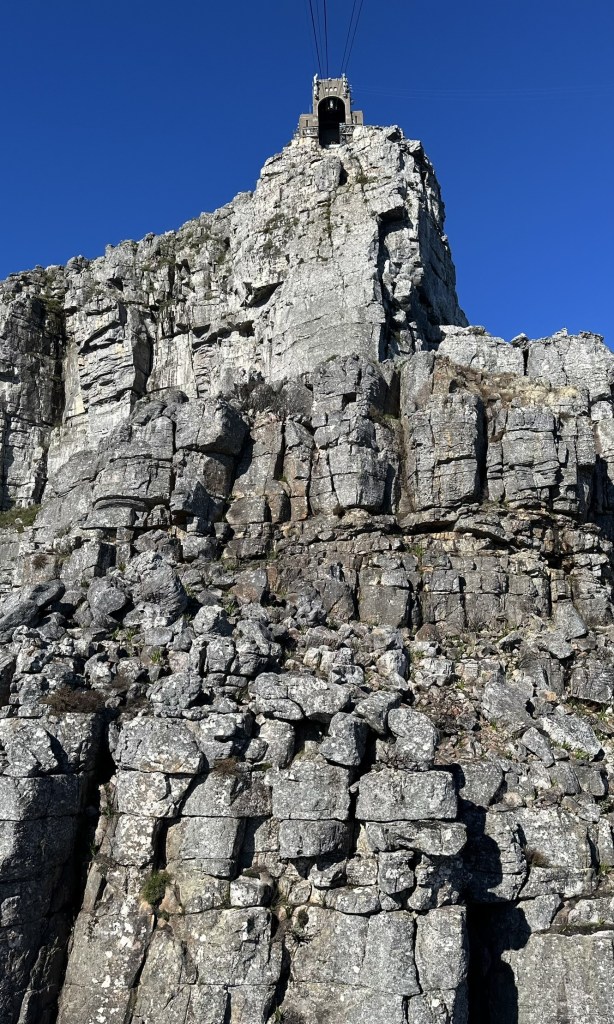
- Taking the funicular to the top of Table Mountain is a must-do. Hiking up and down is an option as well. Table Mountain is entirely flat on top with tons of great hiking to dramatic cliffs, affording fantastic views over Cape Town’s waterfront, Robben Island (where Nelson Mandela was imprisoned for 27 years) in the distance, Lion’s Head and Signal Hill, Cape Flats and Winelands to the east, and the 12 Apostles to the south.

View over Cape Town waterfront 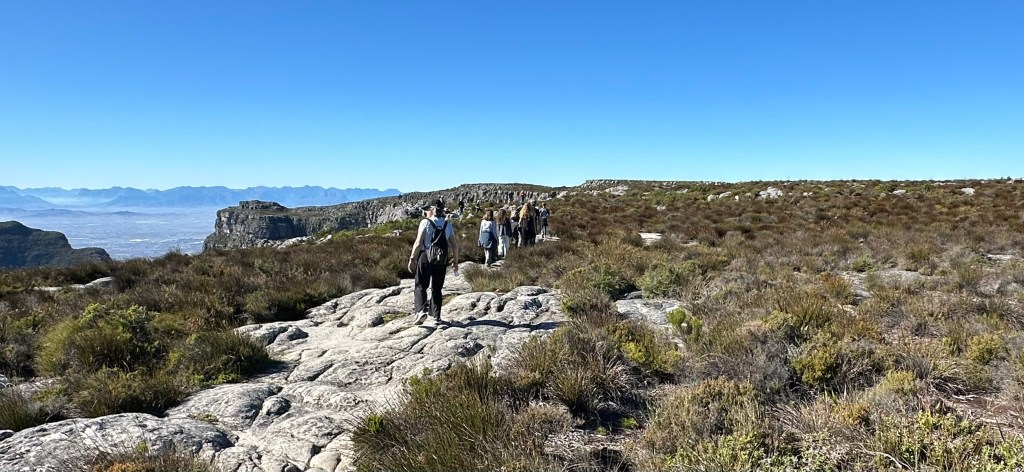
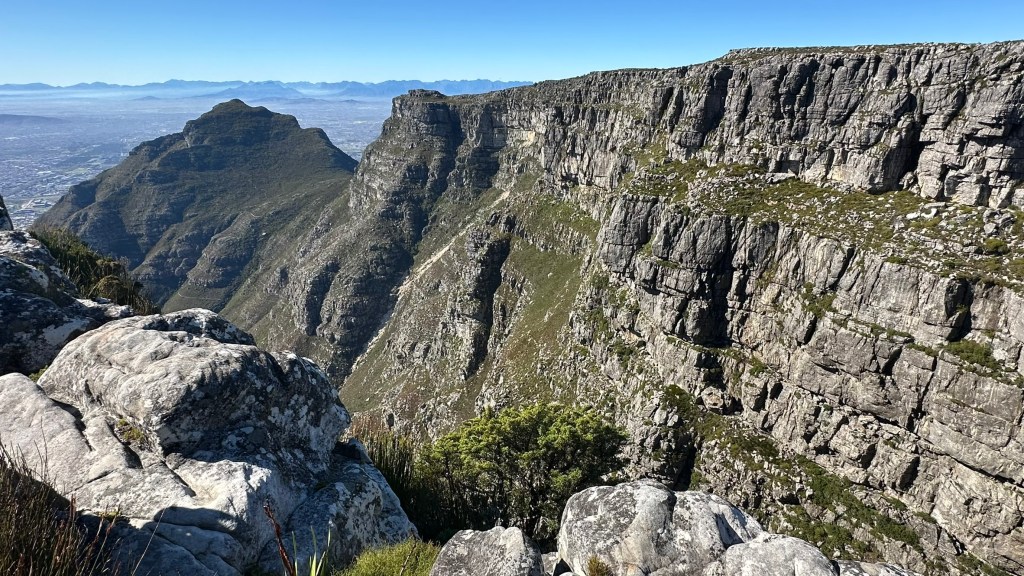
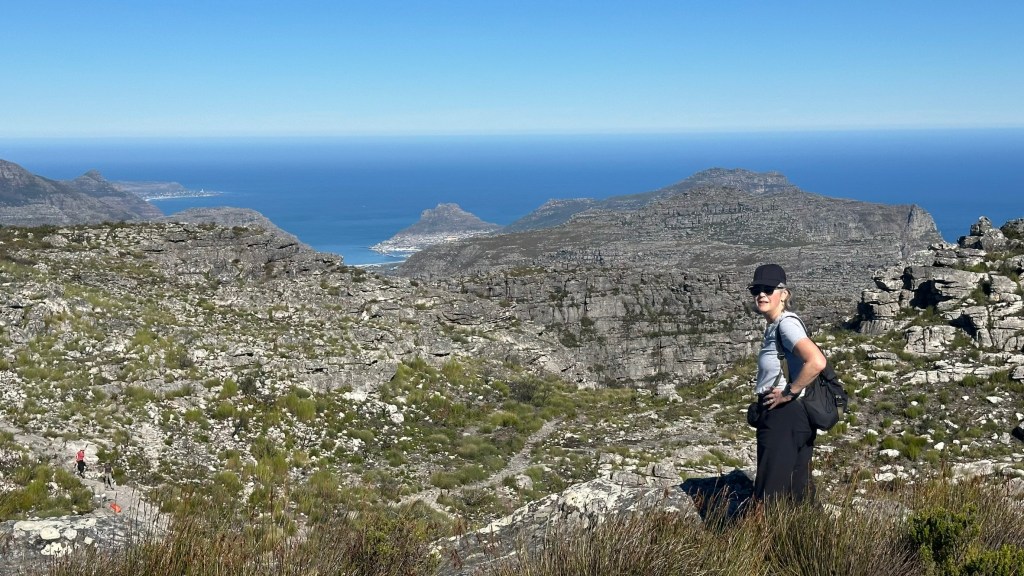
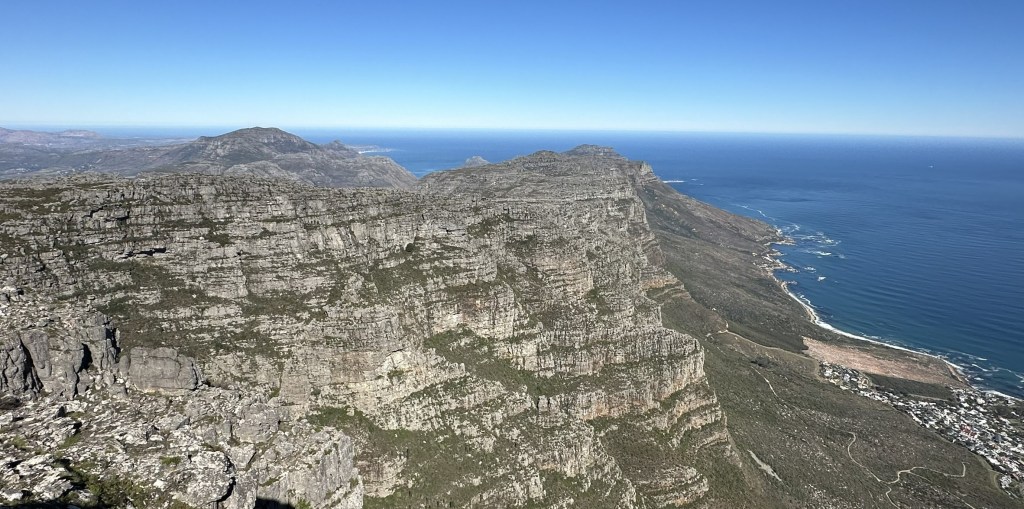
- Strolling through the colorful and historic Bo Kaap neighborhood was cool, despite getting hounded by several guys competing to find you a street parking space for a “fee”. Some of the locals were impressed we stopped by a local doner kebab joint for lunch.
- Hiking around the top of Signal Hill was a nice stretch of the legs with more scenic views, including up-close watching hang gliders taking off and soaring over the city below.
- A years-in-the-making reunion with my former business partner, Ian, at his home south of the city for the traditional braii he had always promised was a personal highlight for me. After all, if it weren’t for Ian, we might never have made this trip, and his advice helped make it the best it could be!
- Sunset cocktails from the rooftop bar on the Silo Hotel in the V&A Waterfront and dinner at Nikkei Japanese-Peruvian fusion restaurant were unexpected treats.
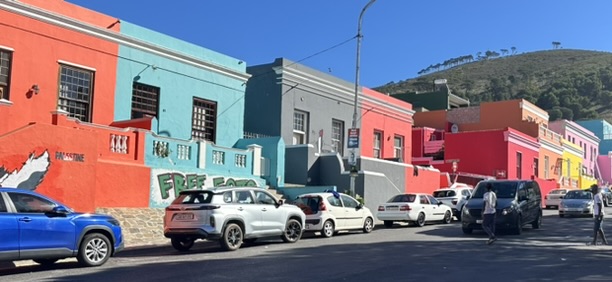
Bo Kaap 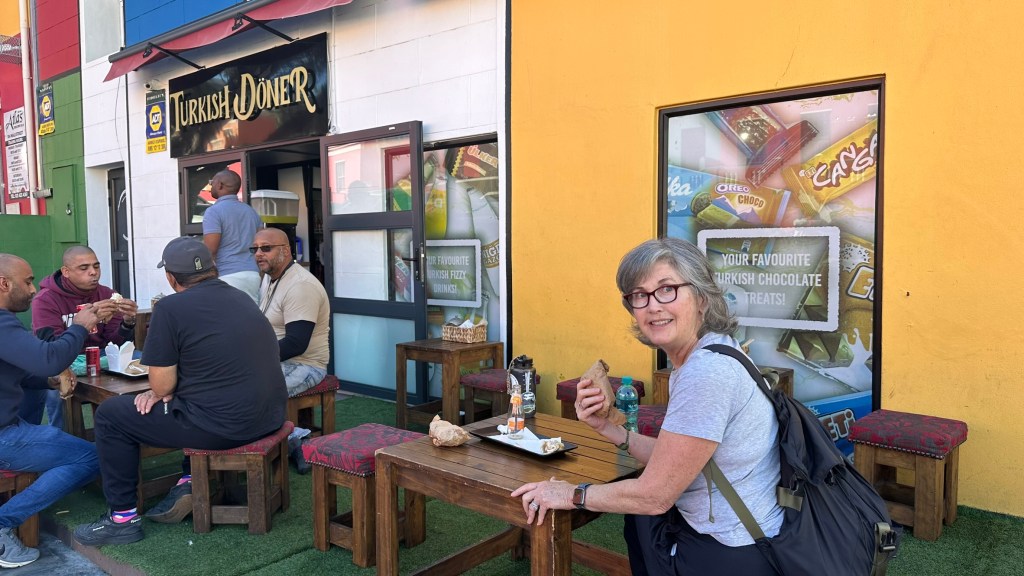
Doner kebab lunch 
Street art 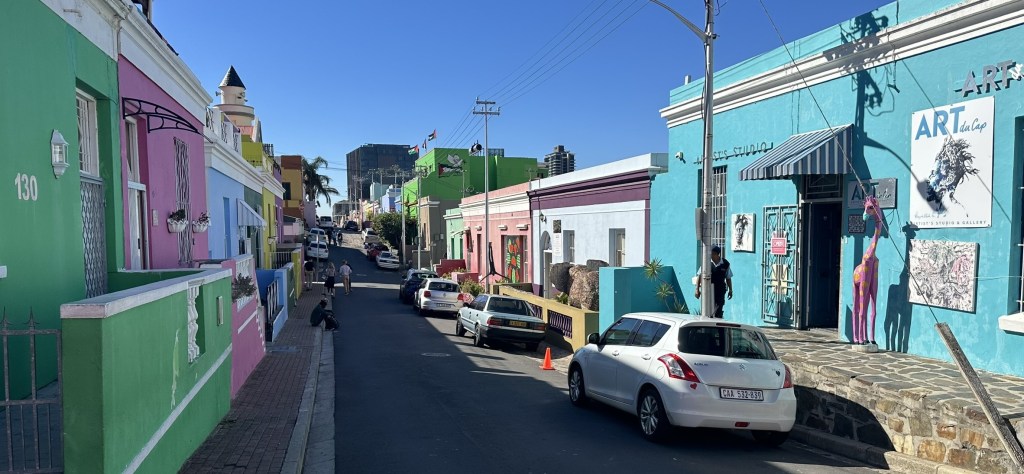
Bo Kaap art gallery 
Signal Mountain 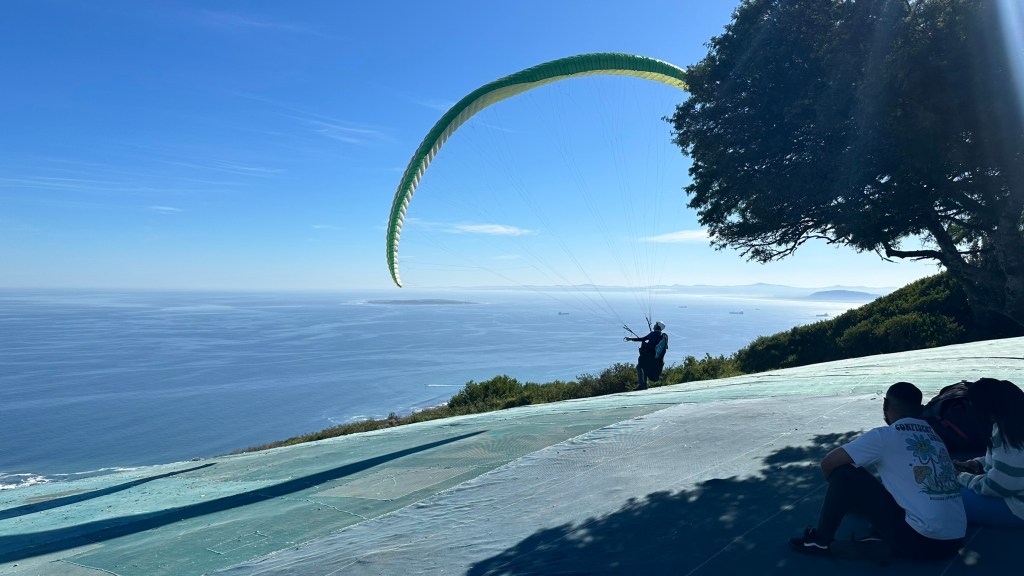
Hang glider launch pad 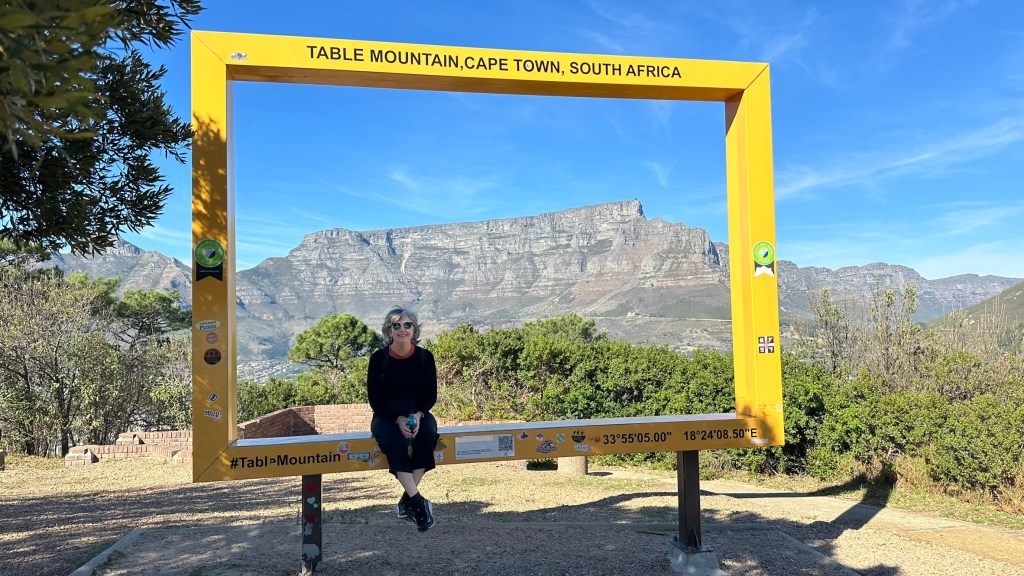
Pretty as a postcard 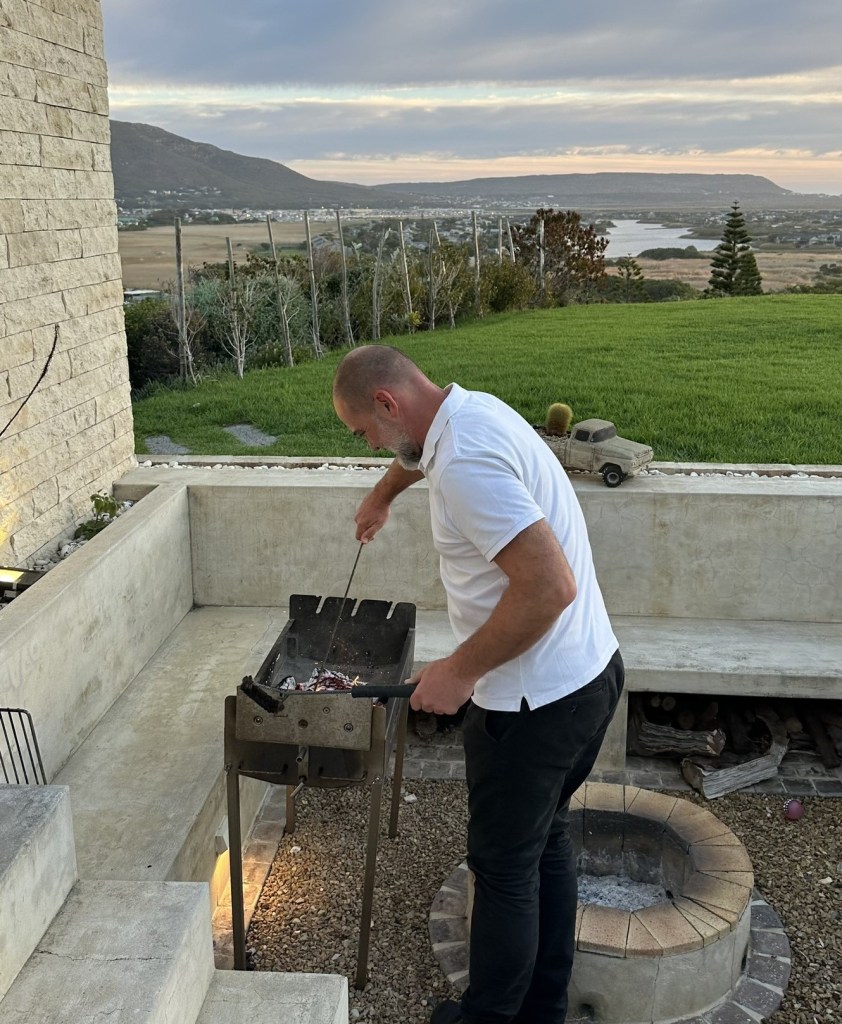
Ian, the braai master 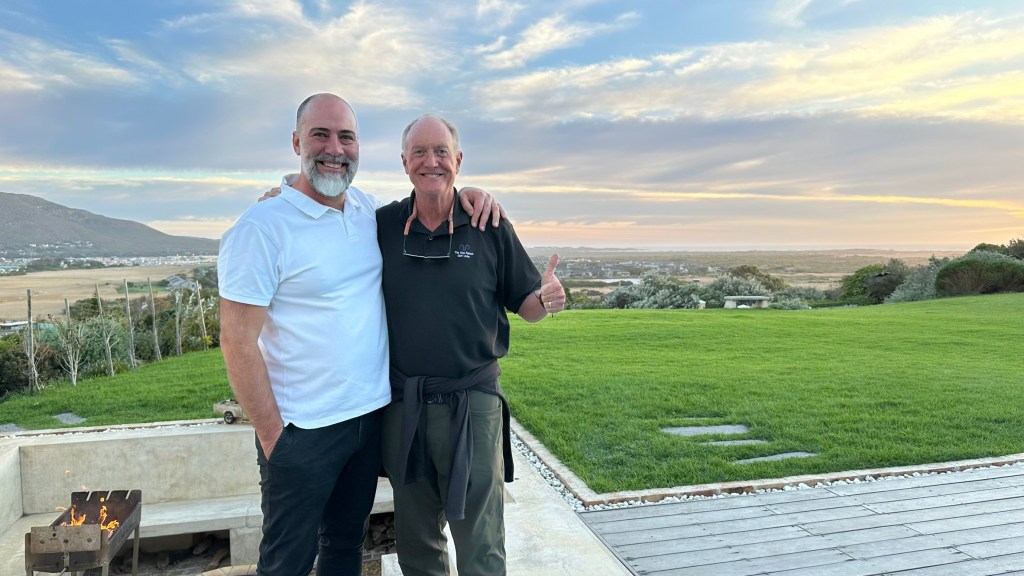
Nice view from Ian’s front yard 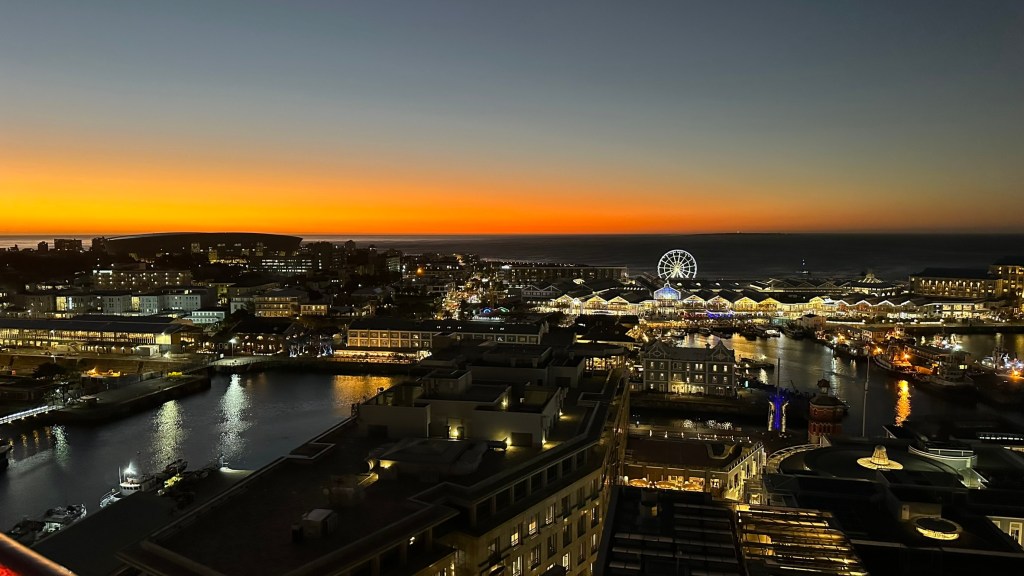
Sunset from the Silo Hotel rooftop 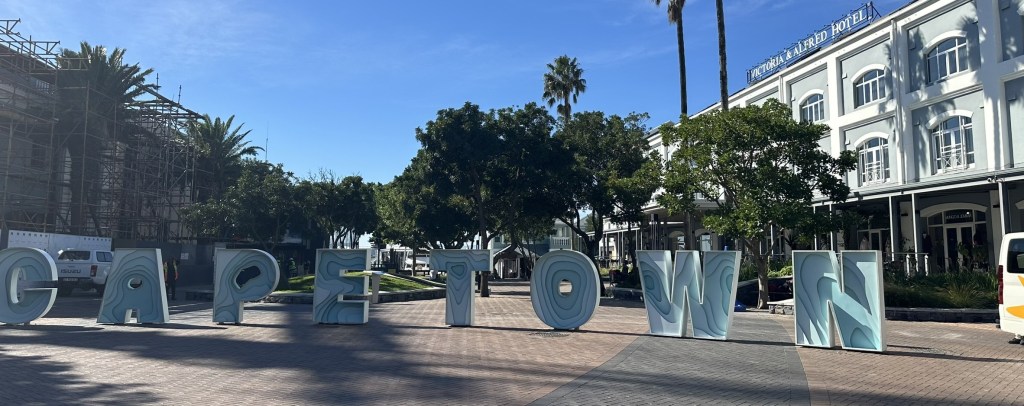
Several other activities that were on our wish list but we didn’t get around to included hiking the Lion’s Head, checking out the Oranjezicht City Farm Market, and spending a day at Camp’s Beach or Clifton Beach (with lunch at Codfather Seafood & Sushi).
Thus ended our nearly three-week South African odyssey. And while we would be saying goodbye to South Africa, our travels were not finished, as our final day in Cape Town conveniently ended with a redeye to Amsterdam, where we looked forward to meeting up with our daughter, son-in-law and young granddaughter, all of whom would be arriving the next day as well. If you wind up going to South Africa, say hi for me and enjoy every braai!
Random notes and tips:
- As noted earlier, we picked these three destinations — Kruger, Garden Route and Cape Town (which technically includes Franschhoek and the Winelands) — as our local contact, friend and advisor steered us strongly to those destinations, the “best of South Africa”. He told us Johannesburg, while once a great city, was not worth visiting.
- If you are starting in the Kruger (or anywhere on safari in the African bush) and have to cross several time zones to get there, I can’t recommend strongly enough going somewhere else in the same time zone to get acclimated. The 4:30-5:00am wakeup call for those morning game drives would be brutal suffering from jet lag.
- You can get by without a car in Cape Town, even if you want to tour the entire cape for a day as we did if you don’t mind hiring a driver; there are plenty of such tours to be had. We kept our car, which was essential for the Garden Route, for the convenience, though hotel parking cost approximately $20/day.
- They drive on the left side of the road throughout South Africa, and driving after dark along the Garden Route is not recommended due to the risk of large animals crossing the road. I used Sixt Rental Car, which has always served me well traveling abroad.
- If you have more than three weeks (or the 18 days we actually had), I would spend more time on the Garden Route, or possibly a side trip to Botswana (more wildlife and river expedition) or Namibia, which more than one person told me was the coolest, most strikingly beautiful place in all of Africa. If you have less time, Struisbaai and Hermanus would be the first things I would cut, then possibly one day in Cape Town — or Franschhoek if you don’t like wine (seriously, is there anyone?).


 Once in a while you get shown the light...
Pingback: If It’s Tuesday, It Must Be… 2 weeks in Amsterdam, Ireland and London | Once in a while you get shown the light…