Spring 2024 Trip Notes & Itinerary

Overview: A quick 3-day, 3-night layover in Istanbul, Turkey, on our way to South Africa, with quality time spent in the Eminönü, Sultanahmet, Karaköy and Kadiköy neighborhoods.
Bottom Line: Why Istanbul, and why only three days? Well, the second question is one we asked ourselves repeatedly long before our time was up! We had decided we needed three days somewhere to get acclimated to the time zone before heading to South Africa. After all, we were going to be getting up before sunrise and didn’t want to be dealing with jet lag. After considering a couple locales, we settled on Istanbul, a place we had never been.
We could not have made a better choice. Throughout our three-day stay, we kept asking ourselves, “How is it we have never been here before?”. What an amazing city — the only place in the world you can take a quick ferry or bridge from Europe to Asia and back, and a history that includes the Byzantine and Ottoman empires with 1,000 years of Christianity in between when the city was called Constantinople! Turkey became an independent republic just 101 years ago.
We packed a lot of sights and good food into a short time. The major historical sites are all packed in the old Sultanahmet District and all are must-sees. That said, the Asian side of Istanbul was much less touristy and had a lot going on — and absolutely worth a day or more. I could not imagine spending fewer than 3 days here, though it clearly is worth more. Not the place I would want to live necessarily — the call to prayer five times a day was certainly a cultural event I appreciate and respect, but it’s not really my cup of tea and after a few days… well, enough said.
| Duration | Where We Stayed |
|---|---|
| Days 1-3 | Hotel Romance Istanbul (Sultanahmet District) |
Highlights:
- Guided walking food tour of the Egyptian Spice Market, Eminönü waterfront, and Grand Bazaar was really good, and gave us a great historical overview of these major landmarks.
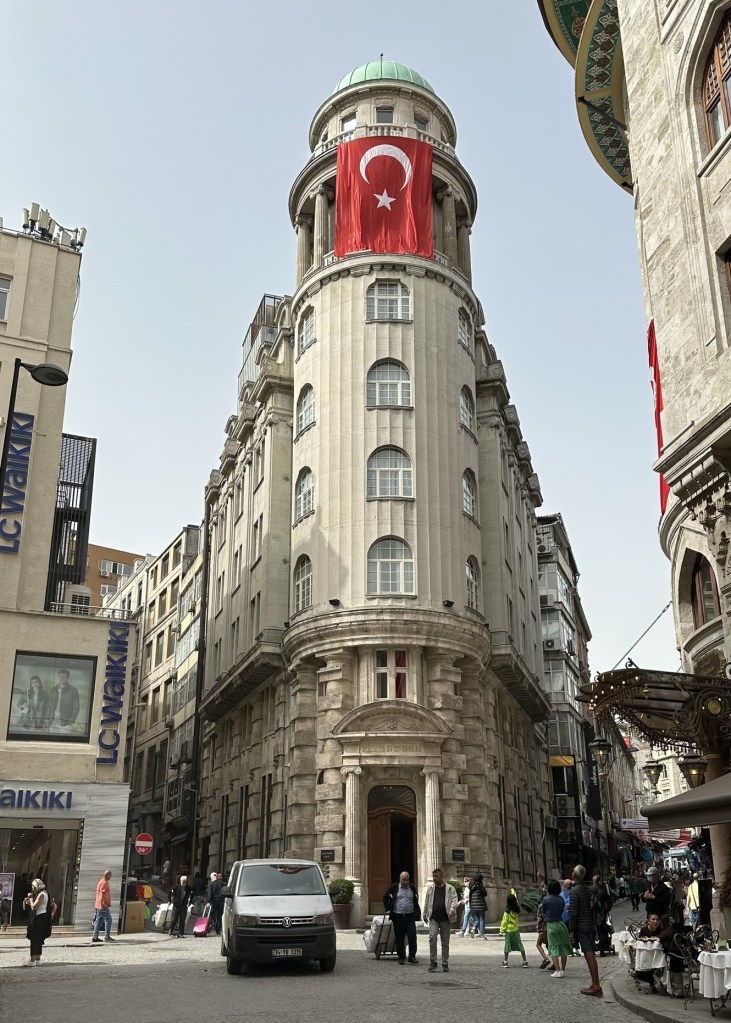
Welcome to Istanbul 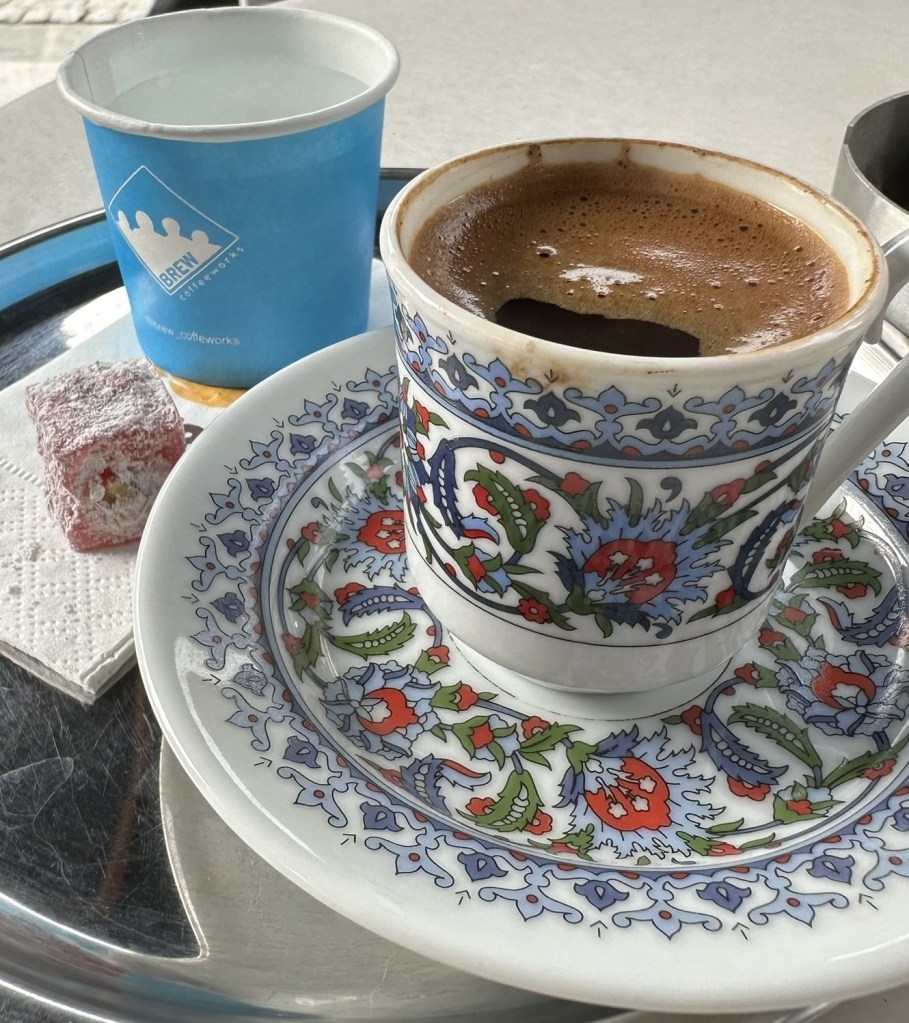
Starting with Turkish coffee 
Busy shopping street near Grand Bazaar 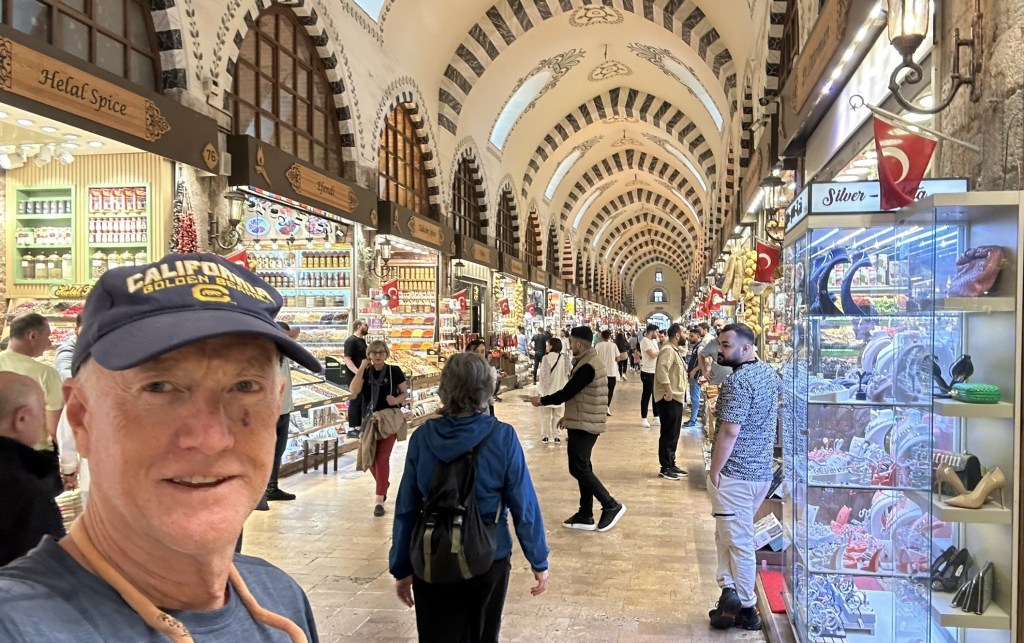
Inside the massive Egyptian Spice Market 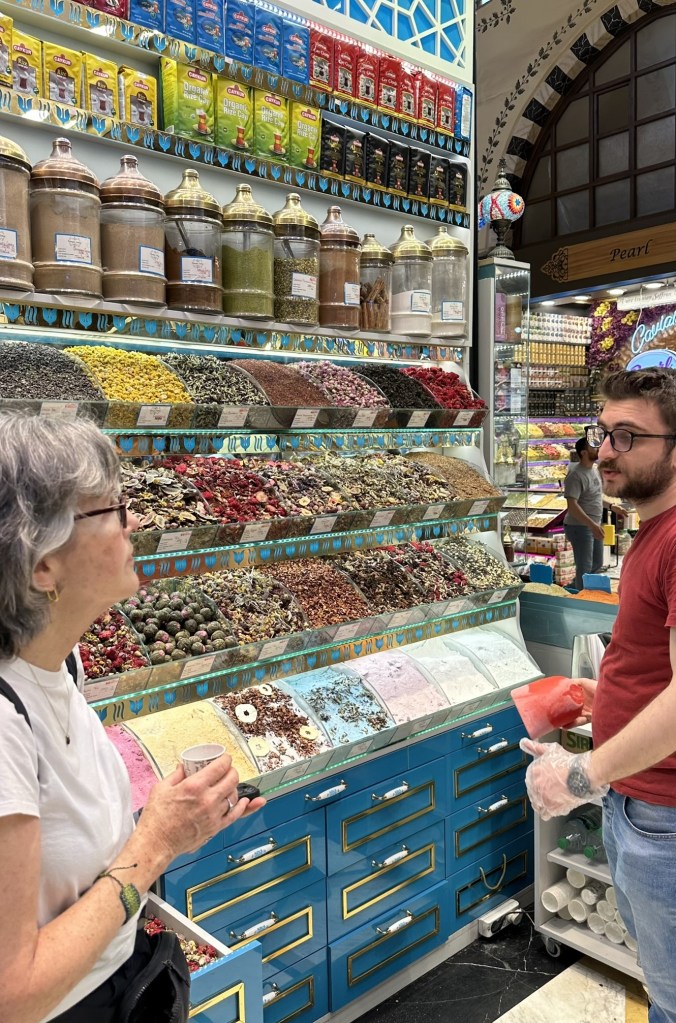
Checking out a spice shop 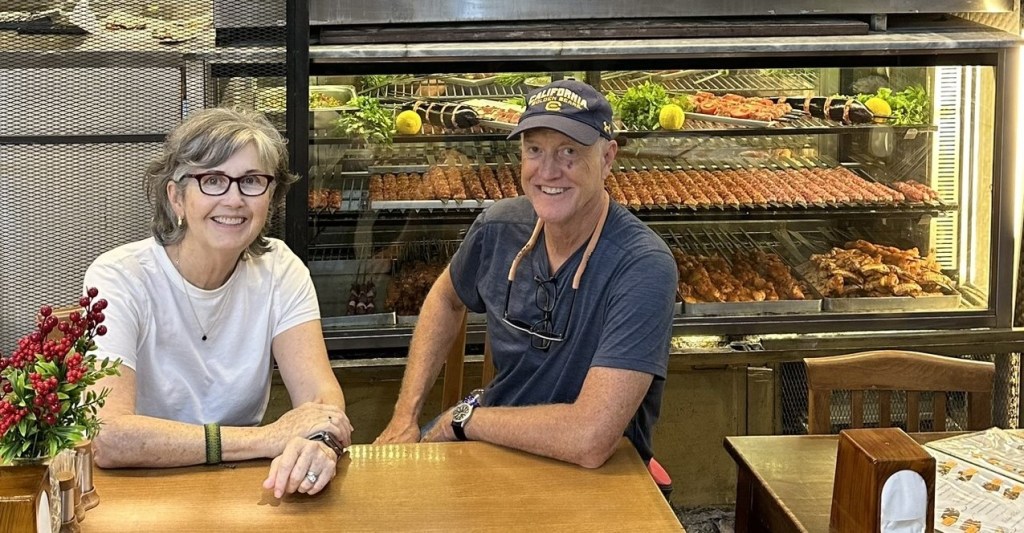
The meat snack cafe 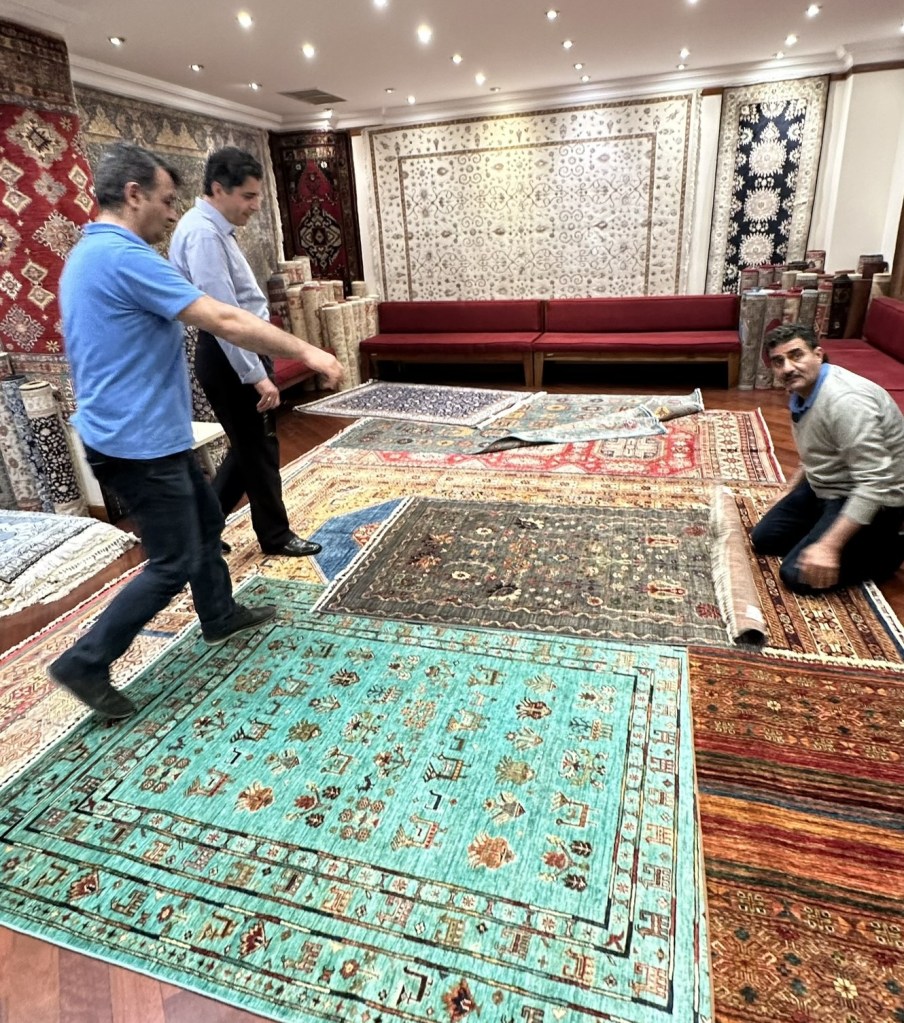
Visiting the carpet store 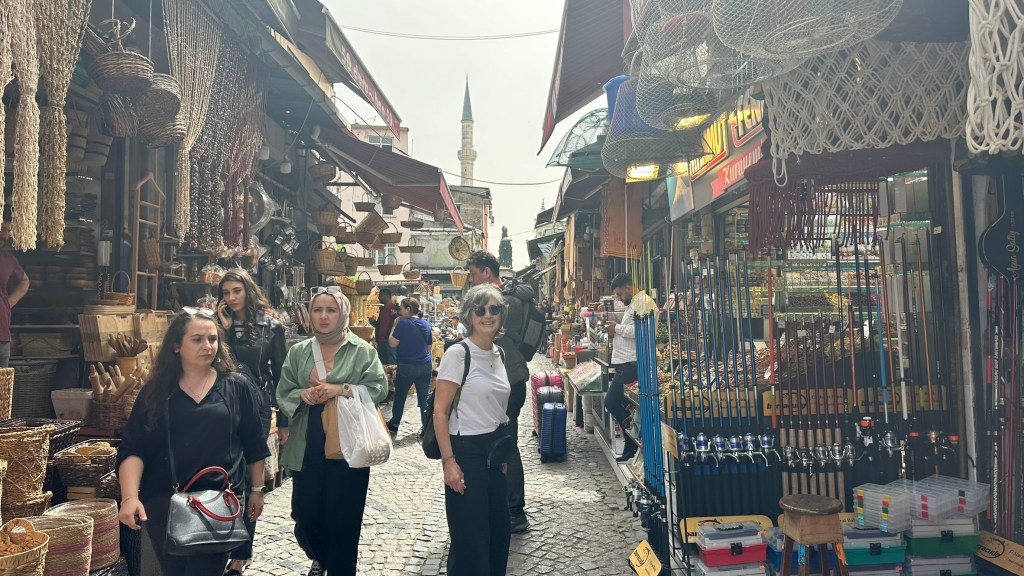
Bustling Eminönü shopping scene
- Free, four-hour guided tour of the Hagia Sofia, Blue Mosque and Hippodrome was excellent. Not only did we get a colorful history lesson on what we were seeing, we were able to skip the long entry lines and make the most of our time. Definitely worth the modest tip at the end of the tour.
- Hagia Sophia was built as a Christian church in 537 AD and remained so for centuries. Under Ottoman rule, it became a mosque in 1453 and has remained so except from 1935-2000, when it was converted to a museum by the then secular government. Non-Muslim tourists have access to everything on the second floor, which still contains many Christian relics and artwork from the original church. The main prayer room on the first floor is off-limits to all but practicing Muslims.
- The Sultan Ahmed Mosque, or Blue Mosque, constructed in the early 17th century by — who else, Sultan Ahmed I, first Ottoman ruler who overthrew Constantine — has six minarets instead of the customary four, an accident made by the architect that the sultan decided was actually pretty cool. So, he didn’t kill the architect, as would usually be the case.
- The Hippodrome, once the site of Roman-style chariot races, is now a huge public open space. It’s main historic feature, the Egyptian Obelisk erected in 190 AD, is the oldest structure in Istanbul, even pre-dating the city’s ancient, crumbling walls.
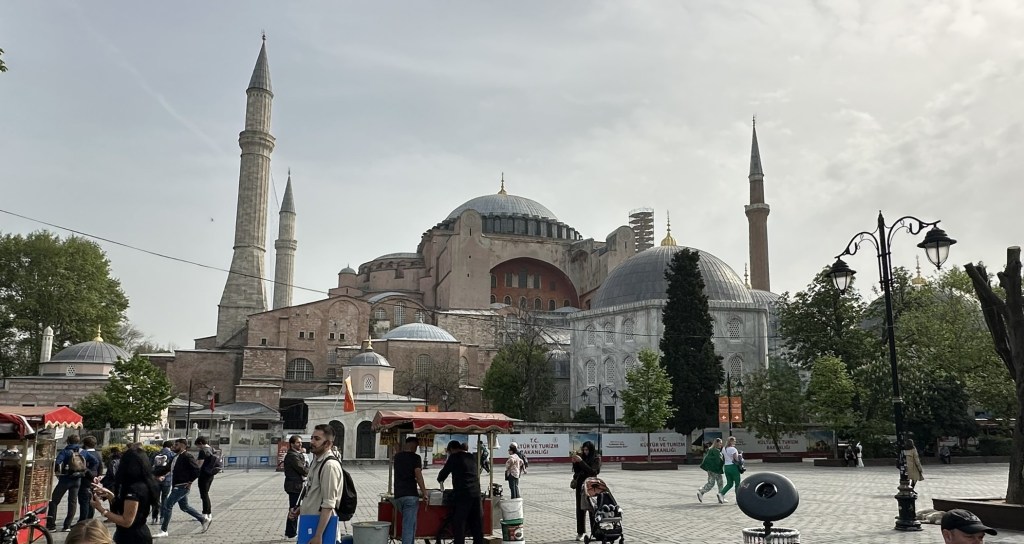
Hagia Sophia Mosque 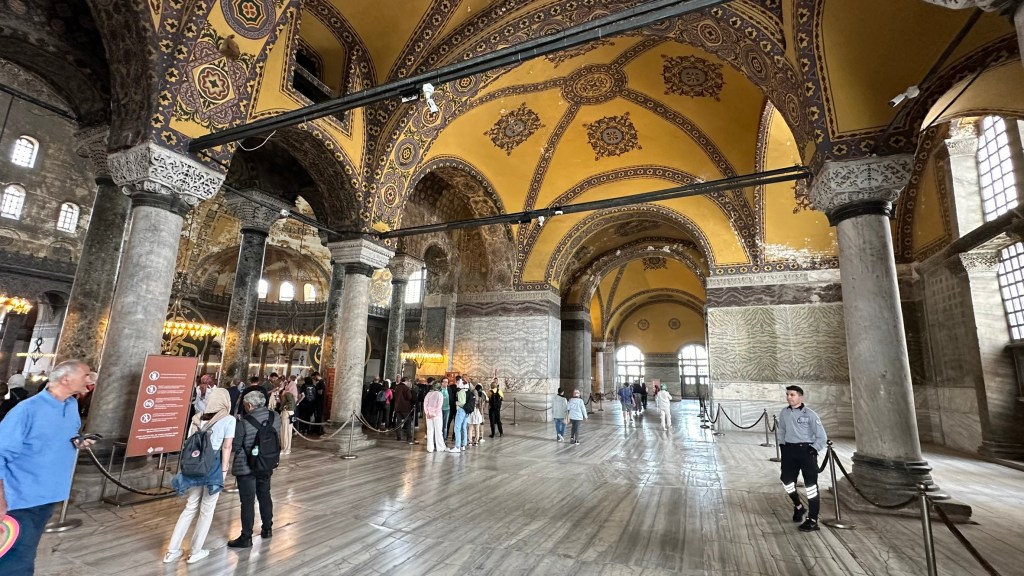
Hagia Sophia entrance hall 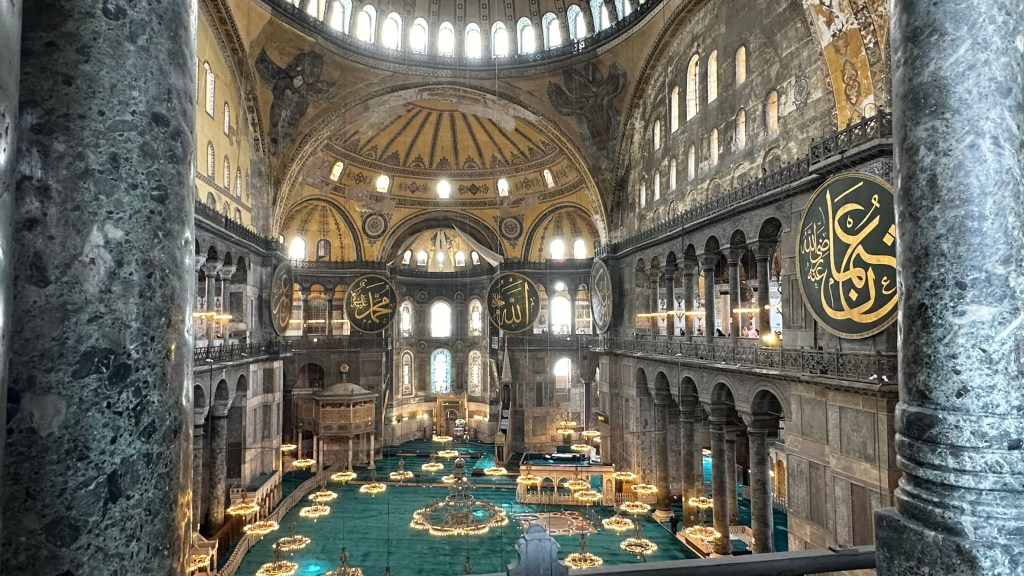
Hagia Sophia 2nd floor view 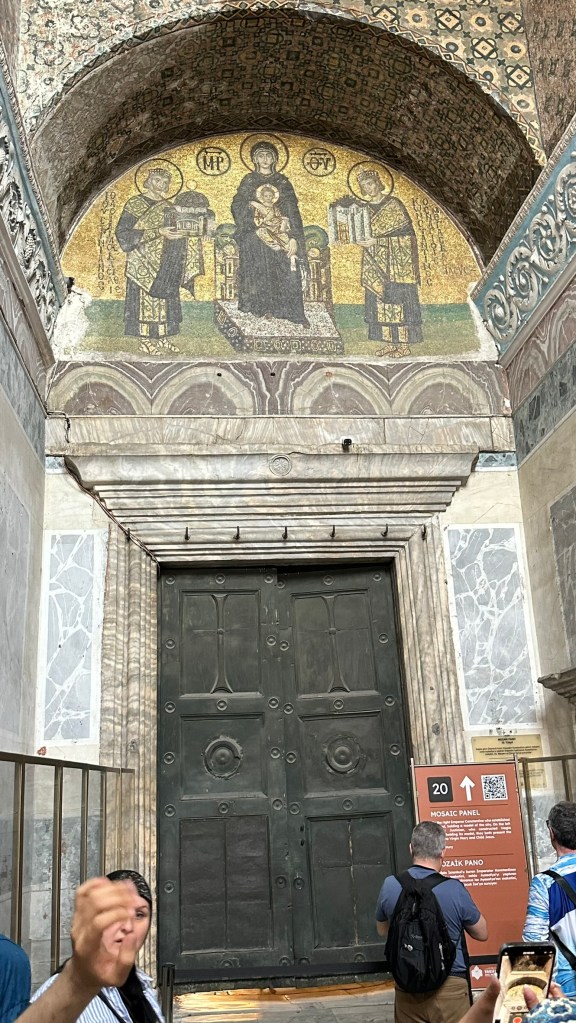
Iron doors and tile mosaics 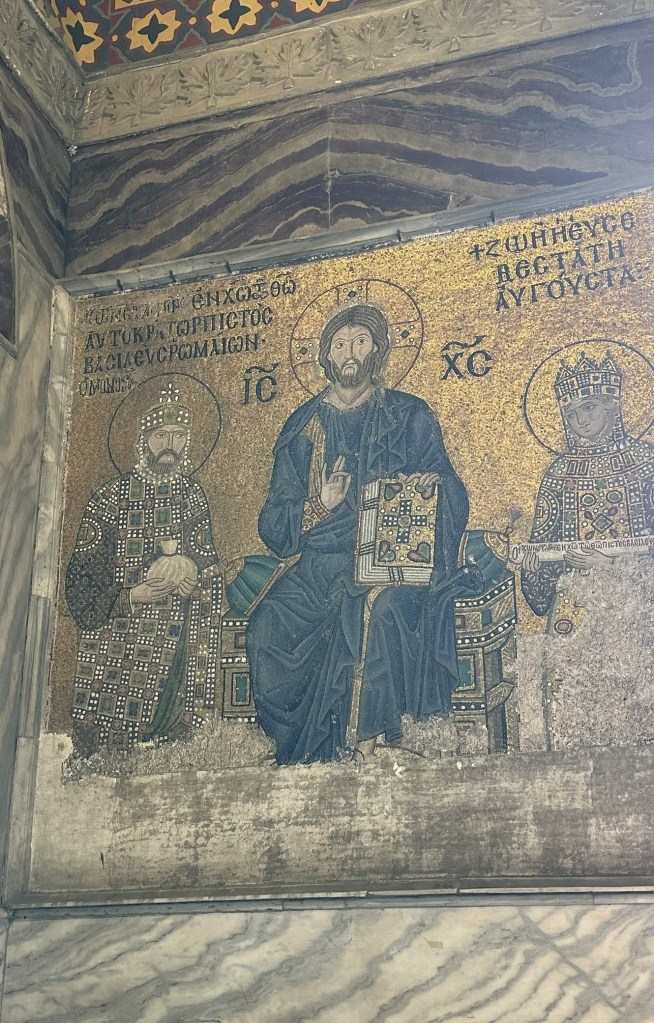
Jesus 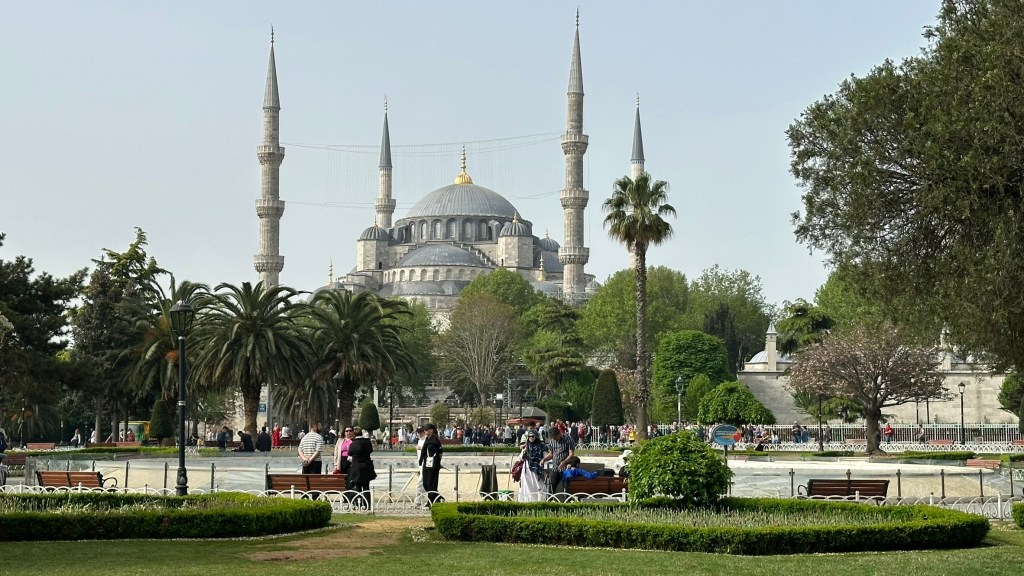
The Blue Mosque 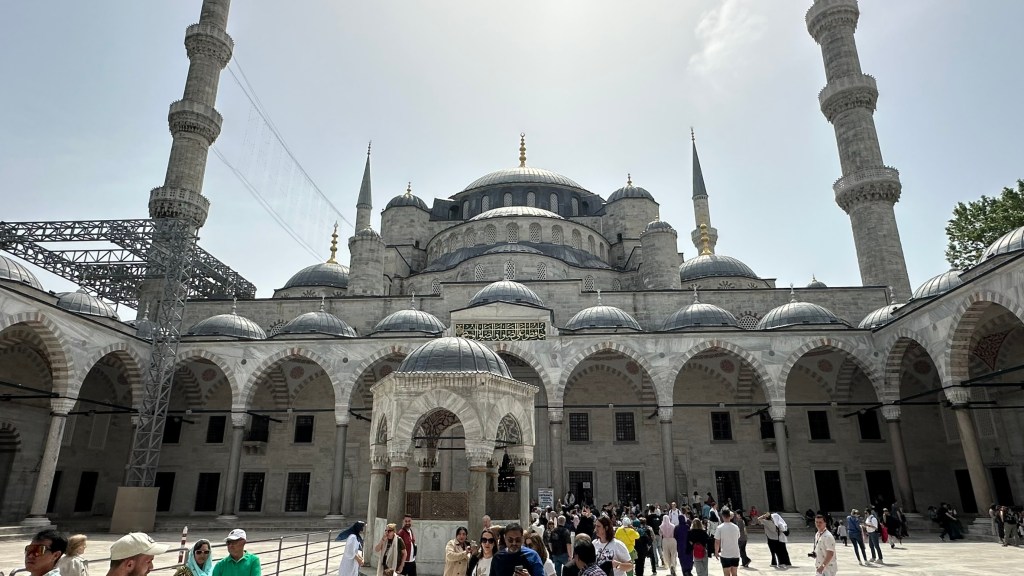
Blue Mosque’s main courtyard 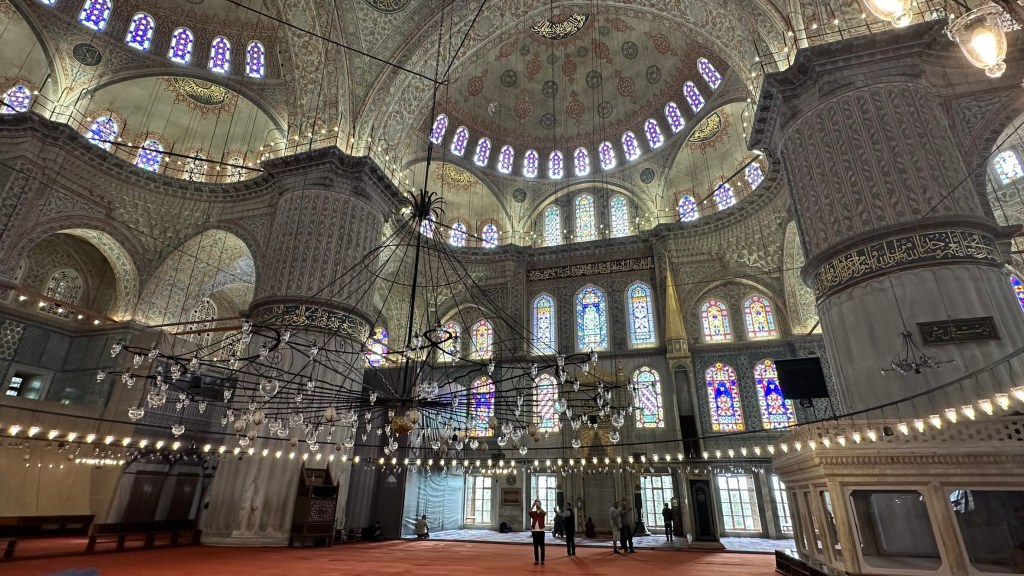
Inside the Blue Mosque 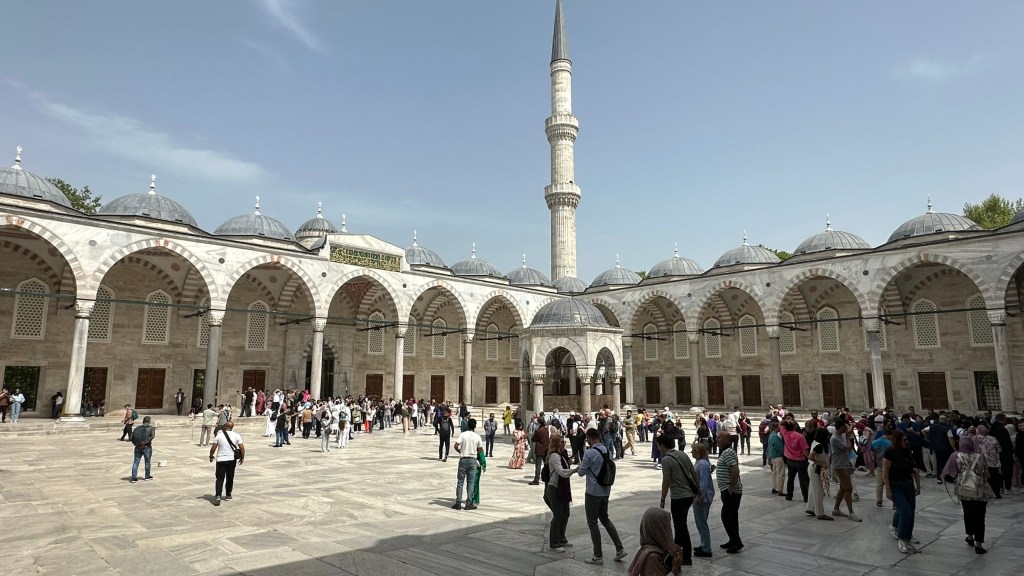
Blue Mosque’s main courtyard 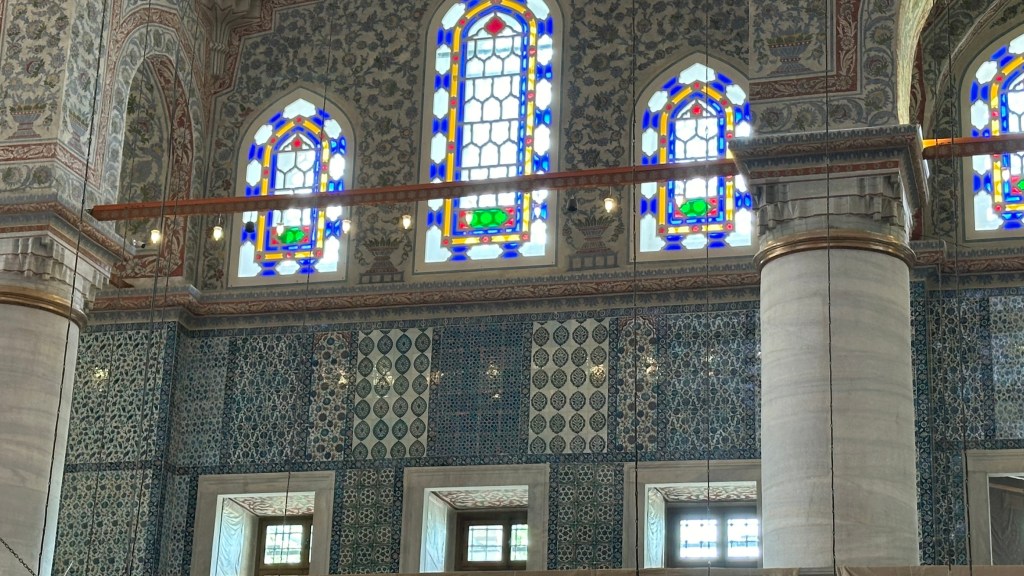
21,000 hand painted tiles 
Side entrance to Blue Mosque 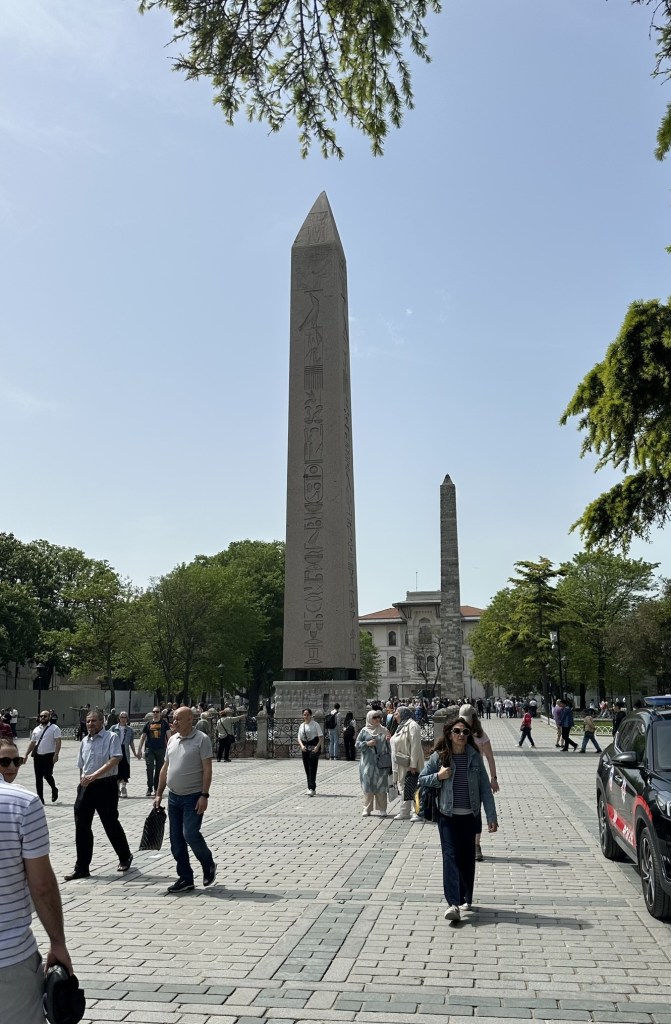
Hippodrome’s Egyptian Obelisk
- Topkapi Palace is massive and, once again, best seen with a private guided tour, where you can skip the line, beat the crowds, and see the top sights most efficiently. Topkapi’s construction began in 1459 at the order of Mehmet the Conqueror, six years after the conquest of Constantinople, and was home to the Ottoman sultans for 400 years. There are four major courtyards inside Topkapi Palace, only one open to the general public. The crown jewel of its treasury is the jewel-encrusted green dagger, subject of the 1964 crime caper film “Topkapi”.
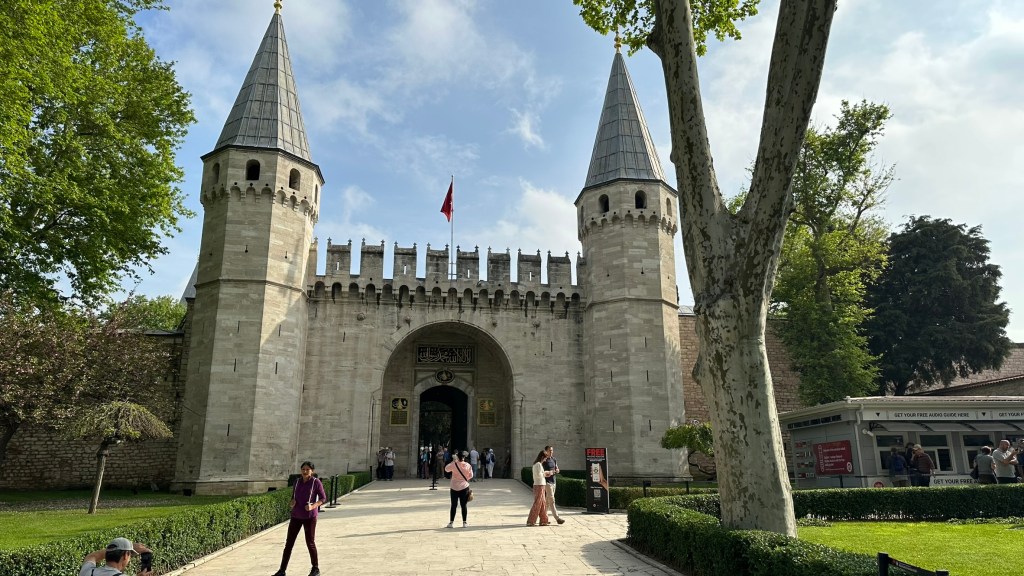
Entrance to Topkapi’s 2nd garden 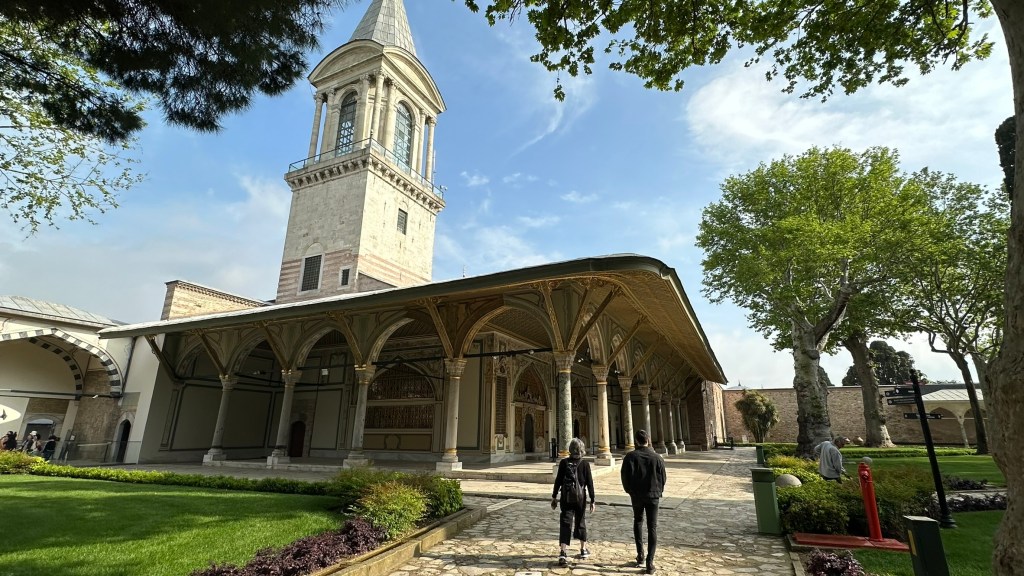
Approaching the Council Building… 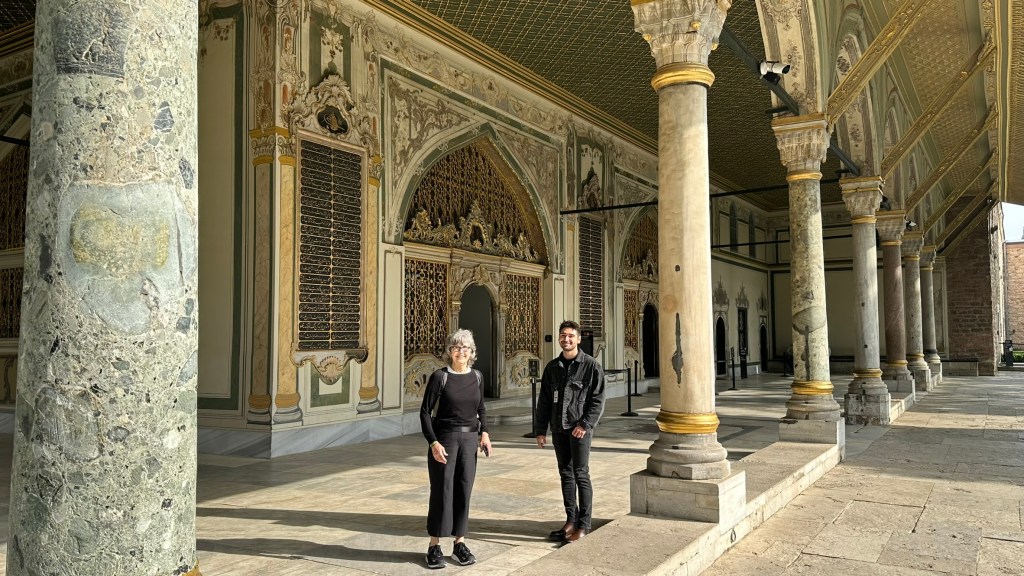
…where the Sultan and ministers conducted business 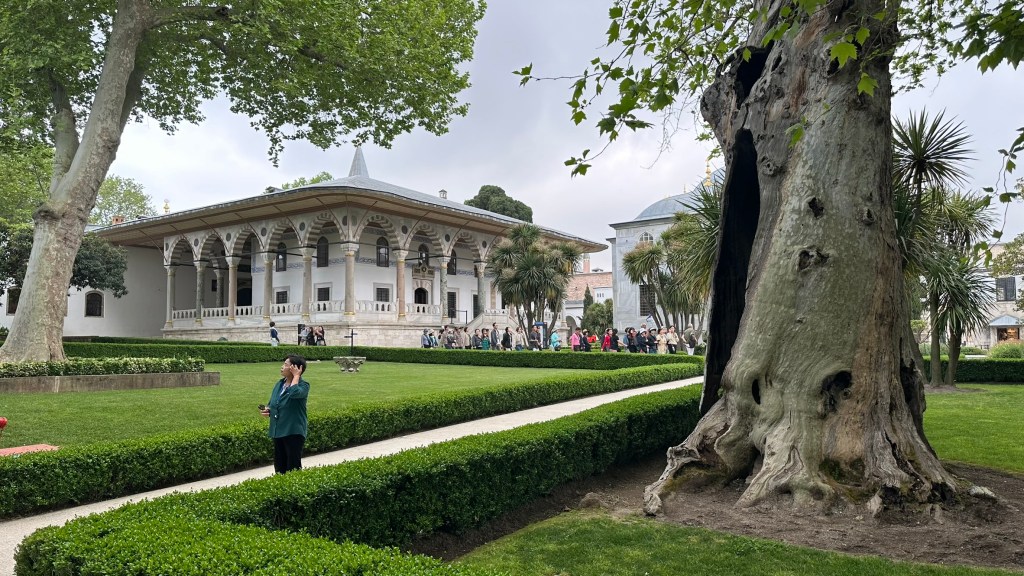
The school building inside the 3rd courtyard 
View over the Bosphorus to Asia 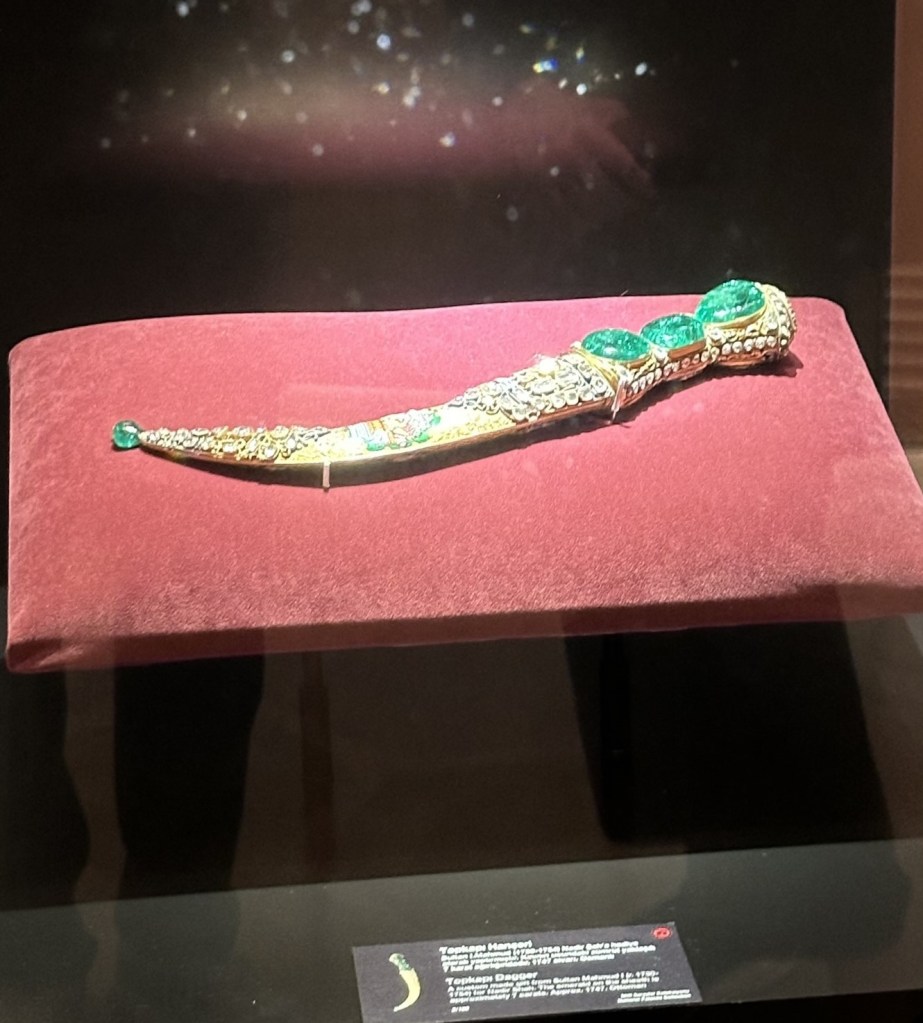
The famous green dagger 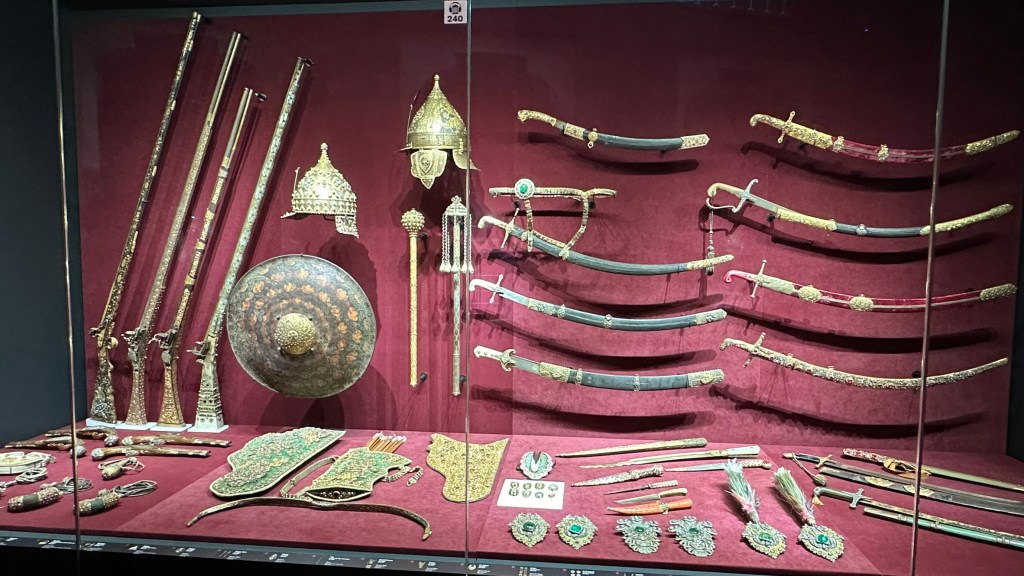
Part of the treasury’s armory 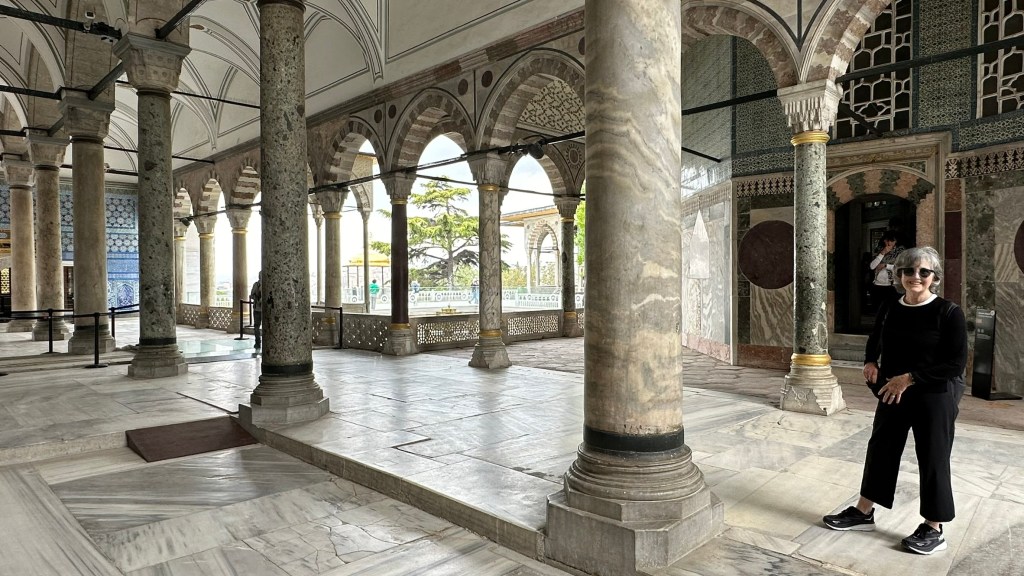
Lots and lots of beautiful marble 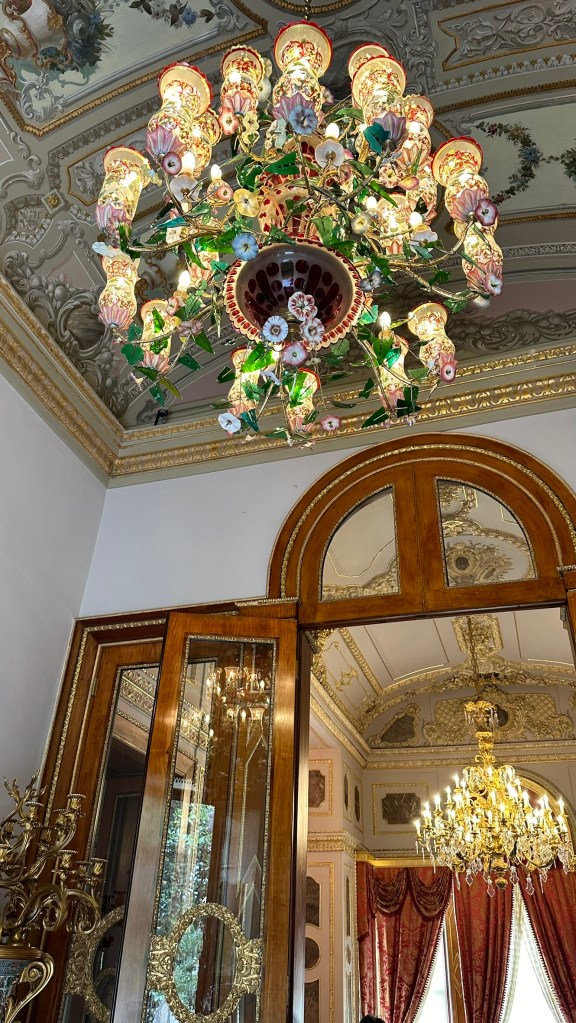
A particularly fine chandelier 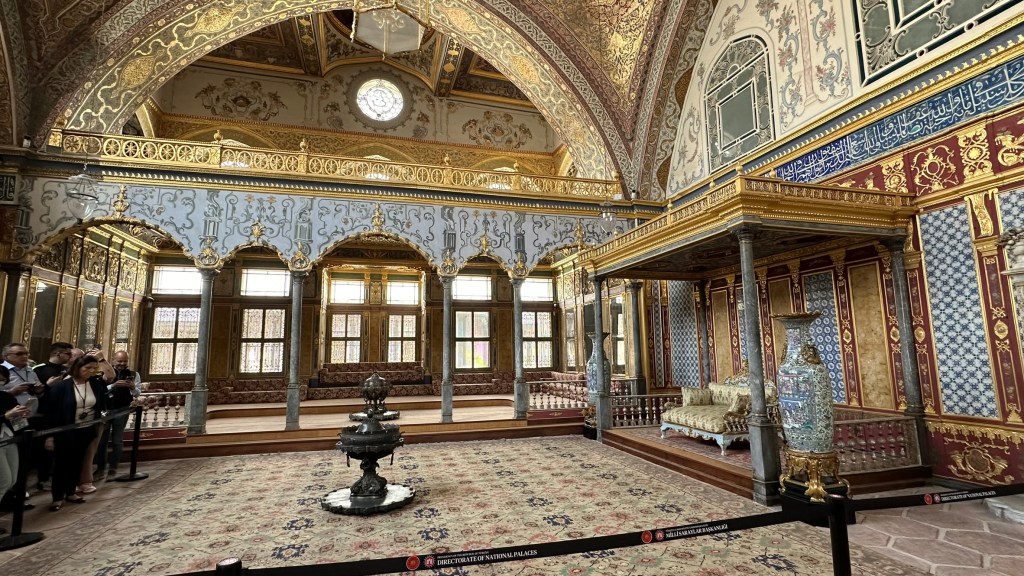
Sultan’s royal reception room 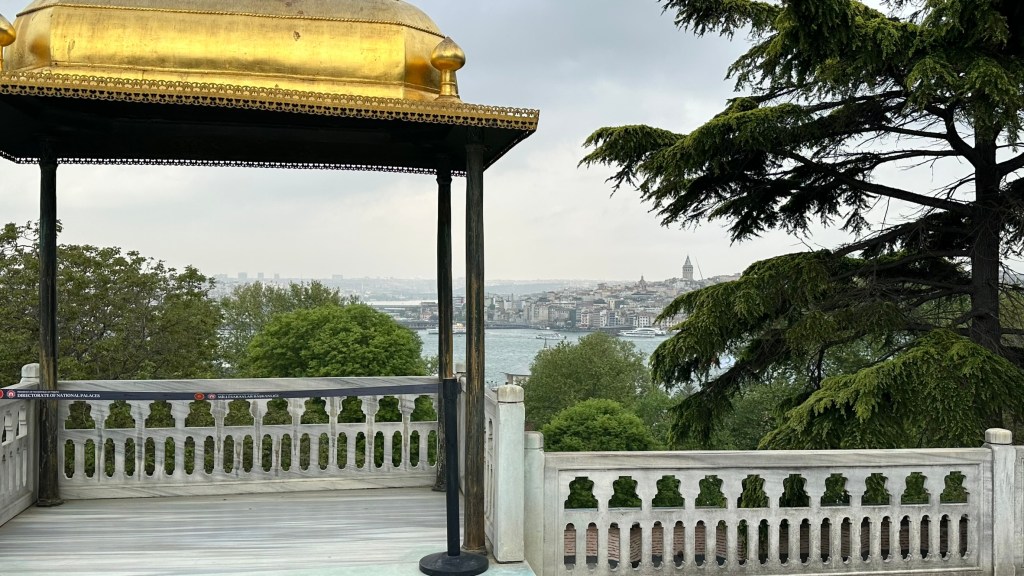
View over the Golden Horn from the Sultan’s massive private marble courtyard
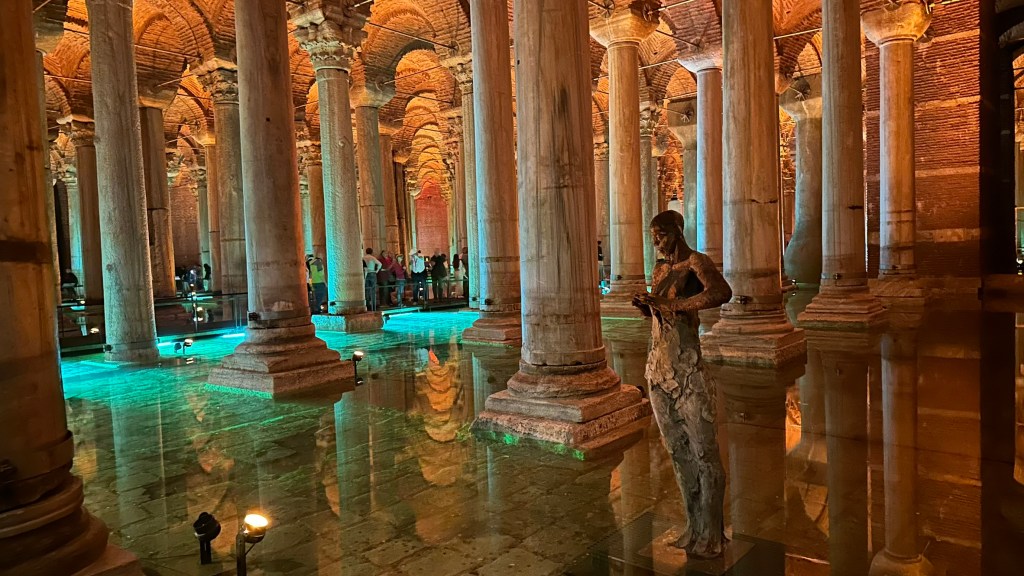
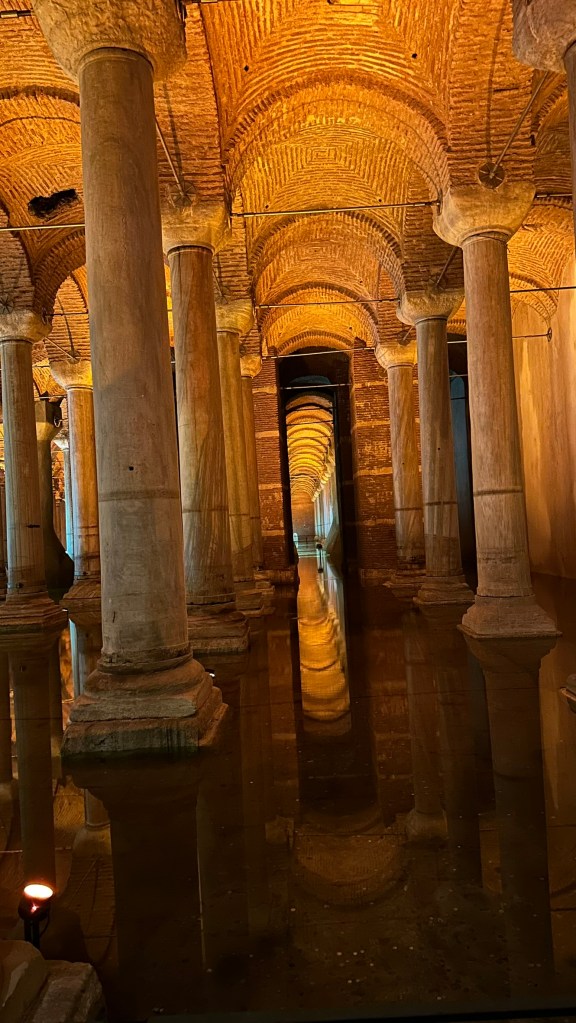
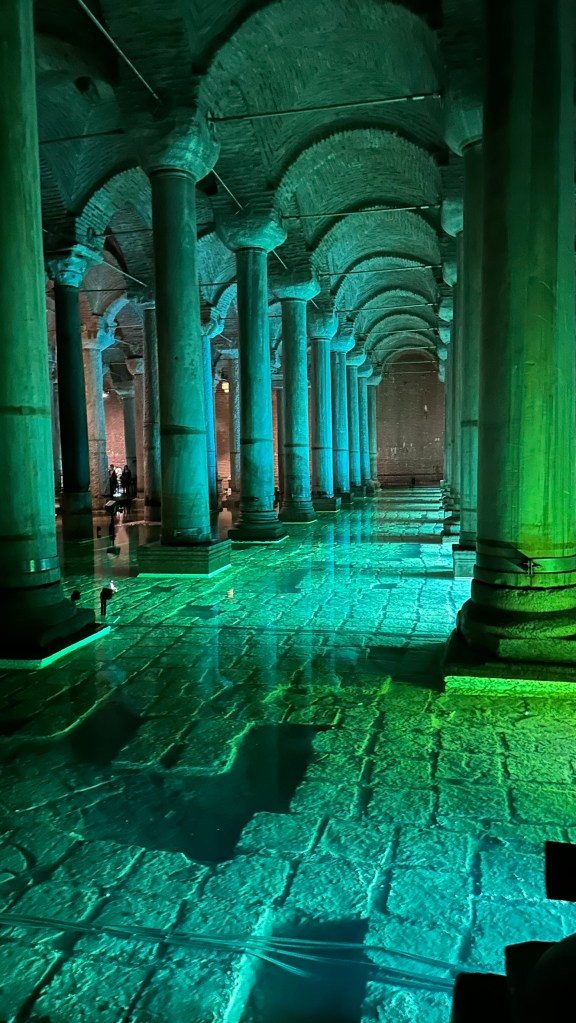
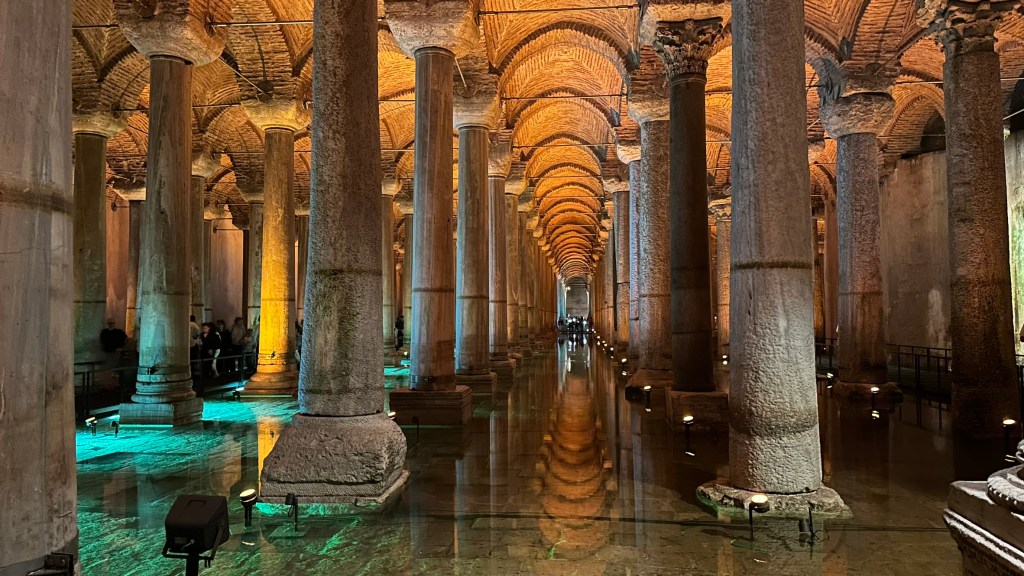
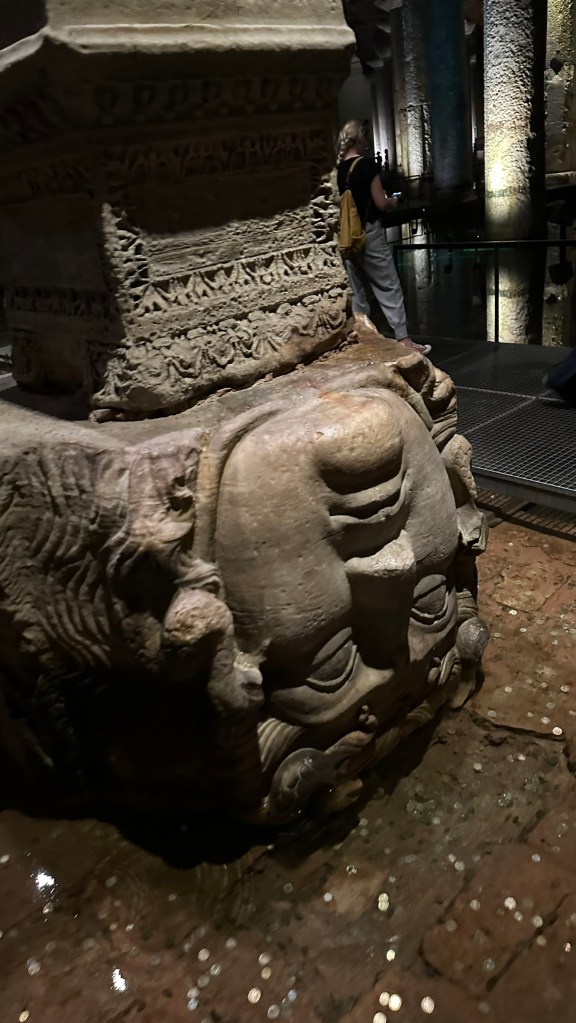
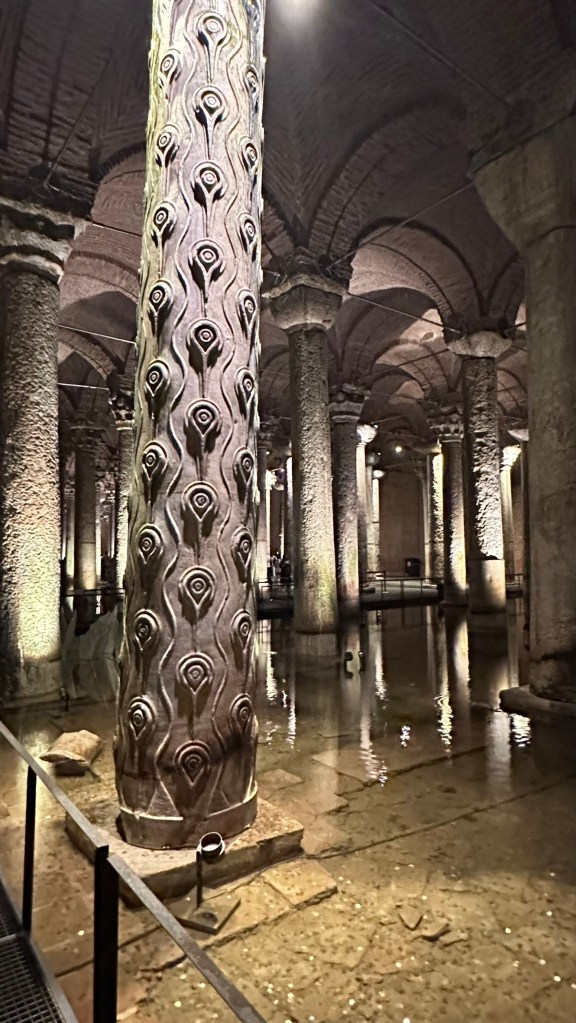
- The underground Basilica Cistern, part of the centuries old system of bringing fresh water from the forests 600 kilometers away. There are 436 columns in the Cistern, many with unique, intricate carvings.
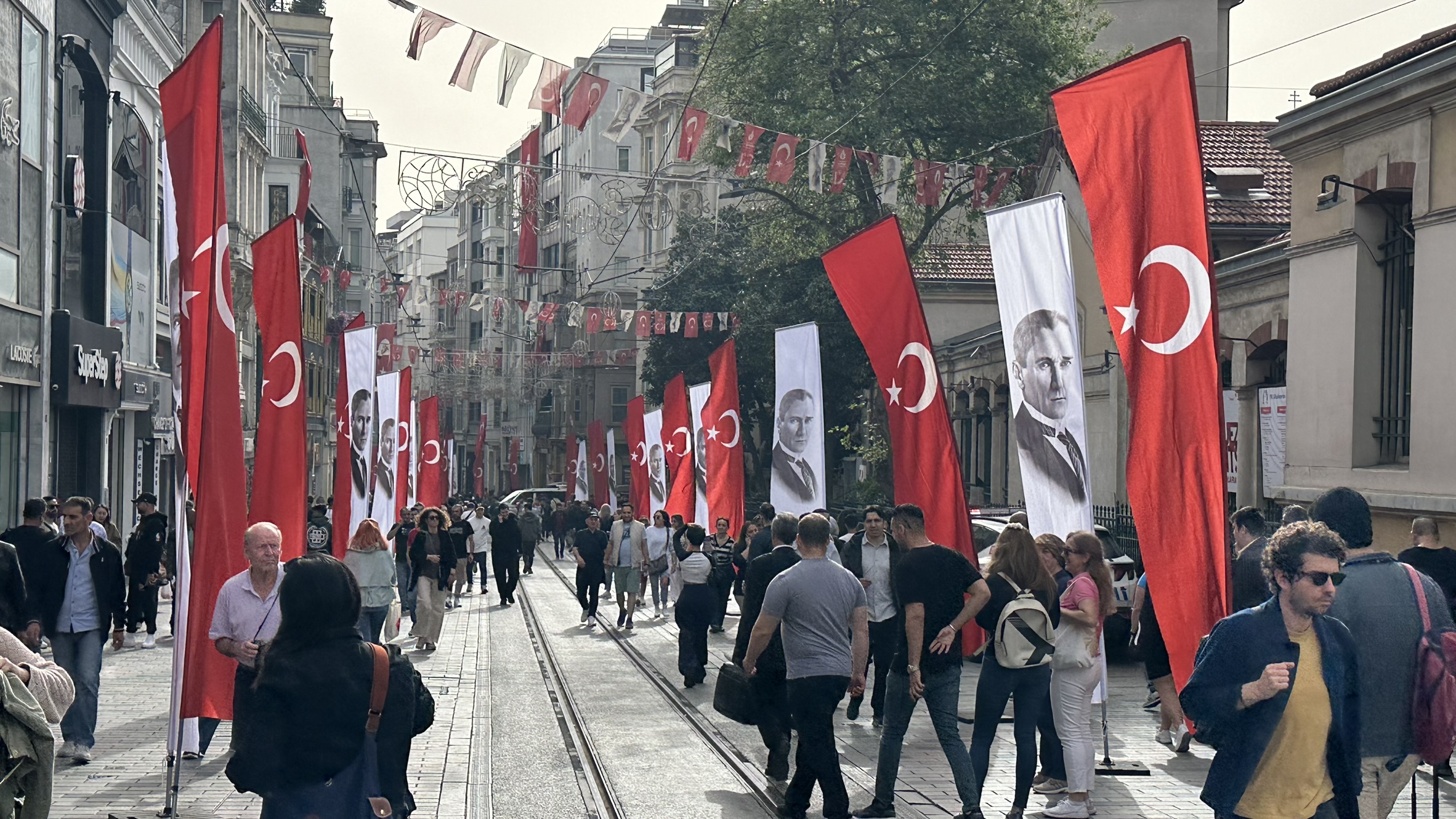
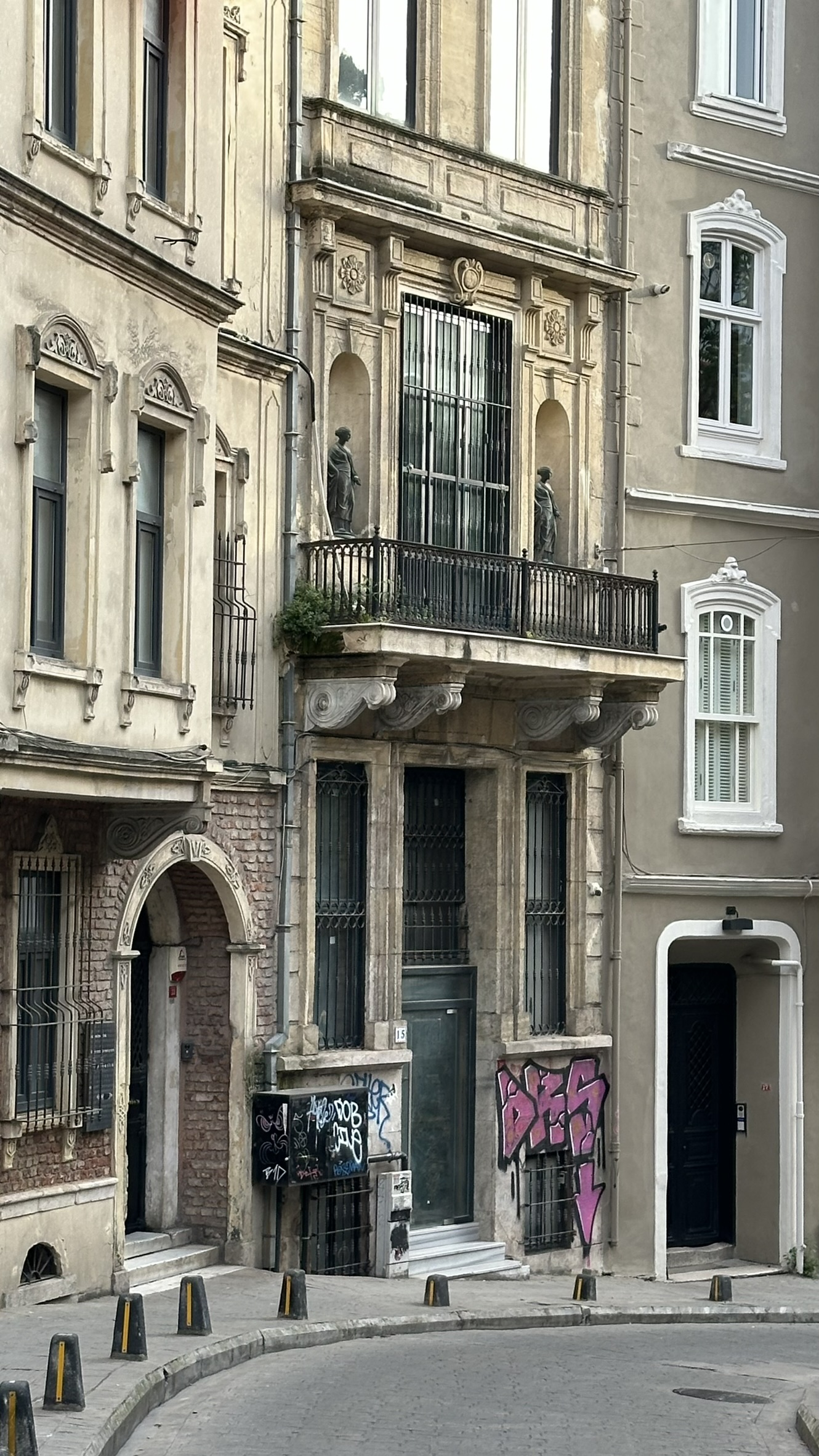
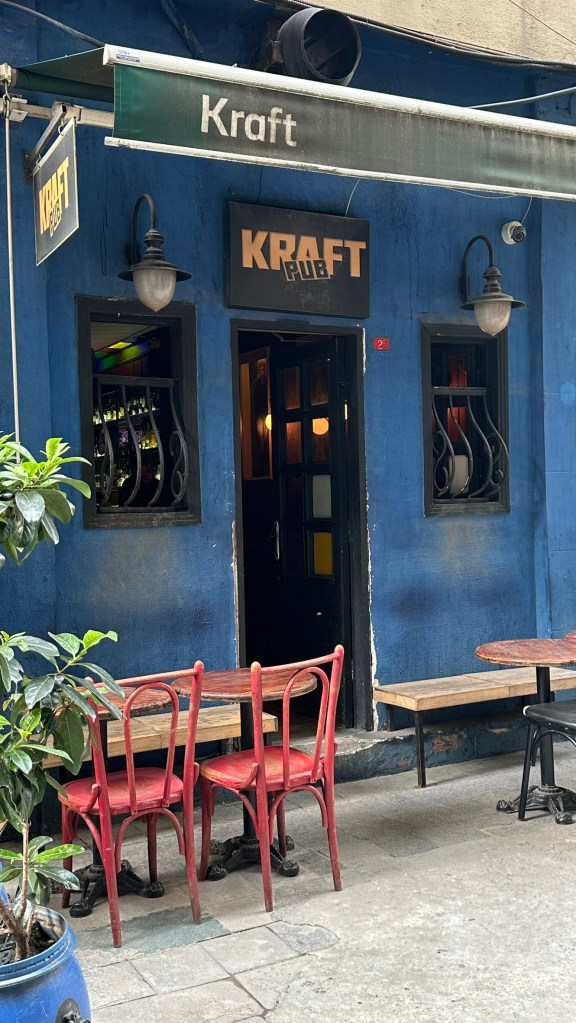
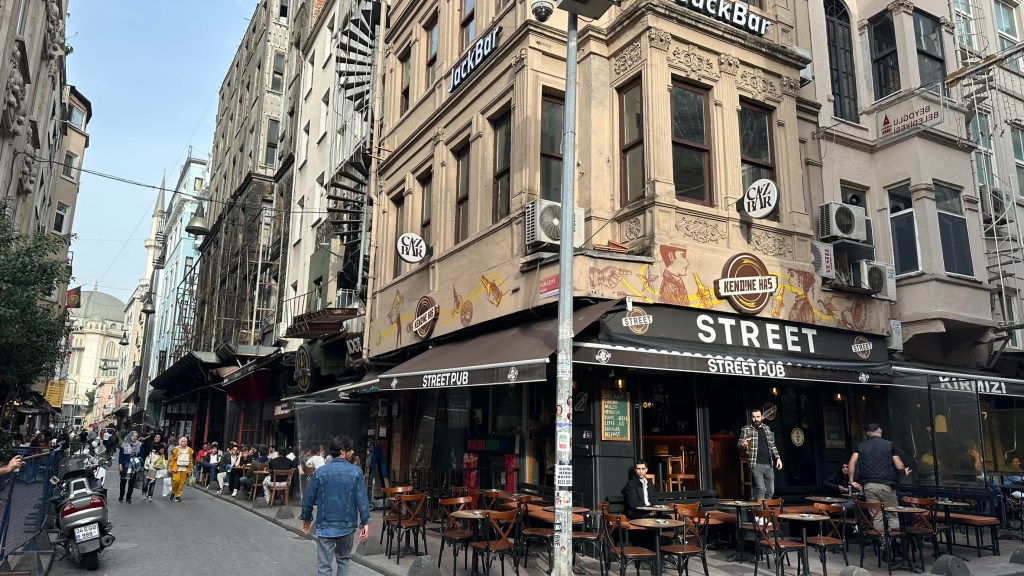
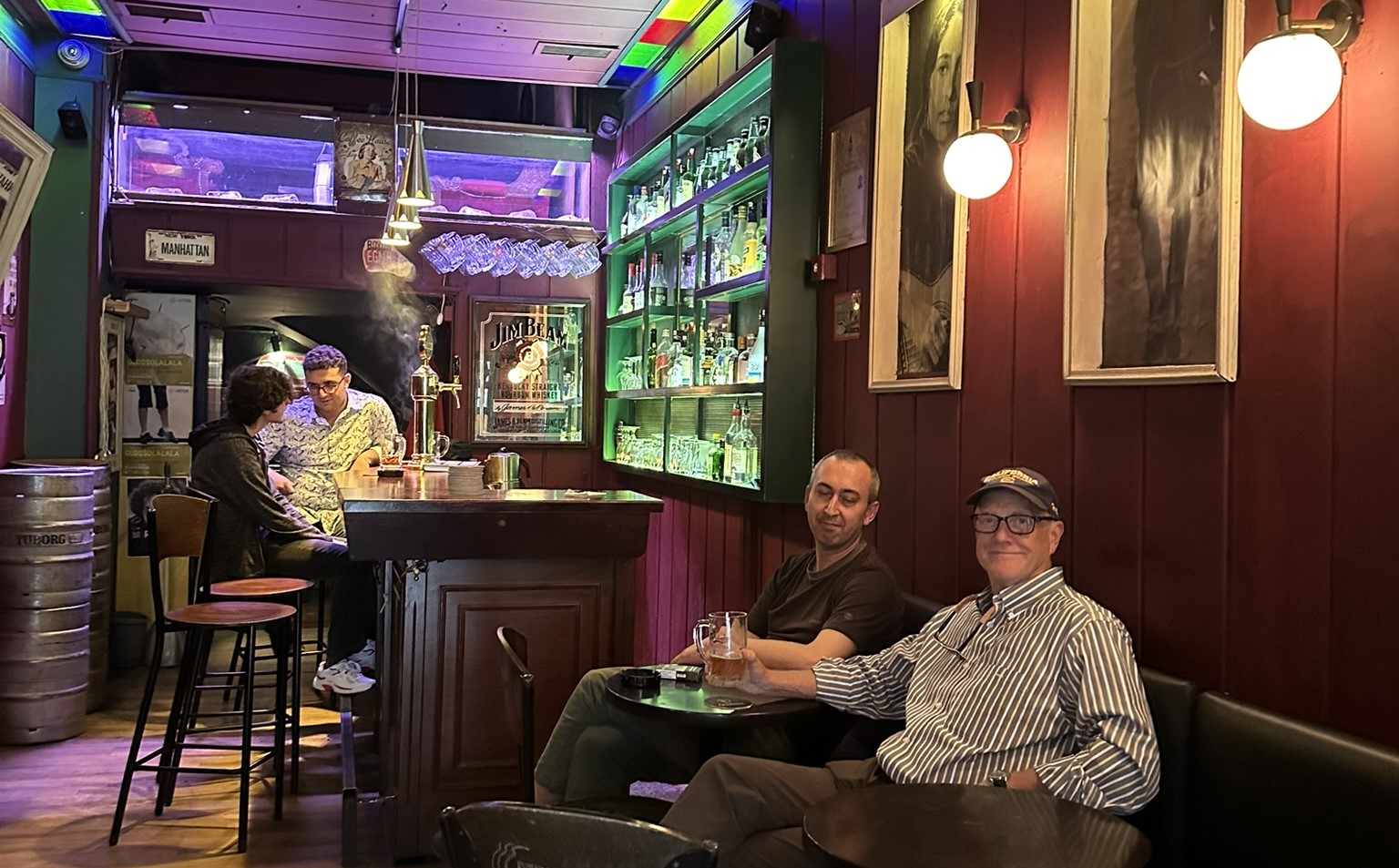
- Istiklal Caddesi, the busiest shopping street in Istanbul’s new city is packed with locals and tourists alike. Not my cup of tea, or Michelle’s for that matter, but walk a block or two off the main drag and you find yourself in cool neighborhoods with great food and bars.

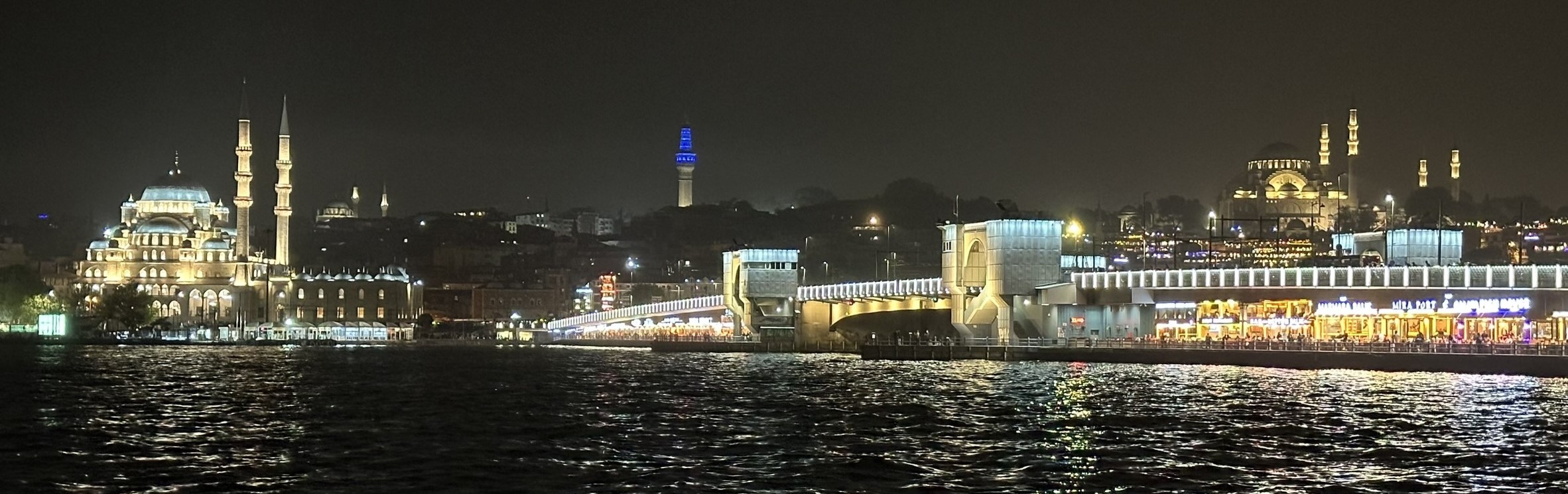
- Walking at night across the Galata Bridge over the Golden Horn, a stretch of water that separates the old and new cities, after an exquisite dinner in Karaköy’s Murver Restaurant, an enticing splurge with great views over the Bosphorus River.
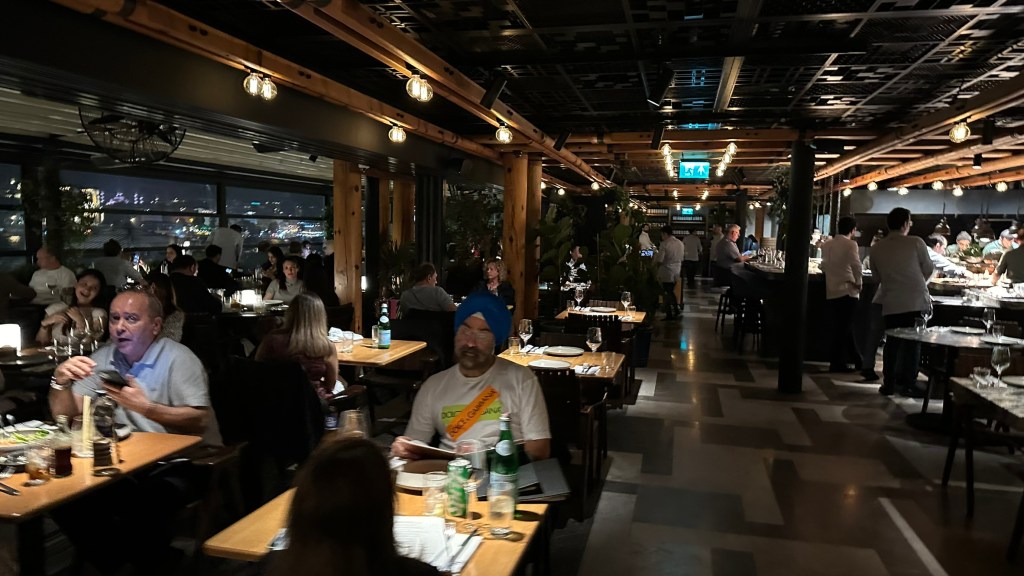
Murver is popular for a reason 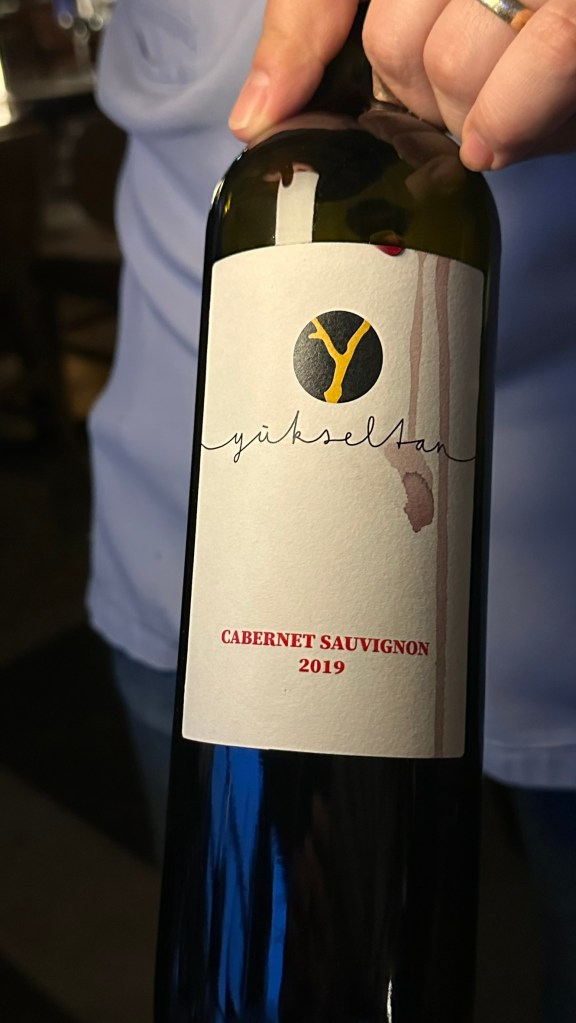
Excellent wine selection at Murver 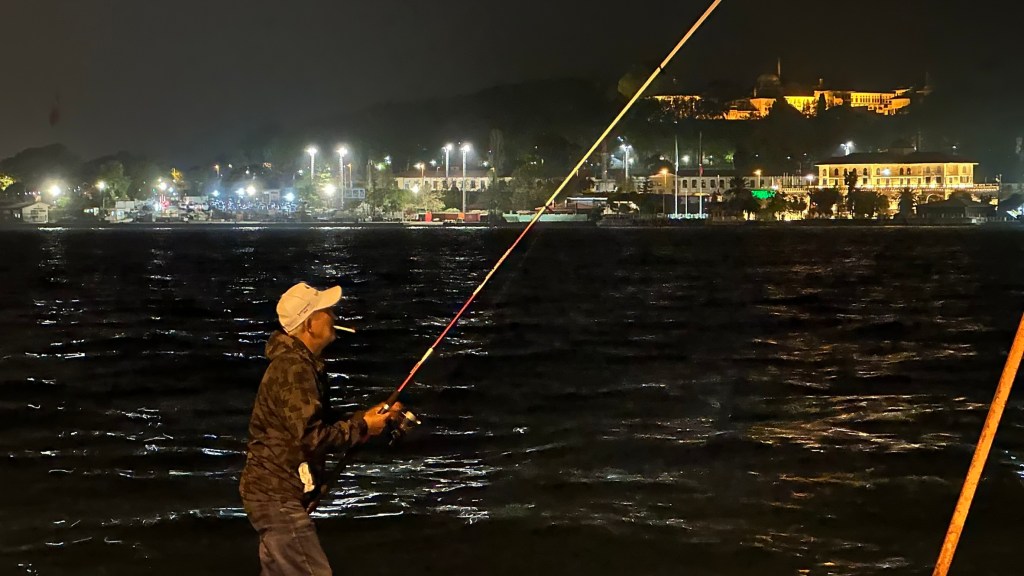
Fisherman near Karakoy pier 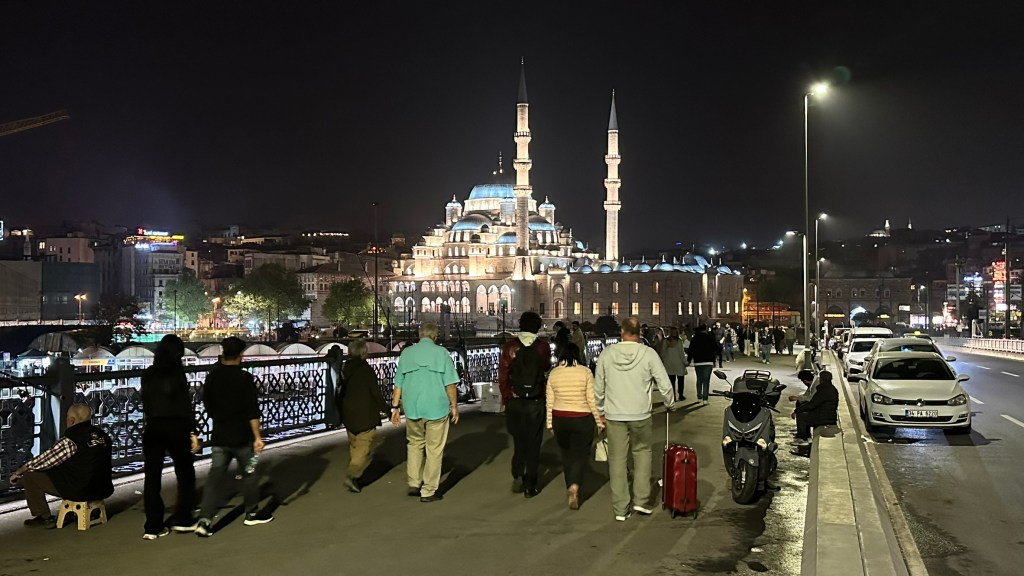
Galata Bridge and Yete Camii mosque 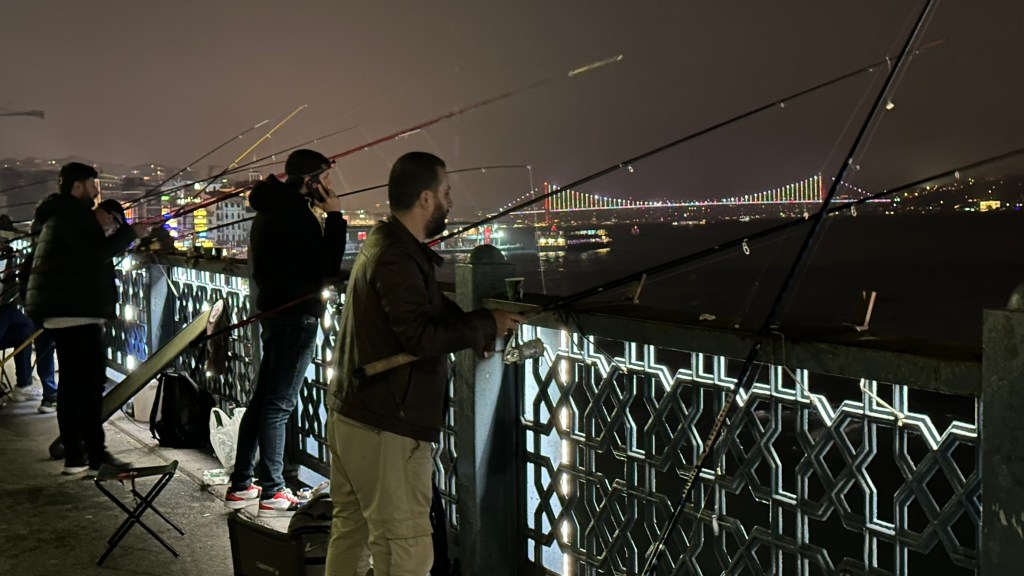
Fishermen line Galata Bridge day & night 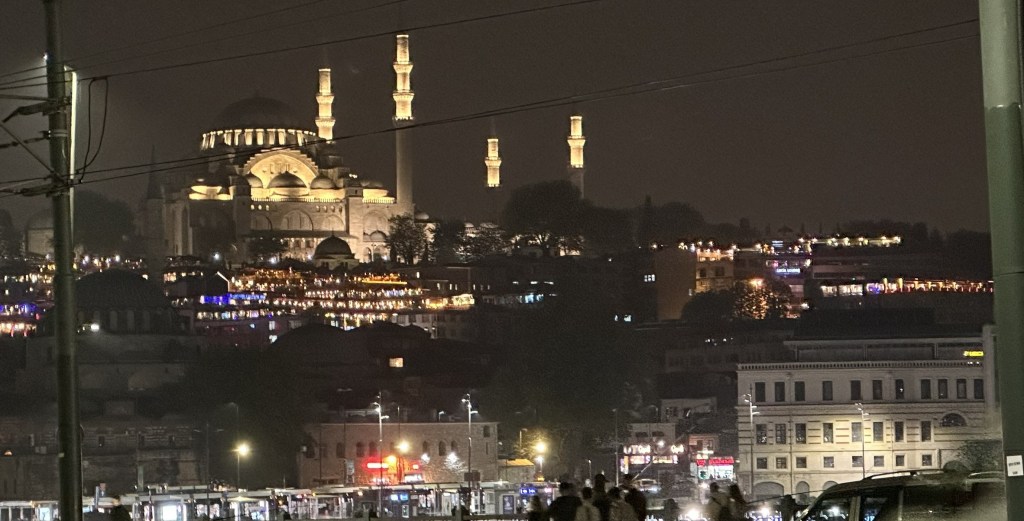
Suleymaniye Mosque, Istanbul’s largest
- Day trip to the Kadiköy neighborhood on the Asian side of Istanbul exposes you to the far less touristy and, in many ways, more interesting take on modern Istanbul. This is where most people we met actually live. There is also a very lively nightlife scene that we did not partake in. Start by taking the 20-minute ferry ride across Bosphorus River separating Europe from Asia from the Eminönü ferry dock.
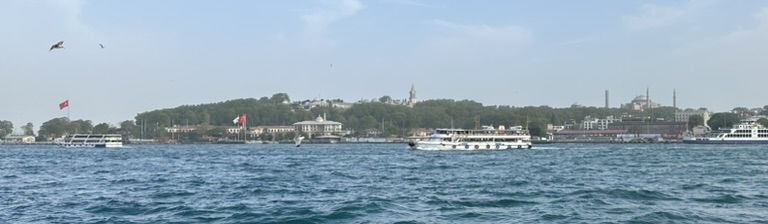
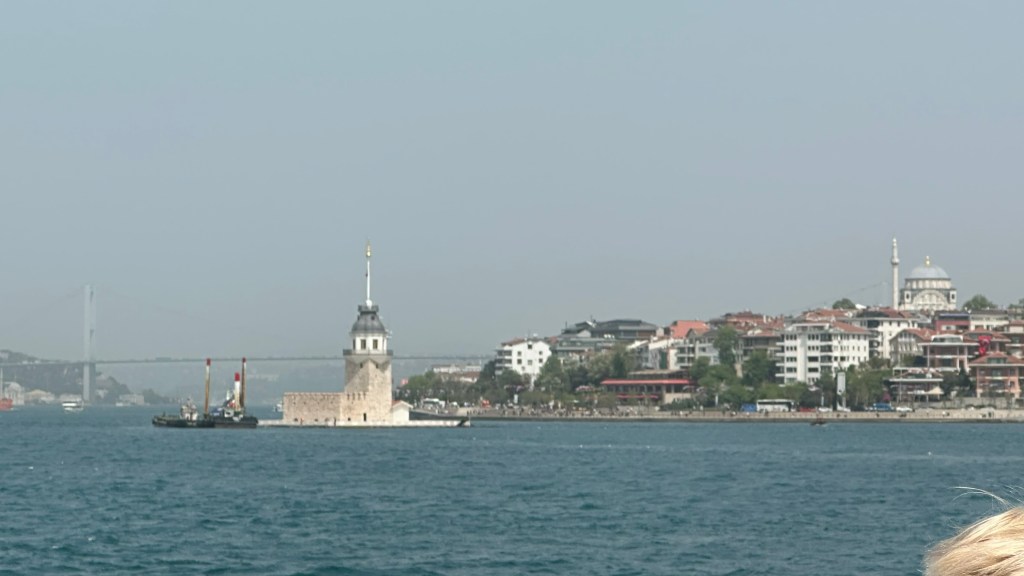
Bosphorus River crossing 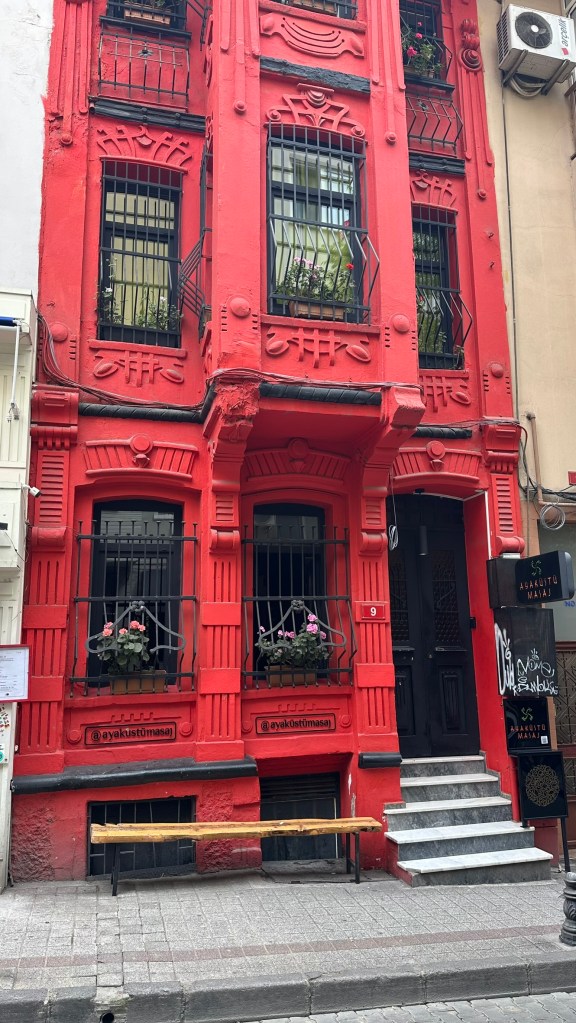
Kadiköy colors 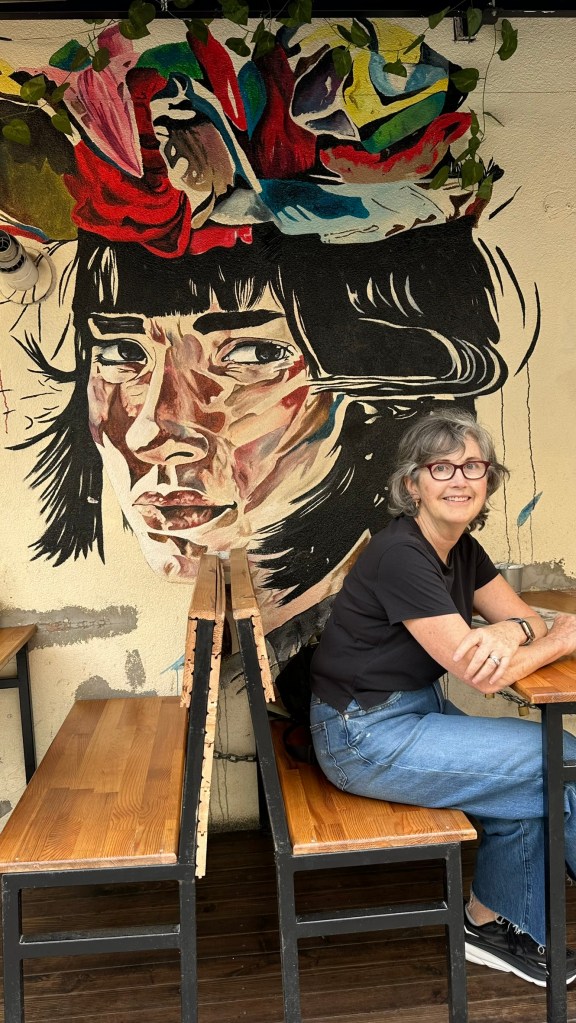
Twinning is winning 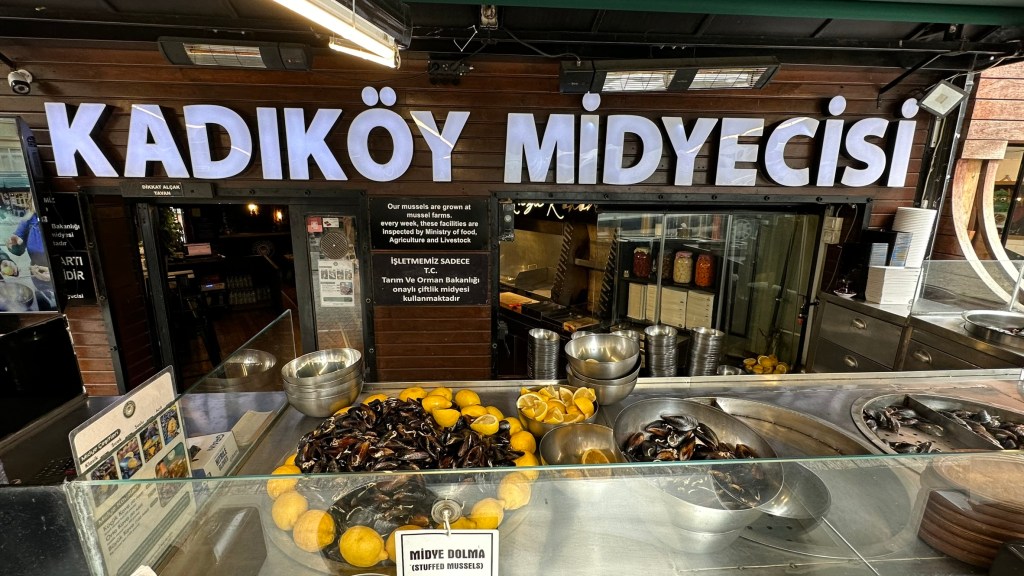
Mussels are a Kadiköy specialty 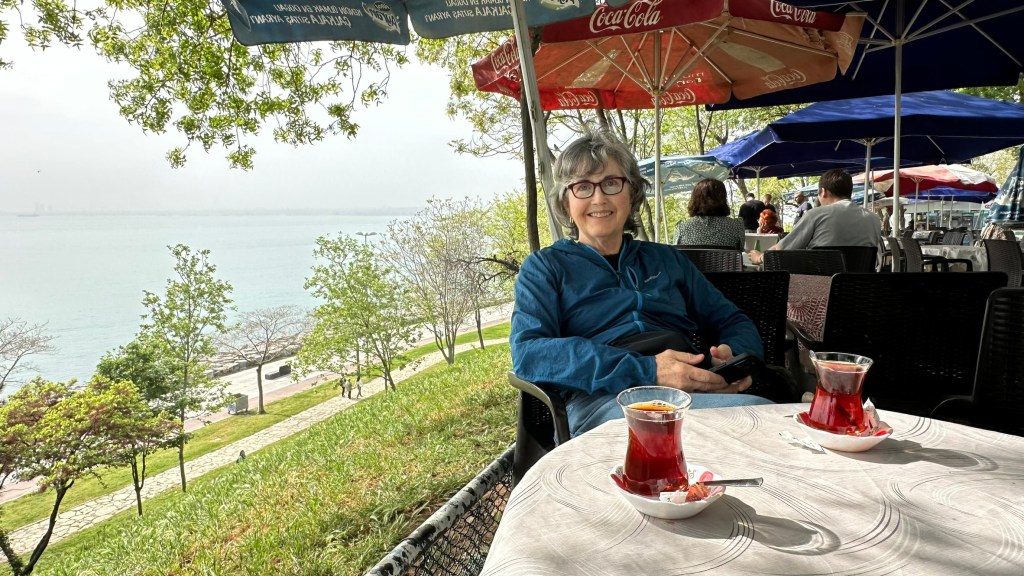
Afternoon tea overlooking the Sea of Marmasa 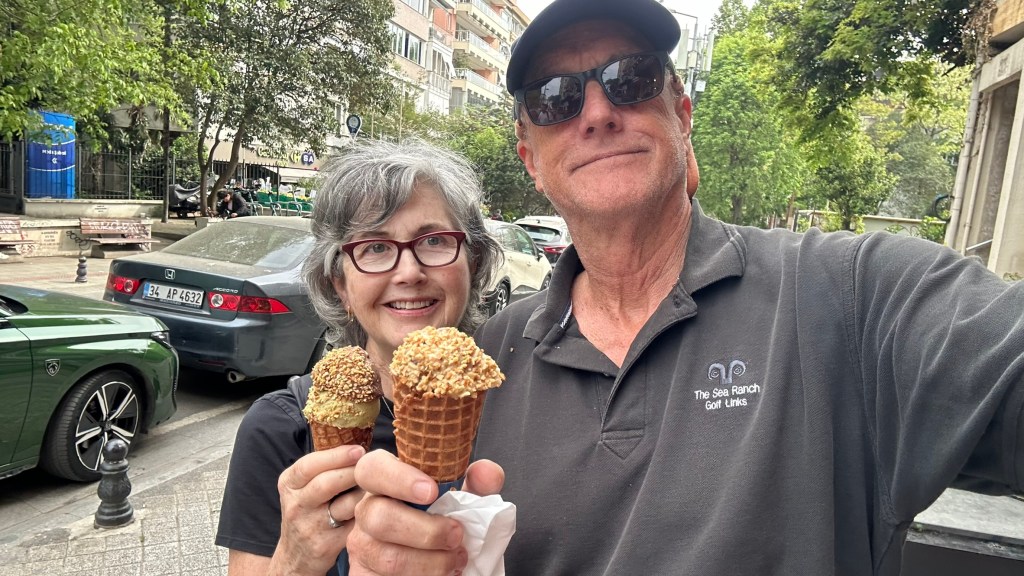
Best way to end your Kadiköy adventure
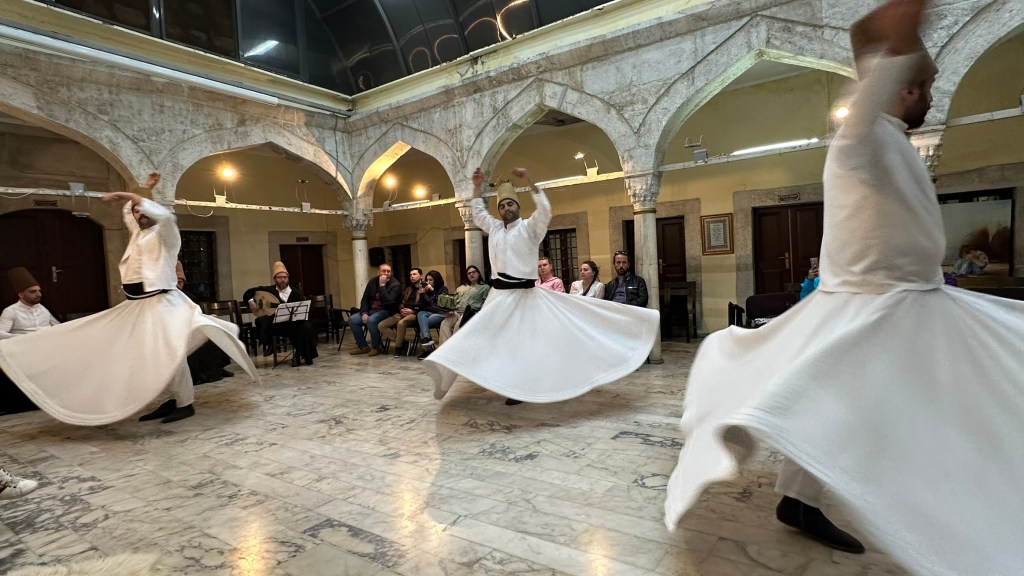
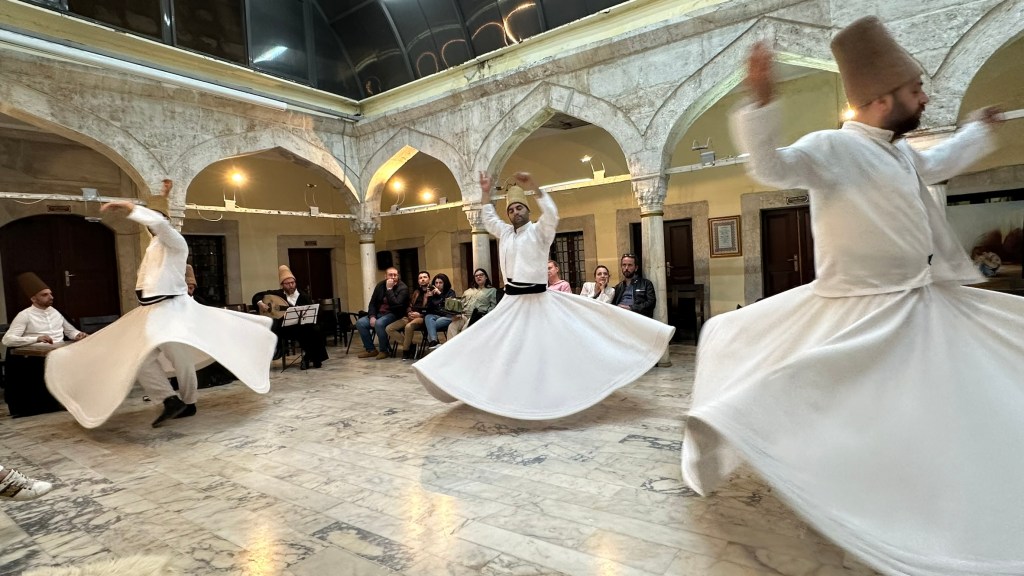
- Most everyone has heard of Whirling Dervishes, but how often do you get to actually see them? Well, that’s a thing in Istanbul. Our 50-minute performance was interesting enough, but really 20 minutes would have been plenty, as it gets repetitive in a hurry. Whirling is a form of physically active meditation which originated among certain Sufi groups, and which is still practiced by the Sufi Dervishes of the Mevlevi order.
Random notes and tips:
- If you are only visiting Istanbul, a car is unnecessary. Buses and ferries connect all the major connections and parking would be a major hassle.
- Lodging in the Sultanahmet District is a great way to go for easy access to the major tourist attractions — Blue Mosque, Hagia Sophia, Topkapi Palace, Basilica Cistern, Grand Bazaar and Spice Market. We liked our hotel for its convenience and services, including the in-house hammam. Read my TripAdvisor review here.
- If you stay in this neighborhood, your are at Ground Zero for tourist population and must be prepared for aggressive restaurant hawkers lining the streets. Just ignore them, unless you decide to try one. Most offer the same fare with mixed quality. We tried a couple but found better dining options away from the tourist throng.
- That said, there are good dinner spots to be found. For higher end dining with great views over the Old City, walk up the hill between Topkapi Palace and Gülhane Park to Soğuk Çeşme or Caferiye Streets, where there are a few nice restaurants. We liked Matbah for excellent Turkish dining with a table overlooking the Hagia Sophia and old city.


 Once in a while you get shown the light...
Pingback: Where the Wild Things Are: 3 Weeks in South Africa | Once in a while you get shown the light…