Winter 2024 Itinerary & Trip Notes
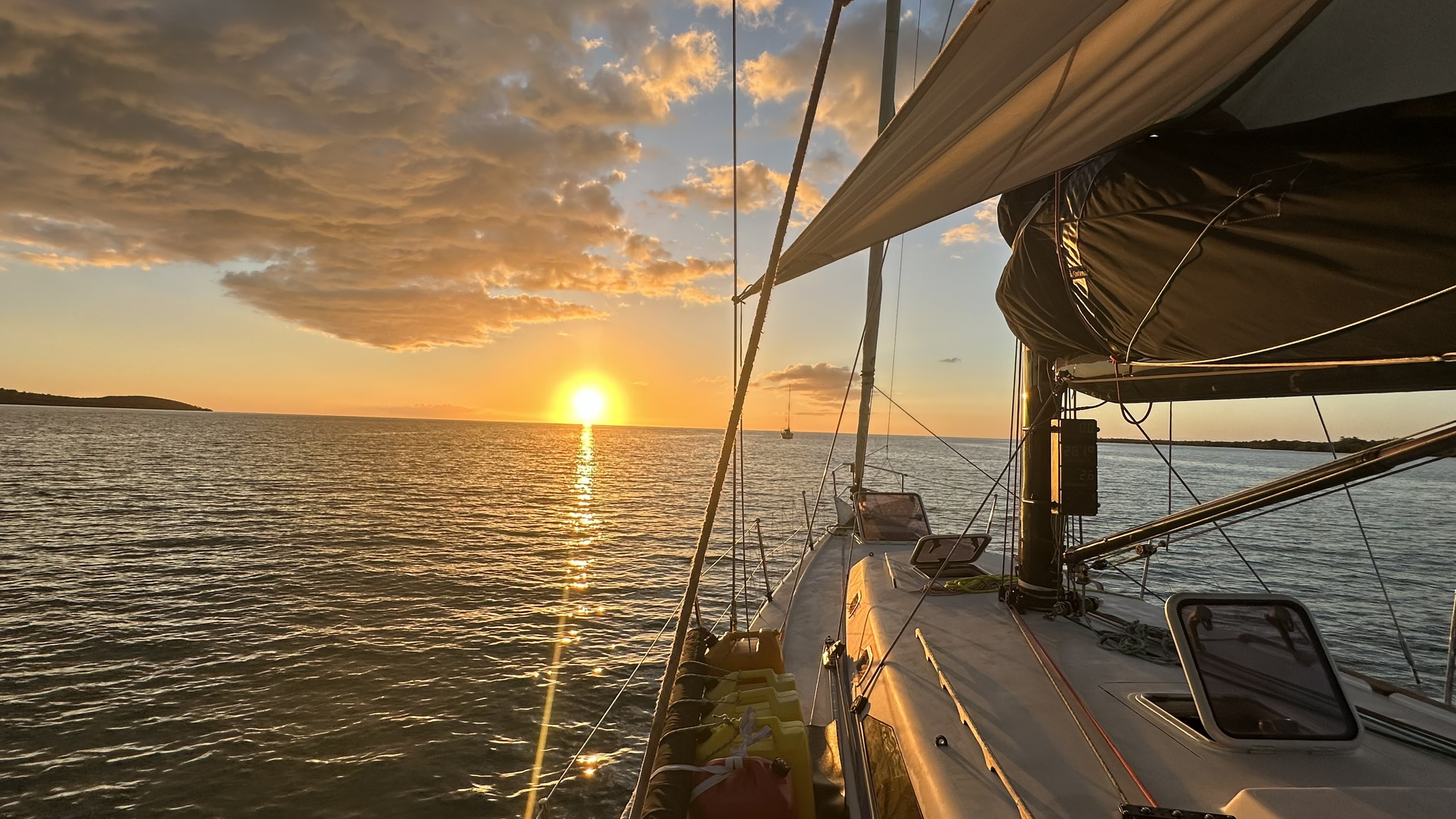
Overview: A two-month sailing journey with a crew of five aboard the yacht Morpheus, crossing the Caribbean Sea from the British Virgin Islands to Panama City, with stops throughout the BVI, USVI, Spanish Virgin Islands, Puerto Rico, Jamaica, Grand Cayman Island and Panama.
Backstory: Unlike most recreational sailors, I did not grow up sailing. Lucky for me, a very dear friend and college fraternity brother of mine did. Jim Gregory grew up in Connecticut and spent much of his formative years honing his sailing skills in and around Newport, RI, what many call the “Sailing Capital of the U.S.” Jim cemented his reputation as a first-class yachtsman racing in San Francisco Bay during and after college, where he settled and raised his family with this wife, Debbie. In 2002, Jim and Debbie built and launched Morpheus, their beautiful 50′ sloop and spent much of the next 20 years cruising the world, with several years living aboard in the Mediterranean and many more shuttling between Newport and the Caribbean.
So, what does this have to do with me? Well, as I said, I was lucky in that back in the early 1980’s Jim invited me to join his racing crew on Magic, another boat he owned (a Wylie 34), and before long I was racing with Jim several weekends a year for close to 20 years. In 1987, Michelle and I joined Jim and Debbie and two other sets of friends on a bareboat sailing vacation in the BVI. I have since returned to sail the BVI five more times (including our honeymoon) and had the pleasure of sailing with the Gregorys on Morpheus in the BVI, Windward Islands and Greece. In 2021, I joined Jim on the Morpheus crew for Block Island Race Week, a major sailing event held every two years since the early 1960’s. We won our division — Jim’s first BIRW champion trophy.
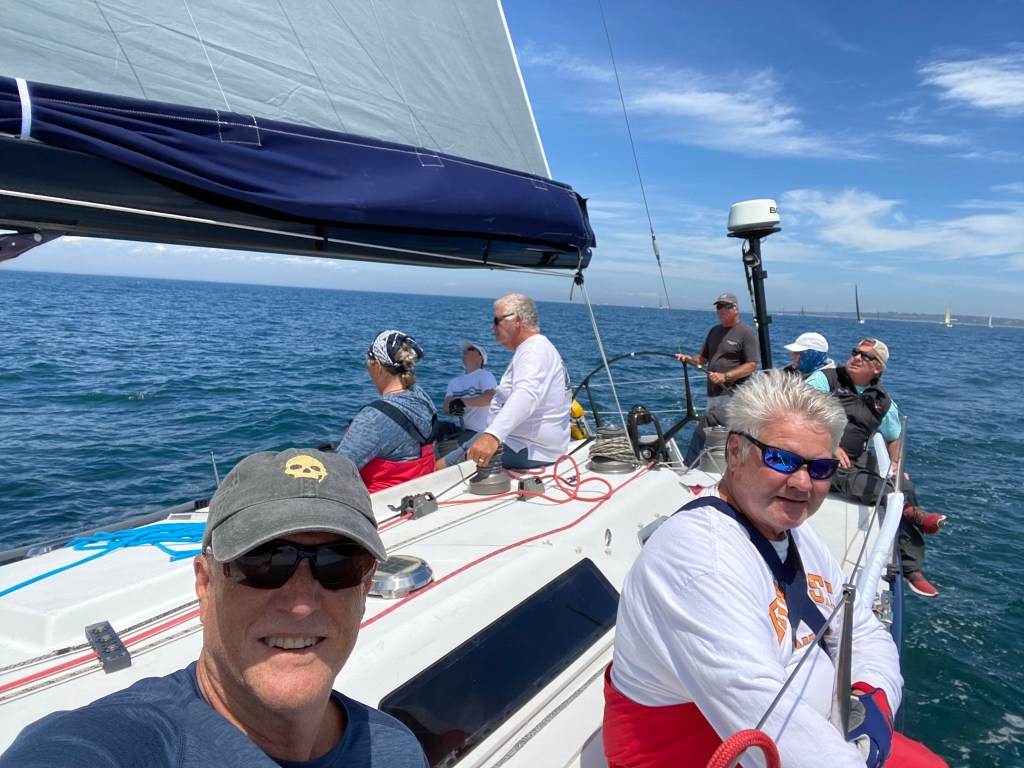
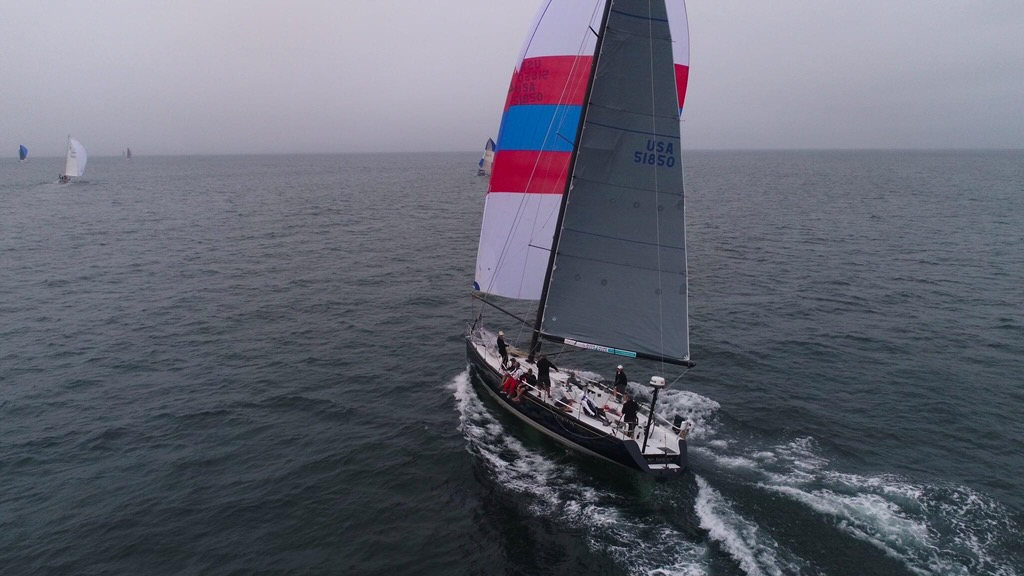
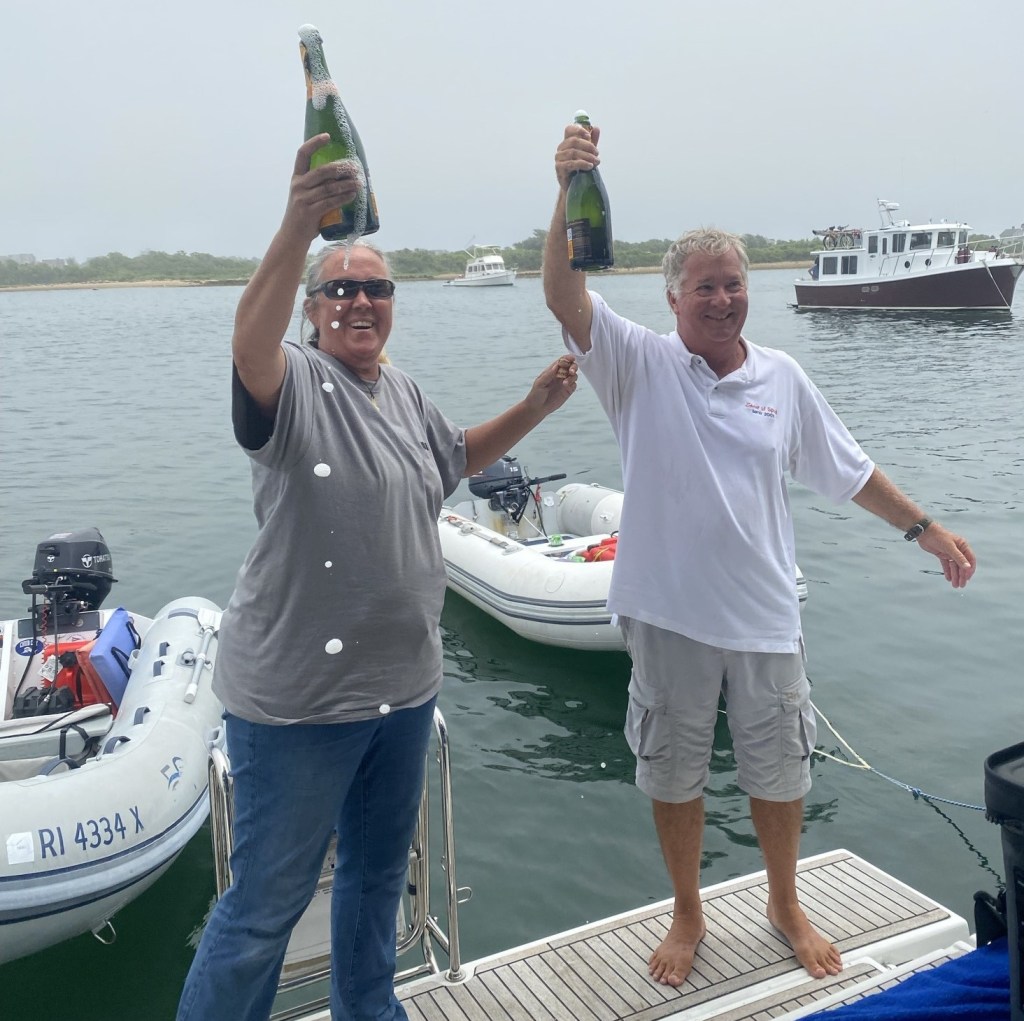
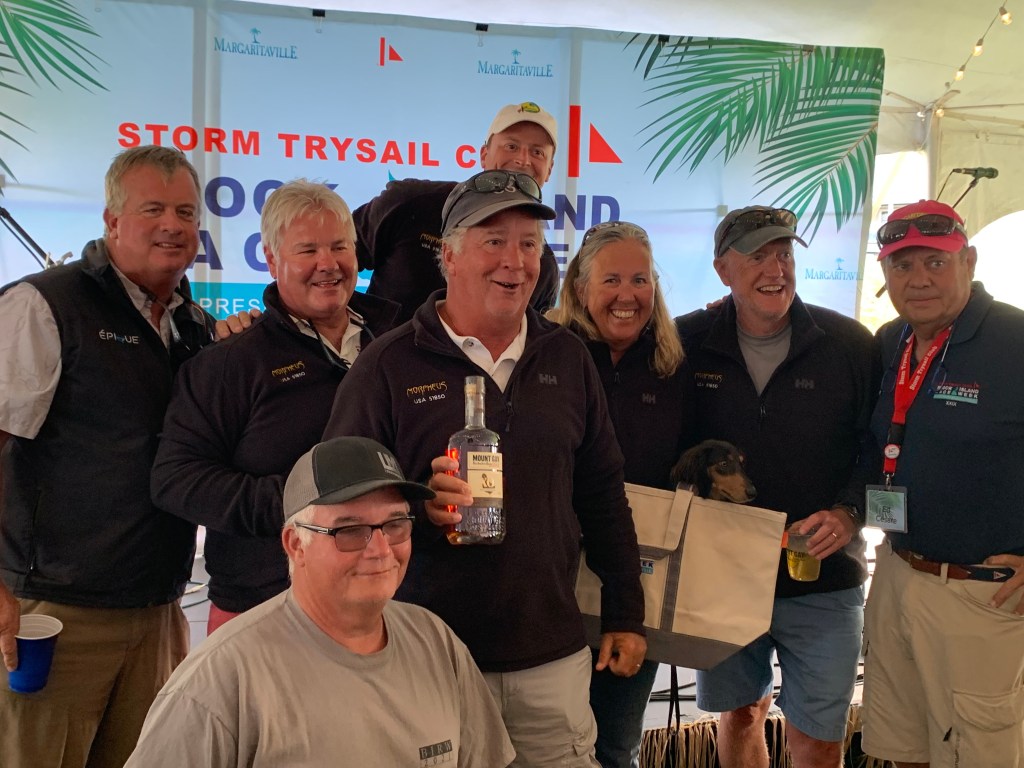
When Jim announced shortly thereafter that it was just about time to bring Morpheus home to San Francisco, I quickly volunteered to help with that delivery, taking the leg from the BVI through the Panama Canal and up the coast as far as Costa Rica or Mexico — what I imagined would be a bucket-list experience of a lifetime. A couple other lifelong friends and fraternity brothers signed on as well for different legs of the trip. The planned departure date was set for January 22, 2024. After completing US Sailing’s Offshore Safety and Sea course, which Jim deemed mandatory for all crew, we packed our bags and landed in the Virgin Islands on January 15th for a week of fun before starting our journey westward.
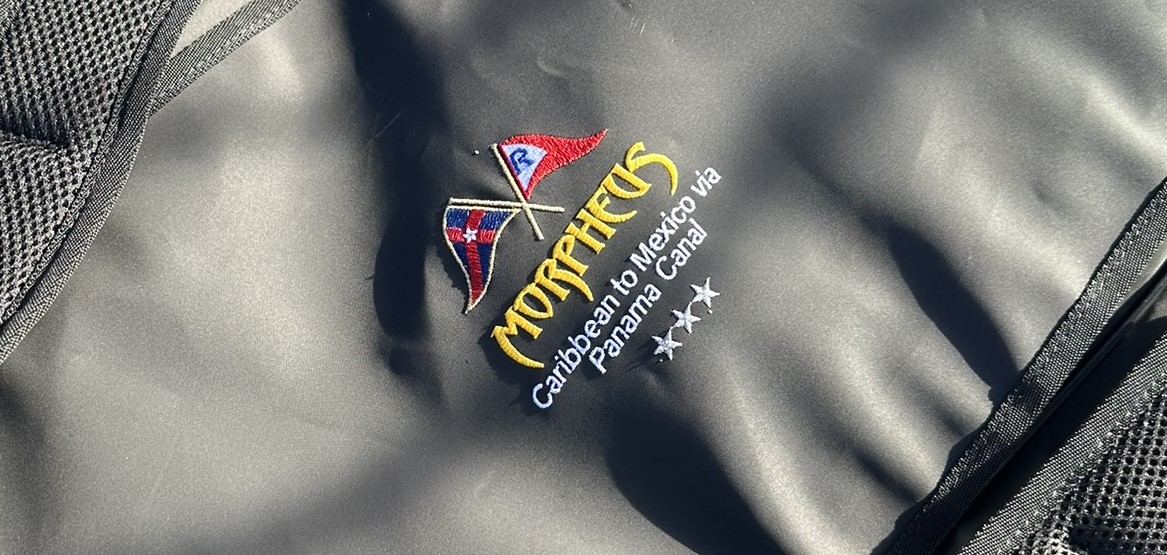
Bottom Line: This truly was the trip of a lifetime for more reasons than one. I had never sailed more than 10 hours at a stretch, had never done an overnight passage. On this journey, we had frequent layovers and our longest blue water passage was just over four days. Our final itinerary was determined largely on the fly by weather — we’d arrive someplace and wait for a good “weather window” before moving on. (Jim liked to say, “I can tell you where (I’m going), and I can tell you when, I just can’t tell you both”.) Virtually every day at sea was fairly calm, but it was hot, and the seas were, well, seas. During the day the sun was relentless, very little shade above decks and no air conditioning below. Our mighty crew of four, including Jim, had rotating shifts standing watch — two hours on and six hours off — around the clock while sailing. Before long, a pattern set in — when you weren’t on, all you wanted to do was hide from the sun and rest, maybe even catch some sleep. Which is probably why we made the most of our time ashore, where we could get a proper meal and no limit on beers. While not the idyllic, romantic adventure I had imagined at all times, I am thrilled that I got to do it. Anyone with a sense of adventure who has the opportunity to do something similar should not pass it up.
| Dates | Route and Destination |
|---|---|
| Week 1 | BVI to USVI |
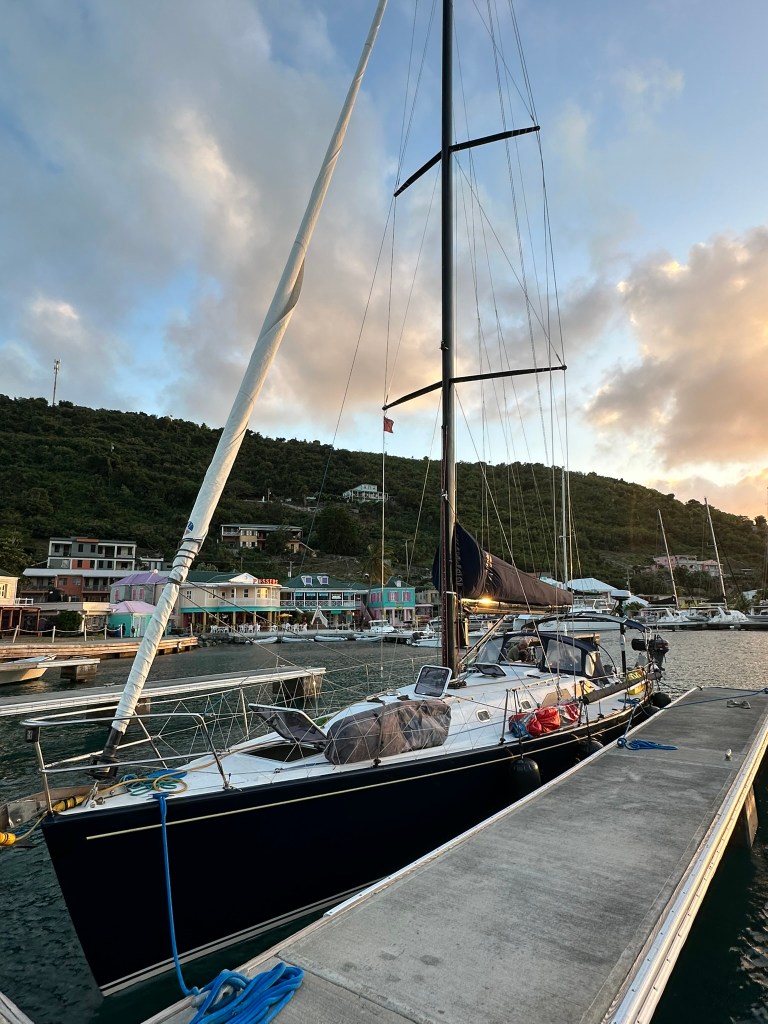
Like all great sporting events, this adventure started with a little pregame fun. Flying into St. Thomas, USVI, with fellow crew, Mike and Paula Tye, we caught the first ferry to Tortola’s West End where Jim, Debbie and Morpheus were waiting for us at Soper’s Hole Marina. As it was already getting late, we overnighted there before sailing the next morning to Virgin Gorda’s North Sound, where we spent the next five days anchored just off Saba Rock.
While an amazing spot, 5 days at Saba was longer than we anticipated due in part to a punctured dinghy that required patch and cure time. We still managed to have plenty of fun before starting our sail westward, with one day stops at Anegada and Jost Van Dyke – two favorite BVI destinations – before returning to the USVI, anchoring off Charlotte Amalie on the island of St. Thomas. Michelle and Debbie, who spent this week with us, flew home from there before we continued heading west.
Highlights:
- Spending this first week with Michelle, Jim and Debbie, Mike and Paula Tye was a fun, long-overdue reunion; the six of us had cruised the BVI together on Morpheus was back in 2013, so we had a blast revisiting some old haunts together.
- Watching Jim kite surfing back and forth around Eustacia Sound and Saba Rock, his favorite pastime when not actually sailing, is always a kick. Especially when that is how he makes his entrance at Sandbox Beach, a favorite spot for sunset cocktails.
- For the first time in six trips, we day hiked to the top of the hill behind the Bitter End Yacht Club. While the views overlooking North Sound were tremendous, you could still see lots of snapped trees, remnants of Hurricane Irma that tore through here and leveled the Bitter End in 2017.
- Perhaps a lowlight and the first of a few mishaps on this trip: Our dinghy was punctured while out snorkeling. Two days after patching and curing, the same dinghy was blown off our foredeck by late night winds, requiring an impromptu rescue mission. Things don’t always go to plan!
- Day tripping on Anegada to the two major beach bars I had not yet been to — Cow Wreck Beach Bar and the Anegada Beach Club — was fun, and the Bushwhackers (watch out!) were great.
- Downwind sailing from Anegada to Jost Van Dyke, where we returned to old favorite White Bay beach bars, Gertrude’s and the Soggy Dollar. Sadly, One Love, an old favorite, was out of business since its owner and local legend, Seddy, passed away a year earlier.
- Later that same night, we headed back to Great Harbour for our overnight anchorage, a beachfront lobster dinner at Foxy’s, and nightcaps down the beach at Corsair’s, my favorite hangout for pirates and other degenerates.

First night on board at Soper’s Hole 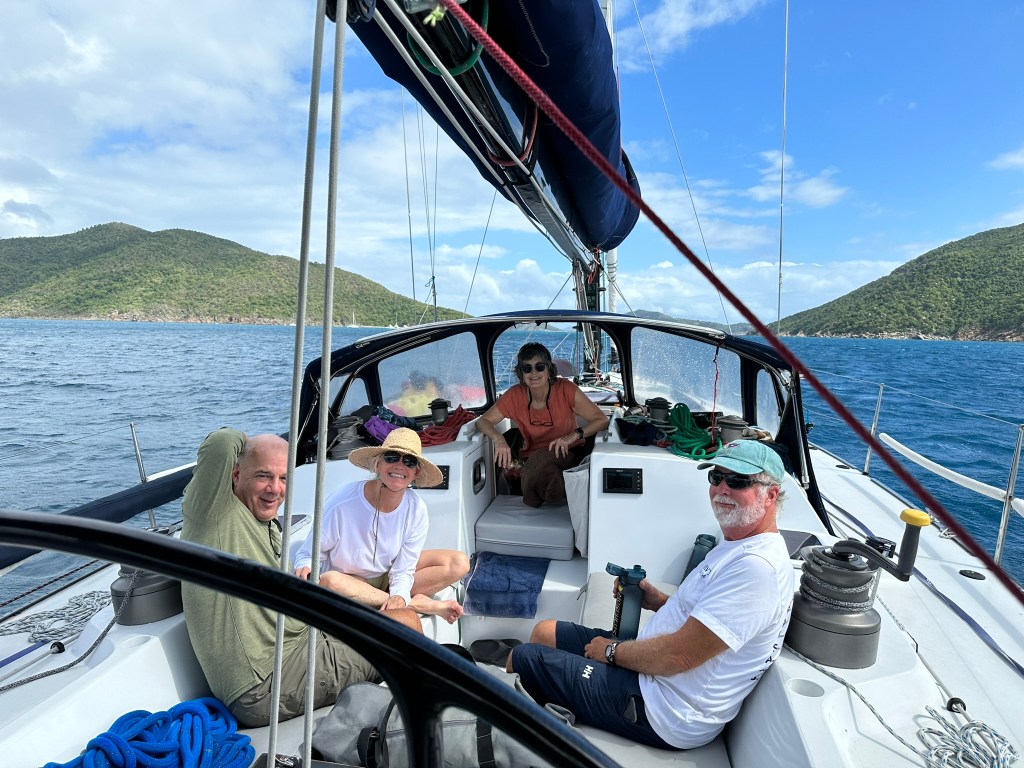
Sailing to Virgin Gorda 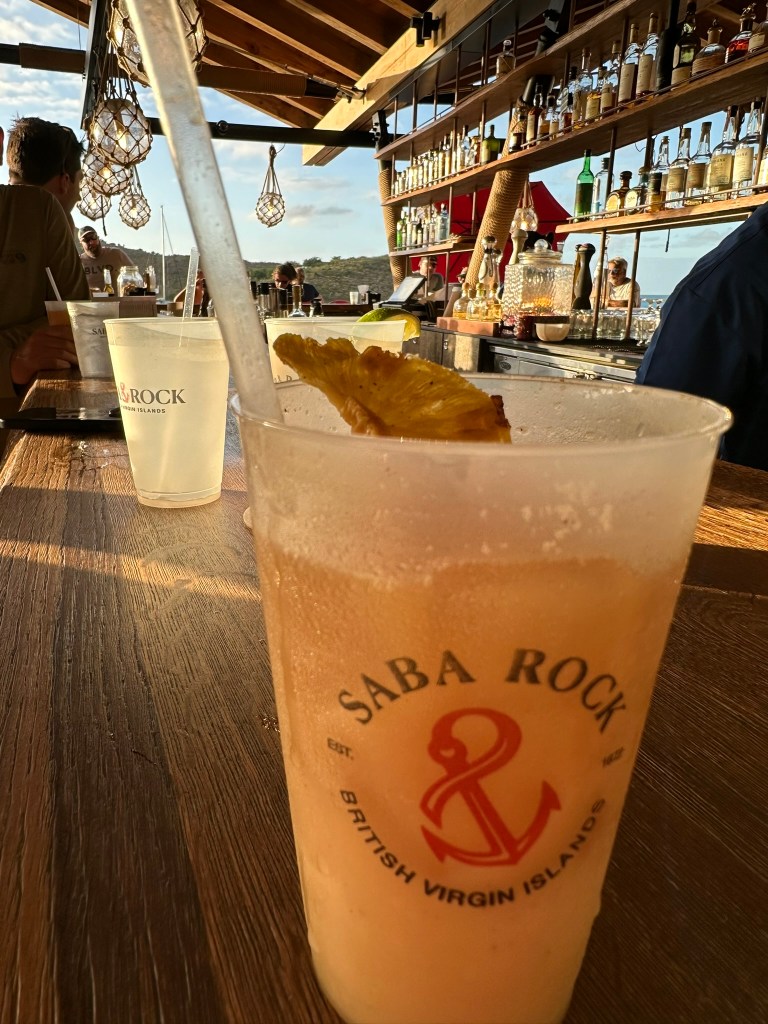
Arrival drinks, best Painkiller in North Sound 
The band is back together at Saba Rock 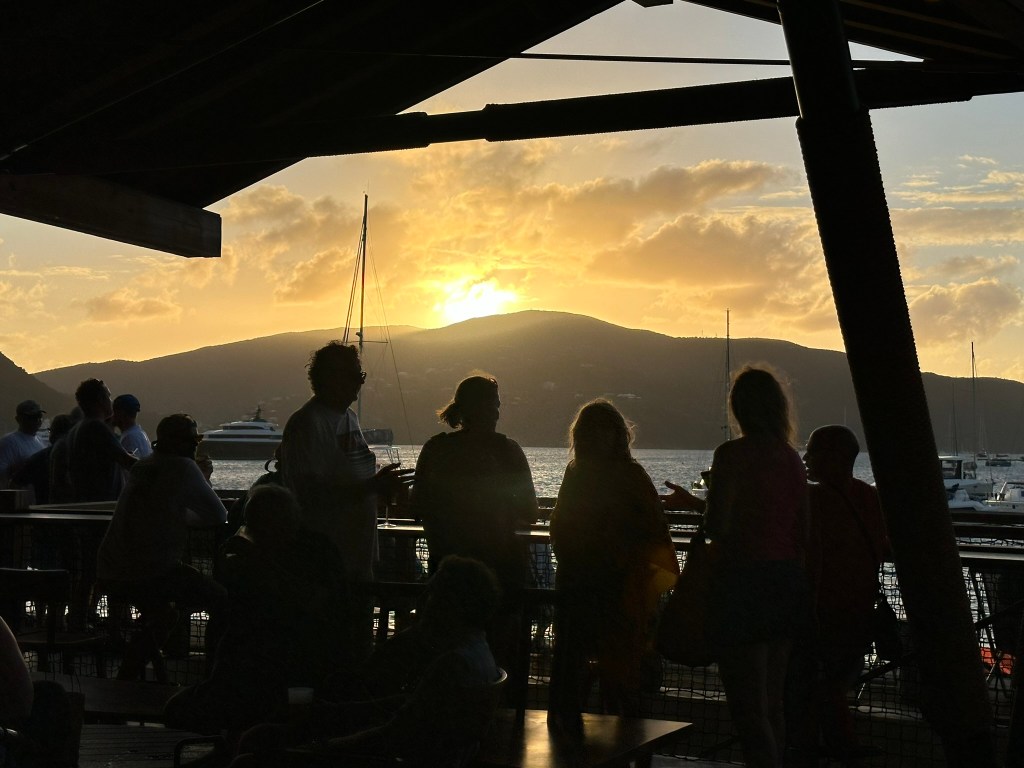
Sunset from Saba Rock 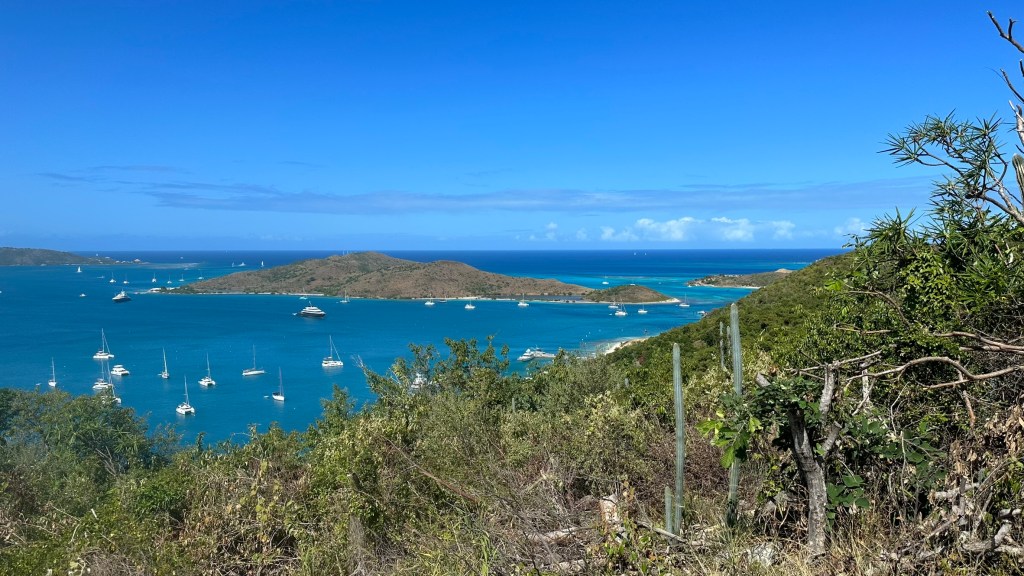
Hilltop view over North Sound 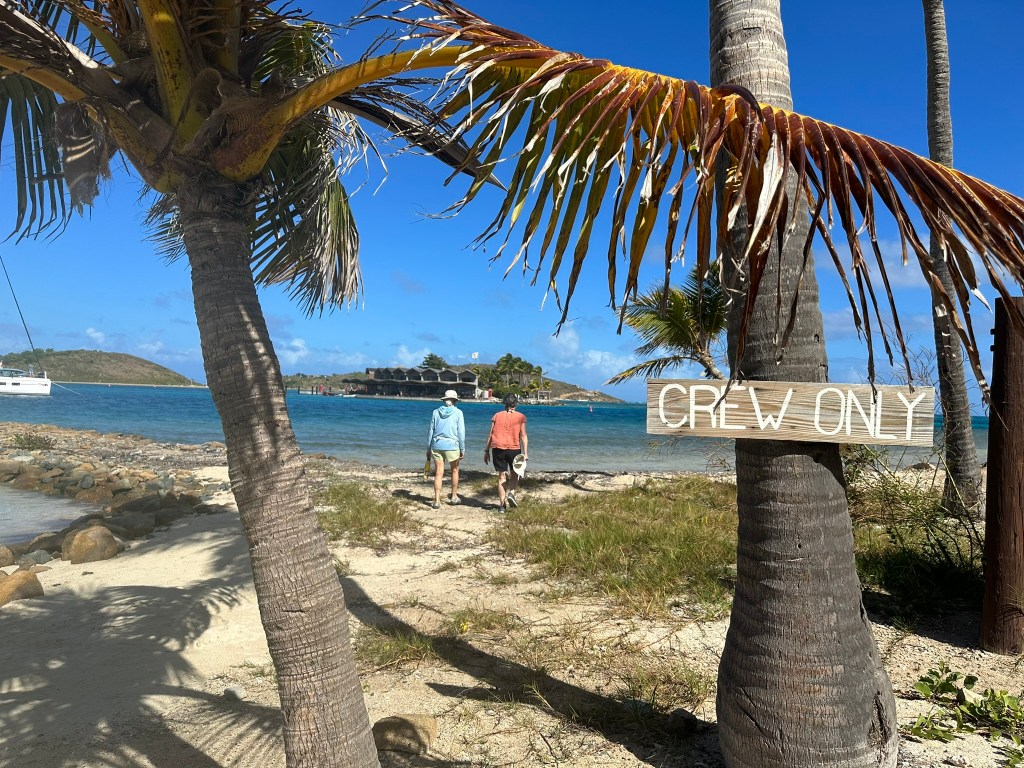
Hitting the trail from BEYC 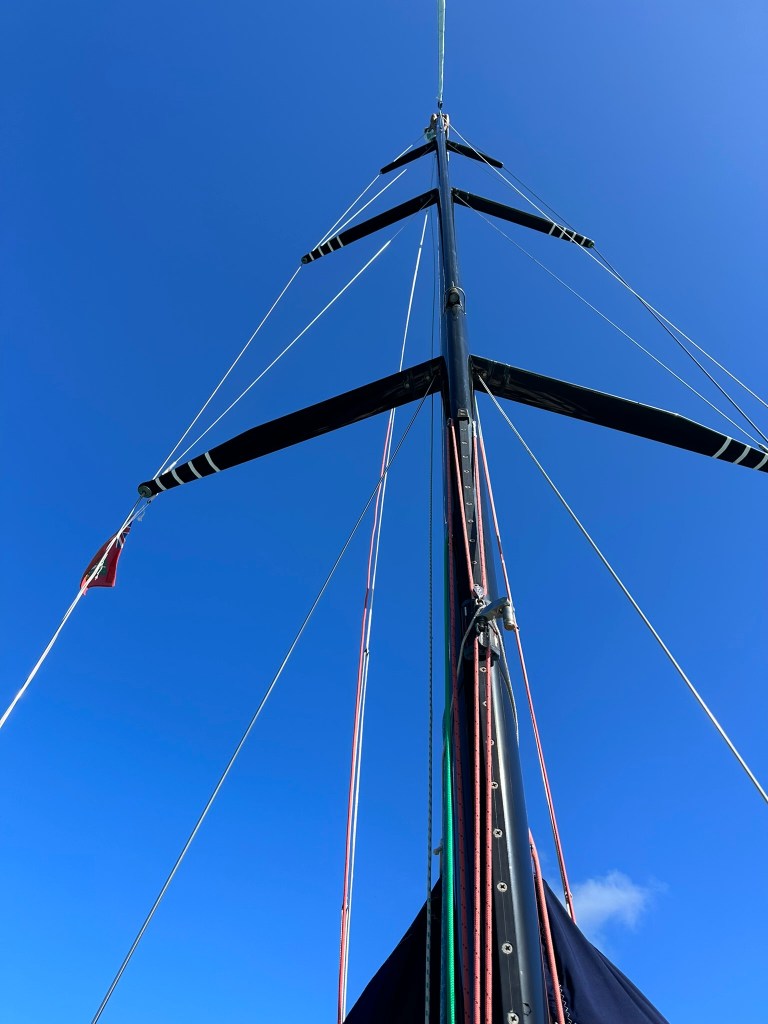
Then up the mast… 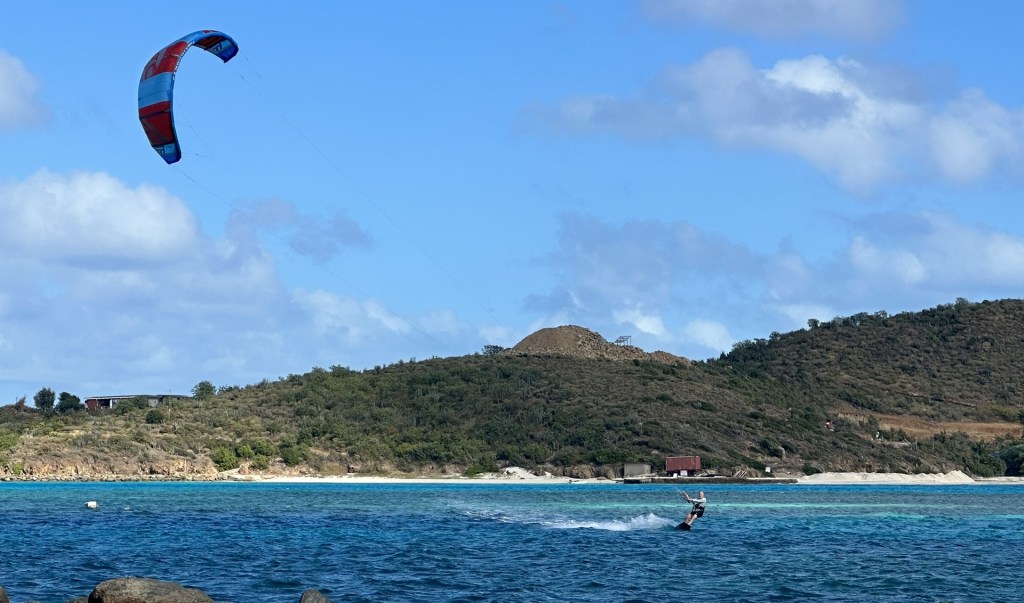
Jim goes kite boarding… 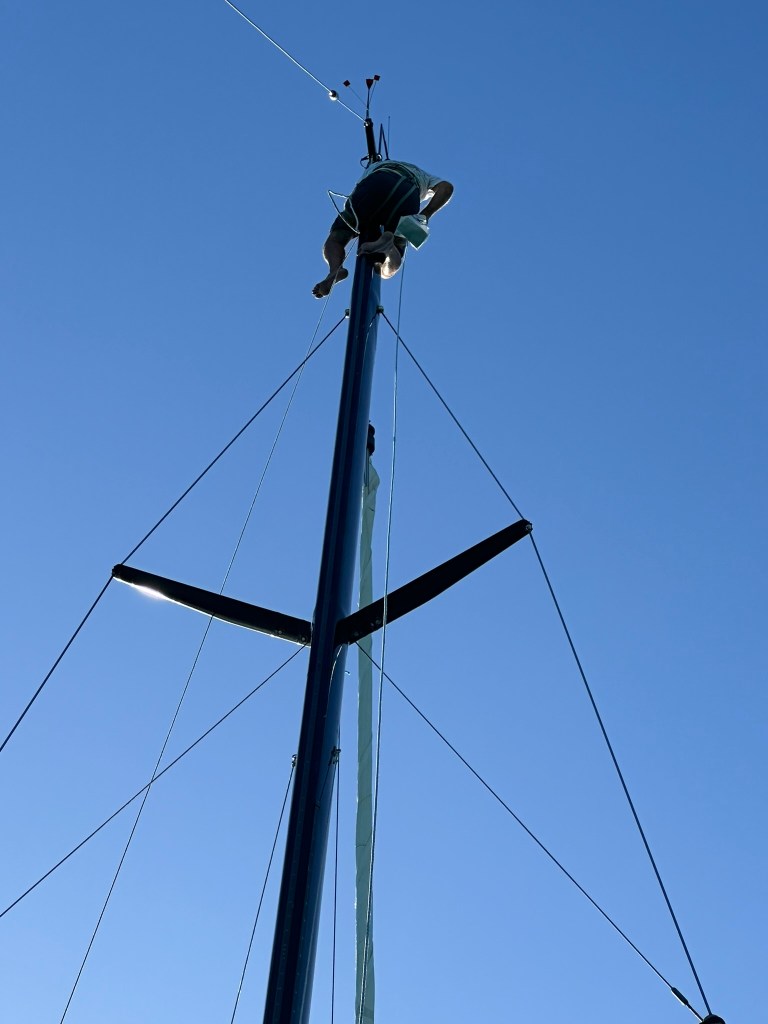
Fine tuning the electronics 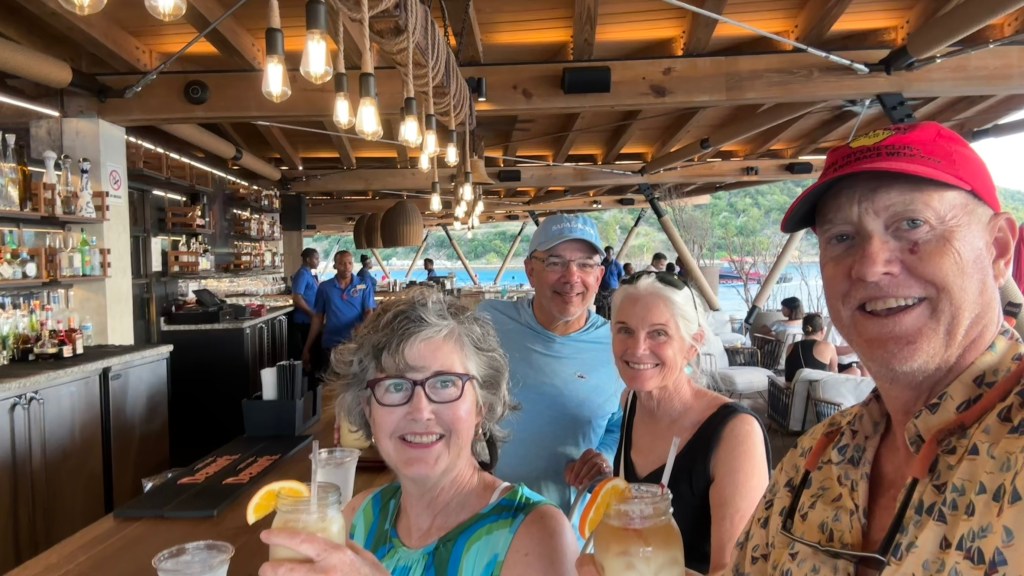
Afternoon ritual at Saba 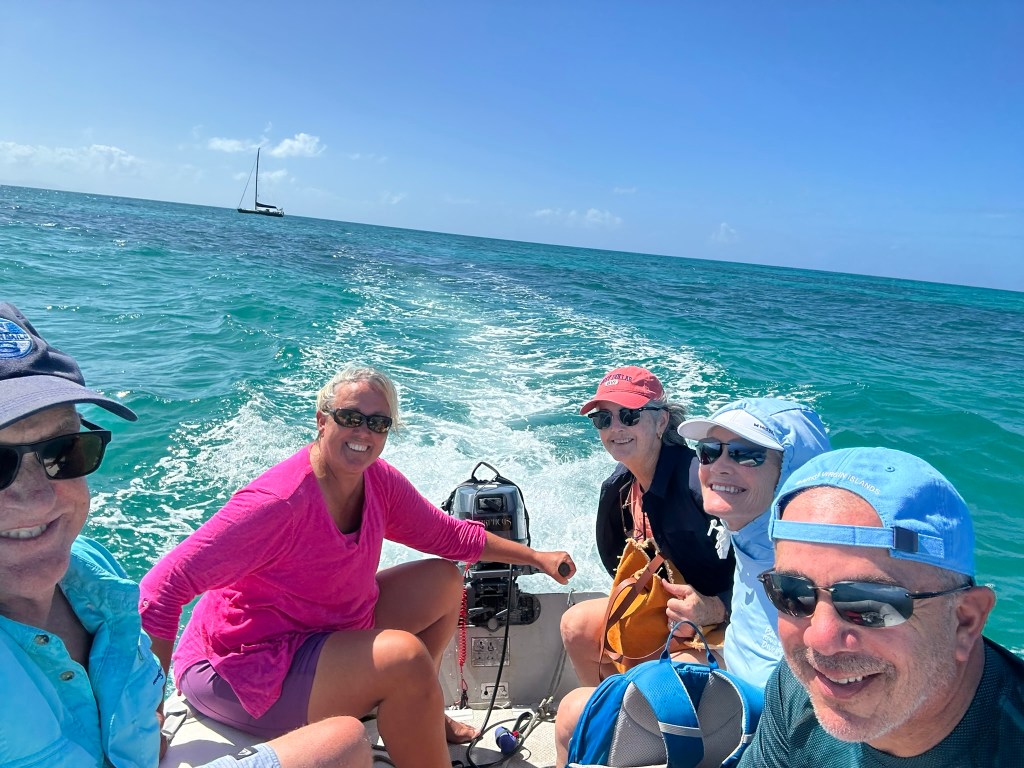
Dinghying in to Anegada 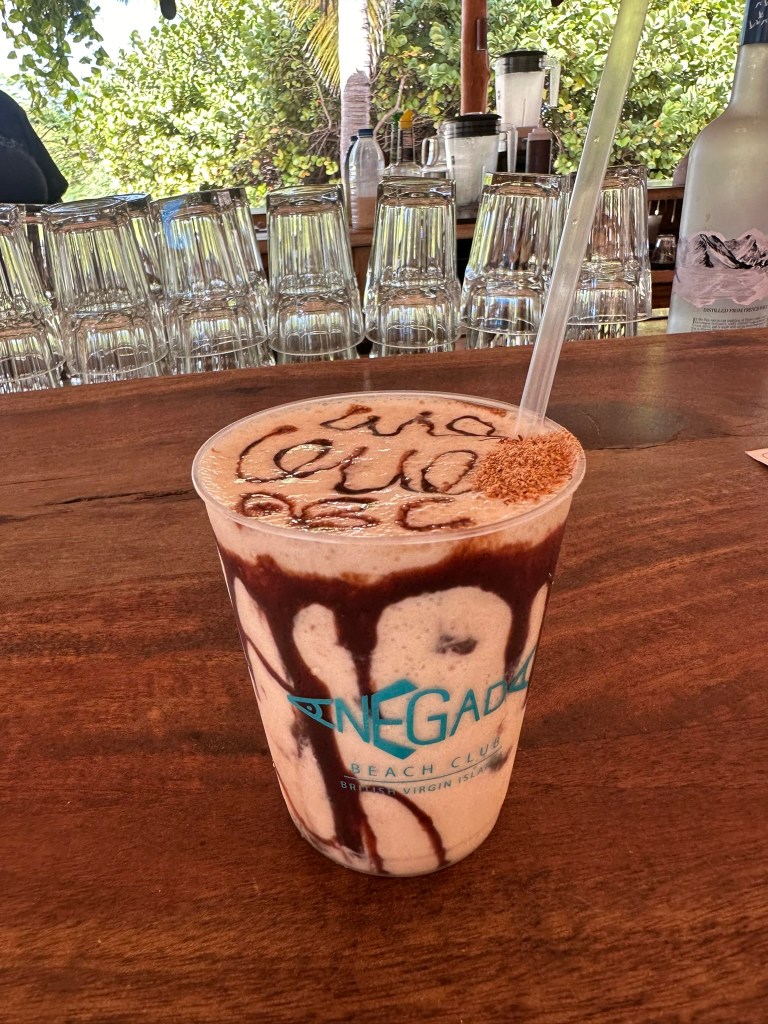
The Bushwhacker 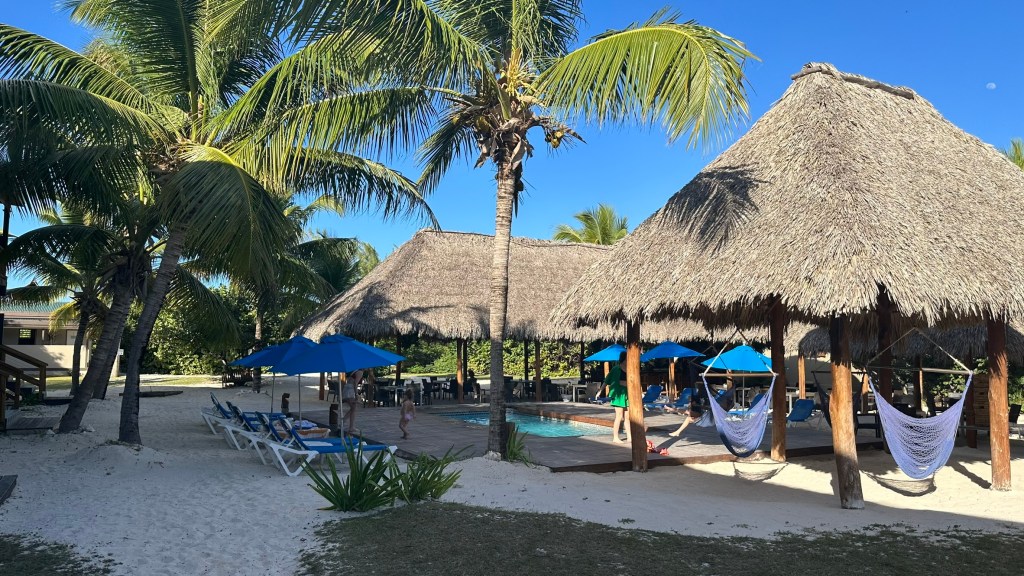
Anegada Beach Club 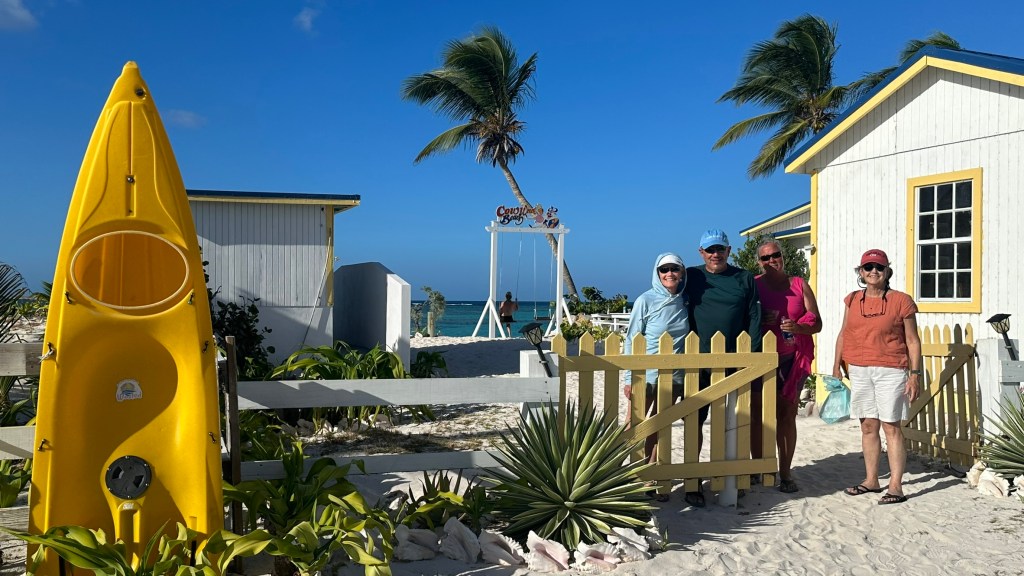
Cow Wreck Beach Bar 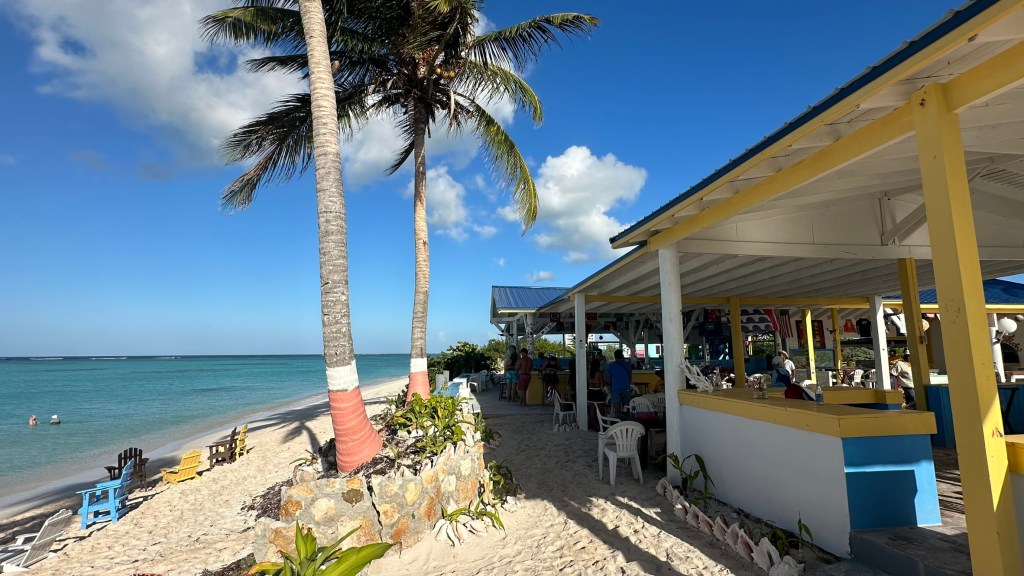
Cow Wreck Beach Bar 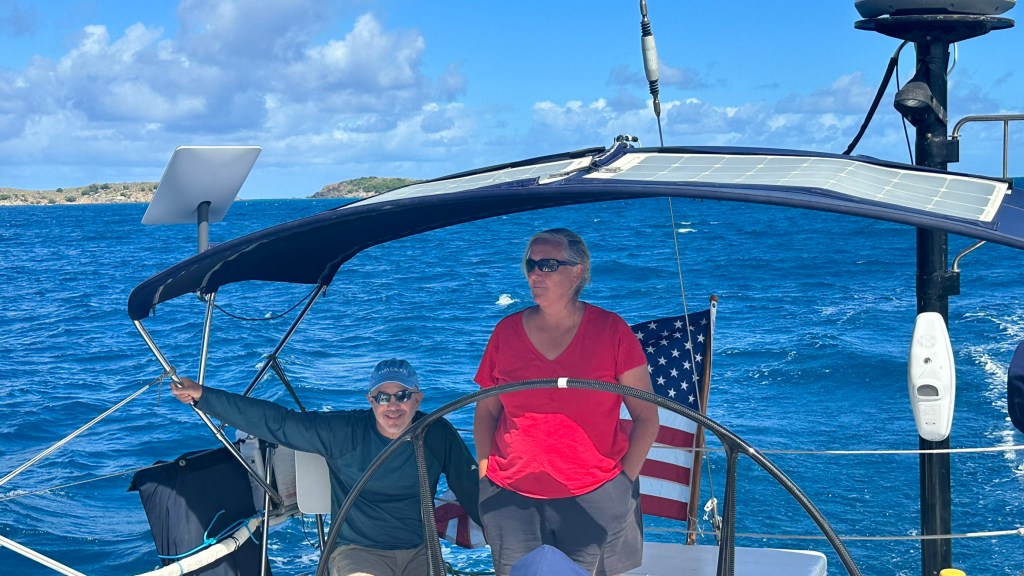
Smooth sailing to Jost Van Dyke 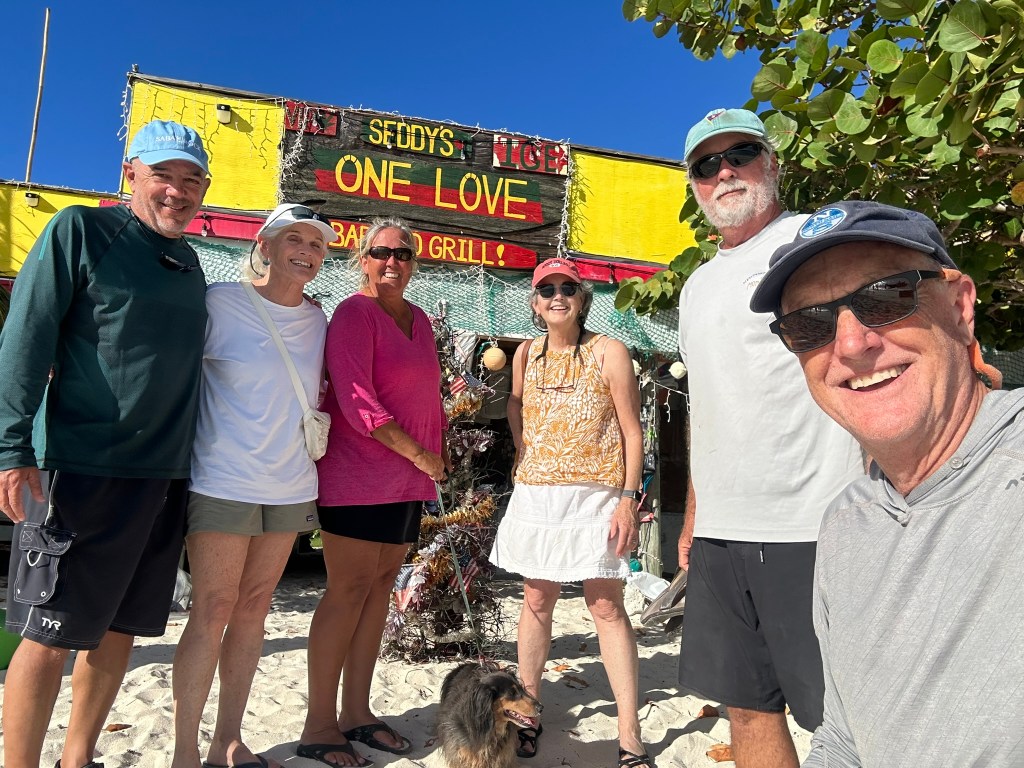
Traditional Xmas tree photo at One Love 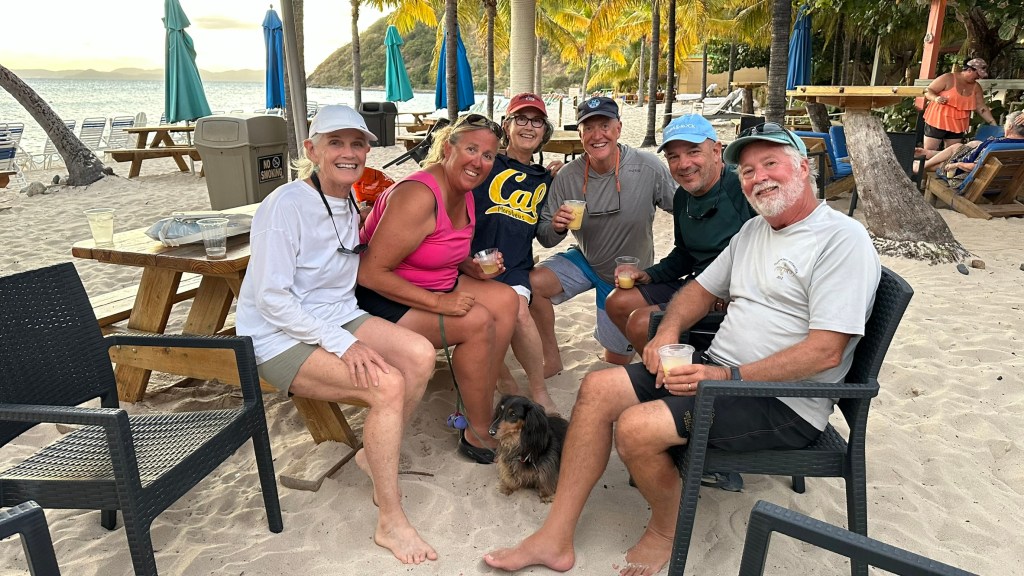
Soggy Dollar 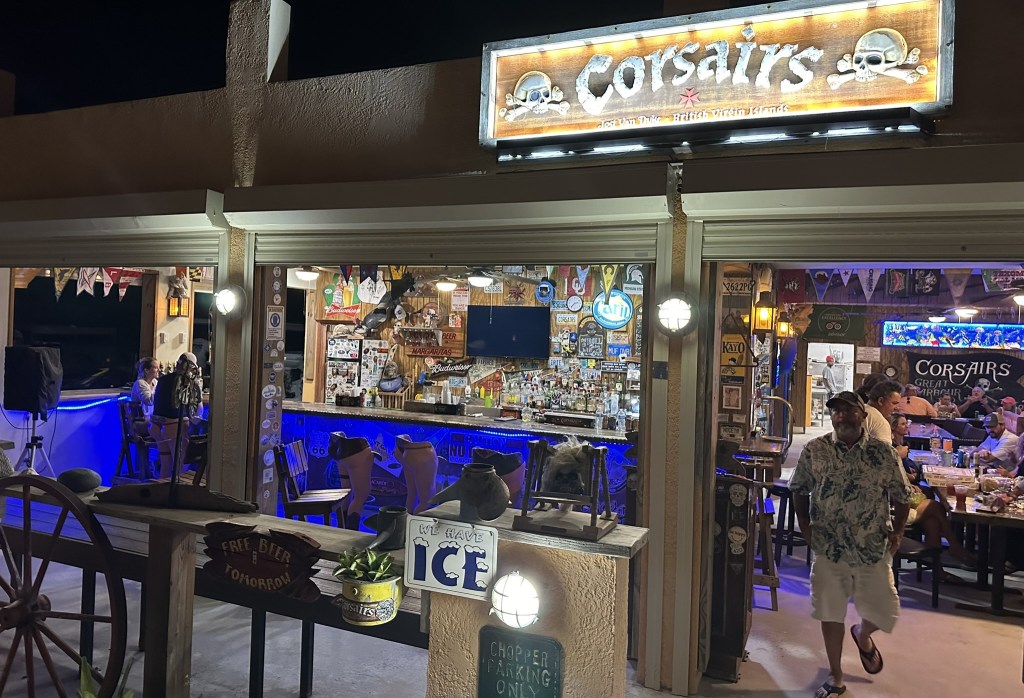
Corsairs 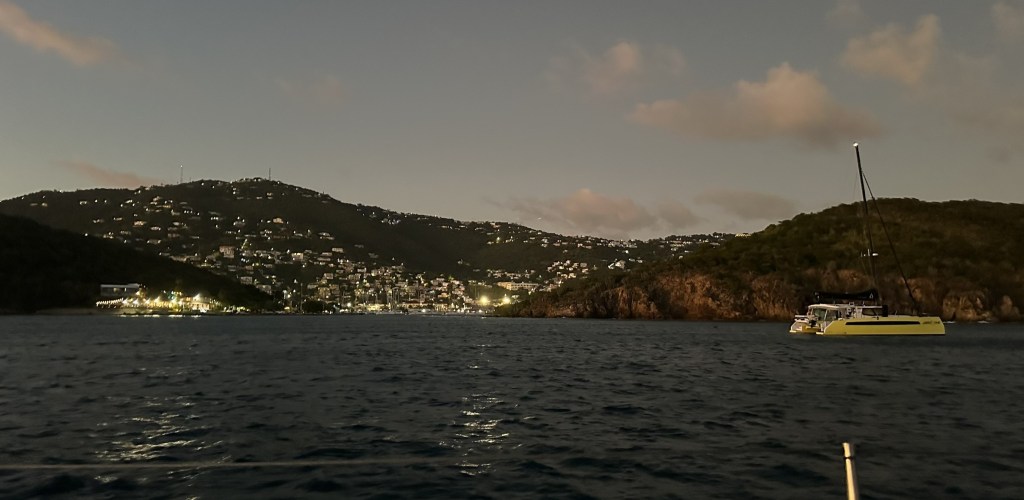
Anchorage off Charlotte Amalie
| Week 2 | USVI to Puerto Rico |
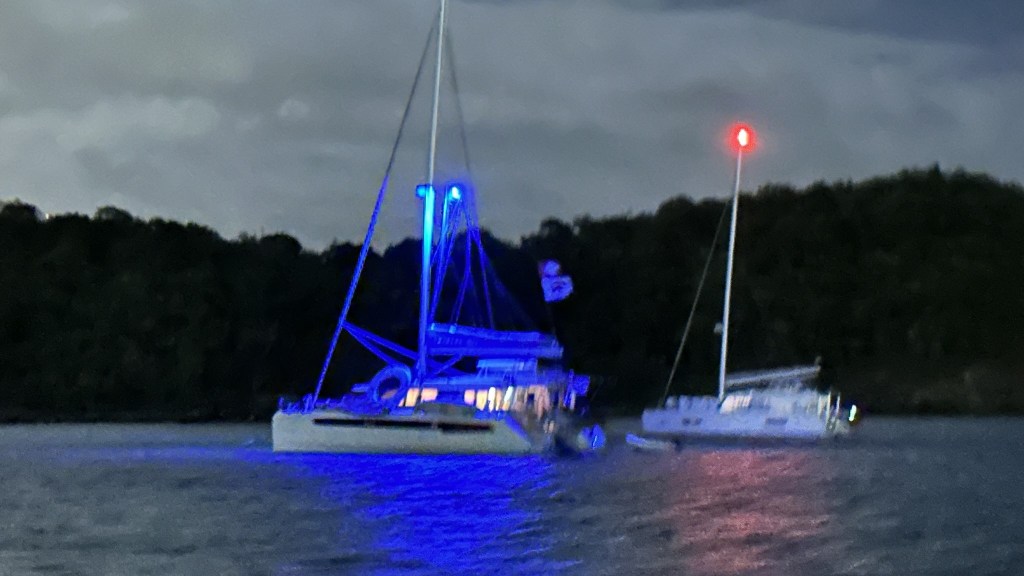
We arrived in Charlotte Amalie, the capital of St. Thomas, just in time for the weather to turn for the worse. Four consecutive days of rain and 20-25 knot winds kept us at anchor with not much to do but wait it out, interrupted only by a couple short (and wet) dinghy rides ashore for laundry, provisioning and the occasional search for a bar. We were mostly successful on the latter front, as the nearby marina had all of those services, including Tickles, the dockside pub (could it have a worse name?), and a day trip to Red Hook on the east side of the island found us at Duffy’s Love Shack for drinks and the St. Thomas Yacht Club for dinner — a bit underwhelming, I’d say. Unfortunately, they had no burgees to trade, so mine from San Francisco’s Mariposa Hunters Point YC stayed in my bag.
With sunshine and lighter air arriving on Day 5, we finally sailed west — my first time going that direction from STT — to the Spanish Virgin Islands, spending two days anchored off the beautiful, desolate Playa Tamarindo beach on the island of Culebra, where we enjoyed good snorkeling with giant sea turtles and a nice hike to another great beach to find bombed out tanks, now more a permanent art installation than anything else. (SVI was for years a target practice area for U.S. military). The next day, we sailed to Puerto Del Rey Marina, Puerto Rico — made infamous in the movie, Captain Ron — where we were joined by Jim Penny, our newest crew member.
Neighbors at anchor 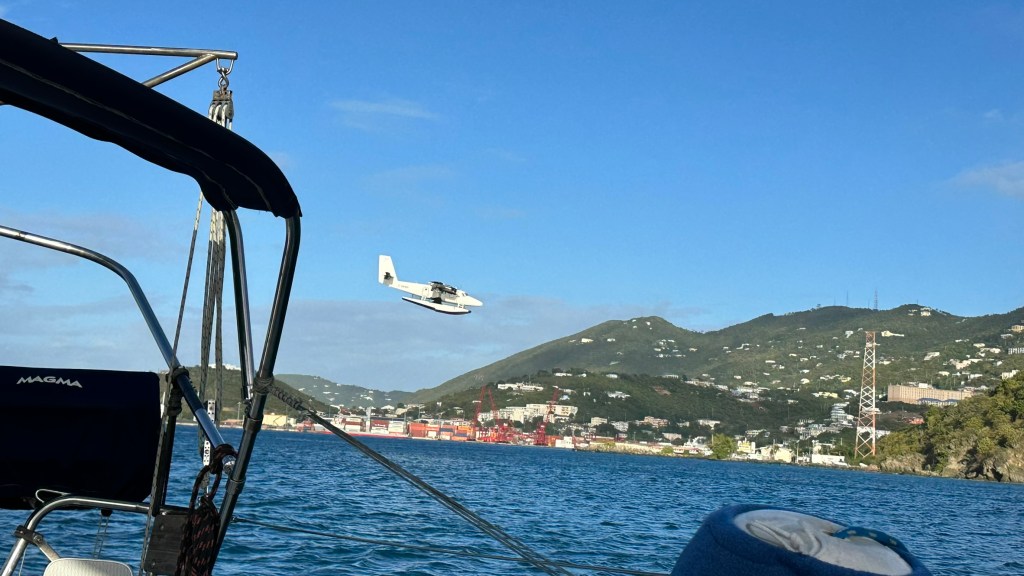
Watching the sea planes come in 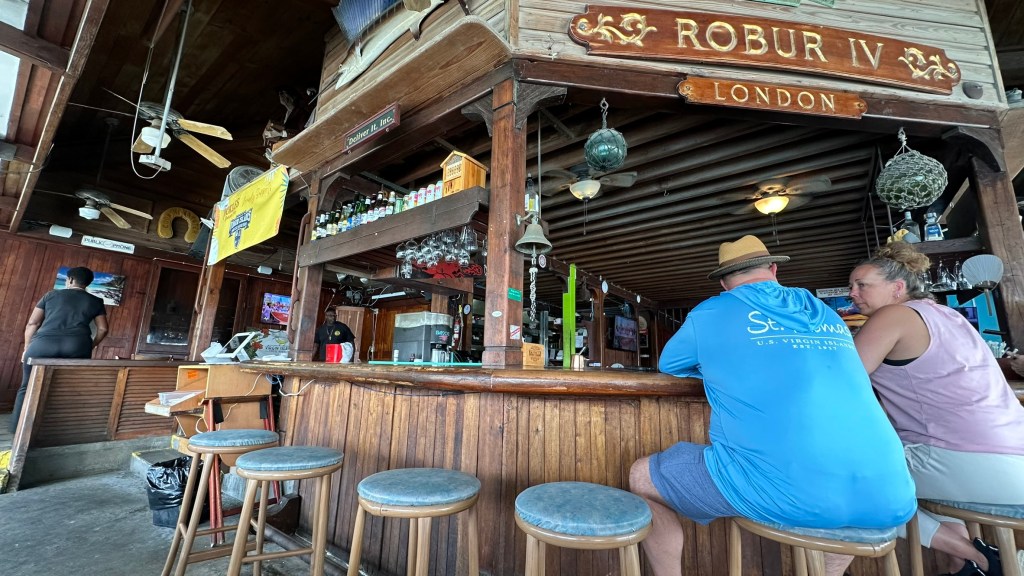
Tickles dockside bar 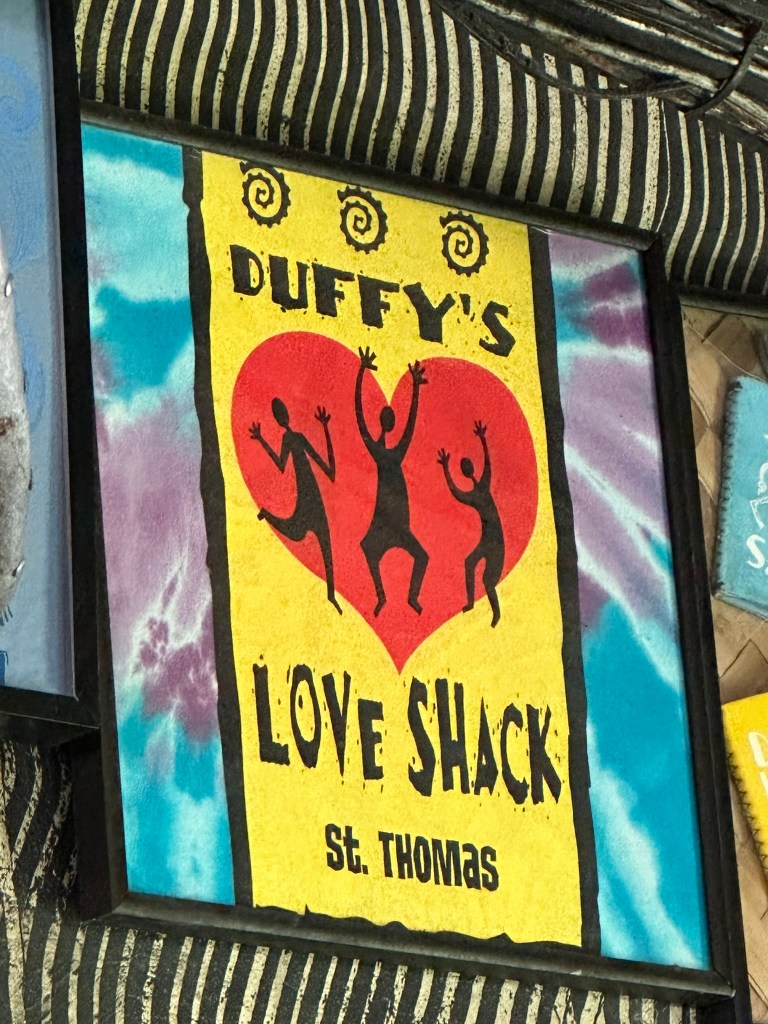
Tin Roof! 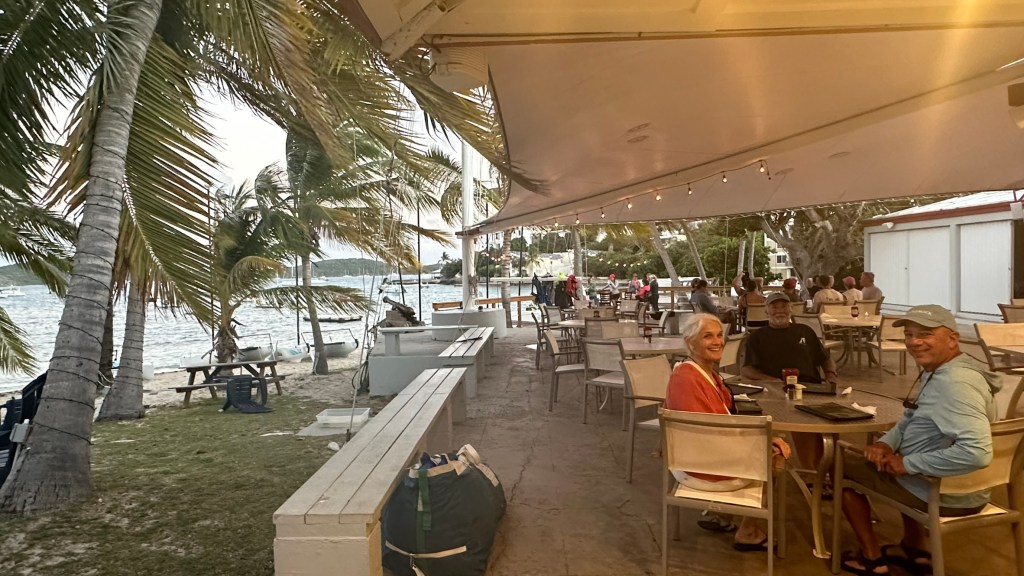
St Thomas Yacht Club 
Finally, a good omen for sailing 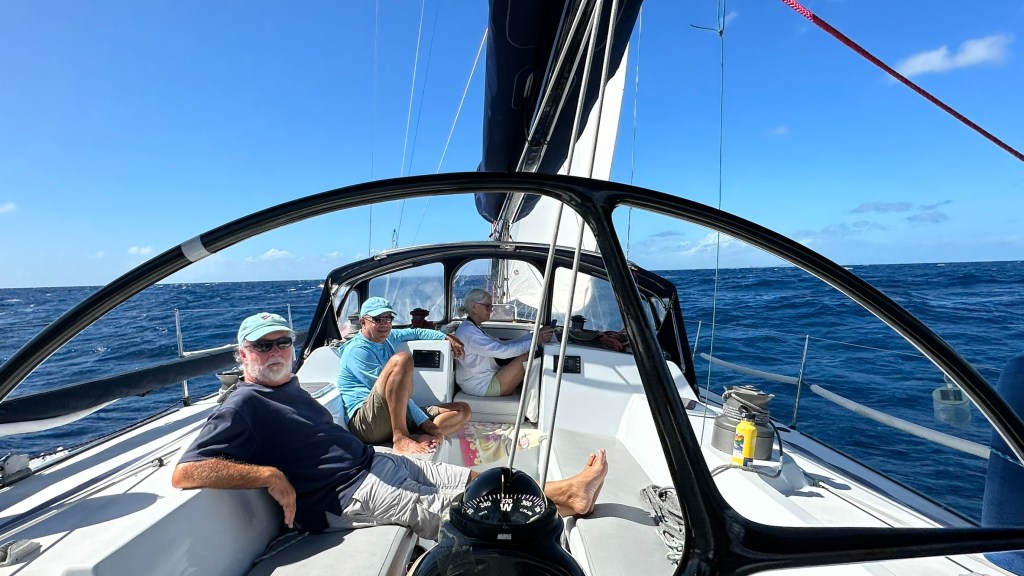
On our way to the Spanish Virgins 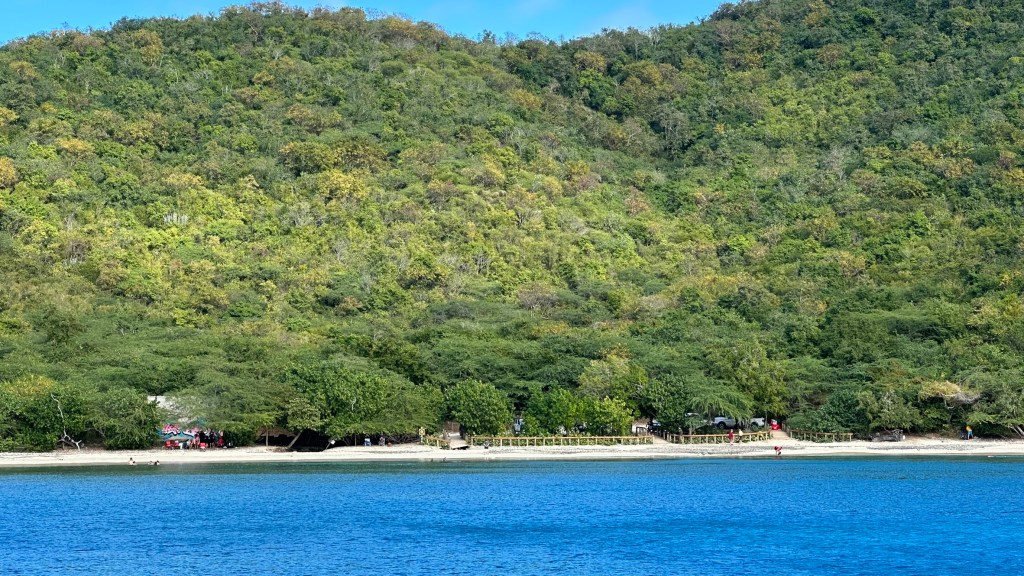
Playa Tamarindo anchorage 
Hitting the water 
Turtle viewing at the point 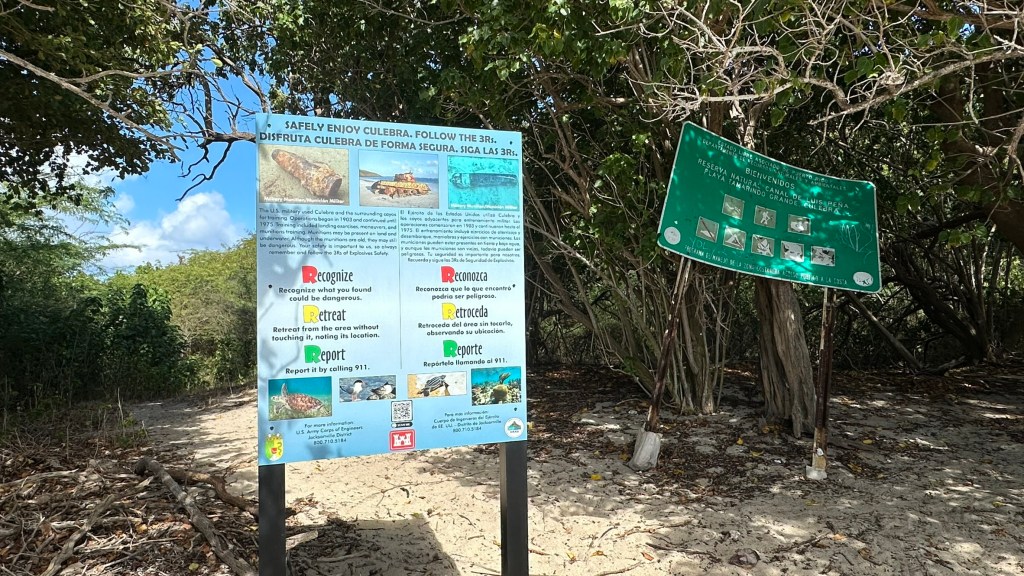
Warning: live munitions! 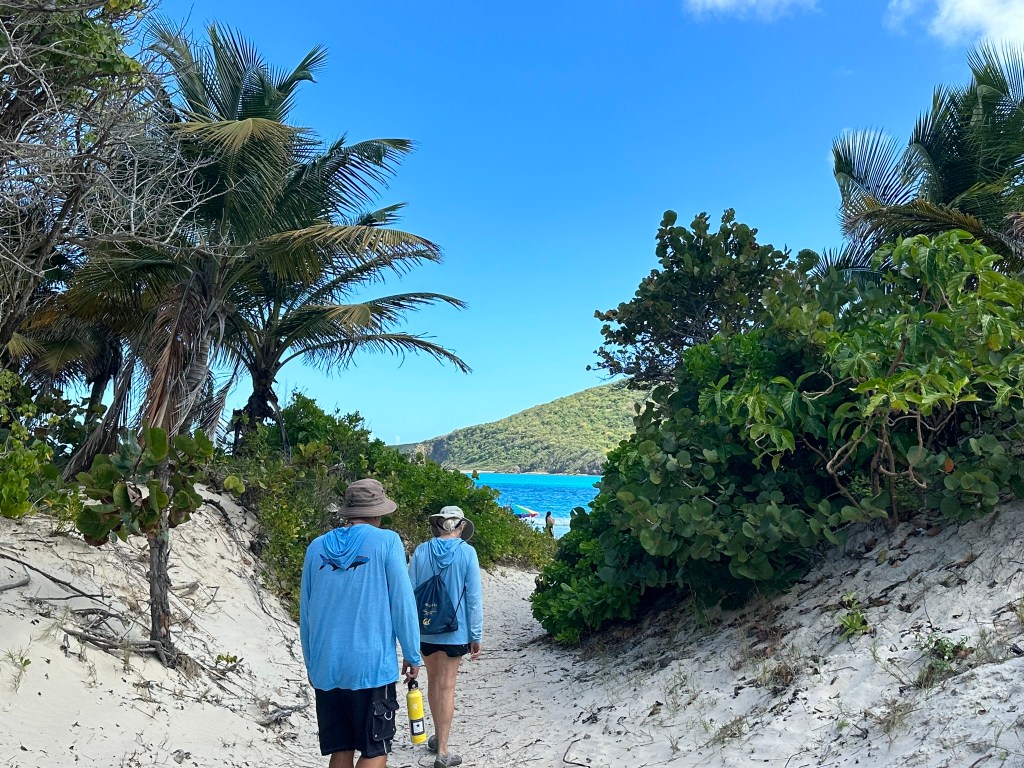
Cross island hike to Playa Flamenco 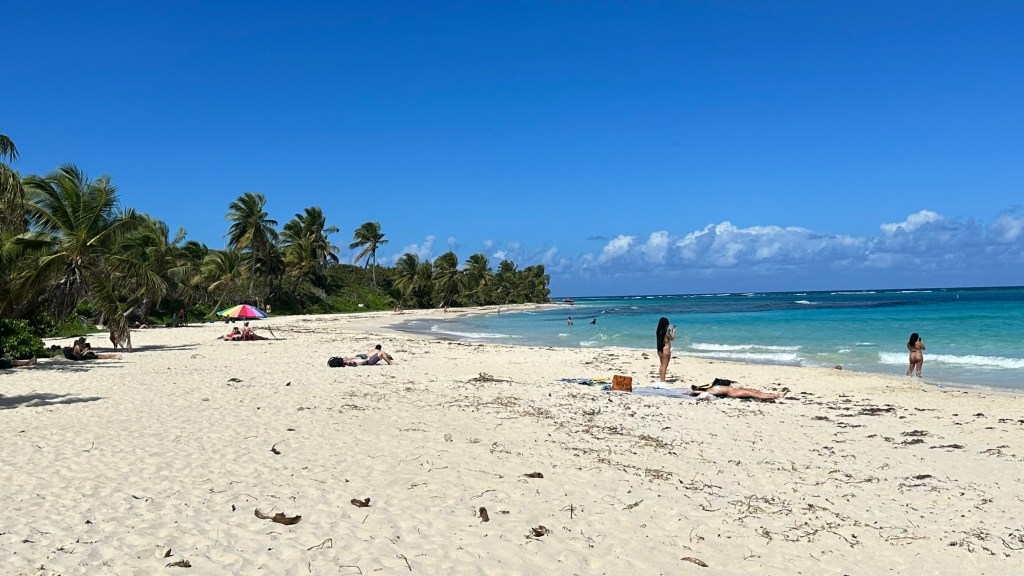
Playa Flamenco 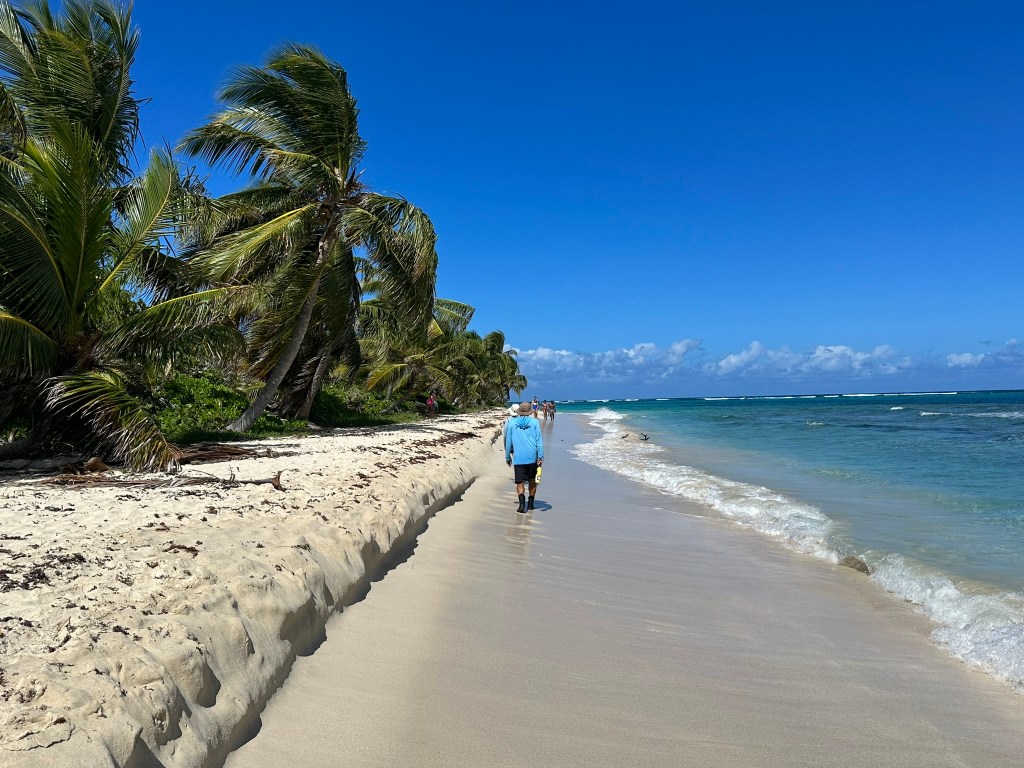
Playa Flamenco beach trek 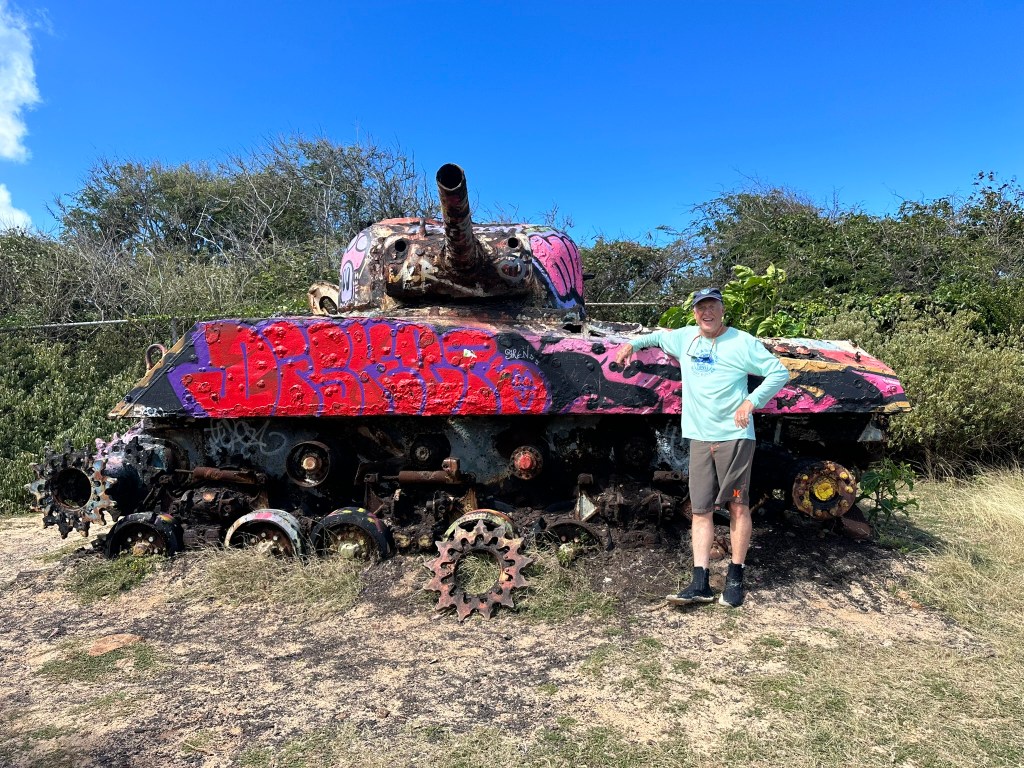
Tank art 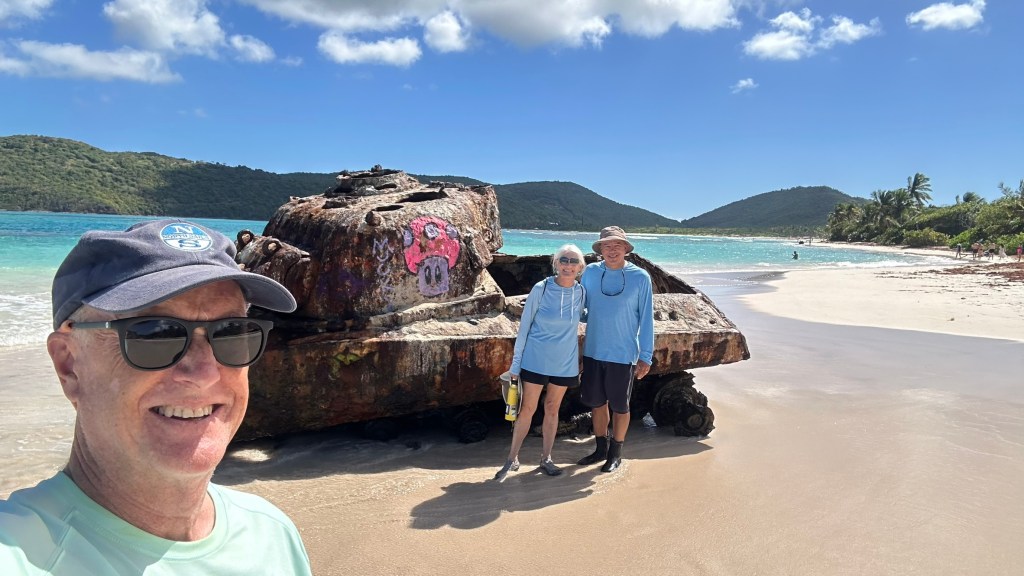
Photo-bombing tanks 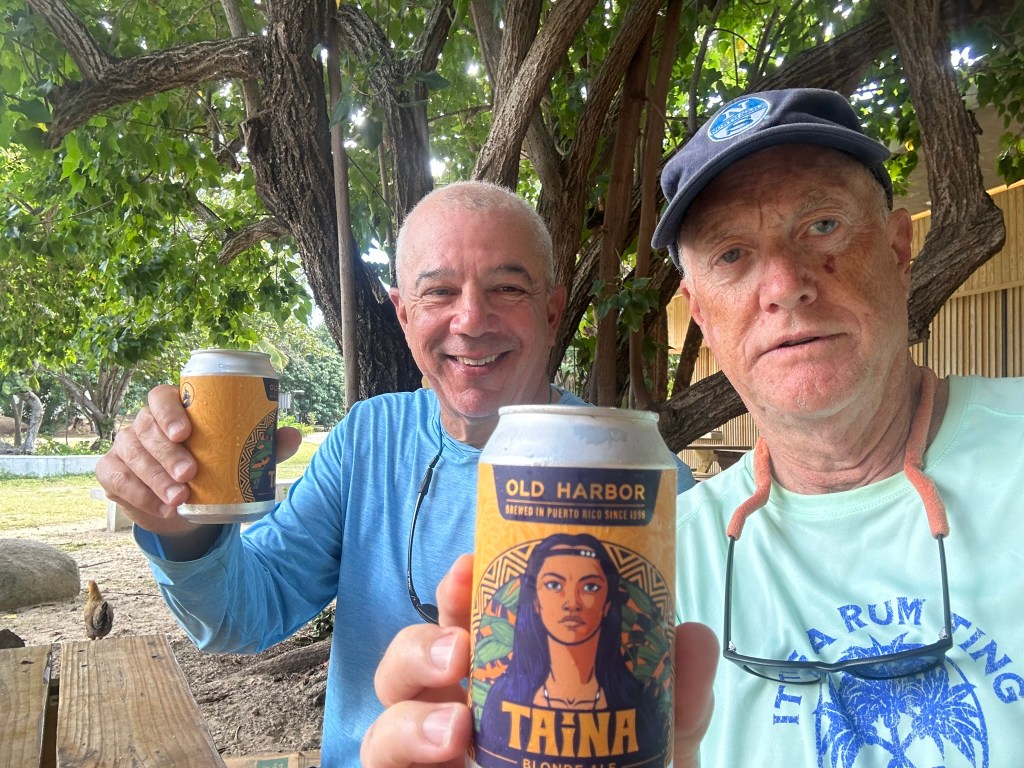
Local refreshments for a hot day 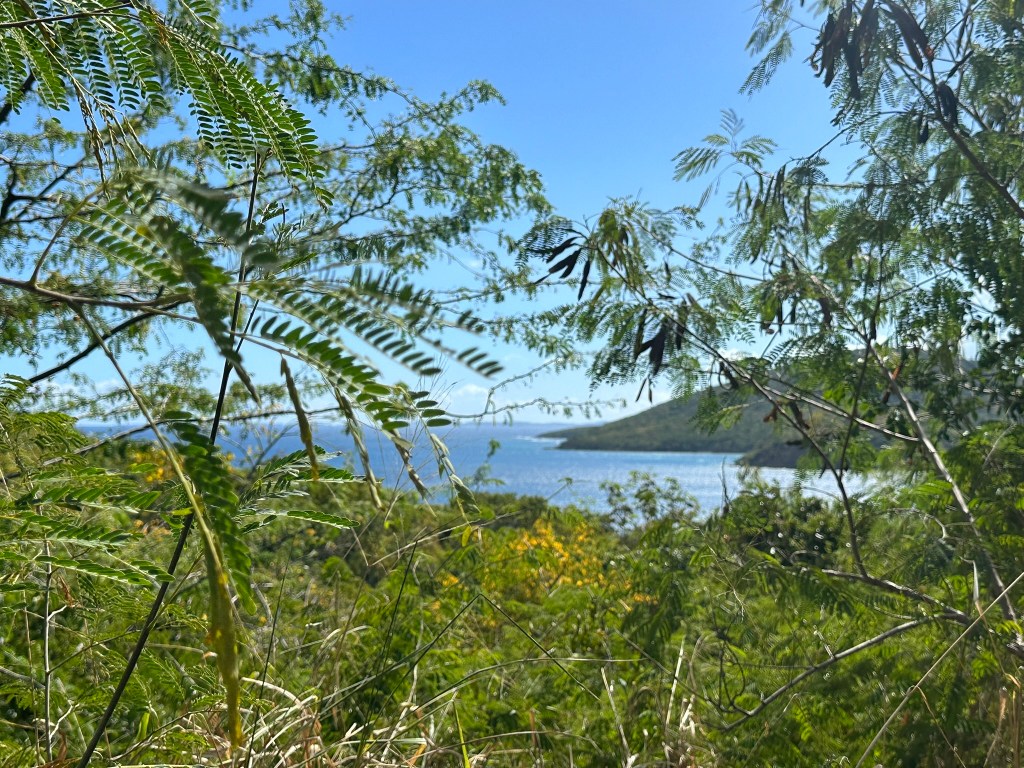
Hiking back to the boat 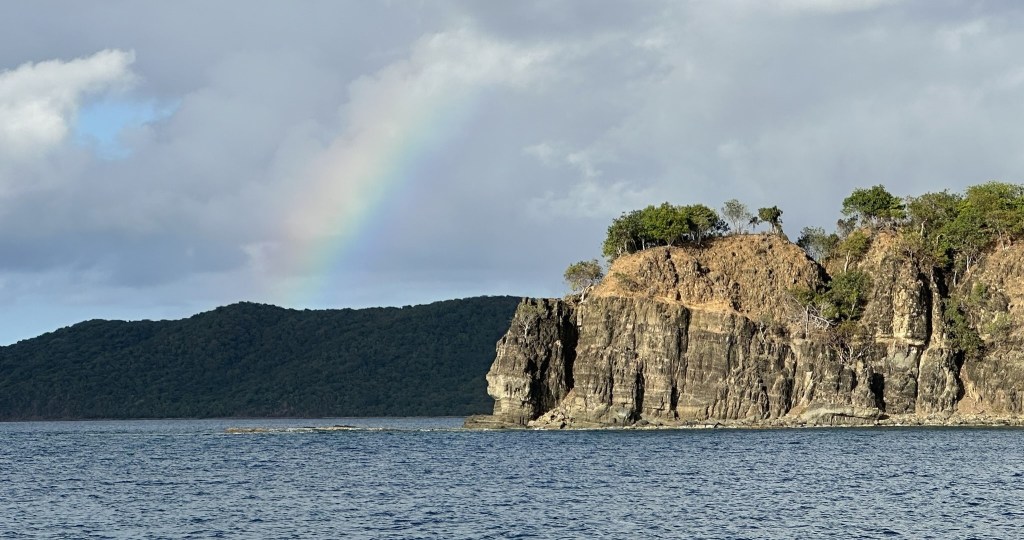
Rainbows always welcome 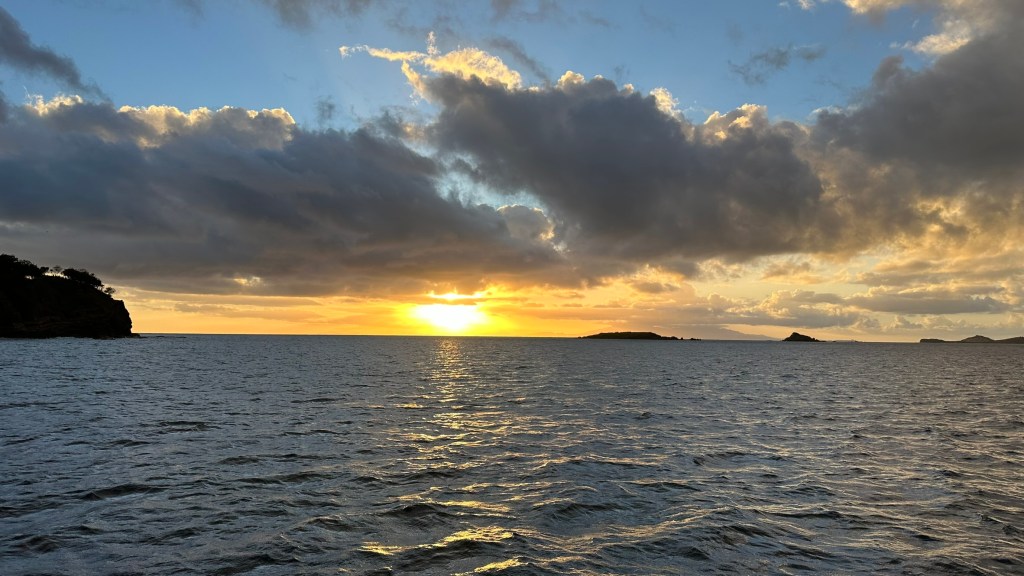
Sunset over the SVI 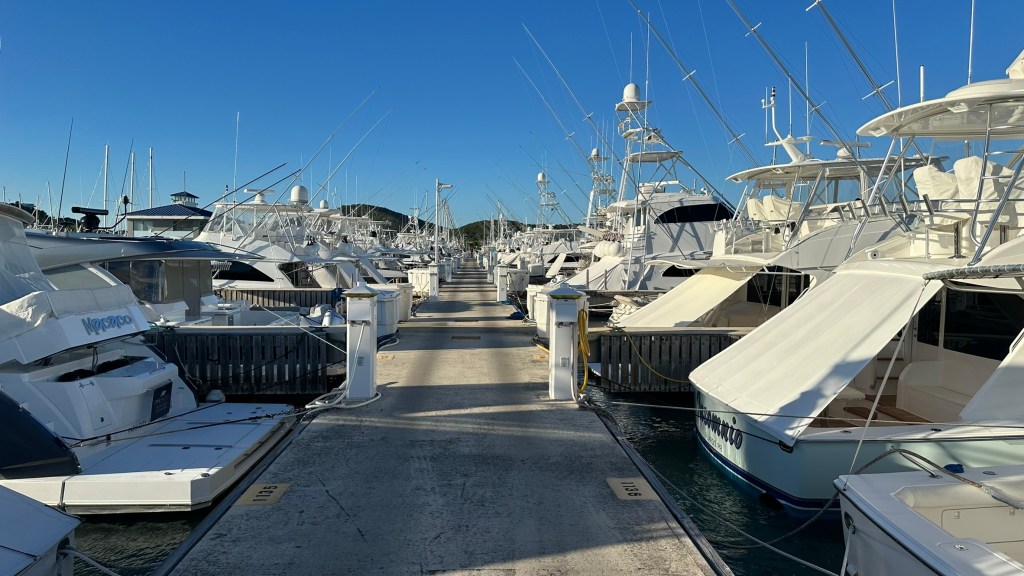
Puerto Del Rey marina
| Weeks 3-4 | Puerto Rico |
All in all — and mostly as expected given the weather outlook — it was a pretty slow couple of weeks in Puerto Rico, but on a voyage like this slow is the way to go. We started off with a nice day trip to Old San Juan, the island’s historic capital and second oldest European-established capital city in the Americas, with its colorful, narrow streets and massive Castillo San Cristobal and defensive city walls. It was also my first Mofongo lunch, a classic Puerto Rican dish made of mashed plantains, pork skin and garlic. Mine came piled in seafood. And it was fun seeing the Hotel El Convento, where Michelle and I spent the first night of our honeymoon 36 years earlier.
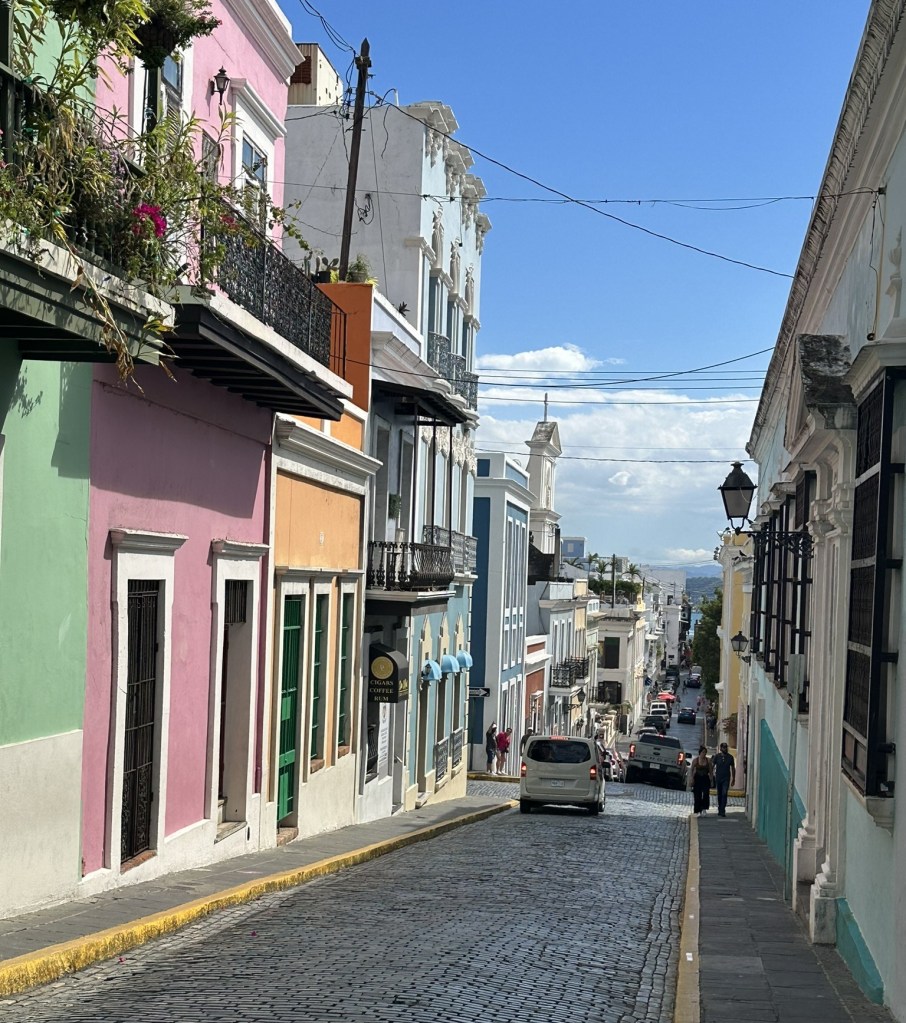
Old San Juan 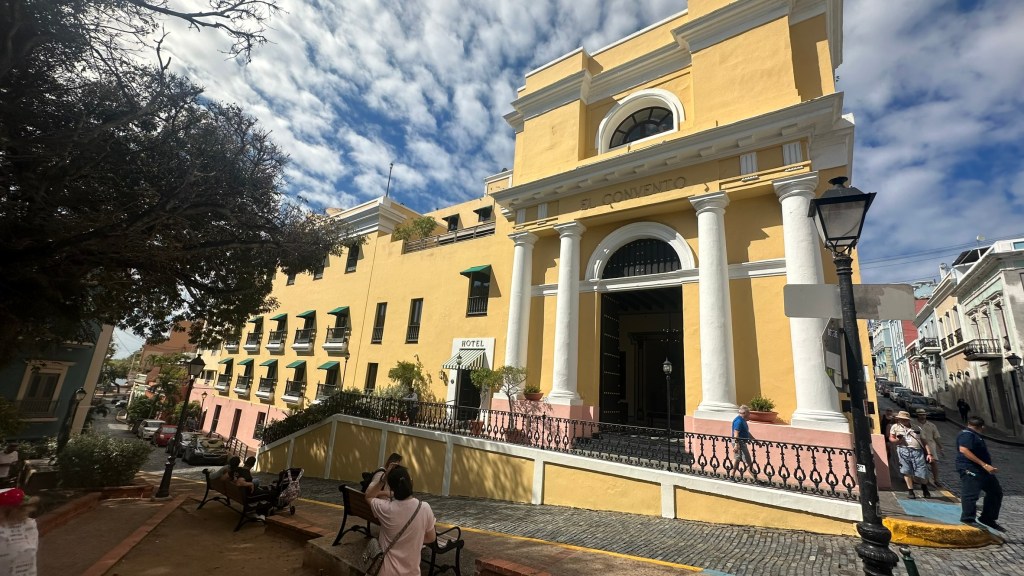
Hotel El Convento 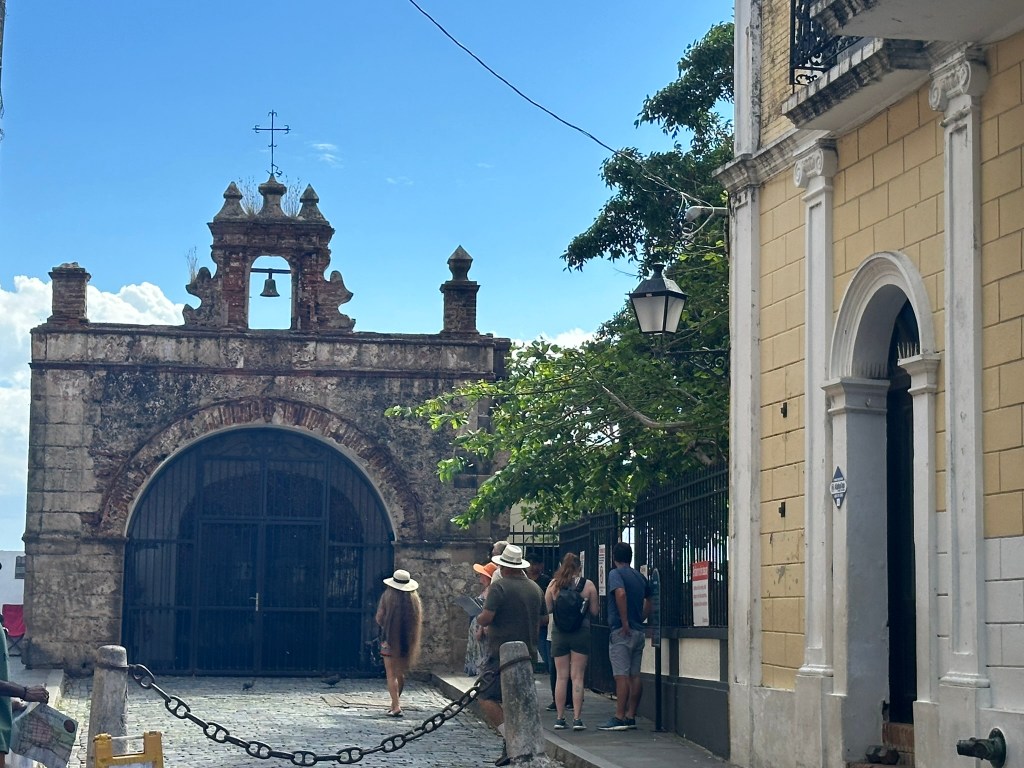
Capilla del Santo Cristo de la Salud 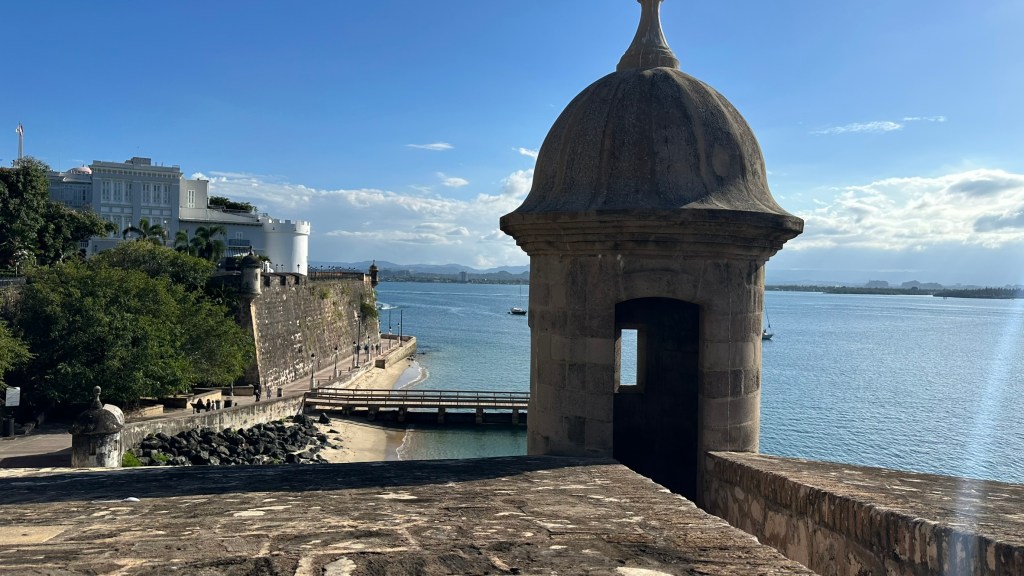
City Walls fronting La Fortaleza 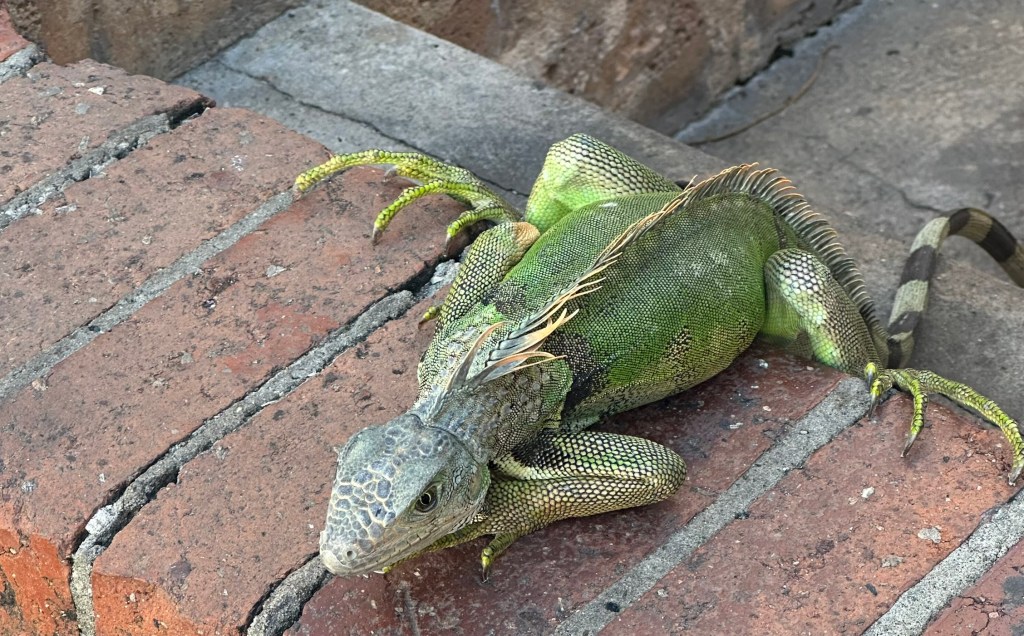
Local resident 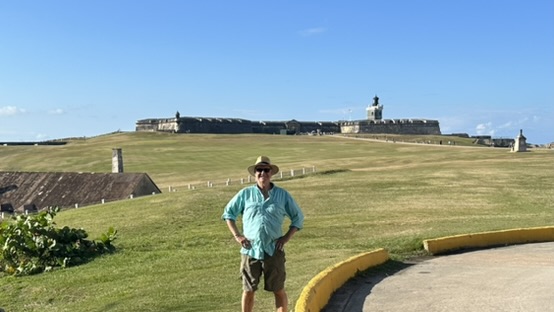
Castillo San Felipe del Morro 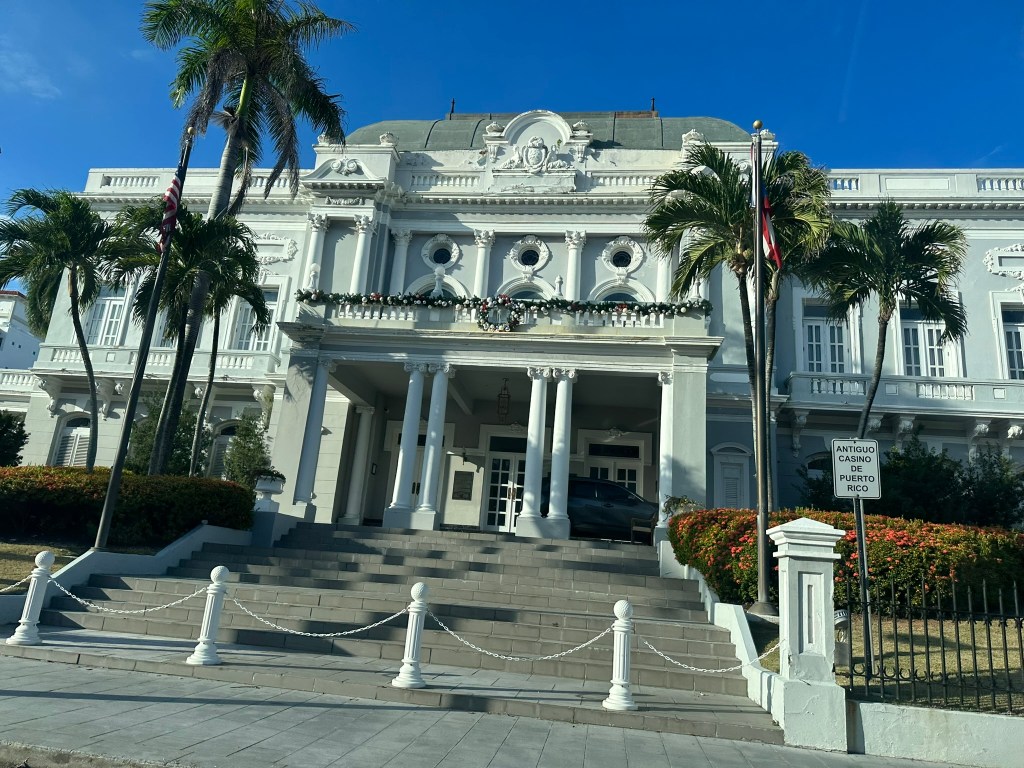
Antiguo Casino de Puerto Rico 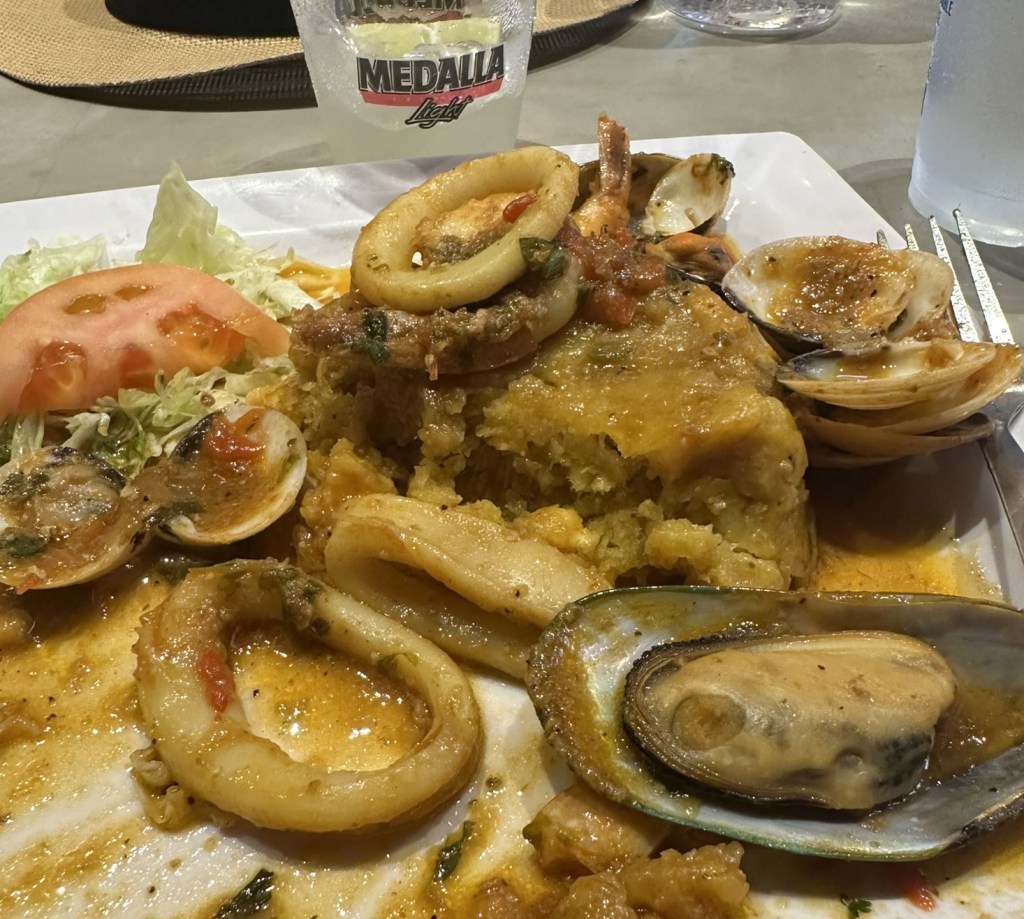
Mofongo 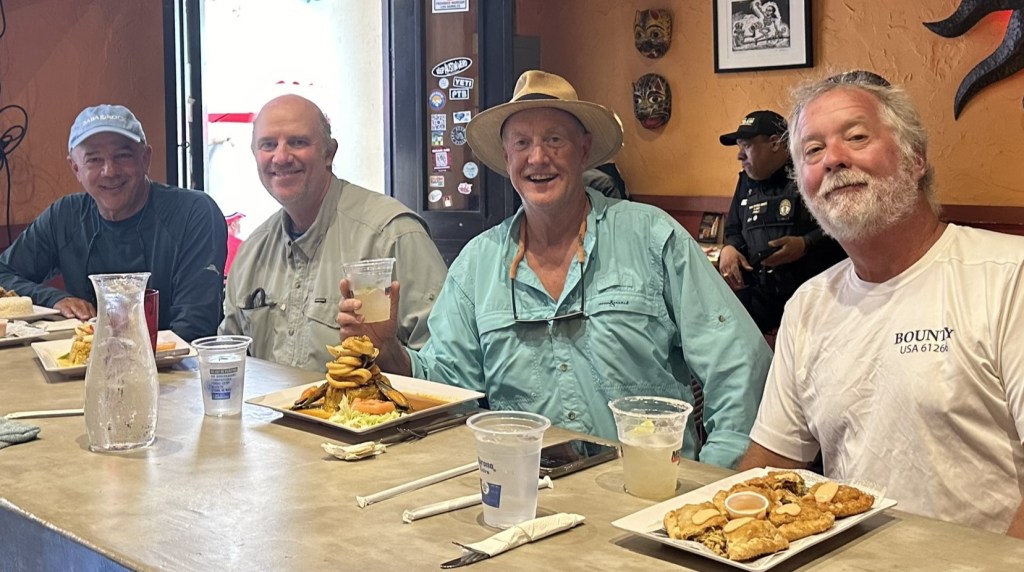
Lunch at El Parnasso
Over the next couple days, we successfully completing the final “adjustments” to the boat and a lot of provisioning ashore, stocking up on groceries for the next couple weeks. Finally prepared with a decent weather outlook, we sailed south and then west along Puerto Rico’s southern coast — 110 nautical miles, almost entirely within sight of land — toward Boqueron, a lively party town on the southwest coast. Overnight stops along the way included:
- a two-day visit to the island of Vieques in the SVI, known for good, protected anchorages to the south (avoid unexploded ordinance to the north and west), some beautiful beaches, and Mosquito Bay, the brightest bioluminescent bay in the world (which we missed, unfortunately).
- one night in Bajia de Jobos, which has some pretty mangrove barrier islands protecting the harbor but not much going on. We did manage to locate one bar and grill with a sketchy dock, decent food, cold beers and baseball (Puerto Rico vs. Venezuela) on TV.
- three days anchored off the Ponce Yacht & Fishing Club, where we hunkered down and waited for the weather to improve. Ponce, once a thriving port town, was decimated by COVID and virtually all businesses remained shuttered. Even the yacht club was not particularly welcoming. Not our favorite stop.
- two days in La Parguera, a quaint old fishing village surrounded by mangrove islands. This was one of the more colorful and interesting stops along the way and seems to attract weekenders from around the island.
- a couple days in Boqueron, which has a very popular nightlife culture featuring many lively bars surrounding its main square and Puerto Ricans piling in from everywhere for the weekend. We settled into a quieter place off the main drag to watch the Super Bowl. Sadly, our hometown 49ers lost.
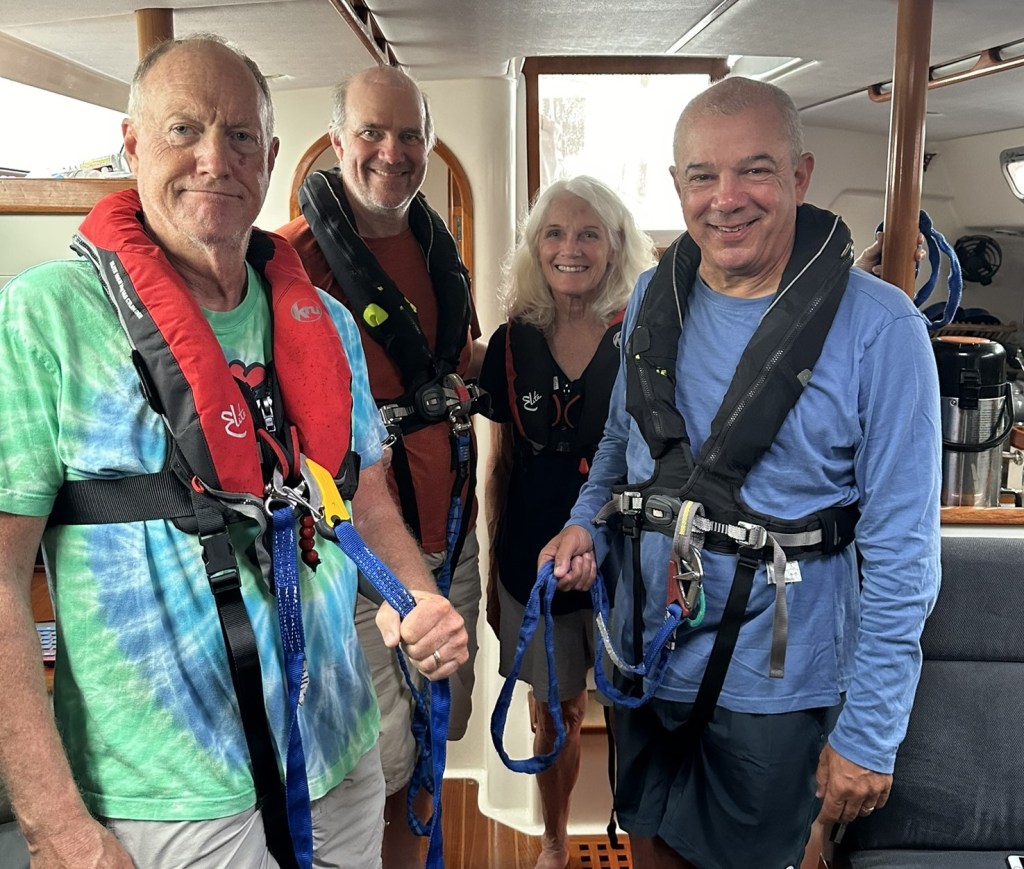
Safety briefing 
Motoring to Vieques on a windless day 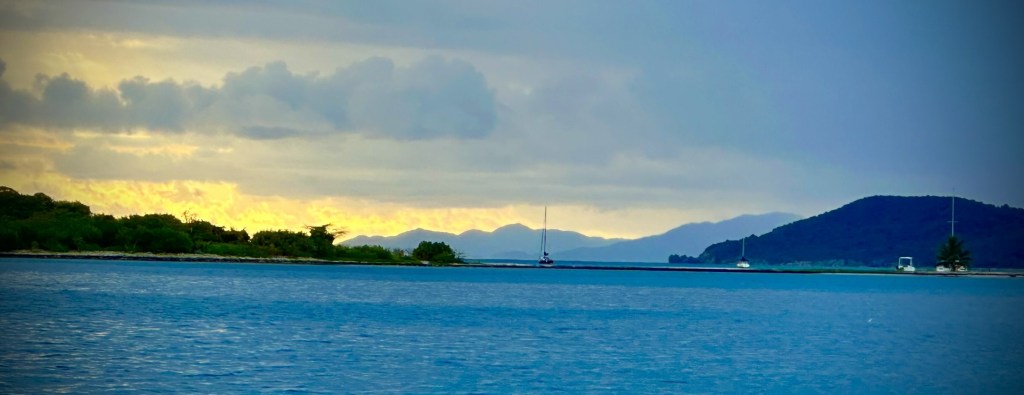
Afternoon colors 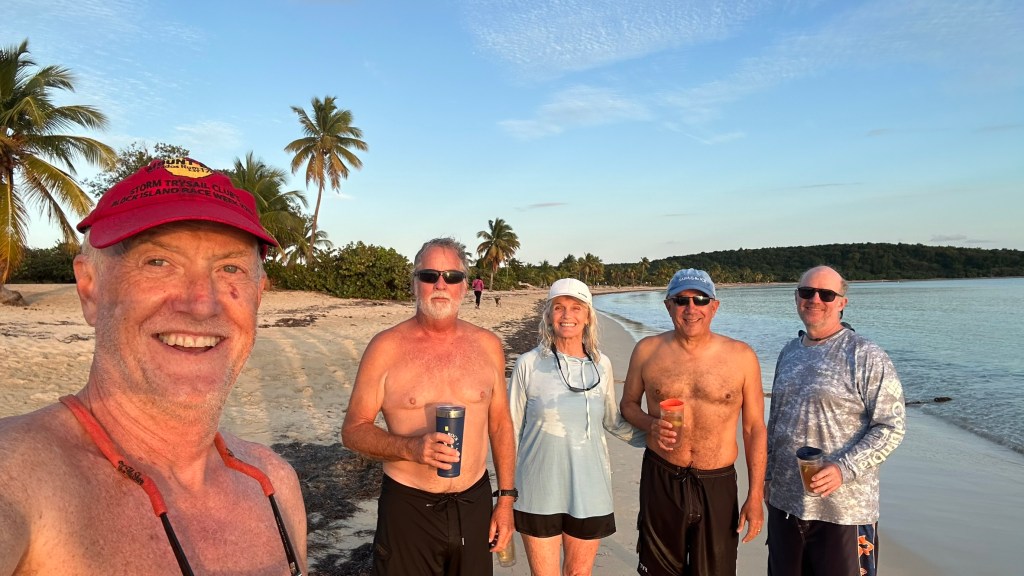
Sundowners on Vieques 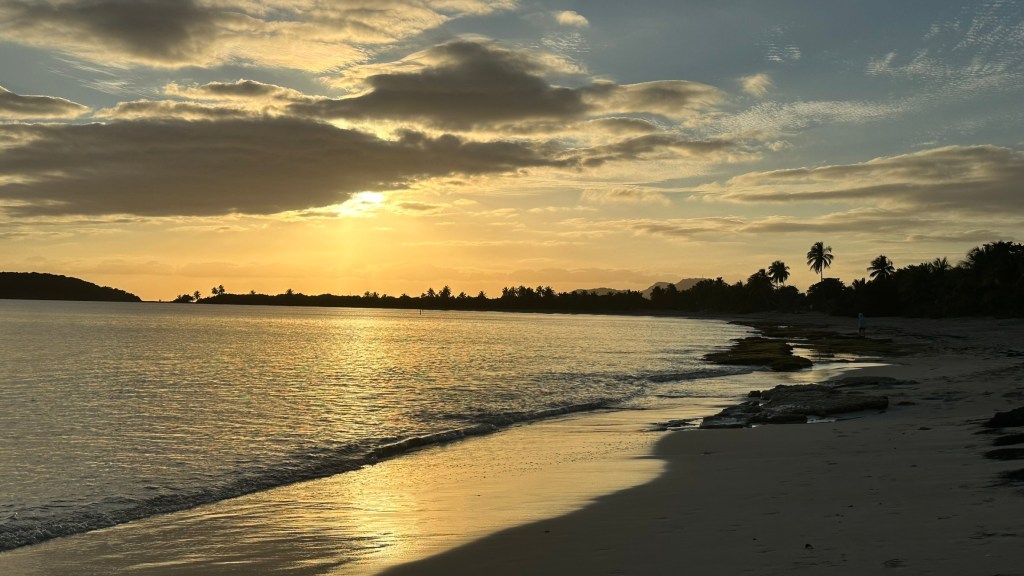
Vieques sunset 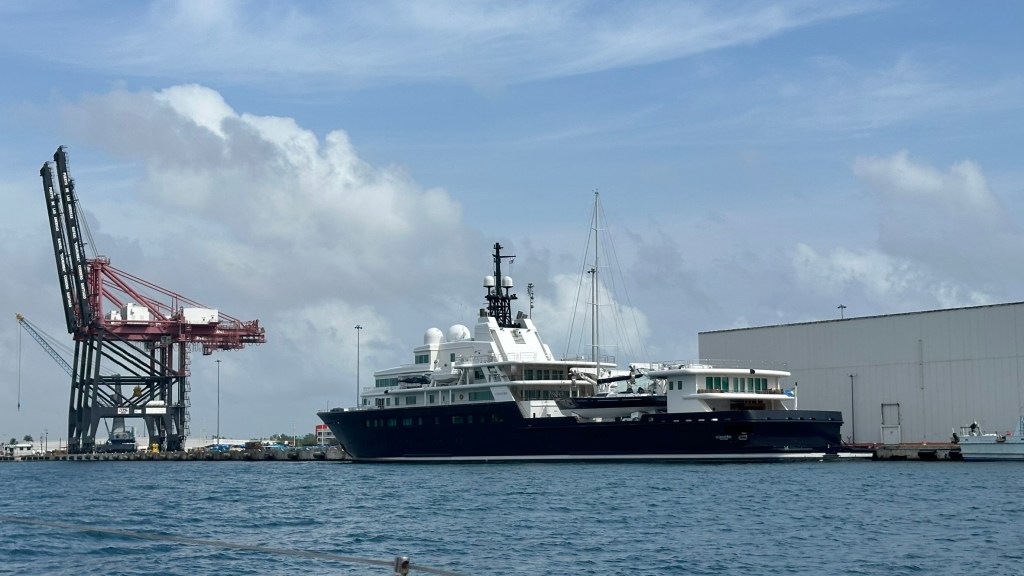
Russian oligarch yacht in Ponce 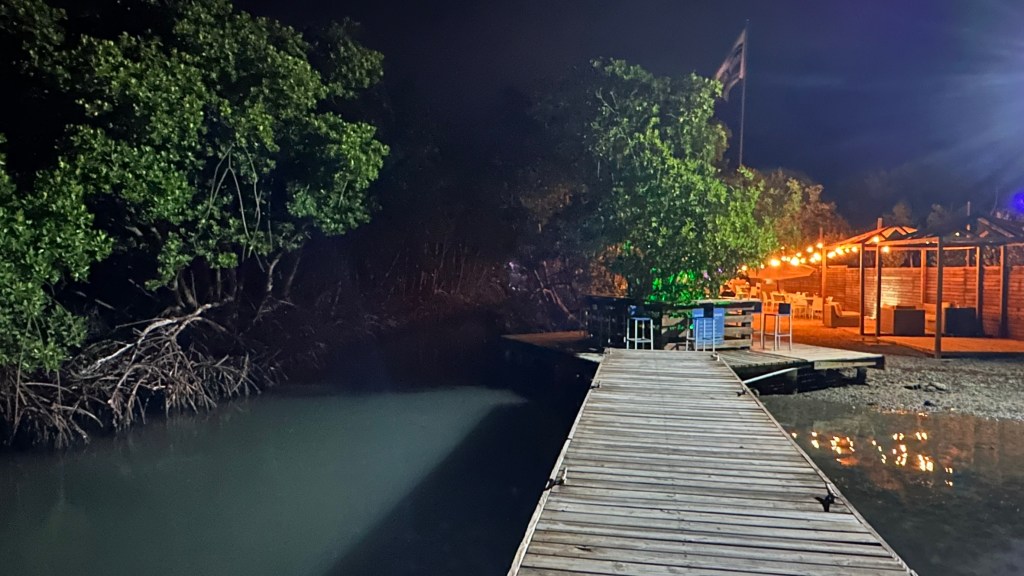
Bajia de Jobos Bar & Grill 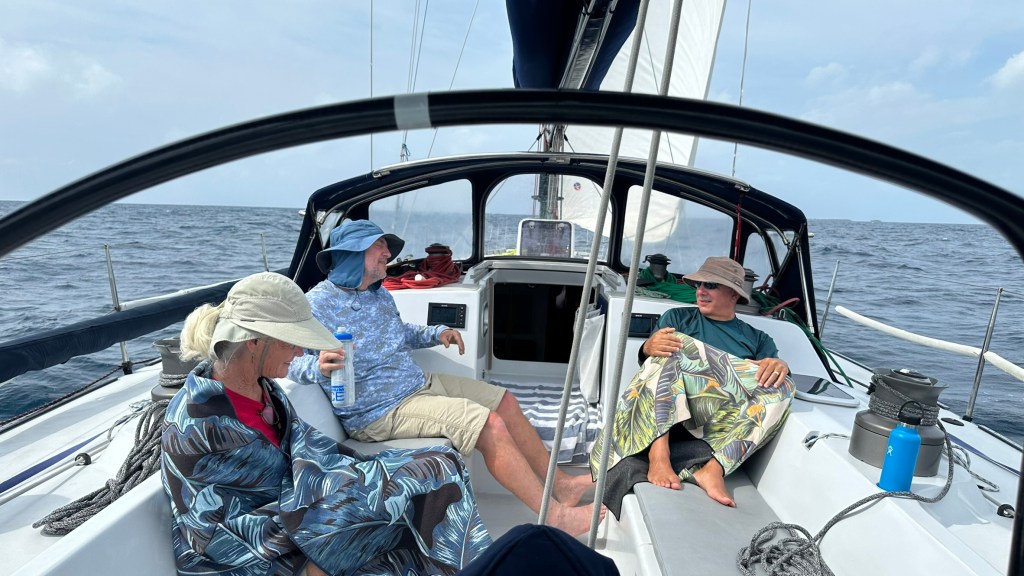
Typical daytime activity underway 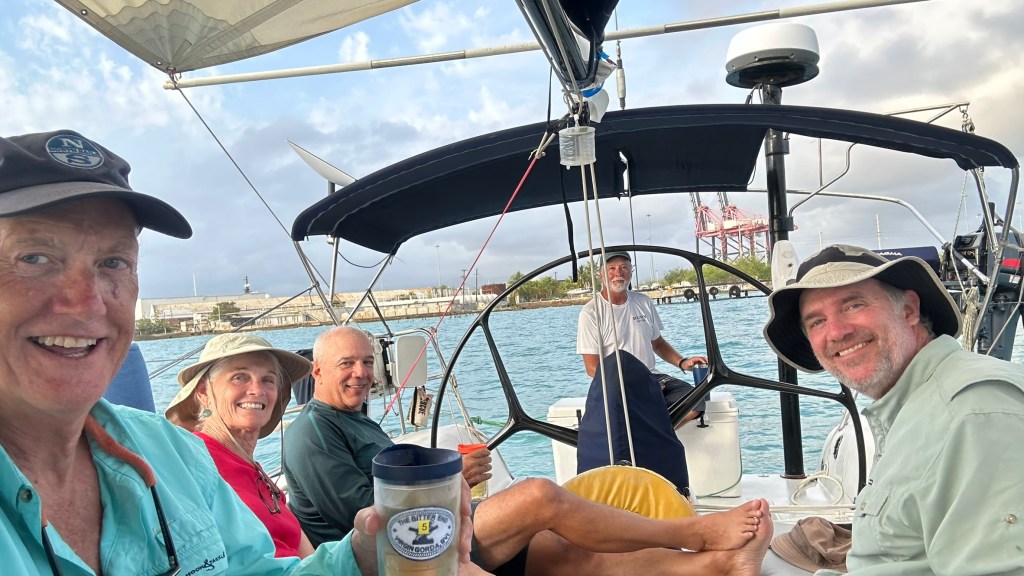
Typical afternoon activity at anchor 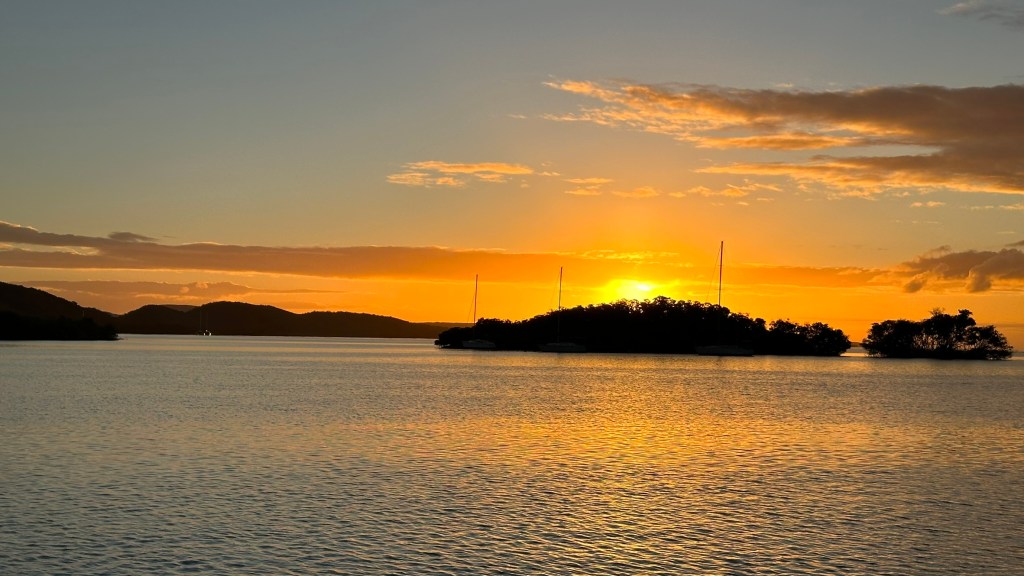
La Parguera sunrise 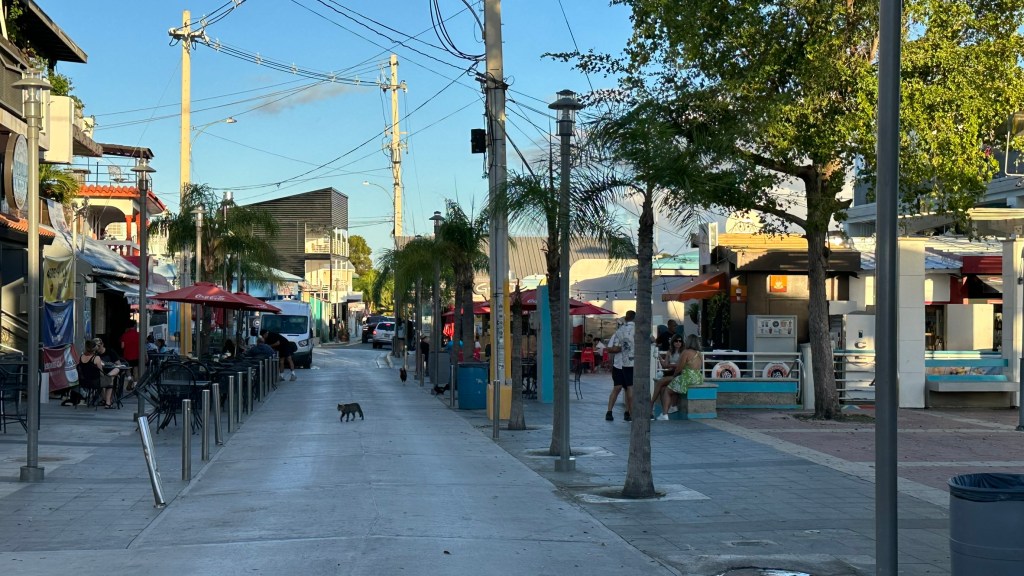
La Parguera’s busy “downtown” 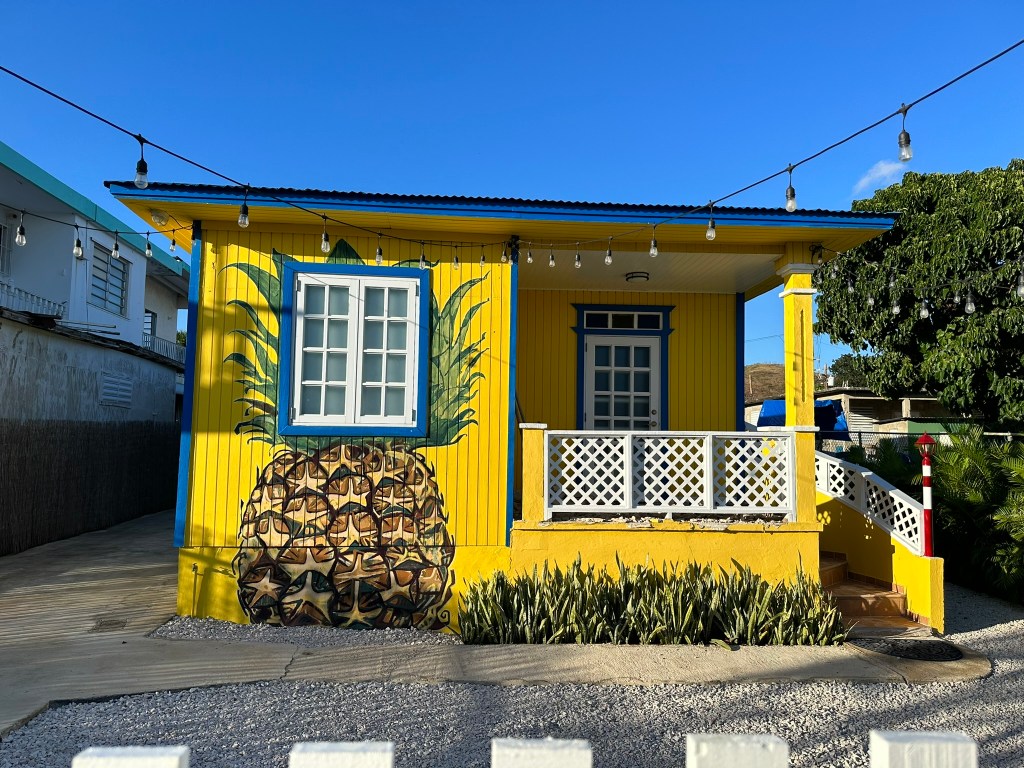
La Parguera house 
A couple Parguera residents 
A Puerto Rican legend 
La Parguera sunset 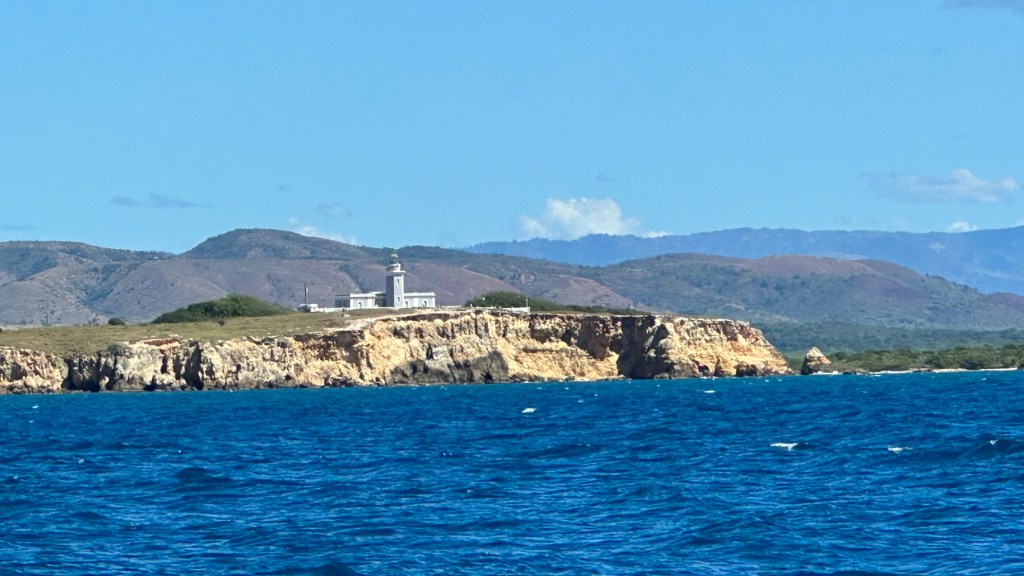
Cabo Rojo, PR southernmost point 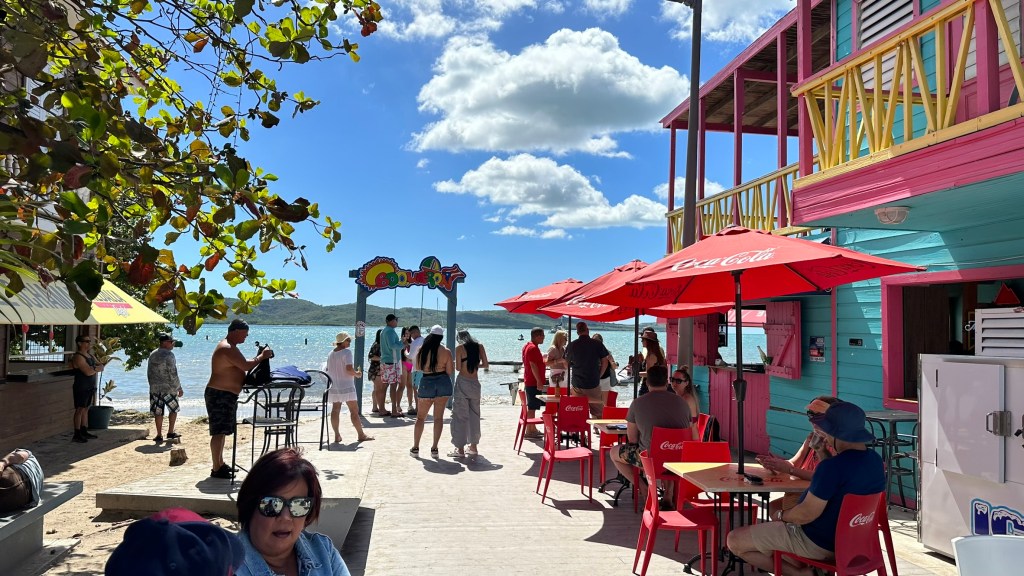
Boqueron 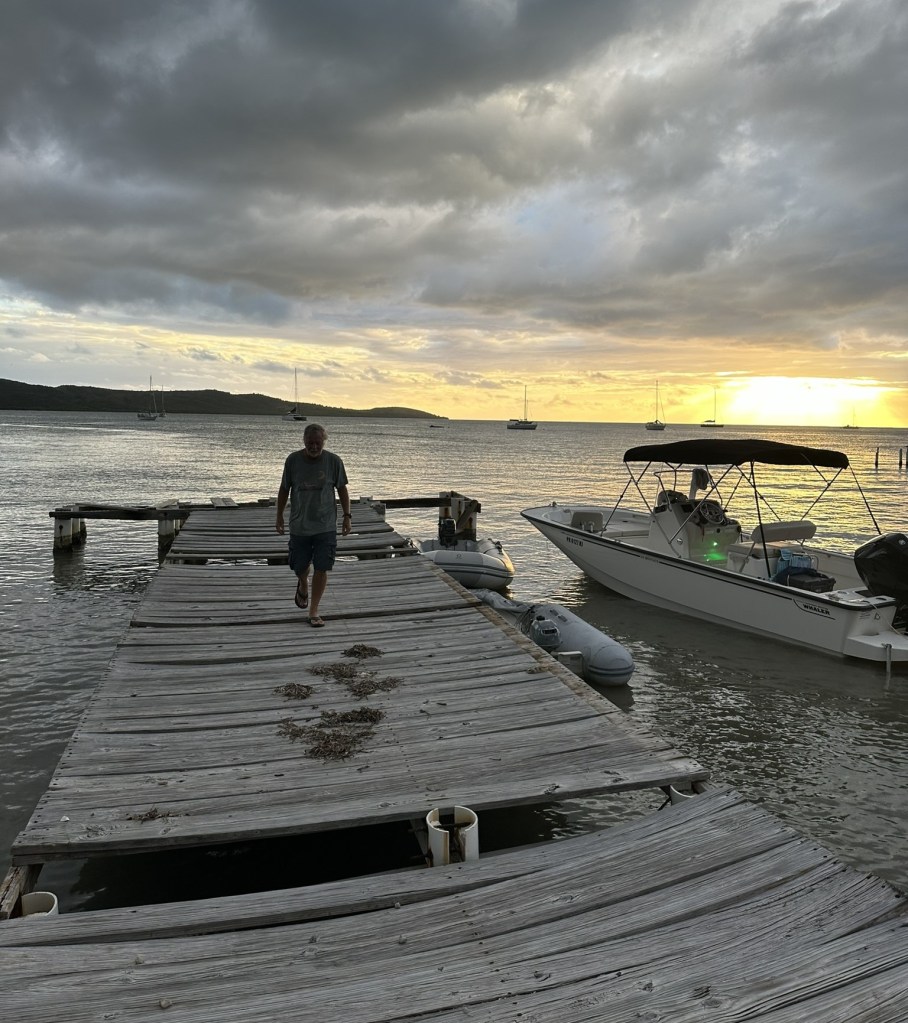
Another sketchy dock 
Parade grandstand? 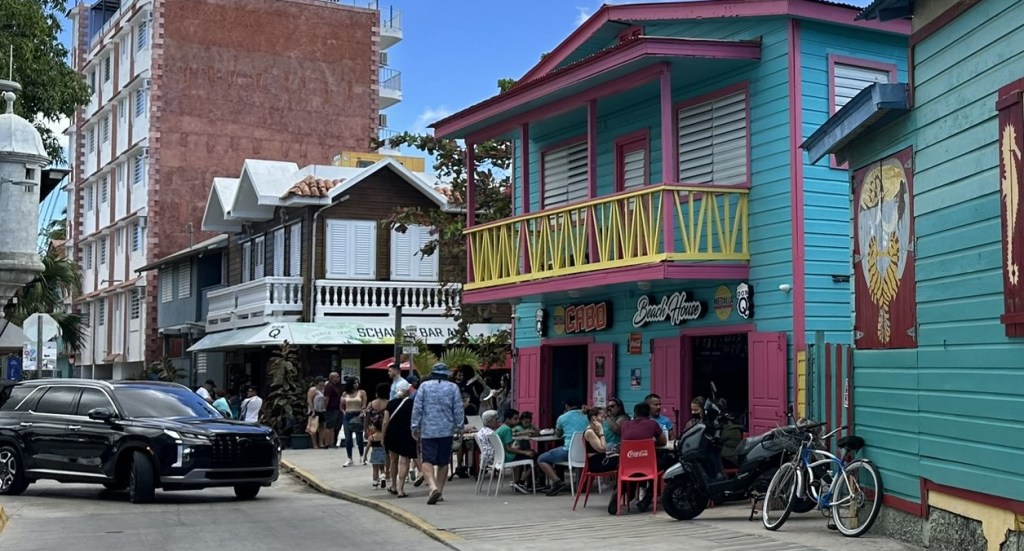
Boqueron bar scene
| Week 5 | Puerto Rico > Jamaica > Grand Cayman |
After a couple days in Boqueron, we finally got the weather forecast we were waiting for and sailed west. Our original plan had been to make for Marina Casa de Campo, a really nice resort with great facilities, restaurants, and so forth on the southeast end of the Dominican Republic, a mere 100-mile journey we could cover in a day.
Unfortunately, fate was not smiling on us, as we learned on calling ahead Marina Casa de Campo had no room for us. With no other attractive options in the DR, we pressed straight on to Jamaica, covering 600 miles in just over three days. The sailing was mostly uneventful, downwind reaching with moderate winds. This was my first true blue water sailing. Maximum wind speed we saw was about 25 knots, maximum boat speed just over 11 knots, though at times the wind dropped enough we rolled up the jib and motored. My watches during this stretch were 2-4pm, 10pm-midnight, and 6-8am. Days were spent mostly hiding from the sun, but the late night/early morning silence and the stars alone in the middle of the ocean were pretty sublime. Sunrise was my favorite time of day.
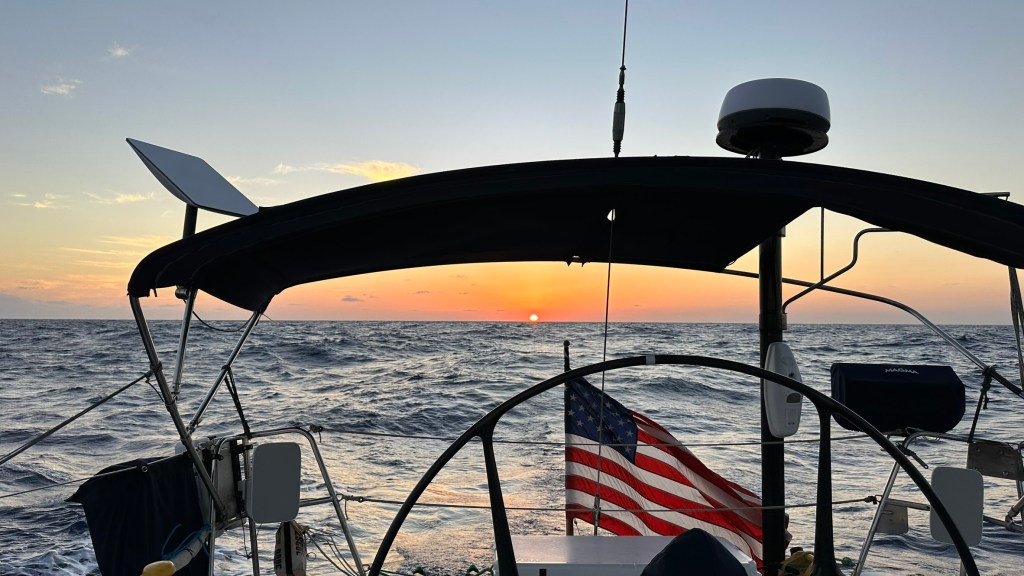
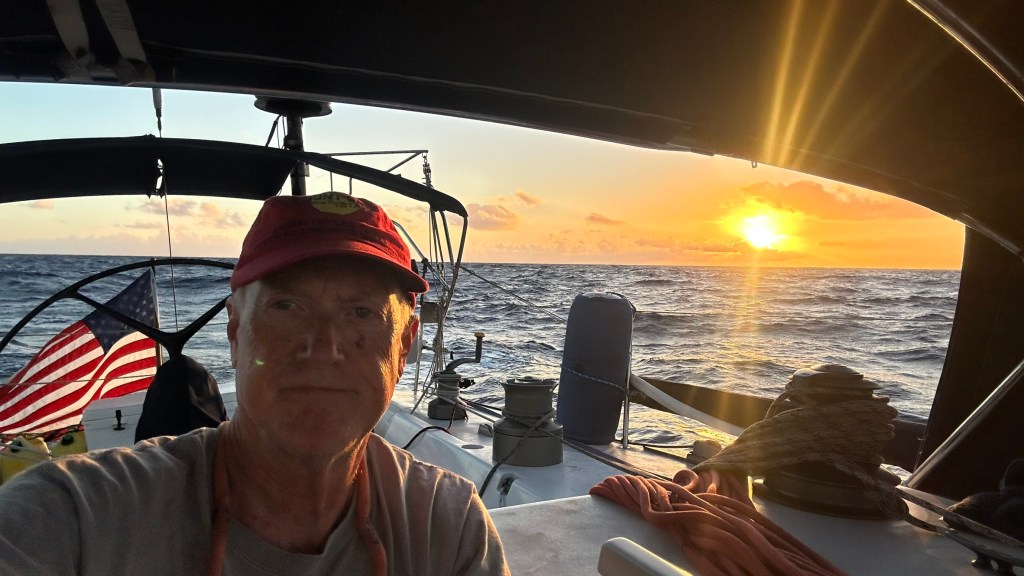
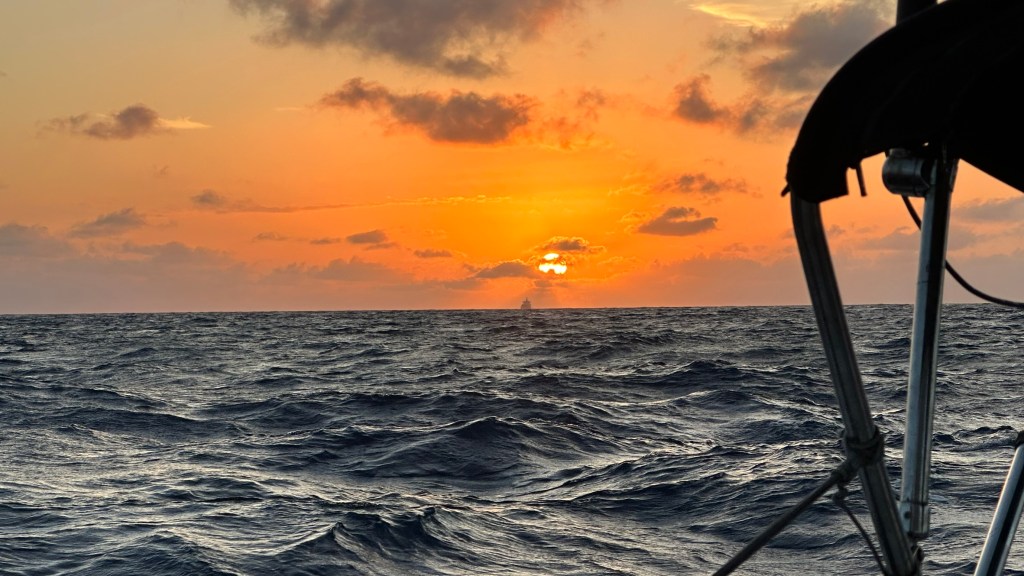
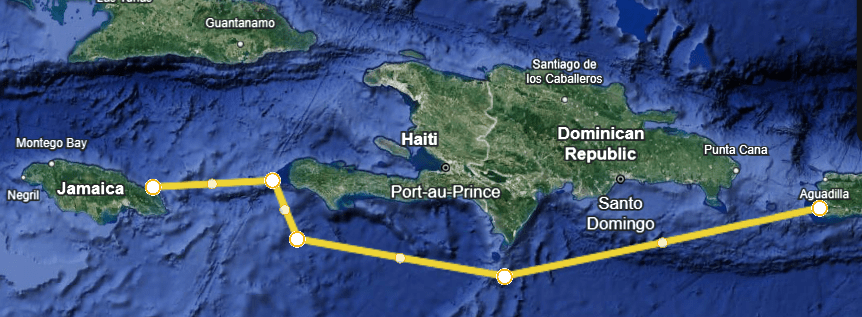
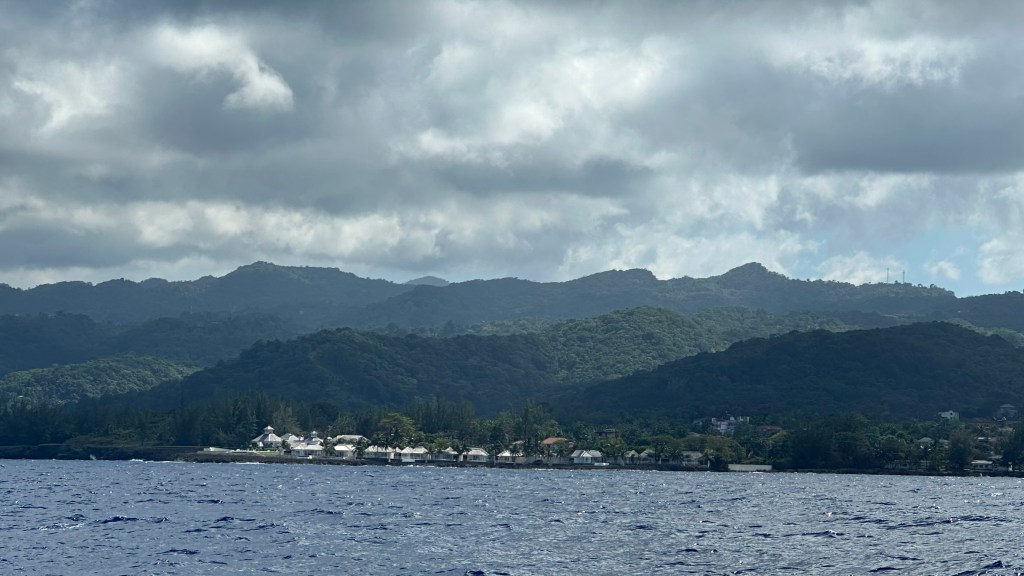
Heading to Jamaica, we had debated the pros and cons of different possible ports of call. Jim was not keen on Kingston given its reputation for crime, and we decided Montego Bay was further than we wanted to go without a break. So, we arrived in Port Antonio, Jamaica shortly after noon our fourth day out of Boqueron and found a dock waiting for us at the Errol Flynn Marina. Yes, indeed, this was a favorite haunt of the old Hollywood swashbuckler, and it must have really been something back in the day. There were a number of other boats in the marina, sailors like us taking a few days break at port along their own long journeys. Sadly, the marina hadn’t recovered from Covid and virtually everything on site except the swimming pool was closed. Thankfully, after long days in the sun, that pool was a godsend and the dockmaster even ran into town to buy us cold beers!
Jamaica was a colorful contrast to Puerto Rico. Port Antonio is largely poor and underdeveloped, but the people we met were lovely. Flatbed trucks with bullhorns drove slowly through town urging people to vote for their candidate in the upcoming local election. Reggae music filled the air. Apparently, we missed Bob Marley’s birthday by a day. Highlights:
- Jerk chicken is Jamaica’s signature dish, and we found the best in town — or so a couple locals told us — under a tarp in a dirt lot. $4 for a quarter chicken and 3 “festivals” — fried dough like a churro — that we then took across the street and ate at the King’s Arms Tavern, a tiny, corner dive with $3 Red Stripes. Heaven!
- The Sunday market in the park just outside the marina was the picture of local color and culture. A woman named Kathleen Henry, who has run her stall there for 66 years, told us a bit of the town’s history. Our several purchases made her week, including a little dress for my granddaughter, Sophie, made her week.
- Walking a circuitous route through town, into the hills, and back was an eye opener. The juxtaposition of shanty houses and mini-mansions — extreme poverty and relative riches — often side by side, was striking. I passed a couple neighborhood bars that were little more than plywood shacks; I poked my head in one and found it empty, save for the sole barkeep sleeping in the shade of the corner. I passed a house where I could hear children laughing inside when they suddenly went quiet and a little girl said, “Look, it’s a white man!”. My friends thought I was a little nuts to do this on my own.
- Heading back through town our last night, we stumbled upon a boardwalk complex of shops and a couple restaurants, mostly closed. An open-air shop filled with handmade art and wood carvings was pretty cool. So was Jus Booze, the waterfront bar at the end of the row.
Approaching Port Antonio 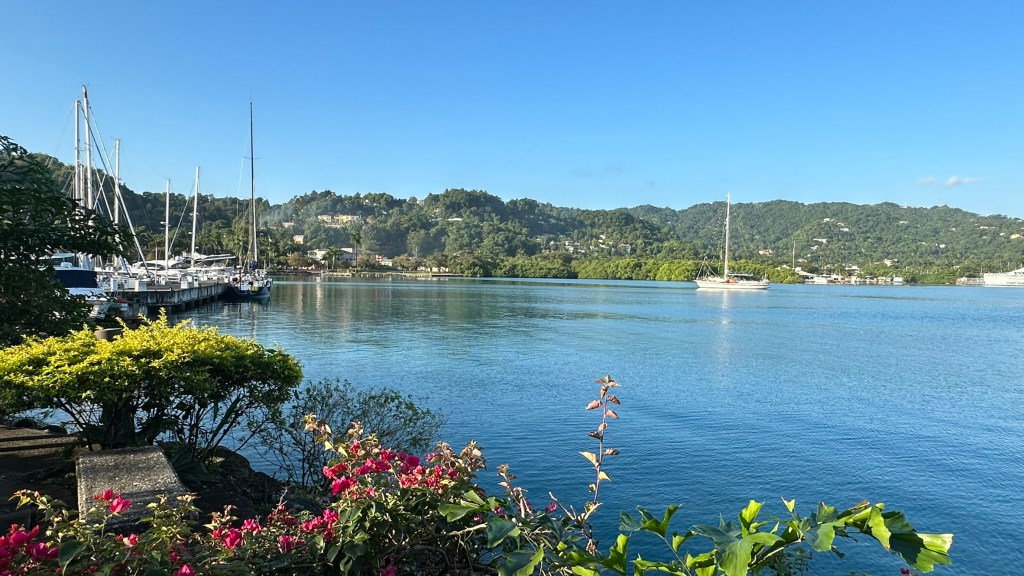
Errol Flynn Marina 
Errol Flynn Marina 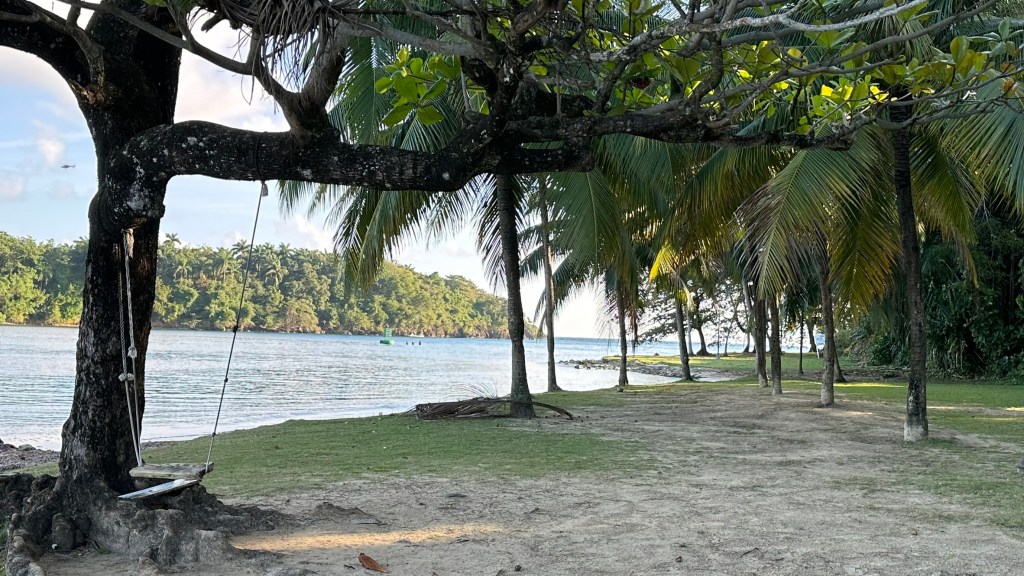
Land’s End beyond the marina 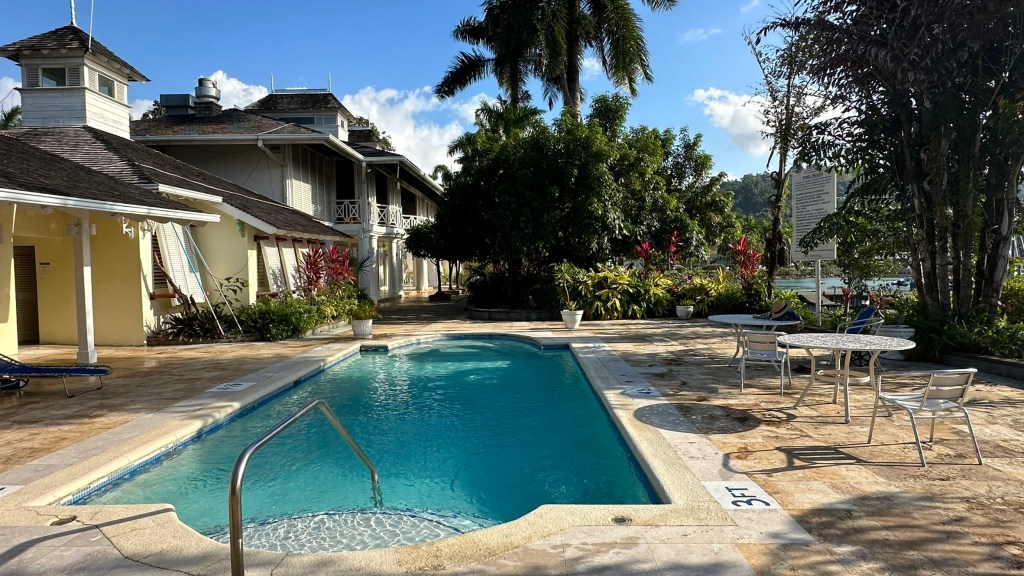
The pool was a treat 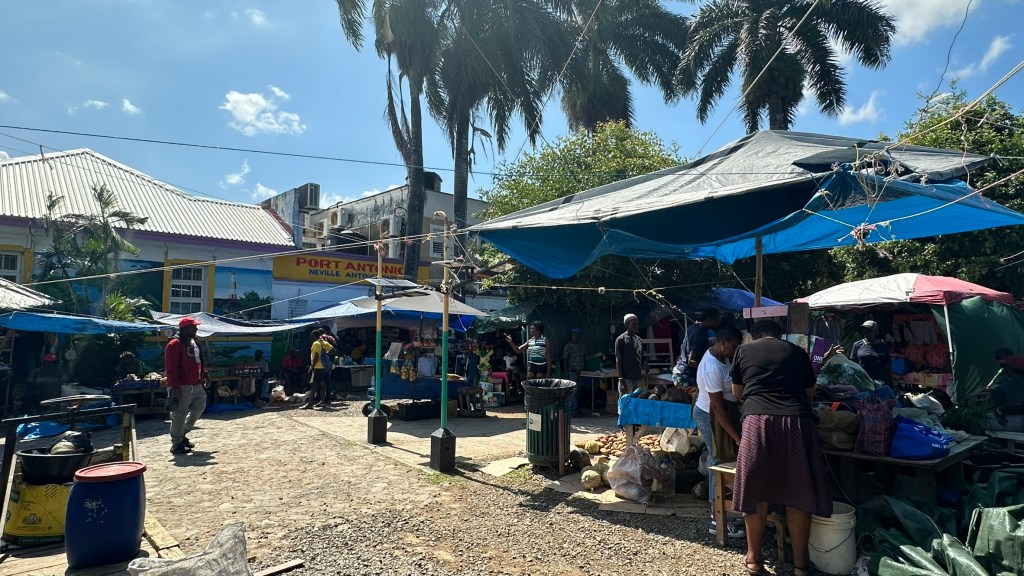
Sunday market 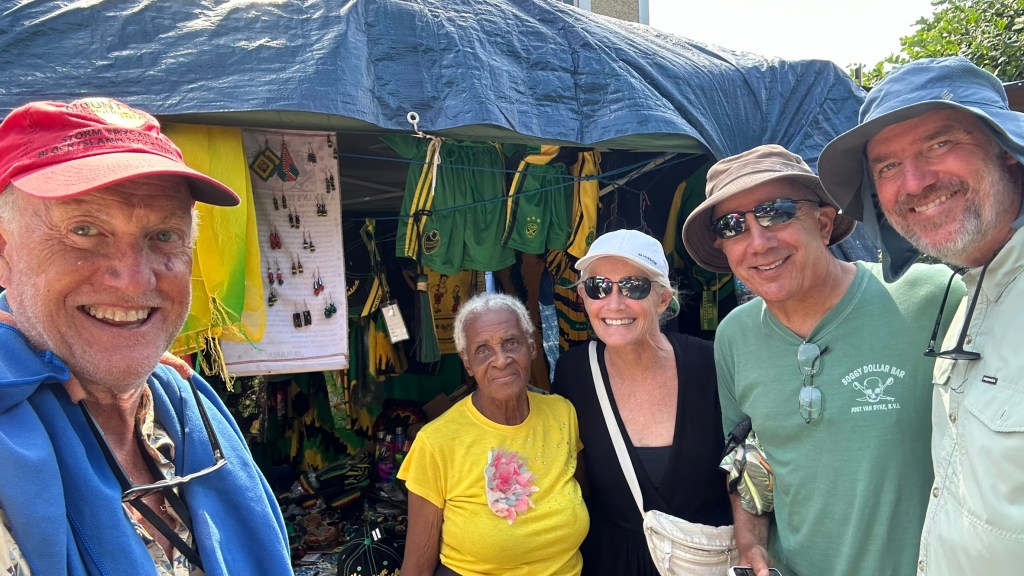
Kathleen Henry’s stall 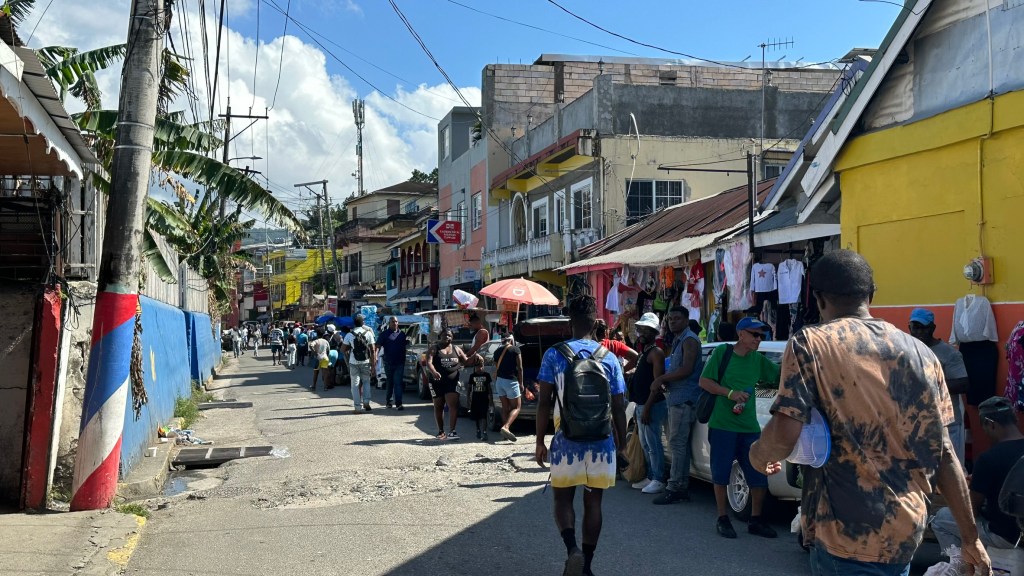
Main Street 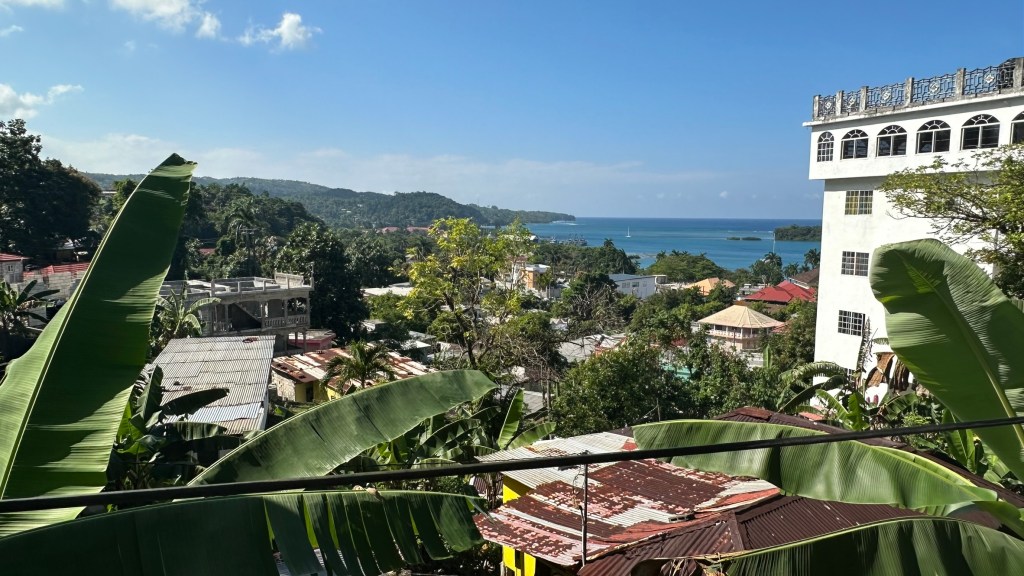
Overlooking Port Antonio and harbor 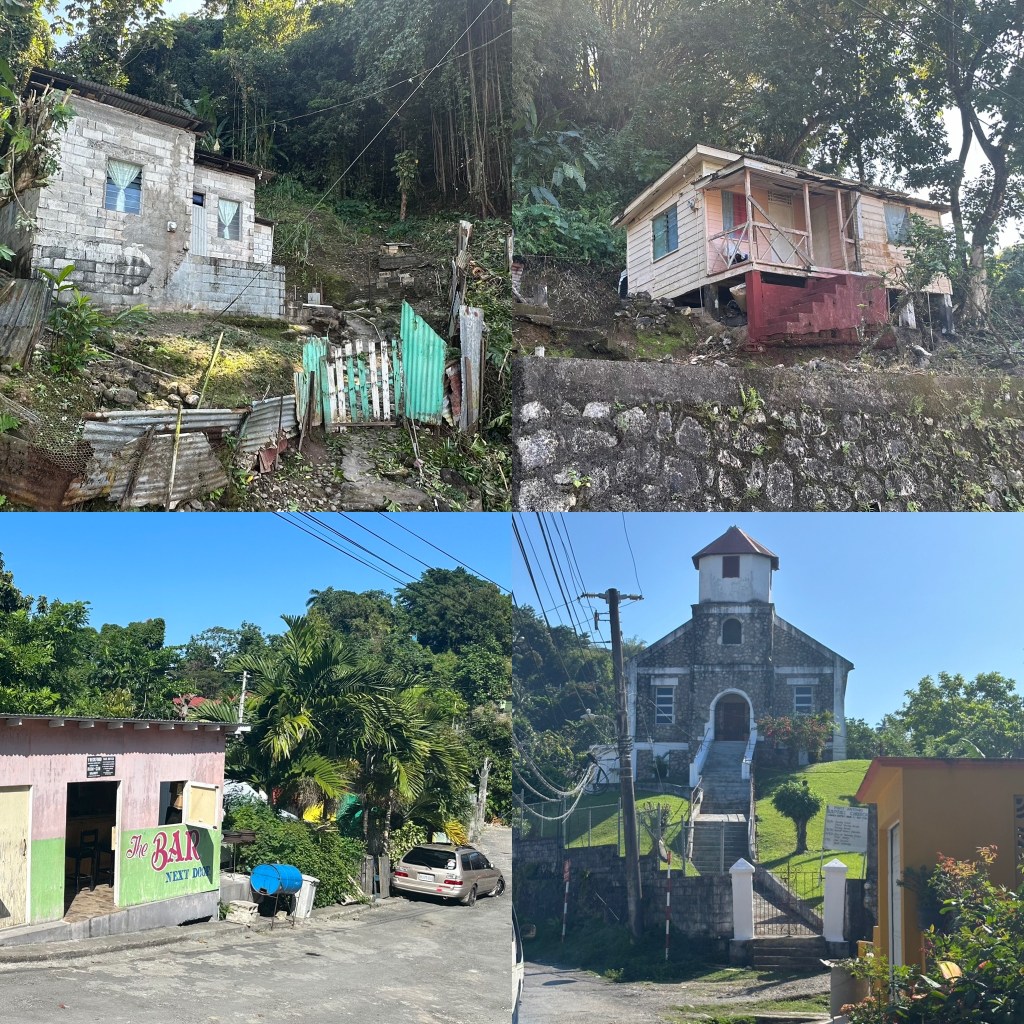
Neighborhood sights: houses, a bar, and a church 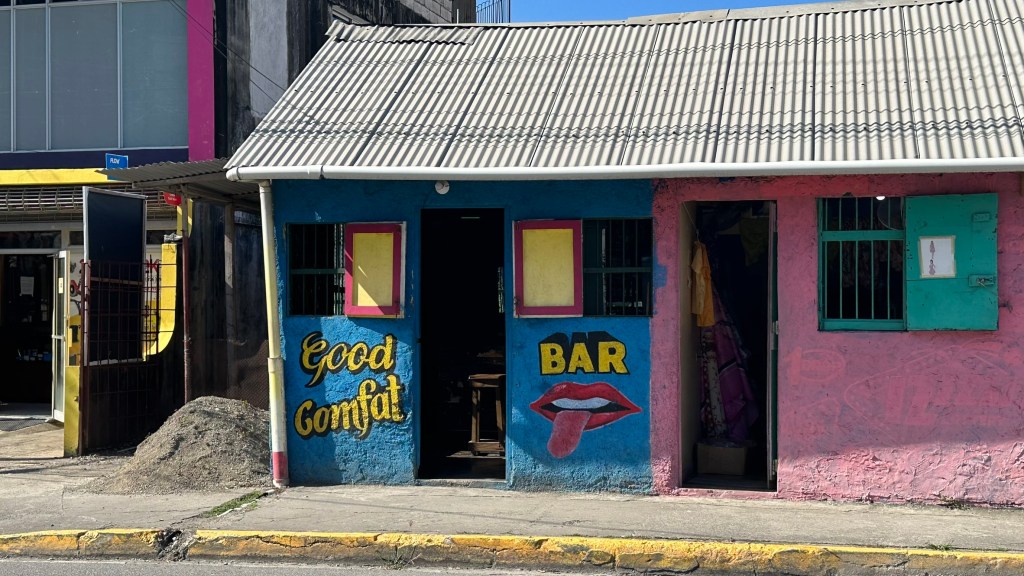
A local warned me not to enter 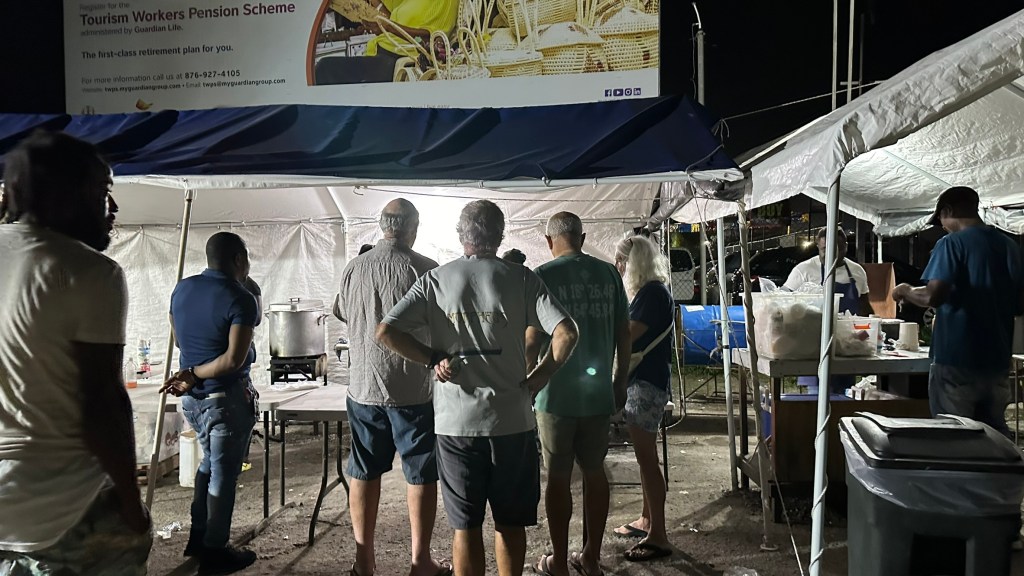
Getting our jerk chicken fix 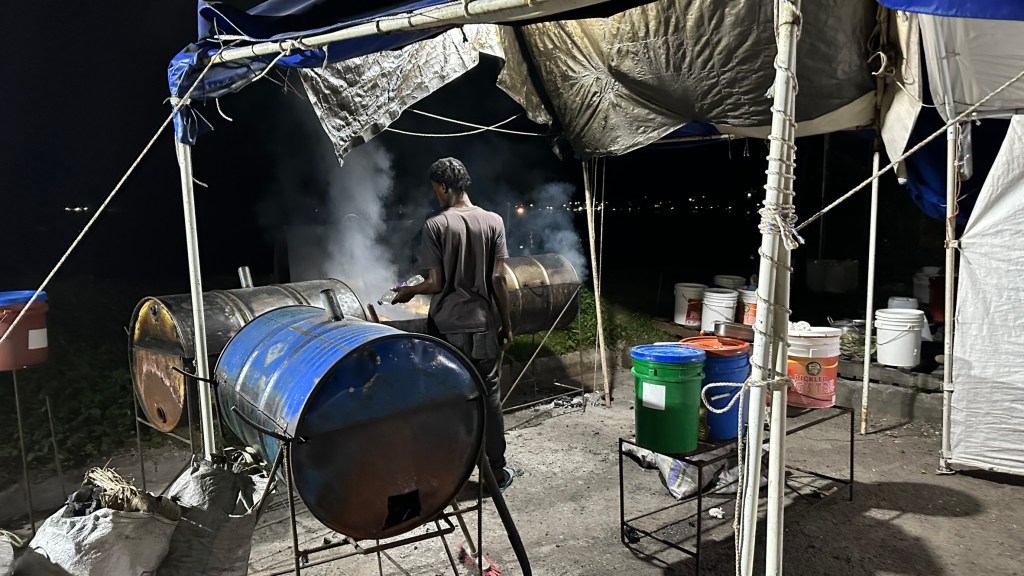
The chicken pitmaster 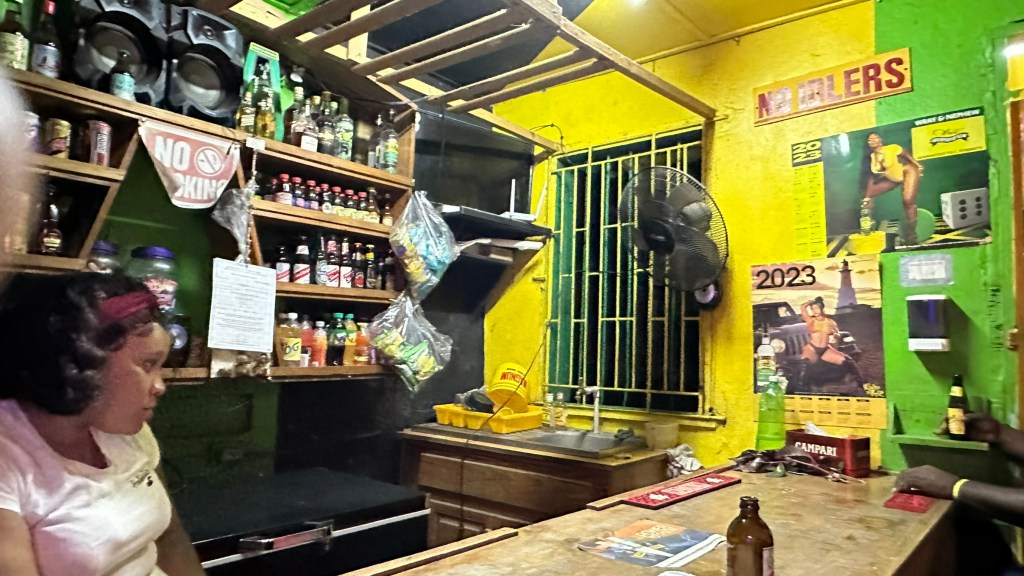
King’s Arms Tavern 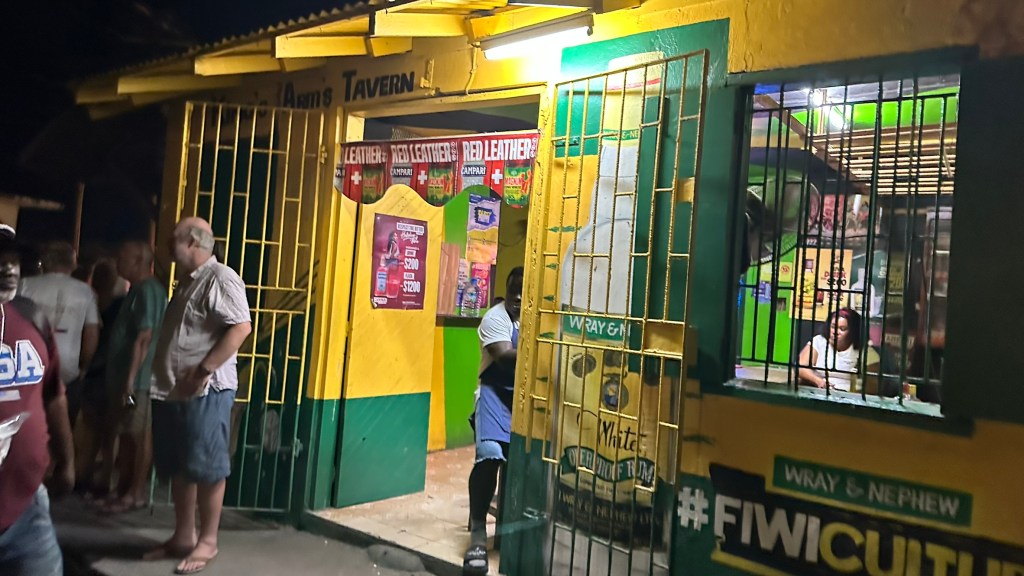
It’s a neighborhood joint 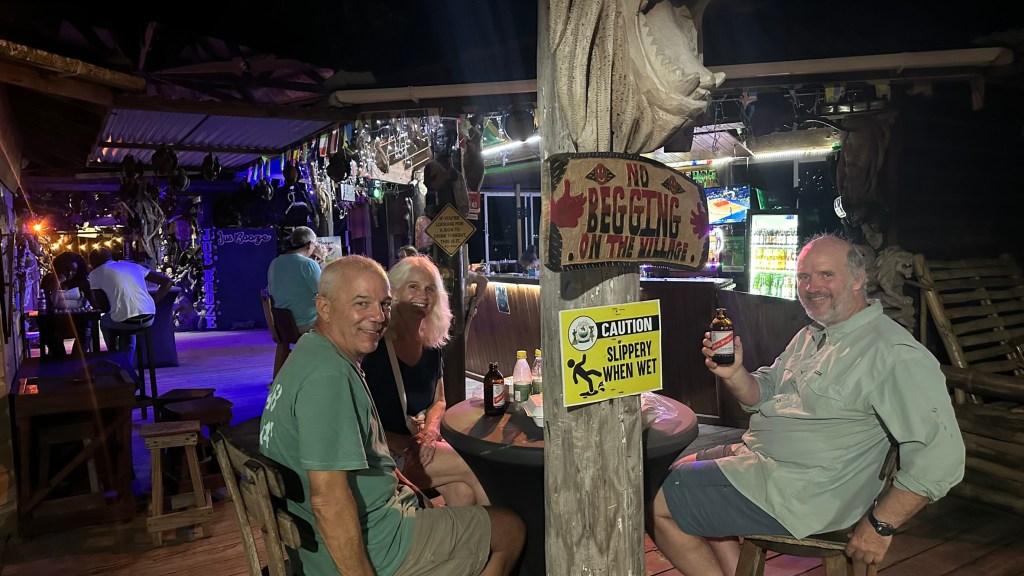
Just Booz’in 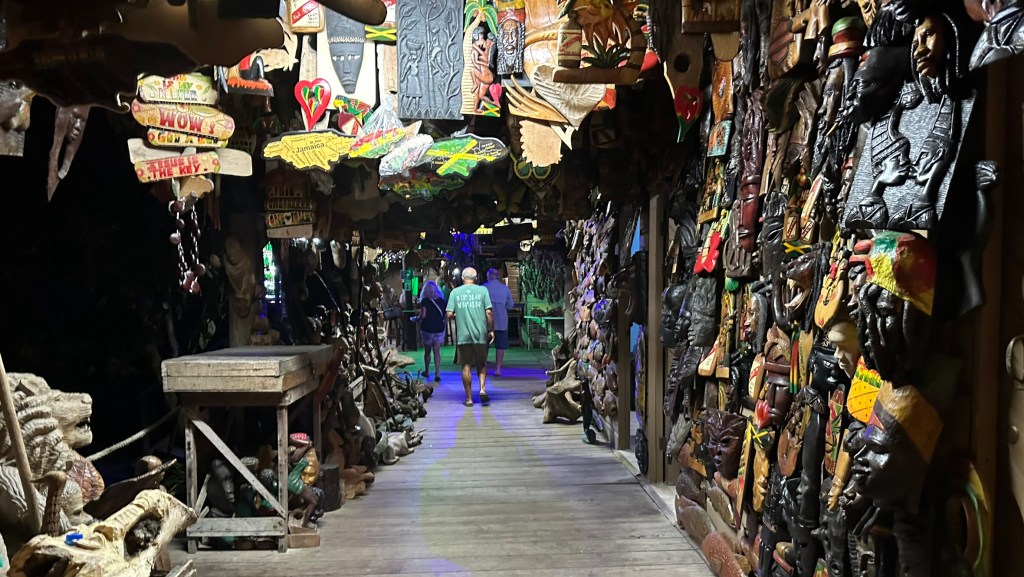
Art on the boardwalk
Two days was plenty of time to rest up in Jamaica, and we had a schedule to keep of sorts. A few days hence, I had a flight to catch in Grand Cayman to join a quick weekend family event back in the States, so we set sail without further delay. Two days and another 300 miles later, after mostly smooth sailing except one sudden squall — in the middle of my watch on the last night, naturally — we arrived at Spotts Bay on the south side of Grand Cayman.
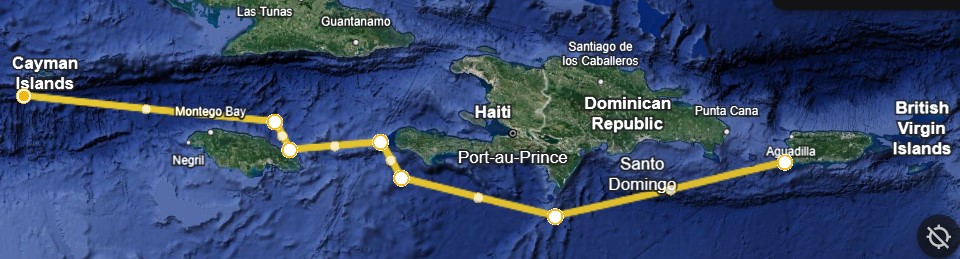
Grand Cayman is a huge cruise ship destination, less hospitable to sailors as the only dinghy dock we could find was wiped out by a storm a week earlier. We had intended to head directly to Georgetown and anchor in the harbor, but the Coast Guard rerouted us to Spotts Bay as rough seas on the west coast lingering from that storm were keeping all boats out of Georgetown — even the large cruise ships had to anchor out and wait. After a mandatory 24-hour quarantine on the boat, we dinghied ashore and cleared customs before heading into town to research the local bars and food scene, hit the laundry and restock our provisions. A couple days later, we were finally allowed to relocate to Georgetown harbor.
Fun fact: Georgetown was so named for the King of England after he granted the Caymans permanent tax-free status after locals rescued more than 450 British sailors who had wrecked their ships on the reef just off Grand Cayman in 1794.
All told this week, we covered five times the distance we made the first four weeks combined — 900 miles sailing over five days. In the bad news department: not only was I taking a three day “holiday” in a couple days, Mike’s wife Paul, our ship’s cook and cheerer of attitudes since the beginning, was flying home. In better news: Jim Penny’s wife, Vicki, had flown in to visit for a couple days. Now, we had some grocery shopping, laundry, and R&R to catch up on.
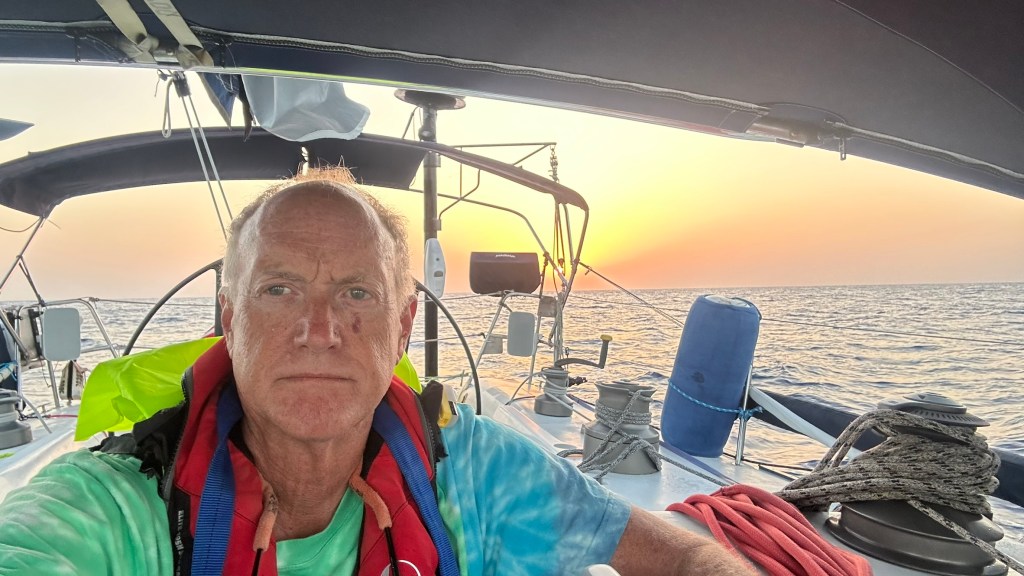
Another sunrise at sea 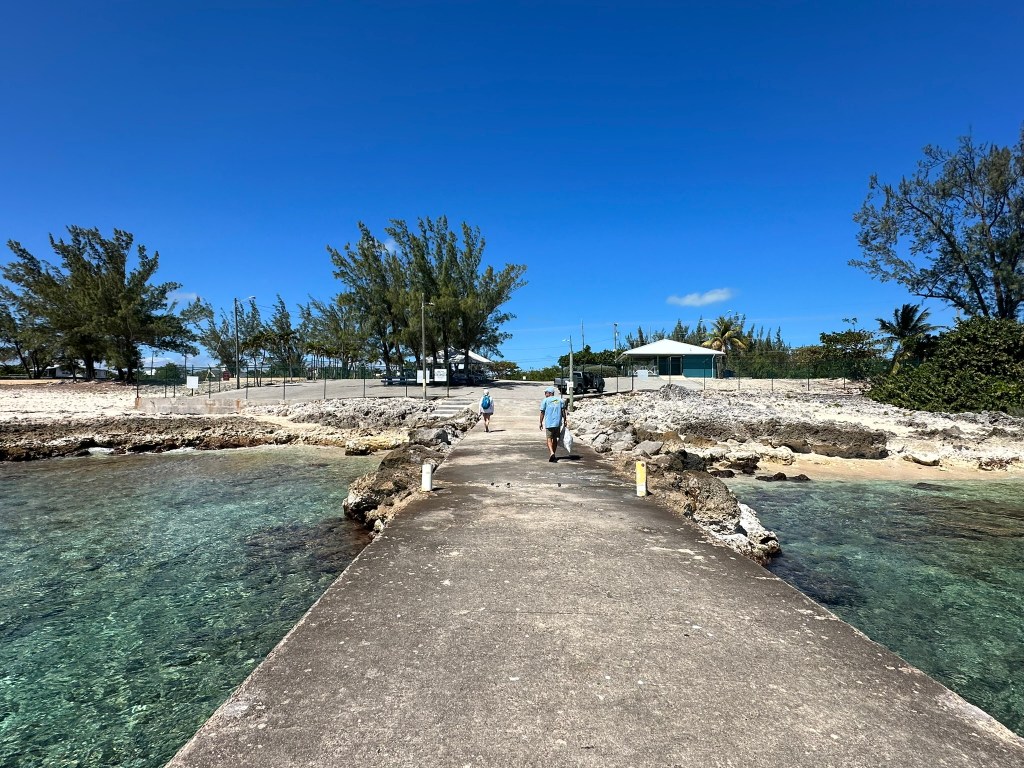
Spotts Bay landing boat dock 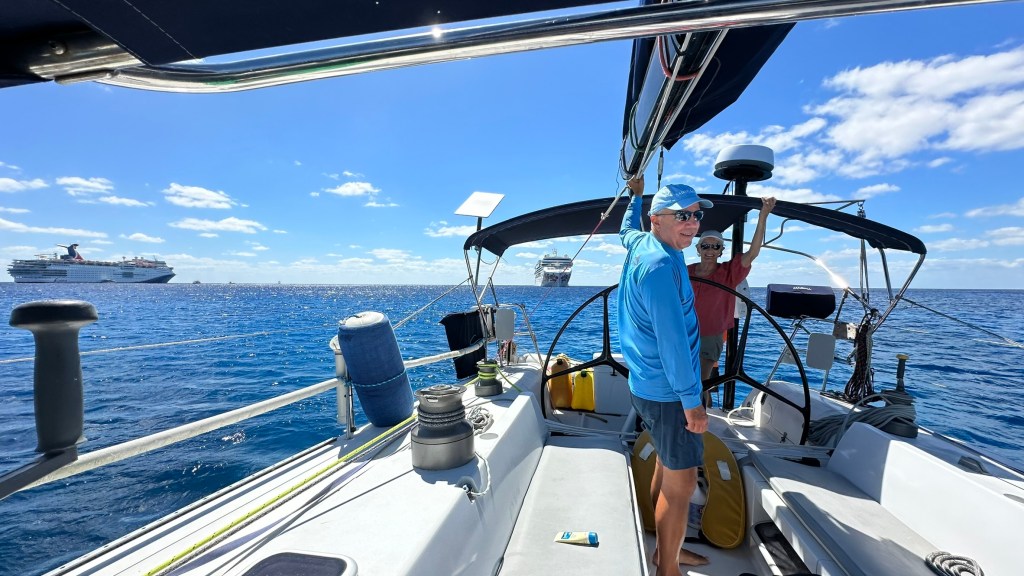
Anchored near cruise ships 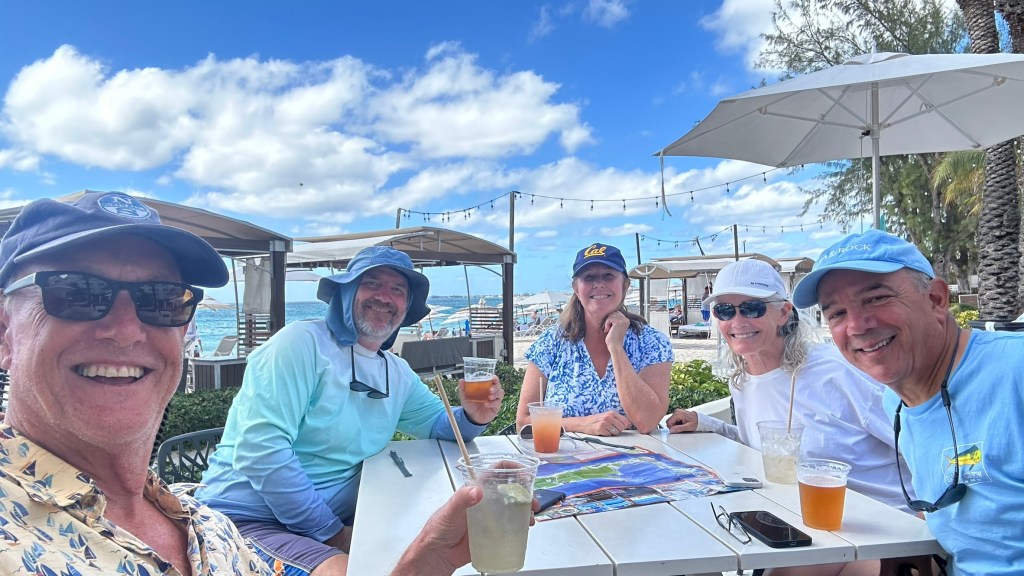
Welcome drinks for Vicki 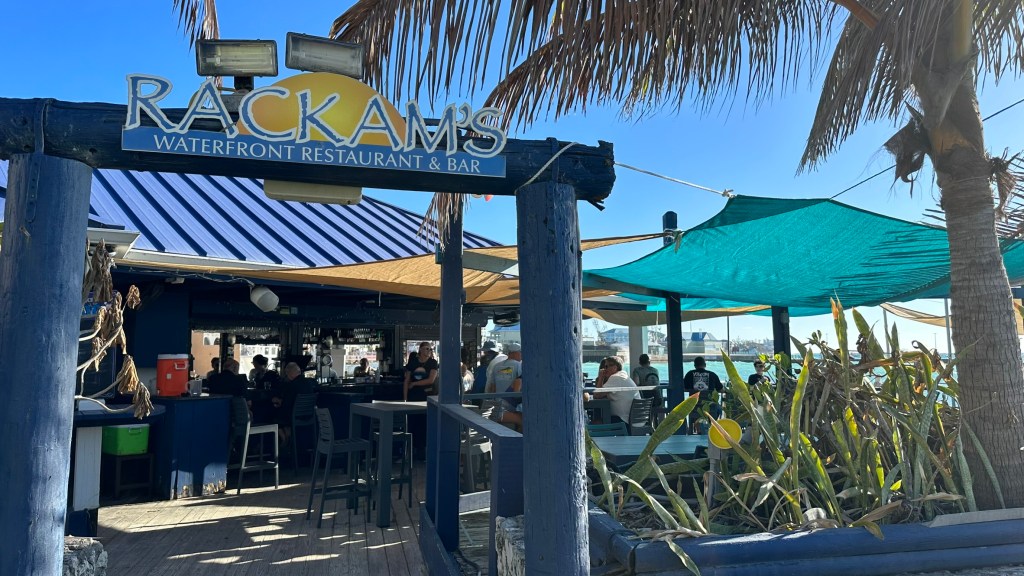
Rackam’s quickly became a favorite 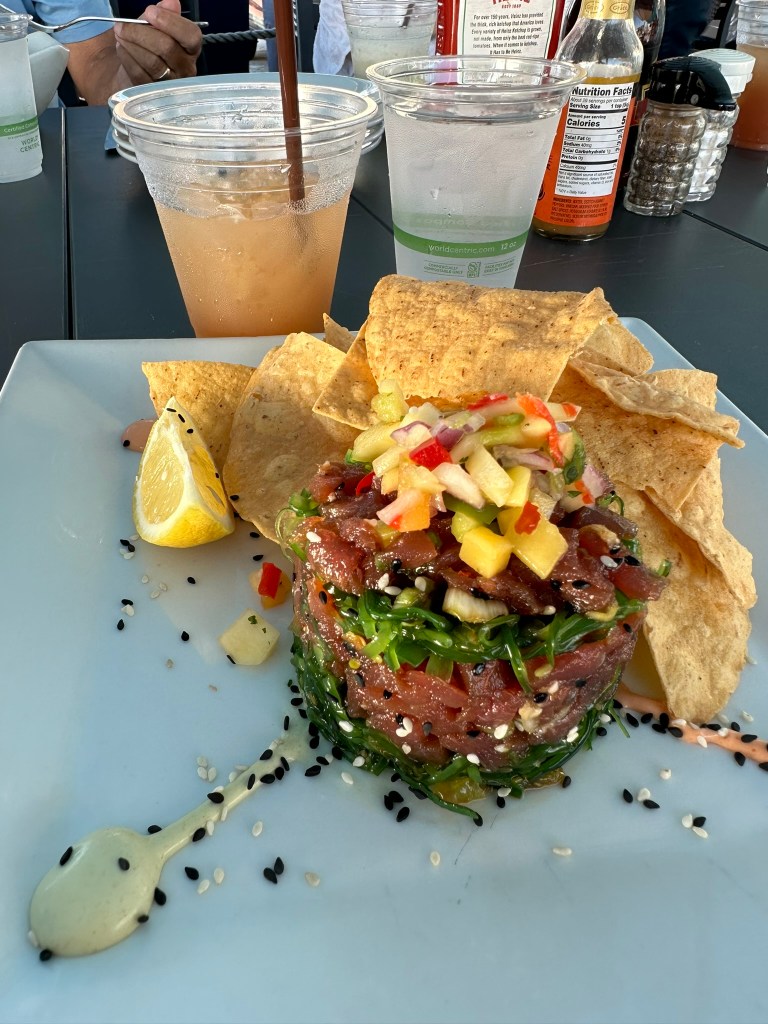
Tuna tartare and rum drinks! 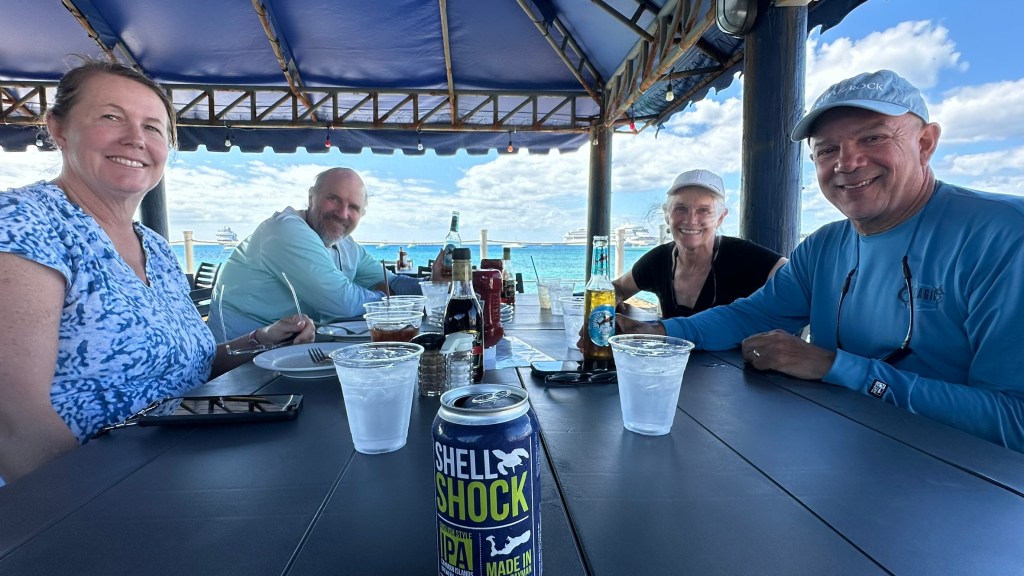
Rackam’s has beer 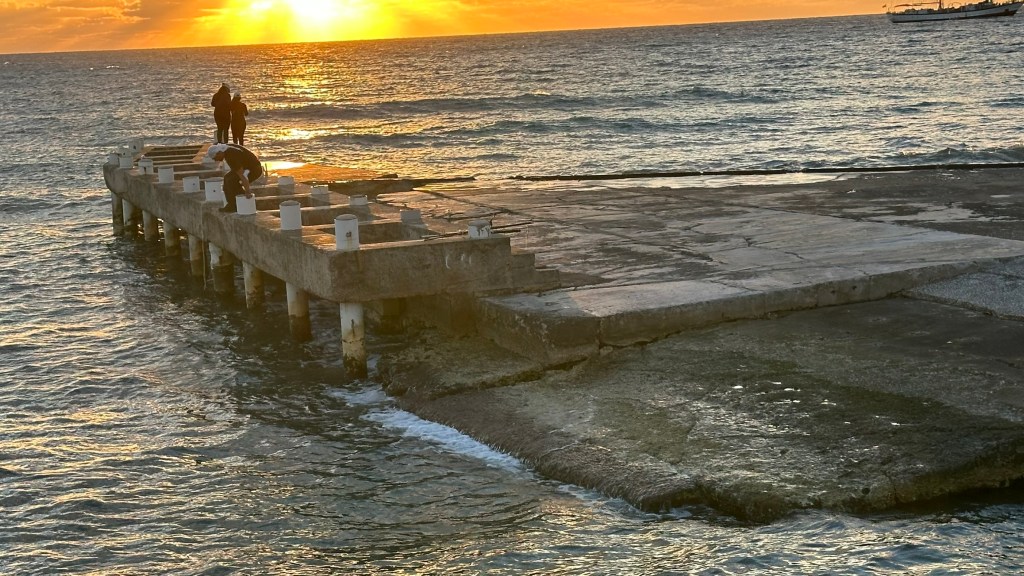
Storm damaged dock 
Vicki visits Morpheus 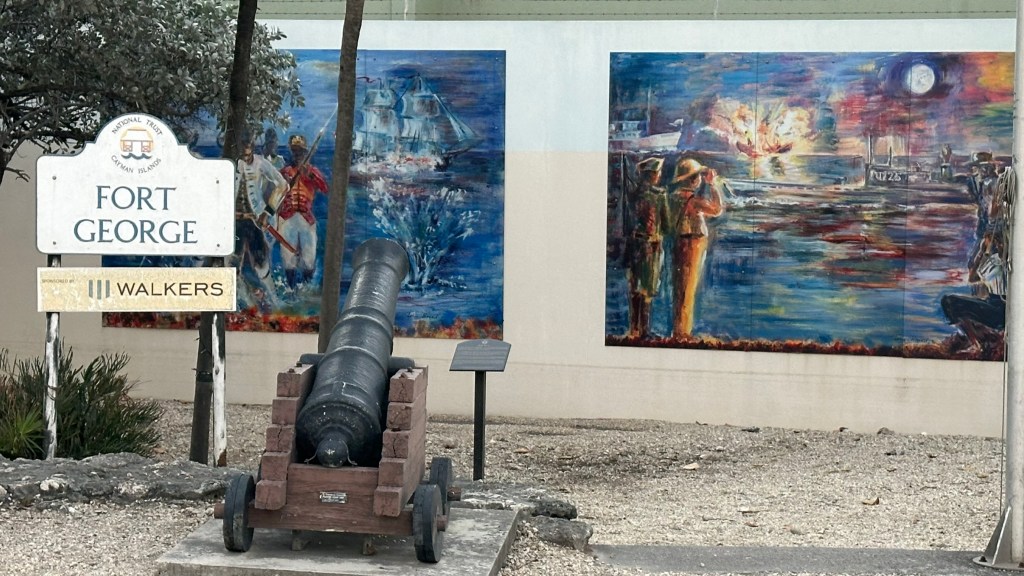
Georgetown’s British naval history 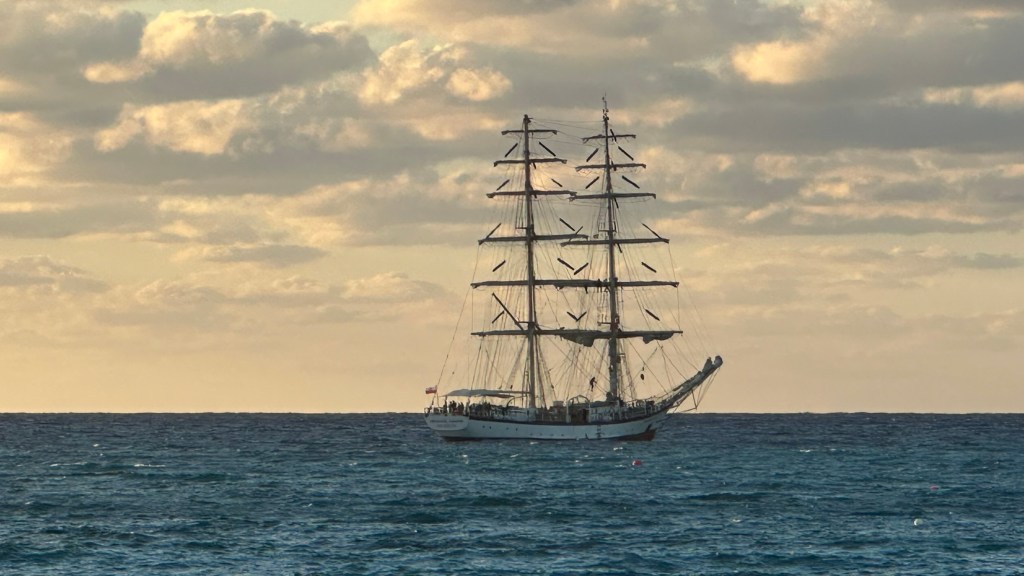
Tall ship in the harbor 
Old watchtower 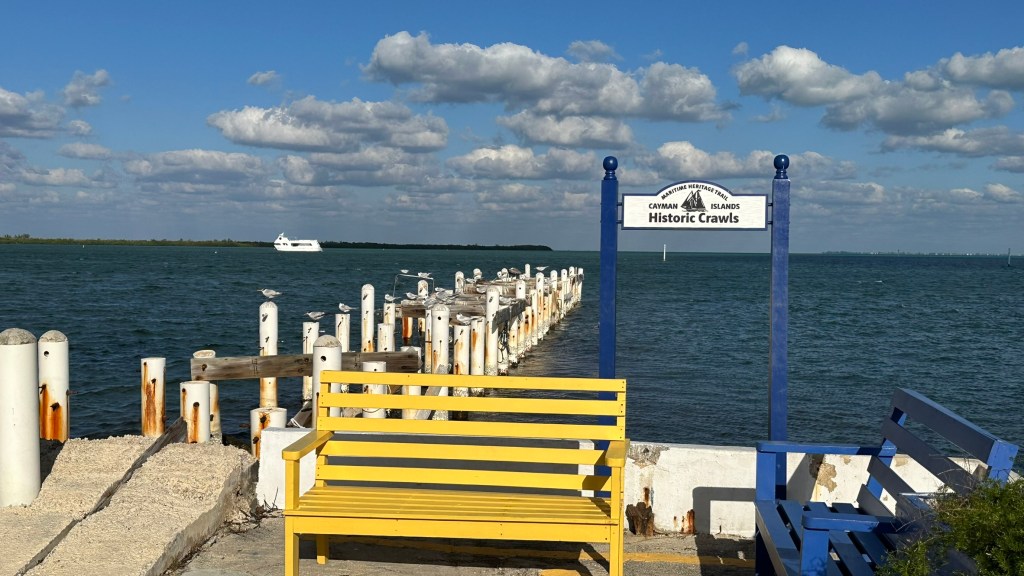
Day trip to the West End 
Battered dock, birds don’t mind 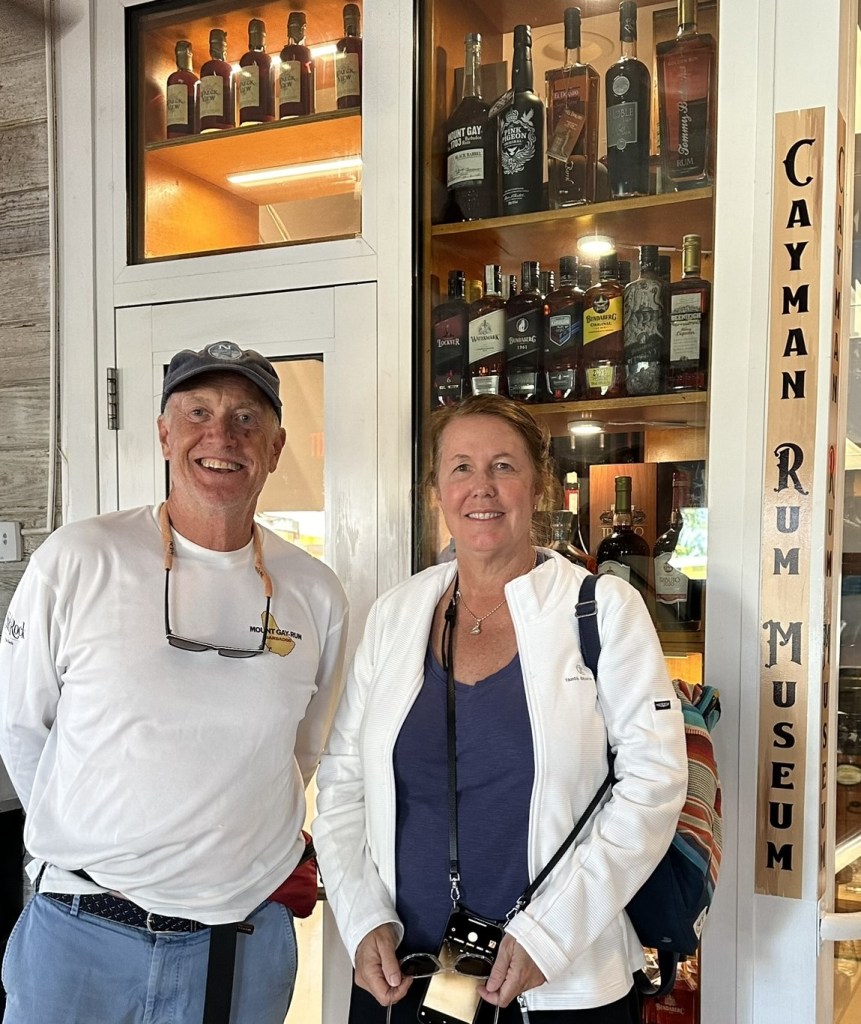
Cayman Rum Museum 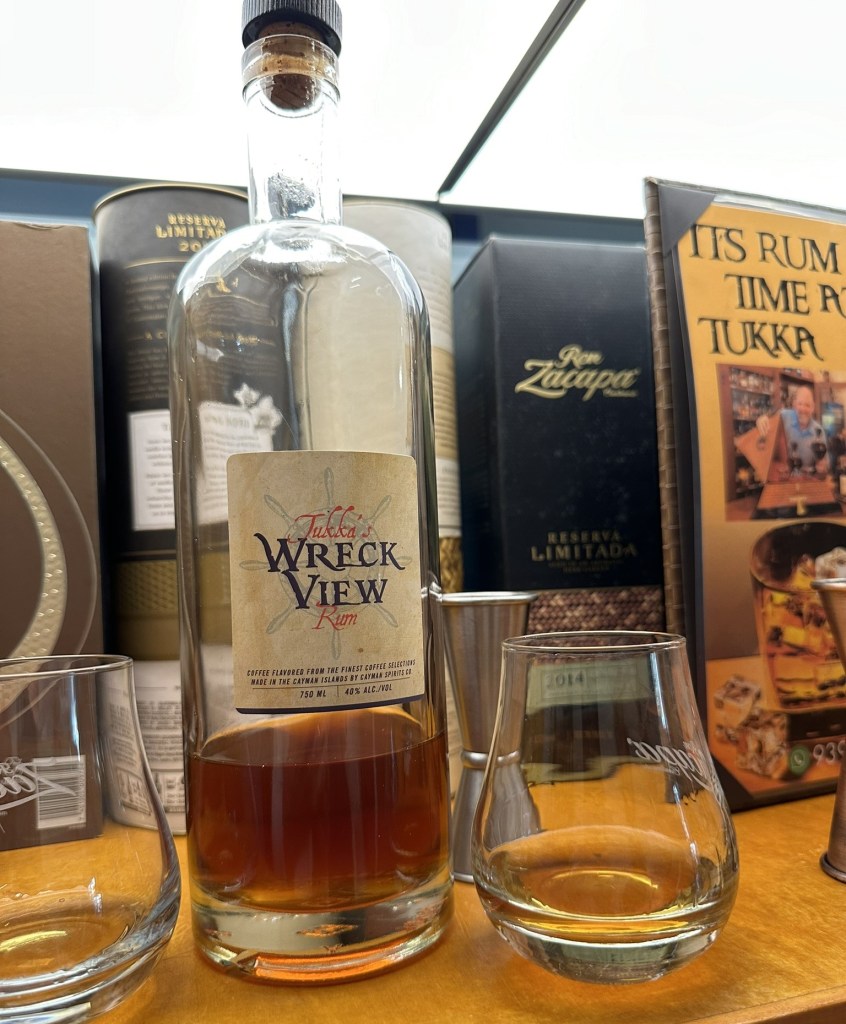
Free samples at the museum 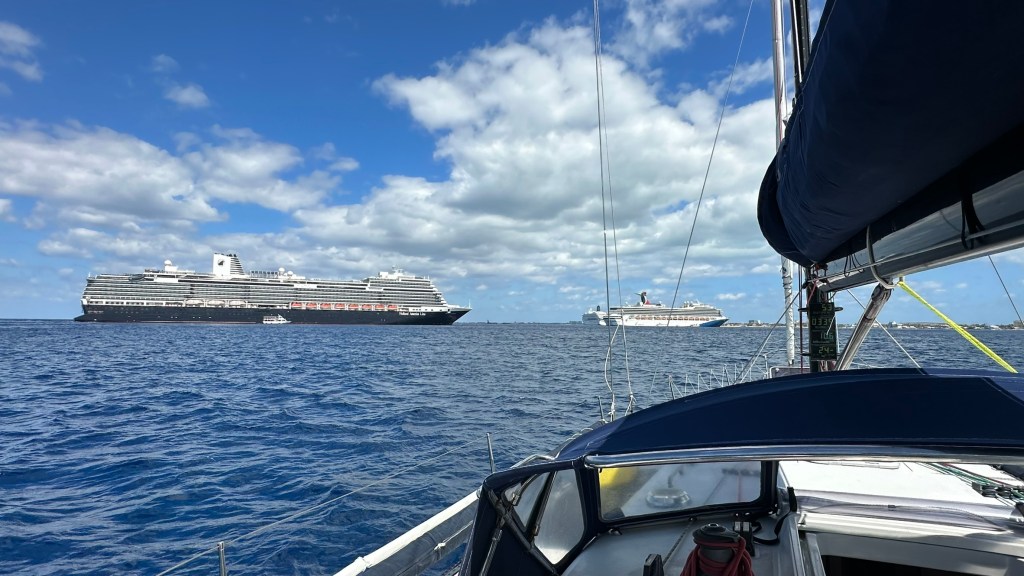
Cruise ship traffic 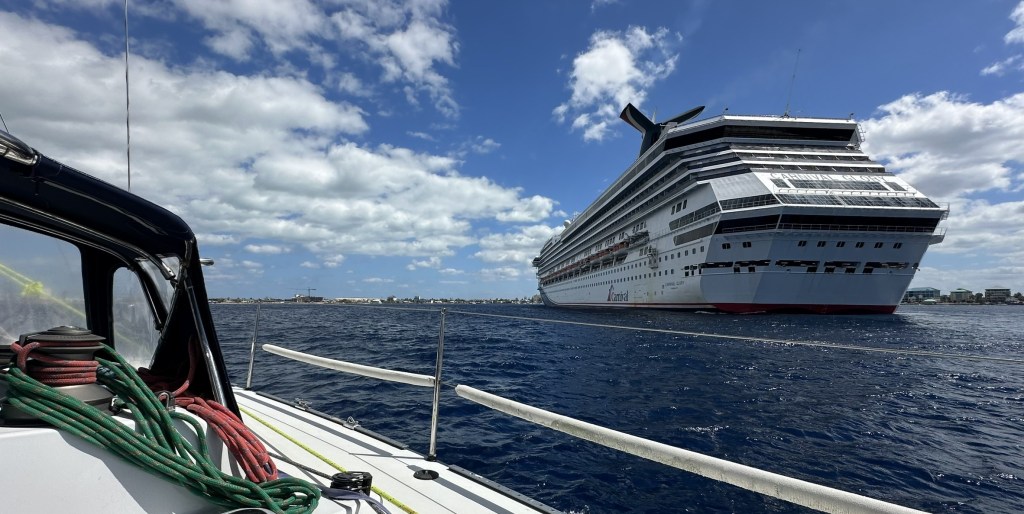
Neighbors 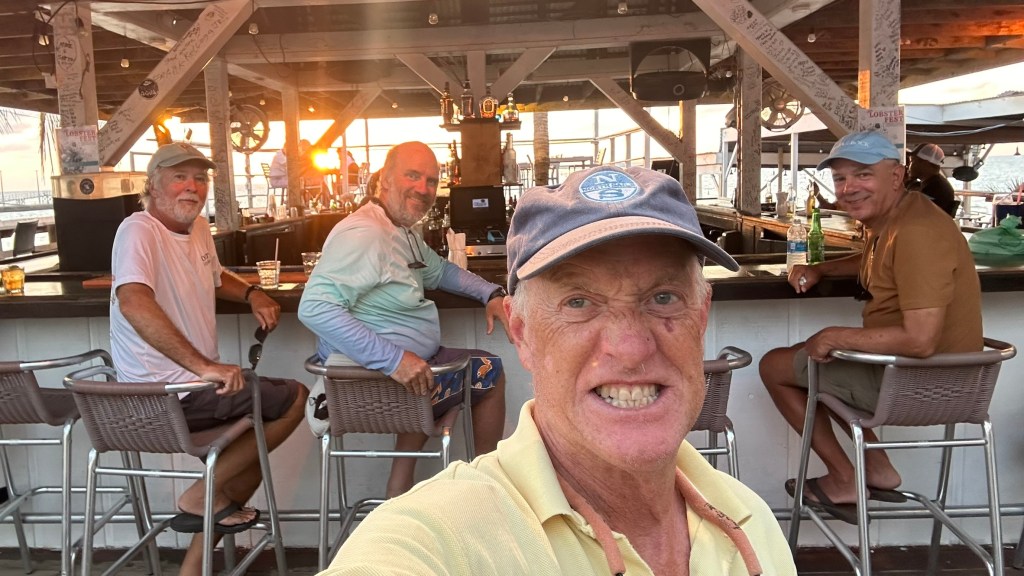
Final afternoon in Georgetown 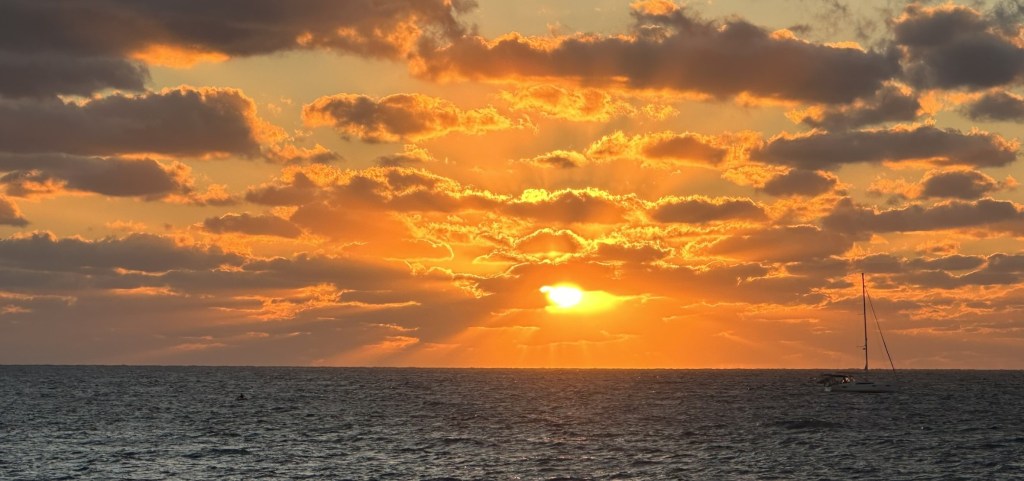
Grand Cayman sunset
| Weeks 7-8 | Shelter Bay > Panama Canal > Panama City |
Our next and longest leg on the water meant a big week with bigger contrasts. 4 days and 6 hours sailing over 600 miles south from the Caymans landed us in Shelter Bay, just outside the Panama Canal, shortly before sundown, a very good thing. We might have arrived sooner but chose to steer well clear of the Honduran coastline, which is known to see some aggressive piracy. With a beam reach half the distance, it was harder heeling (but not too much) than we had seen and thus a little harder to sleep — we needed lee sheets to keep us from being thrown out of our berths — but we’ve gotten the night watch routine down by now and all went with nary a hitch. Just in time to stop!
On arrival, we got the shocking news that our projected transit date for the Canal was six weeks out!! Shelter Bay Marina was very hot and muggy and their small pool offered no relief, so we decided a couple days exploring Panama City (an hour drive away), based in a comfy, air-conditioned hotel (and a pool bar!) was just the ticket to restore our strength. Meanwhile, our canal agent — a necessity to broker one’s passage and manage logistics for a safe passage — would be calling daily to see if any slots open up by unexpected cancellations. The only downside thus far was losing Mike Tye and Jim Penny, whose time expired after a month plus of sailing together.
Highlights from Panama City:
- A visit to the Miraflores Locks on the Pacific side of the canal was a terrific preview of what lay ahead. Starting with the excellent IMAX documentary, “Panama Canal: A land divided – a world united”, was the perfect setup to watch those ships transit the locks down from Lake Gatun, the middle of the Canal. The big ships are guided through the narrow locks by robotic locomotives tending lines on both sides.
- Lunch at Maagoo’s, about five miles outside Panama City, was outstanding. Best smoked fish tacos in Panama City.
- Casco Viejo, Panama City’s old town, is its most fun and historic neighborhood. Top spots we found included La Rana Dorada (the Golden Frog), an instant favorite for local beers and great pizza, dinner next door at La Pulperia, and a fine selection of rum at Pedro Mandinga Rum Bar. We tried the Central American rum flight; I liked the Botran 12-year-old Guatemalan best.
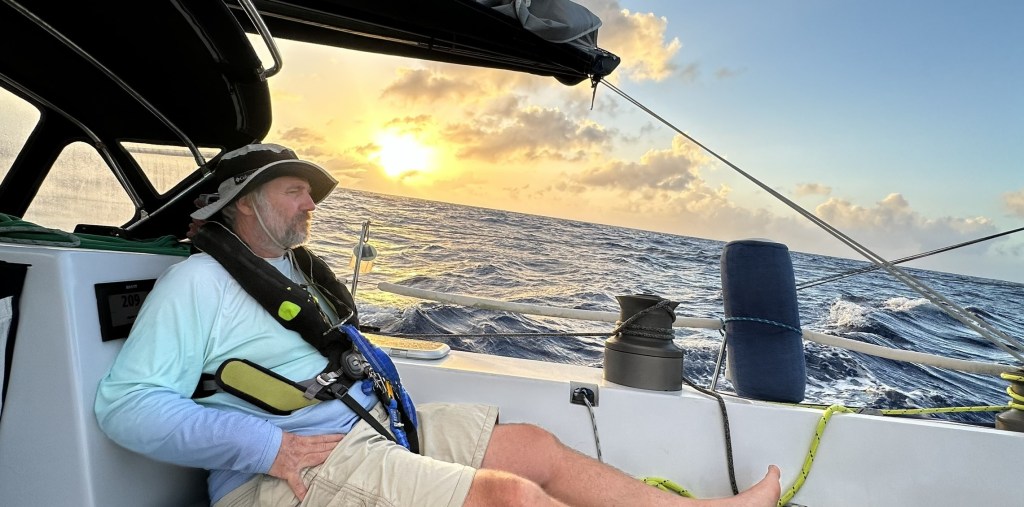
If vest is on, it’s blowing 20+ knots 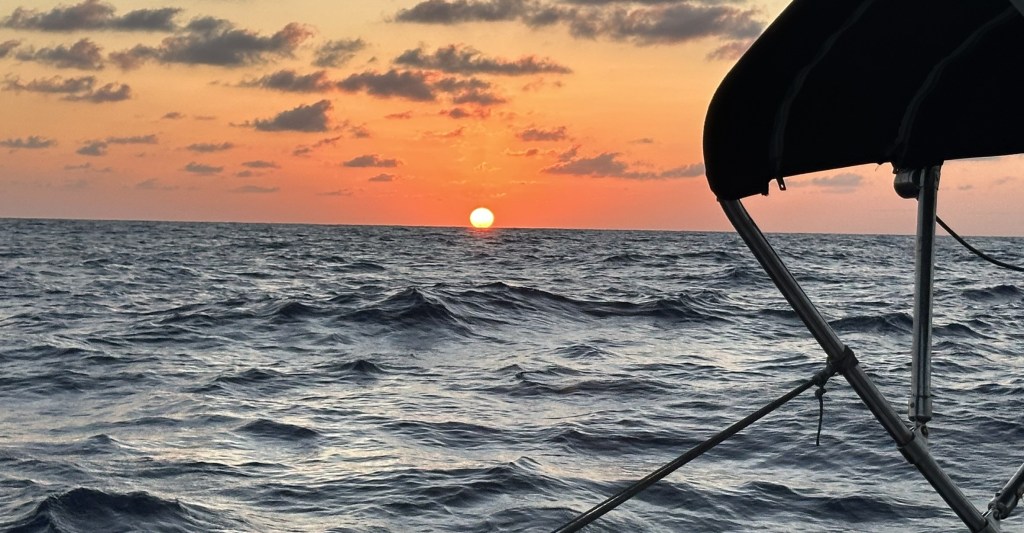
Never gets old 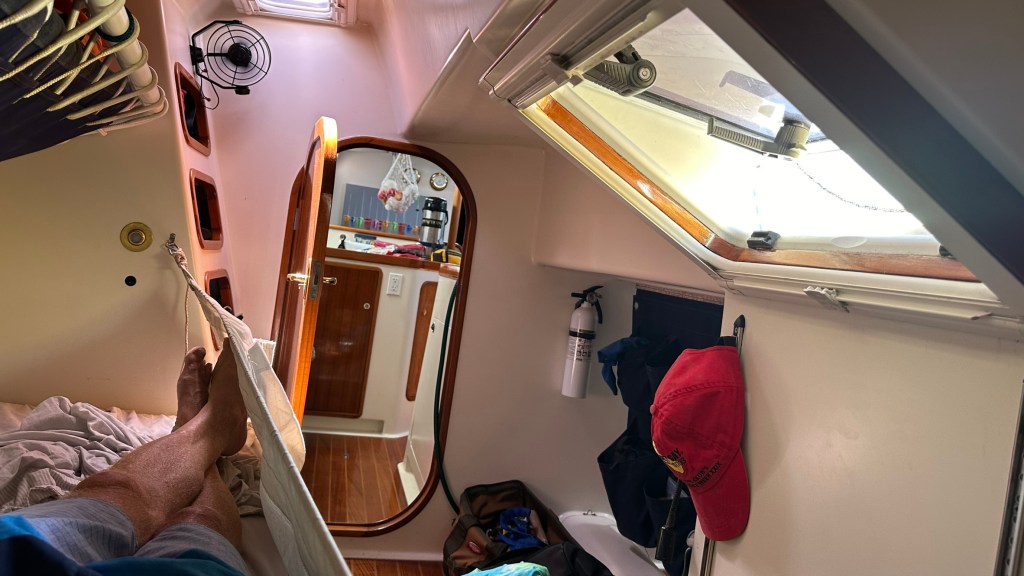
My berth with lee sheet up 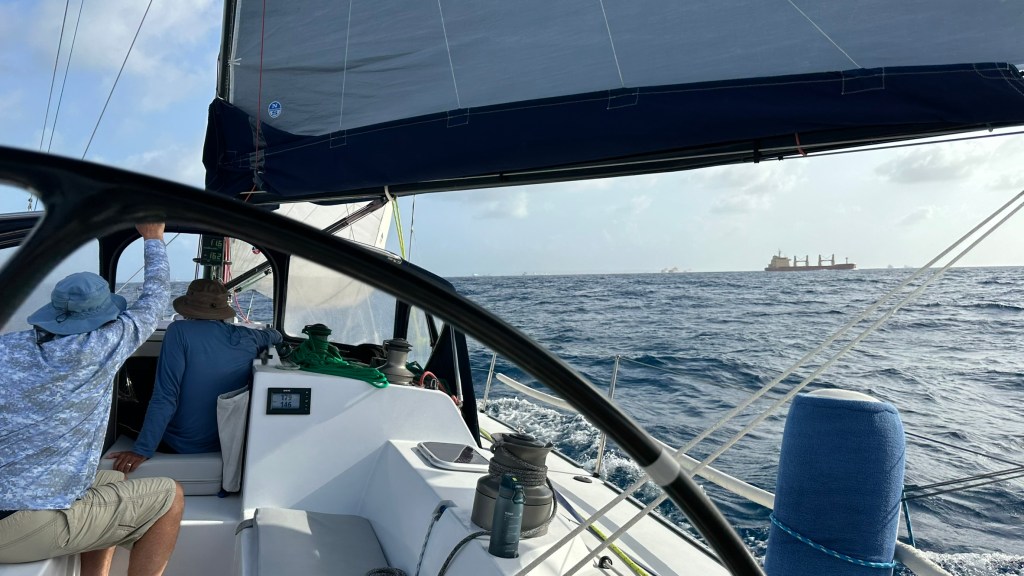
First sight of Panama Canal traffic 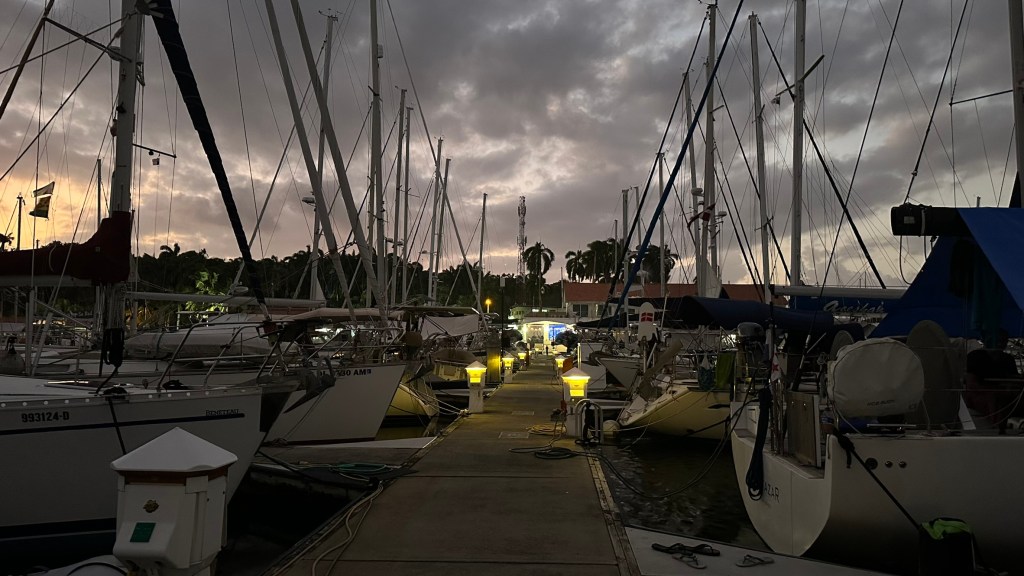
Shelter Bay Marina, just in time 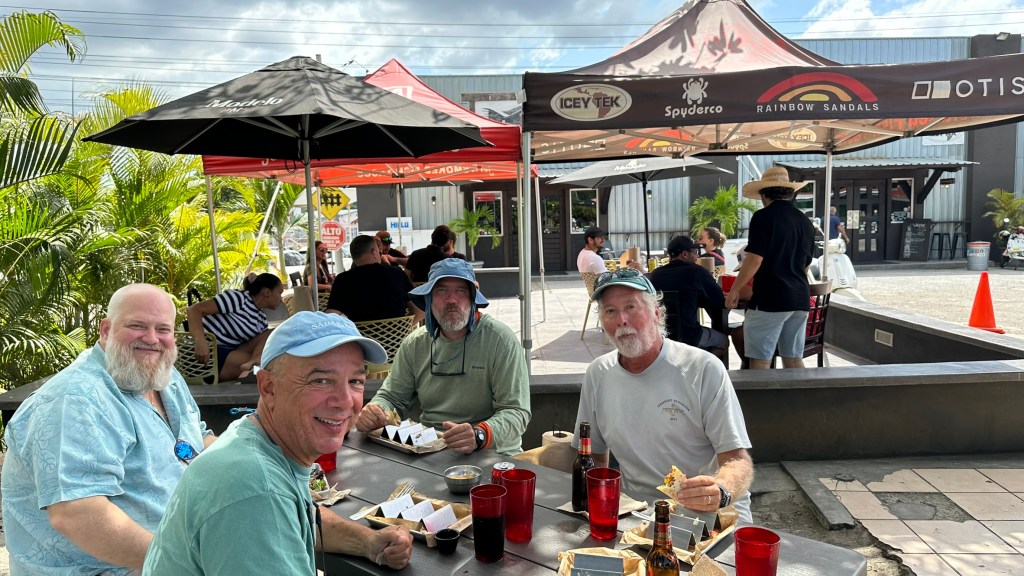
Fish tacos at Maa Goo 
Miraflores Locks 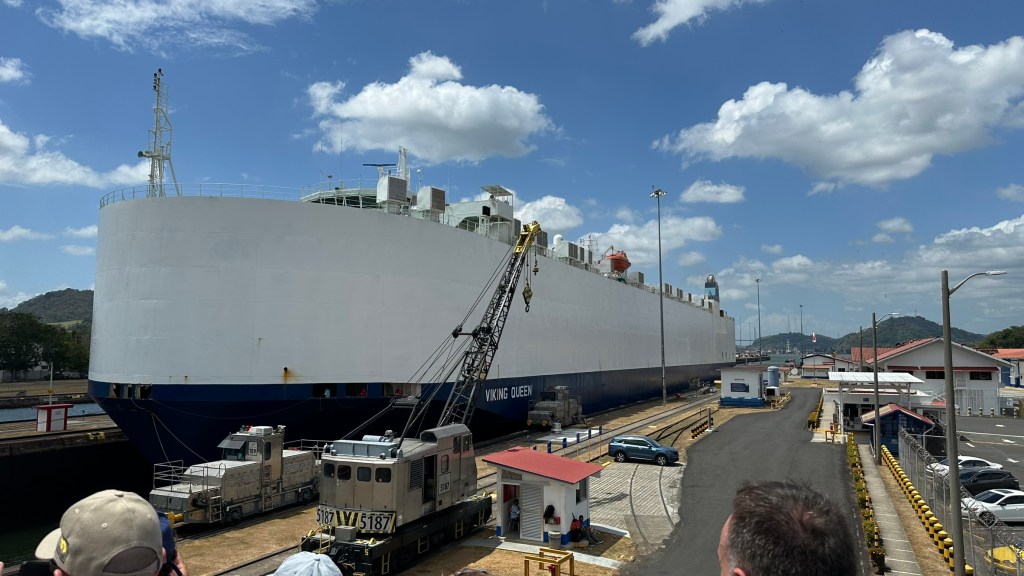
Robotic locomotives guide the big ships 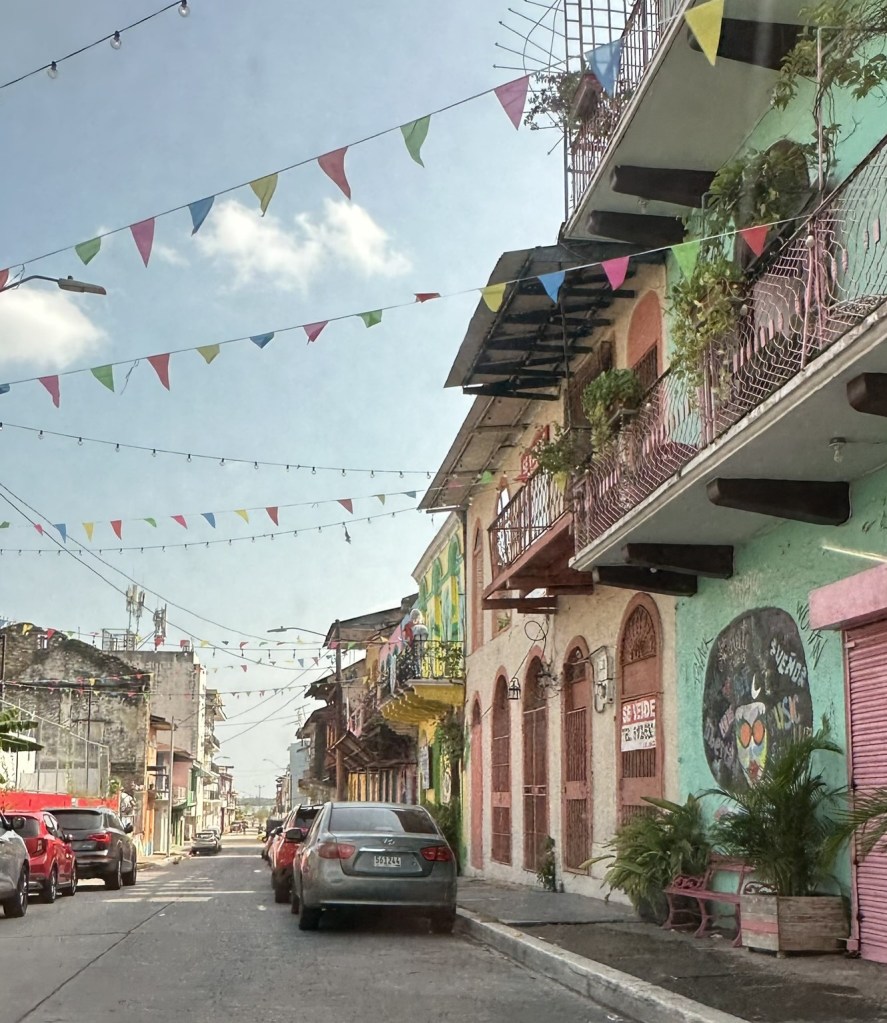
Taxi ride through Panama City barrio 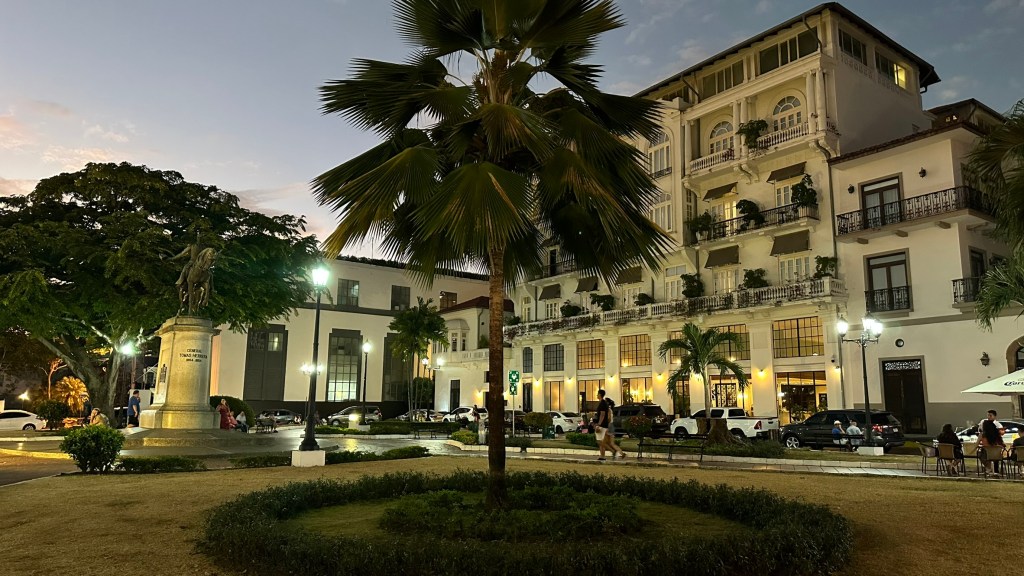
Plaza Herrera in Casco Viejo 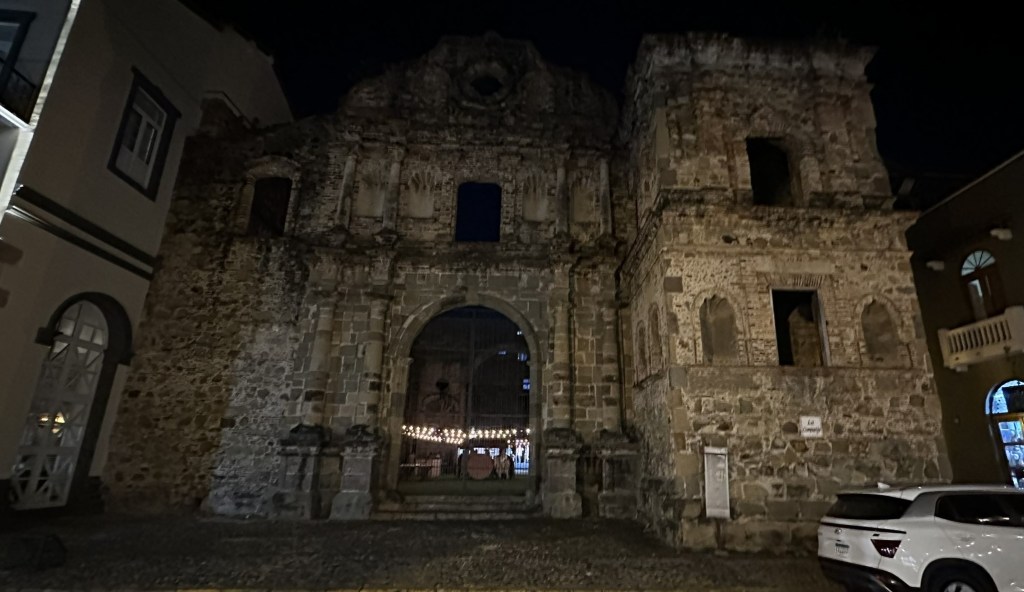
Old church in Casco Viejo 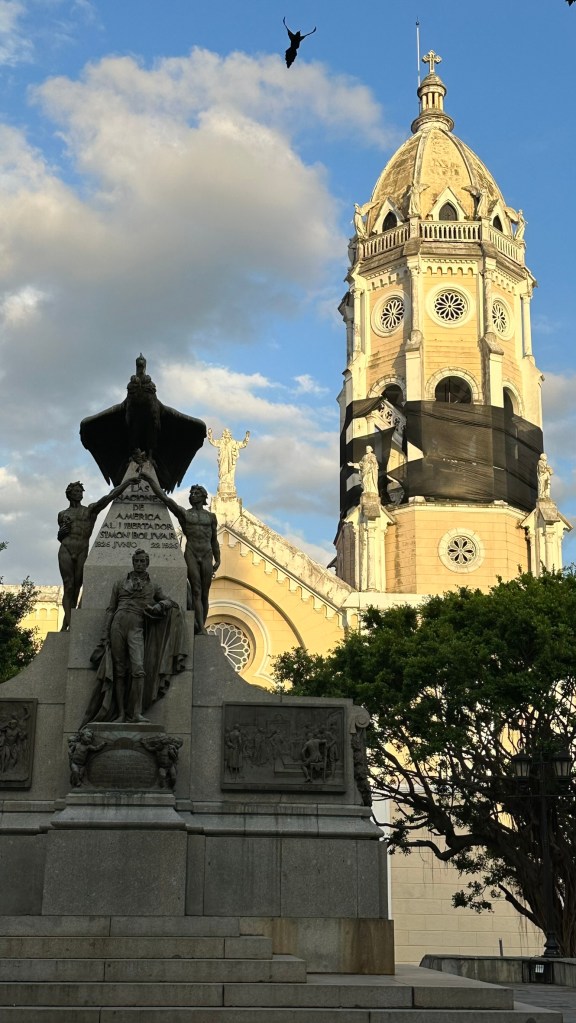
Simon Bolivar Plaza & St Francis Assisi church 
Arrival beers at La Rana Dorada 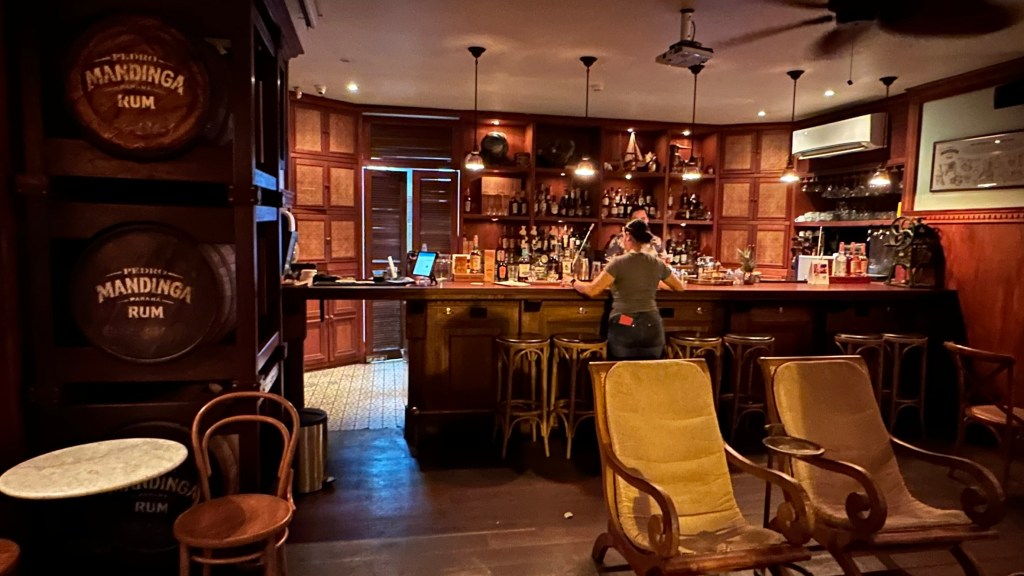
Pedro Mandinga Rum Bar 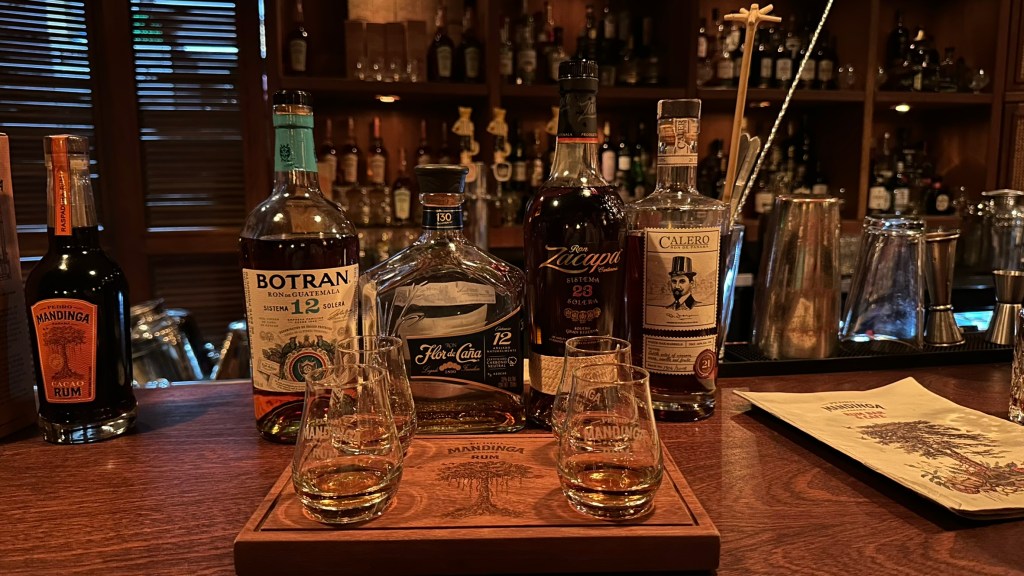
Central American rum flight 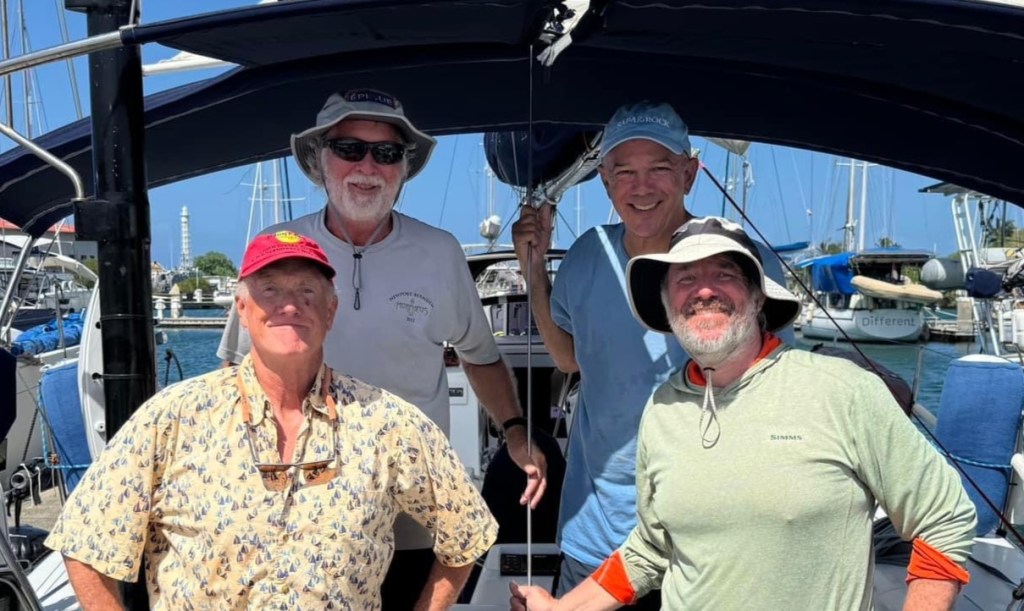
Crew for the past 7 weeks 
Celebrating our arrival
By an amazing stroke of luck, our miracle came through just a few days after our return from Panama City — one spot had opened up but very the next day. Flying from California with barely 8 hours’ notice, two new crew members, Paul Manca and Doug Jorgensen, arrived just in time to join us for our Panama Canal transit.
Transiting the Canal is a tightly controlled process, especially in a drought year (which we were) where water in Lake Gatun, which feeds the locks from 26 meters above sea level, is very low and boat traffic is pretty restricted. This helps explain our initial long wait time. We had hired two “line handlers” to help with the transit; they boarded in time for our scheduled 2pm departure which had us arriving close to the Gatun locks on the Atlantic side in late afternoon. There, our assigned “advisor” boarded Morpheus and took over navigation responsibilities, telling us where to go and what to do. Once we cleared those locks, we tied up next two a huge mooring ball and spent the night on Lake Gatun before crossing the 20-mile-long lake and dropping back down through the Pedro Miguel and Miraflores locks to the Pacific Ocean. And what a thrill it was — the close proximity to massive cargo ships, tugboats and other sailboats alike packing into the locks like sardines was really something.
More fun facts:
- The Panama Canal locks are an engineering marvel. On the Atlantic side, the Gatun locks raise the boats in three stages, 9 meters each — almost 90’ in all —with the locks filled by water from the lake above. On the Pacific side, the Pedro Miguel and Miraflores locks do the same thing, though the lift varies by as much as 20′ depending on the tides. All locks all gravity fed with no pumps at all.
- The massive lock doors were actually a 15th century Leonardo DaVinci invention!
- For nearly 30 years constructing the Canal, the Culebra Cut was the most difficult and expensive part of the project, with more earth and rock excavated than anywhere ever before and a death toll (mostly yellow fever) in the thousands.
- In fact, malaria and yellow fever killed over 20,000 workers over eight years of French-led construction in the 1800’s. Shortly after America took over construction in 1904, American epidemiologists isolated the cause of both diseases to mosquitos, and sanitation efforts that ensued largely put an end to the epidemics.
- Robotic locomotives on both sides of the locks tend lines attached to the bow and stern of big ships, trimming and easing to keep the ship straight as the big ships propel under their own power. When the Canal was originally built, steam locomotives driven by men did the same job.
Before the trip, Jim urged us all to read David McCollough’s “The Path Between the Seas: The Creation of the Panama Canal, 1870-1914“. I’m glad I did, and if you are going to make that passage, you should, too!
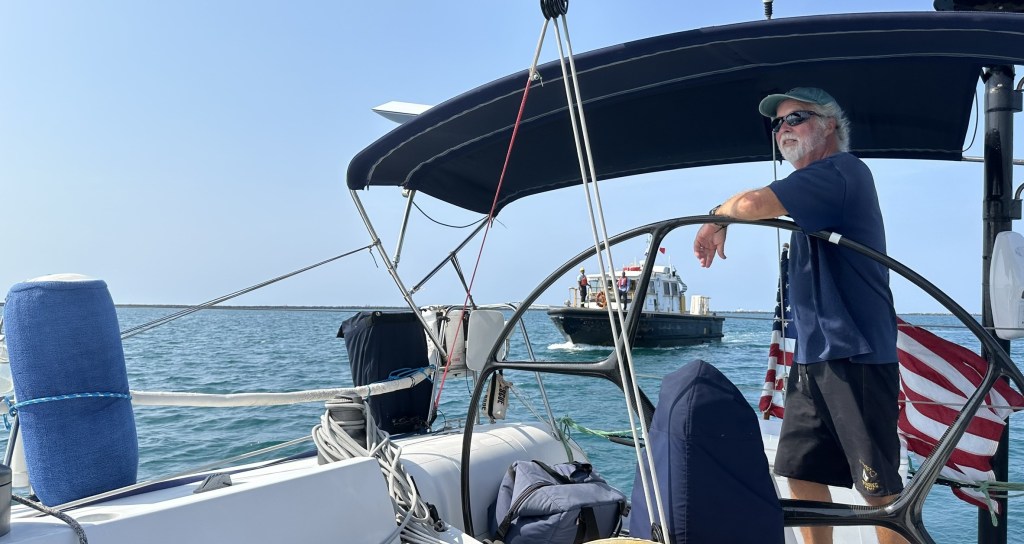
Heading to the Canal 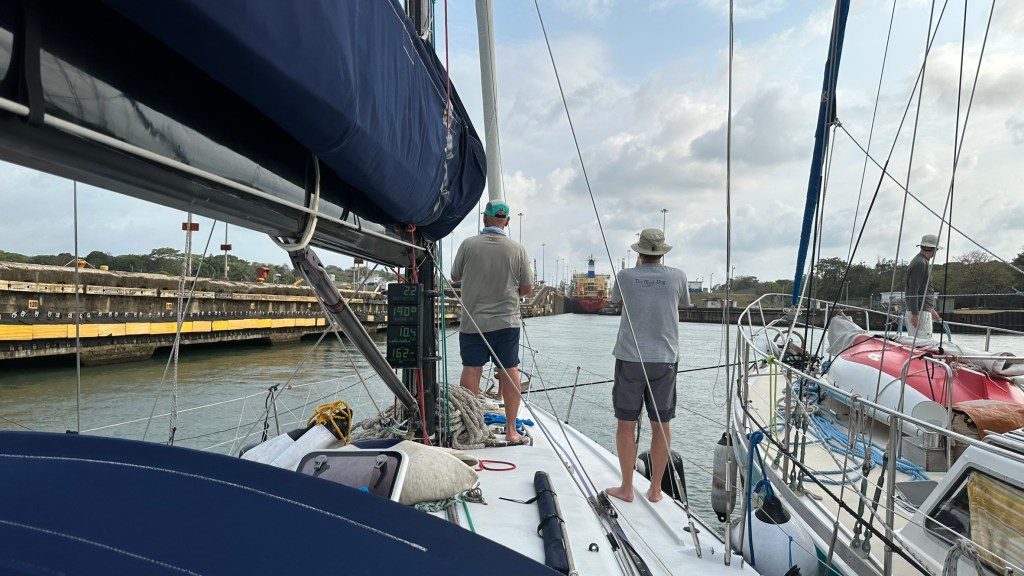
Entering Gatun Locks 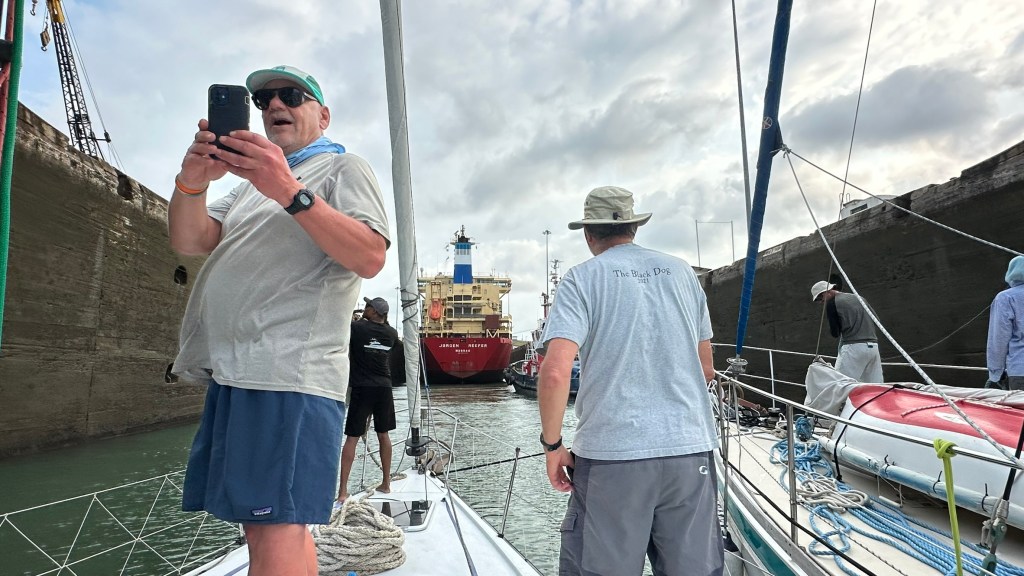
Gatun Lock 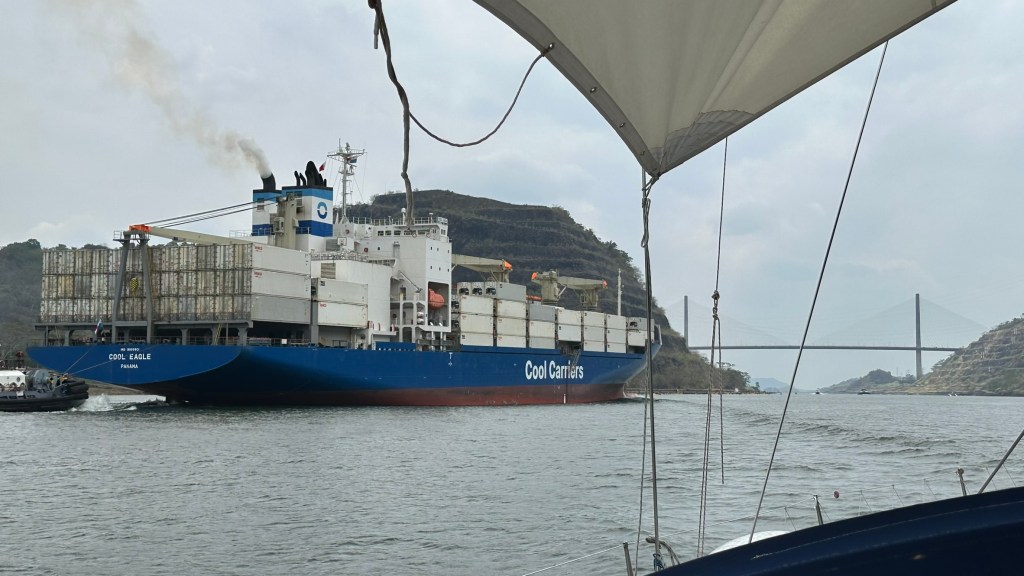
Following the big guy through Culebra Cut 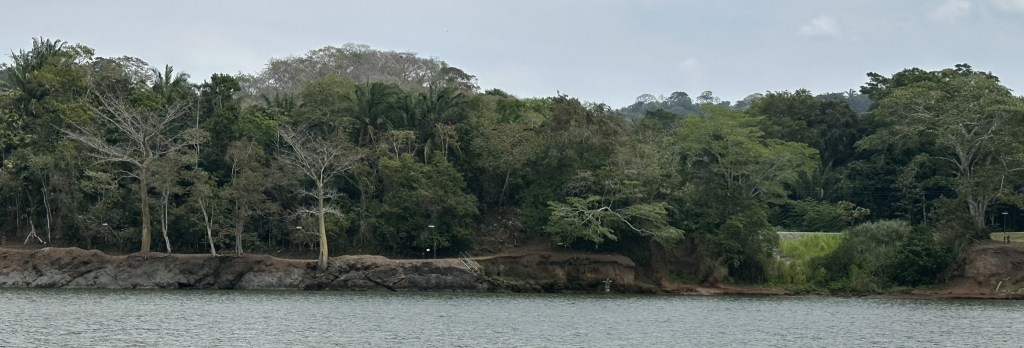
Jungle has retaken the banks 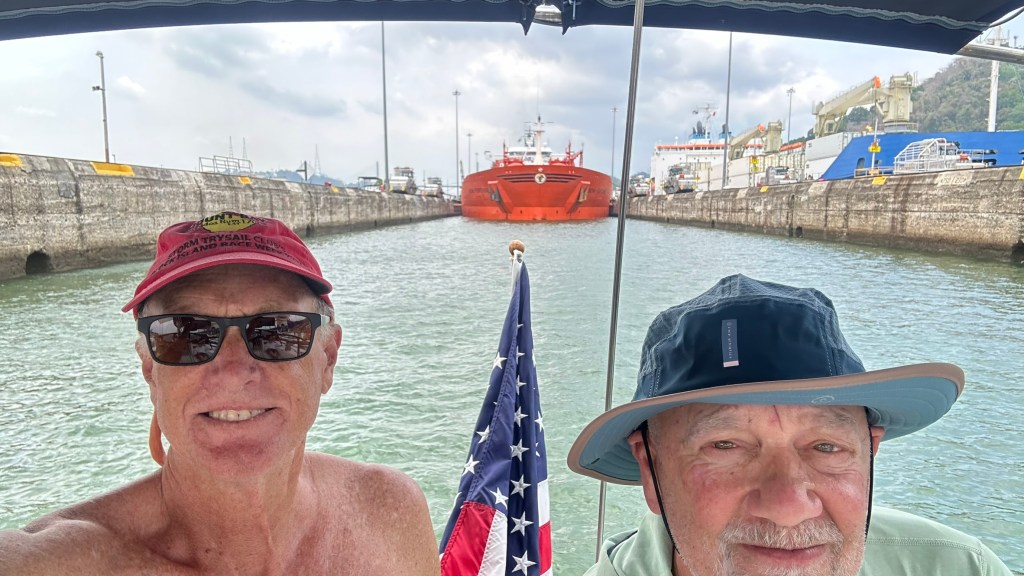
Entering the Pedro Miguel lock 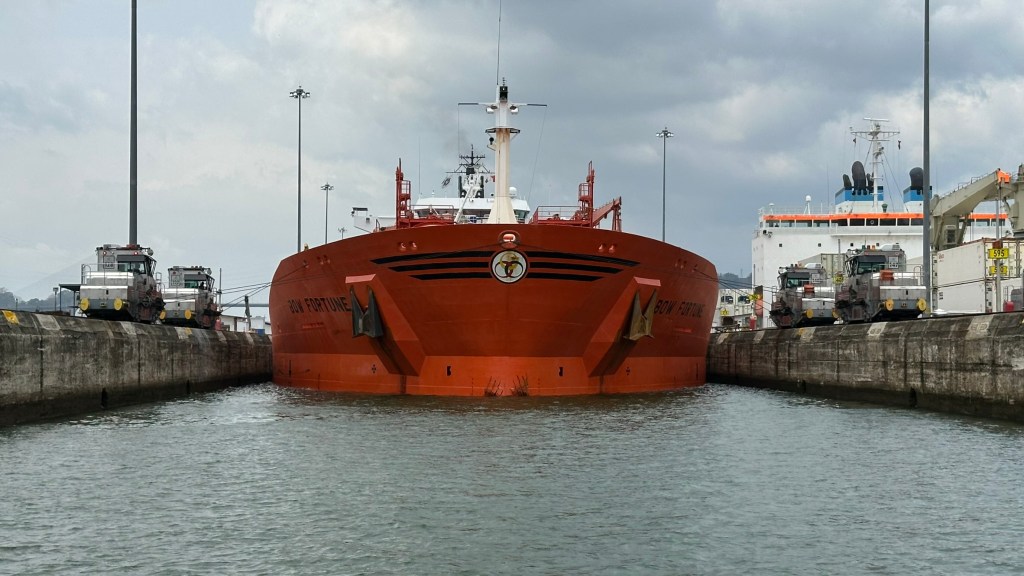
Our new neighbor 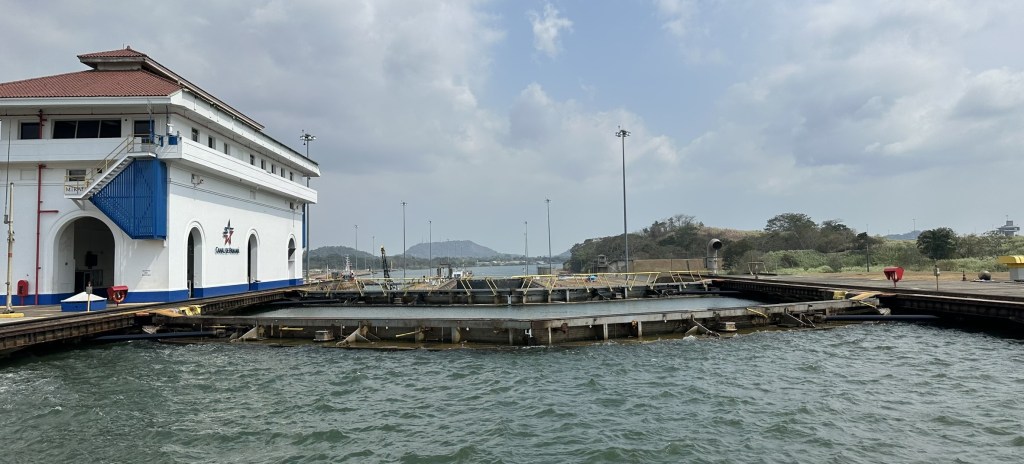
Full Miraflores Lock, the Pacific ahead 
Welcome back to the Pacific Ocean 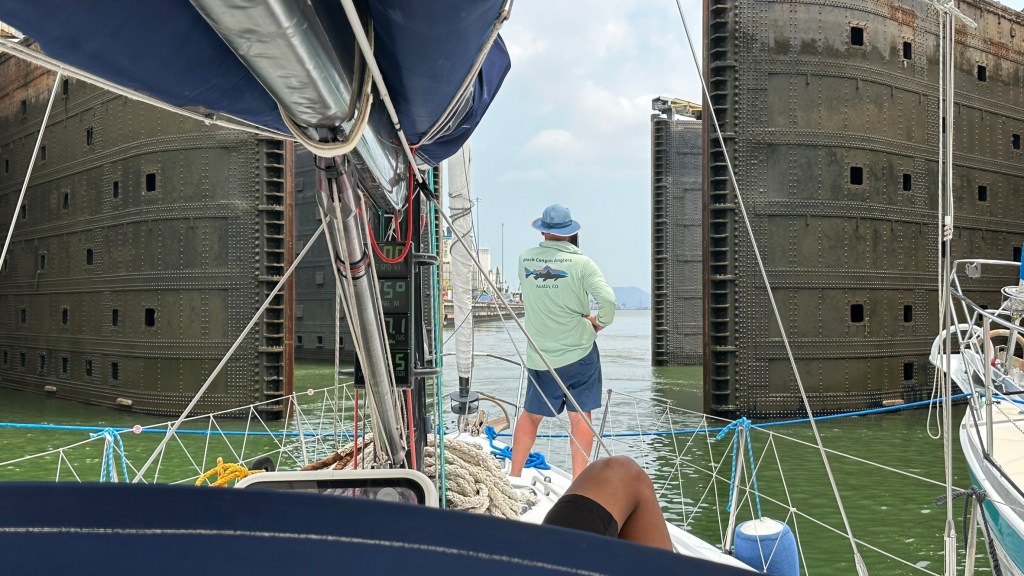
Miraflores Lock double doors opening 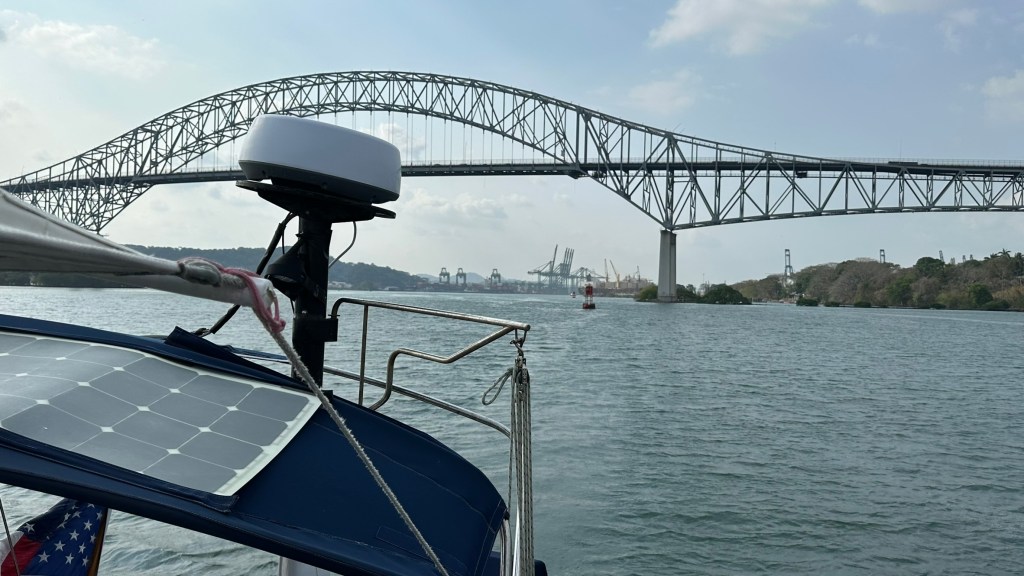
Sailing past Bridge of the Americas
I had always expected passing through the Panama Canal to end with quite the party. Not to be! As it happens, we started our transit two days into what turned into a weeklong bout with a nasty stomach bug that kept me from eating anything for four days. On arrival to our marina in Panama City, it was straight to the same air-conditioned hotel for both Jim and me (as he was feeling terrible, too) and eventually to a clinic where they strapped us to an IV for rehydration and antibiotics. With more recovery in order, I reluctantly pulled the plug on the final 3-day sail to Costa Rica and flew home.
Epilogue: As I write this, six months have passed since that journey ended for me. At the time, sailing almost 2,000 miles across the Caribbean with a rotating cast of truly great friends, all old college buddies, was an adventure of a lifetime. Little did I know that it was to be our final voyage with Morpheus, the grand finale of sailing adventures with Jim that lasted 40 years. Shortly before we started our Panama Canal transit, Jim had begun to feel ill. We had all lost weight and battled to stay hydrated, but something else was going on with him and neither he nor we knew what it was. As soon as Jim got to Costa Rica, a week after my departure, he flew home to see his doctor. Tragically, cancer took him three months later.
Looking back, those of us who sailed with Jim those last several weeks consider ourselves the luckiest guys in the world, because we got to spend all day every day with Jim for weeks on end, doing what he loved best. RIP, fair winds, and following seas, Jim Gregory.
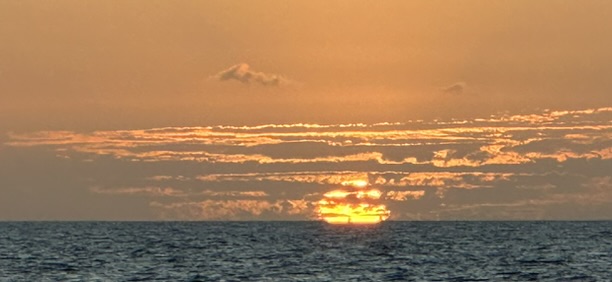


 Once in a while you get shown the light...