Fall 2023 Trip Notes & Itinerary
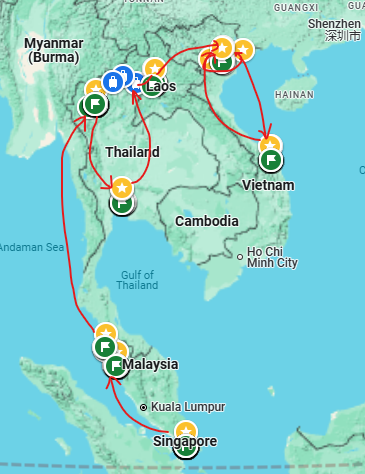
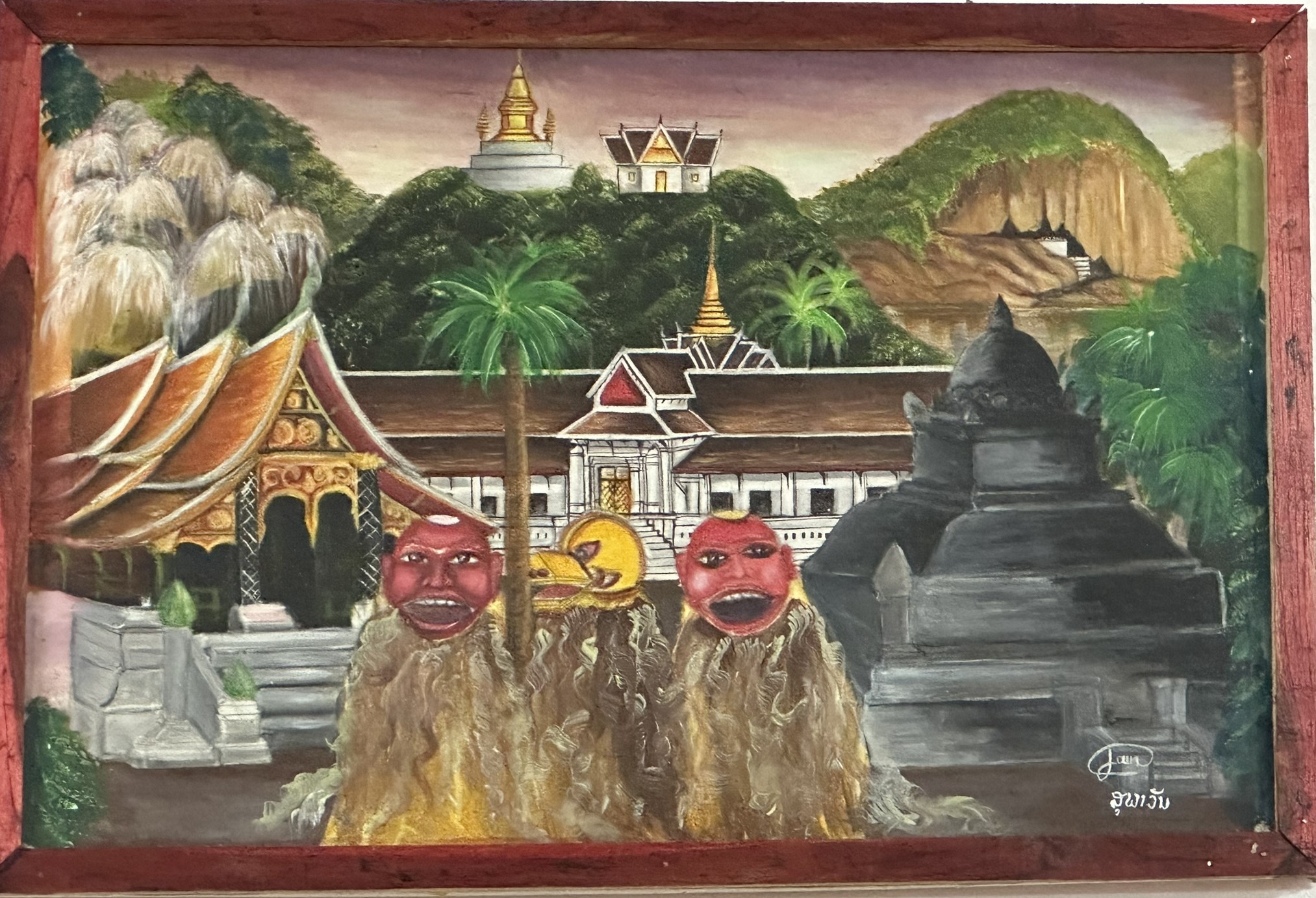
Overview: Our first trip to Southeast Asia was originally conceived as a scuba diving adventure in Indonesia with daughter Emily. This morphed into a 5-week, 5-country tour (“Tropic Thunder“) when daughter Anna announced she would be heading to Vietnam for Thanksgiving.
Itinerary: Singapore (3 days) > Penang, Malaysia (3 days) > Langkawi, Malaysia (3 days) > Chiang Mai, Thailand (3 days) > Bangkok, Thailand (3 days) > Mekong River, Laos (3 days) > Luang Prabang, Laos (4 days) > Hanoi, Vietnam (3 days) > Pù Luông, Vietnam (1 day) > Ninh Binh, Vietnam (1 day) > Bai Tu Long Bay, Vietnam (2 days) > Hội An, Vietnam (3 days) > Hanoi, Vietnam (1 day)
Bottom Line: Good friends who have traveled extensively warned us that once we got a taste of Asia, we would kick ourselves for not coming years earlier. They were right. Everyplace we went was amazing — the colors, the people, the languages, the food, the history and culture (there’s that word again), the 20:1 ratio of motorbikes to cars. The sensory stimulation was off the charts and so different from the “western world”, it was a trip unlike any we had ever taken, totally new and so much fun. Laos was the biggest surprise. The thing I’ll miss most, crazy as it sounds, is the absolutely insane yet highly effective traffic scene, with swarms of motorbikes carrying loads of stuff, even entire families, weaving everywhere, threading needles and flowing like water, always moving, traffic lights and lanes be damned. Gotta see it to believe it.
We timed our trip in the fall — late October through November — to avoid both the high tourist season and monsoon season. Having never been to Vietnam, which has distinctly different climates, we chose the north to get a little cooler weather. With another week or two, we probably would have added more time in northern Thailand or Cambodia. With a week less, we would probably cut out Malaysia (though we loved it), just because of geography. And, yes, we should have gone years earlier and we would have returned many times.
| Dates | Destination | Where We Stayed |
|---|---|---|
| Days 1-3 | Singapore | Paradox Merchant Court |
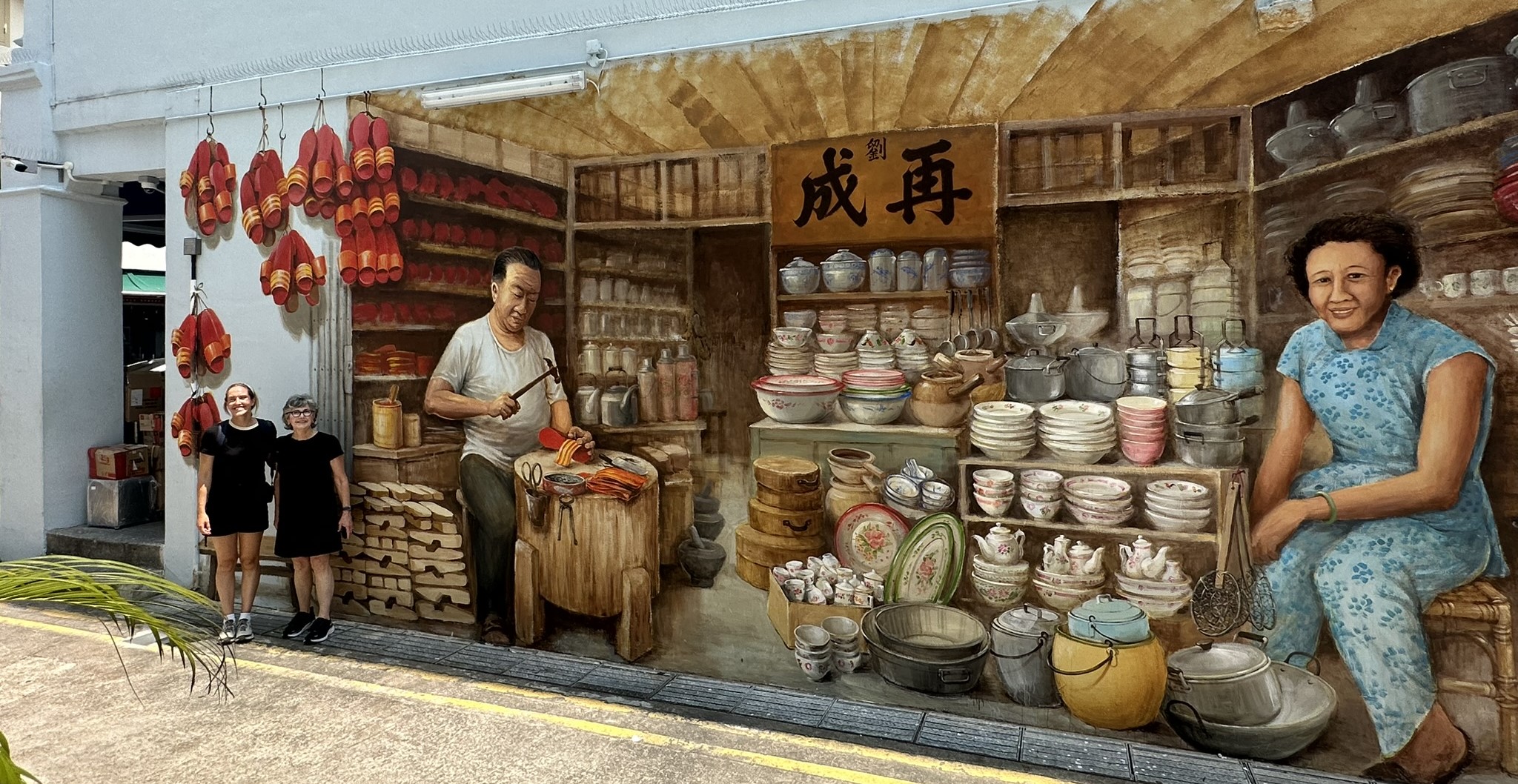
After the longest flight of our lives — 16 1/2 hours non-stop from San Francisco — we began our first ever tour of Southeast Asia in Singapore, the “Lion City”, an amazing city state with vibrant and colorful ethnic enclaves reflecting its rich blend of Chinese, Indian and Malay cultures tucked between gleaming skyscrapers, some architecturally stunning. Just as the colonial British brought people from India in the early 1820’s to build the spice trade in Singapore, the Chinese came primarily as labor and sea merchants. Yet it was Lee Kuan Yew, a Chinese businessman and lawyer, who was the principal architect of Singapore’s rapid development, modernization and sociopolitical structure, including its notoriously harsh laws discouraging littering, graffiti and drugs, serving as Prime minister from 1959-1990.
Three days was just enough to get a good taste of Singapore’s principal ethnic districts, its major attractions near the city’s heart, and some of its food and nightlife scene — all while recovering from jet lag. If you want to venture a bit further afield to Singapore’s islands, beaches, golf courses or famous botanical gardens, you’re going to need more time. Situated directly on the equator as it is, one must be prepared for the heat and humidity, which are constant and unvarying 365 days a year, so carving out some time for a mid-afternoon nap or relaxation by the pool is something you’ll appreciate.
Highlights:
- Our hotel was ideally situated, with a good pool, a review view, walking distance to Chinatown and CBD, and a block from the nearest metro. Read my TripAdvisor review here.
- Hawker fare is Singapore’s signature street food and is typically found in the stalls of large food courts in all of Singapore’s main neighborhoods, especially Chinatown and Little India. Sanitation laws ensure the food is healthy and safe, and it’s also both cheap and delicious. Some hawkers have even earned Michelin recognition, despite their low cost. Sample it all!
- Spend at least half a day exploring Little India, with essential visits to Sri Veeramakaliamman temple (we accidentally crashed a Hindu wedding there, pretty fantastic!), Tan Teng Niah, a colorful former home of a wealthy Chinese merchant, and Tekka Center, Little India’s largest food mart.
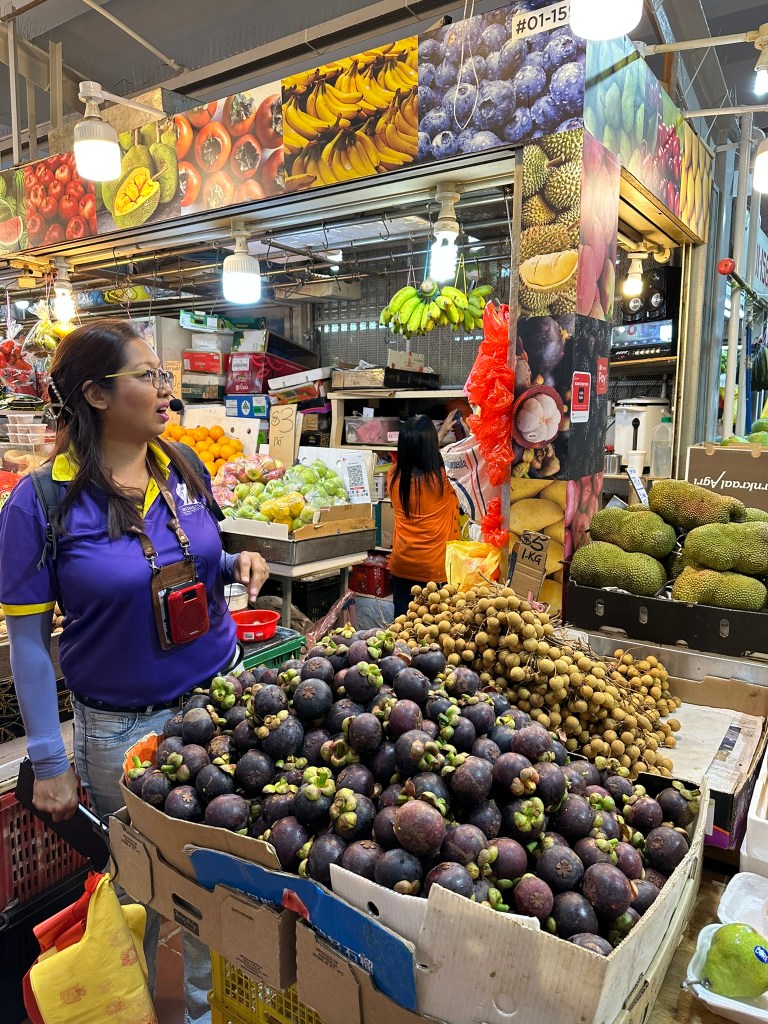
Tekka Center food mart 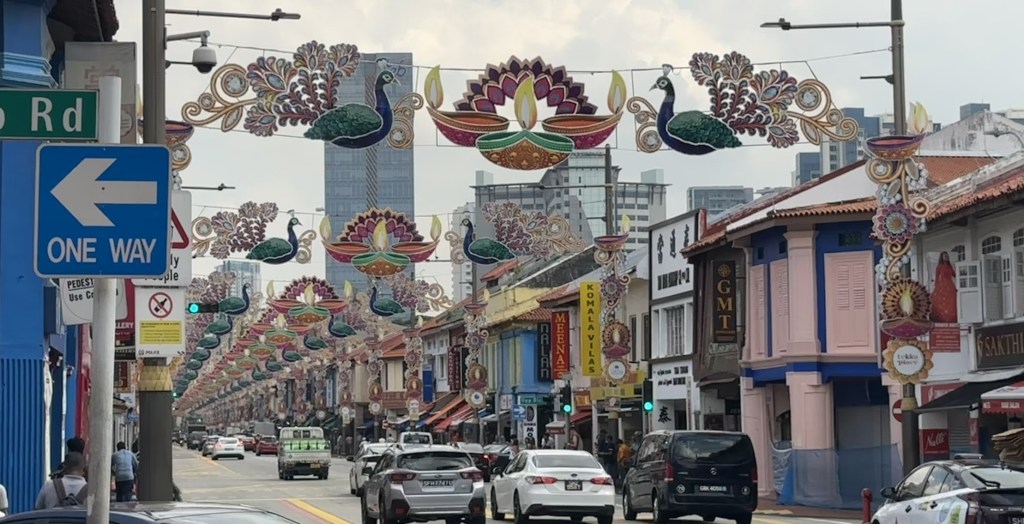
Little India’s main drag 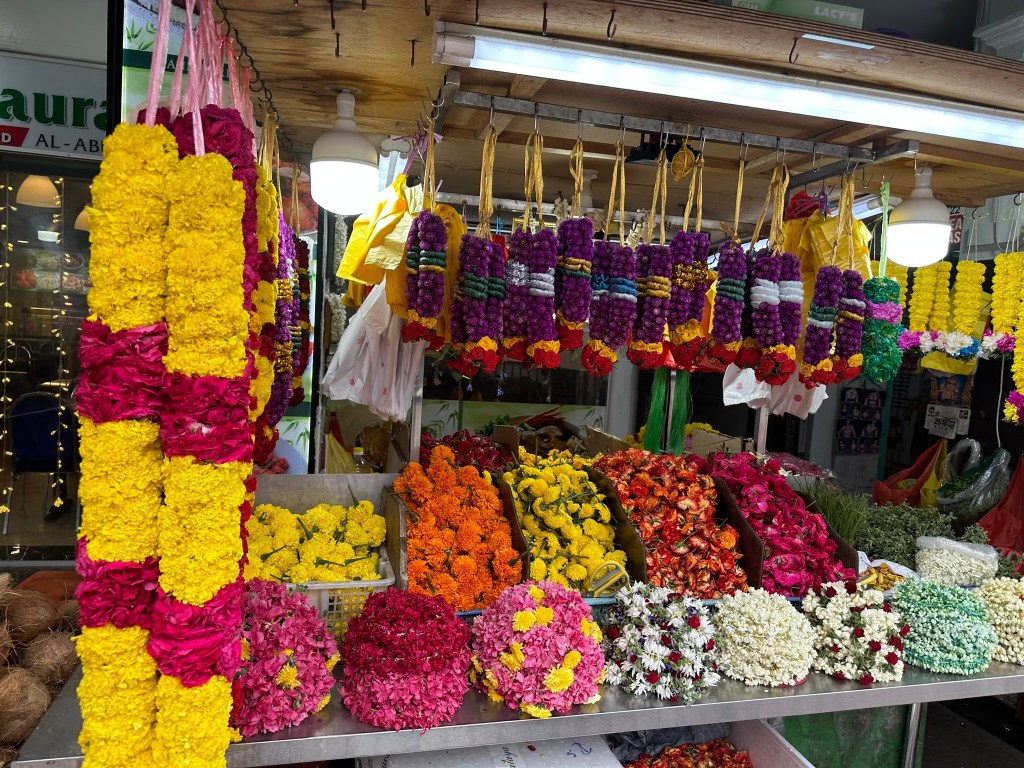
Flower market 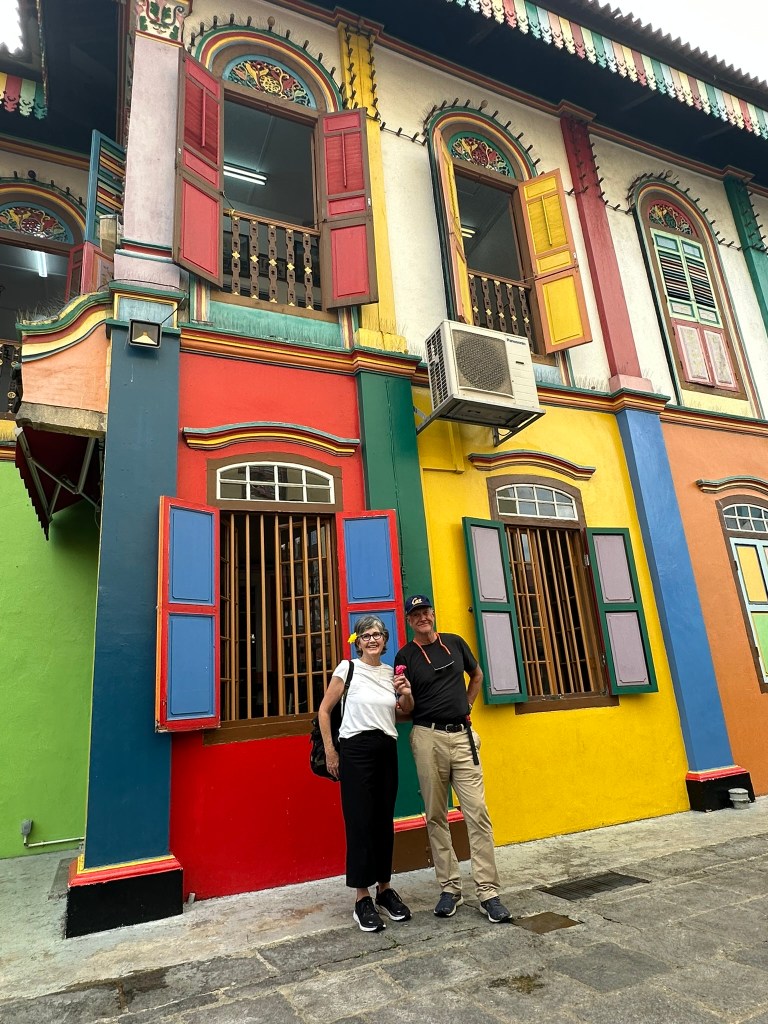
Tan Teng Niah 
Street market 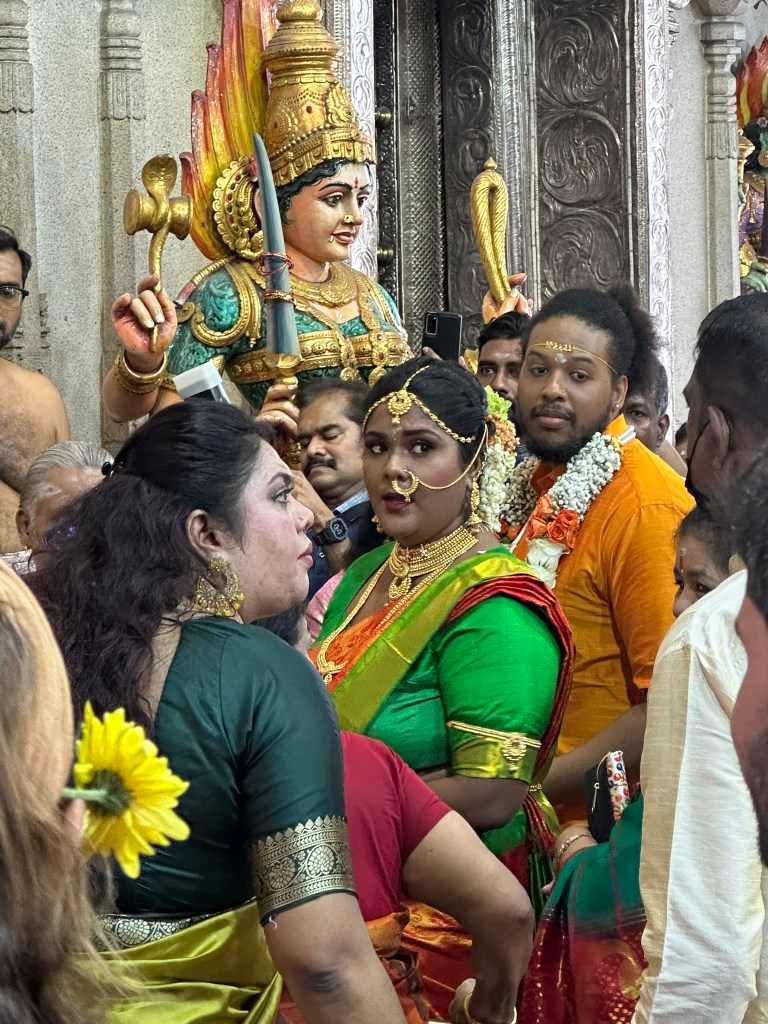
Hindu wedding 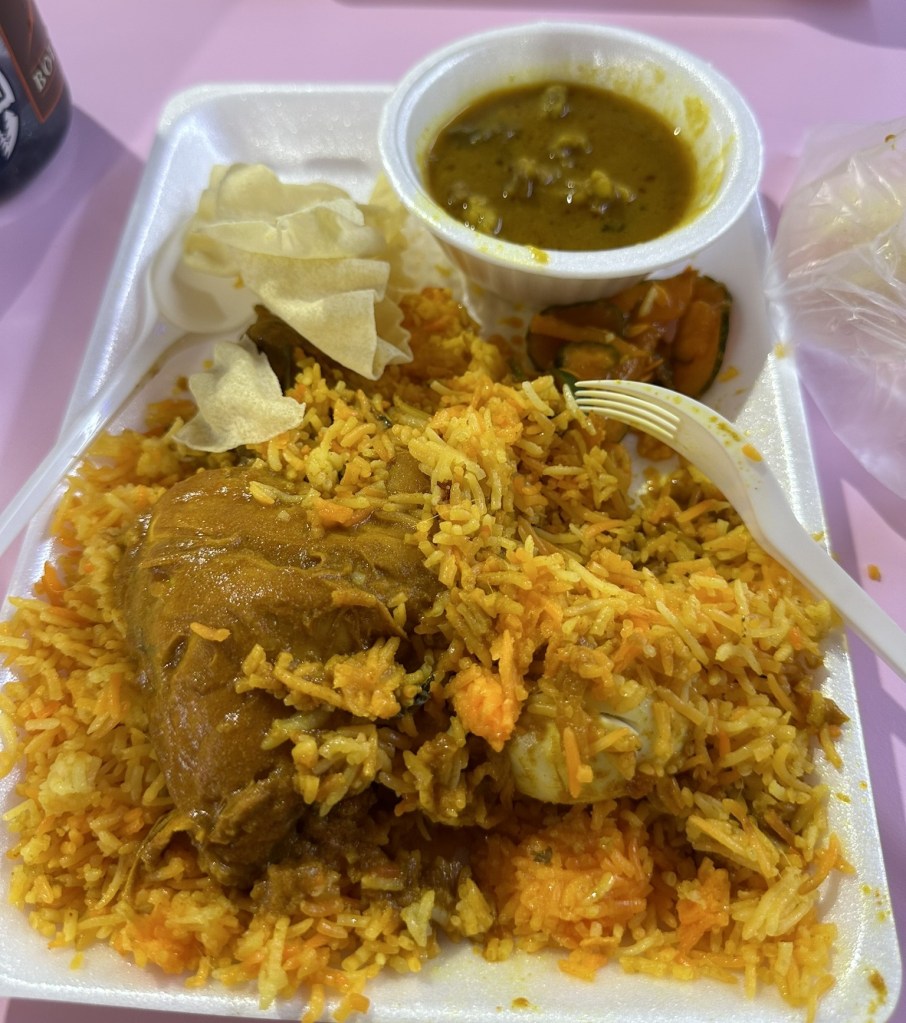
Chicken Briyani. $4USD! 
Sri Veeramakaliamman temple
- Chinatown‘s bustling lanes, Buddhist temples — Thian Hock Keng and Buddha Tooth Relic (thousands of Buddha statues inside) being our favorites — and amazing street murals are also worth at least half a day’s exploration. Make sure to hit Lau Pa Sat hawker market for lunch or dinner.
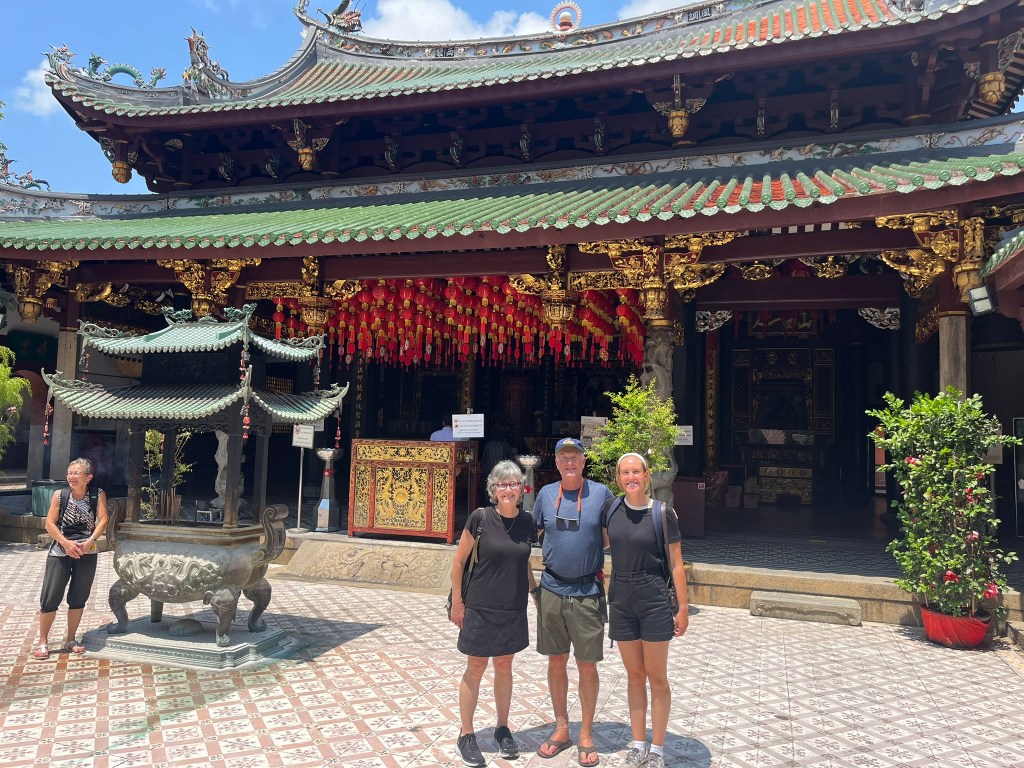
Thian Hock Keng temple 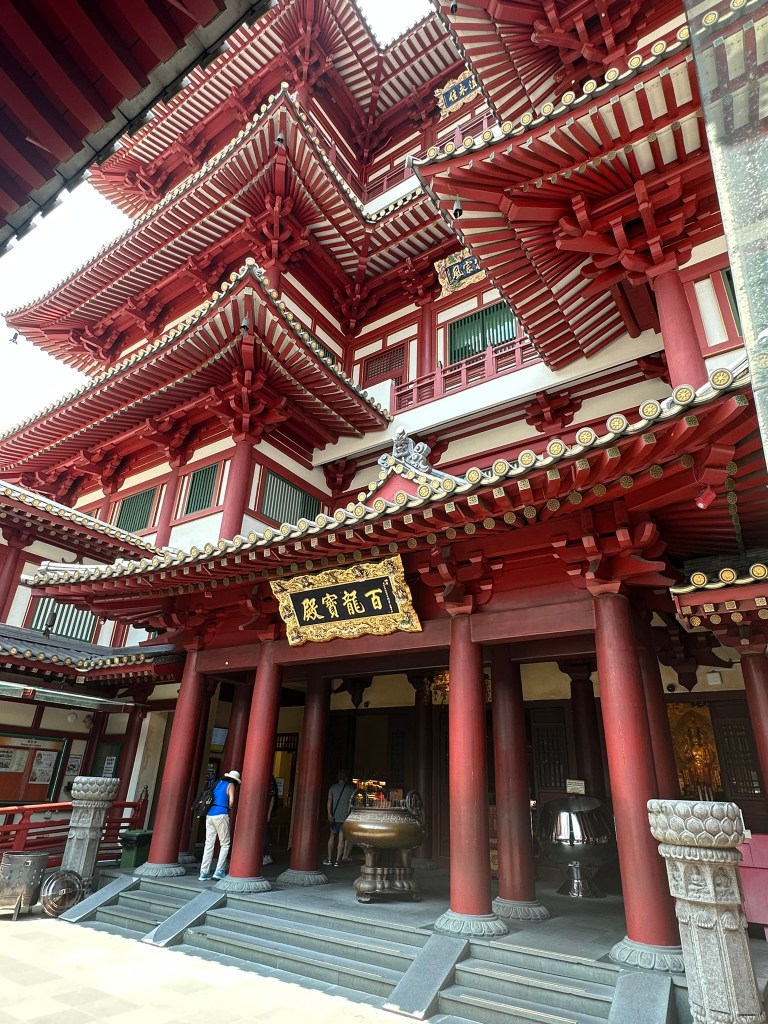
Buddha Tooth Relic temple 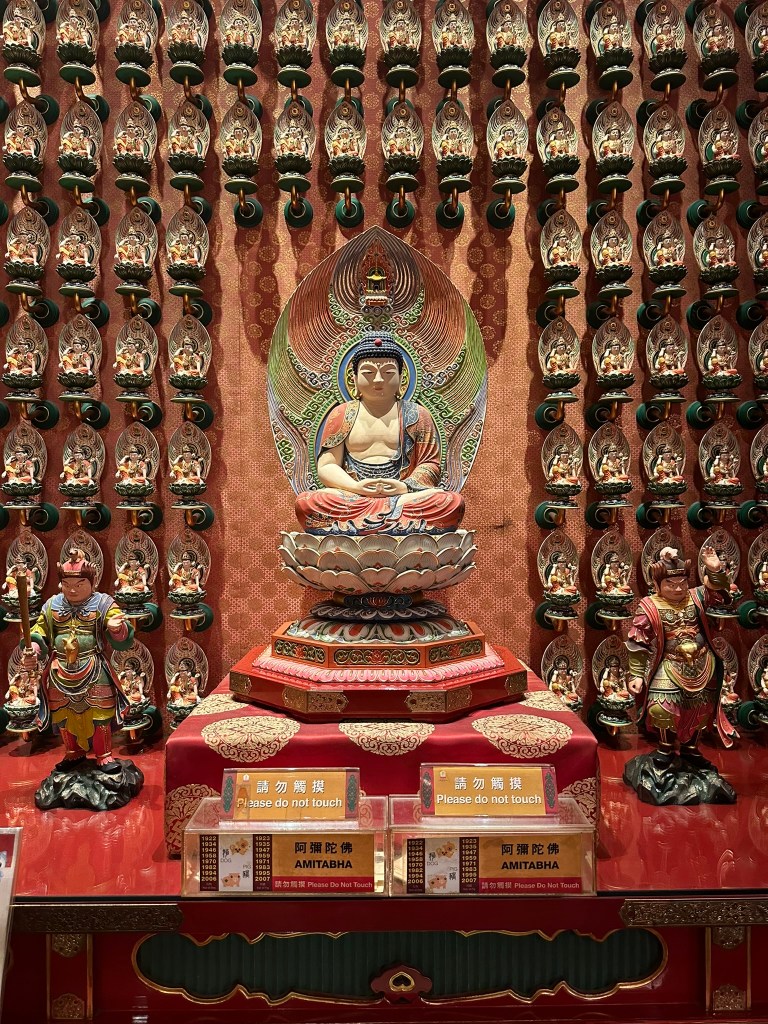
A thousand Buddhas 
Street mural 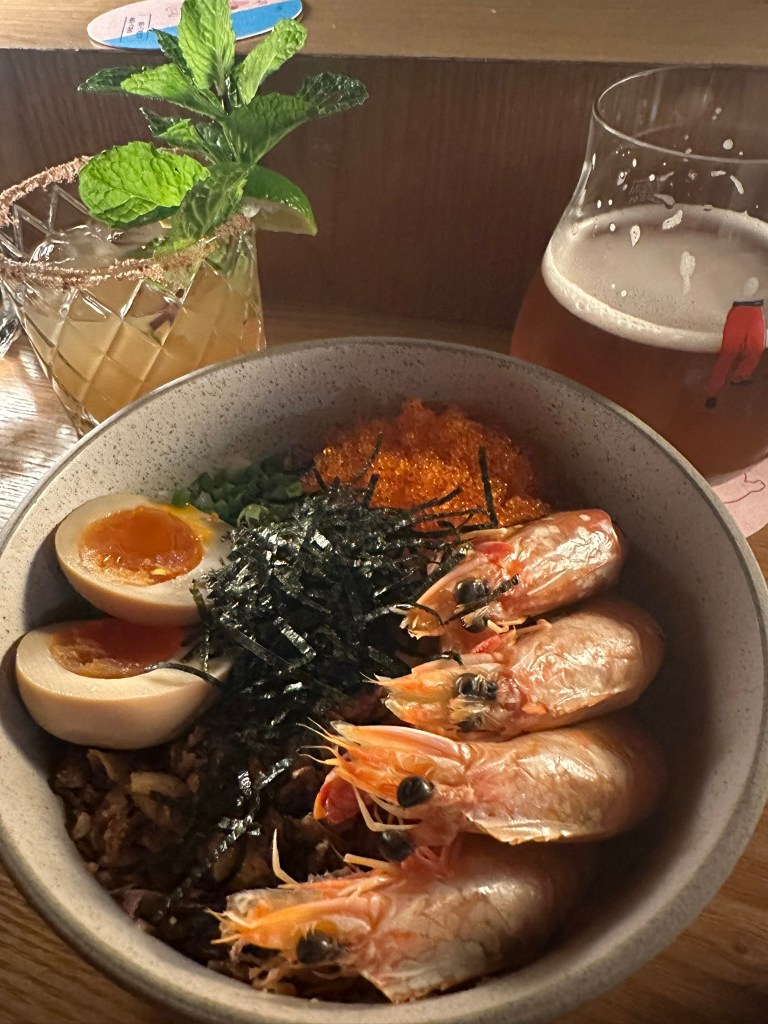
Dinner at Dumplings Darling 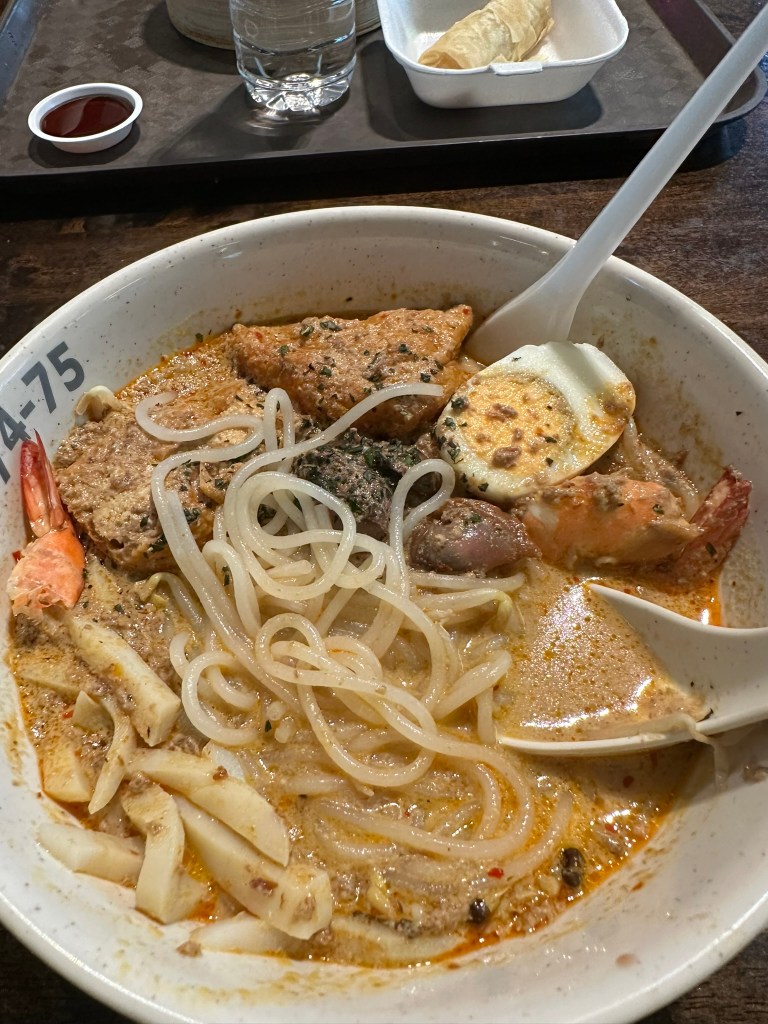
Laksa curried fish noodle soup 
Fun with street art 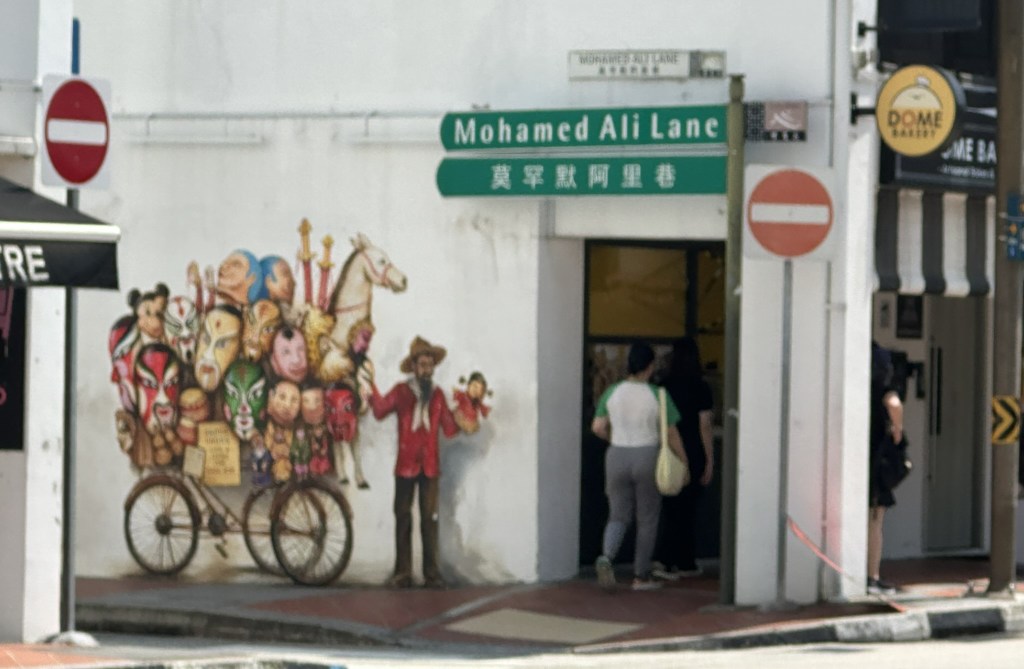
Mohamed Ali Lane 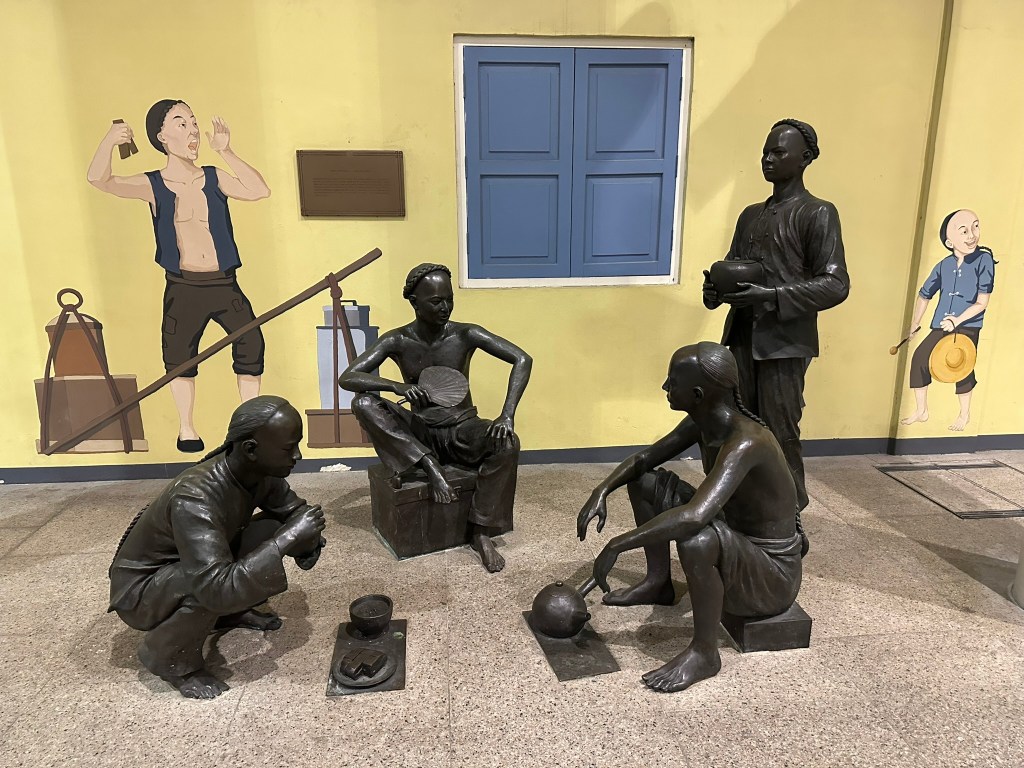
Sculpture for a change 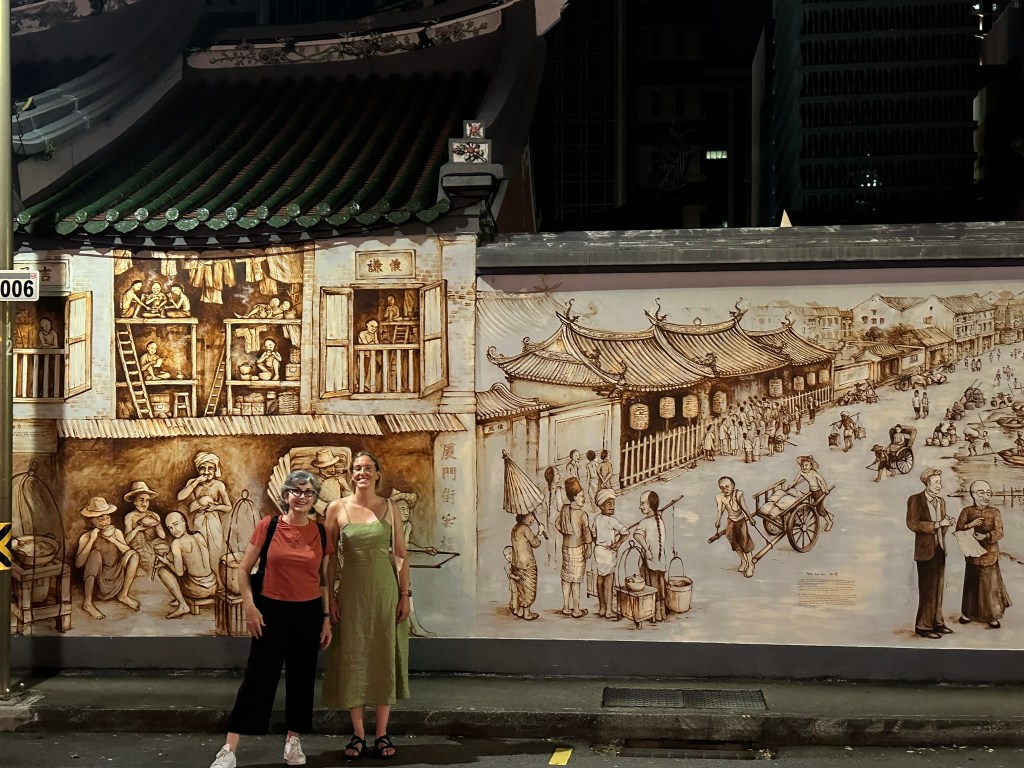
Street art by night 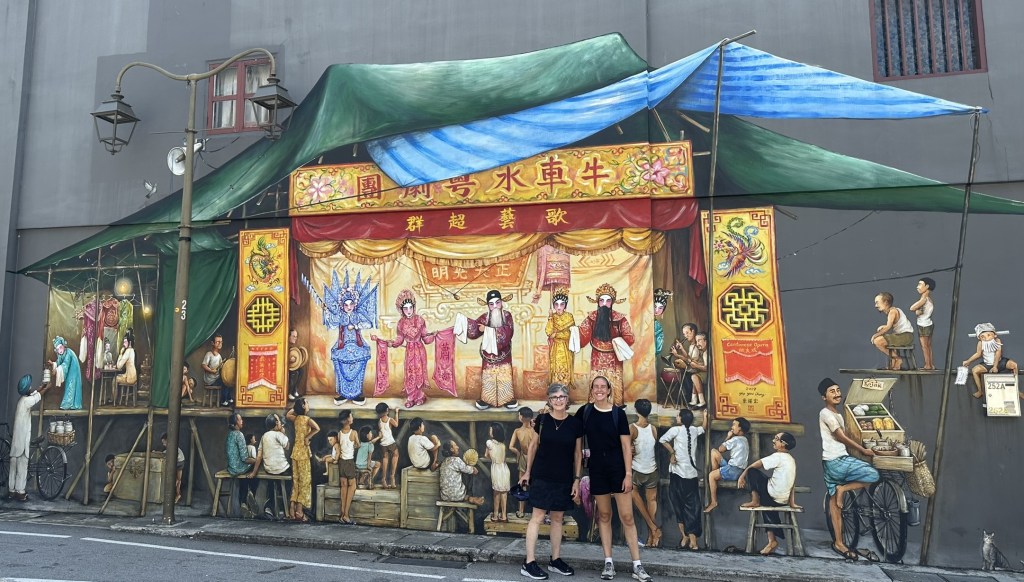
Chinese Opera mural
- Another half day should be dedicated to touring through Kampong Glam, the Muslim quarter with its imposing Sultan Mosque — named for the sultan for whom the entire neighborhood was built — and weirdly juxtaposed, crazy colorful, and very commercial Haji Lane, the most popular street in Kampong Gelam. In addition to the many boutiques and shops, Haji Lane has several bars – so you know you’ve left the strictly Muslim zone. Start your day with breakfast at Early Bird Cafe.

Early Bird cafe 
Sultan Mosque 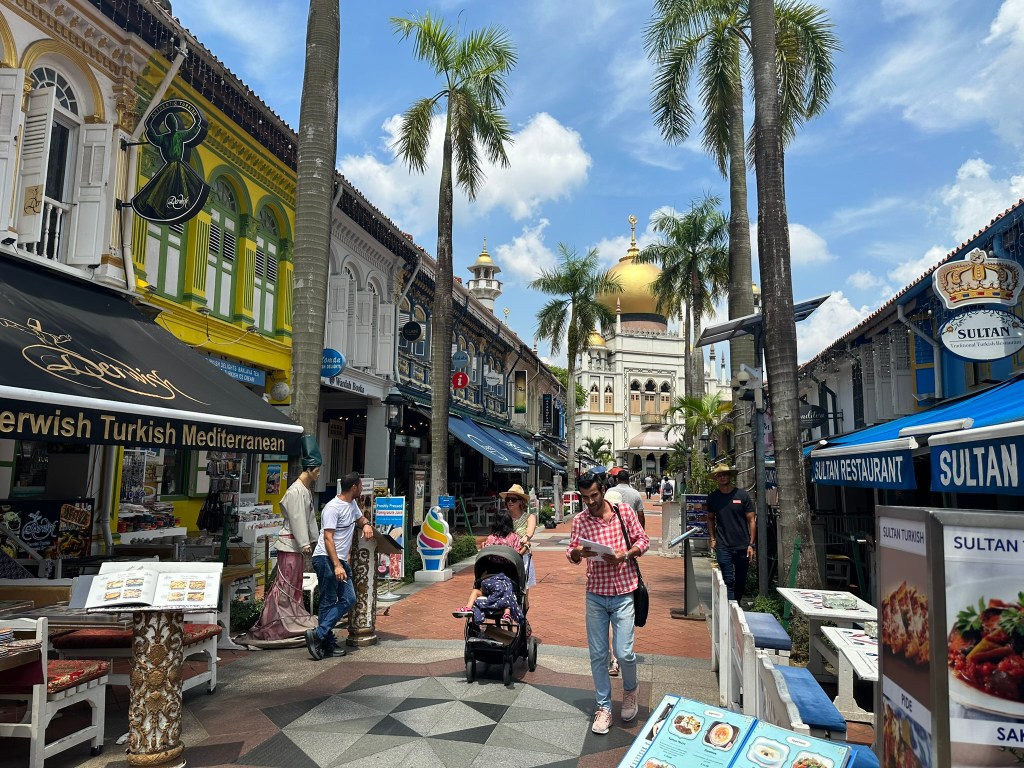
Bussorah Street 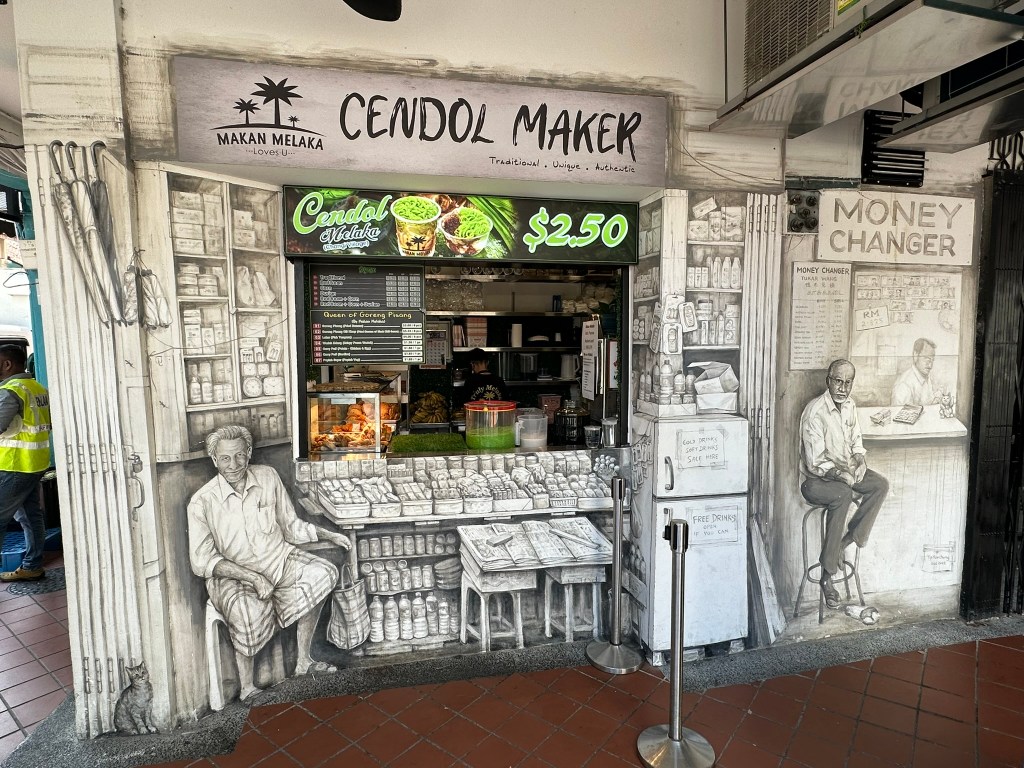
More great street murals 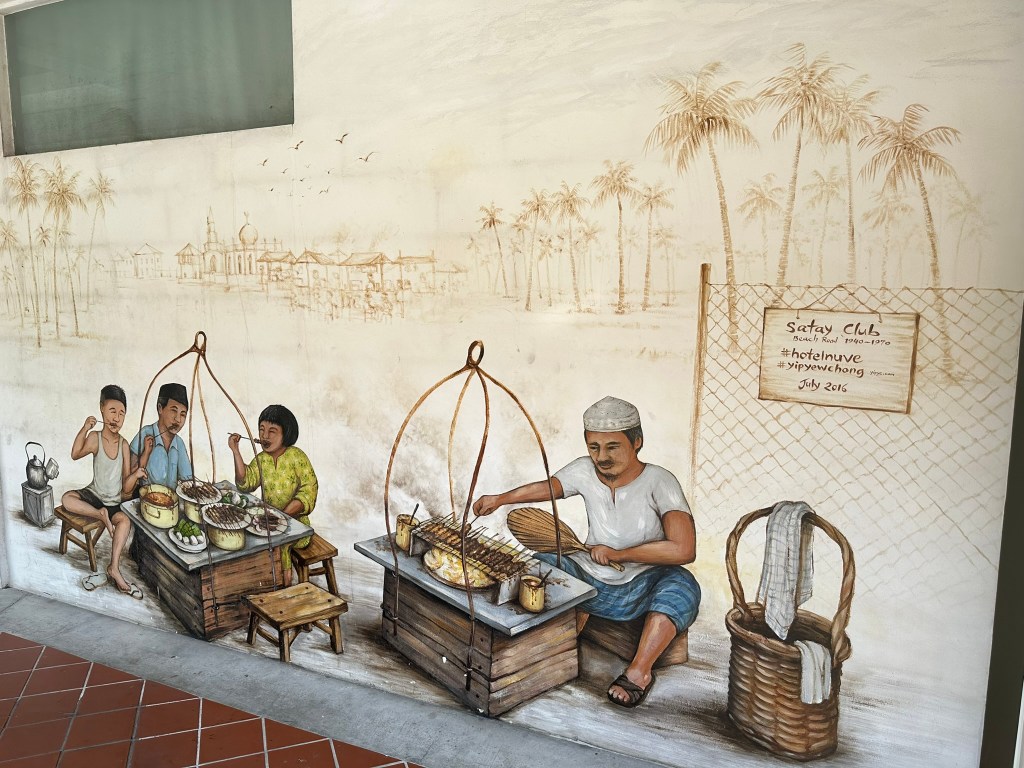
Original street food hawkers 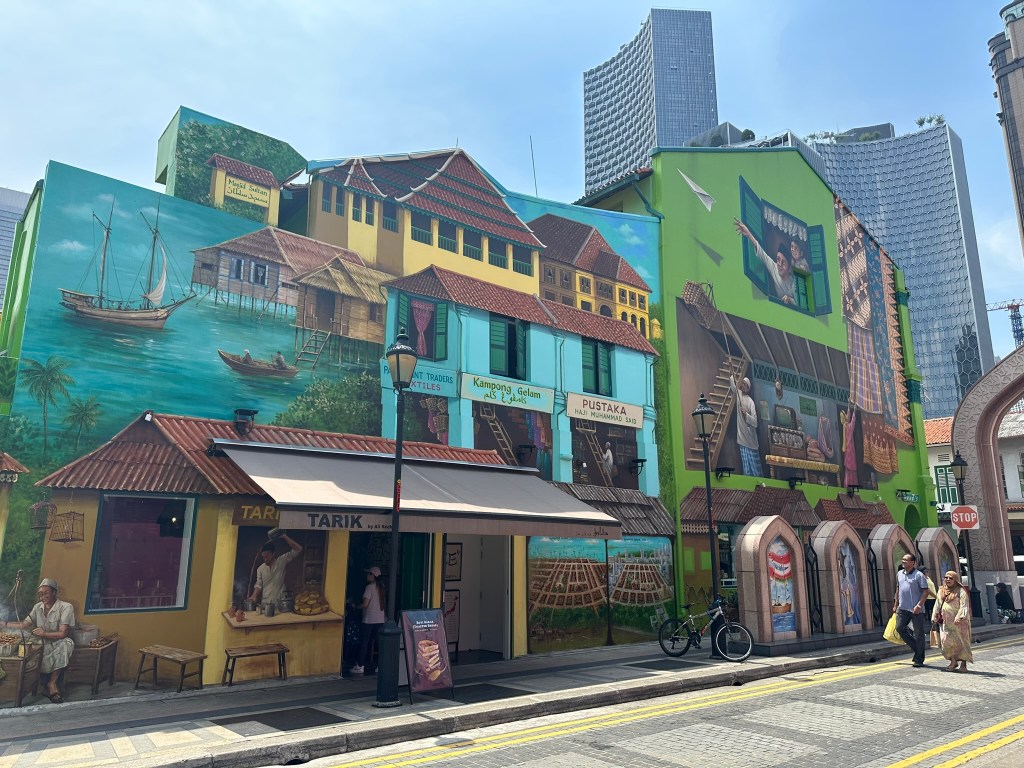
Beach Street art 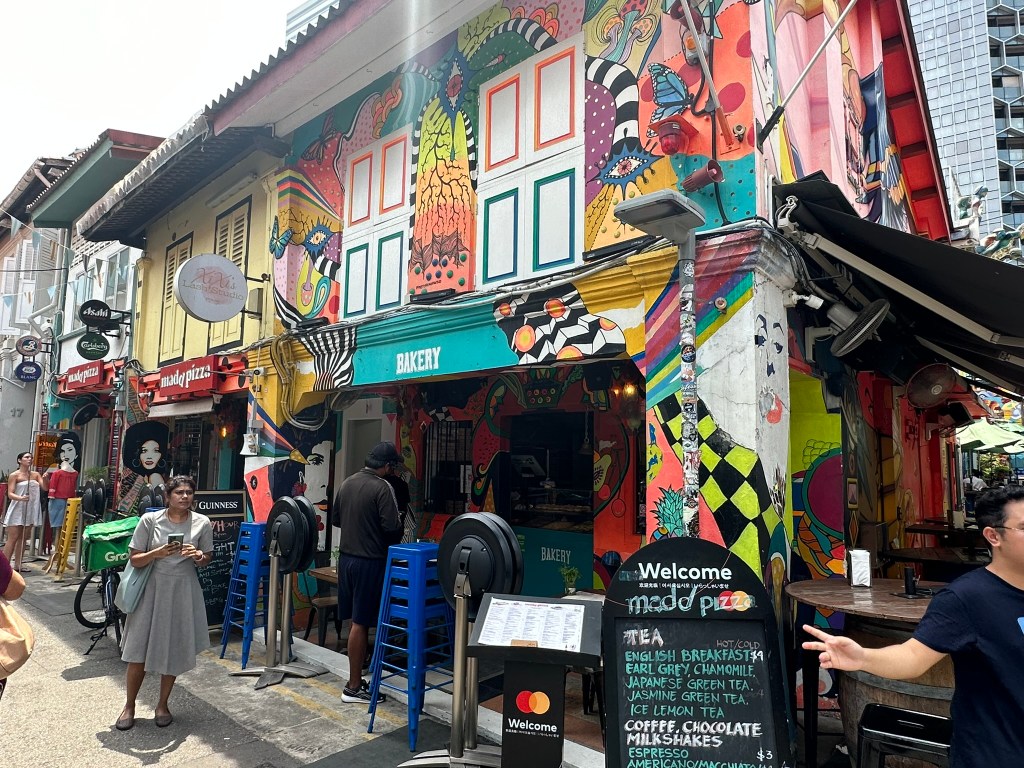
Haji Lane 
Cure for a hot day! 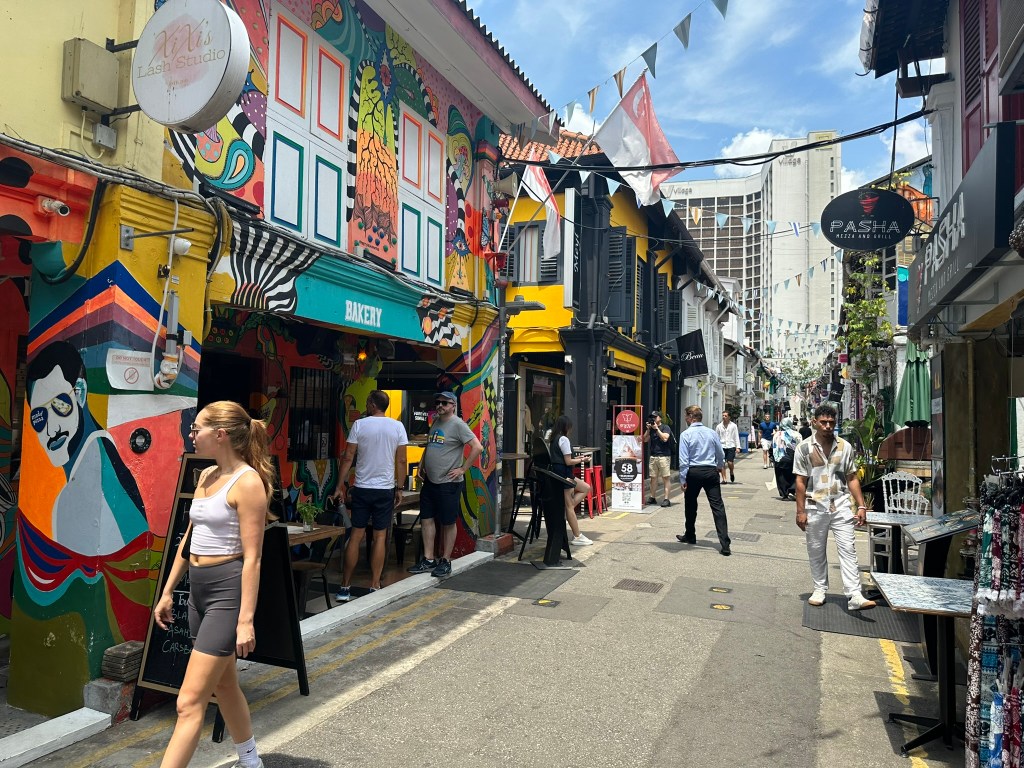
Haji Lane
- Spend an evening hitting the “must do” sights at Gardens by the Bay, a gotta-see-it-to-believe it mashup of exotic flora and towering structures (“Supertrees”) behind the iconic Marina Bay Sands Hotel. For the best experience, visit this park at night when everything is lit up. The Cloud Forest Dome is home to one of the world’s tallest indoor waterfalls and a lush mountain clad with exotic plants from cloud forests around the world, with a man-made climate to simulate the real thing. Be sure to walk the Skyway through the Supertrees, a 128-meter long bridge 80 feet above the ground, for awesome views of the park and the waterfront.
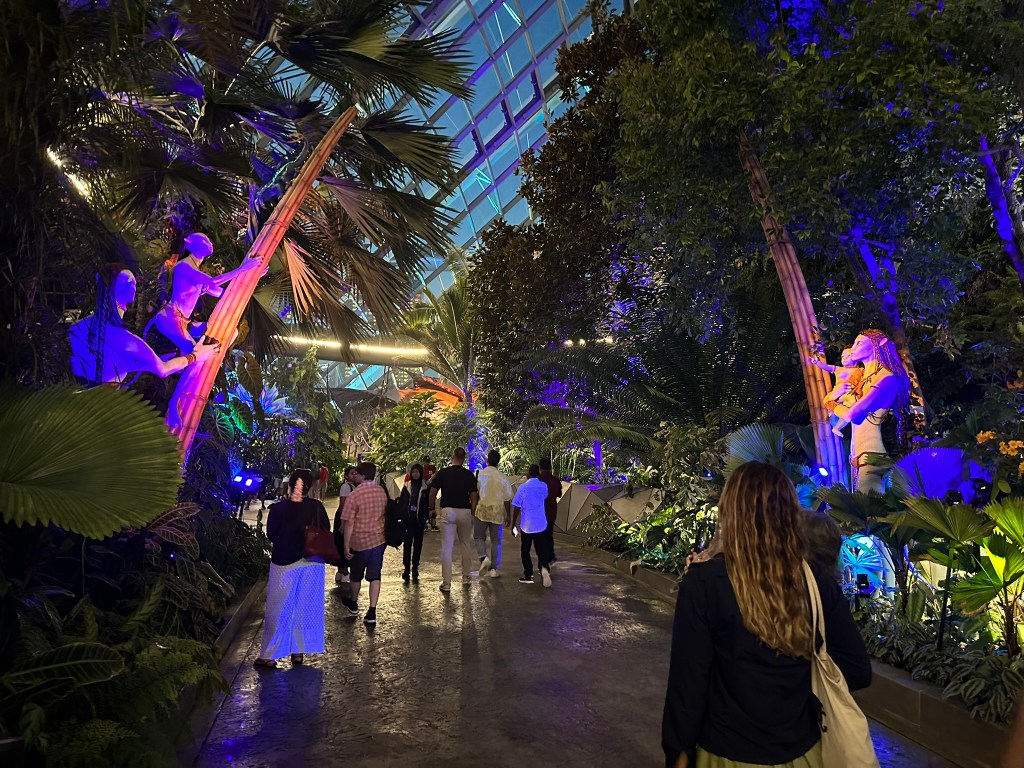
Inside the Cloud Forest 
Inside the Cloud Forest 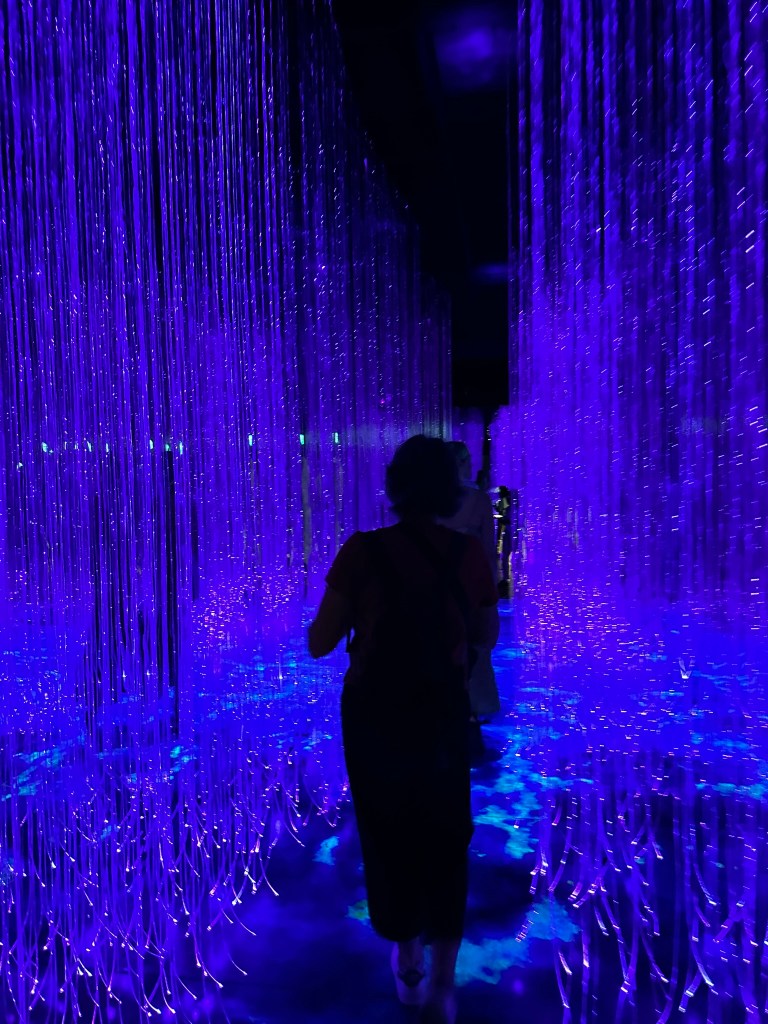
Glow worm experience 
Supertrees at night 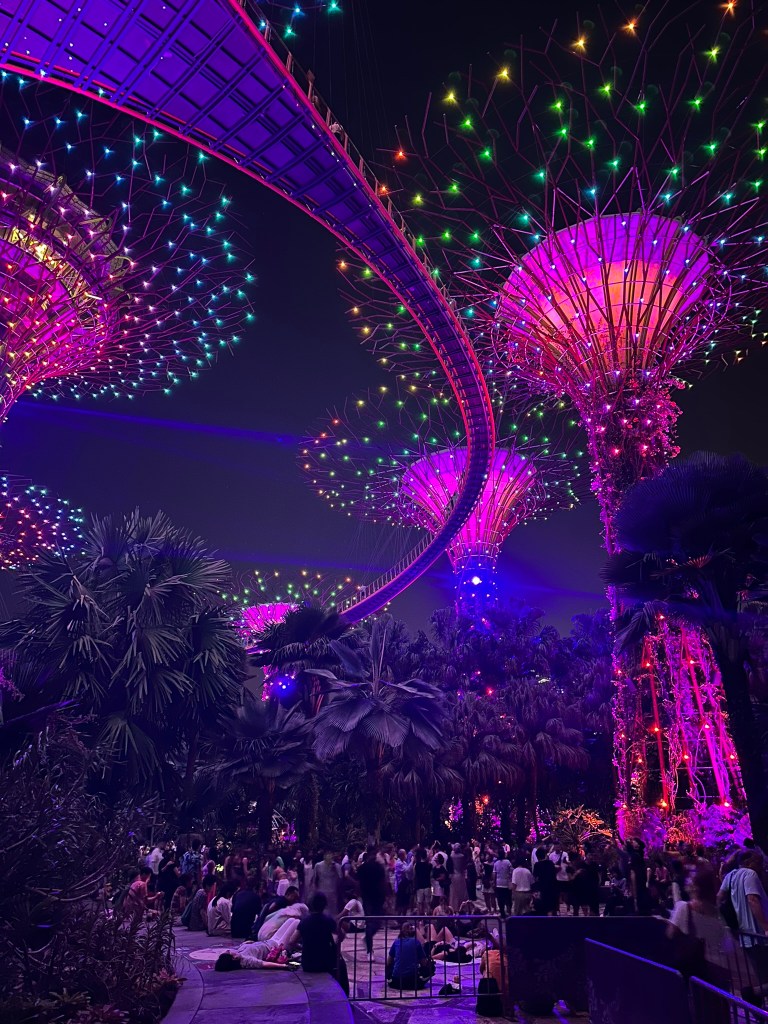
Skyway over the Supertrees 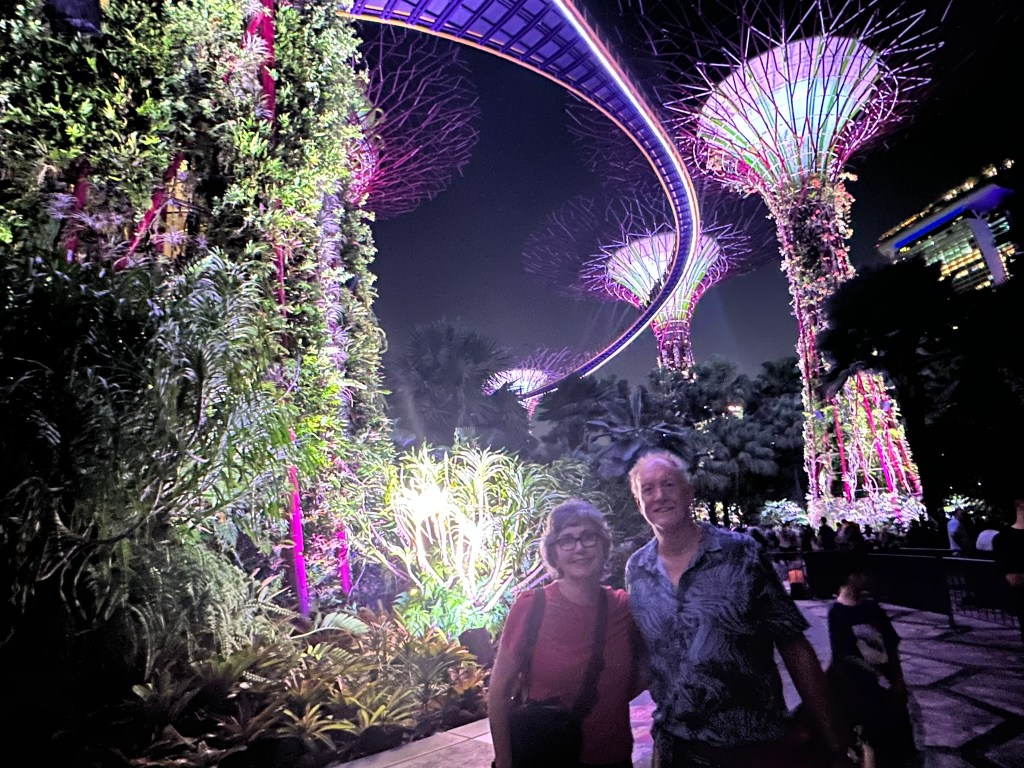
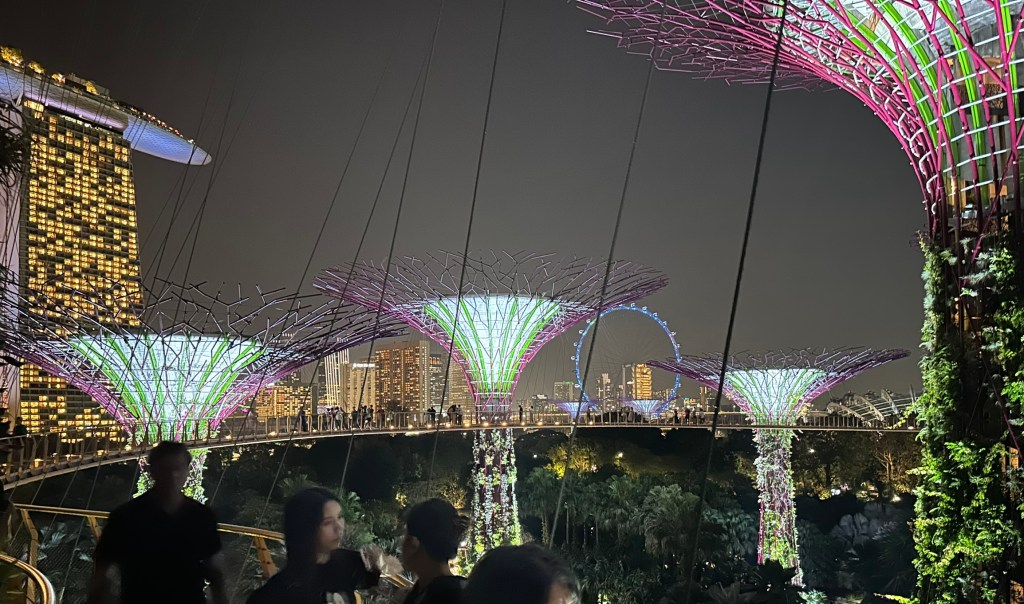
View from the Skywalk 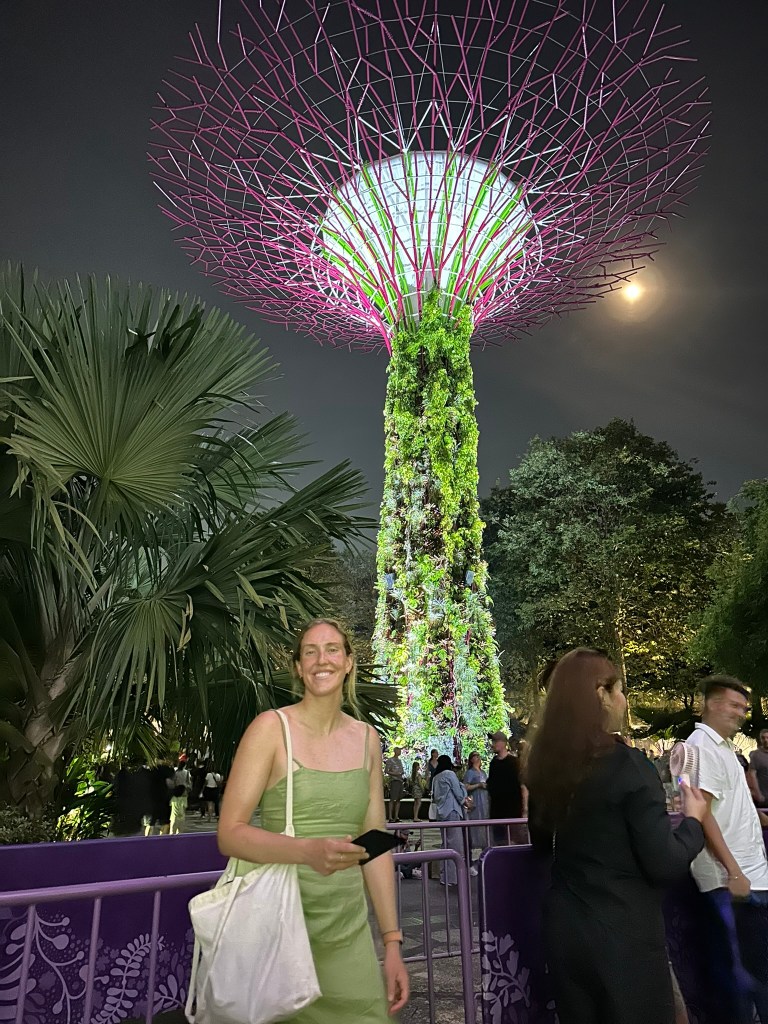
Going green 
Mandalay Bay Hotel from Skywalk 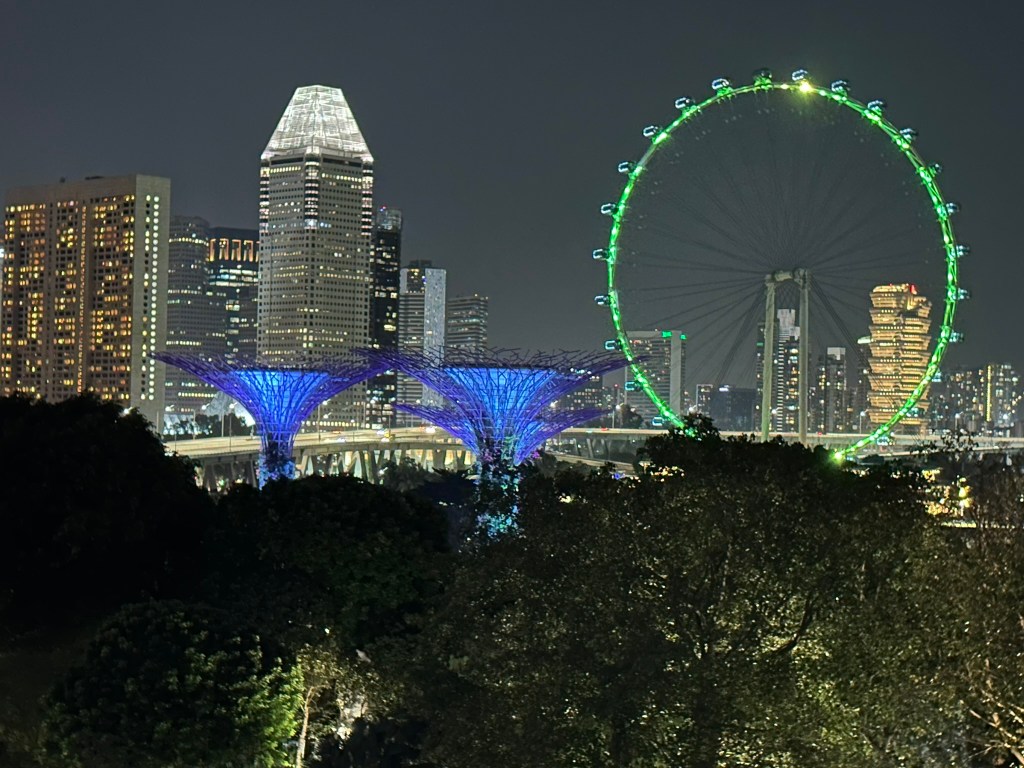
Singapore Flyer
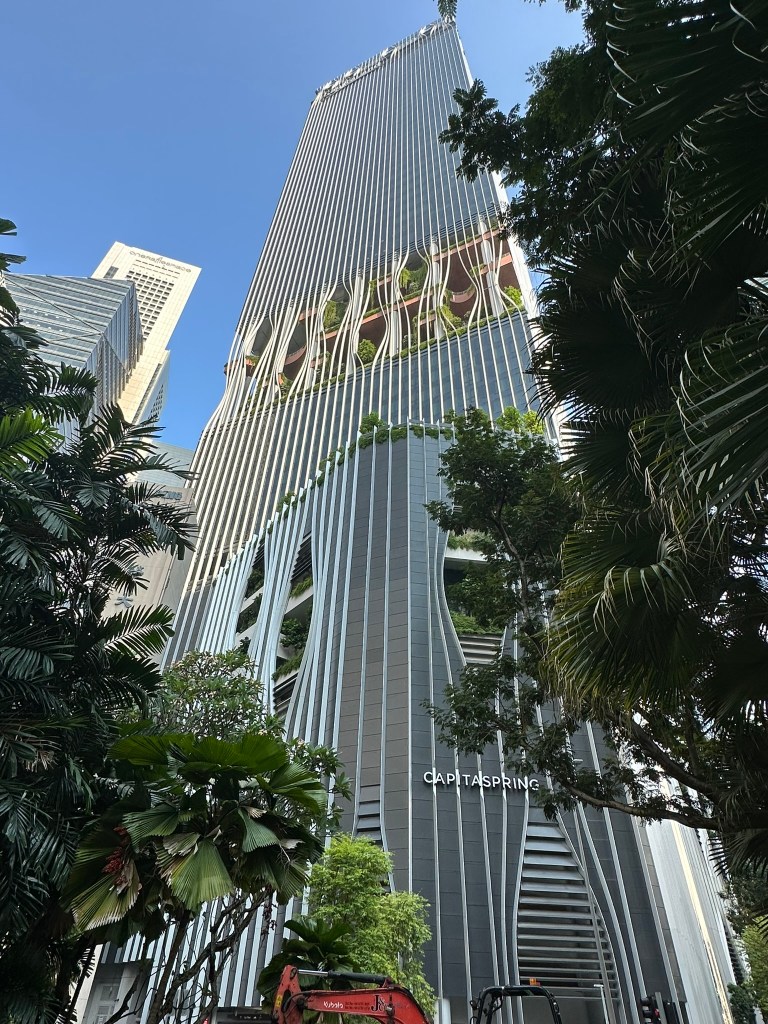
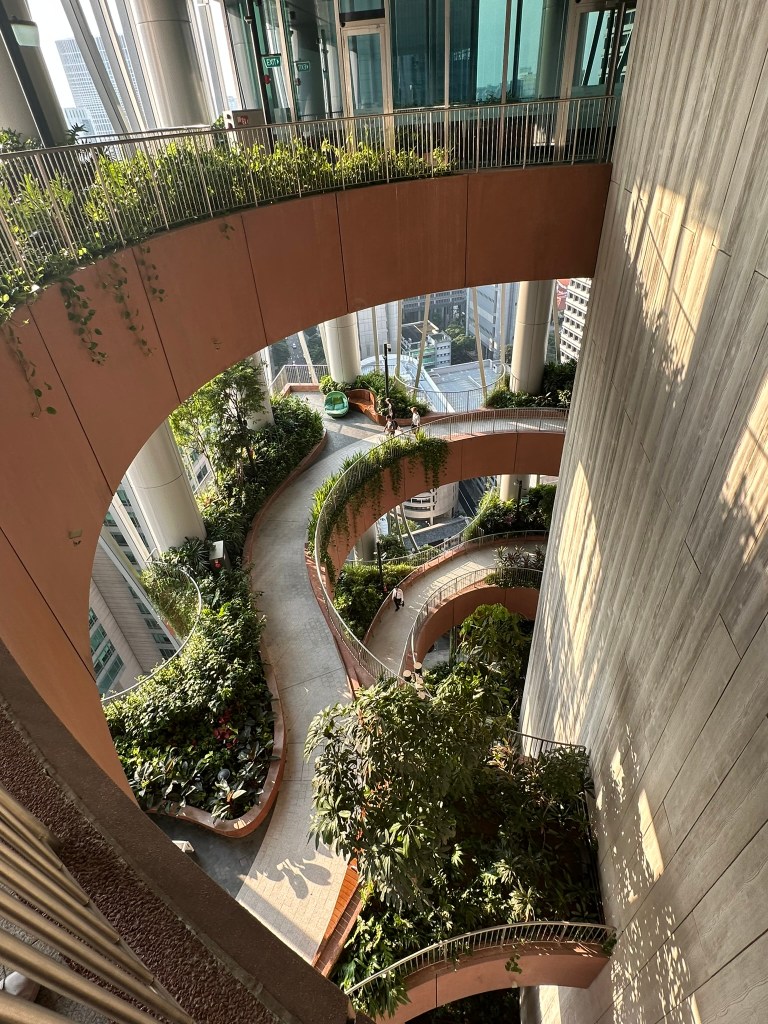
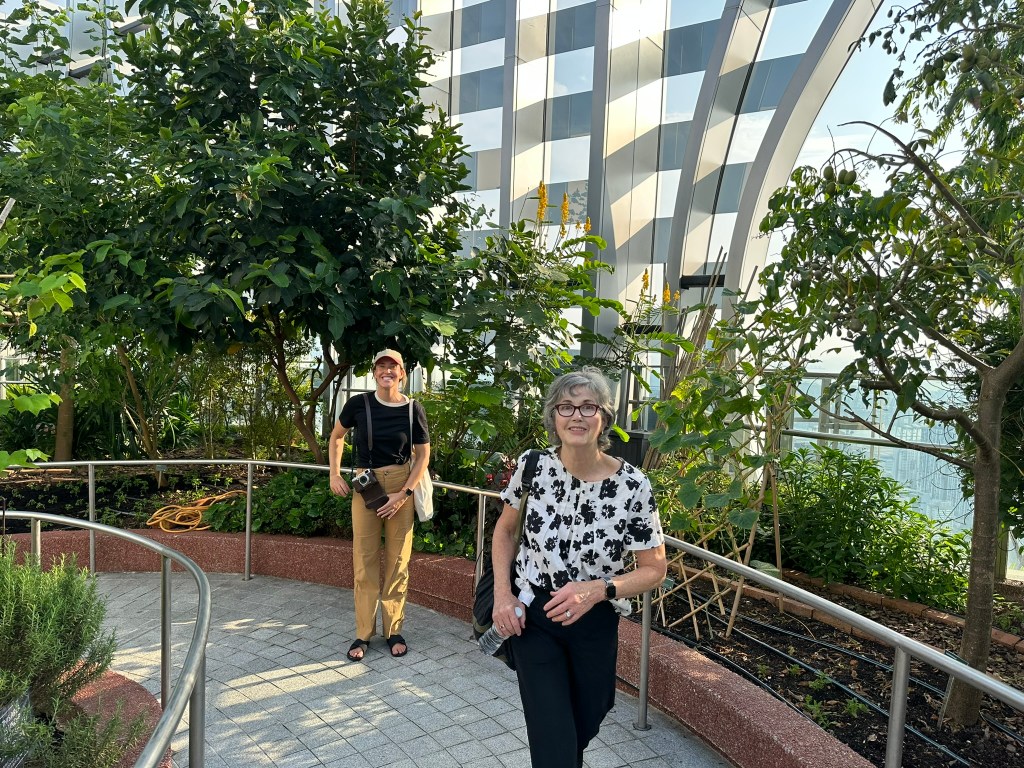
- Check out the SkyGarden at CapitaSpring, an architectural marvel in Singapore’s CBD with four floors (17-20) dedicated to an indoor forest park and the 51st floor roof hosting the highest sustainable garden in the world, growing exotic plants, flowers, fruits and vegetables.

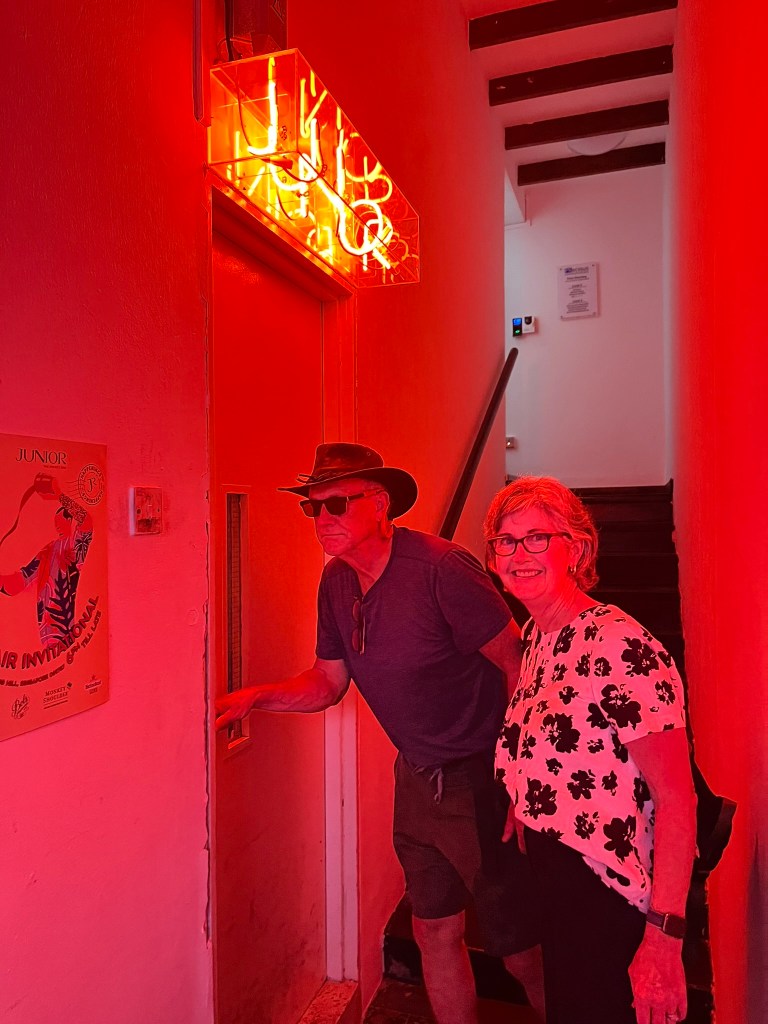
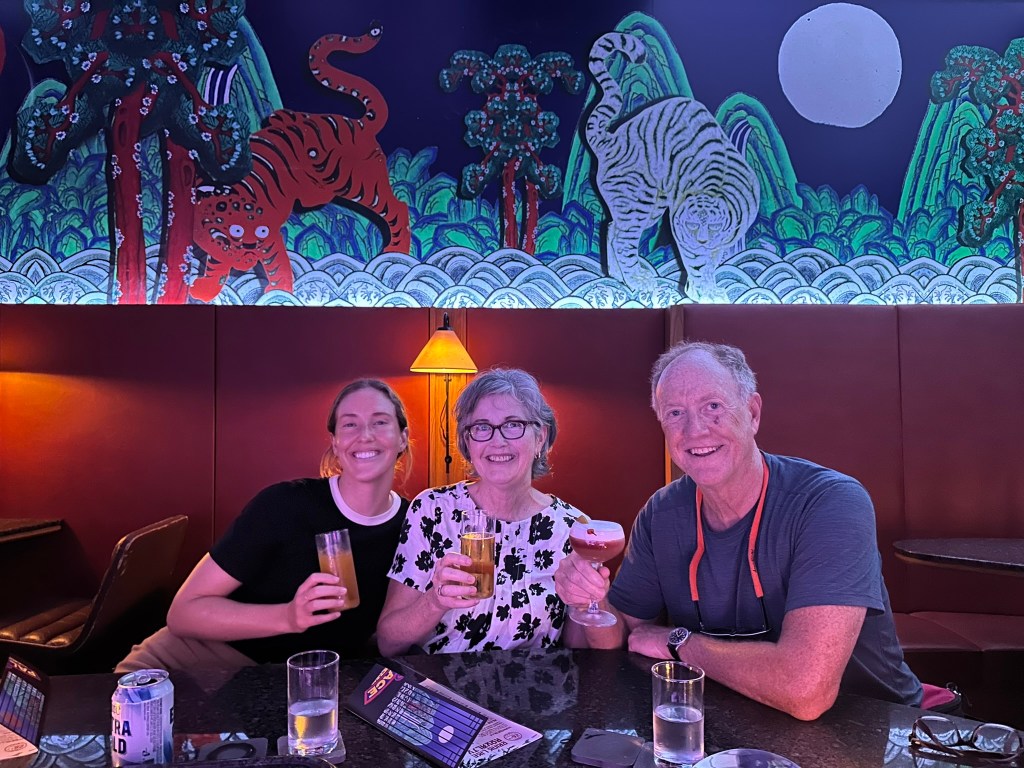
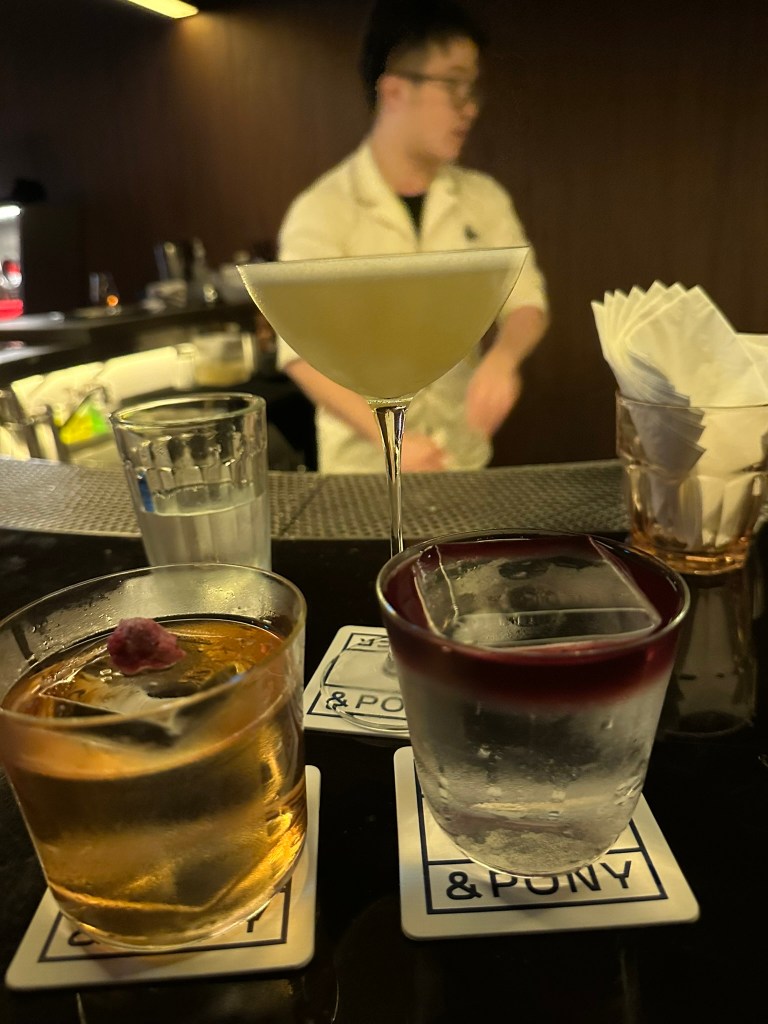
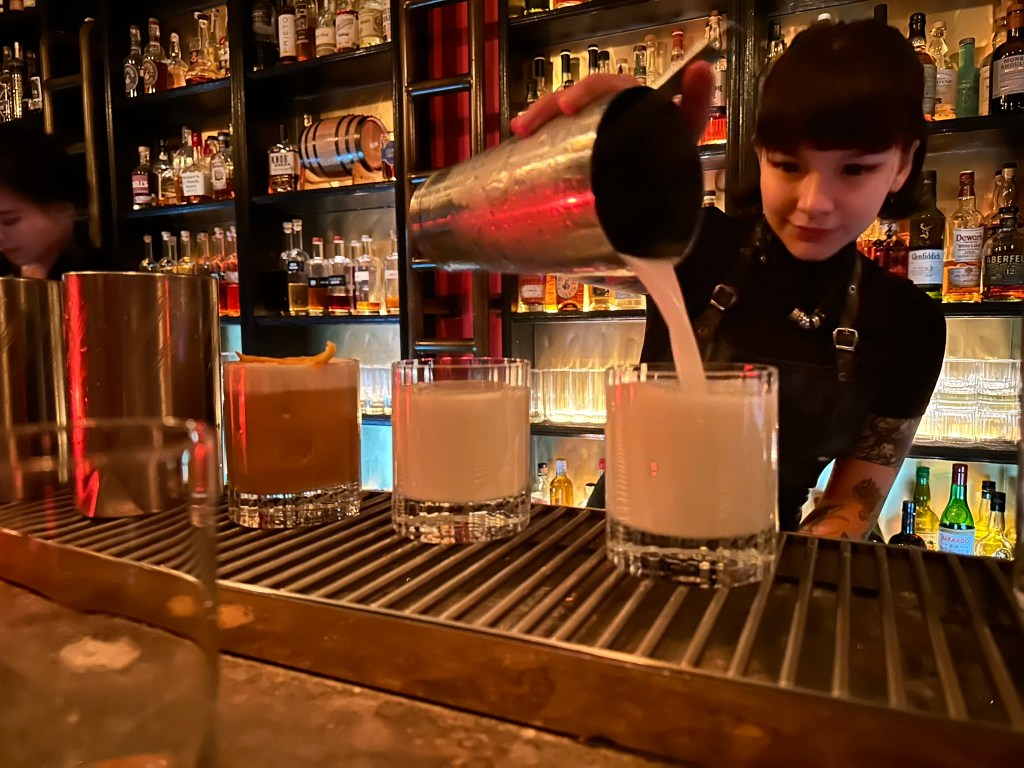
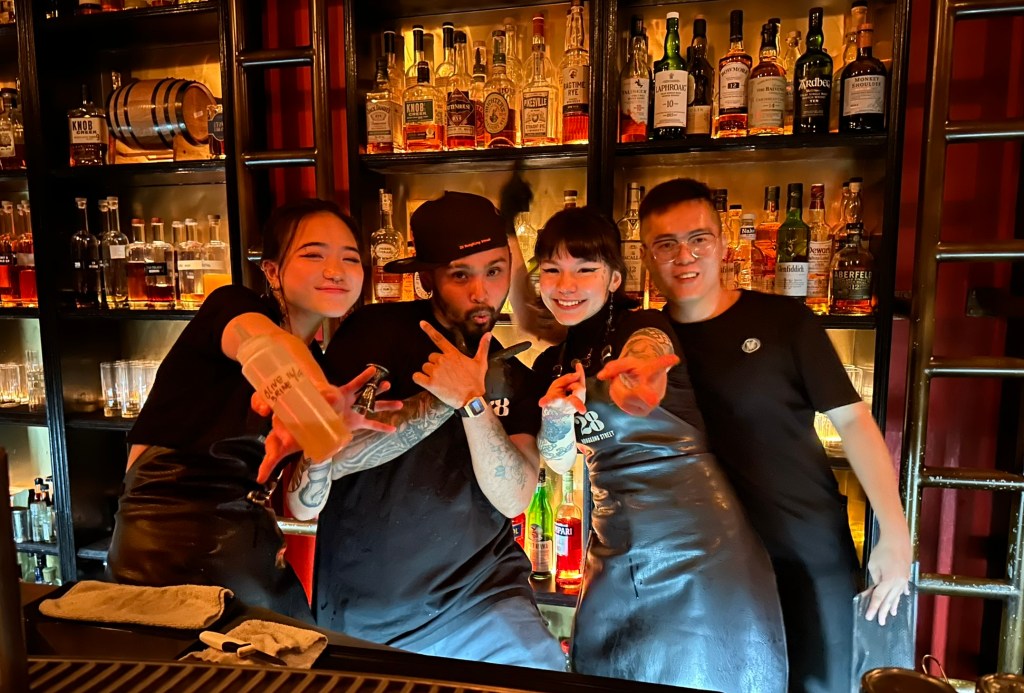
- High end cocktail bars are a thing, and Singapore boasts several of the World’s Top 50. Our favorite was 28 HongKong Street, where Tamaryn and Daniel mix up a storm of tasty concoctions. Junior the Pocket Bar, in Chinatown, was a tiny place that changes theme every couple of months. Two we did not hit just for lack of time were Atlas (world’s largest gin selection) and Raffles, where the Singapore Sling was invented.
- The Windsor Nature Park is a 90-minute roundtrip bus ride from the city center and provides a nice respite from the concrete jungle, with a nice (if sweaty) forest canopy walk and lots of birds and monkeys.
- Sneaking in a nap at our hotel, and then meeting up with daughter Emily, who flew in to meet us from her vacation in Indonesia, was a great way to start this trip.
| Day 4-6 | Penang, Malaysia | Jawi Peranakan Mansion |
A one-hour flight from Singapore brought us to Penang, a hard pivot from our original plan to scuba dive Indonesia’s Raja Ampat (a whole nuther story I won’t get into now) and it turned out to be a gem. The island of Georgetown is a UNESCO World Heritage site for its historical importance to British colonialism in the 1800’s and some of the well-preserved Malaysian culture, including the amazing clan jetties – entire communities of Chinese immigrant families built on stilts over the water – incredible food, and unique and evocative street art. Little did we know, it was also Penang’s Inaugural Cocktail week! Oh well, adapt or die!
Highlights:
- A guided walking tour of Penang, showcasing the historical and cultural landmarks of Penang was the perfect way to begin our stay. Yap’s Temple is a must-see landmark, built by a Chinese immigrant entrepreneur (along with the grand house next door) who rose from street barber to hotelier to banker, eventually bringing the entire Yap clan to join him in their own Horatio Alger story.
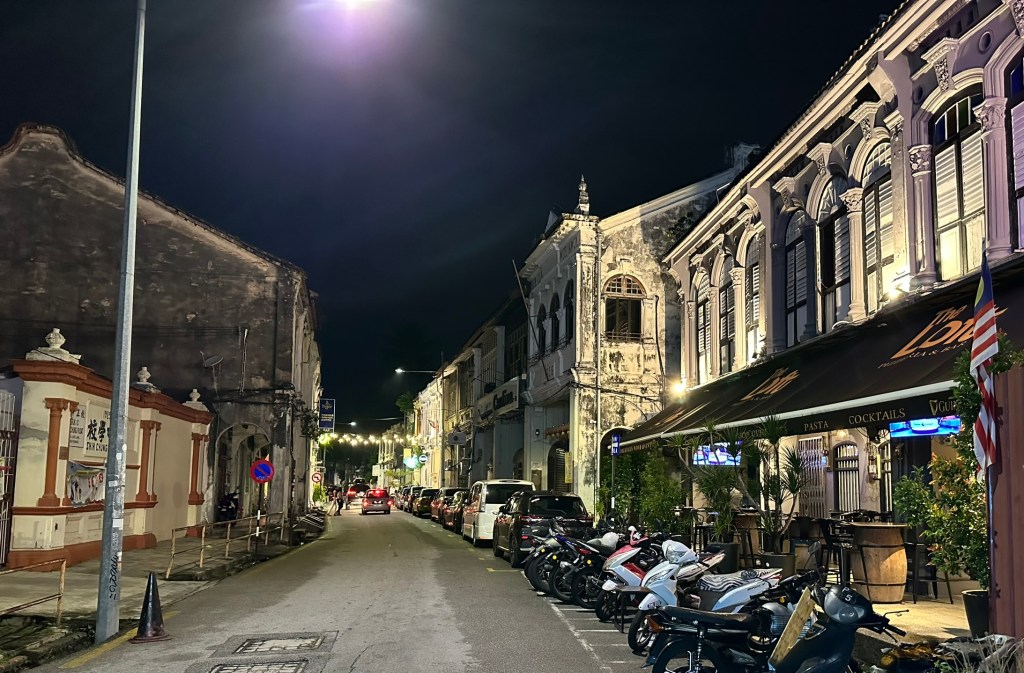
English colonial architecture 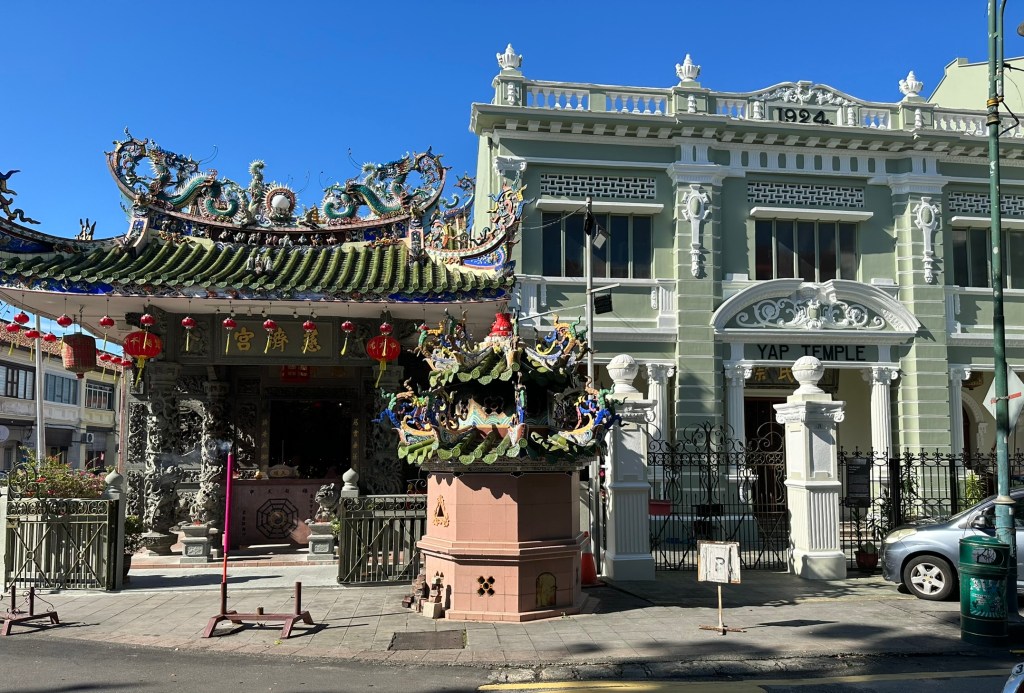
Yap’s Temple 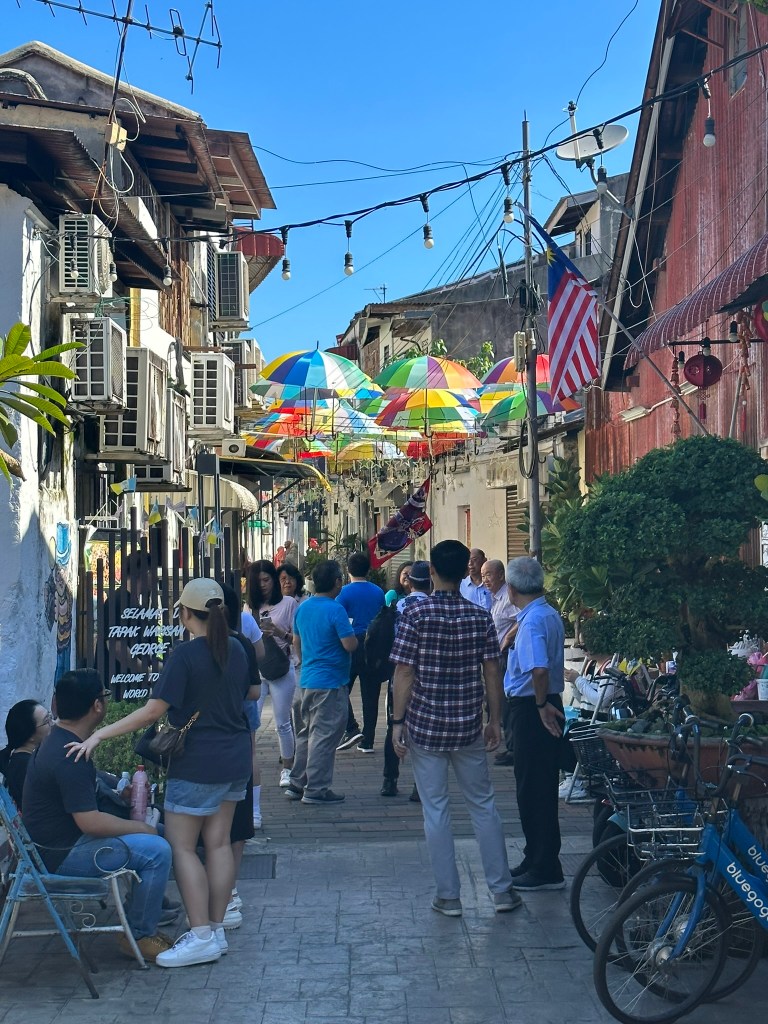
Colorful streets 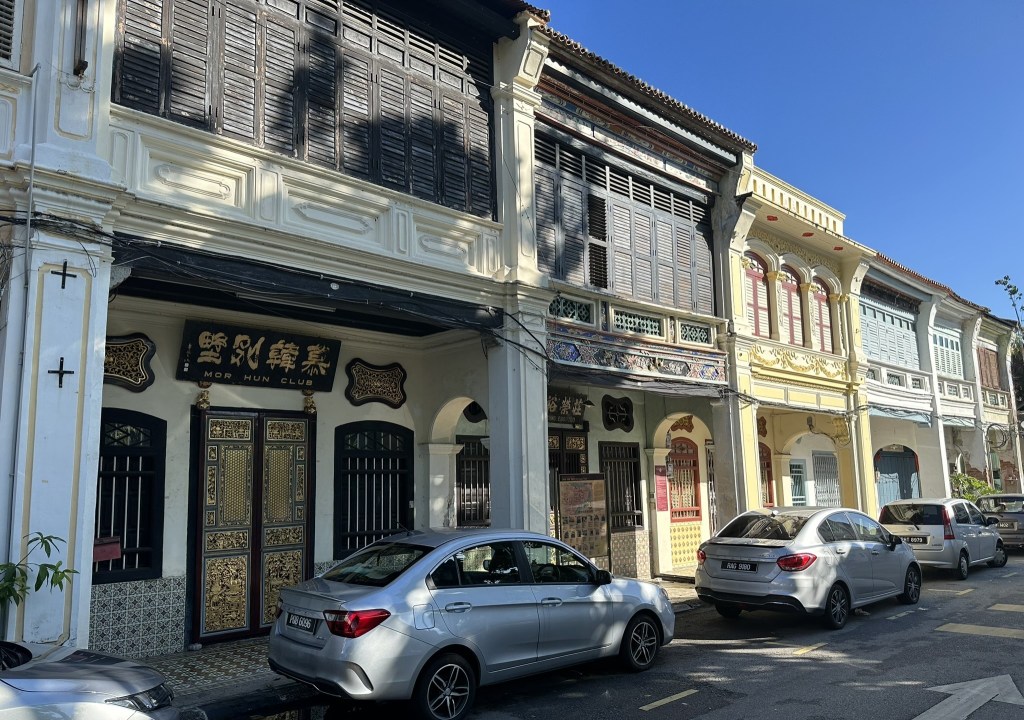
Chinese colonial architecture 
Buddhist temple
- Walking the clan jetties was a unique experience. Chew Jetty (for clan Chew, of course) is the most accessible and has become completely commercialized. The jetties that are still largely residential don’t appreciate the tourists so much. The far end of Chew Jetty has a small temple with an inscription that says something like “Thank God we made it!” in Chinese to welcome immigrants from their long sea journey to get here.
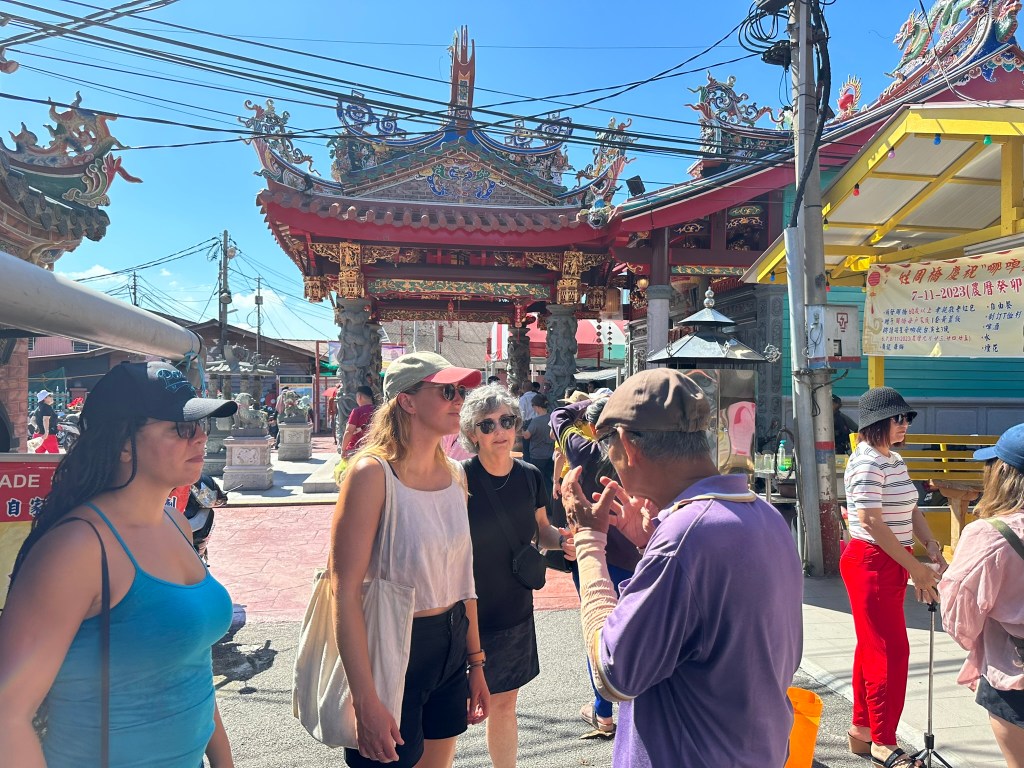
Guide Warren explains 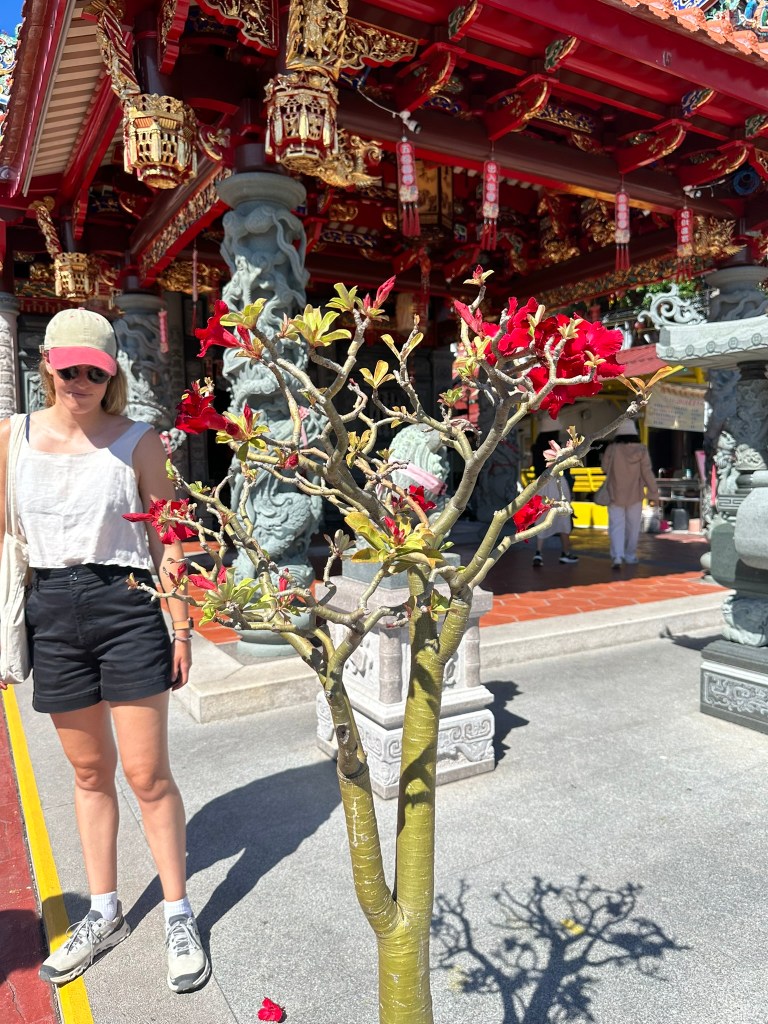
Chew Jetty’s local temple 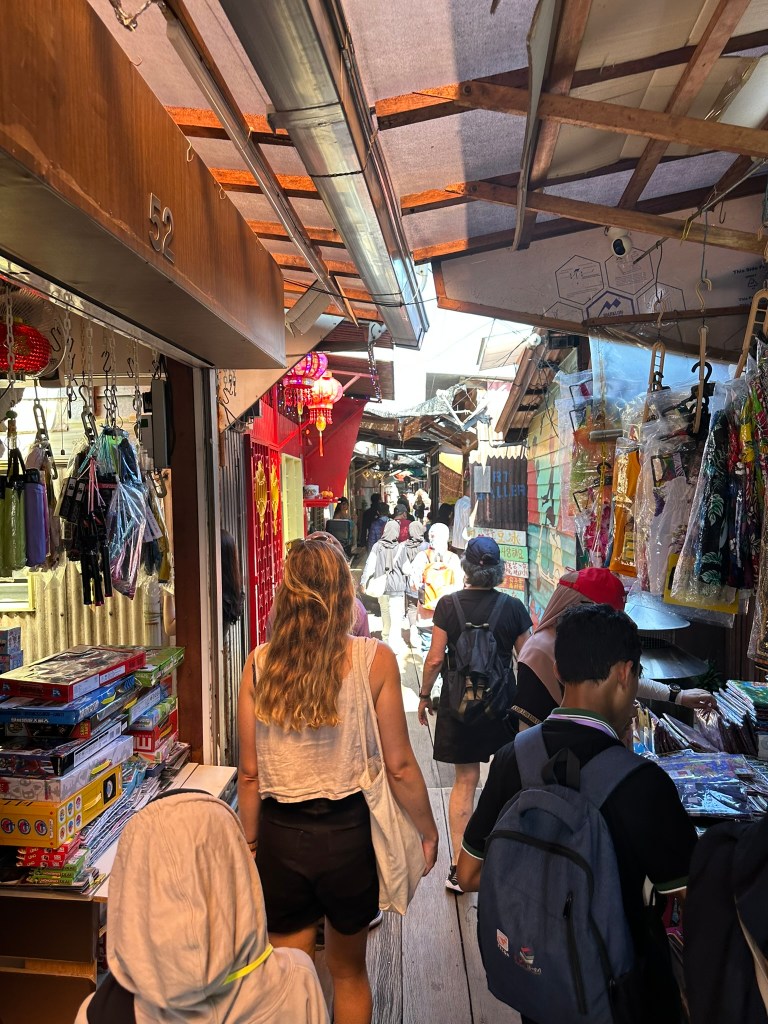
Strolling Chew Jetty 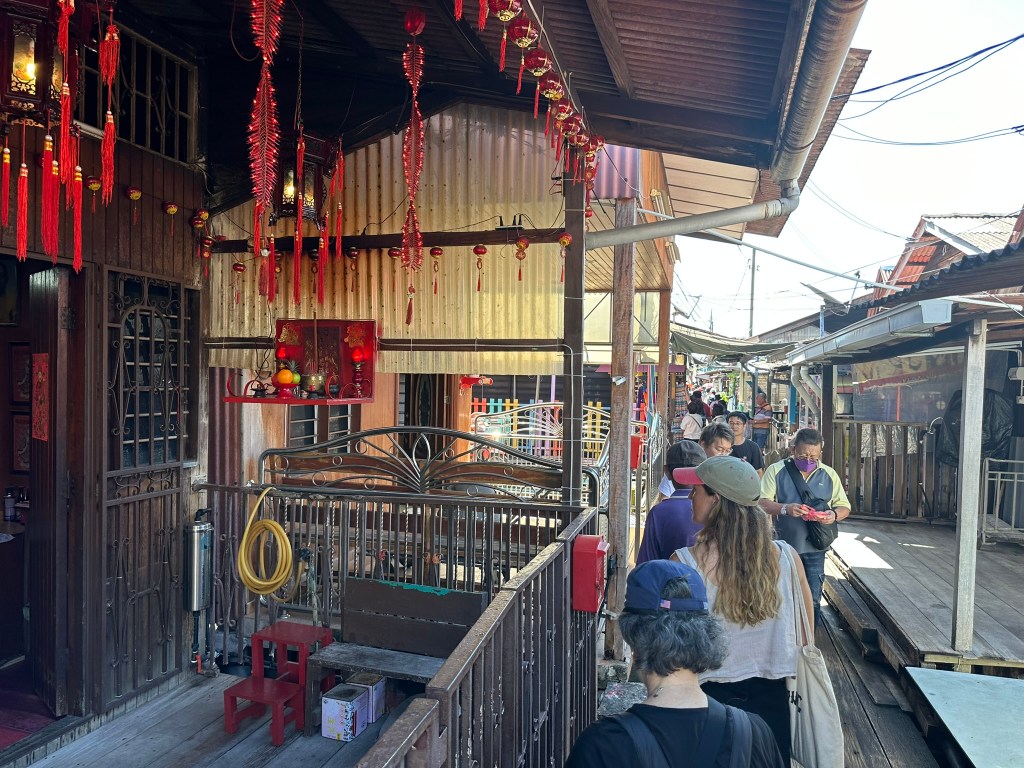
Strolling Chew Jetty 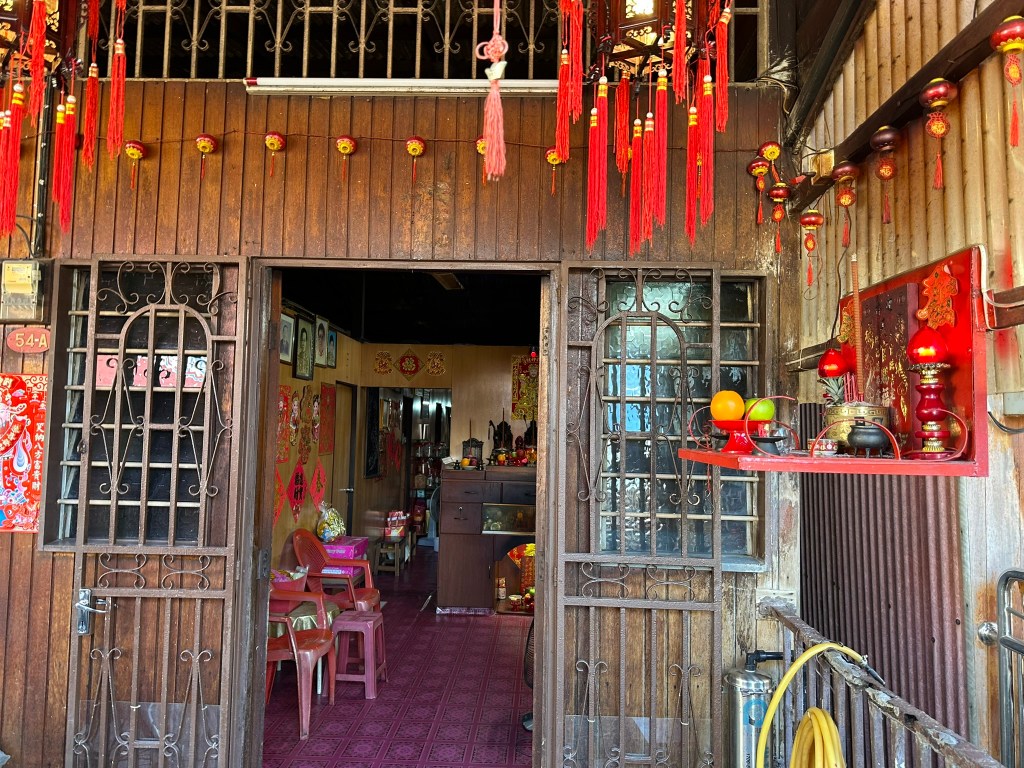
Typical Chew Jetty stilt home 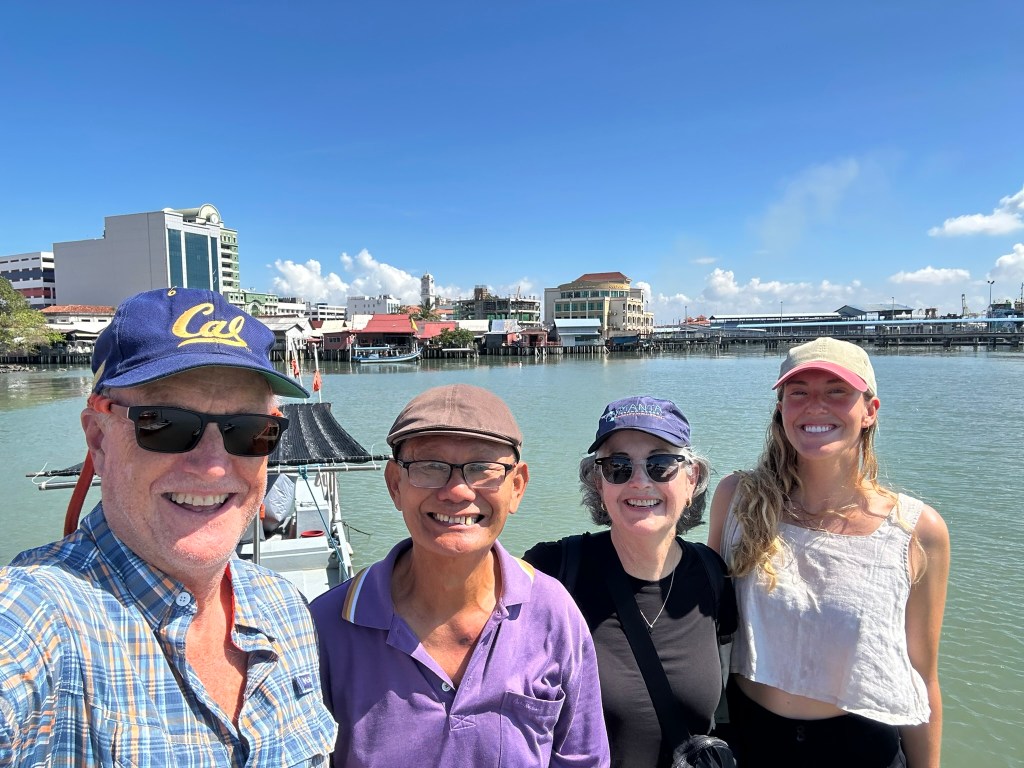
With our guide, Warren 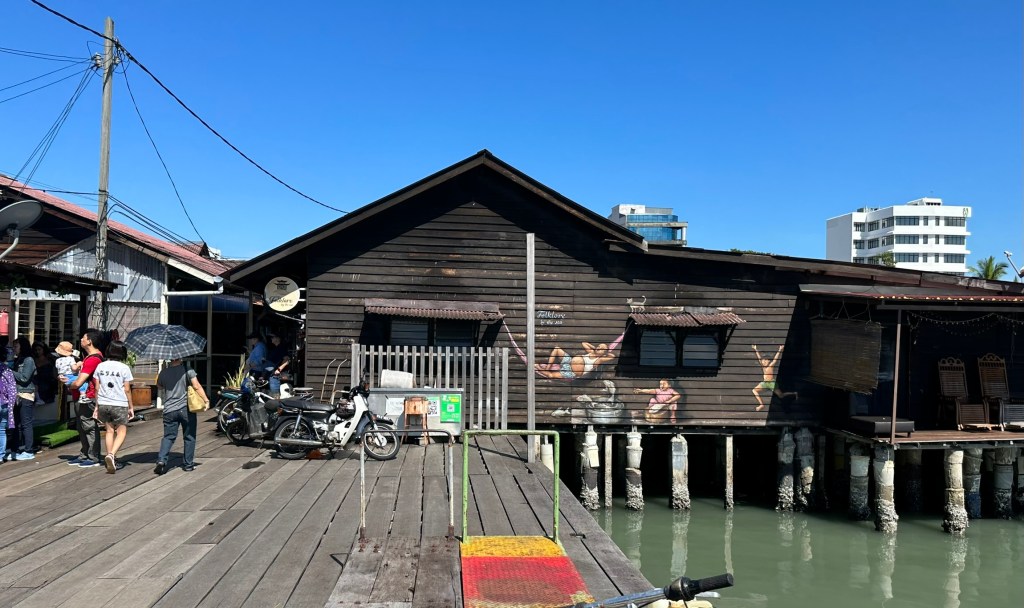
Chew Jetty mural
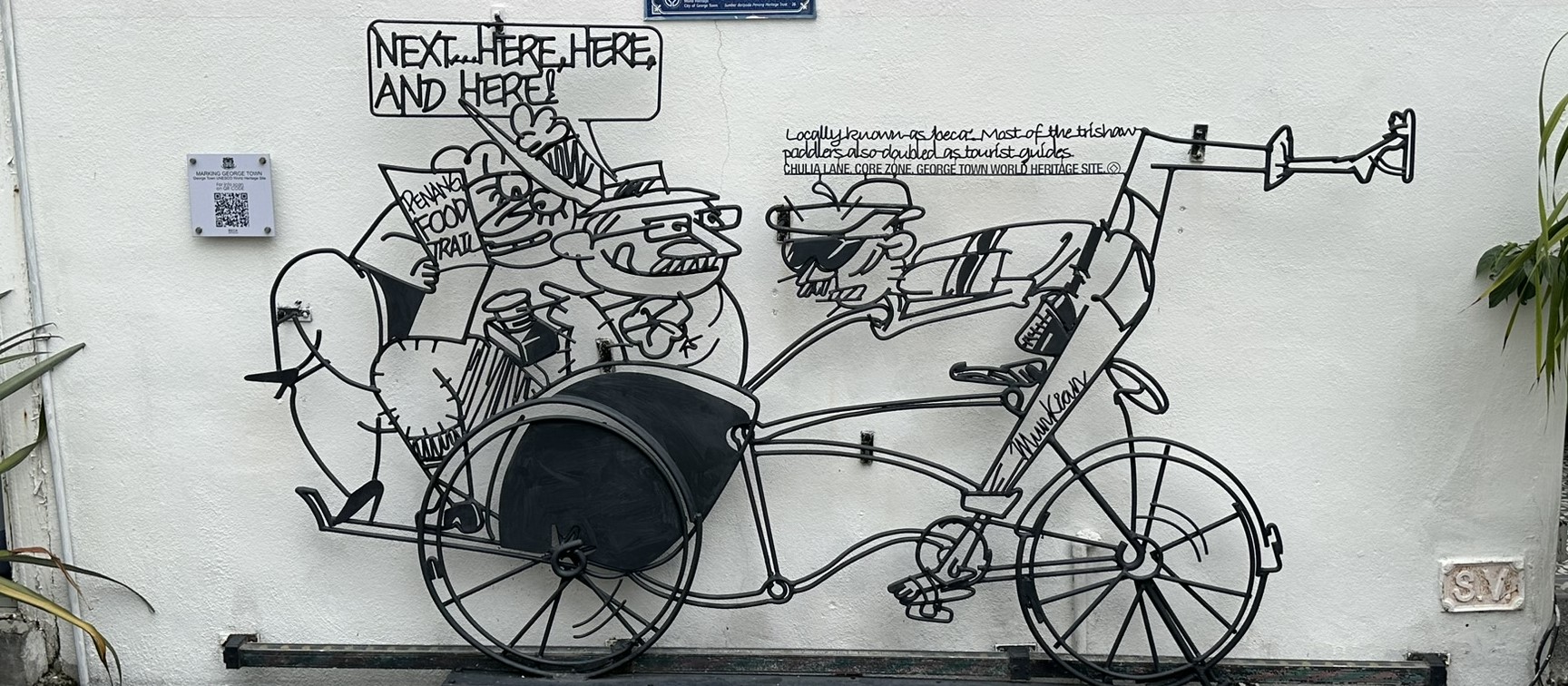
- Like Singapore, street art is a big deal in Penang. Unlike Singapore, or anywhere else for that matter, is the uniquely Penang “metal rod art” – intricate designs made of welded metal, all telling a local cultural story.
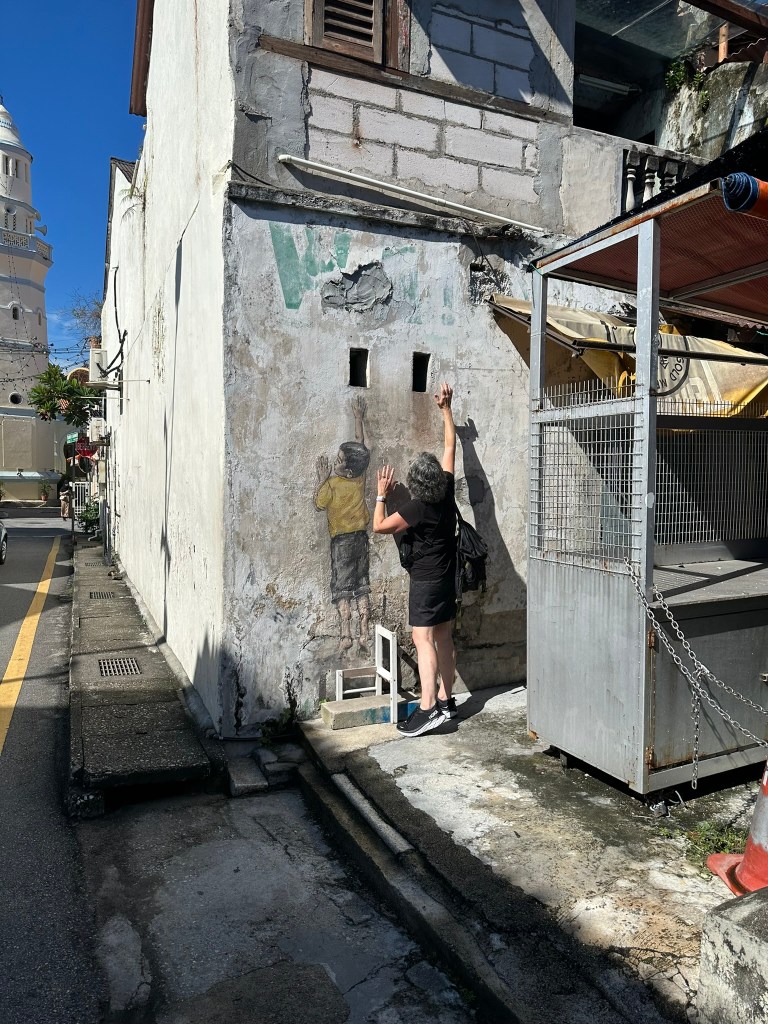
Fun with wall art 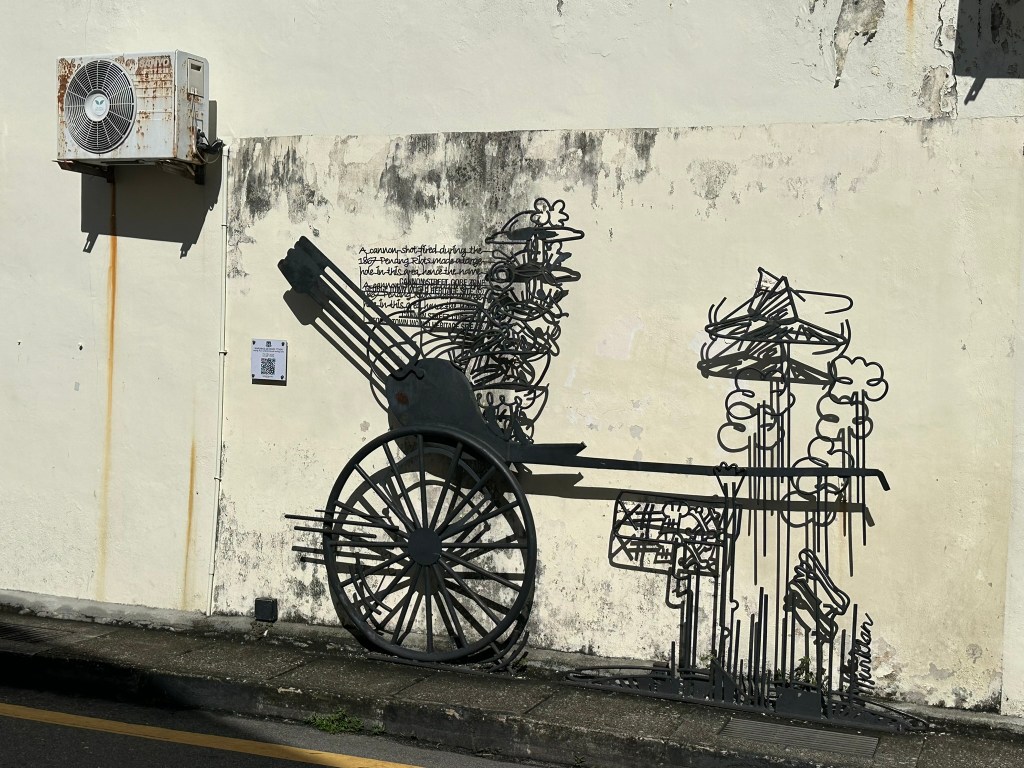
Cannon Street 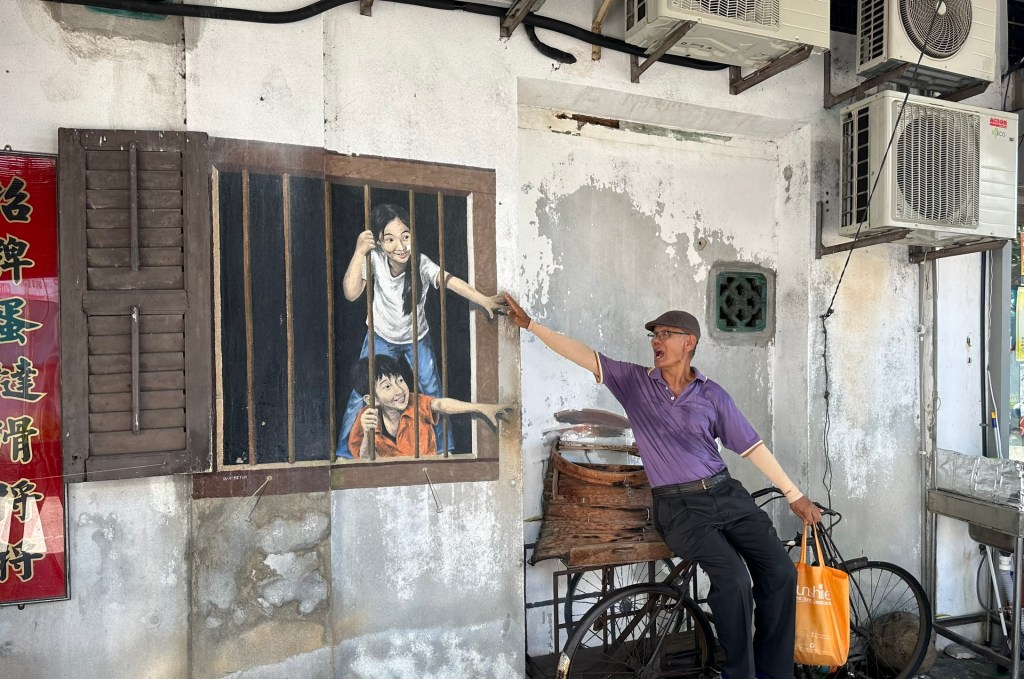
Interactive art 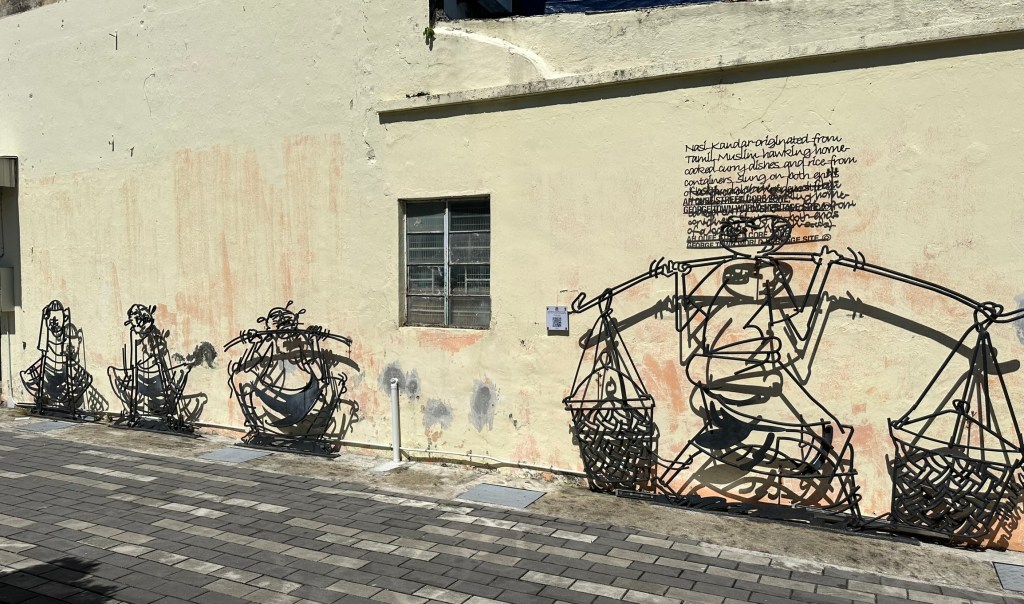
The Nasi Kandar apprentice 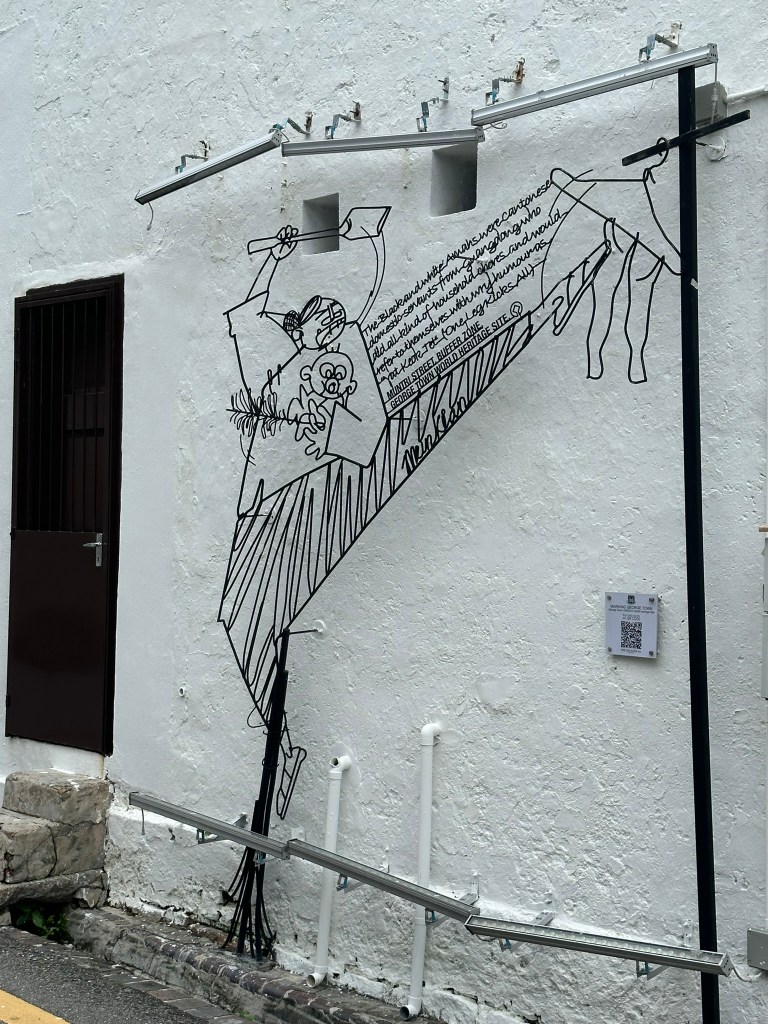
“One Leg Kicks All” 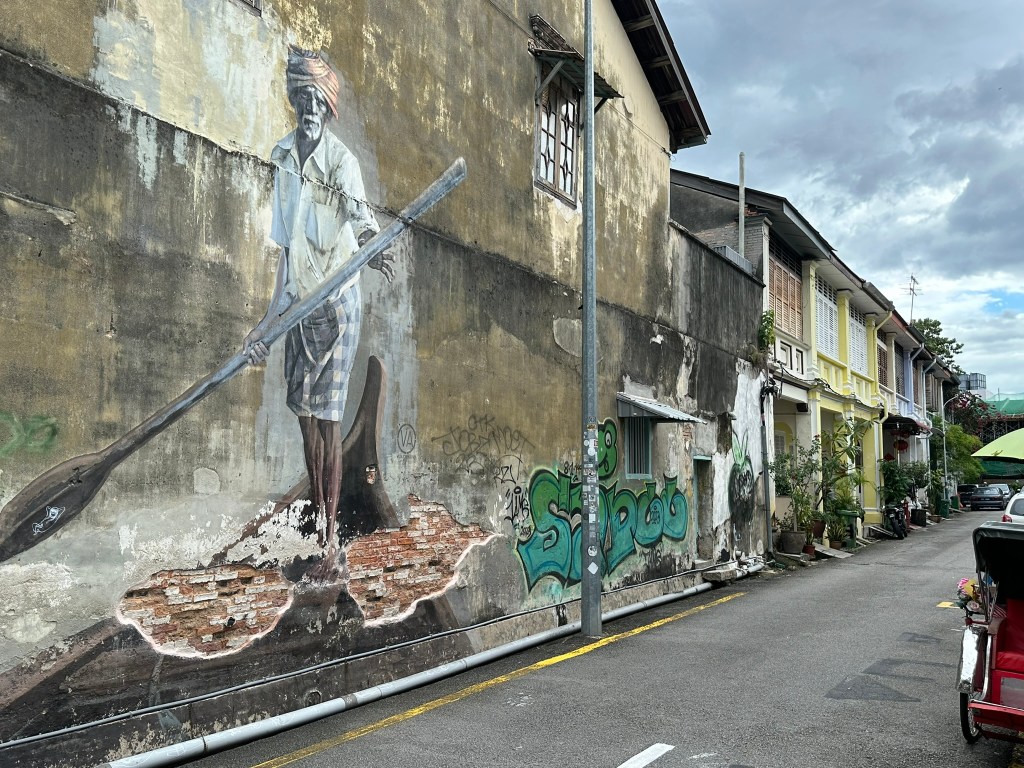
Man with a paddle 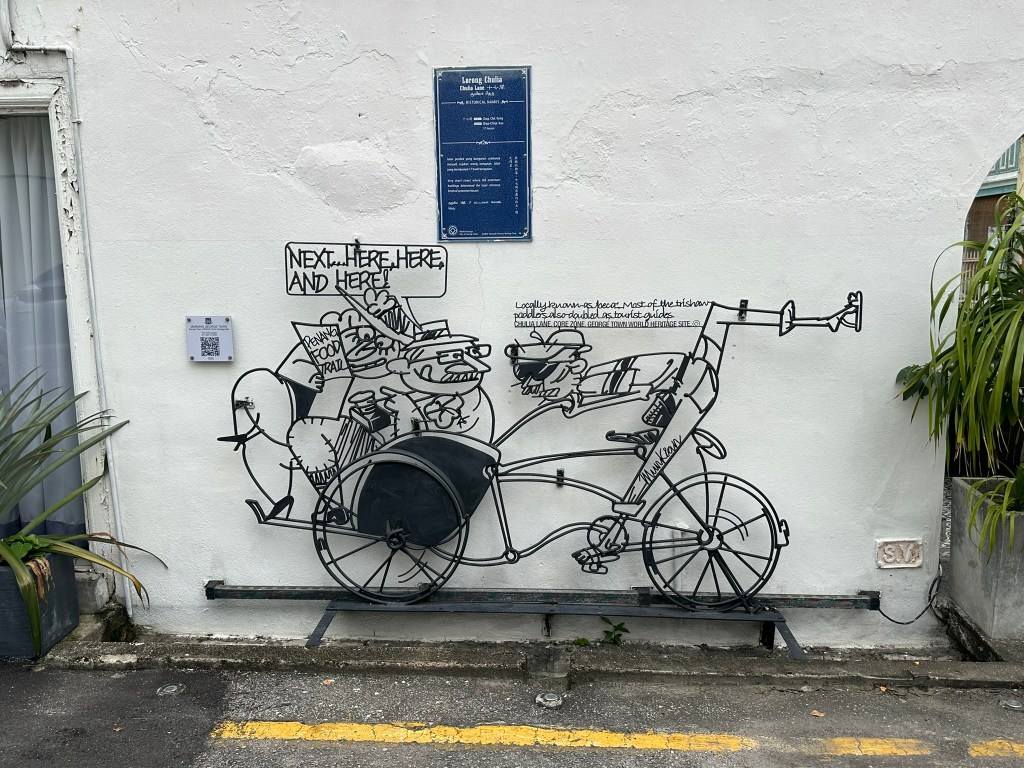
Mocking British imperialism
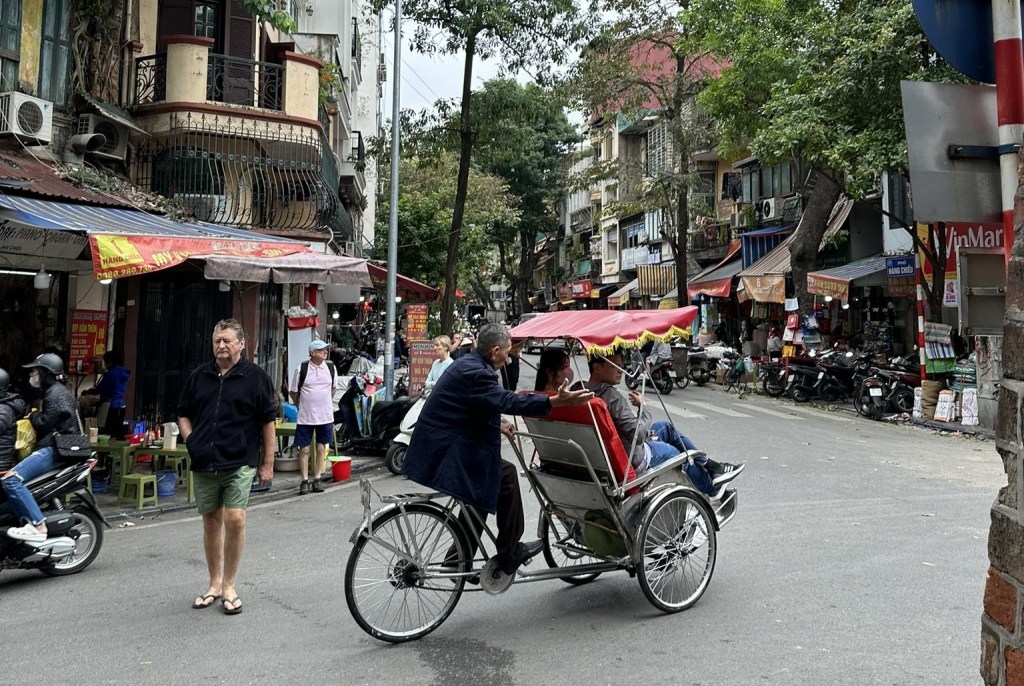
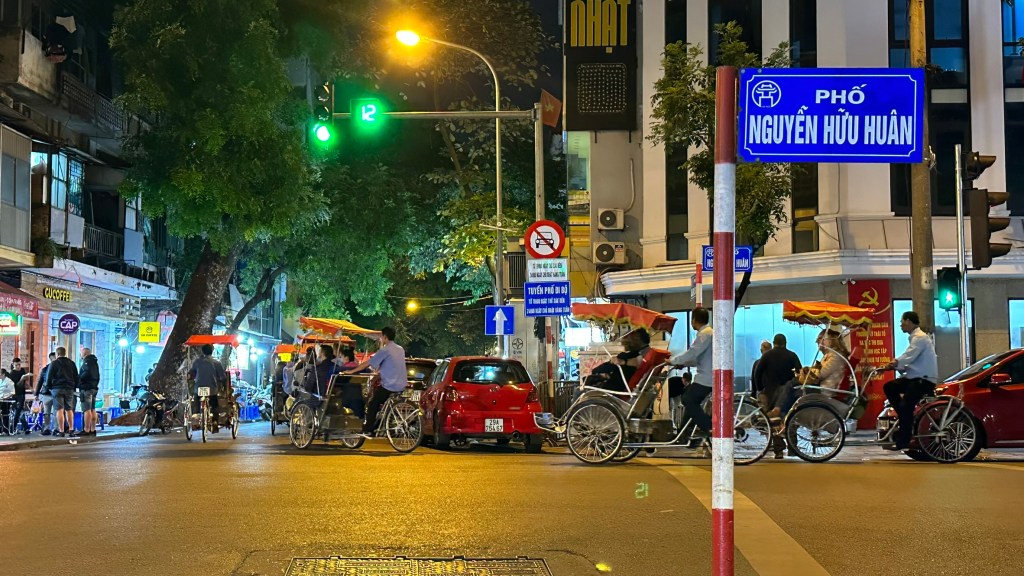
- Take a ride in Penang’s famous Tri-shaws, great cheap transportation around town. Our guide explained the open secret (his words) that all the trishaw drivers are old men because they are ex-cons and this is the only work they can get.
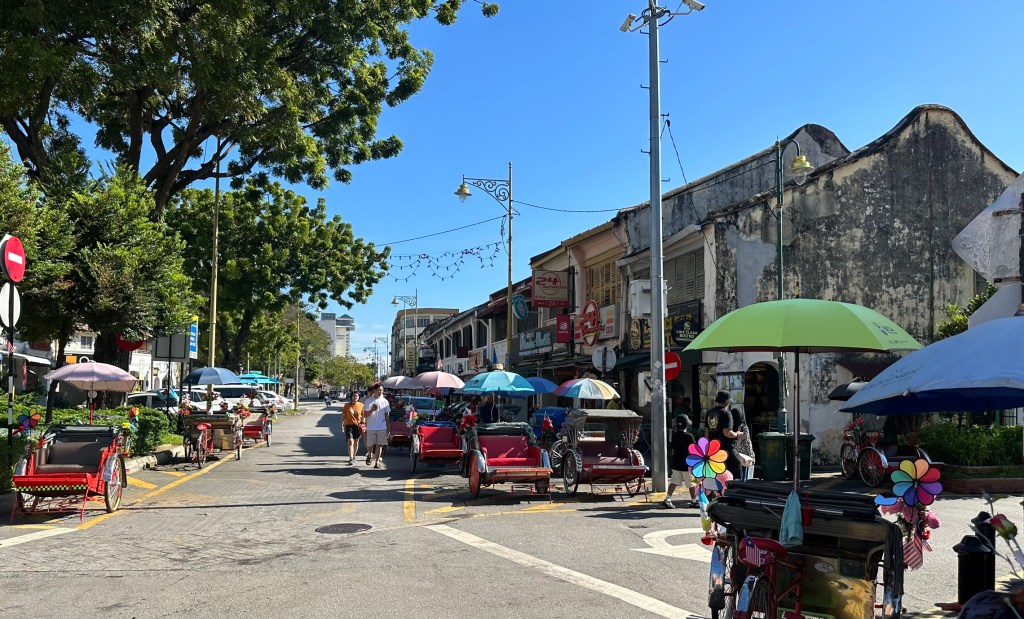
Trishaw central 
Hitchin a ride 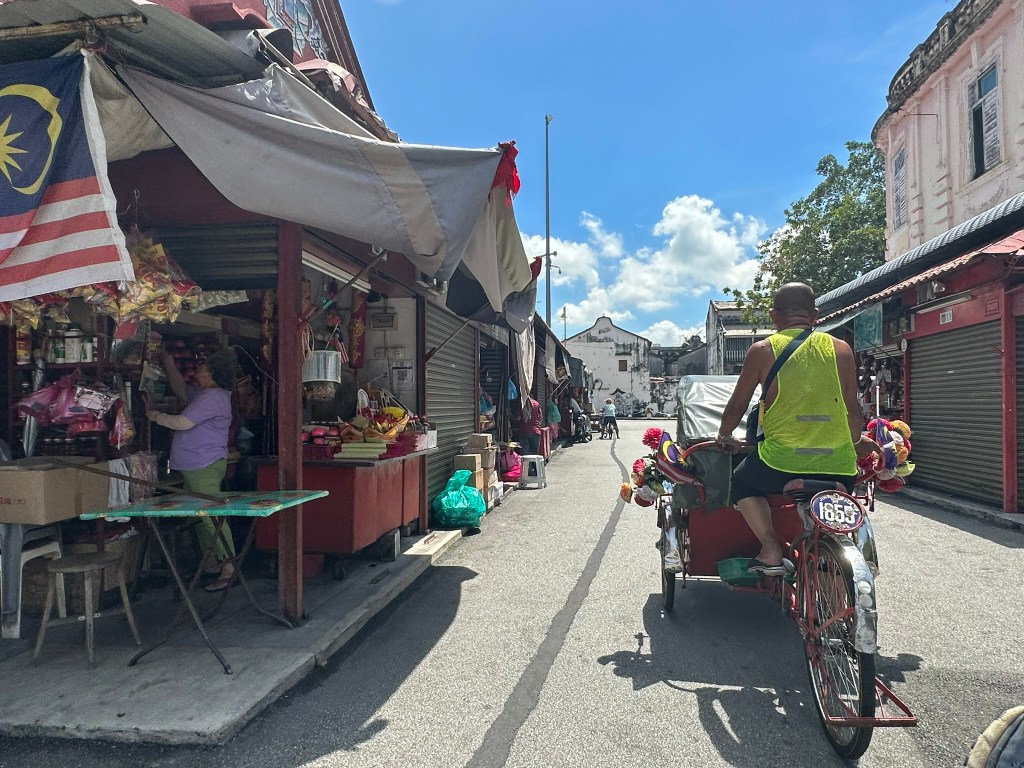
The easy way to ride 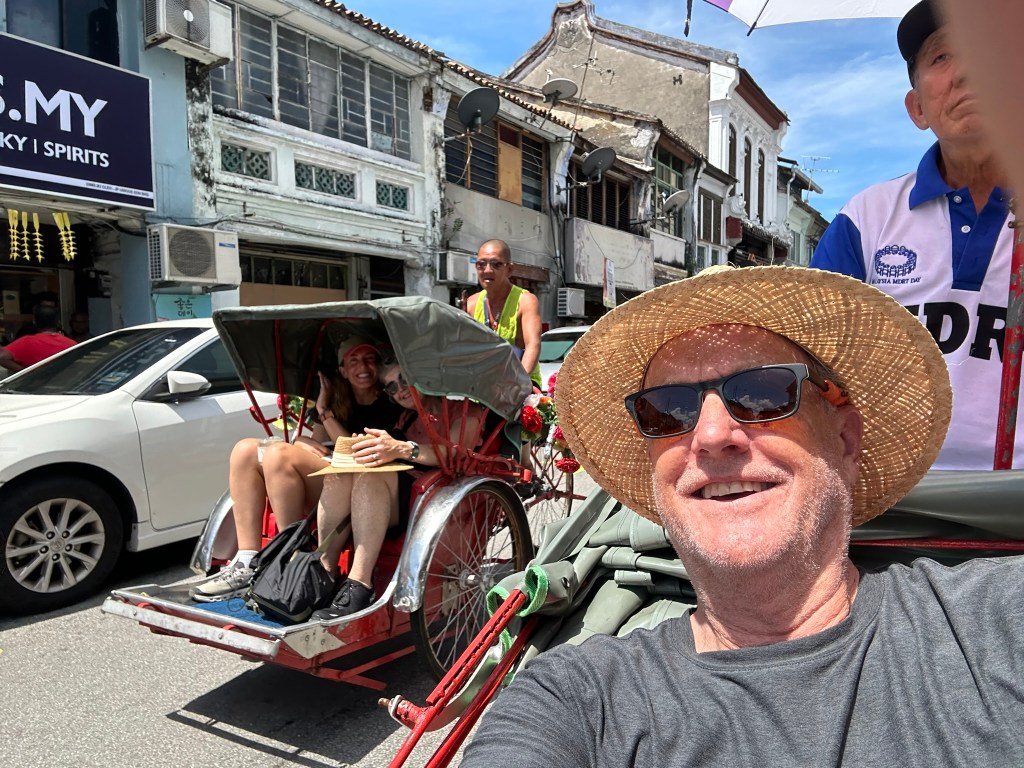
The race is on!
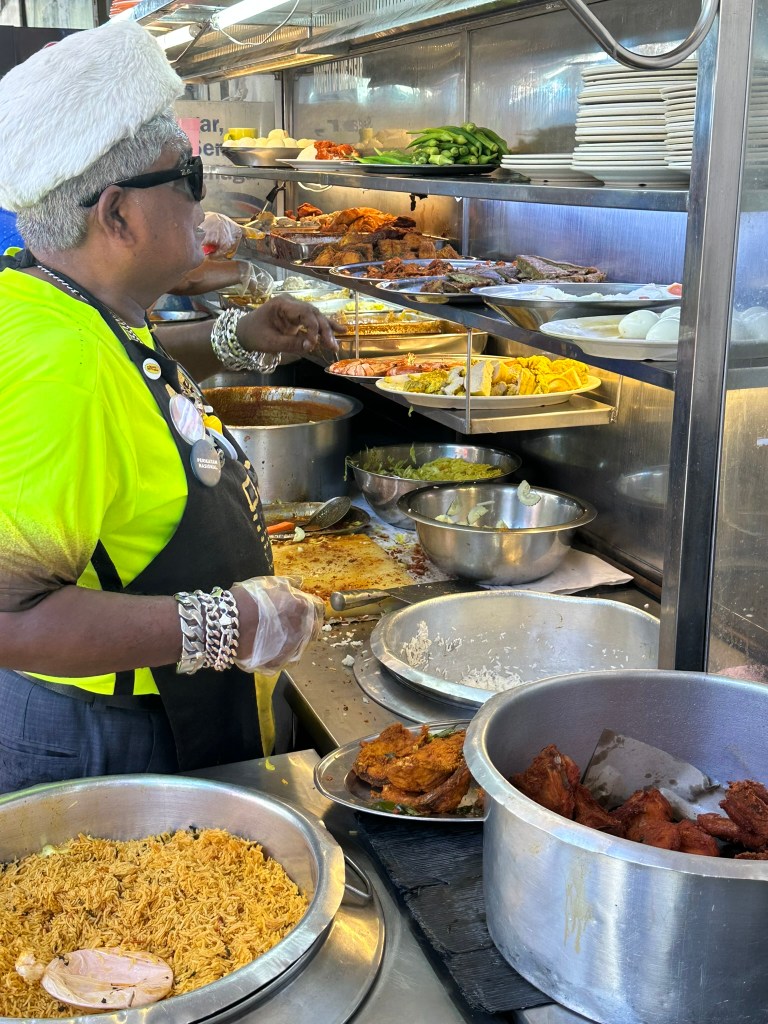
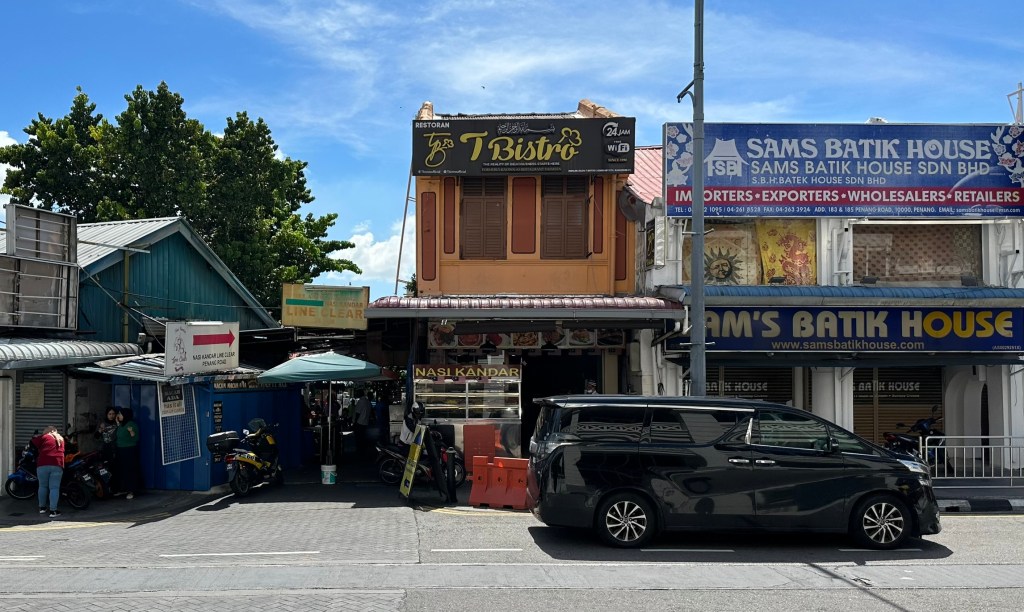
- Nasi Kandar is Penang’s signature eating experience, and Line Clear is Penang’s most famous Nasi Kandar stall, made so by Anthony Bourdain who ate here on every visit. “Line Clear” is so named because people would call ahead to see how long the line was to eat and that’s what the caller would hear in reply, regardless how long the line! You get a big plate of rice and just point to what you want dumped on top. Fantastically delicious!
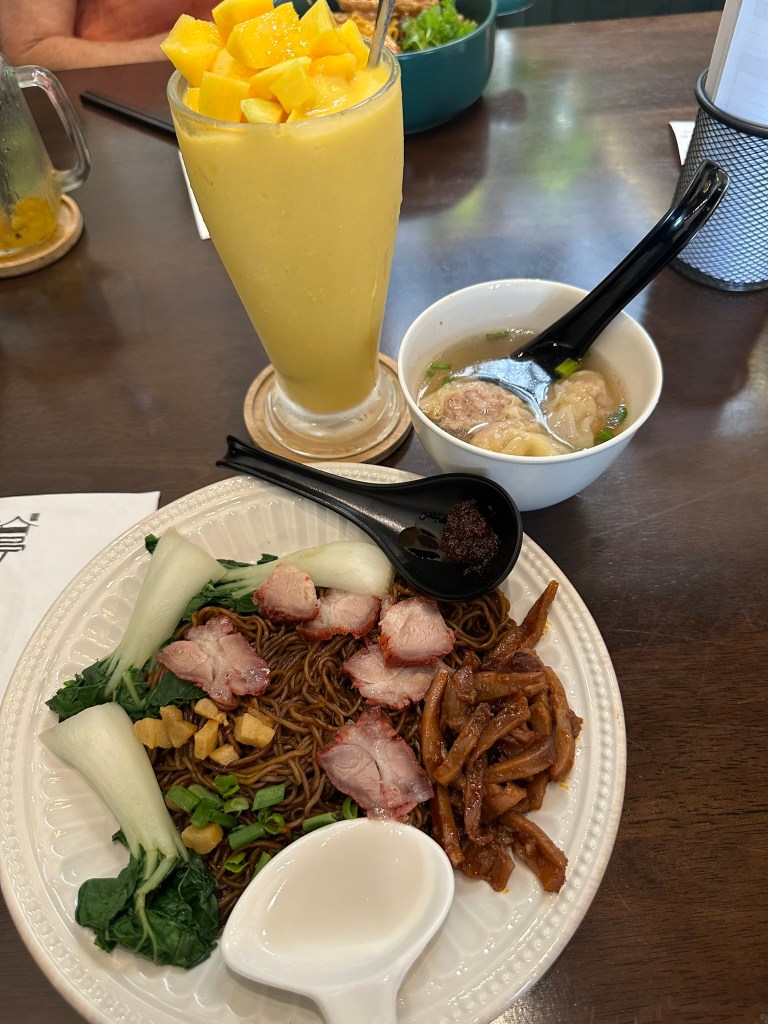
- For good cheap food other than Line Clear, check out the hawker street food stalls on Chulia Street. Elsewhere, lunch at Hwa Ting restaurant was a treat, featuring their Signature Spicy San Tan Mee, about $4 USD!
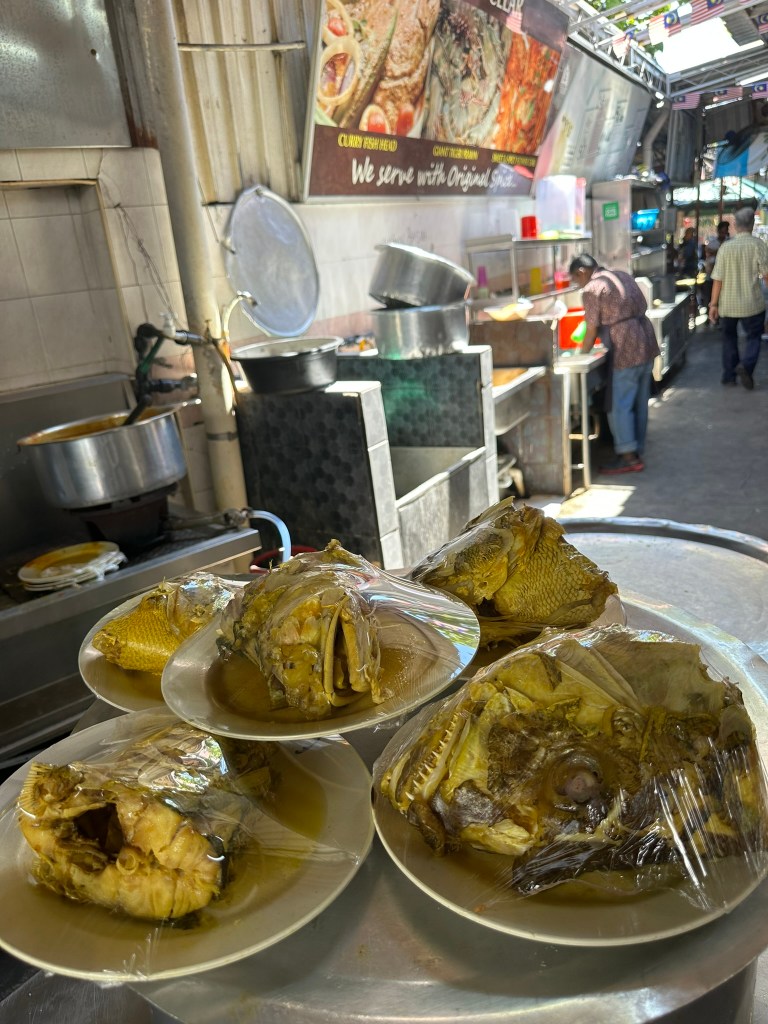
- Chulia Street is also the main nightlife hub, especially where it meets Love Lane, chockablock full of bars and music clubs. While it’s fun to stroll Love Lane at night, we preferred a few bars off the main drag, including The Pokok All-Day Bar, Junk Bar, and Cocktails & Shots, a hidden speakeasy. Further afield, Archipelago was a cool, semi-hidden cocktail bar attached to a furniture store, and several blocks away the Backdoor Bodega, another speakeasy hidden behind a clothing shop.
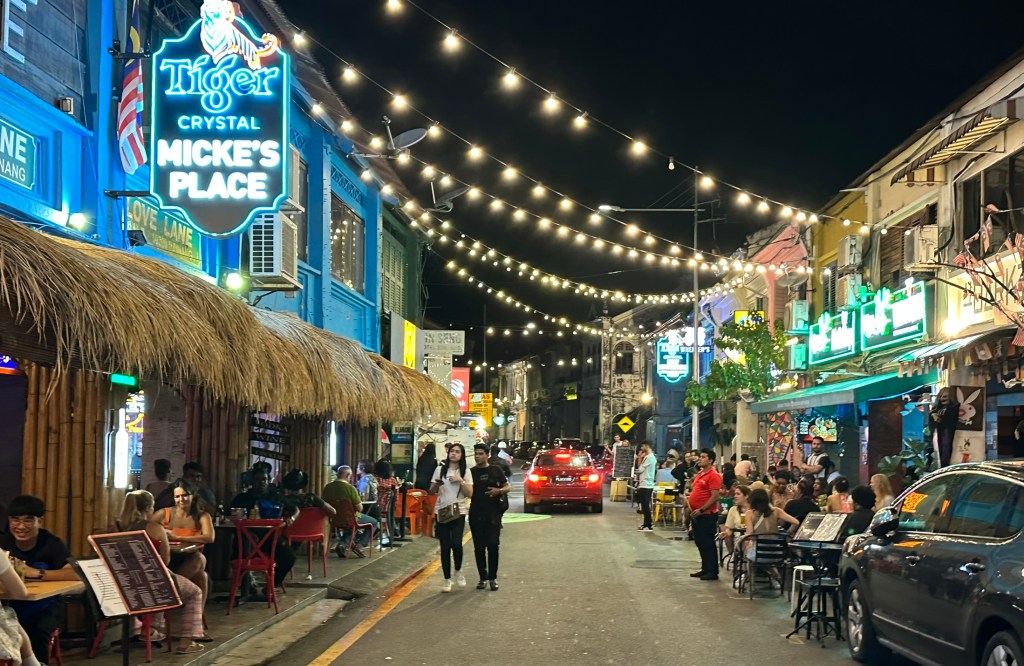
Love Lane 
Cocktails & Shots 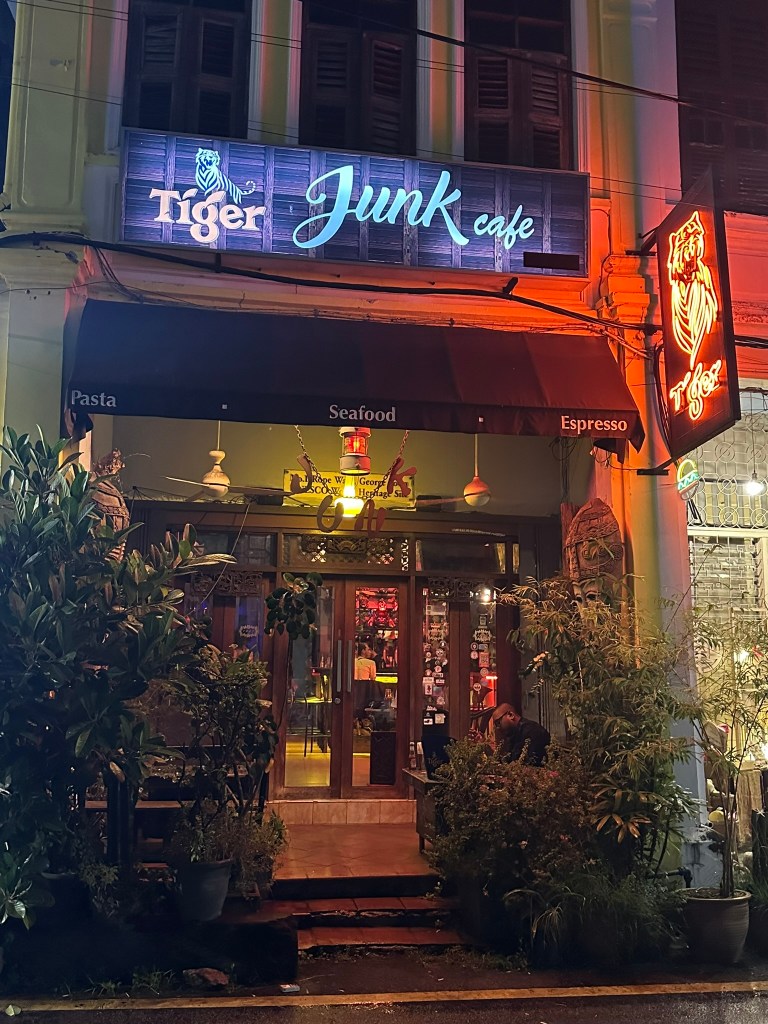
Junk Cafe 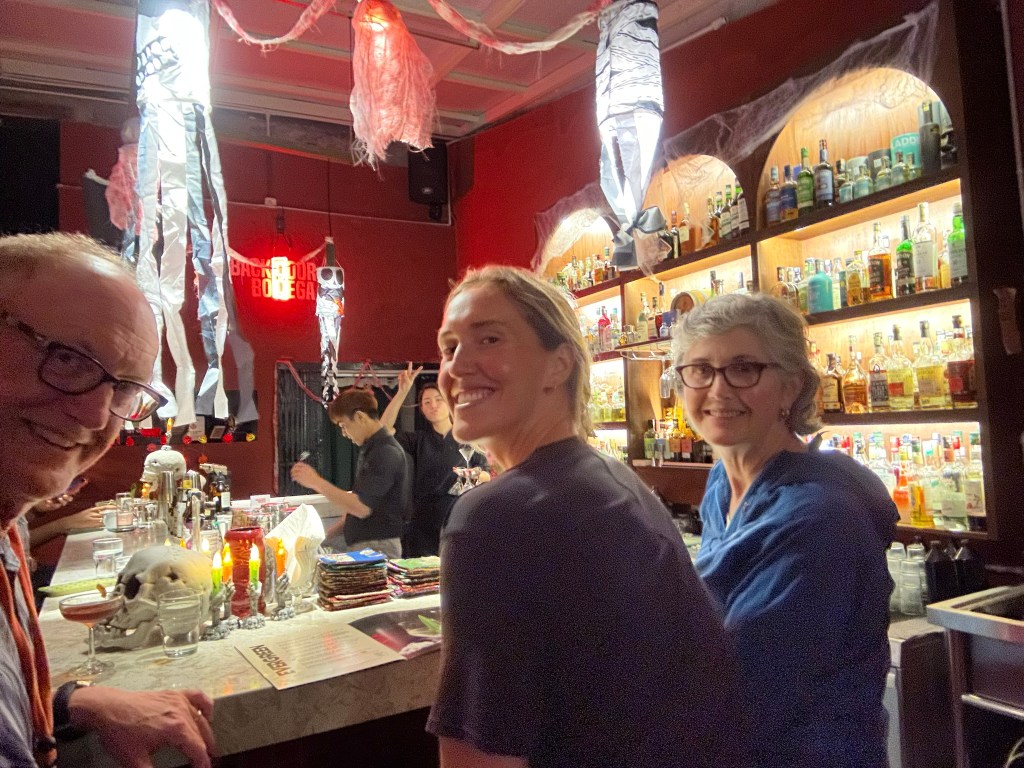
Backdoor Bodega 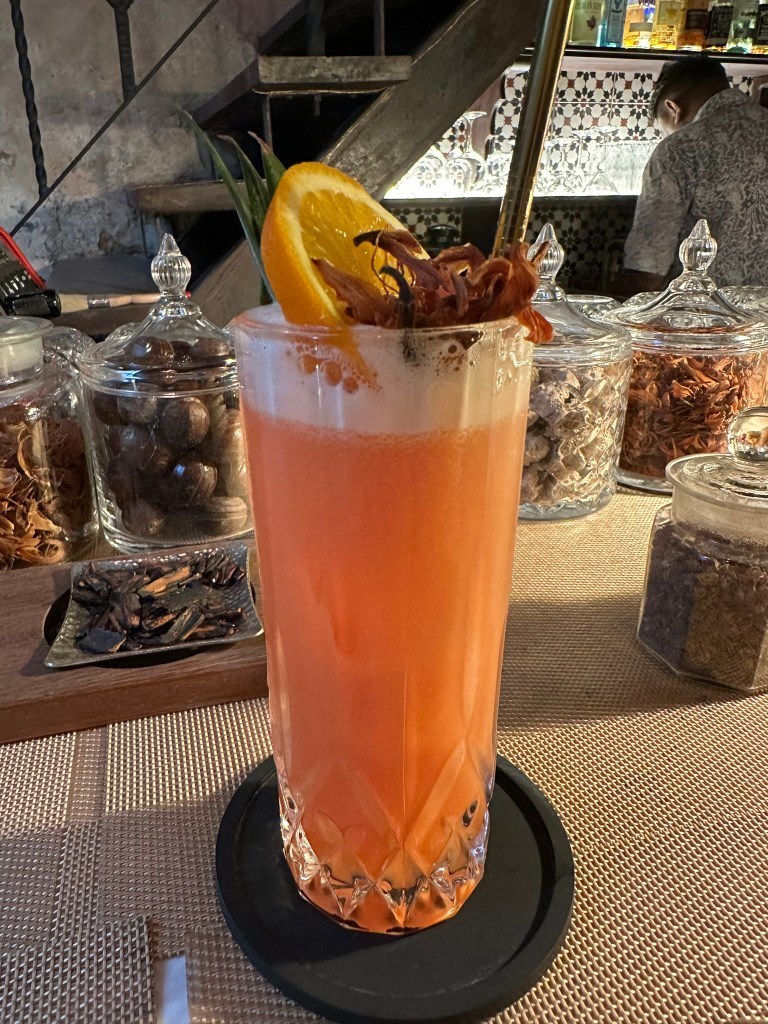

Pokok All-Day Bar 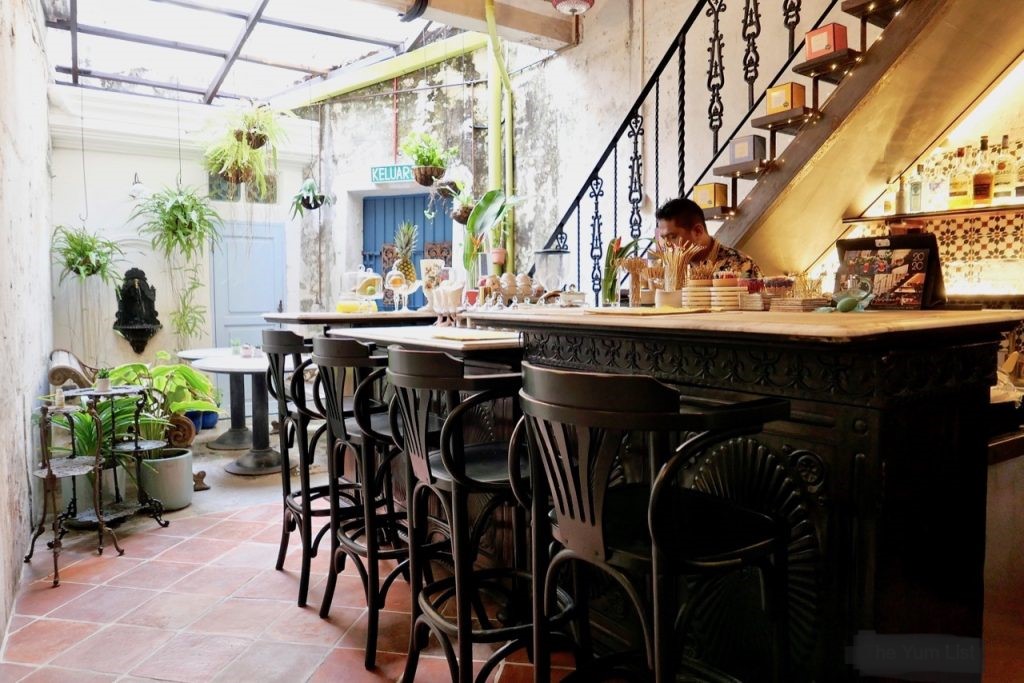
Archipelago
- Grab a cab for a 30-minute drive to Frandy’s Beach Bar & Restaurant to enjoy sunset over Batu Ferringhi Beach. Then grab a bucket of ice-cold Tiger beers to get things started.
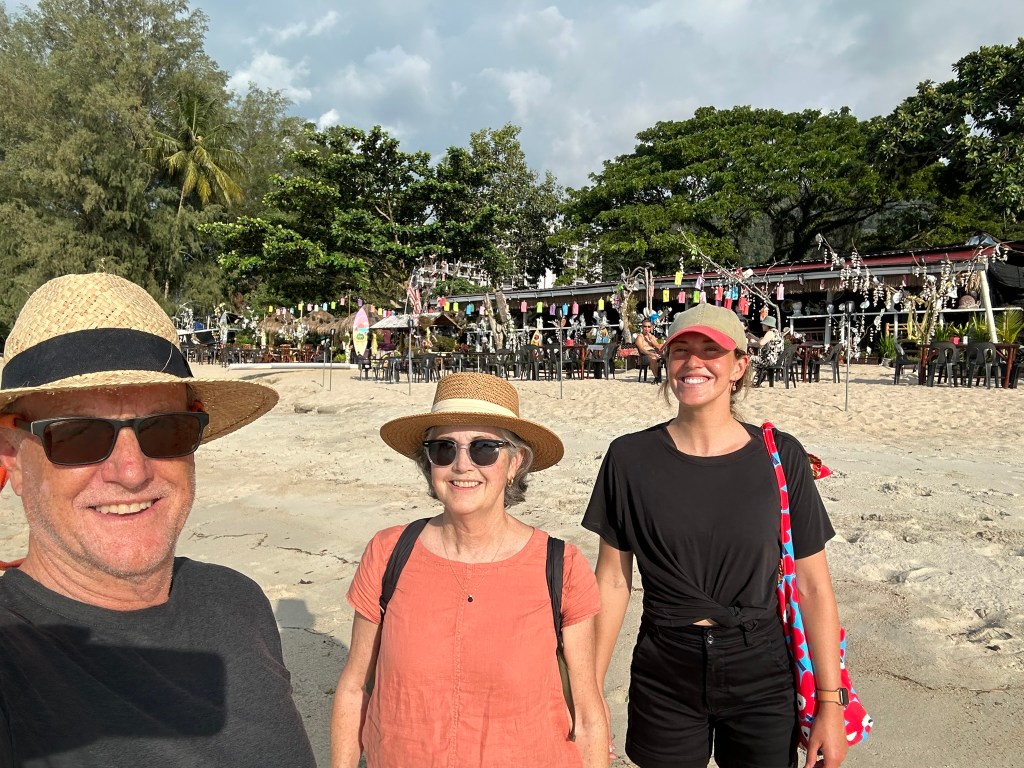
Frandy’s Beach Bar 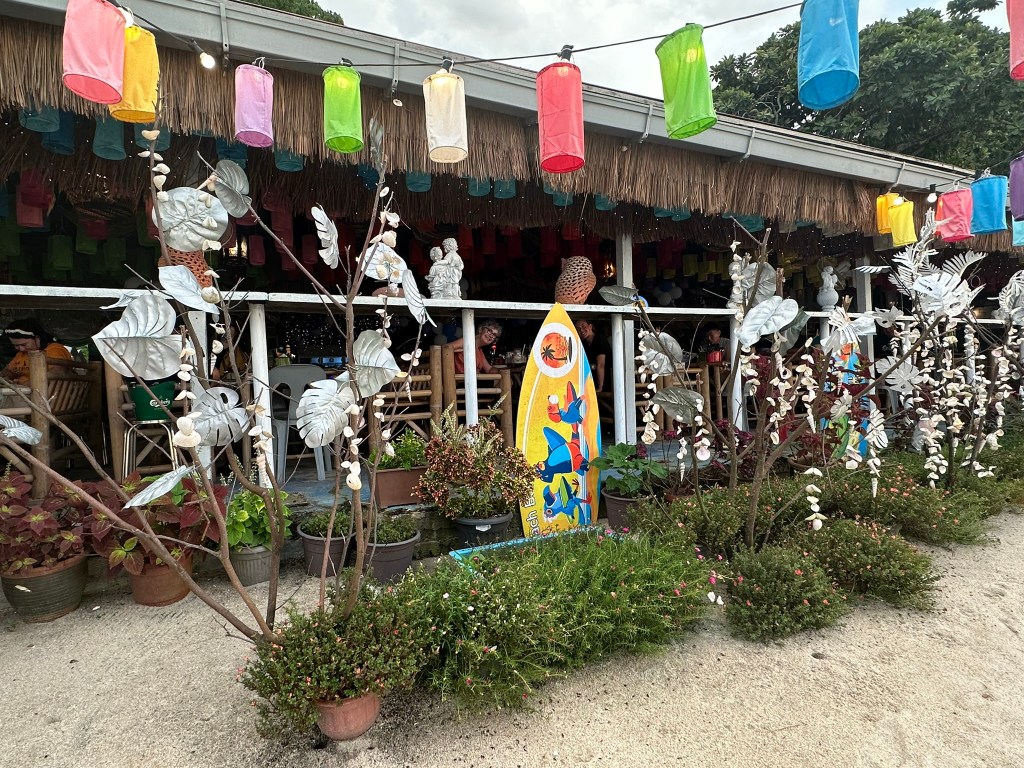
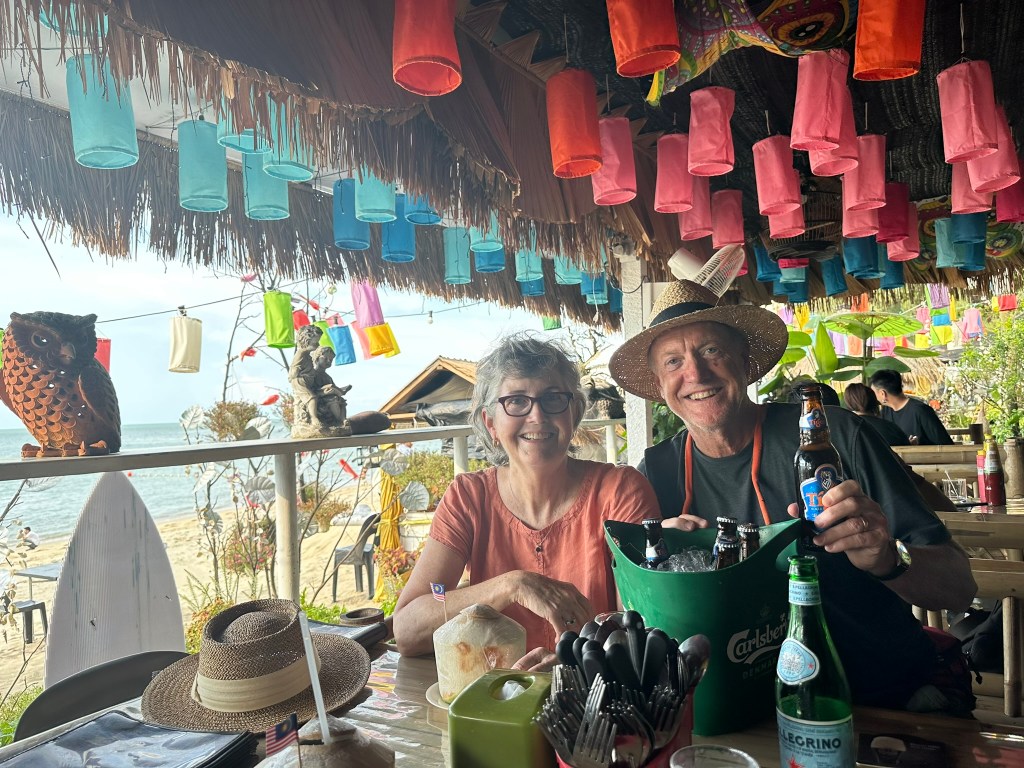
The bucket ‘o Tigers 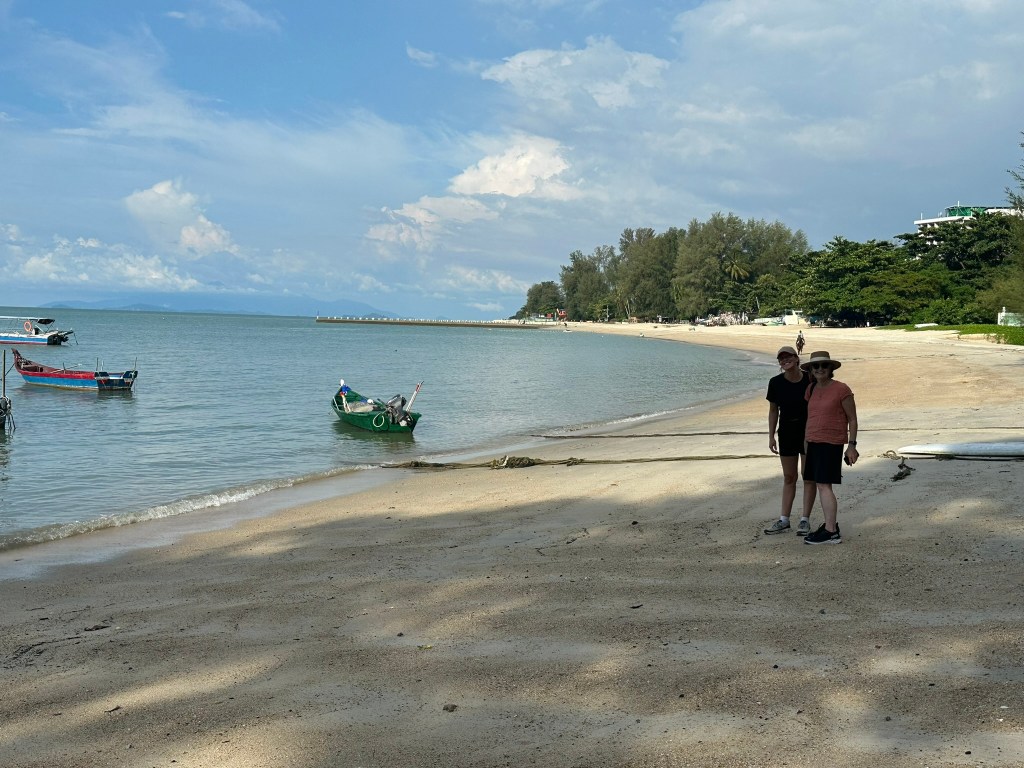
Ferringhi Beach walk 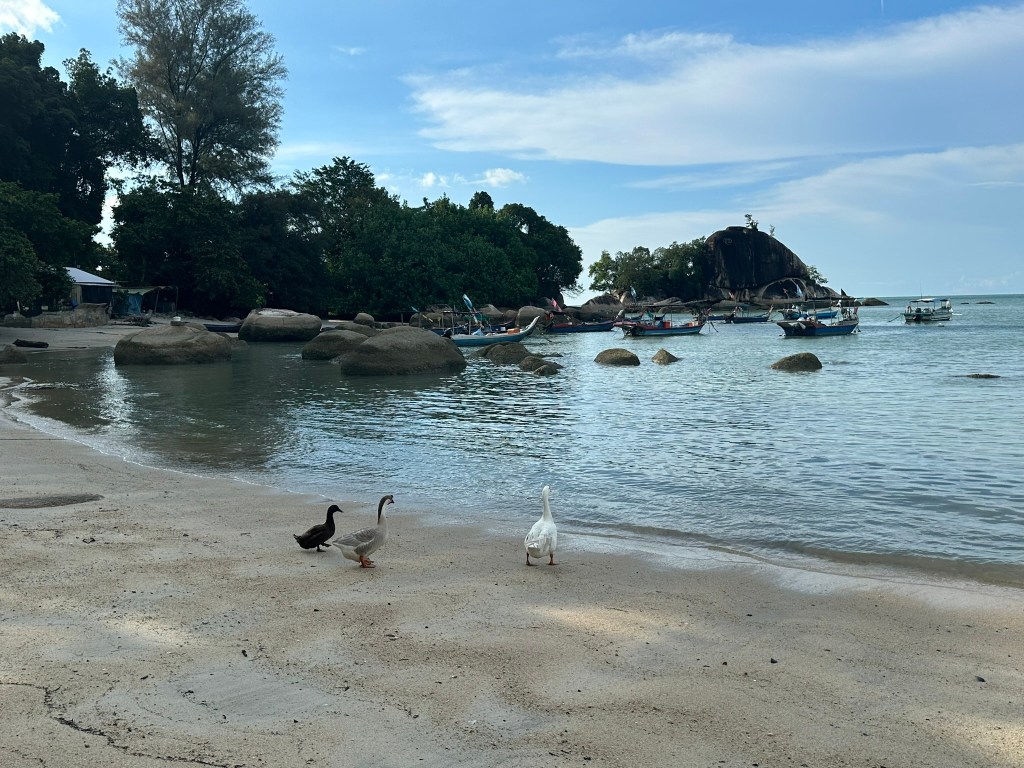
End of the beach 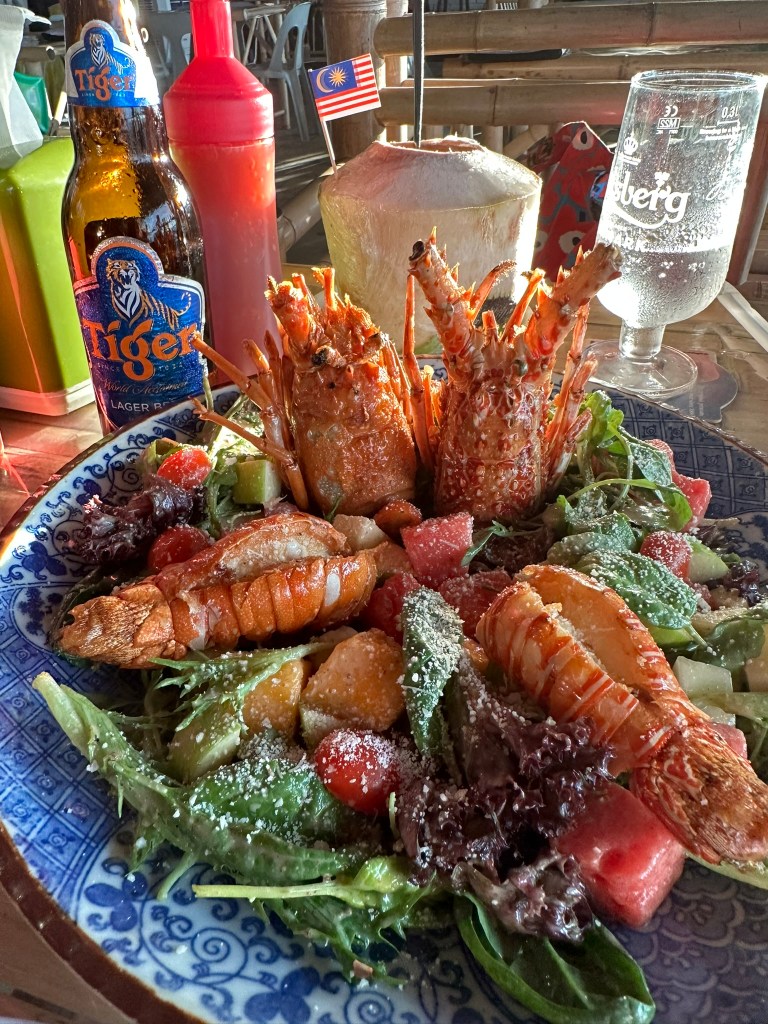
Good eats 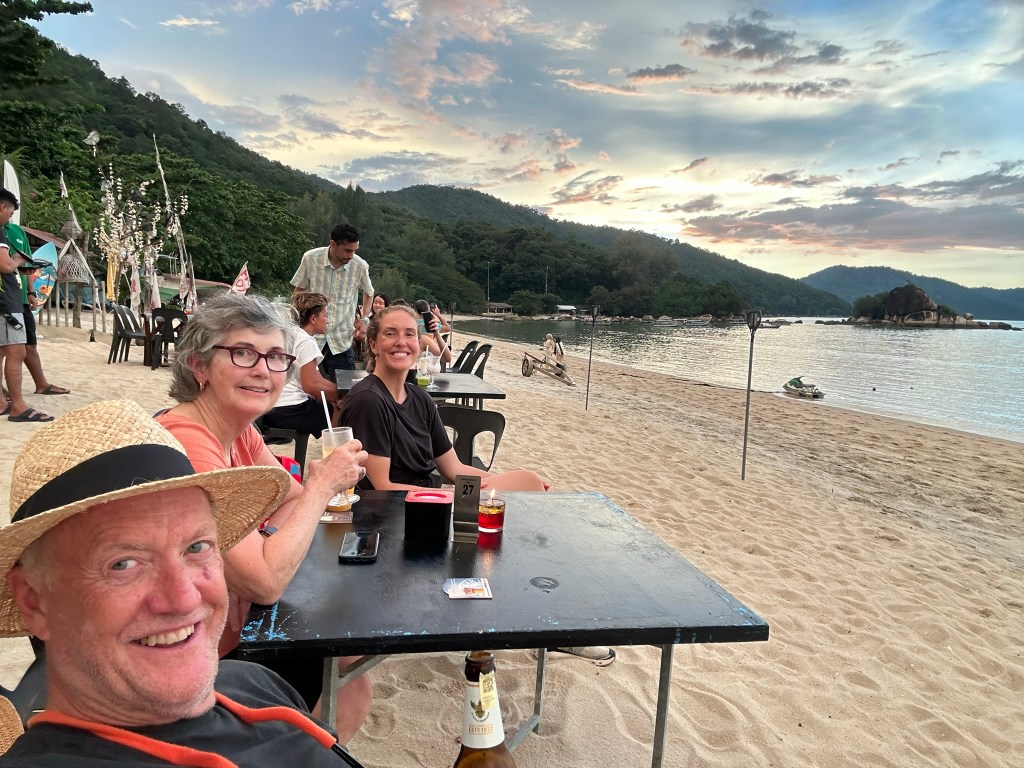
Ready for the show 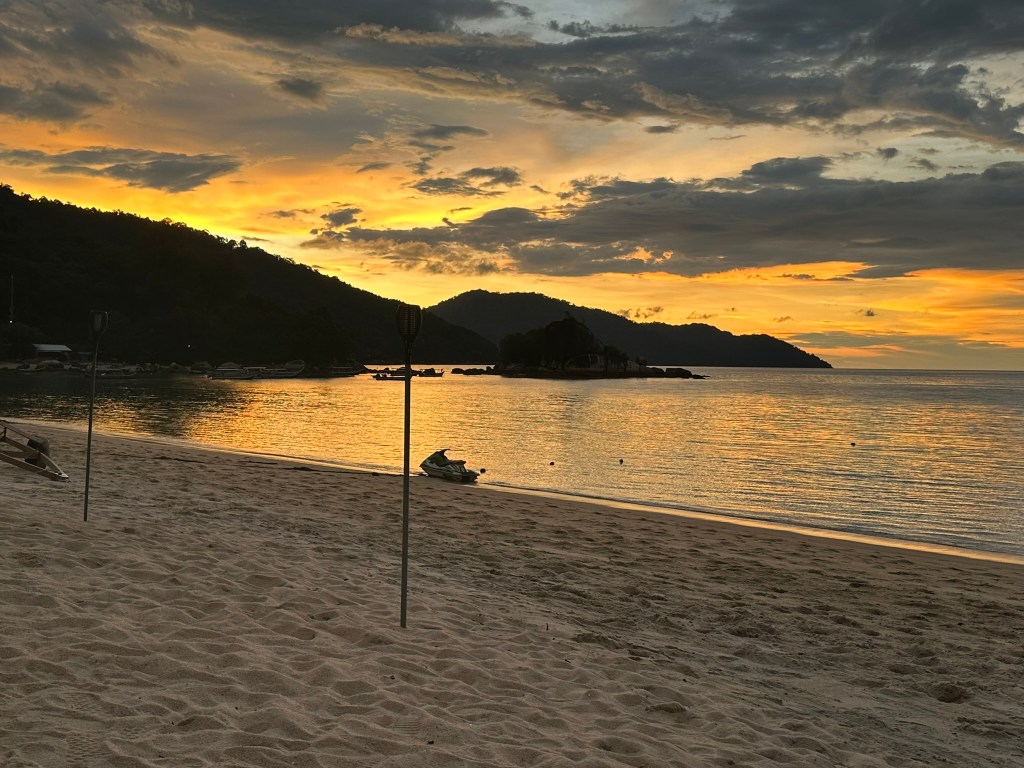
Penang sunset
With more time and desire to go further afield — I was somewhat limited by recent ankle surgery — other highly rated and appealing destinations I would have liked to experience include hiking Penang National Park, with possible stops at Monkey Beach, Turtle Conservation Center, or beaches along the west coast (Sunset, Pantai Keracut, Buaya), the funicular to the top of Penang Hill and its Bukit Bendera hiking area, and the Kek Lok Si Buddhist temple. Back in Georgetown, Cheong Fatt Tze, the Blue Mansion, is a major attraction but required a fairly expensive ticket to see, so we took a pass on it.
| Days 7-9 | Langkawi, Malaysia | Casa del Mar |
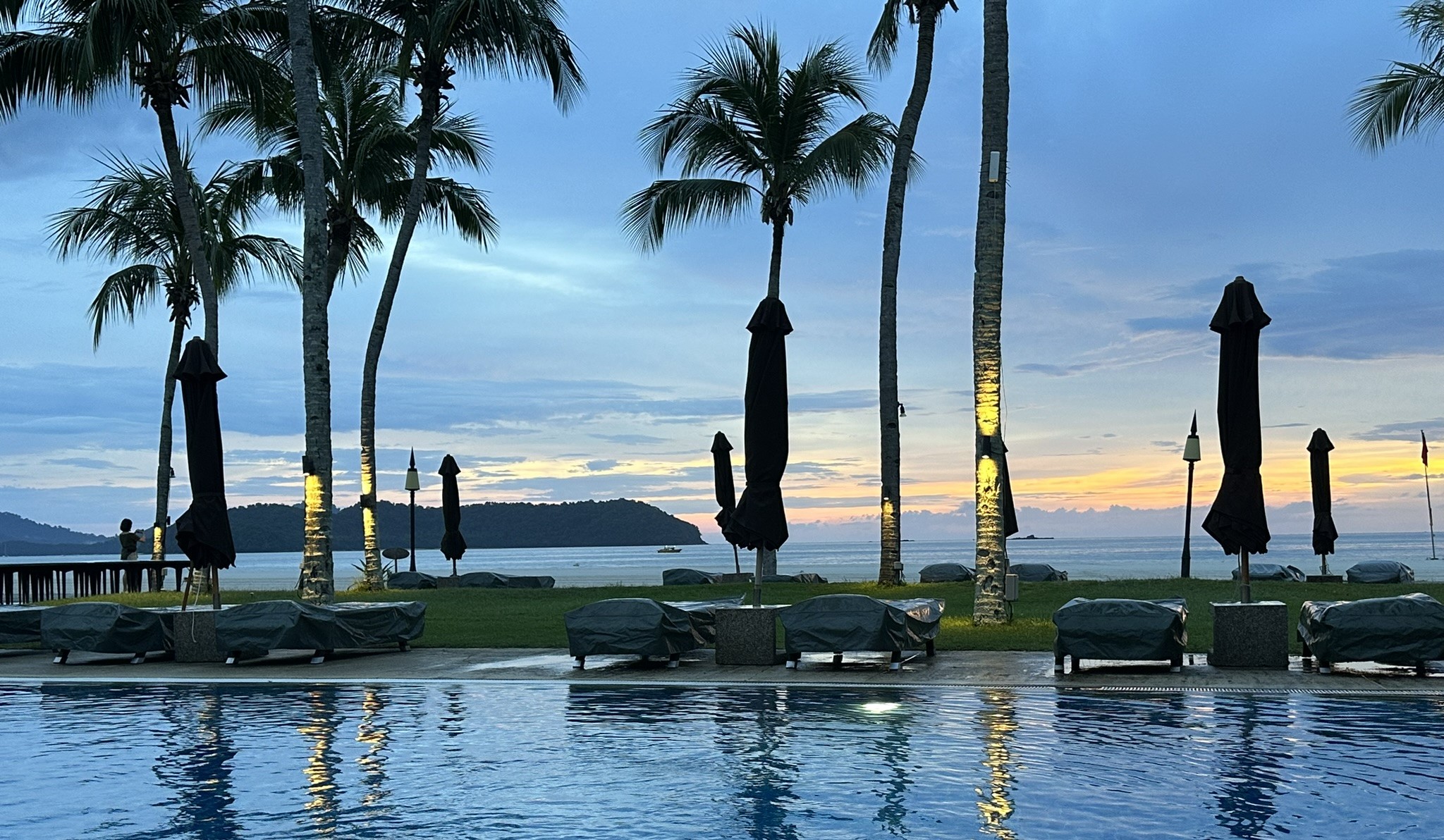
Just a 40-minute flight from Penang and 19 miles south of Thailand, the island of Langkawi is probably much like the vastly more famous destinations of Phuket and Koh Samui were, oh, 60 or 70 years ago. All the rugged island beauty, lush rainforest and pristine white sand beaches but without the overdevelopment, timeshare hawkers and crush of tourists looking to party. This was the last place we added into our southeast Asian itinerary and it was a winner.
Highlights:
- Casa del Mar, at the far end of Pantai Cenang beach, was the perfect base for our Langkawi stay. Lacking the crowds that populate the other end of the beach, it was relatively quiet and relaxing, only a short walk to the nearby village’s funky shops and restaurants, and it had a nice pool, pool bar, and a terrific onsite massage spa. Here is my review.
- Kumut Cafe & Bar, 100 yards down the beach from Casa del Mar, was a funky beach bar with a chill vibe, where you could enjoy a cocktail from your bean bag chair on the beach while being entertained by a roving band of fire jugglers.

Casa del Mar 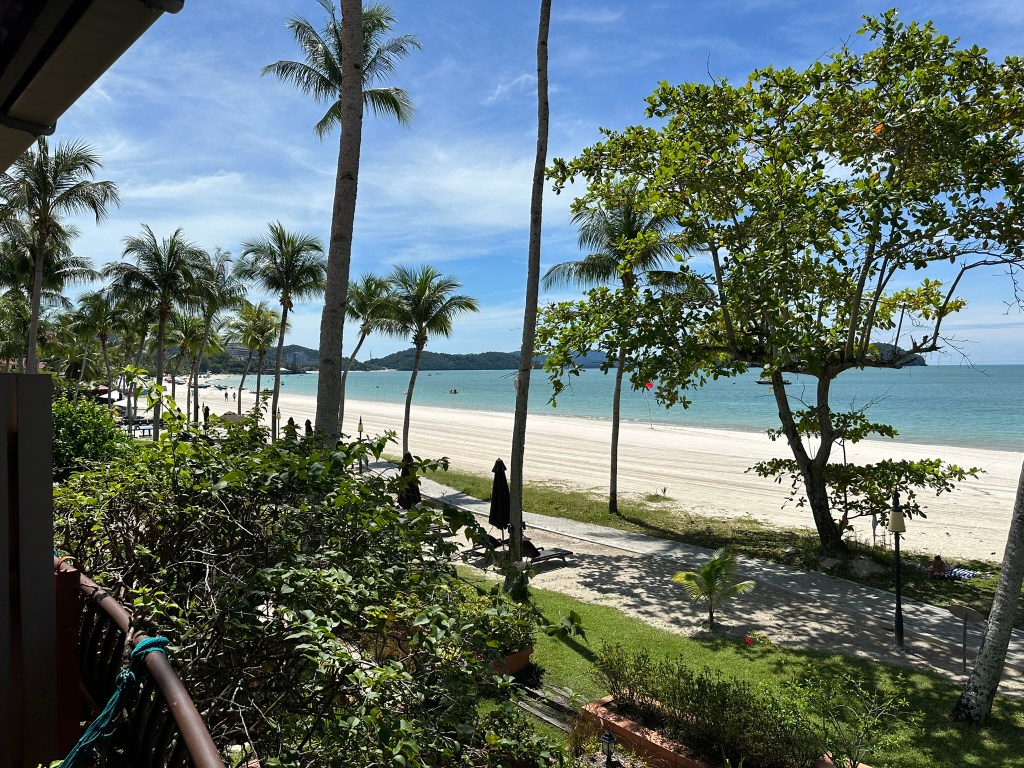
View from our suite 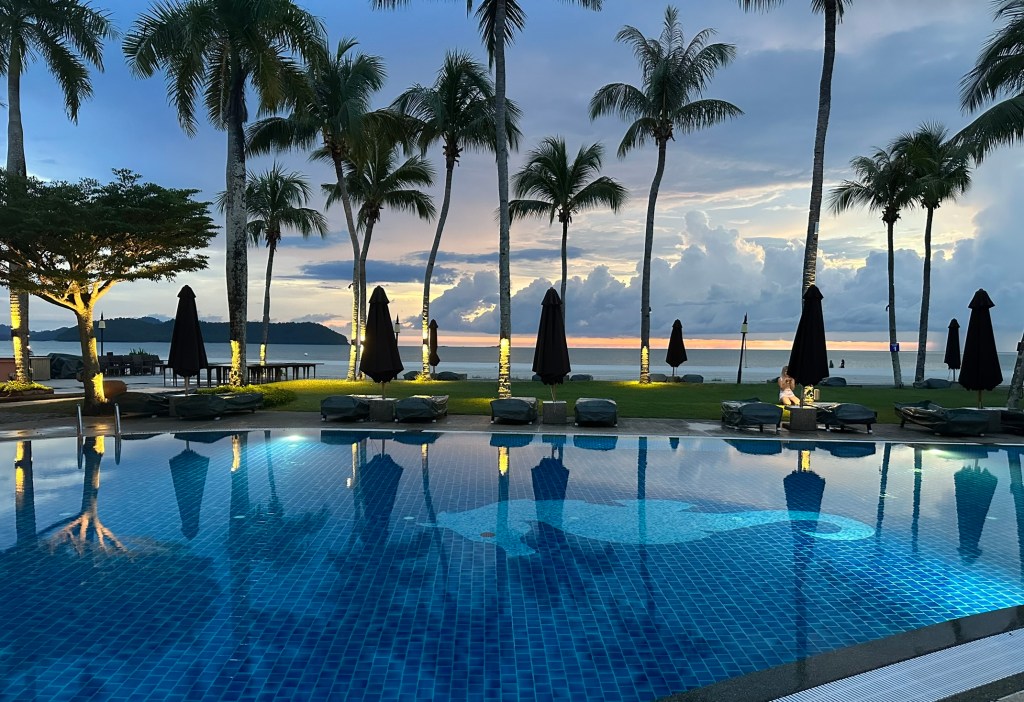
Blue on blue 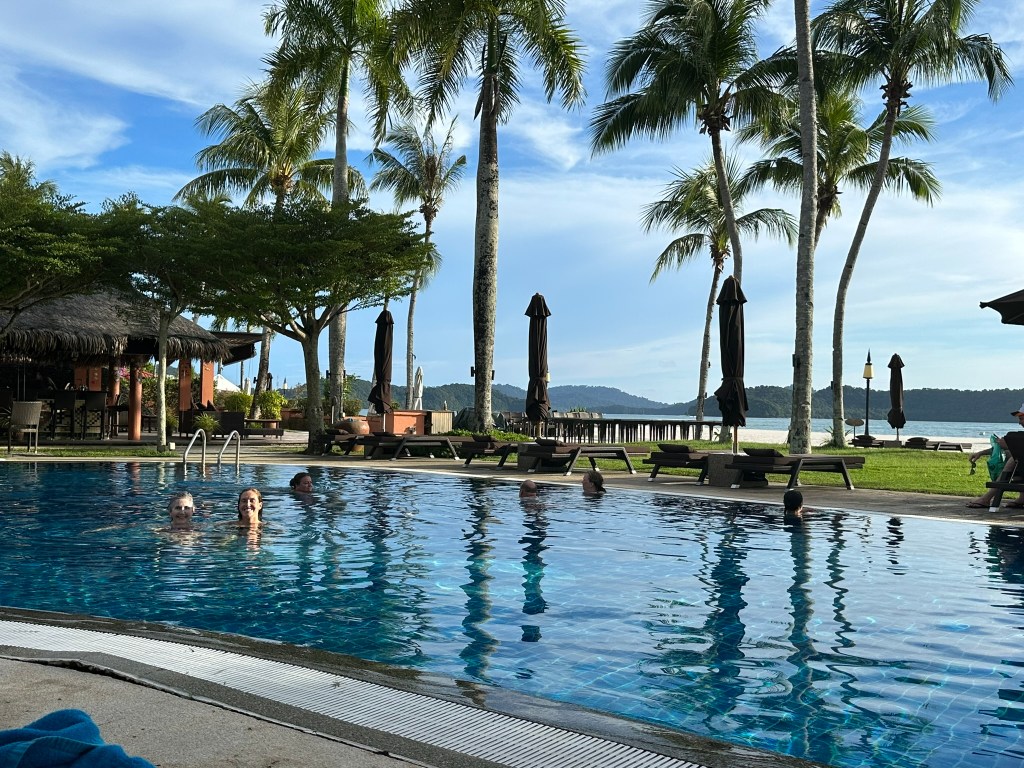
Pool and beach bar 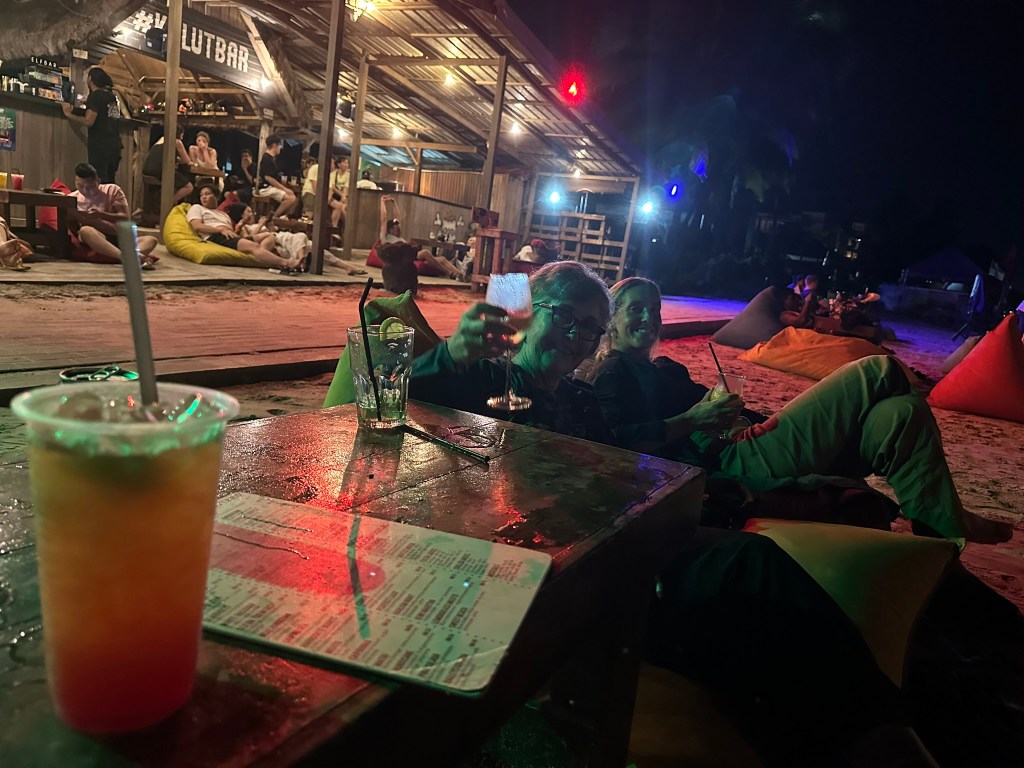
Beach cocktails 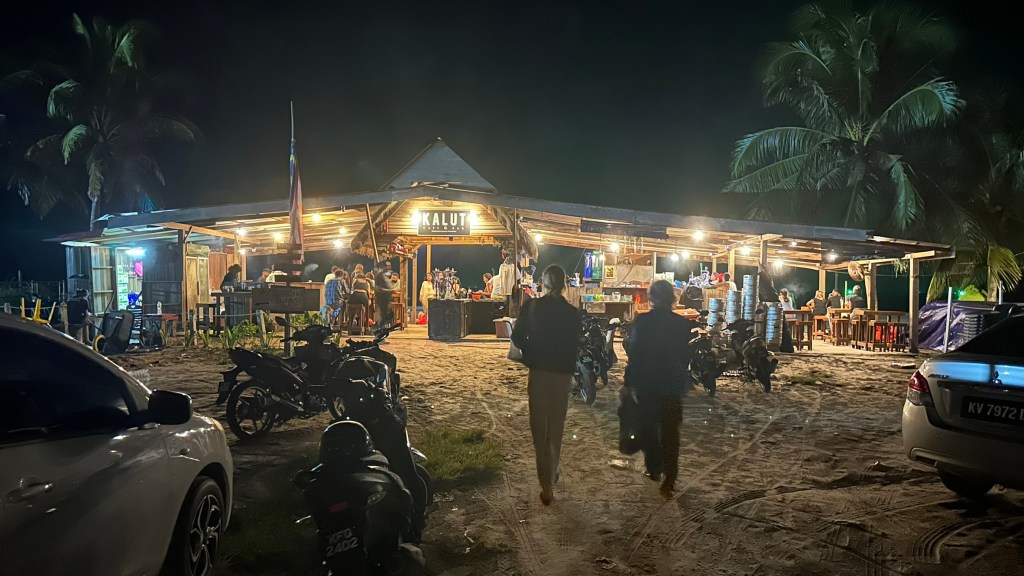
Kalut Cafe & Bar 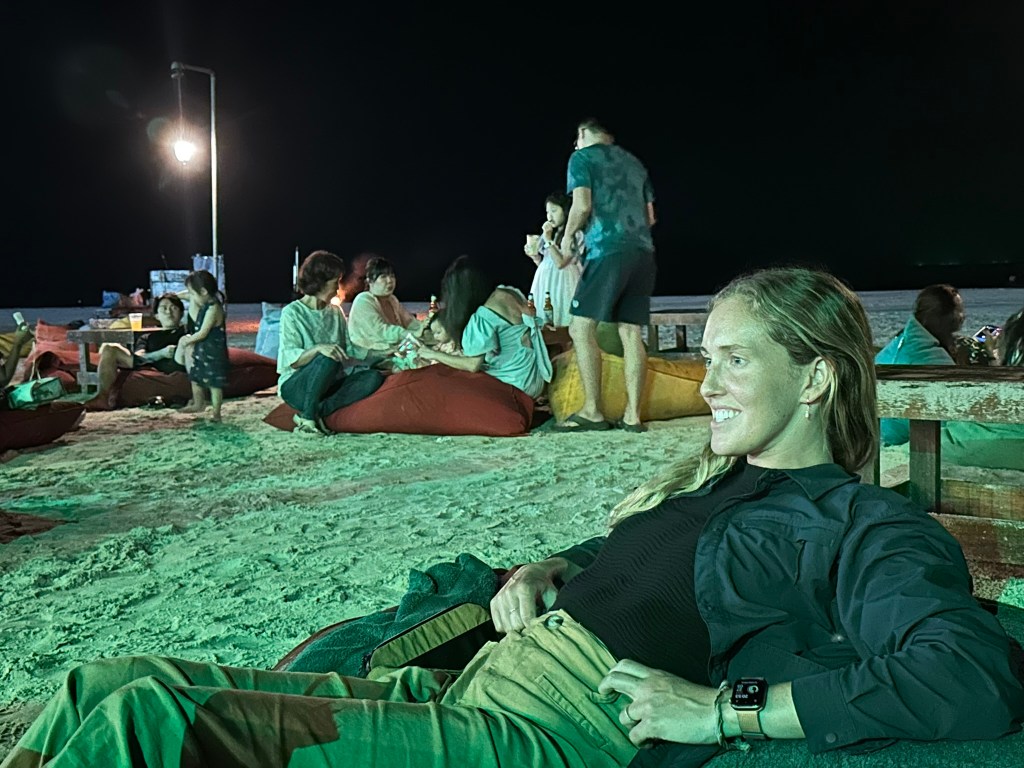
Chill zone 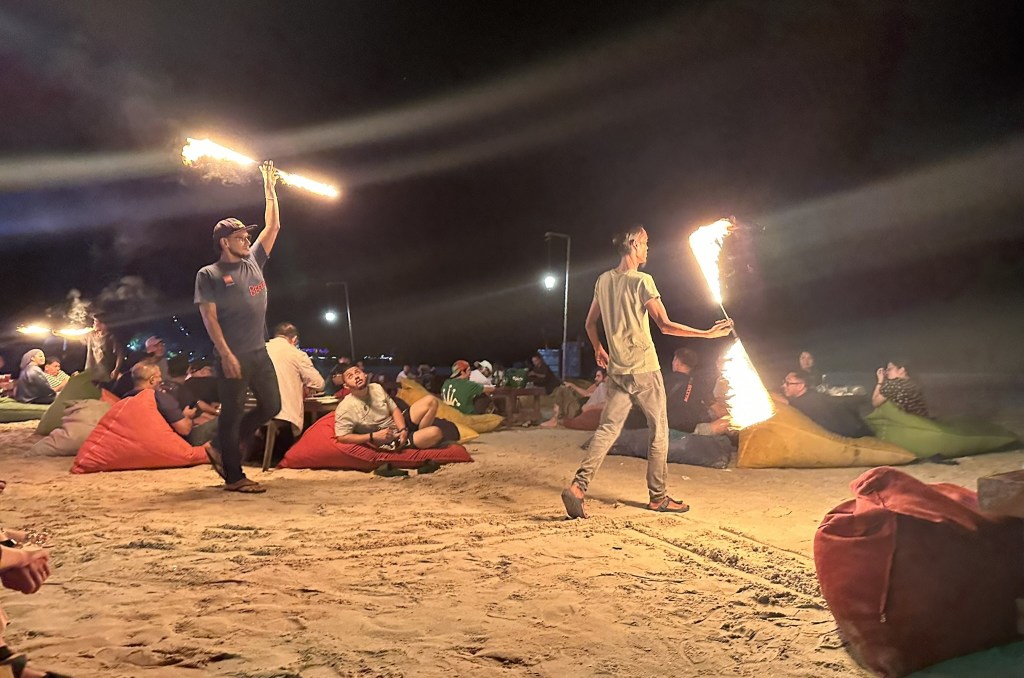
Nightly entertainment 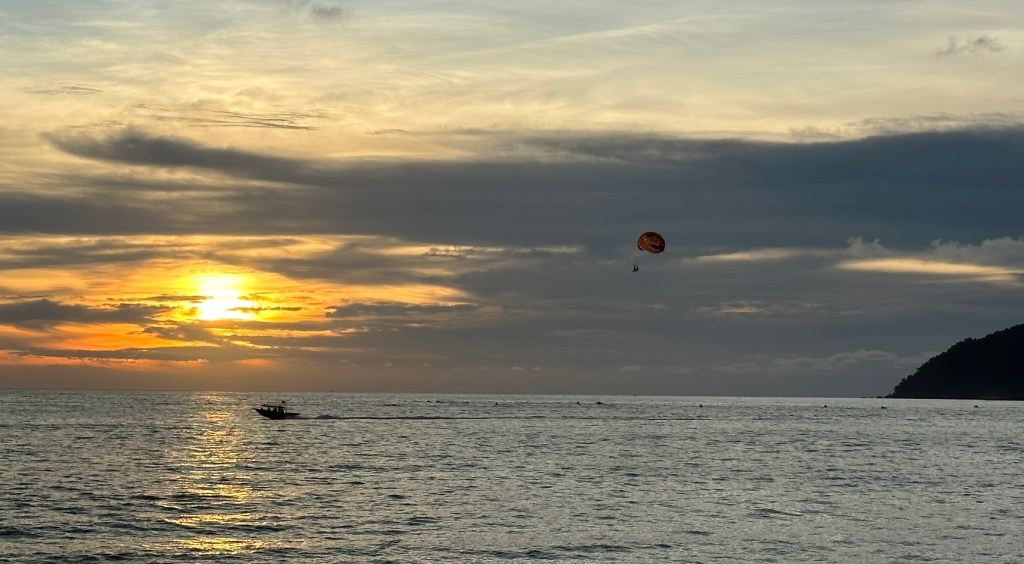
Sunset over Malacca Strait
- Across the island, we took a private, guided boat tour through the mangroves at Kilim Geoforest Park, a UNESCO nature preserve. Covering 100 square kilometers of limestone karst formations over 400 million years old, the geopark is home to eagles, bats, monkeys, vipers, and all kinds of fish, flowers and, yes, mangroves. Interestingly, no mosquitoes!
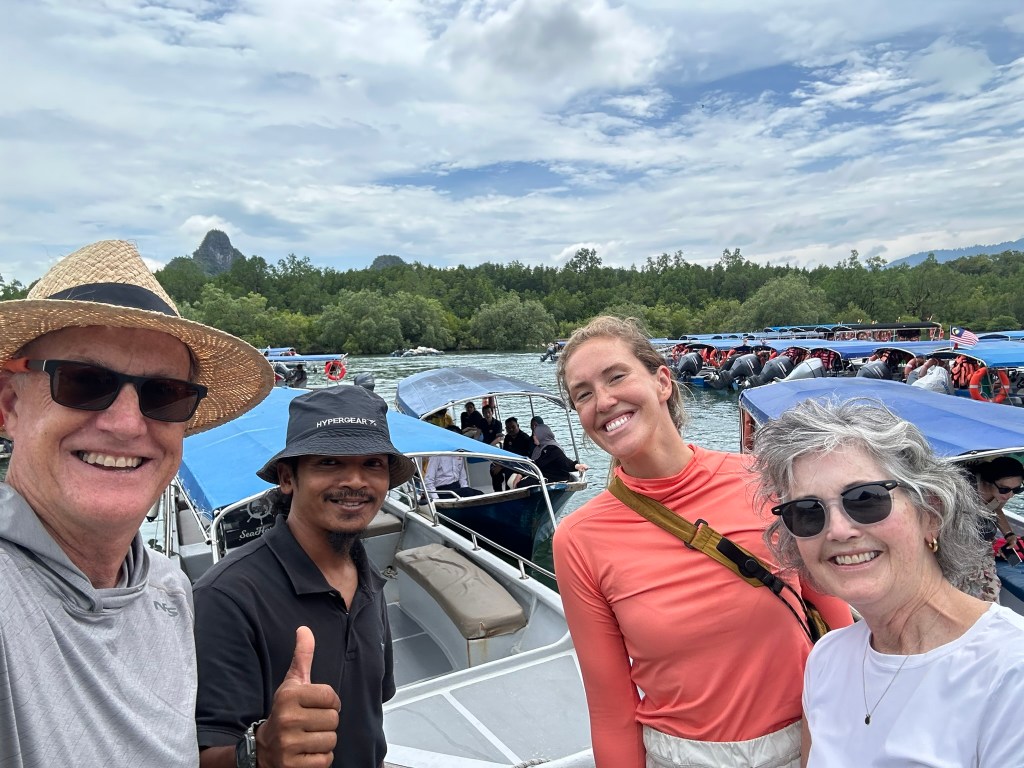
With our guide Pete 
Heading into… 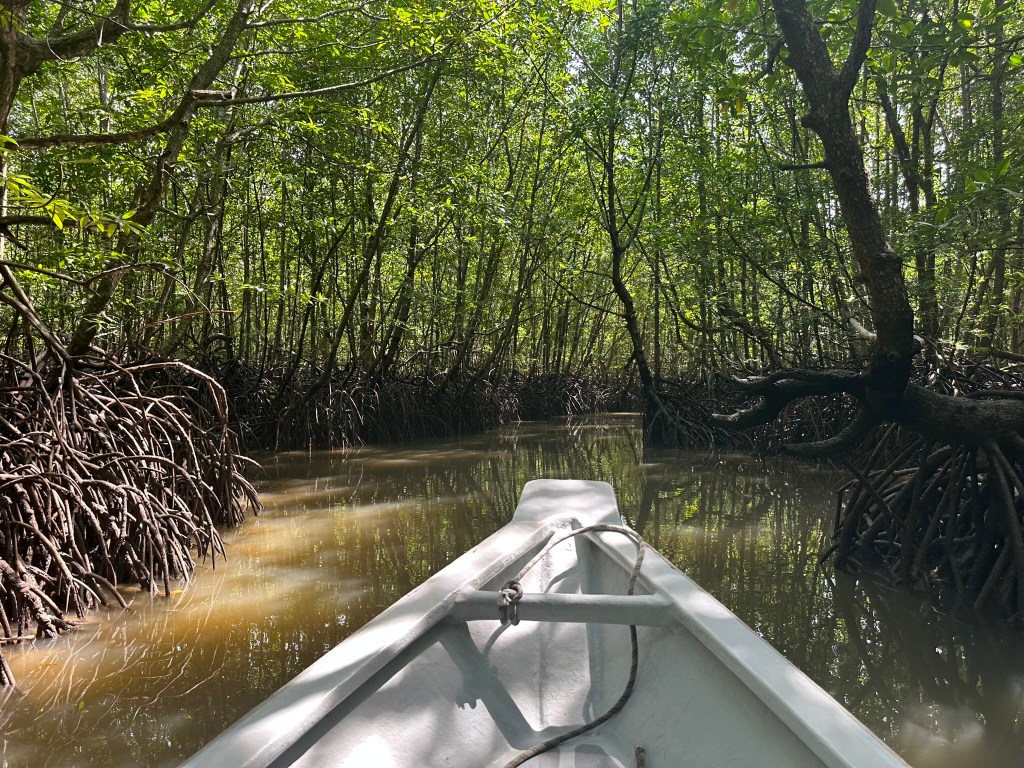
…the mangroves 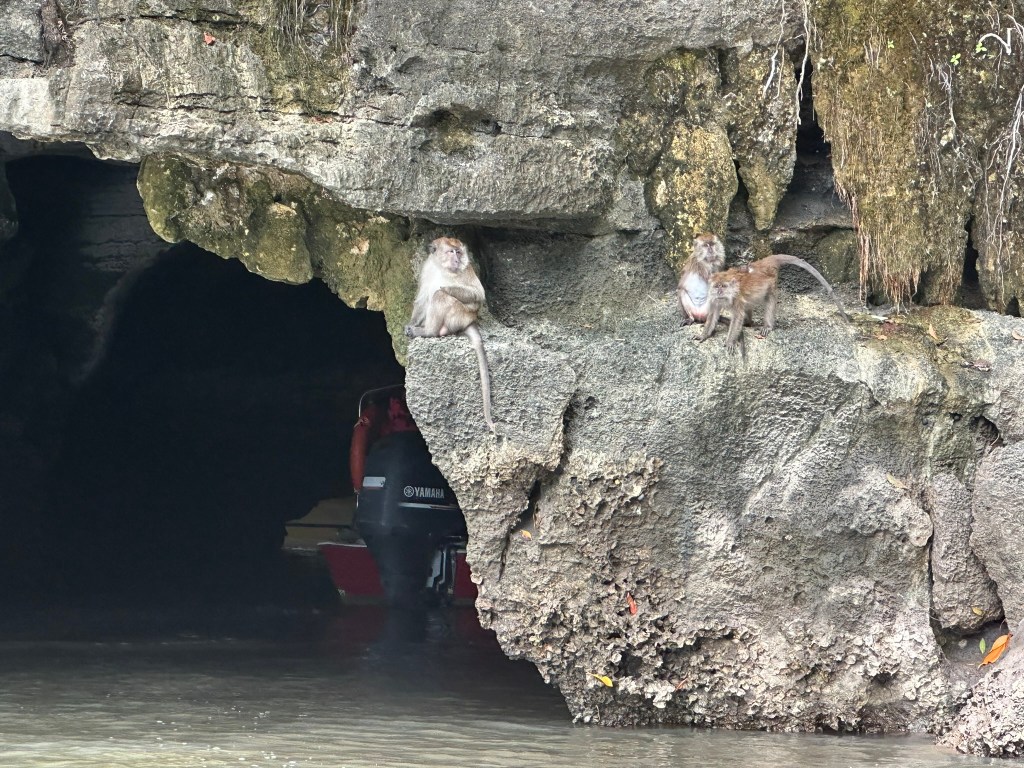
Crocodile cave denizens 
Long-tailed Macac 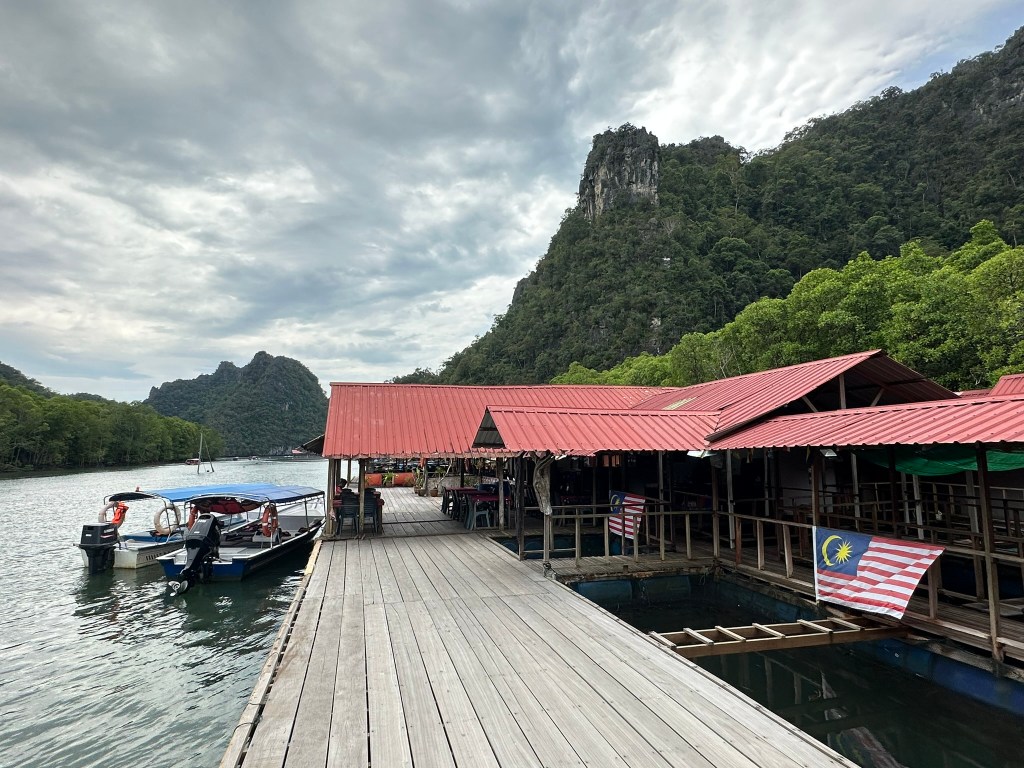
Fishing village stop 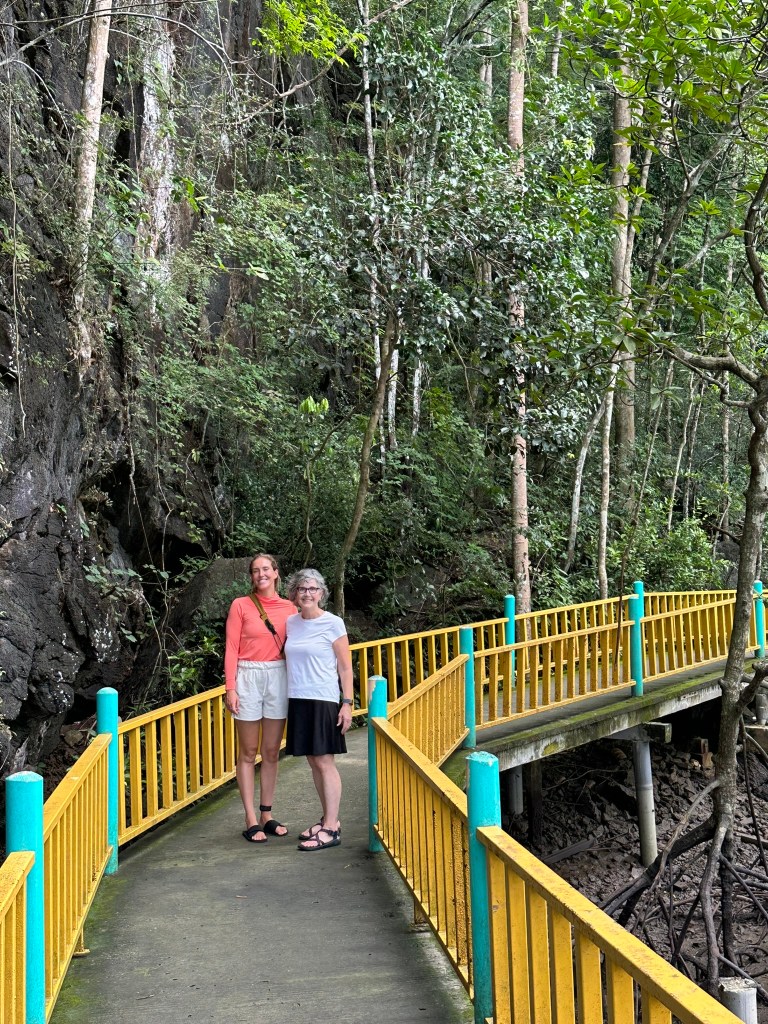
Bat cave boardwalk 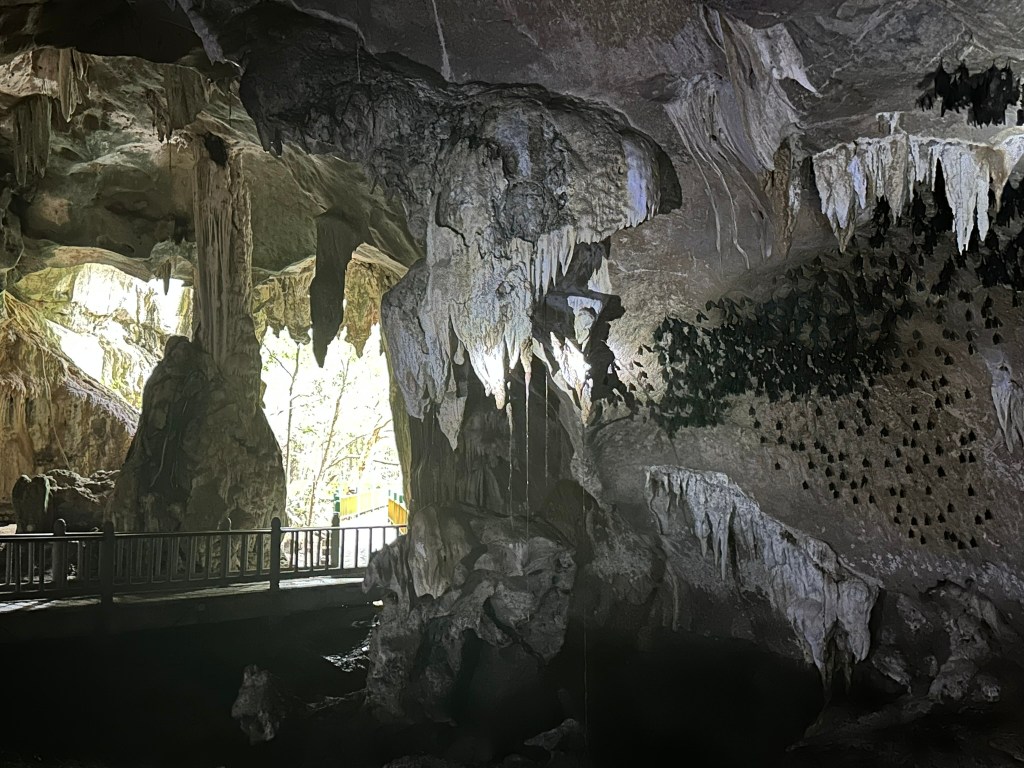
Bat cave 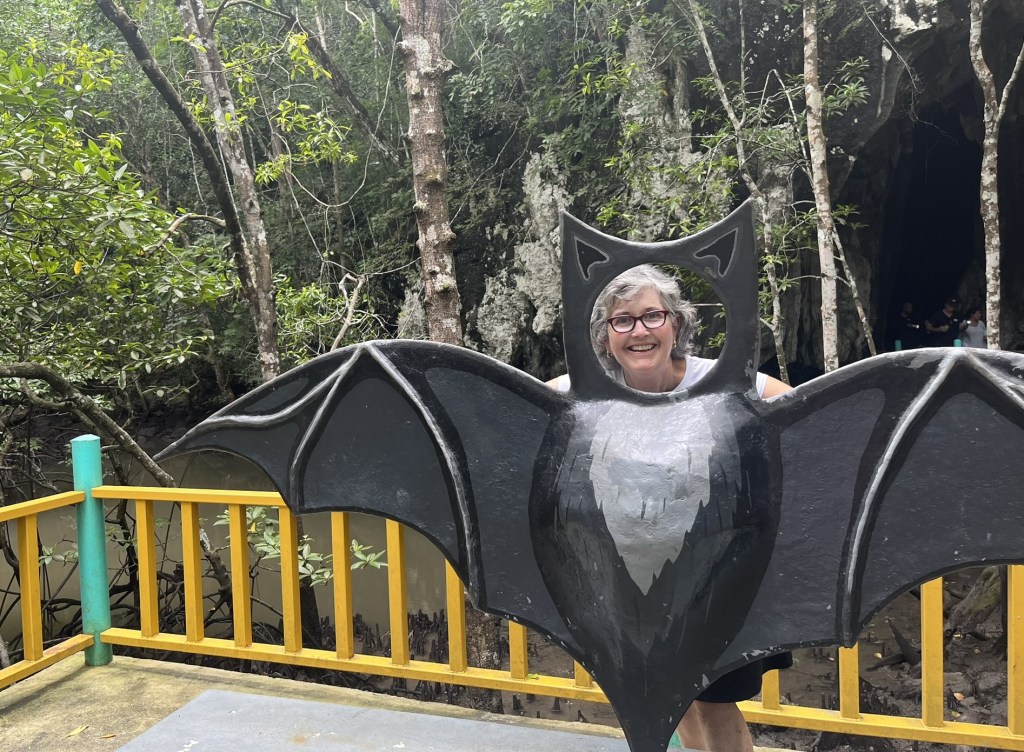
Bat Girl. Had to do it. 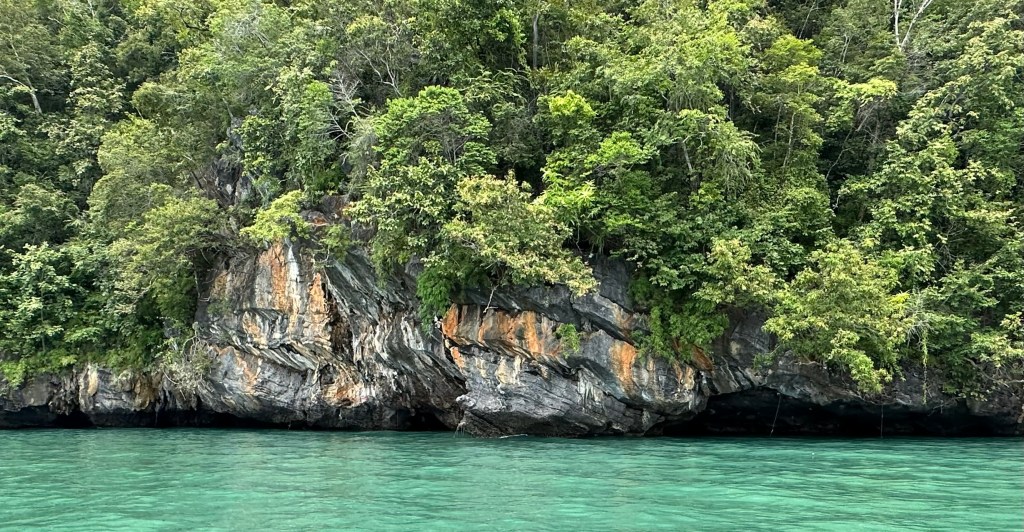
Colored rocks over teal sea
- Our exhilarating, self-guided 60km motorbike tour through verdant rainforest to Temurun Waterfall, a 200-meter cataract surrounded by monkeys, was super fun. Renting motorbikes is both easy and cheap, right across the street from our hotel, and is the best way for getting around the island.
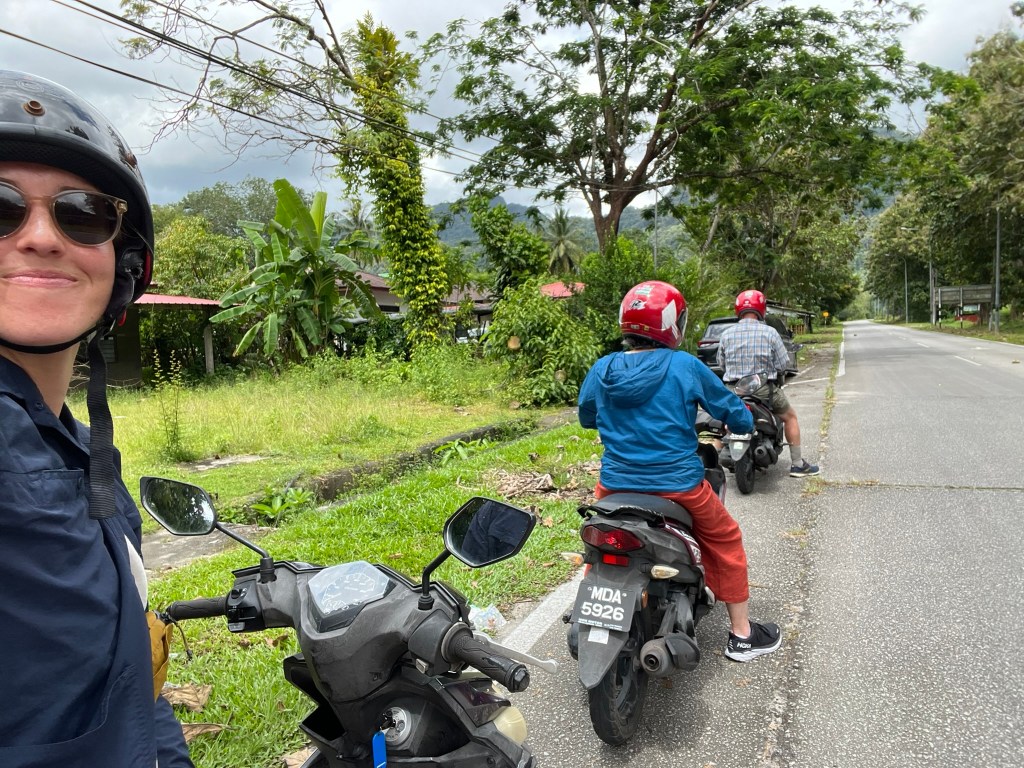
Hitting the road 
Roadside water buffalo 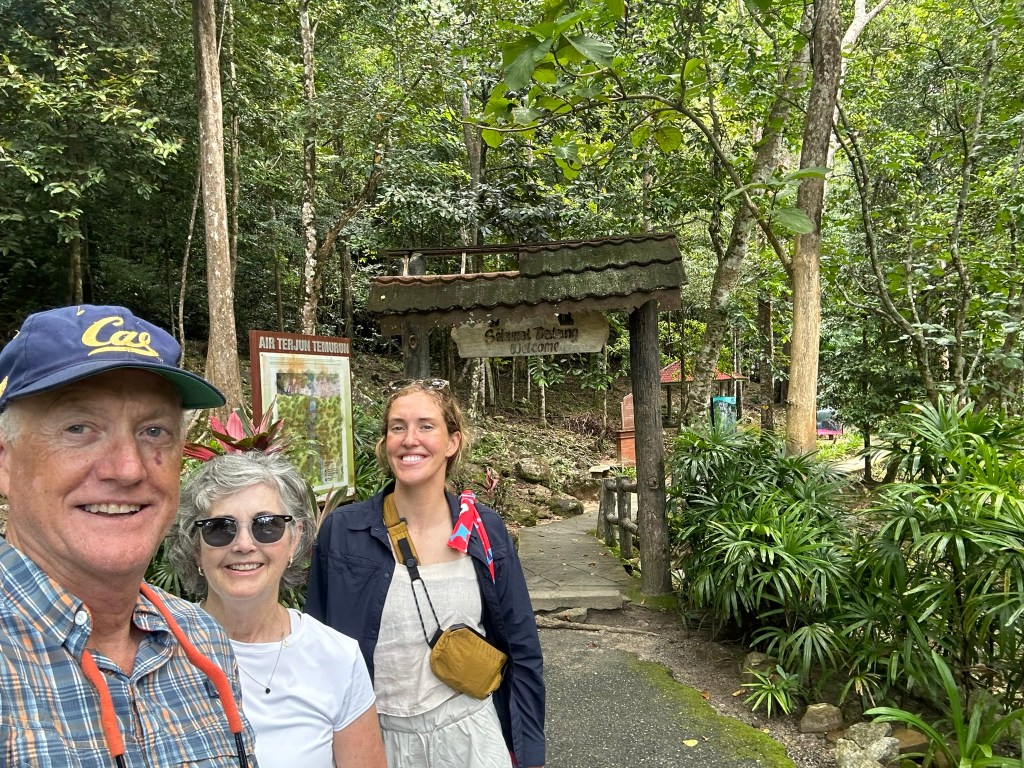
Temurun Fall trailhead 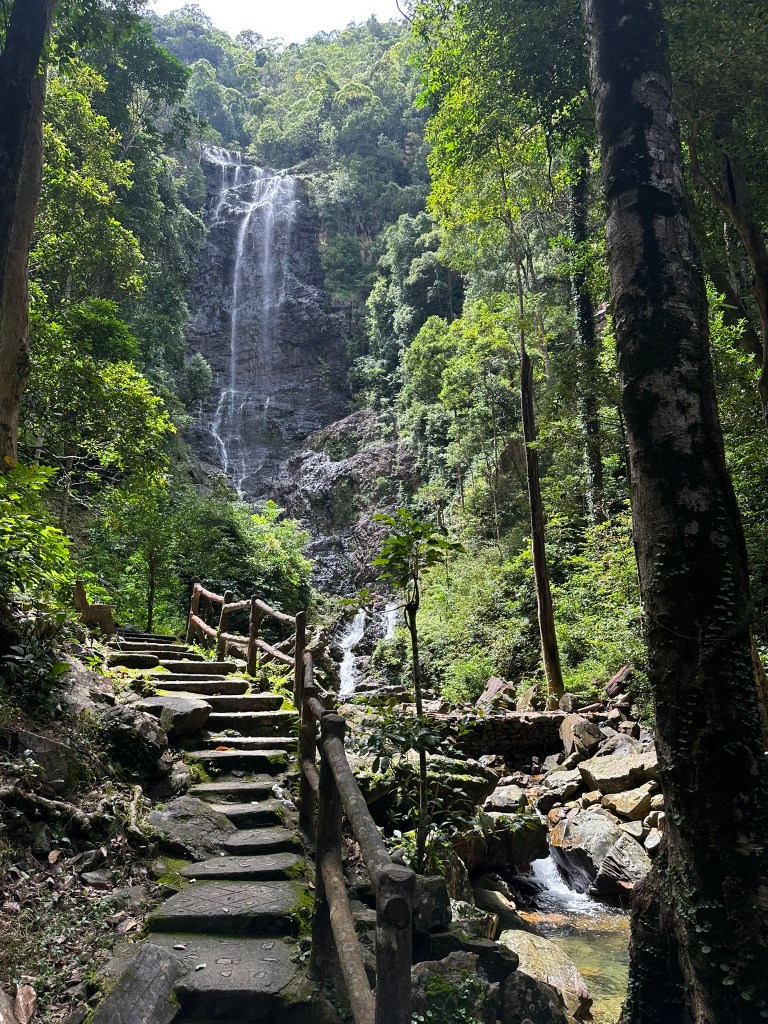
Temurun Waterfall 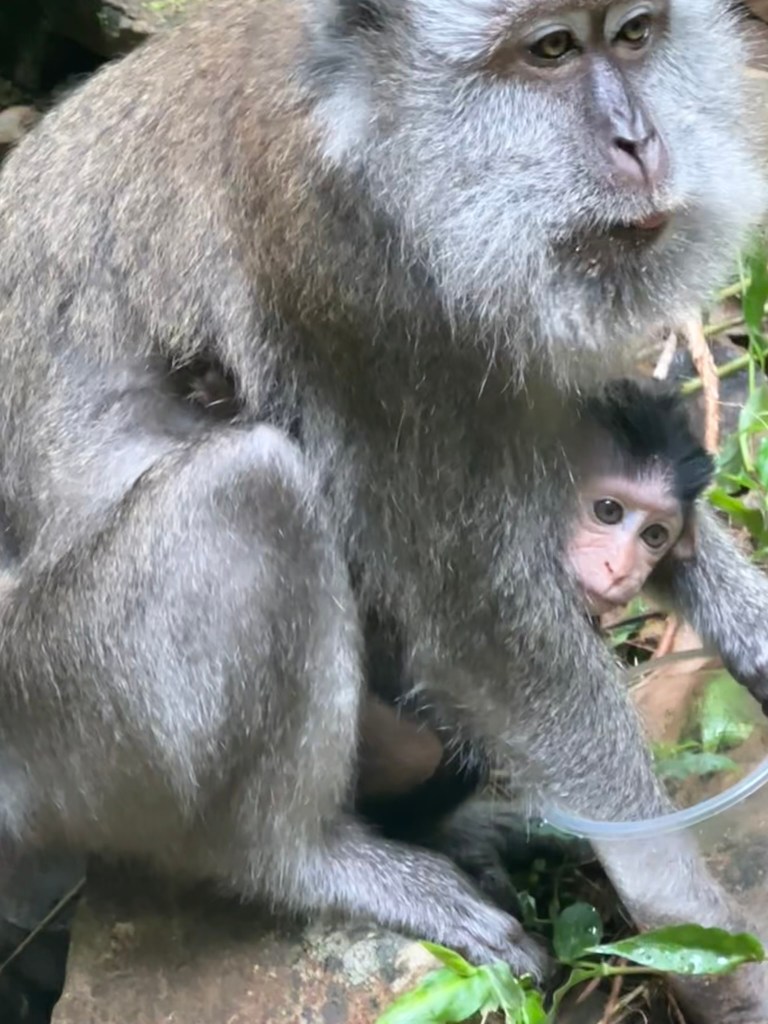
Mom and baby 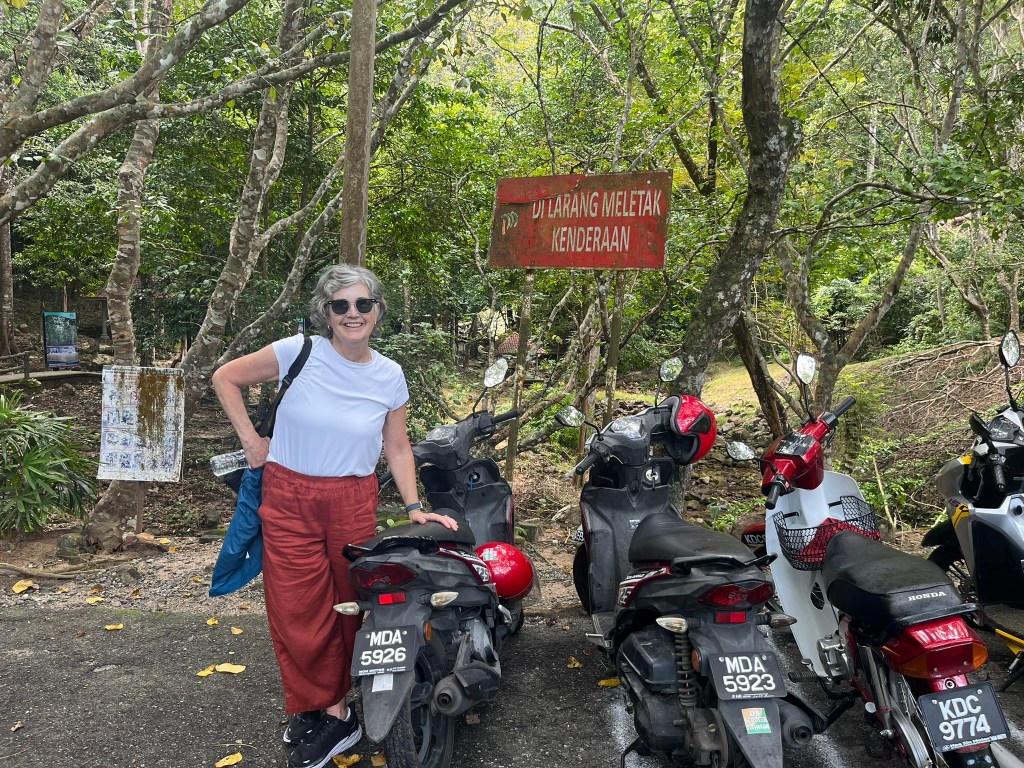
Motorcycle Mama 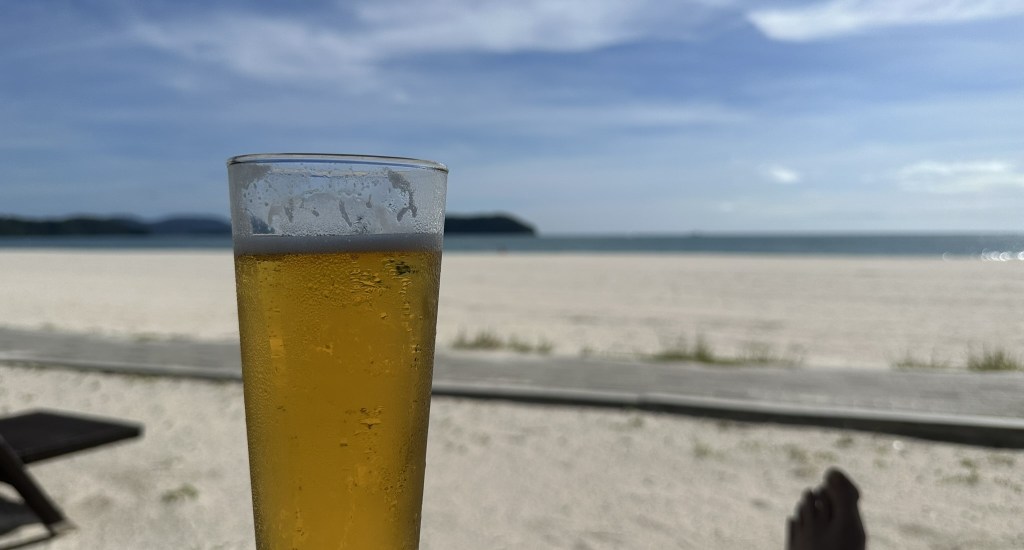
What one does after
- The night market at Pentai Cenang made for a fun stroll and the food was both cheap and delicious. Can’t get enough of southeast Asian night markets!
- We didn’t do much else except slow down and relax. Hey, everyone deserves a break now and then!
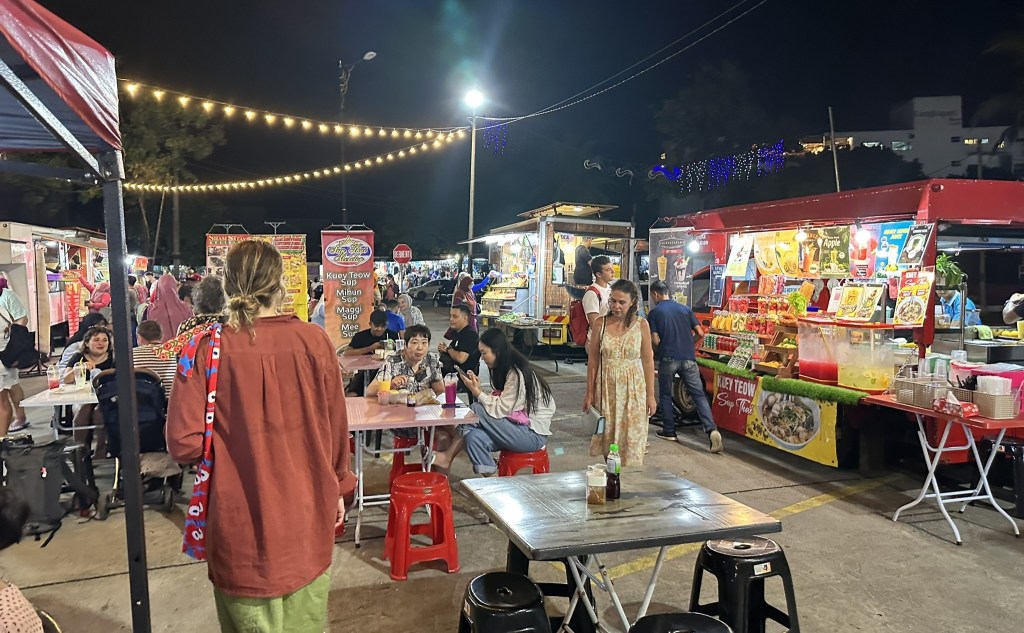
Night market 
Mmmm, Bakso Bihun! 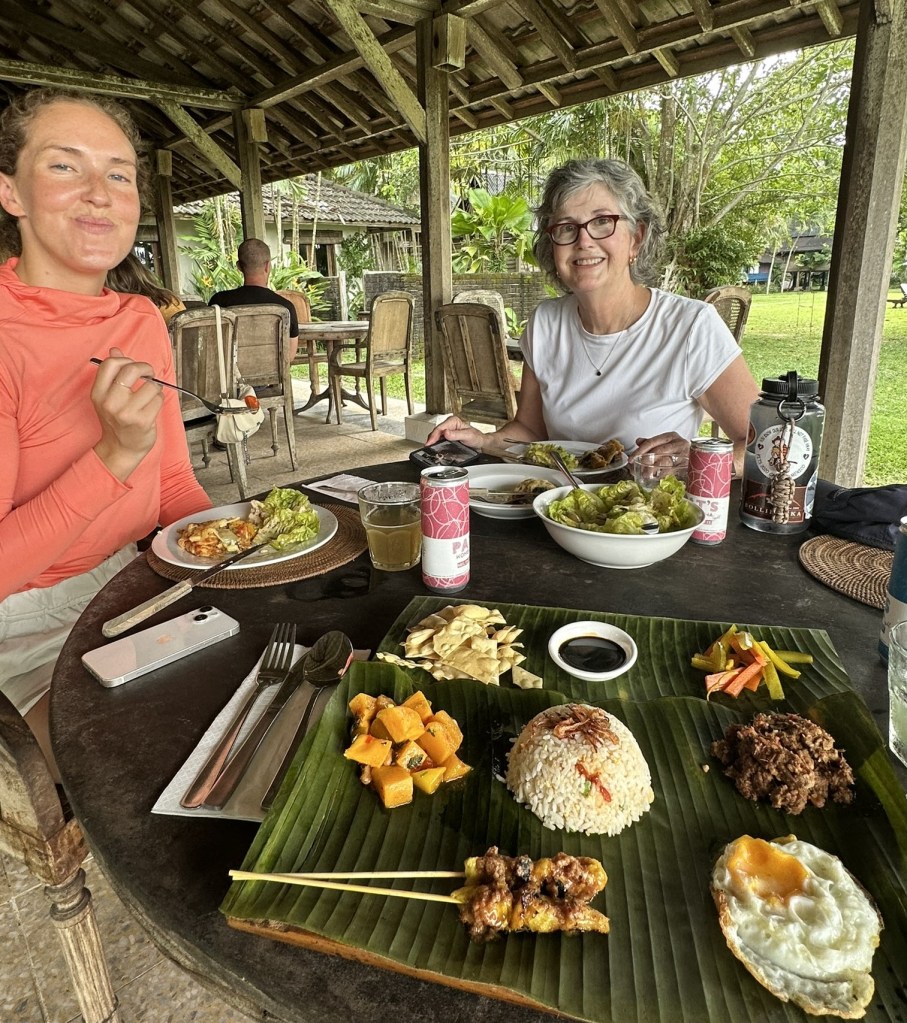
Traditional Malaysian lunch 
Thirst quencher 
Nice way to enjoy sunset 
Sundowners
Of note, cloud cover made taking the cable car to the island’s highest mountain peak and its famous Langkawi Sky Bridge impractical. Likewise, we avoided the uber-popular island-hopping tour to Palau Dayang Bunting and Beras Basah Island — touristy, overcrowded, and generally unimpressive based on reviews I’d read.
| Days 10-12 | Chiang Mai, Thailand | Baan Orapin B&B |
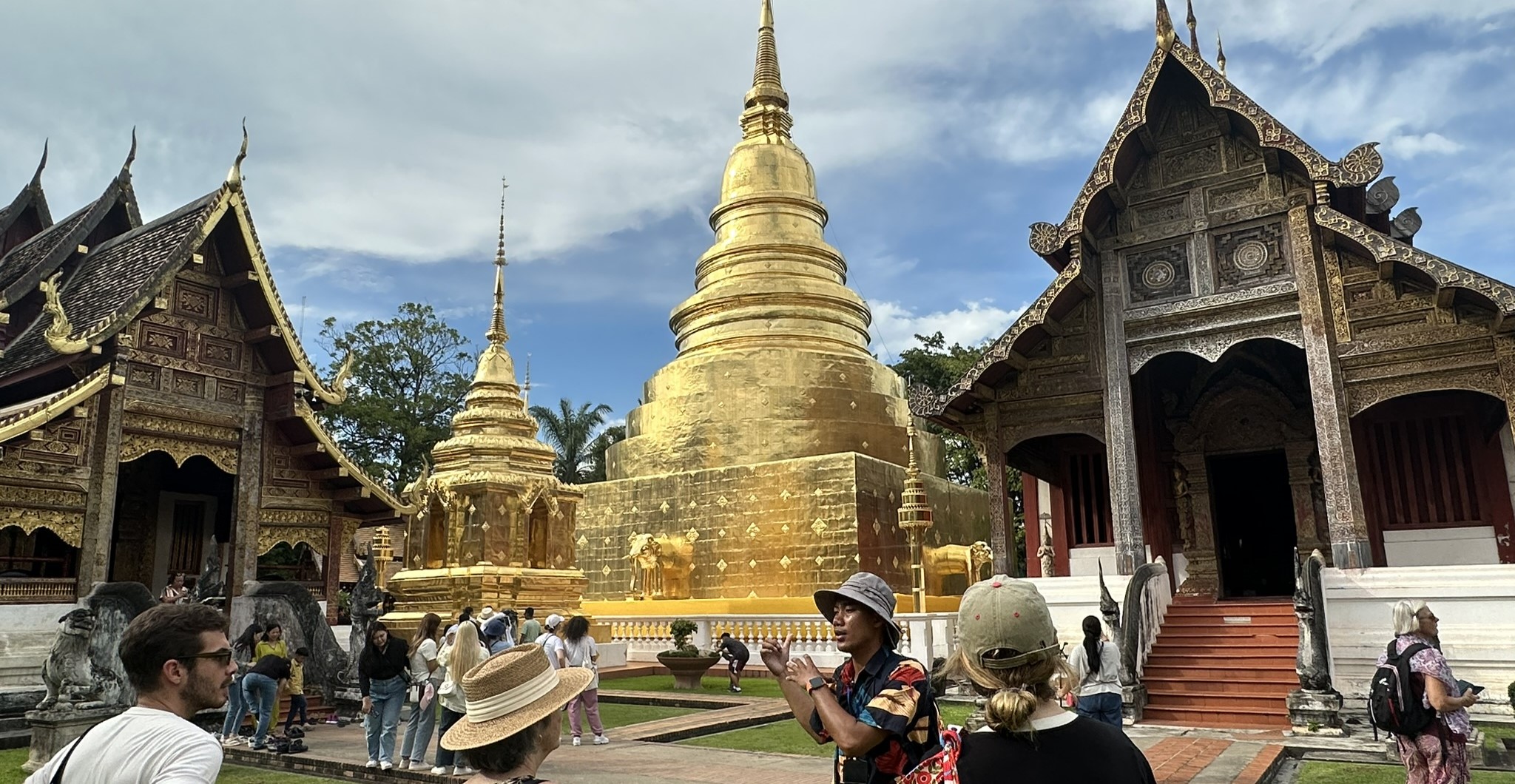
Another day, another destination. Chiang Mai, founded in 1296, is the largest town in northern Thailand, the hub of what was once the Lanna kingdom, mostly southern Chinese and Mongolian immigrants, before it joined with Siam in 1776 after 200 years of rule under Burma.
It’s bustling Old Town is almost a perfect square mile surrounded by a moat on four sides. The culture and food are very different than southern Thailand. This is the place where Anthony Bourdain famously said “I remember the moment I first realized I’ve been living my whole life in black and white. It was like discovering a color I never knew existed before. A whole new crayon box full of colors, that was it for me.” Buddhist temples, tuk-tuks and motorbikes, bustling day markets, mountain monasteries, electric night markets, killer street food, and yes, a couple cool cocktail bars as well. I’d don’t agree entirely with Bourdain, then again I didn’t eat sheep’s brains and blood soup. But I see his point. Three days was enough to get a good taste of Chiang Mai, but I could easily spend a week here, or more.
Highlights:
- With more than 300 Buddhist temples, it might be hard to decide which ones to see. Our guided walking tour of the Old Town took us to three of the best: Wat Phra Singh Woramahawihan (14th century), Wat Chedi Luang, a 15th century temple whose original top was destroyed in an earthquake and never rebuilt, and Wat Chiang Man.
- Our guide, San, also explained the “spirit houses” found outside virtually every home and business. A relic from ancient Animism religion, the spirit houses are meant to protect the main house.
- The huge, bustling, 1km long Wua Lai Saturday night street market ending at Wat Sri Suphan, the “Silver Temple”, was a feast for the senses.
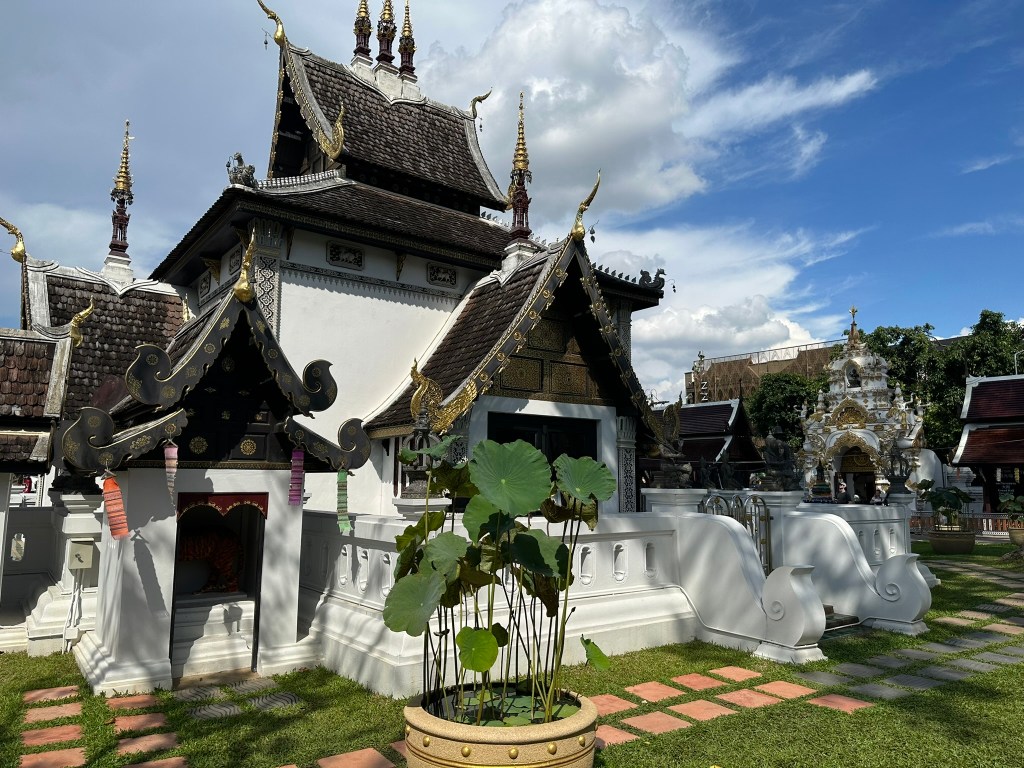
Wat Chedi Luang 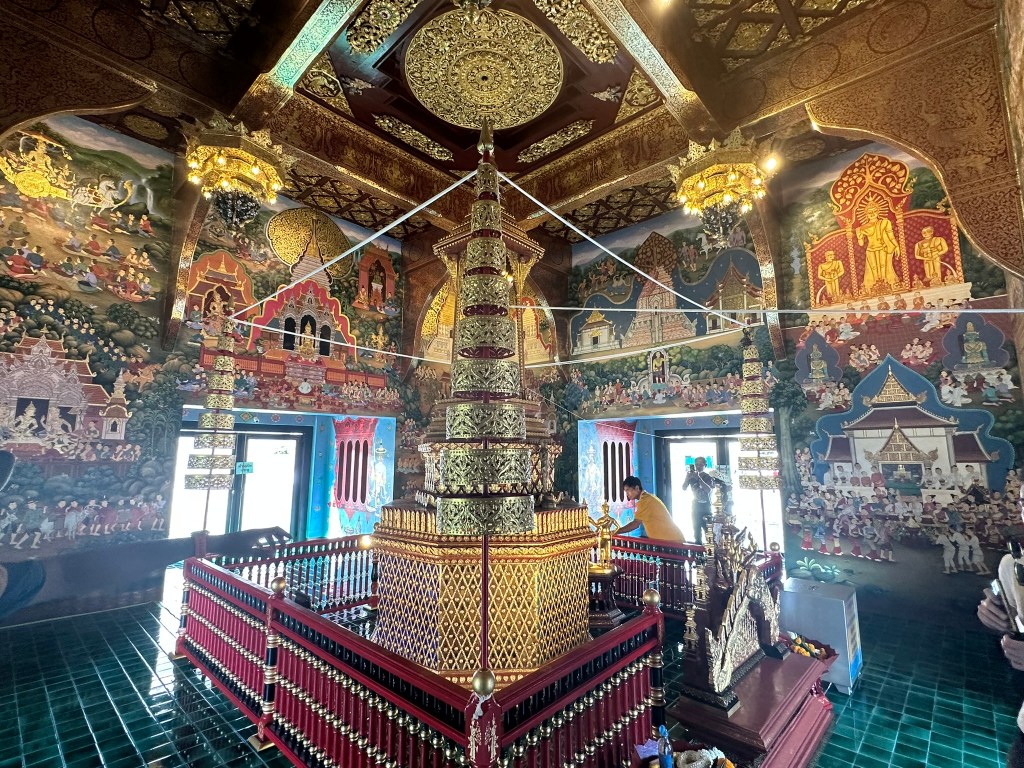
Only men allowed in this room 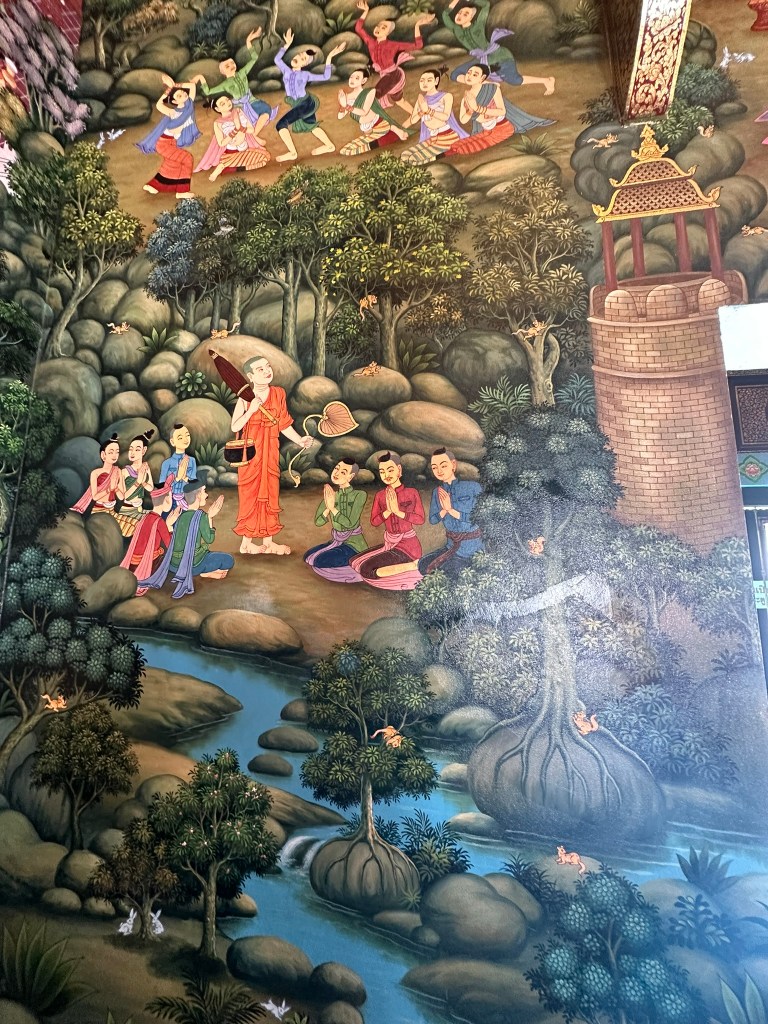
Murals in the temple 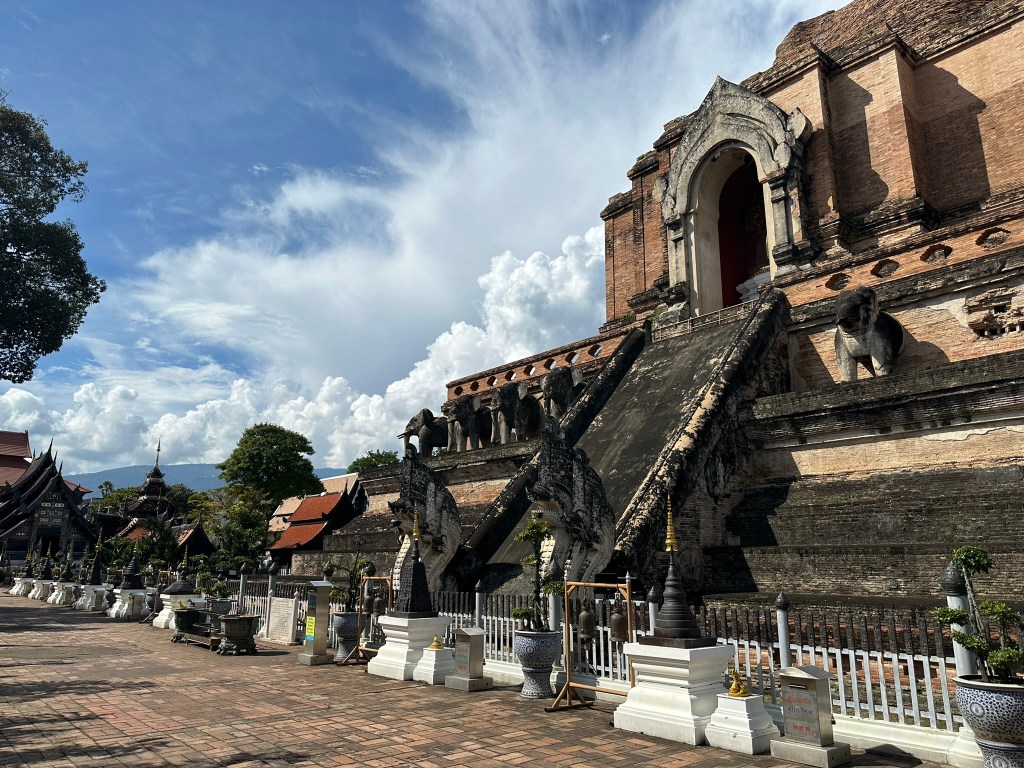
Wat Chedi Luang 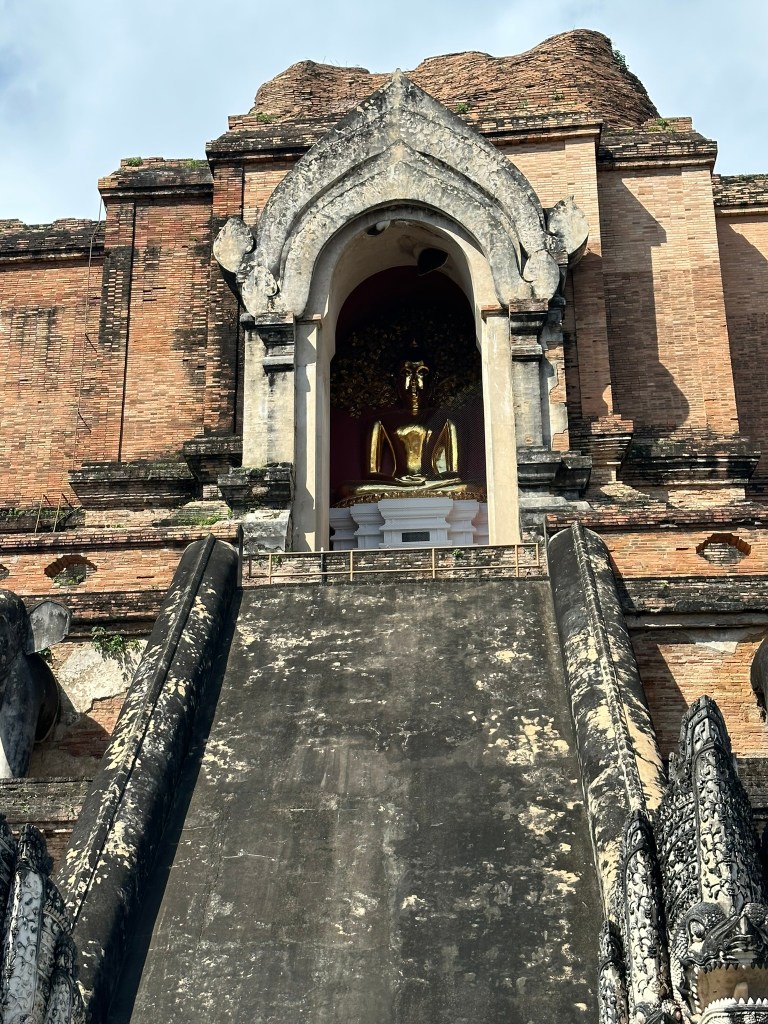
Wat Chedi Luang Buddha 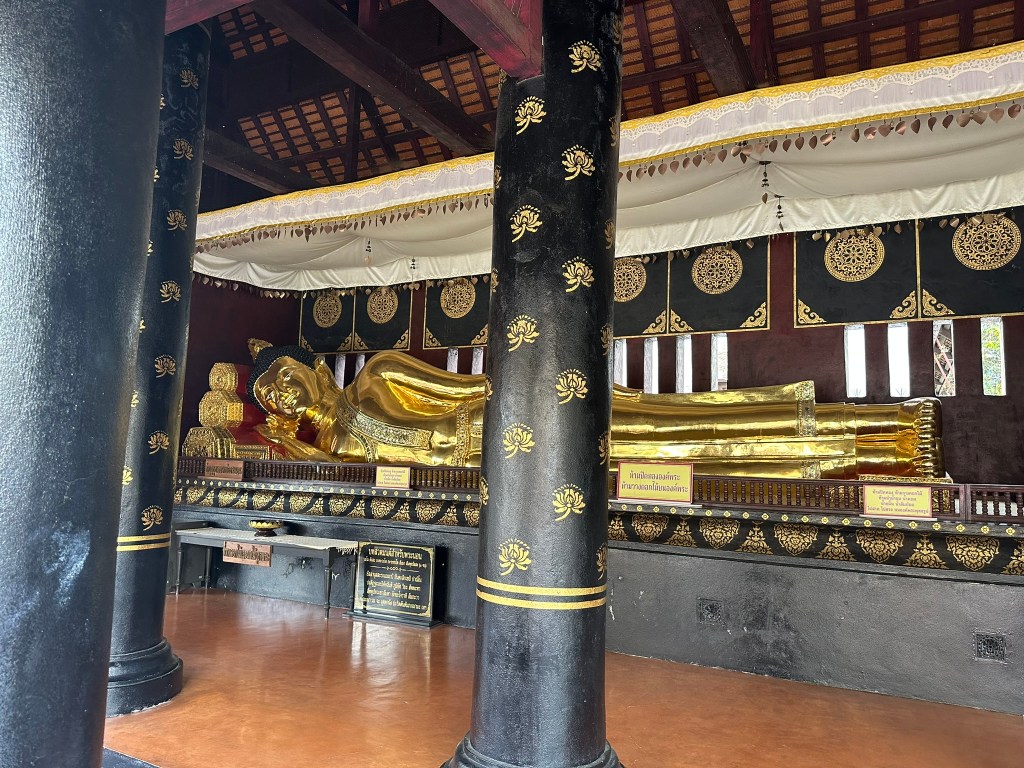
Reclining Buddha 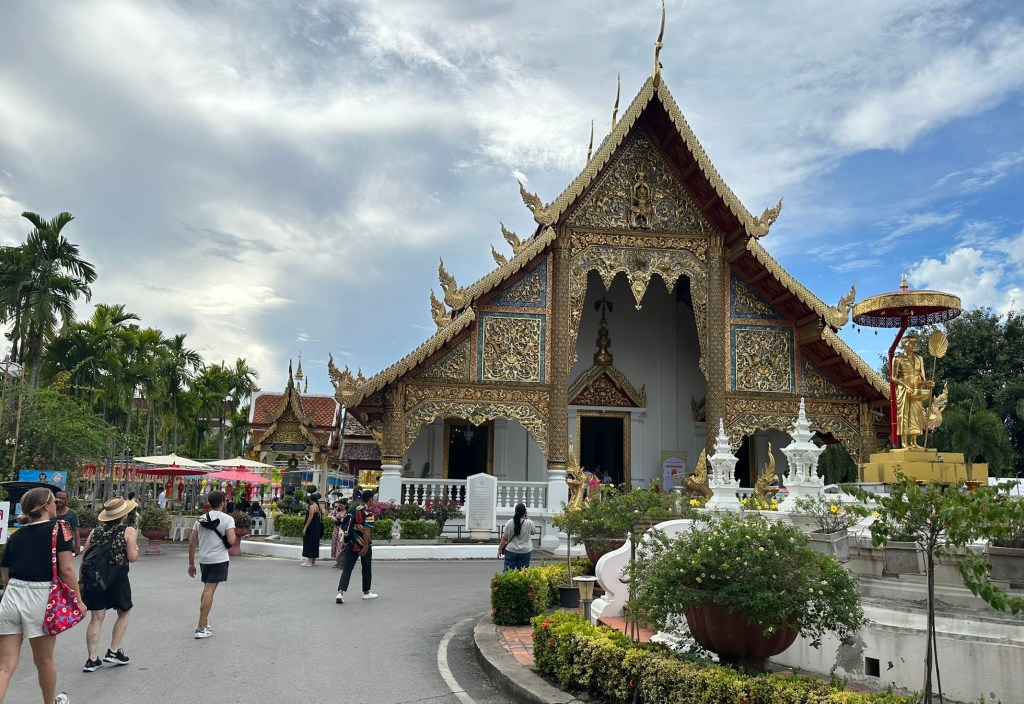
Wat Chiang Man 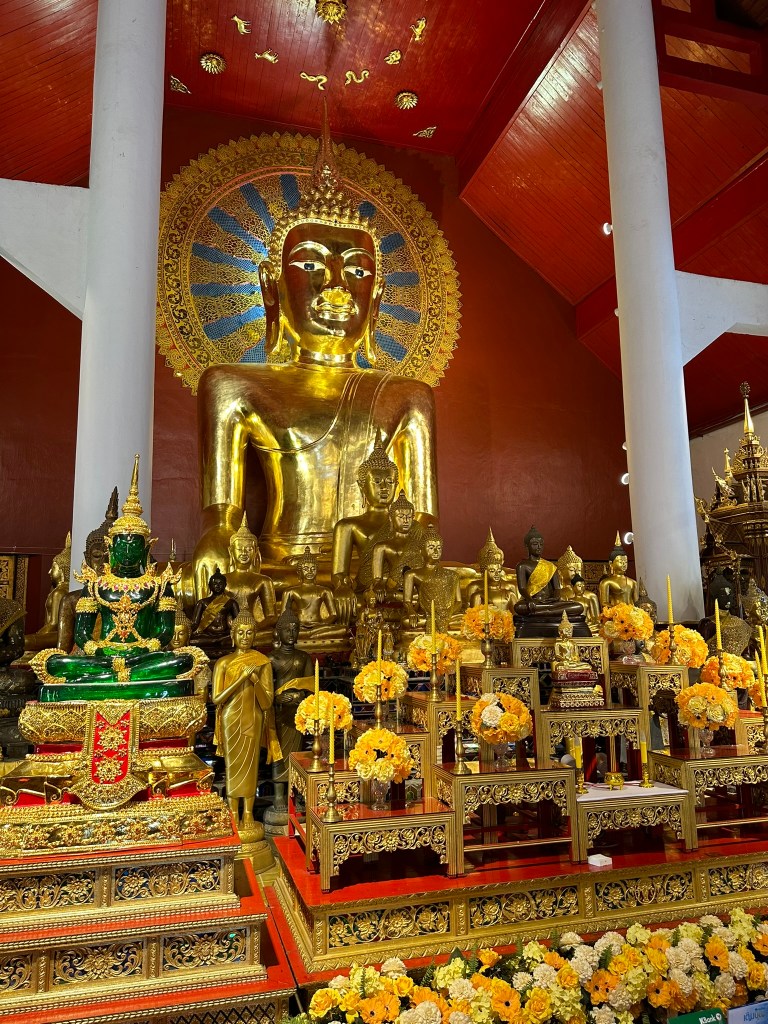
Wat Phra Singh Woramahawihan 
Wat Phra Singh Woramahawihan 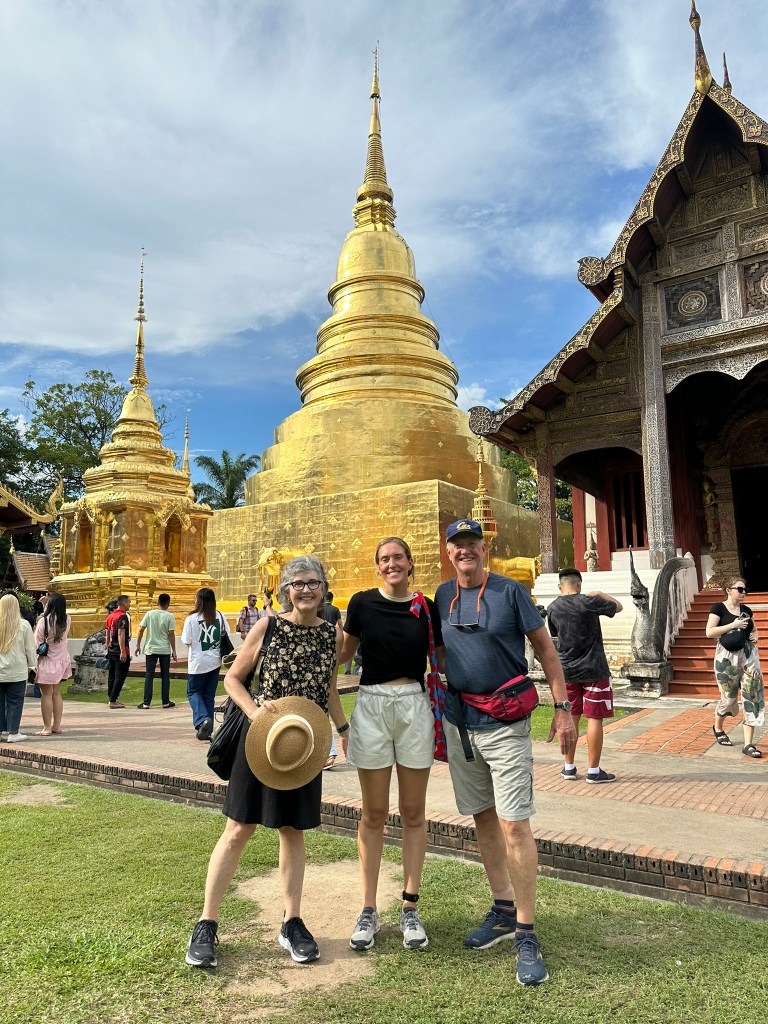
Wat Phra Singh Woramahawihan 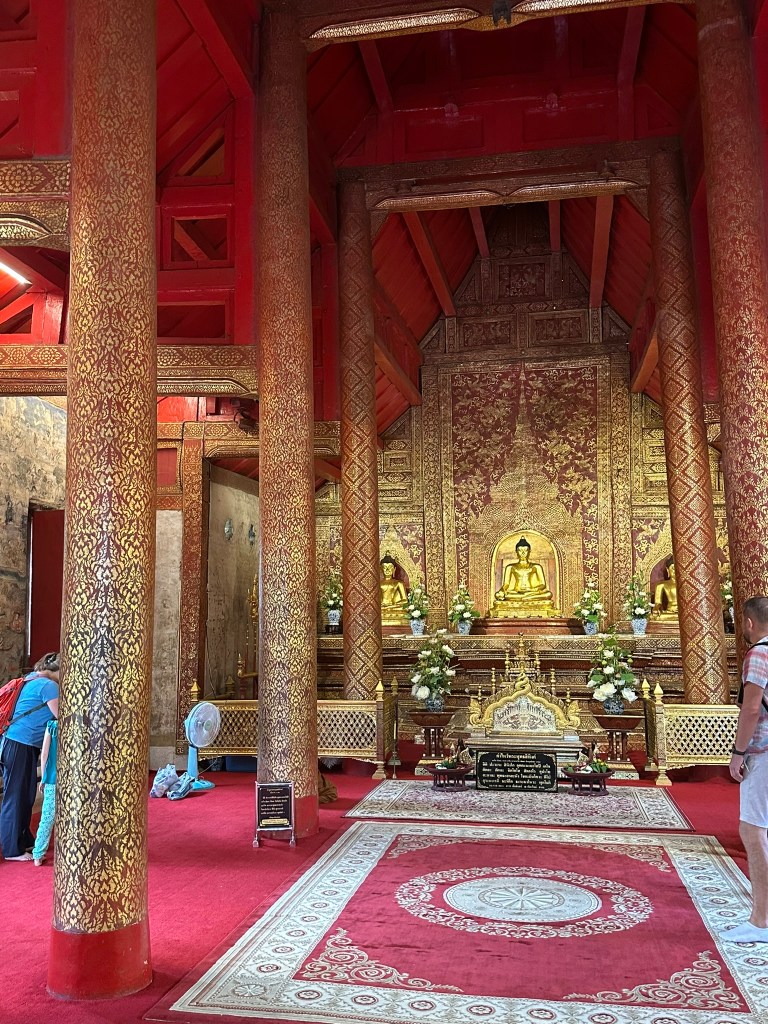

Ancient founders of Chiang Mai 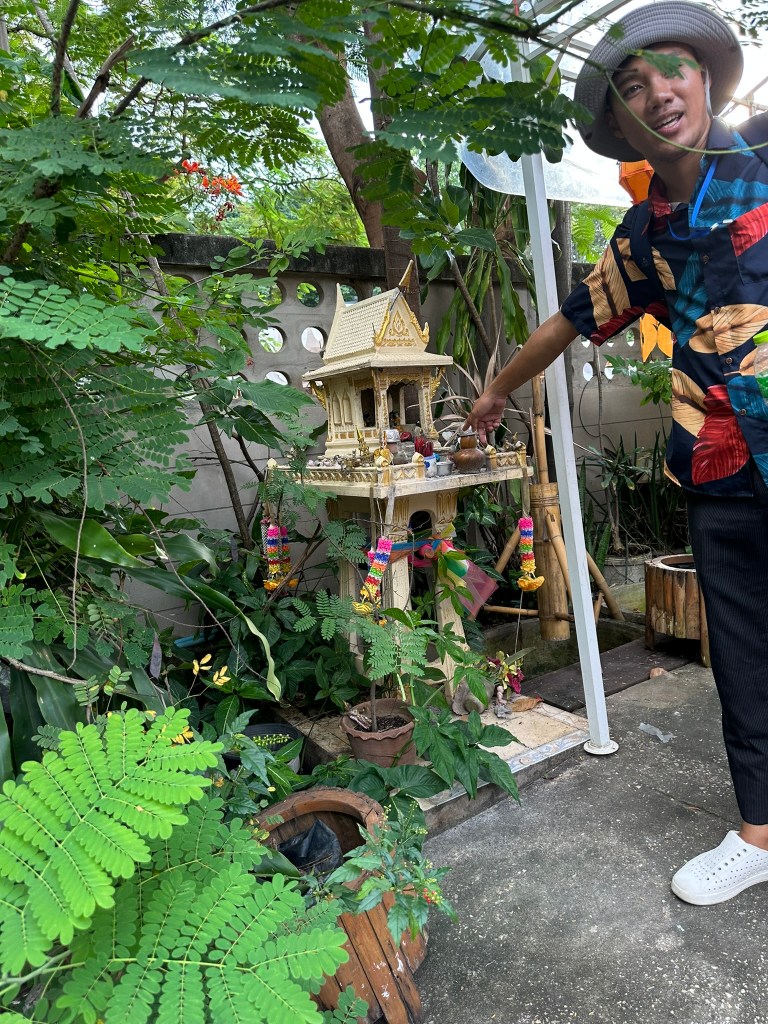
Spirit House explained 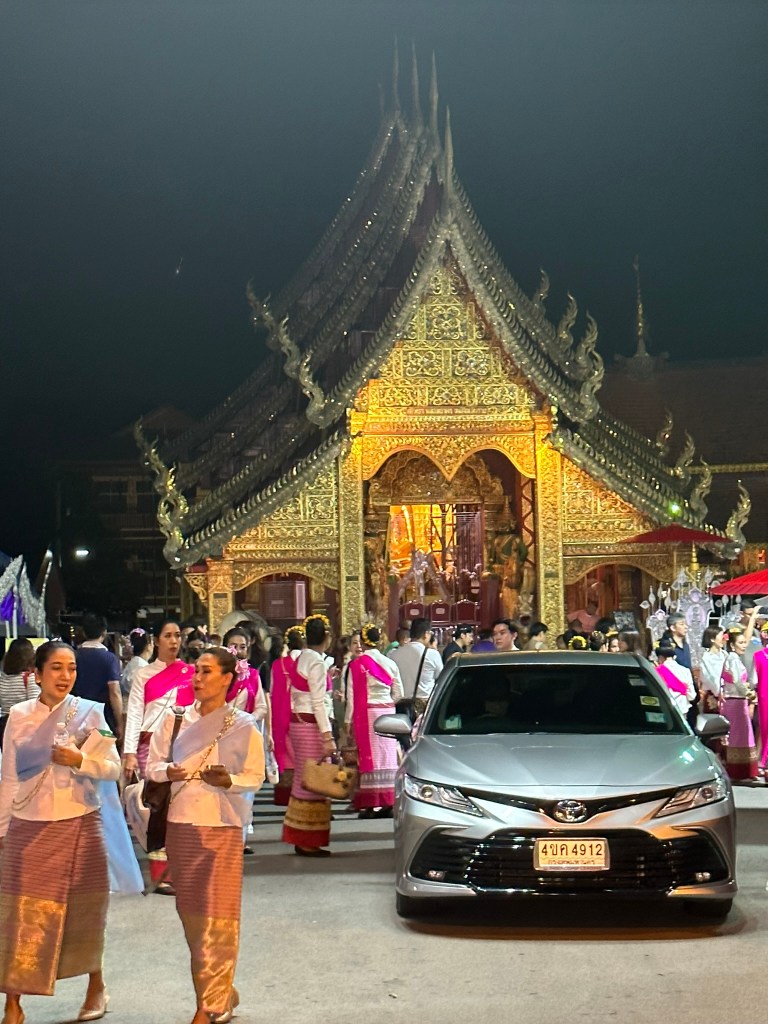
Wat Sri Suphan 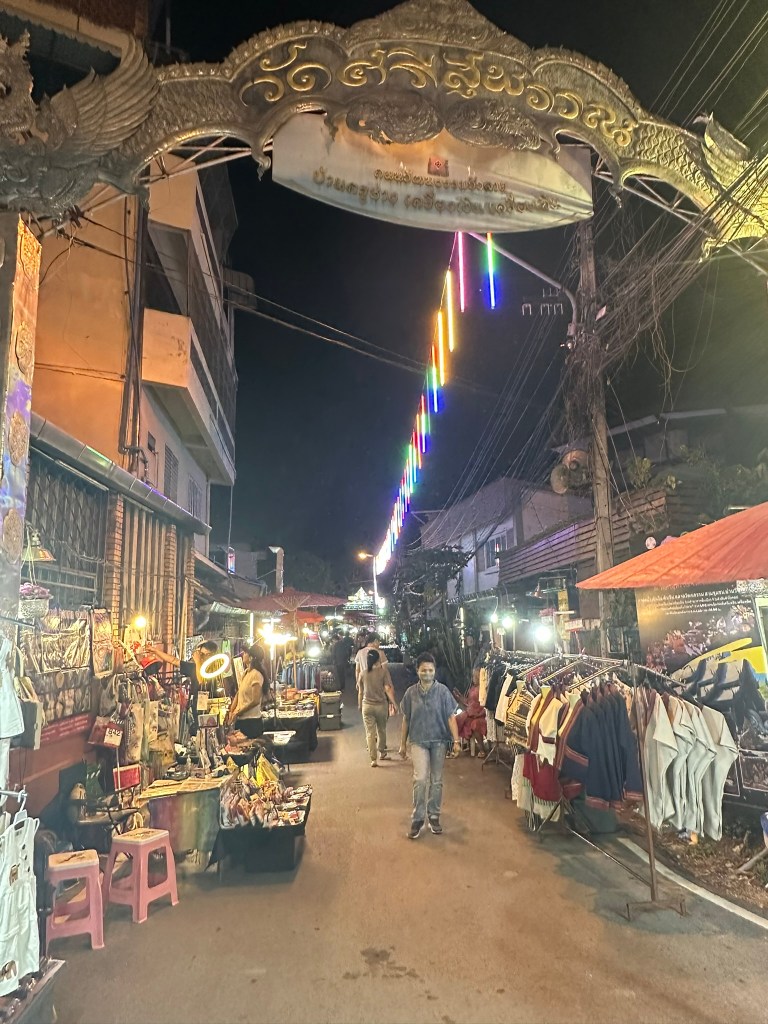
Wua Lai night market 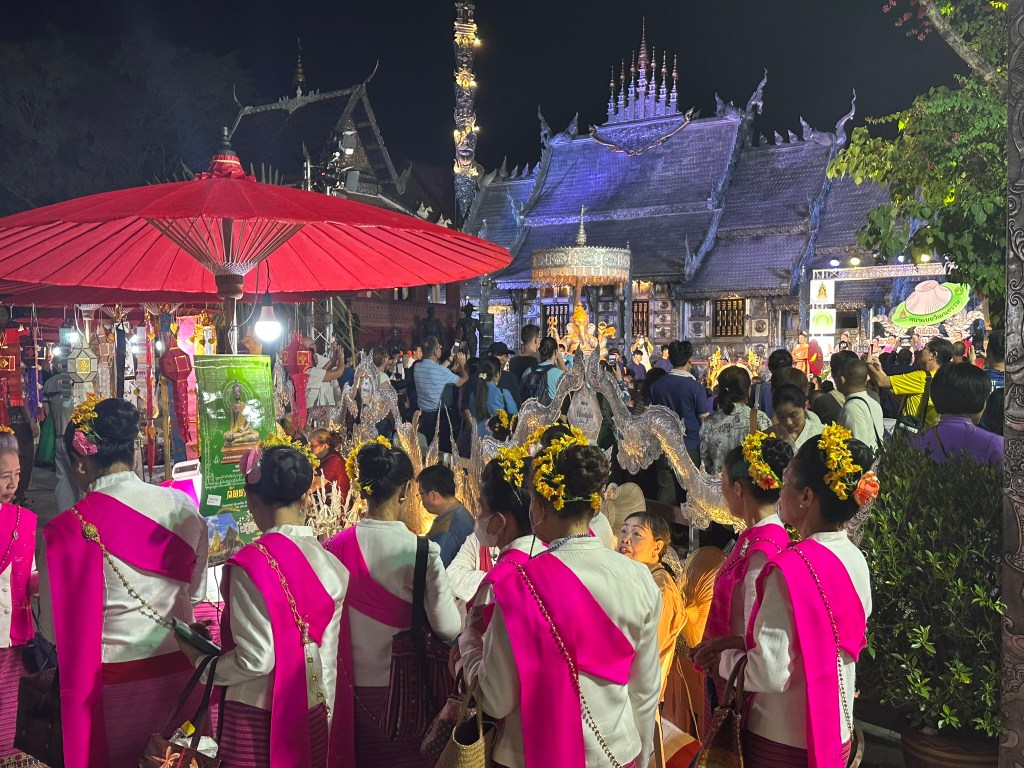
Wat Sri Suphan
- A day trip via tuk-tuk high into the mountains overlooking Chiang Mai brought us to two more amazing temples: Wat Phra That Doi Suphet is the biggest and most opulent, everything seemingly dripping in gold, and Wat Pha Lat, a Buddhist temple complex and monastery hidden in the forest a few miles down the road. The latter was filled with scenery that looked straight out of Apocalypse Now!
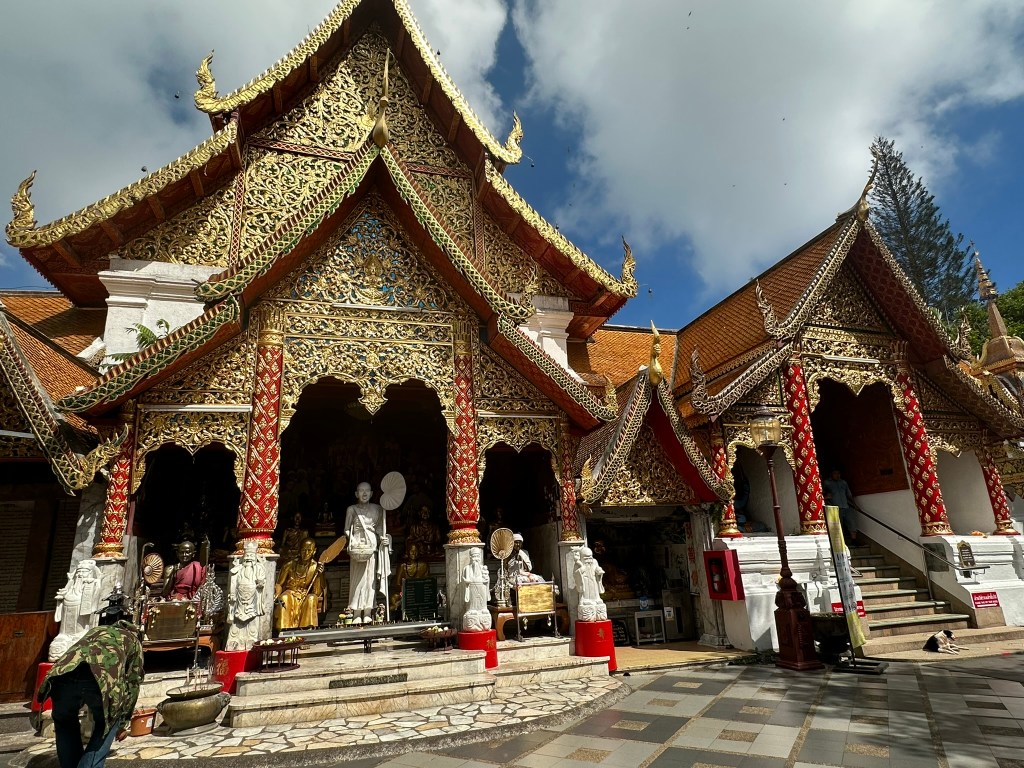
Wat Phra That Doi Suphet 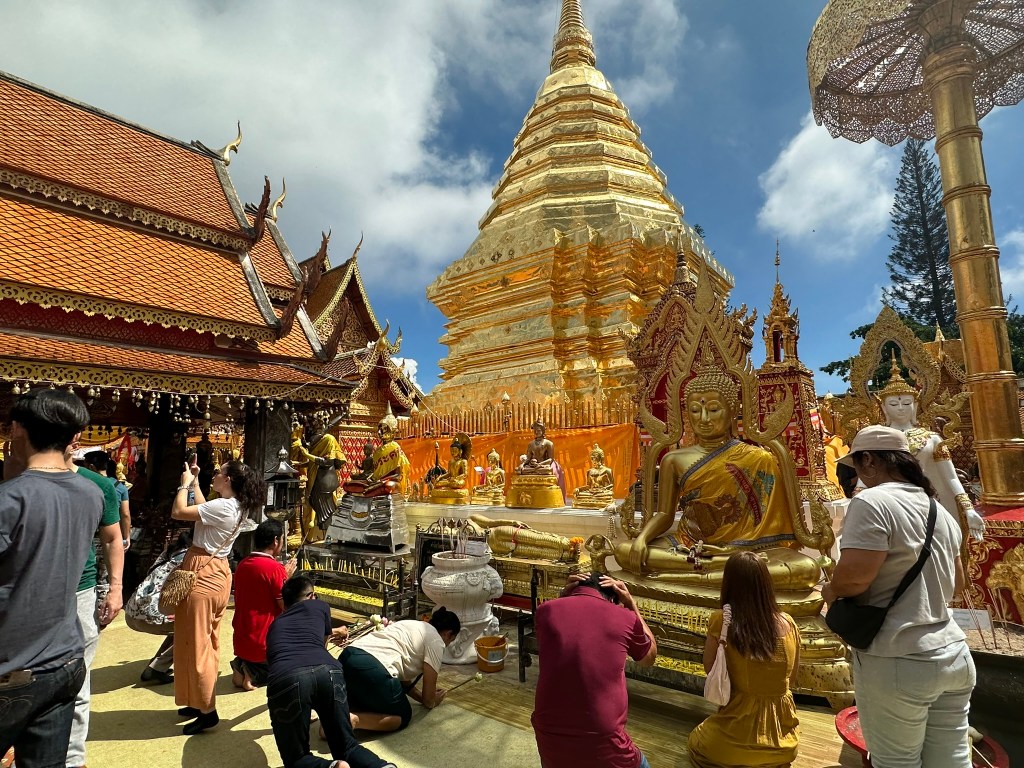
Wat Phra That Doi Suphet 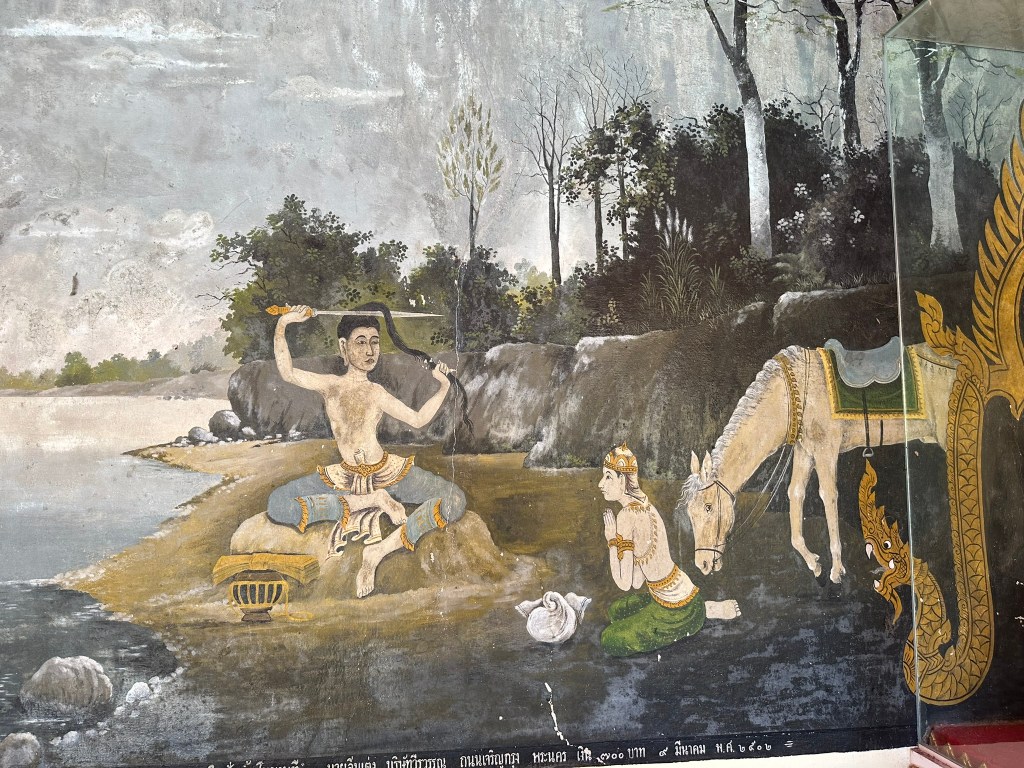
Wat Phra That Doi Suphet mural 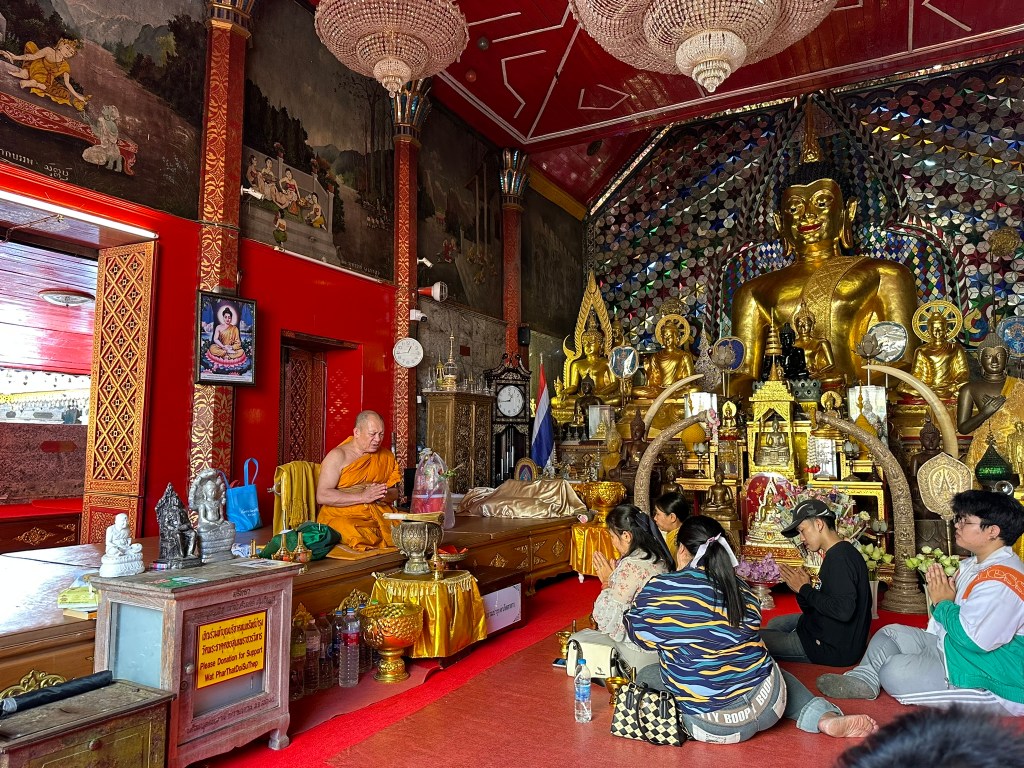
Buddhist monk teaching 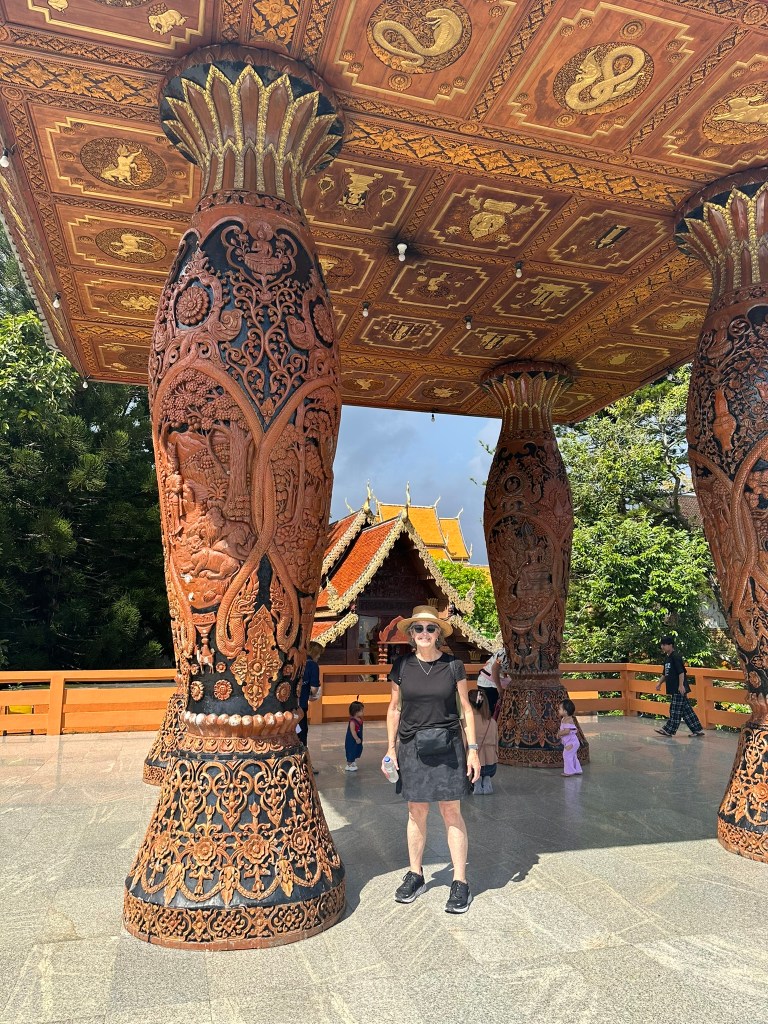
Wat Phra That Doi Suphet 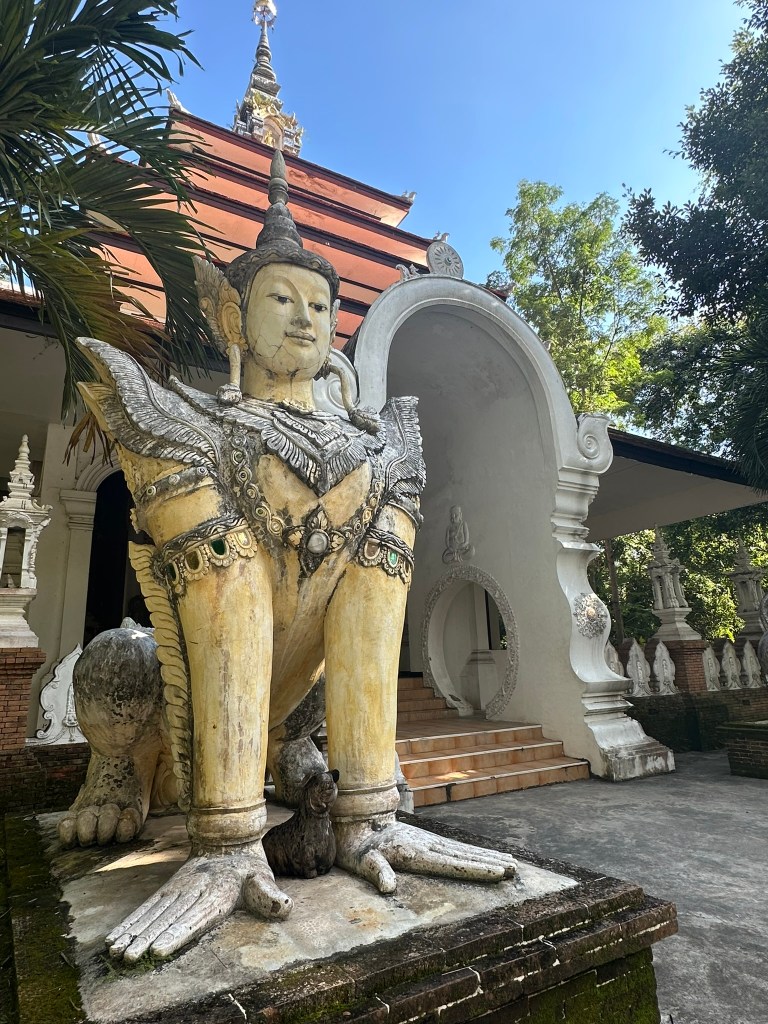
Wat Pha Lat 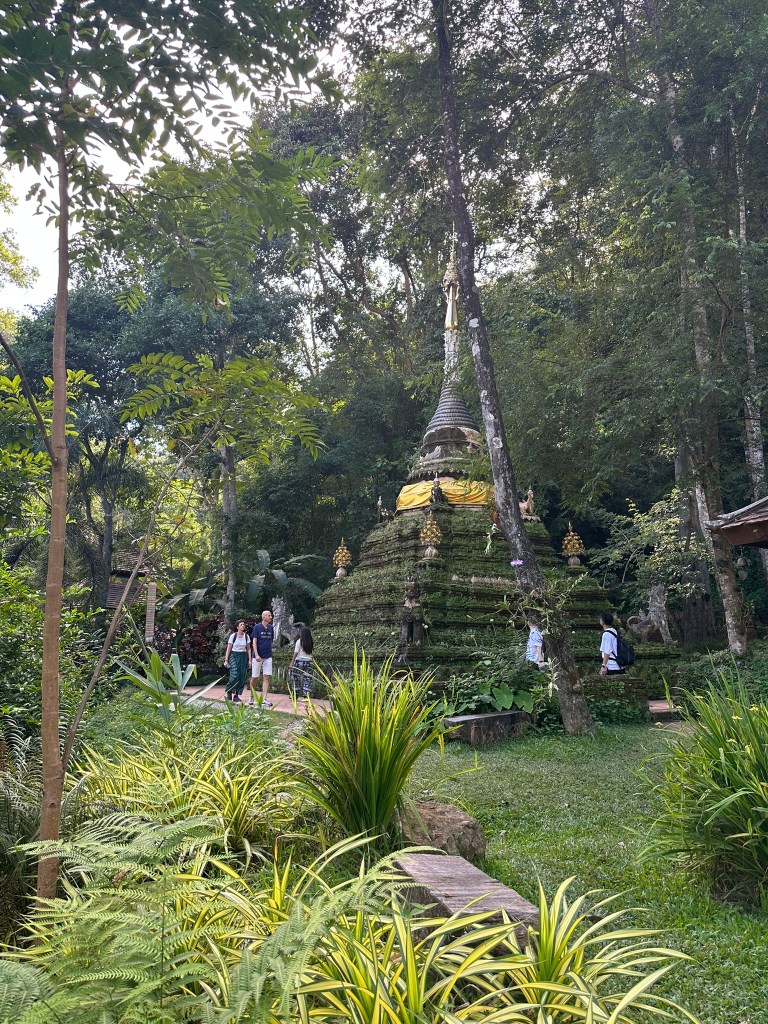
Monastery in the jungle 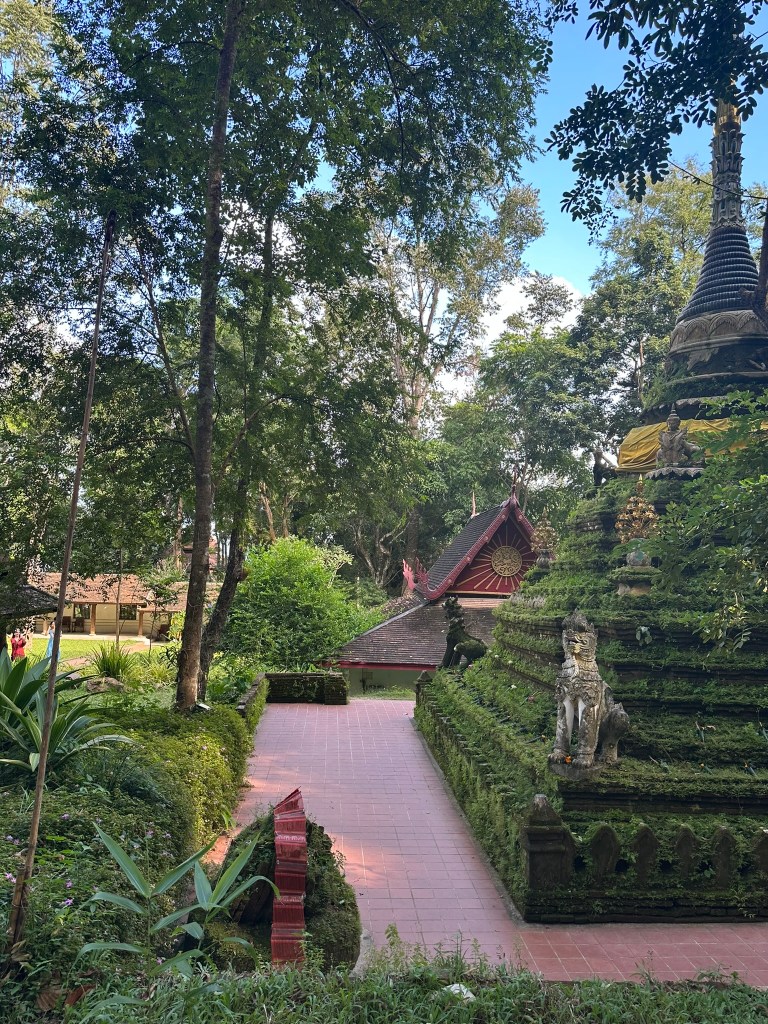
Wat Pha Lat 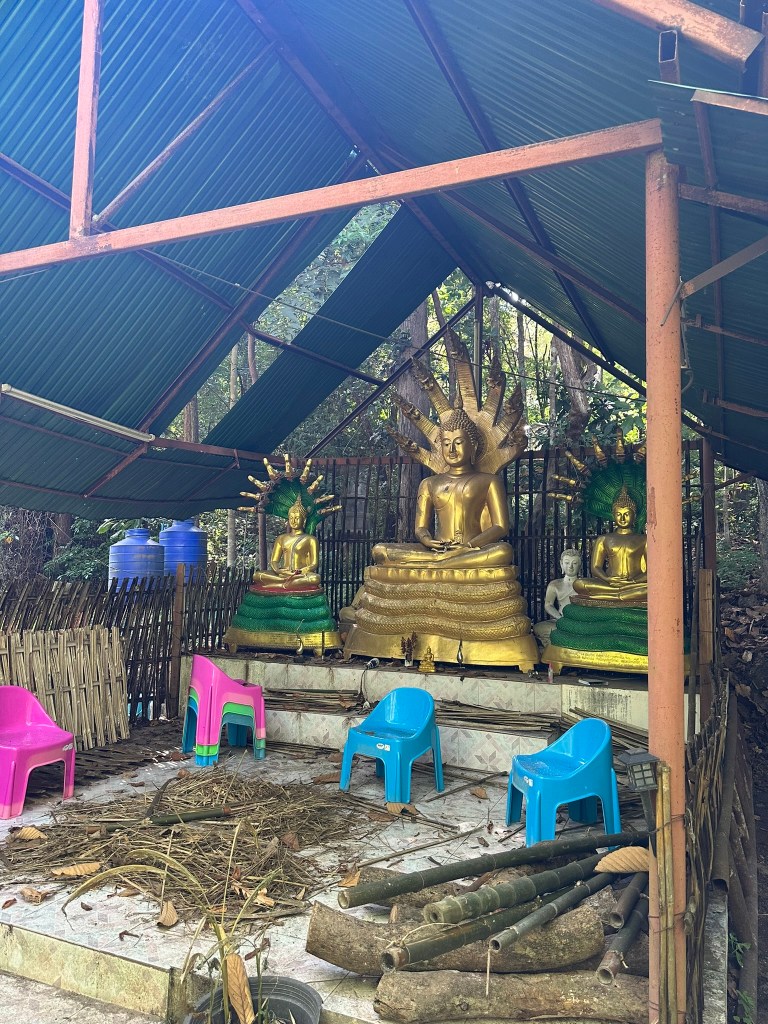
Wat Pha Lat 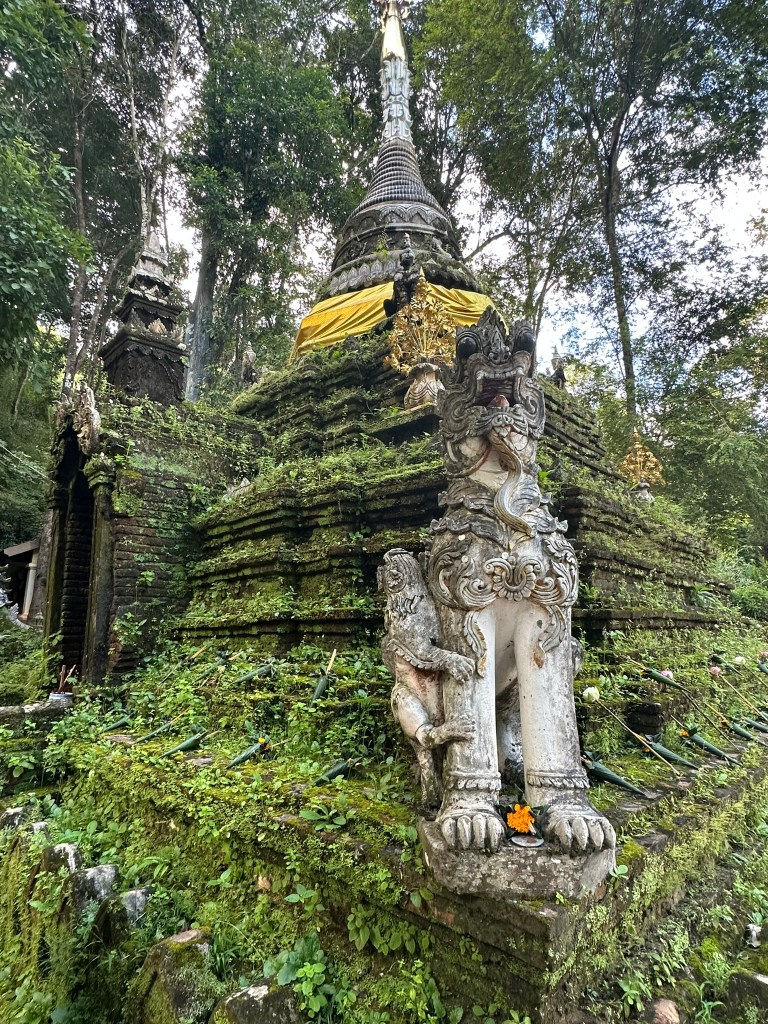
Wat Pha Lat shrine 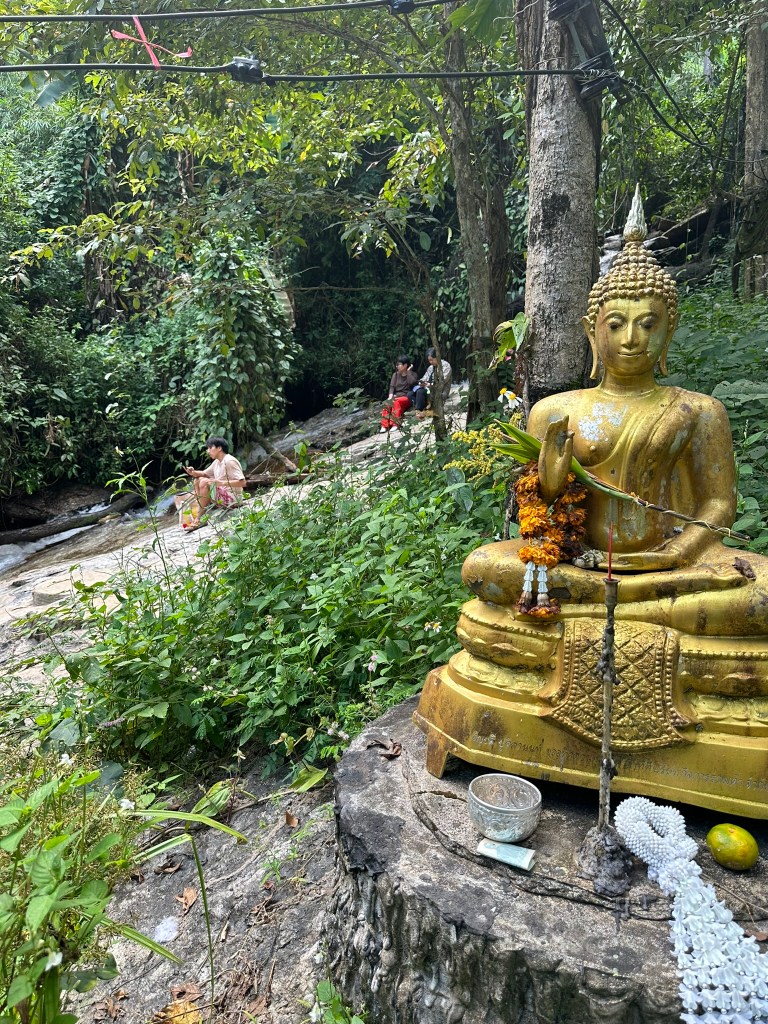
Creekside Buddha 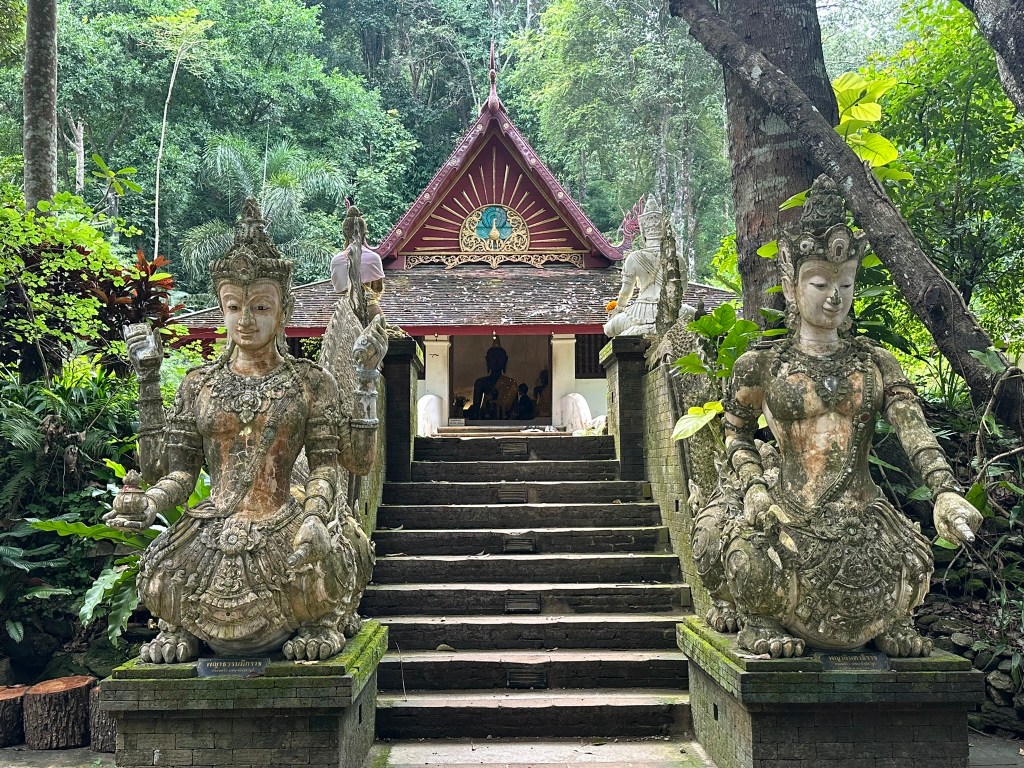
Statues everywhere 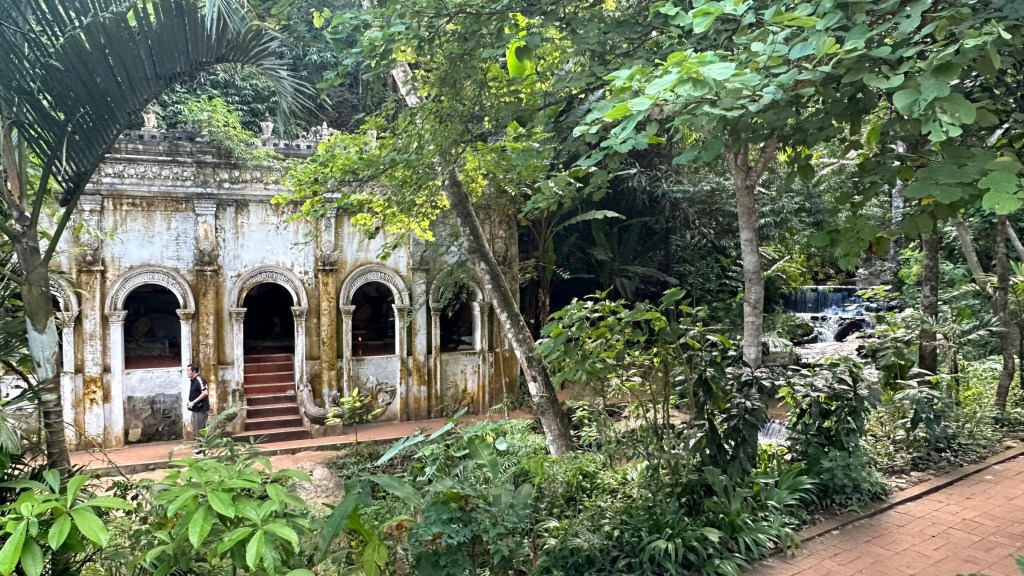
Anyone seen Colonel Kurtz?
- Simply strolling the streets around the Old Town was a feast for the senses. During the day, the shops were buzzing and streets are filled with motorbikes. At night, it’s cooler and a little quieter, and there is actually quite a lively cocktail bar scene worth checking out. Favorite bars included Midlife Crisis, White Rabbit, Nophaburi, Drinksmith, and Bitter Truth (the last three all on the same block).
- Incredible street food everywhere. My dinner of pork ribs, Khoa Soi (their most famous dish), and shrimp dumplings was delicious. For a very good, sit-down dinner indoors, we liked The HOUSE by Ginger.
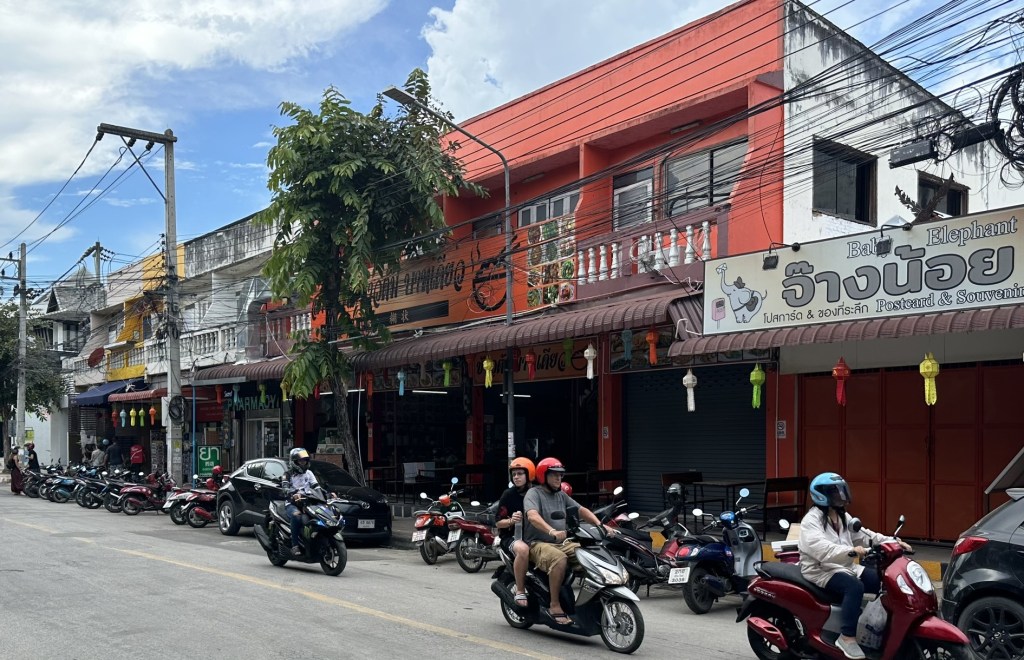
Motorbikes everywhere 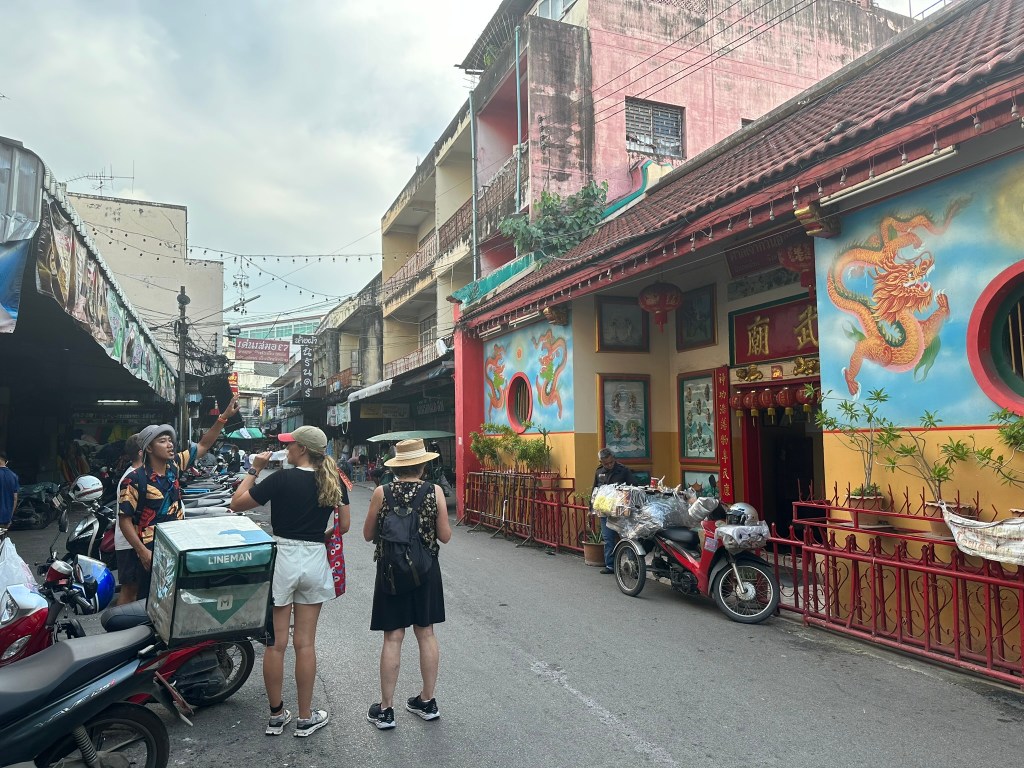
Old City street scene 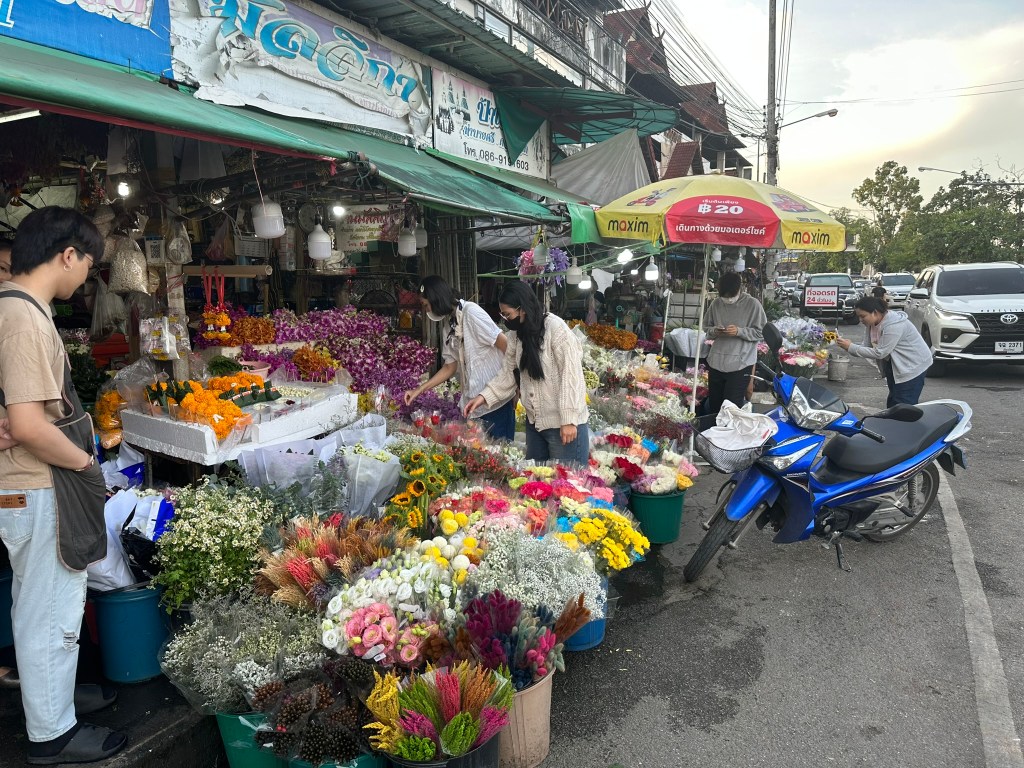
Flower market 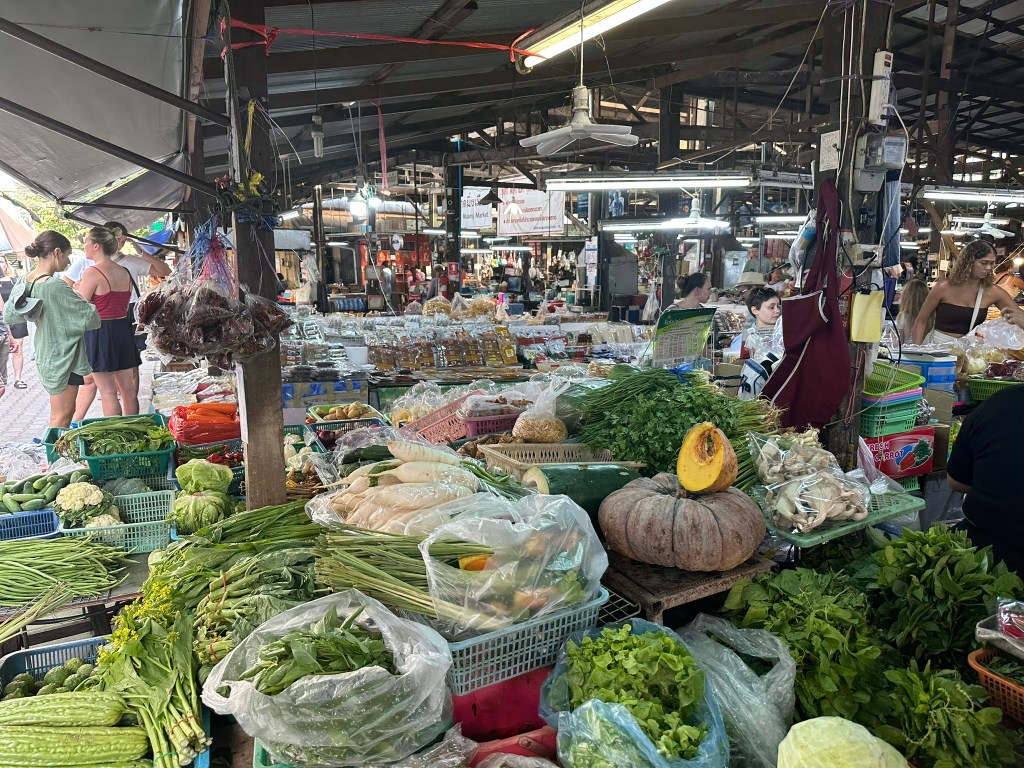
Tha Phai market 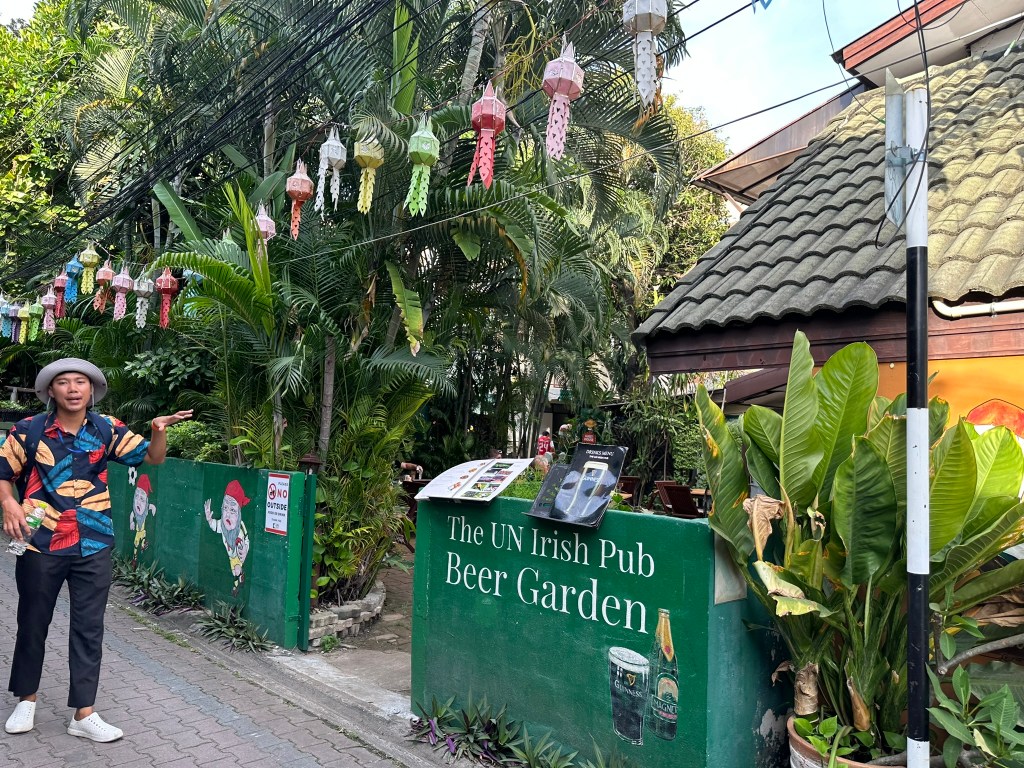
Irish pub in Chiang Mai 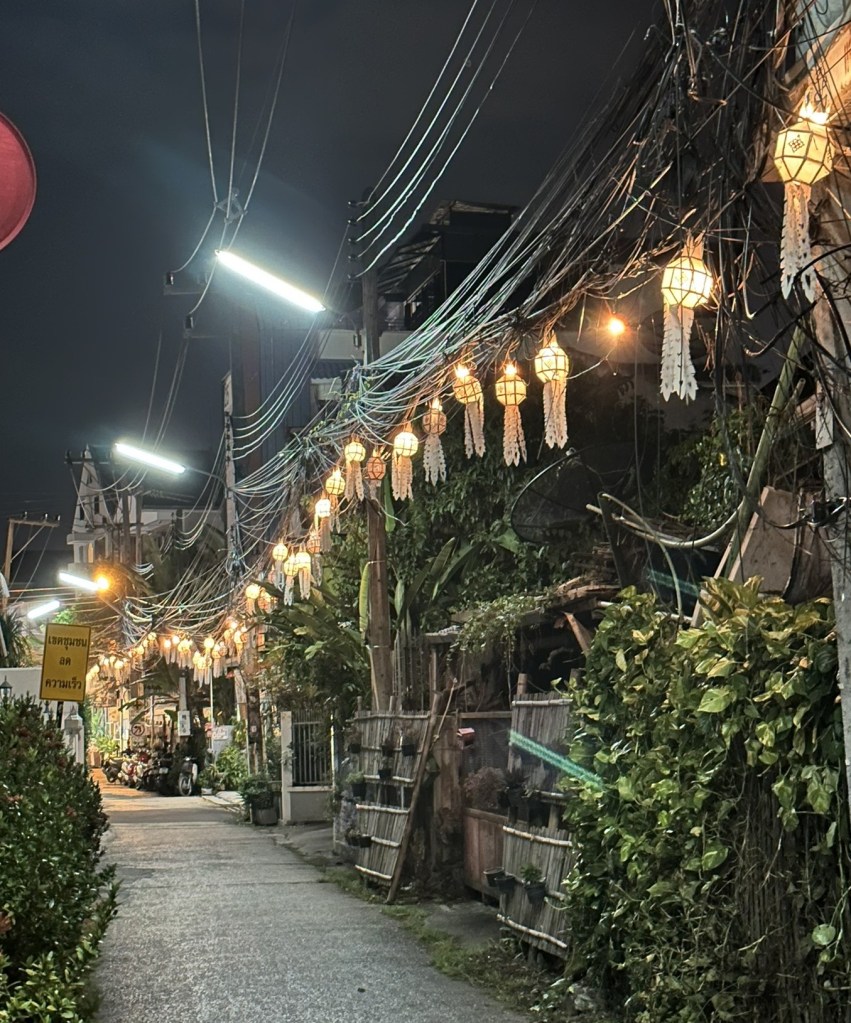
Old City backstreets at night 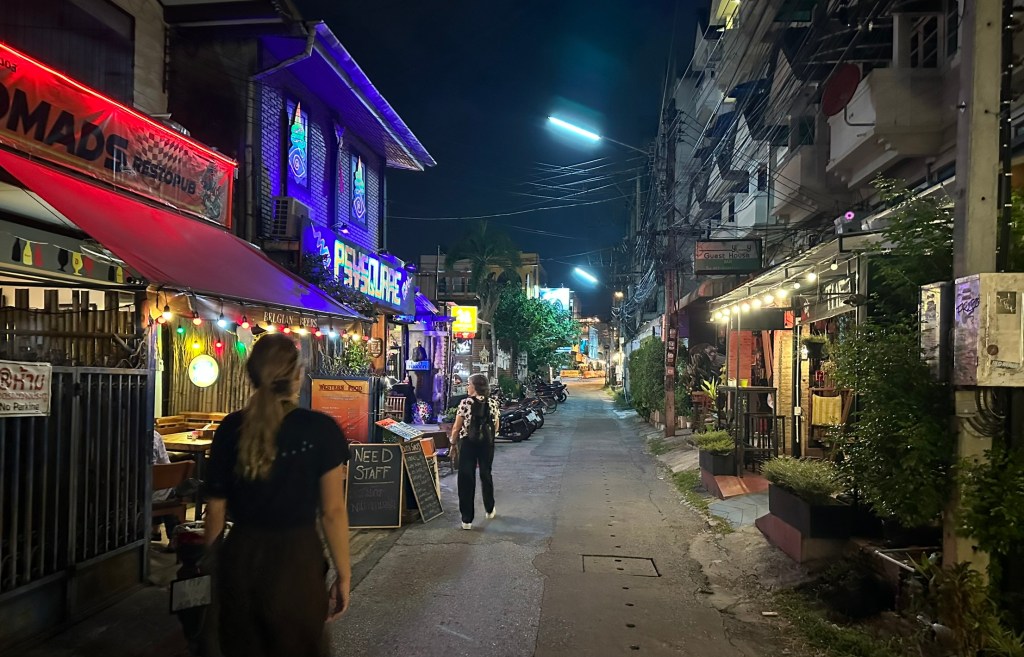
Old City at night 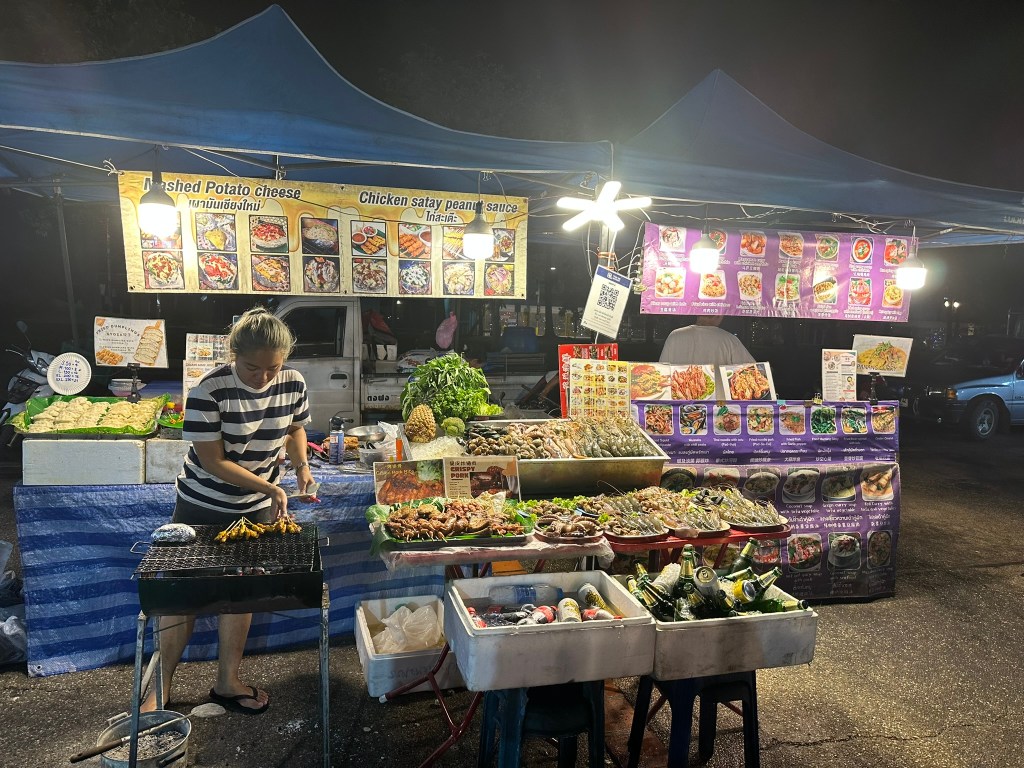
Hawker street food 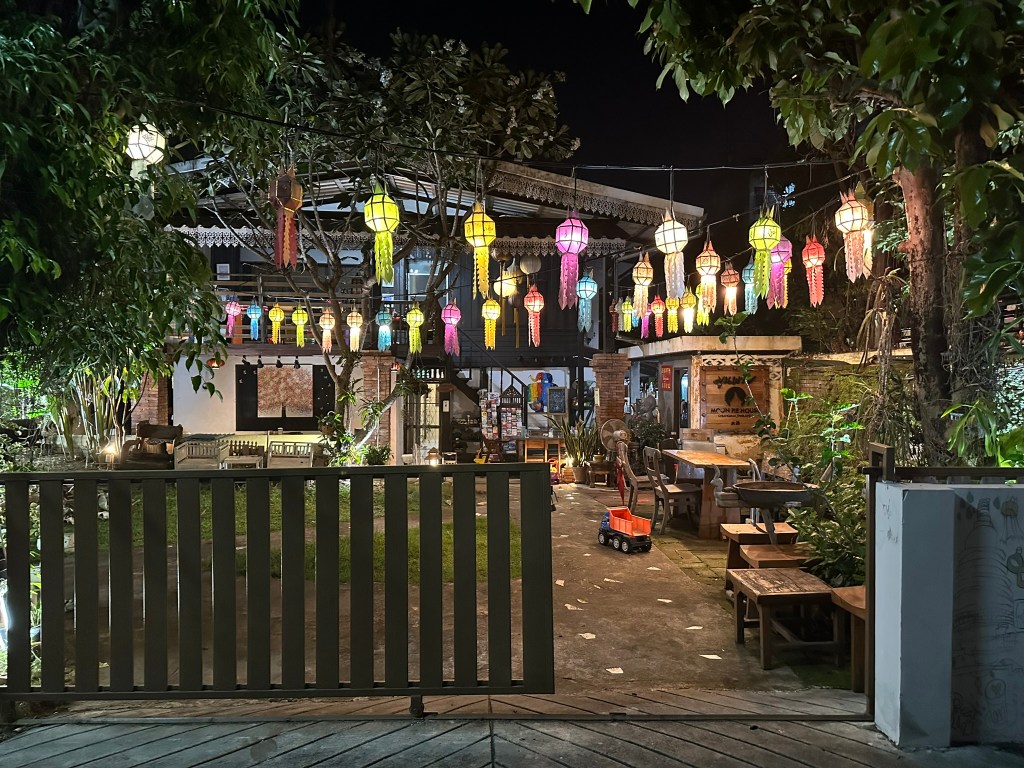
Old City residence 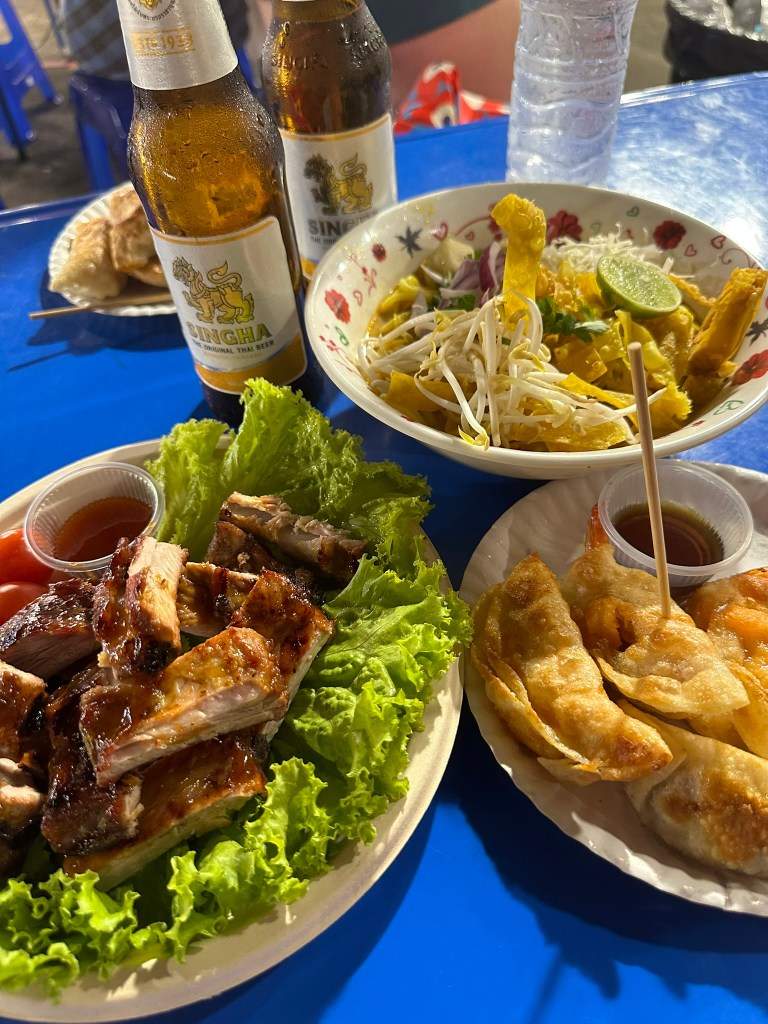
Hawker fare dinner 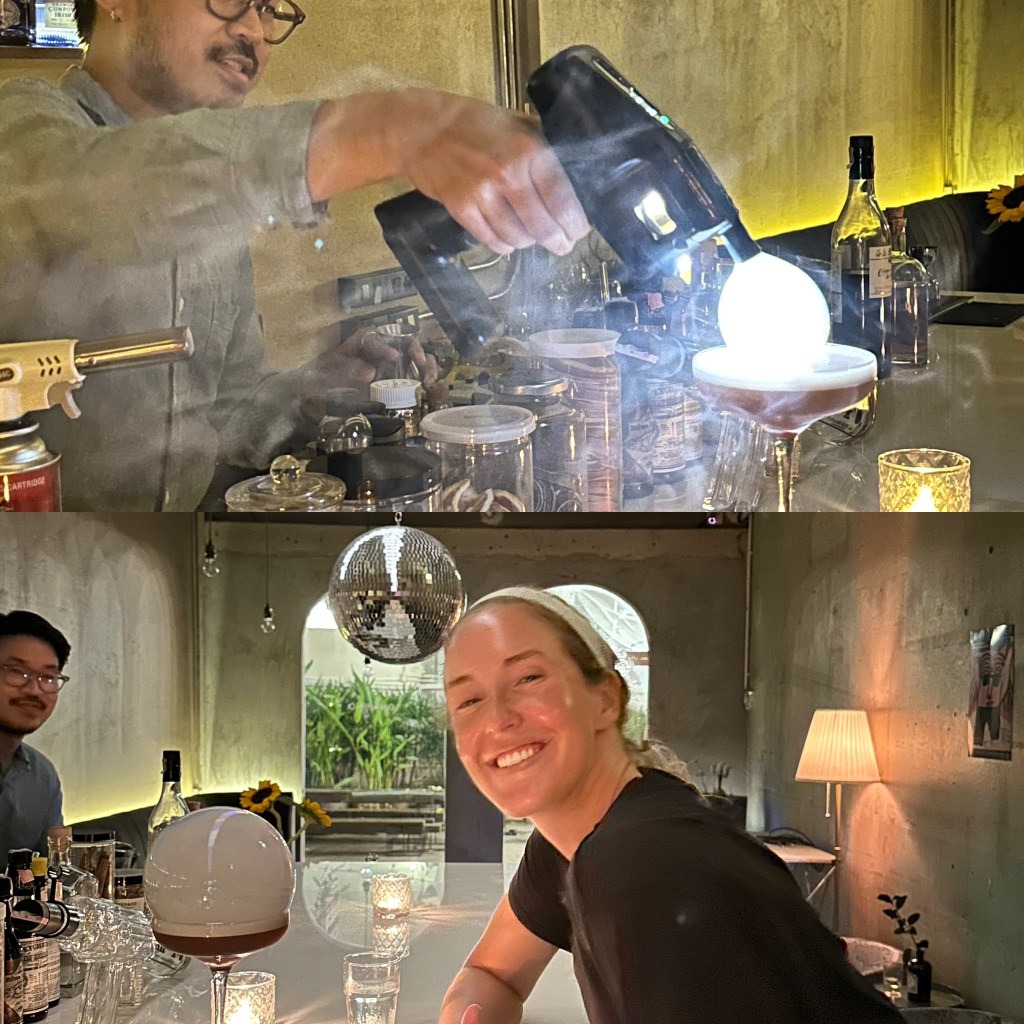
Bubble cocktail at Bitter Truth 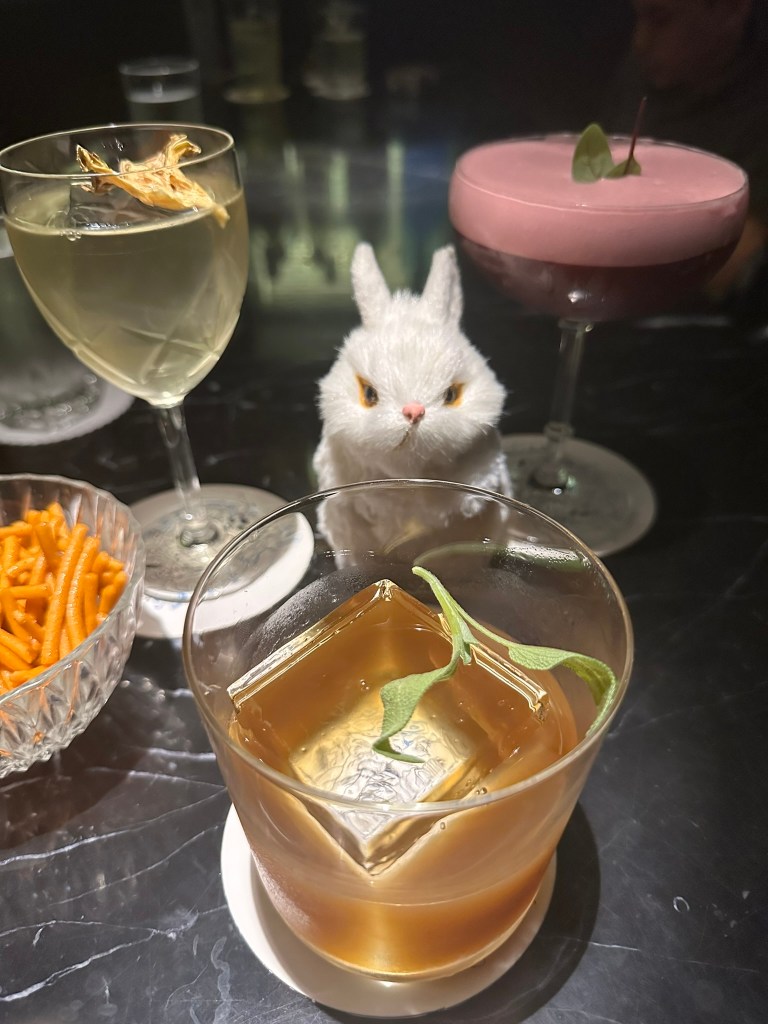
Angry White Rabbit 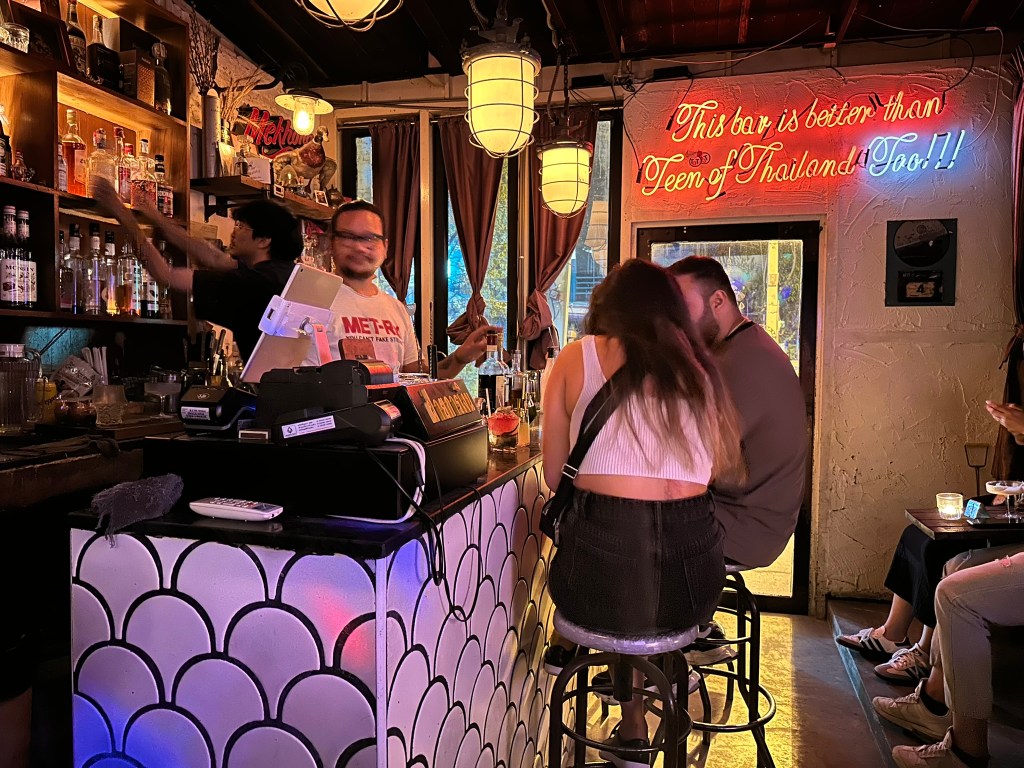
Nophaburi Bar 
Outdoor riverside bar
- Our B&B, Baan Orapin, a 100 year-old house with beautiful grounds and rooms, was recommended by a friend. Like a little oasis, it felt a million miles away from the crazy streets just down the driveway. Read my review here.
- Catching sight of a pair of Lantern Bugs, endemic to Chiang Mai and found nowhere else in the world, was pretty cool. We were told we were quite lucky to see them.
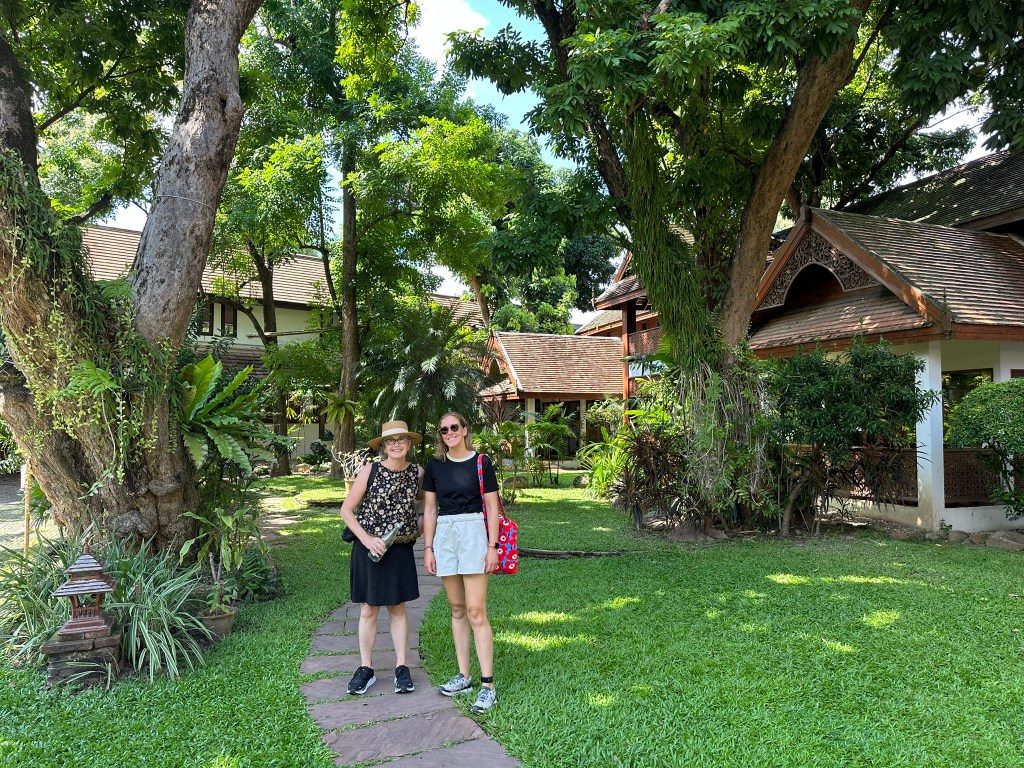
Baan Orapin 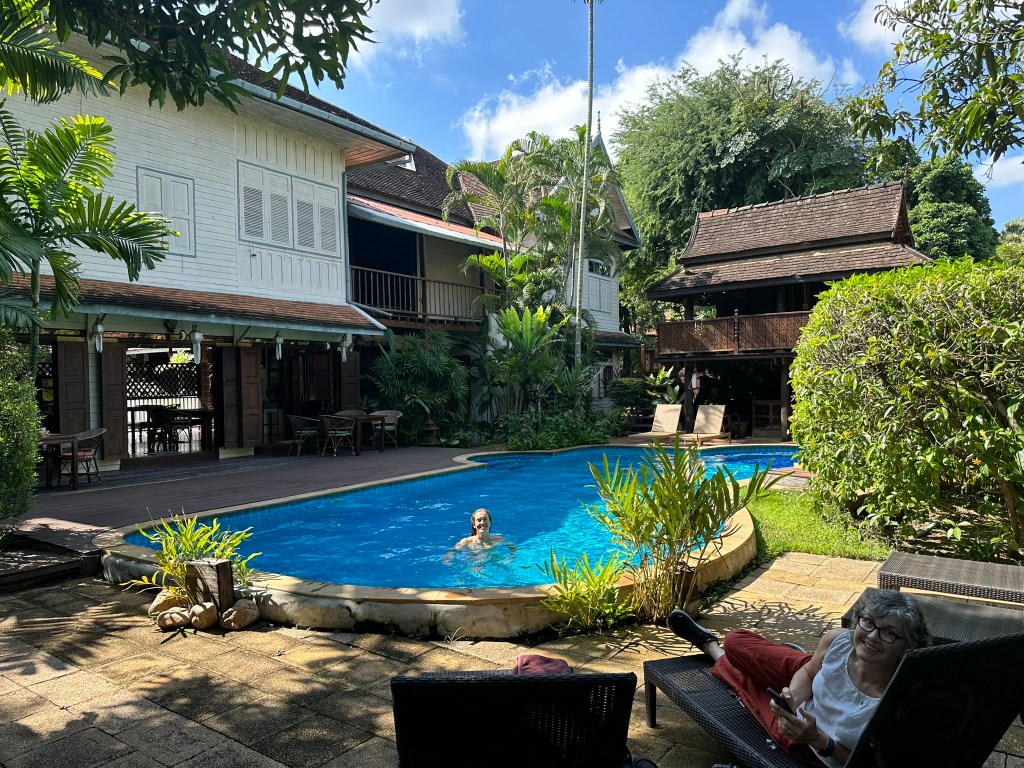
Backyard oasis 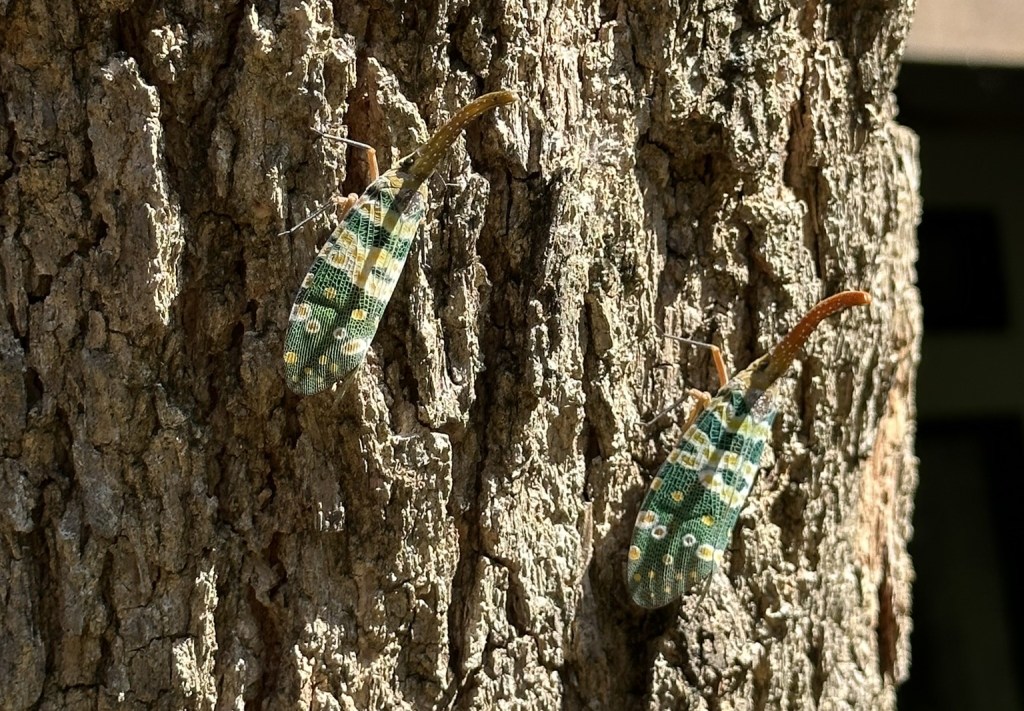
Elusive Lantern bugs
With more time, I would have loved to rent motorbikes and taken a day trip (or two) into the mountains to ride the Samoeng Loop — a motorbike loop taking in temples, countryside and plenty of coffee shops — and explore the amazing Sticky Waterfall and Chiang Mai Canyon.
| Days 13-15 | Bangkok, Thailand | State Tower Airbnb |
Reversing course, we head south for 3 days in Bangkok. Ok, let’s just say it. Bangkok is insane. Kinda like NYC in a mashup of old Kurt Russell movies (Escape from NY meets Big Trouble in Little China), but with funkier smells.
This also happens to be where we were finally struck with “Bangkok Belly”, so we stayed in a bit more than we had hoped – even turned on the TV to watch Hangover II to see what we might be missing (sorry, no lady boy shows) – but we still managed to have plenty of fun exploring, though we did miss a few places we had hoped to visit.
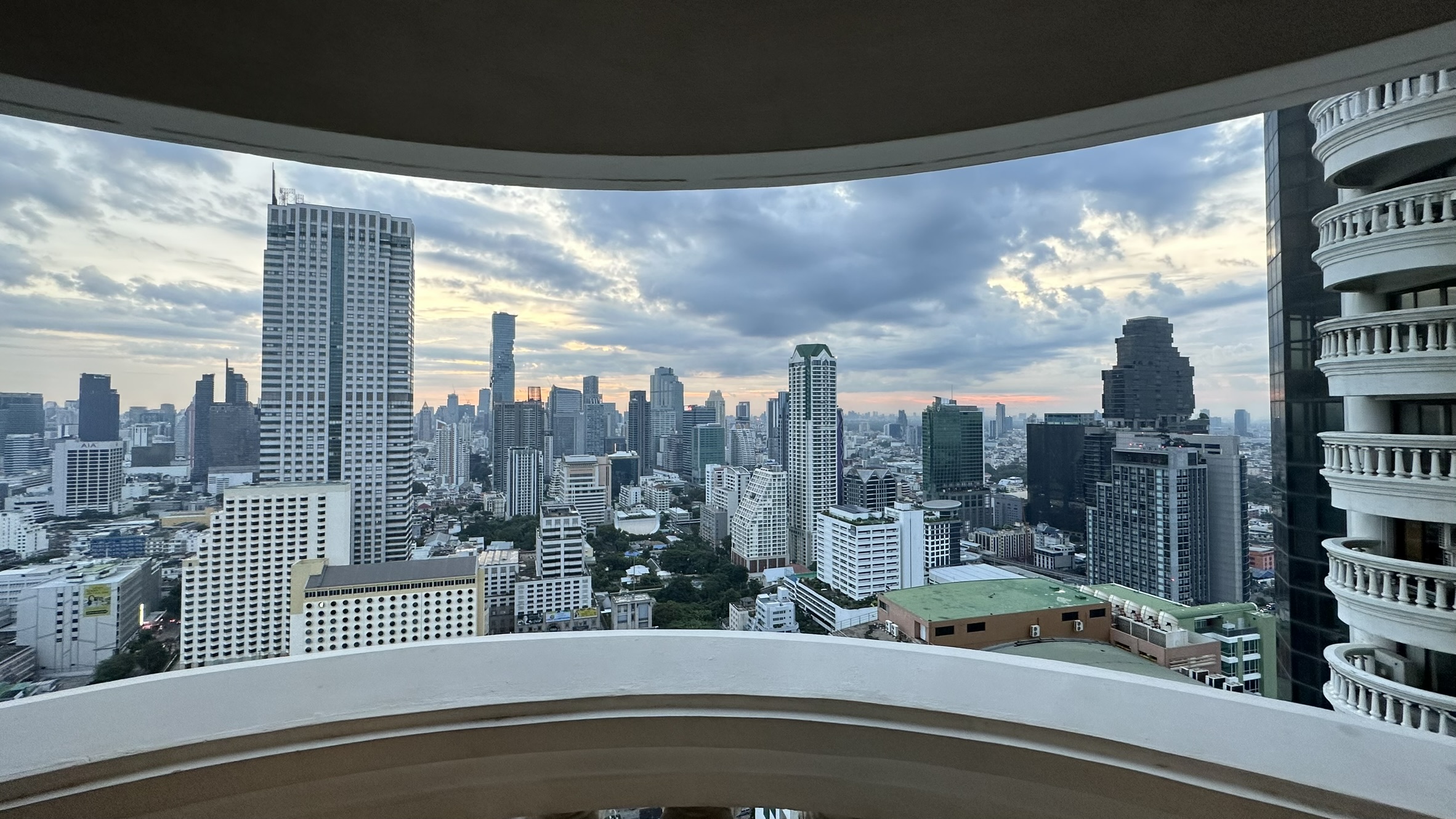
Highlights:
- Our guided night tour by tuk-tuk, Thailand’s ubiquitous mode of public transportation took us past a handful of landmark temples and government buildings, in all their well-lit glory, as well as a fun, introductory stop in Chinatown.
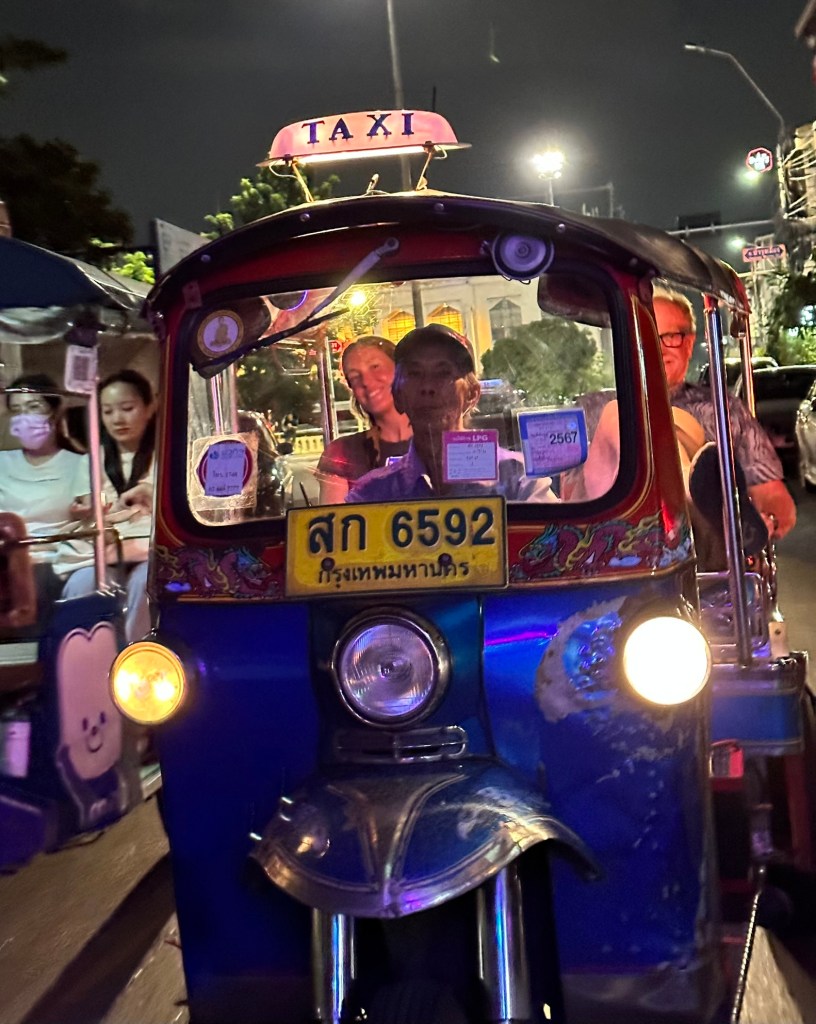
Our tuk-tuk 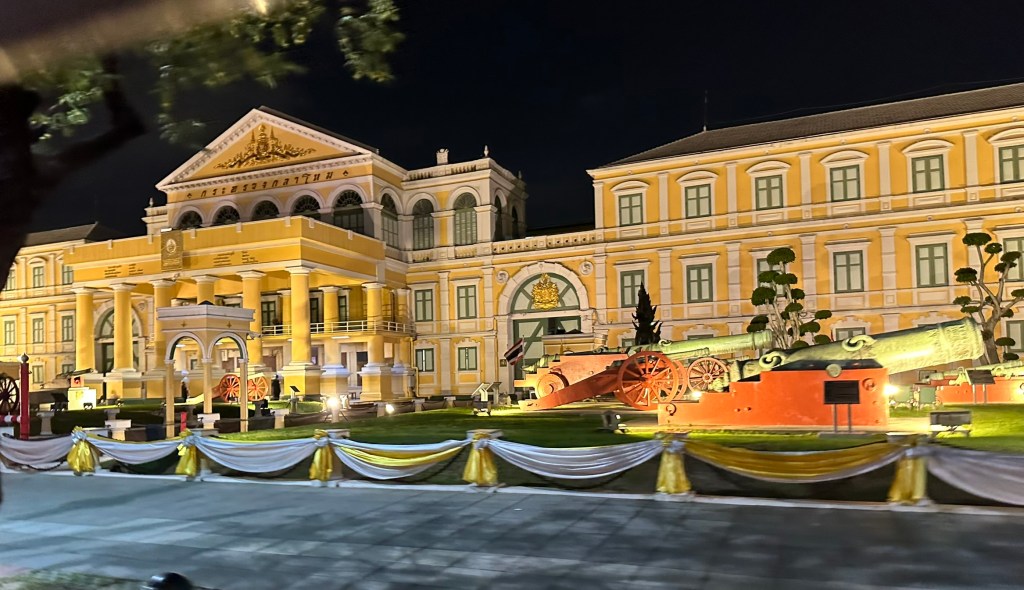
Ministry of Defense 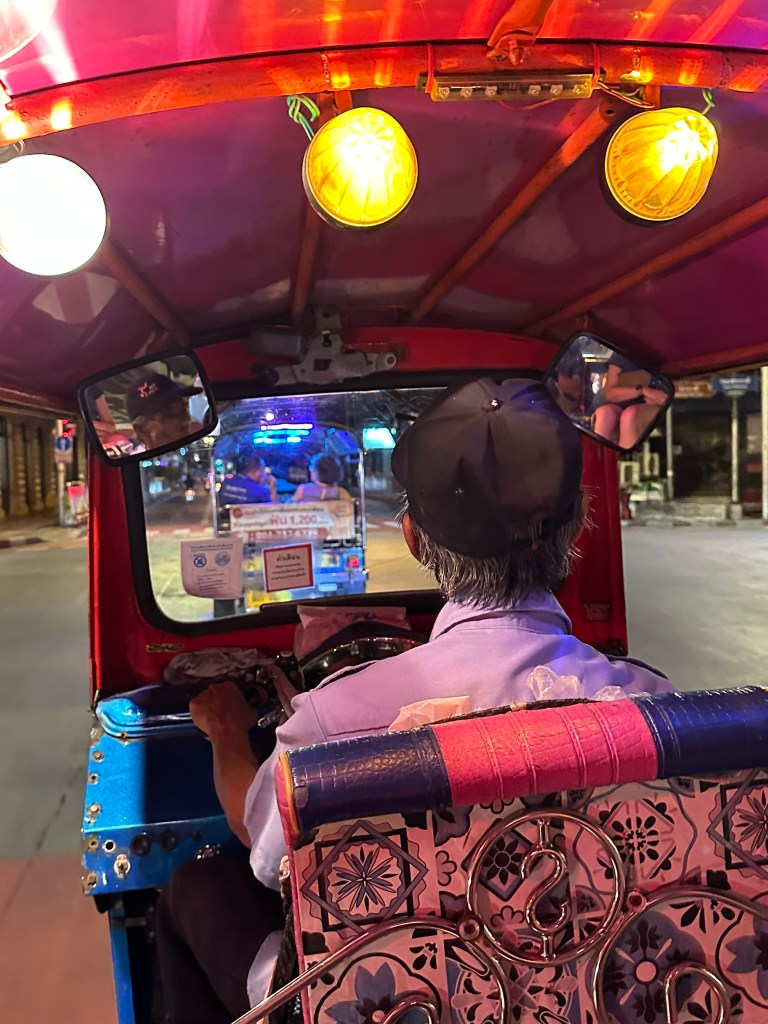
Tuk-tuk night tour 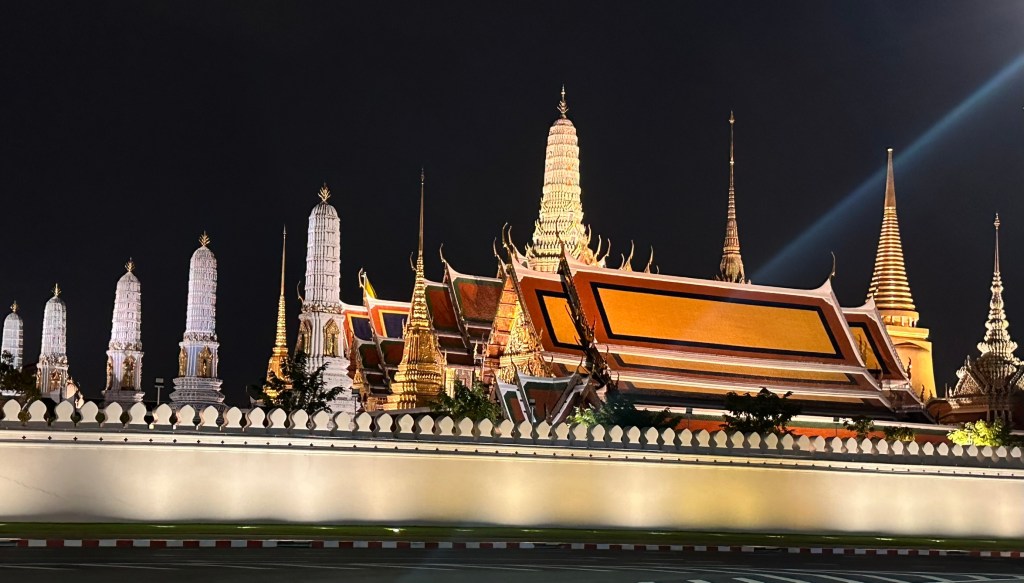
Grand Palace complex 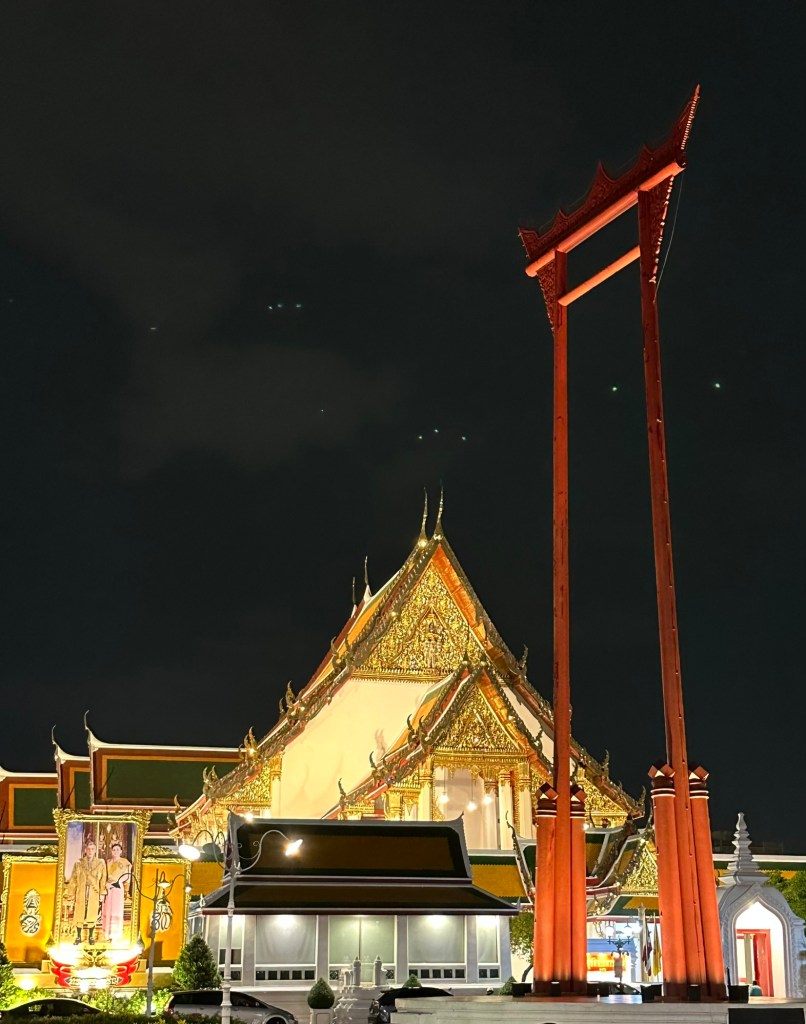
Giant Swing & Buddihist temple 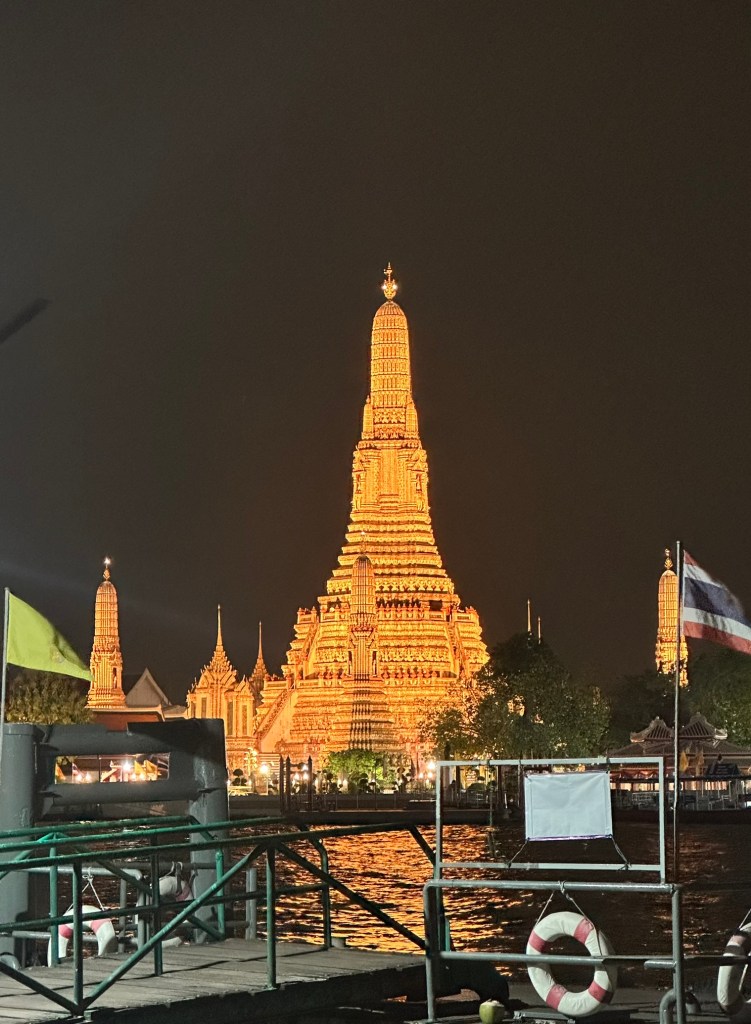
Wat Arun, Temple of Dawn 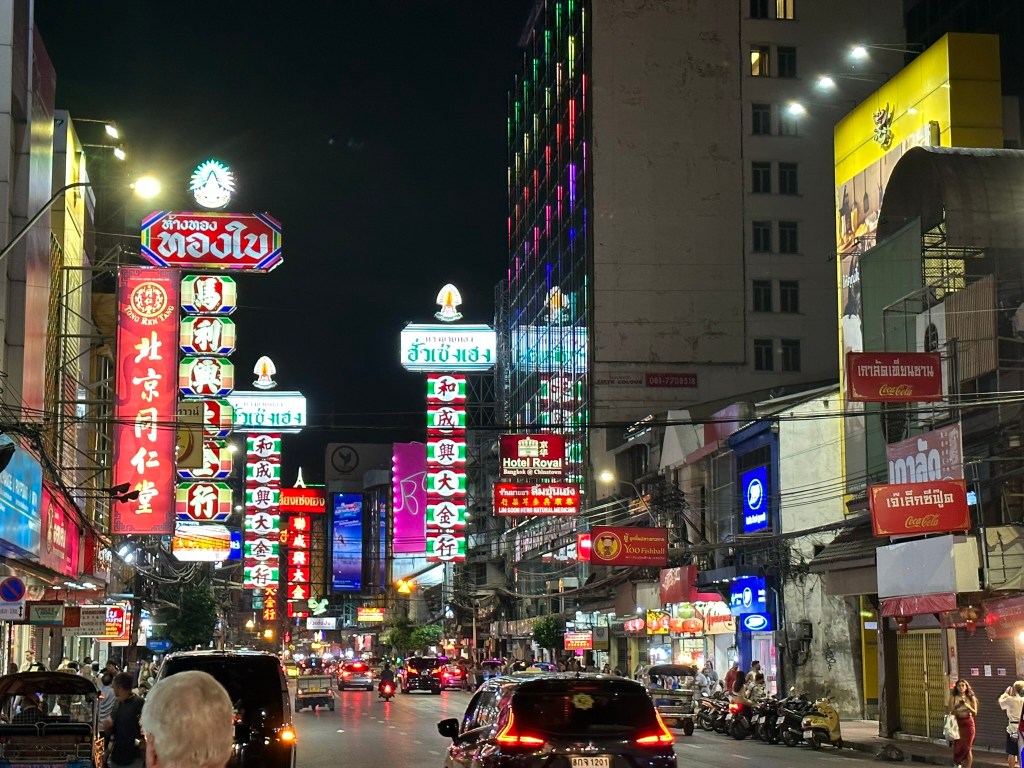
Chinatown 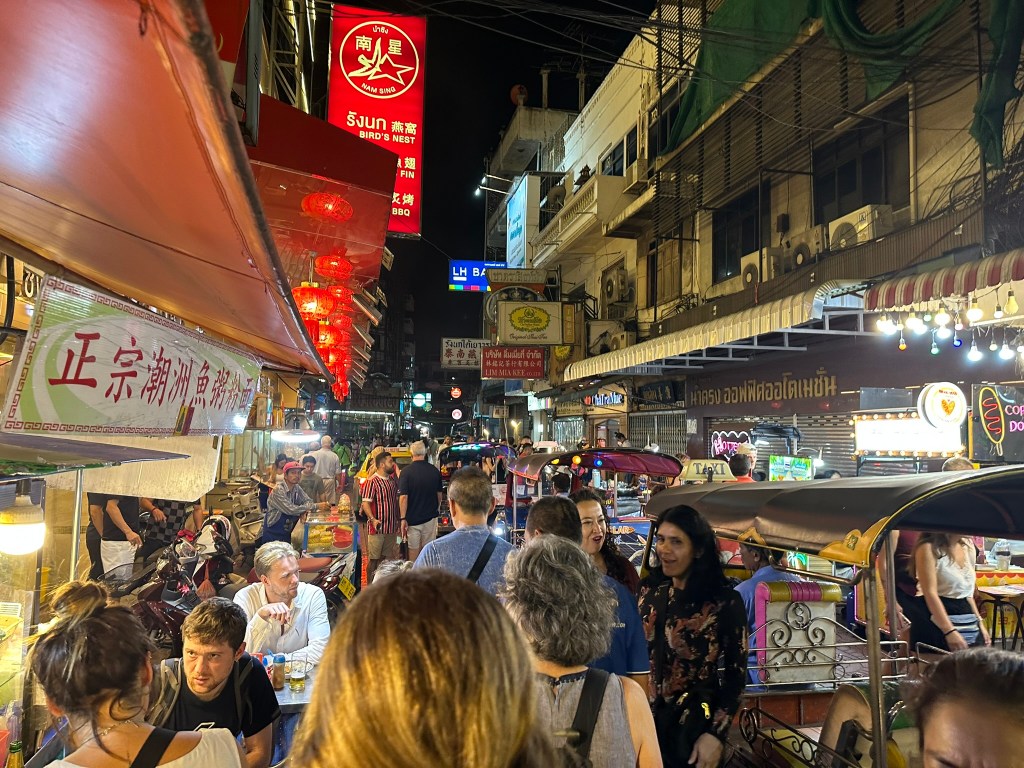
Chinatown 
Royal Pavalion & Metal Temple
- Co Van Kessel, a bicycle tour company founded by a Dutch expat, offers 3- and 5-hour bike tours through various parts of Bangkok (and other cities, too). We took the 5-hour tour that included two hours traversing Bangkok’s famous canals via canal boat. Very fun guides showed us a great time peddling through backstreets and neighborhoods we never would have found ourselves.
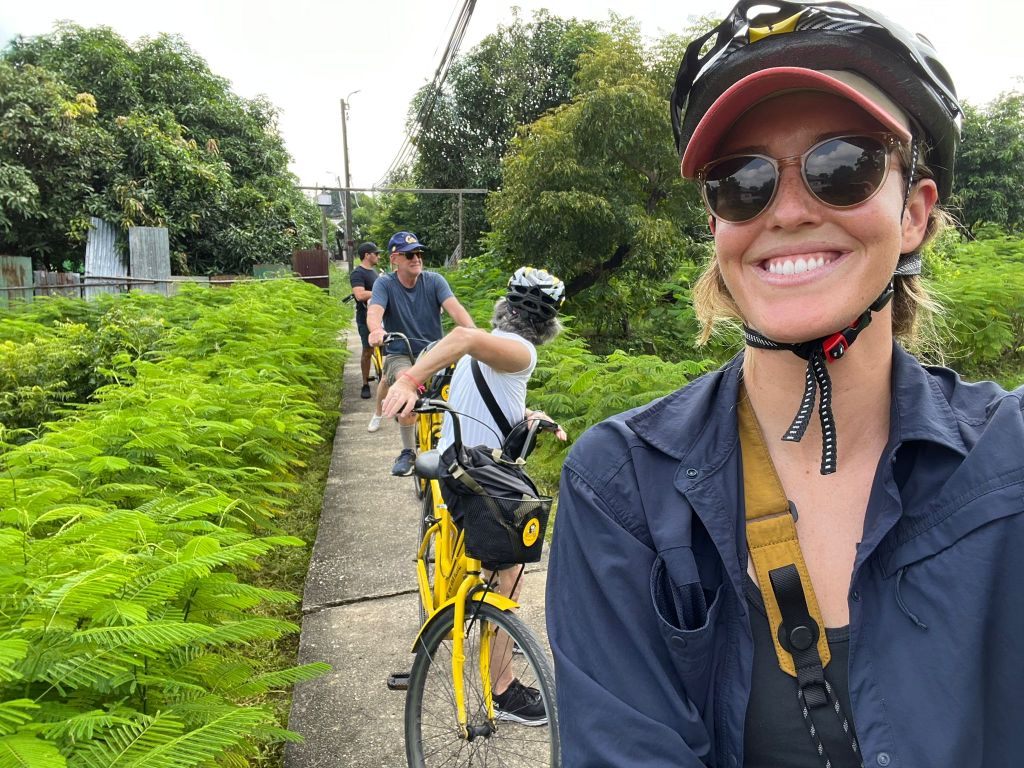
Hitting the bike trail 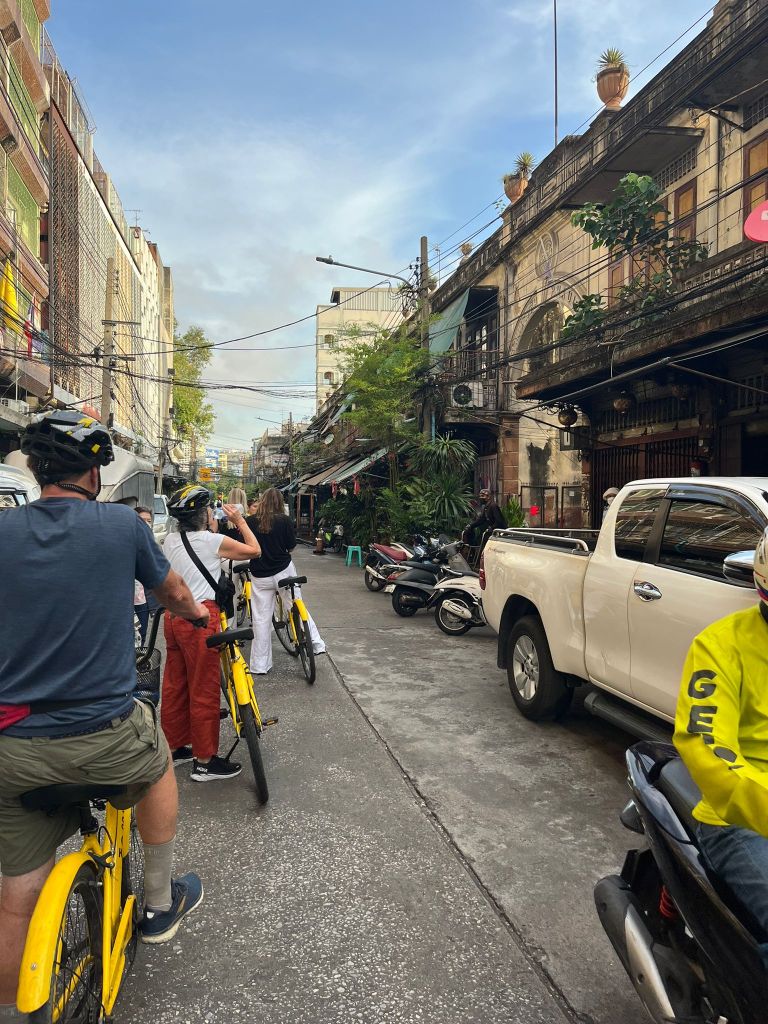
Crosstown traffic 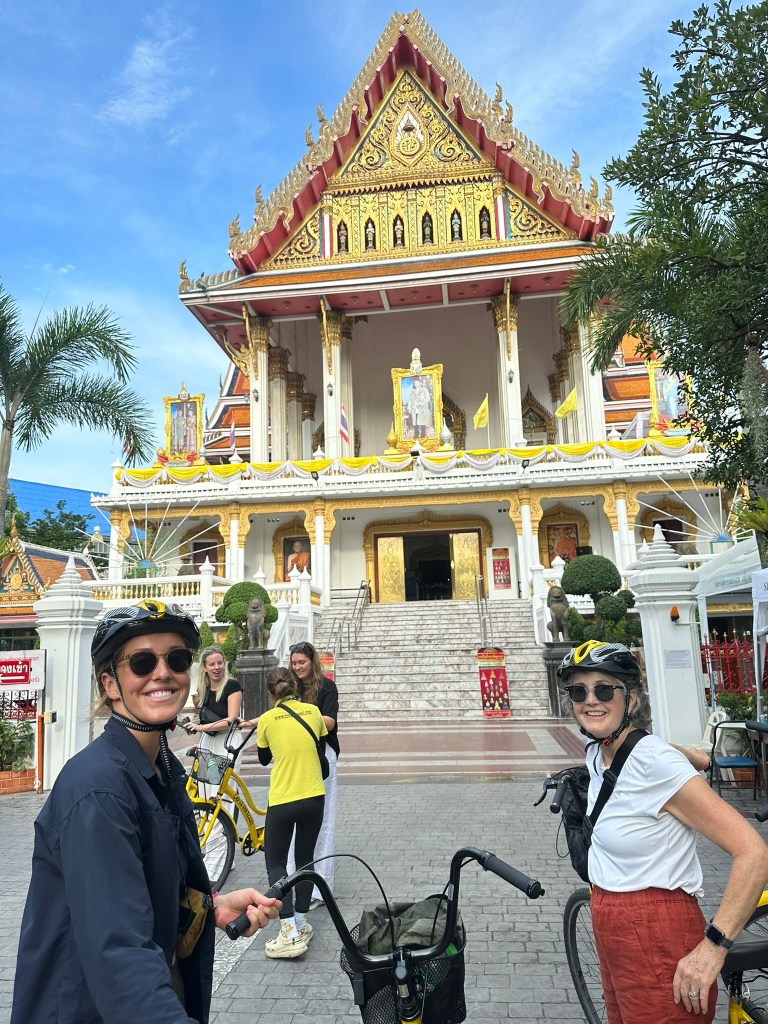
Wat Ko royal temple 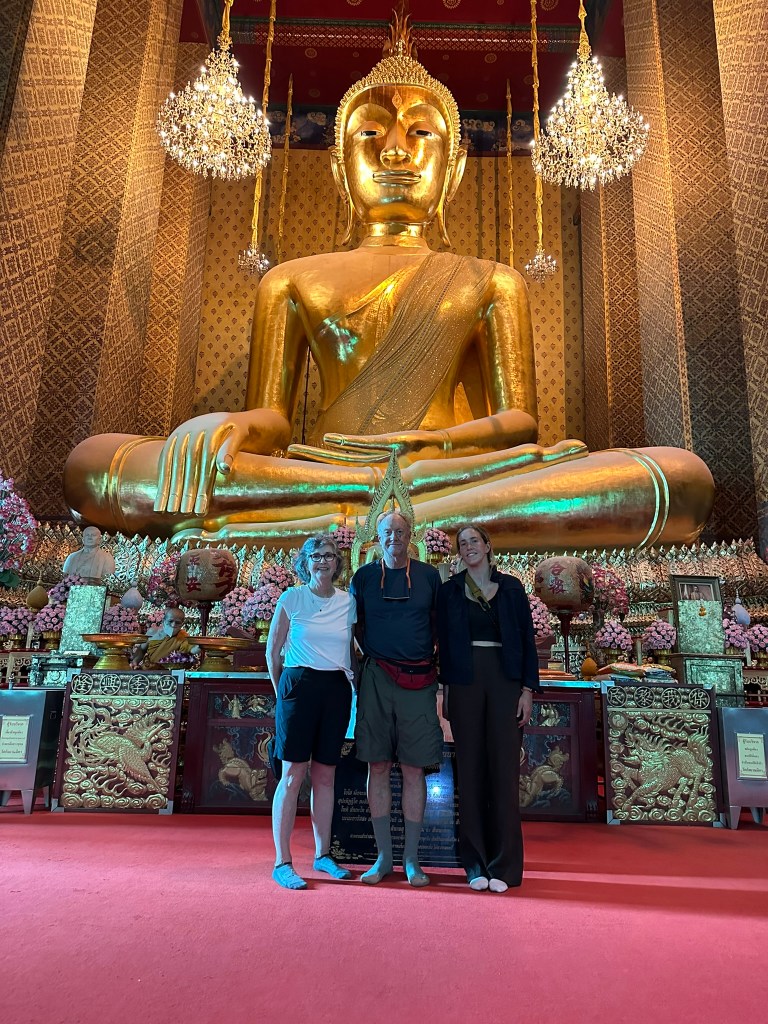
Wat Ko Buddha 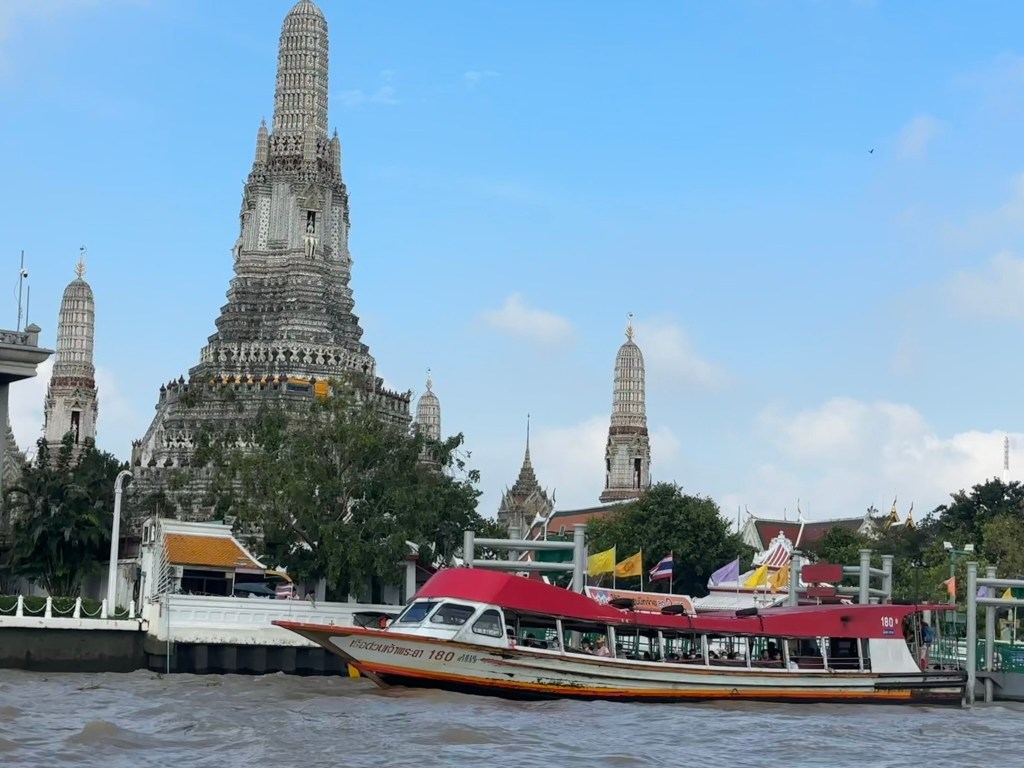
Thonburi Pagoda of Wat Arun 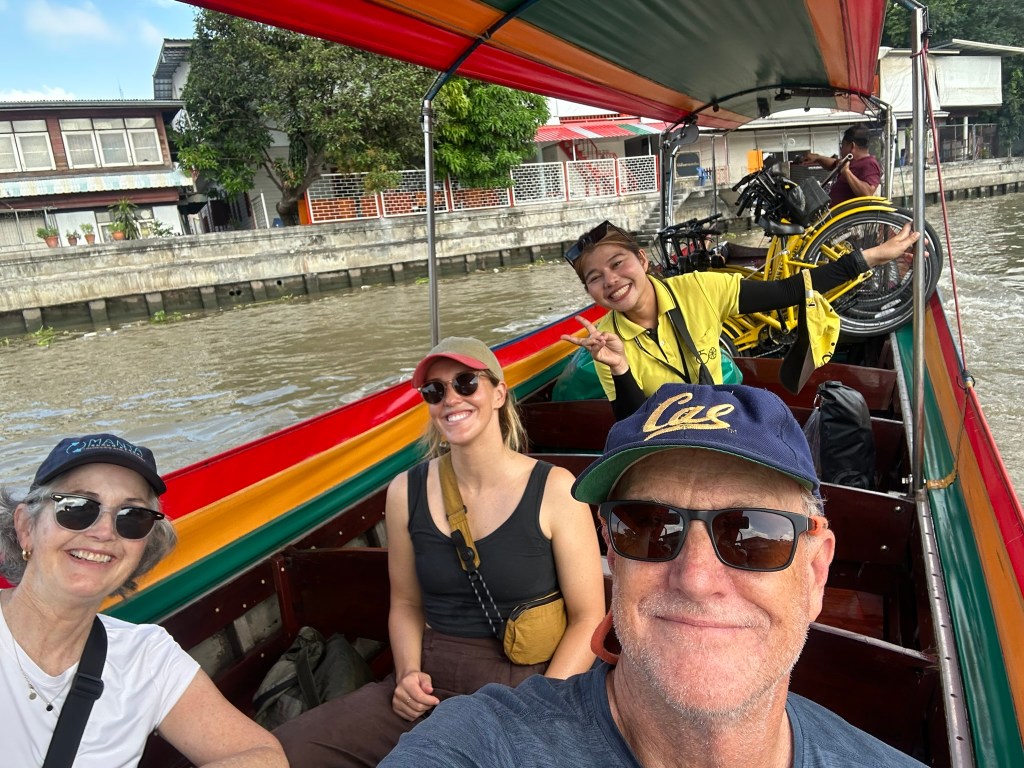
Photobomb by Nancy, our guide 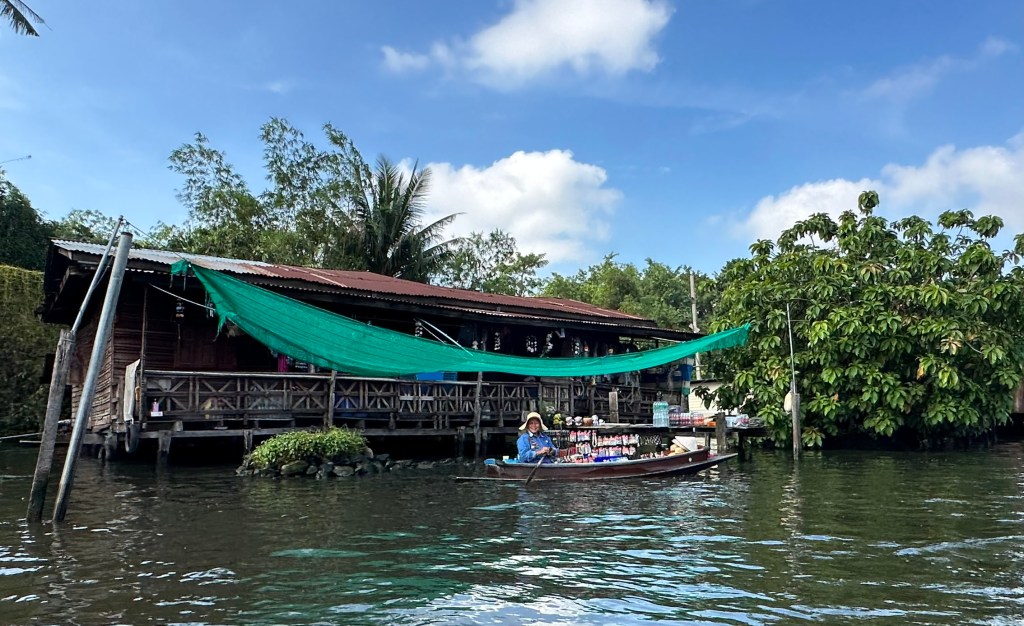
Street (canal) vendor 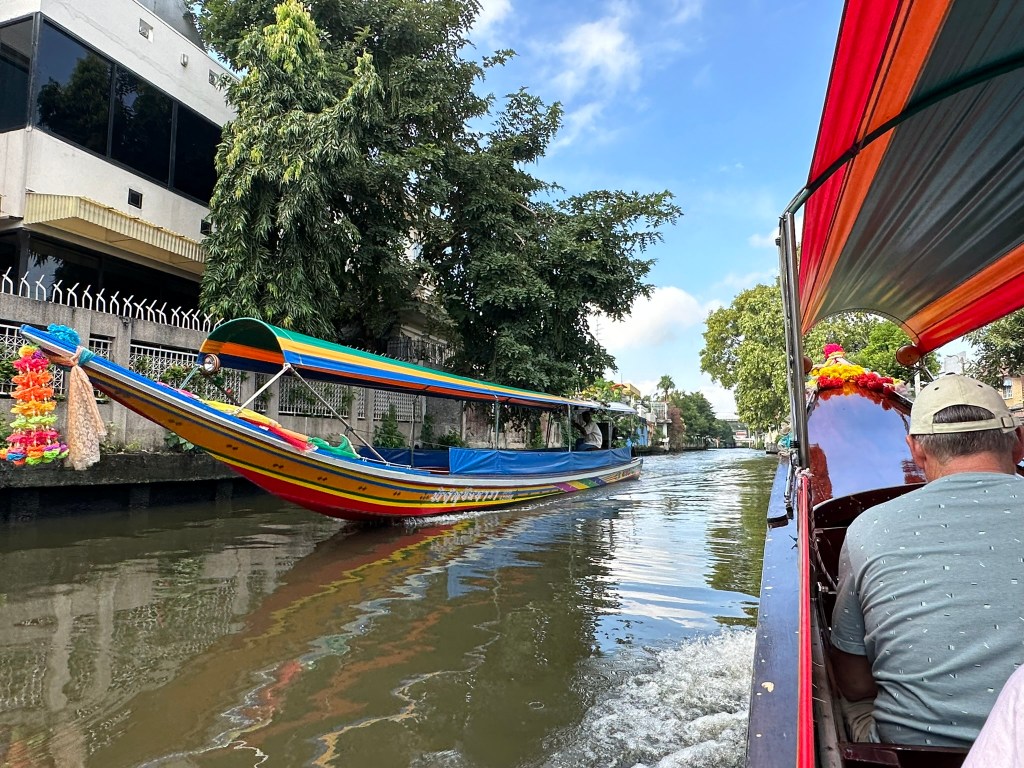
Canal boats 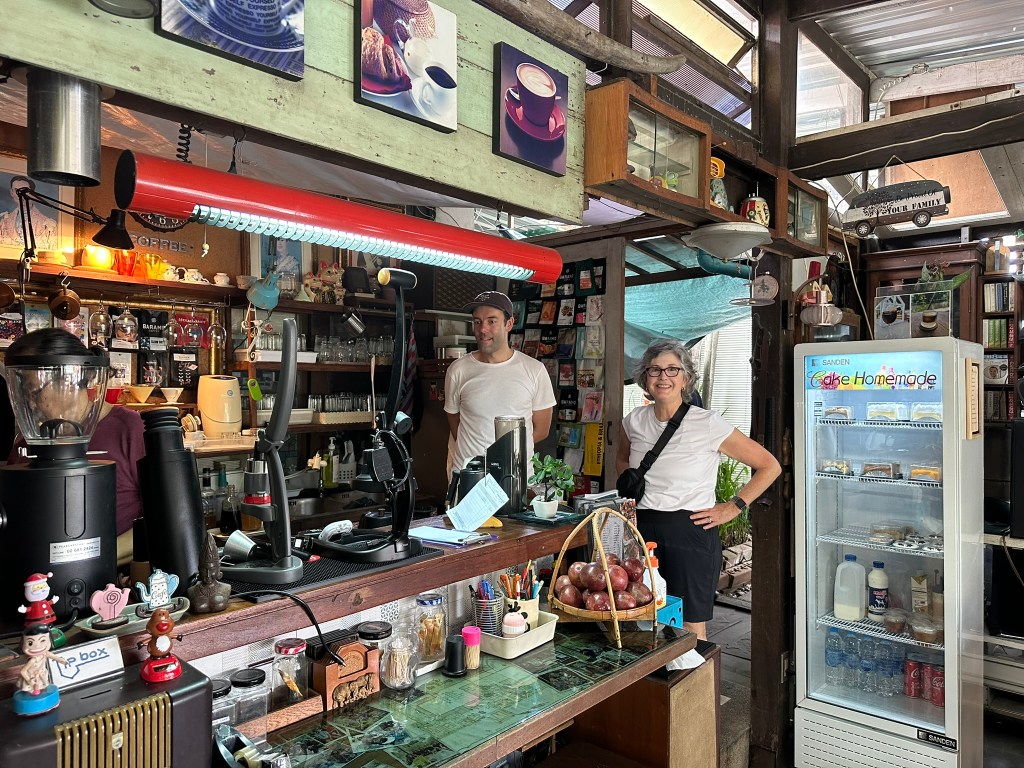
Lunch and coffee stop 
Cruising the Chao Phraya River
- Motorbikes rule the roads here, as with much of Asia, but Bangkok was a whole ‘nuther level compared to what we had seen in smaller cities and towns so far. Stop lights mean nothing, nor does driving on the wrong side of the road in traffic, as opposing traffic simply makes room. Crossing town at night on the back of a “Grab bike” — Asia’s alternative to Uber but with motorbikes — was a real thrill. And way faster than driving, walking or taking a cab.
- Bangkok, of course, is world-renowned for its crazy nightlife. While I didn’t have much interest in taking a walk on the wild side, I had high hopes for delving deep into the speakeasy and hidden cocktail bar scene. Again, a cranky stomach slowed those ambitions down some, but not entirely. Chinatown in particular has a two-block section packed with great bars, several of which came recommended by our bartender at 28 Hong Kong Street in Singapore. Teens of Thailand and Asia Today were favorites (dropping her name definitely paid dividends), but Tep Bar is the most authentic old-style Thai bar, where drinks are moved from one floor to the other by a dumbwaiter-style basket on a line.
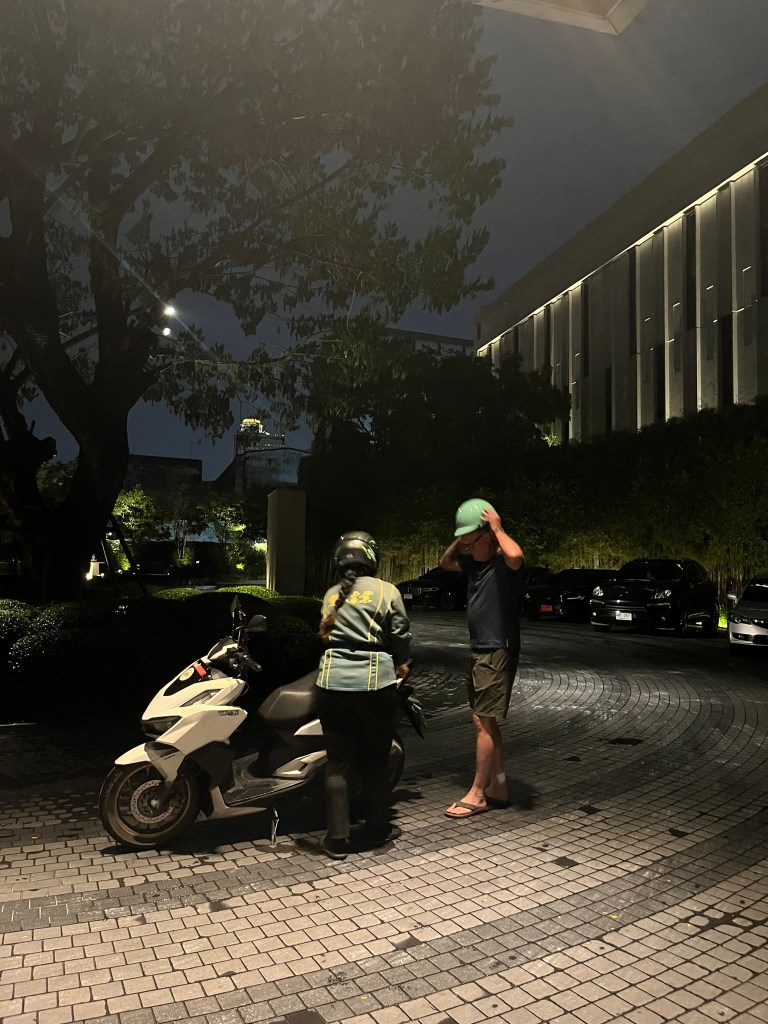
Grab bike 
Asia Today 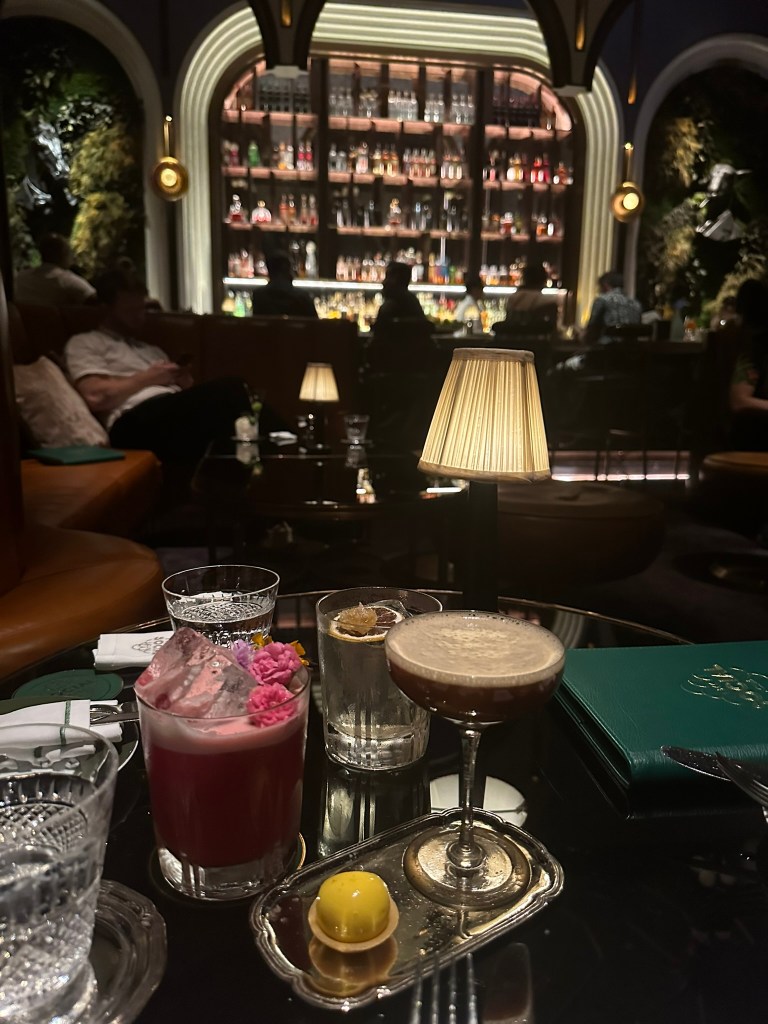
BKK Social Club 
Teens of Thailand 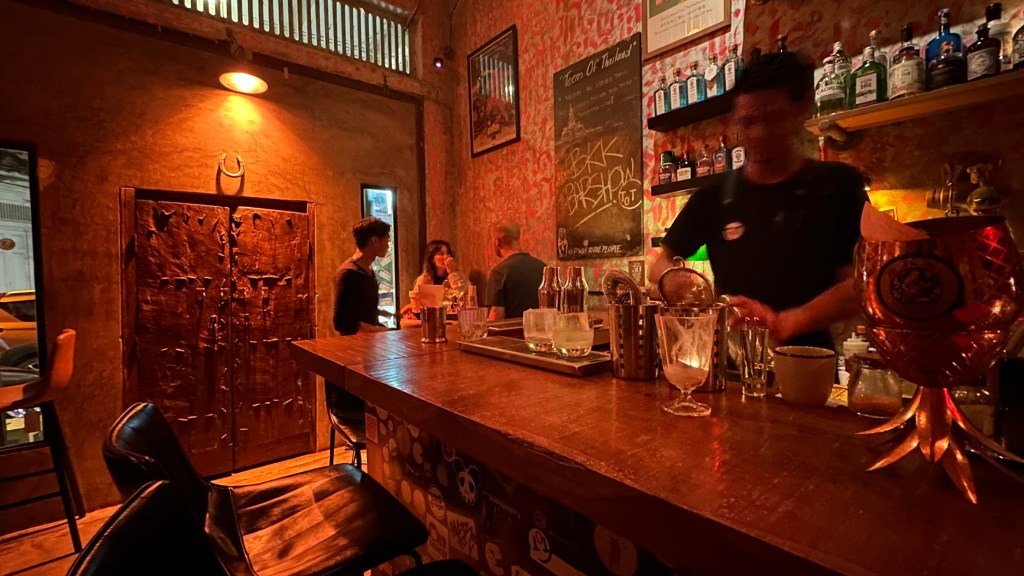
Teens of Thailand 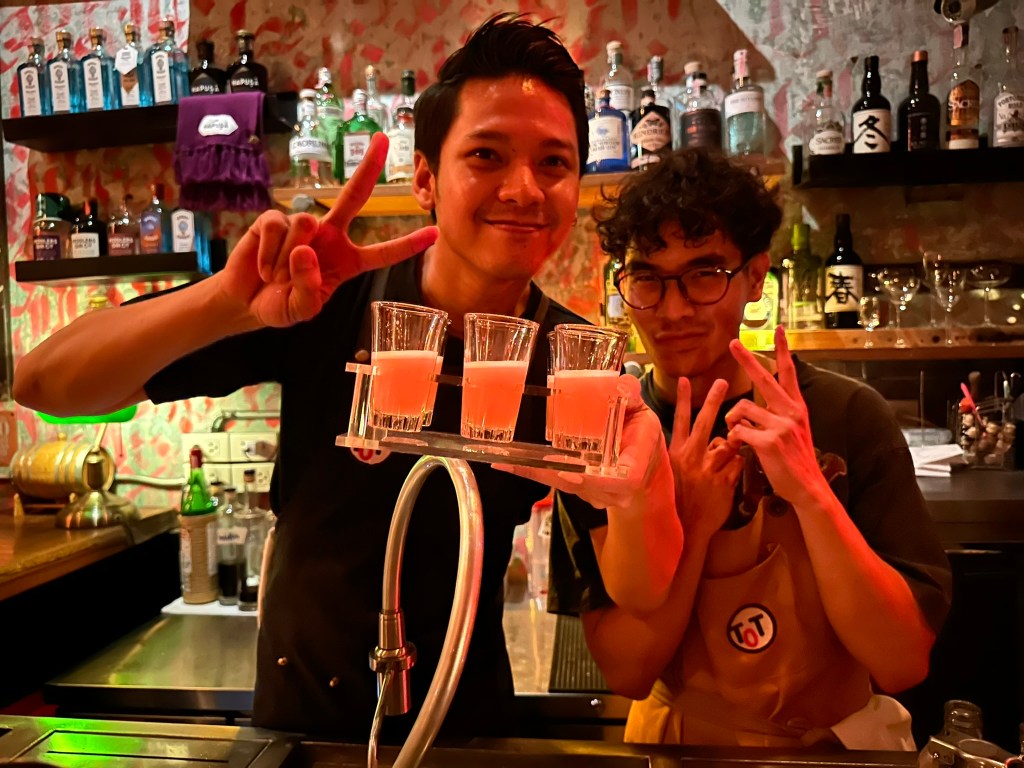
Shots on the house
With more time, we would have loved to hit some of these spots, all of which were in our plans:
- Wat Pho reclining buddha; Thai massage behind buddha at Wat Pho Thai Traditional Medical School. $8 for 30 mins.
- Climb the steps of the Golden Mount for early morning breakfast noodles at food stalls at the top. I hear it’s a way to take in the sunrise over the city.
- Prasart Museum is a lush hideaway showcasing ancient Thai design, architecture and gardening techniques. 1-hour guided tour $14/pp.
- Art district shopping, galleries and cafes at Warehouse 30.
- The food court on the first floor of Icon Siam, one of two new massive developments along the Chao Phraya River, may be one of the world’s best. After lunch, visit the top floor balcony to discover a light-and-mirror art installation called “Infinity Forest,” and one of the best views over the river.
- Four Seasons complex has revolutionized the dreary stretch of river south of the Taksin Bridge. Escape the dense urban surroundings to airy courtyards surrounding terraced pools, outdoor art installations and banyan trees descending to the shore. Head from the lobby to the waterfront via the small contemporary museum, Art Space, featuring a rotating series of modern art installations curated by Bangkok’s Museum of Contemporary Art. Exit the gallery to find a popular French bakery, Cafe Madeleine, which serves excellent croissants (95 THB) and coffee on the wide riverfront terrace.
| Day 16-18 | Mekong River, Laos | See lodging details below |
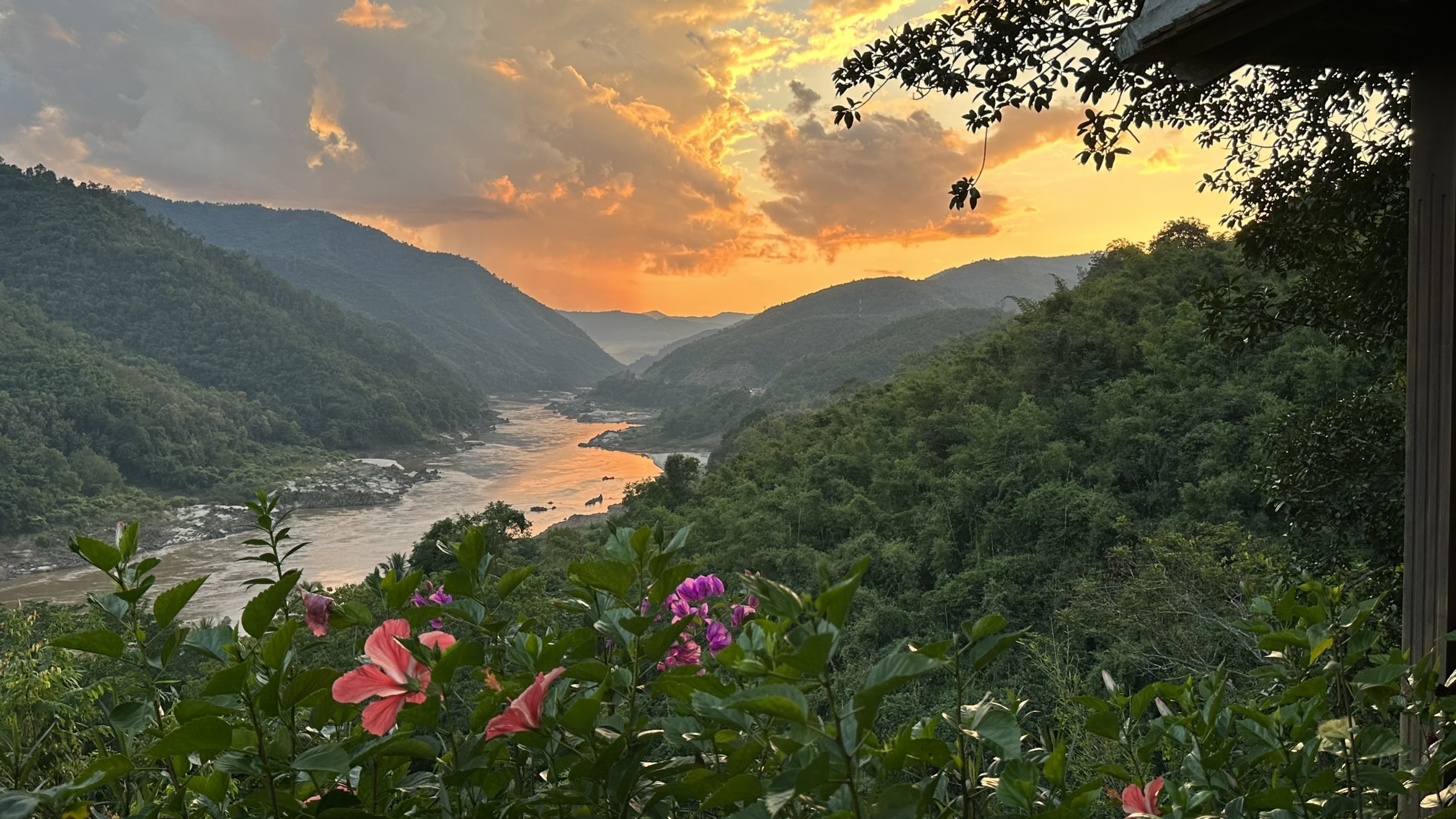
| 1 day | Houay Xai, Laos | Oudomphone Guesthouse |
| 1 day | Pakbeng, Laos | Le Grand Pakbeng Resort |
After 3 days of craziness in Bangkok, we were super excited to be changing it up — a little vacation from the vacation. Flying north again to Chiang Rai to catch a car for a 2-hour drive to the border, we cross into Laos over Friendship Bridge IV (great name, huh?), clearing immigration on both sides before settling in for the night in the ultra-rustic border town of Houay Xai.
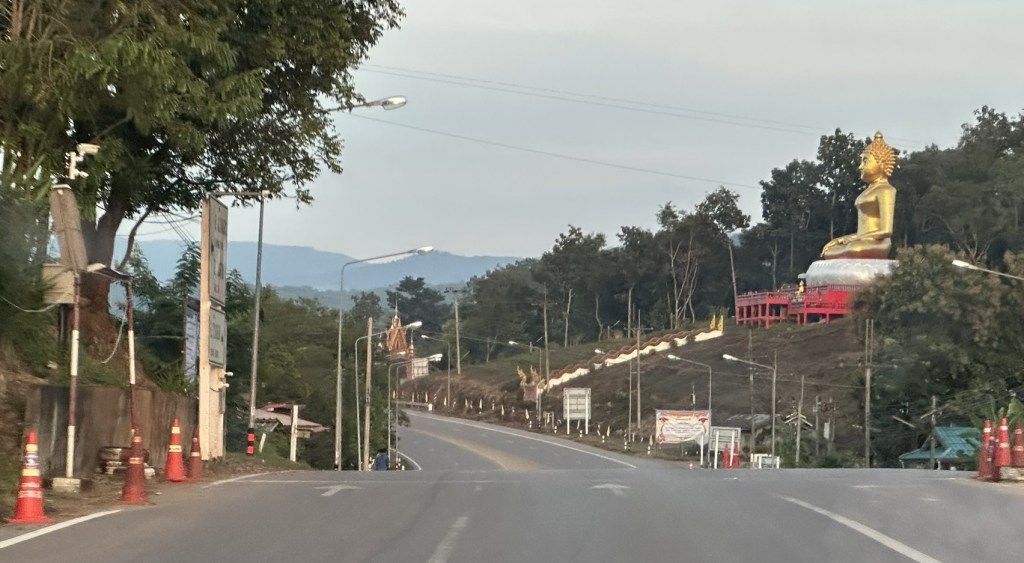
Roadside Buddha 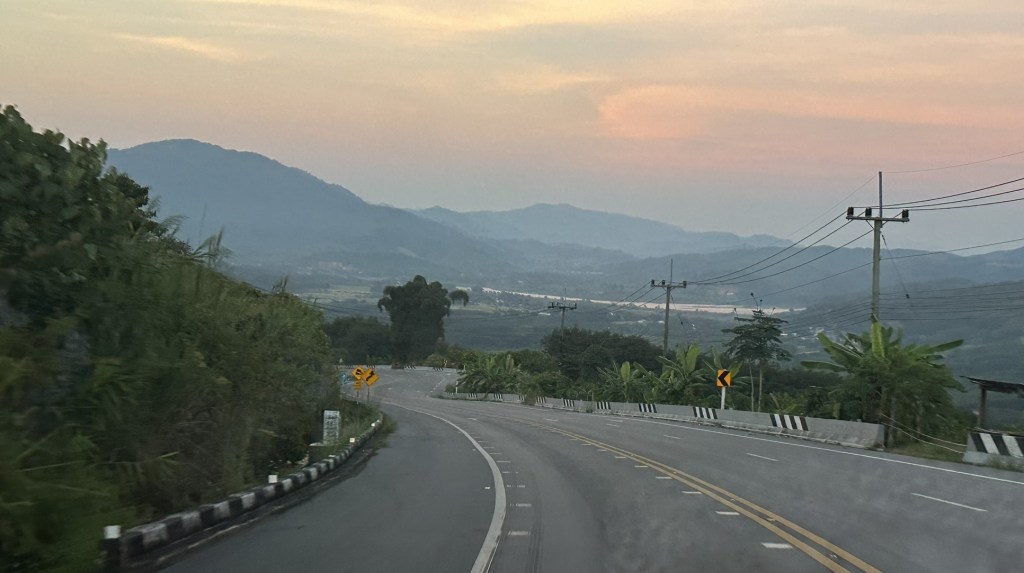
Nearing the Thai-Laos border 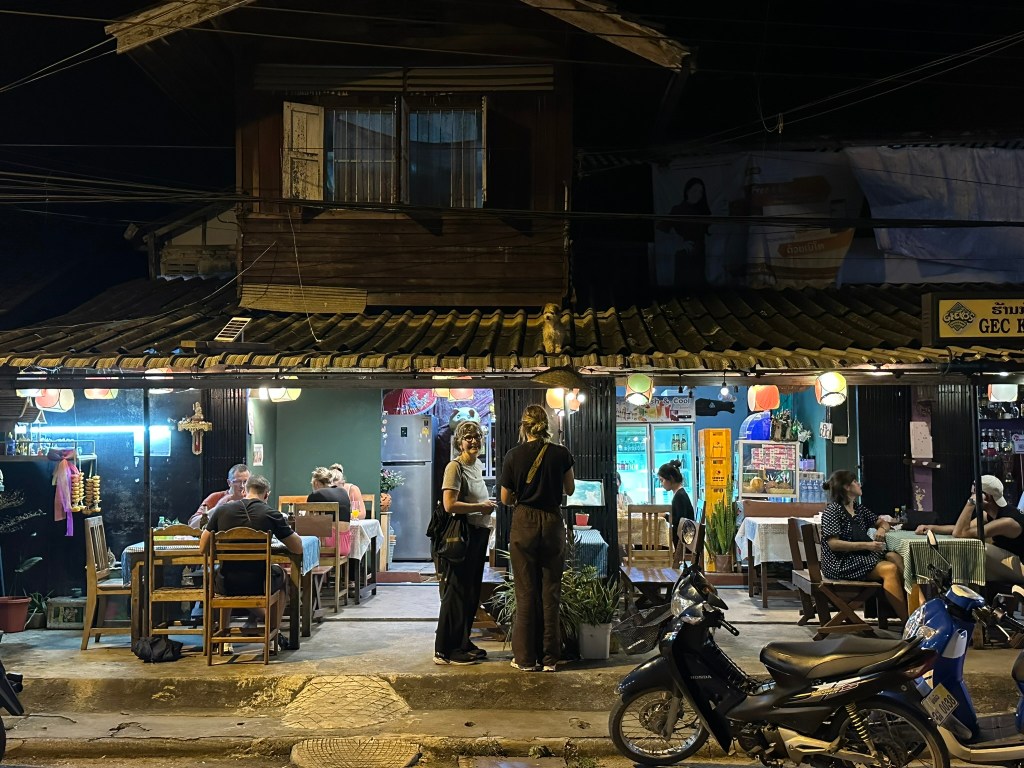
Dinner spot 
Houay Xai at night 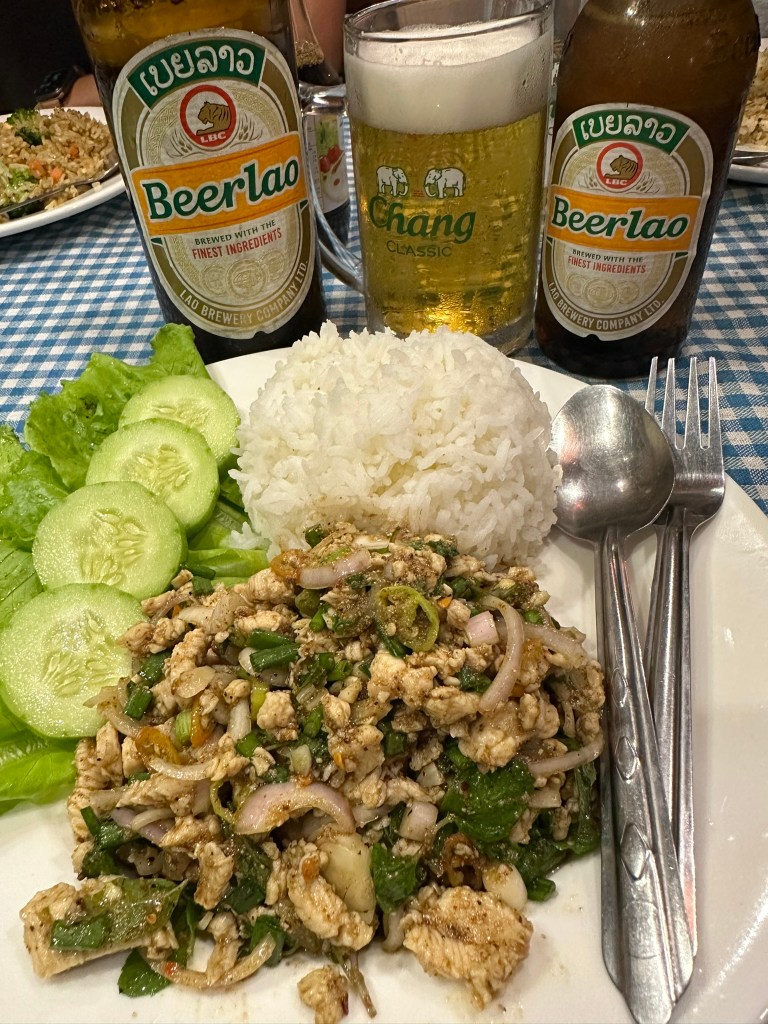
Traditional Lao cooking 
Bar How? 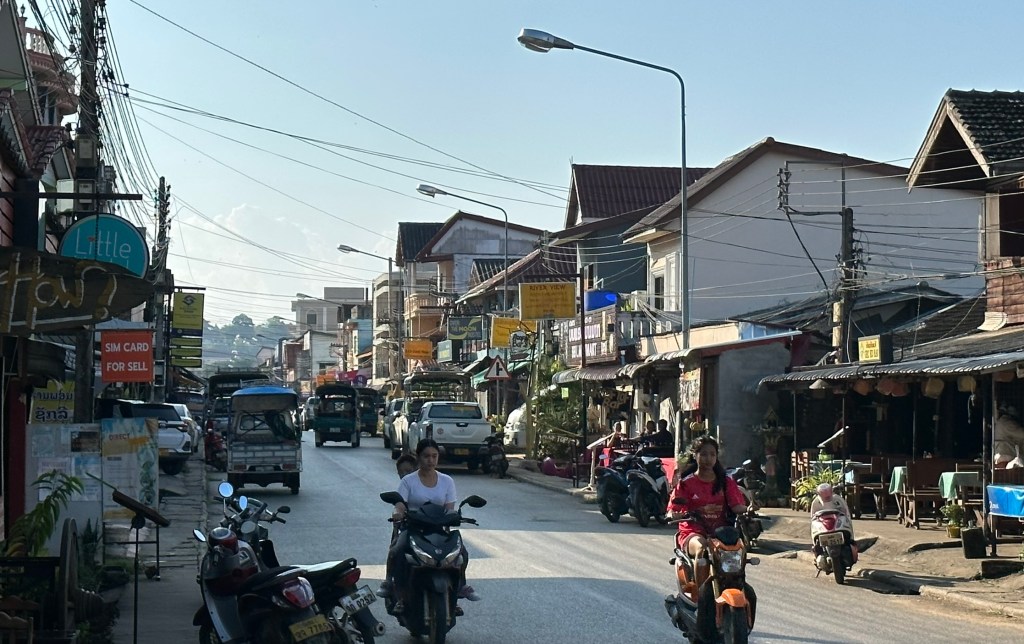
Houay Xai morning
Lots of backpackers in Houay Xai and everyone is there for one reason, same as us. Catching a boat down the mighty Mekong River into the beating heart of Laos. We booked with Shompoo Cruise, a family run operation, and the two-day slow boat journey was sublime, with no more than 12-15 fellow travelers from around the world sharing our boat (with capacity for 32).
Highlights:
- The boat ride itself was great, super relaxing as we watched the scenery roll by. Traditional Lao lunch cooked and served by the family crew was great. Our guide for the journey, Dent, was a native Laotian from the northern Hmong hill tribe region. Like many Laotian boys, he studied in a Buddhist monastery for years as a child before leaving to become a tour guide instead of going the monk route. His great personality, cultural lessons and storytelling made for a really cool, authentic “off the grid” experience.

Lots of room to stretch out for the cruise 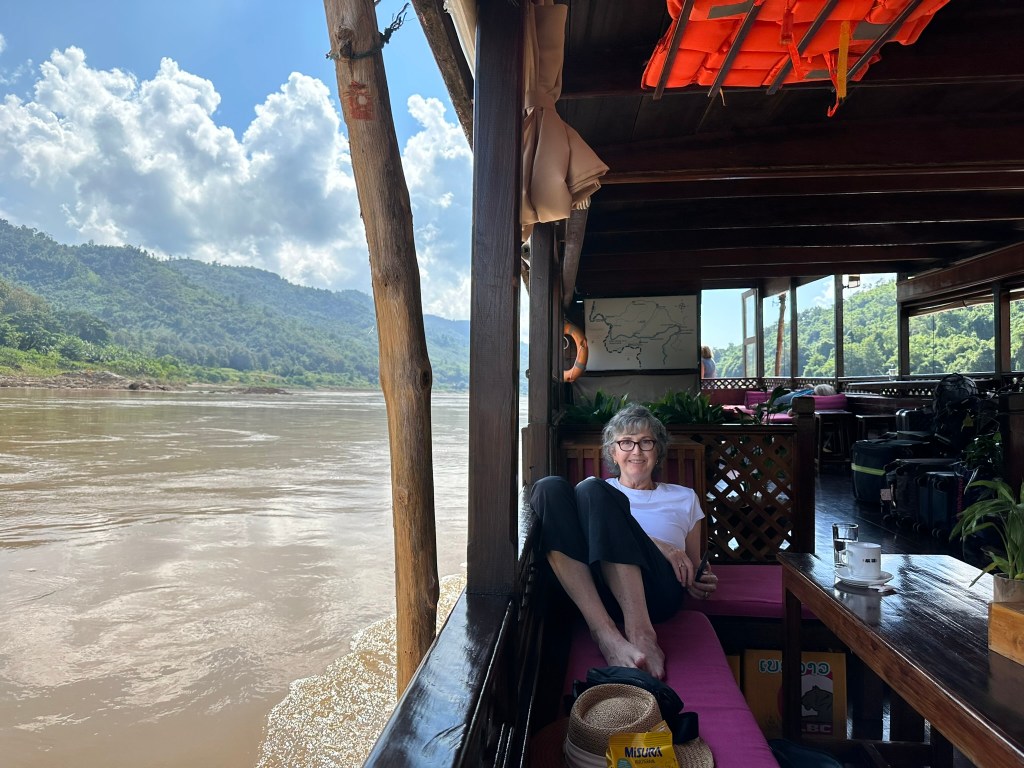
Watching the river flow 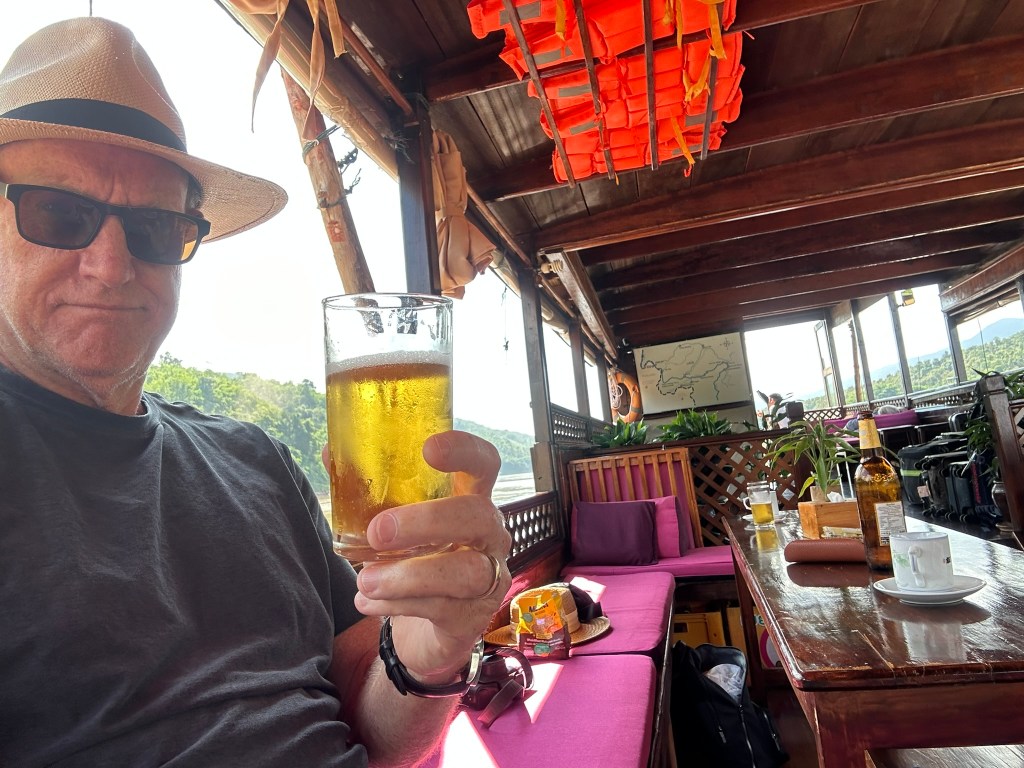
Cold beverage for a hot day 
River traffic 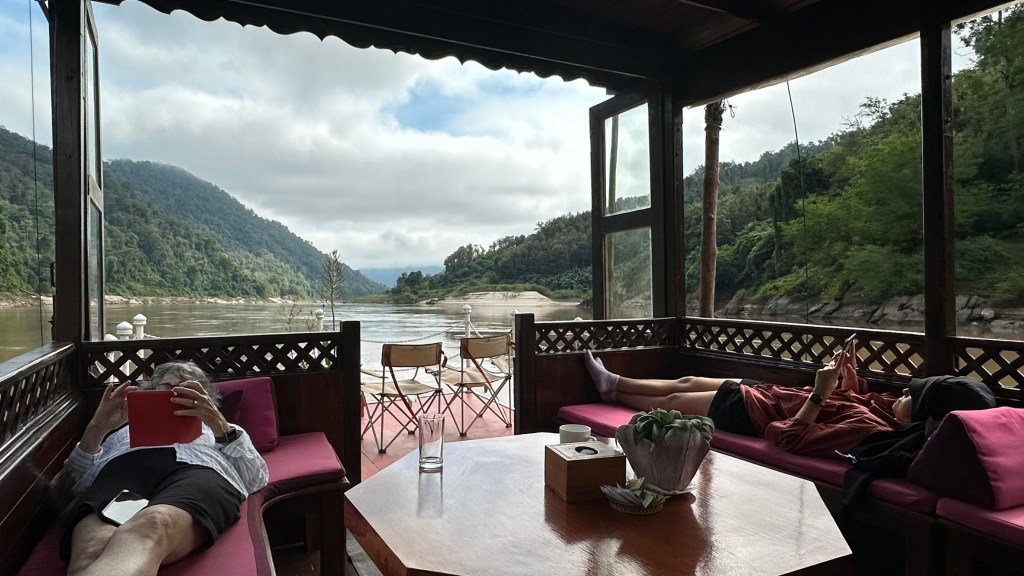
Typical activity on board 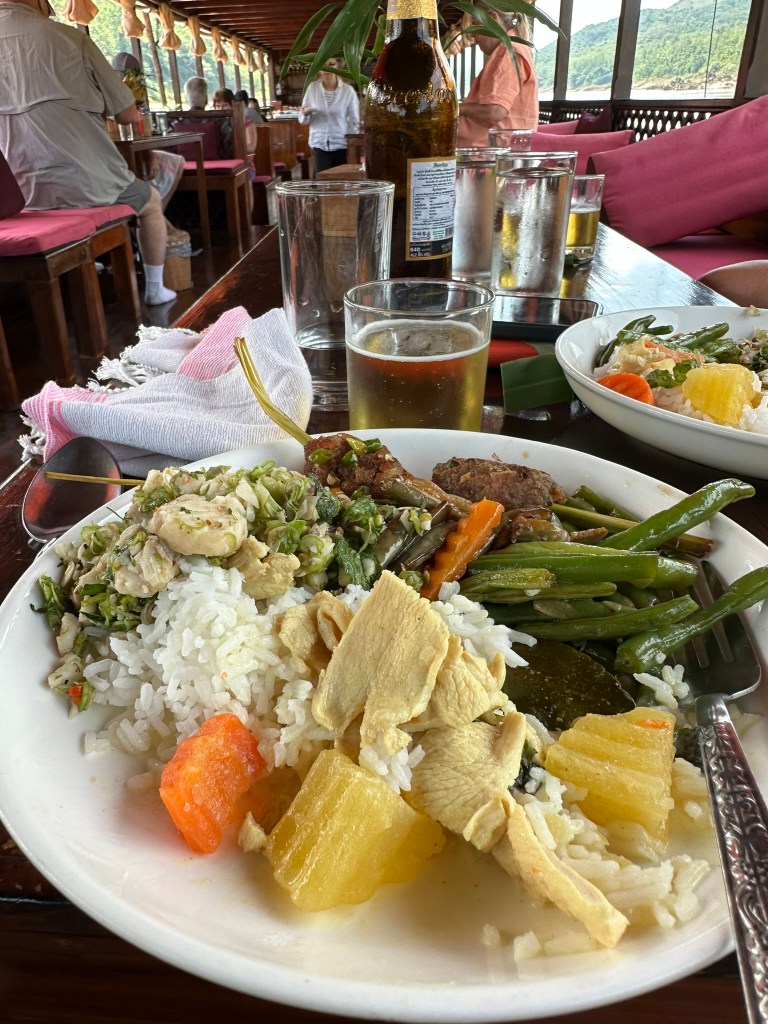
Home cooked lunch 
Local fisherman on the river
- Our first planned stop at the Khmu ethnic hill village of Ban Kang Lae, home to about 60 families living by the river. To call this “third world rural” would be an understatement. The villagers were relocated here from the distant mountains about 10 years earlier in exchange for free doctors, medicine, and a school that teaches both Lao and English; all part of a government plan to stop opium trade common in the hills. Interacting with the kids and seeing how they live was truly unique; “entertaining” one boat full of tourists after another 4 days a week is no doubt peculiar to them, but they seemed happy to play along considering the services and charity they see in return.
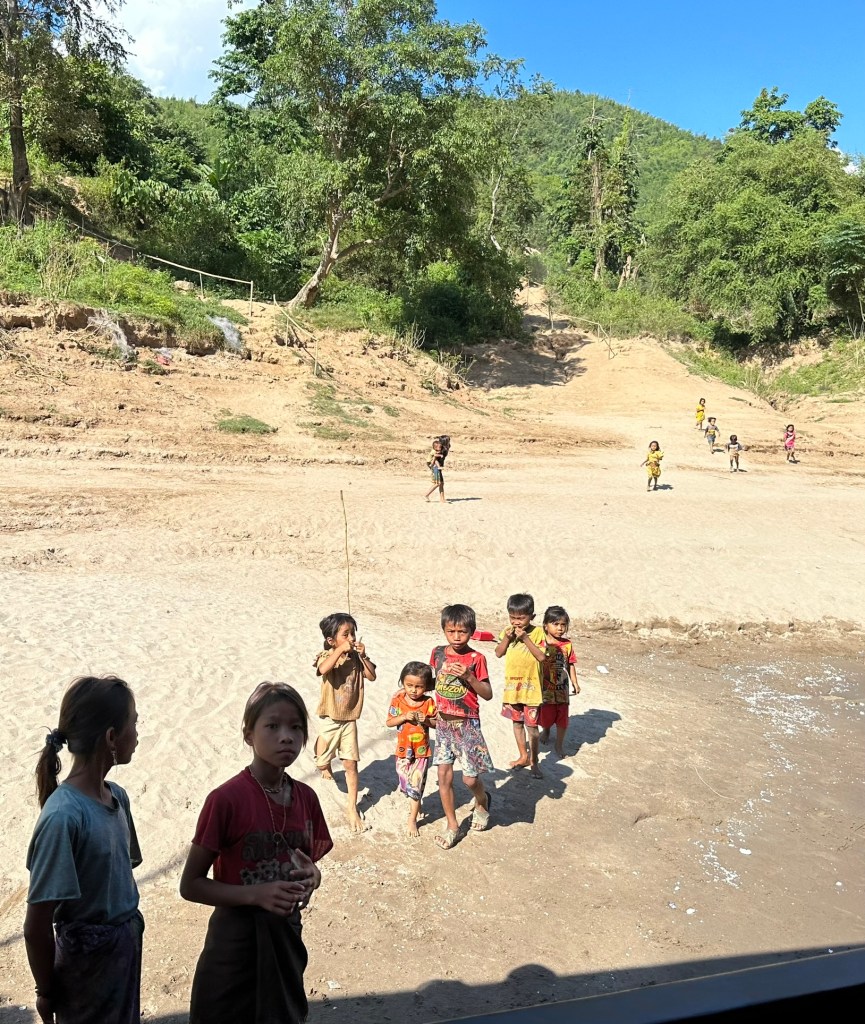

Emily, our boat, and the children 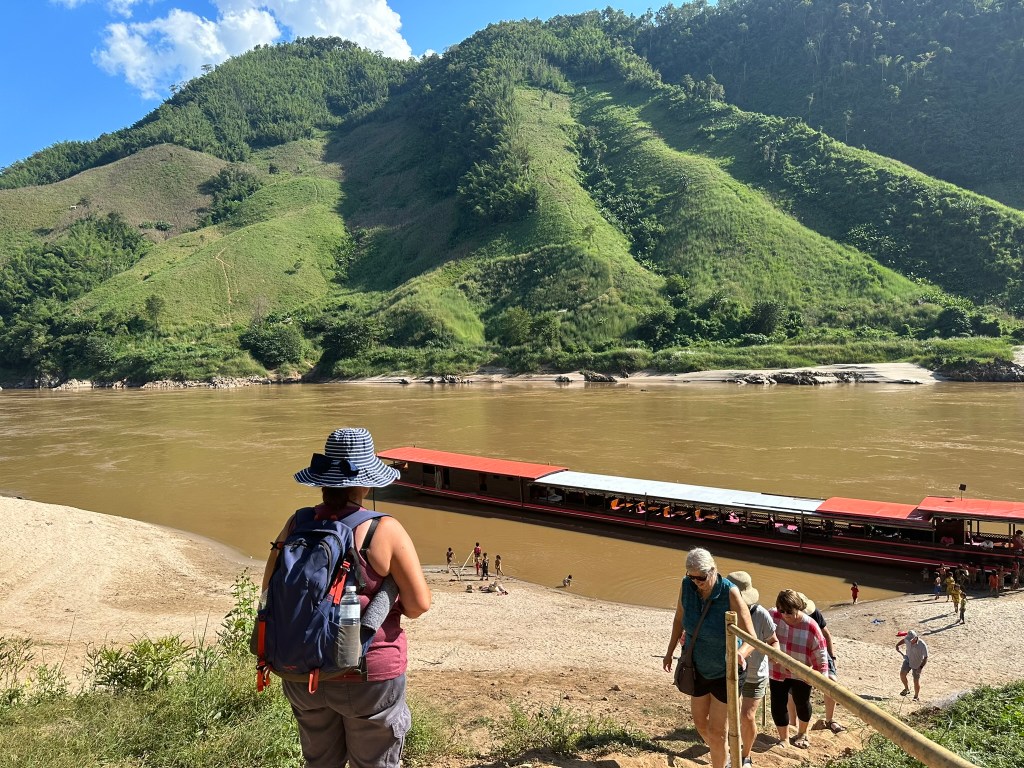
Making our way from the river to the village 
Just up this hill… 
Shaman’s house, the biggest in the village 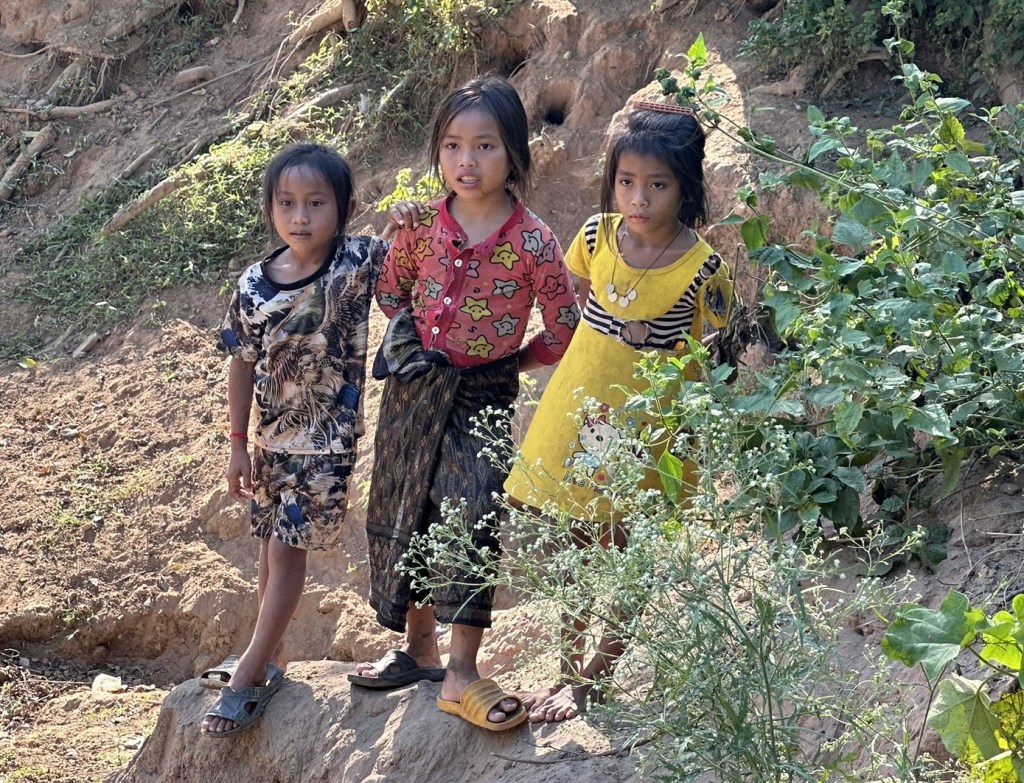
Beautiful Khmu children 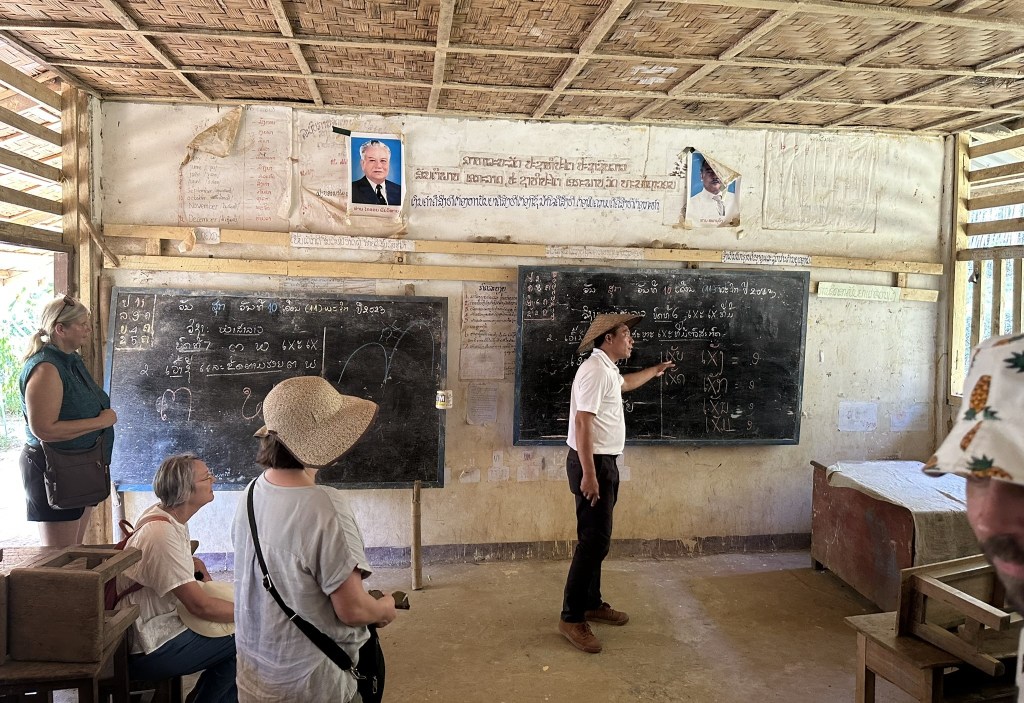
Visiting the village’s one room school
- Our overnight stay in Pakbeng, halfway downriver, was downright luxurious compared to our digs in Houay Xai, and the sunset view over the Mekong river valley from our balcony was out of this world.

Le Grand Pekbang’s rooftop pool & bar 
Yeah, that!
- Day two of our cruise featured a stop at Ban Mouang village known for making Lao Lao, the local whisky. This village was far more modern and developed than Ban Kang Lae, but still extremely rustic by western standards. In addition to seeing and learning about the whiskey-making process, buying handmade friendship bracelets from the local children at their little “shop” in the street was priceless.
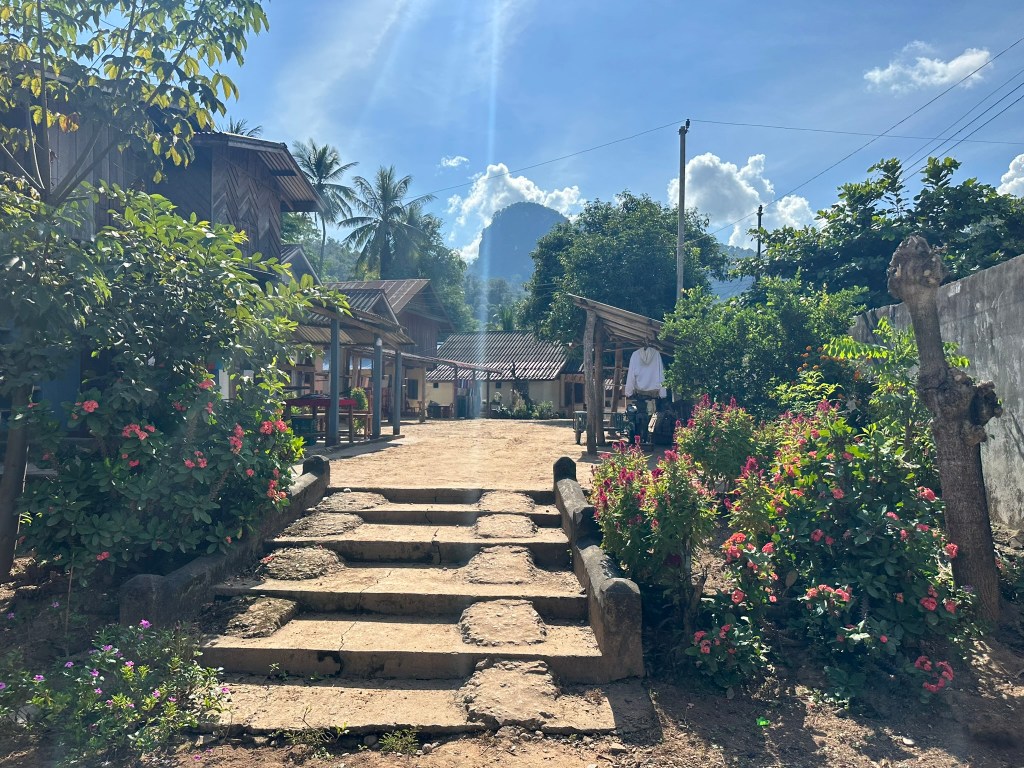
Walking into the village 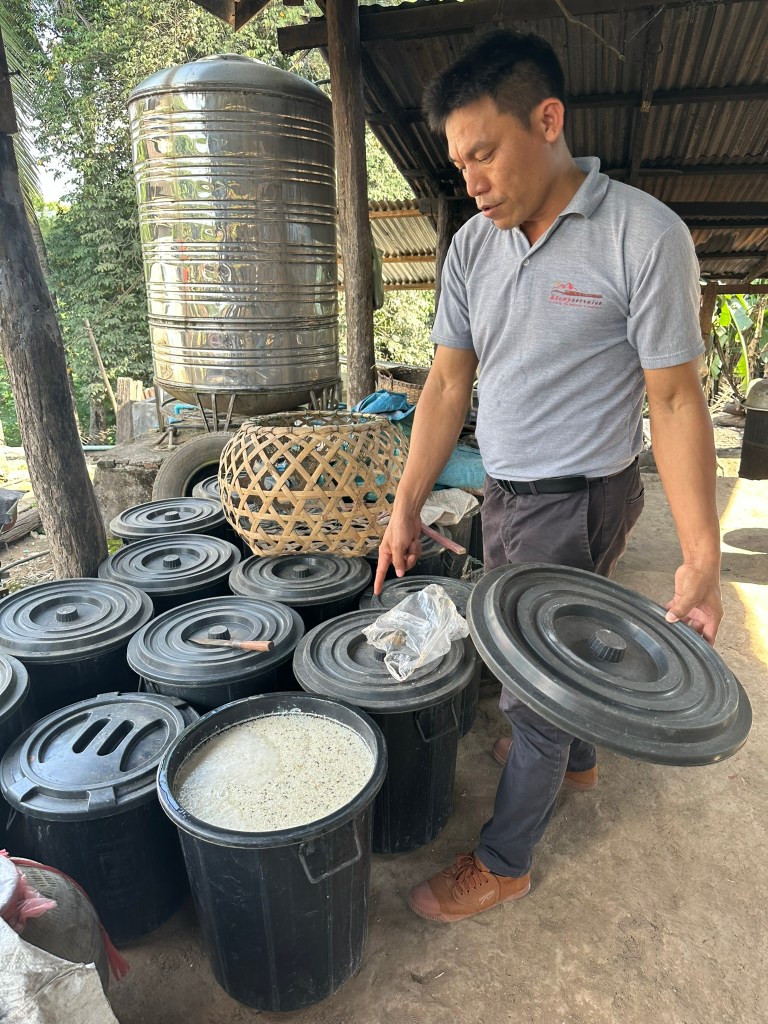
Dent explains Lao Lao fermentation. 55% ABV. “Women drink rice wine; this is for men, yeah?”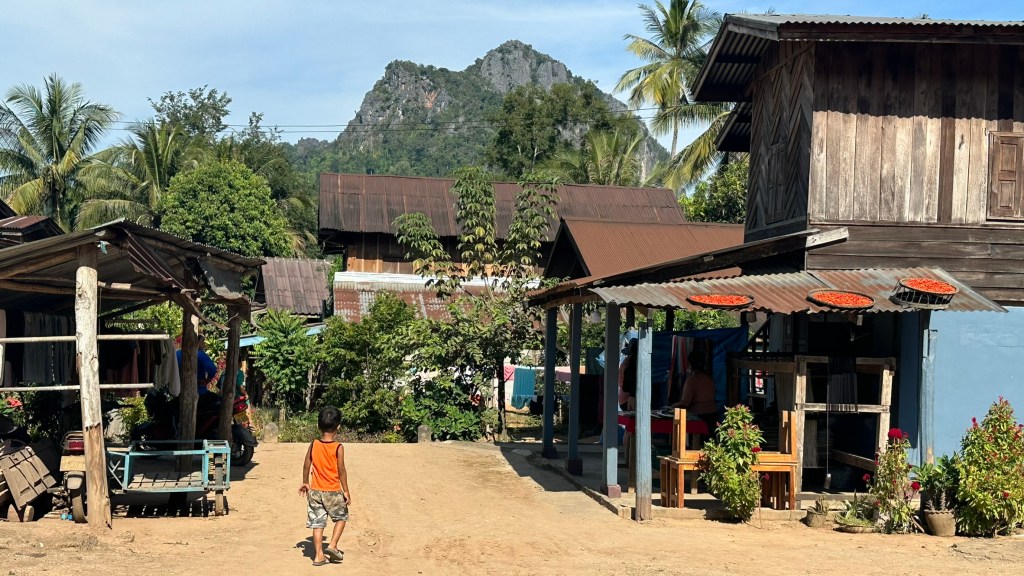
Drying chili peppers on the roof. 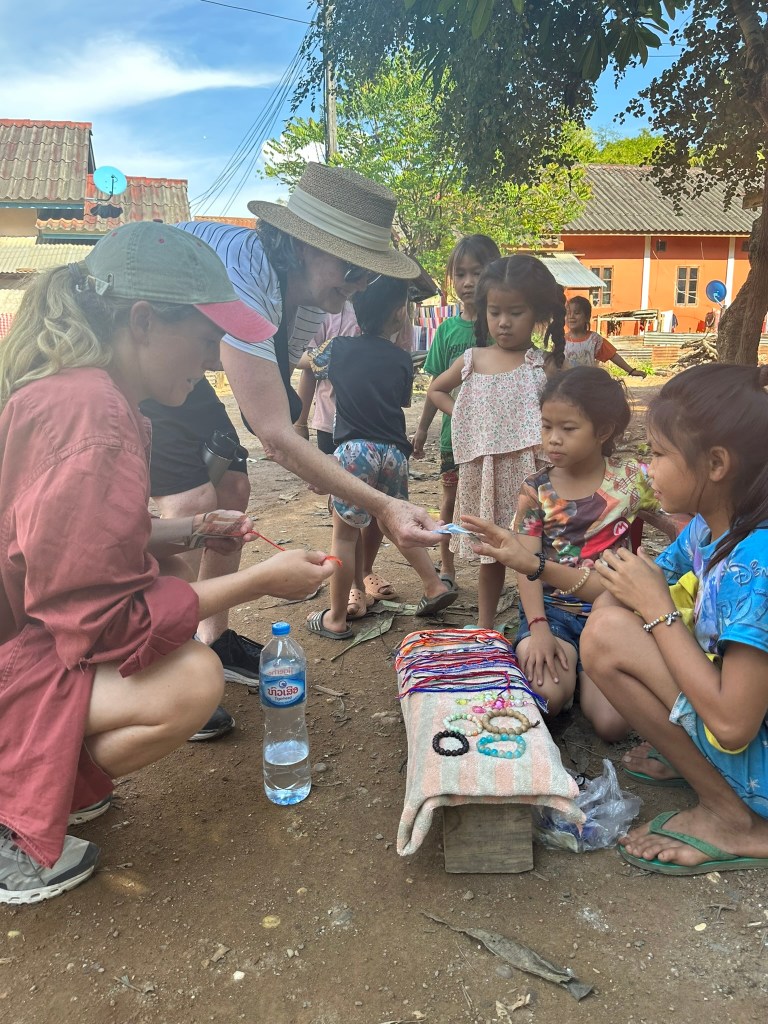
Shopping at the jewelry exchange 
Main street 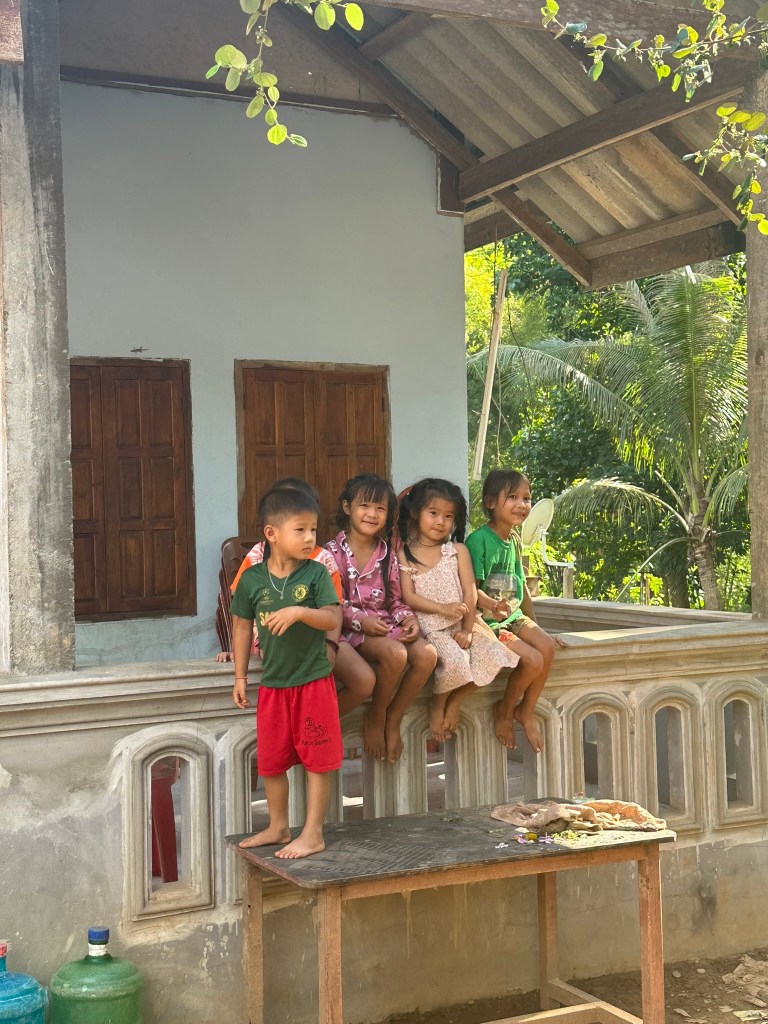
More happy Lao children 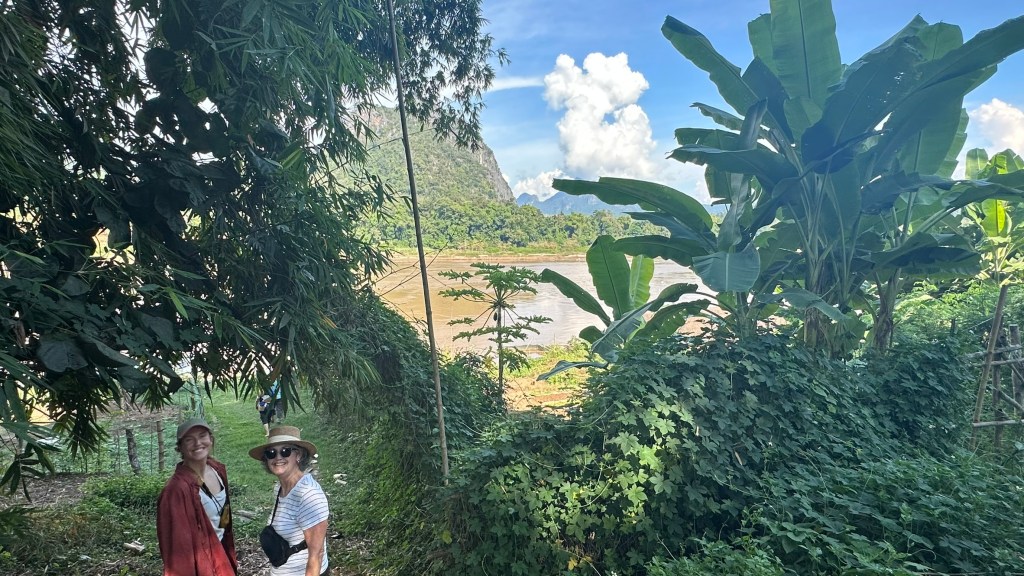
Beautiful scenery abounds
- Last stop on the cruise before arriving at its terminus in Luang Prabang was the cliffside Pak Ou Caves, home to over 4,000 Buddha statues and one of Laos’ most popular pilgrimage destinations. Every April across Laos the water festival is celebrated to wash all the Buddha statues, including here in the caves. The ceremony also serves to wash away everyone’s sins so they can start the new year fresh.
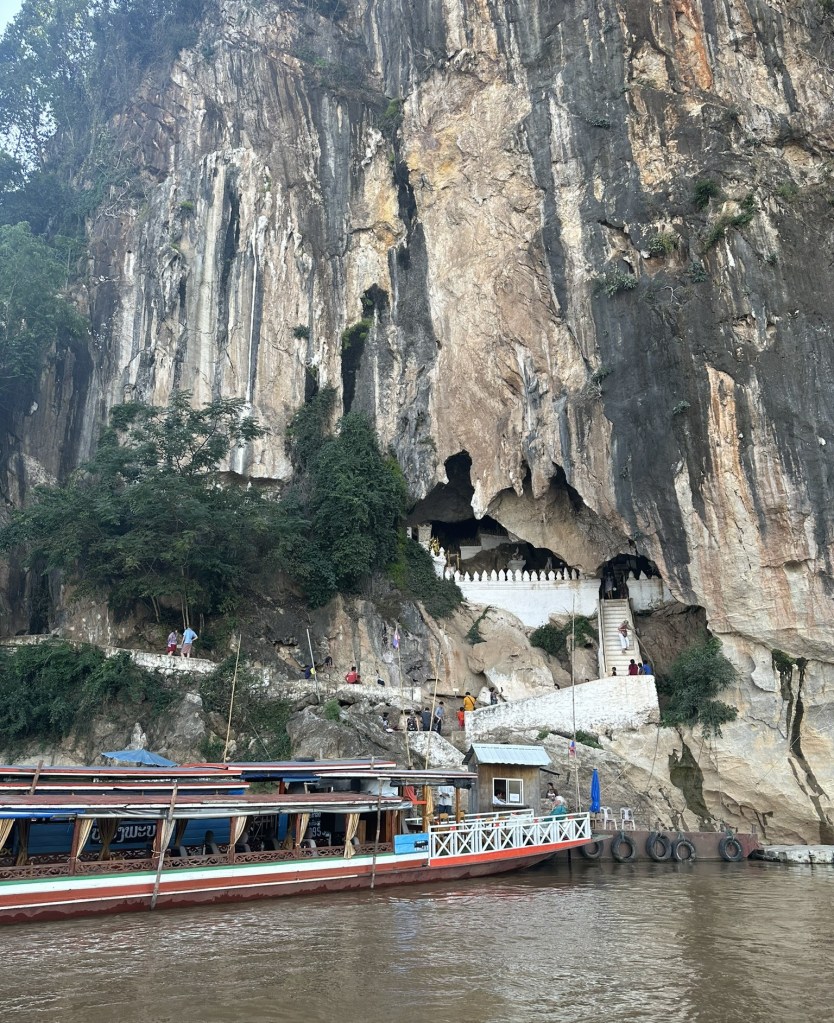
Arrival to Pak Ou’s lower cave 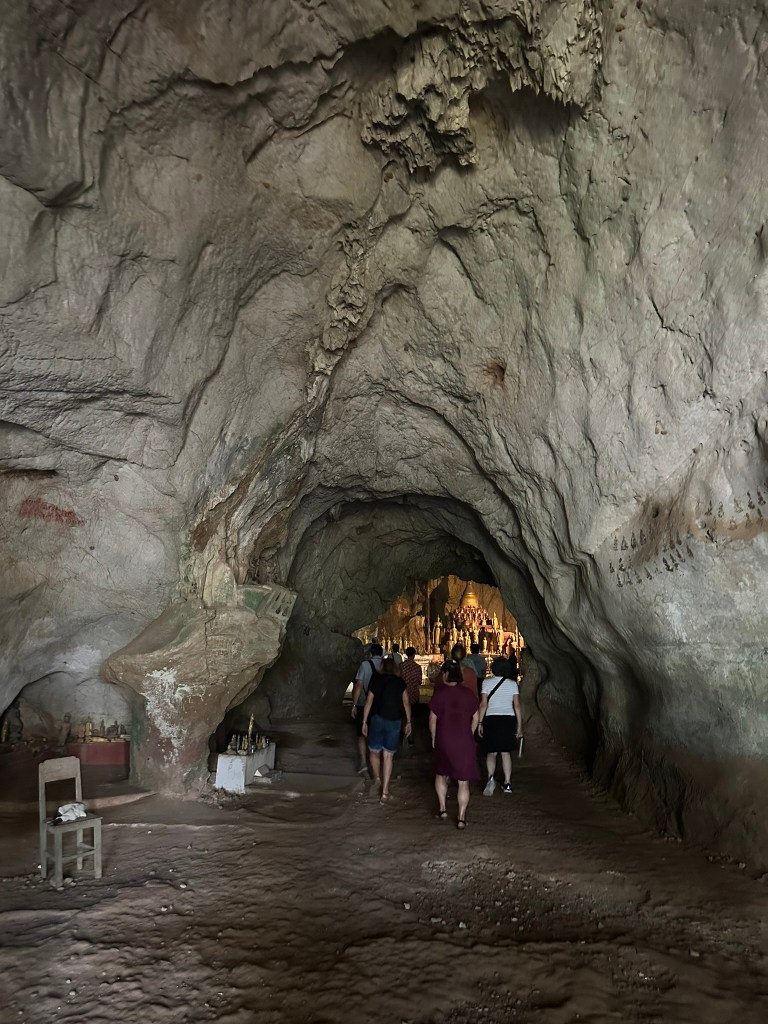
Upper cave entrance, high up the cliff 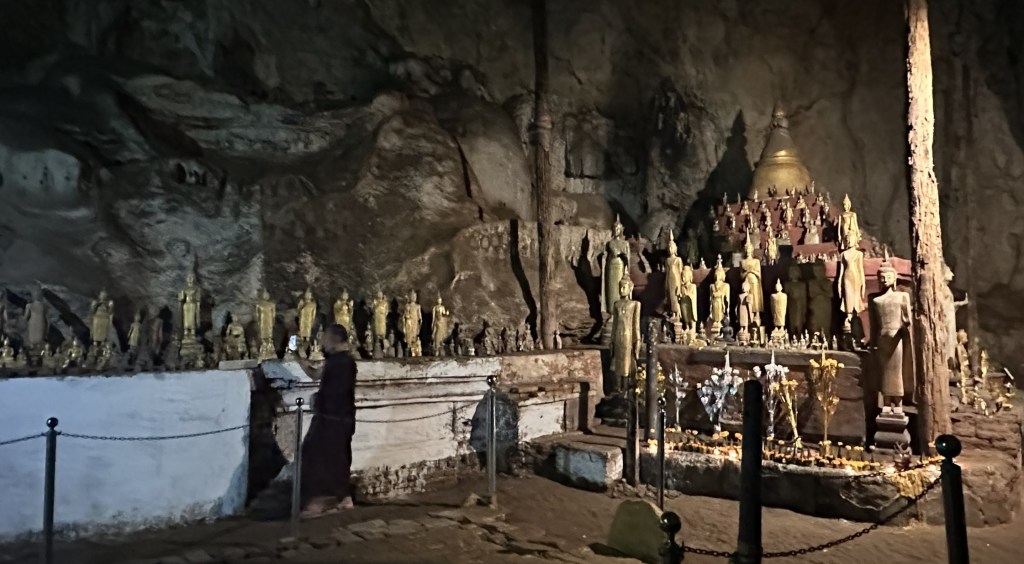
A cave full of Buddha statues 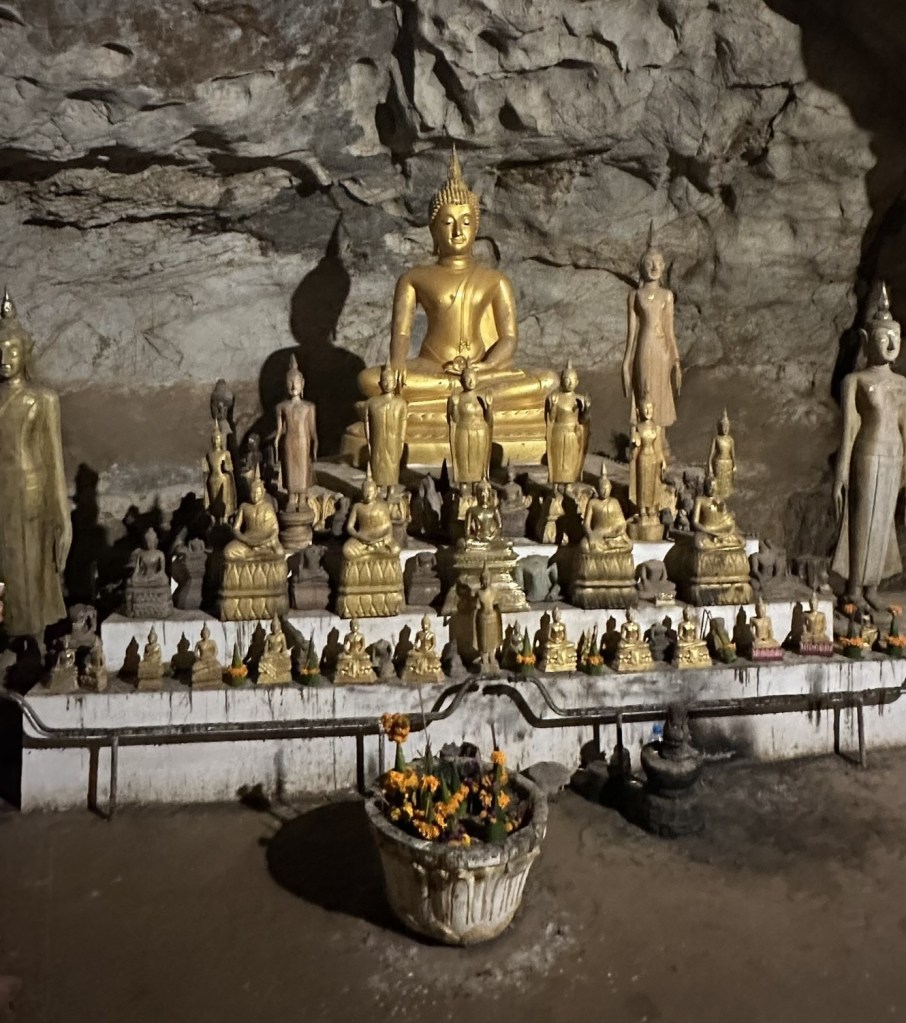
Offering to the Buddha 
A scenic village on our departure
| Days 19-21 | Luang Prabang, Laos | Maison Souvannaphoum Resort & Spa |
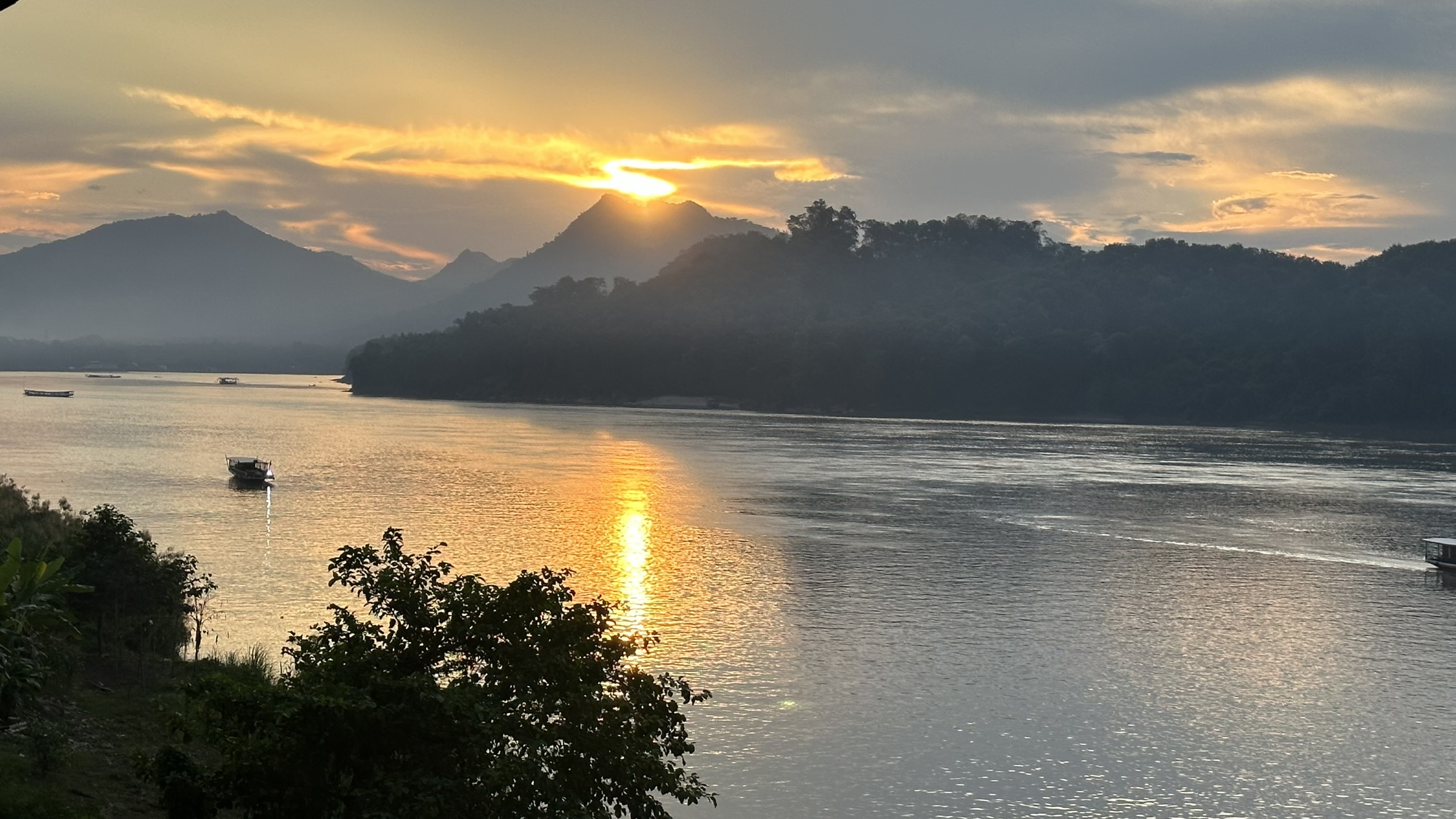
Our friends, Deb and Paul, who have traveled Asia extensively, always said Laos was their favorite and now I know why. Luang Prabang, its cultural heart and the historical capital before communism took over in 1975 and forced the royal family into exile, sits at the confluence of the Mekong and Nam Kahn rivers, surrounded by mountains much more rugged than Thailand or Cambodia. Its Old Town is a UNESCO World Heritage site because of its well-preserved culture, equally well-kept French colonial meets traditional Lao architecture, and strong Buddhist presence with 33 temples and a daily morning alms-giving tradition.
What really set it apart though was the people — literally everyone you meet, whether it’s a shop, an eatery or just on the street greets you with prayer-like “lotus” folded hands, a smile and a “Sabaidee”, perhaps the happiest, most stress-free place on earth.
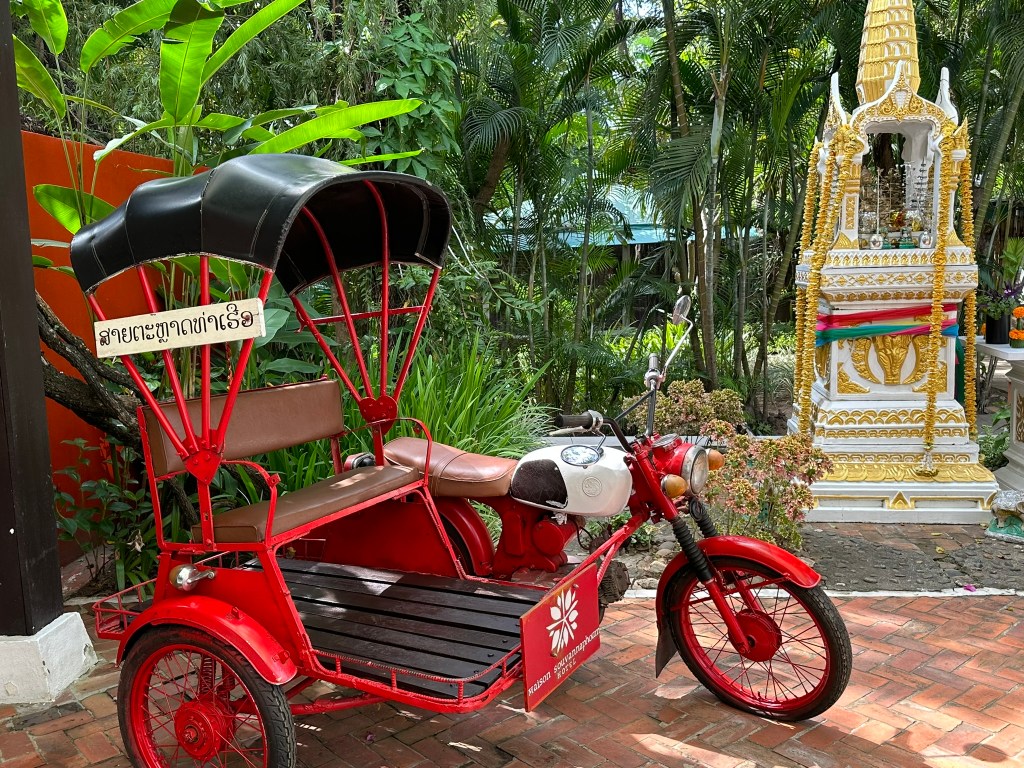
Old time transportation 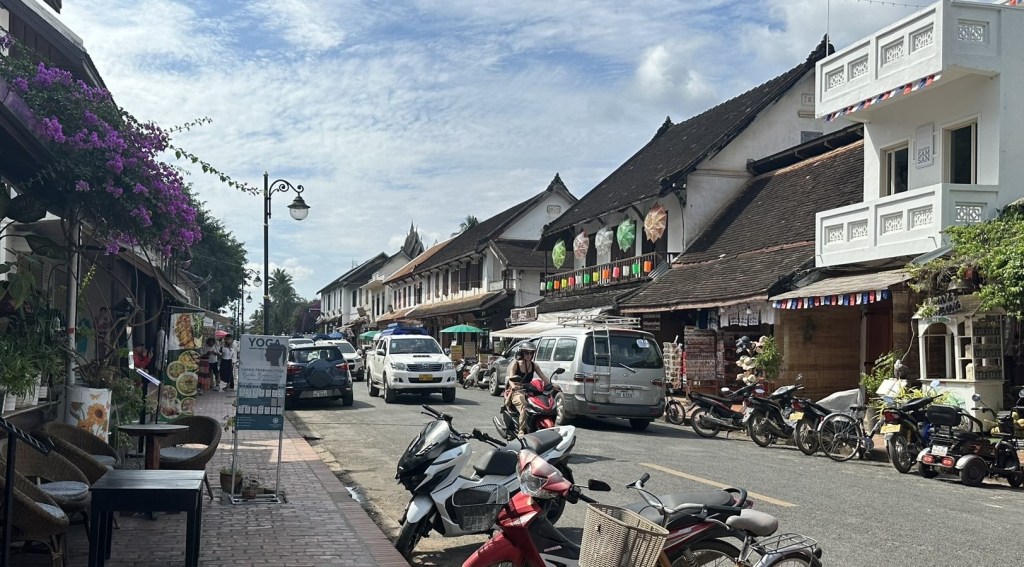
French colonial main street 
National Museum 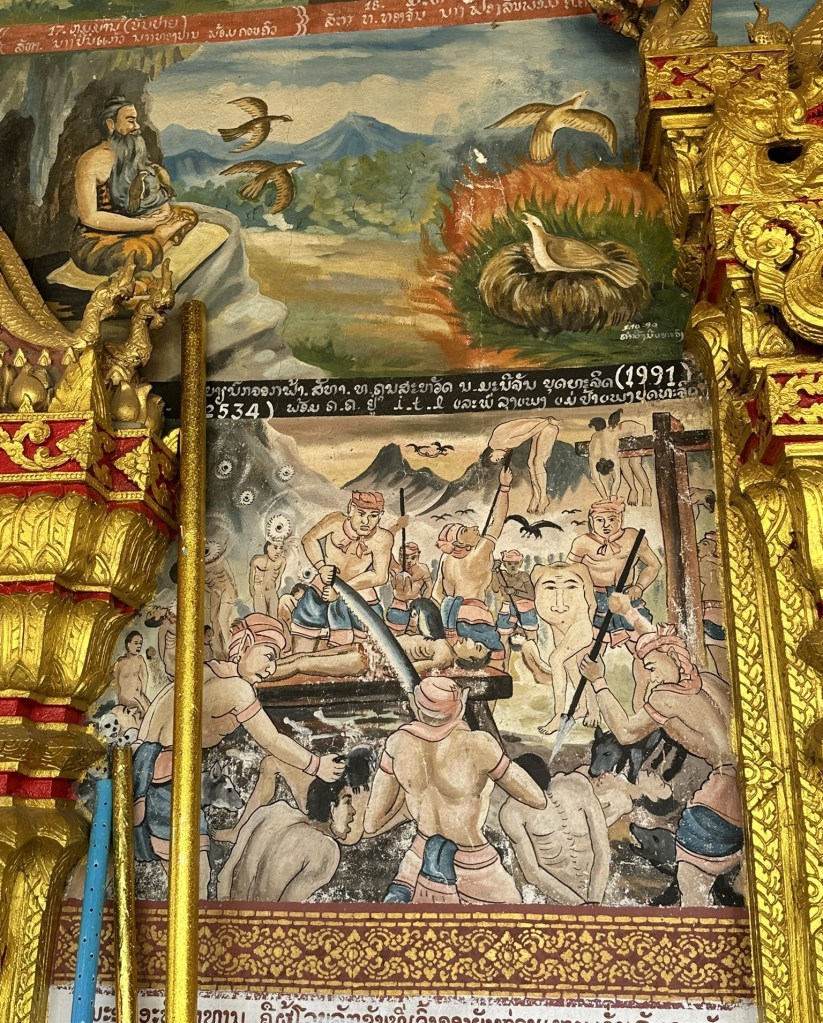
Some gruesome art work 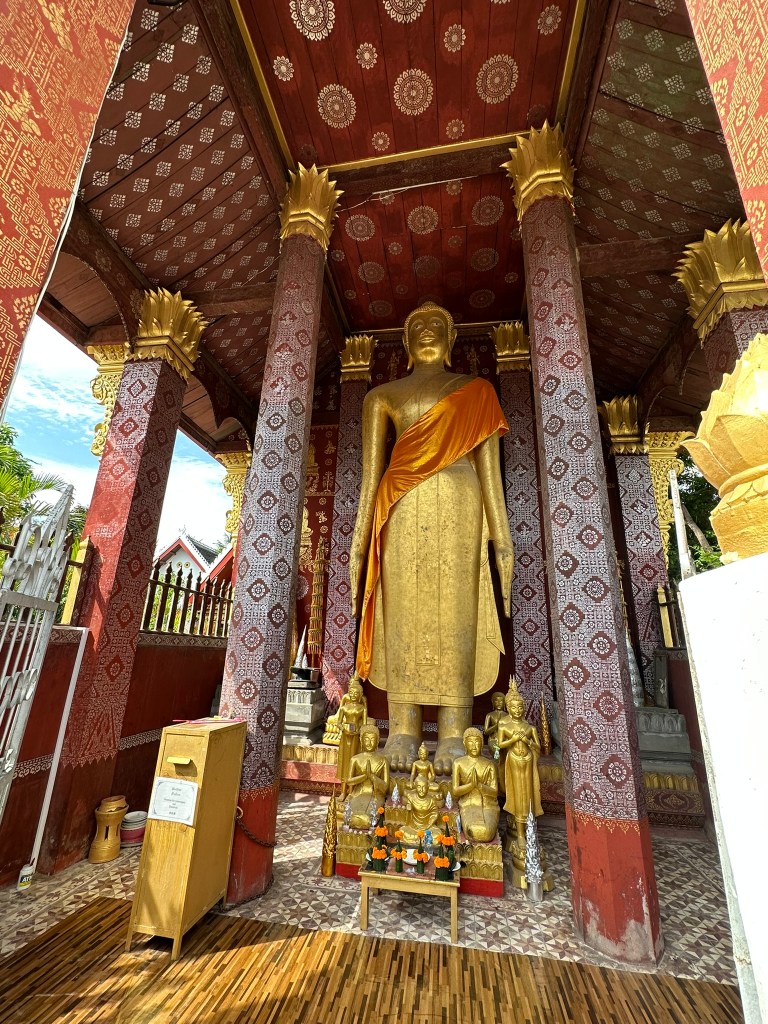
Wat Sensoukharam Buddha 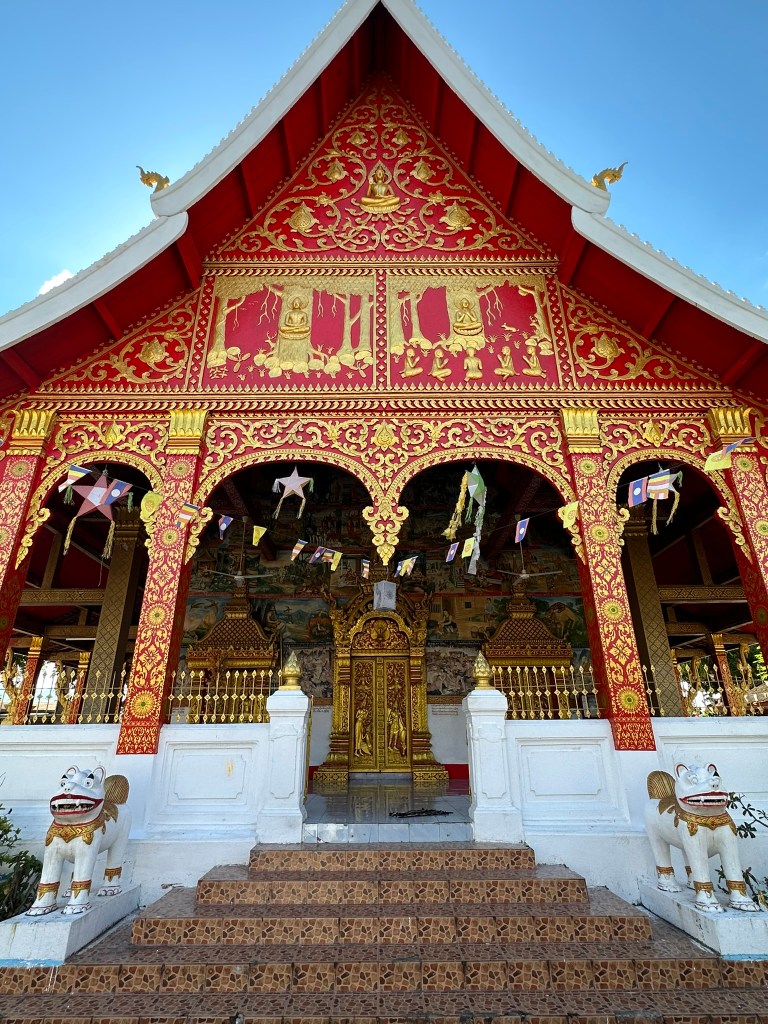
Wat Phonxay Xayxana SongKham 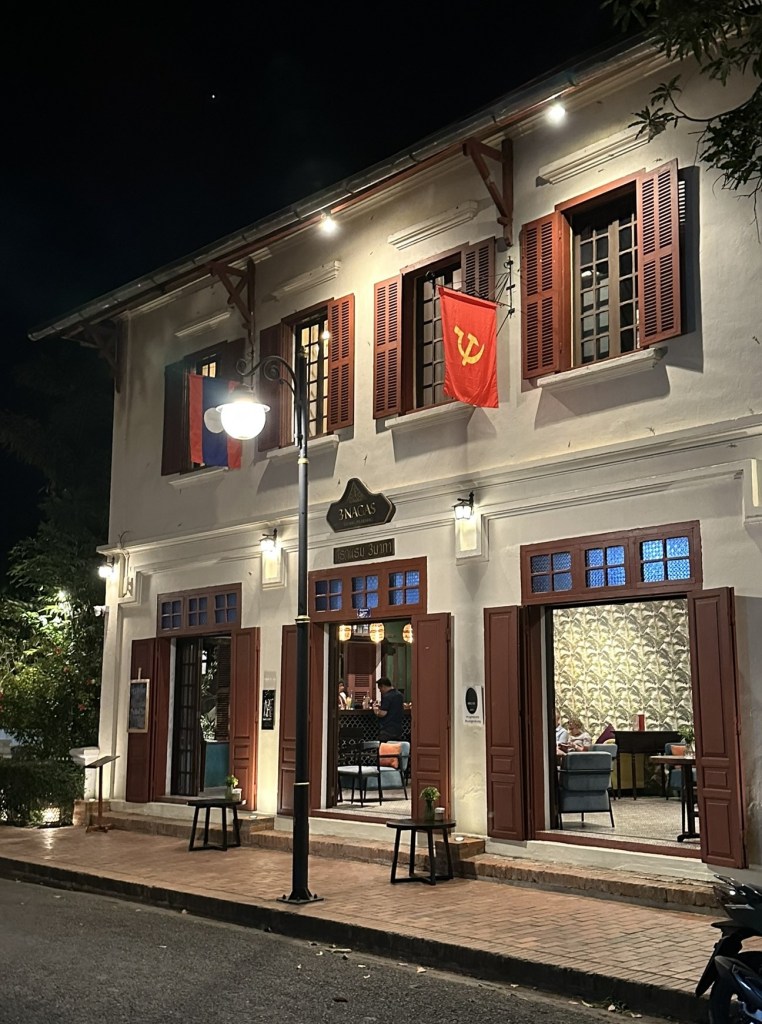
3 Nagas Restaurant 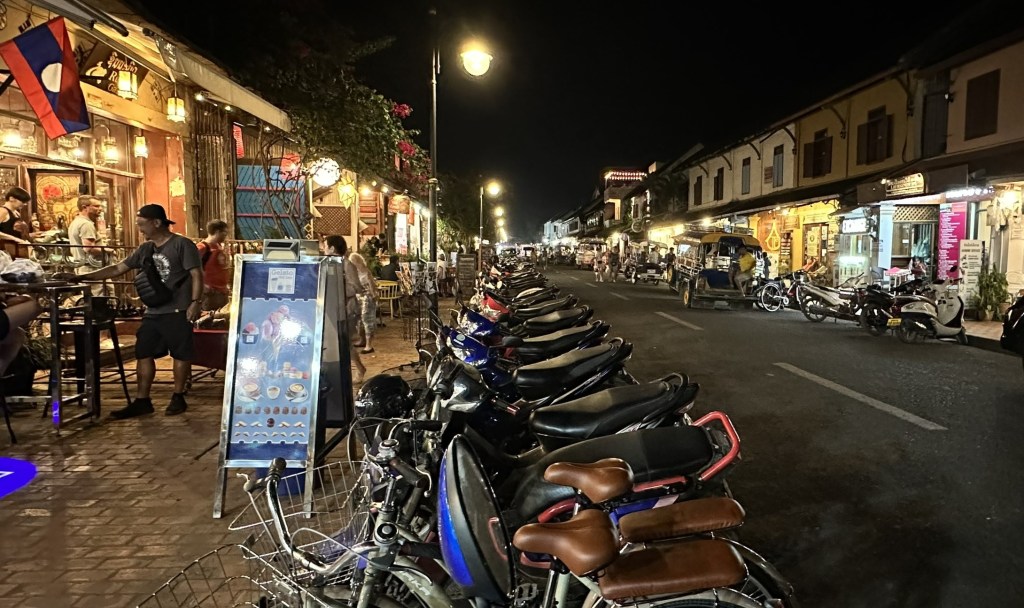
Main drag at night 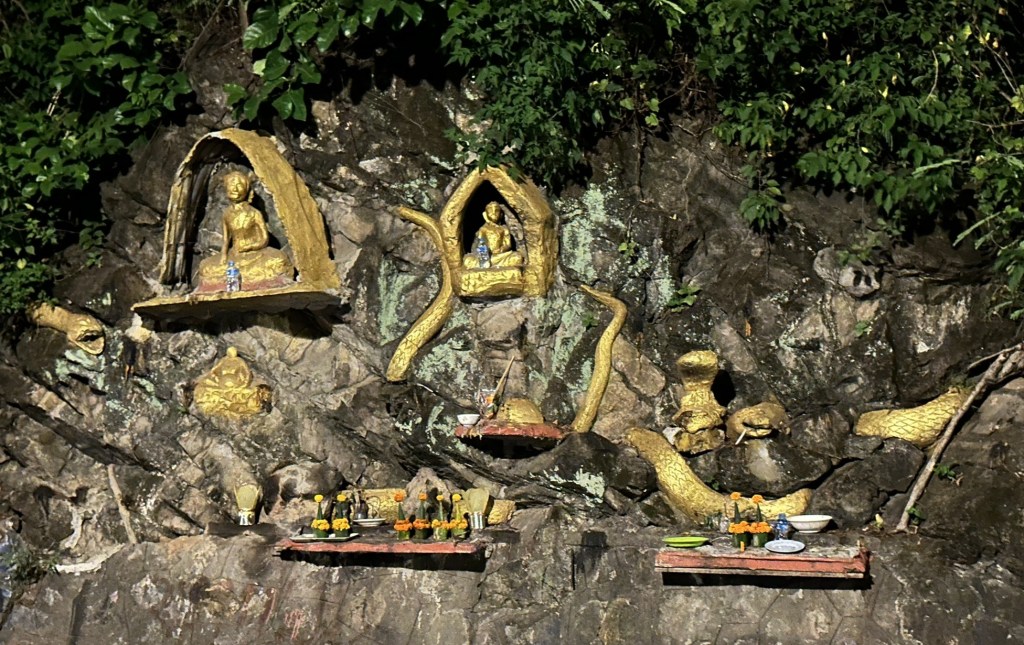
Buddhist mini-shrines 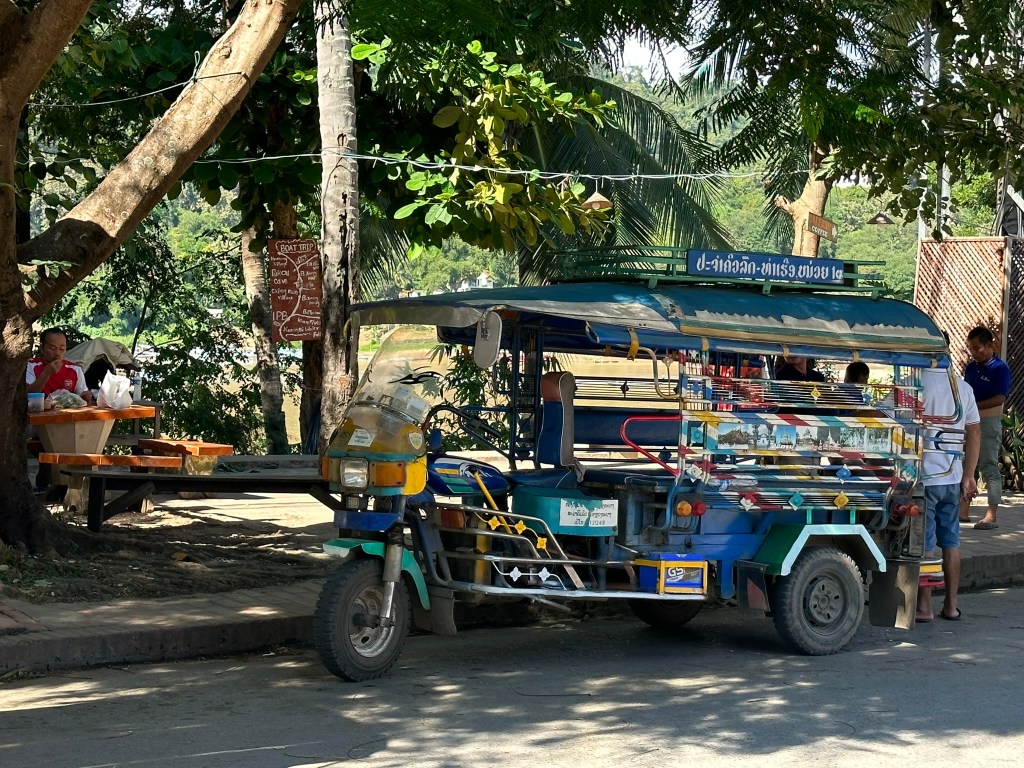
Modern transportation 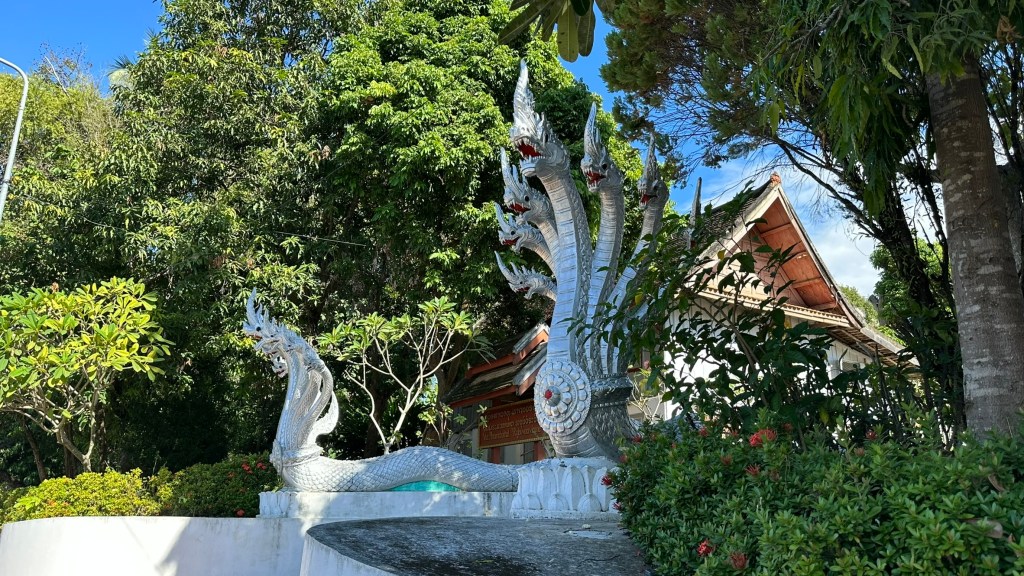
Seven Dragons of Wat Mahathat
With 4 days and nights here, this was the longest stay in one spot of our SE Asia trip, and we loved every minute. We could have easily spent another couple days here. It’s also where daughter Anna joined us for the remainder of our trip. Highlights:
- Our lodging, Angsana Maison Souvannaphoum Resort & Spa, was the prince’s residence until 1975 and was absolutely terrific, super comfortable with a wonderfully accommodating staff. Read my review on TripAdvisor here.
- The Old Town is eminently walkable, full of cute, boutique shops and, of course, all those temples and friendly people. Bicycle is an even better way to get around. Take the self-guided 33 Temples Walk.
- The girls and I took a self-guided, 2-hour motorbike journey through tiny, remote villages to the beautiful Kuang Si waterfalls. A classic example of the journey being as much fun as the destination. Driving here is both fun and nuts. Lanes don’t really exist, passing is rampant, and even the notion of sticking to your side of the road is more of a suggestion than a rule.
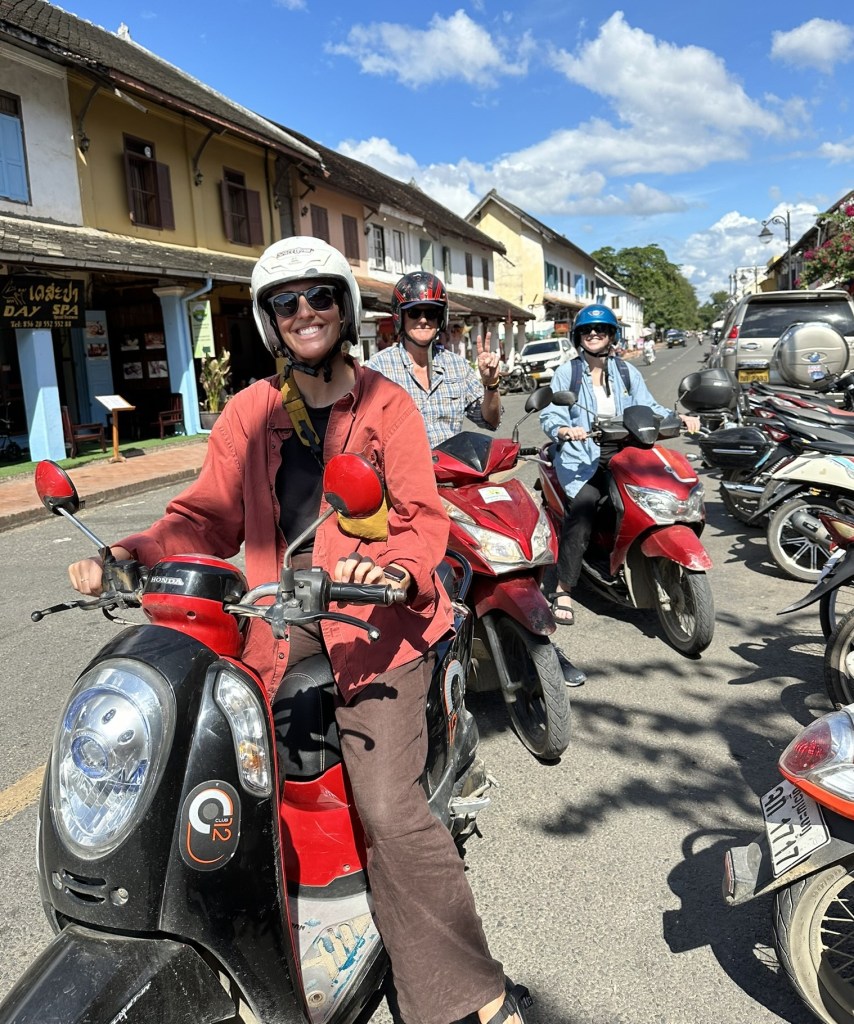
Hitting the road on our $4 rental bikes 
Passing through a rural village 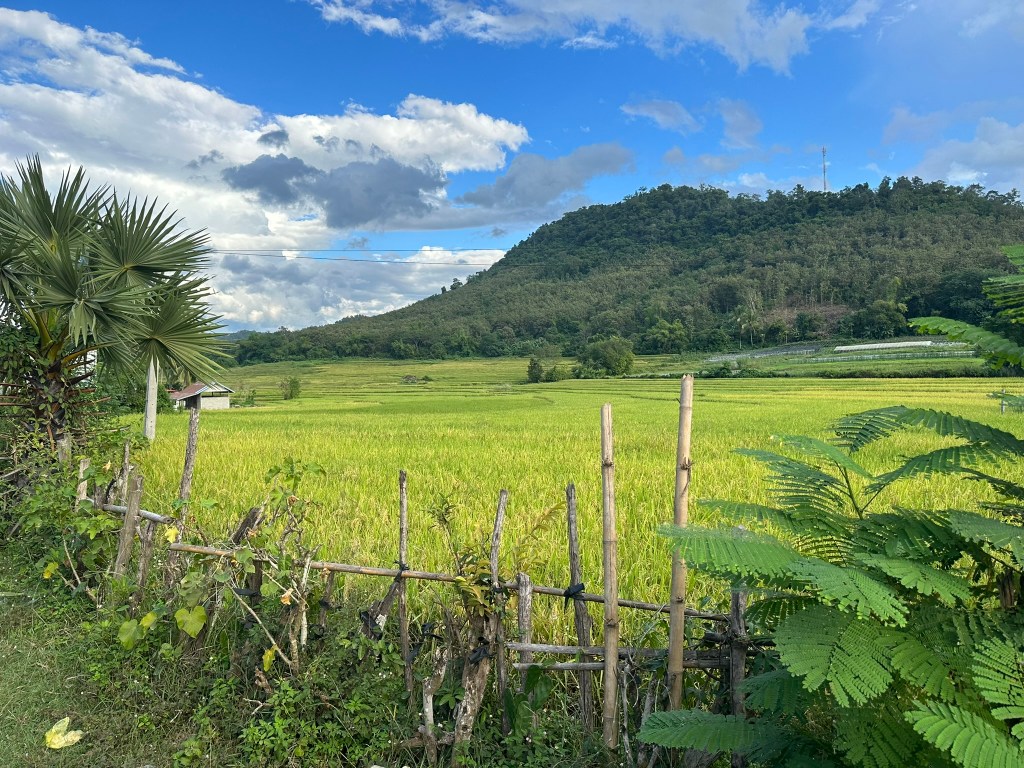
Beautiful countryside 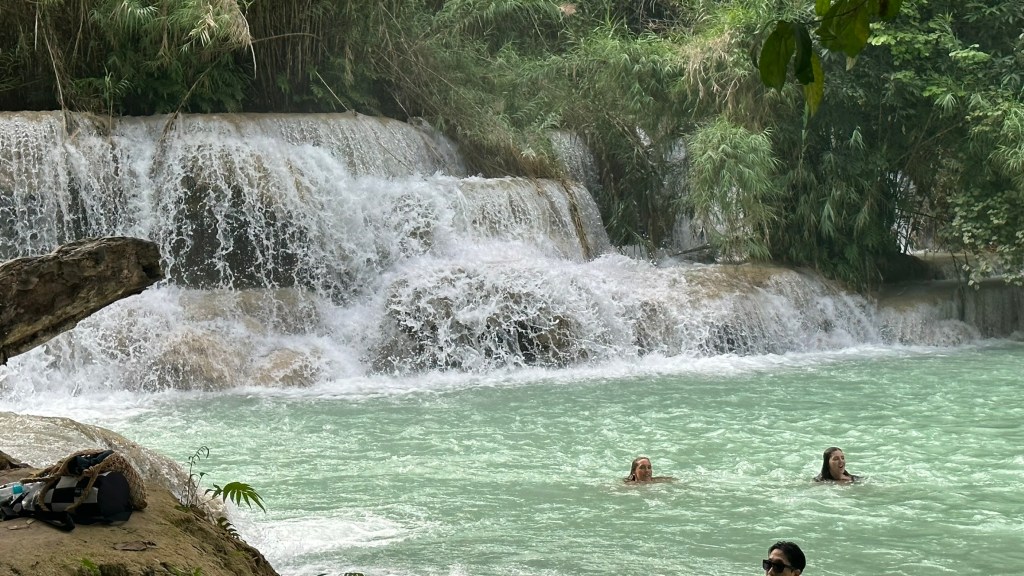
Kuang Si has several waterfalls 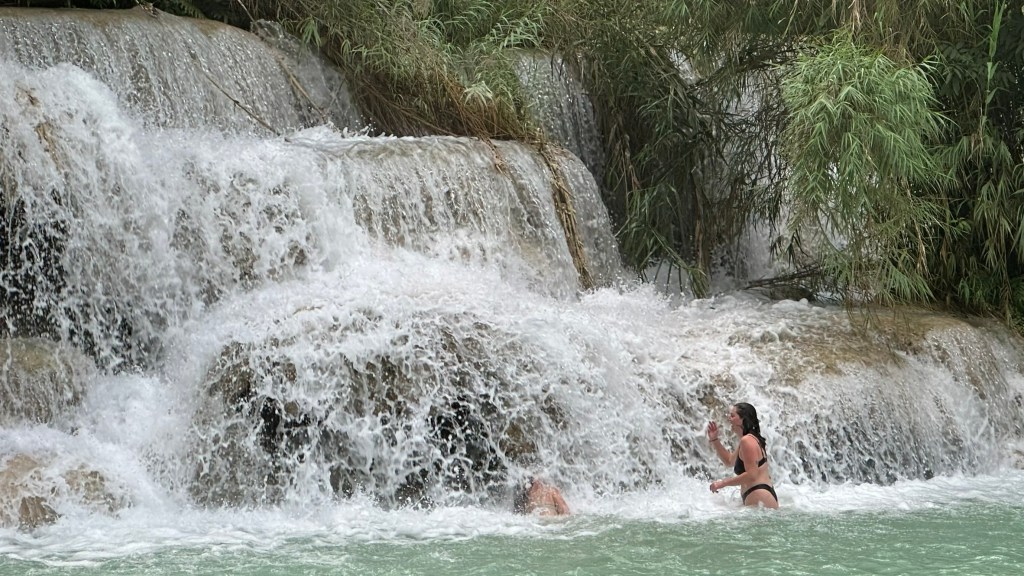
Getting wet 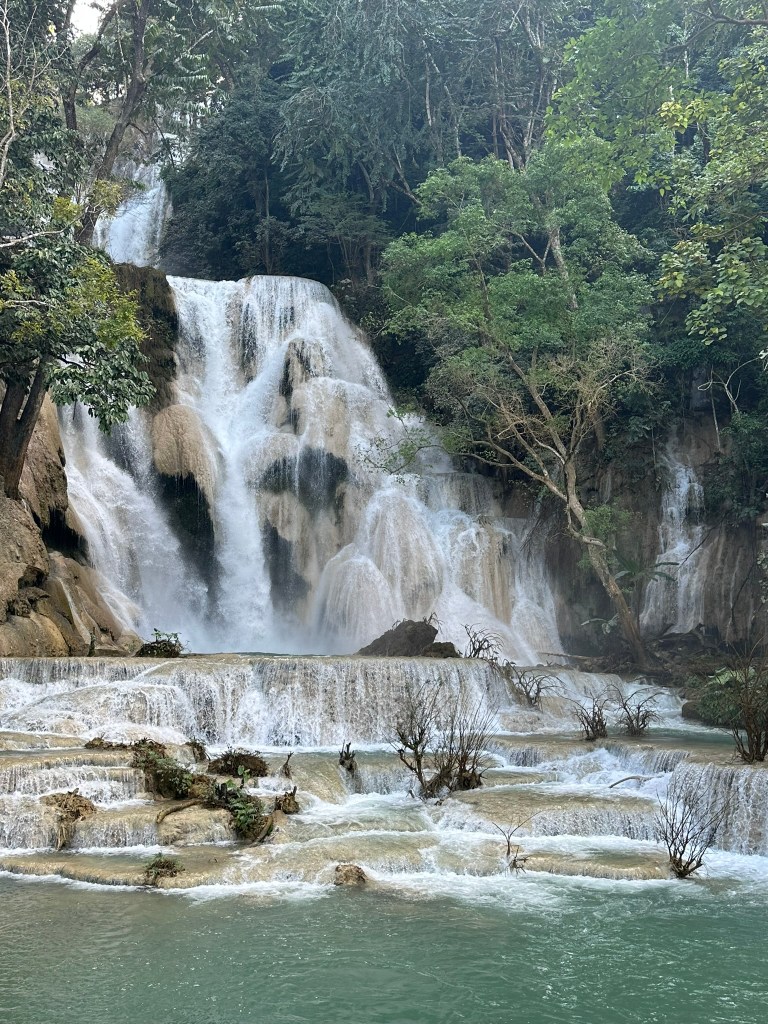
Kuang Si’s main waterfall 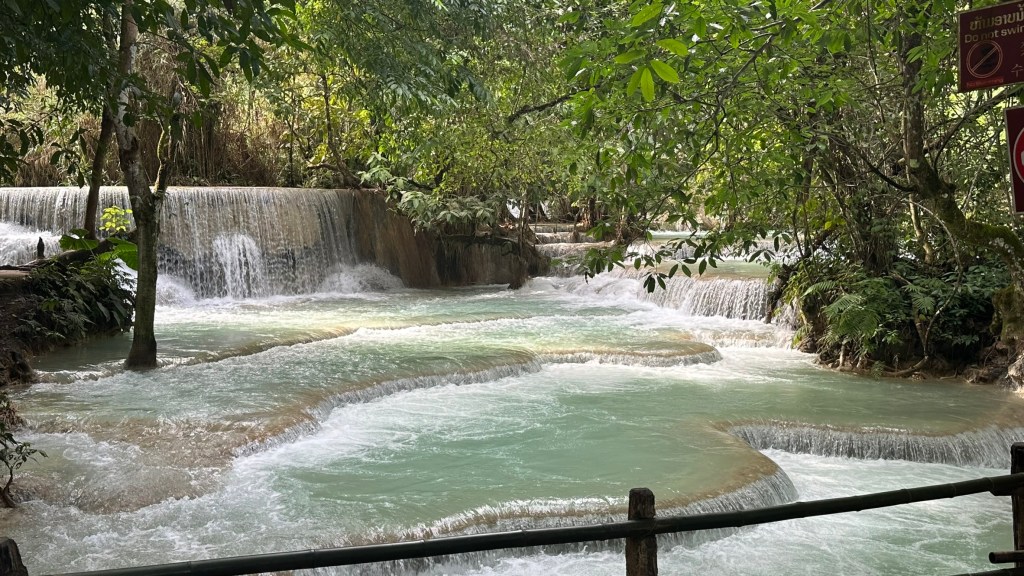
Limestone terraced pools 
Happy campers
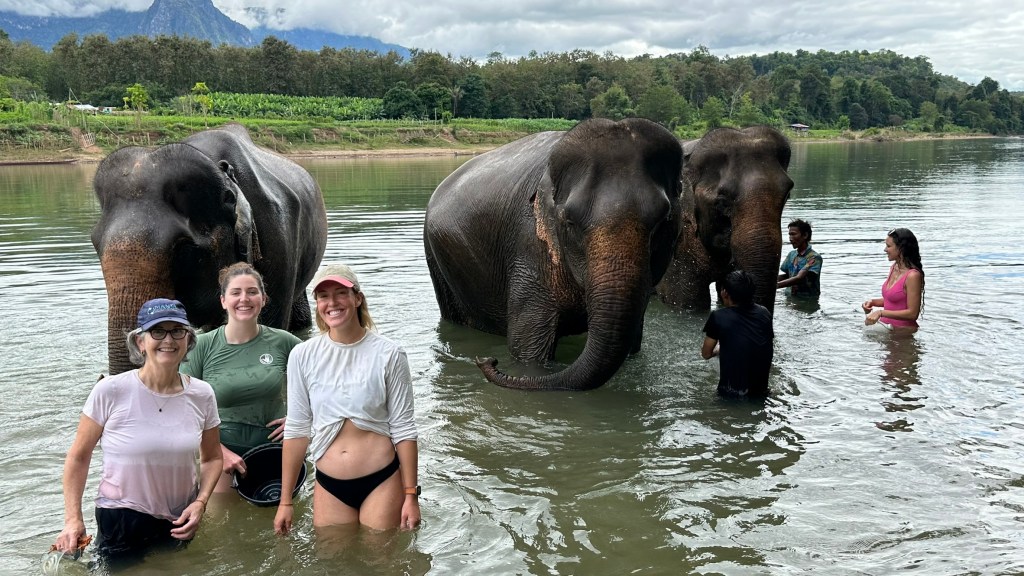
- A half-day, hands-on visit to the Elephant Village Sanctuary was a big hit for all of us. Unlike many “elephant tourism” locations in southeast Asia, this place provides excellent, humane treatment of elephants that have been rescued from the brutal logging industry. No elephant rides, which are generally harmful to the animals, but plenty of close-up interaction including feeding and bathing.
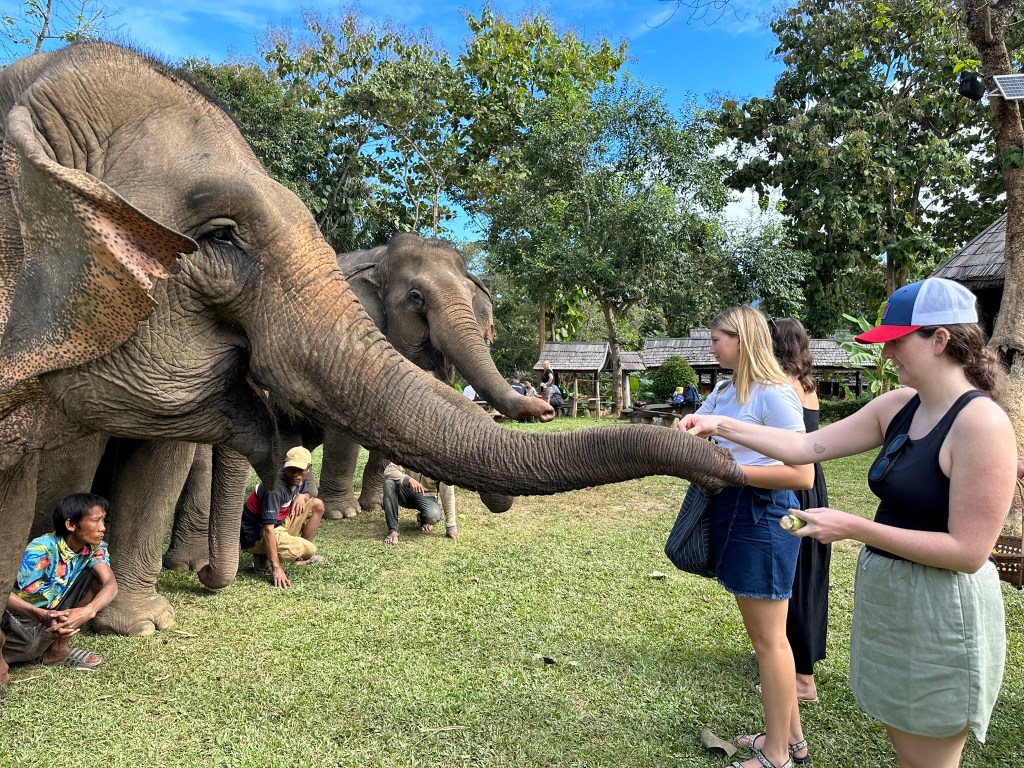
Meeting the elephants and their mahouts 
Feeding the elephants 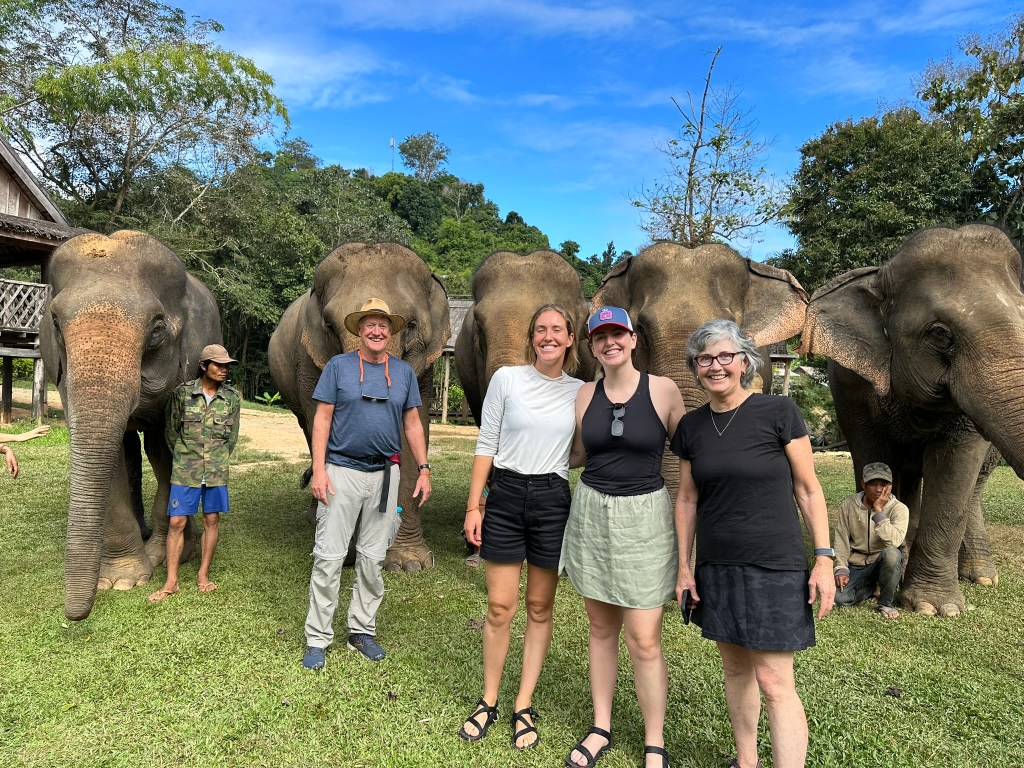
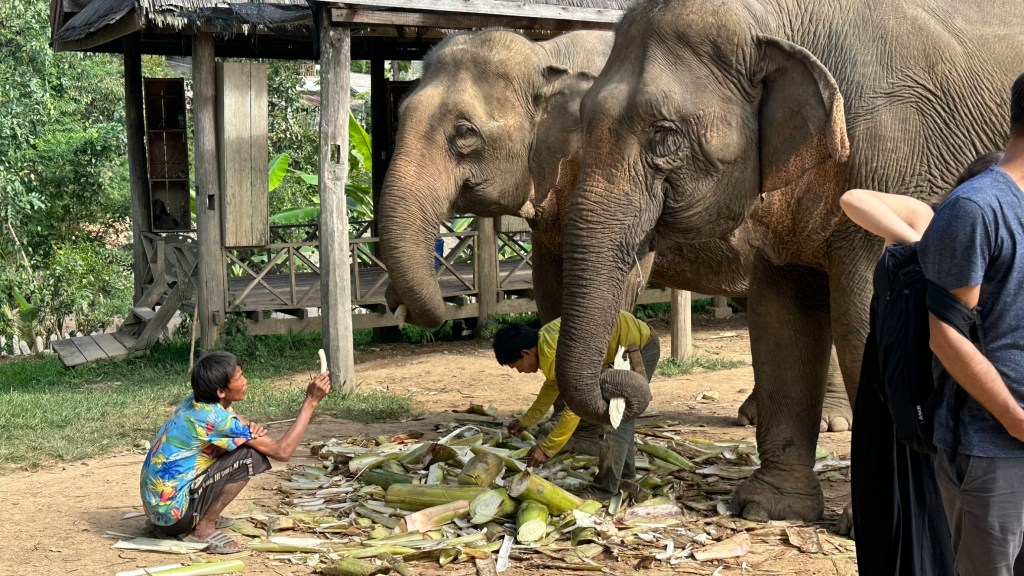
They eat 250kg of sugar cane & bananas a day 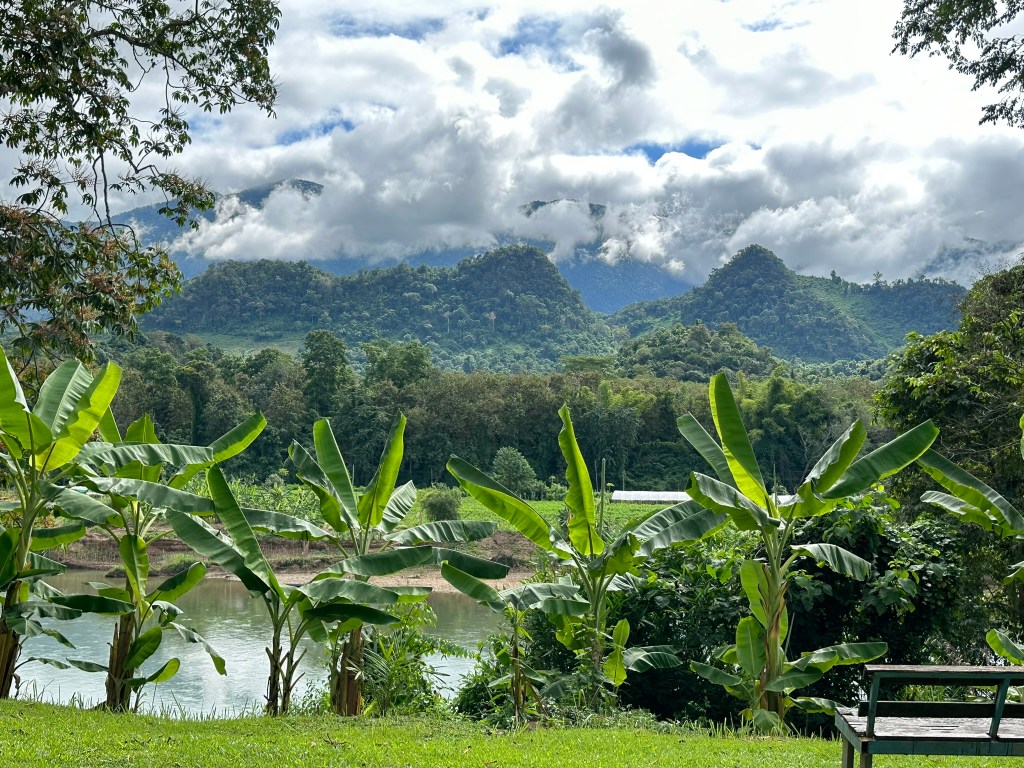
Our walk down to the river 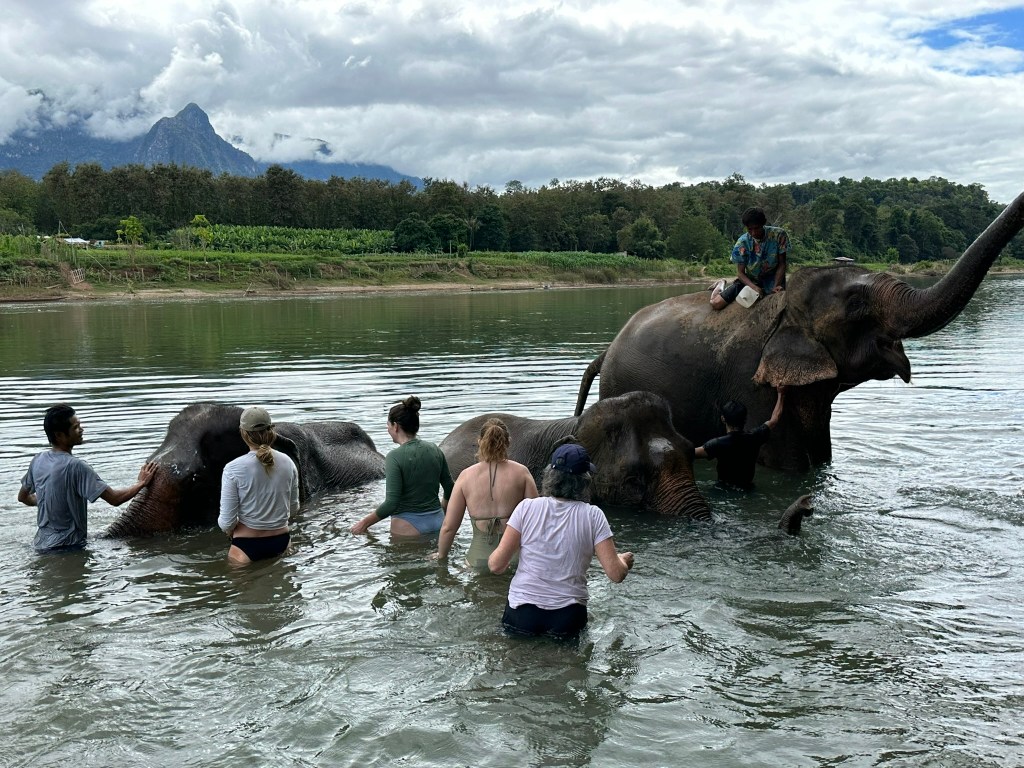
Elephant bathing time 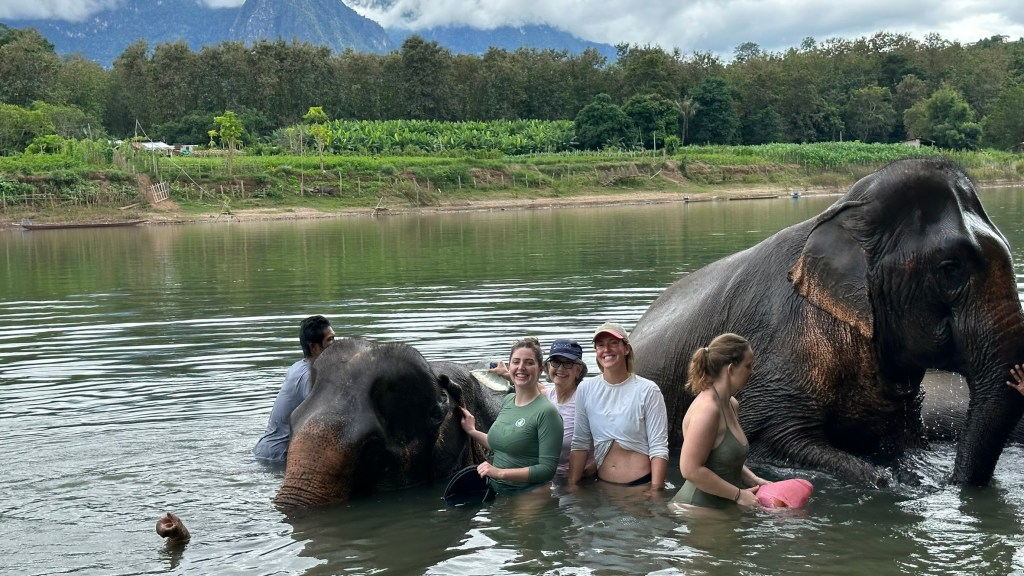
- We liked the artwork in our hotel (which was a work of art itself, former home to a prince) and learned it all came from the art school outside town. So the hotel arranged a private, behind-the-scenes visit for us the next morning. The school is run by the communist government and the artists are mostly novice monks, but also included our tour guide, the school headmaster.
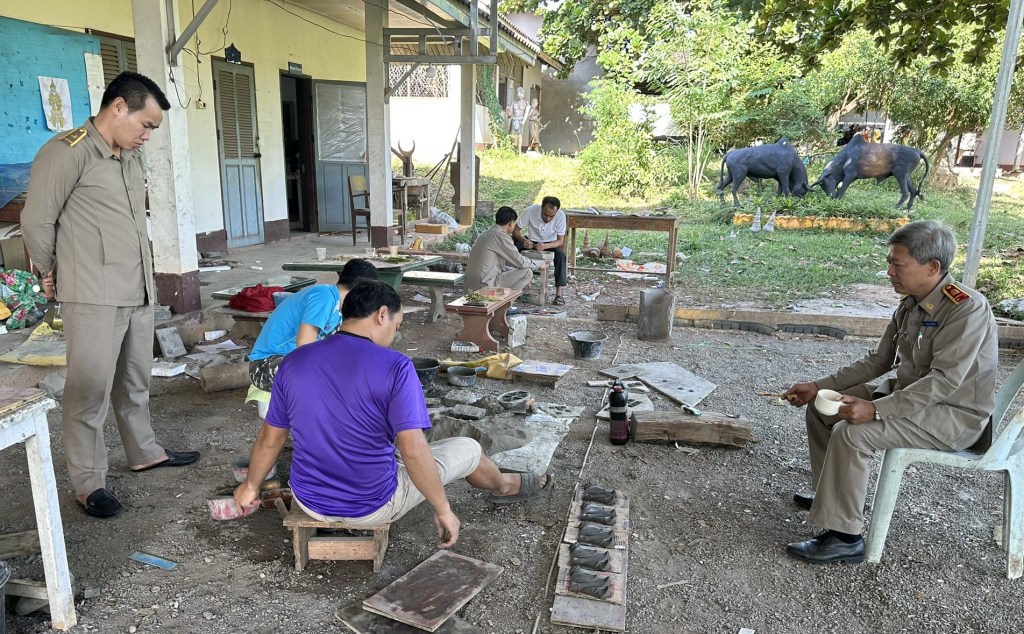
More supervisors than artists? 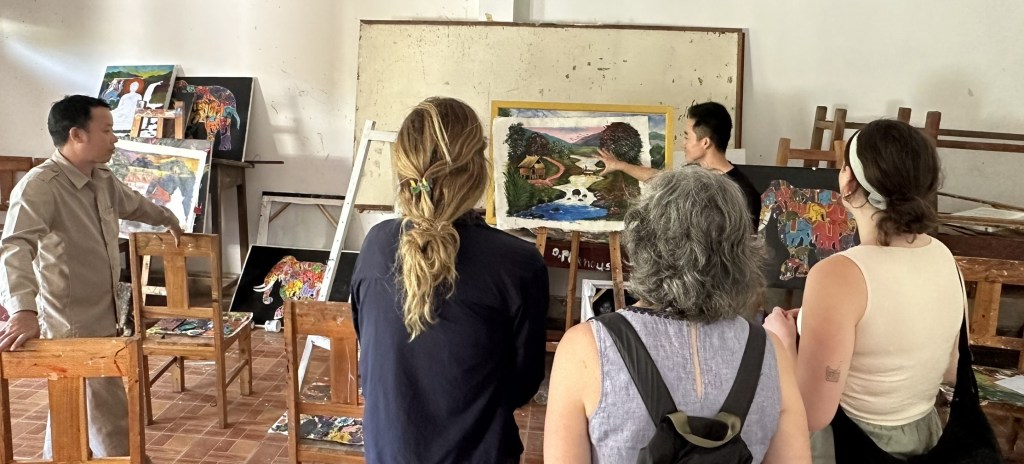
Behind the scenes 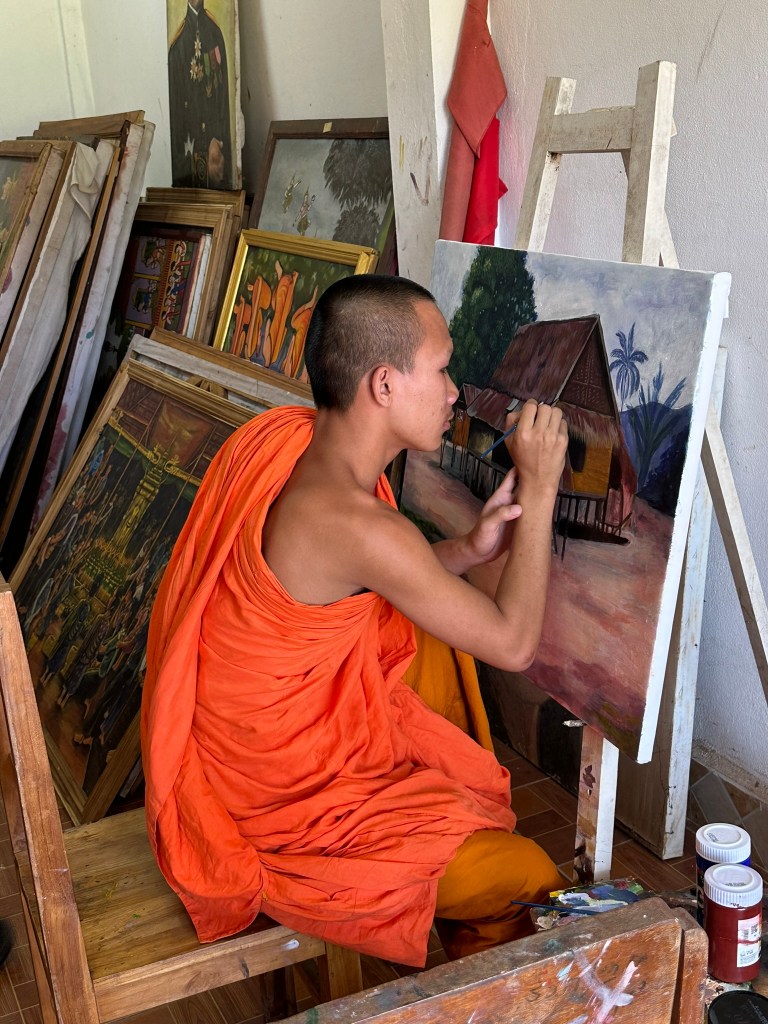
This novice is a top student 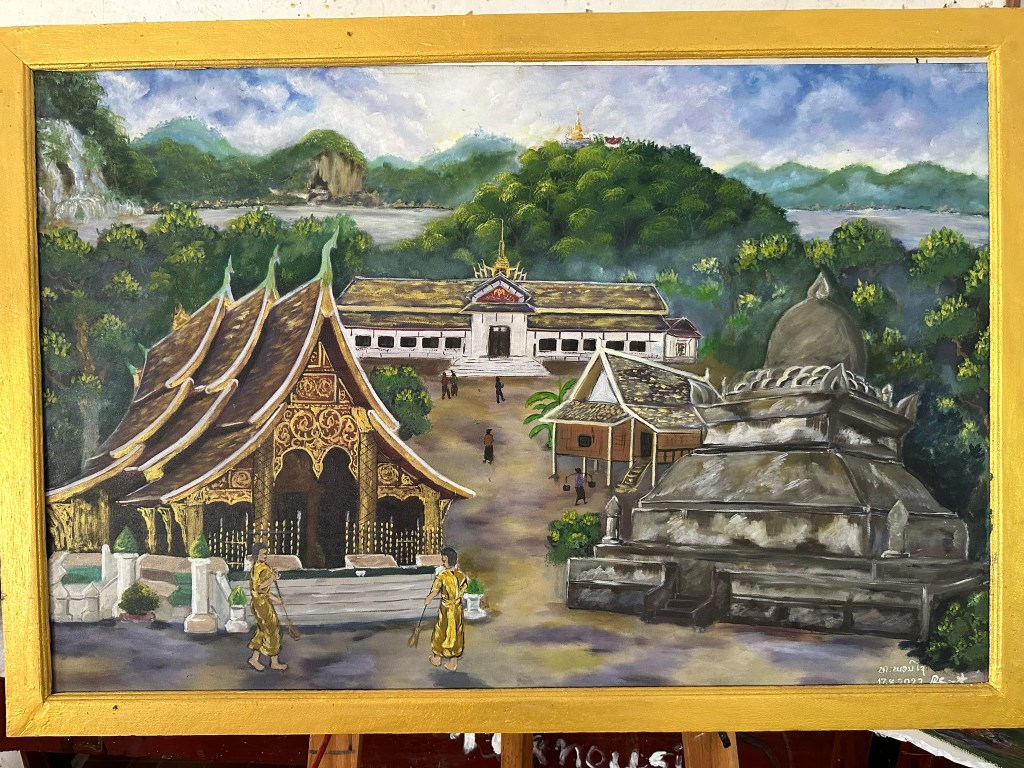
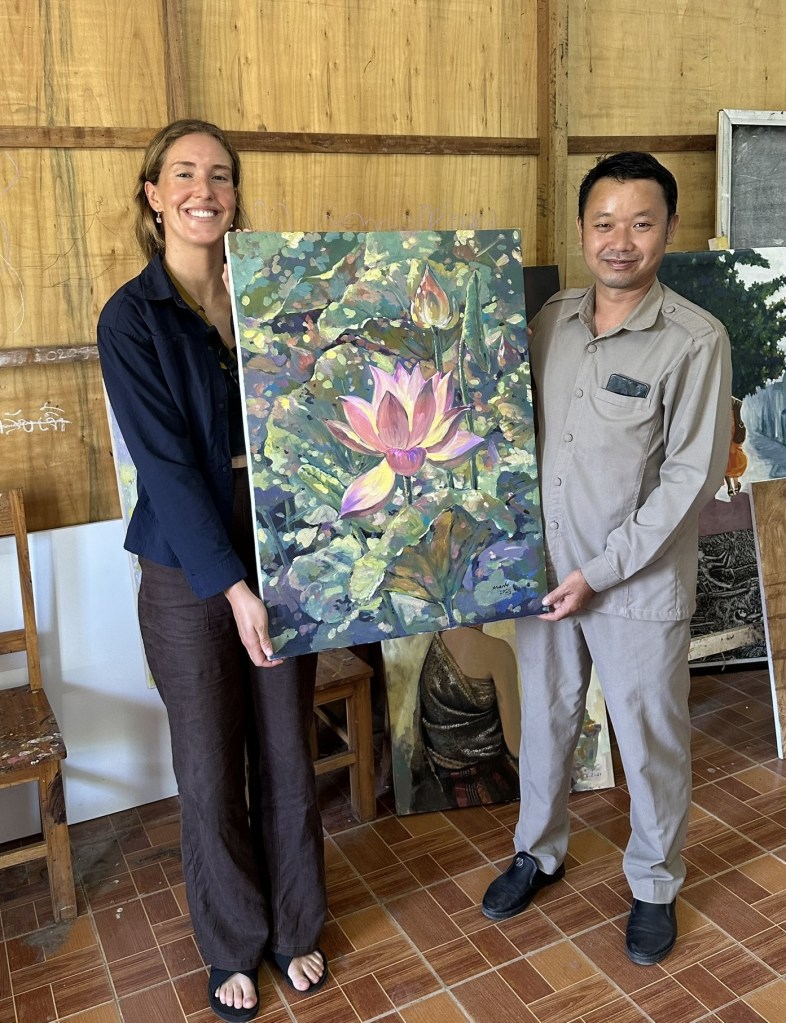
Emily’s new painting and the artist 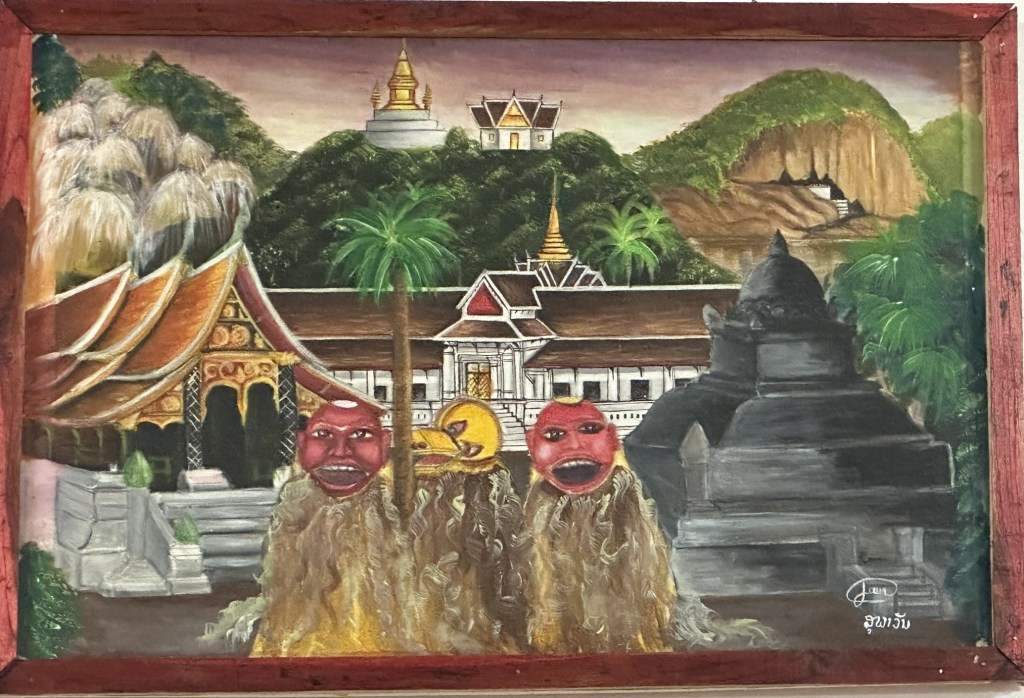
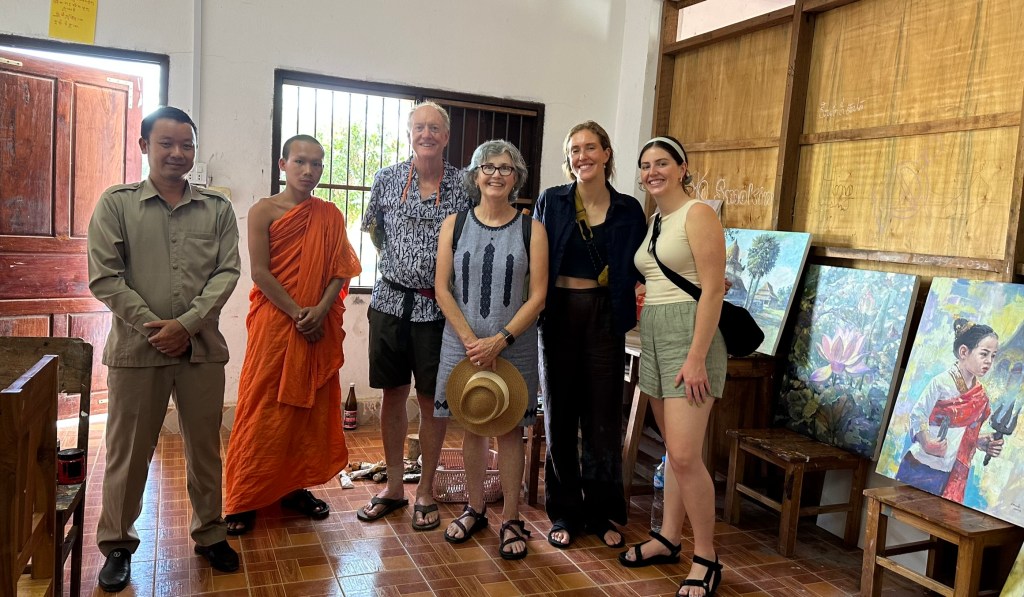
Portrait with the artists
- Luang Prabang’s food scene — from its vibrant night market to riverside restaurants, a couple popular watering holes and cold beers watching the sunset over the Mekong — was just great. Favorite restaurants included Belle Rive Terrace for lunch overlooking the Mekong, 3 Nagas, Manda de Laos, and Dyen Sabai for dinner, and of course the night market. Icon Klub was a small bar with great cocktails and a cool, arthouse vibe run by a Hungarian expat named Elizabeth who has a penchant for Marlene Dietrich and Patti Smith. It works!
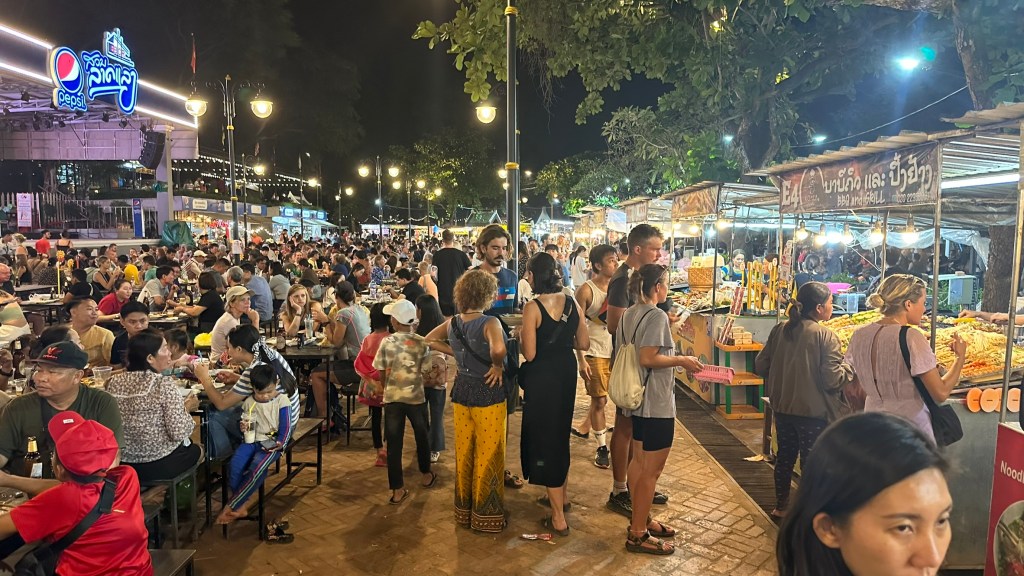
Night market was hopping 
Pick your own fresh food… 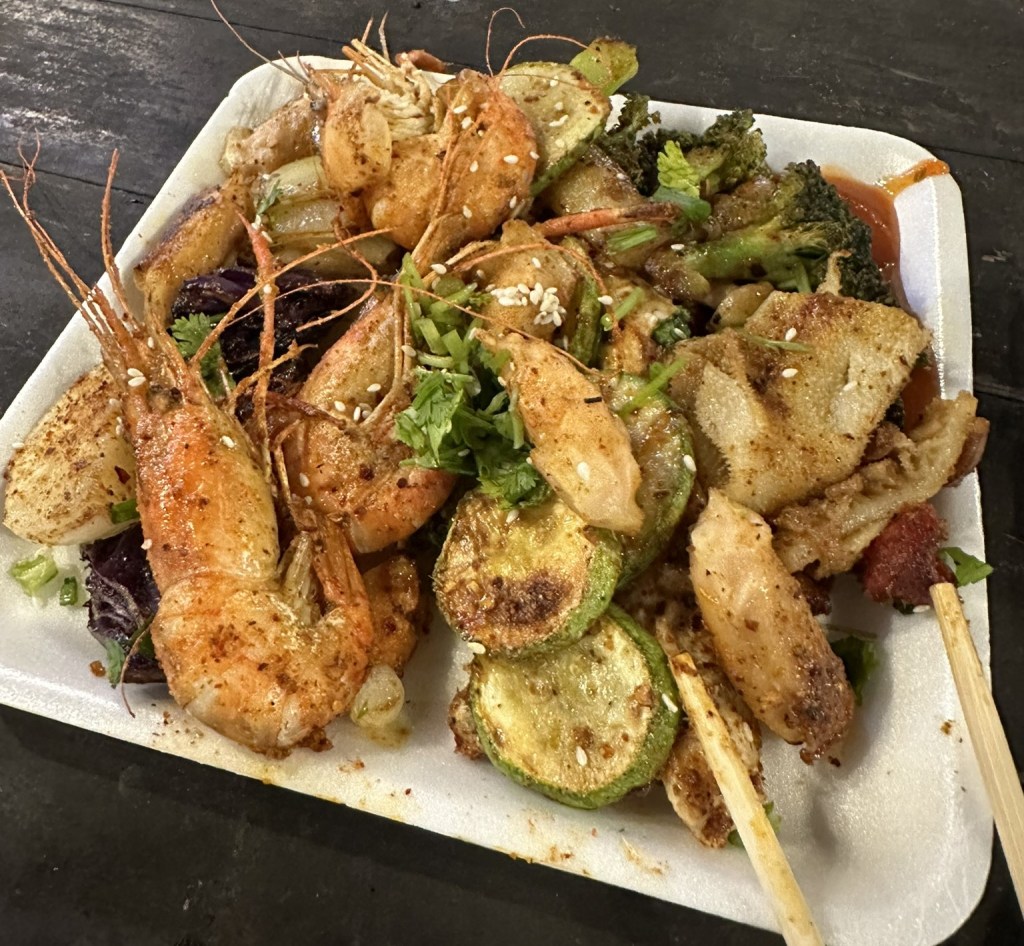
…and they grill it up for you 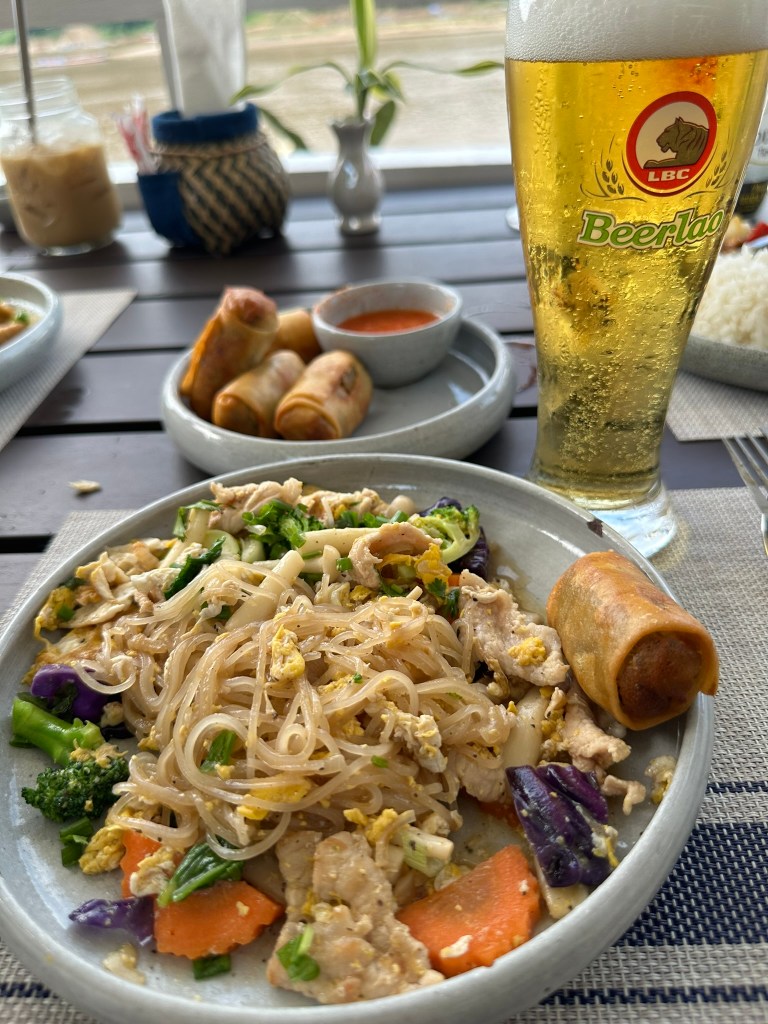
Belle Rive Terrace lunch 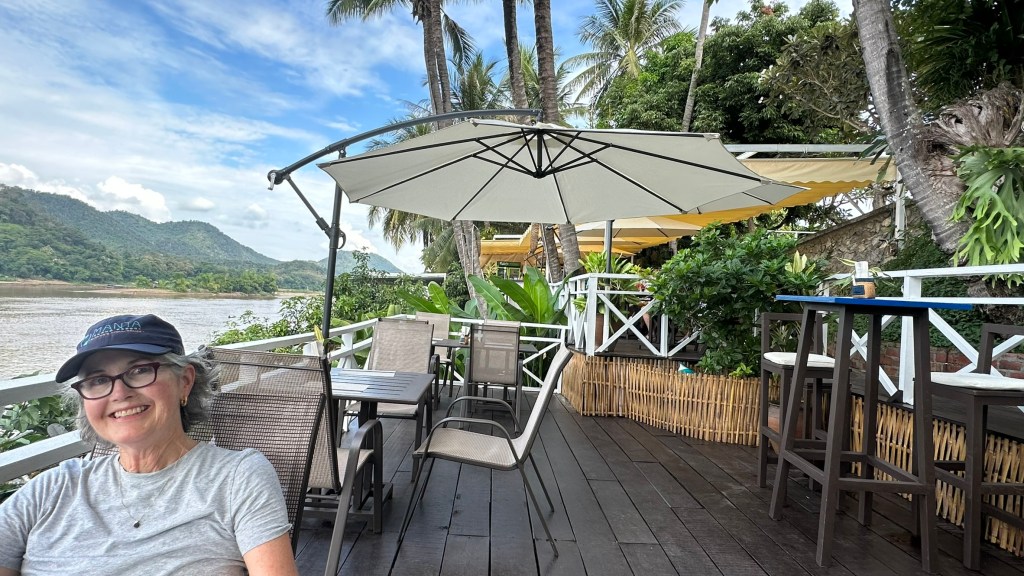
Belle Rive Terrace was a favorite lunch spot 
Manda de Laos’ indoor floating gardens 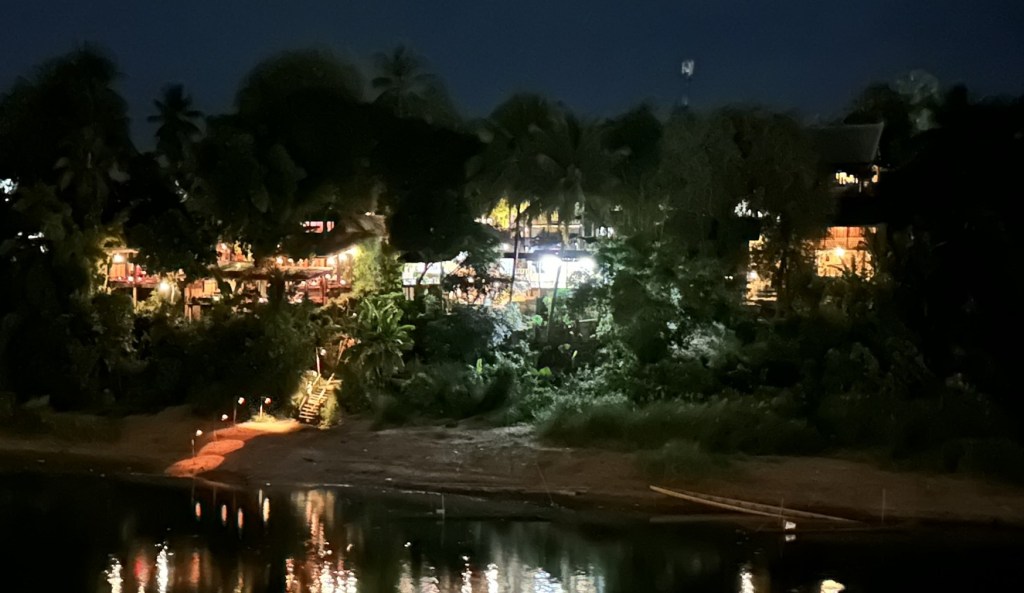
Dyen Sabai riverfront dining 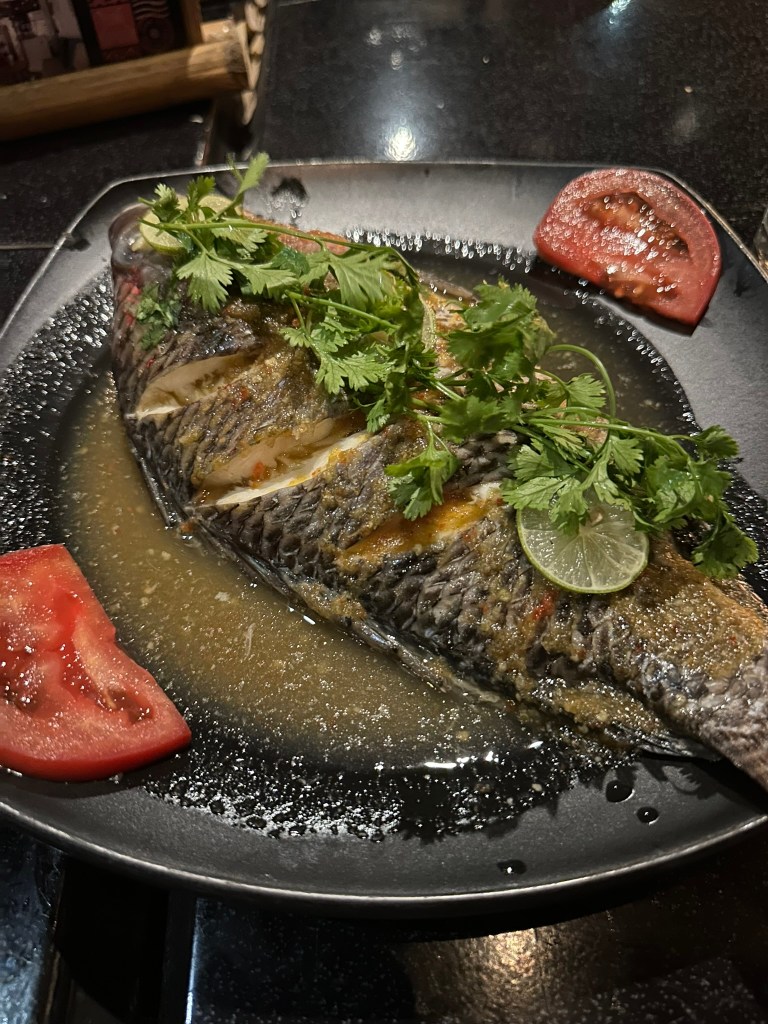
Dyen Sabai fresh catch 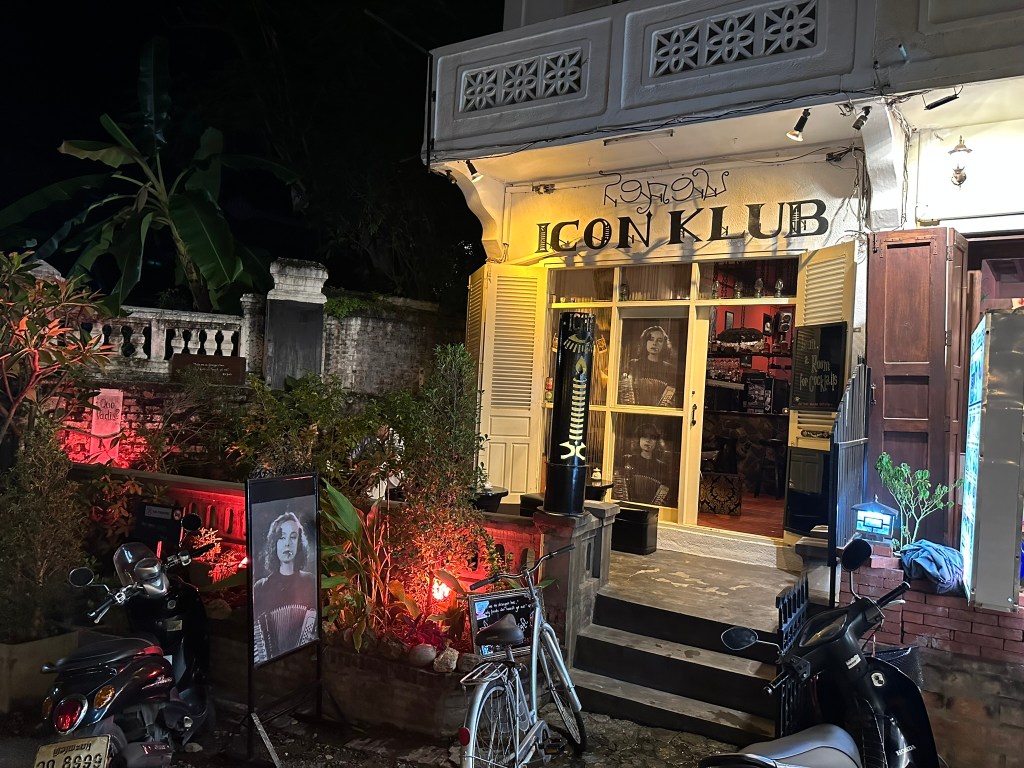
Icon Klub 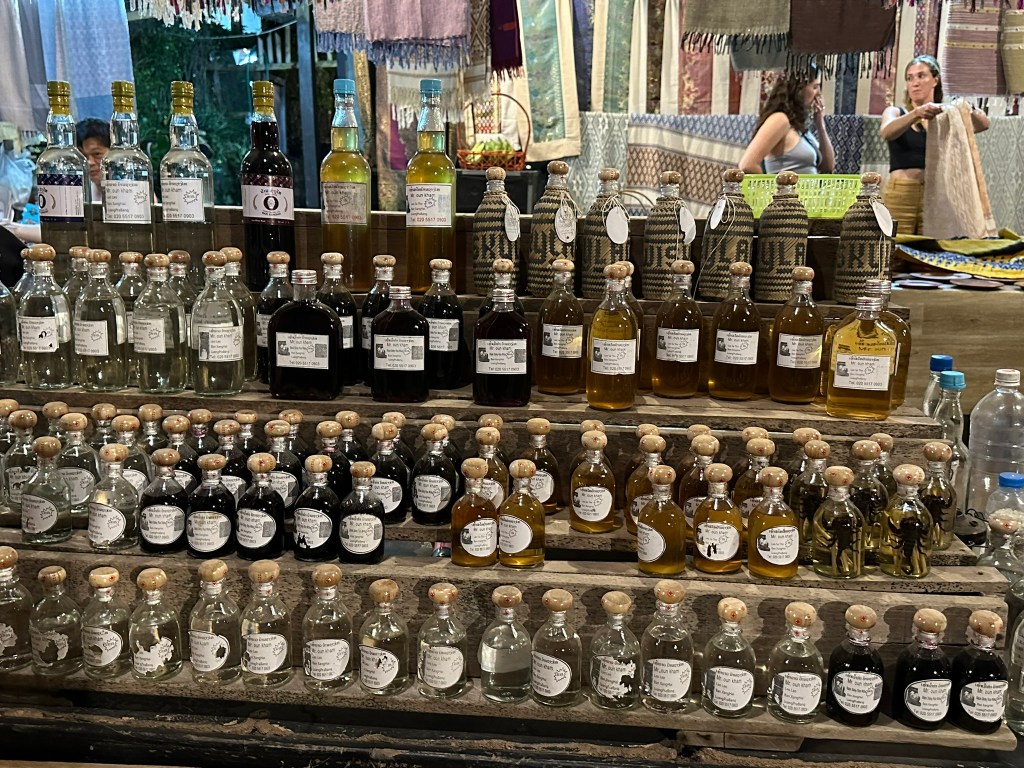
Lao Lao whiskey shop near Dyen Sabai 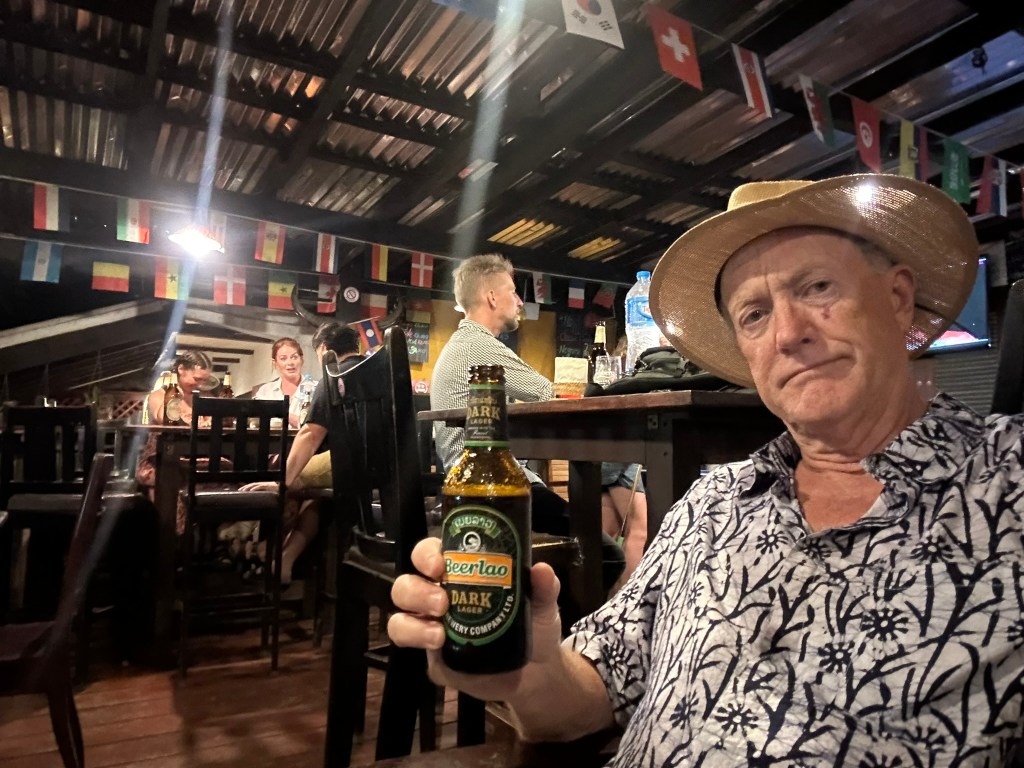
Beerlao at the Aussie Sports Bar 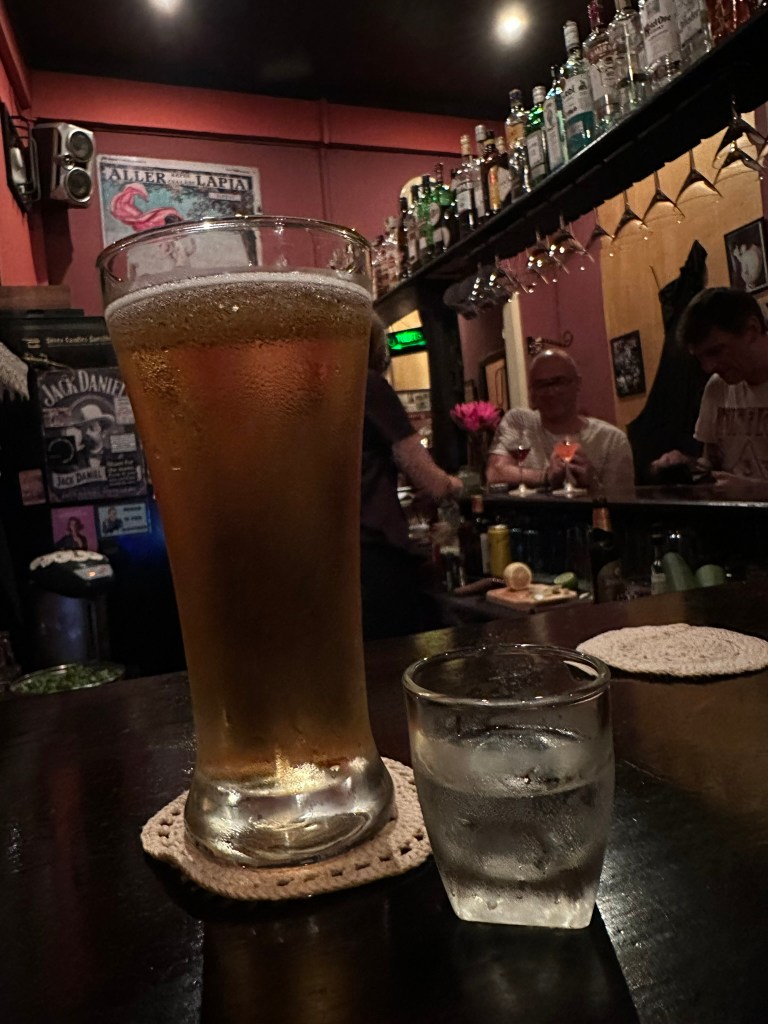
If you ask nicely, you can get Kecskemét, Hungarian apricot schnapps, with your beer at Icon Klub 
When the waiter is buying… 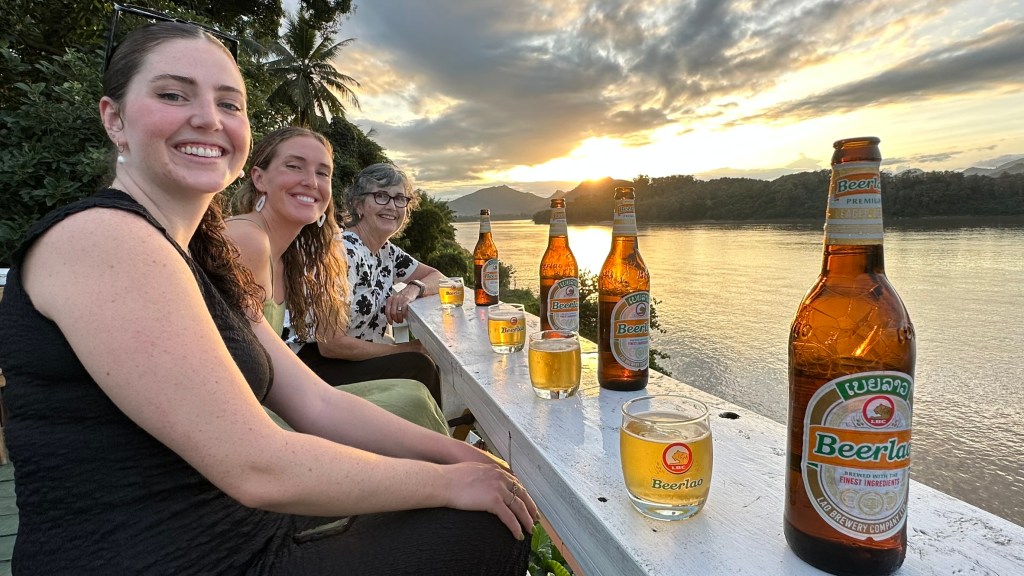
Sunset beers at 360 Sunset Bar
Every morning around 5:30am, Buddhist monks make their way through the main drag of town for the daily alms collection, whereby the monks receive their daily sustenance through the generosity of others.
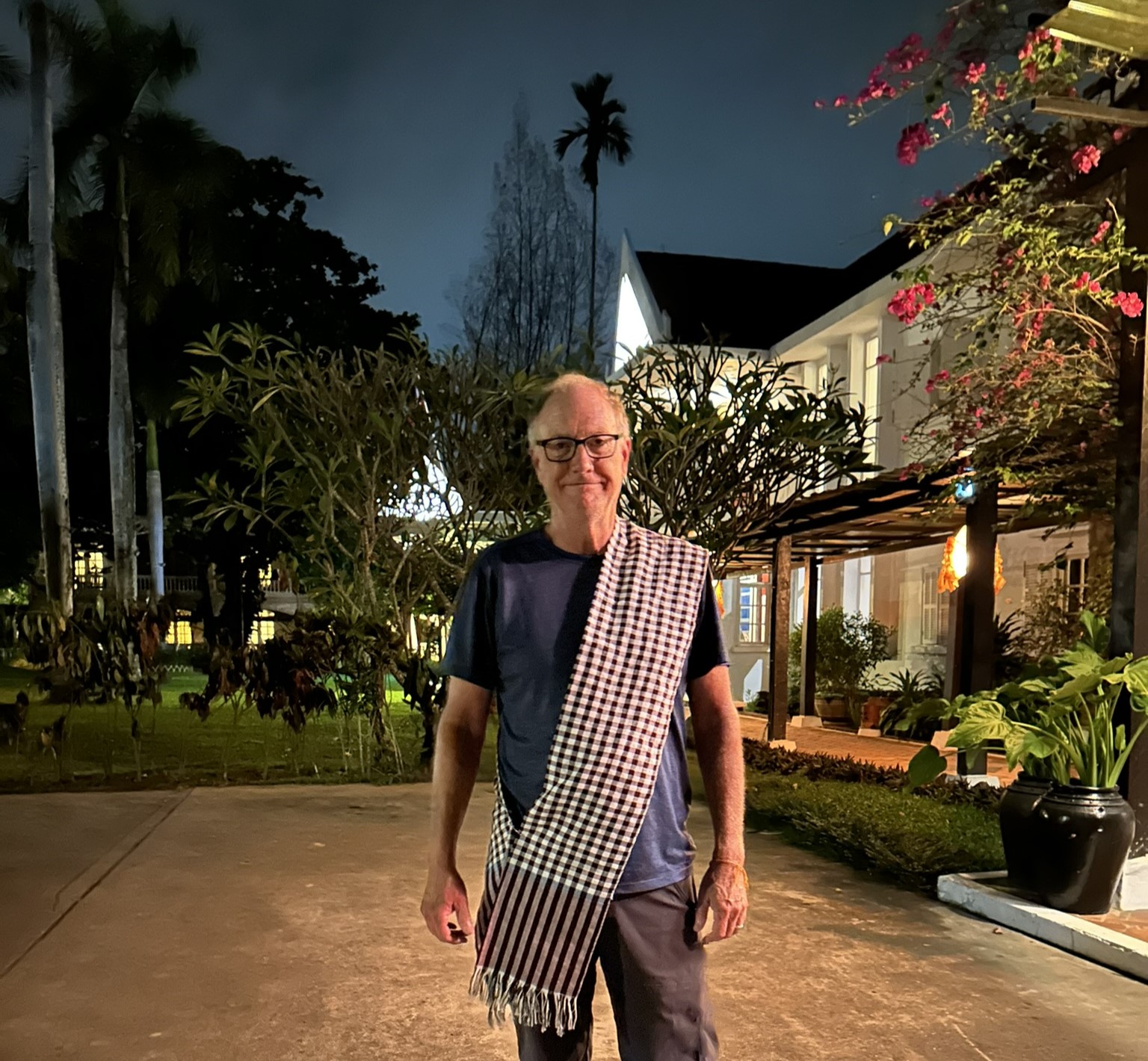
I got to participate in this ritual one morning in front of the hotel, which provided me the food to offer. It’s a fairly formal ritual with strict etiquette; you have to wear a ceremonial sash and not a word is spoken as the monks pass by, stop and open their baskets one by one, into which you place a handful of sticky rice and a hard-boiled egg or half a banana. No pictures, unfortunately.
| Days 22-24 | Hanoi, Vietnam | La Nueva Boutique Hotel & Spa |
| Day 32 | Hanoi, Vietnam | Solaria Hotel Hanoi |
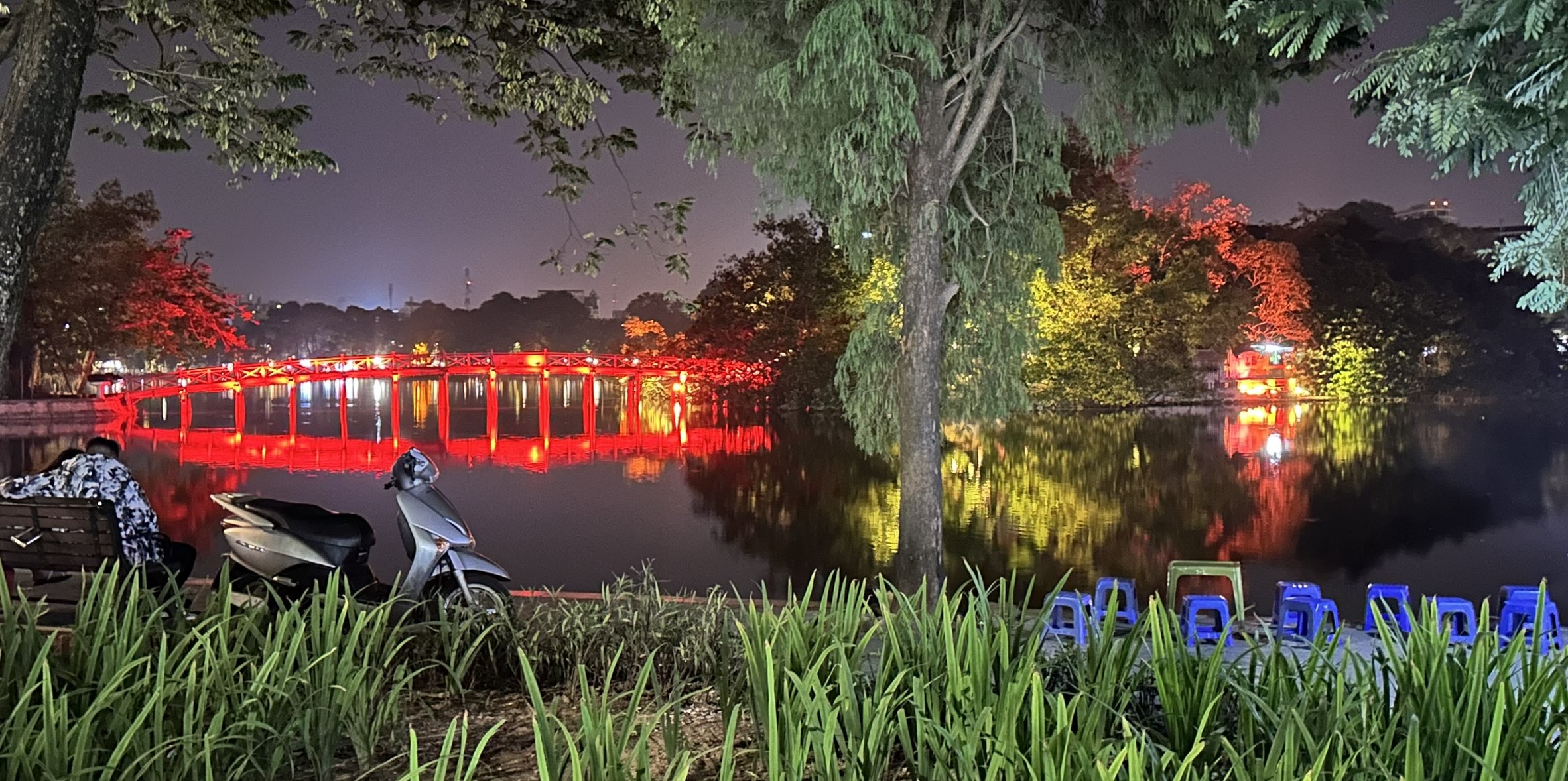
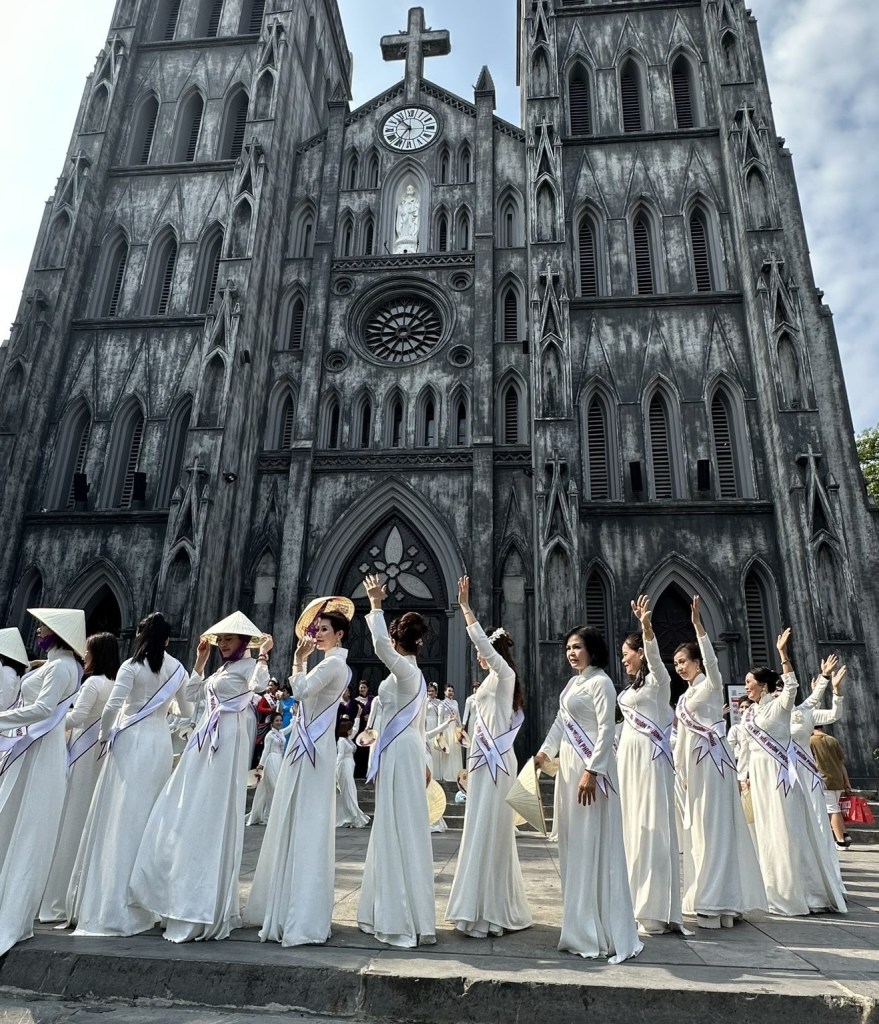
Starting the back stretch of our trip, we head off to northern Vietnam, an easy one-hour flight. Travelers we met in Laos said we were in for a rude awakening in Hanoi, but it was anything but. Vietnam’s capital has a long and colorful history — 1,000 years and nine dynasties of royal rule (until its current communist system took root 70 years ago), centuries of rebuffing unwelcome overtures to become a Chinese territory, and a post-war culture that embraces foreign visitors with its buzzing Old City, open air markets, amazing food and friendly people. It’s also much cleaner, more attractive (imho) and cooler than Bangkok, at least this time of year as true winter begins to set in — a refreshing change of pace. We spent three days here — a perfect amount of time to get acclimated — before taking off to explore more of north Vietnam. We then returned for one more night before heading home.
Highlights:
- Staying in Hanoi’s Old City a short walk to its beating heart is key, and La Nueva Boutique Hotel fit the bill perfectly. Great staff, comfortable room, nice spa on-premise massages, but on a relatively peaceful street just a couple blocks from Ho Hoan Kiem lake and the bustling core. Read my review here.
- The food is incredible. Our guided walking food tour was a great introduction to the Old City and sample many of Hanoi’s signature dishes. A few dishes I tried but don’t have pictures of below included boiled intestines, sand worm pancakes, Vietnamese donuts, and of course, Bahn Mi sandwiches. Cha Ca is reputedly Hanoi’s most famous dish, dating back 130 years. One street is dedicated solely to it. Nothing else on the menu. Made with either snakehead fish or catfish. Delicious!

Entering the Old City 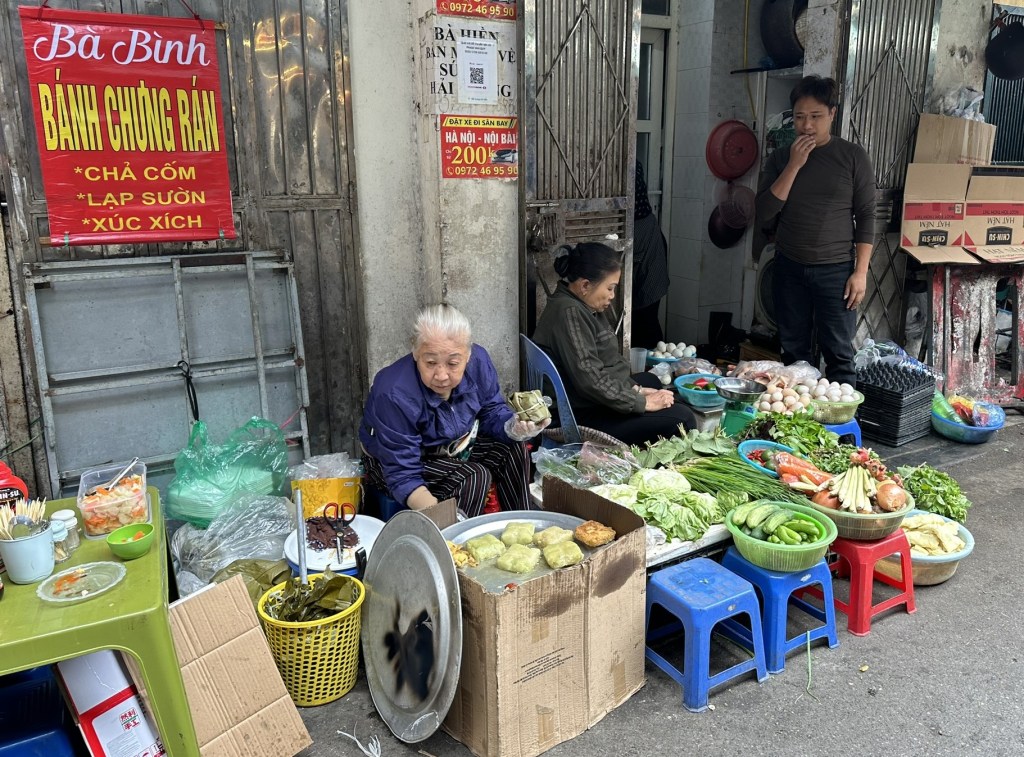
Typical food market stall 
Citrus stand 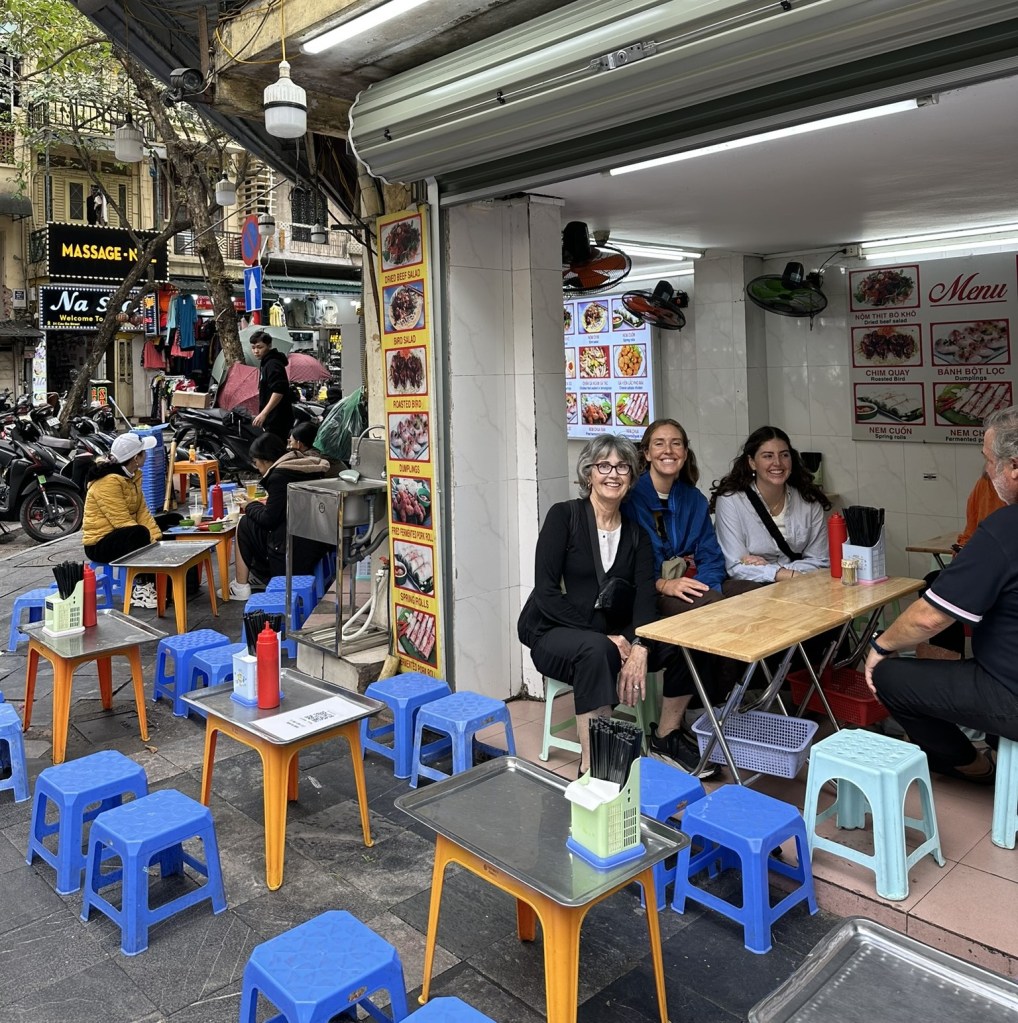
Little tables and plastic seats abound 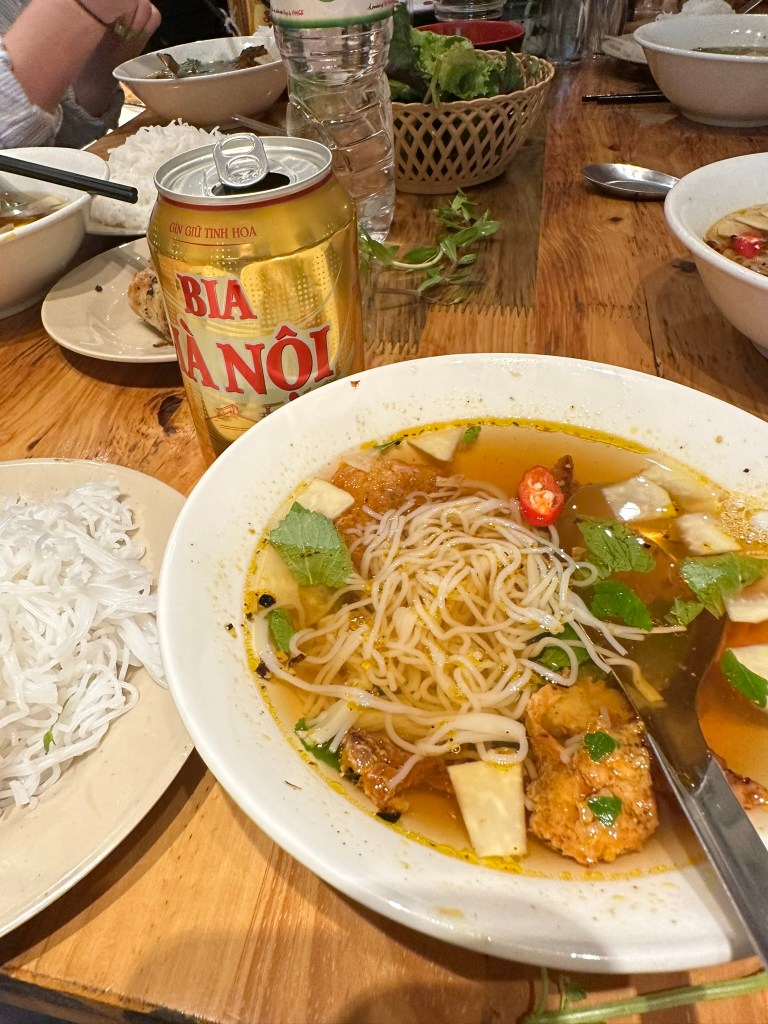
Classic Bun Cha — yum! 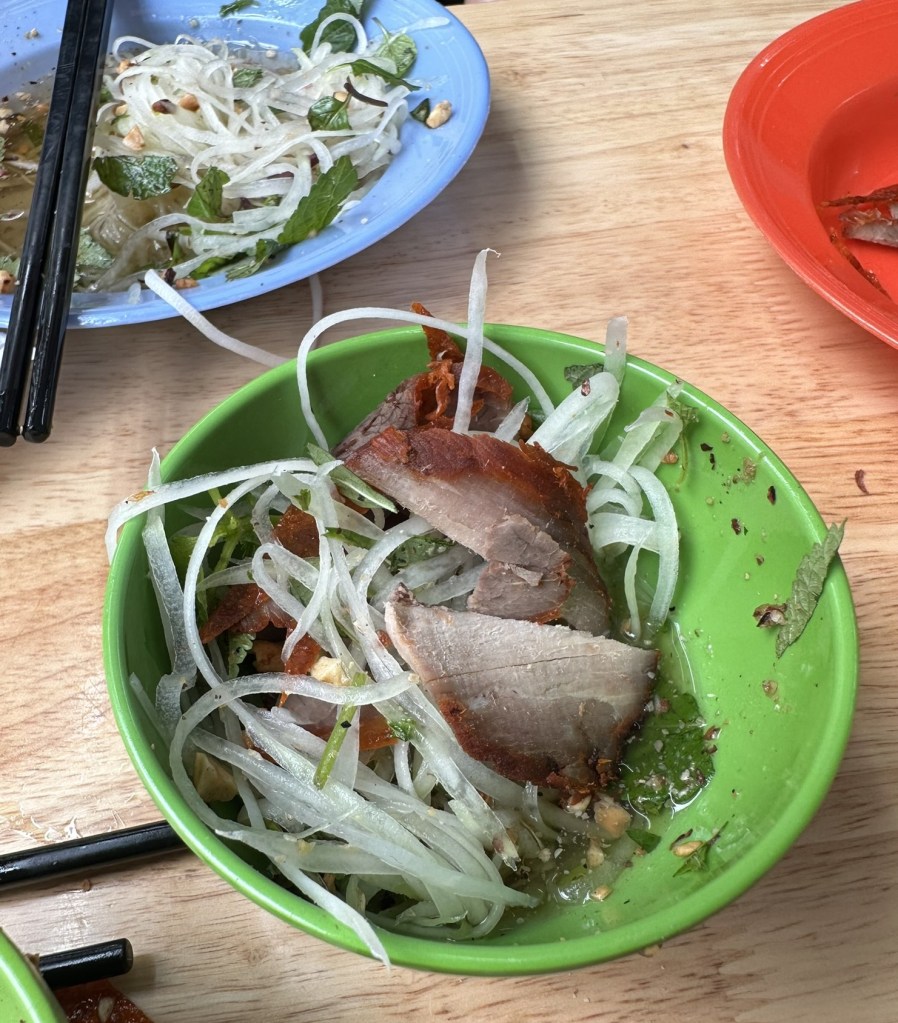
Nom Thit Bpo Kho – papaya pork salad 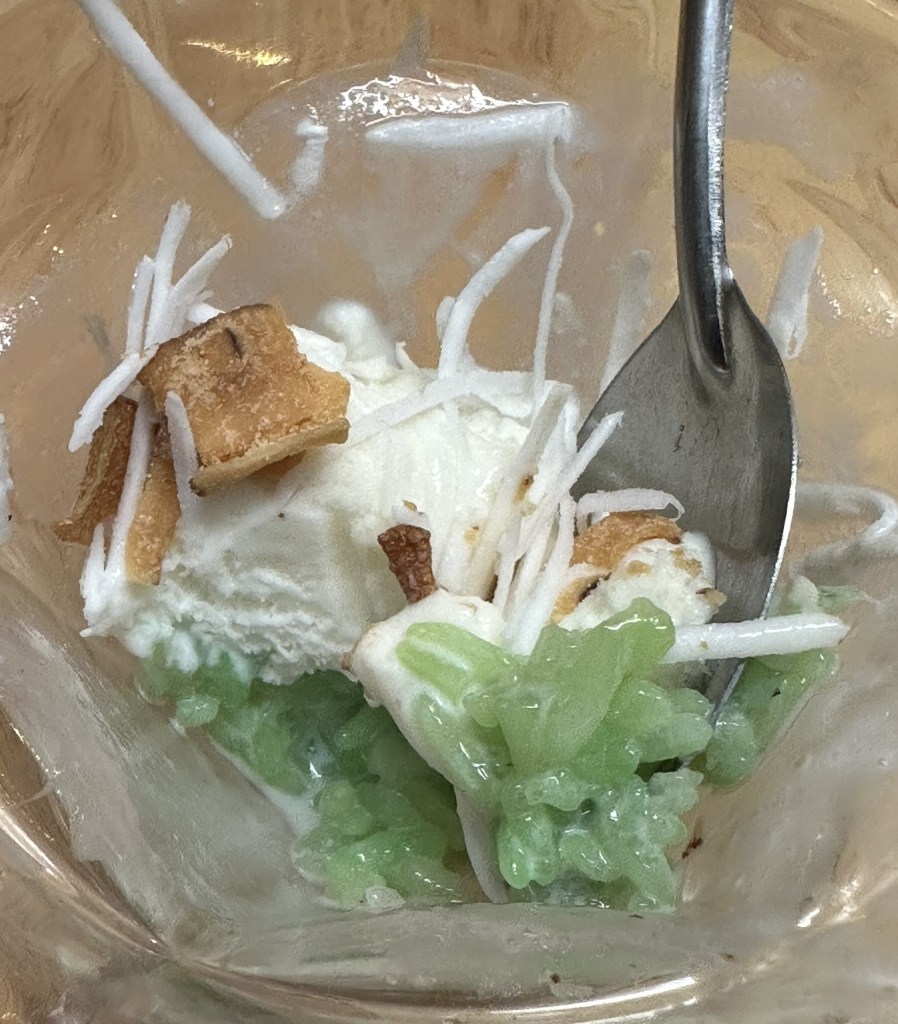
Kem Xoi – sticky rice coconut ice cream 
Cha Ca, made at your table 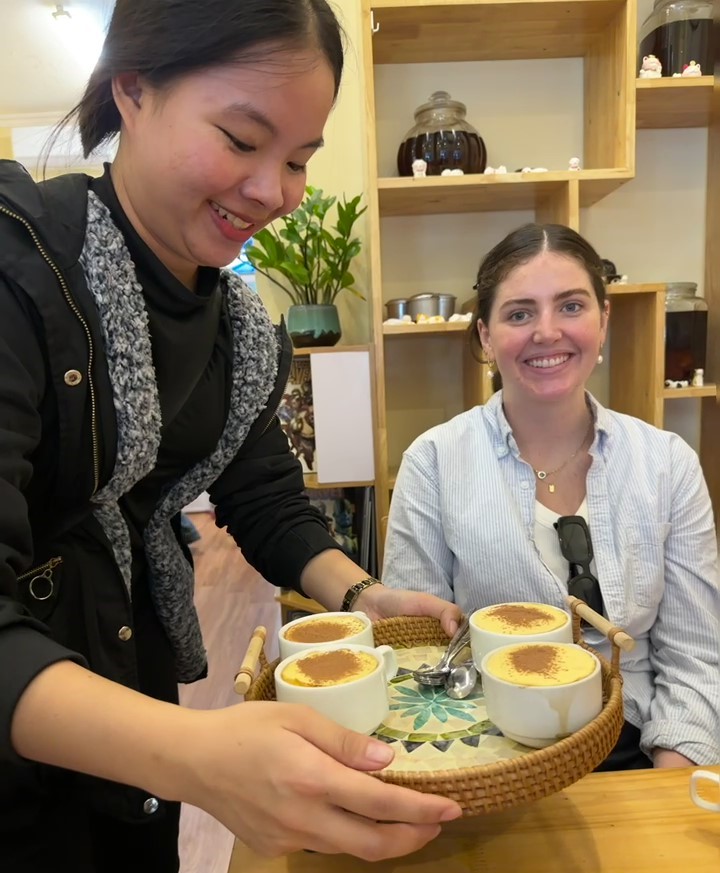
Egg coffee 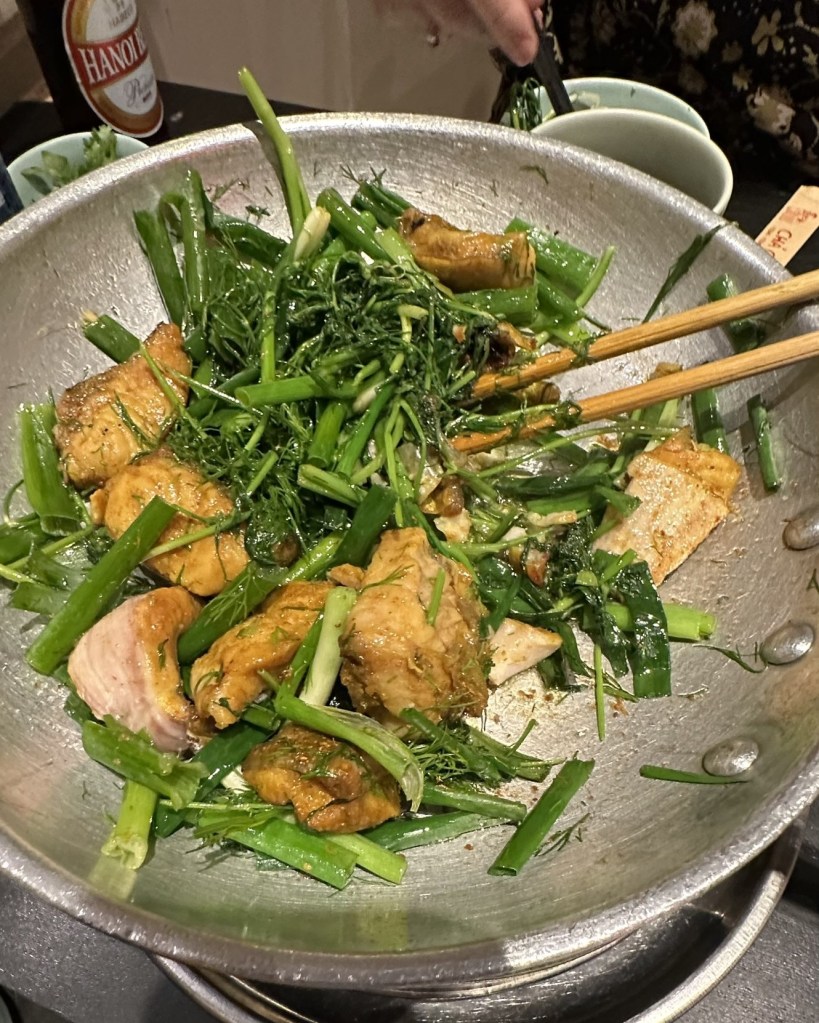
Cha Ca
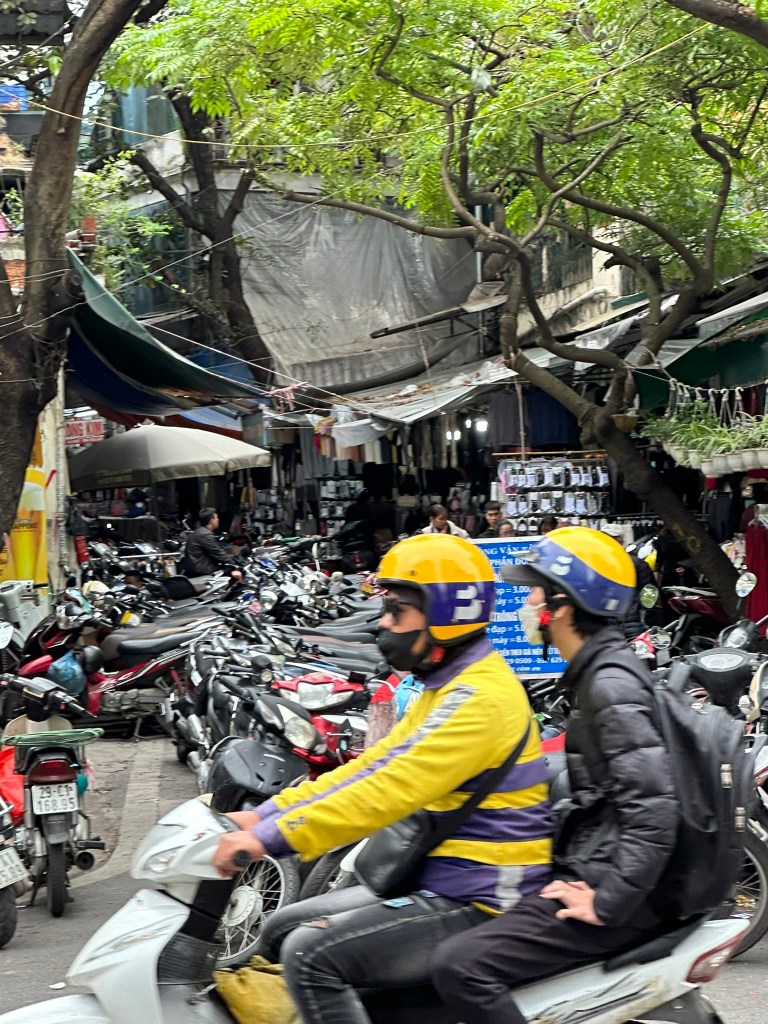
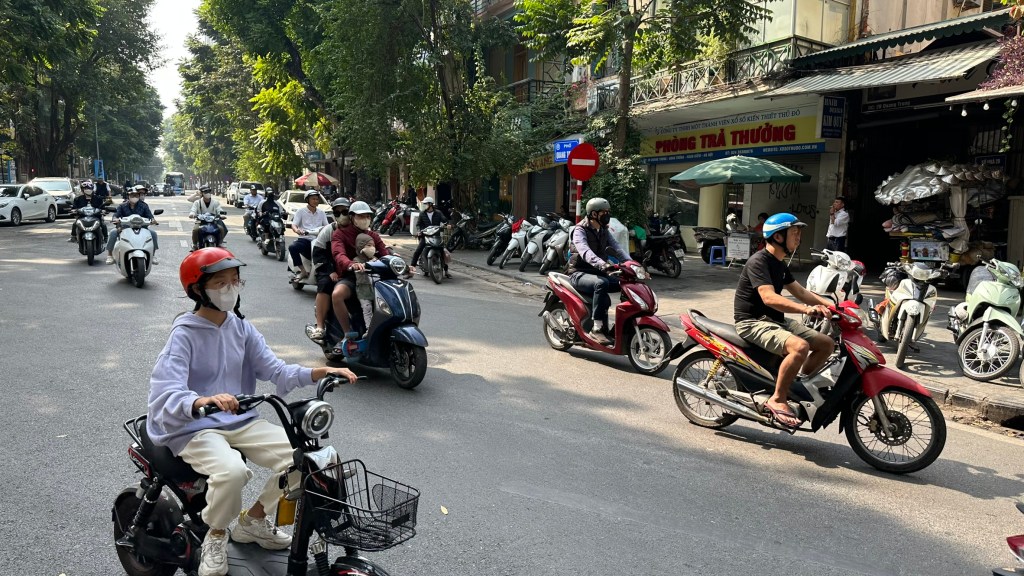
- The Old City absolutely buzzes with activity, a ton of fun just to stroll, people watch, and even shop. Motorbikes pack the streets, carrying everything from kegs to entire families, and they flow like water through the streets with no sense of “lanes”. The rules for crossing the street are the same regardless the traffic: just walk right into it, slowly but always moving forward — do NOT stop — making eye contact with riders. They’ll miss you.
- Every storefront is either a cheap restaurant with good food, a bar, a massage joint (legitimate, not the other kind), a tacky souvenir shop, or a shop selling quality merchandise on the cheap. I bought a very nice, authentic North Face rain jacket (made in Vietnam) for less than $19 USD!! And while the foot massage was not my favorite (I am not a fan of pedicures), it was a hit with the girls.

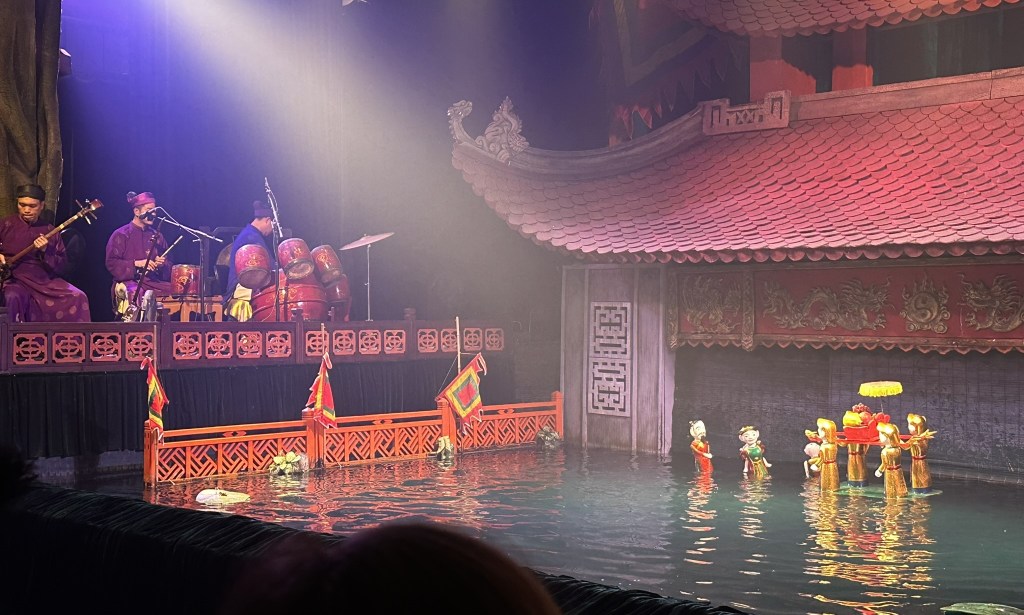
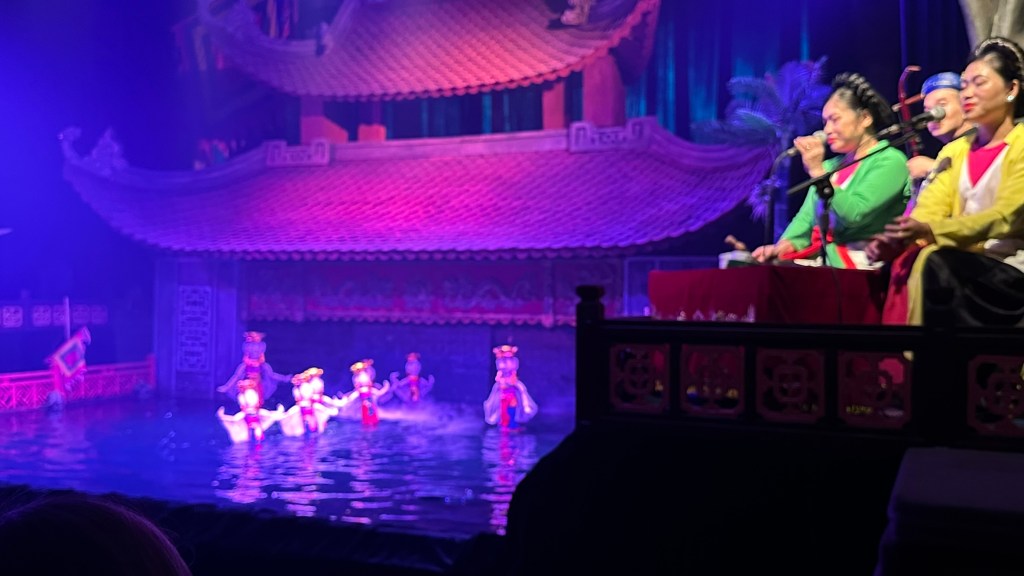
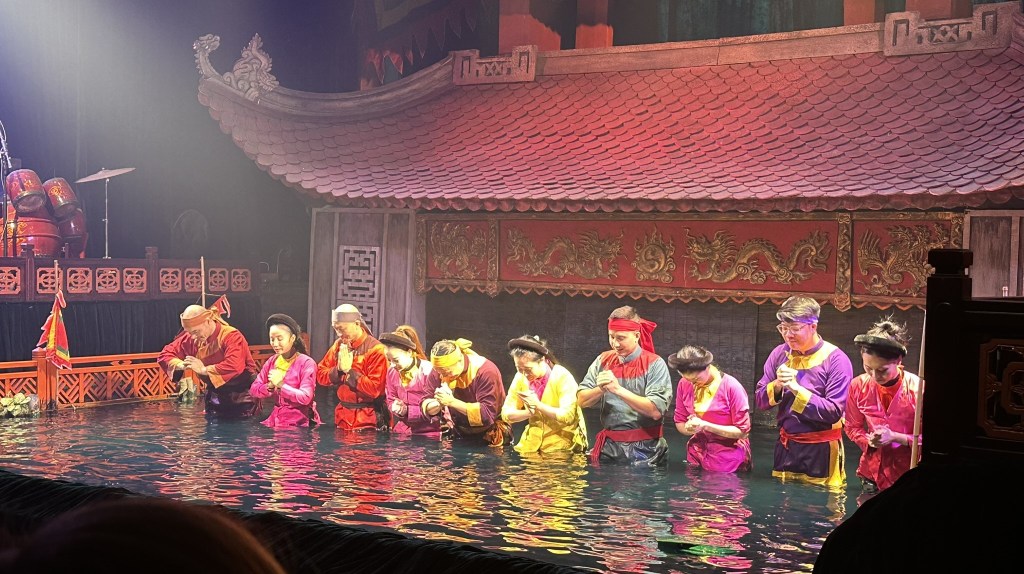
- Hanoi’s famous water puppet show at Thang Long Water Puppet Theater was a unique entertainment treat. The water puppet show has traveled to 70 countries and is highly acclaimed. Two dozen vignettes depict fabled aspects of Vietnamese life, from catching frogs to fishing to pageants with the four sacred animals: turtle, phoenix, dragon and unicorn. The singers and instrumentalists were terrific.

- The food and bars around Train Street were yet another sensory explosion, all terrific. Train Street could never be possible in the U.S. and is one of the things that makes travel to developing countries so fun. The trains pass literally inches from you as you watch from your second-floor bar perch. Right before the train arrives, a man with a bullhorn starts yelling “move inside, move inside now”! Favorite bars in the area included Ne Bar (the hottest cocktail joint in town) — try their signature Pho cocktail, which tasted remarkably like Pho noodle soup, with a bourbon base, coriander, star anise, chili and lime to taste — Bee’Znees, the Alchemist, and Hard Day’s Night, a Beatles-themed dive bar.
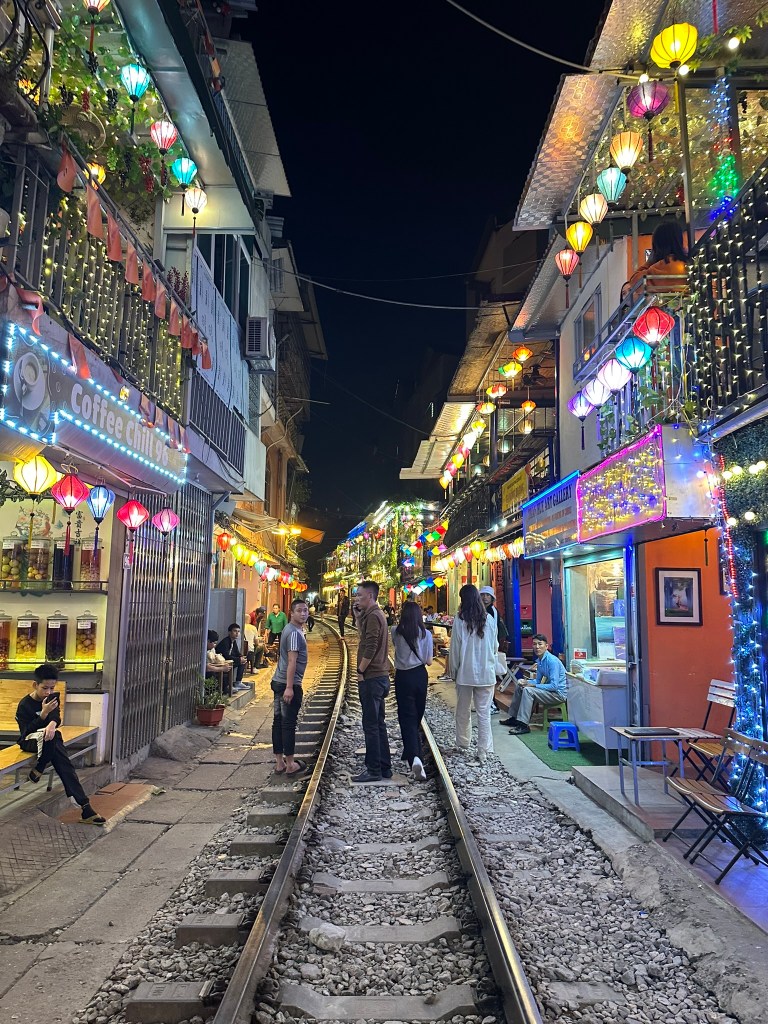
Train Street 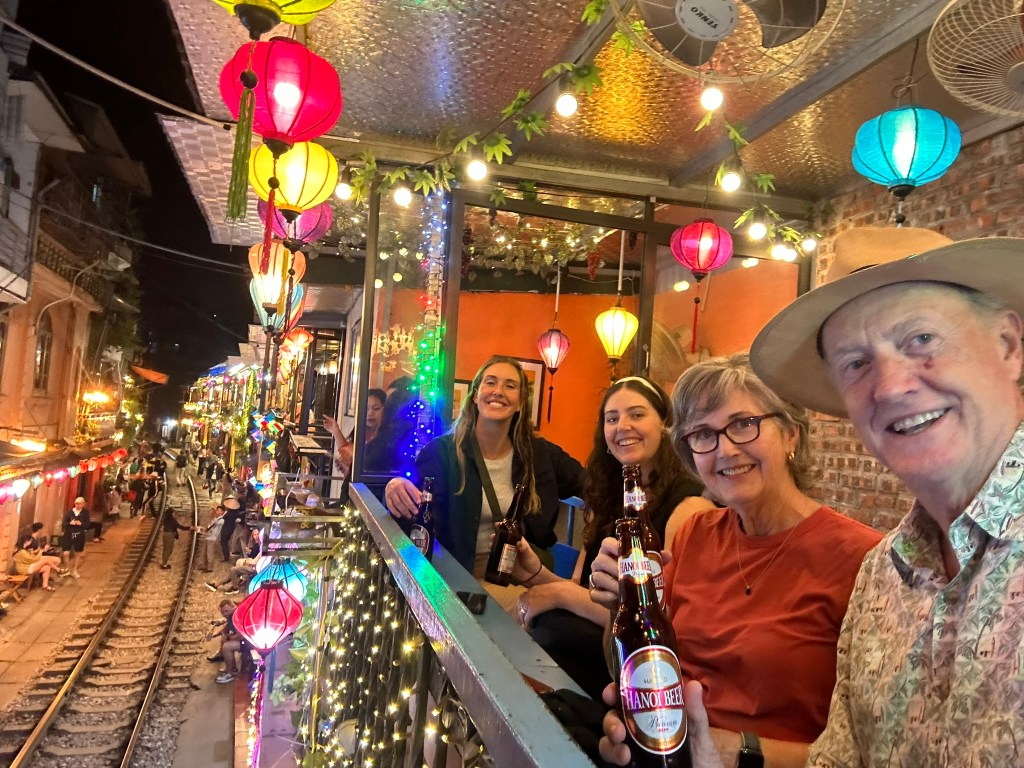
Waiting for the show on Train Street 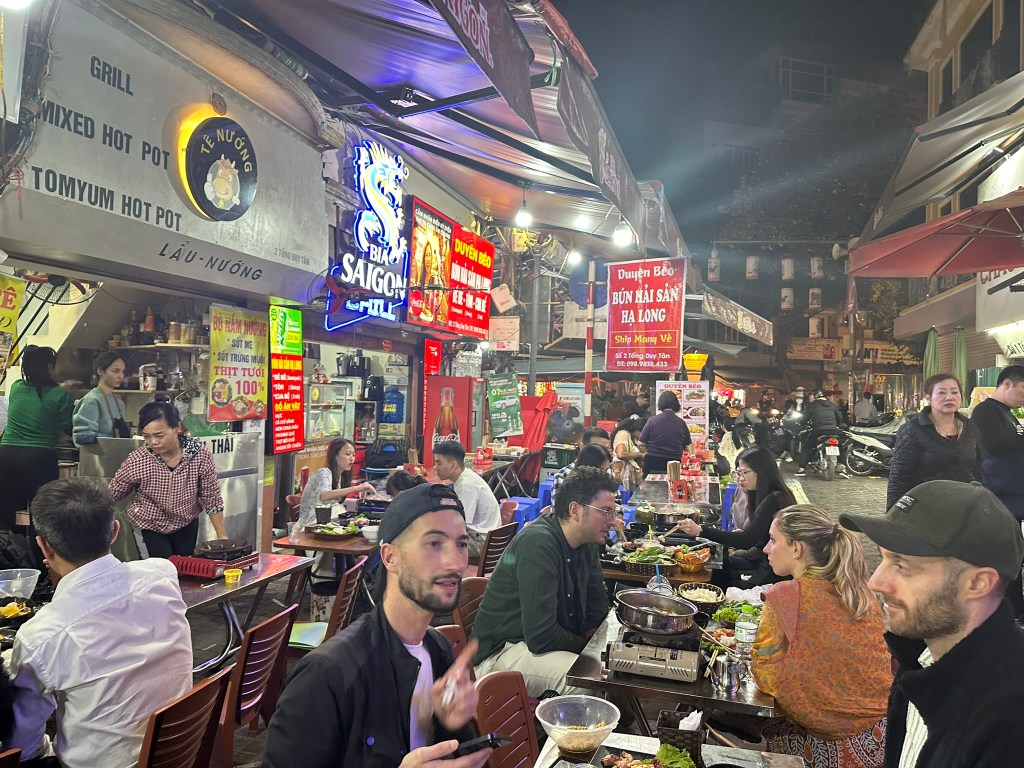
Street food stalls near Train Street 
Incredible meal for a low price 
Chatting with the owner of Ne Bar 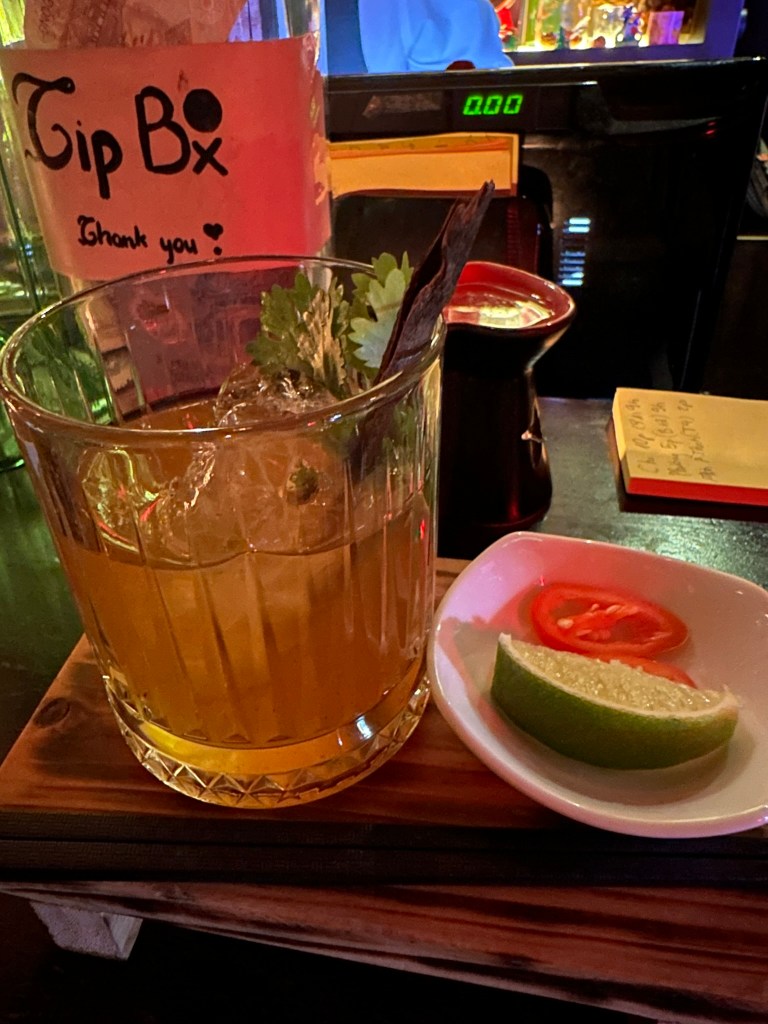
Ne Bar’s signature “Pho cocktail” 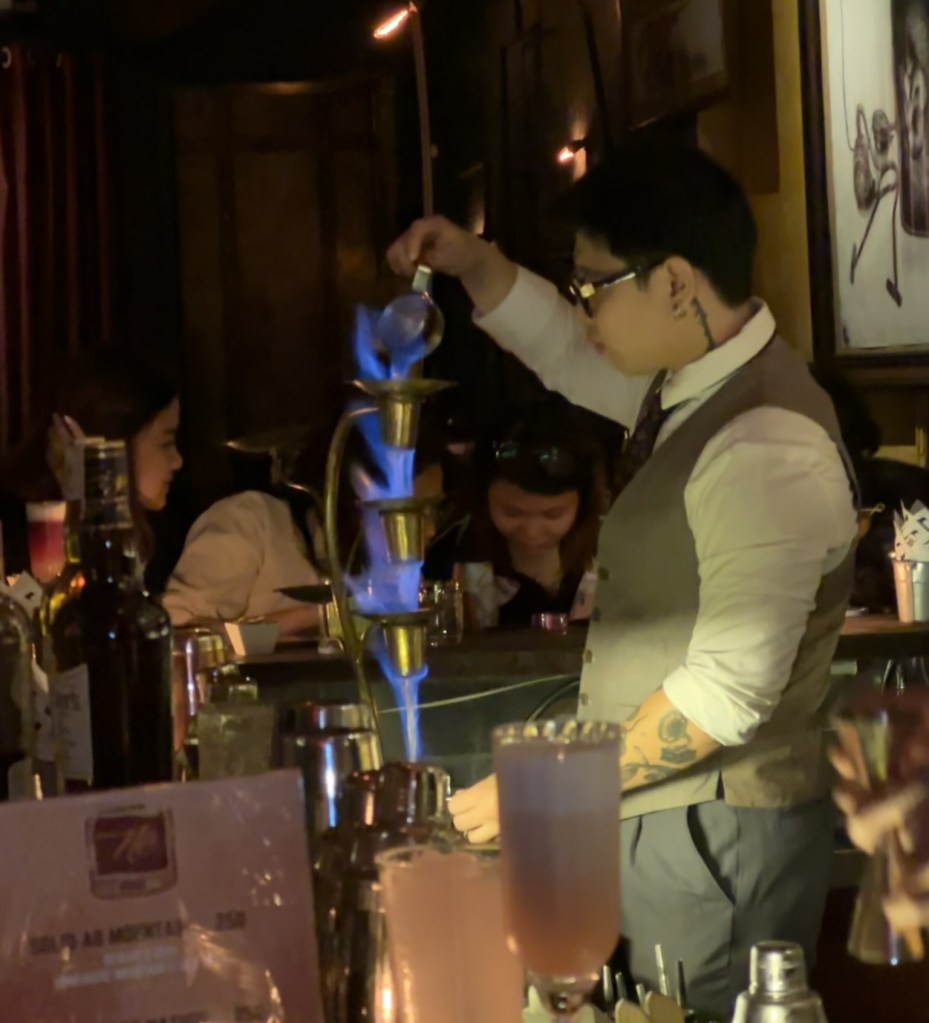
Who ordered the flaming waterfall?
- Take a lap around Hoan Kiem Lake in the center of the Old City, finishing up at Ngoc Son Temple, built and dedicated to Tran Hung Dao, a national hero who led the army to victory over an opposing dynasty in the 13th century. Legend has it a giant turtle lent Tran Hung Dao a sword that was the key to victory. The general then returned the sword to the turtle. The last known giant turtle in the lake died in 2016.
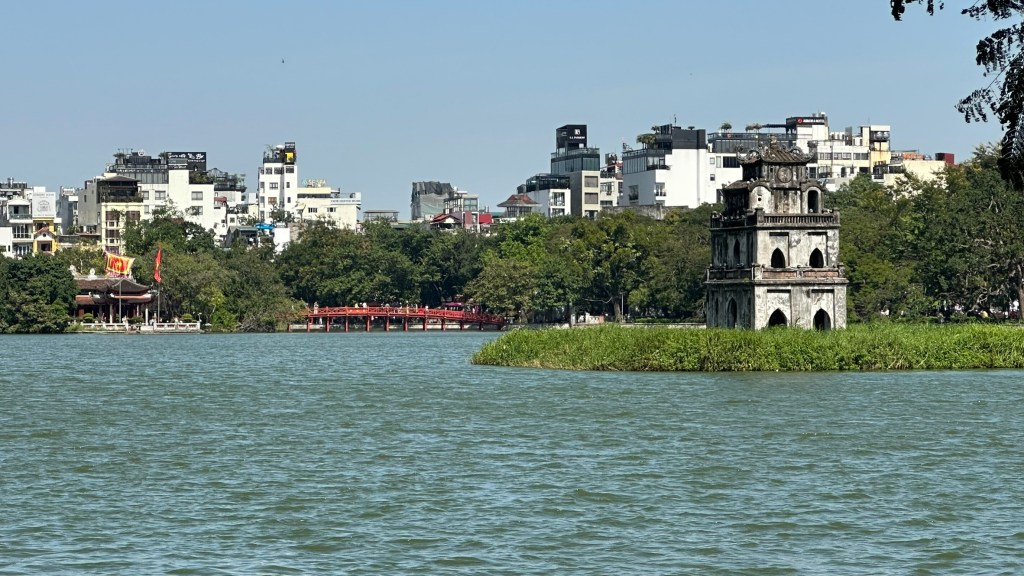
Turtle Tower on Hoan Kiem Lake 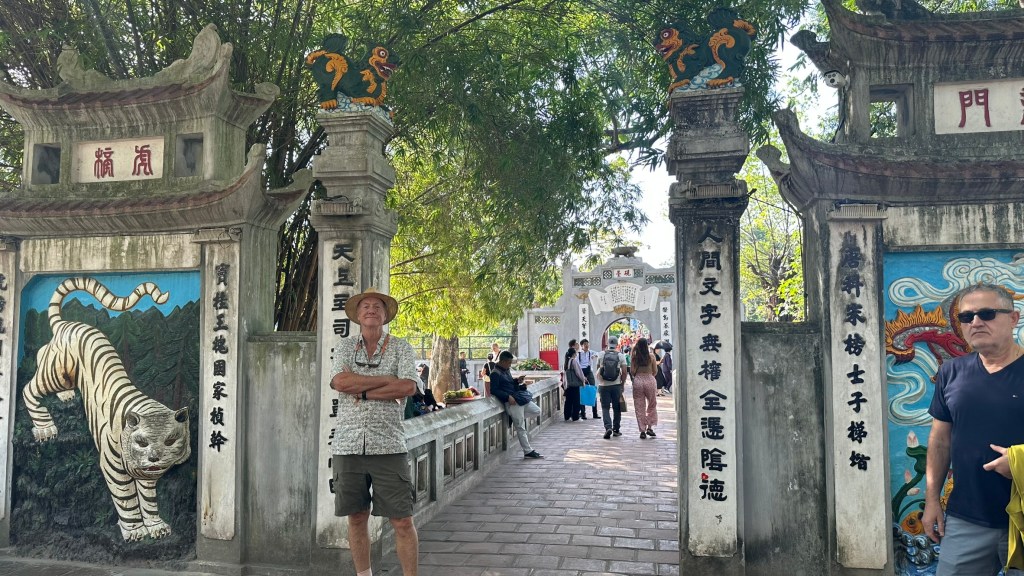
Entrance to Tran Hung Dao Temple 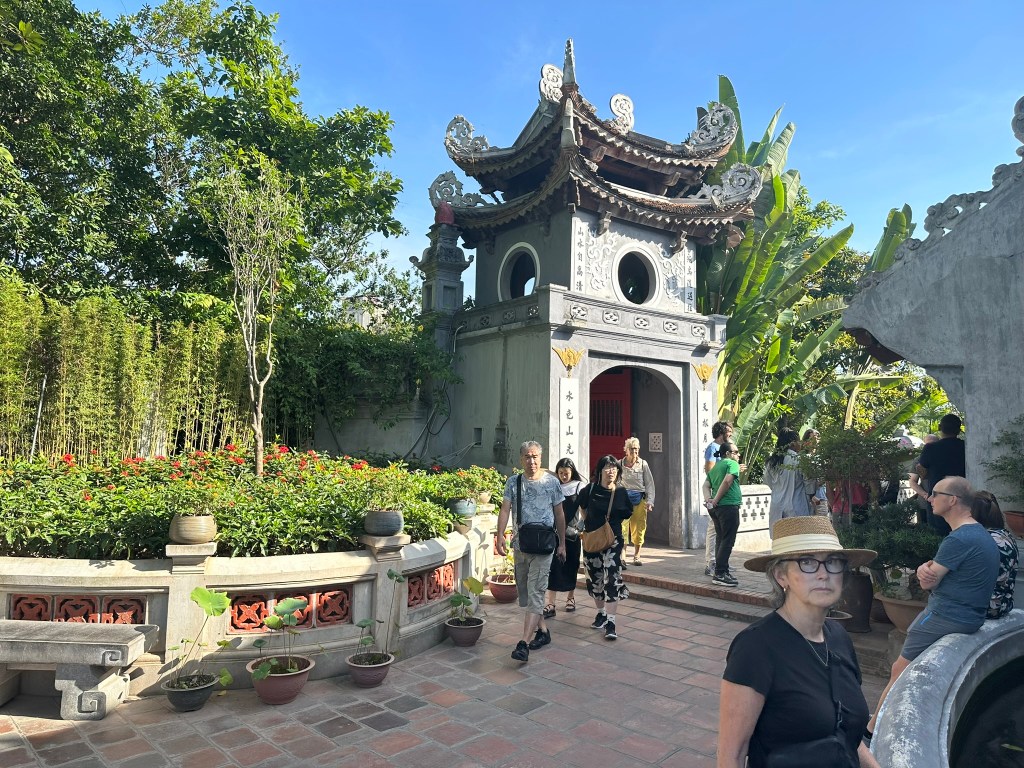
The temple grounds were beautiful 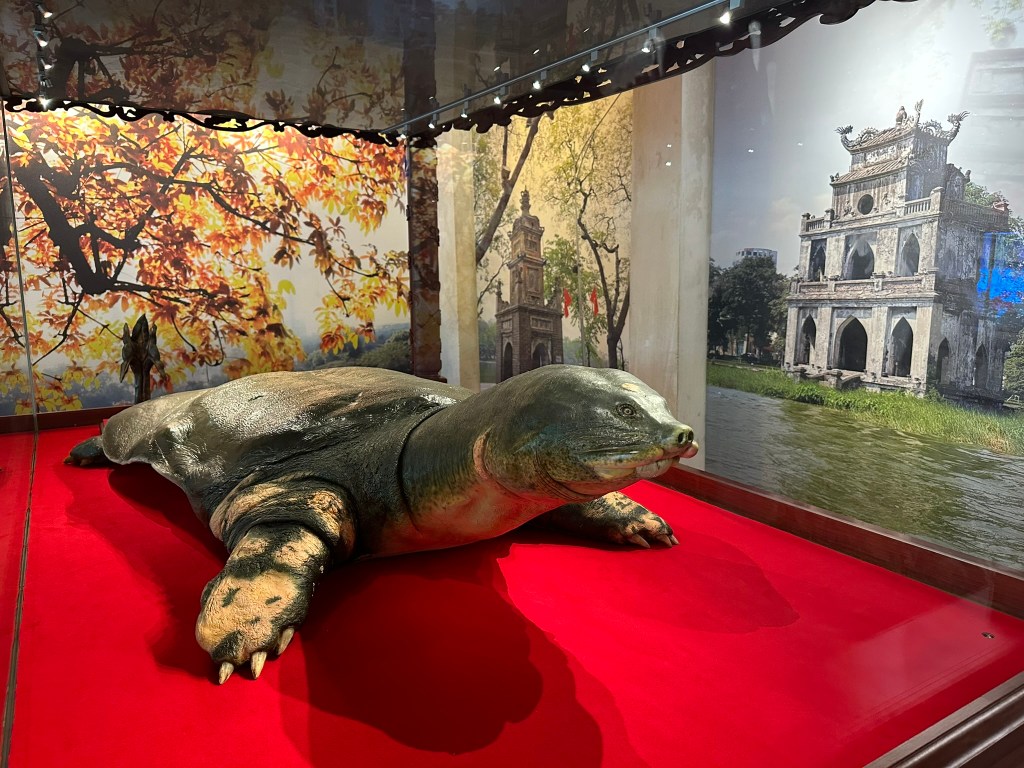
The last giant turtle
- A visit to Maison Central, aka Hoa Lo Prison, aka the infamous Hanoi Hilton, is an absolute must. Built in the late 1800’s by the French to house Vietnamese political prisoners and revolutionaries, it was later called the Hanoi Hilton by U.S. pilots who were shot down during the Vietnam War (which everyone here calls the American War). The museum depicts American servicemen playing volleyball and basketball, at Christmas parties, laughing it up — revisionist propaganda at its best! The pictures and story of former U.S. Senator and POW John McCain were especially poignant. Maison Central, aka Hoa Lo Prison, aka Hanoi Hilton.

The former Hoa Lo Prison, aka Hanoi Hilton 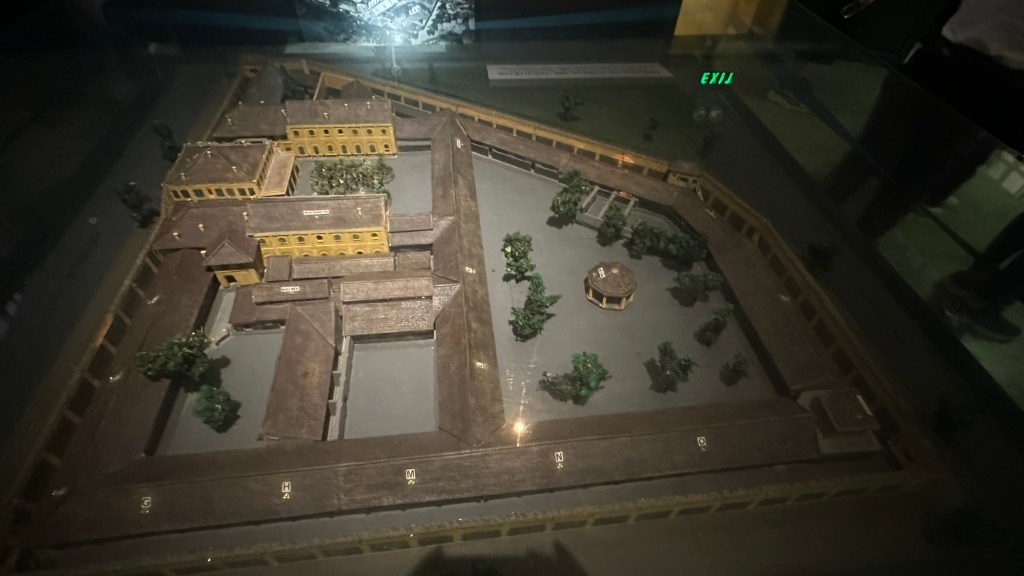
Diorama of the prison 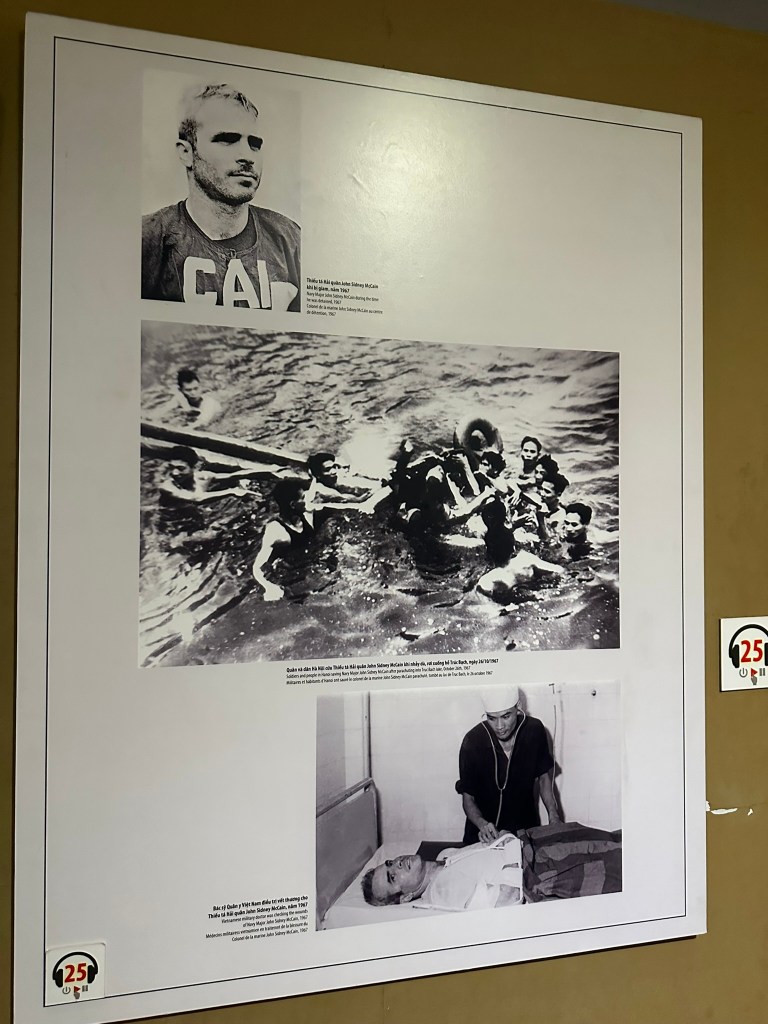
John McCain, Hoa Lo’s most famous prisoner 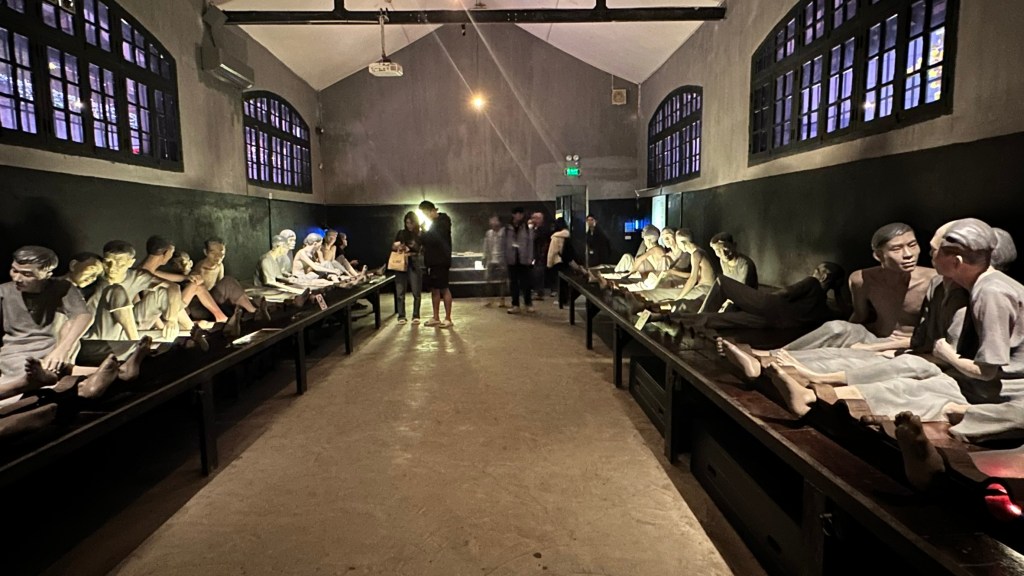
Prisoners lived chained together in terrible conditions 
Memorial garden
| Days 25-28 | North Vietnam Countryside | See lodging details below |
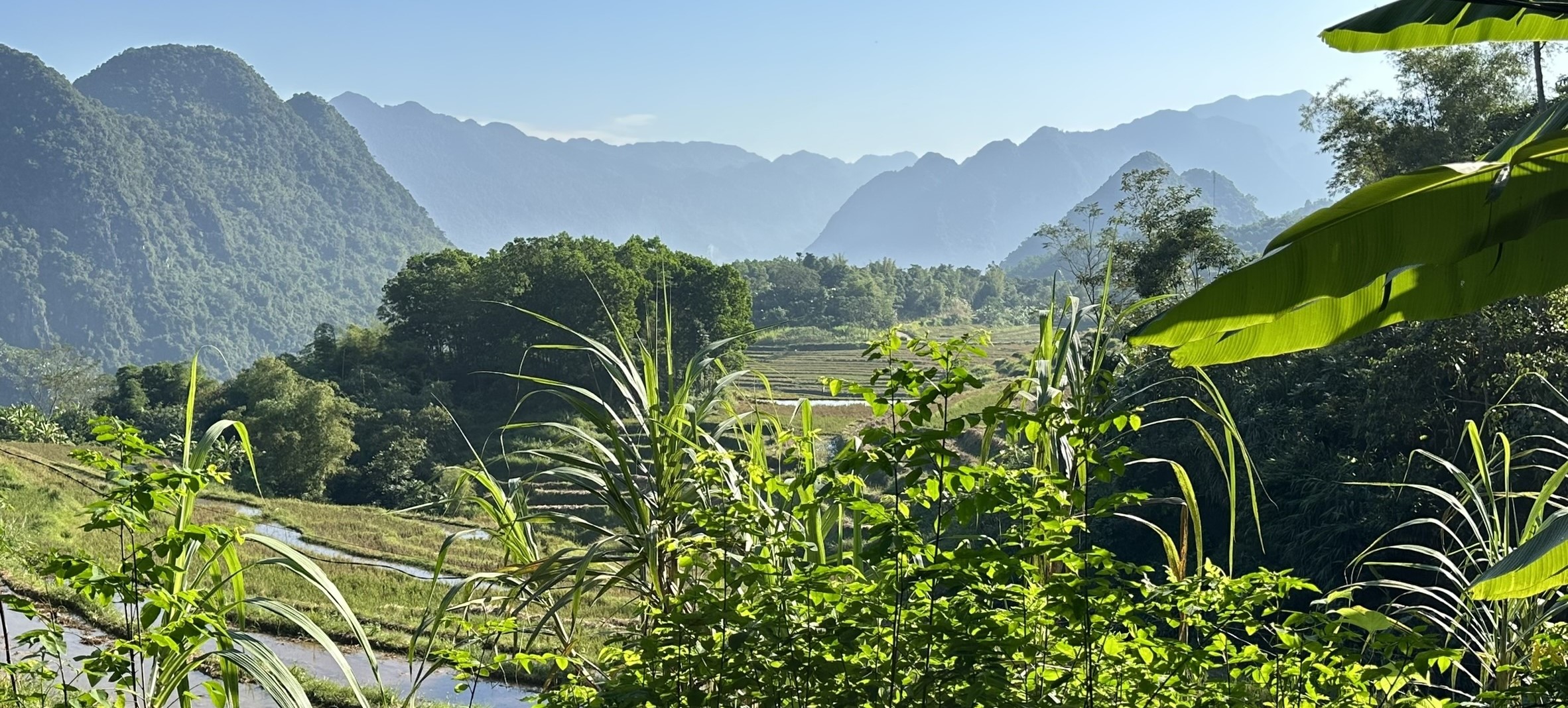
The best travel experiences for me always come from the most remote locales, and this a prime example. Our 4-day north Vietnam excursion outside Hanoi took us to the rural farming village of Pù Luông — a 4-hour drive into the mountains southwest of Hanoi — then southeast to Ninh Binh in the Red River Delta, and finally northeast to Ha Long, where we boarded a private junk for a two-day cruise of the stunning Bai Tu Long Bay.
We had a lot of help with this leg of our journey from a local travel agent named Ms. Hue Nguyen from Indochina Voyages, who I met rather accidentally when researching our earlier boat trip down the Mekong River. I can’t say enough good things about the service she provided, and there is no way I could have pulled this off on my own.
| Duration | Destination | Where We Stayed |
|---|---|---|
| 1 day | Pù Luông | Pu Luong Boutique Garden |
| 1 day | Ninh Bihn | Le Clos Du Fil |
| 2 days | Bai Tu Long Bay | Bhaya Legend 2 |
Pù Luông
Our first day heading out from Hanoi, our guide and driver picked us up at our hotel at 8:00am and we made our way into the mountains, passing through small villages as he educated us on the ethnic groups that make up most north Vietnamese villages.
Many travelers head north to Sapa, famous for its terraced rice paddies, but it’s fairly overrun by tourism now. Pù Luông has a similar landscape and culture but felt completely unspoiled, by contrast. The region’s tiny hill villages are populated by mostly Black Thai farming communities that immigrated from southern China centuries ago. At peak season, the terraces are brilliant green and yellow. The rice had already been harvested during our visit — the region has two rice crops a year, each with a four-month growing season — but the terraced paddies were still a marvel, the climate was much cooler, and we barely saw another tourist. Highlights:
- Our first stop featured a traditional farm-style lunch at a rustic home stay in a small village near Pù Luông. We were the only ones there; the local hosts were charming, and the food delicious and plentiful.
- Our next stop was remote, off the beaten track Hieu Village, lying on the steep slopes of the mountains. We hiked up through the village to see its natural waterfall and ever-green terraced fields extending from thickly forested slopes to the water edge of muddy river. You could tell by the looks on the local children’s faces they weren’t used to seeing strangers.
- From there, we drove a short distance to Pu Luong, where we walked through beautiful landscape and a couple small settlements of wooden houses on stilts where local Black Thai ethnics have lived for generations. Again, with no other tourists in sight, we got to interact with local villagers going about their regular lives — a truly memorable experience.
- Our dinner and overnight lodging at Pu Luong Boutique Garden Lodge was very cool, rustic but fairly luxurious overlooking the valley and terraced rice paddies below. Read my review here.
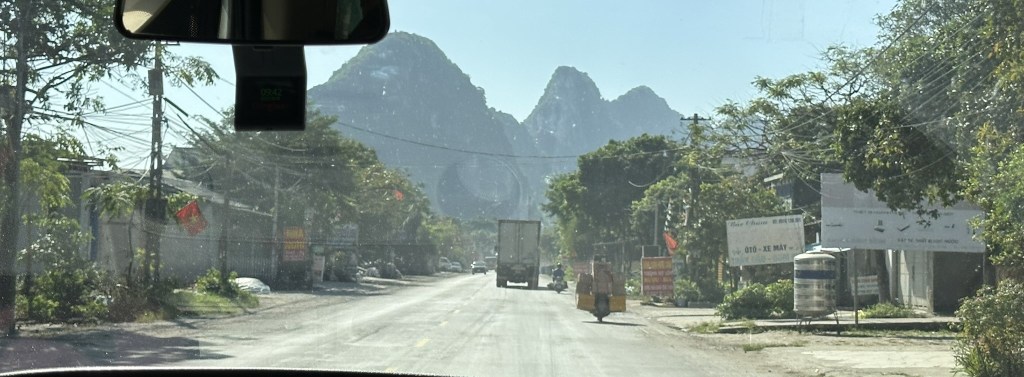
Driving to the mountains 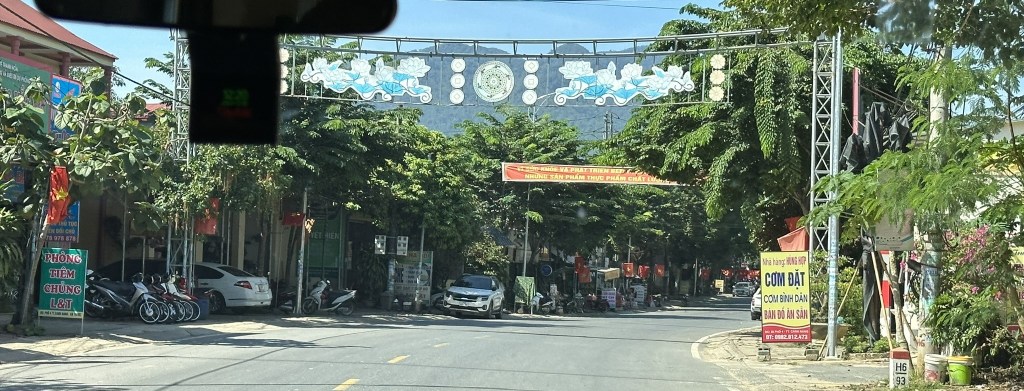
Typical rural village en route 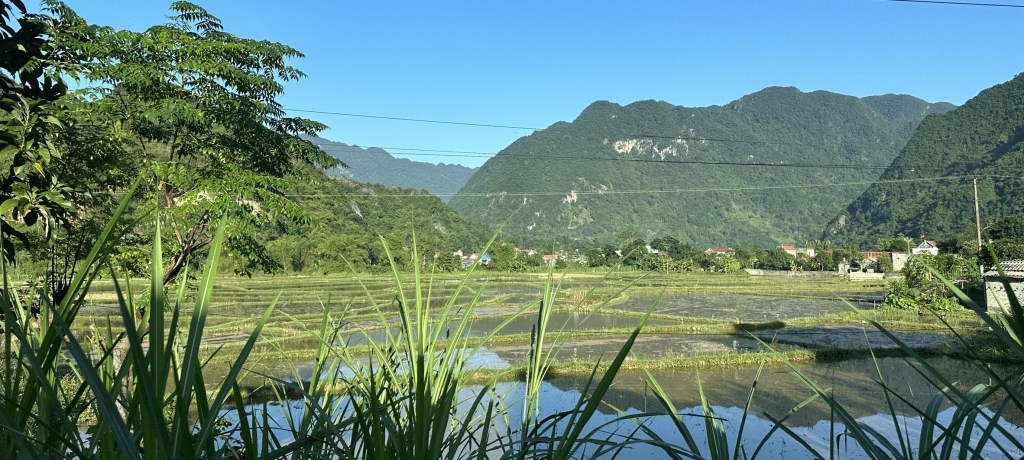
Rice paddies of Pu Luong region 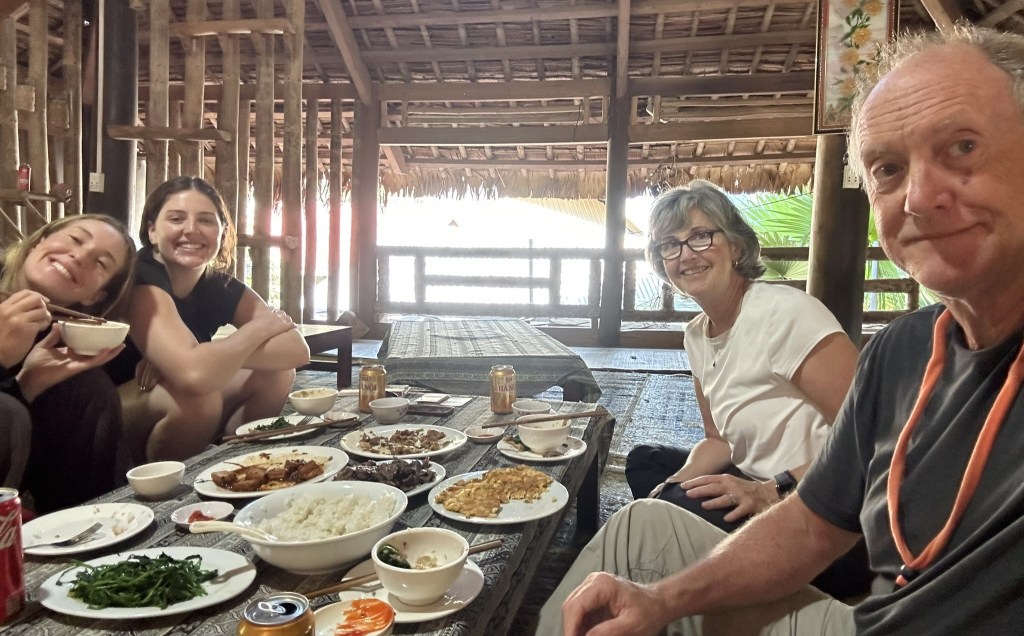
Lunch! 
Hiking to Hieu Village 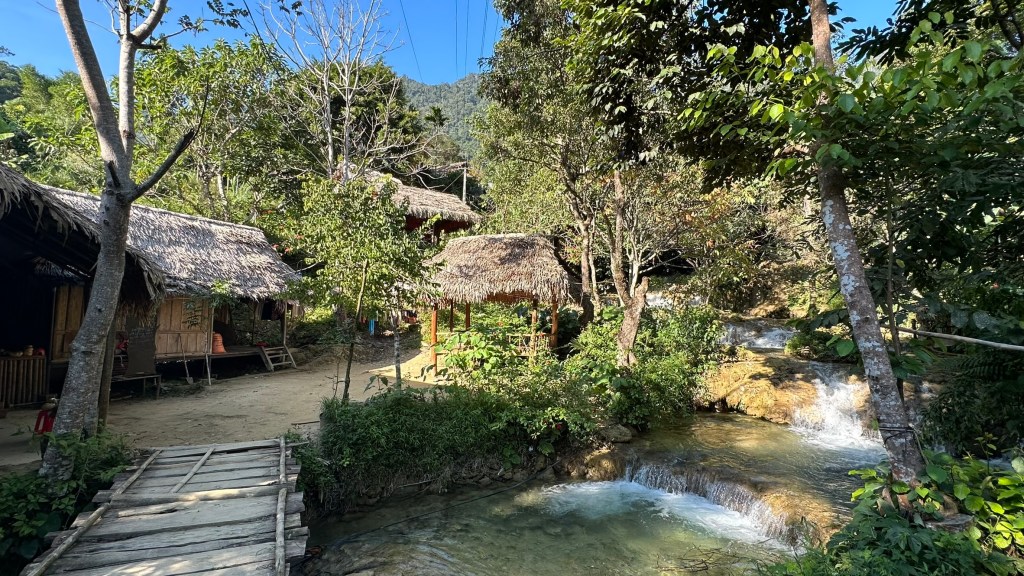
Hieu Village 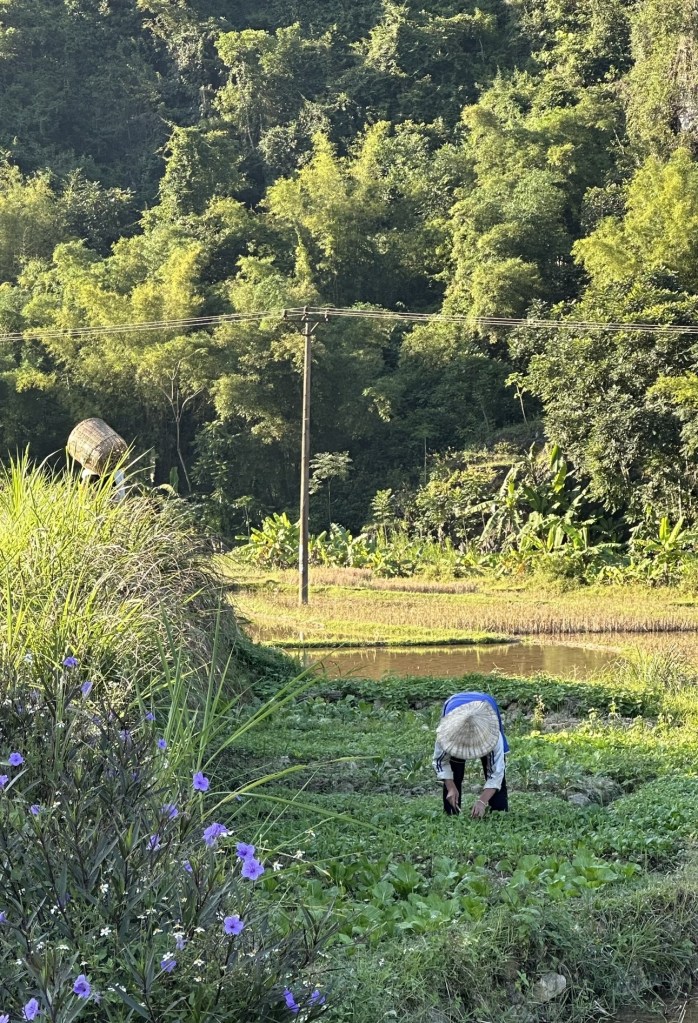
Woman tending her cabbage crop 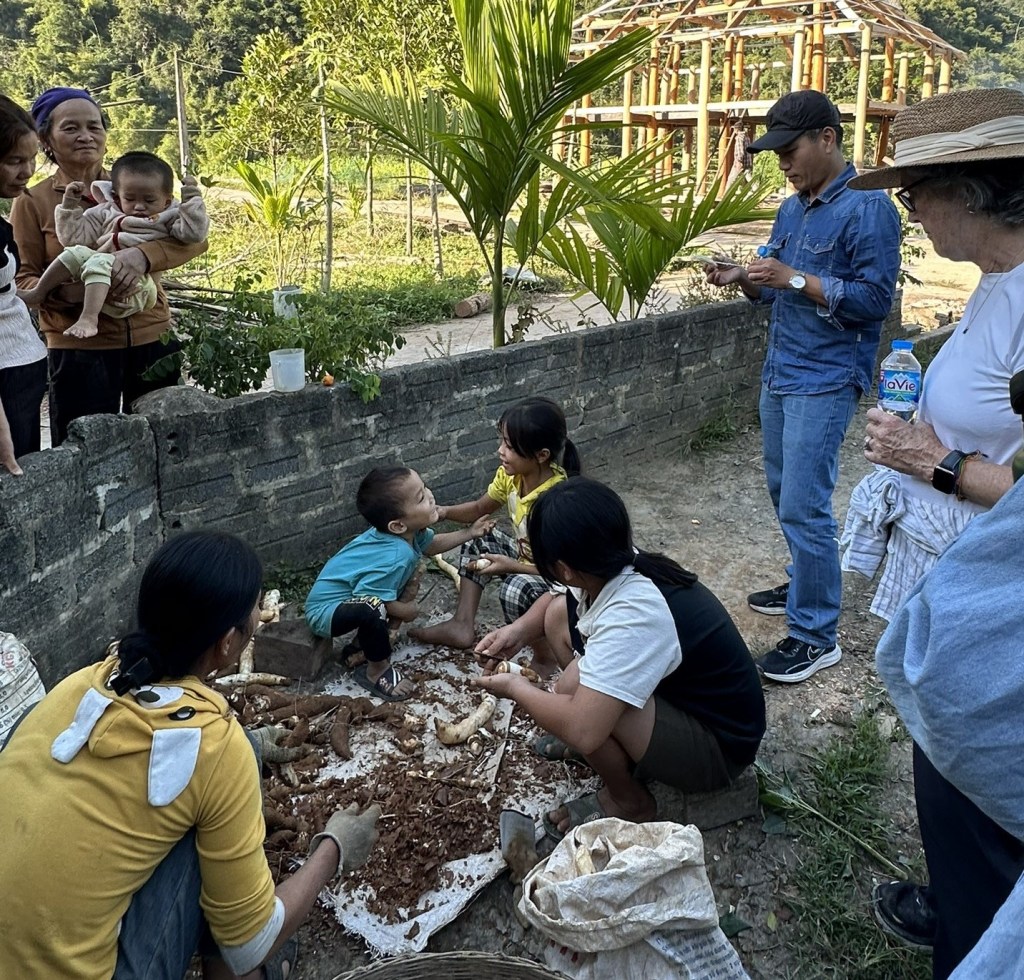
Villagers preparing tarot root for cooking 
Residential village neighborhood 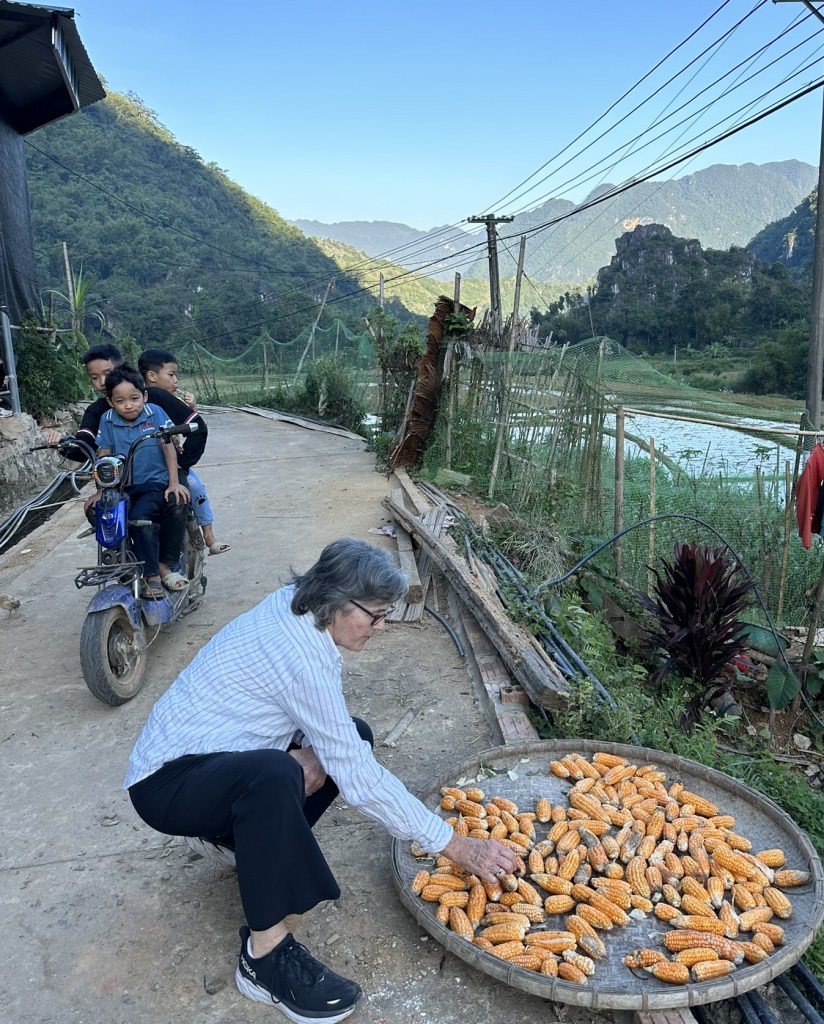
Locals inspecting the “corn inspector” 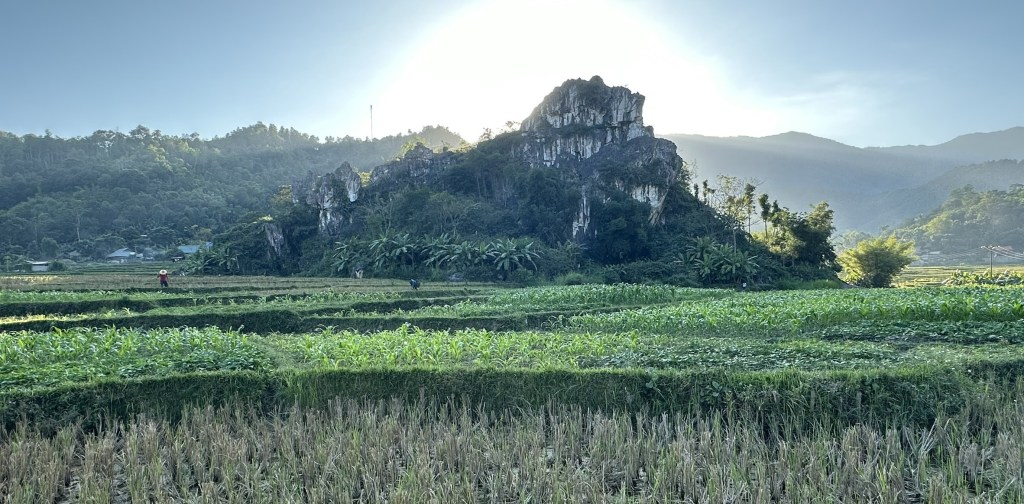
Golden hour over beautiful landscape 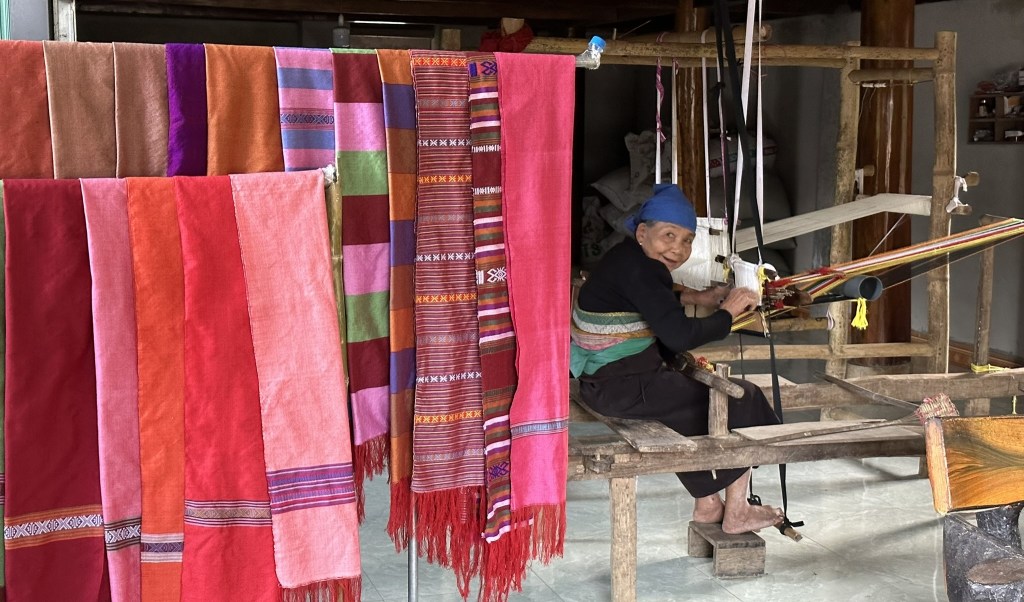
Old woman at her loom 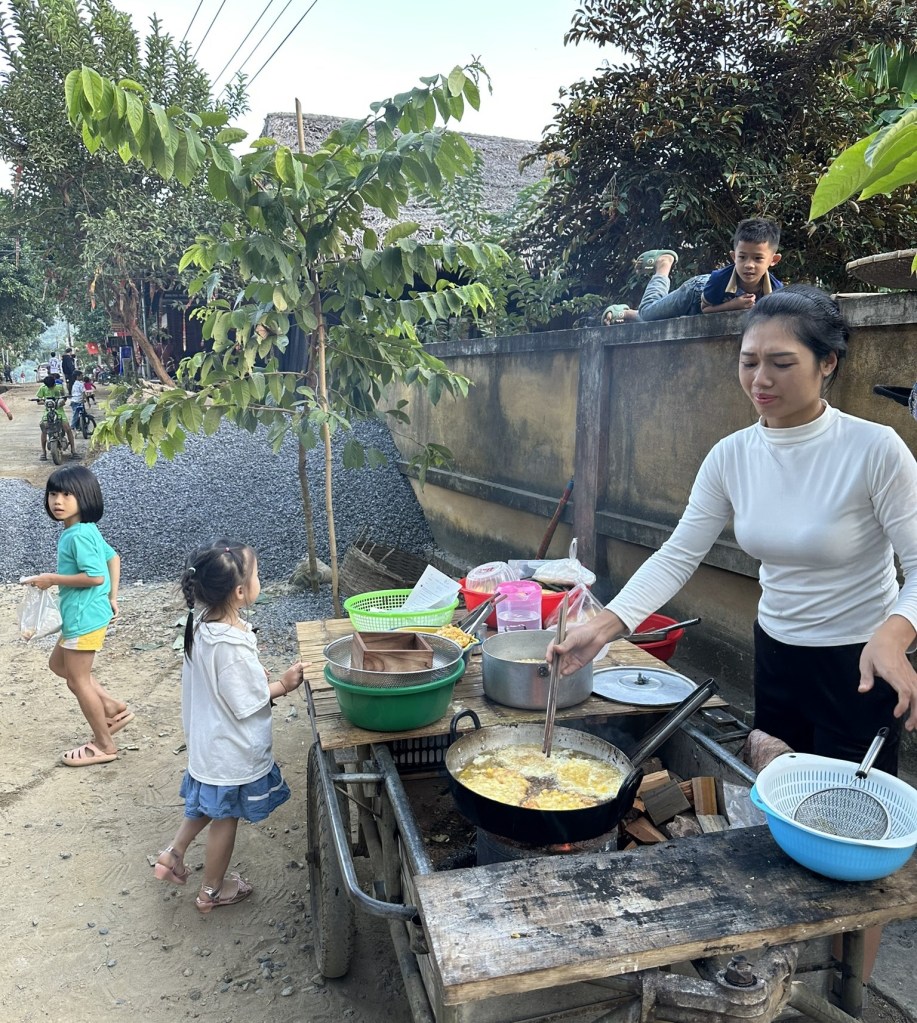
Cooking for the neighbors 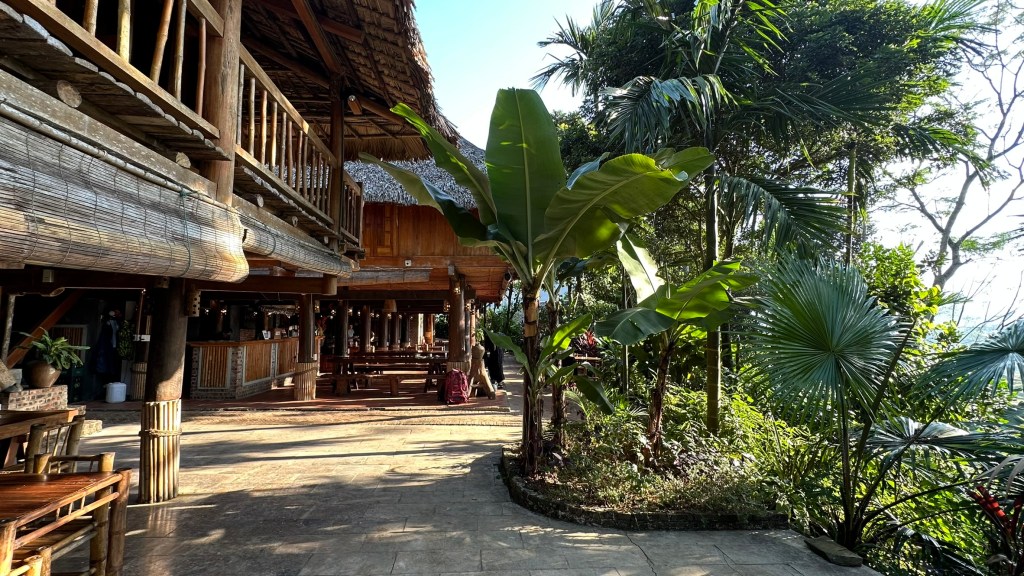
Pu Luong Boutique Garden Lodge 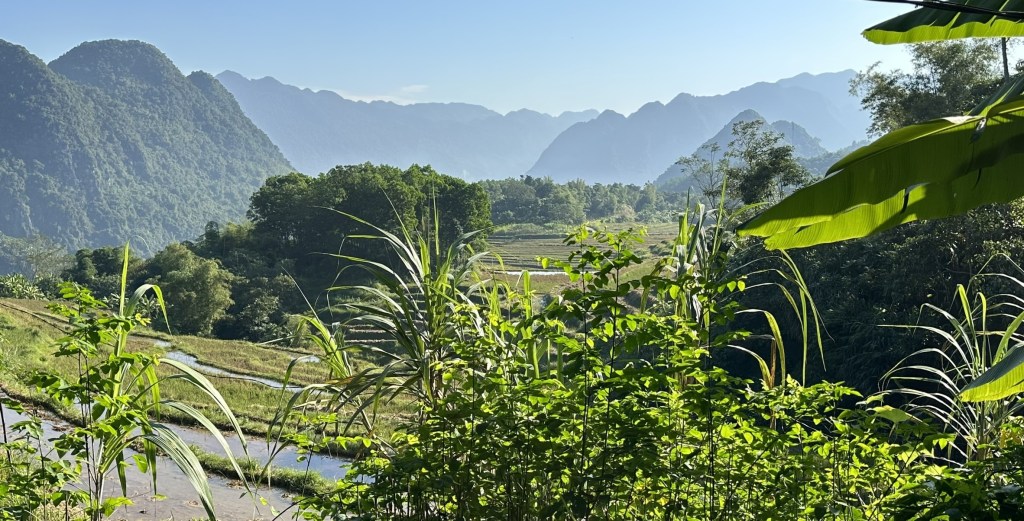
Morning view from the lodge
- The next morning, we drove to Phố Đoàn Market, a bustling, open-air market and weekly Sunday gathering point of the ethnic tribes of Muong and Black Thai people from the surrounding villages. The market had all manner of fresh food, including live birds and animals, as well as local handicrafts. Daughter Anna bought a silver necklace at one stall, while I picked out a large forged-steel knife with a carved wooden handle and sheath made by the vendor. No more carry-on luggage for me this trip!
- Our last stop at nearby Trung Tiến featured the region’s last remaining bamboo waterwheels, traditional means of irrigation in the rice paddies that have slowly given way to more modern techniques. Seeing these waterwheels in use, as opposed to pictures or a museum model, was very cool.
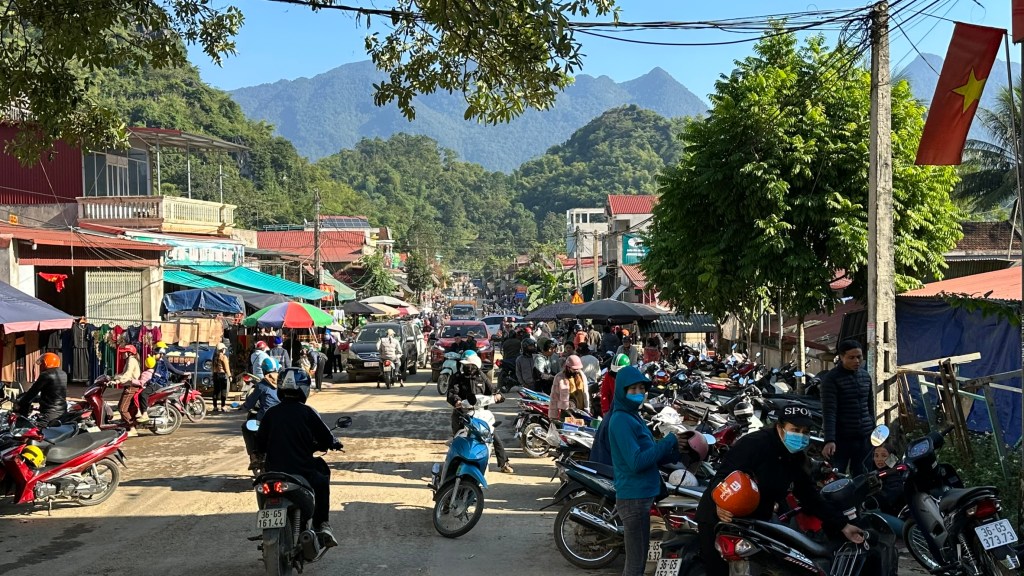
Walking into Pho Doan village market 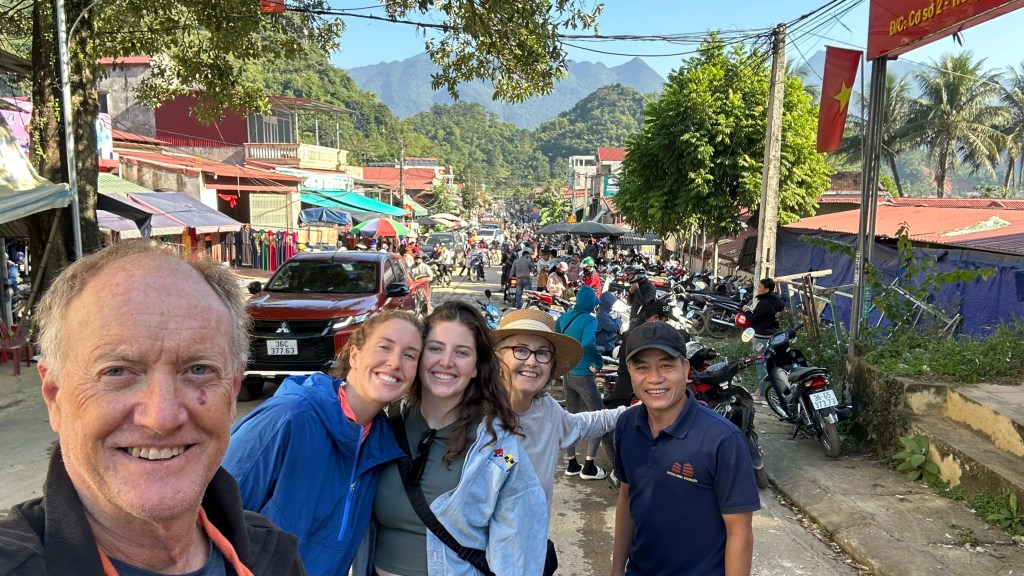
With our trusty guide, Luong. 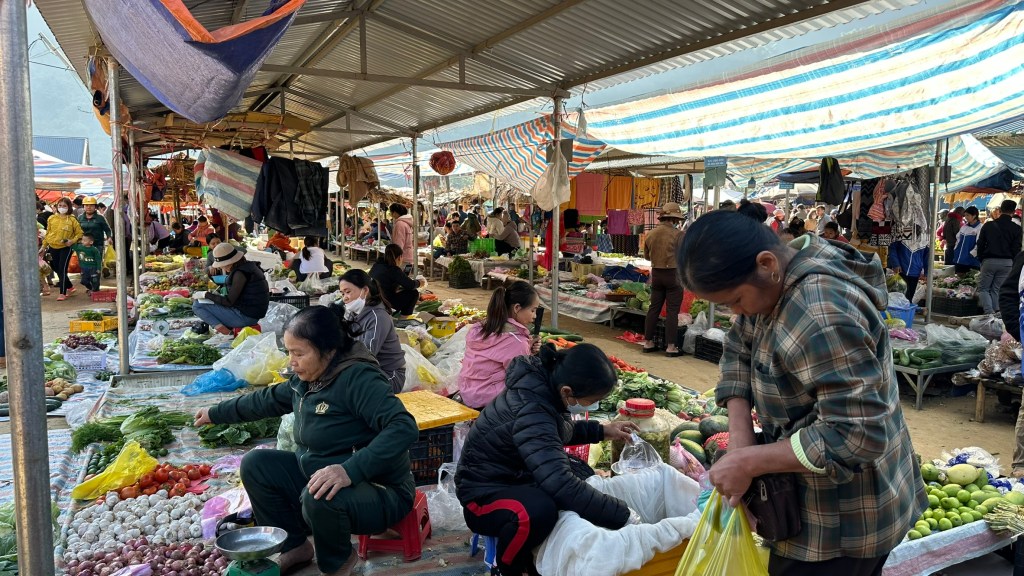
The market has all manner of produce 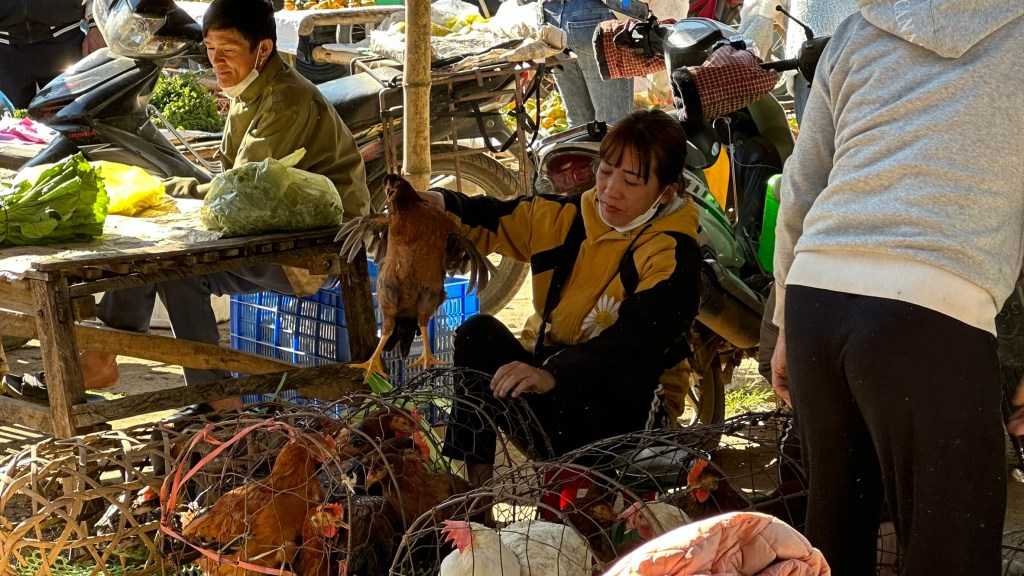
Checking out the poultry section 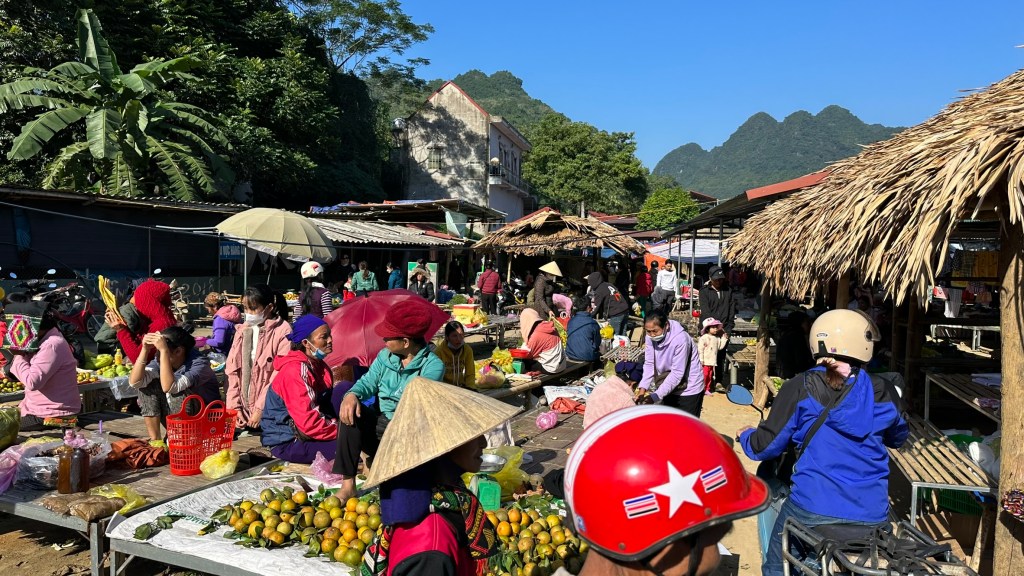
A landscape of color 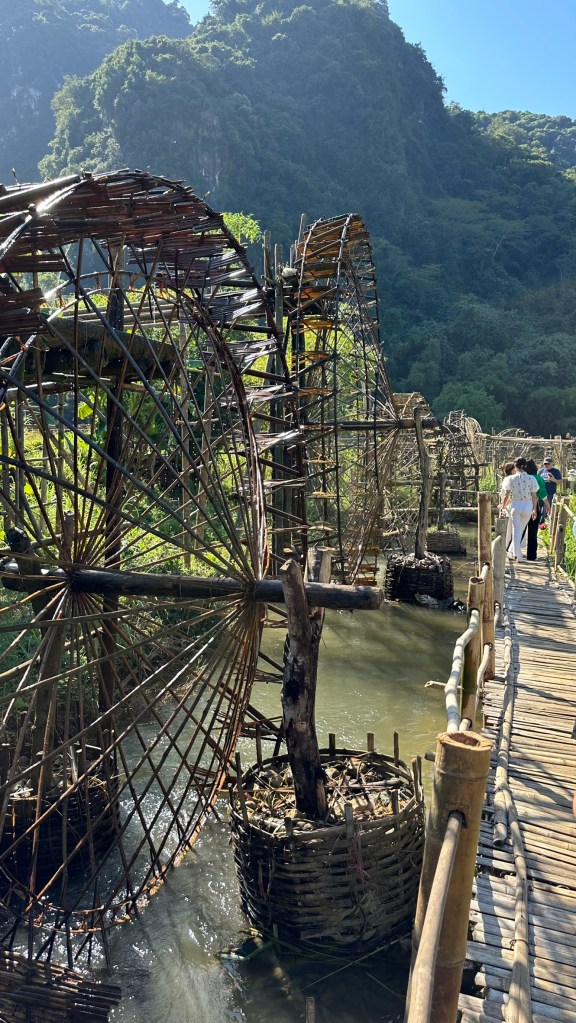
They work! 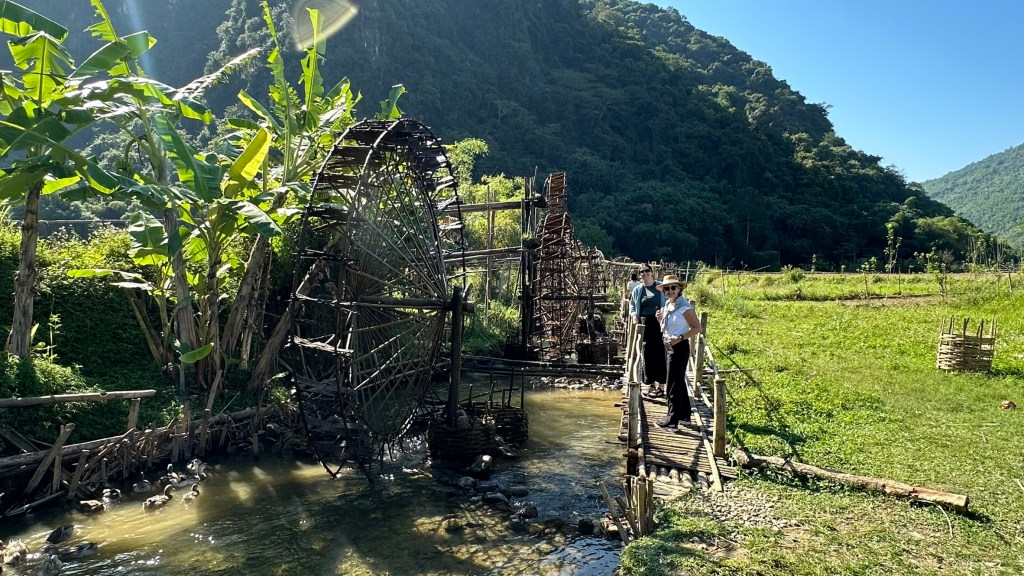
Checking out the bamboo waterwheels 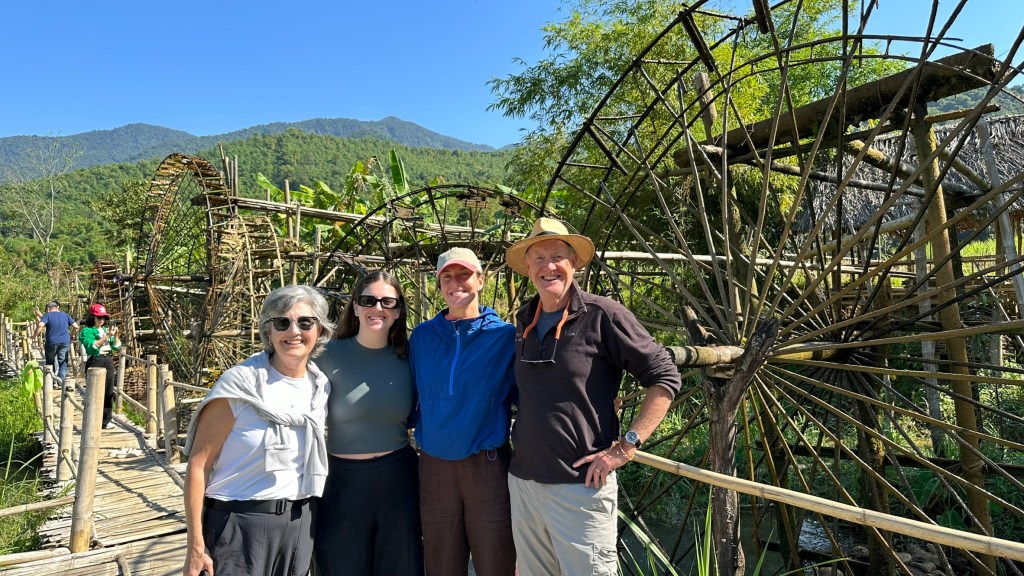
Happy trampers
Ninh Binh
After leaving the morning Phố Đoàn market and another 3 hour drive, we spent the afternoon in the Ninh Binh region, the onetime royal capital of Vietnam before King Ly Tai To moved the capital to present day Hanoi in the year 1010.
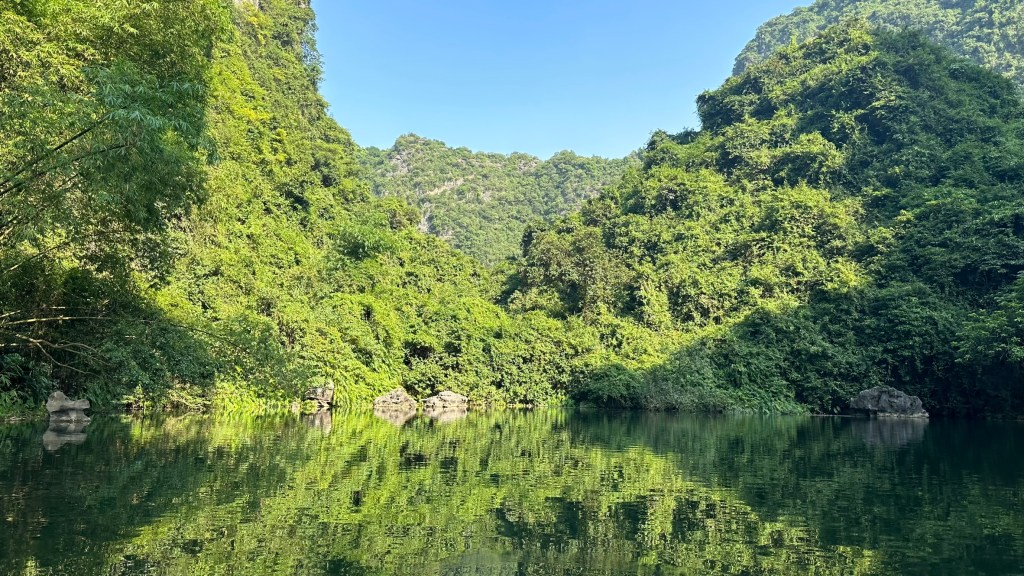
Ninh Binh is no secret to tourists and the place was crawling with what seemed like every backpacker in Asia. The Tràng An landscape of towering limestone karsts connected by waterways you traverse by 3-hour rowboat tour is a UNESCO World Heritage site, which takes you through nine caves in the limestone rock. Following that, we visited the Hang Múa (Dancing Cave), a popular respite from the heat for the ancient kings. The nearby Đầm sen Hang Múa viewpoint, with a climb of 500 stone steps, afforded an amazing (if crowded) panoramic view of the region and a pretty spectacular sunset. After our day of sightseeing, we cooled our heels over dinner and a very nice stay in nearby Tam Coc.
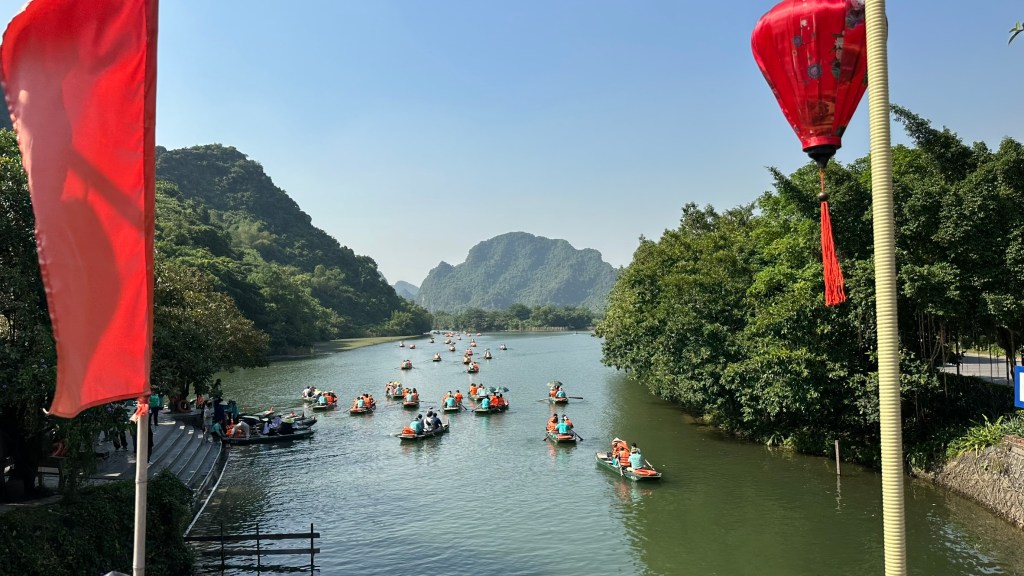
A flotilla hitting the water at Trang An 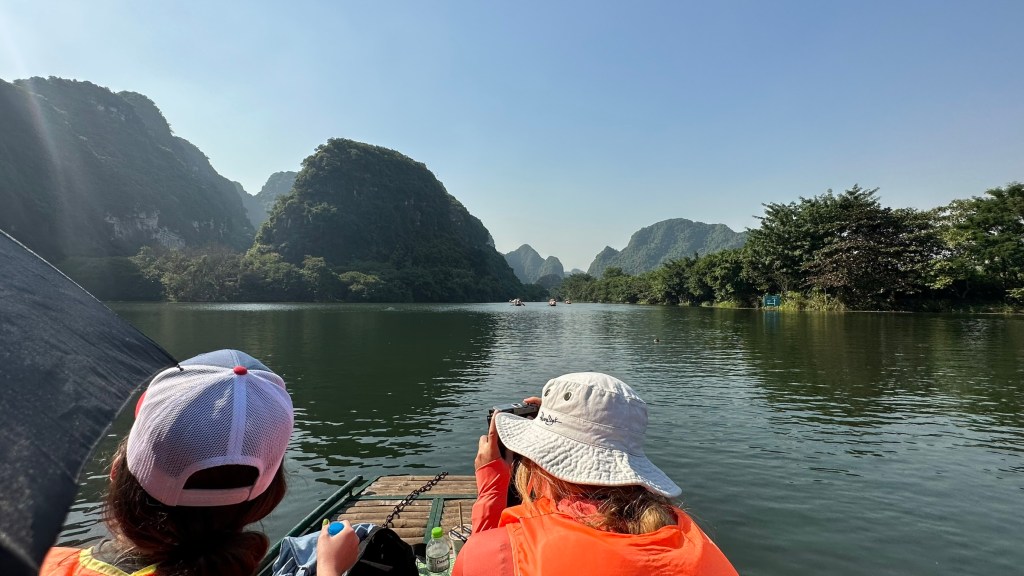
Our rowboat journey begins 
Mystical landscape 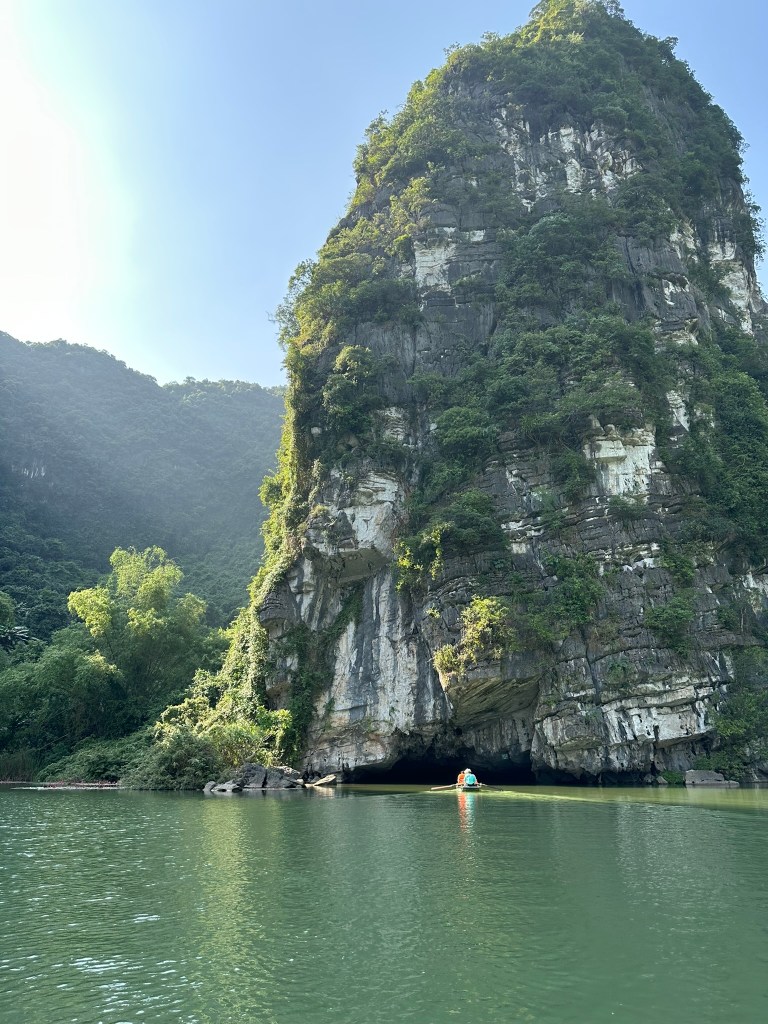
The first of nine caves ahead 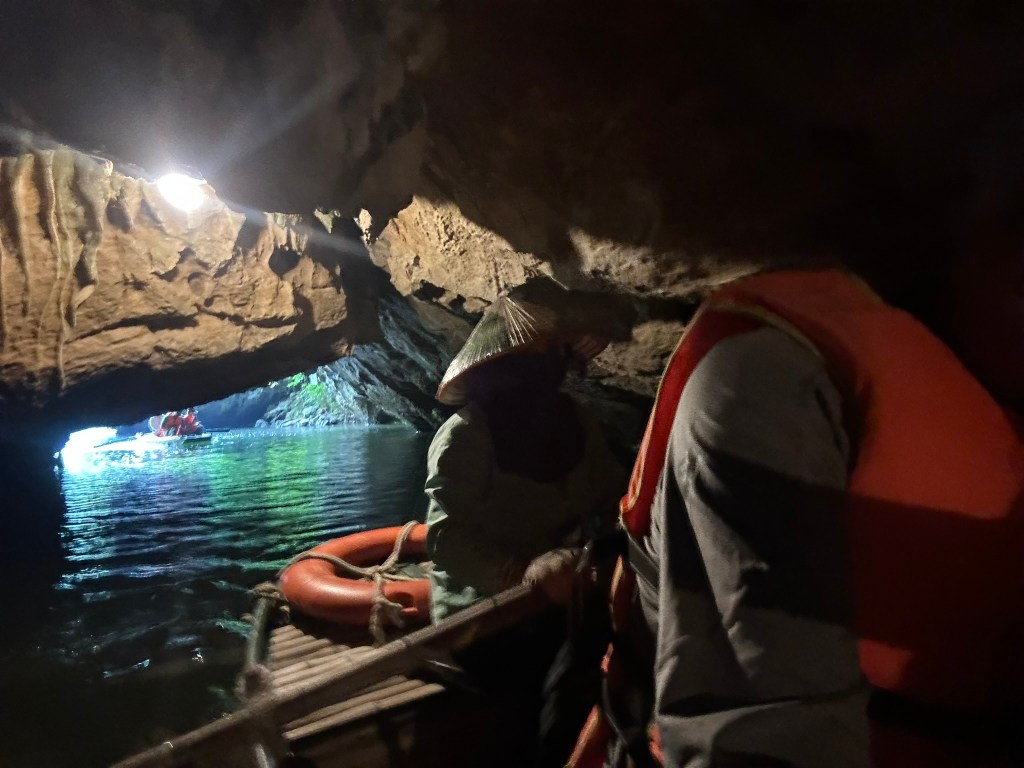

Exiting the cave reveals more beauty 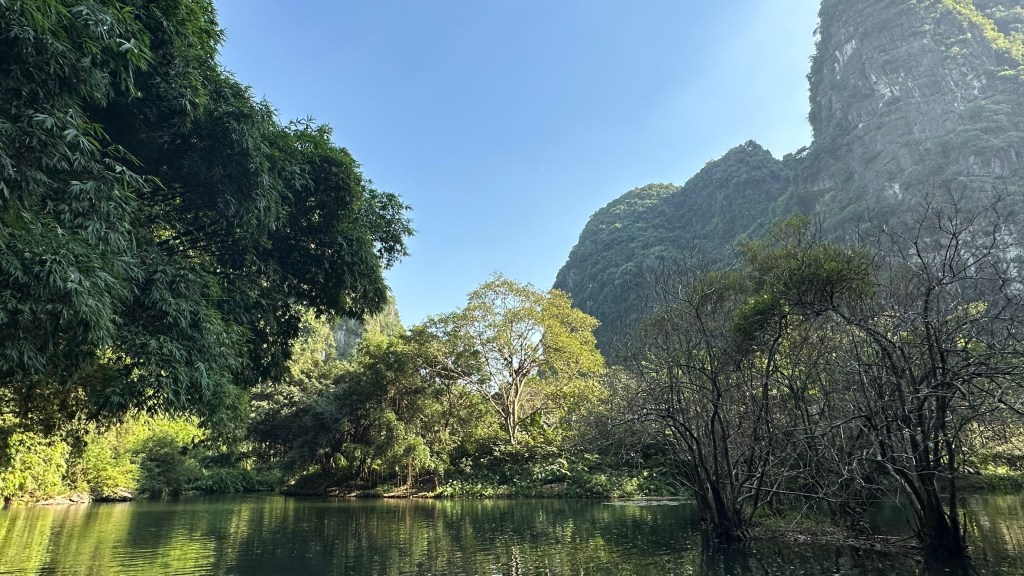

Buddhist pagoda hidden deep on the waterway 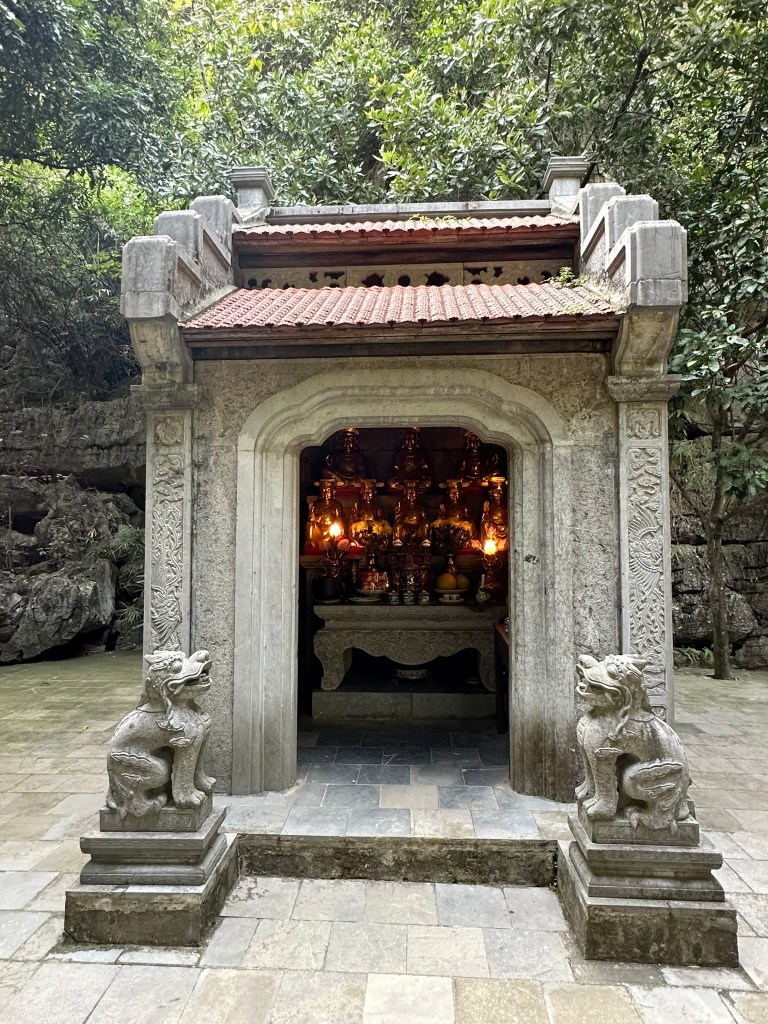
Buddhist shrine 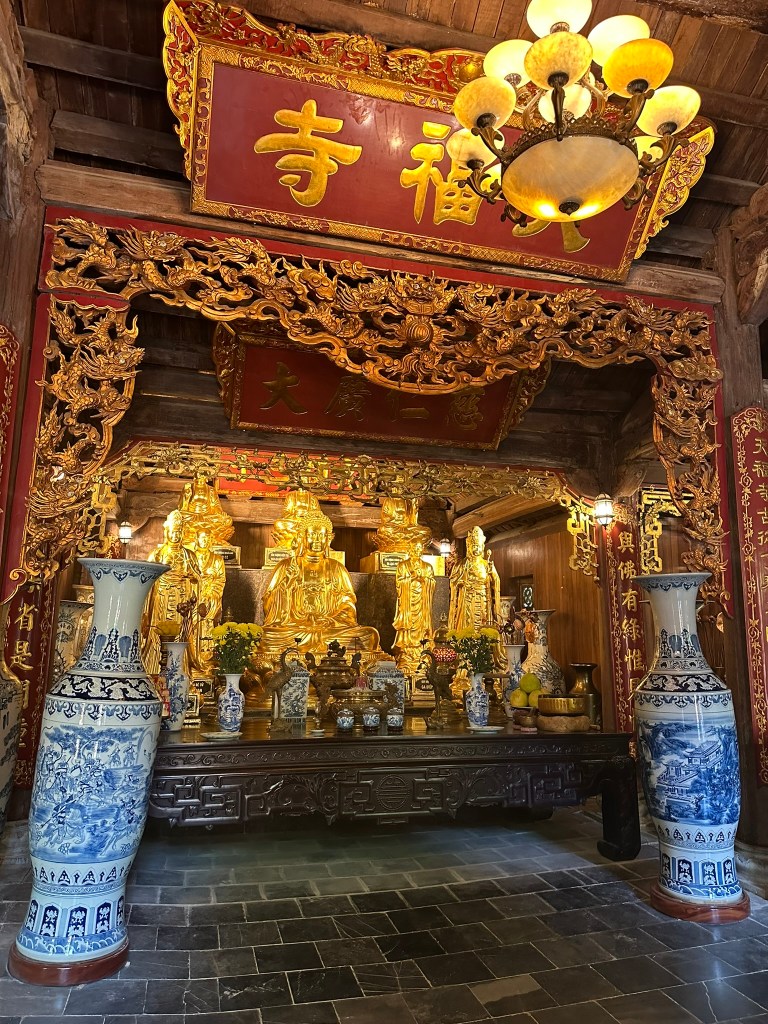
Buddhist shrine interior 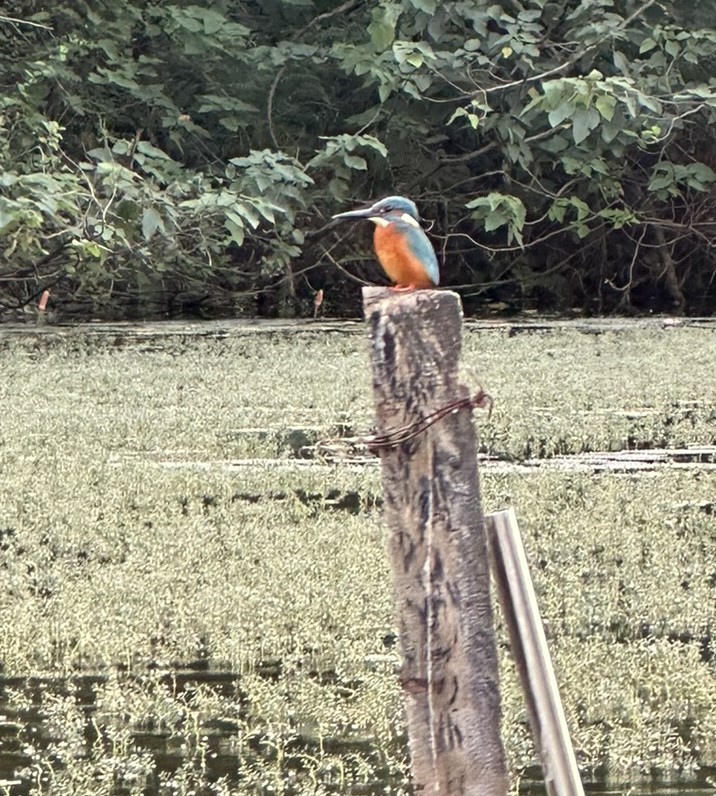
The elusive Kingfisher 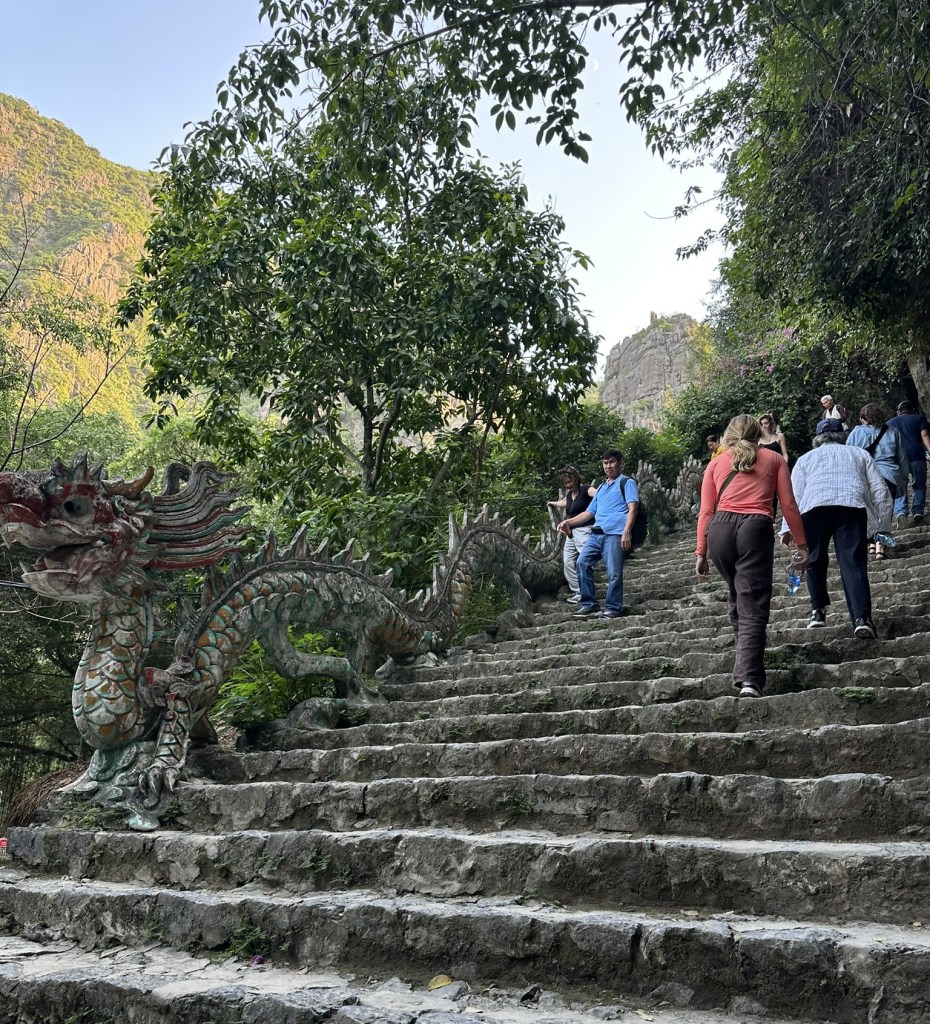
Starting our climb up the 500 steps 
It’s a lot of steps, but what a view! 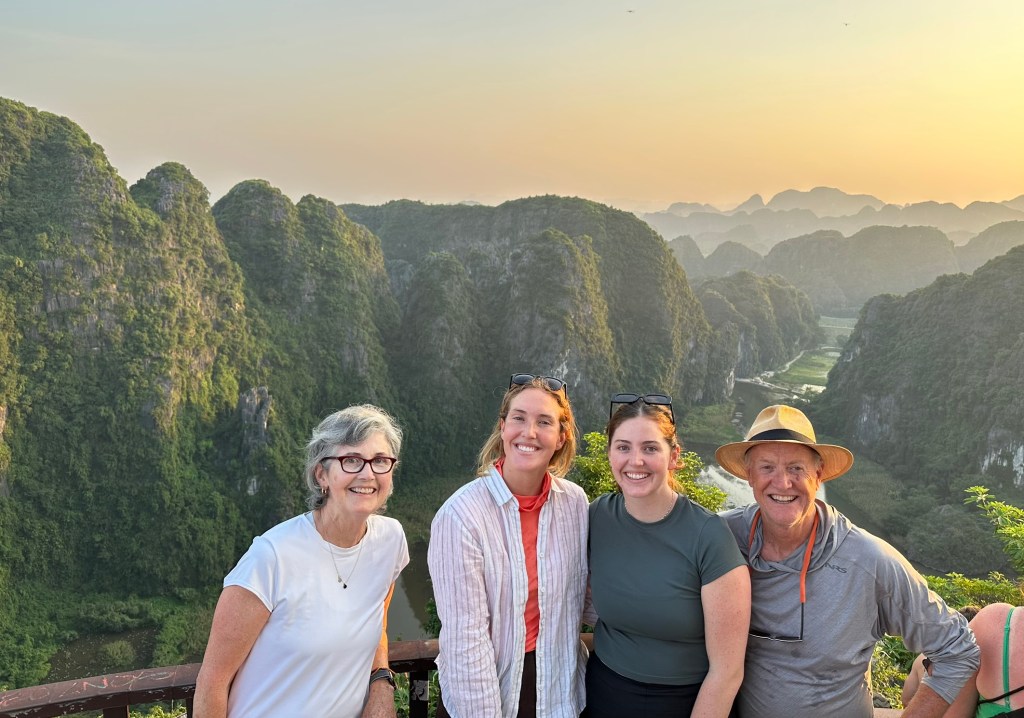
View from the top of Hang Múa 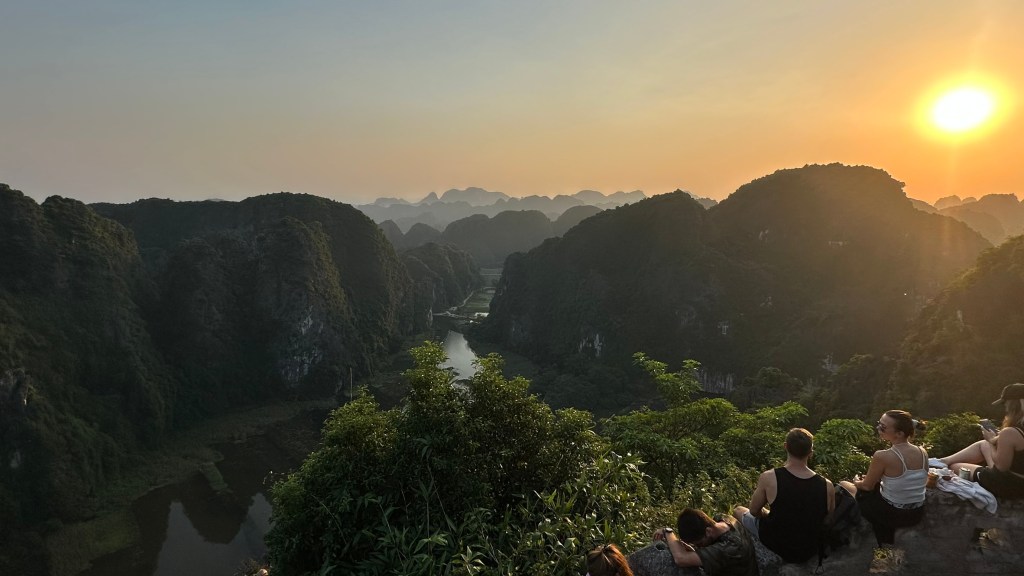
Waiting for the sunset
Bai Tu Long Bay
In virtually every travel blog I’ve read, the top of the list of things to do in Vietnam seems to be cruising the Gulf of Tonkin’s Ha Long Bay by boat. It also seems that HLB is so popular that the region has become a bit of a circus with large boats packed with people queuing up to get their turn for 30 minutes in the “must see” bays, beaches, caves and floating villages. I’m not a big fan of the circus. What to do?
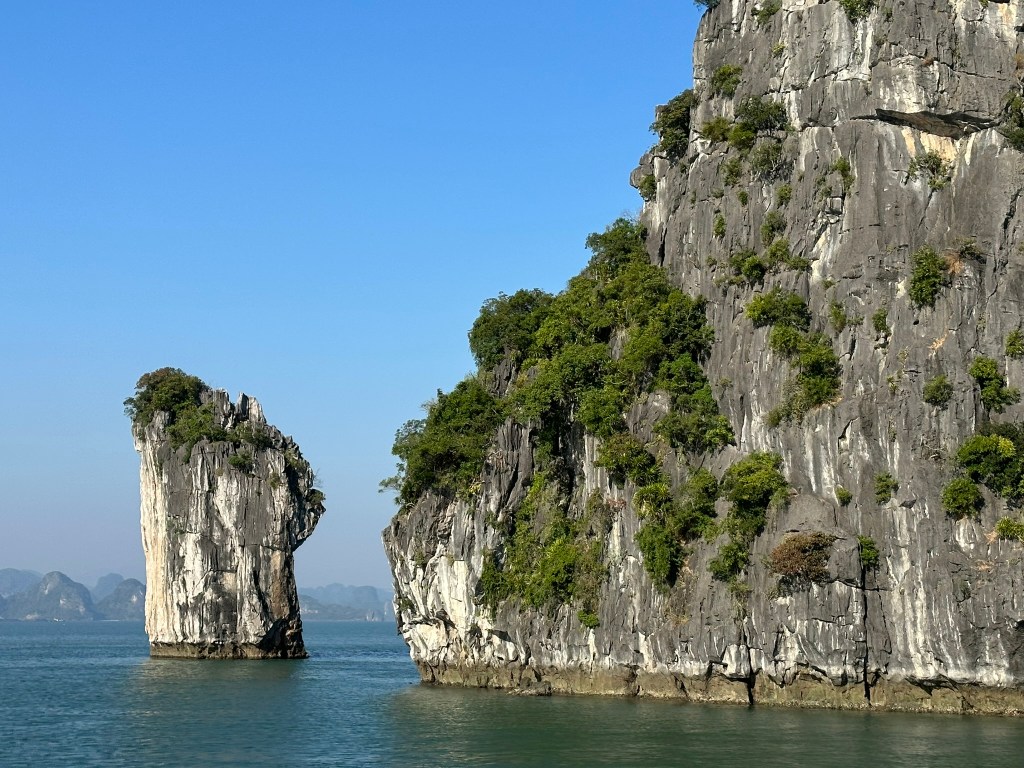
Thanks to our extremely helpful Vietnamese travel consultant, Ms. Nguyen at Indochine Voyages, we scored a private 3-day 2-night cruise on a small junk in neighboring Bai Tu Long Bay — a UNESCO World Heritage site with over 1,900 islands, the same towering limestone formations as Ha Long Bay, virtually unpopulated, covering just over 1,700 square kilometers, with just 5% of the tourist traffic. The few communities that exist in the islands are floating fishing villages. A bit of a splurge to be sure, but the experience was priceless.
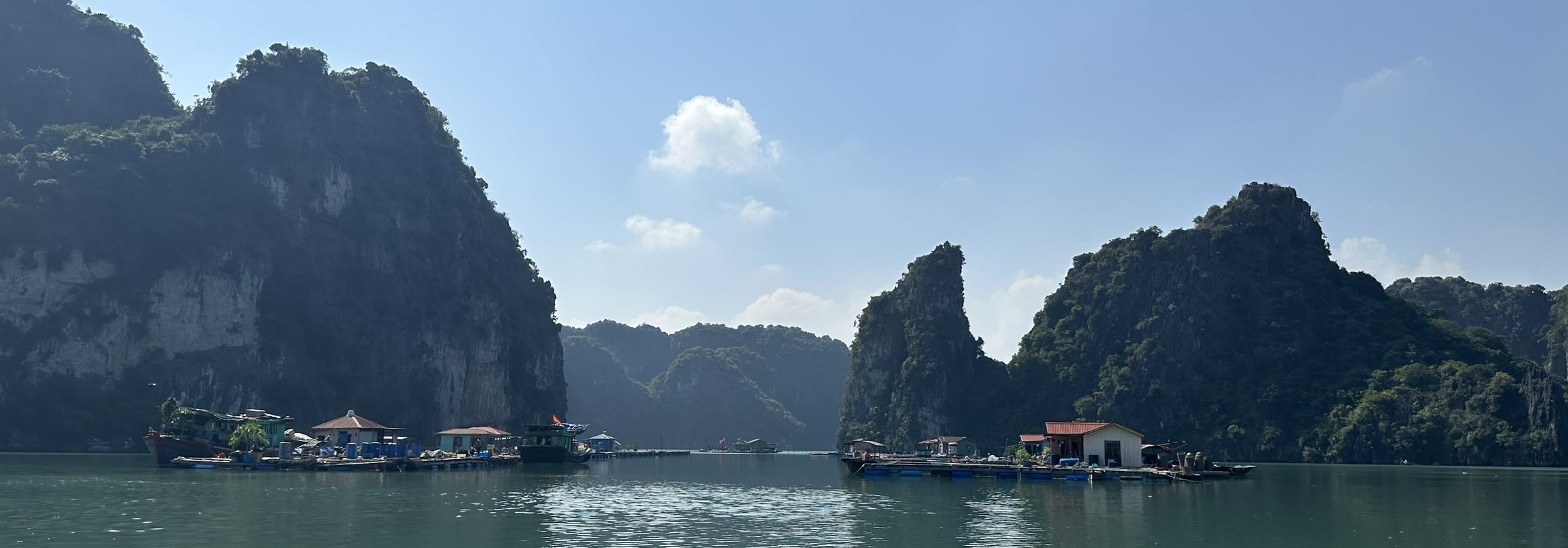
So, three hours after leaving Ninh Binh, we met our on-board butler and guide, Jackie Tran, at the Bhaya Cruise Center in Hạ Long, boarded the Bhaya Legend 2, and set sail. Highlights:
- After weeks of running around, just slowing down and relaxing in such a beautiful setting was magical. With two large staterooms, indoor dining room and bar, and a large sundeck up top, our boat was roomy and comfortable. Our crew of five included captain and first mate, chef, server/bartender and our guide, Jackie. After dinner on our last night, I was invited to join the captain and crew in the wheelhouse, generally off limits, for a bowl of Vietnamese hot pot soup and shots of their homemade whiskey. No pictures of that, unfortunately.

Boarding the Bhaya Legend 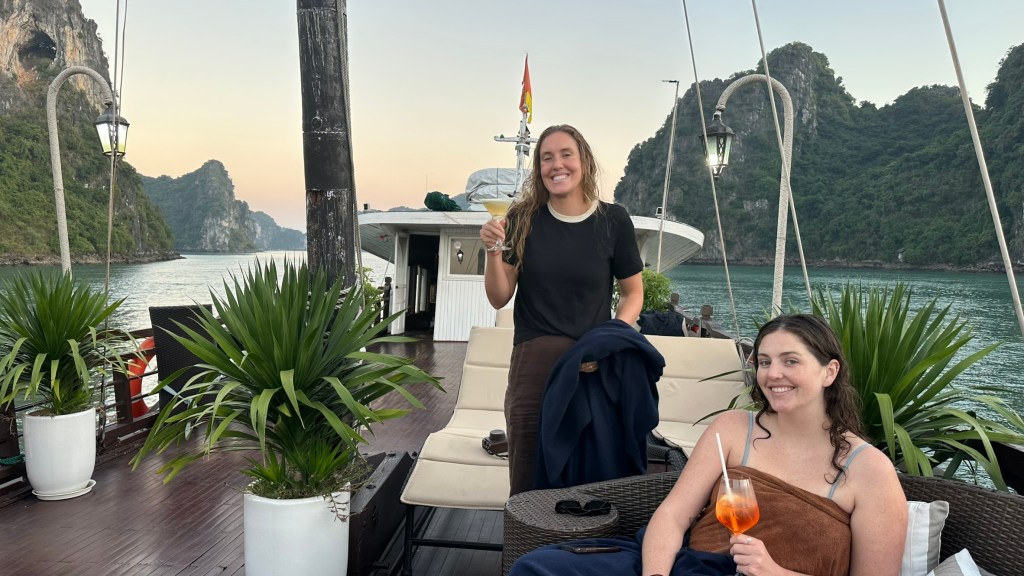
This must be the place 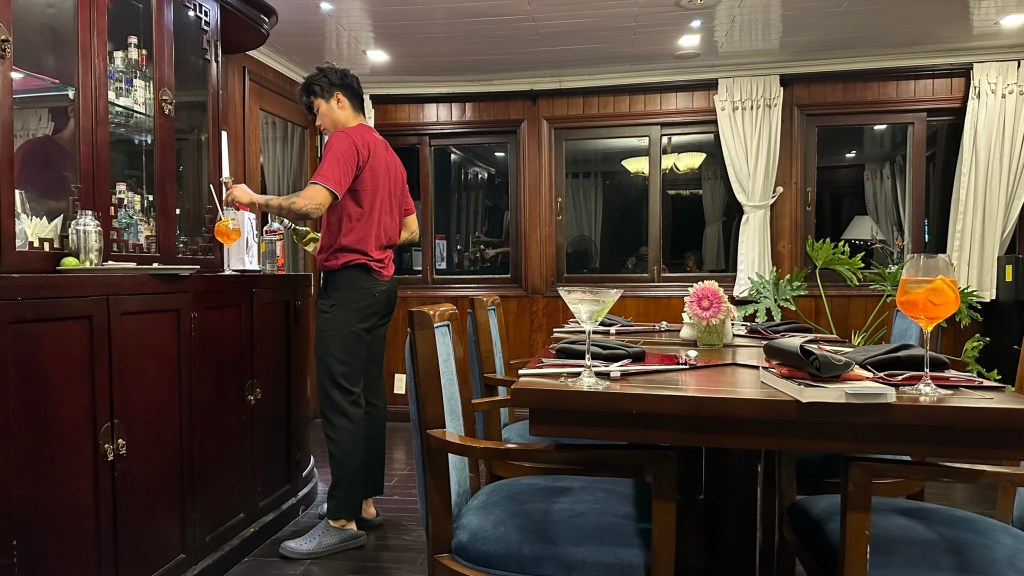
Our bartender at work 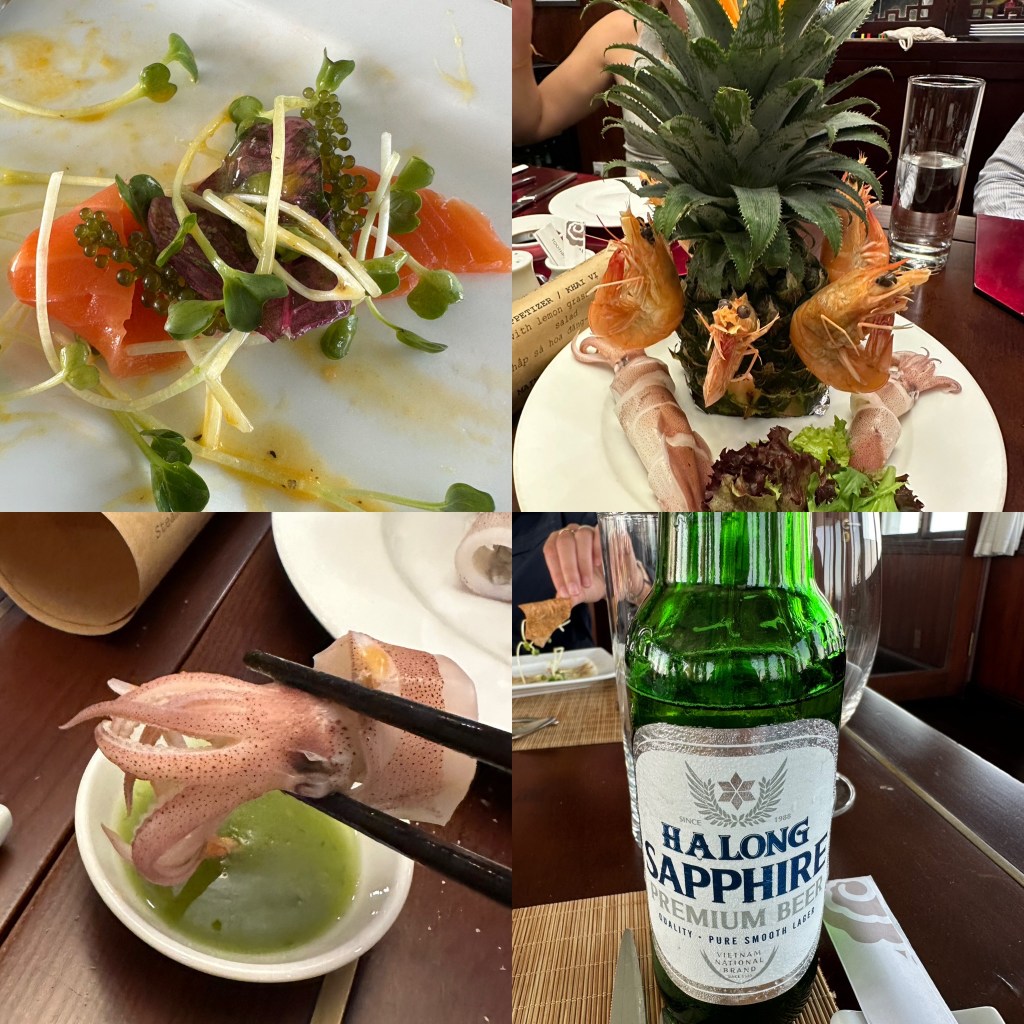
Food was amazing! 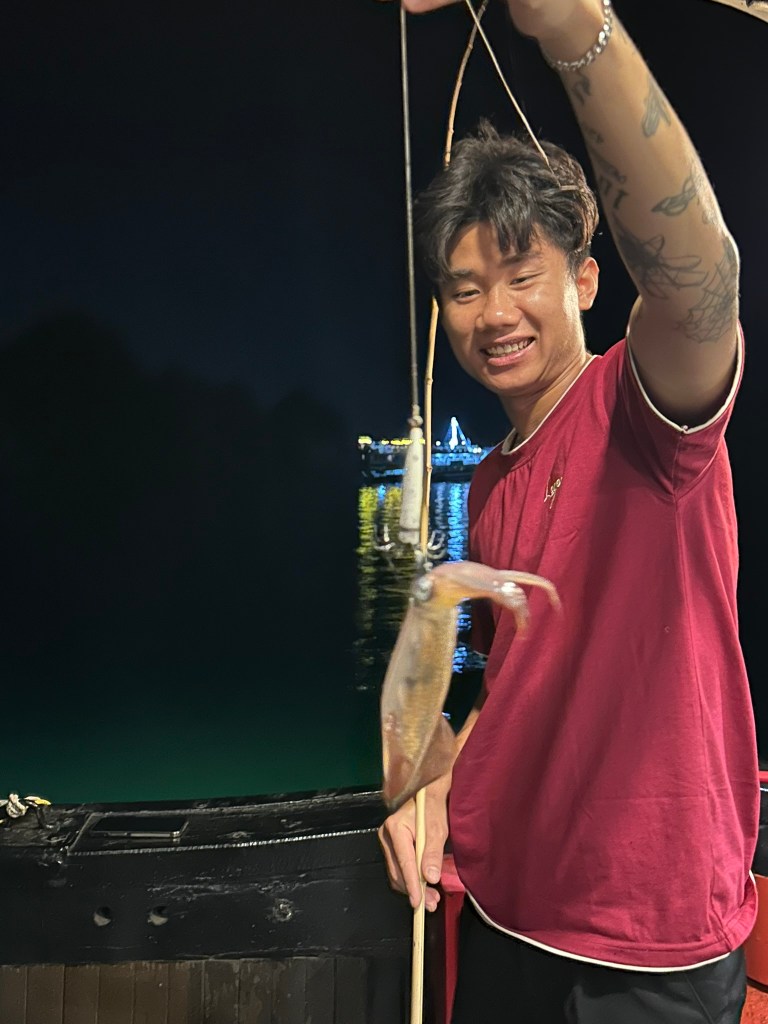
Squid fishing lesson 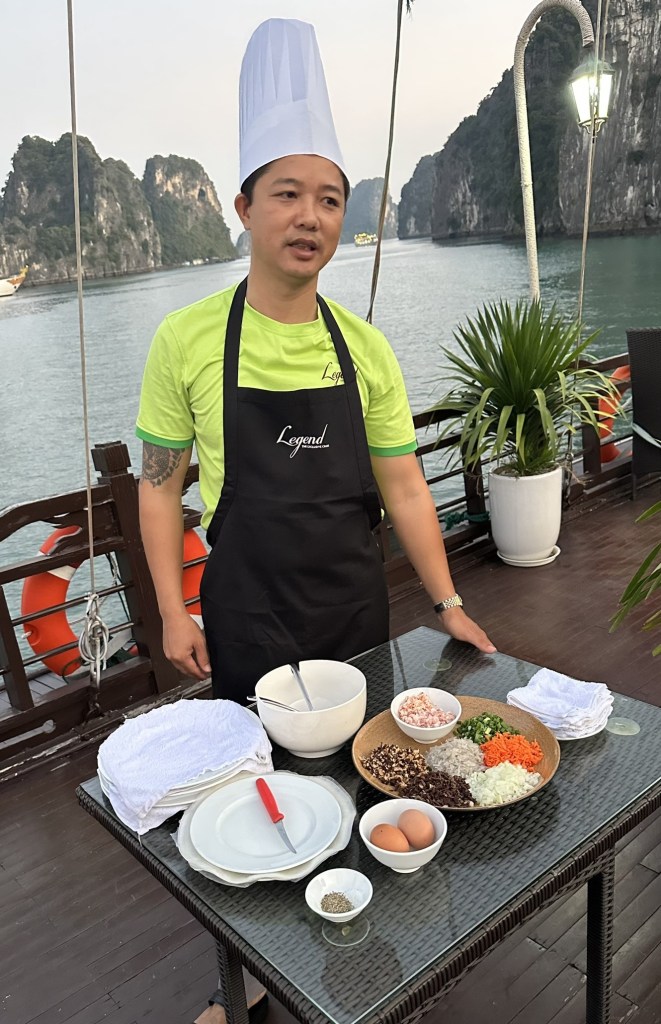
Jackie’s spring roll lesson 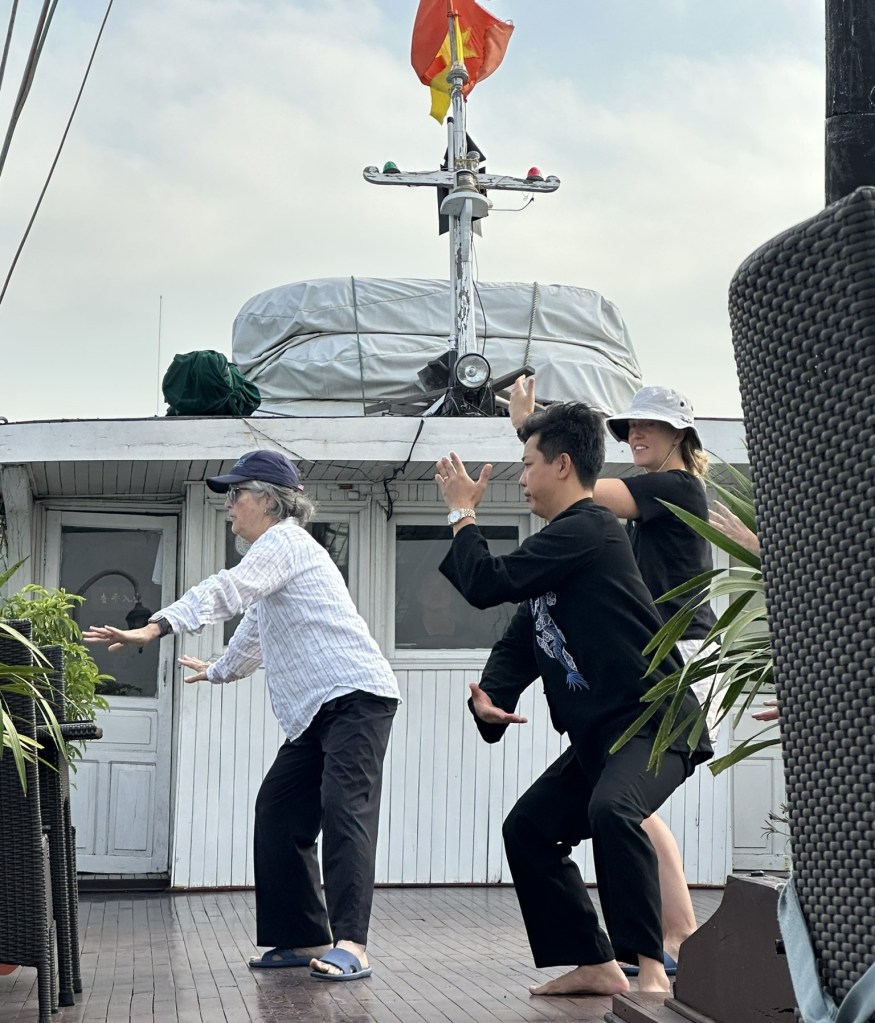
Morning tai chi lesson 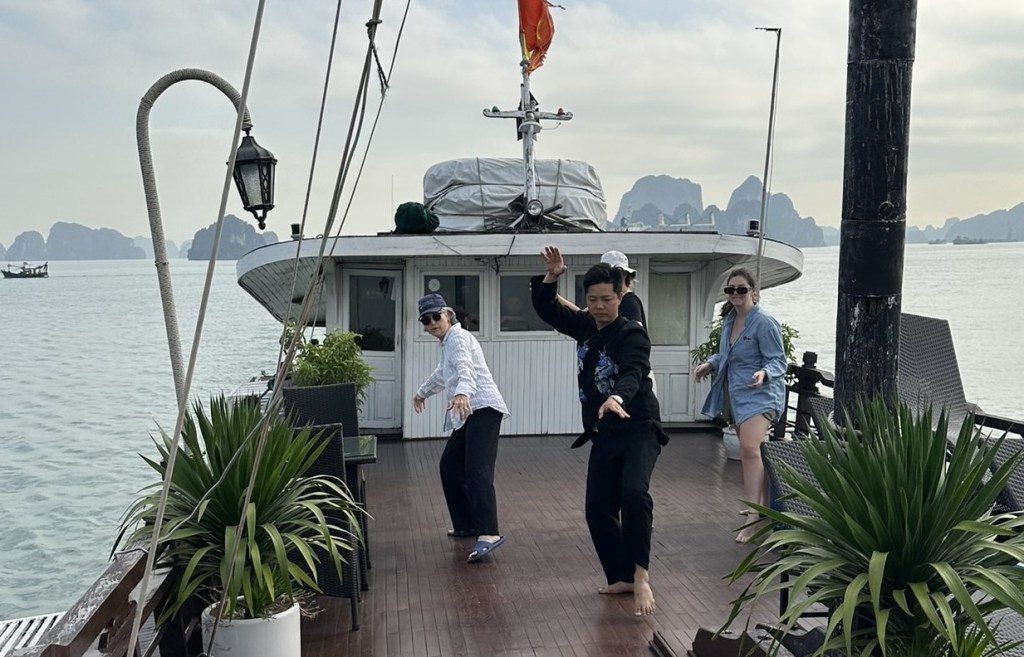
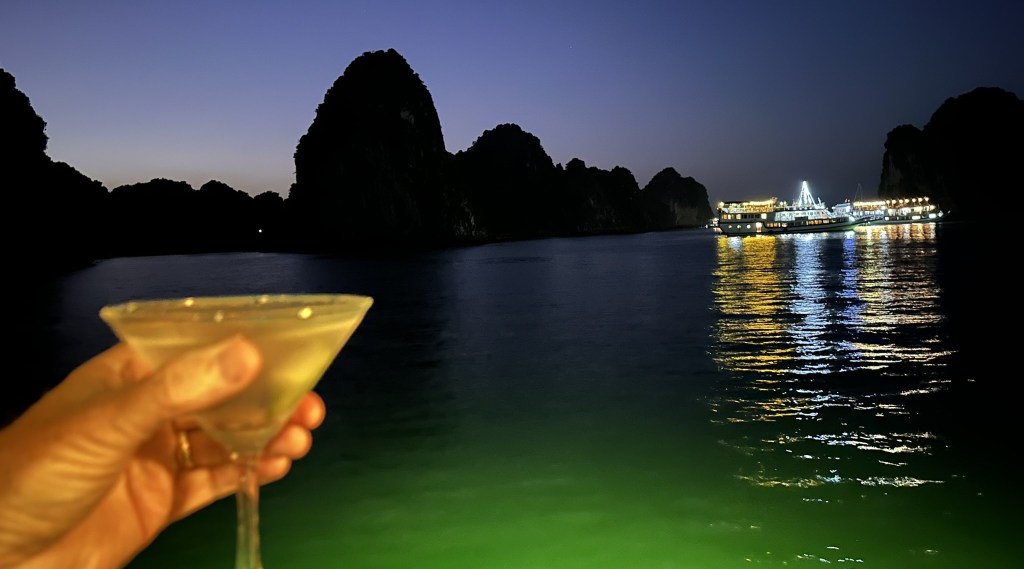
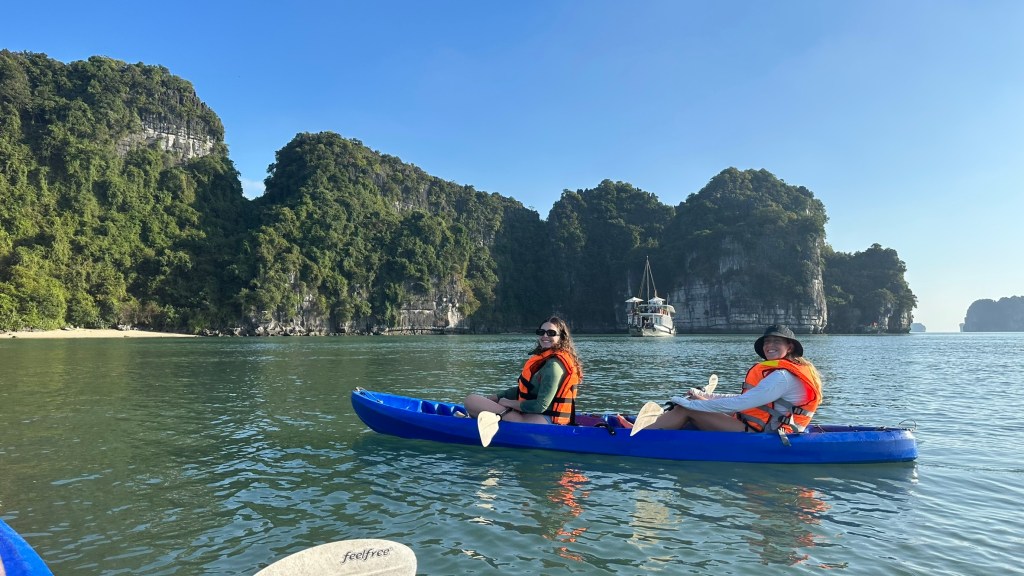
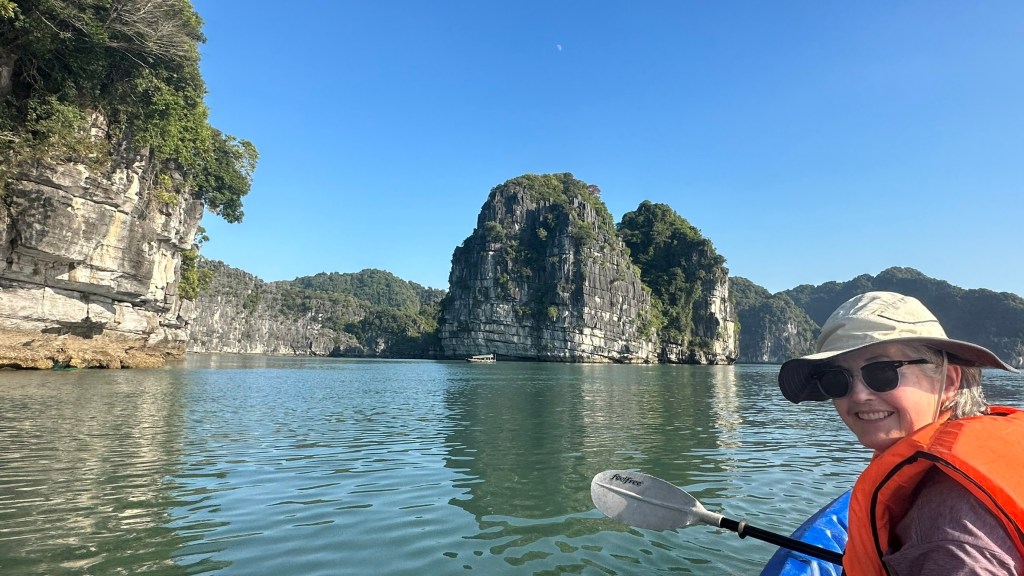
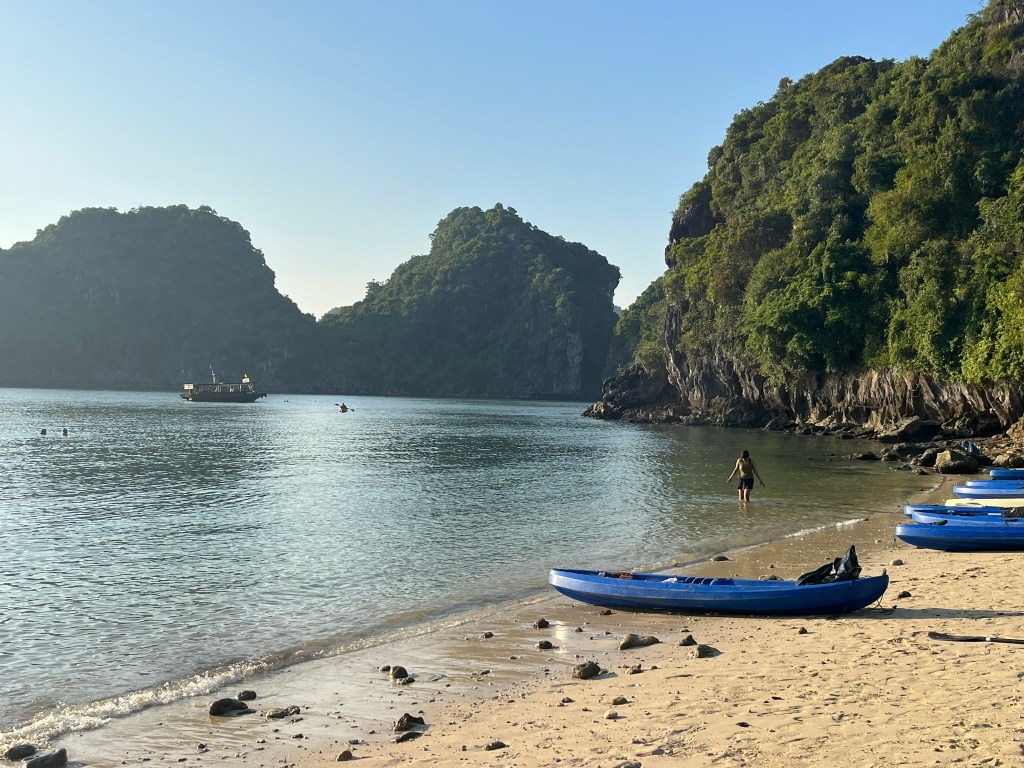
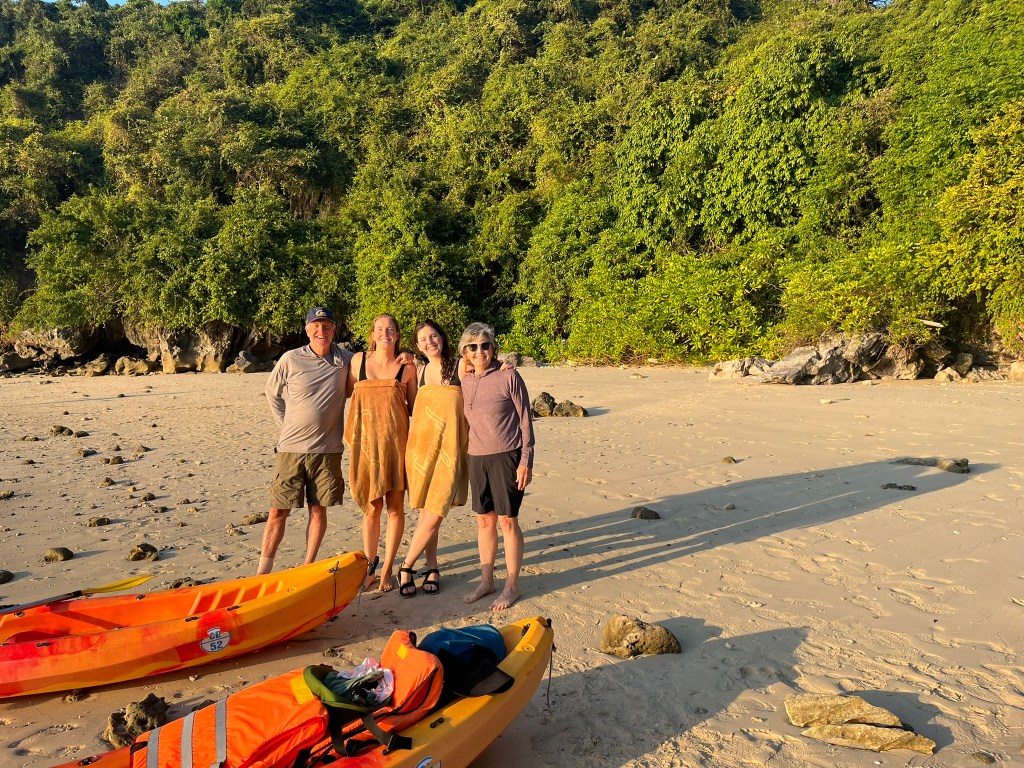
- Days two and three included kayaking different parts of Bai Tu Long Bay. The Cong Do area was particularly beautiful, a great anchorage protected by huge cliffs in all directions, with a kayak trip between the islands to a nice beach.

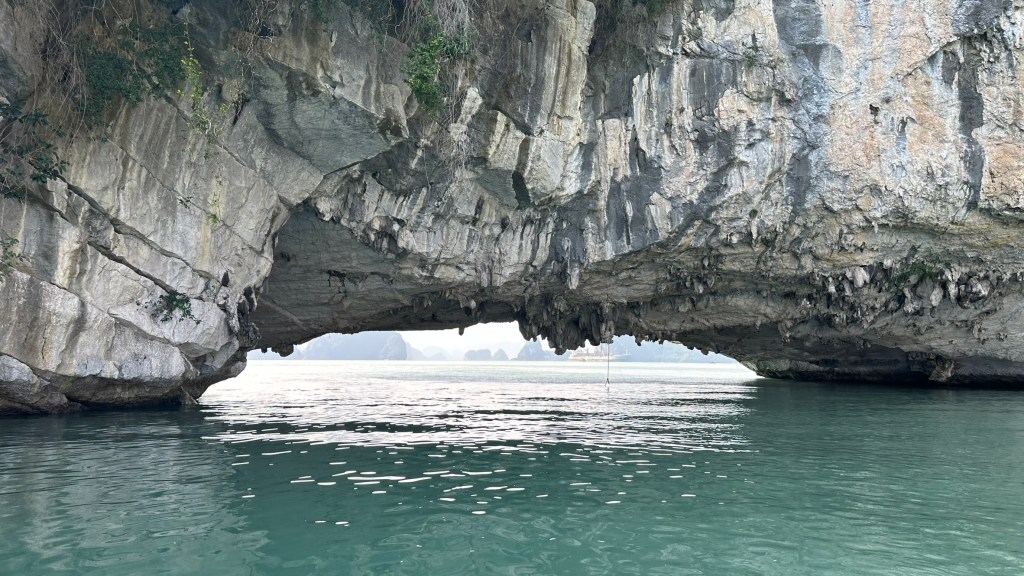
- Day two featured a morning stop at Thien Canh Son cave, a massive limestone cavern on a remote island in the Cong Do Reserve. The hike up with to the cave through dense foliage revealed beautiful views of the surrounding islands, and the small cave entrance belied the splendor of the huge cave, filled with stalactites and stalagmites, below.
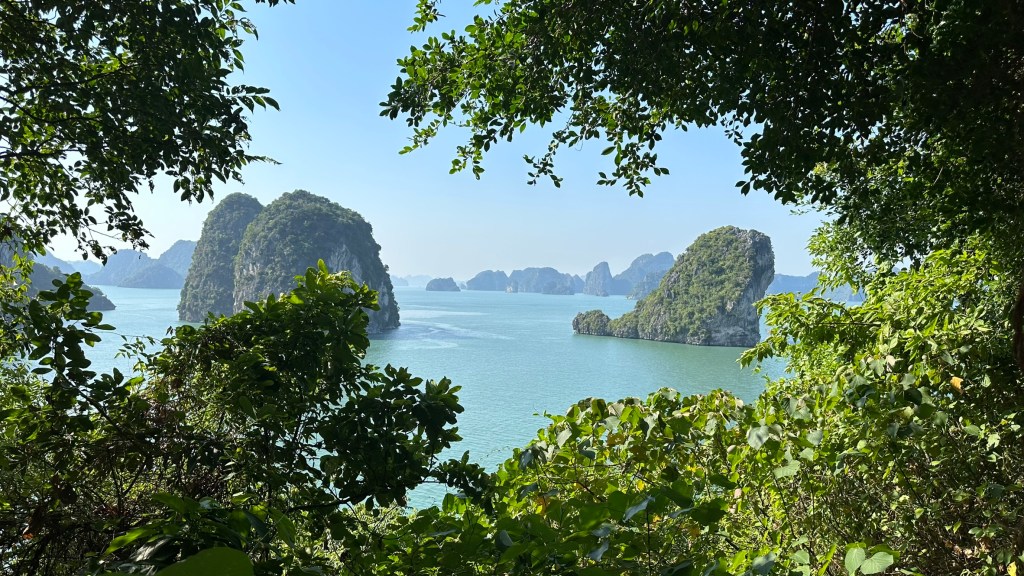
Hiking up to Thien Cahn Son cave 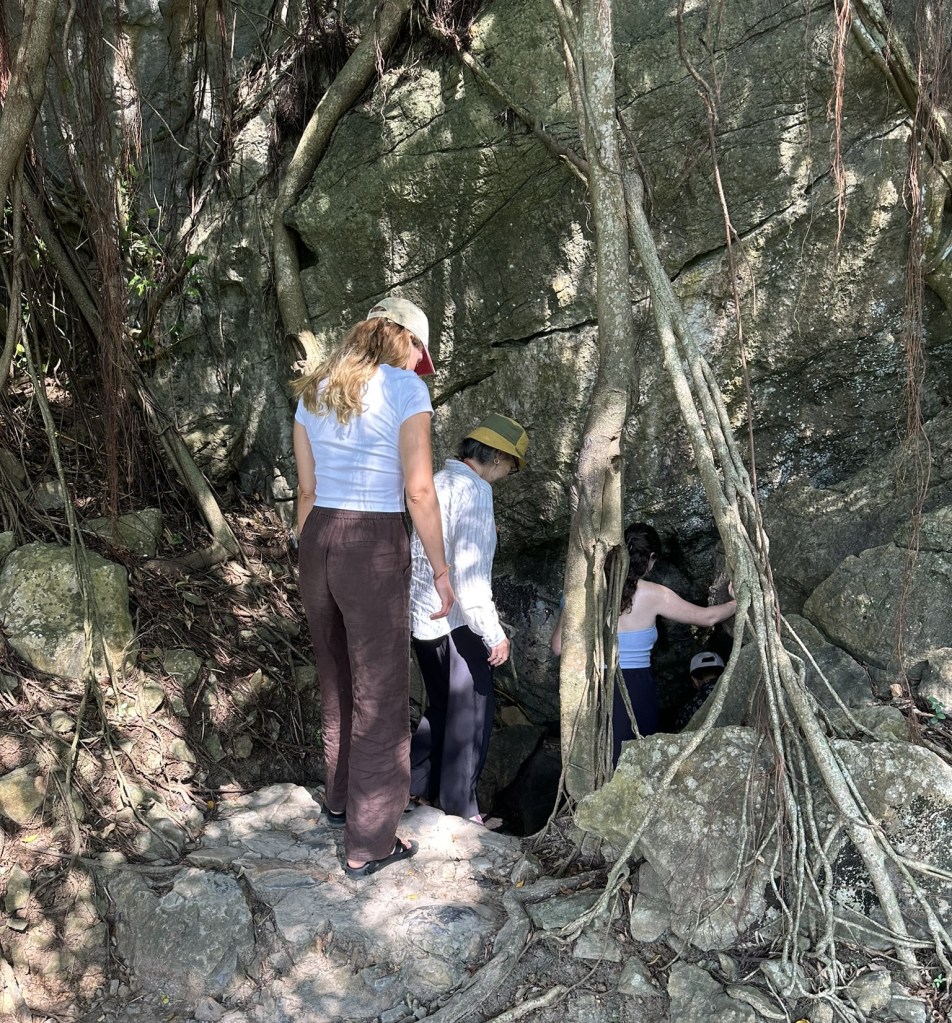
Cave entrance 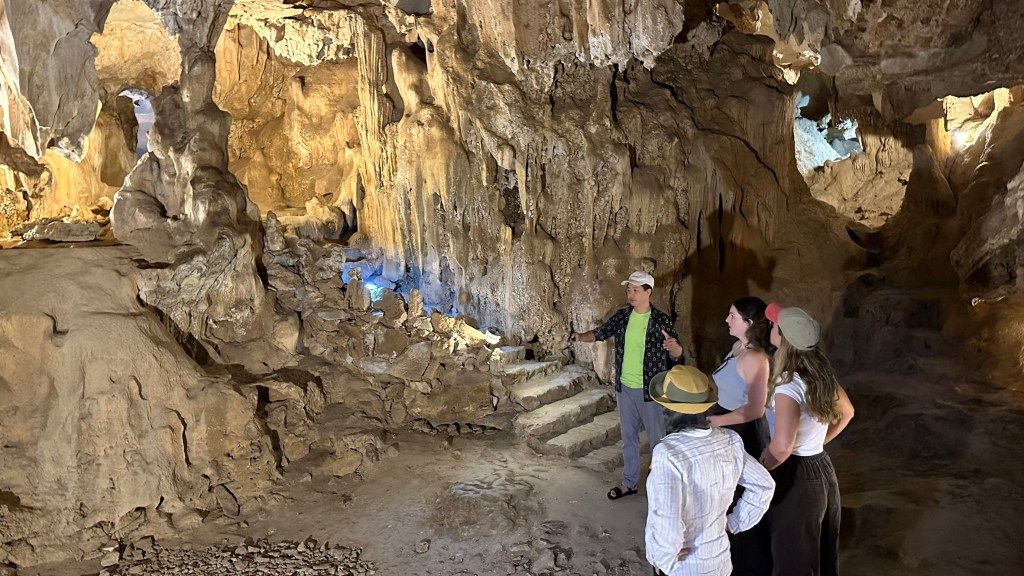
Jackie explains the geology 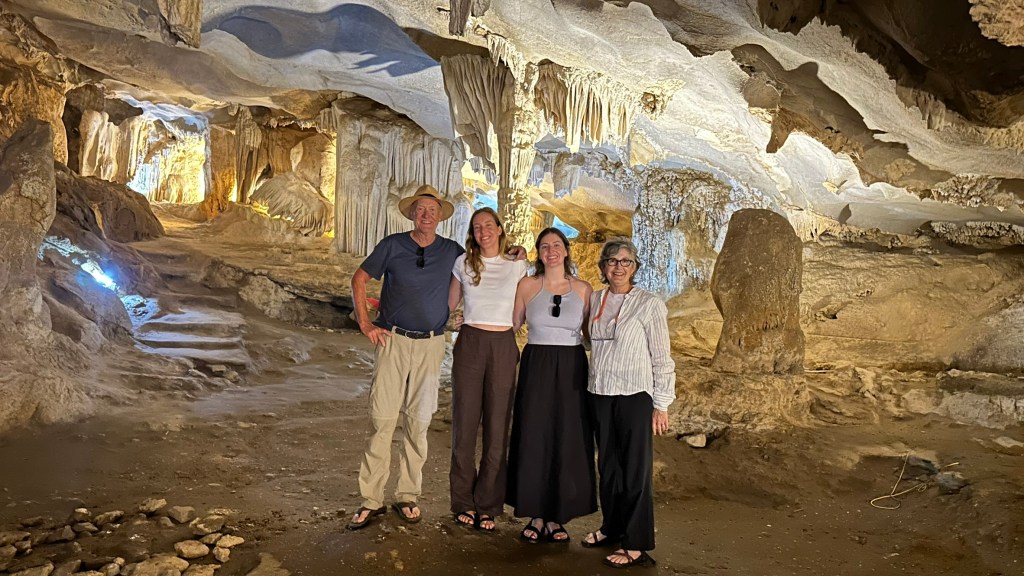
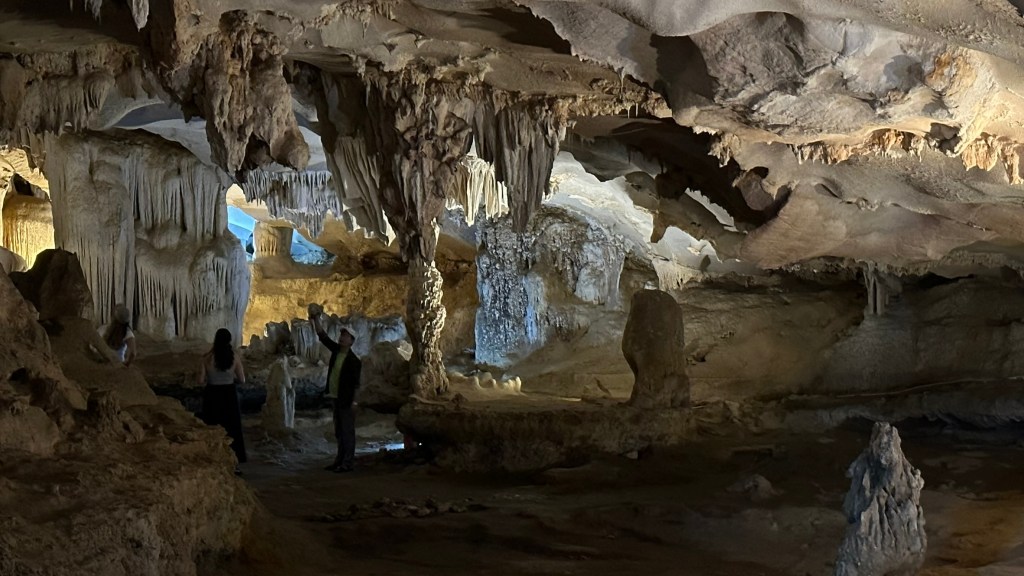
Massive stalacite formations
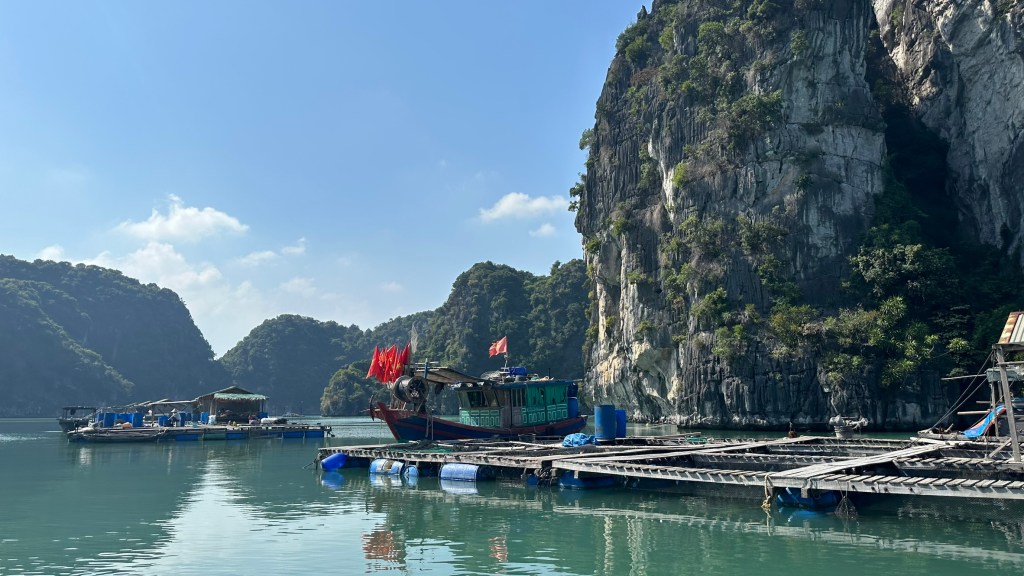
- Vung Vieng floating fishing village is one of four in the region, which in years past was a gateway for sea trade with China and other countries. This village used to be quite wealthy, with a reputation for culturing pearls, and it retains much of its idyllic beauty due to fairly limited tourism. We enjoyed a fun rowboat tour through the village’s waters from one of the locals.
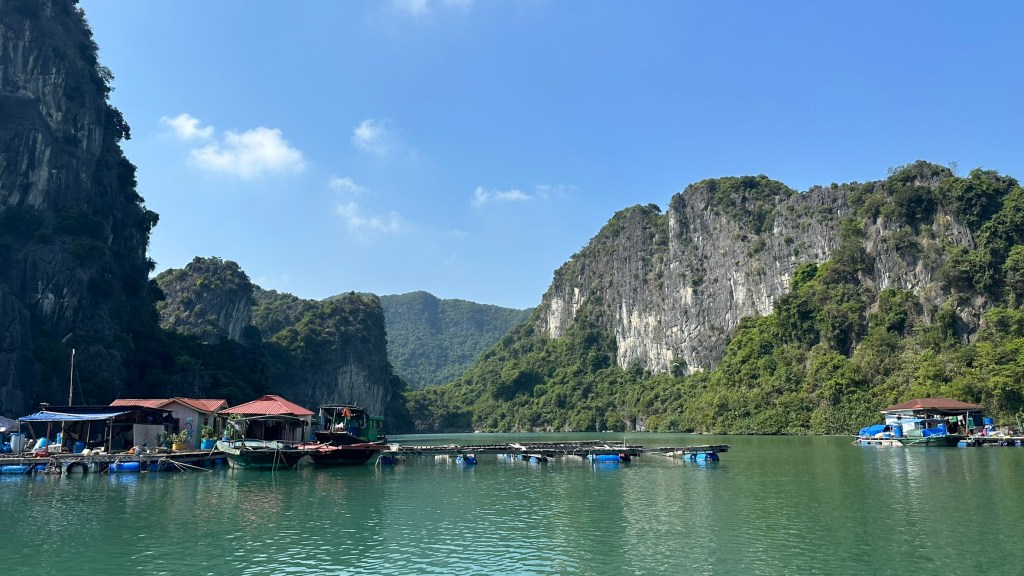
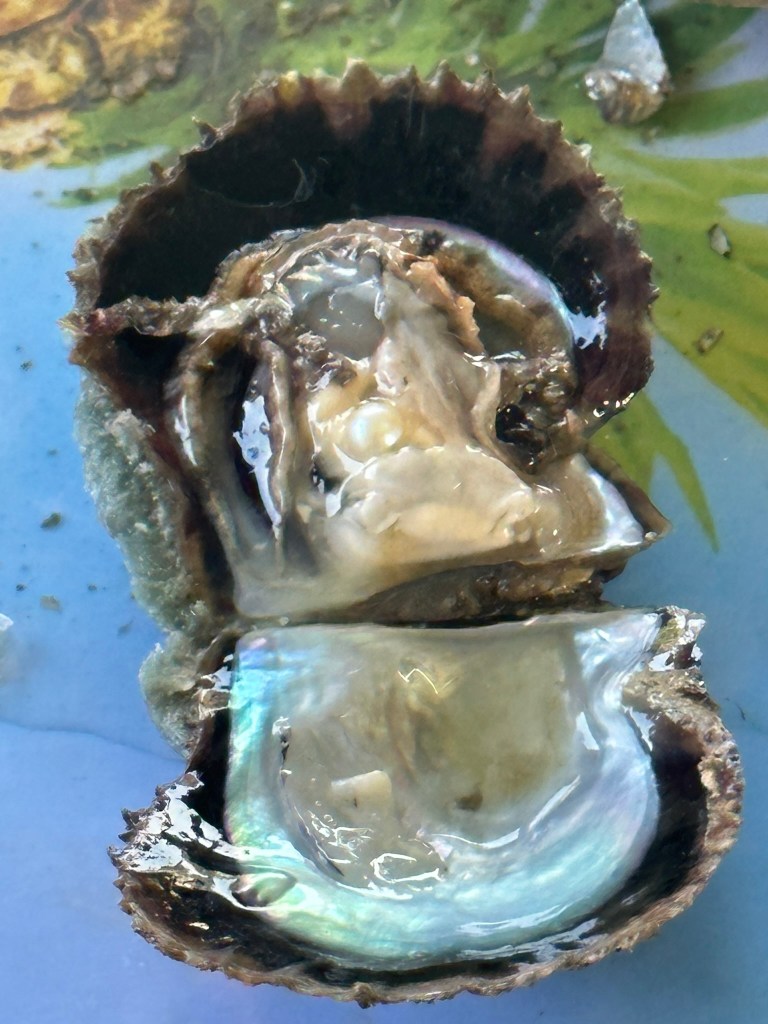
Where pearls are made 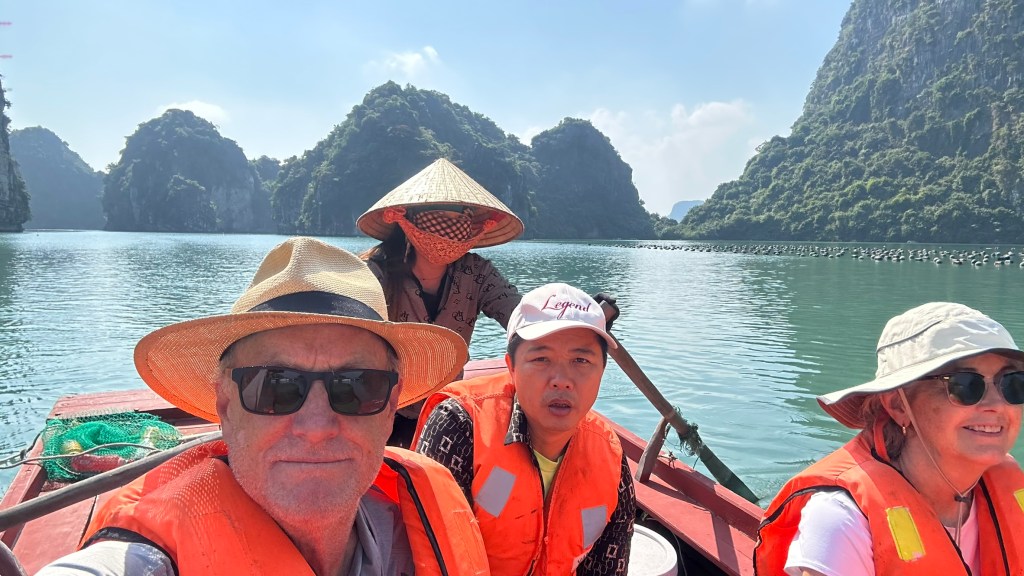
| Days 29-31 | Hội An | RiverTown Hoi An Hotel & Spa |
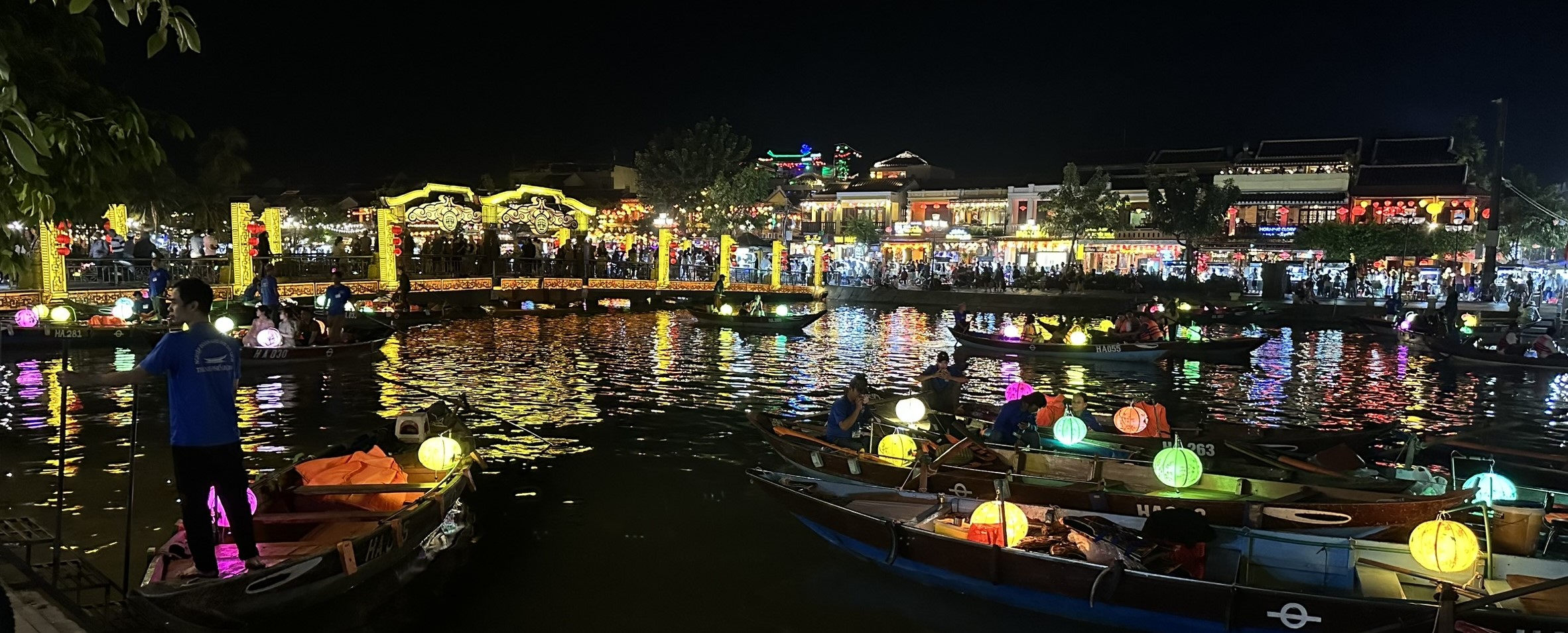
We enter the home stretch of our SE Asian adventure with 3 nights in Hội An, yet another UNESCO World Heritage site (yes, I guess I’m collecting them now) renowned for both its well-preserved Ancient City, with an eclectic mix of Chinese, Vietnamese, French colonial and even Japanese architecture, and its thousands of brightly colored lanterns lighting up the streets and the river at night. There was no shortage of eye candy, which made it fun and different for a couple days, even with a bit of rain.
It’s also a heavily touristed party town, with a lively riverfront night market and wall to wall bars with competing cover bands blasting American rock ‘n roll (pass, thanks), and a little too much cheap commercialism, street vendors aggressively hawking all kinds of junk souvenirs. On the flip side, more great food (though different than north Vietnam), a few cool art galleries, and dozens of very good tailor shops who can fit and crank out bespoke suits, dresses, shirts, shoes and so forth in literally 48 hours or less! Even I couldn’t resist, and I hate clothes shopping. Highlights:
- Walking the riverside streets of the Ancient City and An Hội island, especially during the night market, is a feast for the senses. Most of the bars and restaurants on the water are tacky and touristy, so save your appetite for the more hidden gems in the backstreets. Still, it’s a lot of fun just for the lights, colors and people watching.
- Because Hội An attracts so many tourists, it has its fair share of street urchins and scam artists. Of the latter, my favorite is the old woman carrying traditional baskets of fruit on a long pole who offers to let you try… for a price.
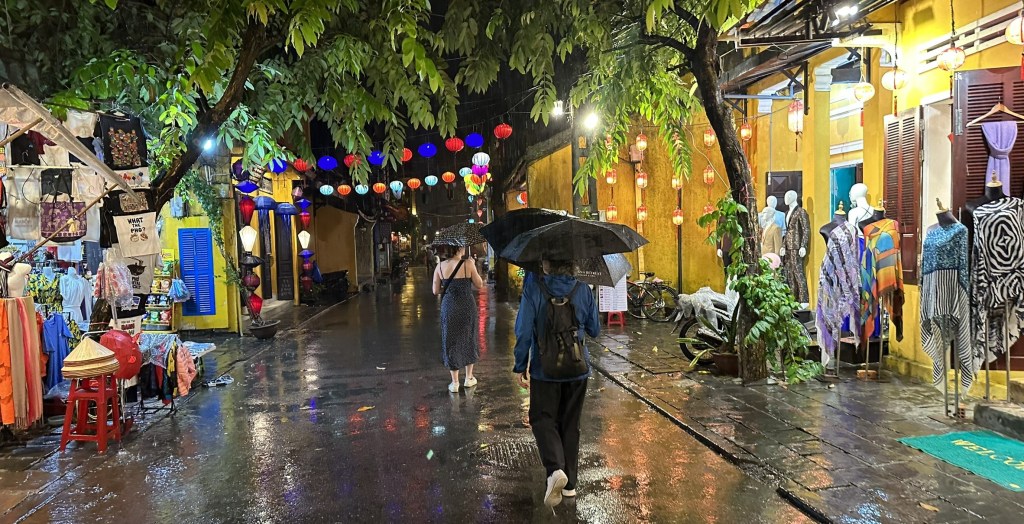
Hội An backstreet on a rainy night 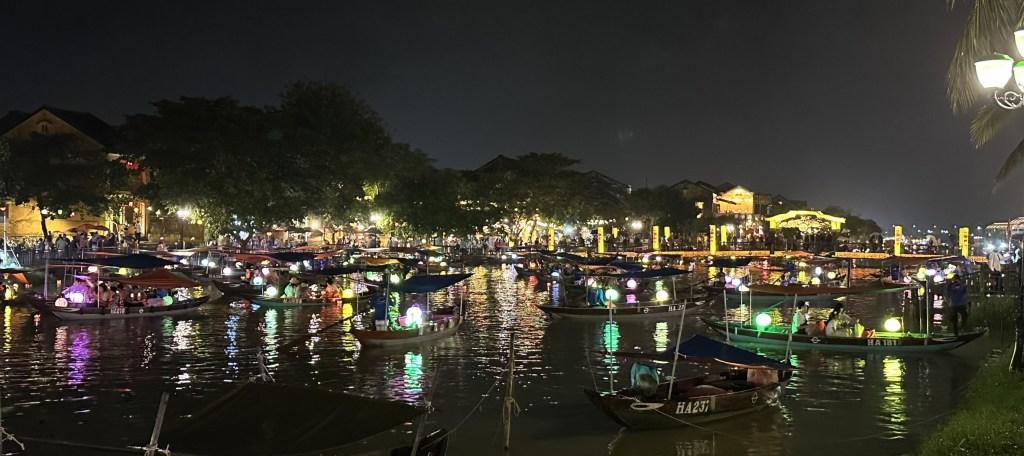
Boats and lanterns on the Thu Bon River 
Shops are open late 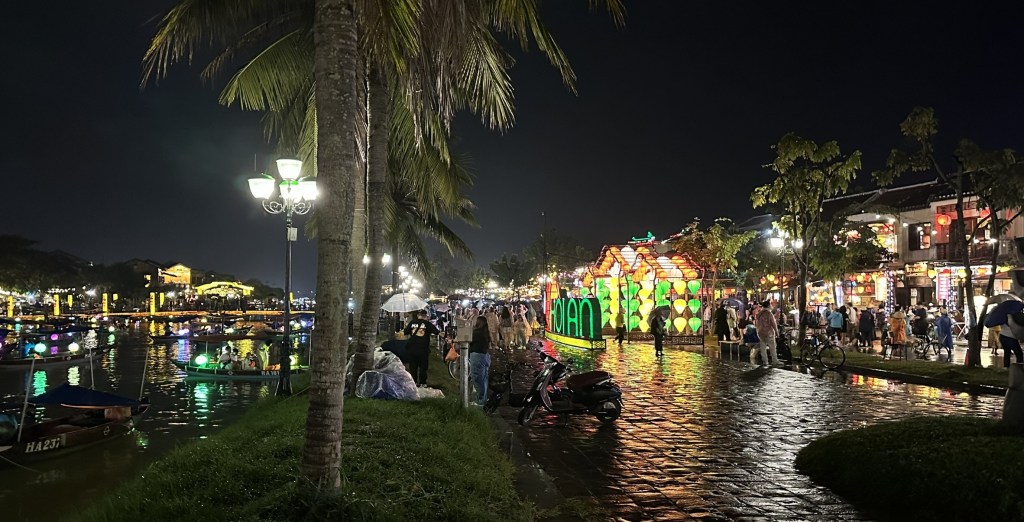
Night market 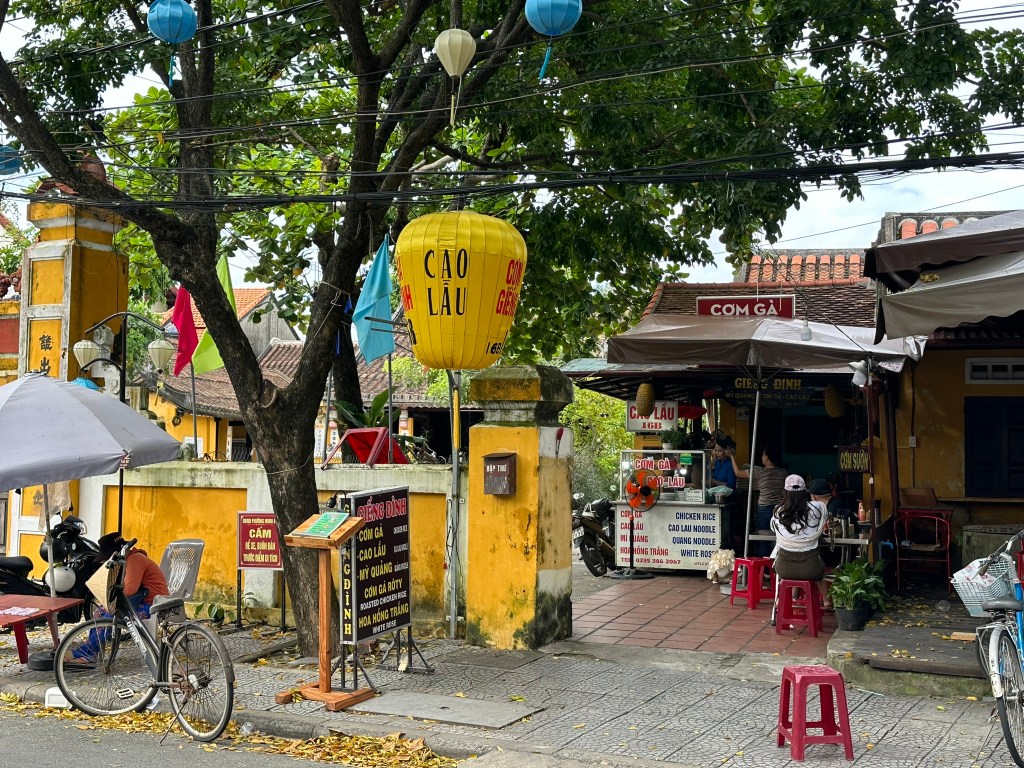
Cao Lau, Hoi An’s signature dish 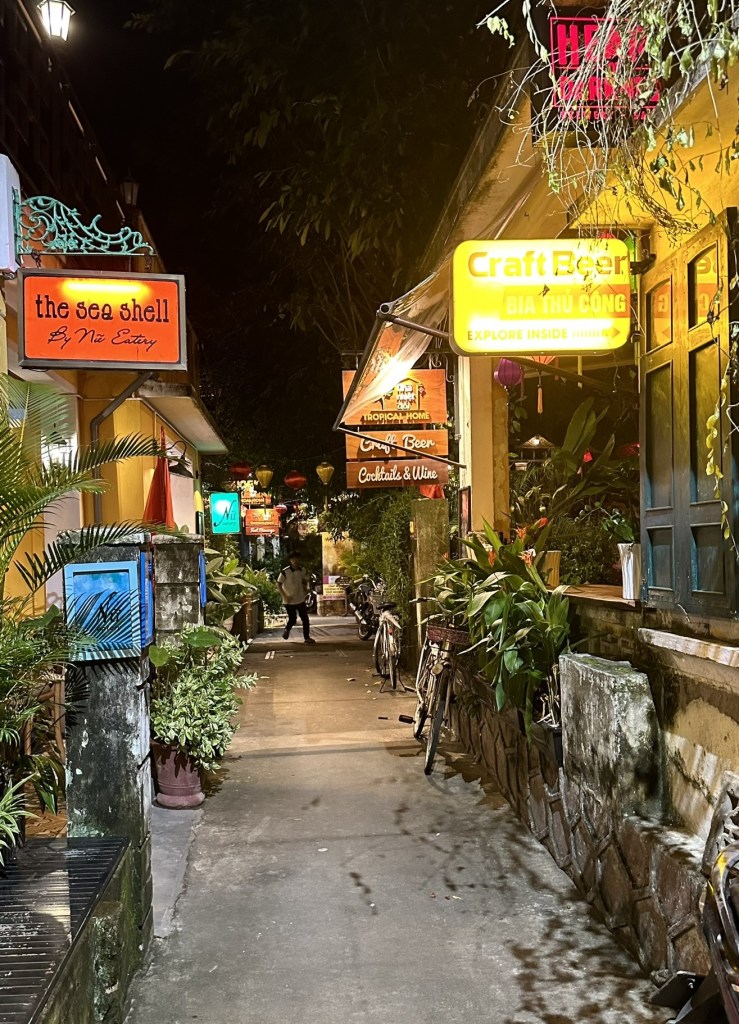
Favorite backstreet for food and drink 
Street scam artist: “Hey, you can try hold my fruit basket. Now give me 50,000 Dong.” 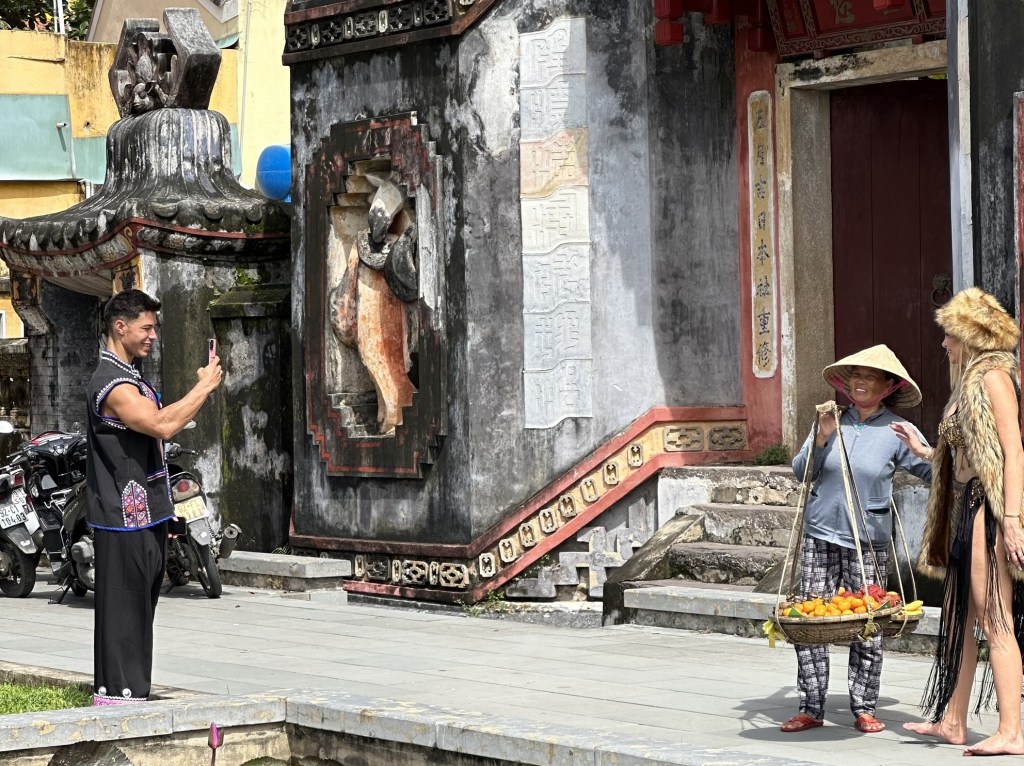
Instagram star: “I have 50,000 followers, please get out of my picture.”
- When in Hội An, I guess you have to take the boat ride. While definitely touristy, it’s only 50,000 Dong (about $2 USD) per person, and you can set a paper lantern adrift from your boat. Hey, it’s only $2!

Riverfront by boat 
Emily prepares to launch her lantern
- Besides the night life, Hội An has some interesting cultural attractions as well, including a couple noteworthy Buddhist temples. Cổng Chùa Bà Mụ Temple gate is one of the most artistic architectural relics in the region, all that’s left of what was once two adjoining temples.
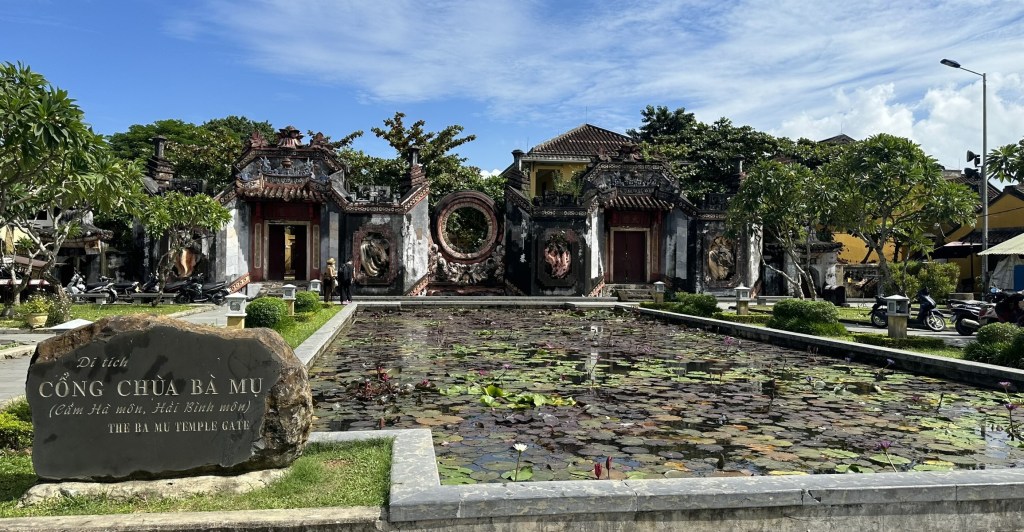
Cổng Chùa Bà Mụ temple 
Chùa Pháp Bảo shrine 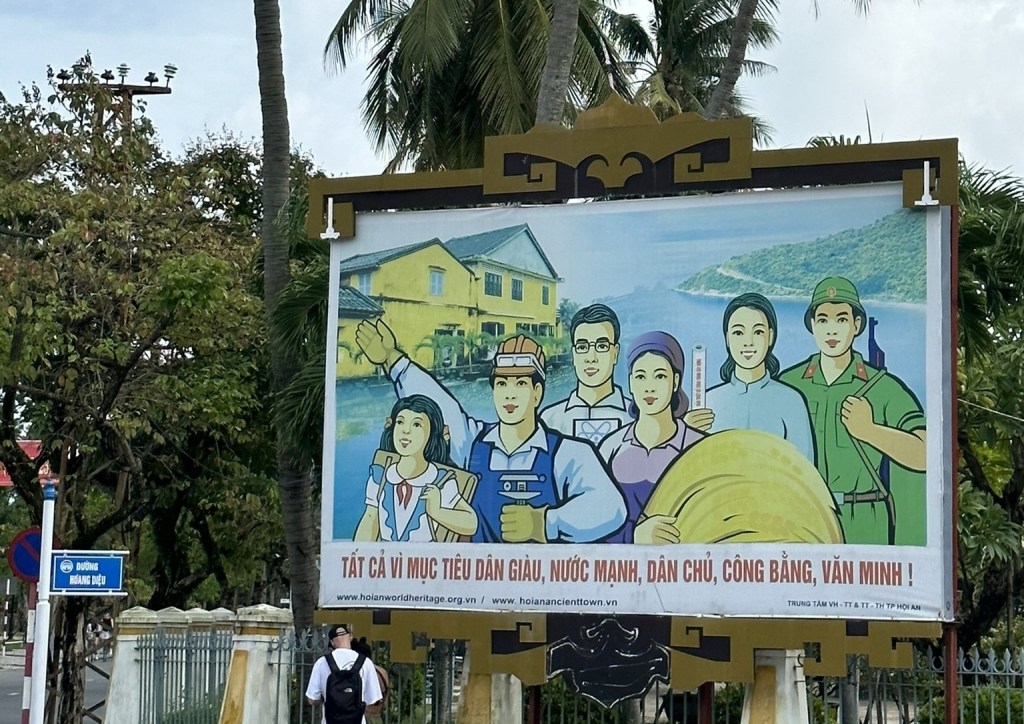
Communist propaganda 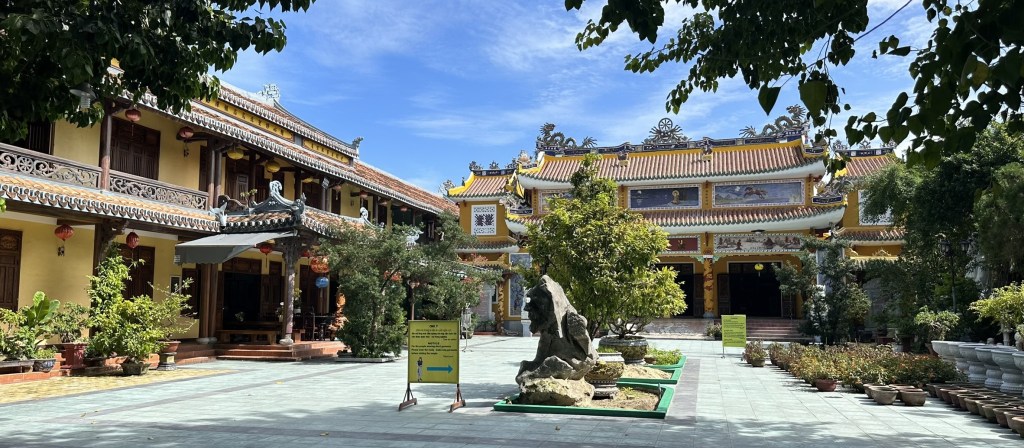
Chùa Pháp Bảo temple 
Cao Lau, another institution 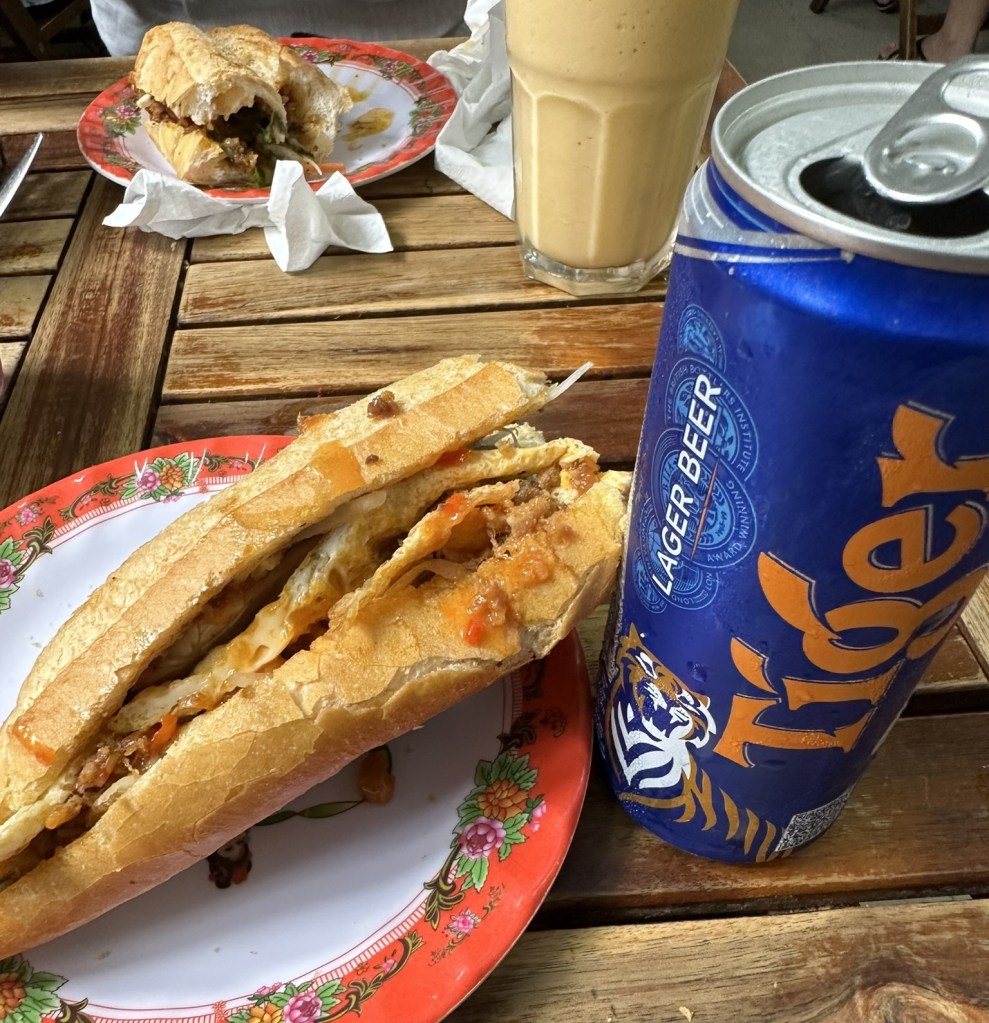
Bahn Mi sandwiches. A cultural institution
- Hội An is also famous for tailor shops. There are literally dozens of shops, several entire streets chock-a-block with tailor shops. While clothes shopping is generally at the very bottom of my list of interests, even I could not resist. Kimmy Tailor is reputedly the best, though on the more expensive side; I had two bespoke jackets — one linen, one lightweight wool — custom-fitted, made, and in my bag in under 24 hours. I had two shirts made at 45 Thu Tailor around the block in about two hours. All that for about $300. Michelle and the girls, well, let’s just say they got considerably more custom-made duds than me!
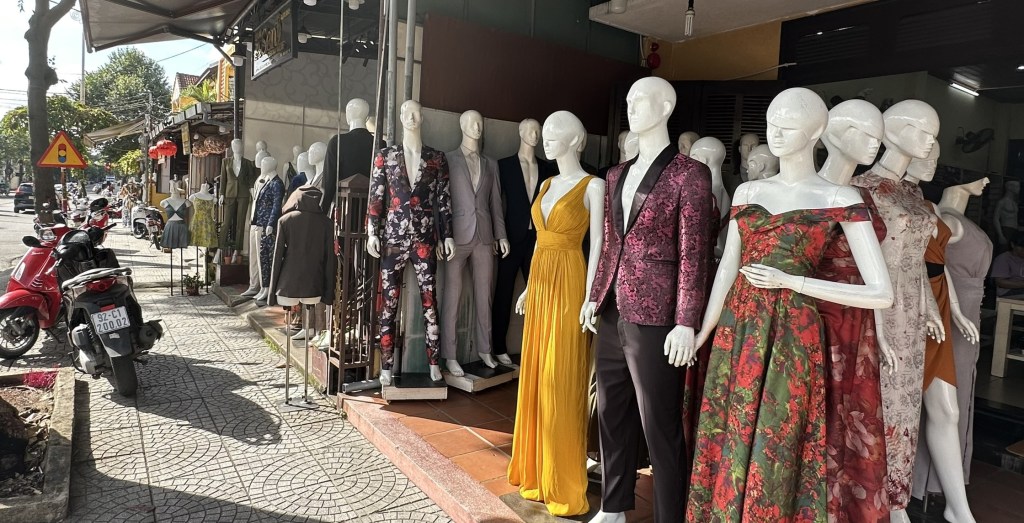
Trần Hưng Đạo street, tailor shop central 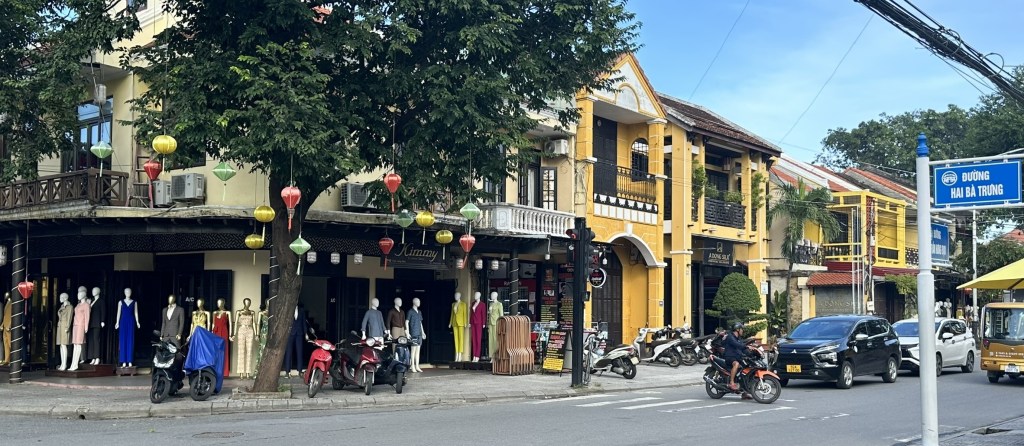
Kimmy Tailor on the corner 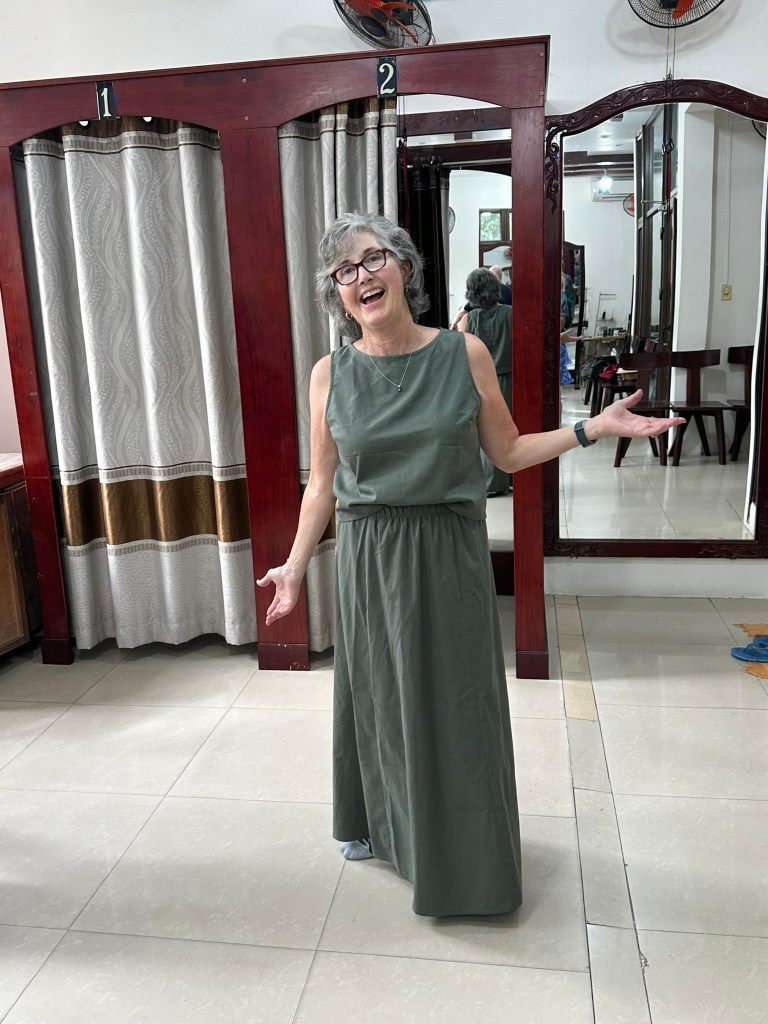
She likes it! 
She’s literally a kid in a candy store 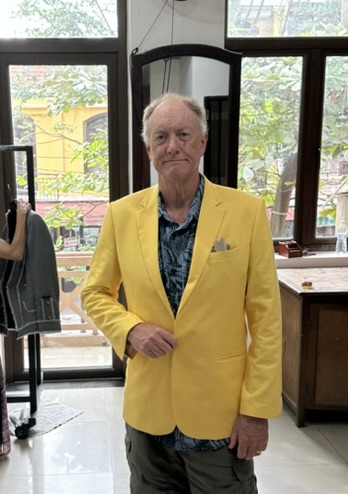
I like it, too. 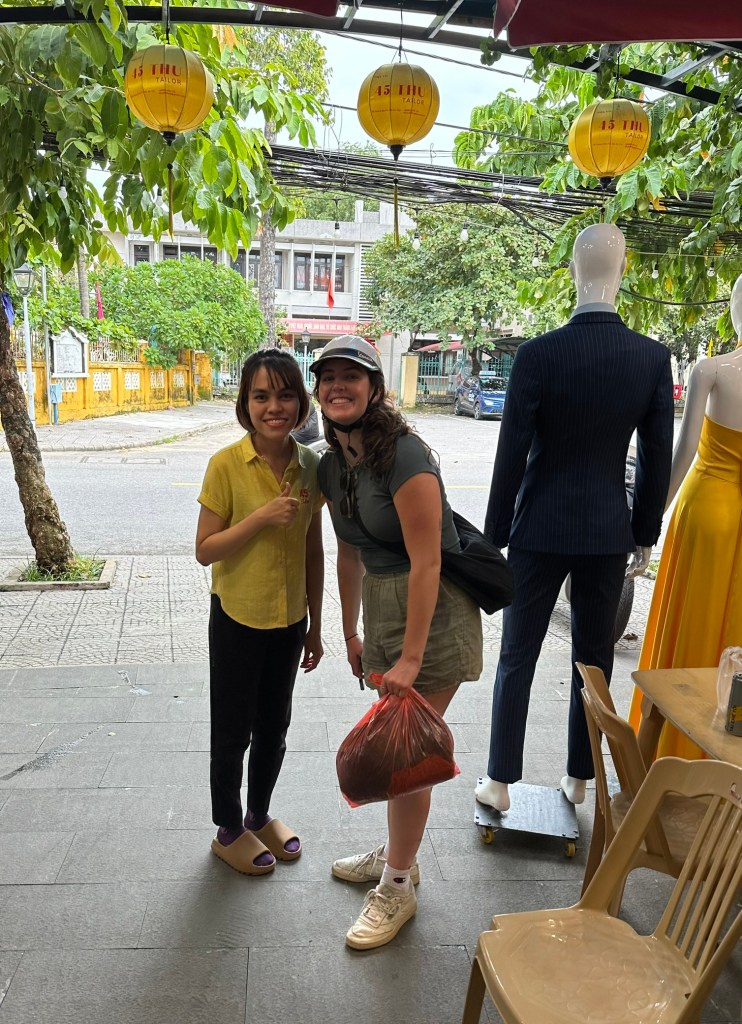
Anna with her personal tailor at 45 Thu 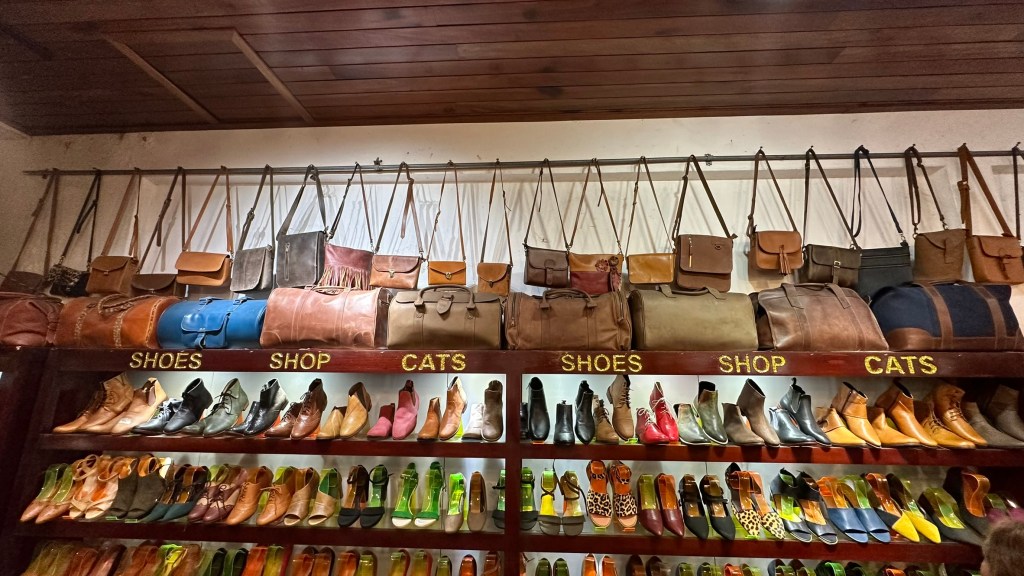
Bags and shoes? They got’em.
- We had a couple favorite bars, of course. In particular, Tropical Home was a small, funky place with good cocktails and a nice, leafy patio (and right across the lane from Seashell, a restaurant we really enjoyed), and Mezcal Coctelaria was just that, an excellent mezcal bar. Lastly, we had a lot of fun our last night in town at the Sky Bar, a rooftop lounge on An Hoi island.
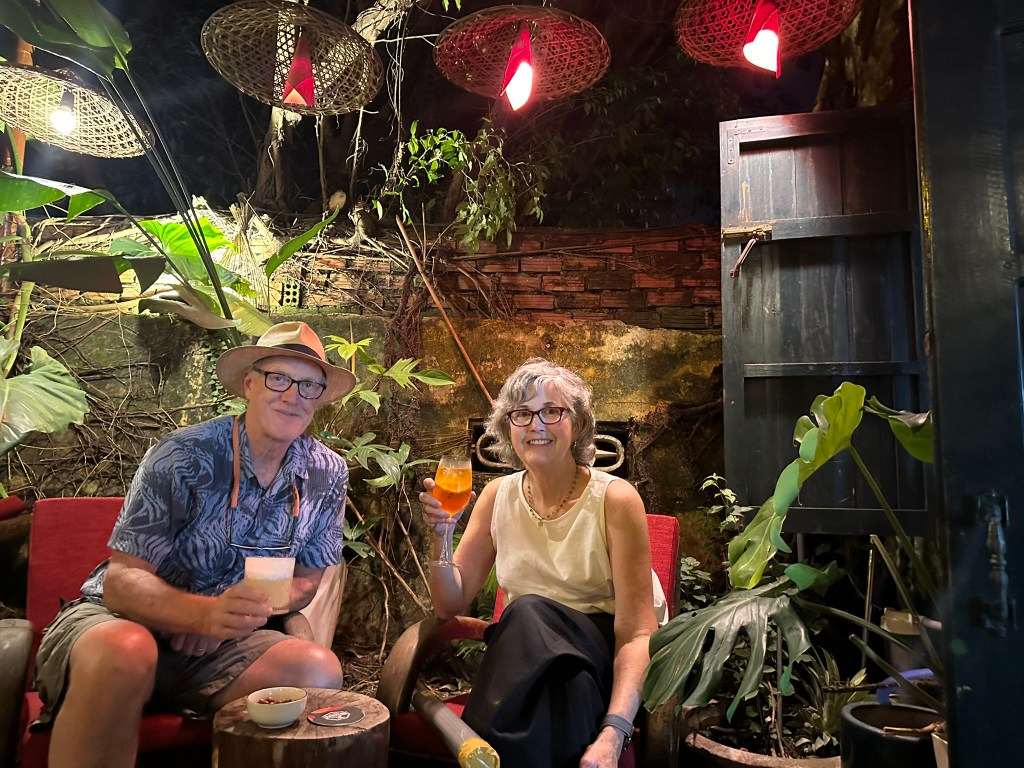
Tropical Home 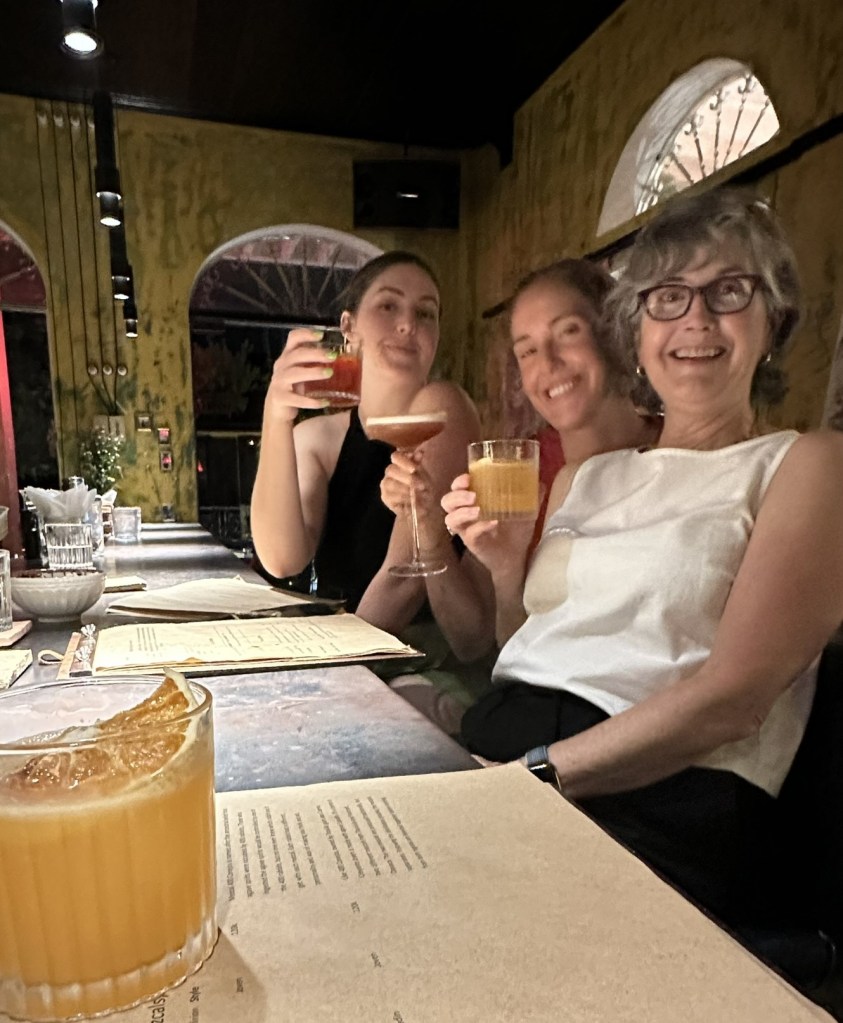
Mezcal Coctelaria 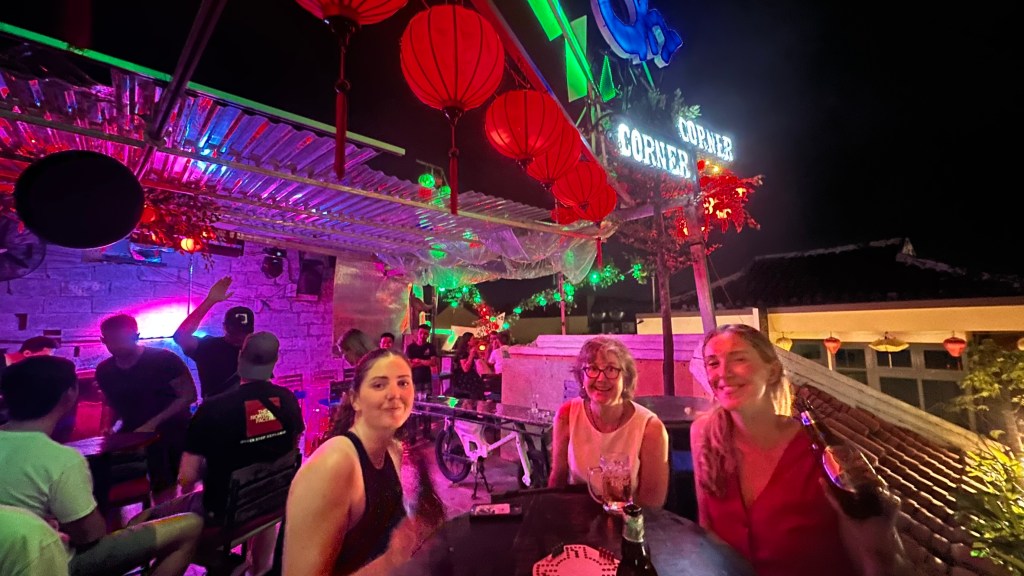
Sky Bar
Three days was just about right for this time of year, though there were a few things we would have liked to have done that we couldn’t for lack of time. In a warmer, drier season — or simply with a few more days — here are the top things that should be given strong consideration:
- Visit Hoi An’s beautiful beaches and Cu Lau Cham islands
- Day trips, or even an overnight, to nearby Marble Mountains (Da Nang) and/or the Imperial City of Hue, which I’ve heard is pretty spectacular, especially from a cultural and historical perspective.
- Free bike tours – every Tuesday, Saturday, and Sunday (we missed those days) can be booked here and can get you out to the beaches and into the countryside, rice paddies, even organic farms.
- The Ancient City’s historic Japanese Bridge was closed for renovation, but that is supposed to be cool.
So finally, after 33 days, 12 flights and 20,439 air miles, 12 destinations in 5 countries, 9 boats, 6 motorbikes, and countless temples, bars and eye-opening cultural experiences, we wrapped up our trip with one last day in Hanoi, said goodbye to our girls, and made her own way flying from Hanoi to SFO with a short layover in Taiwan.
Random thoughts and travel tips:
- English is spoken just about everywhere, so you don’t need to worry about deciphering a foreign alphabet, though it is still helpful (and much appreciated) to learn the basics: please, thank you, hello, and so forth. More important is picking up the cues for other behavioral norms like bowing, lotus hands, etc.
- Grab is southeast Asia’s answer to Uber and Lyft. Download the app before you go. Super convenient.
- Be prepared for hot and humid everywhere. Other than the northernmost regions, like North Vietnam in fall or winter, that is simply the way it is. Wear lightweight clothing, sunscreen, and a hat.
- Try all the food, especially the stuff you don’t get elsewhere. Pack some Pepto-bismol and Azithromycin, or Zithromax Z-pack, just in case.
- Speaking of meds, check the CDC website before traveling for vaccine requirements. You’ll almost certainly need Hepatitis A and Typhoid. Malaria is a concern only in specific regions, and we were able to do without, though we had Malaria pills with us just in case.
- Try not to have surgery or an open wound that forces you to stay out of the water (to prevent otherwise inevitable bacterial infection). Being able to enjoy the ocean or the hotel swimming pool would have been very nice indeed.
- If you are flying to Southeast Asia from the U.S., I strongly recommend burning miles or paying to upgrade to business class nonstop. SFO to Singapore is 16 hours nonstop. You’ll get a decent night’s sleep on the plane that way and will arrive reasonably refreshed, likely cutting a full day or two of jetlag. You’re already paying a lot of money for a trip like this, you might as well enjoy Day 1.


 Once in a while you get shown the light...