February 2023 Trip Notes & Itinerary

Overview: Our first visit to New Zealand was a four-week road trip by car, with 8 days in the North Island and 18 days in the South Island. After our last night in Queenstown, we flew to Melbourne, Australia to continue our trip Down Under another three weeks before heading home.
North Island: Auckland (1 day) > Coromandel Peninsula (2 days) > Hobbiton & Waitomo Caves (1 day) > Turangi & Tongariro National Park (3 days) > Wellington (1 day) > Ferry to Picton
South Island: Blenheim (1 day) > Abel Tasman (3 days) > South Island’s West Coast (3 days) > Wanaka (2 days) > Queenstown (4 days) > Fiordland/Te Anau (4 days) > Queenstown (1 day)
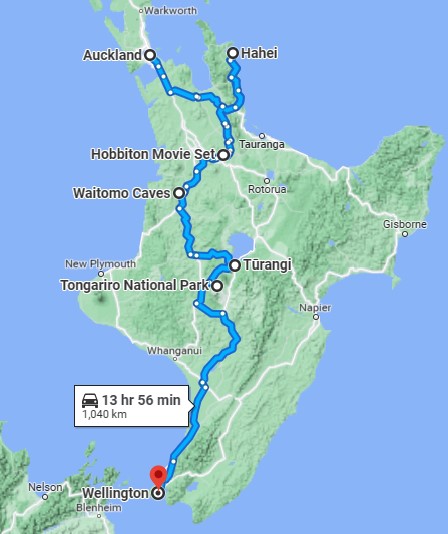

Bottom Line: New Zealand was high on our wish list for a long time, but being so far from home we put it off until we could manage to spend at least four weeks covering both islands. That was the right decision! Most everyone has heard of the South Island’s spectacular, rugged scenery and it certainly did not disappoint. But the North Island was much better than I anticipated and should not be missed. The food was often incredible, though not always in the smaller outposts, and the local Kiwis were uniformly warm, friendly and engaging everywhere we went. We could easily have spent 6-8 weeks here, as there were several spots we wanted to see but couldn’t given our time budget.
That said, four weeks certainly allows time to cover a lot of ground on both islands. Anything less than that and I would recommend focusing on one island (start with the South), saving the other island for another trip. We intentionally spent little time in the bigger cities, opting for more time exploring the wildly diverse and more remote locales. We were extremely happy with our itinerary, though if I could change one thing it would be this: go to Fiordland before Queenstown, instead of the reverse, and cut two days out of Queenstown (3 days in plenty) in order to spend two days in Dunedin.
Driving is the best way to see New Zealand because you can enjoy the freedom and flexibility of traveling at your own pace. The country is famous for the “nomad lifestyle”, traveling via RV, with “freedom camping” spots all across both islands. We booked too late for a high season trip to take advantage of that, but our little SUV worked out just fine — and Michelle got a comfortable bed indoors every night. Also, the best places to visit are pretty remote, including all of NZ’s famous Great Walks, and you need a car to have any kind of flexibility getting there. You can get much better prices, not to mention the chance to catch some All Blacks rugby matches, by traveling in the shoulder season.
| Dates | Destination | Where We Stayed |
|---|---|---|
| Day 1 | Auckland | Hotel Fitzroy |
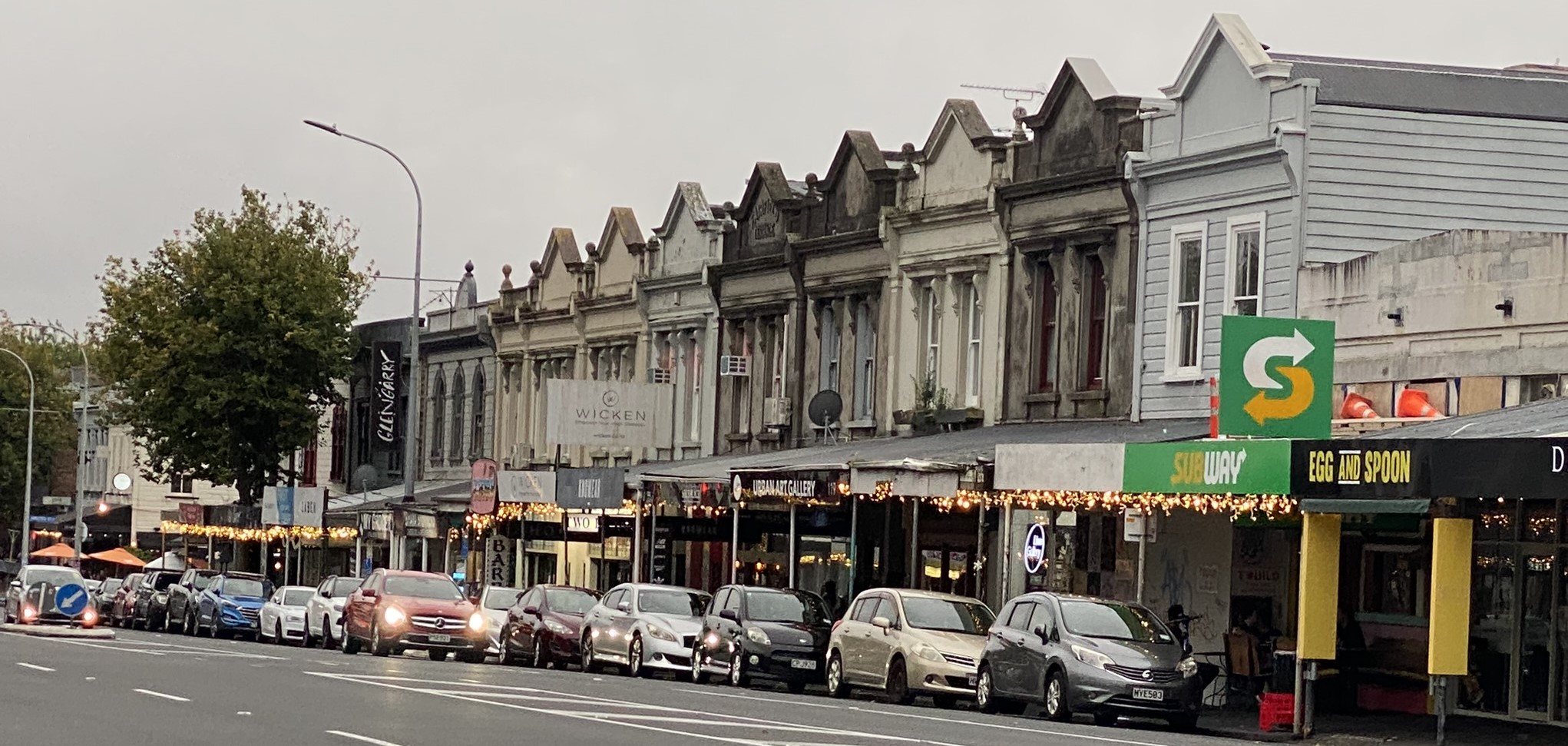
Our adventure Down Under began in Auckland, New Zealand’s largest city and home to 25% of NZ’s residents. For international travelers, it is the easiest airport to fly into and a perfect spot to start a north to south road trip covering both islands. We flew from SFO on Fiji Airways with a 3-hour layover in Fiji to save a ton of money, arriving early Friday afternoon, then caught a taxi to our hotel in town. We only had one night in Auckland, and we chose the Ponsonby neighborhood because of positive reviews I’d read on a few travel blogs. Highlights:
- Michelle loved the boutique Hotel Fitzroy (TripAdvisor review here), which felt more like an upscale B&B with a few very well-appointed rooms and an excellent breakfast served on the patio.
- Ponsonby Road, just a two block walk away from Fitzroy, is the heart of the neighborhood’s shopping, dining and bar scene, and that is where we spent our time after settling into our hotel. Bars I can recommend include The Chapel Bar (fun and highly irreverent “religious” decor and good beer), The Cork (excellent Guinness and a fine selection of whisky and gin), and Deadshot (classic, dark wood-paneled speakeasy with terrific craft cocktails and no menu).
- Dinner at Lucky 8, recommended by our bartender at Chapel Bar, was mouth wateringly good. Tucked into a hard-to-find upstairs room with small plates of Asian fusion cuisine. For some unknown reason, the clientele during our visit had at least a 10:1 ratio of women to men.
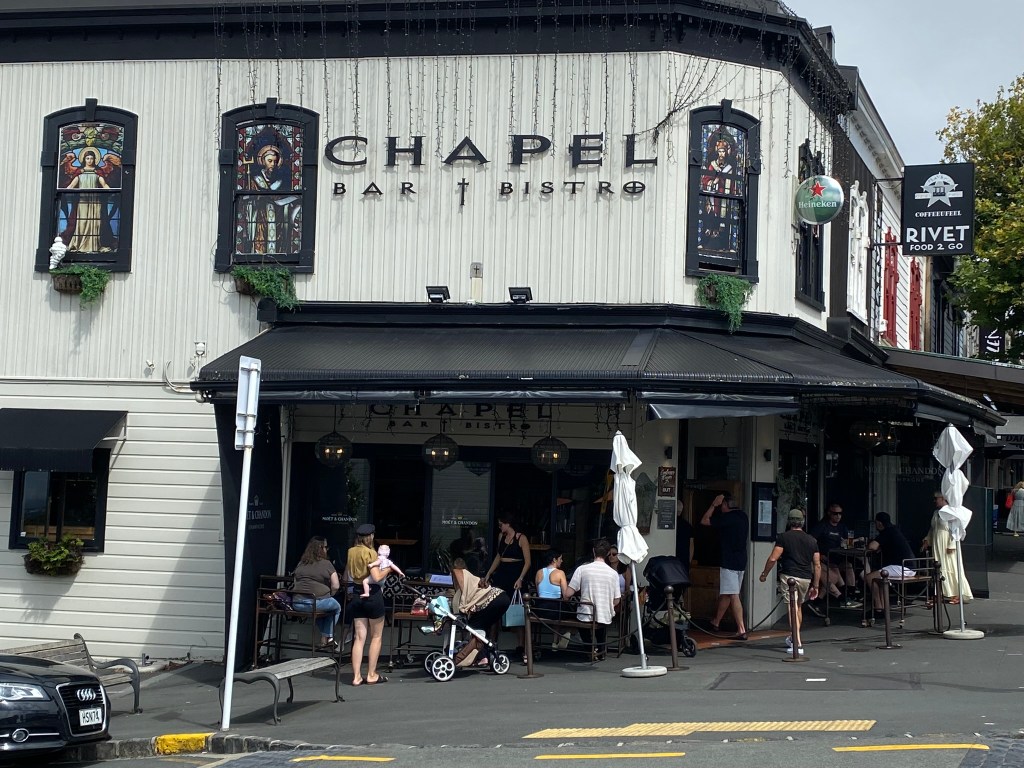
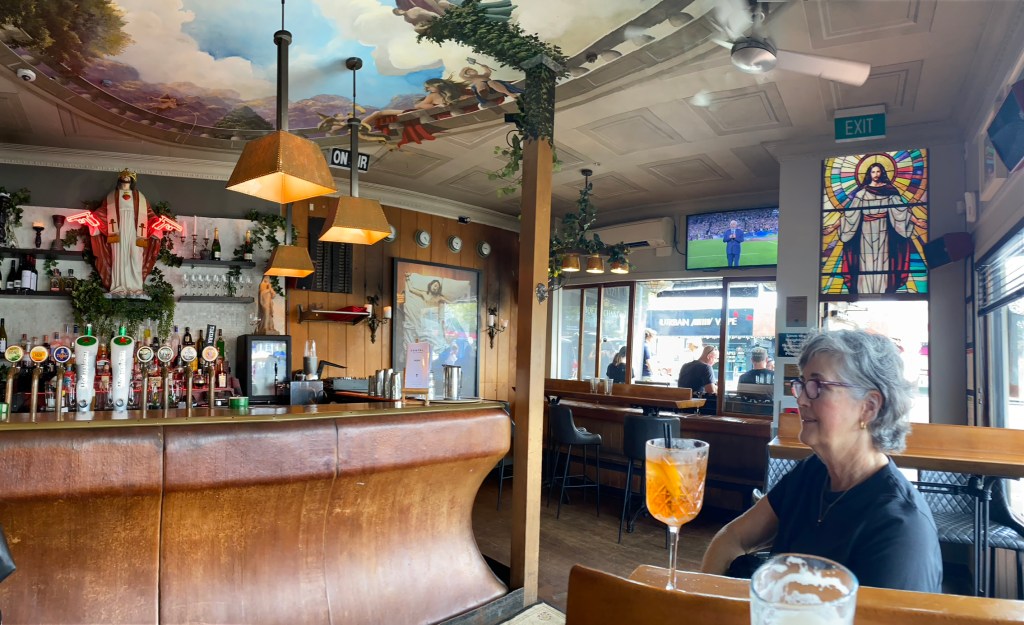
The Chapel Bar 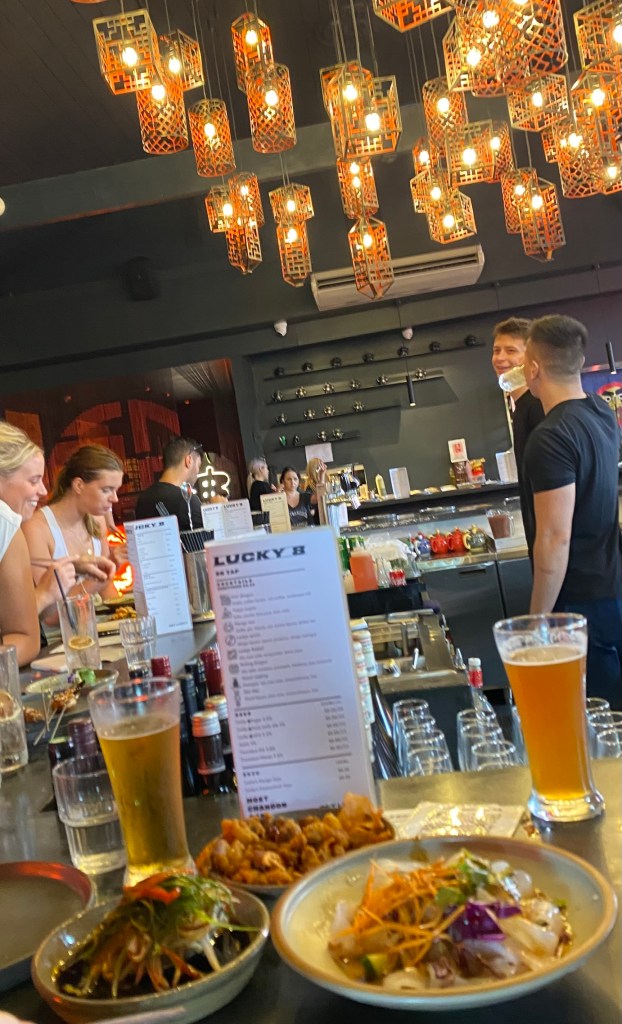
Lucky 8 
The Chapel Bar 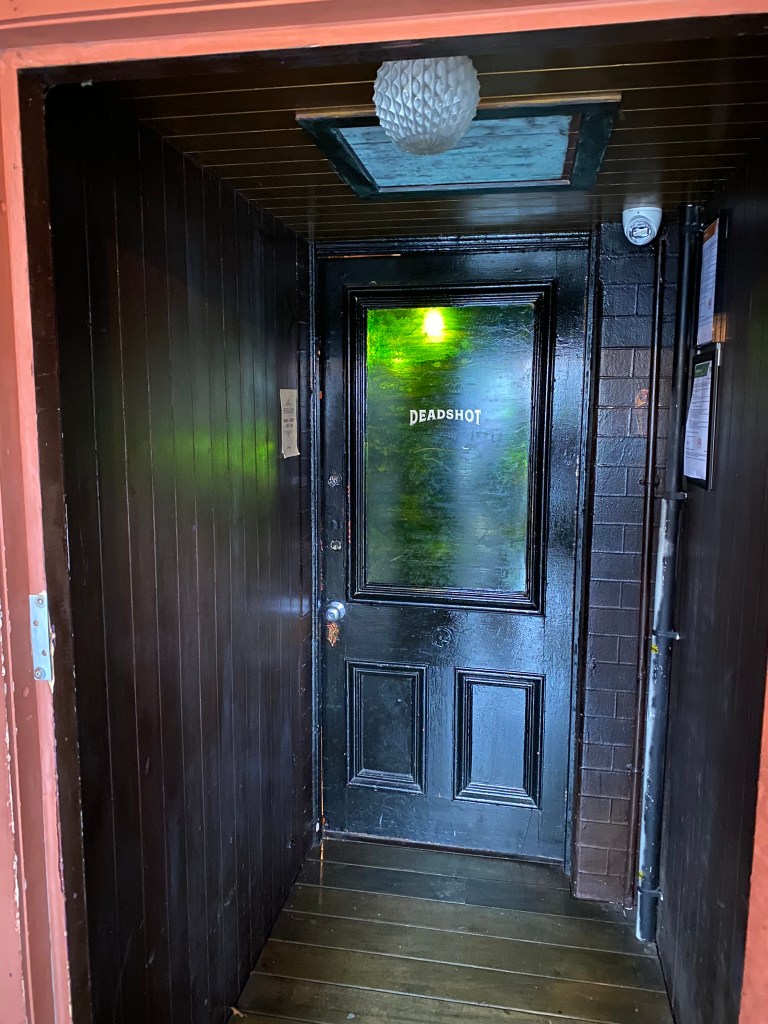
Deadshot 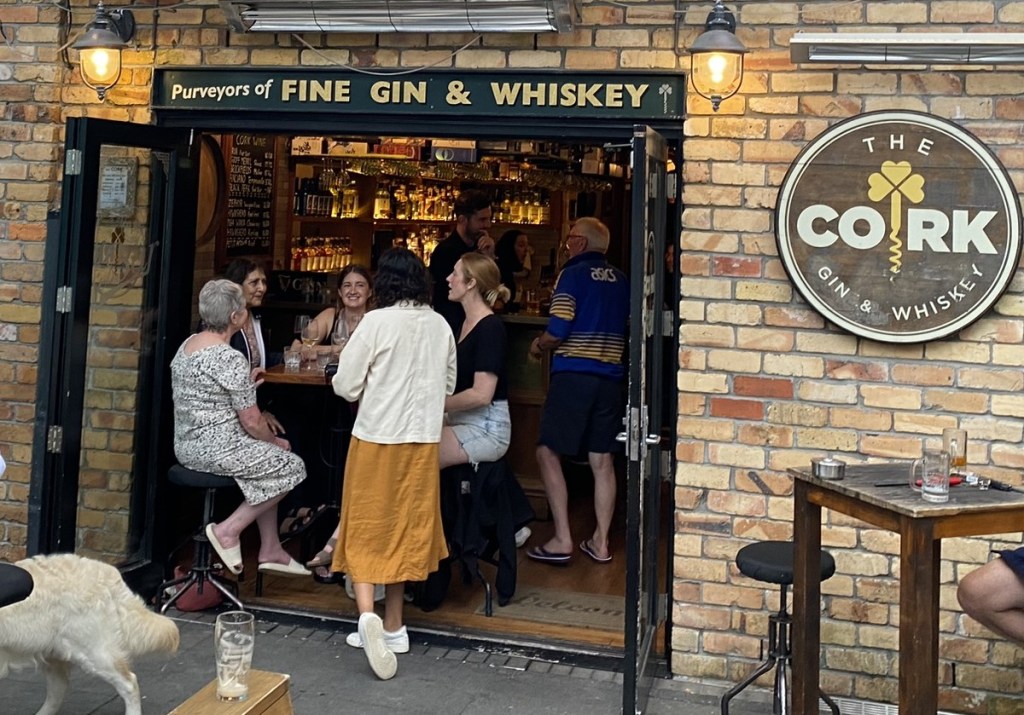
| Days 2-3 | Hahei, Coromandel Peninsula | Purangi Garden Accommodation |
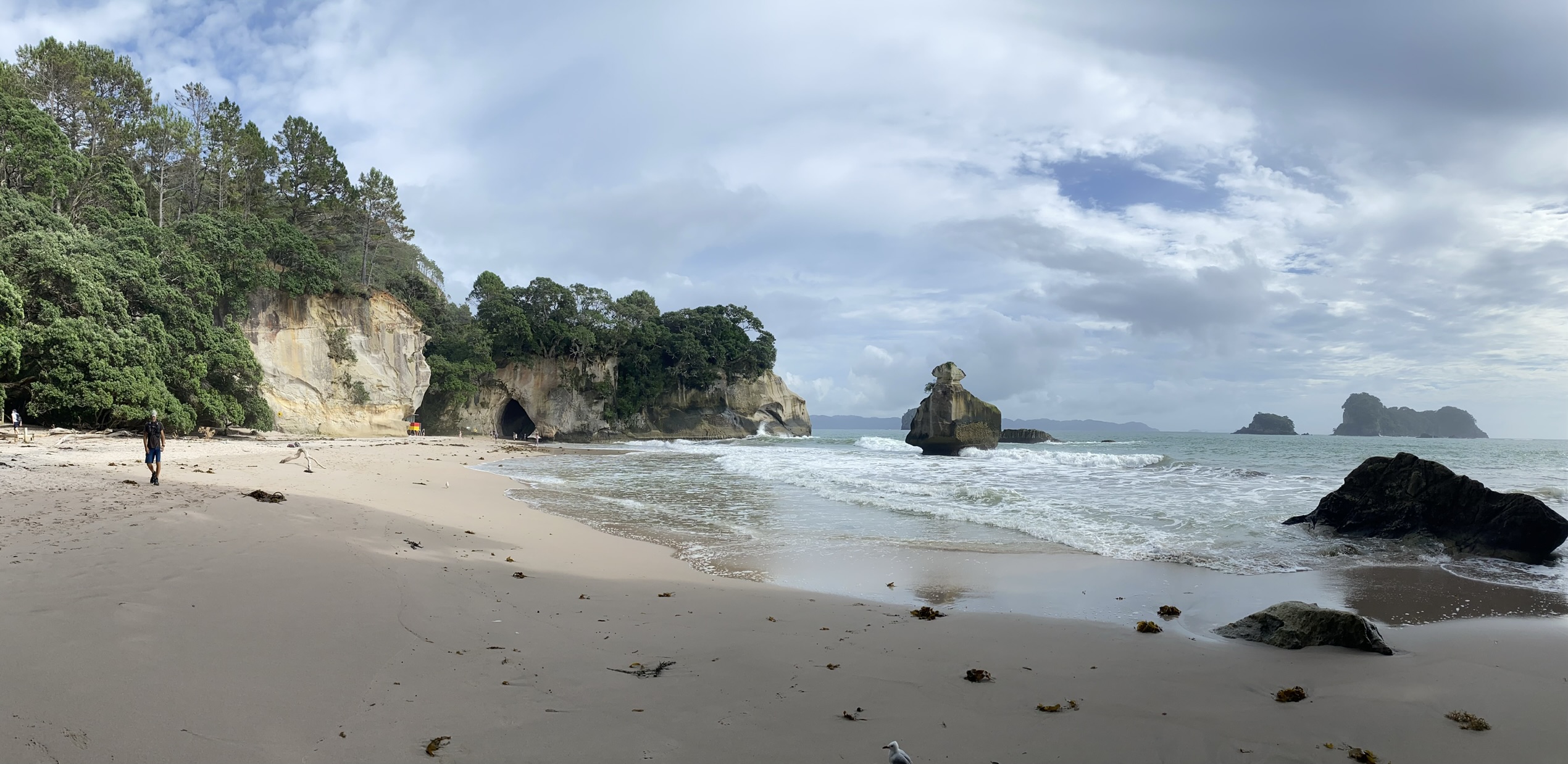
After getting a much needed good night’s sleep, we were ready to hit the road! After breakfast, we picked up our rental car from Omega Rental Car’s downtown location as it was much less expensive than the airport and in the direction we wanted to go. We then headed south on Route 1 for the north island’s rugged Coromandel Peninsula, known for its rugged interior, misty rainforests and golden sand beaches.
Normally, this would be a two-hour drive, but the primary route 25A was closed due to extensive landslides, so our journey took us further south along the twisty, mountainous route through the stunning Karangahake Gorge before turning north again along the coast. 3 hours later, we arrived at Hot Water Beach, a few minutes south of our ultimate destination of Hahei Beach. Given its distance to other north island destinations, 3 days would have been ideal here, but 2 days worked out well for us. Highlights:
- Lunch at Hotties Eatery and Bar at Hot Water Beach. The best New Zealand’s famous green-lipped mussels I had this entire trip — and I ate a lot of mussels! Read my review for the details.
- Our rustic cottage at Purangi Garden Accommodation was absolutely sublime. Most accommodations in Hahei were already booked when we started planning and we found this almost by accident on Airbnb. We were lucky! Sunset cocktails on our front deck overlooking the acres of rolling hills, trees and gardens, all by ourselves, with the non-stop symphony of a billion crickets and birds was magical. Here is my review.
- We had booked a half day guided sea kayak tour from Hahei Beach to Cathedral Cove, but a big ocean swell that day led the outfitter to cancel. Instead, we found a trailhead not far from Purangi Garden that made for a wonderful, 5-mile round trip hike through rustic farmland to Cathedral Cove. Gorgeous beaches on both sides of the famous arched rock. Whether kayaking or hiking, this is the must-see destination in the area.
- Our host at Purangi Gardens is also caretaker for the local forest preserve and she lent us her kayaks to take our own self-guided tour out the Purangi River to the ocean by Cook’s Beach. Sweet! The nearby hidden beach where we landed is fringed with 700-year old Kuari trees. Commercial kayak rentals are also available at Cook’s Beach.
- The one mile out and back hike from Hahei Beach to the Cathedral Cove Lookout was pretty and offers great views of the coastline.
- Dinners at Kaizen at Go Vino (Cook’s Beach) and the Church Bistro (Hahei) were very good. The Vessel is a fun place to get a beer a couple doors down from Kaizen, and their pizza looked good. The Pour House in Hahei has excellent beers, though the food is not recommended.
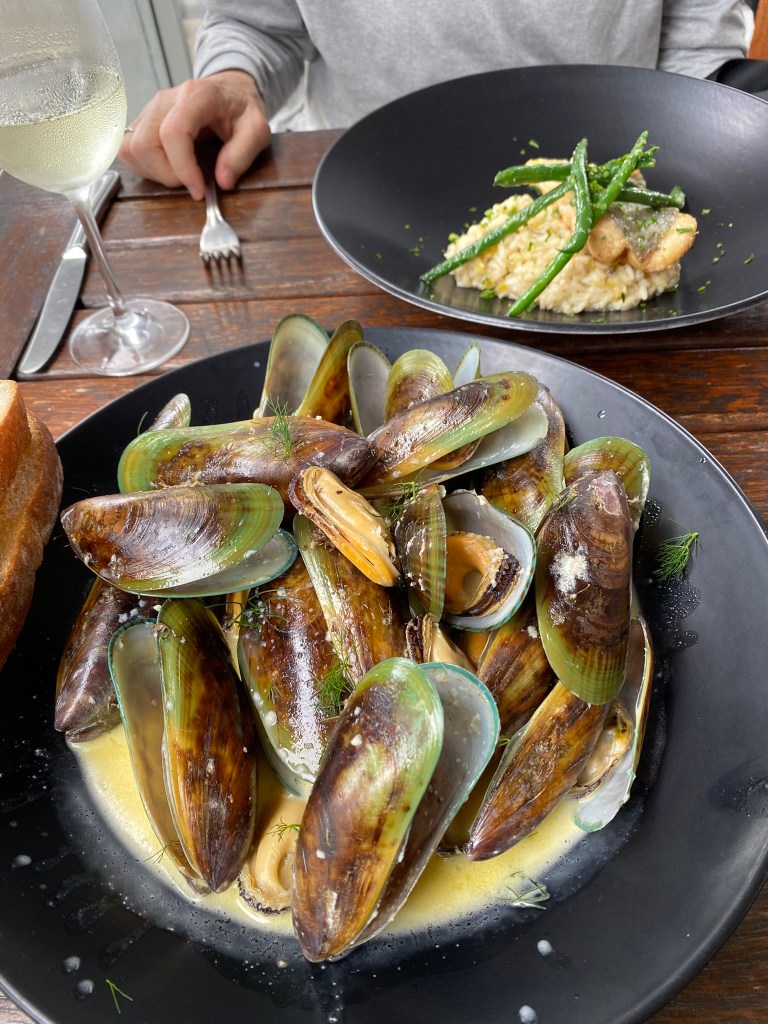
Green lipped mussels at Hotties 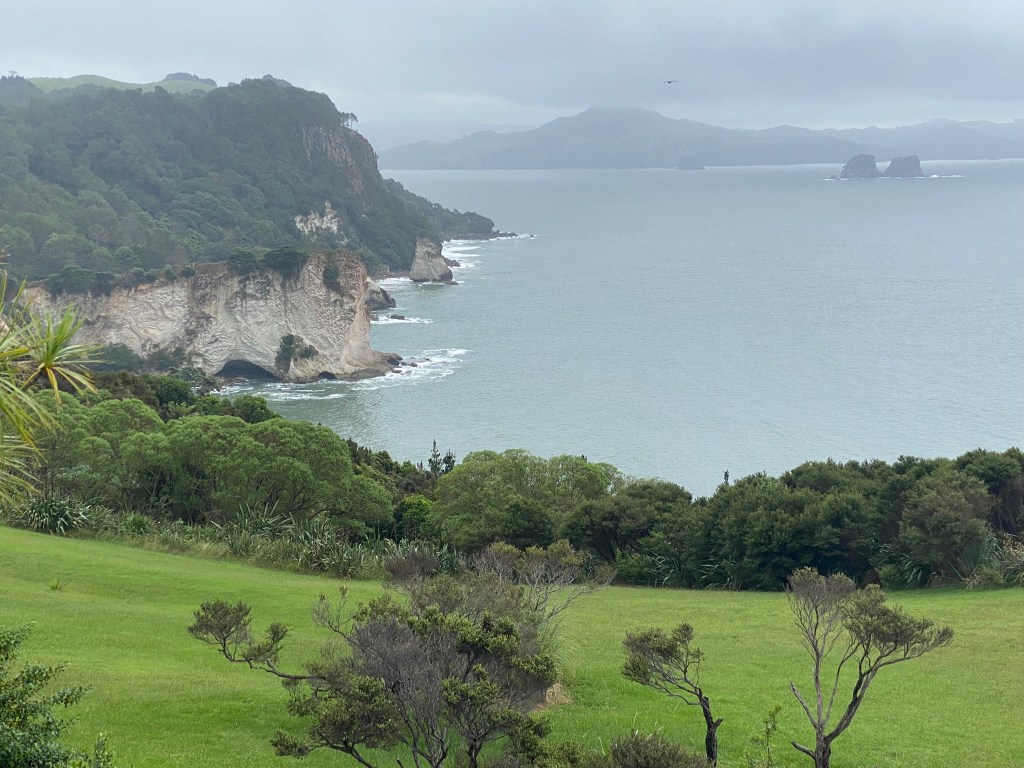
Cathedral Cove Overlook 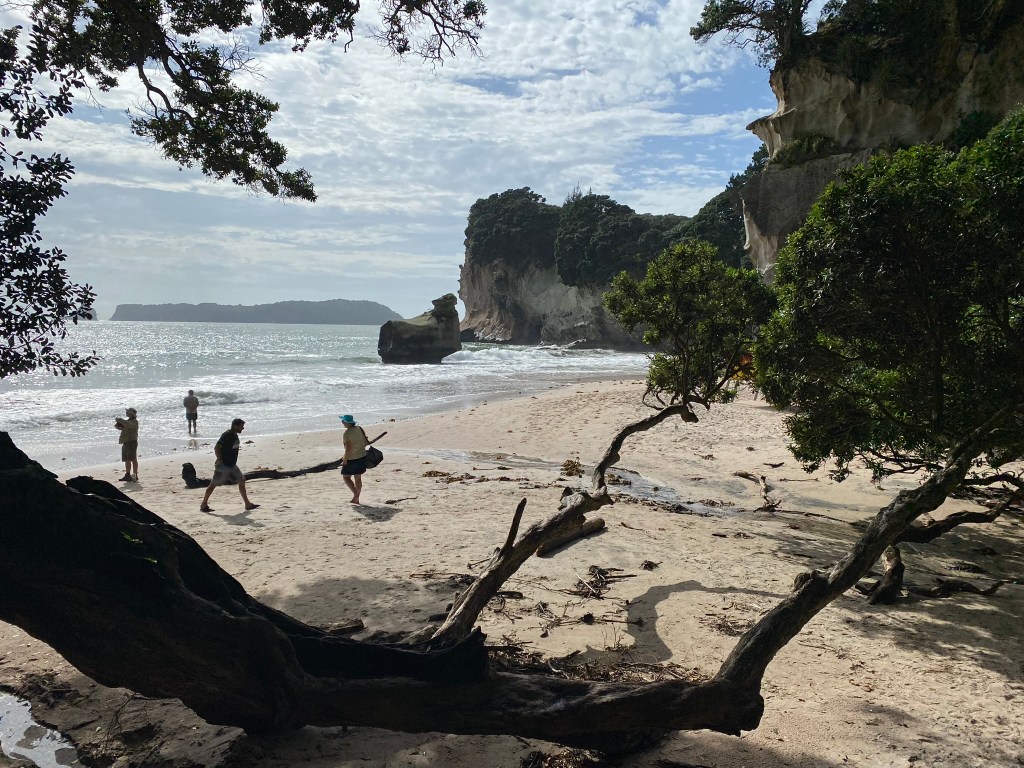
Hike down to Cathedral Cove 
Cathedral Cove 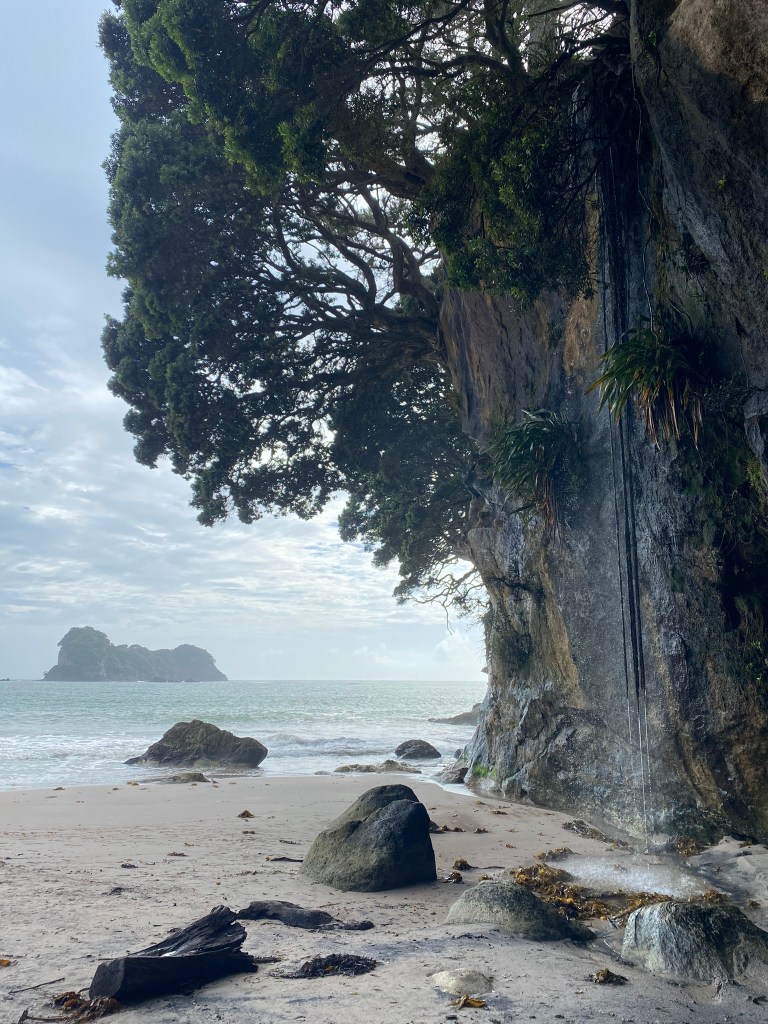
Waterfall at Cathedral Cove Beach 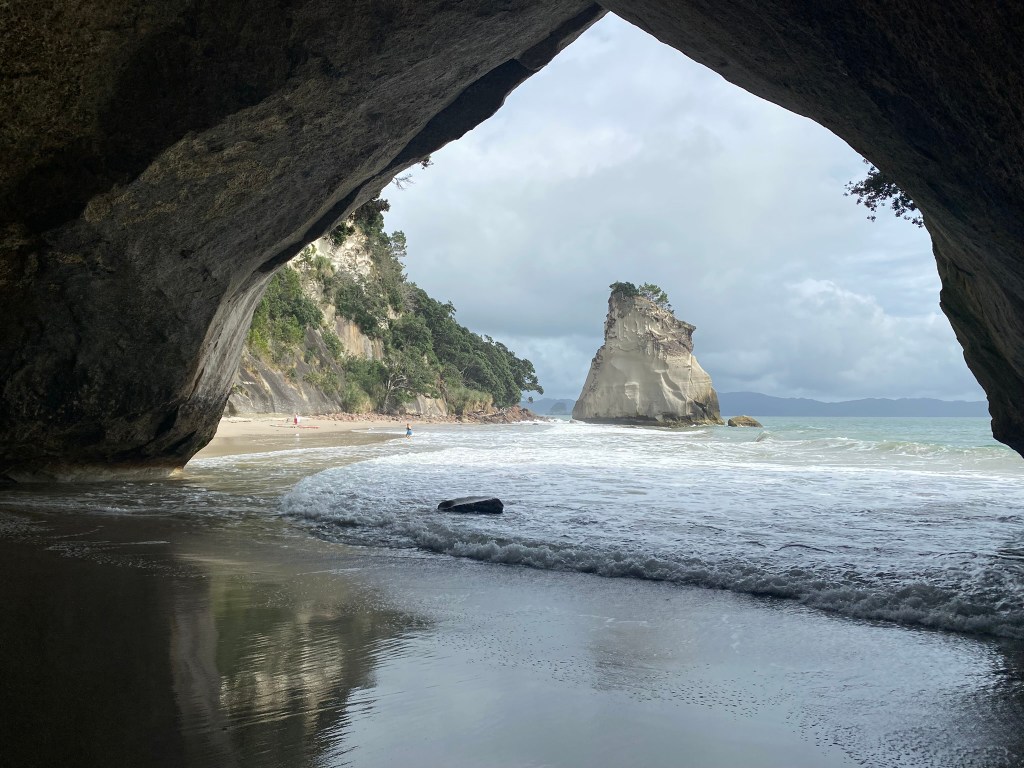
Walking through the Arch 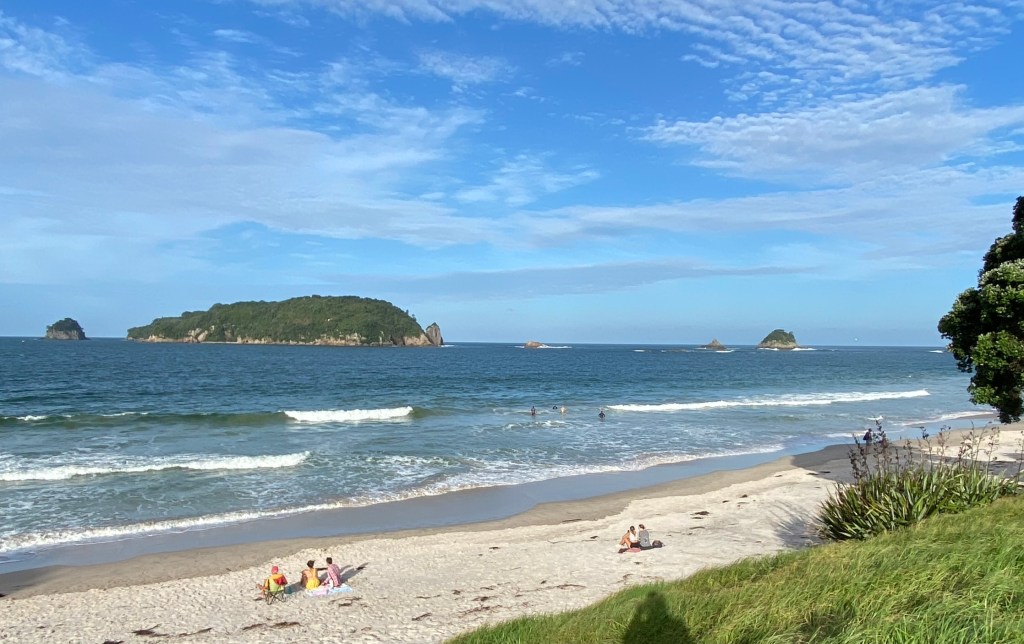
Hahei Beach 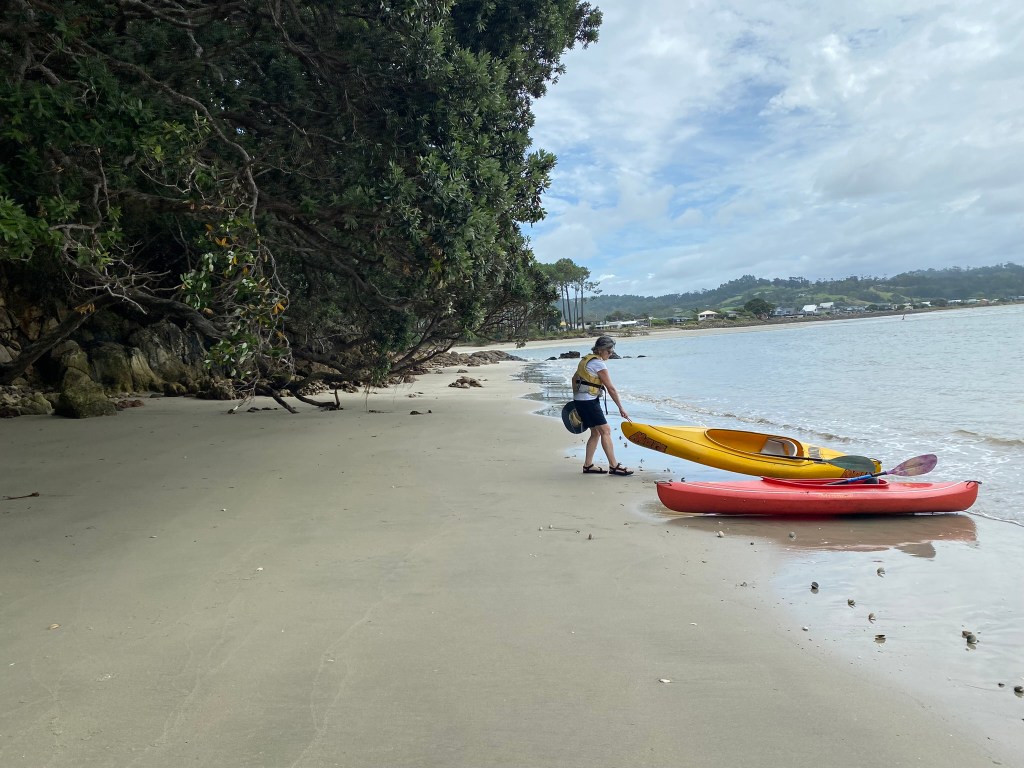
Hidden beach by Purangi River inlet 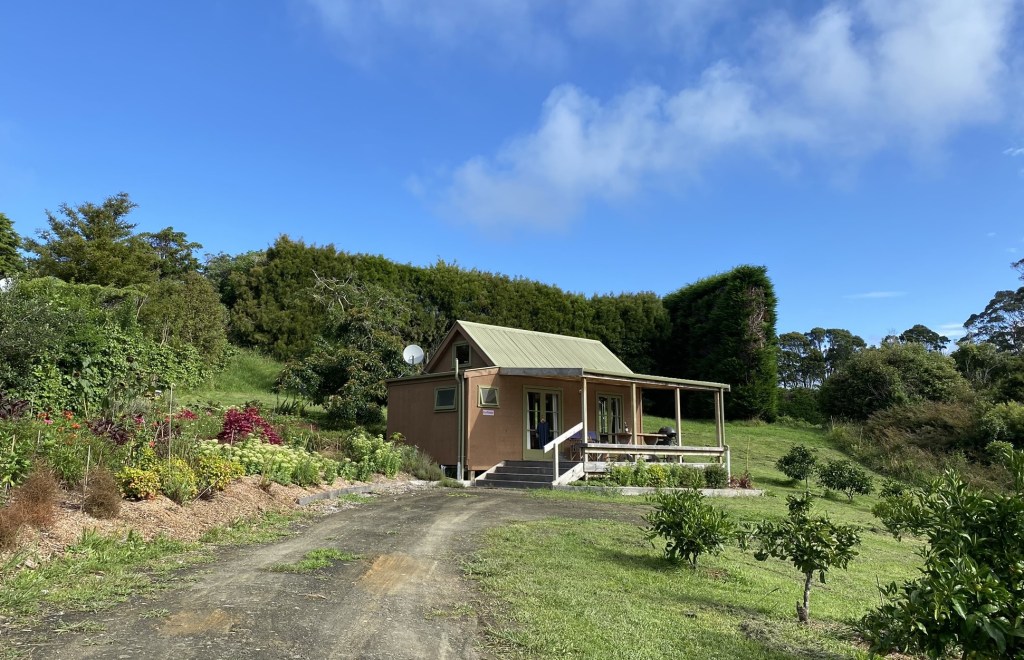
Purangi Gardens Lavender Cottage 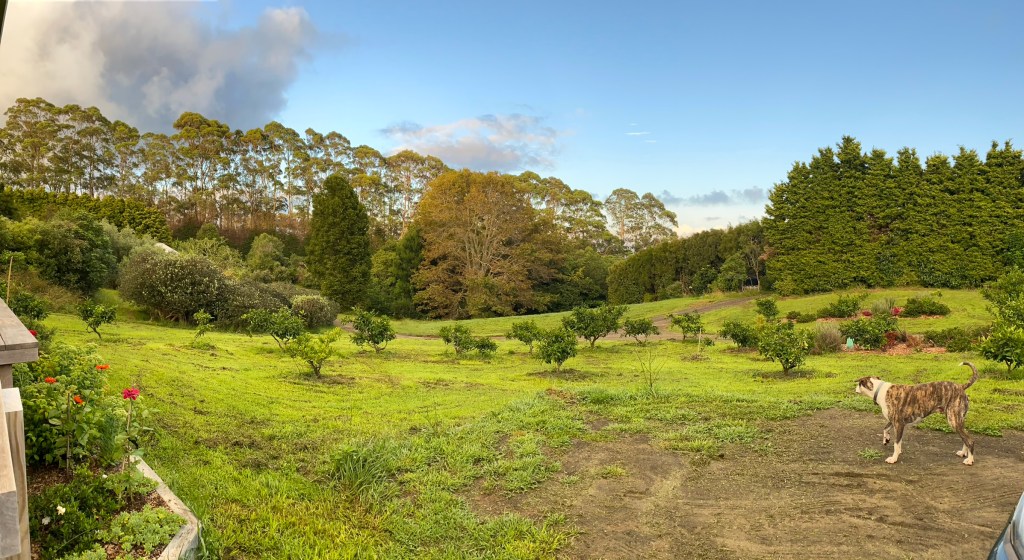
Purangi Gardens from the porch
| Day 4 | Hobbiton and Waitomo Caves | Abseil Inn |
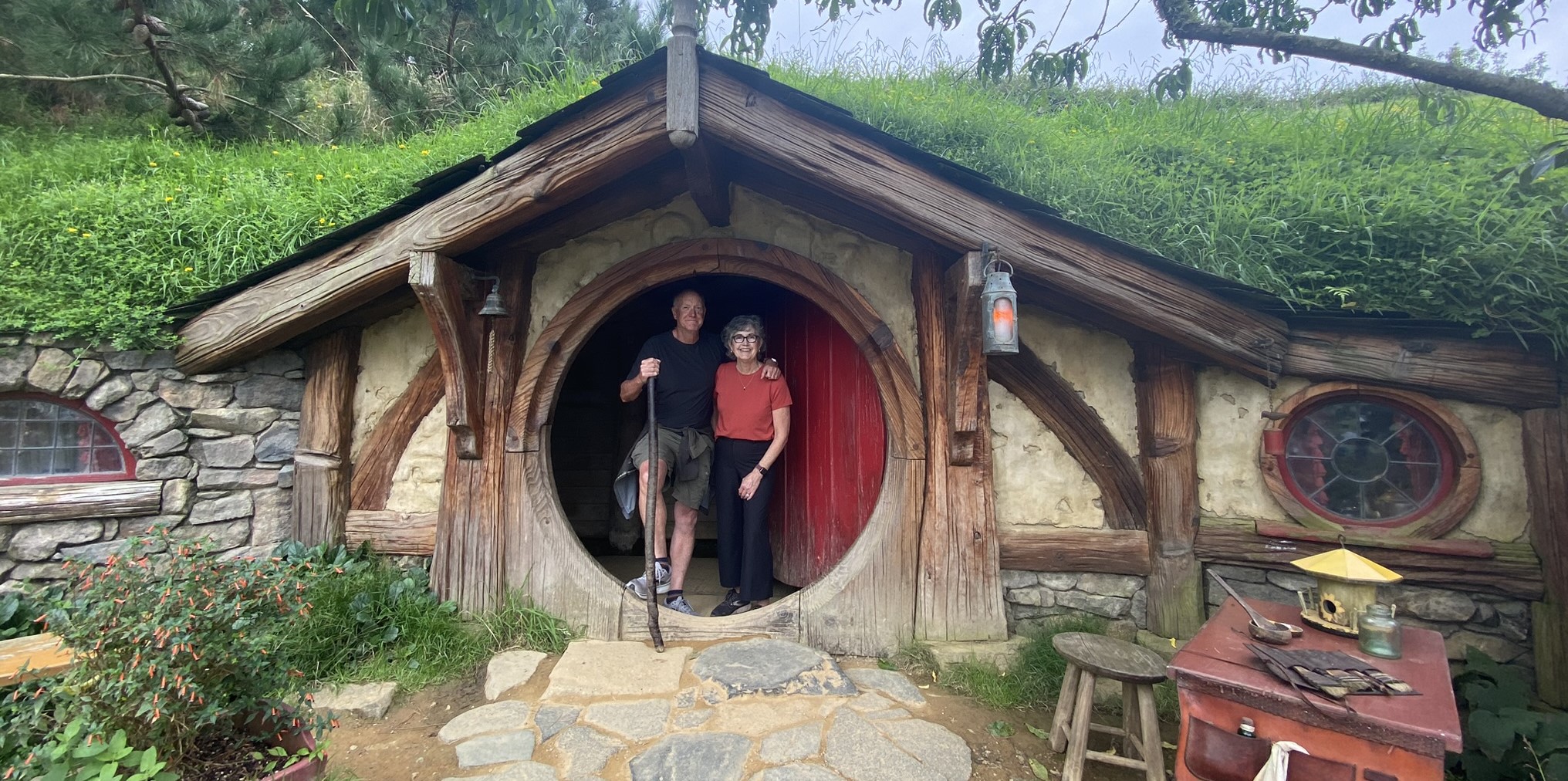
Having wrapped up our two days on the Coromandel, it was time to head south toward Wellington. We considered several options for our next layover, including the popular Bay of Plenty, Rotorua and Lake Taupo. The latter two are renowned for geothermal activity, hot springs, extreme adventure sports, even redwood forests. Since we get plenty of those at home, we opted to make tracks for Tongariro National Park by way of Waitomo, famous for its glowworm caves, and a short detour to Hobbiton, from Lord of the Rings (LOTR) fame.
Hobbiton
During our 3-hour drive south, we passed through rugged coastal mountain scenery with occasional glimpses of the Pacific Ocean (we passed at least three beach towns) before motoring for miles through alternately flat and rolling hills farmland on our way to the Hobbiton Movie Set Tours headquarters, a few miles past the small town of Matamata. Peter Jackson “discovered” the nearby Alexander family sheep farm while searching for sites to re-create Middle Earth for his LOTR and Hobbit films. This site became The Shire, and after the second LOTR film, the entire village set was preserved as a tourist attraction.
The only way to see this impressive set, which comprises 12 acres of gorgeous scenery, 39 “Hobbit holes”, the Mill, and the famous Green Dragon Inn, is on a guided tour that departs by bus from tour headquarters. Advanced reservations are essential, and while very well organized with precisely timed logistics, you are going to see lots and lots of tourists! Still, we very much enjoyed it, and I’ve heard that even those who are not LOTR fans find it very entertaining and worthwhile. You’ll even get a free beer (or NA beverage) at the Green Dragon.
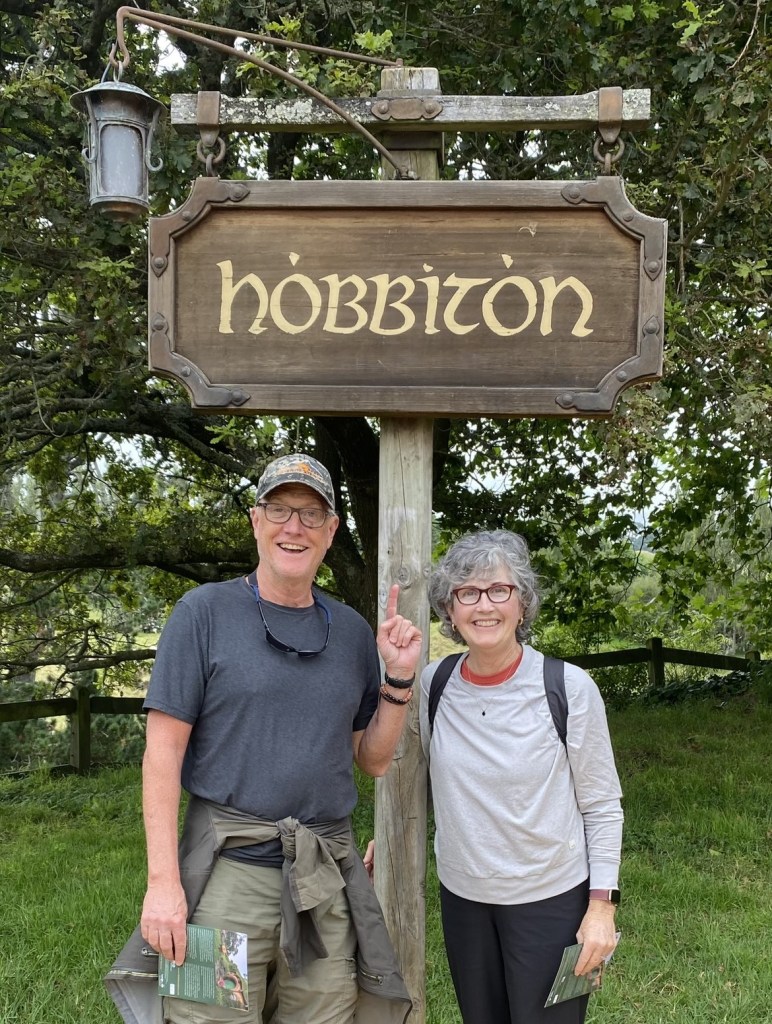
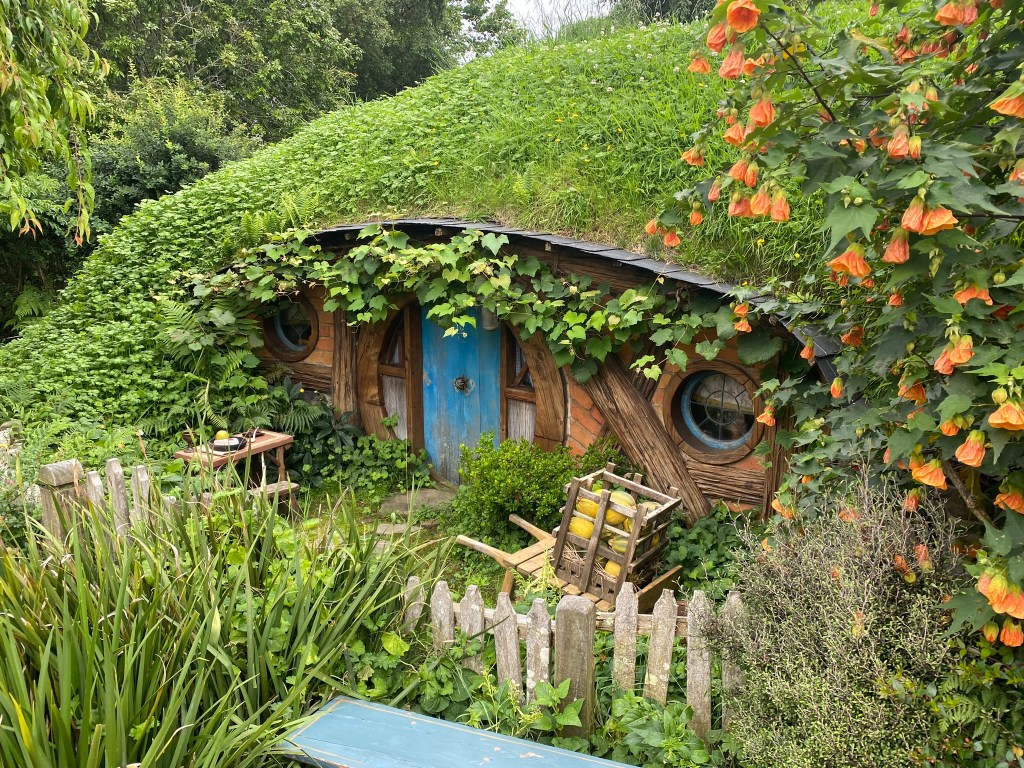
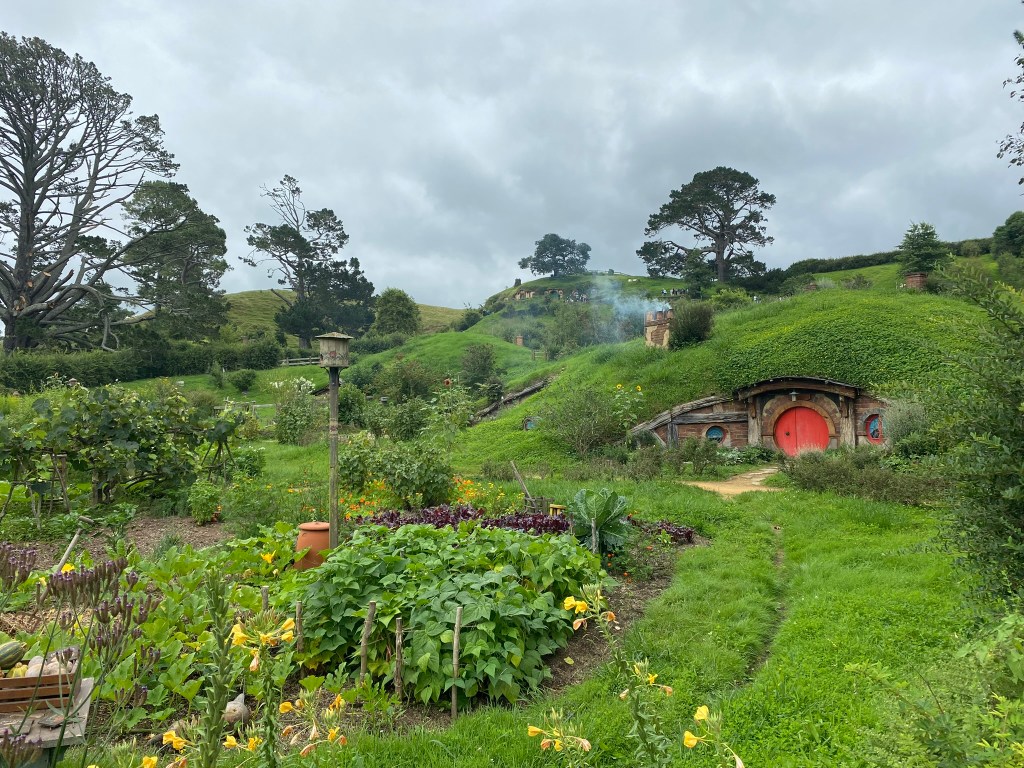
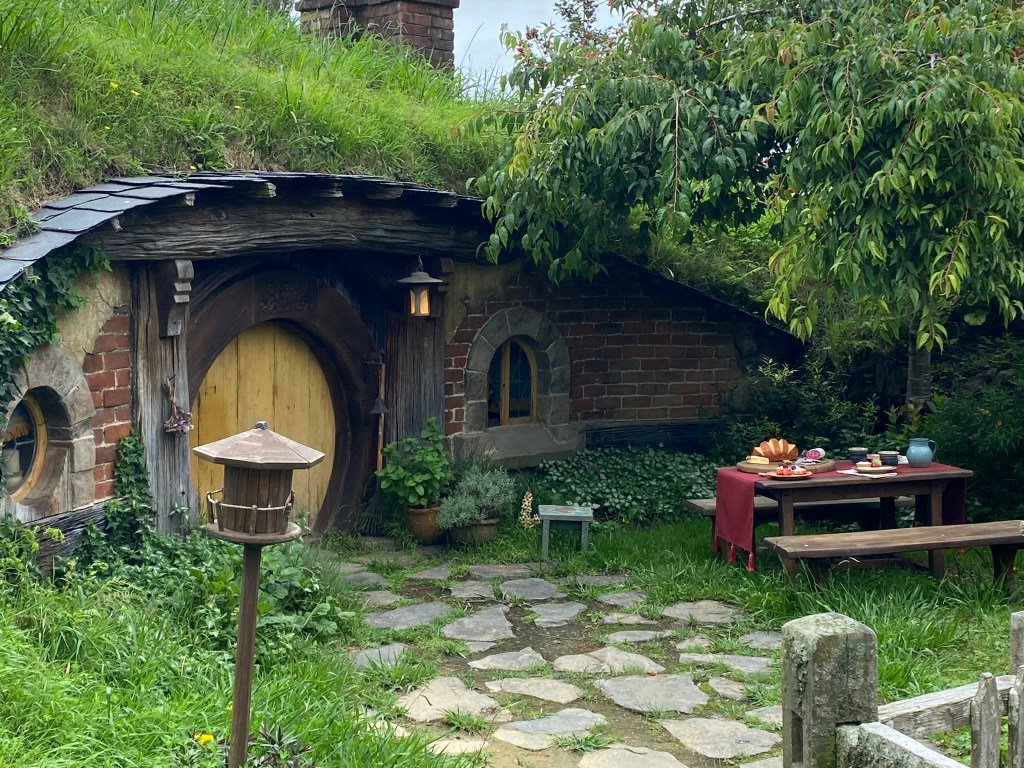
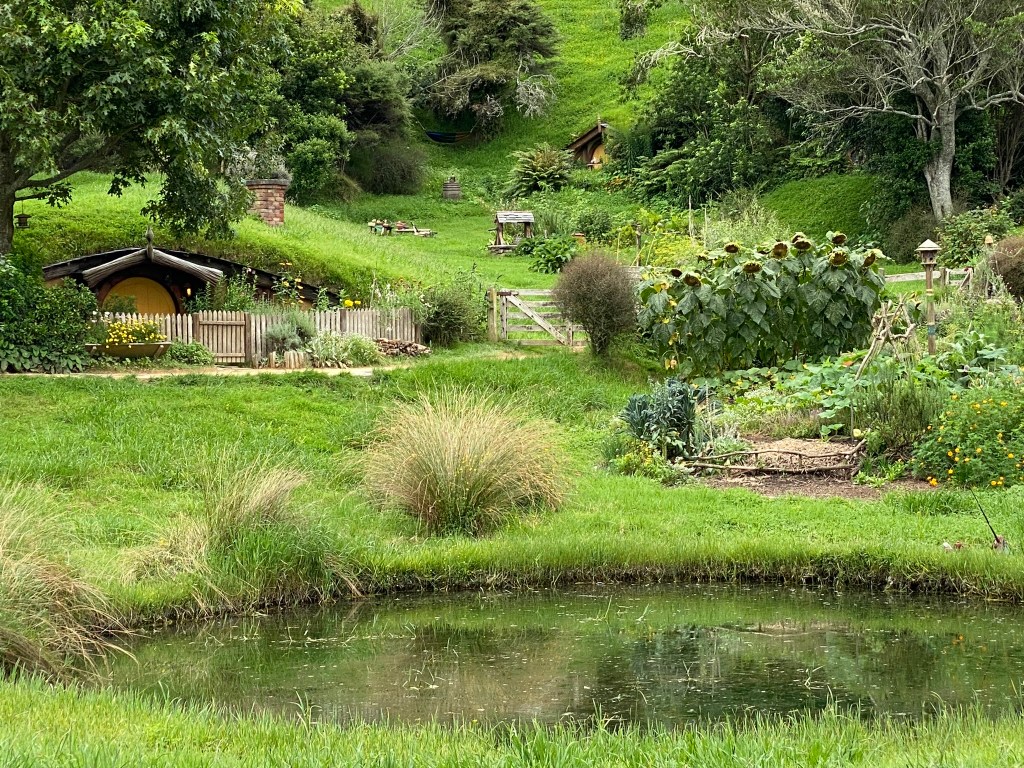
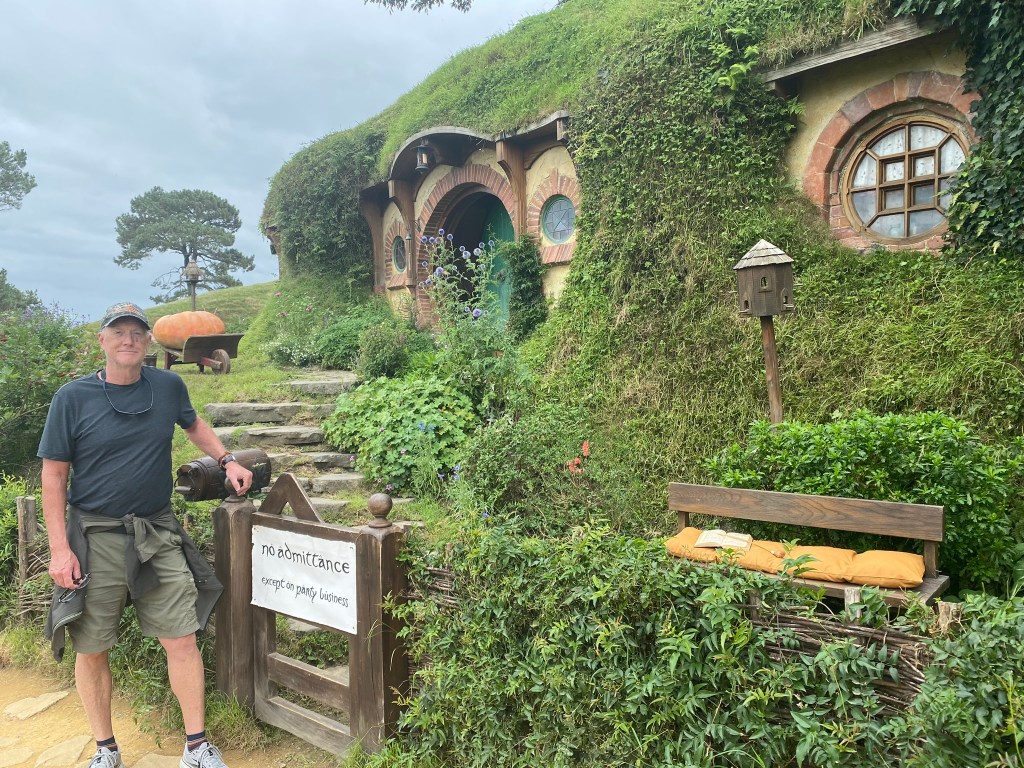

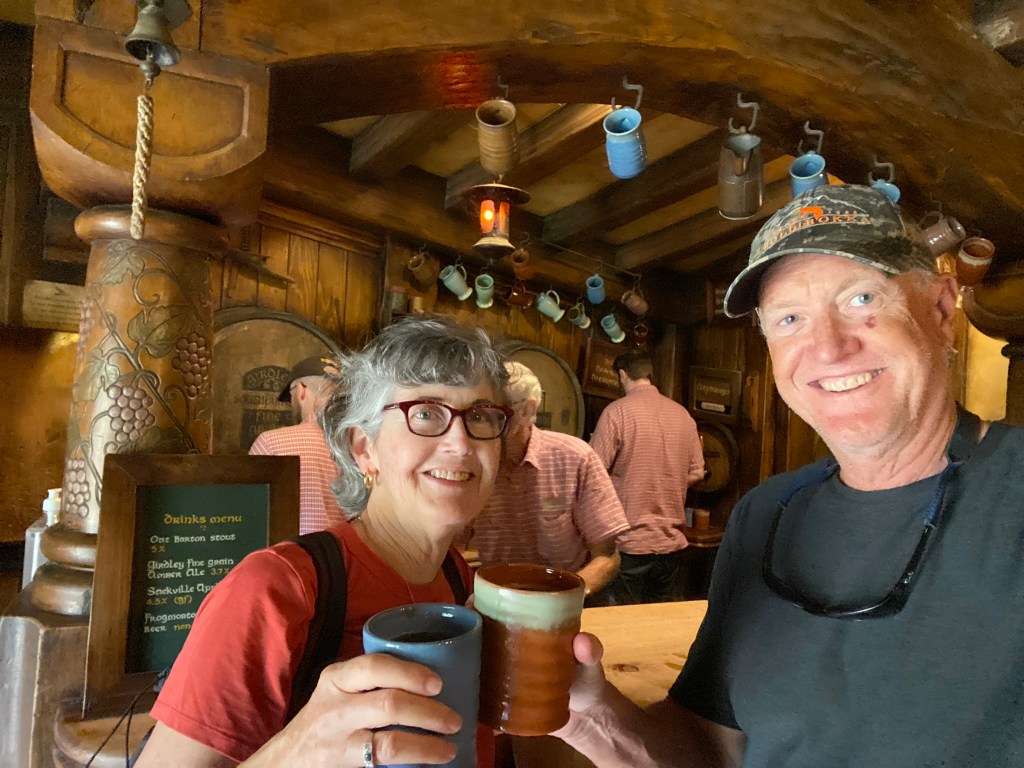
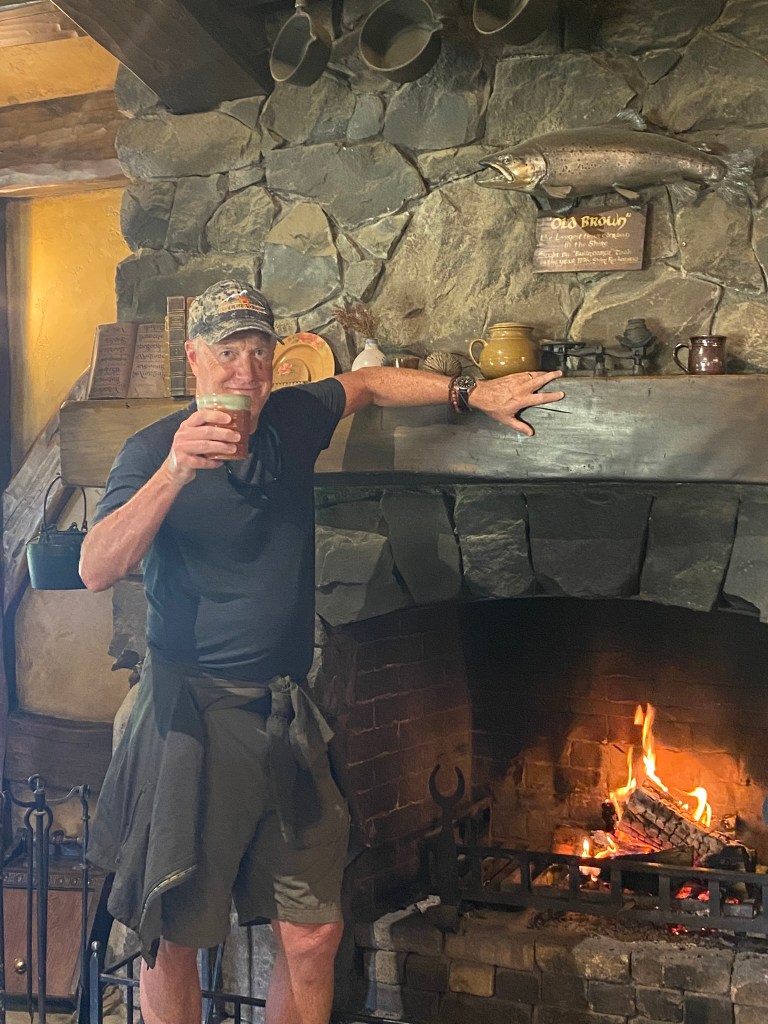
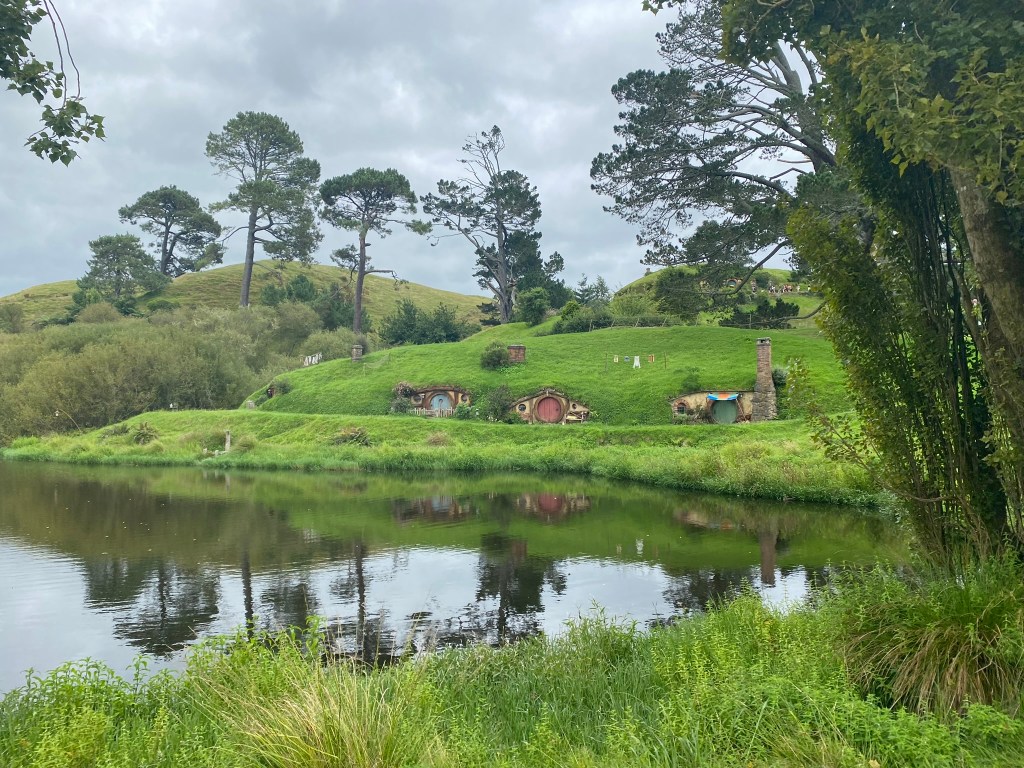
We had booked an 11:40am tour, which worked out perfectly given departure from Coromandel around 8am. The tour runs exactly two hours, so we were back on the road in plenty of time to arrive in Waitomo, just over an hour’s drive, by 3pm.
Waitomo
Waitomo is a one-horse town in the middle of nowhere, and the only reason to go is to visit one or more of the glowworm caves. This region actually has hundreds if not thousands of such caves and underground caverns — and, in fact, there are glowworms all over NZ — but since they were first explored here in 1887 and subsequently commercialized, Waitomo is known for having the biggest and most impressive cave tours. Beyond that, there are not many lodging choices, fewer dining options, and virtually no bars or nightlife. What we liked:
- The Abseil Inn a small, quirky, moderately priced but nice lodge at the top of a long, narrow and extremely steep driveway. Be warned! But the bed was comfortable, the communal breakfast was excellent, and our hosts cordial and friendly. They even tracked me down after we left as I had left my prescription meds behind, which they shipped ahead for me. That’s great service!
- We booked the Sunset Glowworm tour at Footwhistle Cave, a one-man operation with the cave located on his farm. It starts at 8pm, which was perfect as we had time to unwind at the Inn and enjoy dinner in town before the tour, and then get on the road in the morning. Best of all, this was a very small, intimate tour, unlike the much larger hordes piled into daytime tours at other caves. My review here.
- Dinner at HuHu Cafe is reputedly the best in town and it was very good. Because of that reputation and the lack of other options, it tends to book up fast so advance reservations highly recommended.
- The Twelve Tables Bar & Eatery, attached to the Waitomo General Store, perfectly met our needs for a “pub” stop before dinner. (The nearby Tomo Bar & Eatery was closed during our visit and we had been told it was a COVID casualty. It may be open now, so worth checking.)
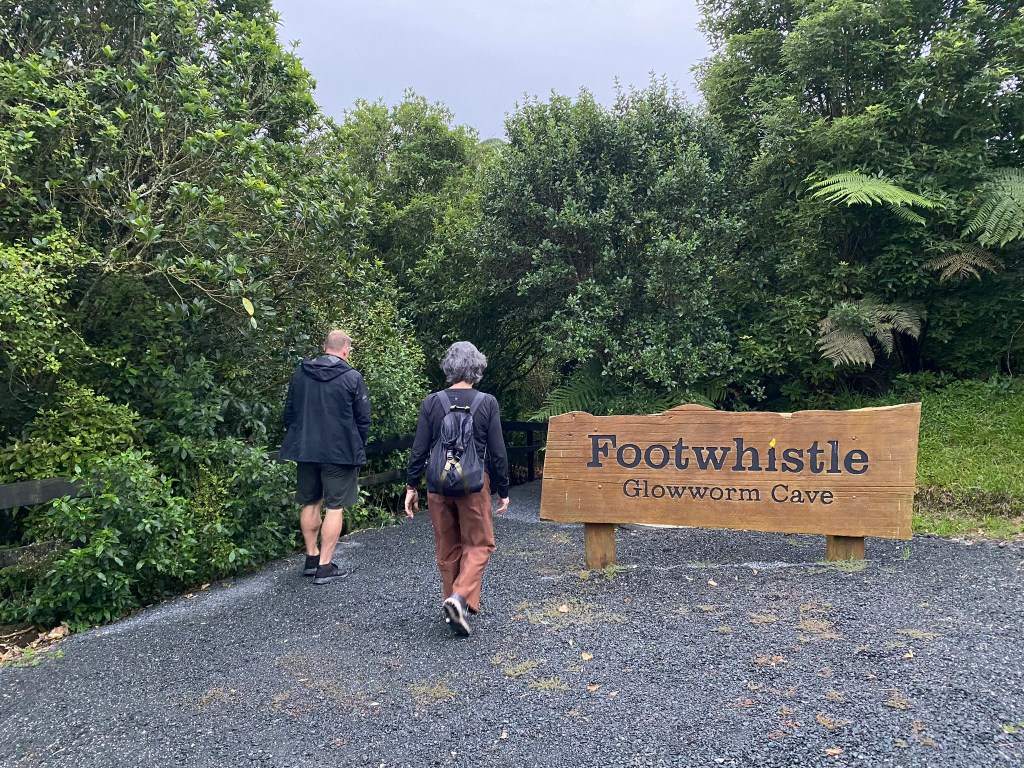
Heading underground 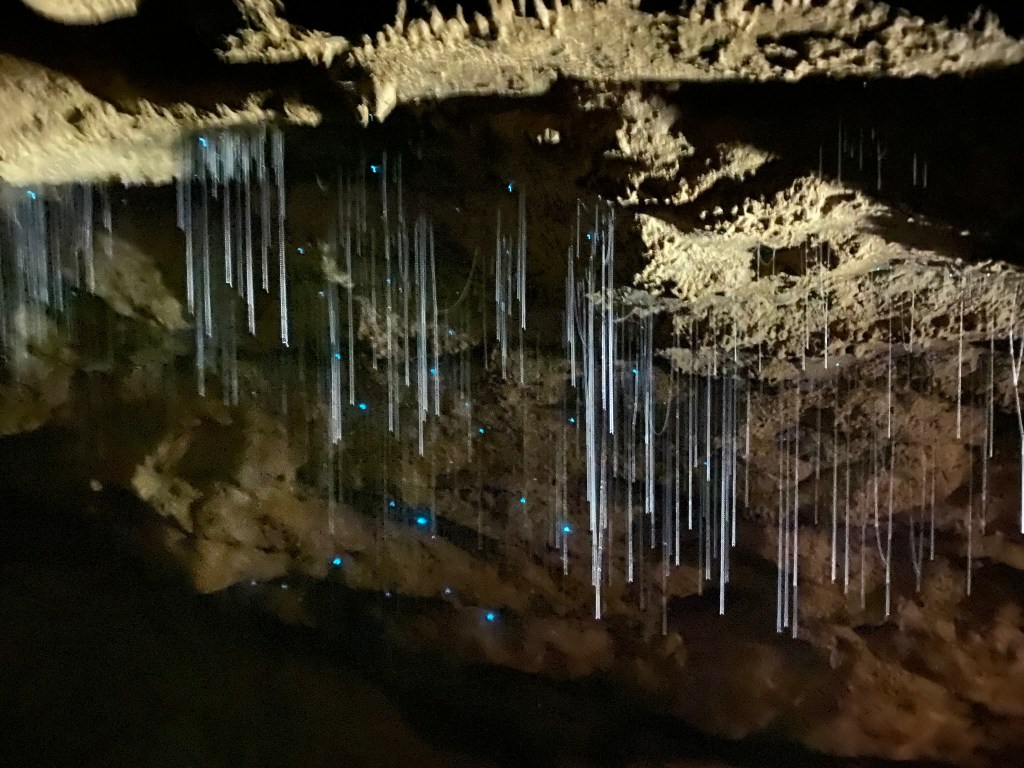
Glowworms and their sticky threads
| Days 5-7 | Turangi (Tongariro Nat’l Park) | The Olive Rabbit |
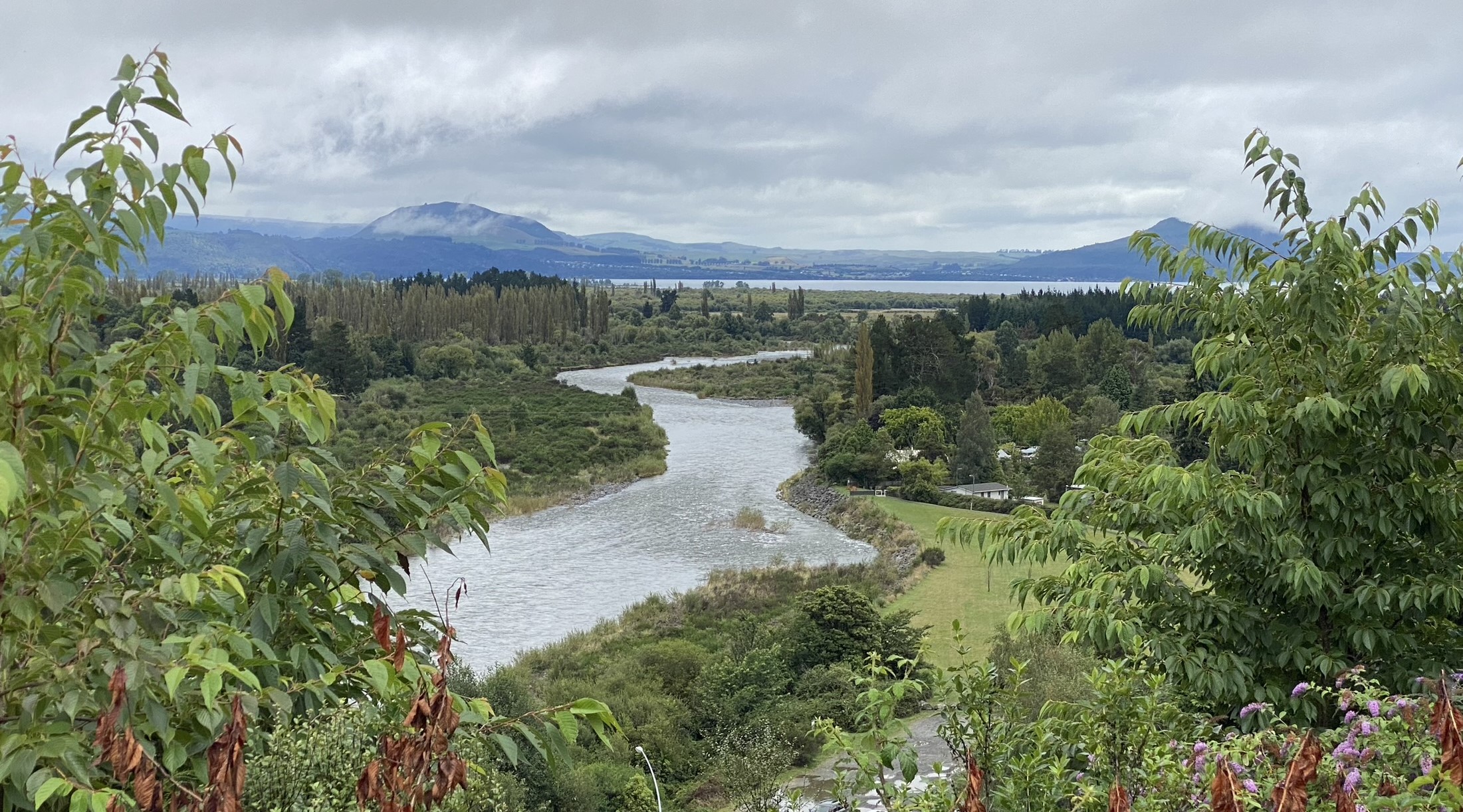
After our 4-hour drive, two-tour day and single night layover, we were ready to get someplace we could linger for a few days. Again, we briefly considered heading southwest to the lush Whanganui National Park, but instead chose to make our next base in the small town of Turangi, situated along the Tongariro River between Lake Taupo and Tongariro National Park.
The Tongariro River is a well-known fly-fishing mecca, while the National Park is a wild, desolate, semi-active volcanic landscape known as a popular ski destination in winter, with two of the three highest peaks (all volcanoes) on the North Island. It is also famously the location of Mordor for the filming of Lord of the Rings trilogy and home to the Tongariro Crossing, one of NZ’s famous Great Walks, and one of the best one-day hikes in the world. If you are looking for outstanding outdoors recreation, you really need two days and three nights here, which is just what we did. Highlights:
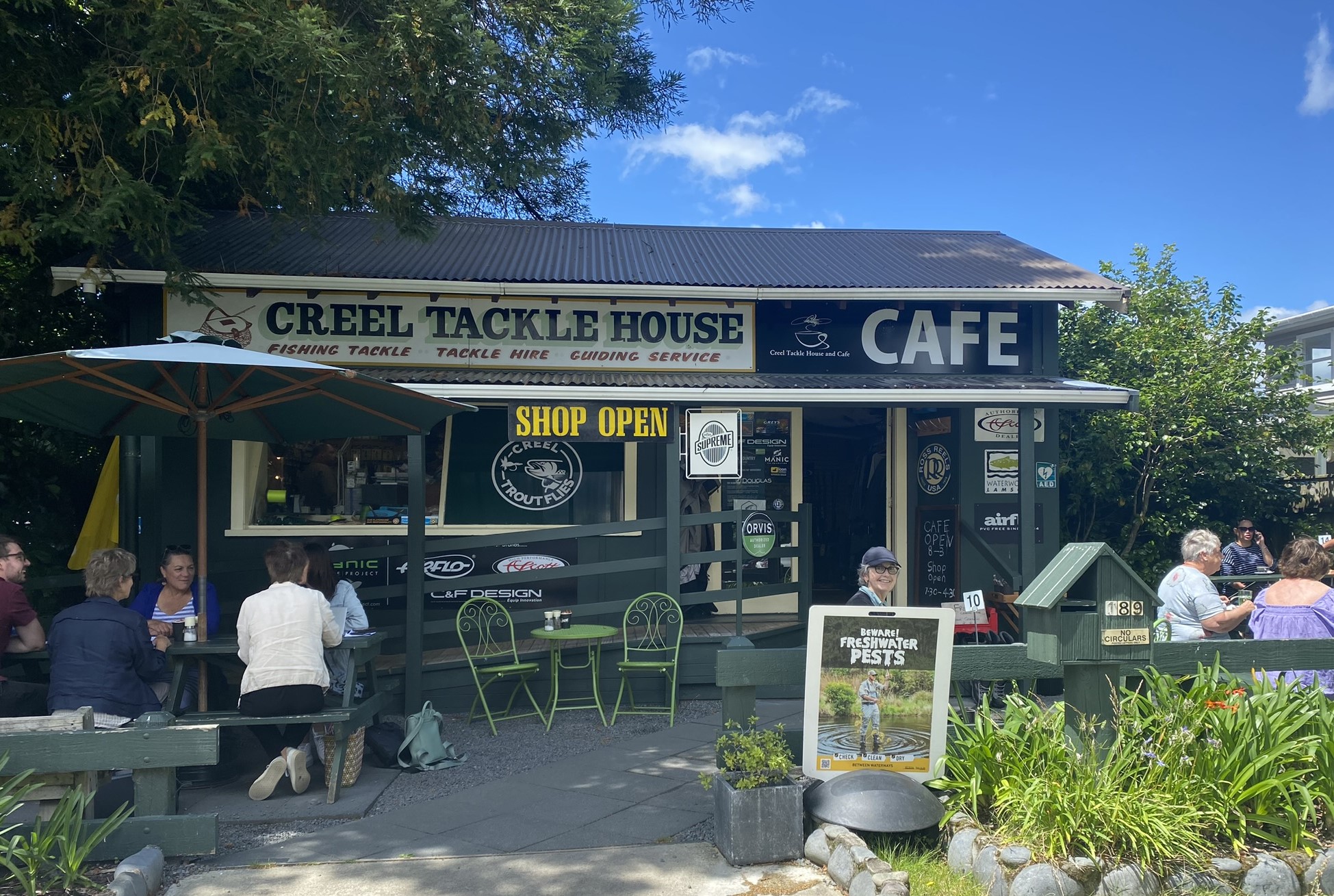
- Fly-fishing the Tongariro River is a fisherman’s dream, though on this trip the river was running high and muddy given tons of recent rain. Our guide, Louise, who we hired out of The Creel fly shop, just a short walk from the Olive Rabbit, was terrific working with Michelle, who was brand new to fly fishing.
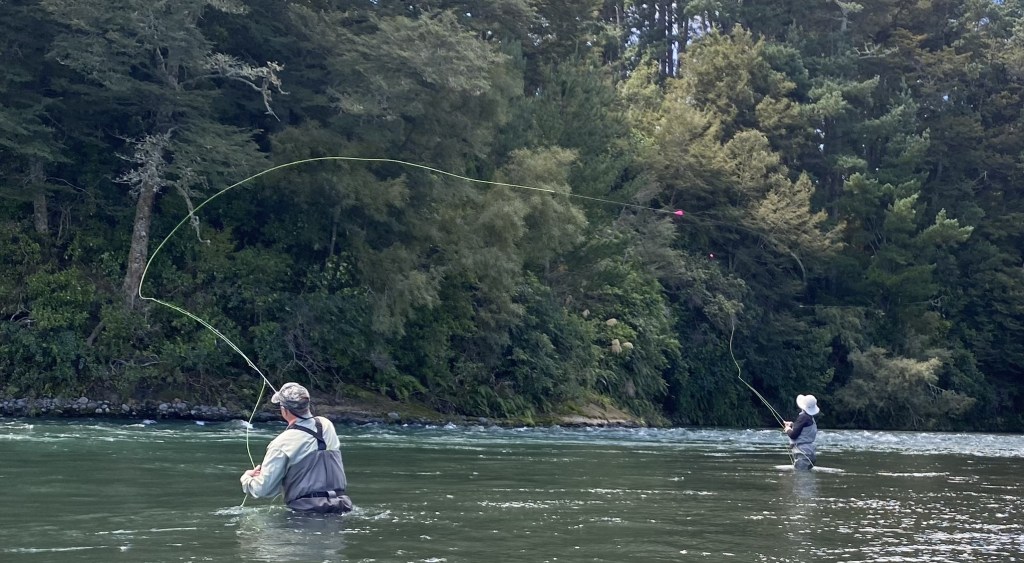
High water makes tough fishing 
With our guide, Louise 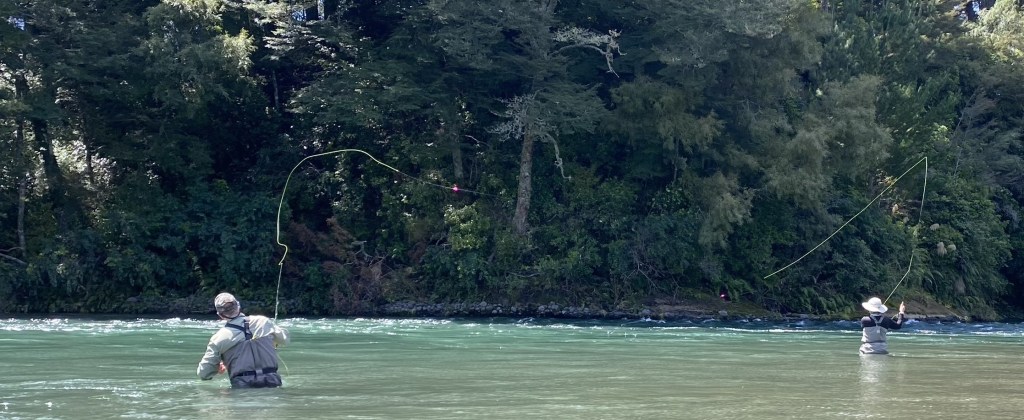
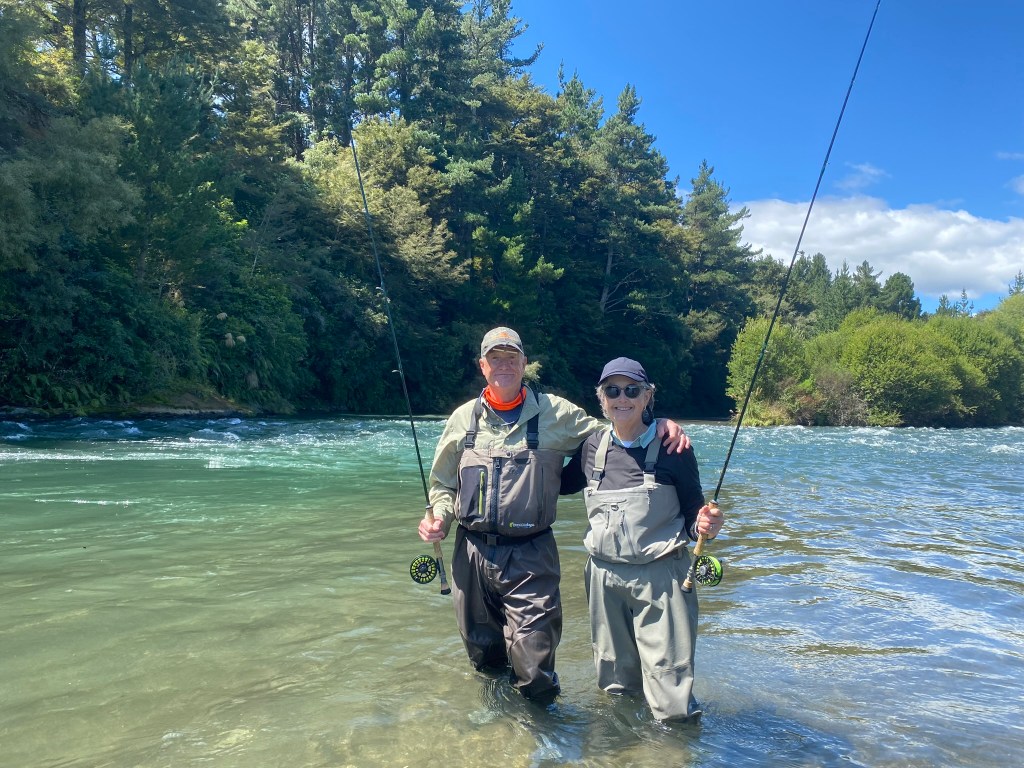
Nice catch! 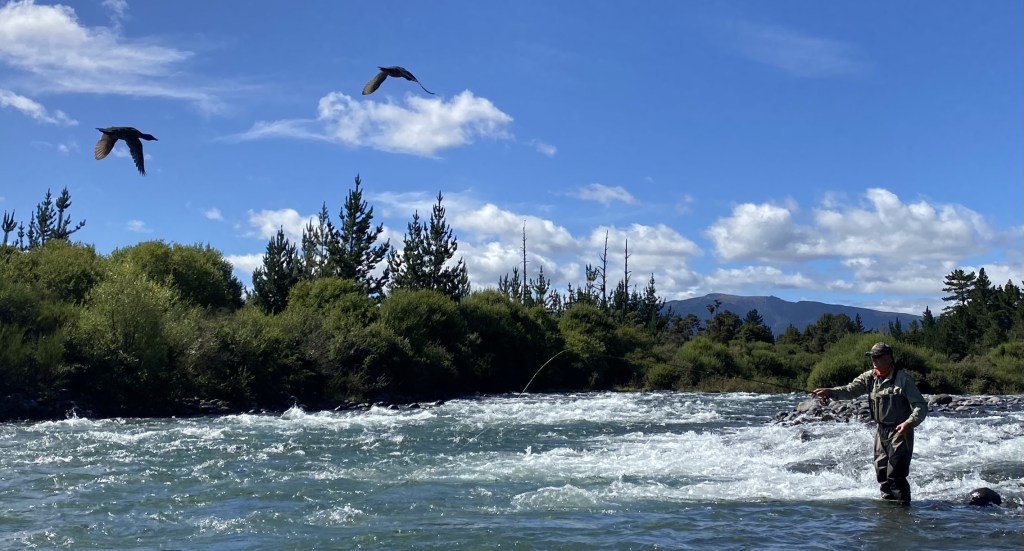
Trout heaven
- Hiking the Tongariro Crossing, a 19-kilometer trek with over 5,000 feet of elevation change through the heart of the volcanoes. Trekking poles (and lots of water) are essential, especially if you have any kind of knee issues. In a cruel twist of fate, the poles I had pre-arranged were missing on arrival, so I bailed in the parking lot rather than risk a torturous 3,000 foot descent. (Our friends, the Hills, made the Crossing a few days later and swore I made the right call.)
- Fortunately, there are several alternative hikes in and around Tongariro NP, and we managed a few terrific ones I highly recommend, including Taranaki Falls (6km loop) and Tawhai Falls (easy, 0.5km out and back to Gollum’s Pool). Lots of easy hiking along the Tongariro River as well.
- The National Trout Centre, on the outskirts of Turangi, had terrific displays covering the history of fly fishing in NZ, which started in the late 1800’s with California native rainbow trout being transplanted into the Tongariro and other streams.
- Opotaka Pa, a sacred historical Māori spot on the north shore of Lake Rotoaira, between Tongariro NP and Turangi, is where the Ka Mate Haka was born. It was a cool spot to visit, with a beautiful landscape and a single sign telling its most famous story.
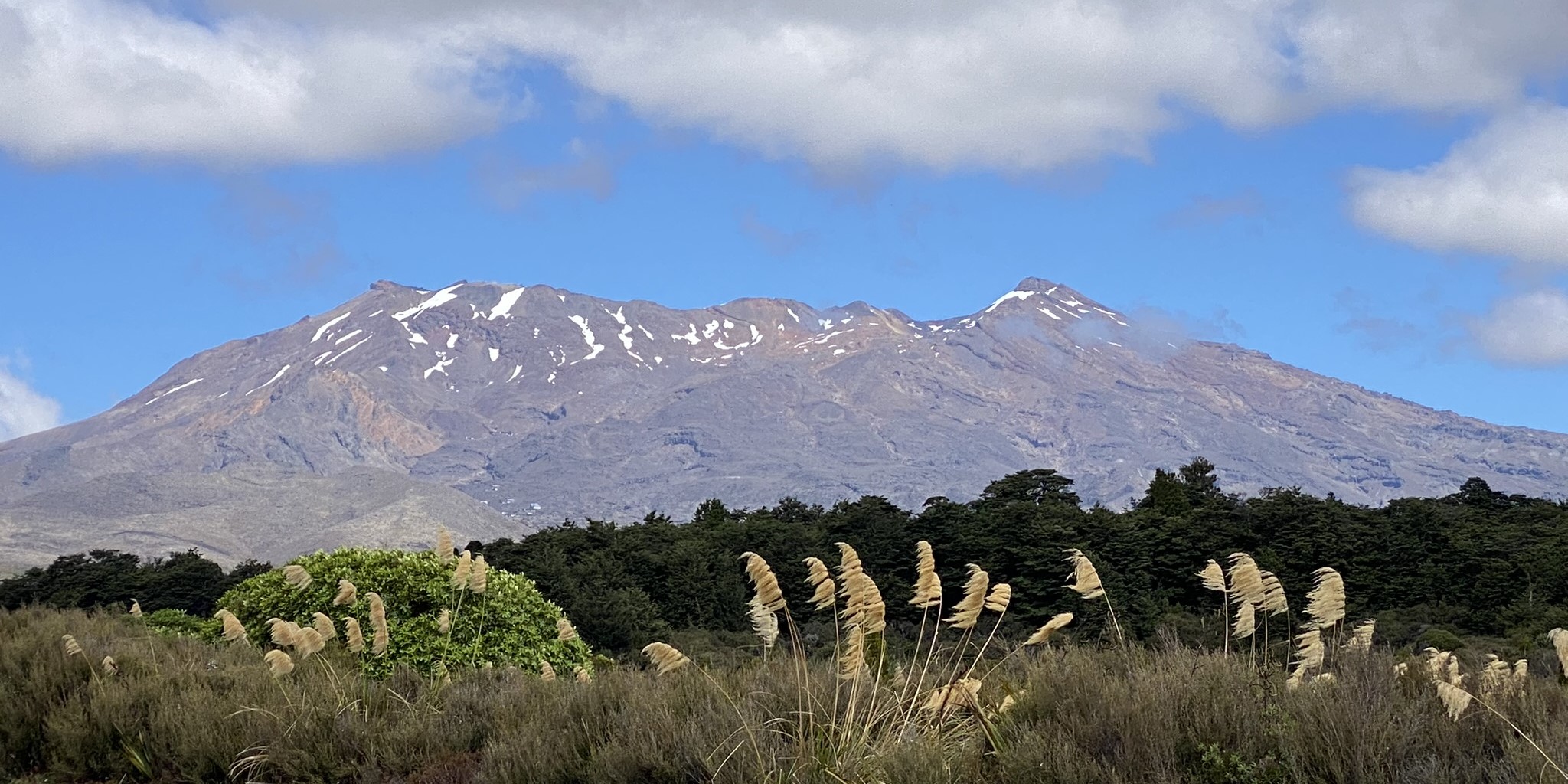
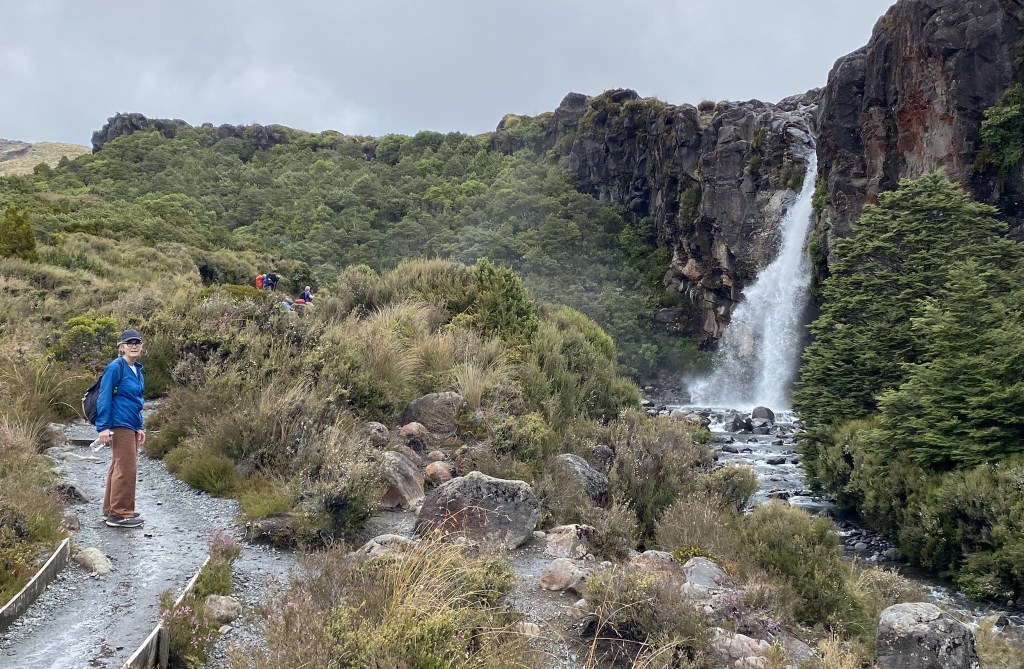
Taranaki Falls 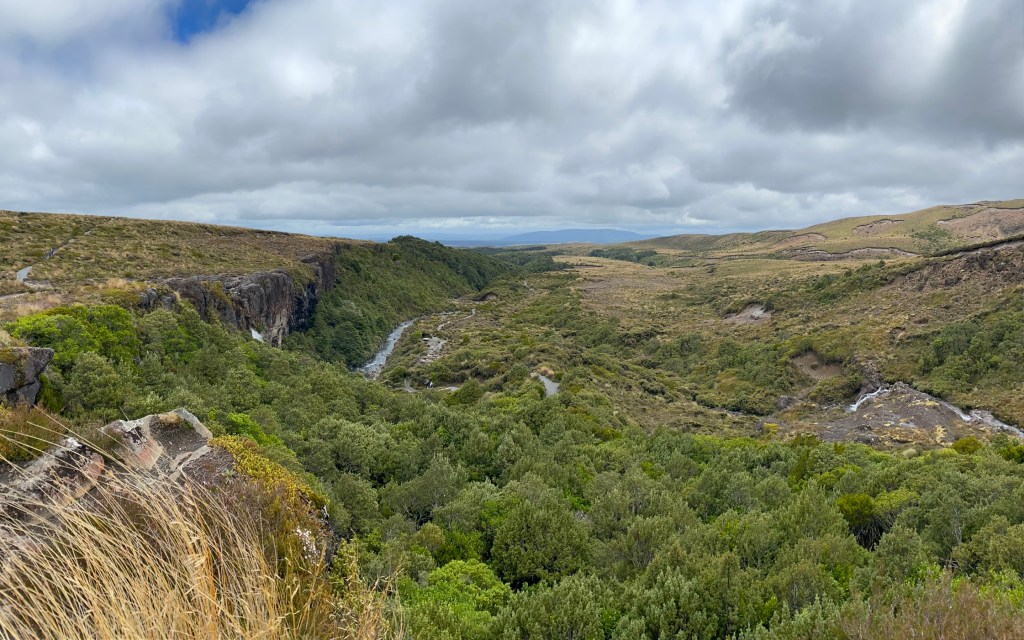
Looking back from top of Taranaki Falls 
Tawhai Falls 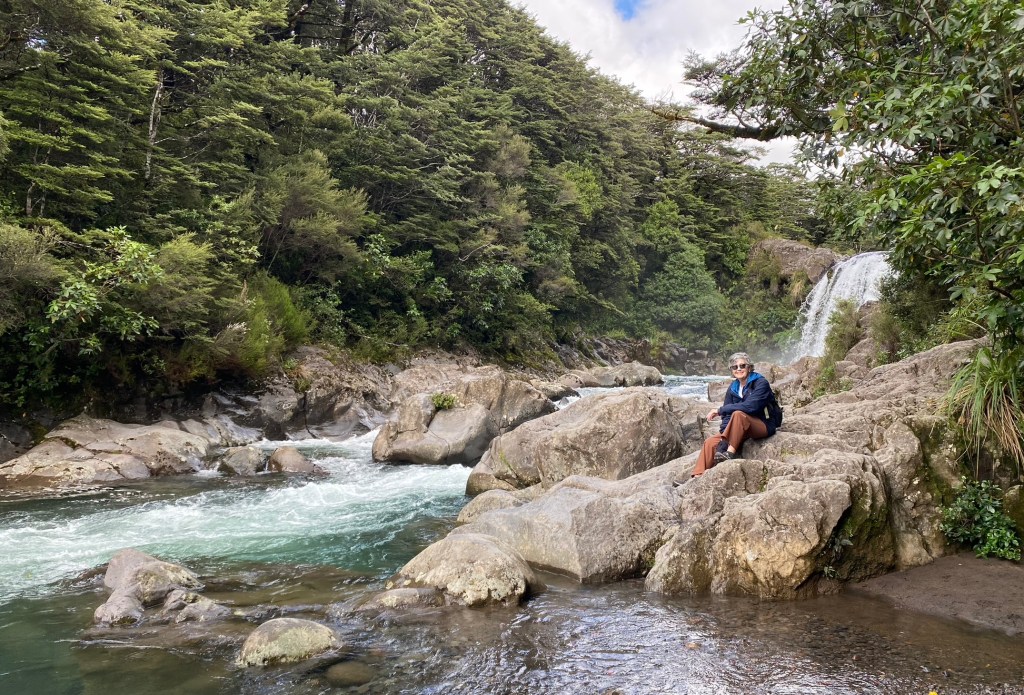
Gollum’s Pool 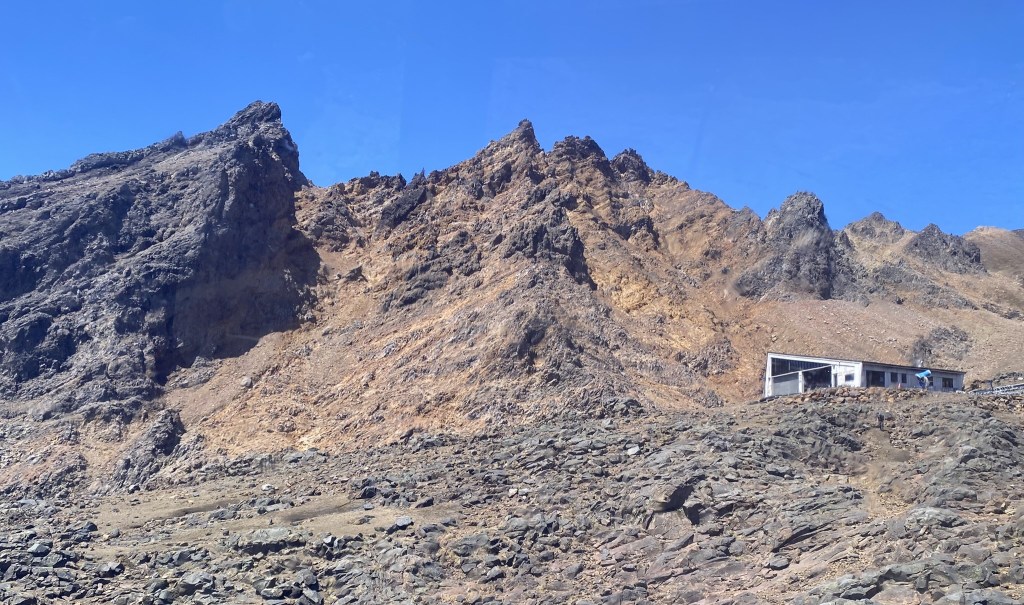
The Back Bar inside Ruapehu crater 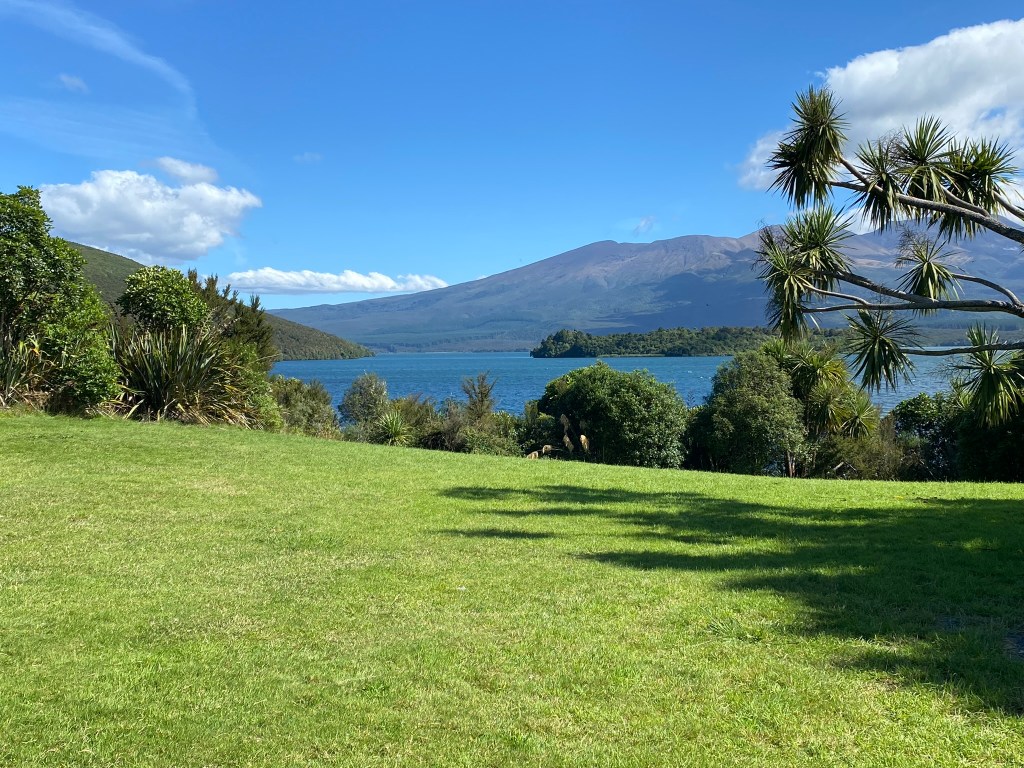
Opotaka Pa 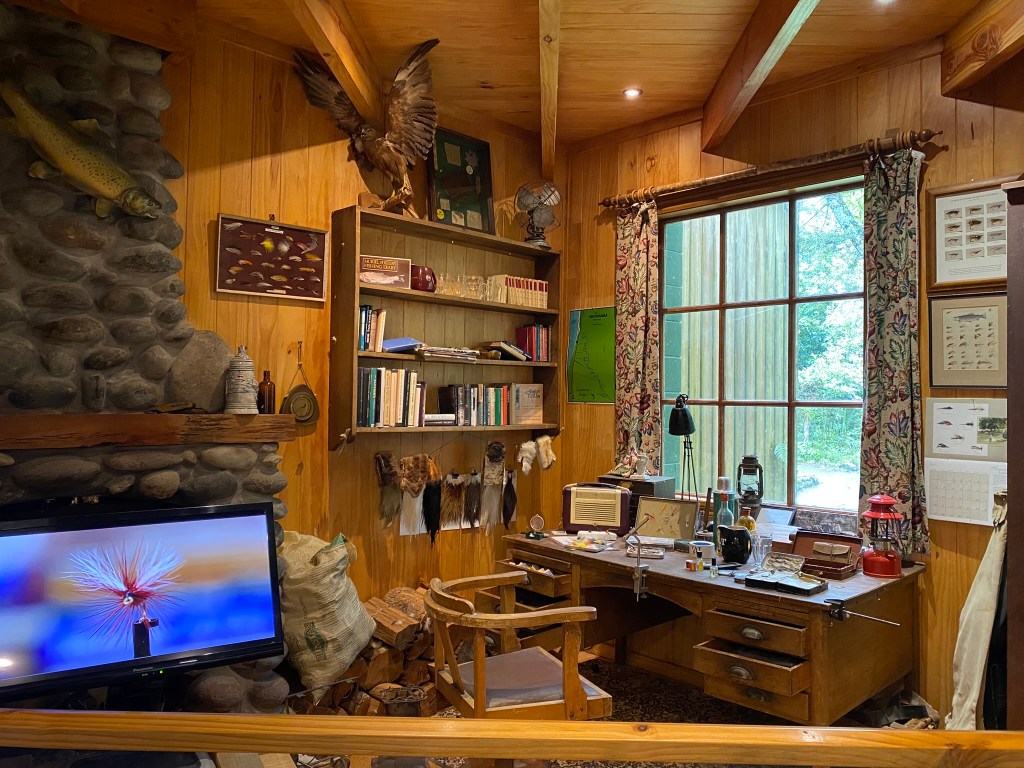
National Trout Center fly tying diorama
- Dinner at Hare & Copper was easily the best dinner in Turangi. (The Tongariro Lodge is well known for attracting famous guests for years, though it’s understaffed and getting mixed reviews during our trip. Worse yet, there is no bar to drop in for a drink and check out all the history on its walls.)
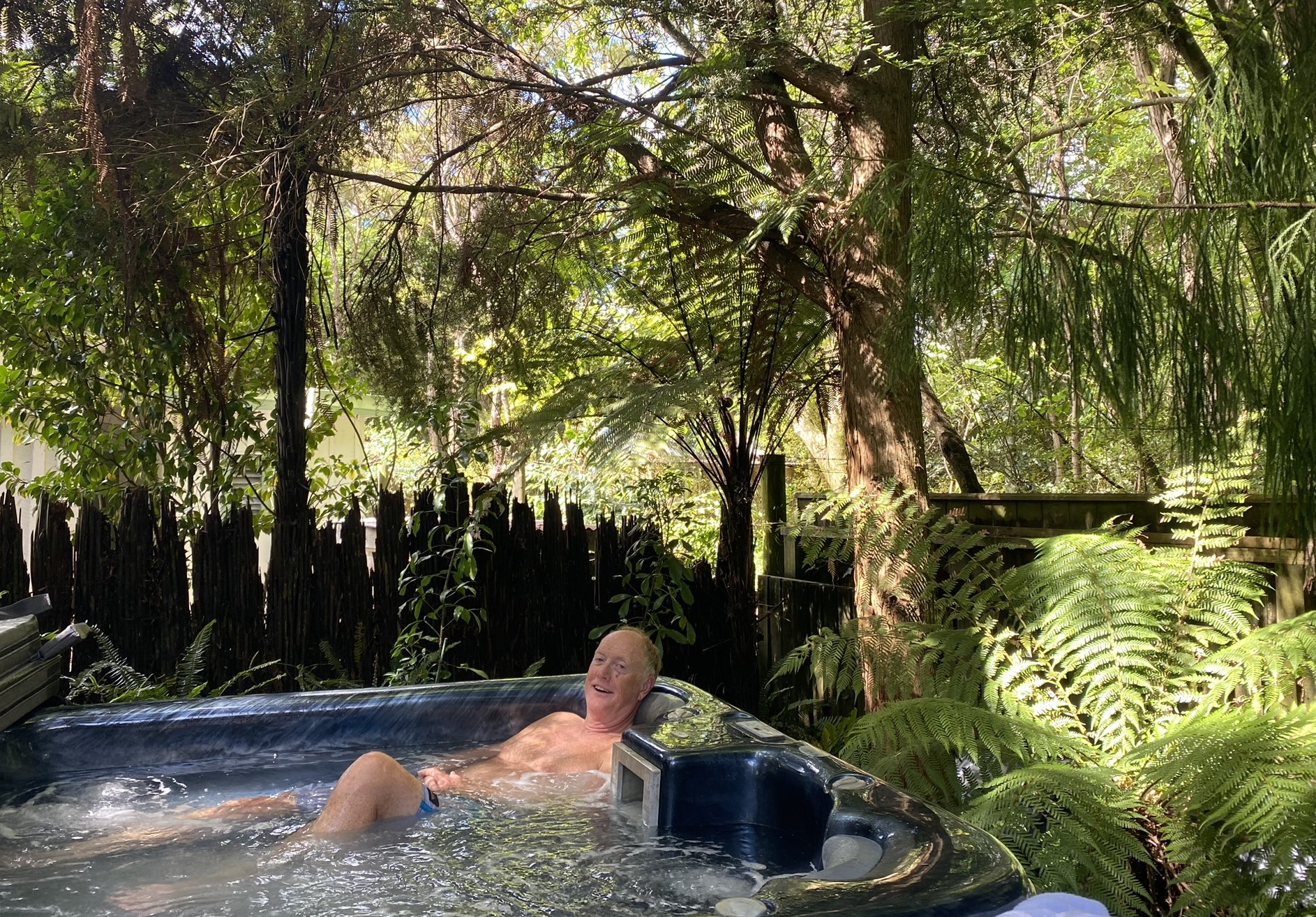
- The Olive Rabbit is quite simply one of the best B&B’s we have stayed at, and it is perfectly situated a short walk from the Tongariro River and an easy drive to all other local destinations. Hosts Tim and Mary are just the best. Read my review here.
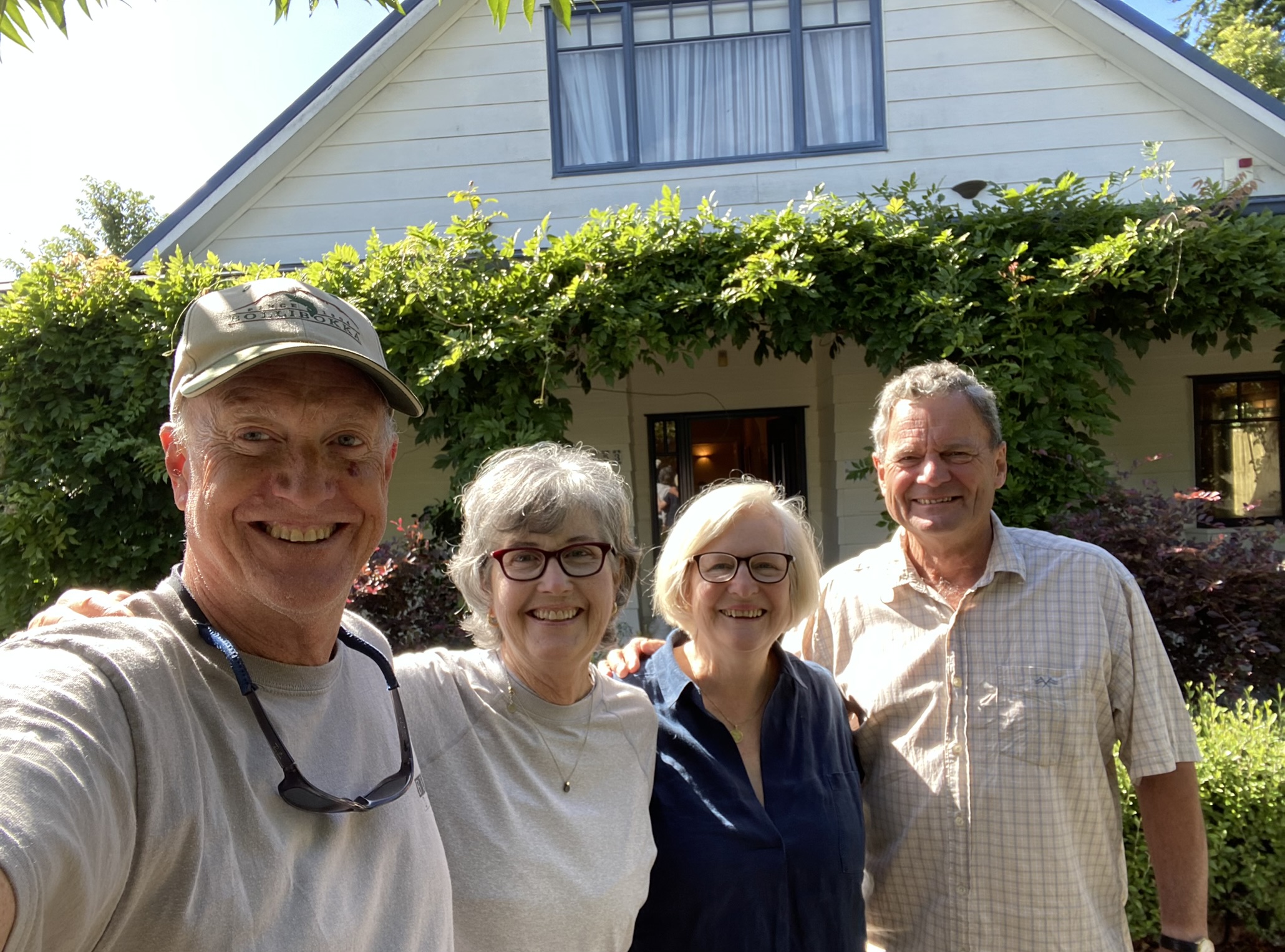
| Days 8-9 | Wellington to Blenheim | Bolton Hotel Chateau Marlborough |
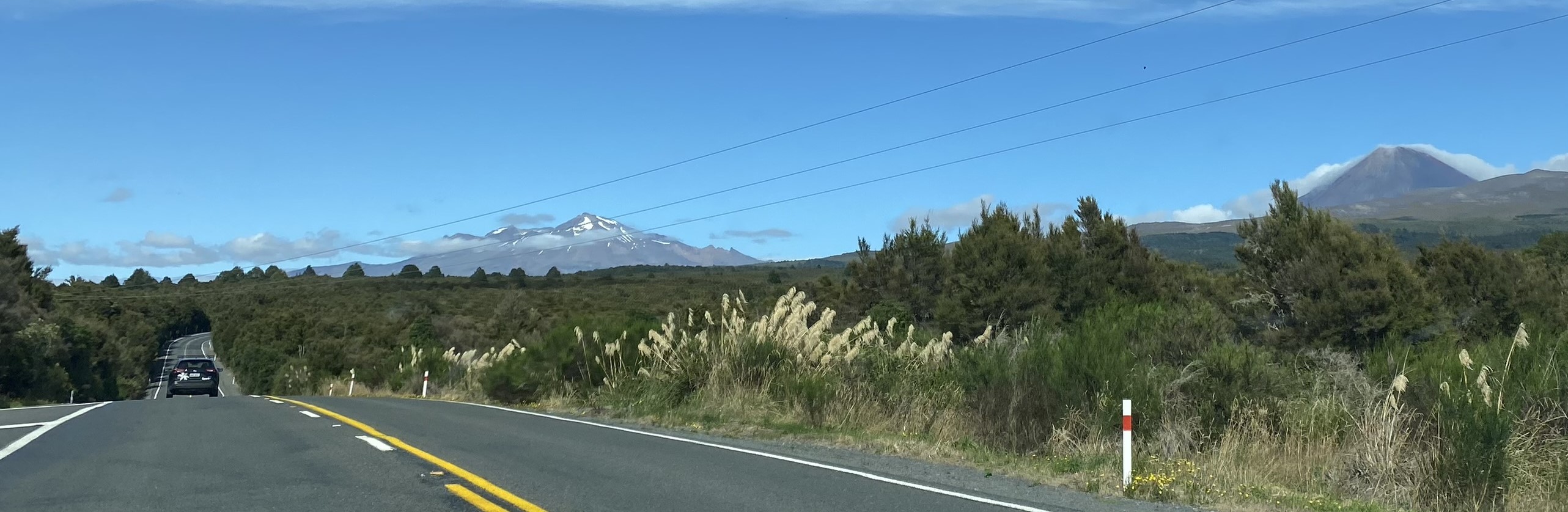
After our last sumptuous breakfast with Tim and Mary at the Olive Rabbit, we headed down the Desert Road passing Tongariro National Park on our way to Wellington, a 4-hour drive. With a few more days, we might have stayed, even camped, a couple days on the way in Ruahine Forest Park, known for its natural beauty and good whitewater rafting. As it was, we stopped in the small, frontier town of Taihape to shop for an inexpensive cooler and grab lunch at the Brown Sugar Cafe. Tim and Mary had also told us to keep an eye out for The Wool Company, a great place to buy merino and possum wool socks just down the highway from Taihape. And so we did, and a hat for Michelle.
Wellington
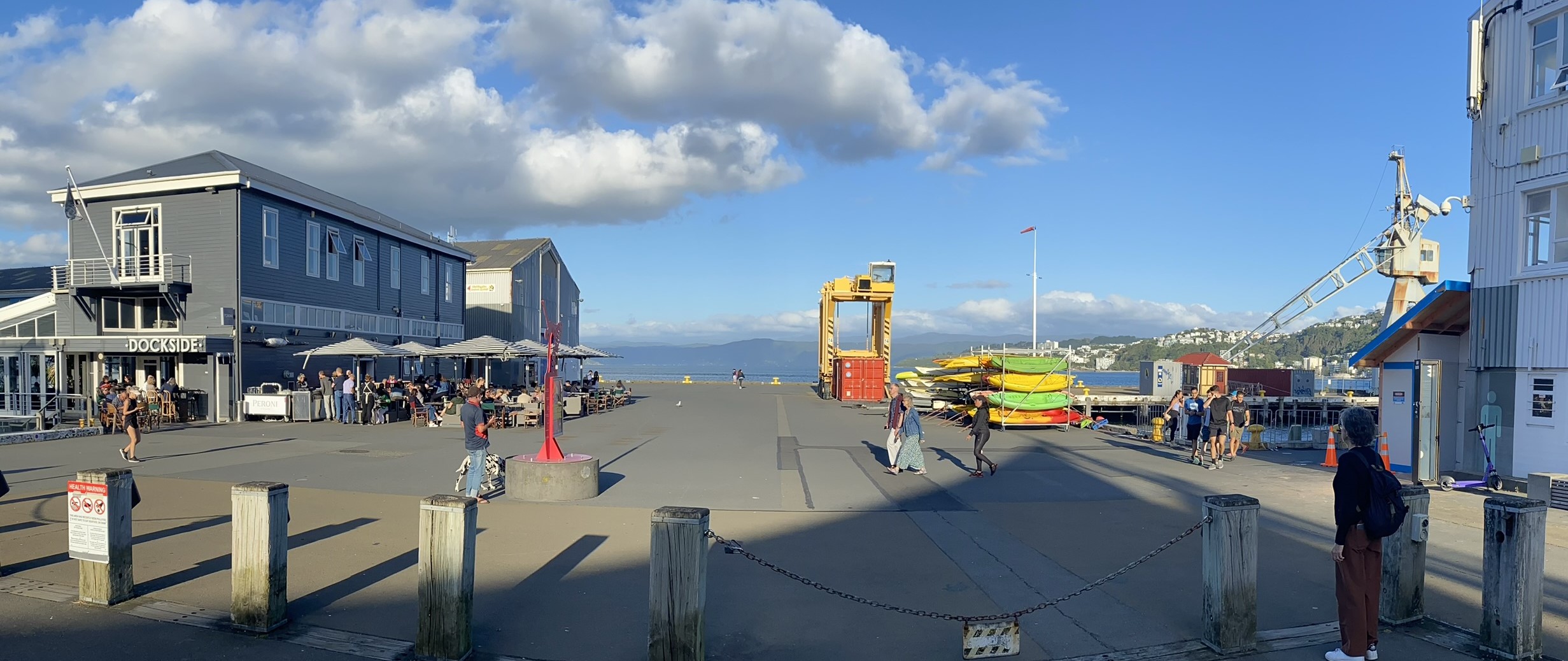
Finally, after another couple hours driving along the Kapiti Coast, we dropped into the bustling capital city of Wellington. We checked into our hotel and headed straight for the waterfront to grab lunch.
We had planned to stay for a couple days in Wellington, meeting up with good friends Kathy and Bob Hill, who had just finished the South Island and were heading north. Michelle and I hit a couple bars on the much-hyped Cuba Street, which we found to be overrated in general, before meeting the Hills at Ortega’s Fish Shack, where we enjoyed an incredible dinner, good wine and lots of laughs.
The next day, our plans suddenly changed. The ferry from Wellington to Picton (gateway to the South Island) we had booked after our second night cancelled without warning. Because we did not want to be delayed another day, we scrambled to find another ferry and were very lucky to get the last car spot on the last ferry heading out later the same day. We still managed to get a couple sightseeing excursions in before the ferry. Highlights from our shorter than expected stay include:
- Riding the Wellington Cable Car to the top of Botanic Gardens for view of city and harbor, then walking back to town through the botanical gardens and town cemetery.
- Visiting the Te Papa national museum, with permanent exhibitions on the natural world and the history of New Zealand and the Pacific, as well as an extensive collection of New Zealand art.
- In addition to Ortega’s Fish Shack, we enjoyed good seafood lunches (mussels, chowder and beer) at Dockside and Shed 5 on the waterfront.
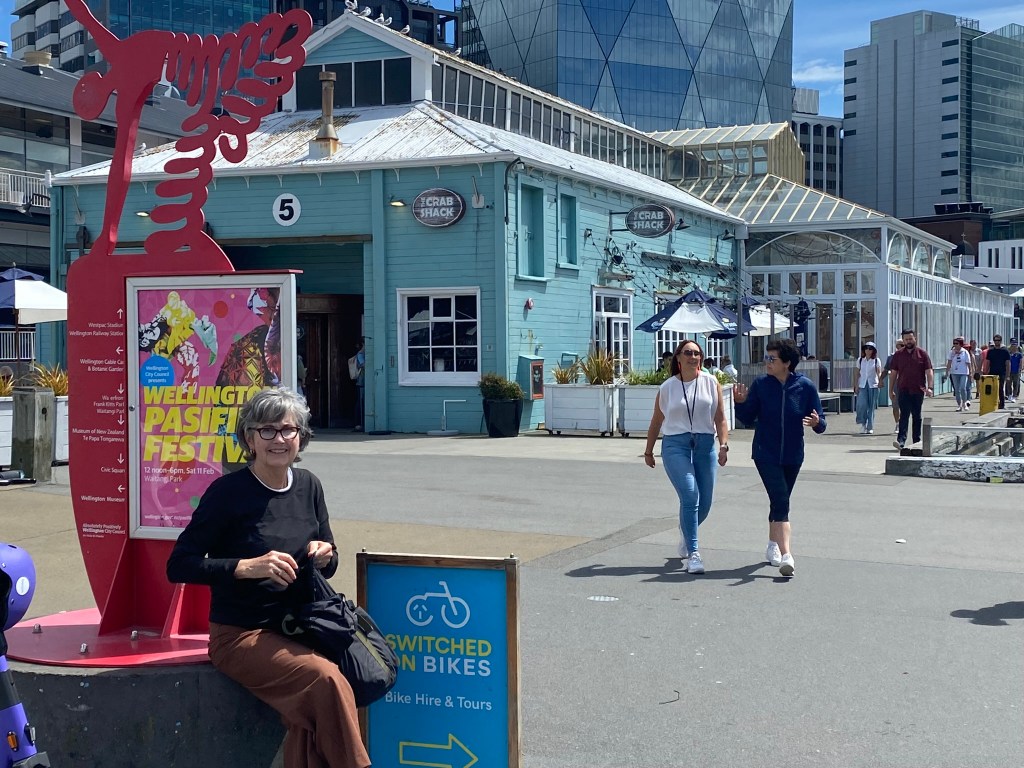
Outside Shed 5 on the waterfron 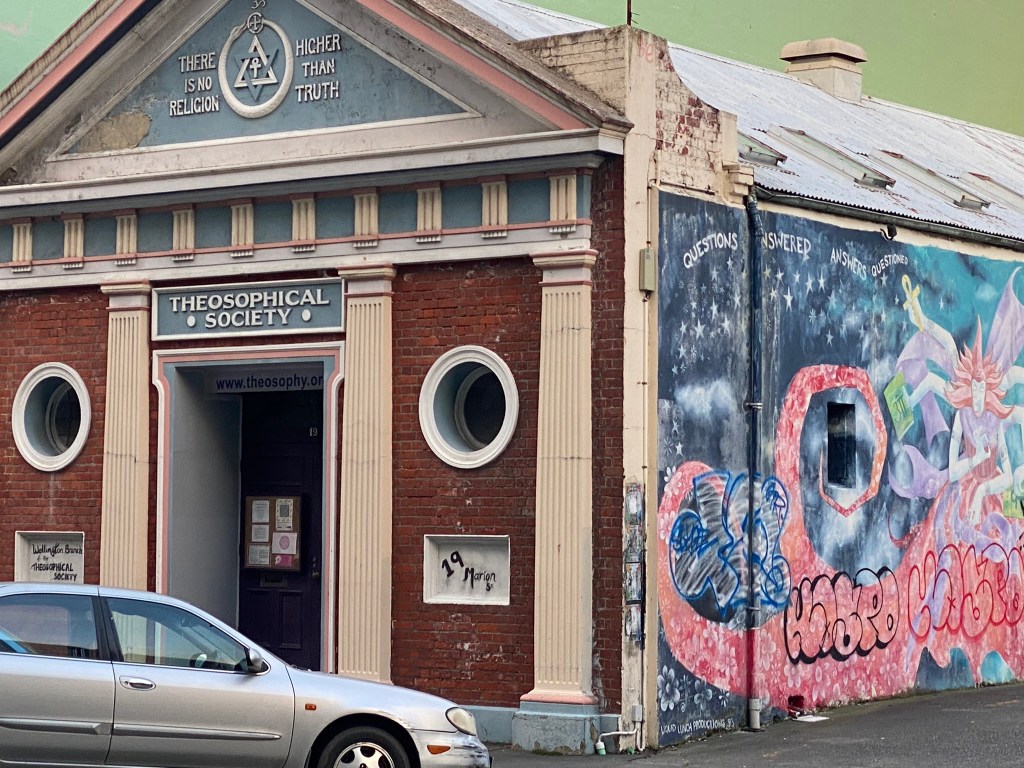
“There is no religion higher than truth.” 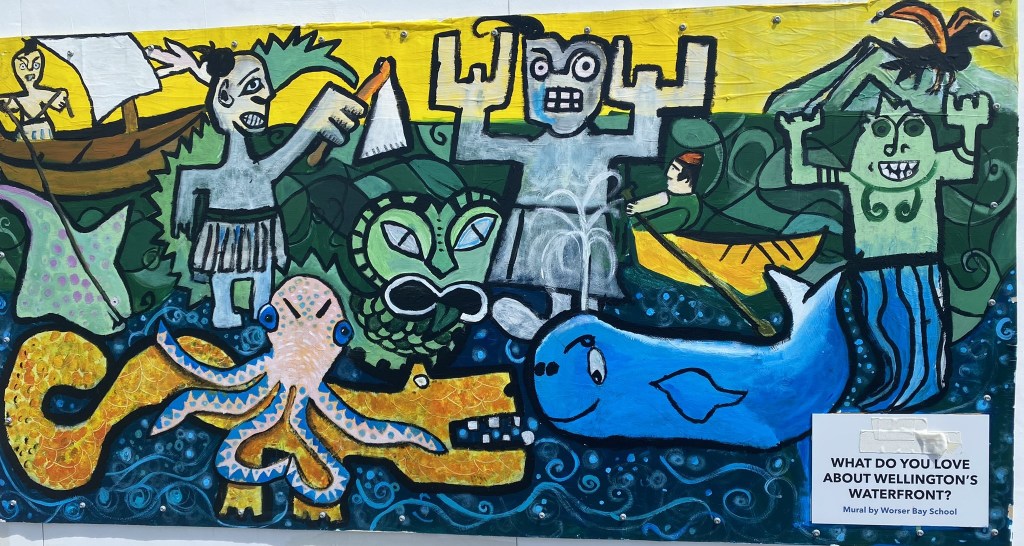
Street art 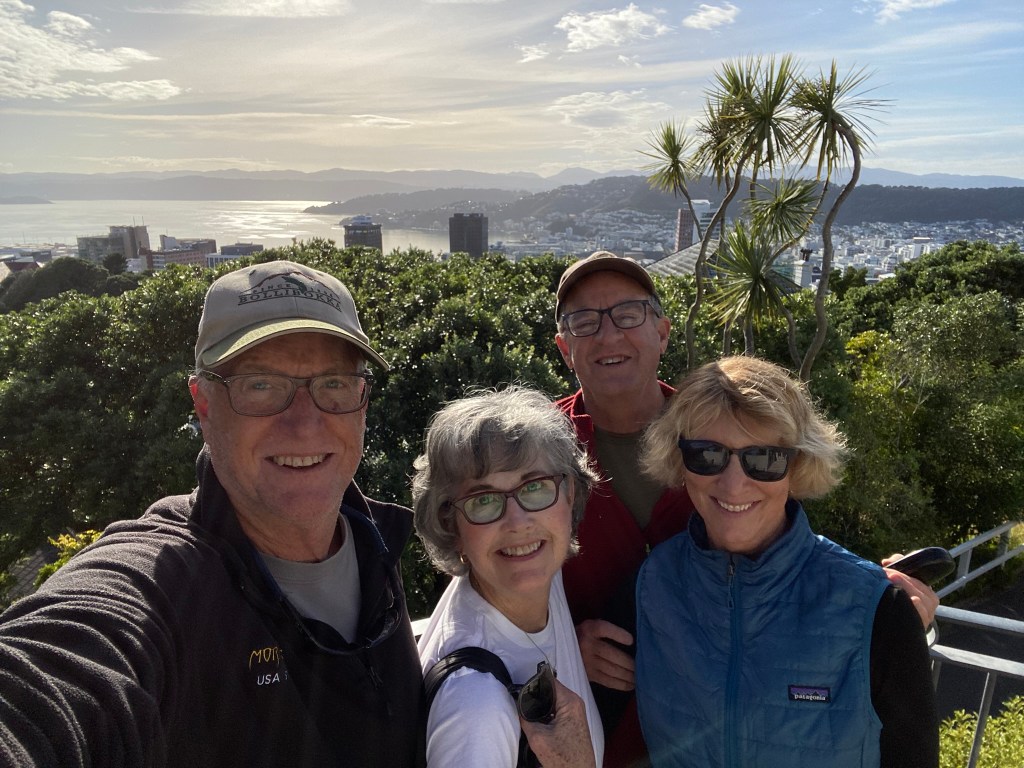
With the Hills overlooking the harbor 
Botanical gardens 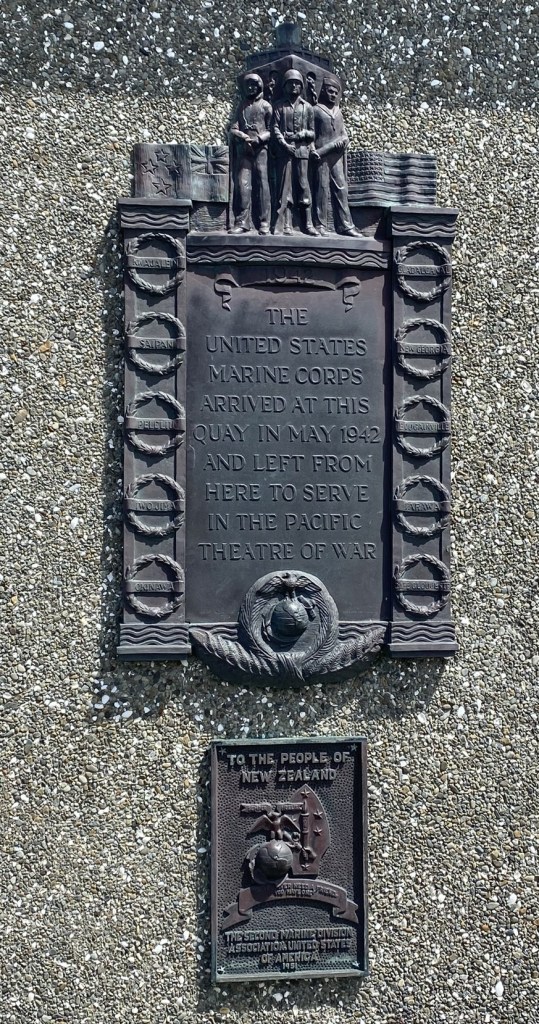
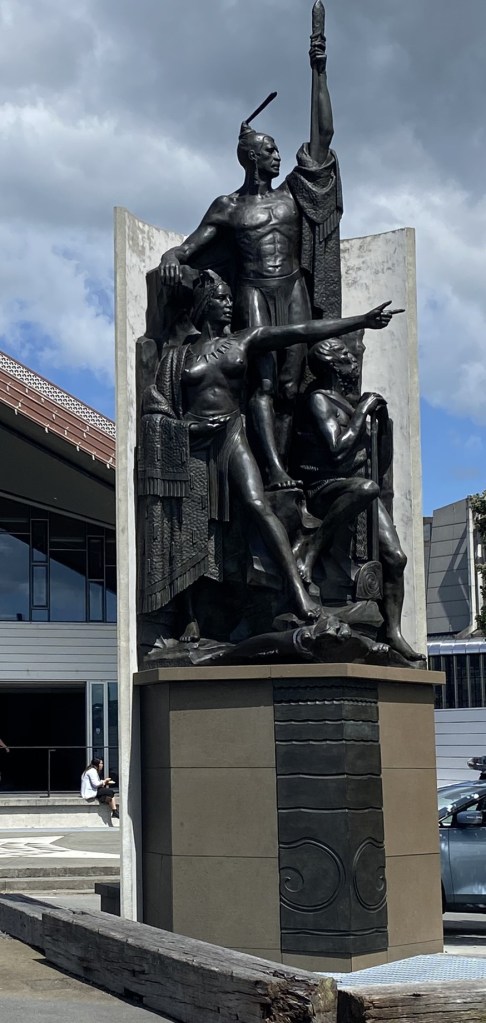
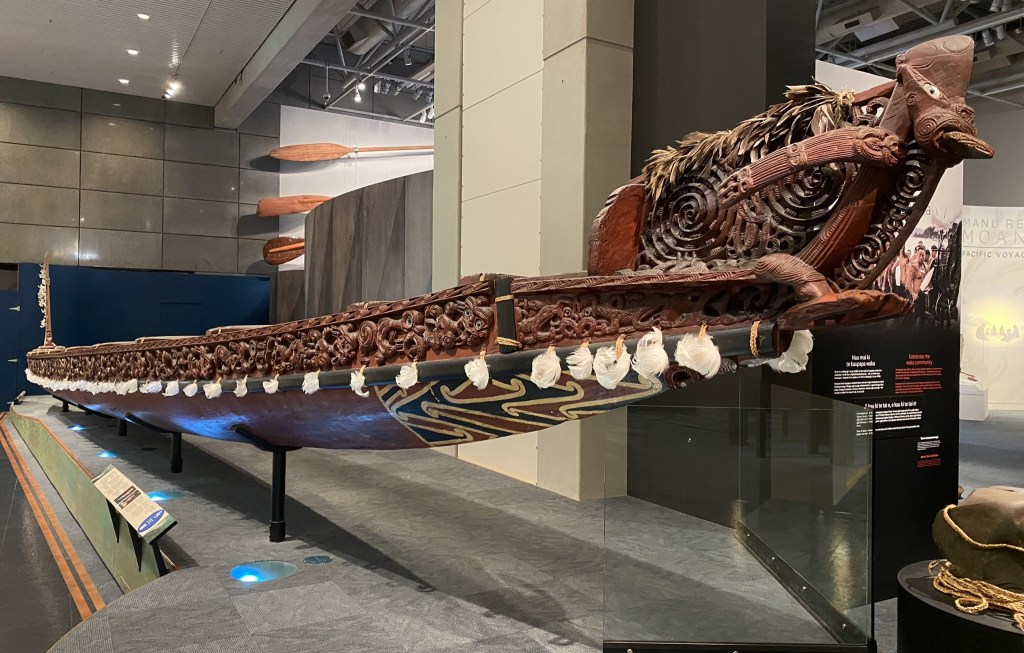
Maori canoe for interisland travel
Other hot spots we had hoped to hit but couldn’t with our shortened stay; I’ve heard these are all great:
- Garage Project brewery
- Stroll the Wellington Writer’s Walk to the Harbourside Market
- Zealandia is a one-of-a-kind bird sanctuary with more than 40 species, many of which can be found only in New Zealand.
- While this was not on our short list, I heard from many people that the Weta Workshop tours of the production company behind the movies “Avatar” and “The Lord of the Rings” is quite good.
- Other restaurant recommendations from locals: Prefab (a must for breakfast or lunch), El Matador, Dragonfly, and Boulcott Street Bistro.
Cook Strait Crossing
Suddenly, it was time to catch our ferry for the 3-hour Cook Strait crossing to Picton. We had nice weather for the crossing, though the Strait, which connects the Tasman Sea and Pacific Ocean, is known to be pretty rough at times. Entering the Queen Charlotte Sound and passing by its islands and many bays was quite beautiful.
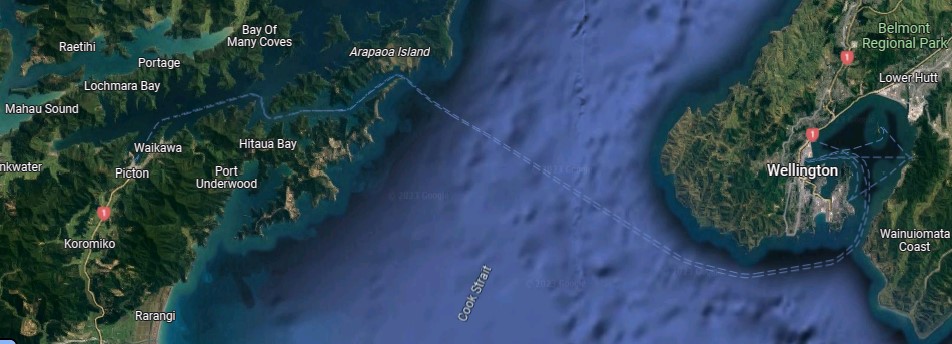
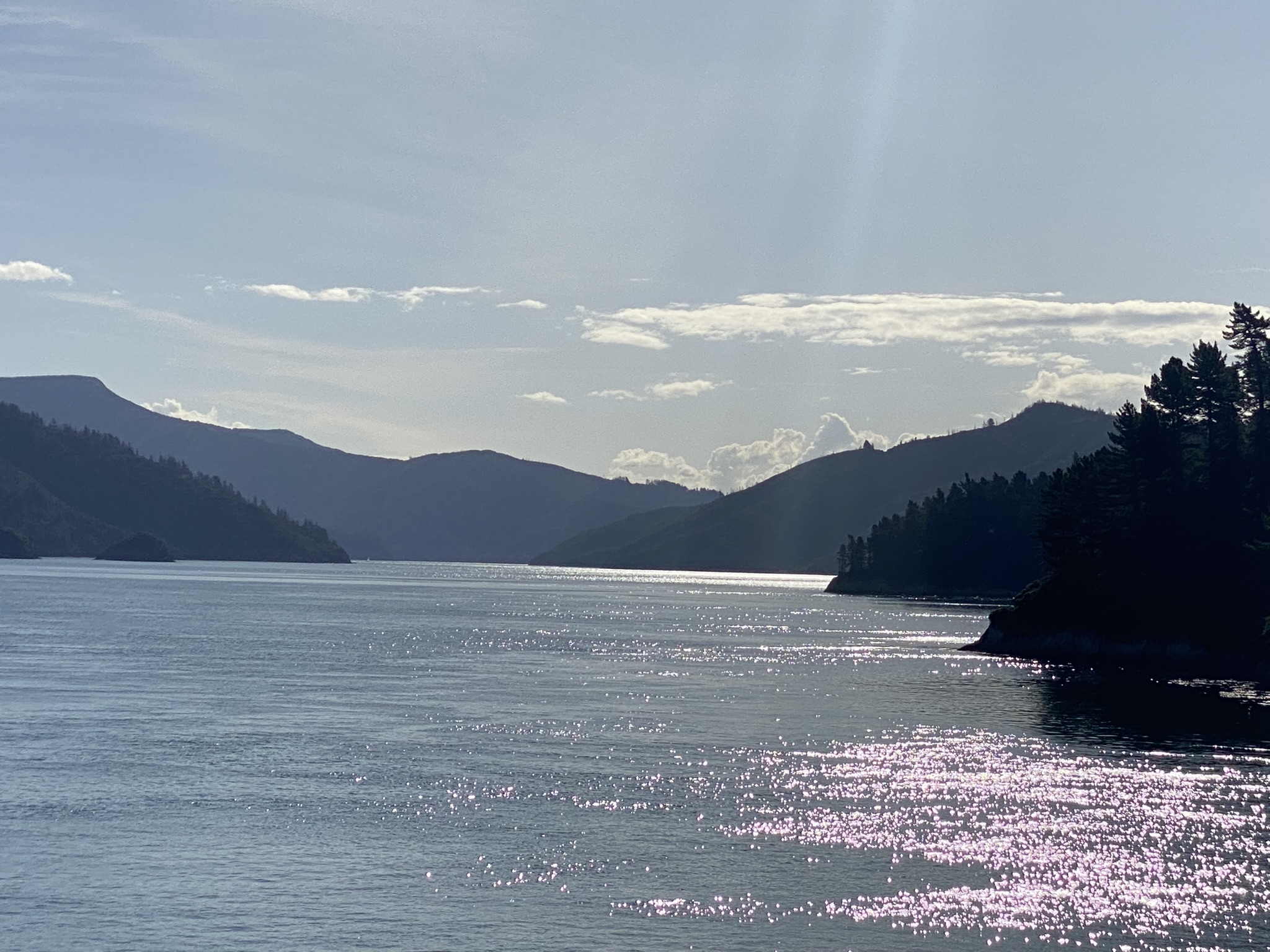
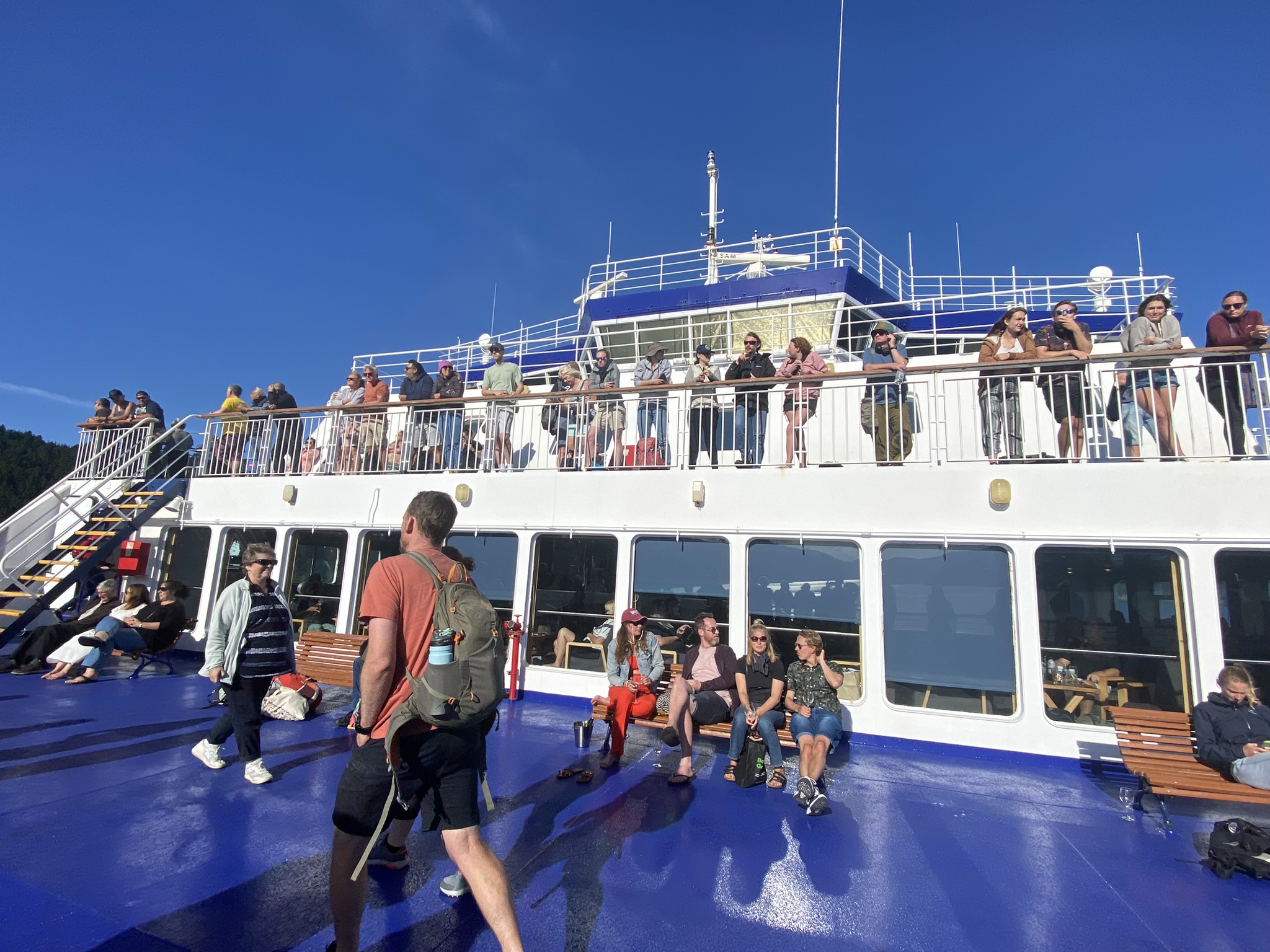
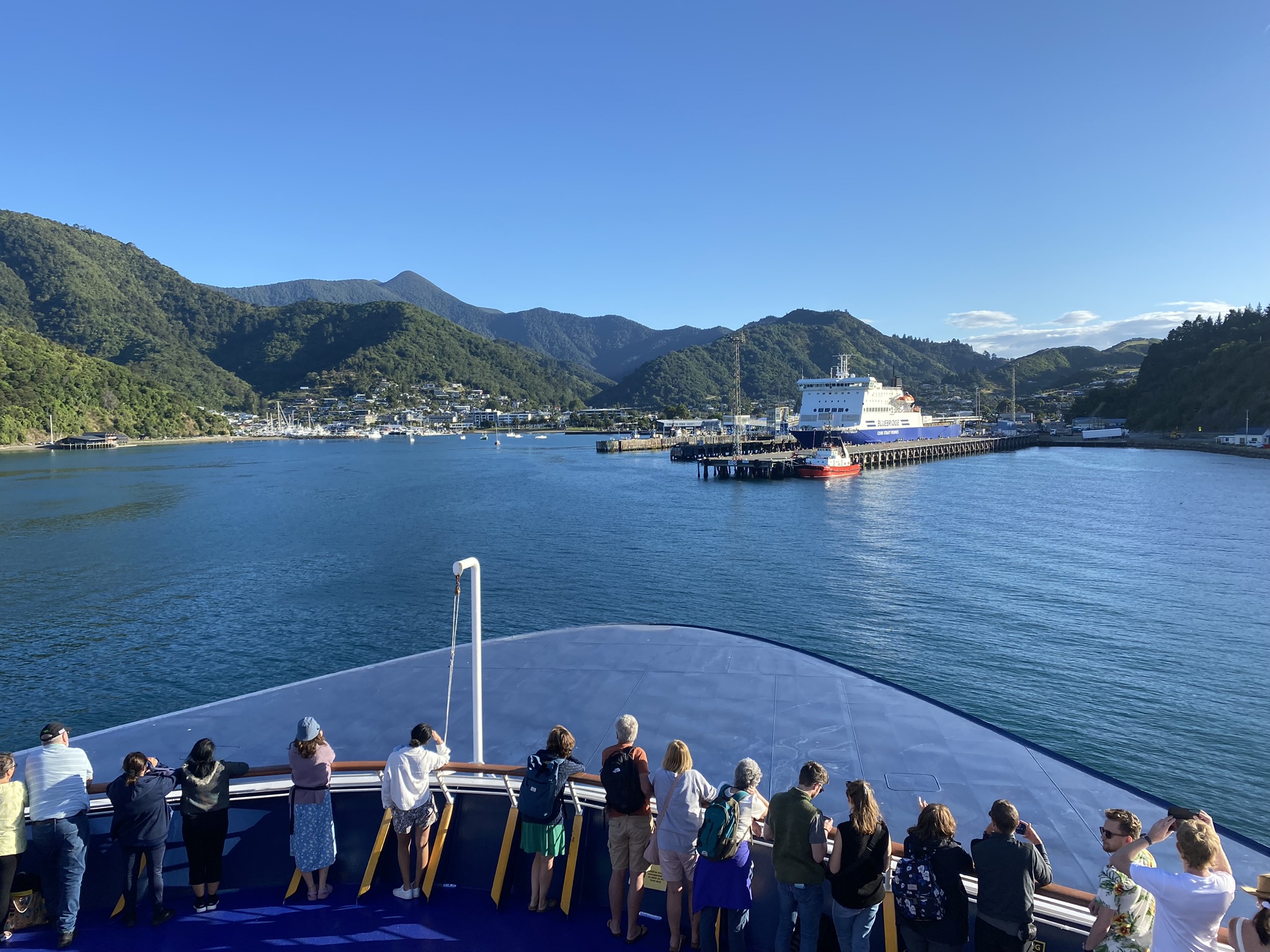
Little did we know when we made our last minute ferry schedule change that lodging on the other side without advance reservations would be a challenge. Everything in Picton was fully booked, as were towns on the way to Kaiteriteri, our next planned destination and a 3-hour drive from Picton. With our ferry arriving an hour before dark, we very much wanted to stay somewhere close. We got lucky once again, scoring the last room at the only available (and most expensive) hotel in Blenheim, just 30 minutes away.
Blenheim
Blenheim is a charming town situated in the heart of Marlborough wine country. This region is famous for its white wines, notably Sauvignon Blanc (“Savvy B” to the local Kiwis) and Pinot Gris. We learned on arrival that the next day marked the start of the annual Wine & Food Festival that attracts thousands of visitors from around the world! This explained the shortage of hotel rooms and Airbnb’s. Amazingly, we got lucky again as we walked into town and managed to get the last open table at Frank’s Oyster Bar & Eatery. Soon there was a line out the door with people being turned away. Great food, great wines and outstanding service!
If you visit, be sure to stroll through Seymour Square with its beautiful flower beds and get a close look at the War Memorial Clock tower, which commemorates NZ’s fallen soldiers from four different wars.

Marlborough wine country 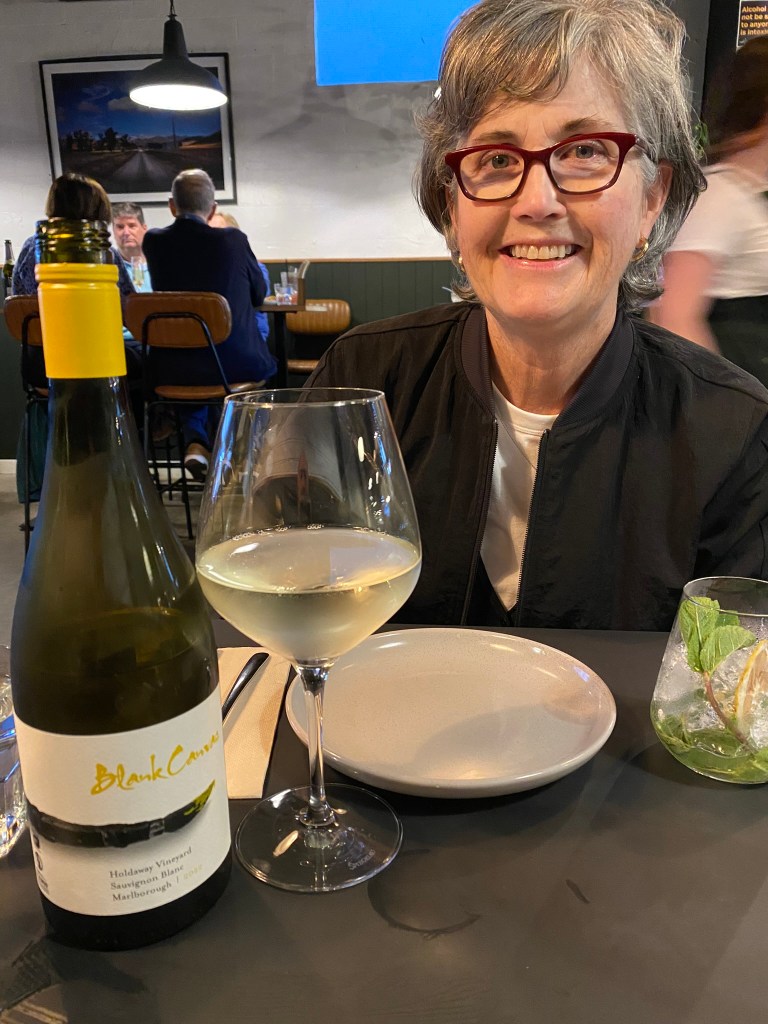
Enjoying the Savvy B 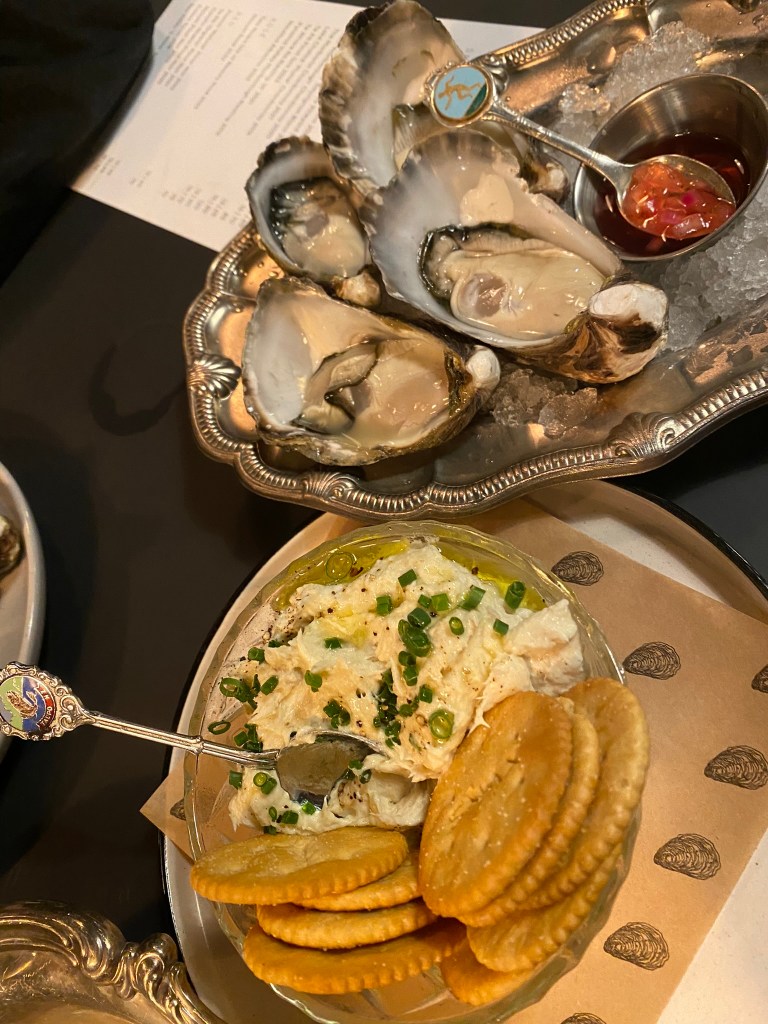
Great oysters & fish dip! 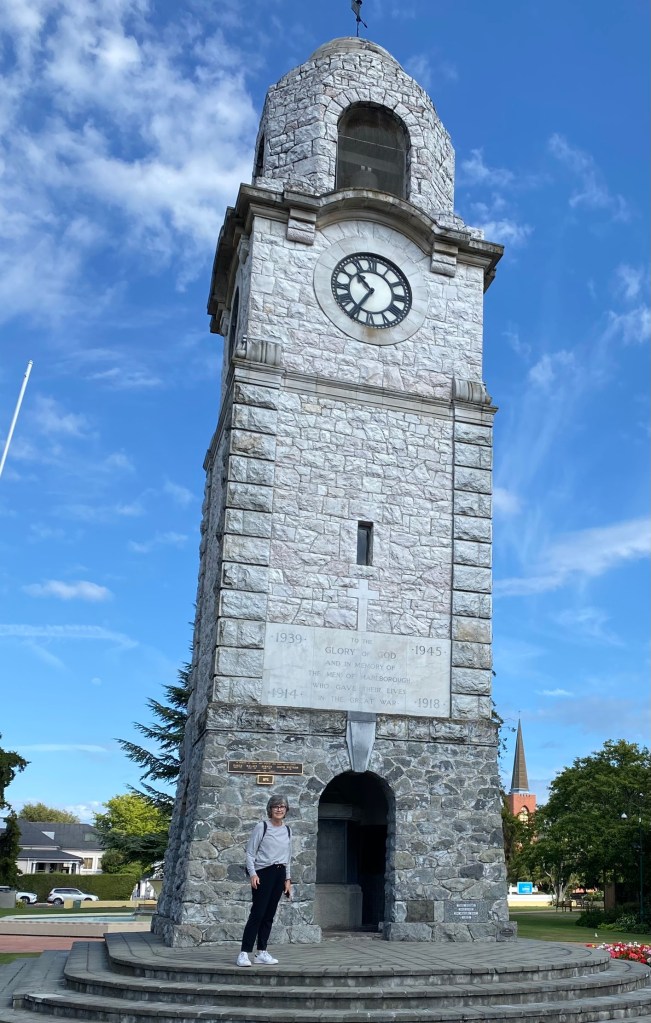
War Memorial Clock Tower 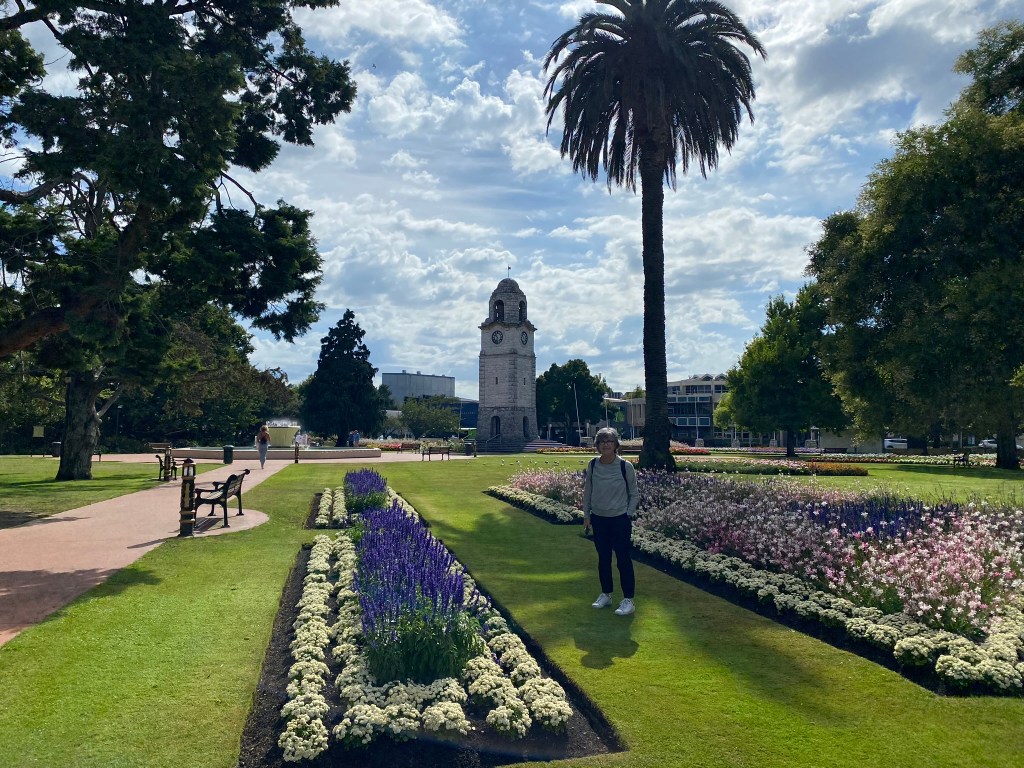
Seymour Square 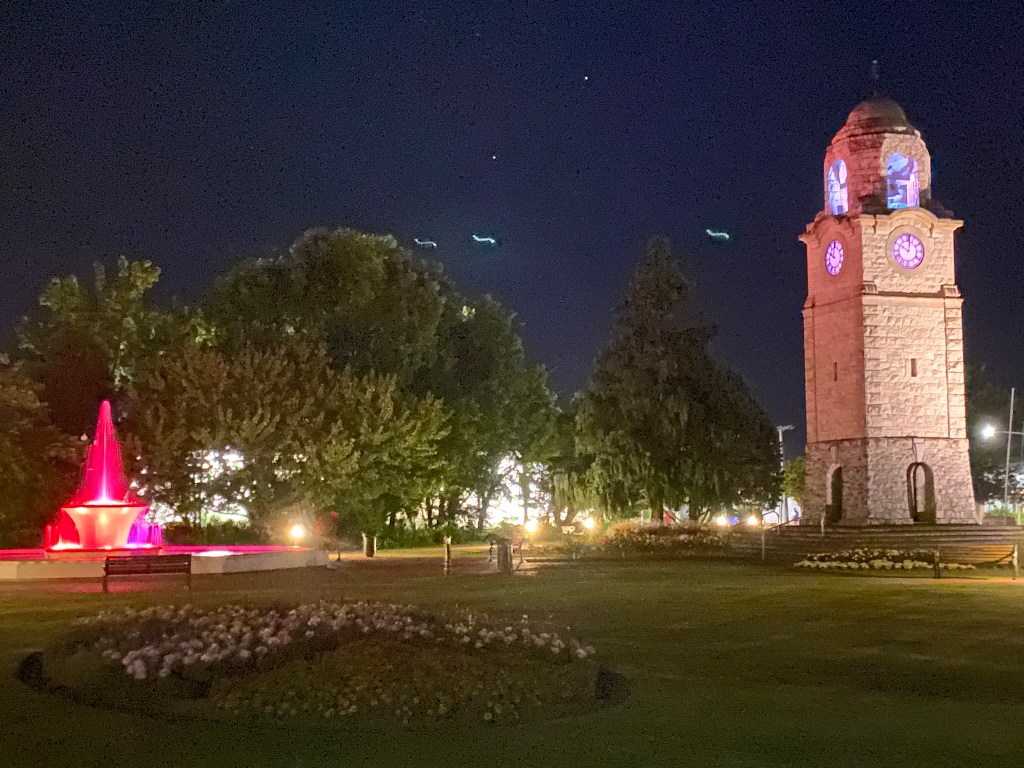
Seymour Square at night
| Days 10-12 | Abel Tasman National Park | Kaiteriteri Retreat |
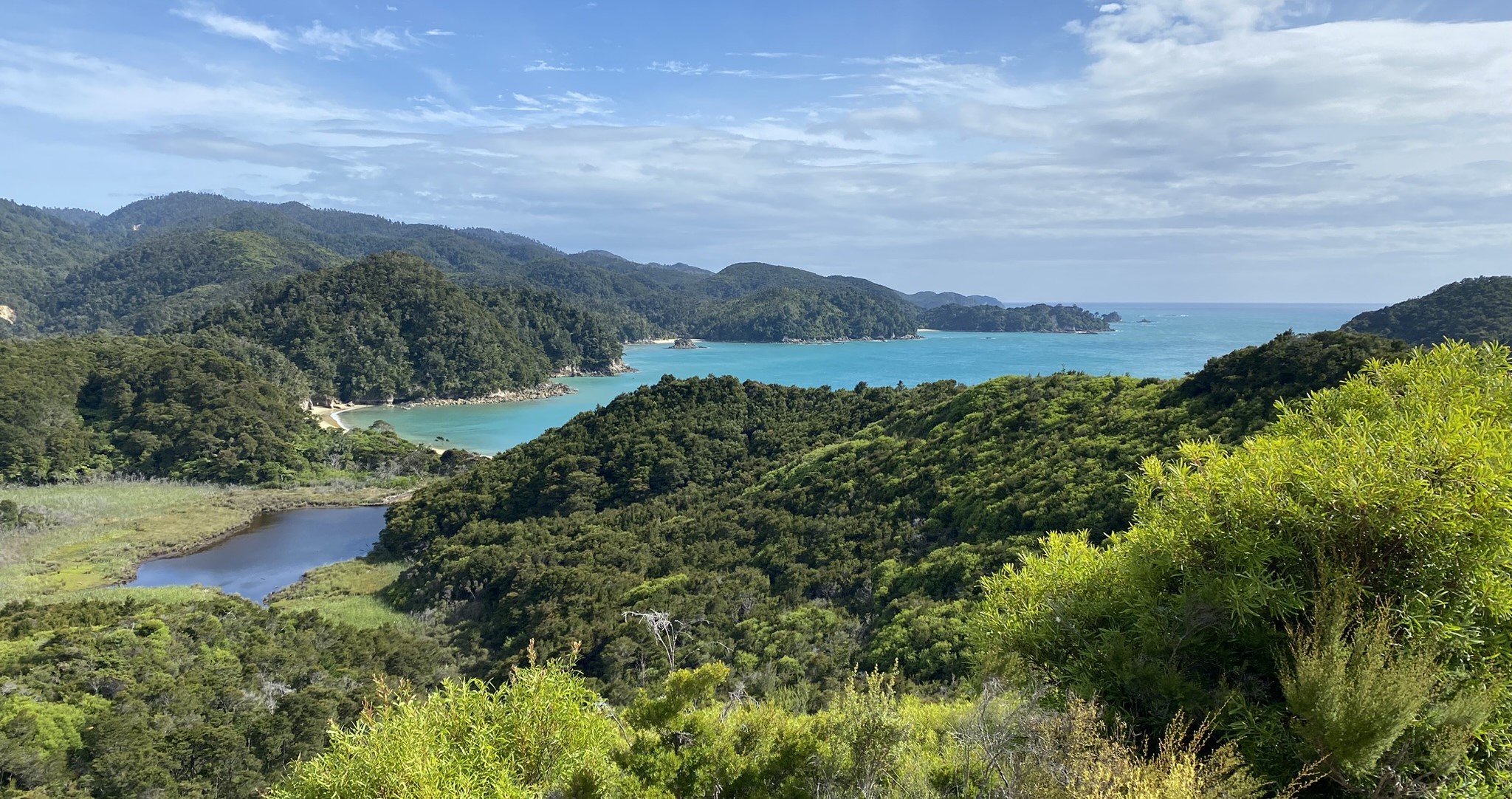
Having made it safely to the South Island, we made our way from Blenheim across the north coast of the island via New Zealand State Highway 6, which winds through several miles of pretty mountain scenery before dropping into Nelson, the largest city in the region. Many travelers use Nelson as their base for exploring Abel Tasman National Park, where the 18th century Dutch explorer (Tasmania is also named for him) first landed bringing the first Europeans to NZ. Not so good for the Māori, perhaps. But that means an hour each way by bus or car to the park, so we opted to make our base in Kaiteriteri for reasons I’ll explain.
The Abel Tasman Coast Track is known as the easiest of NZ’s Great Walks. If you don’t hike the 30 miles straight through, a 3-day tramp, the only access is via sea shuttle. Kaiteriteri is just a few minutes’ drive to the park entrance for through-hikers. It’s also where the sea shuttle picks up and drops off passengers heading into the park for day trips, which was our plan exactly. Highlights from our two days and three nights:
- The Abel Tasman Coast Track itself, naturally, was the reason for being here and the only way to spend a couple days. You can do short hikes and extended beach time or the opposite. We did 20km over two days, starting and ending at different beaches each day, and the lush terrain, pristine beaches, exotic birdlife and spectacular vistas were fantastic. Buying a 3-day pass with Abel Tasman Sea Shuttles is cheaper than two 1-day passes and provides ultimate flexibility.
- Our lodging was great, directly across the street from Kaiteriteri Beach, a 5-minute walk to the Sea Shuttle, and about the same to the best pizza pub in the tiny town. My TripAdvisor review.
- While there are not many dining options in Kaiteriteri, we enjoyed good dinners at Hooked on Marahau (in Marahau) and Lanna Thai (in Motueka), both a short drive away. The Beached Whale, a short walk from our lodge, had mediocre food but perfectly good beer and a nice patio on which to enjoy it, and occasionally live music, which would make it a stronger draw for the likes of me.
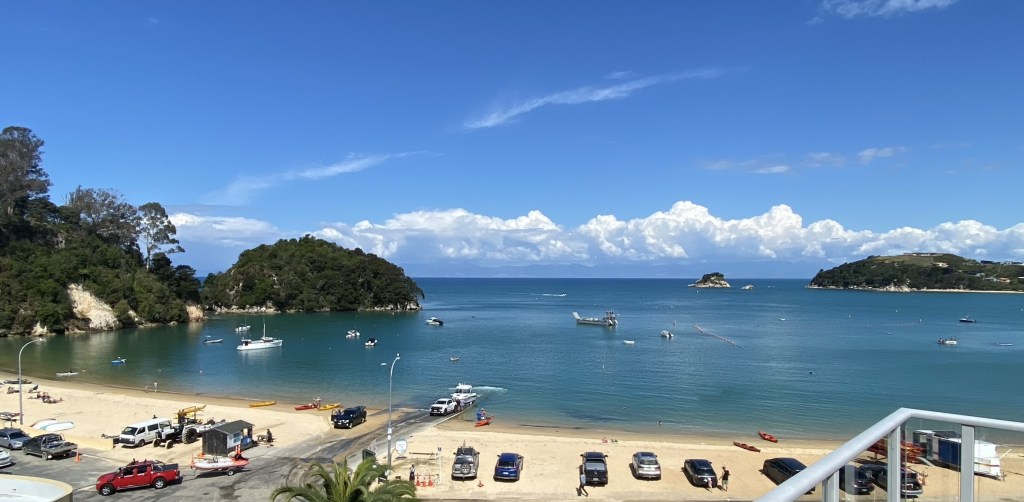
View from our deck 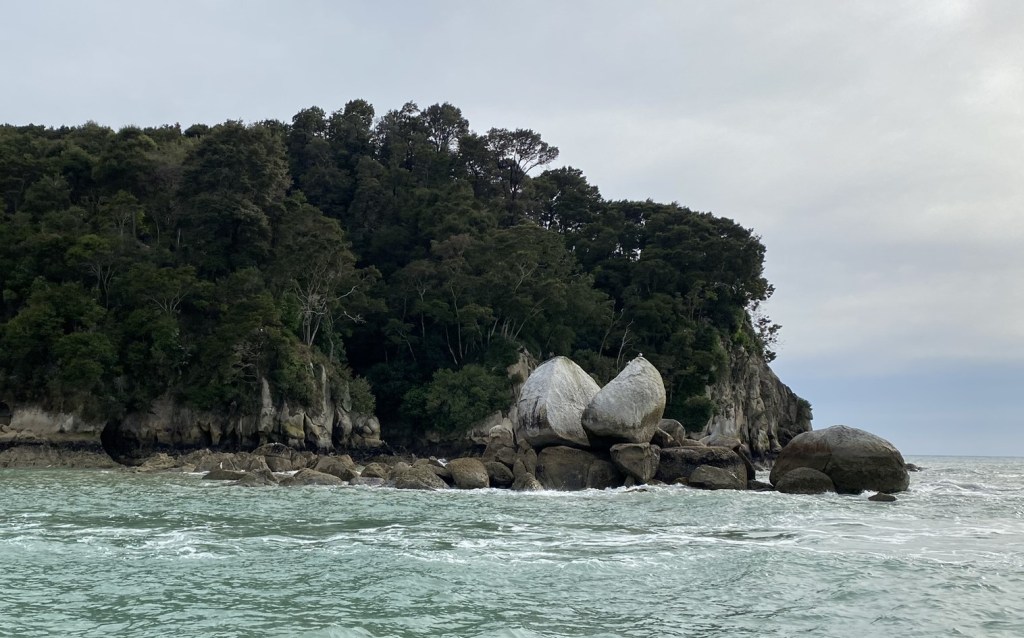
Split Apple Rock 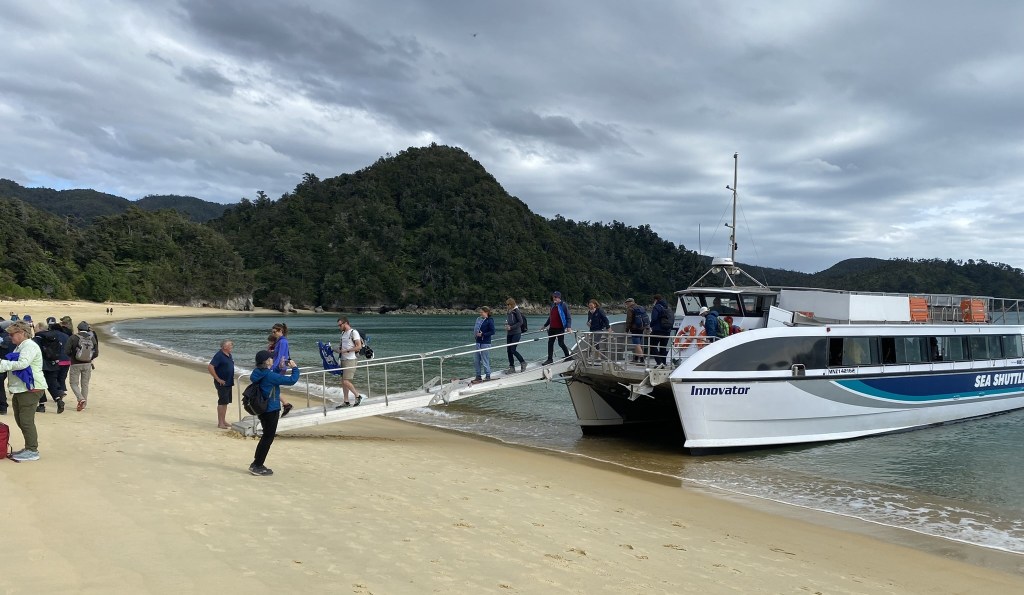
Landing at Anchorage Beach 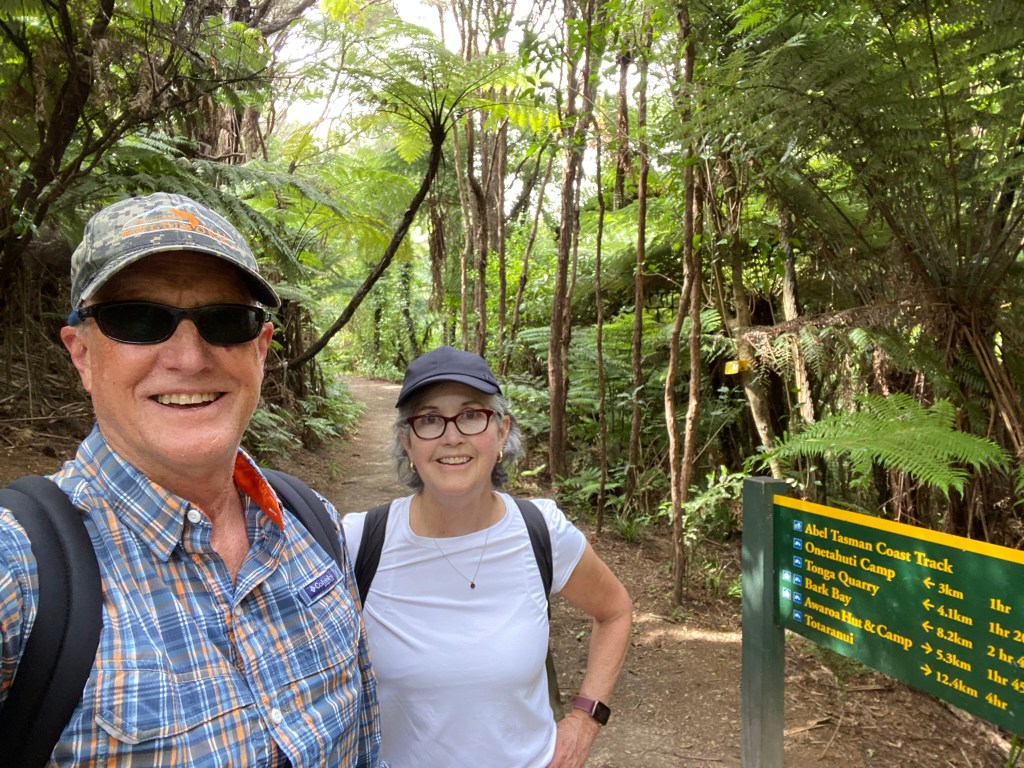
Trailhead at Awaroa 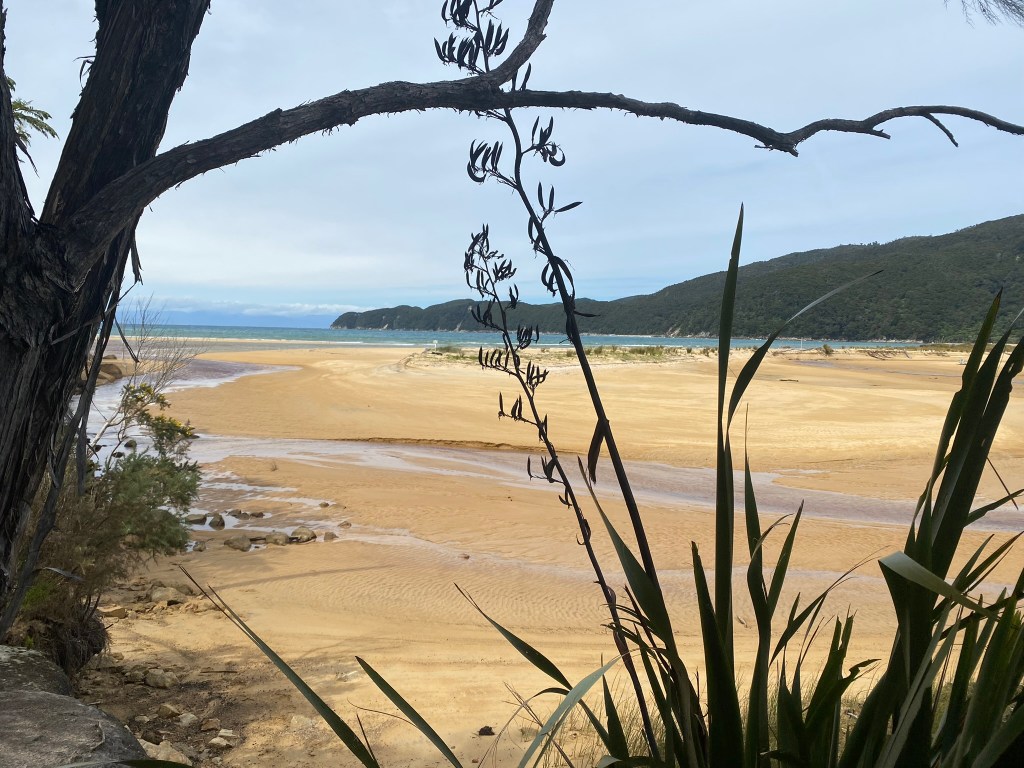
Torrent Bay 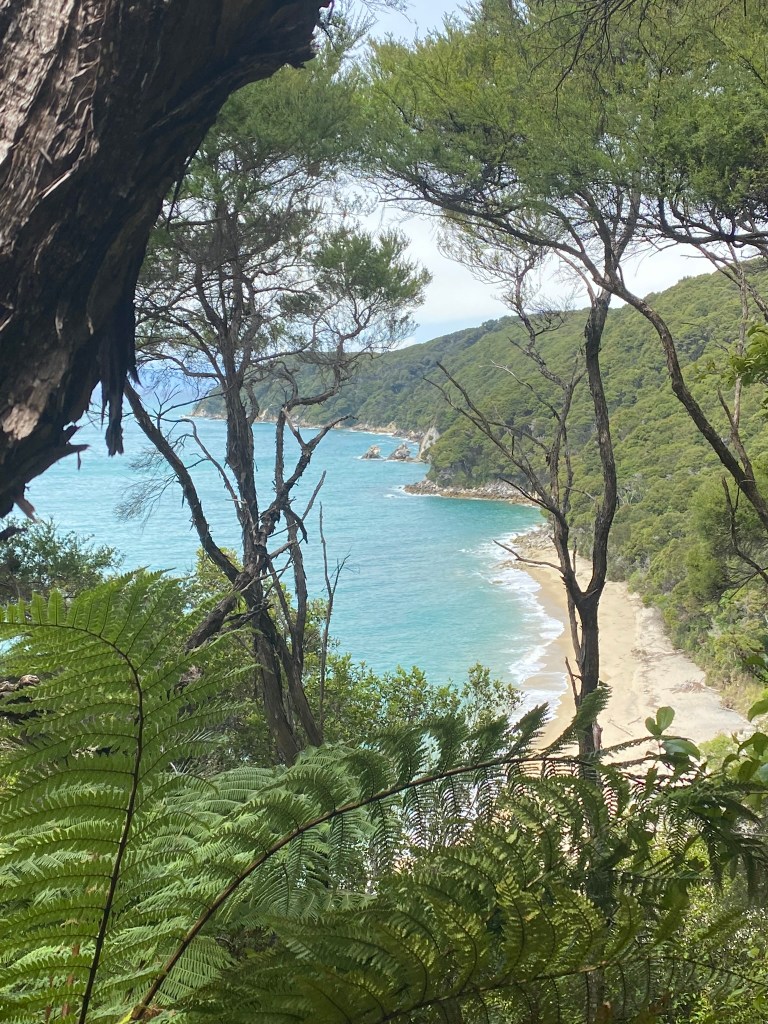
One of many beaches 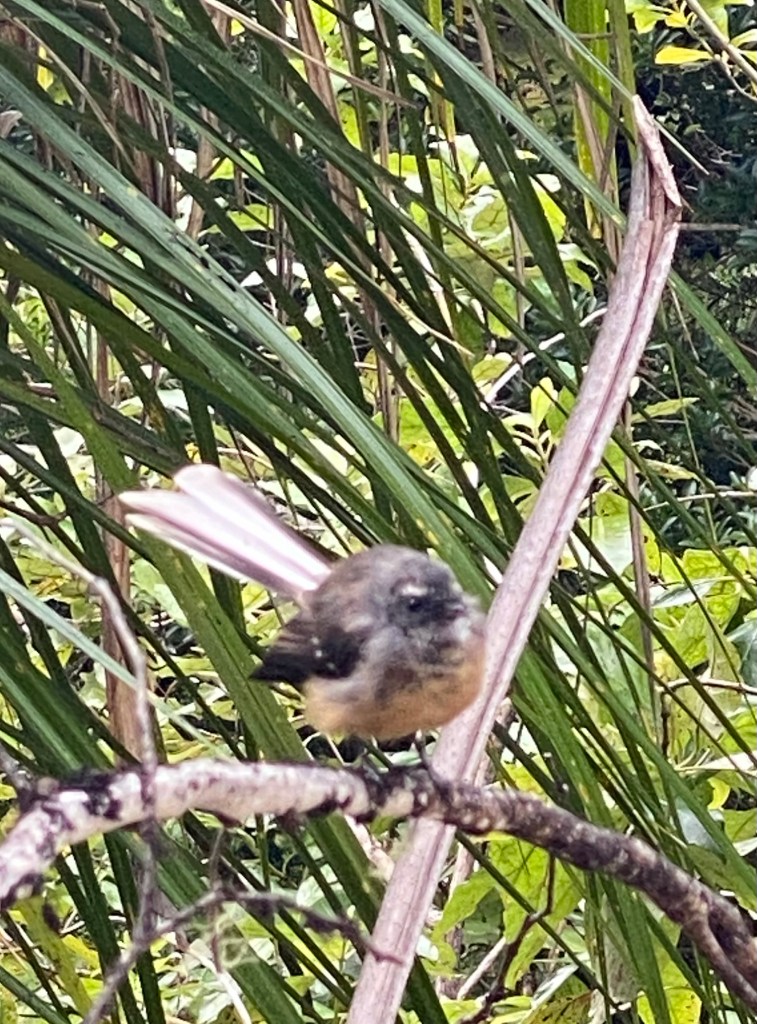
Fantail bird 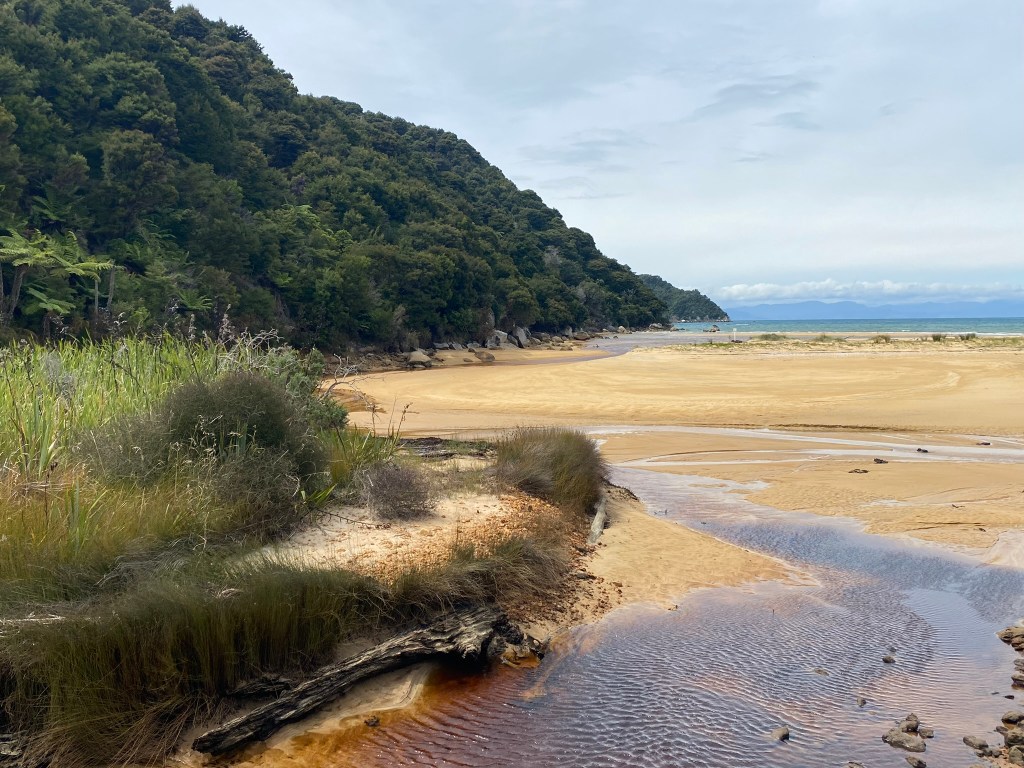
Torrent Bay 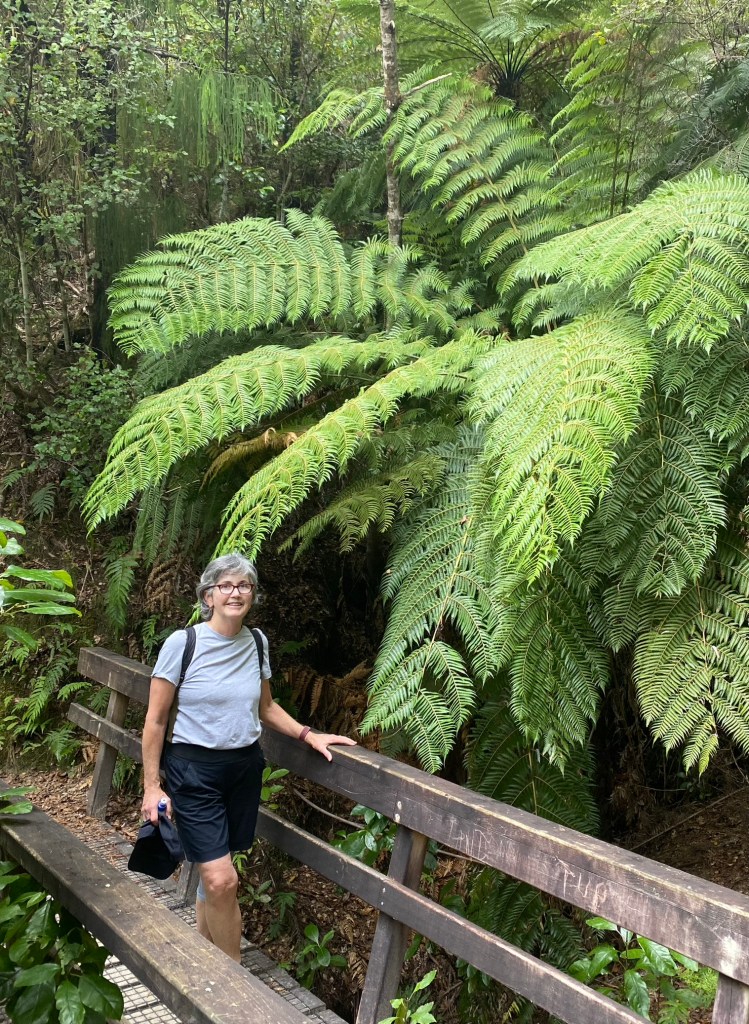
Jungle beauty 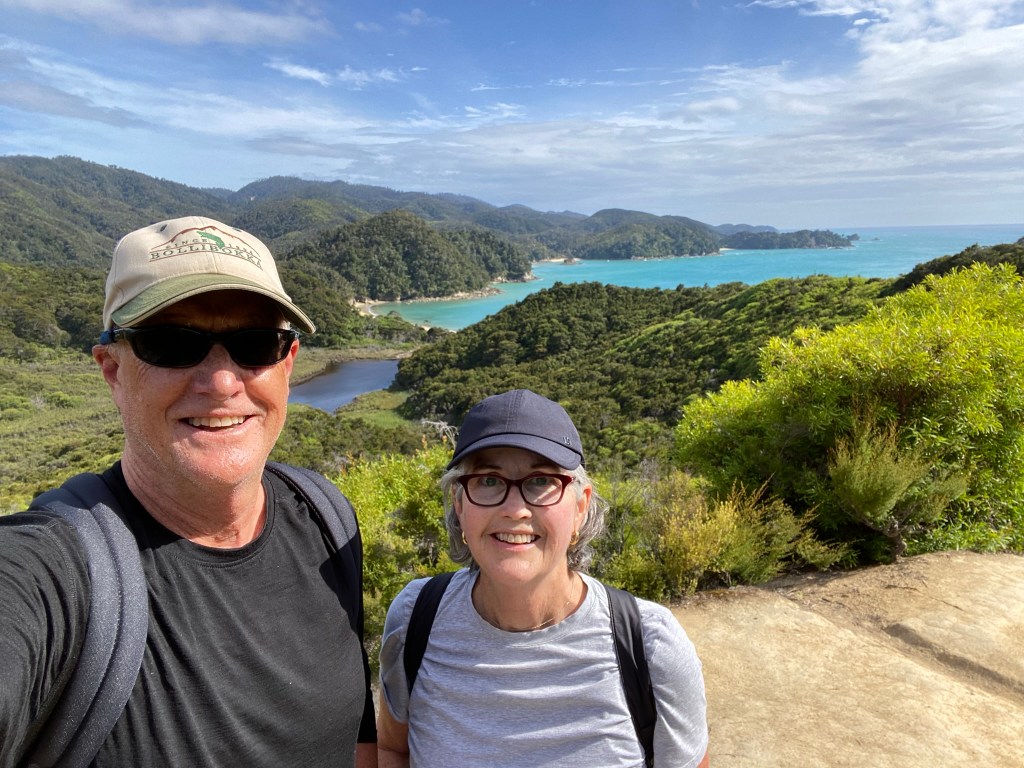
Anchorage Bay 
Maori king at Medlands Beach 
11,040km from home 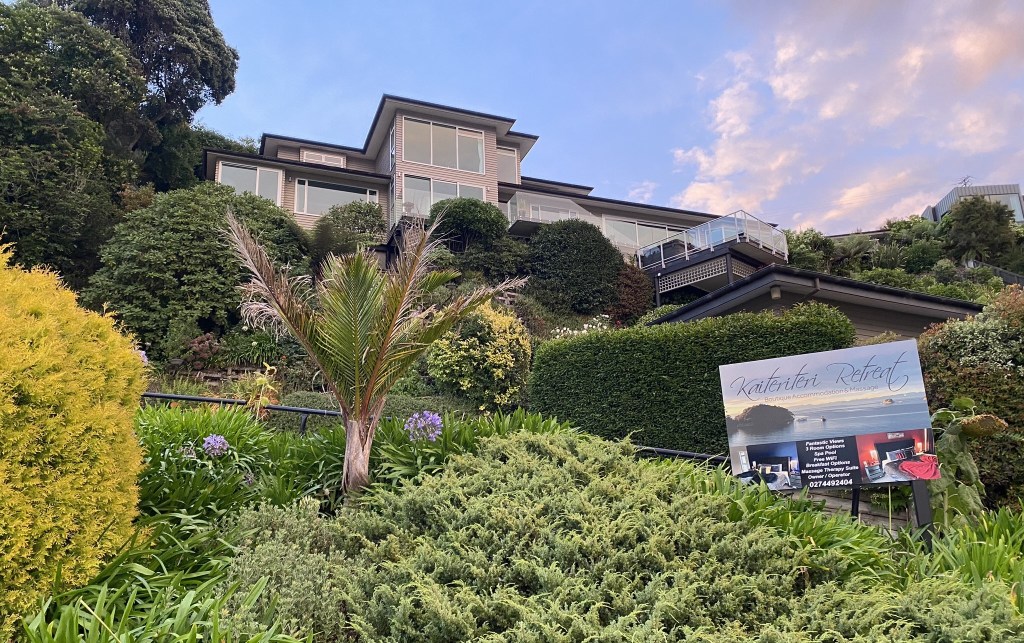
Kaiteriteri Retreat 
Post-hike refresher
| Days 13-15 | South Island West Coast | See lodging details below |
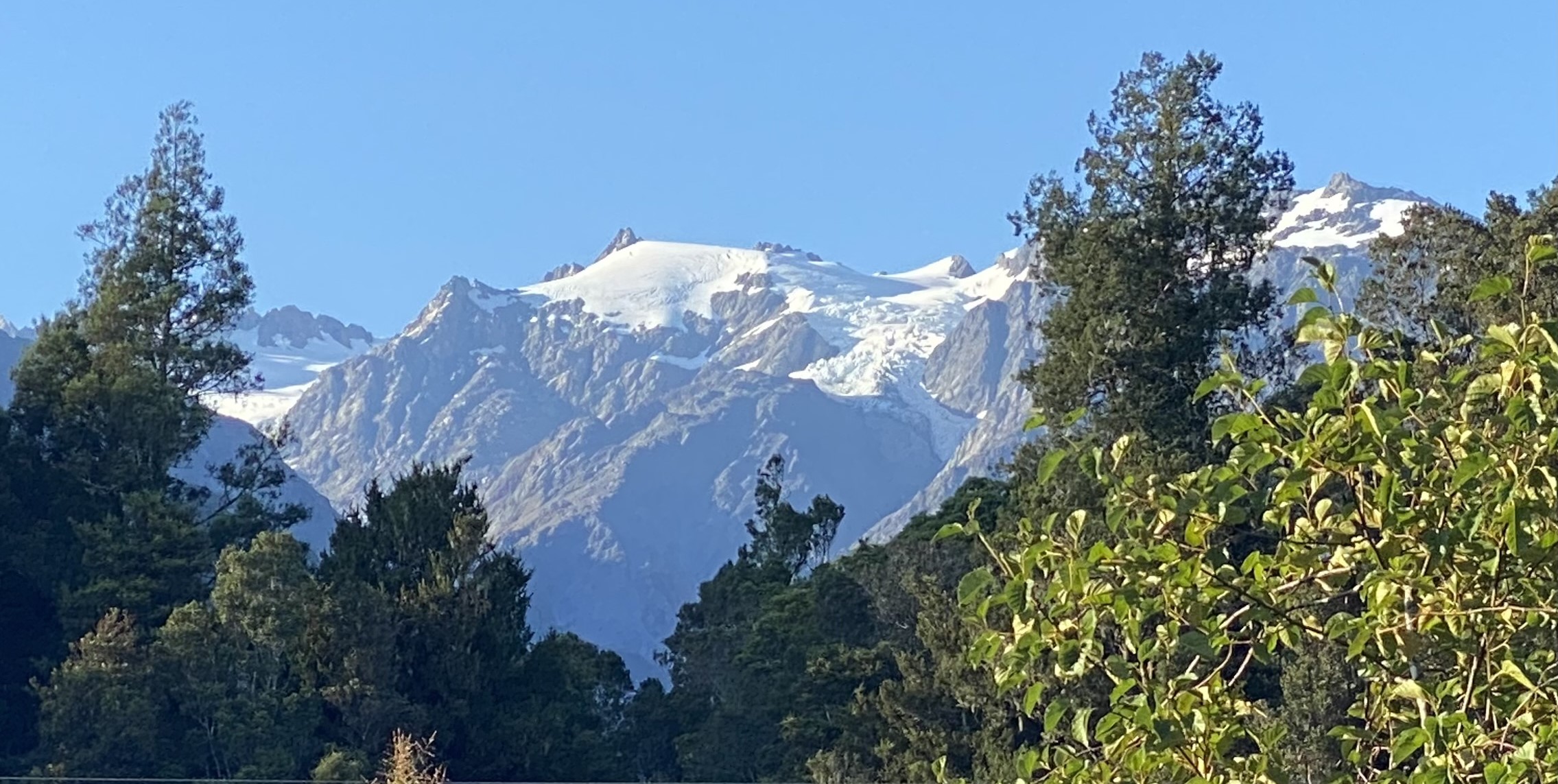
Kaiteriteri to Punakaiki
Leaving Abel Tasman, we headed south to the wild west coast of NZ’s South Island, a 4-hour drive through the remote and scenic Buller Gorge with short stops in St. Arnaud in Nelson Lakes National Park and the Buller Gorge Swing Bridge. Our ultimate destination is the Franz Josef and Fox Glacier region, the only place in the world where massive glaciers inch down jagged alpine mountains through coastal rainforest to the sea.
The glaciers would make a very long day driving, so we needed a one-night layover around halfway along the coast. We considered Greymouth and Hokitika but finally settled on Punakaiki, a blink-and-you-miss-it beach town known mostly for the Pancake Rocks & Blowholes, something of a geological marvel. We had low expectations for the latter – just a one-night stop on our way south – but it surprised us in unexpected ways.
Many tourists heading for the west coast and, ultimately, south to Queenstown and Fiordland, start in Christchurch and head over the mountains at Arthur’s Pass, skipping Abel Tasman altogether. We had little interest in Christchurch though, so unless that is high on your list of priorities, the route we took was perfect. With more time, a couple days in Nelson Lakes National Park would be an attractive destination along the way.
| Duration | Destination | Where We Stayed |
|---|---|---|
| 1 day | Punakaiki | Punakaiki Beachfront Motel |
| 2 days | Franz Josef & Fox Glaciers | Westwood Lodge |
Highlights:
- A short detour into the Nelson Lakes NP region took us past the Tophouse Mountain Inn, a historically significant landmark (where overnight lodging is possible) on the backroad into St. Arnaud, on the shore of Lake Rotoiti.
- Lake Rotoiti itself is beautiful and has many outstanding hiking opportunities, everything from an hour to several days. We settled for a walk on the lake’s jetty that graces the cover of just about every Nelson Lakes NP brochure known to man.
- Buller Gorge Swing Bridge, far more of a tourist attraction than we imagined, is the longest swing bridge in all New Zealand. It cost us $10NZD to cross it and it had a short but unspectacular hike through the bush on the other side. We passed on the optional zipline back across the gorge.
- We picked up a hitchhiker on the road — something we would never do back home — but an easy decision in this very safe country. He was a friendly, young German fellow backpacking his way around NZ. Great opportunity for swapping stories and getting a different cultural take on the region, and it was nice to help him get a couple hours closer to his destination.
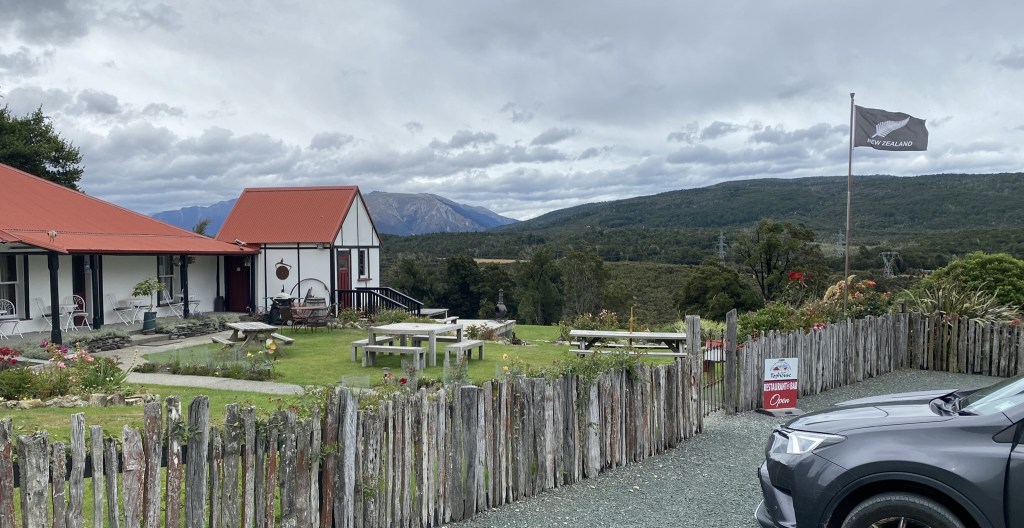
Tophouse Mountain Inn 
St. Arnaud lunch stop 
The jetty on Lake Rotoiti 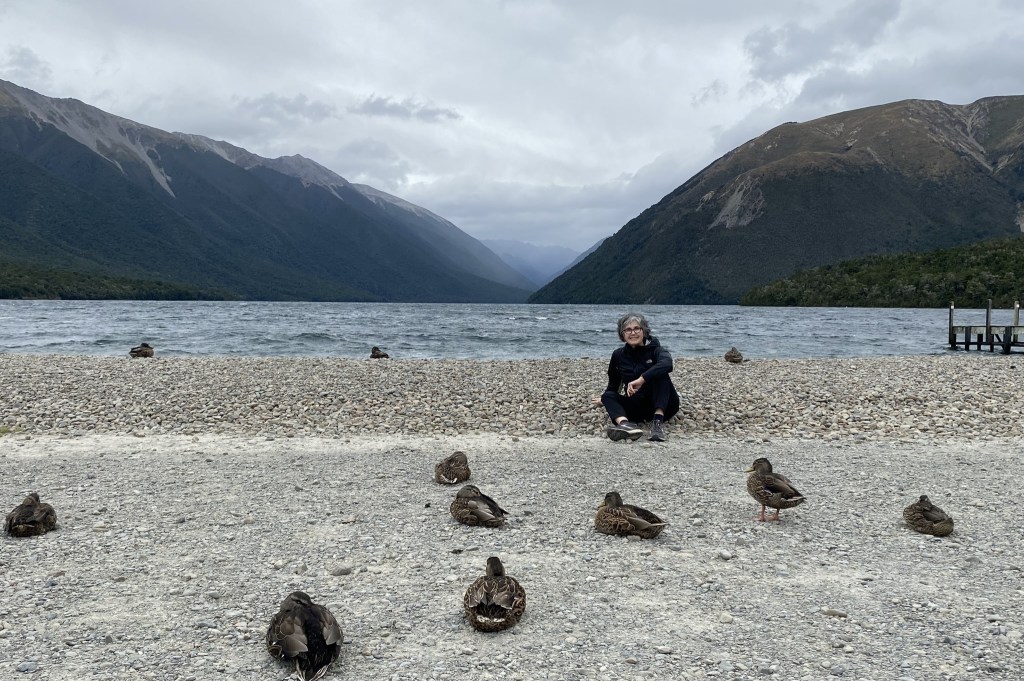
Ducks enjoying the lakefront 
Bullard Gorge Swing Bridge 
Arrival at Punakaiki Motel
Punakaiki
We arrived in Punakaiki early in the afternoon, plenty of time to check into our motel room and then visit the biggest attraction in the area and the sole driver of this town’s economy: Pancake Rocks & Blowholes. Highlights:
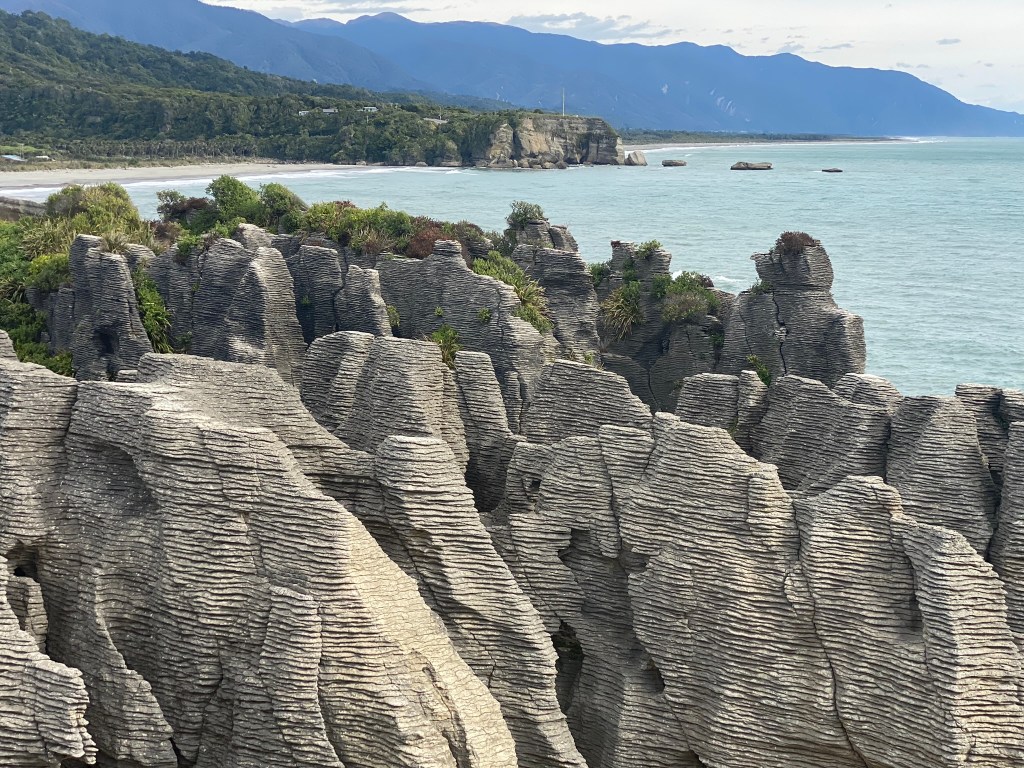
- The Pancake Rocks & Blowholes were, in fact, a geological marvel and a wonder to behold. Perfectly maintained wooden walkways guide you around the rocks, which would otherwise be a safety nightmare. Good signage, too, explain what you’re looking at. We did the whole thing in under an hour and loved it.
- Our “motel” was much more than that (my TA review), not much to look at on the outside but extremely spacious and comfortable for a budget accommodation. Best yet was the proximity to the seawall overlooking the beach and rugged coastline, where we were treated to the sunset of a lifetime as we enjoyed our evening cocktails on the wall.
- Did I mention that sunset!!??
- Dinner at the hotel and bar next door wasn’t anything to shout about, but it was essentially the only game in town. However, the bar was just fine — classic western style with nice outdoor gardens in which to relax.
- Pete’s Patties is a pop-up trailer in the adjacent campground serving one thing: fried whitebait patties, a Kiwi delicacy, I’m told. The first one was amazing. The second a lesson in the Law of Diminishing Returns.
- The Pororari River Track is a great riverside tramp into the Paparoa National Park, with a trailhead a mere 500 yards from our lodging. We hiked a couple miles of this in the morning before we hit the road. I would have loved to have hiked much further, if only there was time!
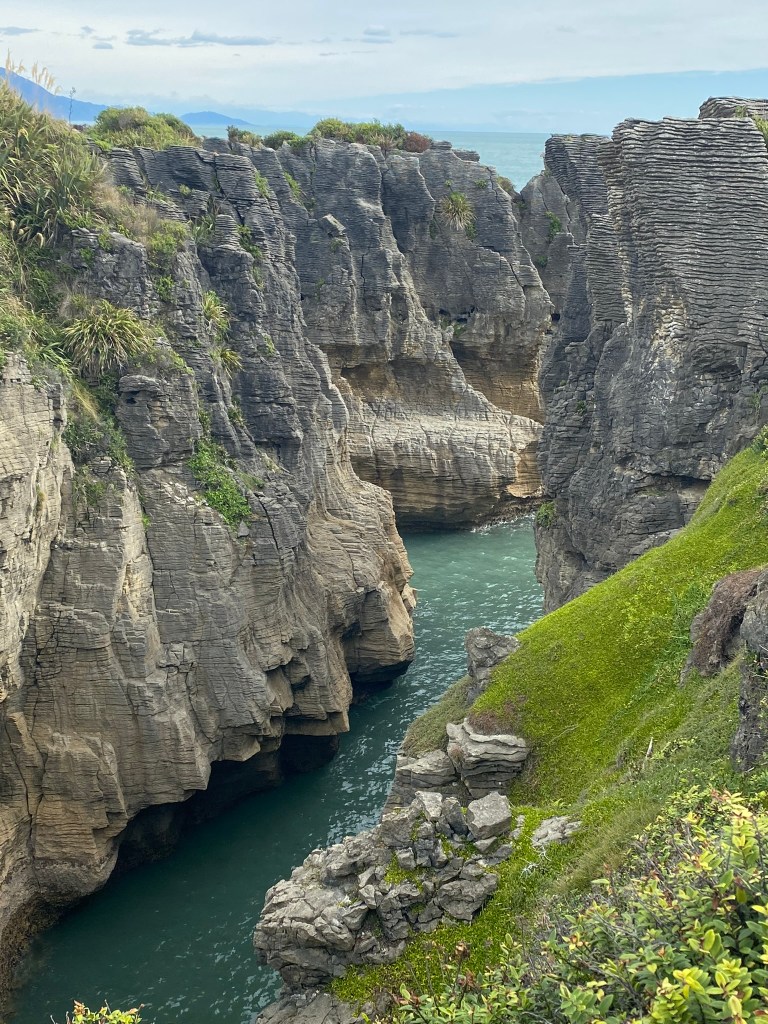
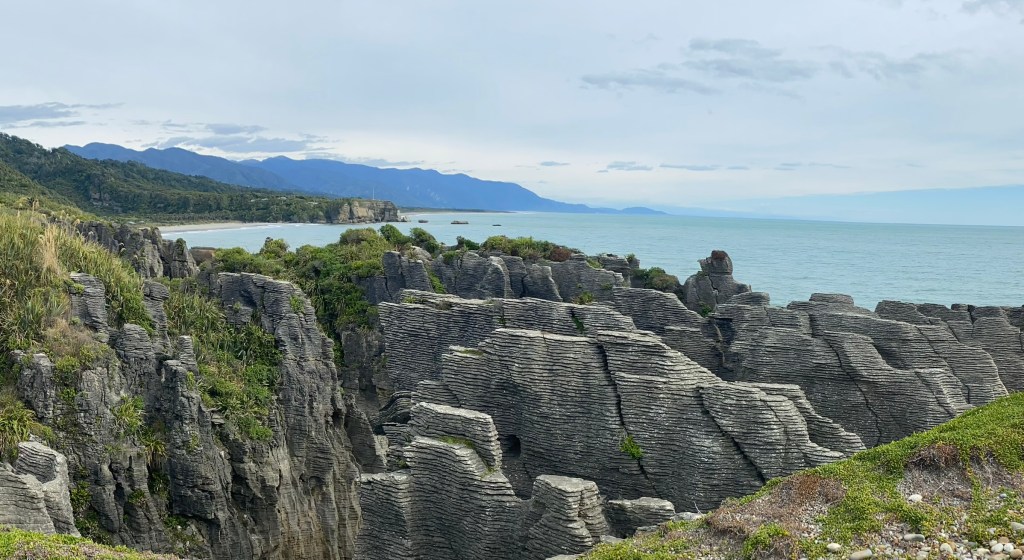
Punakaiki Rocks 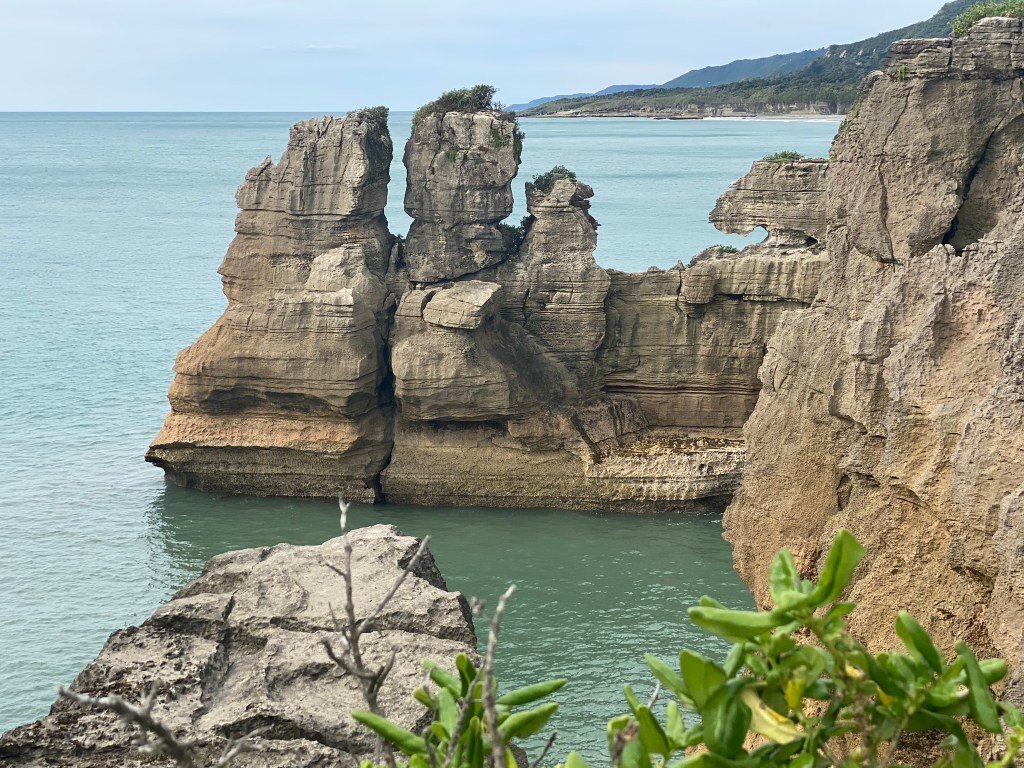
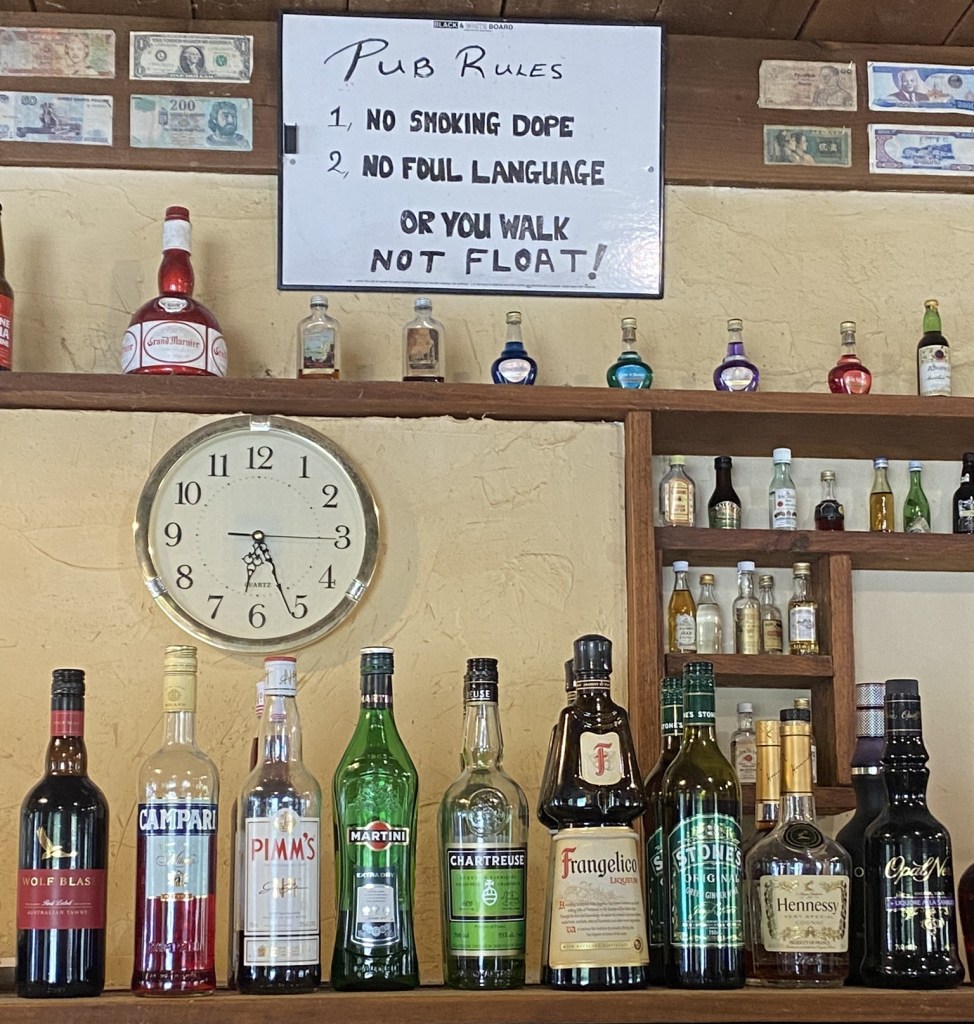
Rules are rules! 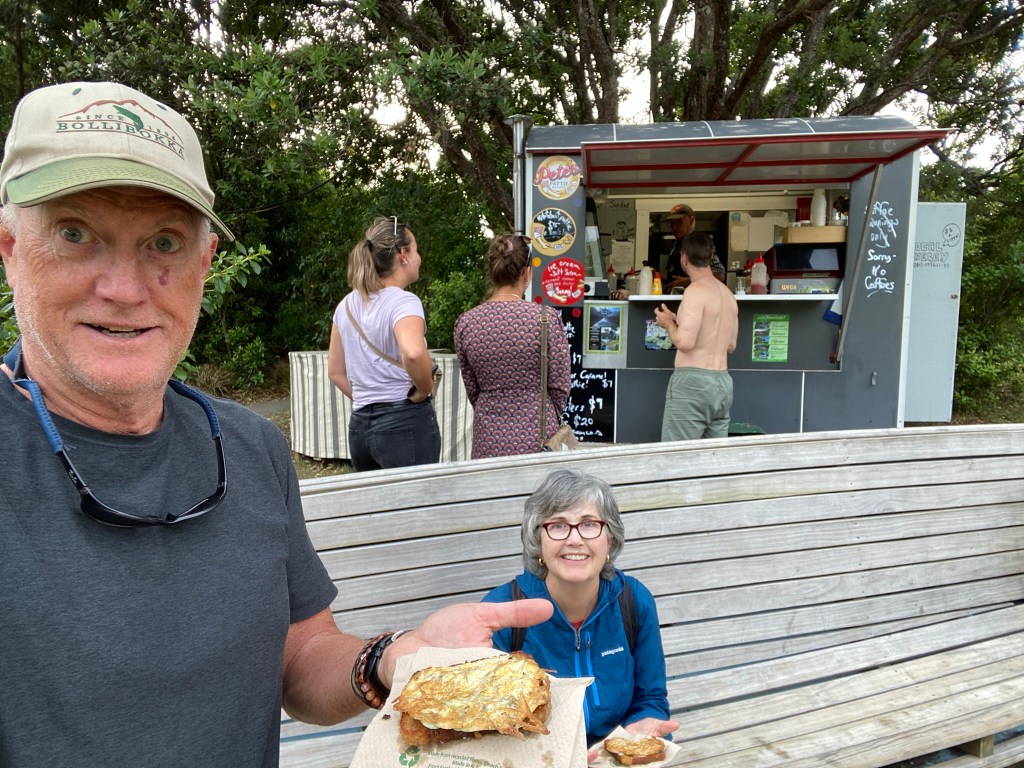
Pete’s Patties 
Punakaiki coastline 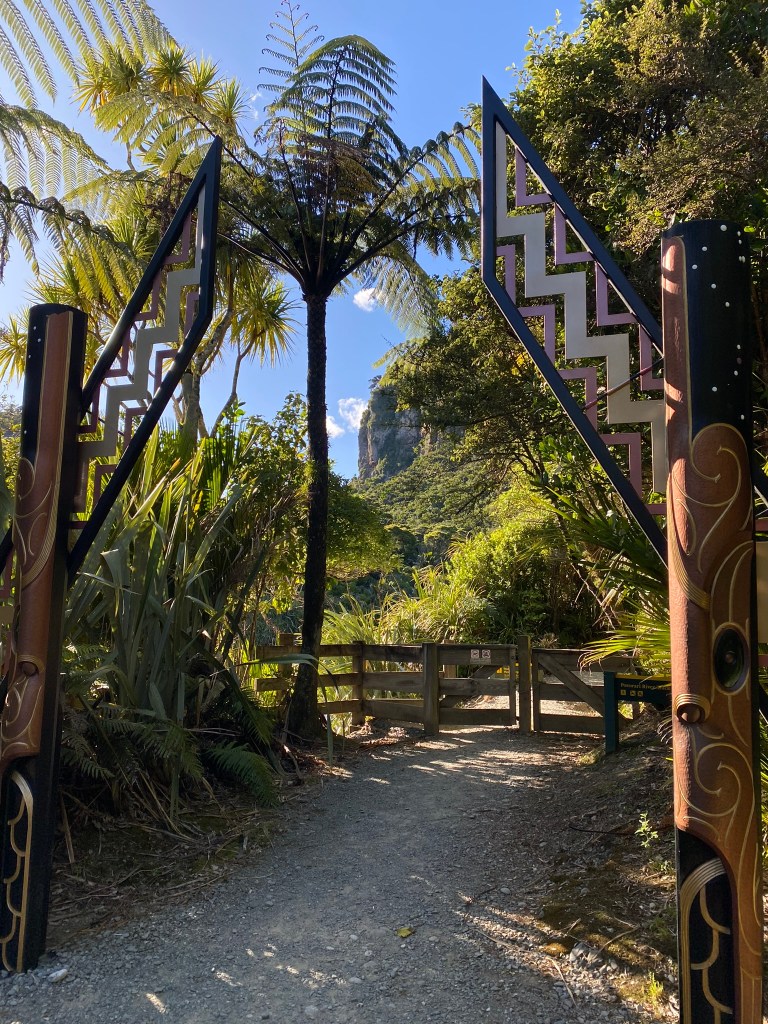
Pororari trailhead 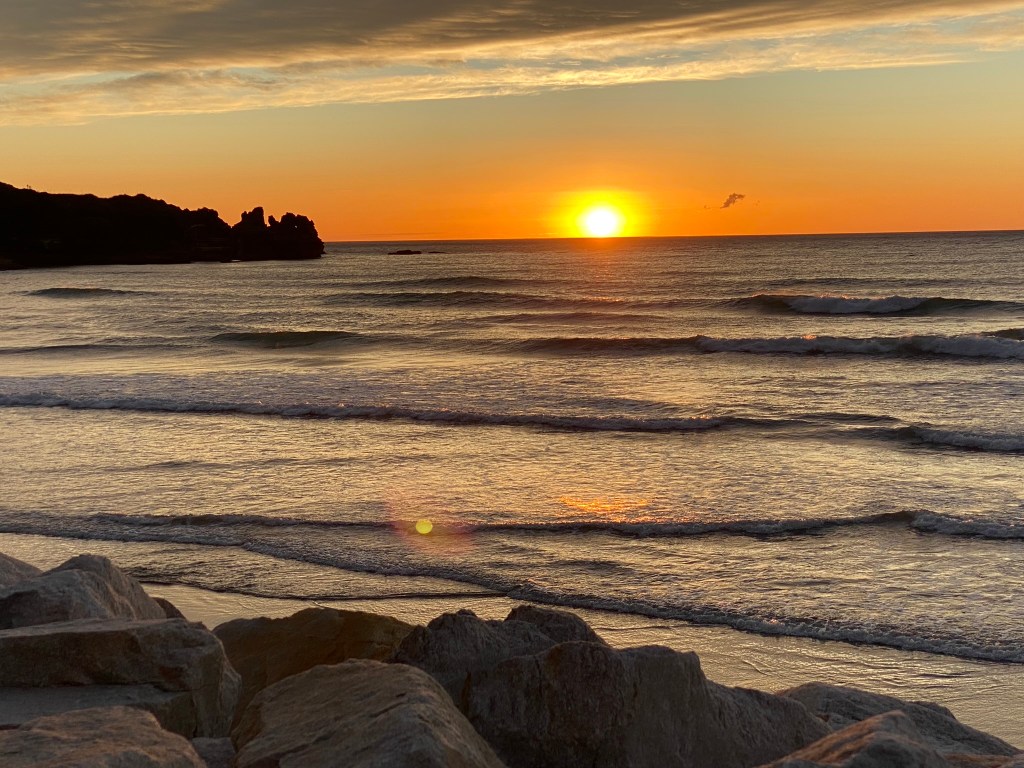
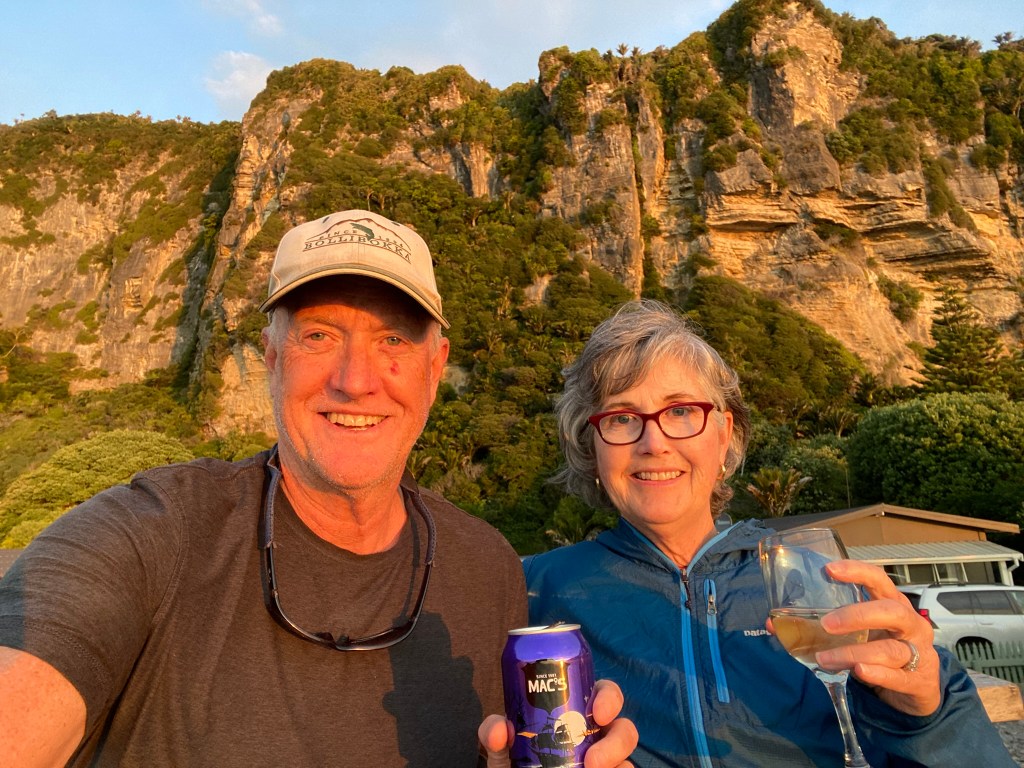
Ready for showtime 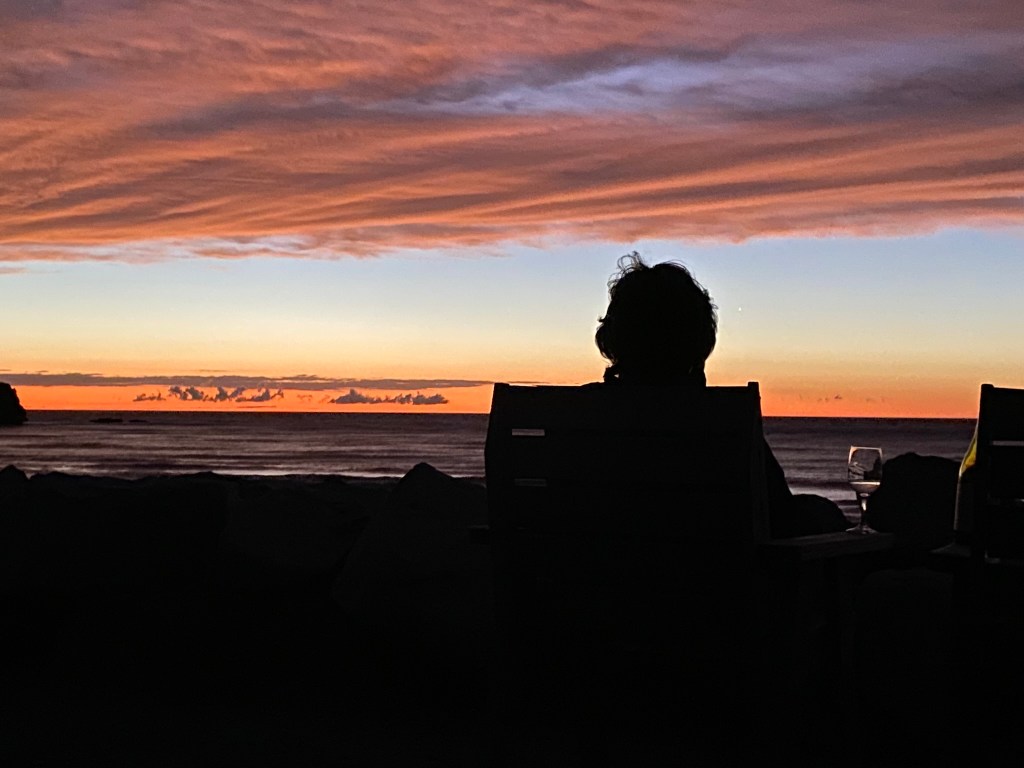
Ahhhh… 
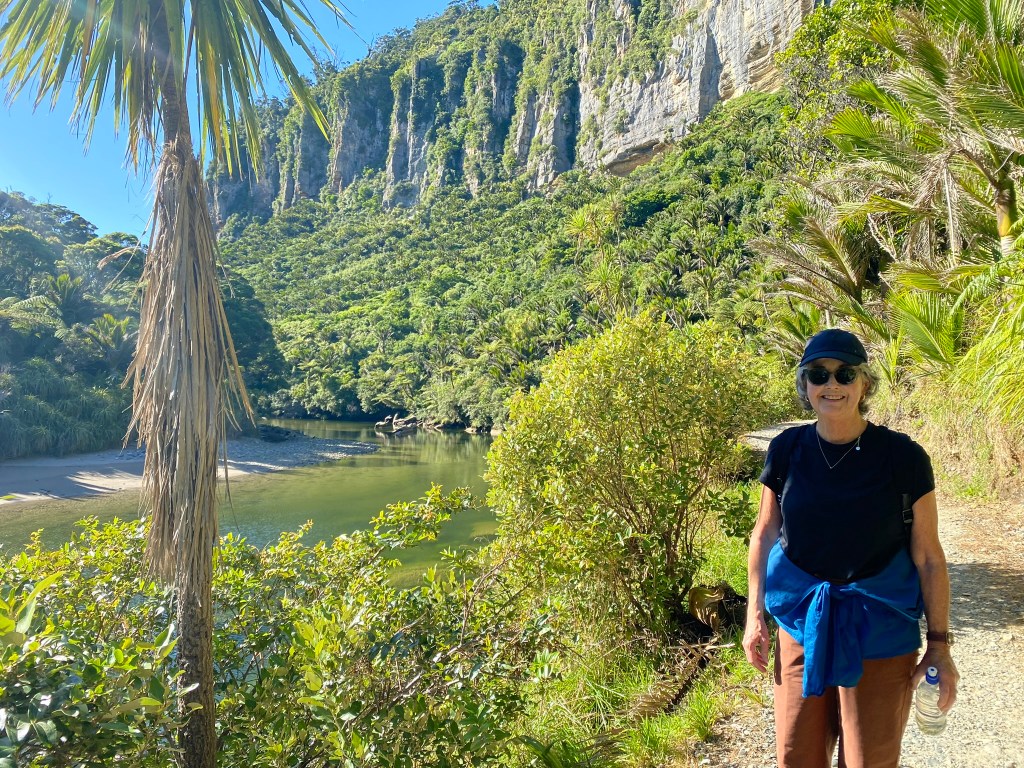
Pororari River Track
Punakaiki to Franz Josef
And then it was on to Glacier Country! After a terrific night’s sleep and our short Pororari River track walk, we headed south again toward the village of Franz Josef/Waiau, a 3-hour drive along the coast.
Along the way we stopped in Greymouth, an old coal mining town that also serves as the rail termination from Christchurch. We had lunch at the DP1 Cafe — I cannot recommend the food despite its great reviews on Google but the artwork on the walls was pretty cool.
The better stop in town was Monteith’s Brewery, home of one of several of NZ’s best craft beers. Two thumbs up!
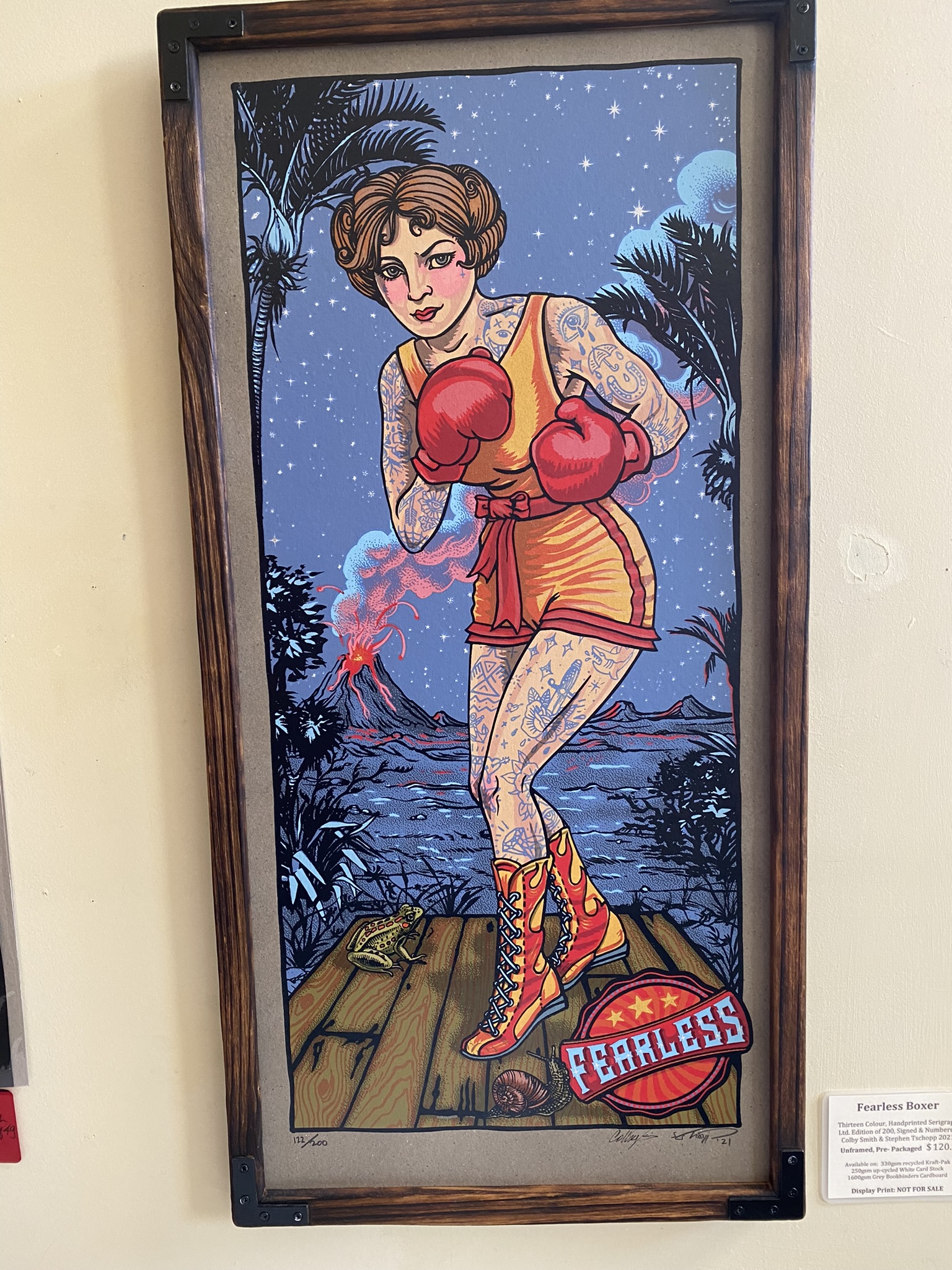
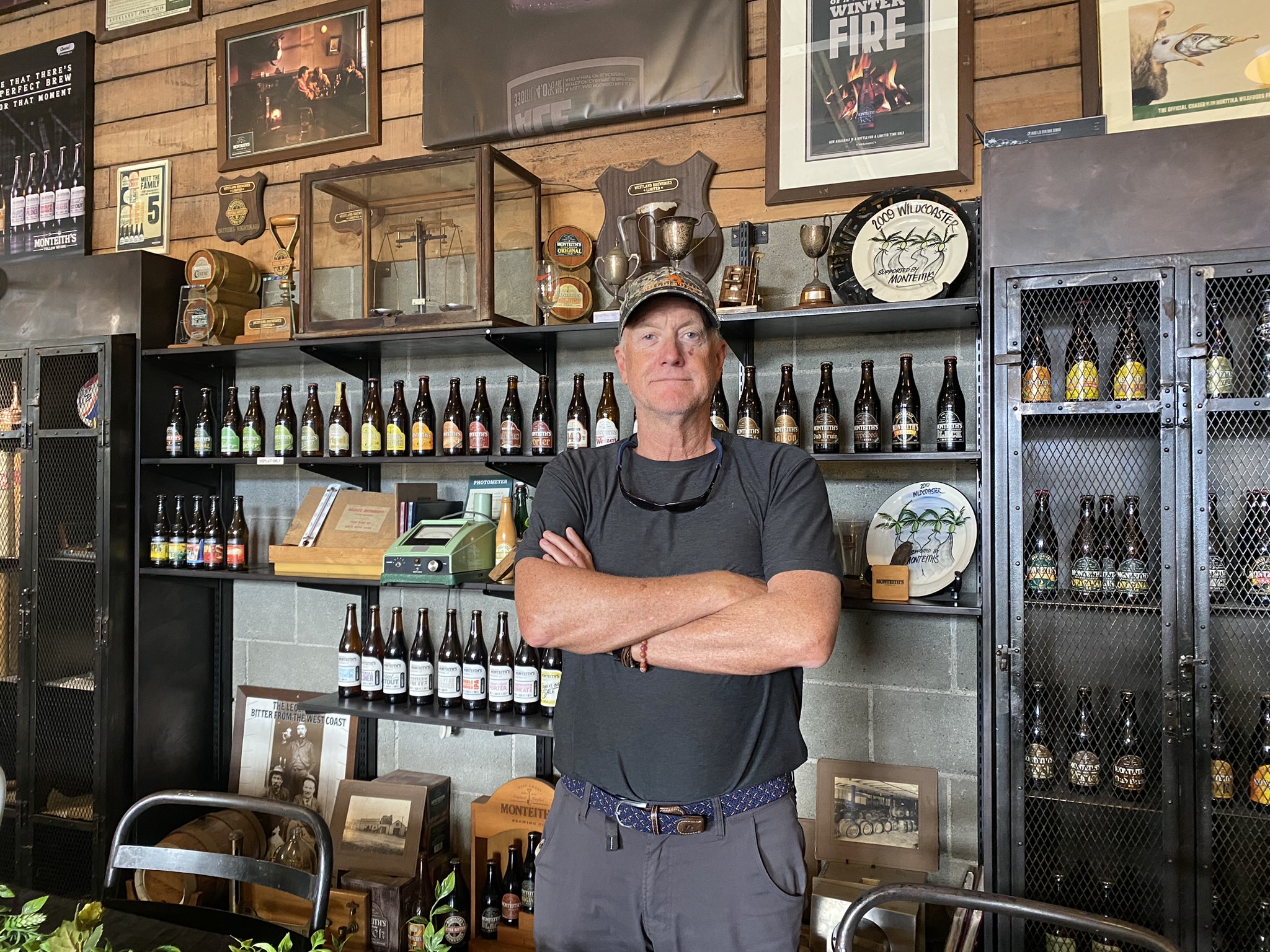
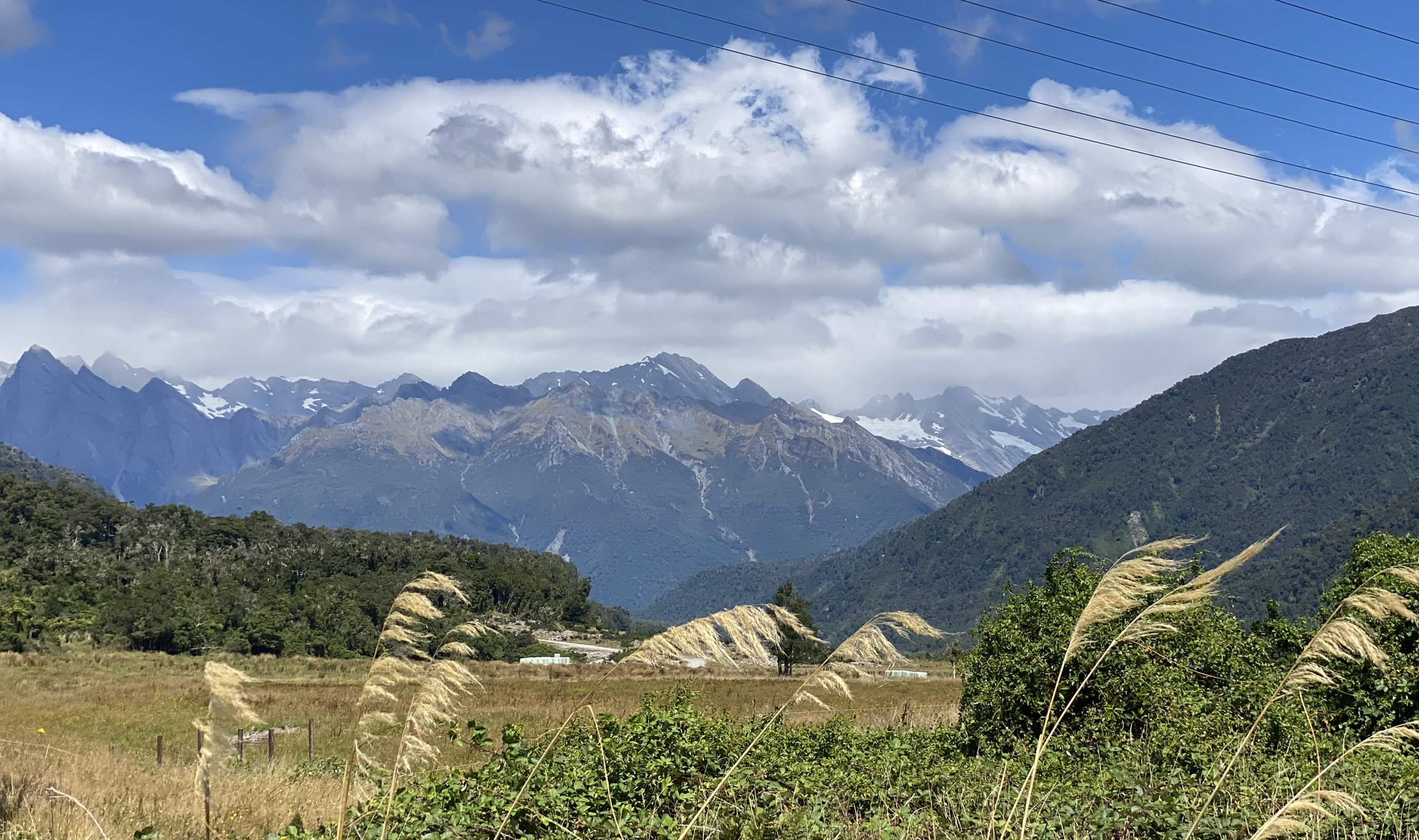
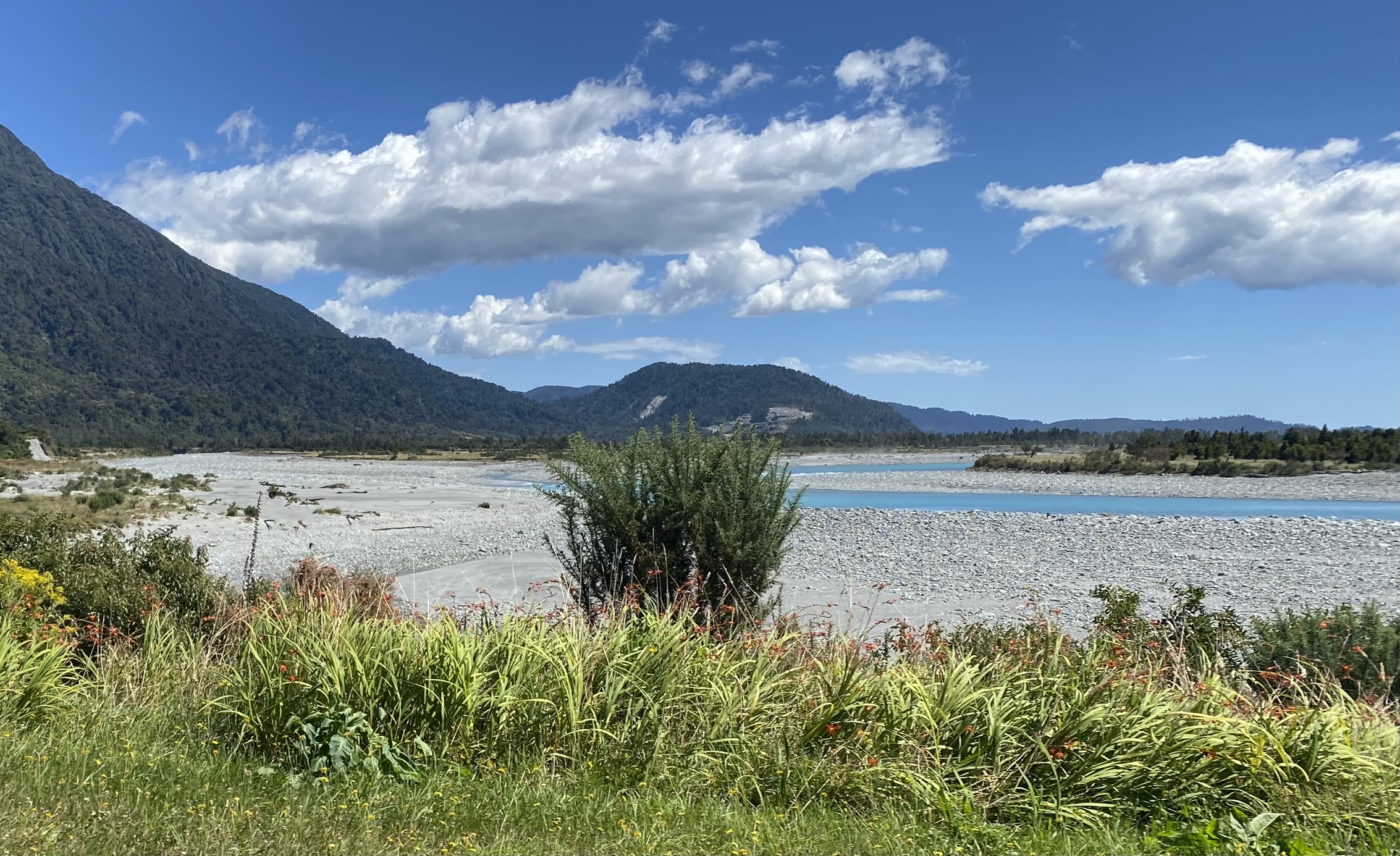
After our obligatory sample, we continued south as the landscape became increasingly dramatic, the Southern Alps rising on our left and evidence of glacier moraine everywhere, gravel pouring down rivers to the beaches.
Franz Josef
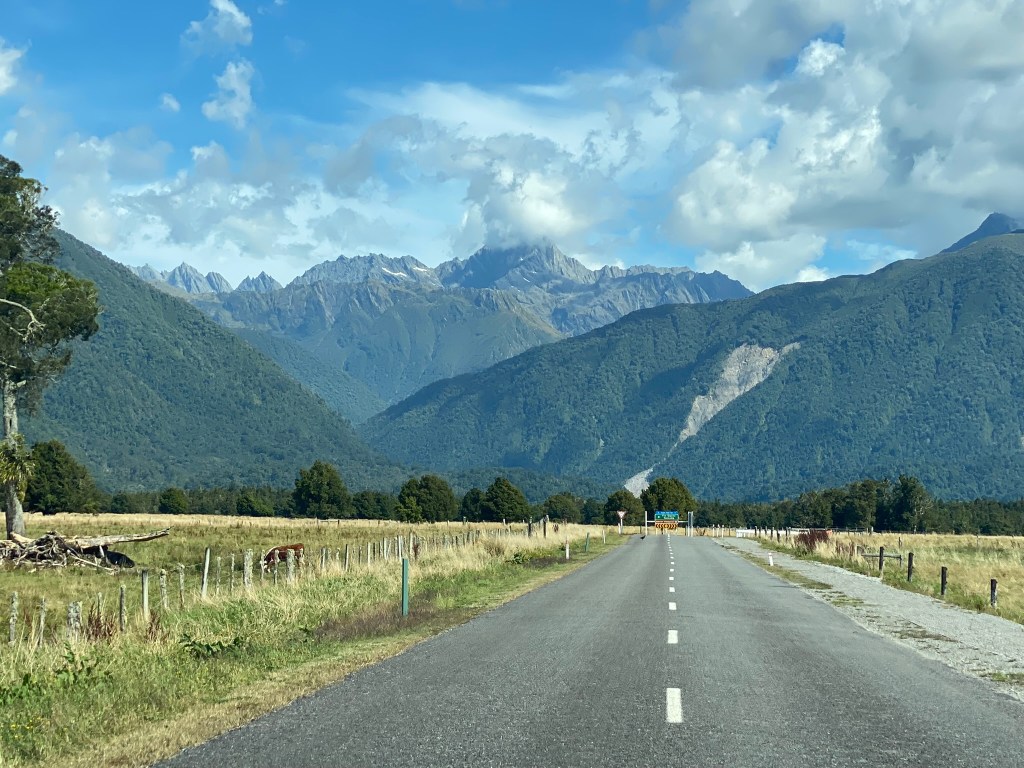
Two hours later we arrived at the Westwood Lodge just outside the center of Franz Josef/Waiau, the larger of the two towns in the region (the other being Fox Glacier) and our base for the next two days. World famous for the Franz Josef Glacier, one of the largest, easily accessible glaciers that ends in rainforest, our primary objective is neighboring Fox Glacier, 30 minutes down the road, where we had already booked a heli-hike adventure the next day. We opted to stay in Franz Josef for its much better range of services, restaurants, bars and the lodge itself. Highlights:
- Our 3-hour heli-hike on Fox Glacier with Flying Fox Glacier Guiding was a rush, an experience unlike anything we had done before. Fox doesn’t have the name recognition as Franz Josef but is widely regarded locally as the better glacier hike. The chopper ride up the face of the glacier and landing on the ice was exhilarating. Strapping on crampons and hiking on the ice, through crevasses and ice tunnels was spectacular.
- We managed some nice, short hikes, too; the 3-mile track along the ridge above Franz Josef to Callery Gorge, with views of the outwash from FJ Glacier, and the rainforest loop around Lake Matheson were both terrific. Cloud cover dampened the famous mirror image of the Alps you get with blue skies over Lake Matheson but did not detract from its beauty. Lunch at the Matheson Cafe near the trailhead is the best in town.
- Westwood Lodge was pretty nice, with a nice great room/bar area and beautiful grounds with nice mountain views, though post-COVID staffing shortages left the bar closed and the typical lodge buzz fairly muted. Fully staffed with everything working, this would be a great place. Here’s my review.
- Dinner at Alice May in FJ was outstanding — I recommend the lamb shank — but this place is the most popular in town so reservations a good idea. We got a good table outside with only a short wait and no reservation. Blue Ice was pretty good, too, and came recommended by Westwood Lodge.
- Cook Saddle Saloon in Fox Glacier was a fun spot to grab a beer after hiking the glacier or Lake Matheson. I mean, heck, you have to drive right by it!
Arriving Franz Josef 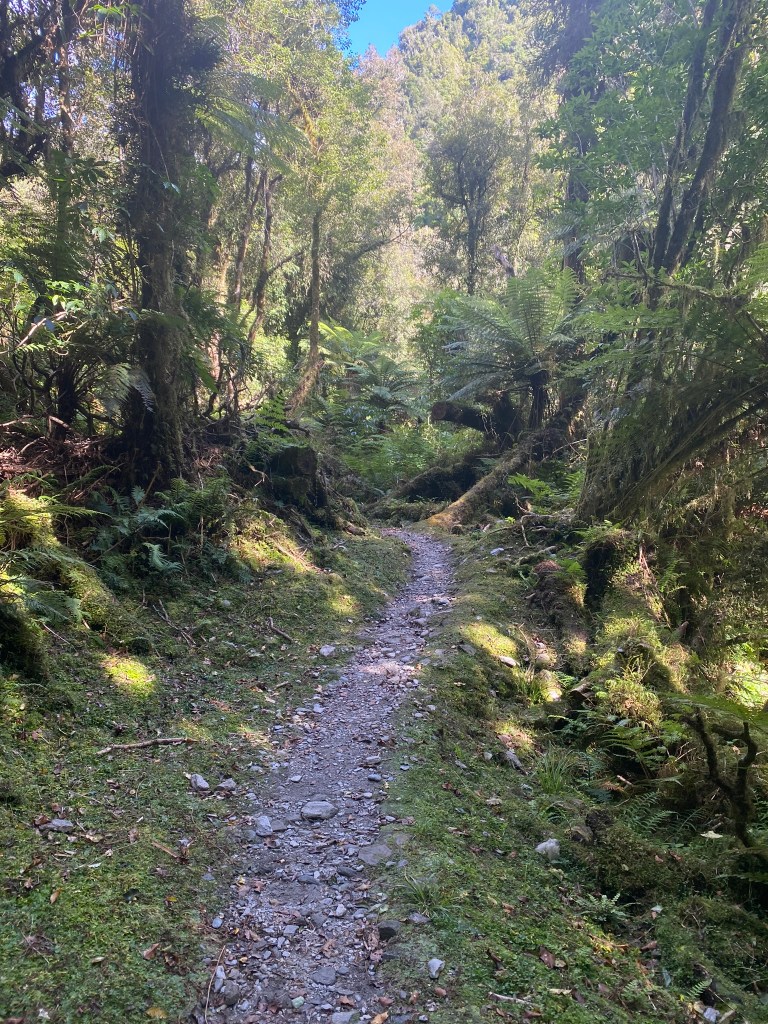
Callery Gorge Trail 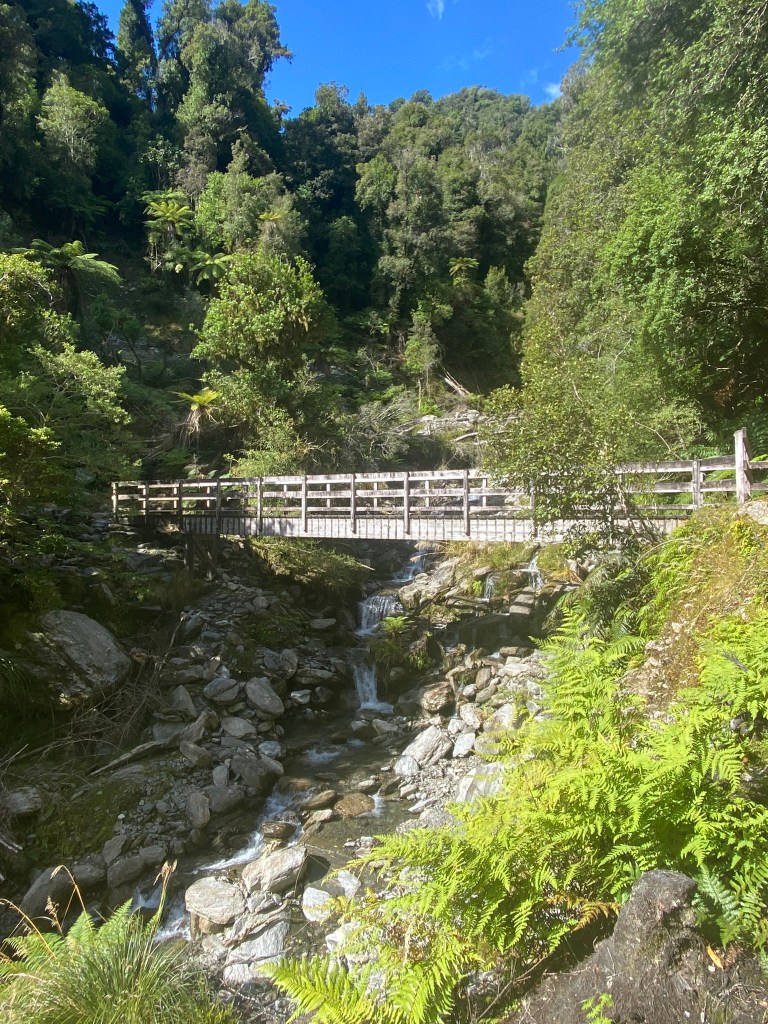
Callery Gorge Trail 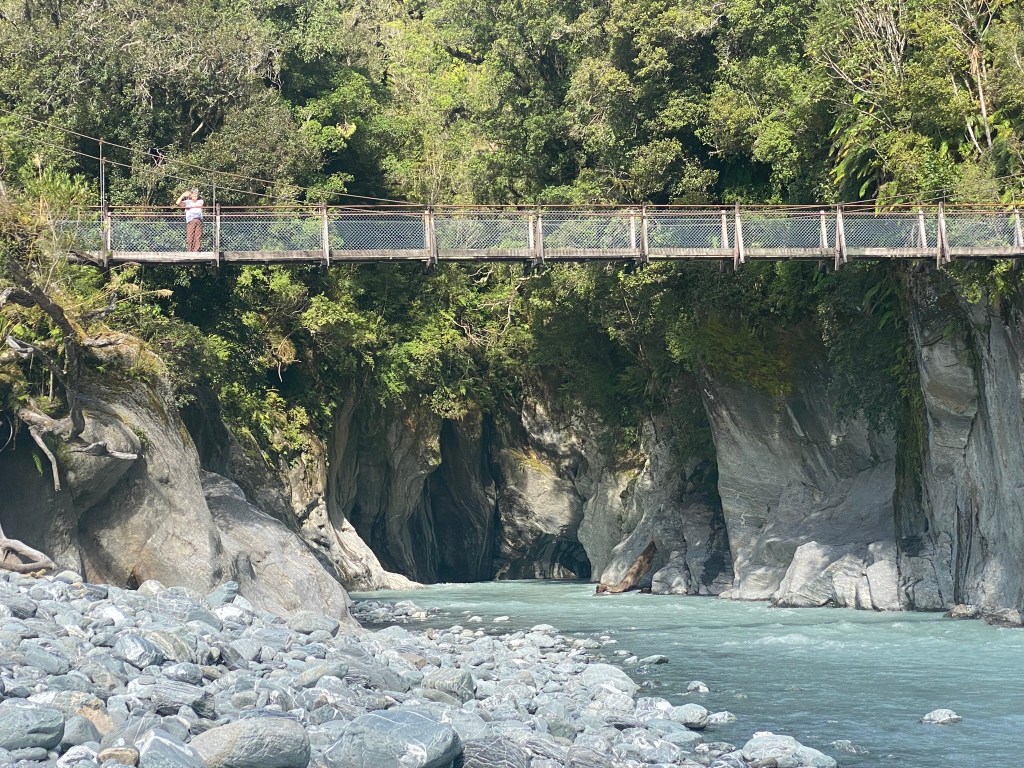
Michelle on the Callery Gorge swing bridge 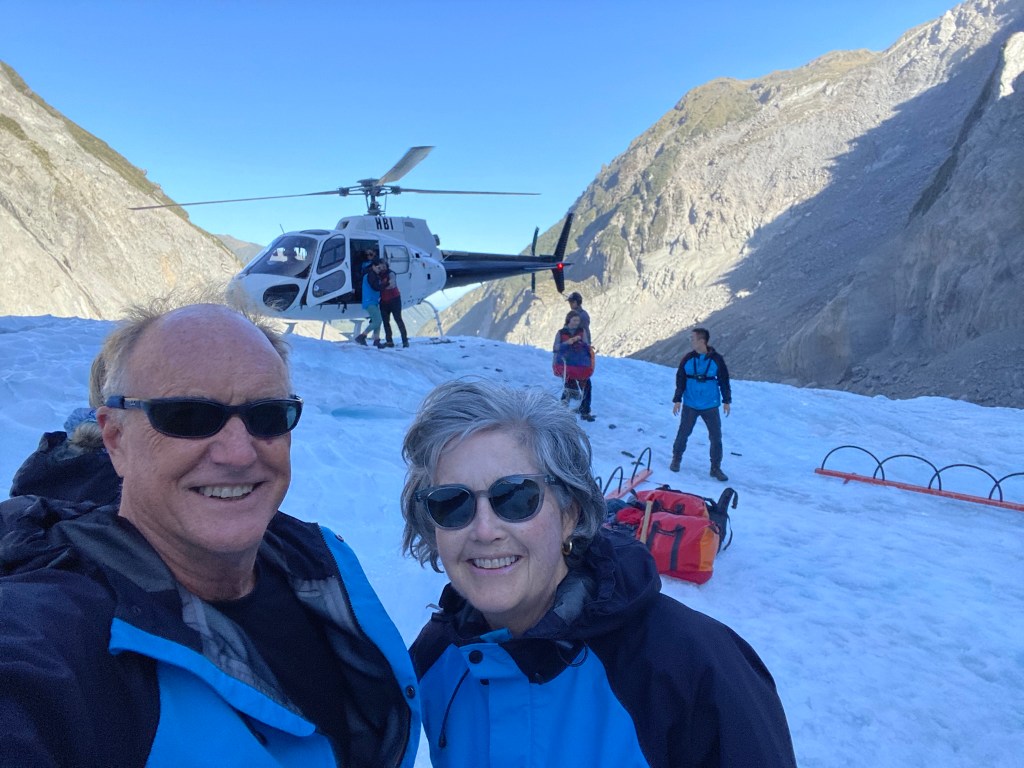
Fox Glacier landing 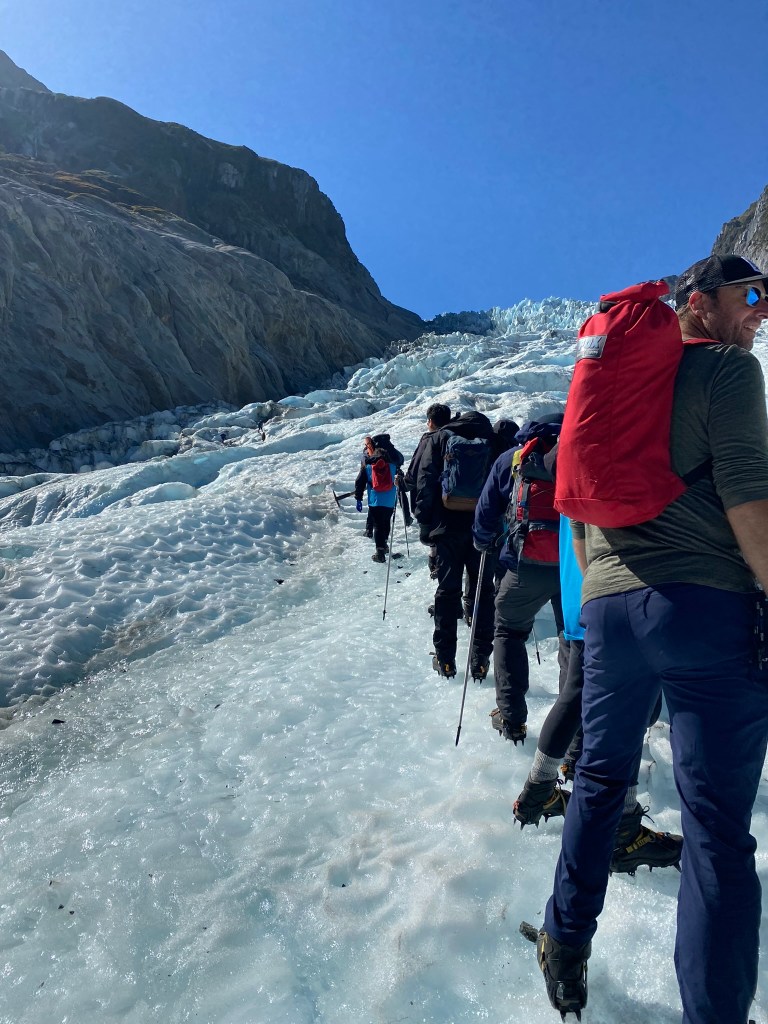
Hitting the ice 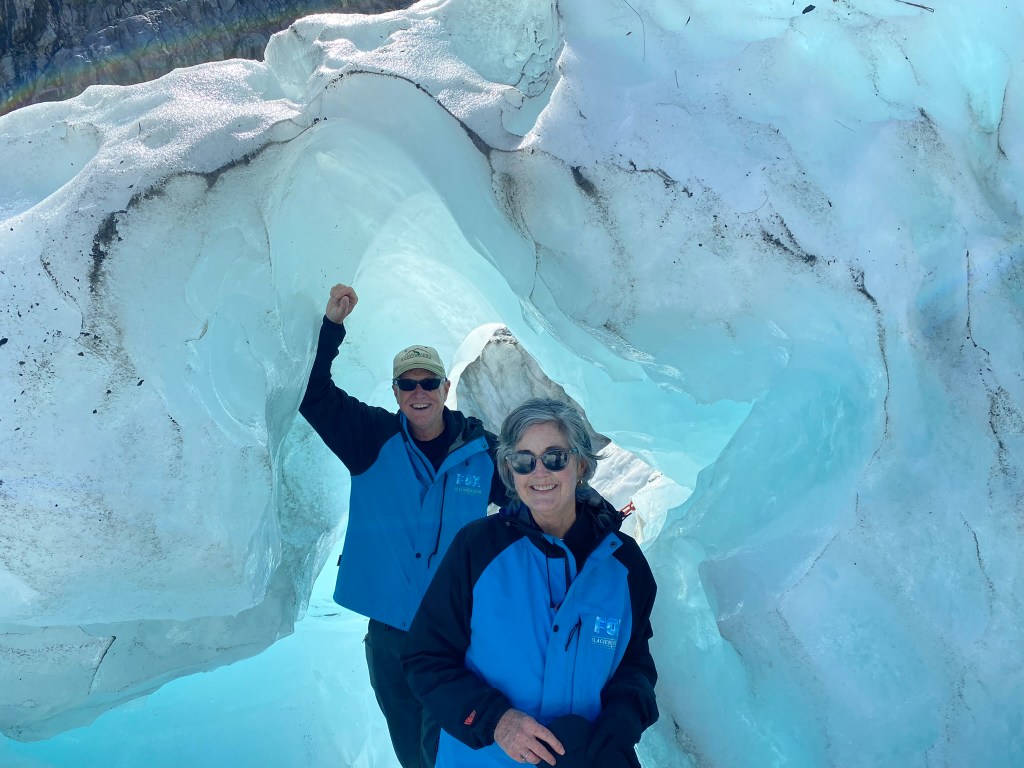
Blue ice cave 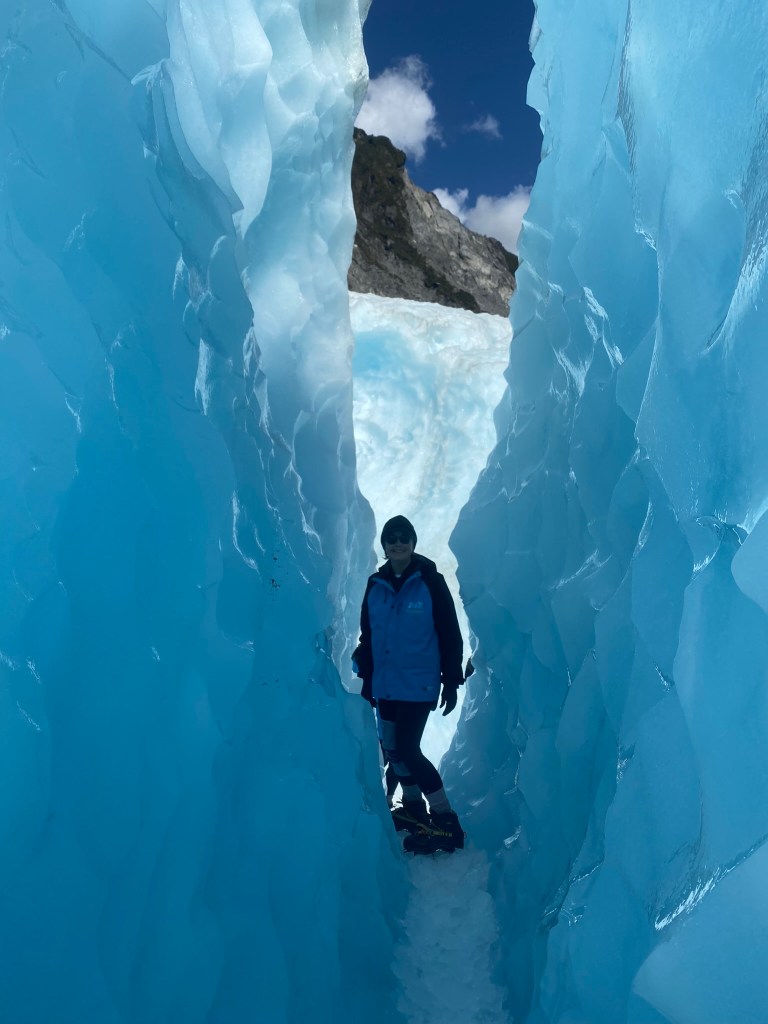
Crevasse! 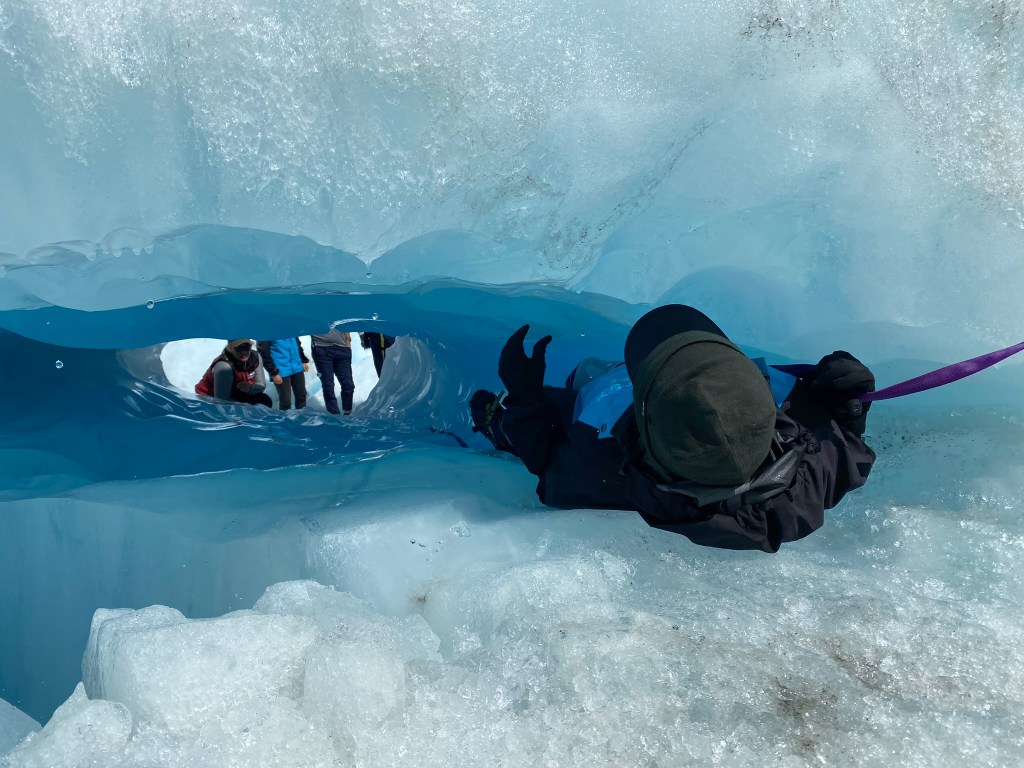
Sliding the ice tunnel 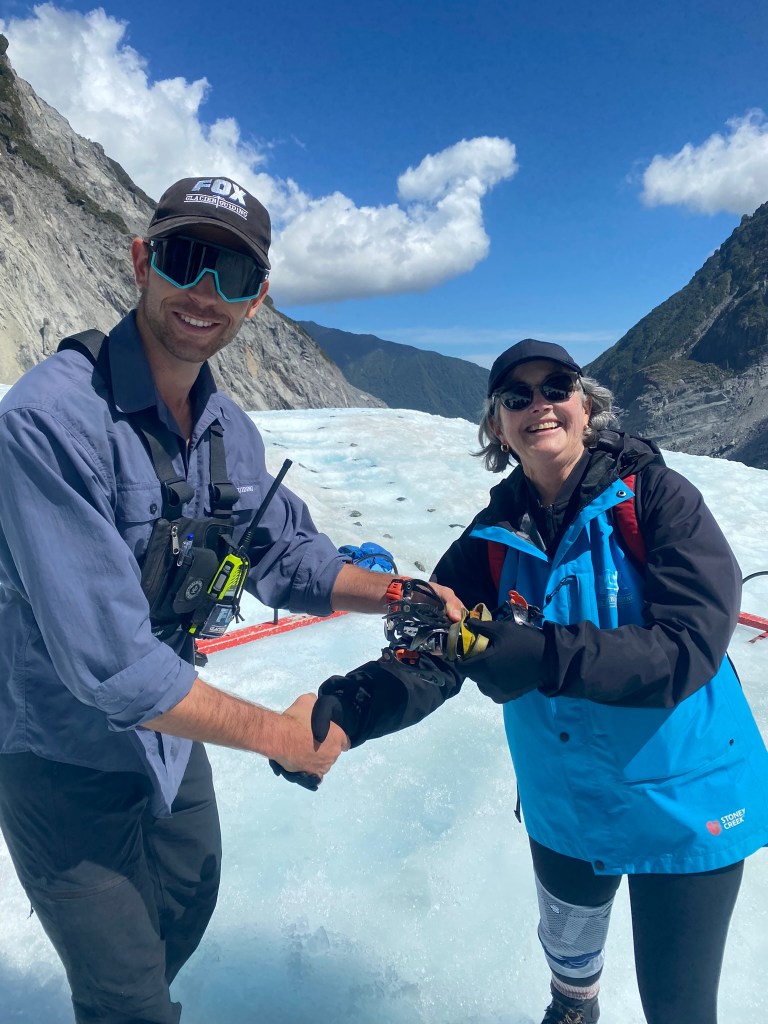
Best crampon delivery! 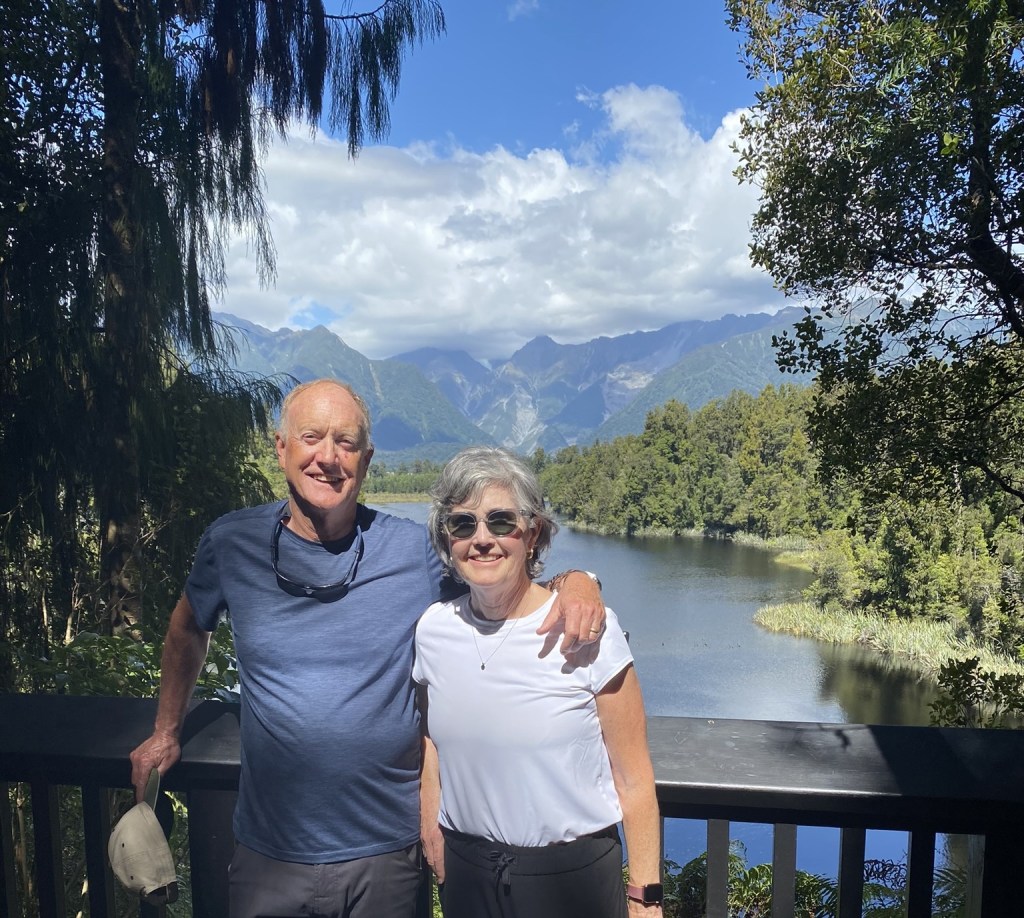
Lake Matheson
| Days 16-17 | Wanaka | Wanaka Homestead Lodge & Cottages |
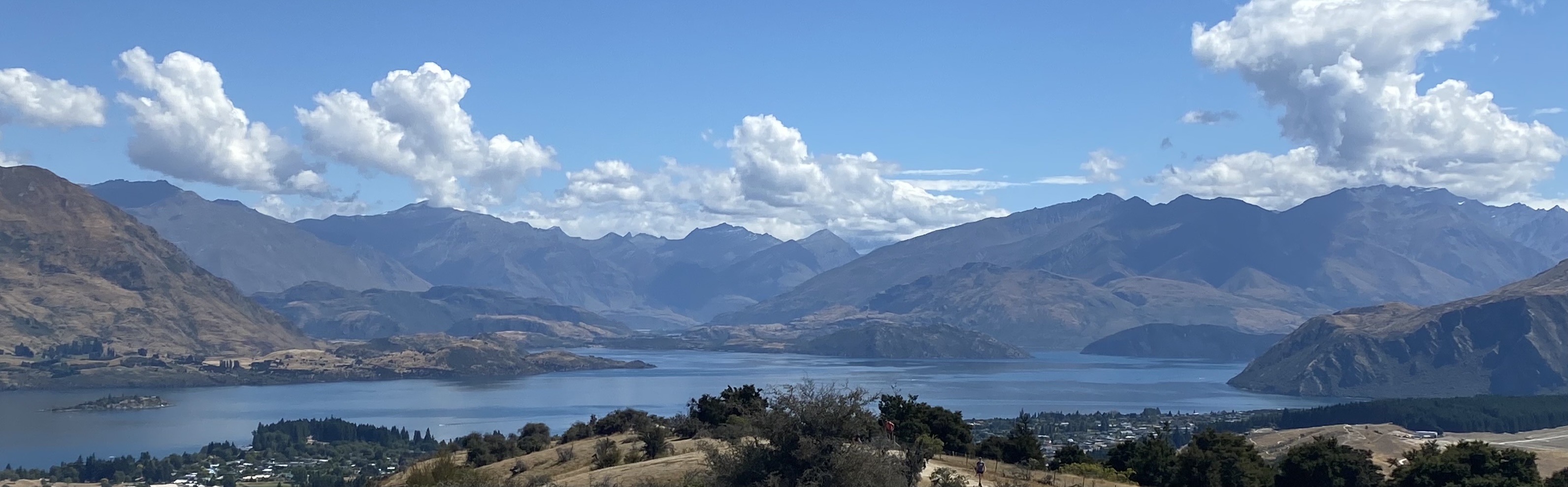
As much as we liked the wild west coast, we continued our journey south and over Haast Pass inland, stopping for lunch at the Hard Antler, the final outpost just before the pass, then stopping again to hike the Blue Pools Track just over the pass. The dramatic change in scenery along the way was remarkable, as we rolled past gravelly rivers, coast marshes and sandy beaches, climbed through rainforest into the rugged, waterfall-lined alpine mountains, and eventually into the much drier but still mountainous interior.
Dropping down the mountains, we passed Lake Hawea and finally rolled into the lakeside town of Wanaka. For our California friends, Wanaka is somewhat analogous to Tahoe, and though the lake is a little more than 1/3 Tahoe’s size and a lower base elevation, the mountains rise more dramatically around it, backed by UNESCO World Heritage listed Mount Aspiring National Park. Popular for both summer and winter wilderness sports, it also boasts good local wines, good food and great people living a relaxed lifestyle. We spent two days here, but Wanaka definitely is worthy of a longer stay. Highlights:
- Haast Pass itself is a gorgeous mountain drive, climbing along the Haast River up the towering mountains past Thunder Falls, Depot Creek Falls, Fantail Falls and Roaring Billy Falls before dropping down the other side with Mount Aspiring NP to the south and Aoraki/Mount Cook to the north.
- The Blue Pools are a popular day trip from Wanaka and involve an easy, one-hour round trip track through alpine forest and over a couple swing bridges to the deep, blue swimming hole and beach on the Makarora River.
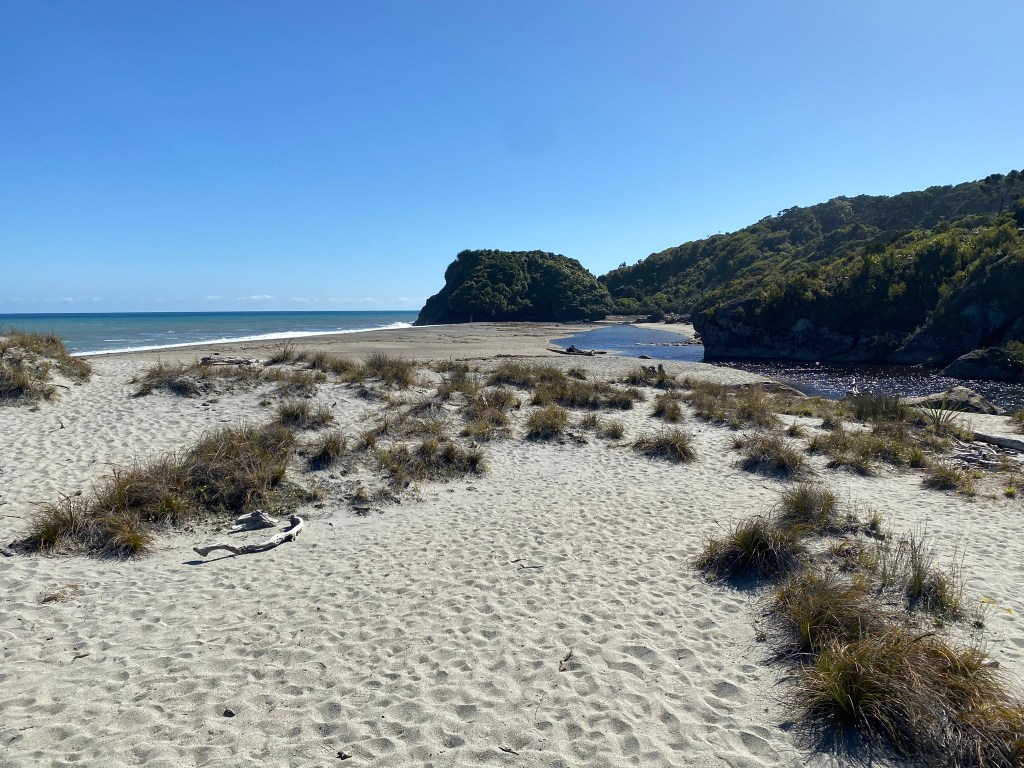
Ship Creek beach 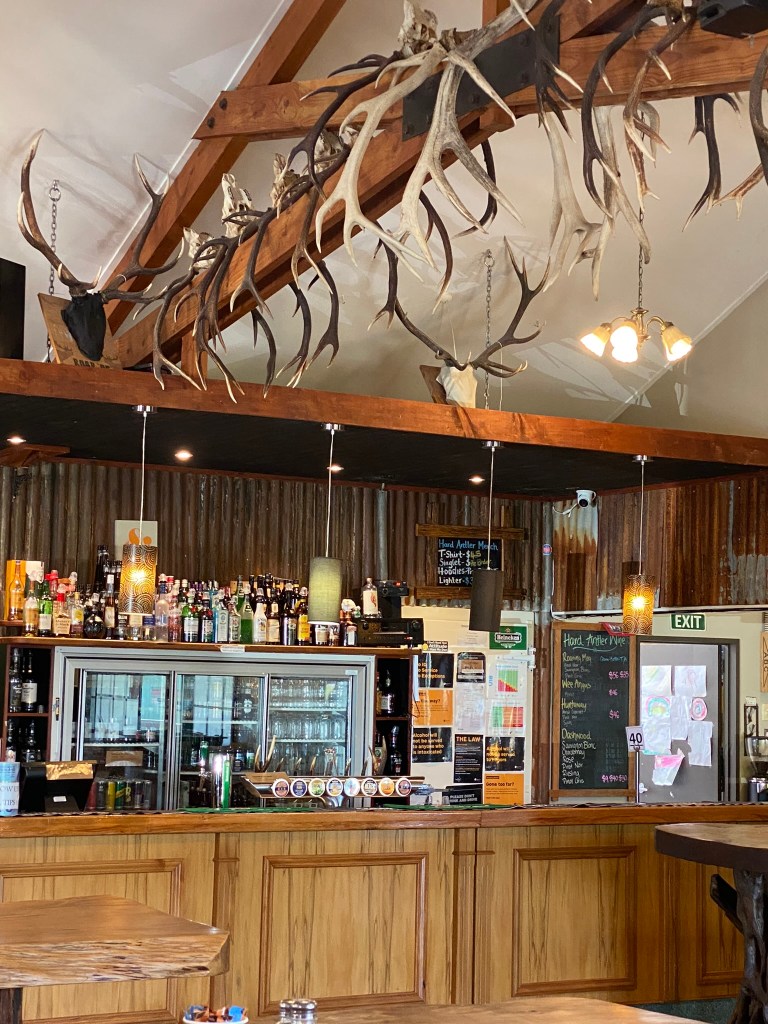
The Hard Antler 
Haast River 
Thunder Falls 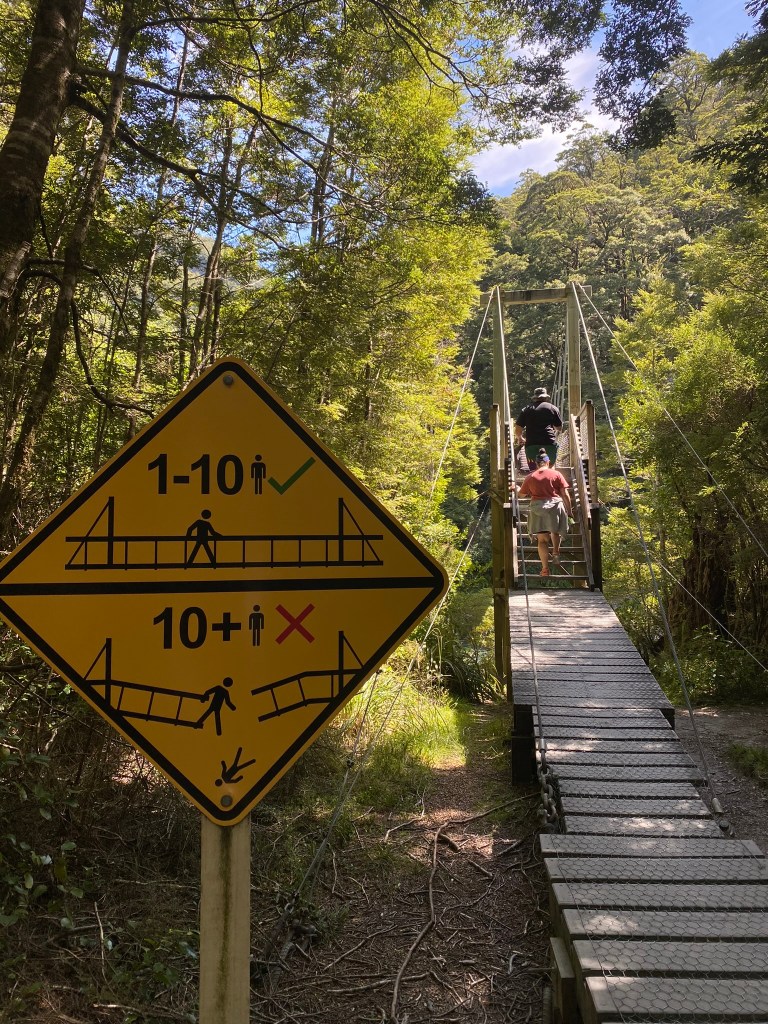
Swing bridge to Blue Pools 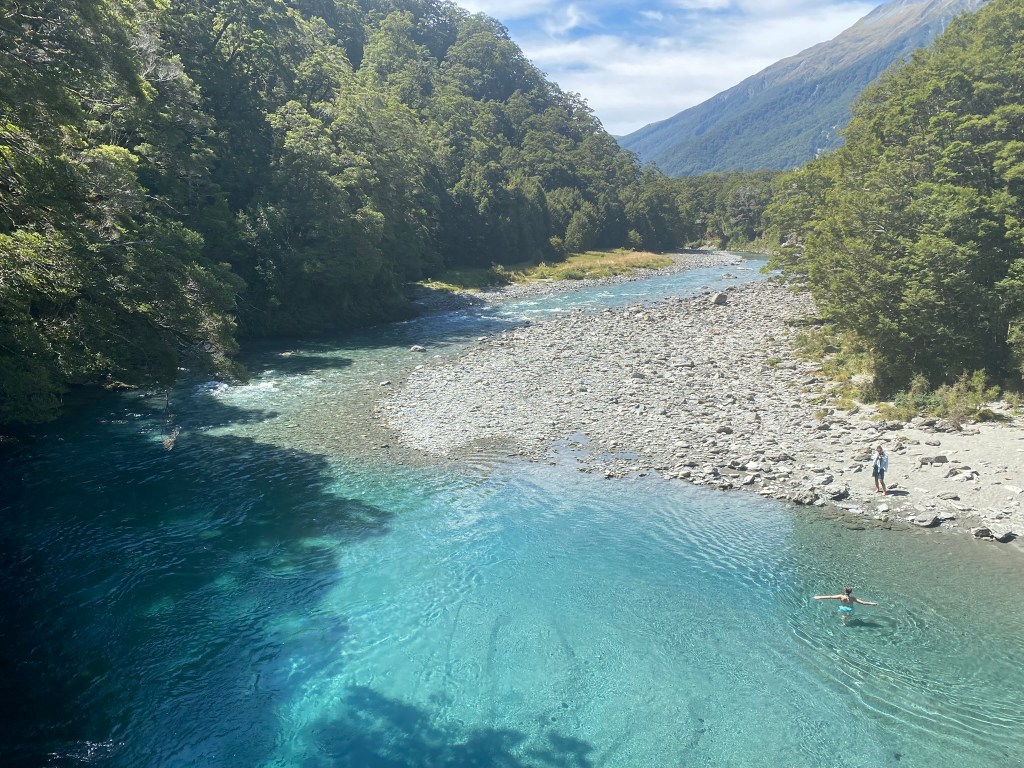
Makarara River 
Blue Pools 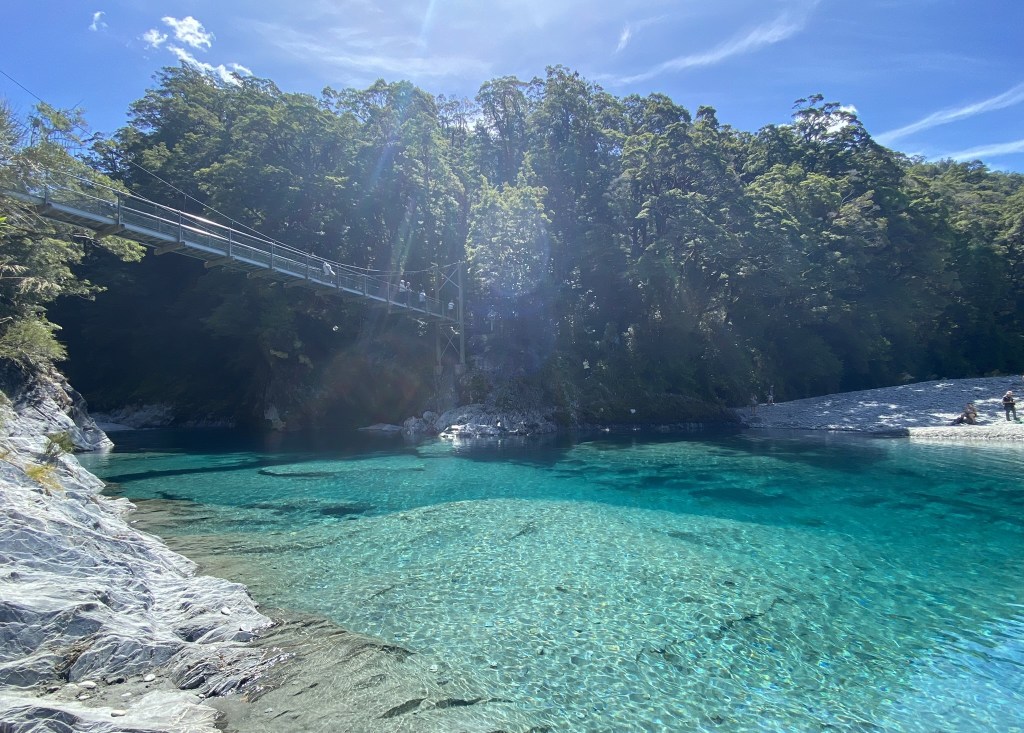
Blue Pools swing bridge 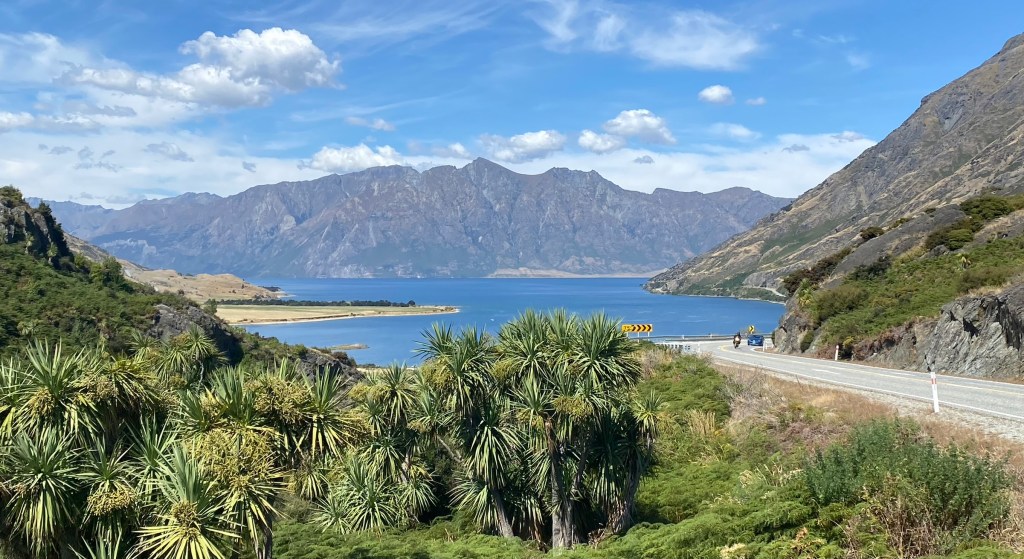
“The Neck”
- Wanaka Homestead is a very nice timber and stone lodge with separate cottages that are rich in fine touches and comfort. Our host, Allan, is a wealth of information with excellent advice on where to eat, drink and explore all around Wanaka. Here is my review.
- The small, very walkable downtown is pretty and chock full of restaurants and shops and plenty of tourists and vacationers, including a good many Kiwis. Getting to town from the Wanaka Homestead takes a 20-minute walk through a lovely park filled with huge trees and flowers and along the Lake Wanaka shore, passing by the famous Wanaka Tree.
- Outstanding dinners at Kika (one of the world’s Top 50, according to one list) and Francesca’s Italian Kitchen were among the best we enjoyed on this entire trip, and the latter was basically pizza and antipasto. Both highly recommended, and both require advance reservations.
- If you can’t get a dinner reservation, consider just noshing on a couple cheese and charcuterie boards with beer, wine or cocktails at Pembroke Wine & Spirits. Even if you dine elsewhere, stopping here for a drink or two and maybe a luscious bite is still a must! We enjoyed flights of wine and beer with the duck pate board that was to die for. Extensive selection of quality wines, gin and whiskey, and the proprietors, Nadia and Troy, are both knowledgeable and charming.
- Glendhu Bay, a few miles outside town, was a great place to swim in Lake Wanaka without the crowds along the beach in town.
- Hike to the summit of Mount Iron in town. It’s fairly exposed but only two hours up and back with an elevation gain of about 800′. But the view over the town, Lake Wanaka and the surrounding mountains can’t be beat.
- Three excellent microbreweries in town, including Rhyme and Reason, Ground Up Brewing, and Wanaka Beerworks. We only got to the first one and really liked it — both the beer and the vibe.
- Pembroke Patisserie on the outskirts of town offers the best coffee and fresh baked croissants in town.
- Other interesting attractions, if you have time and inclination, include several wineries (get inside tips on the best from Pembroke Wine & Spirits), Hook Wanaka (we had a look but didn’t stay; great for kids but not my thing), hike the Clutha River track and nearby Albert Town Lagoon bird sanctuary (we enjoyed this), and of course tons of hiking everywhere, including the Roy’s Peak Track for the very best views. Hiking the Jones Creek Track along Lake Hawea and checking out the Hawea Hotel bar also good choices.
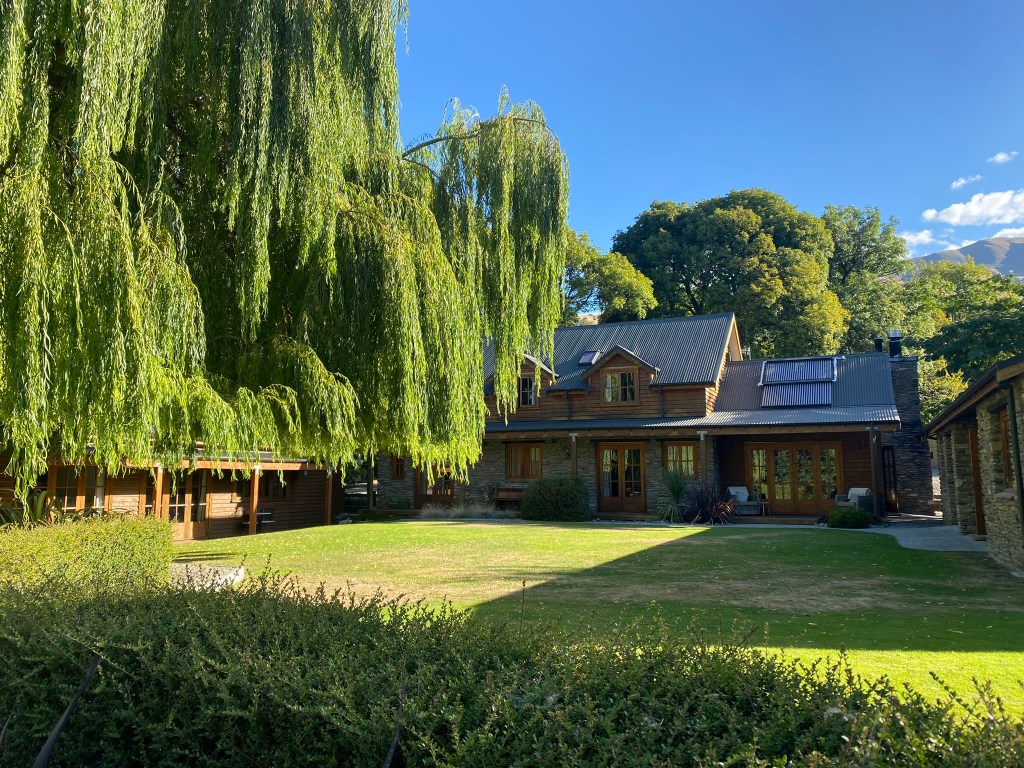
Wanaka Homestead 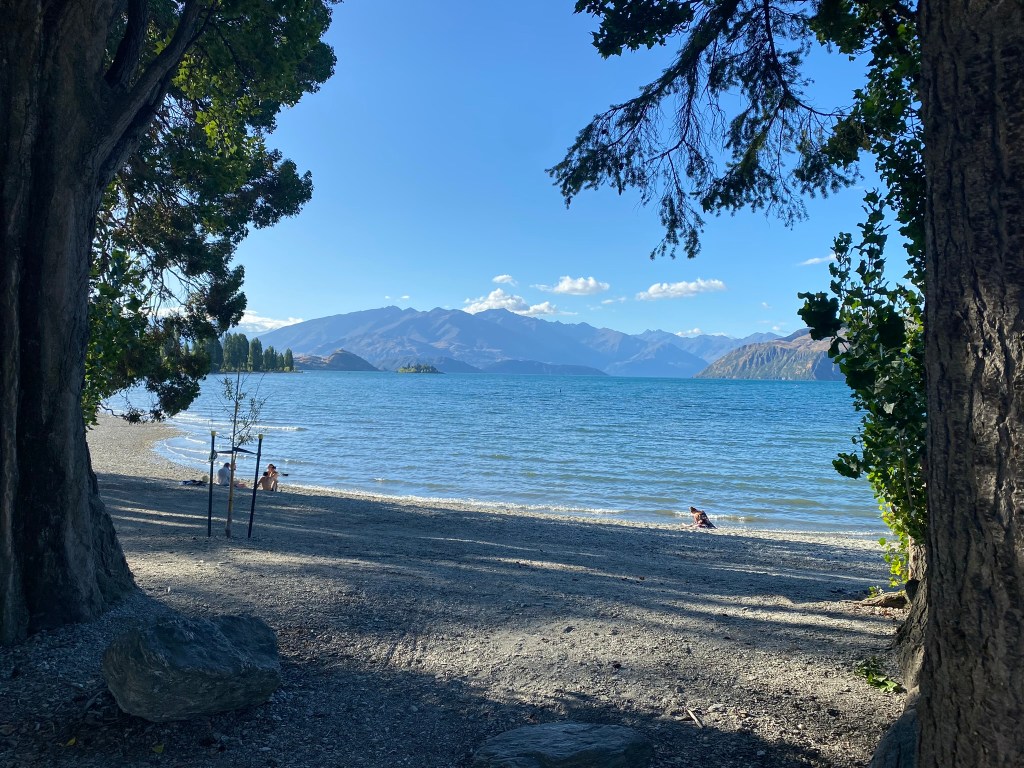
5 minute walk to Lake Wanaka 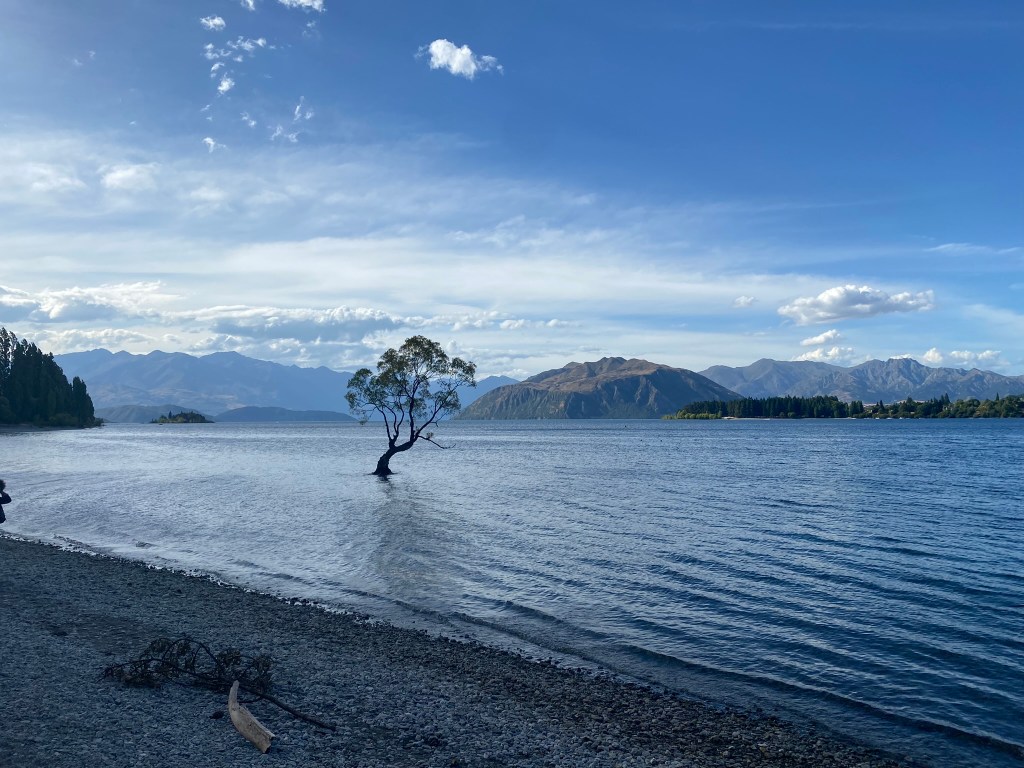
That Wanaka Tree 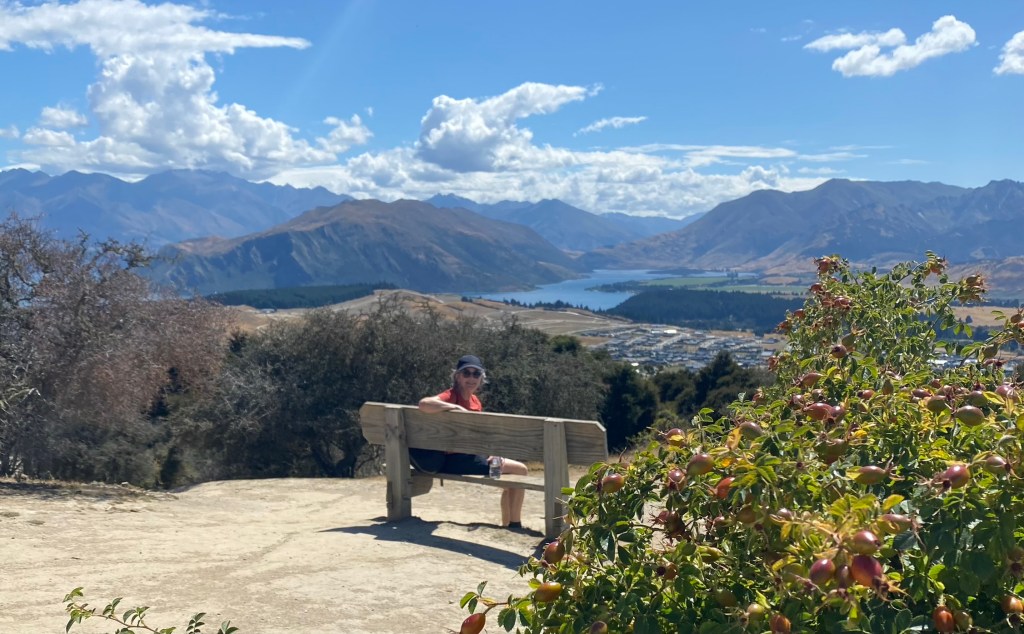
Iron Mountain summit 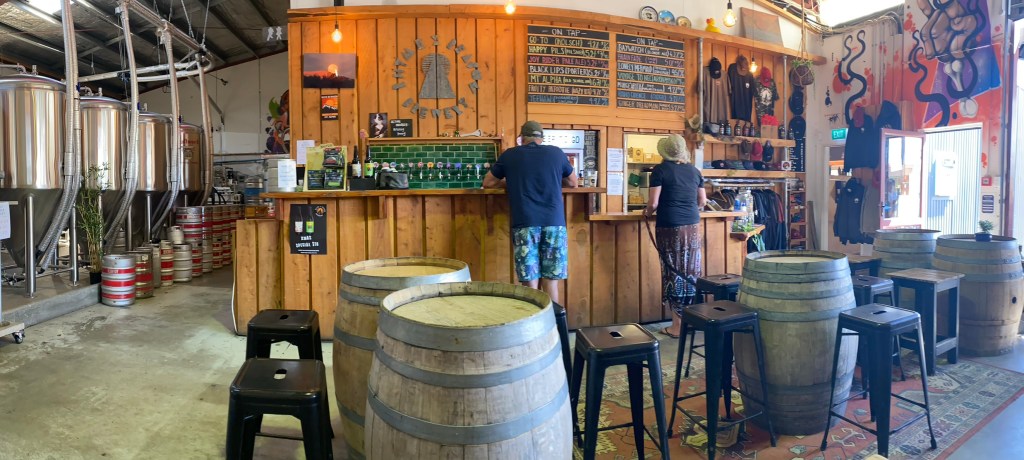
Rhyme & Reason taproom 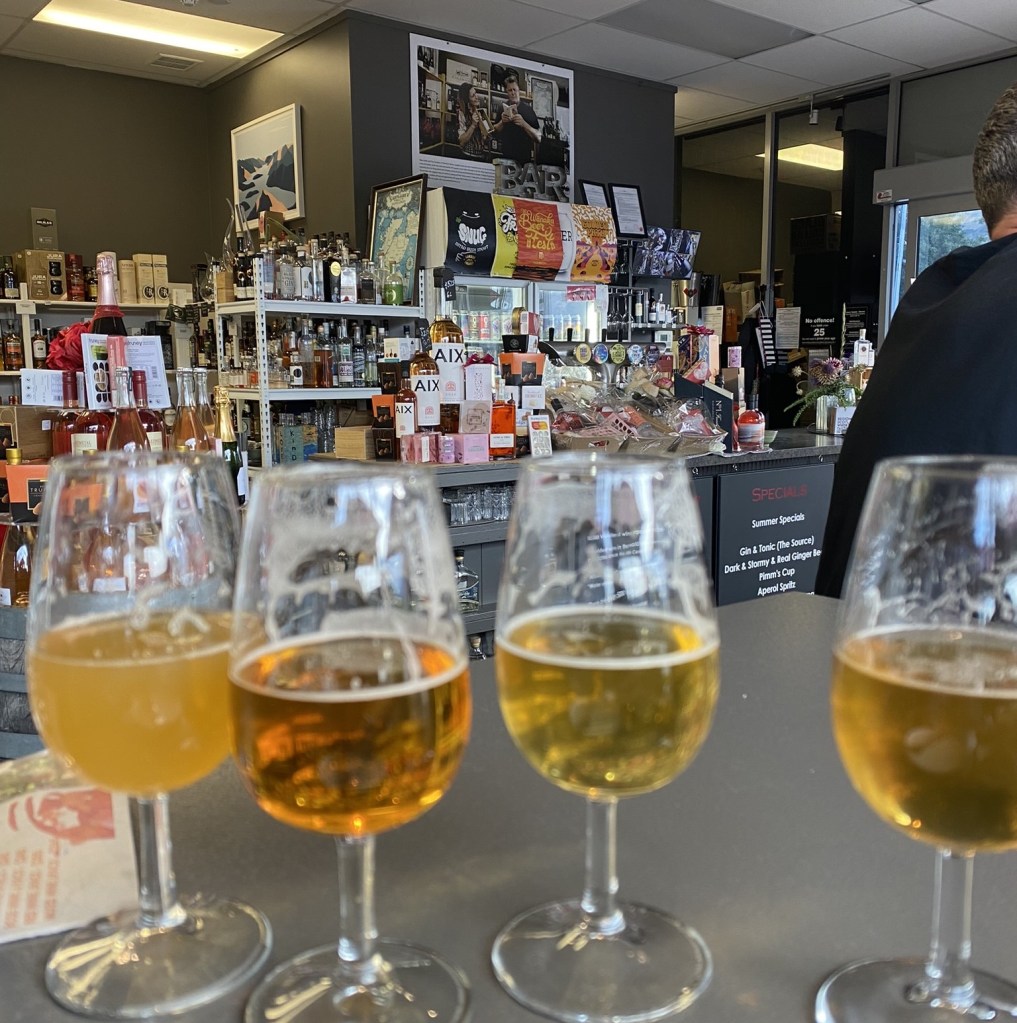
Pembroke Wine & Spirits 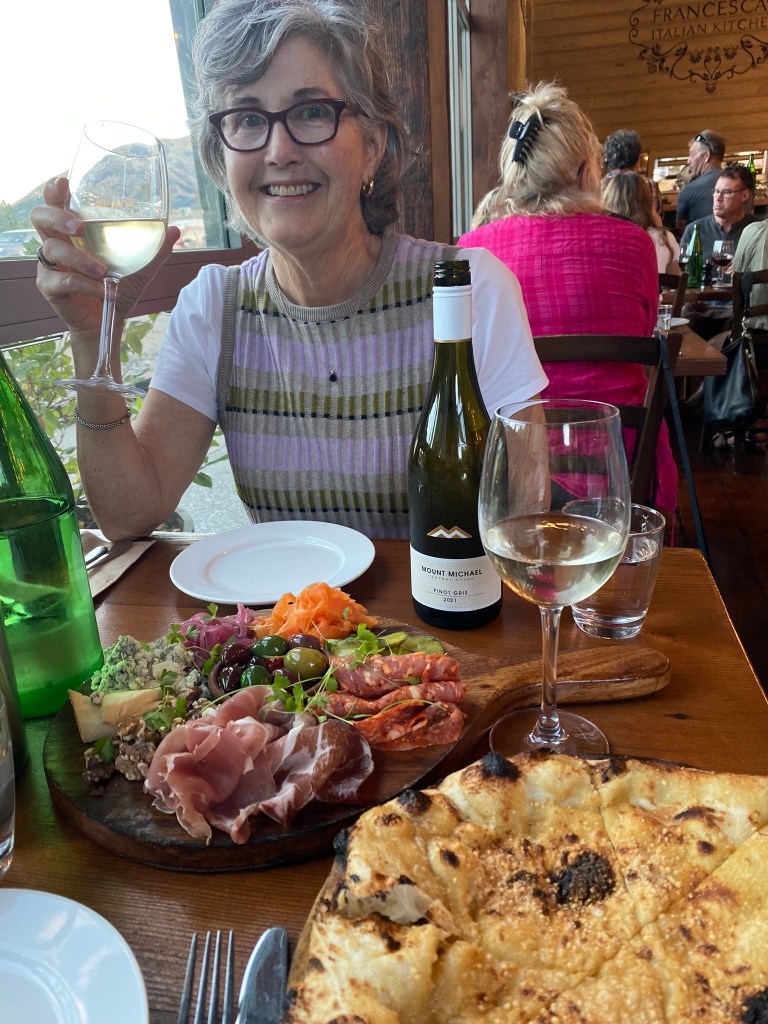
Francesca’s Italian Kitchen 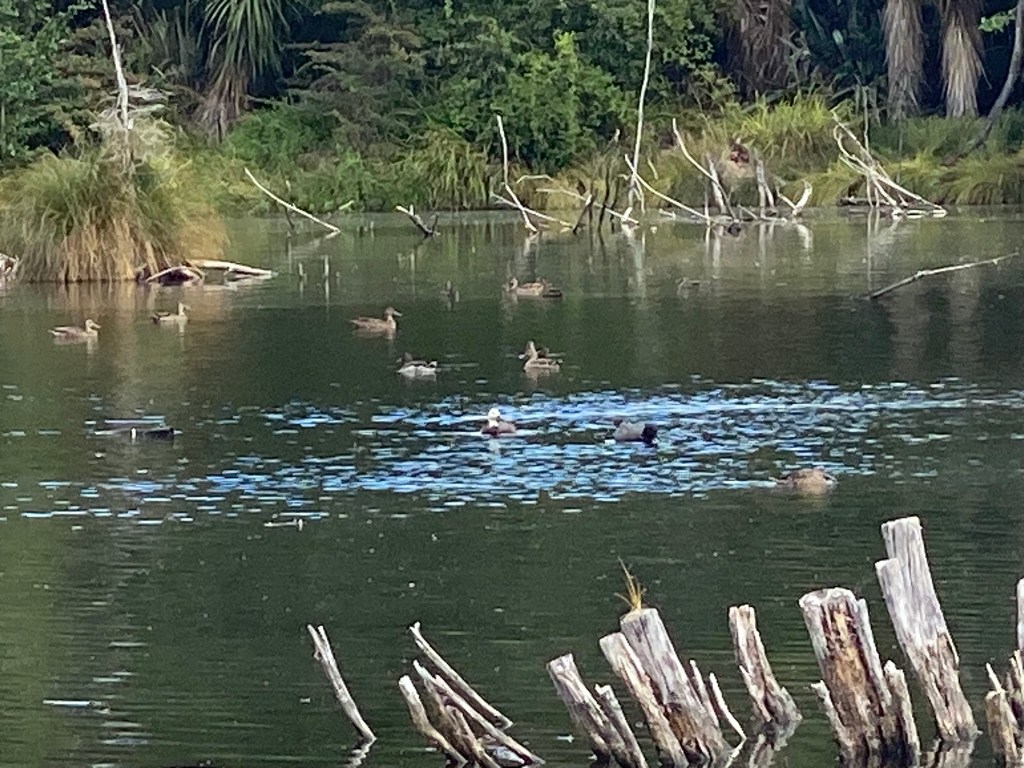
Albert Town Lagoon bird sanctuary 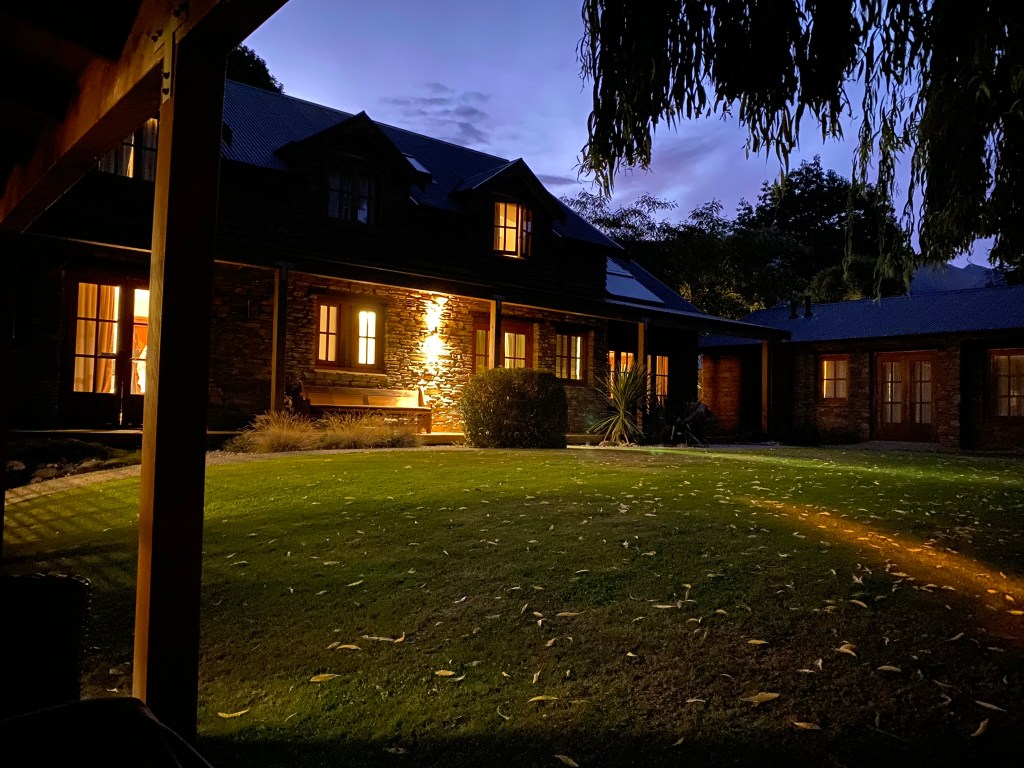
Wanaka Homestead at night 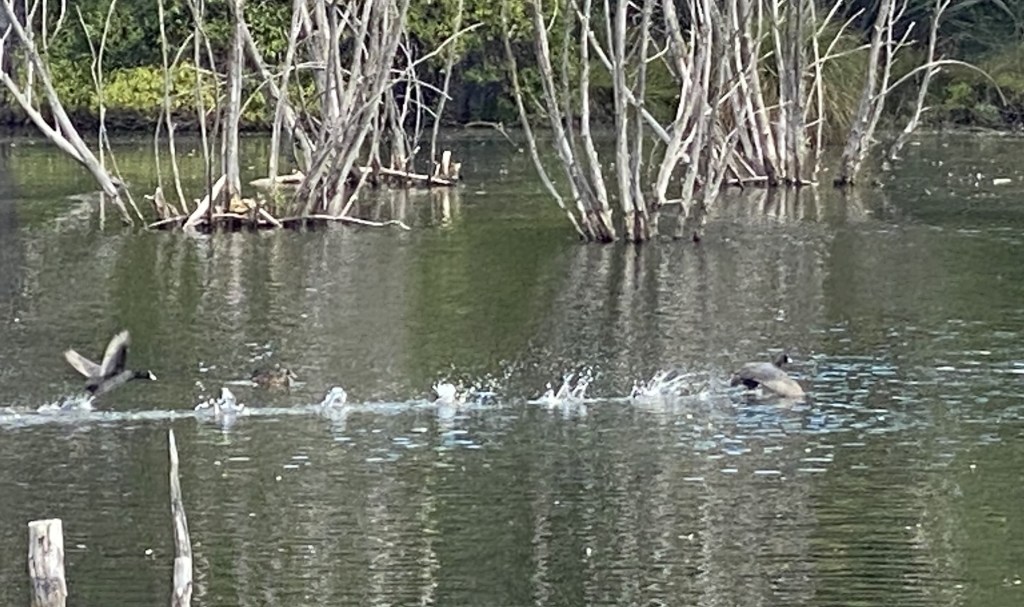
Kuruwhengi / Shoveler ducks taking flight
| Days 18-21 | Queenstown | Cherry Tree House |
Wishing we could have had another day in Wanaka, it was nonetheless time to move on to Queenstown. Heading south through the small mountain outpost of Cardrona, we made two worthwhile stops: first, the Cardrona Distillery, a fairly new gin and whiskey distillery we had heard about from our hosts at the Olive Rabbit, followed by the historic Cardrona Hotel for lunch.

NZ Falcon stands watch 
Cardrona Distillery 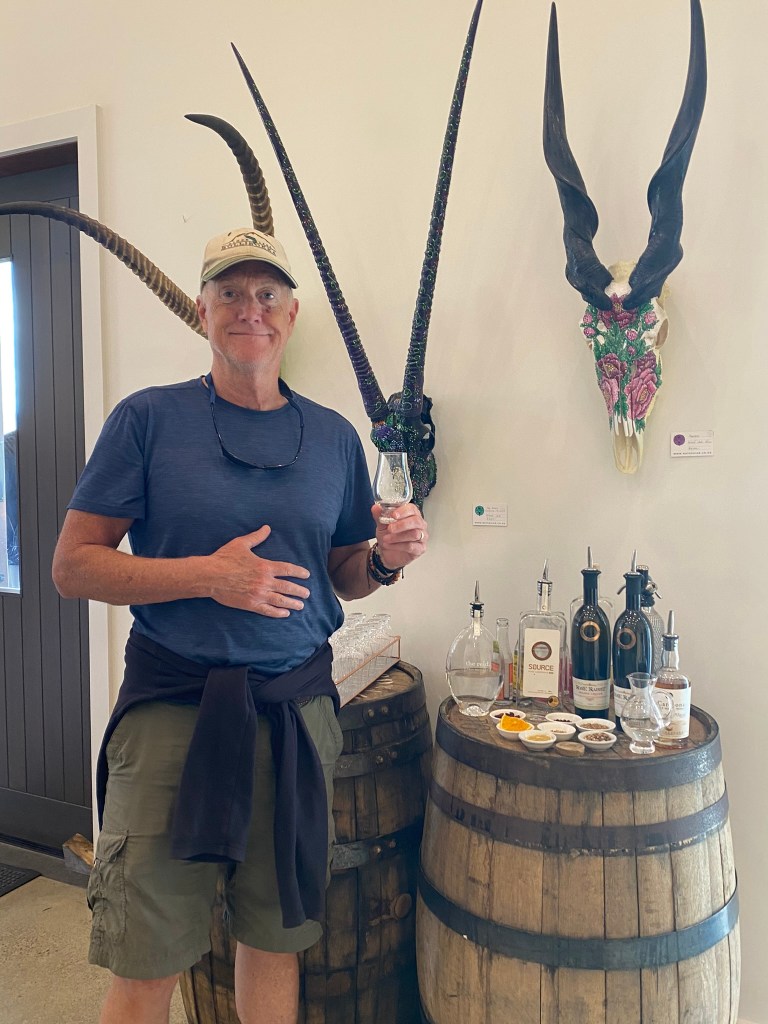
Sampling Cardona’s gin 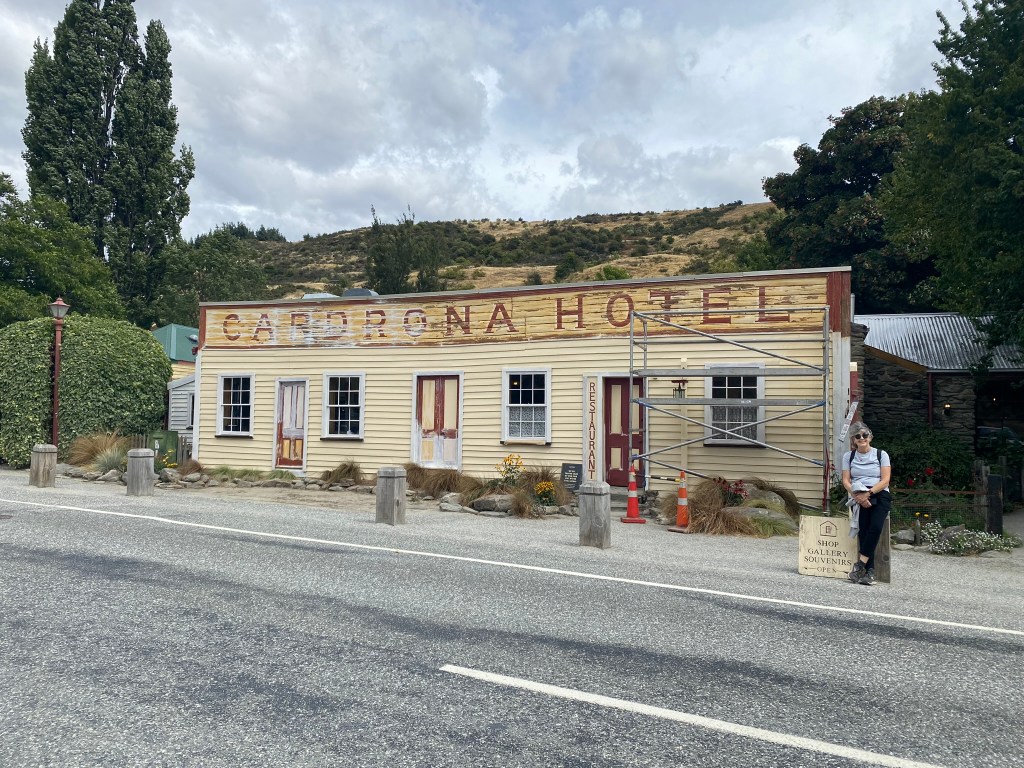
Cardrona Hotel 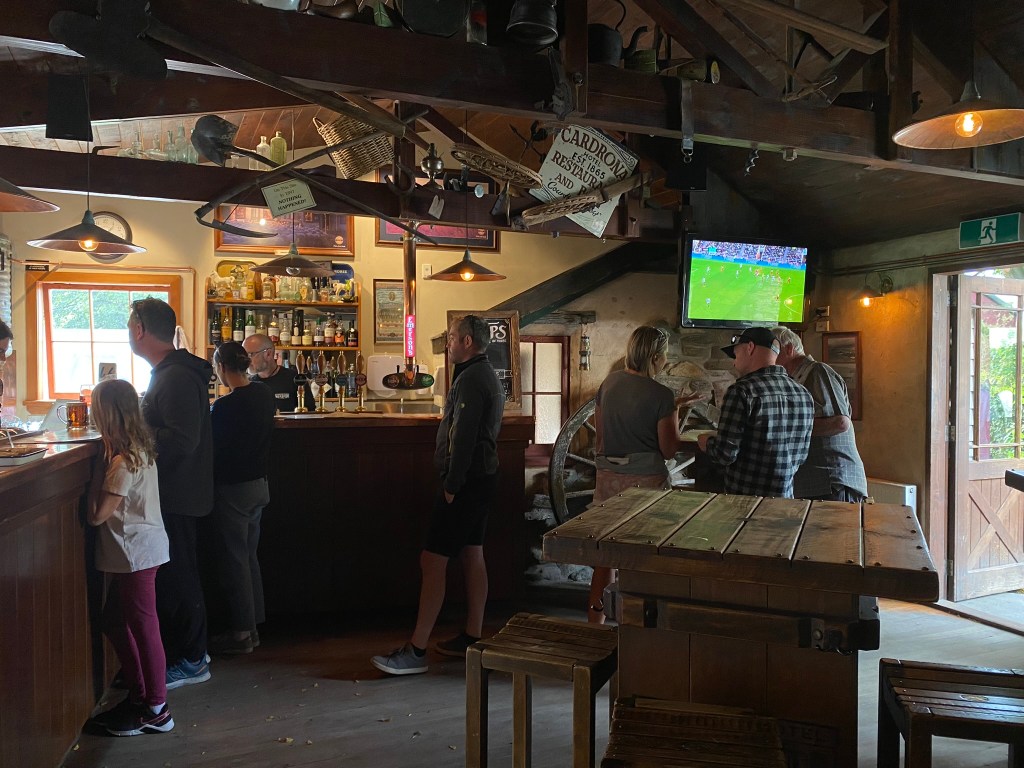
Inside the hotel bar 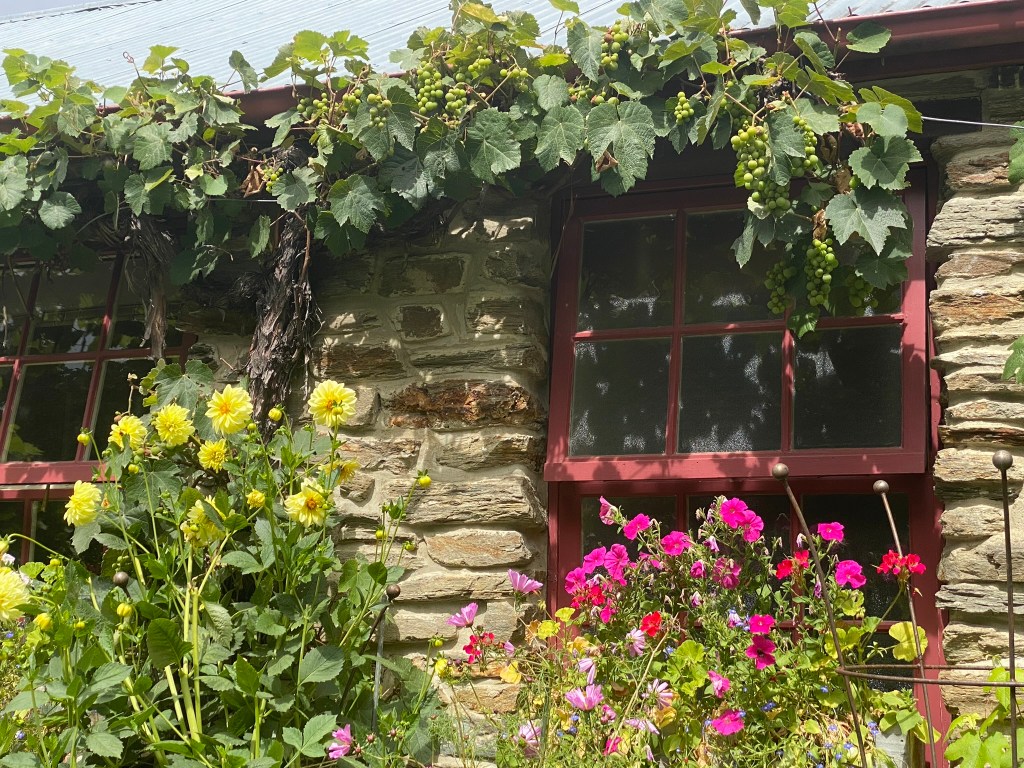
Cardrona Hotel 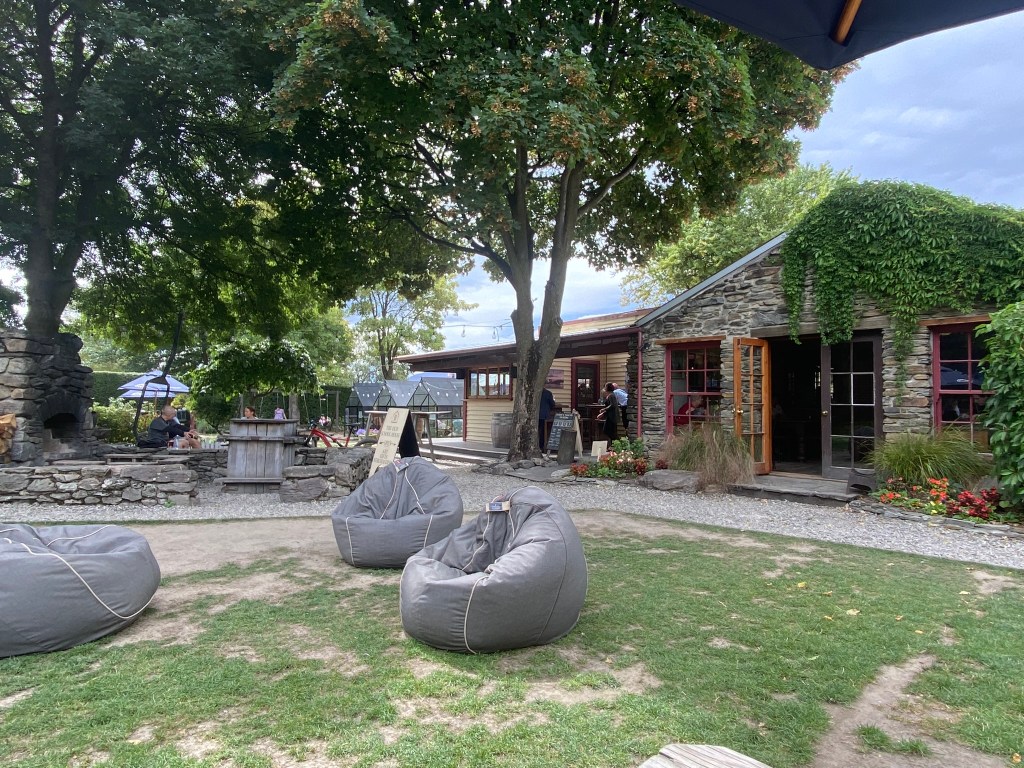
Back yard Cardrona Hotel
After our lunch stop in the Cardrona Hotel’s pretty back yard, we continued our drive south and, cresting the summit of the Crown Range, caught our first glimpse of Queenstown and massive Lake Wakatipu in the distance ahead. As our home base for the next four days was actually in Arthur’s Point, overlooking the Shotover River five miles outside Queenstown, we took the back roads to get there.
When I first started thinking of a trip to New Zealand, Queenstown – the “adventure capital of New Zealand” – was the big draw. I imagined spending a couple months here alone. Having finally arrived, I’ve decided that four days was plenty and staying where we did in Arthur’s Point was the best decision possible. Queenstown itself is clearly struggling to keep up with the vast influx of tourists, as the town’s original design clearly was not set up for the population boom. It was certainly the most crowded and touristy places we experienced on this trip. Traffic was a problem, road construction adding to it, and the hills around town were cluttered with low-rise hotels and short term rentals. Having our cliffside oasis overlooking the Shotover River just outside town made it easy to pop in and out of the action while having a quiet and beautiful retreat to which we could escape.
We arrived without much of a plan for a change, but we knew that unlike many tourists drawn to this area it wasn’t going to involve many of the thrill-seeker activities like skydiving, hang gliding, bungee jumping (invented here), jet boating or whitewater rafting… though the latter was tempting. Here are the things we really liked:
- Our little “honeymoon cottage” overlooking the river in Arthur’s Point was one of our favorite stays in NZ. Here’s my review.
- A beautiful one-hour drive around Lake Wakatipu past the small village of Glenorchy, is widely regarded the most beautiful drive in the region. Continuing past the confluence of the braided, glacial Dart and Rees rivers and another few miles of unpaved gravel road and a few “is this really the right way?” moments takes you to the Routeburn Track, one of the three Great Walks in and around Fiordland. Here we enjoyed a stunning tramp the first few miles out and back through river canyon, past waterfalls, to a gorgeous riverside lunch spot.
- Glenorchy also provides access to other remote parts of Mount Aspiring National Park, including the “Road to Paradise” and more LOTR filming locations (notably Lothlorien and Isengard).
- Day tripping into quaint, historic Arrowtown, once the South Island’s gold mining boomtown from the 1800’s and now a sort of food, art and, well, historic landmark mecca locally, is just a few miles from Arthur’s Point. We enjoyed an outstanding breakfast at the Chop House and stumbling upon the art studio of Graham Brinsley, where we found him at work on a new painting. Several of the well-preserved historic buildings were also fun to see. The Winery, on the main drag, also serves up a nice meat and cheese board lunch and excellent local wine selection.
- While downtown Queenstown’s mostly pedestrian zone is jammed with tourists and a mix of tacky and nicer shops and restaurants, the waterfront is undeniably pretty and fun to stroll. We enjoyed an excellent dinner at FINZ Seafood Grill, one of the better rated restaurants on the water.
- Atlas Beer Cafe, a tiny joint tucked around the corner, was the best place to grab a beer right in town, with an excellent selection of beers, a cool vibe and great peoplewatching. They also offer a limited food menu, but they are famous for their steaks, and I can tell you they really are good!
- Speaking of beer, if you like that kind of thing, be sure to check out Altitude Brewing, a hip, ski-themed shed on the water with good beer flights, and Searchlight Brewery‘s funky taproom, both very worthwhile stops just outside town.
- Canyon Brewing, in the shadow of the historic Edith Cavill Bridge on the Shotover River in Arthur’s Point, was another good spot for a casual dinner and good, local beer brewed on site. The bridge, by the way, was named by an old miner to honor a non-Kiwi — a nurse who was captured and executed in the first World War for helping wounded Allied soldiers escape from occupied Belgium.
- Harbor Fish, just a couple miles down the road near the airport, is a great place to get extremely fresh fish and, in our case, green lipped mussels. Perfect for dining in.
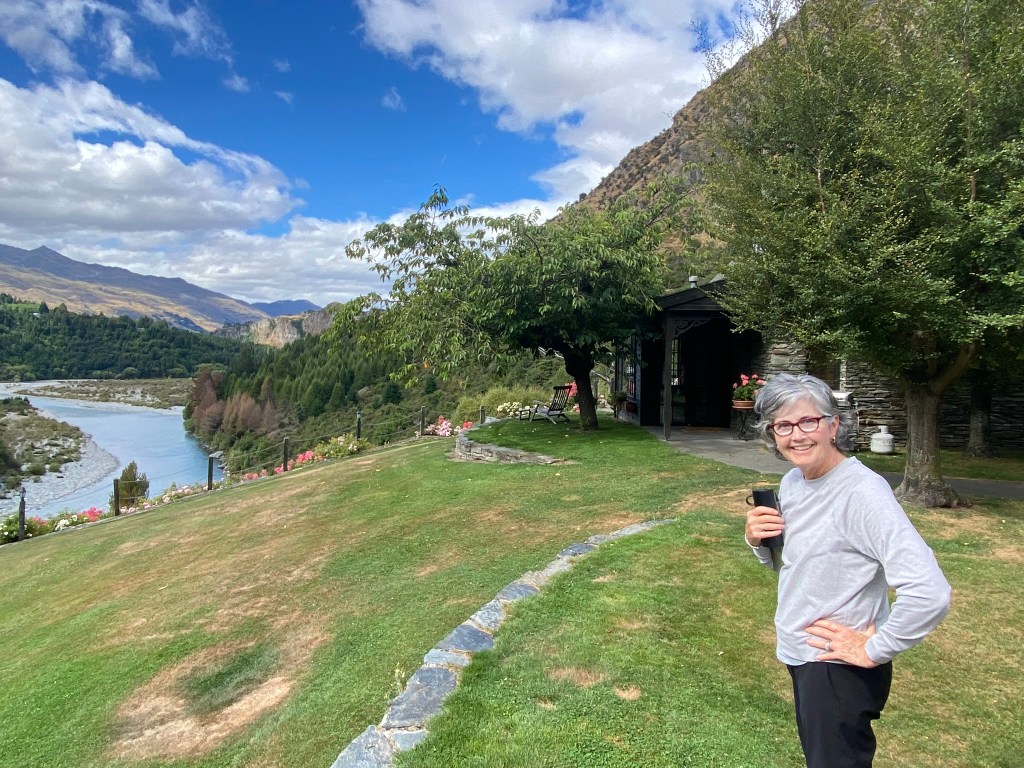
Arrival at the Cherry Tree House 
Our back deck on the Shotover River 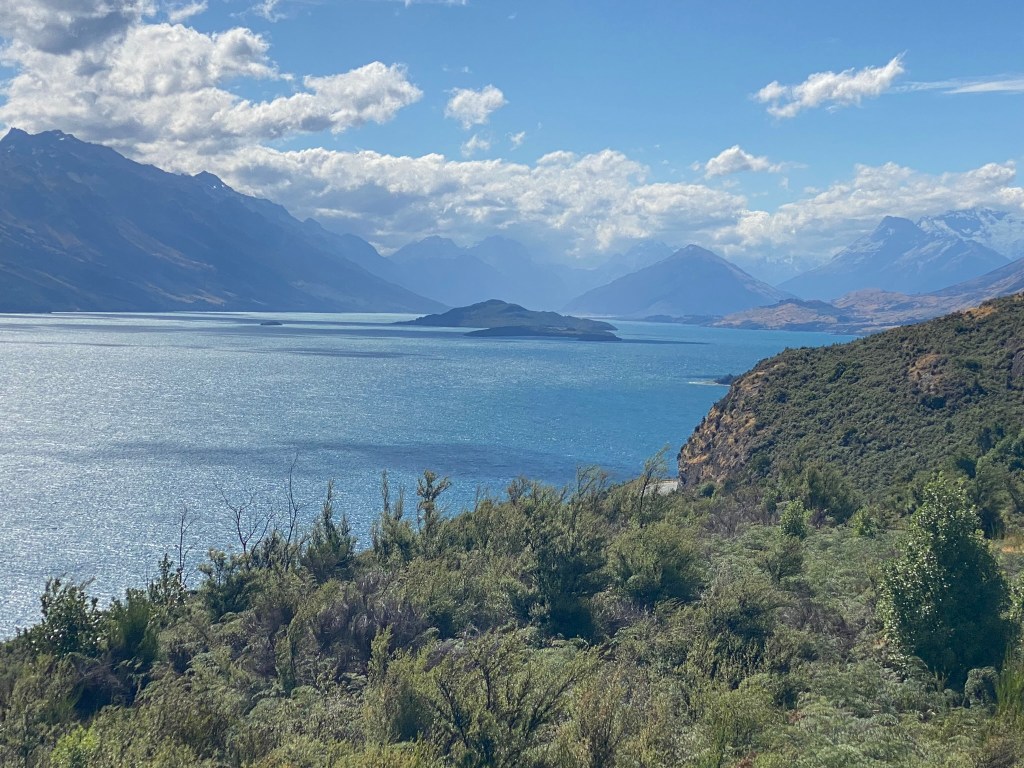
The drive along Lake Wakatipu to Glenorchy 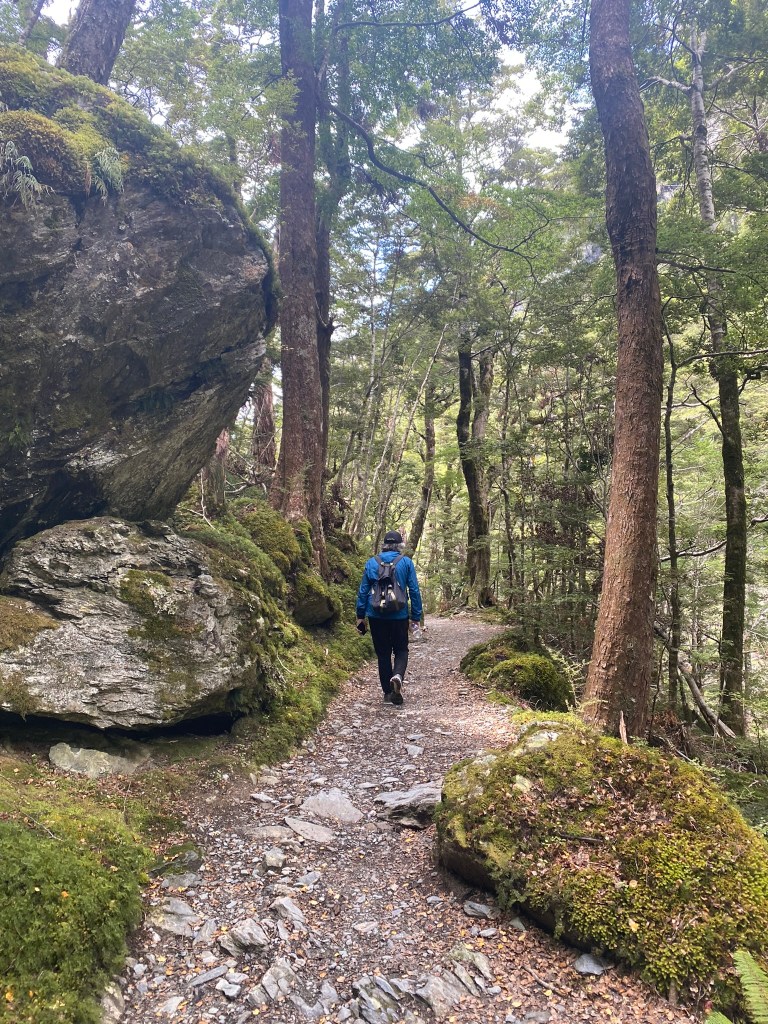
The Routeburn Track 
Overlooking the Routeburn River 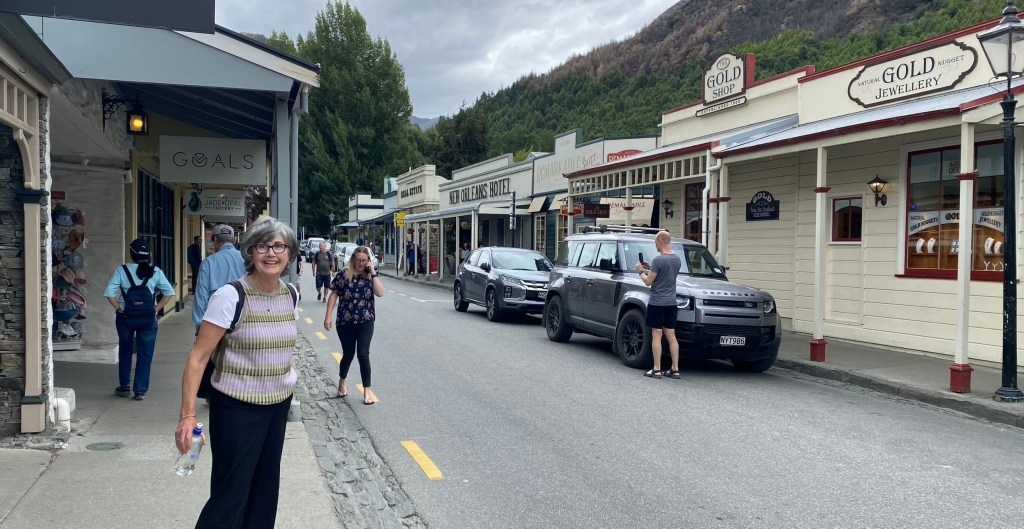
Day tripping in Arrowtown 
Historic buildings in Arrowtown 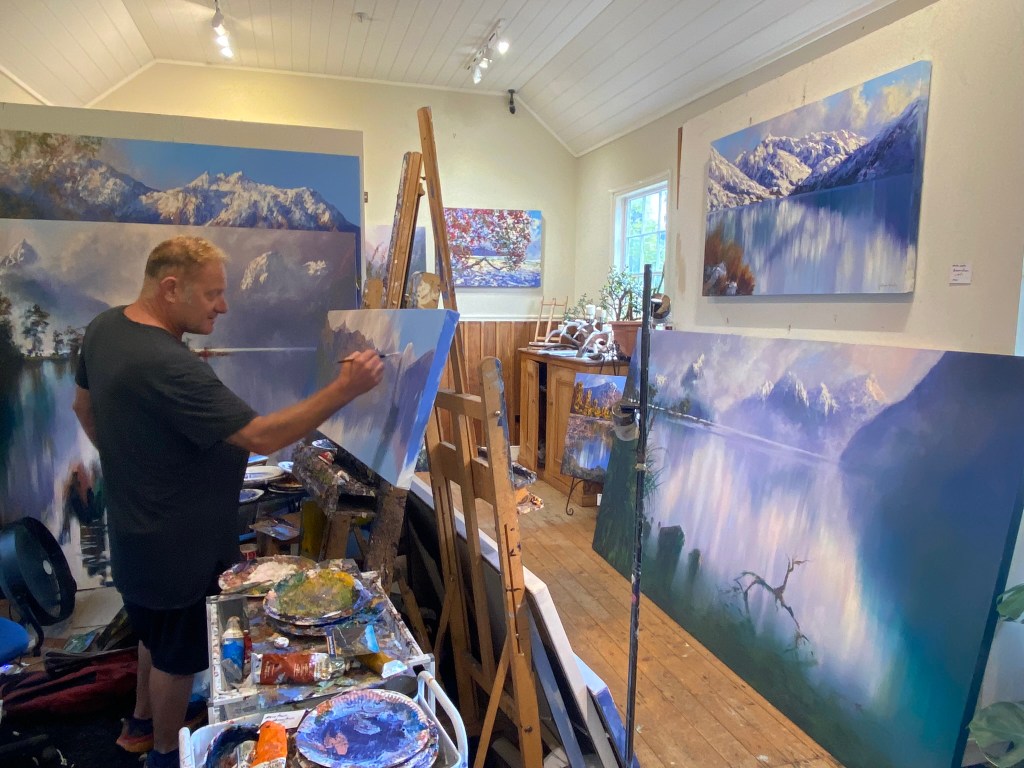
Graham Brinsley art studio 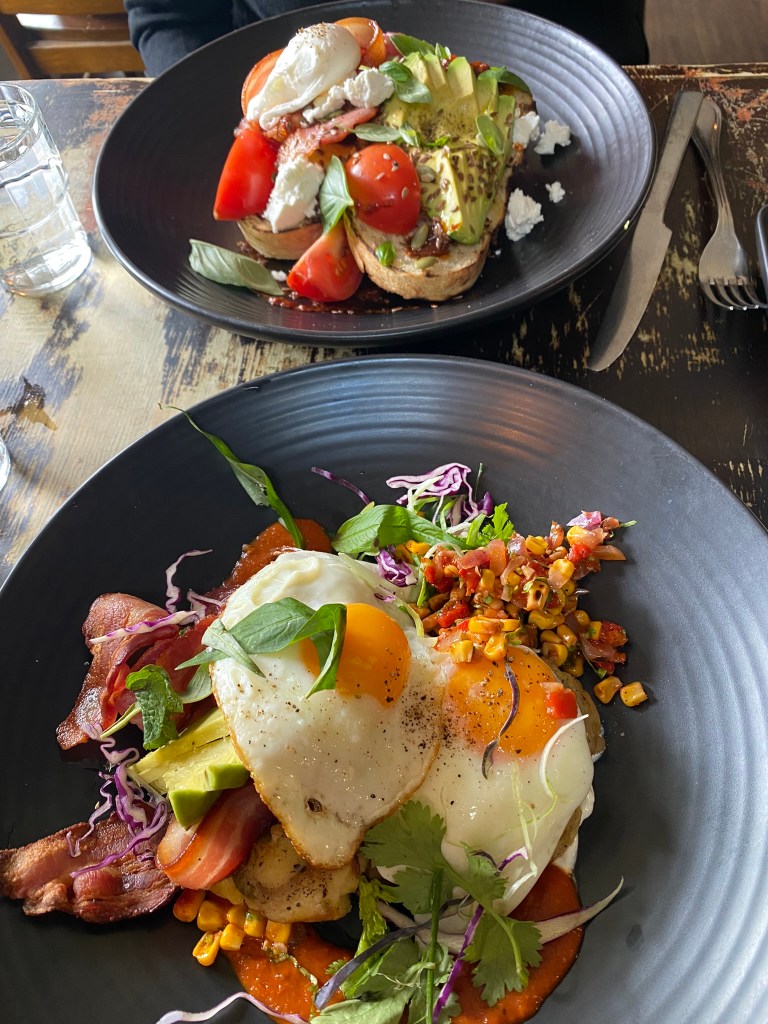
Chop House breakfast… yum! 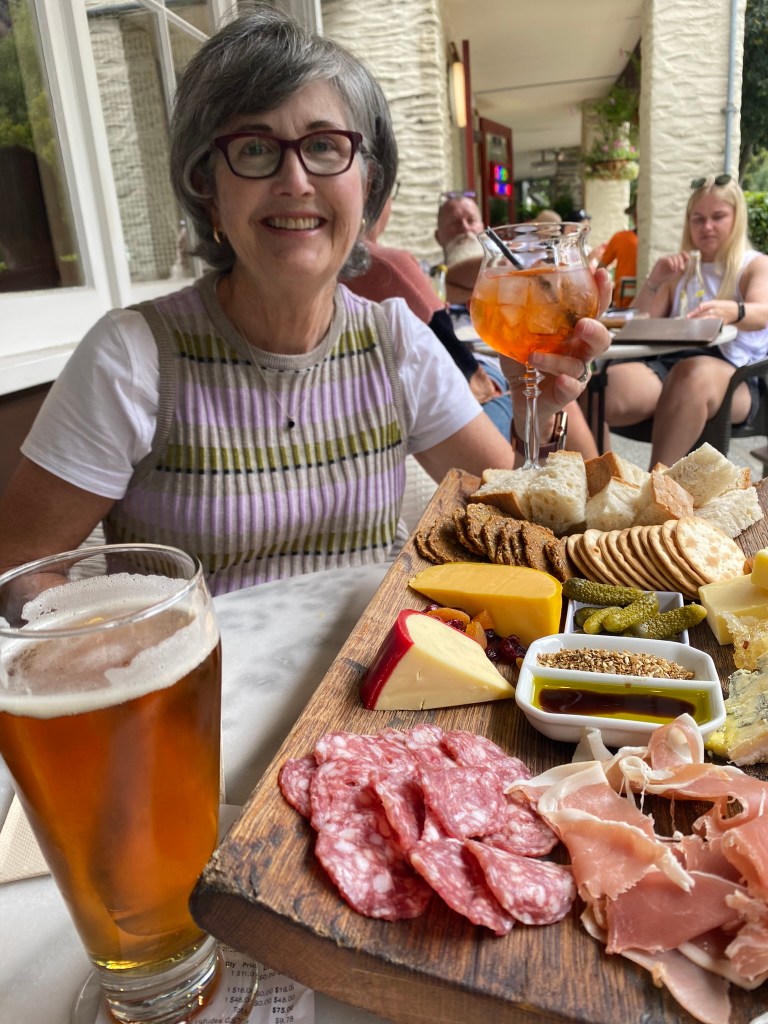
Lunch at The Winery in Arrowtown 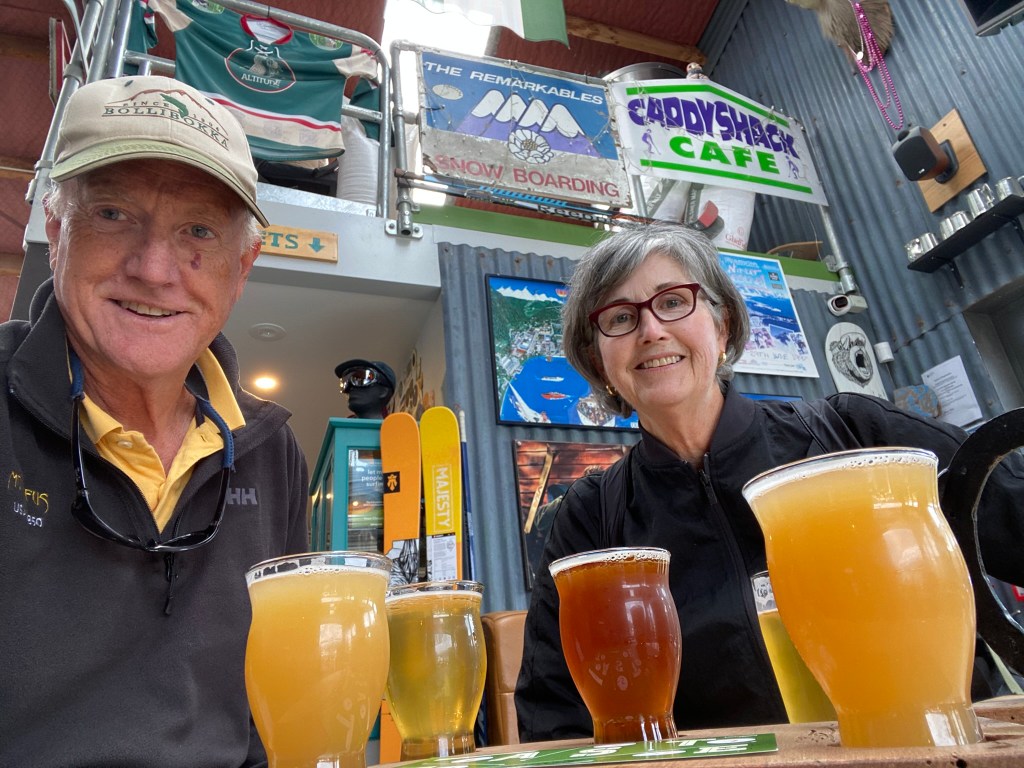
Beer flights at Altitude Brewing 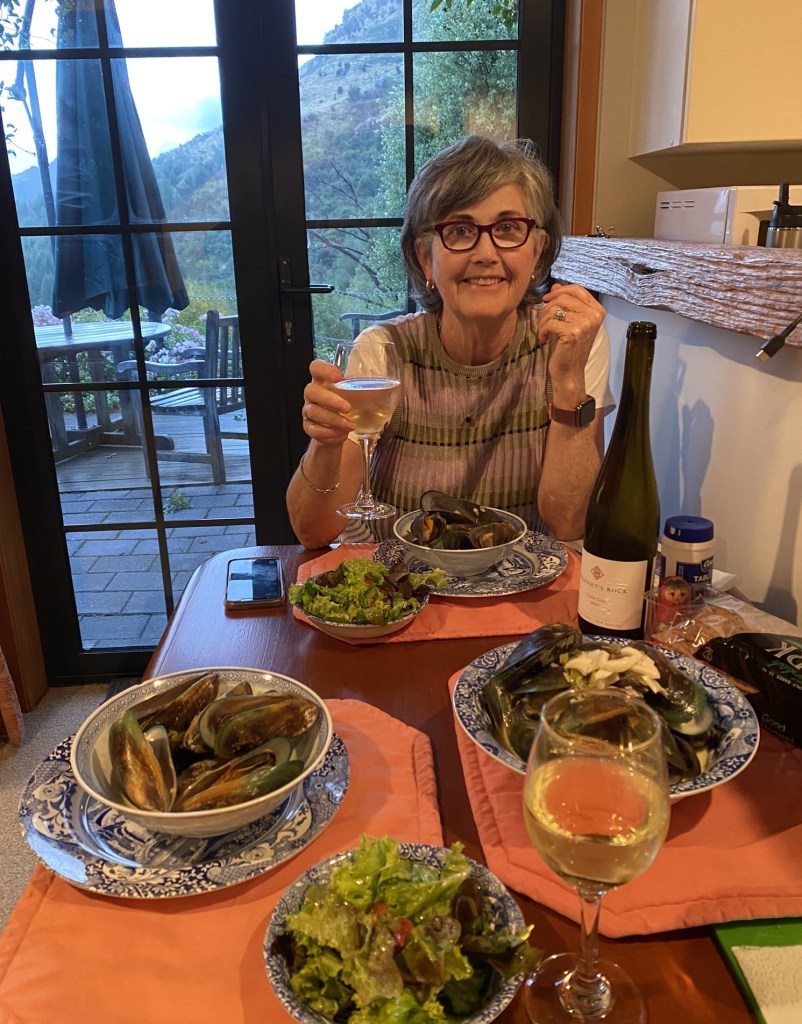
Dining in with our own green lipped mussels 
Canyon Brewery and Edith Cavill Bridge
| Days 22-25 | Te Anau, Fiordland | Prospect Lodge B&B |
Finally, heading into Week 4 of our New Zealand adventure and saving the best for last, we head off from Queenstown for Te Anau, the “capitol” of the Fiordland region, the southernmost end of the Southern Alps and home to Fiordland National Park. Larger than Yellowstone and Yosemite combined, Fiordland is mostly untouched wilderness created by tremendous seismic and glacial forces. Spectacular wilderness beauty was a given and did not disappoint.
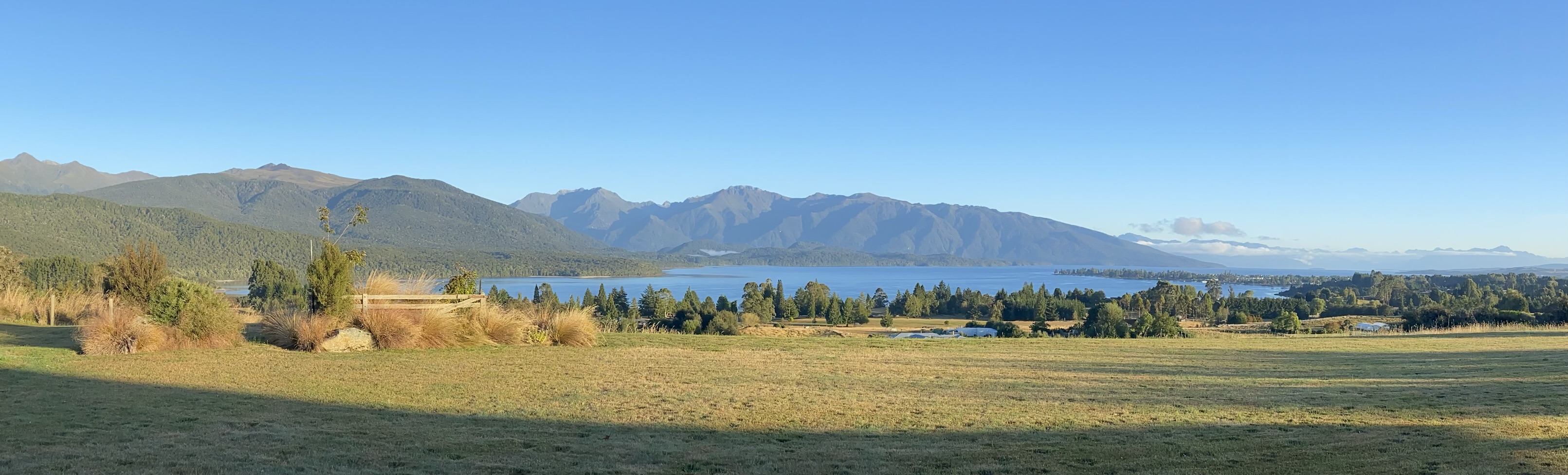
The 2.5 hour drive took us along another arm of Lake Wakatipu and through the tiny town of Athol, gateway to the best fly-fishing on the South Island, where we stopped at the Athol Gallery on the roadside in the middle of nowhere. Liked it so much we bought a modest souvenir for the wall at home. Athol is also home to Stu Tripney, NZ’s most famous fly tier (one who ties flies), whose wares were sold at the local cafe. He’s also written a handful of books on “the inappropriate adventures of a fly fisherman”. Naturally, I now own one of those.
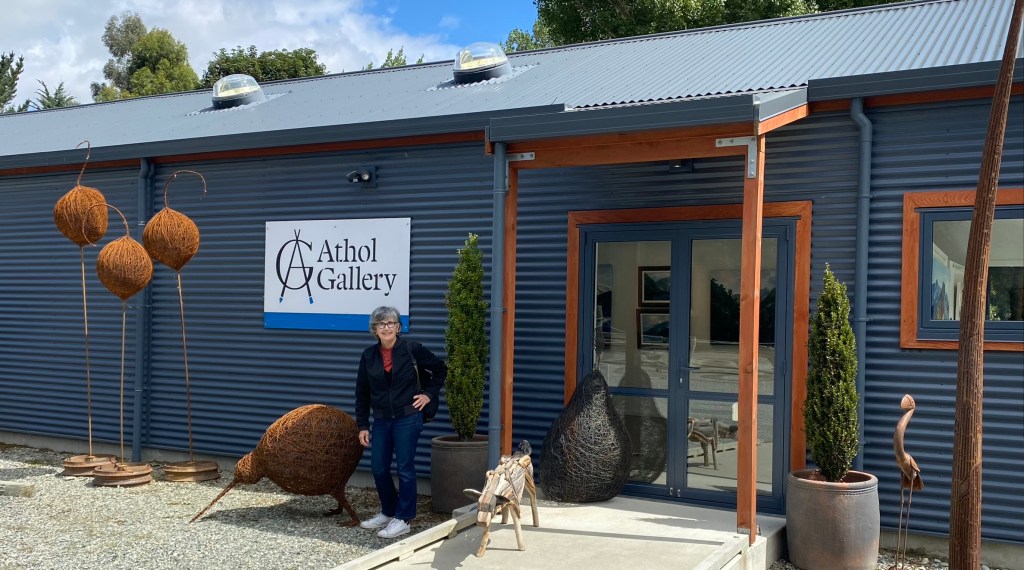

A short while later we arrived at the Prospect Lodge B&B, our base for the next four days perched on a hillside overlooking Lake Te Anau. The lodge is situated all by itself at the end of a long, private drive and a ten-minute drive from town, the perfect place to relax and unwind in between our primary points of interest; exploring Milford and Doubtful Sounds. Highlights include:
- We booked an all-day tour of Doubtful Sound for our first full day. You travel by boat across Lake Manapouri, beautiful in itself, then cross Wilmot Pass by bus before hopping aboard another boat for a 3-hour cruise of the sound. Named by then Lt. James Cook in 1770 as he assessed his ability to catch enough wind to escape if he dared sail into, it is the largest of the famous sounds and truly spectacular.
- On our third day, we took another all-day tour, this time seeing Milford Sound with Trips & Tramps, one of the top local tour operators. Our guide drove our small group the length of the Milford Highway, with several scenic and informative stops, before embarking on a 2-hour cruise on the sound, this time all the way into the Tasman Sea at the entrance to Milford Sound, dubbed by Rudyard Kipling as the 8th wonder of the world. Waterfalls, fur seals, dolphins and towering cliffs were incredible.
- The Kepler and Milford Tracks are two of the most famous and demanding of NZ’s Great Walks, each usually taking 3-4 days to complete as they route through Fiordland National Park’s most rugged scenery. We didn’t have that kind of time, but we managed to get a 3-hour out and back tramp on the Kepler Track along Lake Te Anau’s shoreline, before it starts its climb into the mountains. Still beautiful, and we didn’t see another soul.
- The 32-minute documentary, Ata Whenua – Shadowland, showing at the Te Anau cinema was recommended by our Milford Sound guide and it was really great. Just watch the YouTube trailer to get a sense of the amazing photography. By the way, the cinema has a bar, so you can have a drink with your movie!
- We managed to catch up with our good friends, Susan and Joe Krauss, for cocktails at our place (they were a little jealous of the view) and an excellent dinner at Redcliff Cafe, run by a woman and her twin daughters and arguably the best in town. Order the venison, their specialty!
- We also enjoyed good dinners at the Fat Duck, a very good gastropub, and Ditto, a casual Asian fusion joint. Lunch at the Sandfly Cafe was quite good, as well.
- Finally, I can’t say enough about Prospect Lodge B&B and its lovely proprietors, Joan and Ross. Retired sheep ranchers who lived here forever, the “lodge” is actually the home they built on this hill overlooking the lake with two lovely and super comfortable rooms for guests. Joan’s breakfasts were delicious. Relaxing on the back deck gazing at that incredible scenery was sublime. The stars and planets (Jupiter, Mars and Venus clearly visible) at night were as good as they get. And the surprise to top it off was learning that Joan and Ross were close friends with Bo Schembechler, legendary head football coach from Michelle’s alma mater, the University of Michigan, and Bo’s wife. That made for some very fun and fascinating stories.

Back porch view of Te Anau 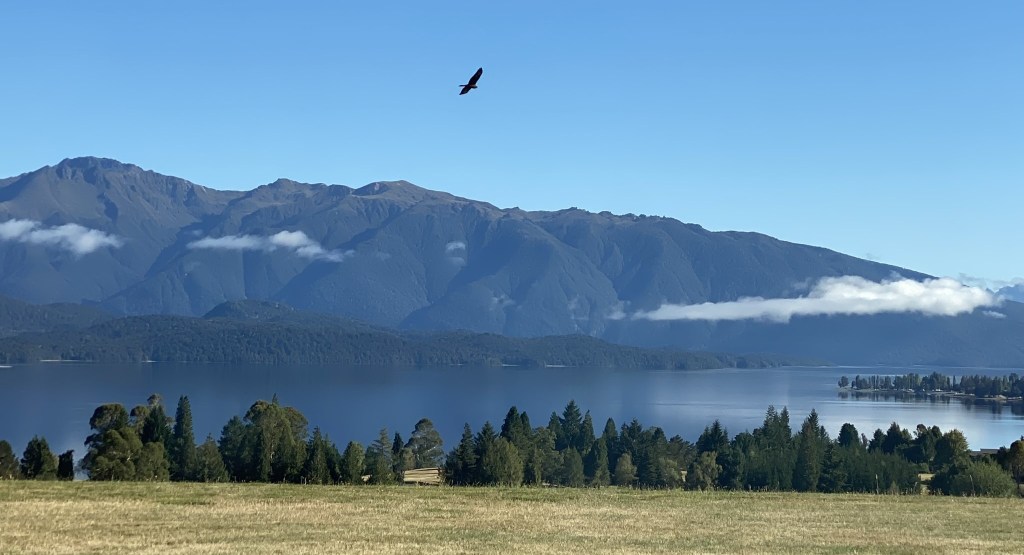
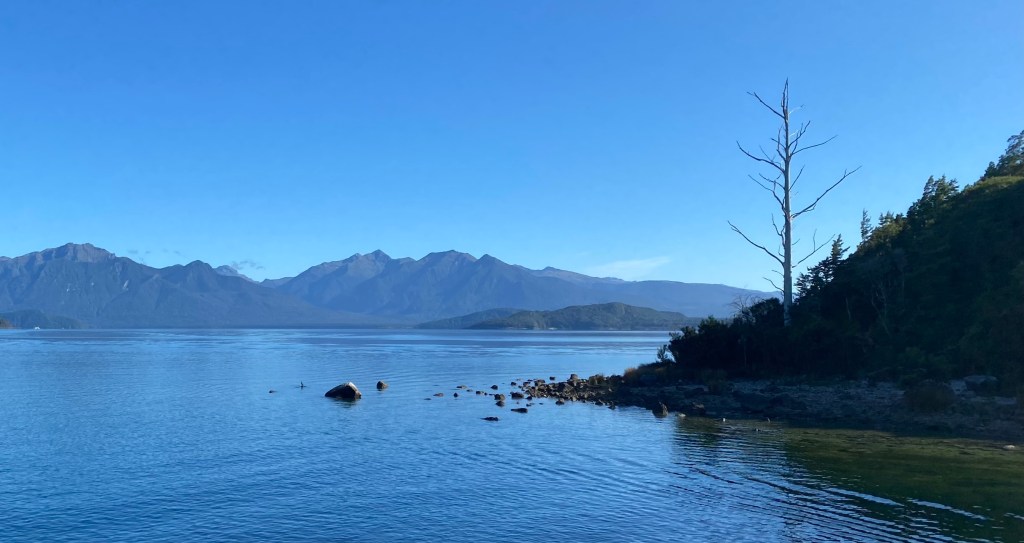
Heading across Lake Matapouri 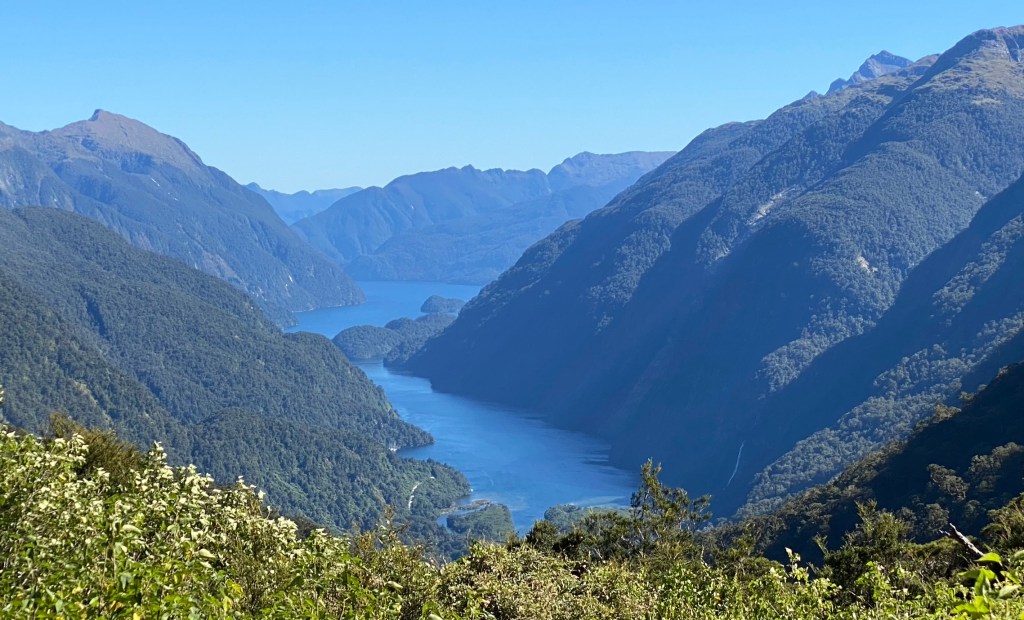
Doubtful Sound from Wilmot Pass 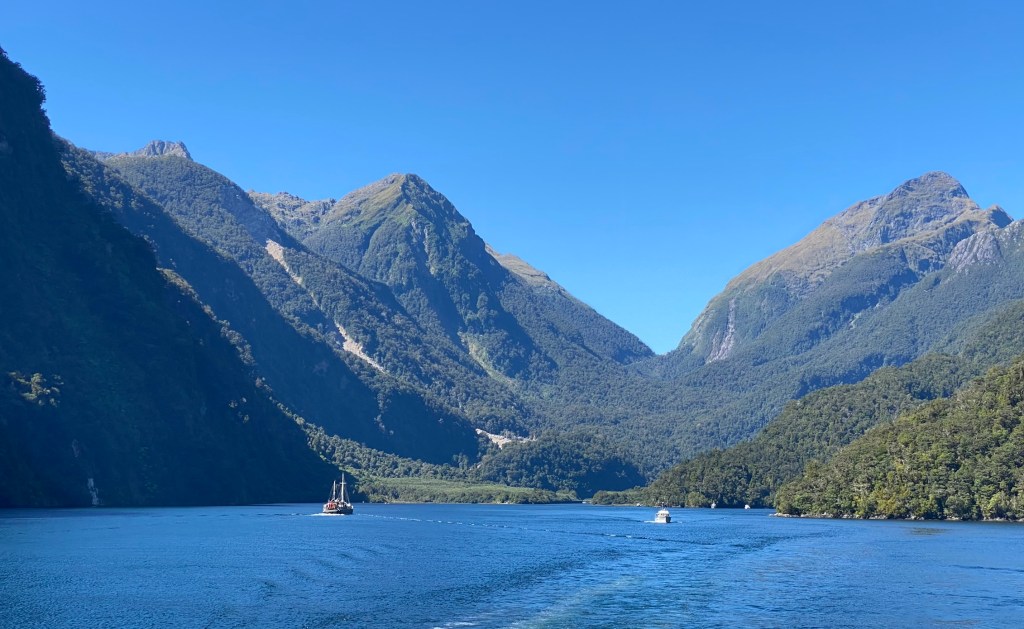
Departure point in Doubtful Sound 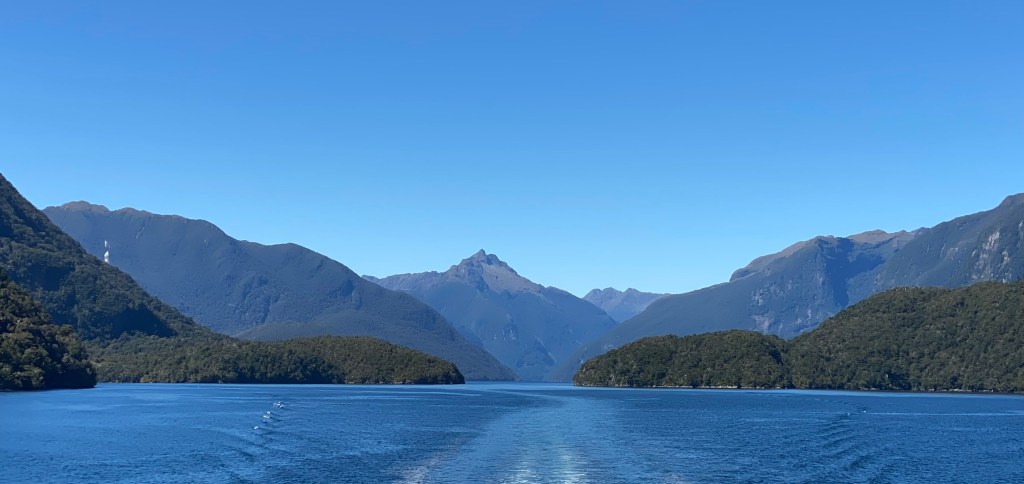
Doubtful Sound 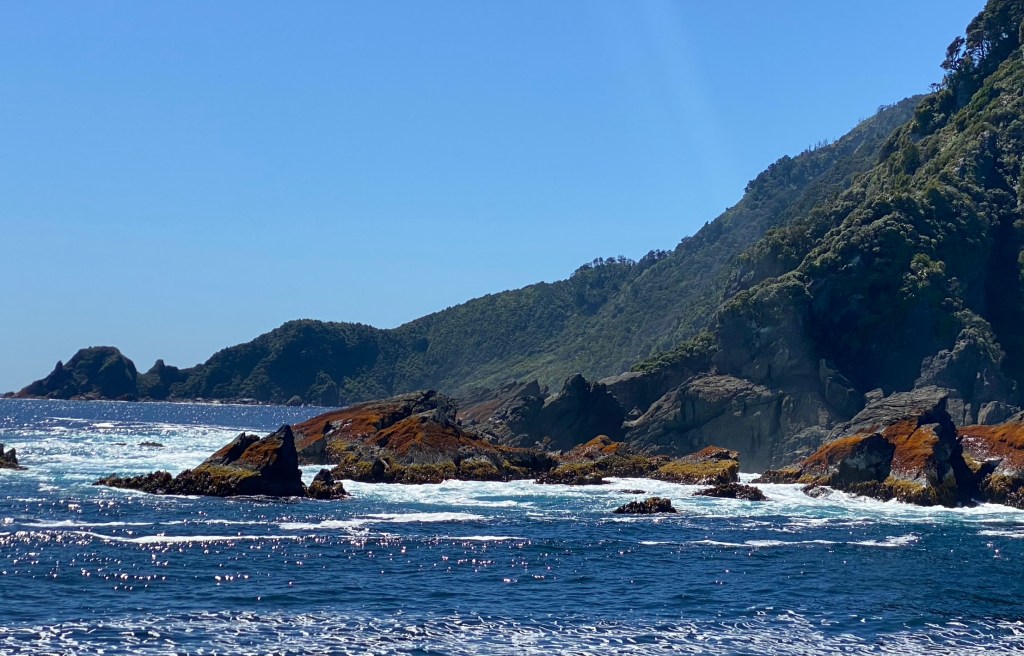
Tasman Sea entrance to Doubtful Sound 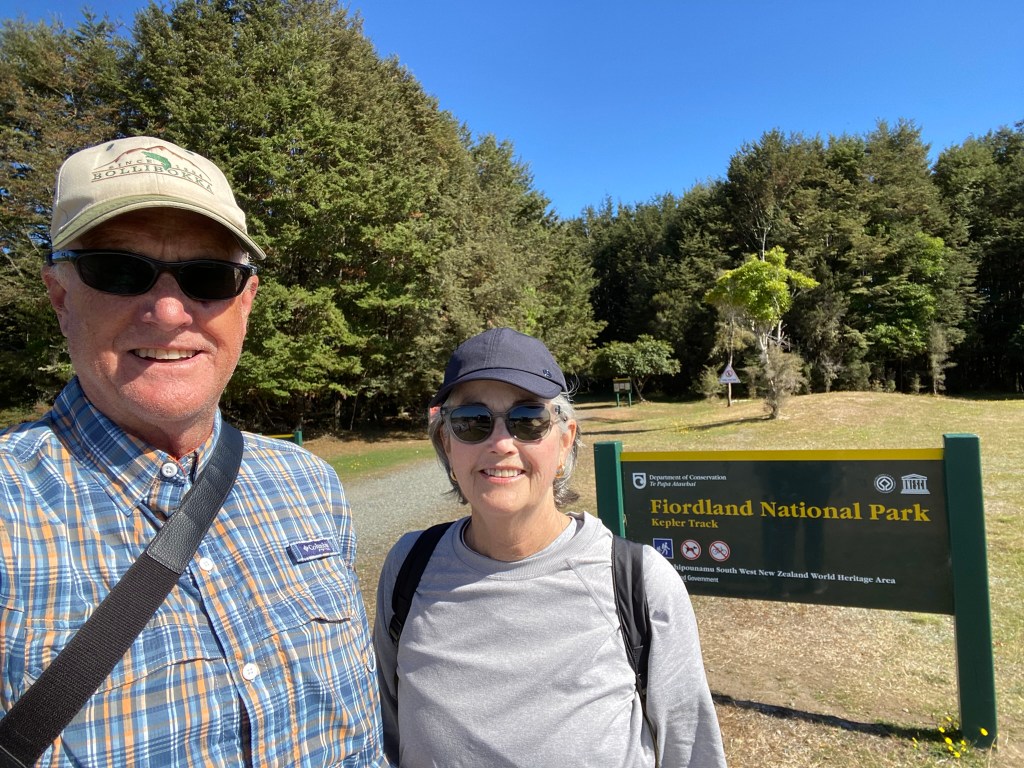
Kepler Track trailhead 
Kepler Track winds through forest… 
…before meeting the lakeshore 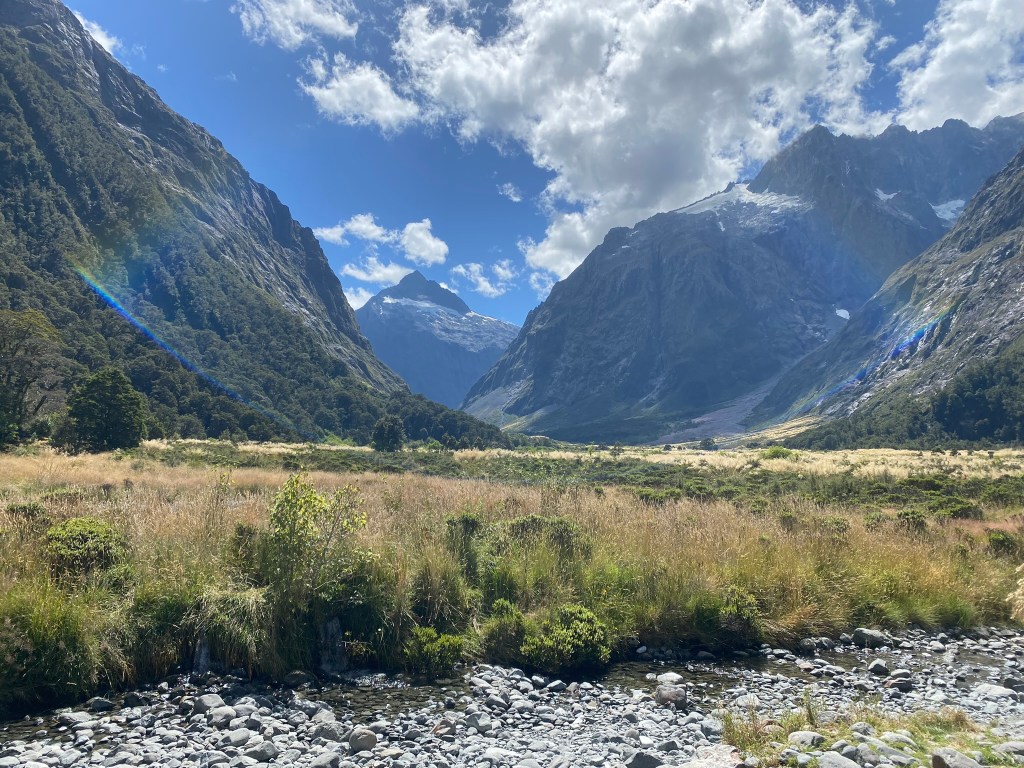
Along the Milford Highway 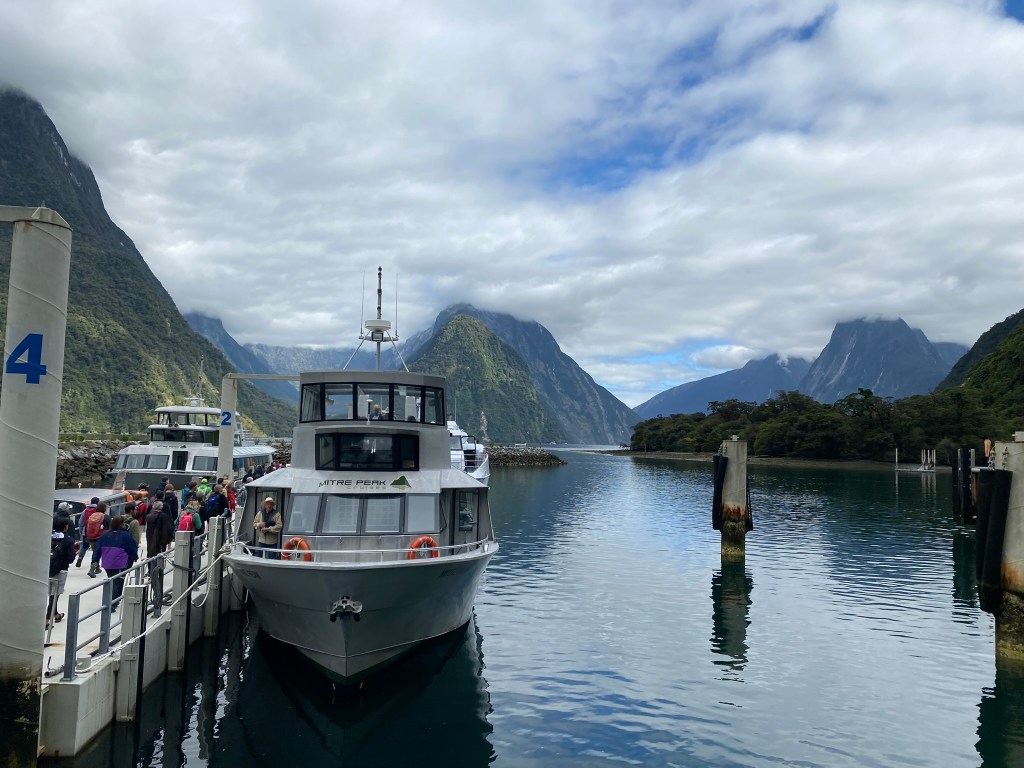
Our taxi for Milford Sound 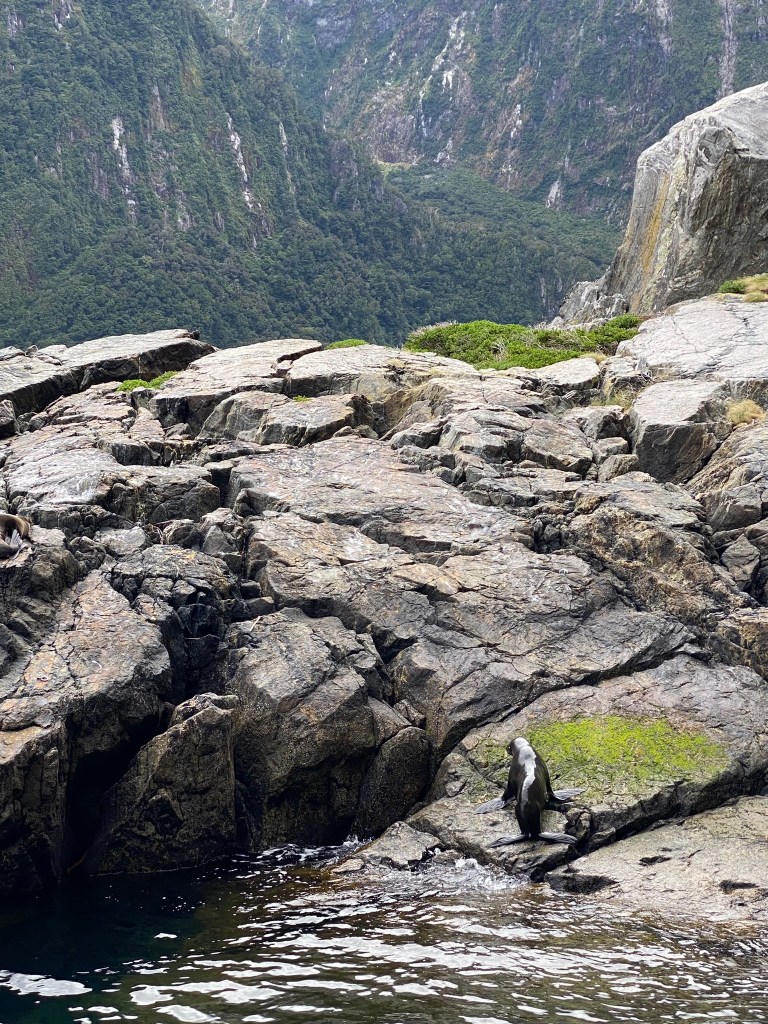
Fur seals in Milford Sound 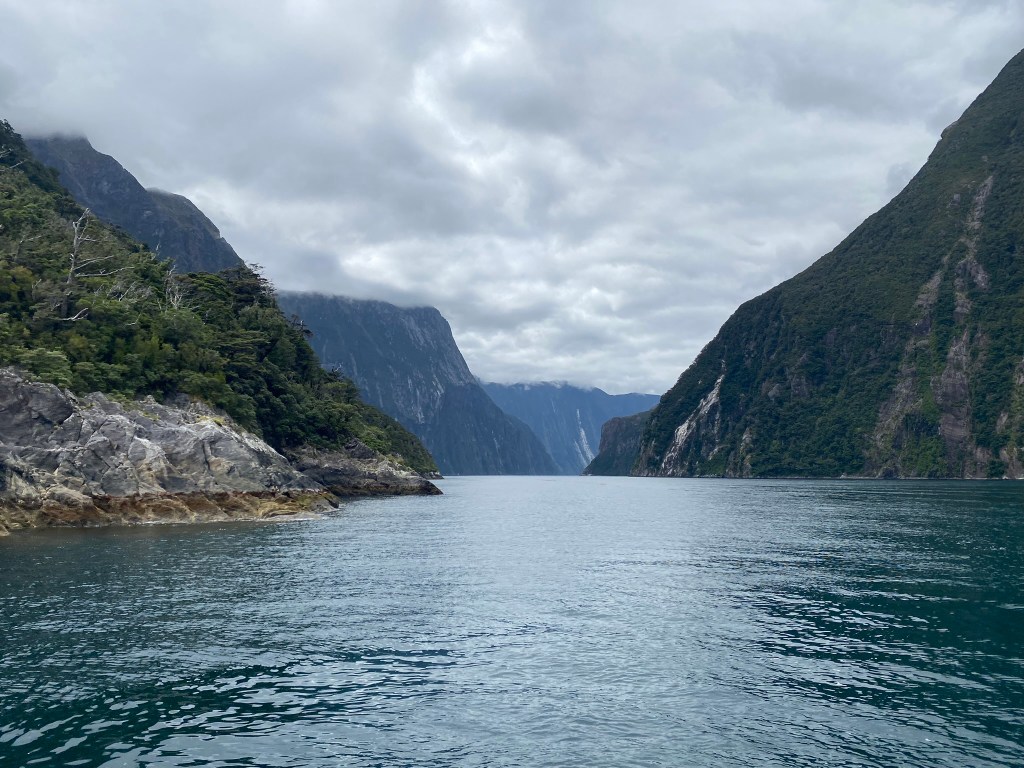
Milford Sound’s towering cliffs 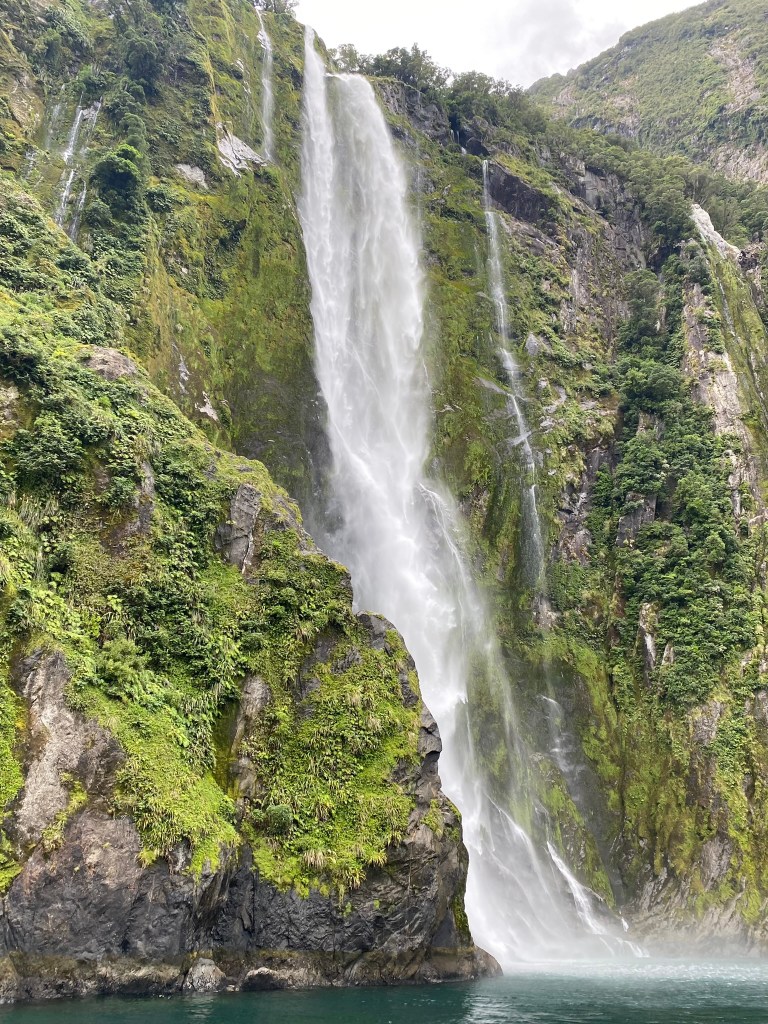
Milford Sound waterfall 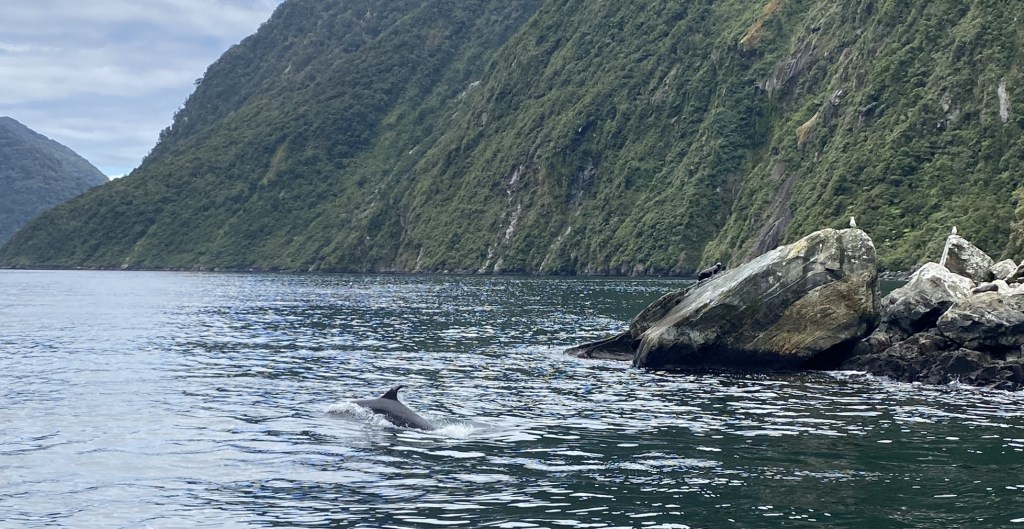
Hector’s Dolphins and seals 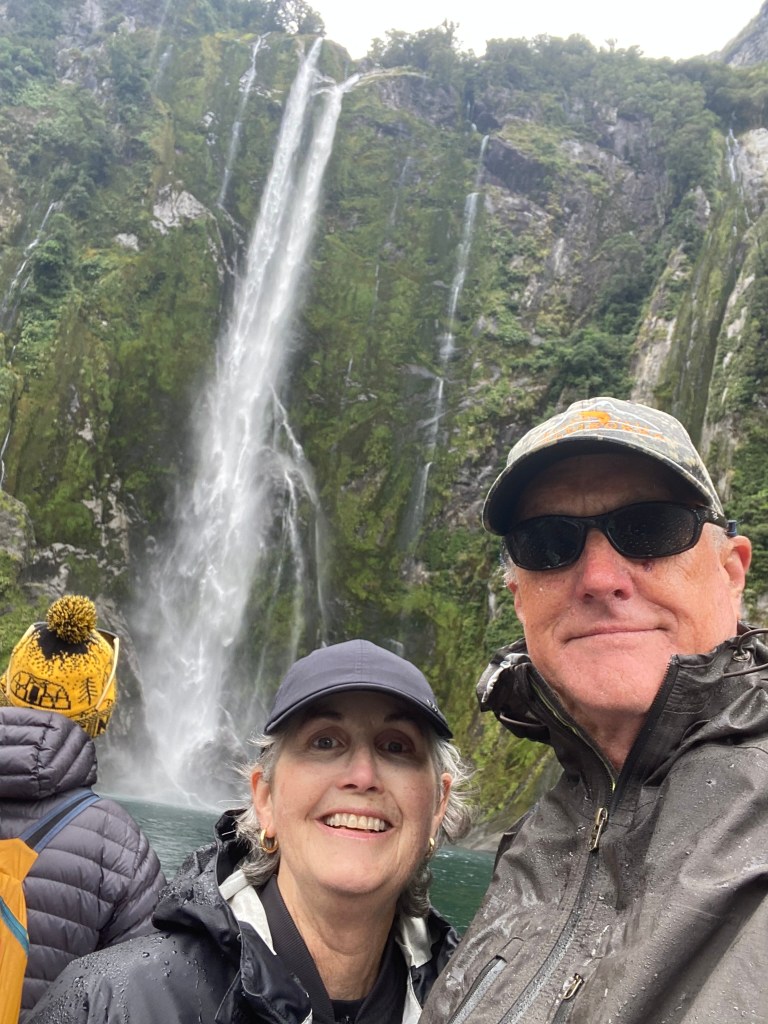
Having fun getting wet 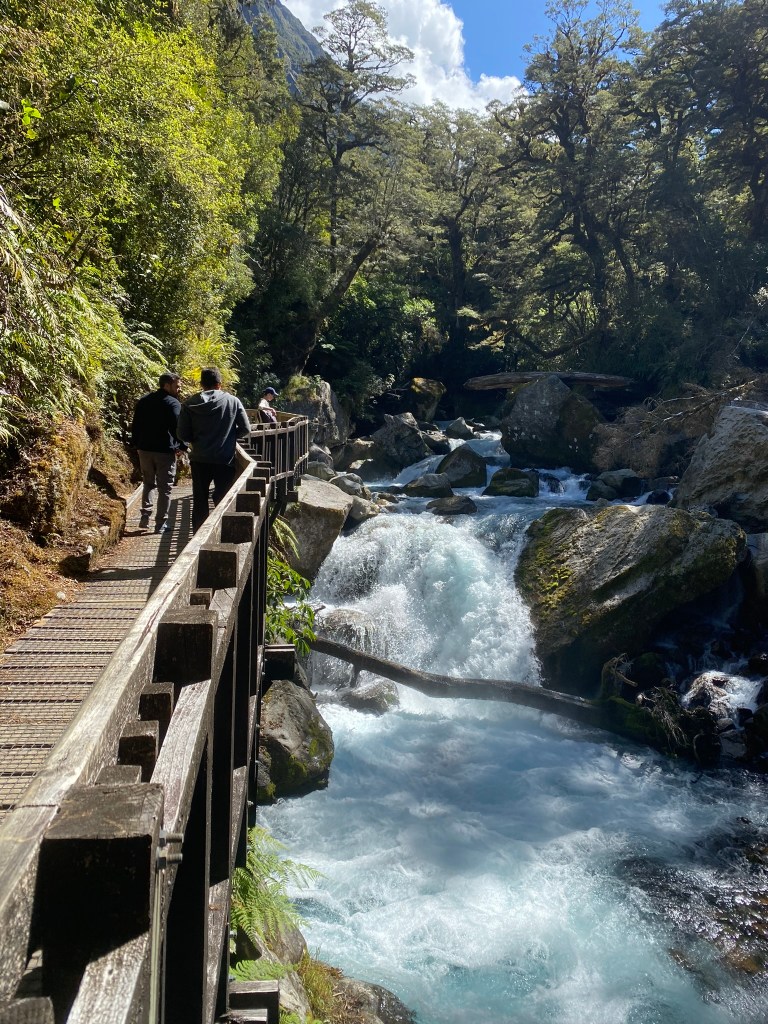
Side hike to Marion Falls 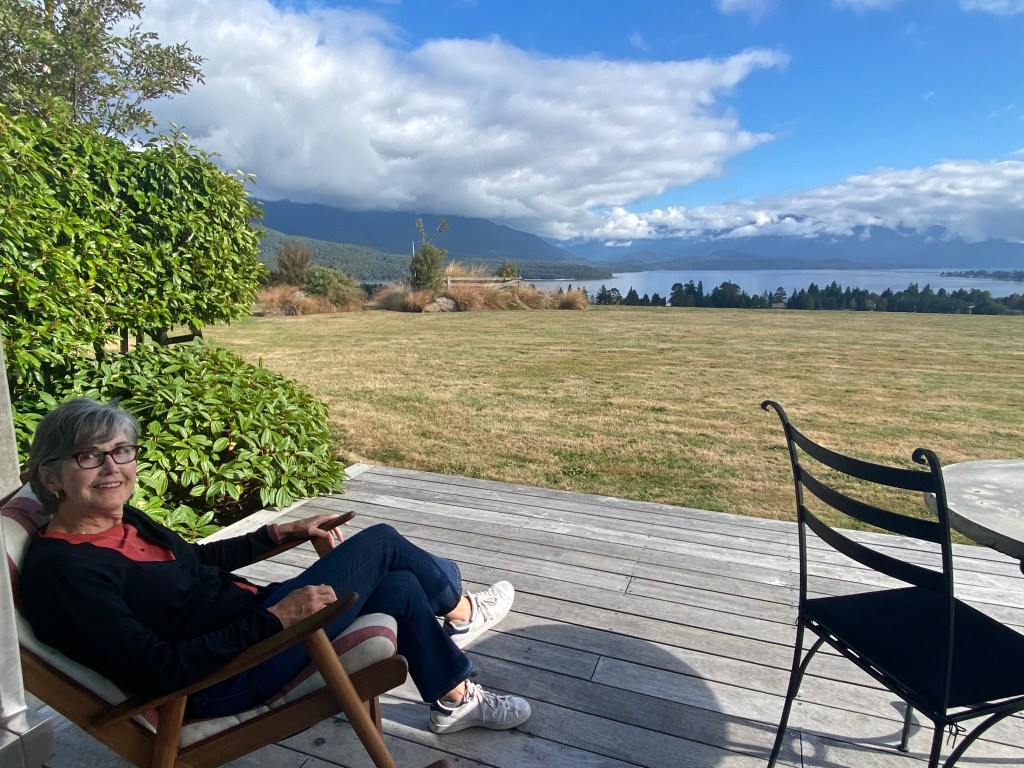
Yes, this is relaxation. 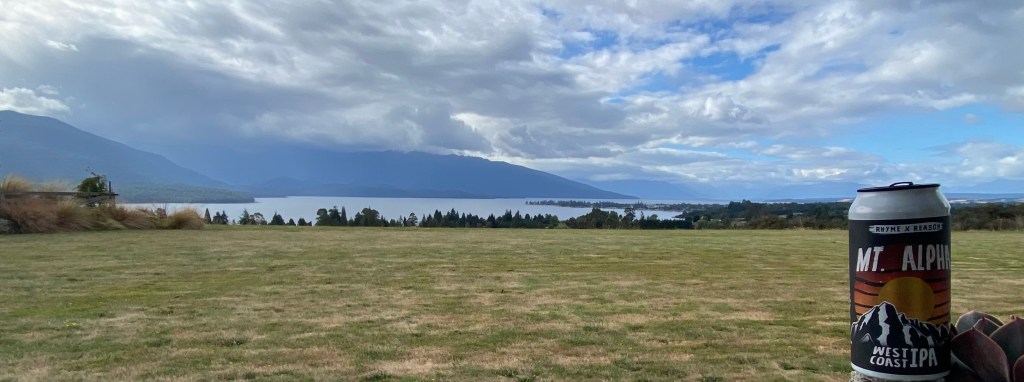
Fine way to end the day
| Day 26 | Queenstown | Sofitel Hotel & Spa |
As our plans had us flying to Australia from Queenstown at the end of our NZ adventure, we made our way back for one last day and night in Queenstown, returning the way we came. We dropped our car at the airport and caught an Uber back to town, where we booked into a nice hotel a short walk from all the action.
Joe and Susan joined us again, so we rode the gondola to Ben Lomond to take in the drop-dead views over the town and lake — something we had missed earlier and an absolute must for anyone visiting Queenstown. This is also a very popular (but strenuous) day hike from town, and equally popular with mountain bikers for the ride down. We passed on those, opting instead for some fun, low-risk racing the Queenstown Luge, wheeled sleds that negotiate a couple tracks around the hillside. After all that excitement, all that remained was a final stop at the Atlas Beer Cafe on the waterfront for a nice steak dinner and locals suds. Being a Monday, the town was fairly quiet at night and many bars were closed, so a proper pub crawl had to wait for another time and place.
We caught our flight to Australia the next morning. Australia and New Zealand were once connected as part of the ancient super-continent, Gondwana. Kiwis say when the land split, all the good stuff went to New Zealand and all the bad stuff — everything that will kill you — stayed in Australia. Read on to find out what we discovered there.
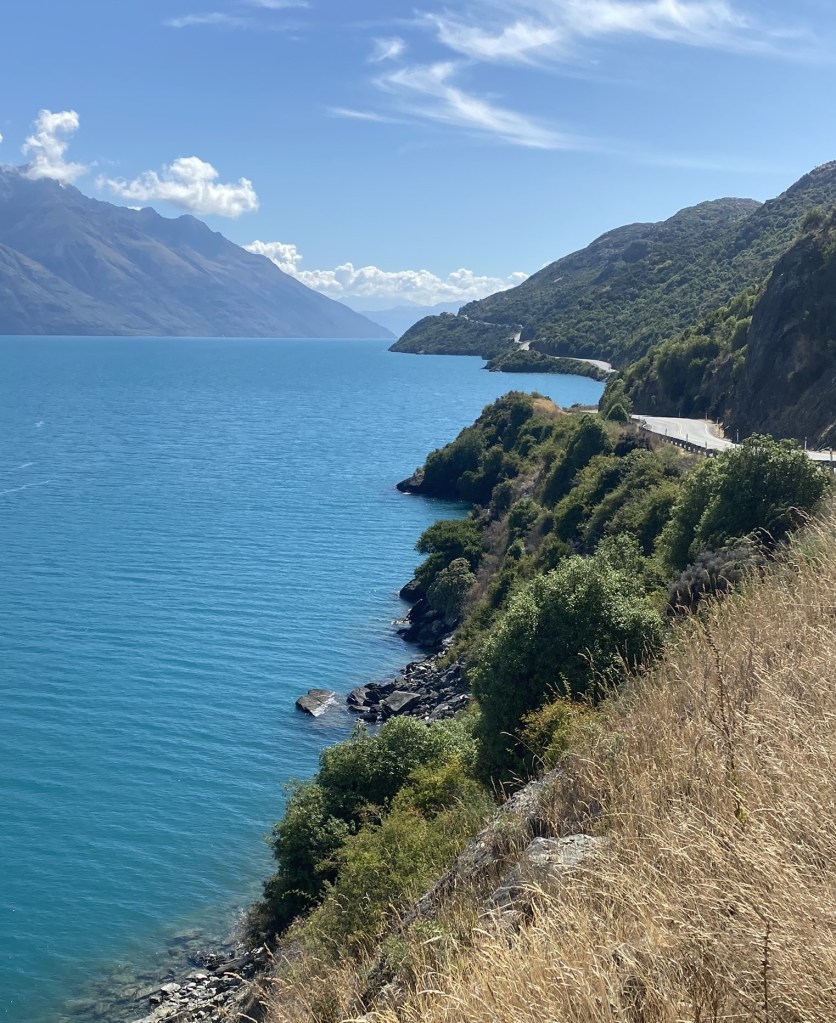
Devil’s Staircase on the road to Queenstown 
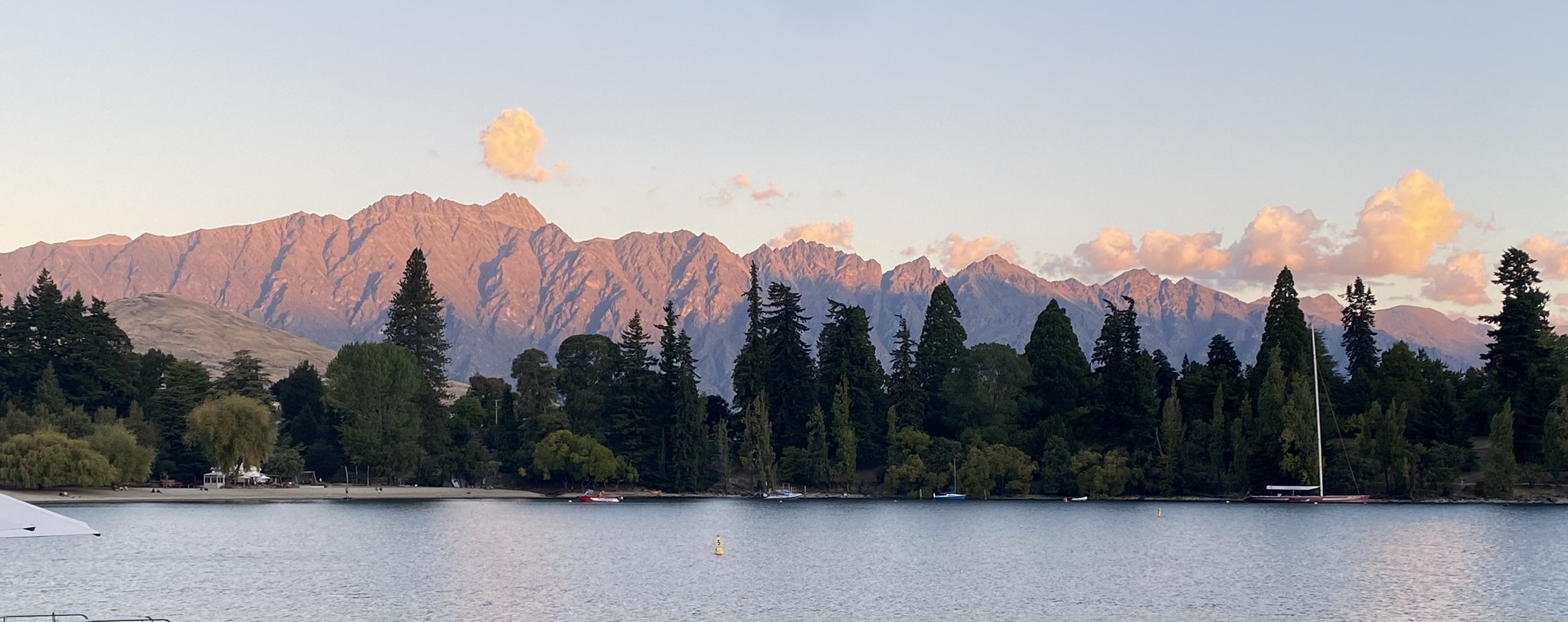
The Remarkable Range 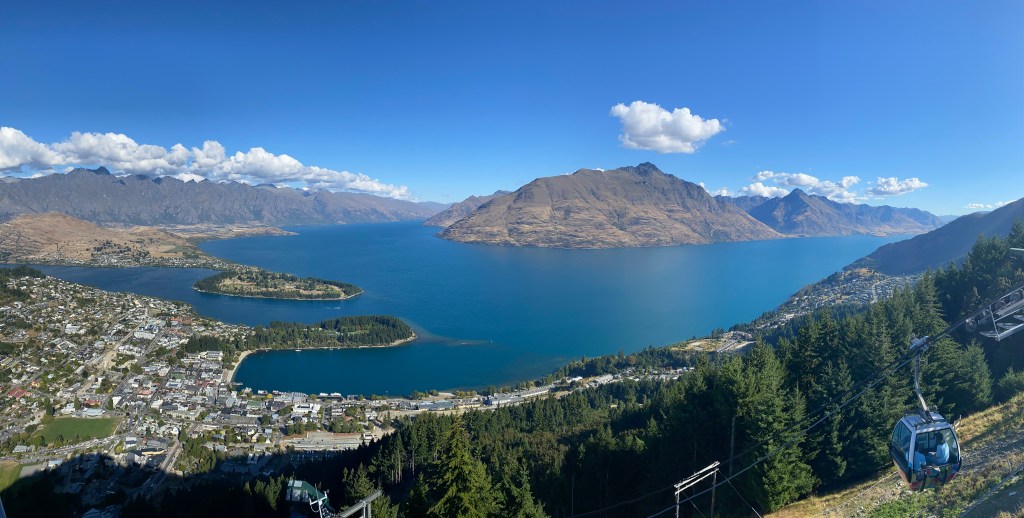
Ben Lomond overlooking Queenstown 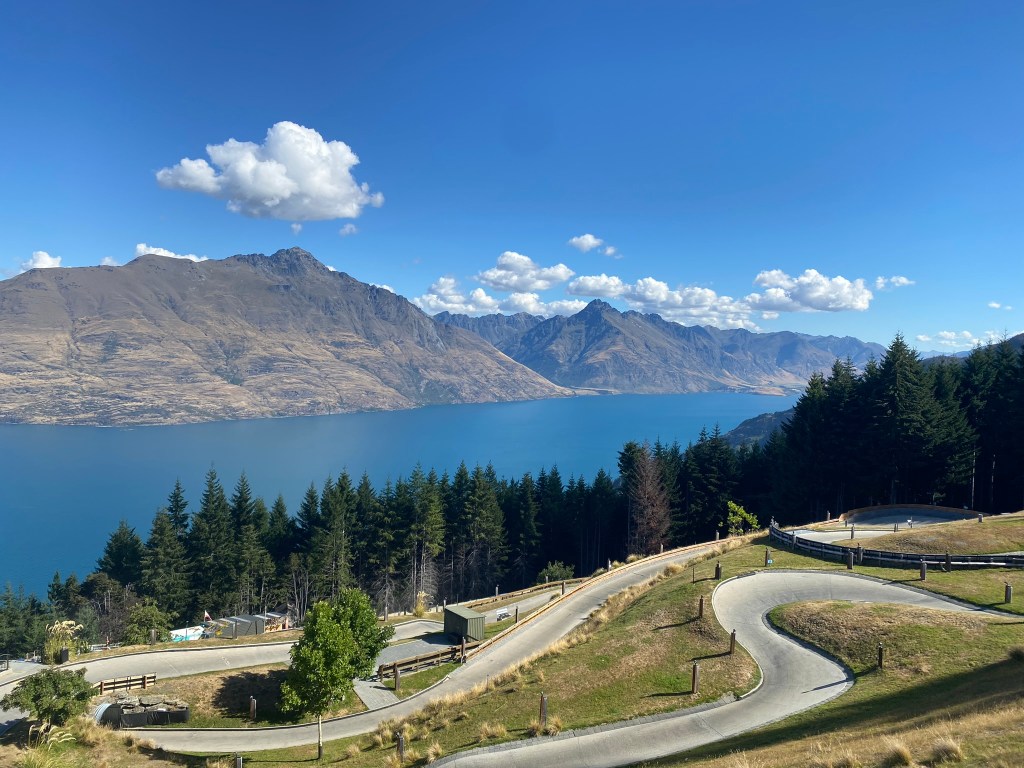
The luge track 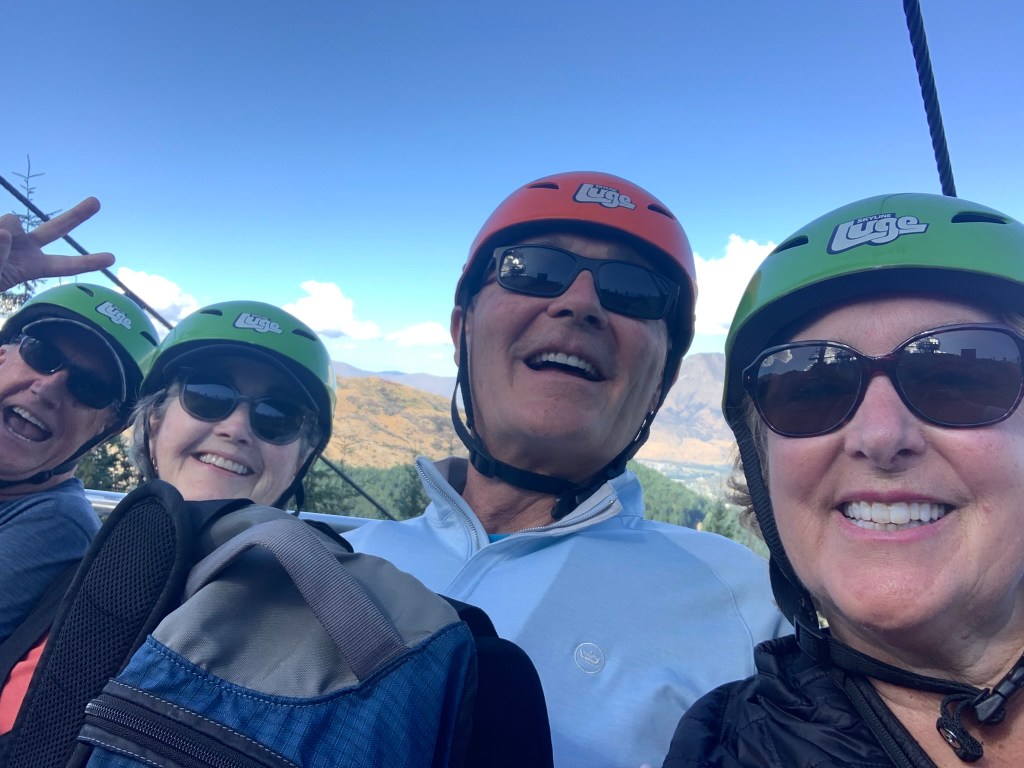
Ready to luge! 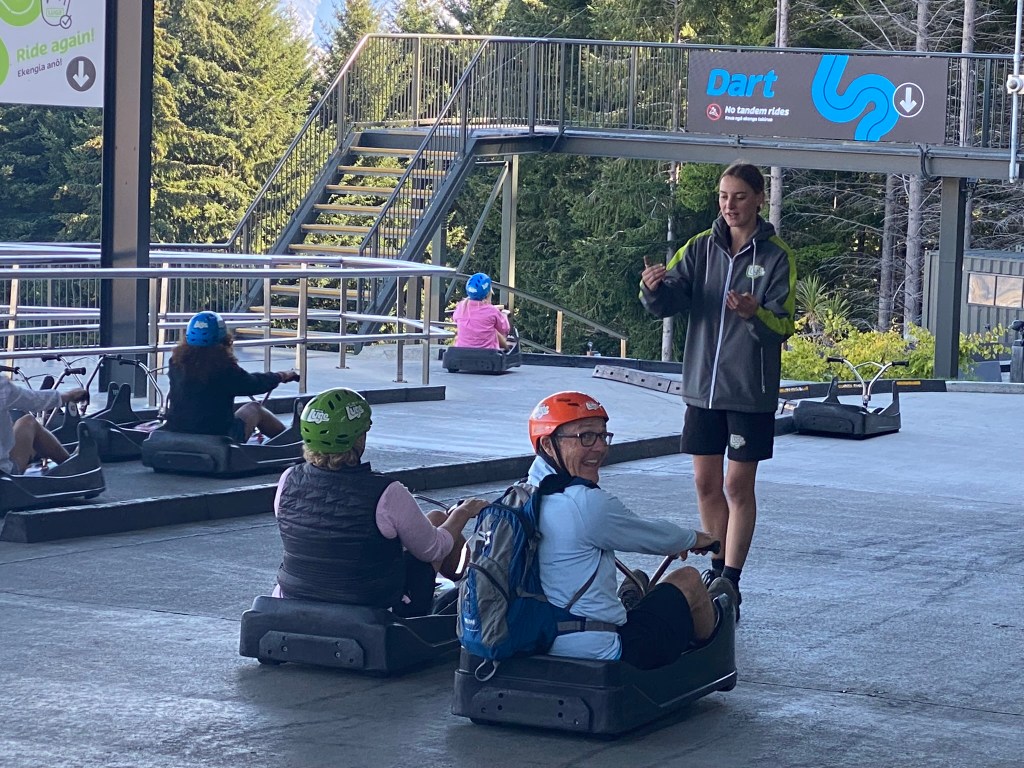
And they’re off! 
Celebrating at Atlas Beer Cafe 
Ladies of the lake 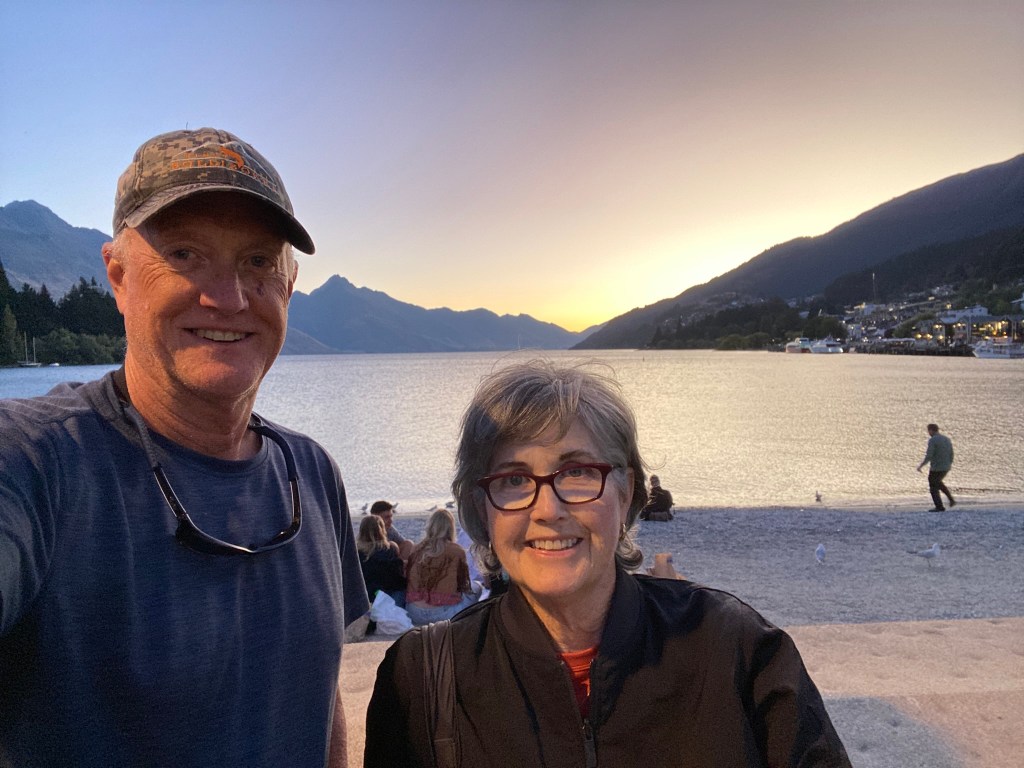
Goodnight New Zealand!
Random thoughts and tips:
- If you are able to travel New Zealand by campervan or RV, as many people do, you can get by just fine without making a lot of advance bookings. If you travel like we did and need places to stay, I strongly recommend making reservations well in advance.
- That is especially true for the most popular tours, like Milford and Doubtful Sound, Hobbiton, glacier heli-hikes, and the ferry crossing (either direction) between Wellington and Picton.
- For the ferry, we booked through DirectFerries, a broker, which was easy enough at first. But when the actual carrier cancelled, they were worthless in resolving the issue or finding us a fallback option. You might be better off booking directly with Interislander or Bluebridge, the actual ferry services.
- If you drive, they use the left side of the road, just like the UK. Because many roads are narrow, a smaller car is easier than a big one. The most important thing to know is a yellow line across the lane is a hard stop. Don’t roll through it; check right, then left, then right again before going.
- If I could only pick one place to stay for a couple weeks, it would probably be Queenstown because it’s got everything you need if you need anything — groceries, stores, restaurants, bars, wineries, breweries, a beautiful lake, three Great Walks — and would be convenient for day trips or short overnighters to Fiordland, Wanaka, Mount Aspiring National Park, Aoraki/Mount Cook, Dunedin and the west coast glaciers.
- If and when we return, I would make the effort to visit a few destinations we would have loved to see and have heard great things about. Top of this list include:
- Bay of Islands (North Island), at least 3-4 days for Maori history, island hopping, and scuba diving.
- Whanganui (North Island) for its spectacular national park and possibly a multi-day canoe trip on the Whanganui River.
- Aoraki/Mount Cook (South Island), the tallest peak in New Zealand with stunning alpine hiking (or skiing) and world-famous Dark Sky stargazing.
- Dunedin (South Island), the Edinburgh of NZ — so named for its rich Scottish heritage — I’m told is worth 2-3 days.


 Once in a while you get shown the light...
Your list of travels is beyond impressive, and your blog is so well done and informative! I look forward to exploring all your posts.