Spring 2022 Itinerary & Trip Notes
Overview: Paris (8 days) > Normandy (4 days) > Loire Valley (2 days) > Bordeaux (3 days) > Perigord/Languedoc (3 days) > Provence (7 days) + Switzerland (6 days), with all travel outside Paris and Switzerland by car.
Bottom Line: We had been to France twice before, first for five days in Paris over 30 years ago and then for three days in Strasbourg just before Christmas 2019. So my perspective of France was fairly limited and not altogether great. I had the stereotypical impression that the French didn’t like Americans and weren’t particularly welcoming or friendly. This trip completely changed all that, entirely for the better. France is truly “a moveable feast”, as Hemingway called it, filled with magnificent history, architecture, art, castles, natural wonders, culture, and yes, incredible food and wine — all of which are very different from one region to the next — and the French people were exceedingly warm, charming, and downright wonderful everywhere we went. We can’t wait to return!
Our itinerary was strongly influenced by my friend, Martin, an American expat living in France, who convinced me that we shouldn’t limit ourselves to Paris and Provence (my original plan) if we had 4 weeks and really hadn’t experienced more of France before. He was absolutely right. If you do have that much time, this was near perfect. With a week less, I’d cut out Bordeaux to start; then it gets hard. The next time we go, now that we’ve done the full tour, we’ll likely spend the entire time settled in Provence with a high speed train into Paris for a few days.
| Dates | Destination | Where We Stayed |
|---|---|---|
| Day 1-8 | Paris | La Manufacture du Temple, Sainte-Avoye, Paris | Plum Guide |
We began our aventure française in Paris, arriving CDG airport from SFO at 10:00am on Friday morning. Took taxi to Paris just to avoid dealing with trains and bags at the outset; train would have been fine, especially with the traffic we encountered. Emily joined us the entire week, Alex the first two days. While we had originally considered spending two weeks here, we cut it back to one so we’d have more time elsewhere. That was a good call, as a week is plenty to do it all. Arriving in late March, we saw the weather go from sunny 70’s F to rainy 50’s to snowy 30’s (for a day) in that one week. Highlights:
- Rick Steves Historic Paris walk around Ile de la Cite and Latin Quarter. Despite Notre Dame cathedral still closed for renovation and covered with scaffolding, it was a good way to get oriented and start our trip.
- Biking everywhere around Paris. Get the Velib app and rent bikes for 5 Euros a day. It’s easy to bike left and right banks, across the bridges, along the Seine riverfront, all around town. Dodging traffic can be a bit nerve-wracking at first, but you get the hang of it quickly. Then it’s pure fun. Take the Metro up to Montmartre (unless you like hill climbing) and bike back down.
- Museums: Louvre, Orsay, Orangerie and Rodin were all very worthwhile. We hit these, as well as St. Chappelle and Napolean’s Tomb at Les Invalides in two days using the two day Museum Pass. This was perfect, and all the museums we needed.
- Pere Lachaise Cemetery: Free, guided walking tour of the graves of Jim Morrison, Gertrude Stein & Alice Toklas, Oscar Wilde, Edith Piaf and Isadora Duncan, among others. A good mid-day stop en route to Montmartre.
- Montmartre: Favorite neighborhood for bars, especially Probido Paris Bleue and Bar Basque (both local hangouts, not fancy but good beer, bartenders and music). Lots of good dinner options as well off the main drag and away from Moulin Rouge, which we did not visit. Sacre Coeur is worthwhile.
- Catacombs self-guided tour was fun and historically fascinating. Audio guide a must. Do this early in the morning, then hit nearby Luxembourg Gardens for lunch and stroll.
- Night walk/bike from Le Cler neighborhood to the Eiffel Tower and across the Pont d’lena bridge to the Trocadero to watch the tower lights do their magic at the top of the hour. Then head to the Arc de Triomphe and stroll the Champs Elysee at night.
- The Marais was a great neighborhood to use as a base. Lively, culturally diverse, good shopping for Michelle. The open air market, Marche des Enfants Rouges, was great for food shopping and casual dining (in a crowd). Cafe Berry on Rue Chapon was our favorite, local morning cafe & breakfast place.
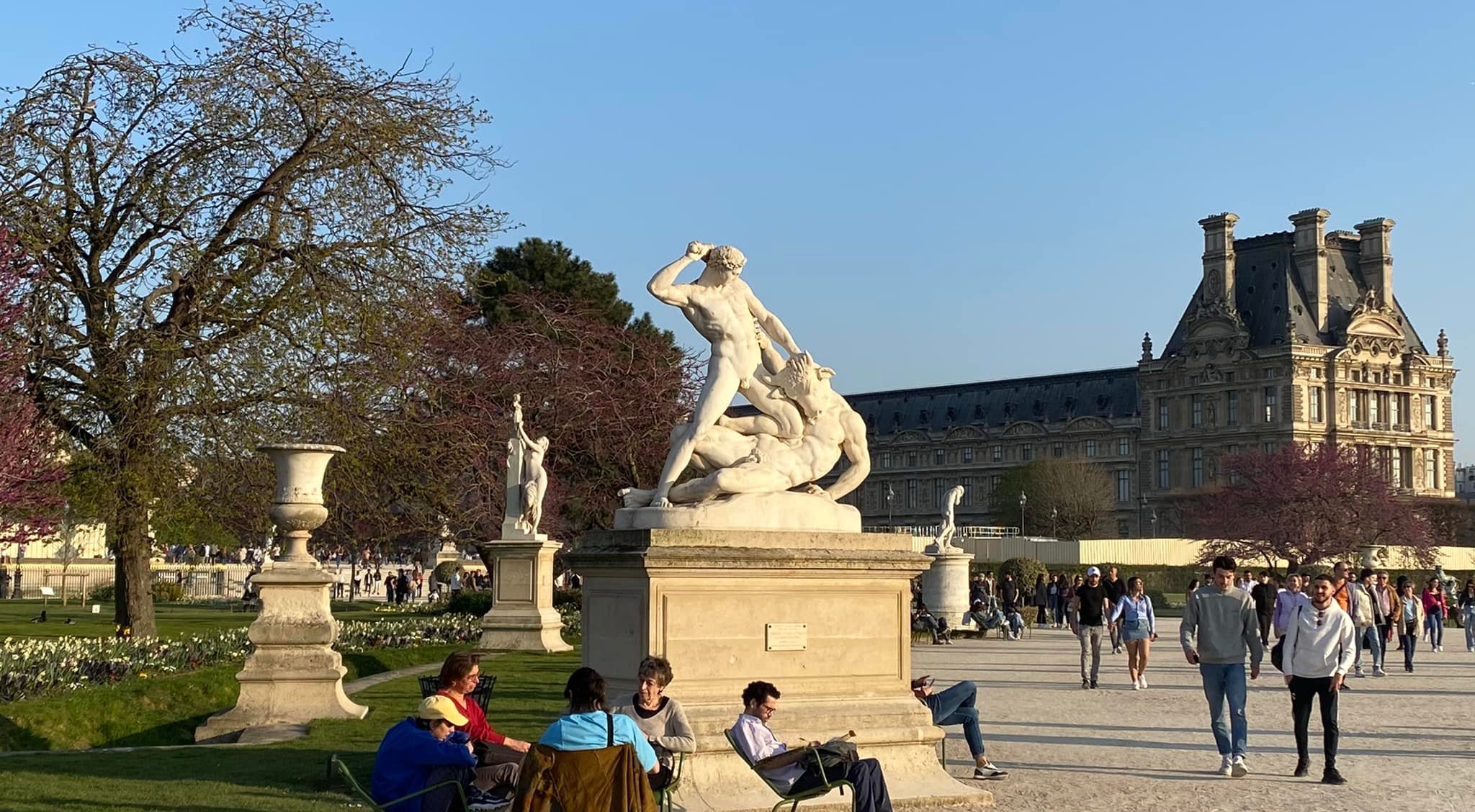
- Places to hang out, relax and people watch any time of day: Tuileries Gardens (near Louvre), Luxembourg Gardens (left bank), Place des Vosges (Marais).
- The “secret” cocktail bar (too noisy to call a speakeasy) hidden behind La Candelaria taco shop in the Marais was fun. Similarly, “No Entry” bar hidden behind the downstairs meat locker at Pink Mamma restaurant in Montmartre.
- Our daughter, Anna, told us about this great “record store and a bar” called Ruptered Records. We poked our heads in late and it turned out to be just a record store with a small, private party going on. We were welcomed nicely and given beers, so we bought the Rolling Stones’ Beggars Banquet album for Emily. The best things are always unexpected!
- Other restaurants we liked: Mary Celeste (Marais), Marcello and Le Mastino (both Montmartre Italian restaurants), Mon Square (between Latin Quarter and Le Cler), and any cafe along Rue Reaumer near the Square du Temple Elie Wiesel.
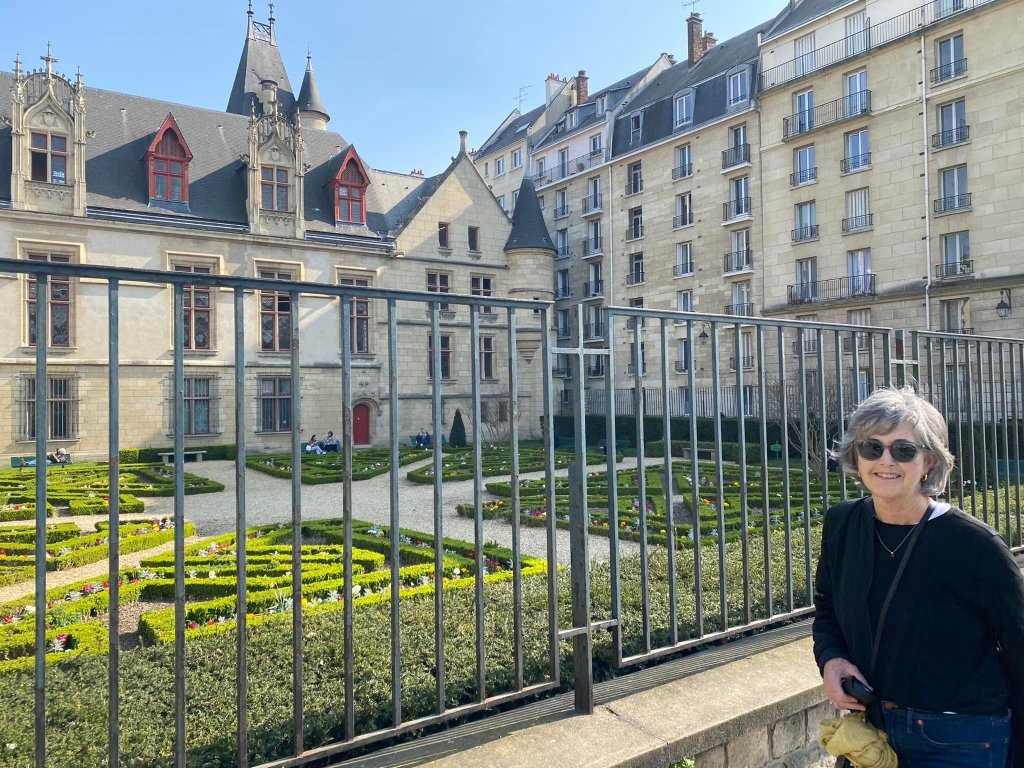
In the Marais 
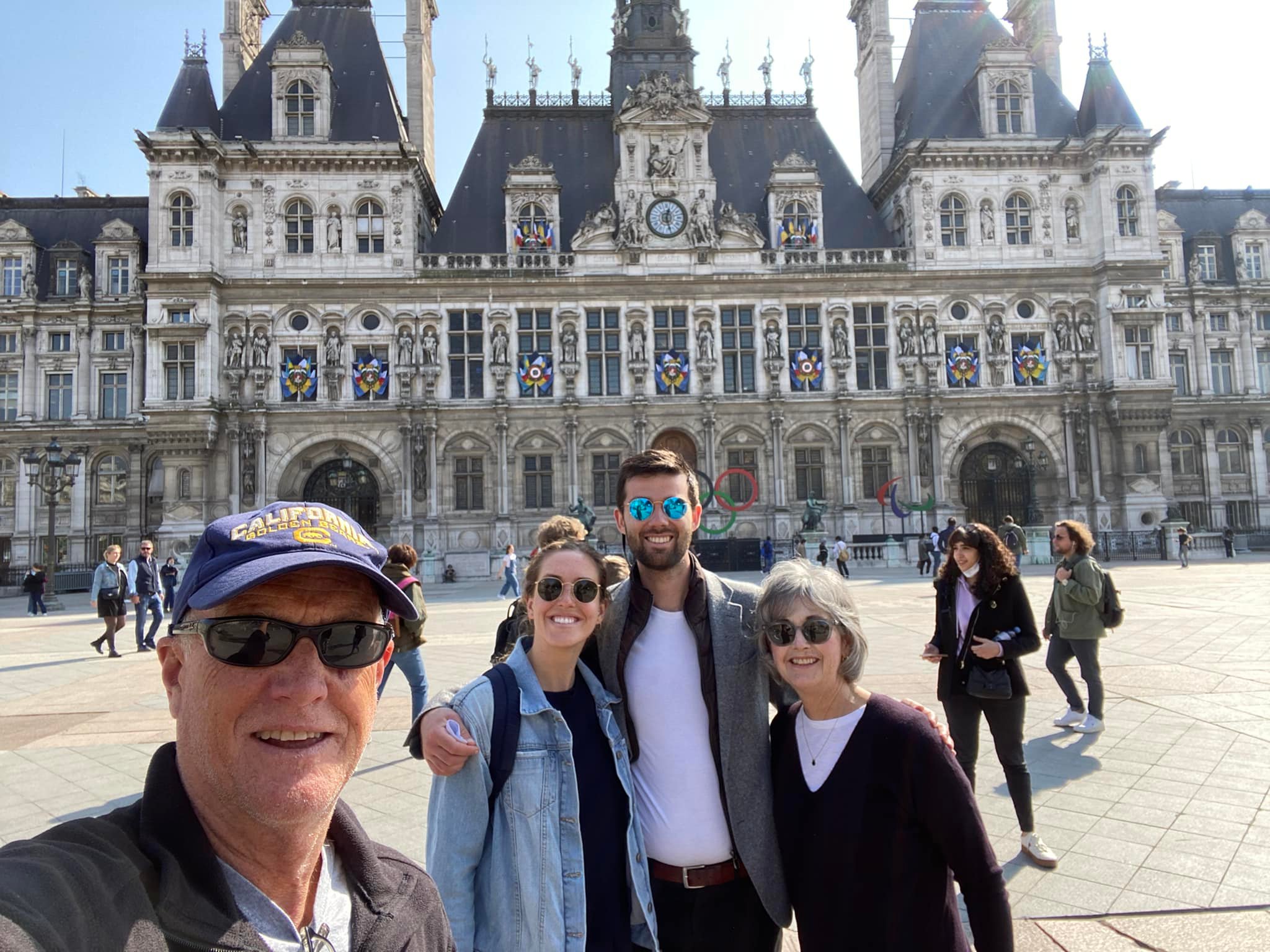
Hotel de Ville 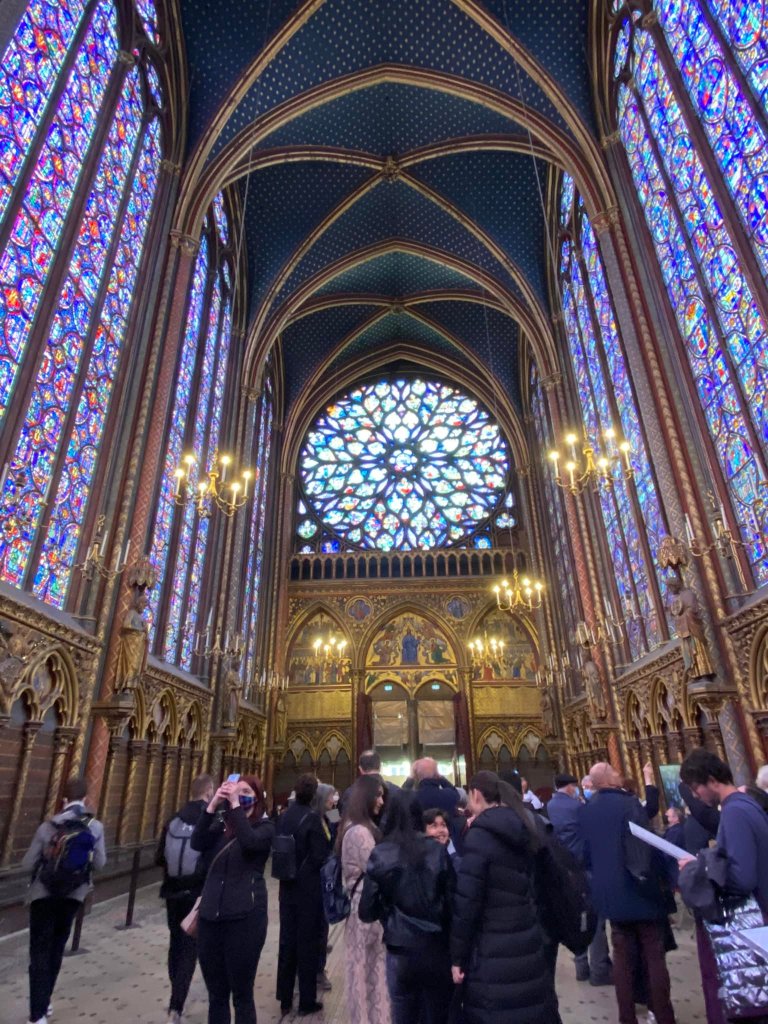
Saint-Chappelle 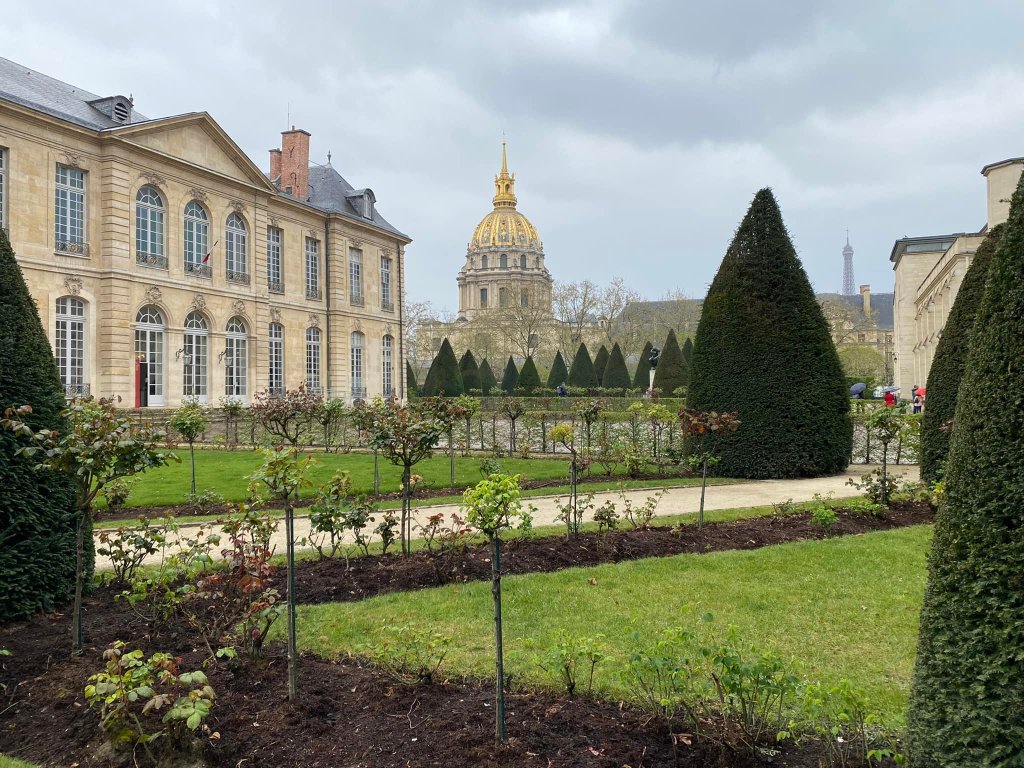
Rodin Museum 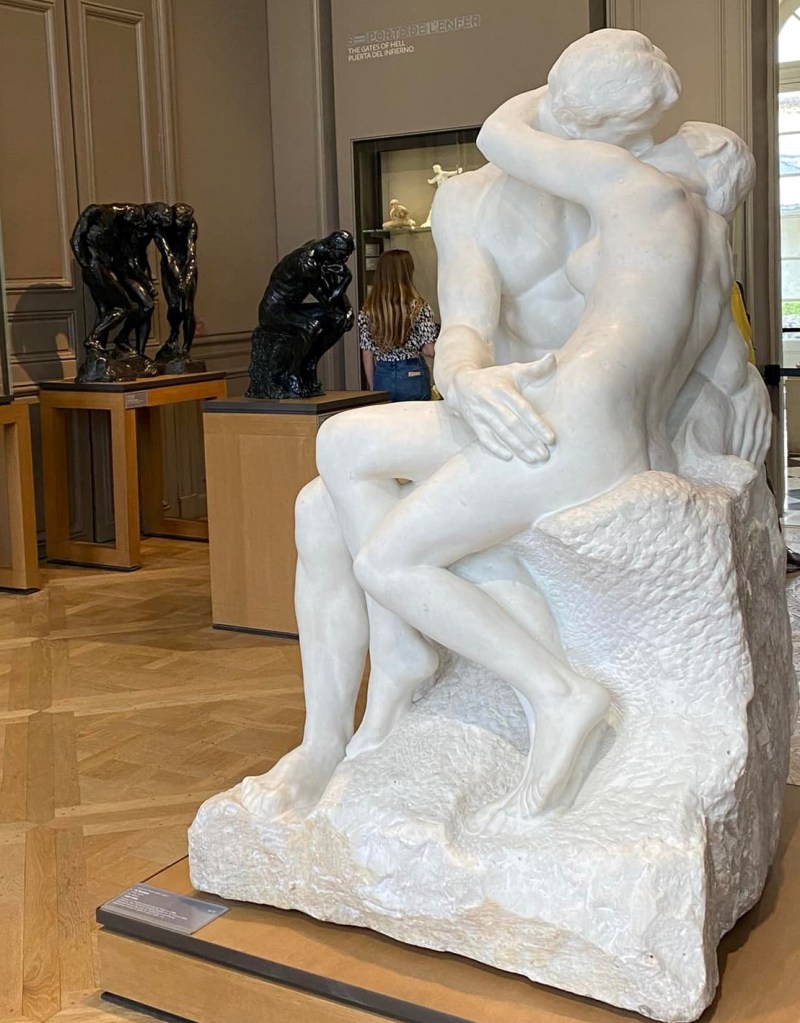
Rodin’s “The Kiss” 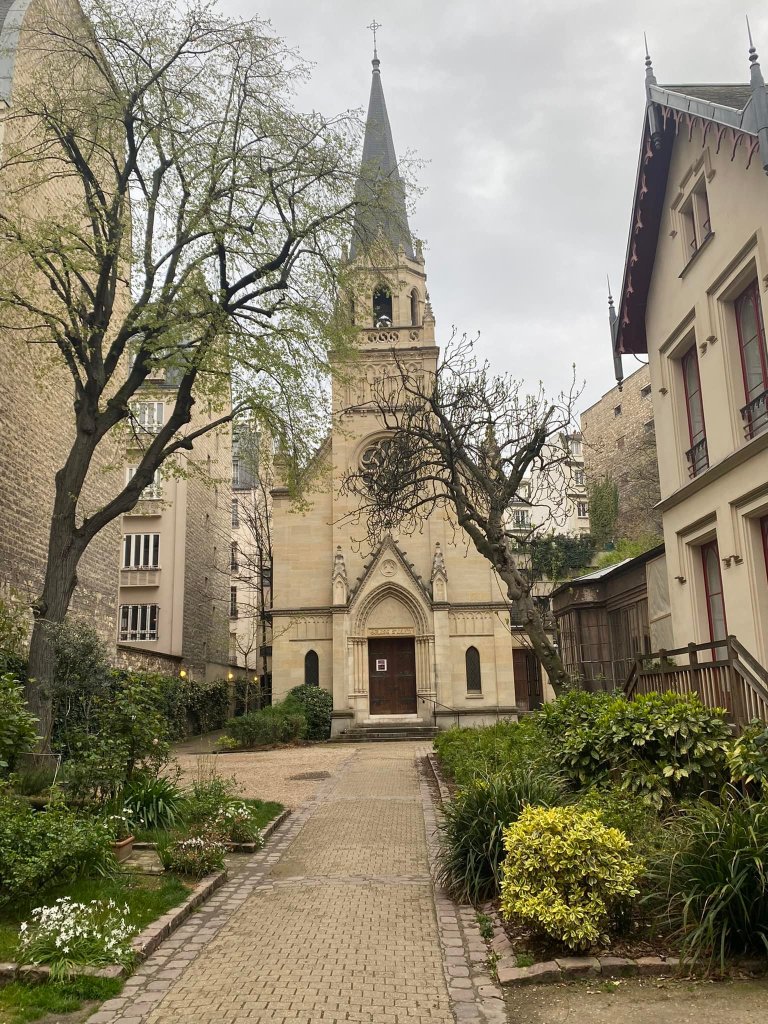
Church in the Latin Quarter 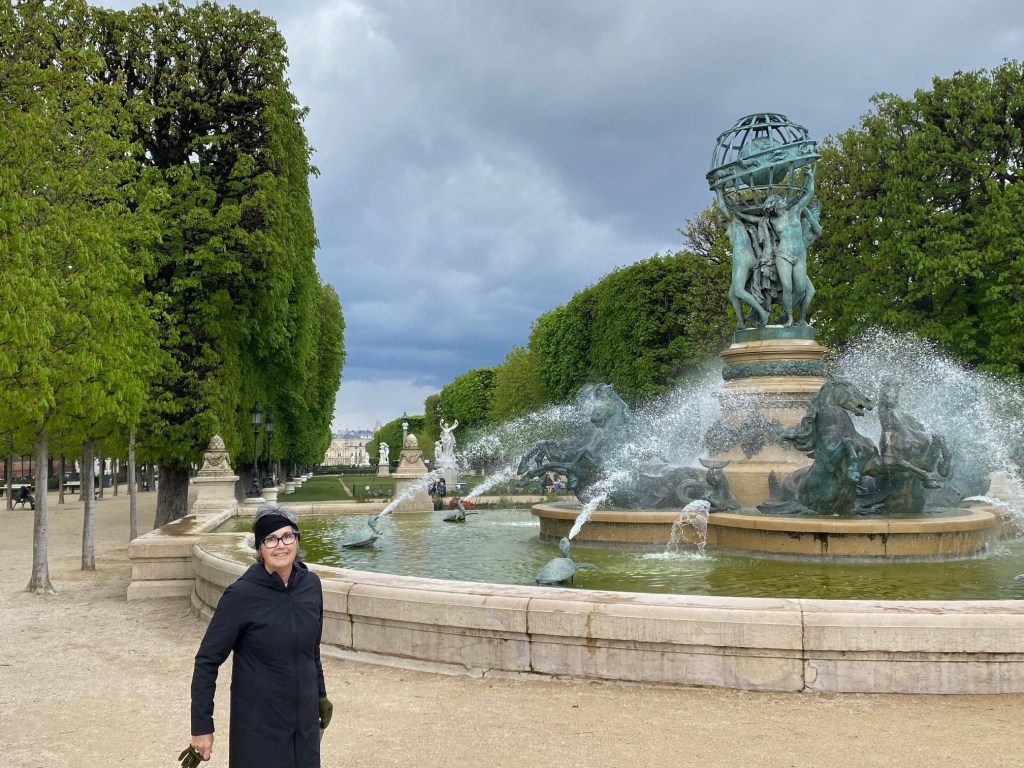
Luxembourg Gardens 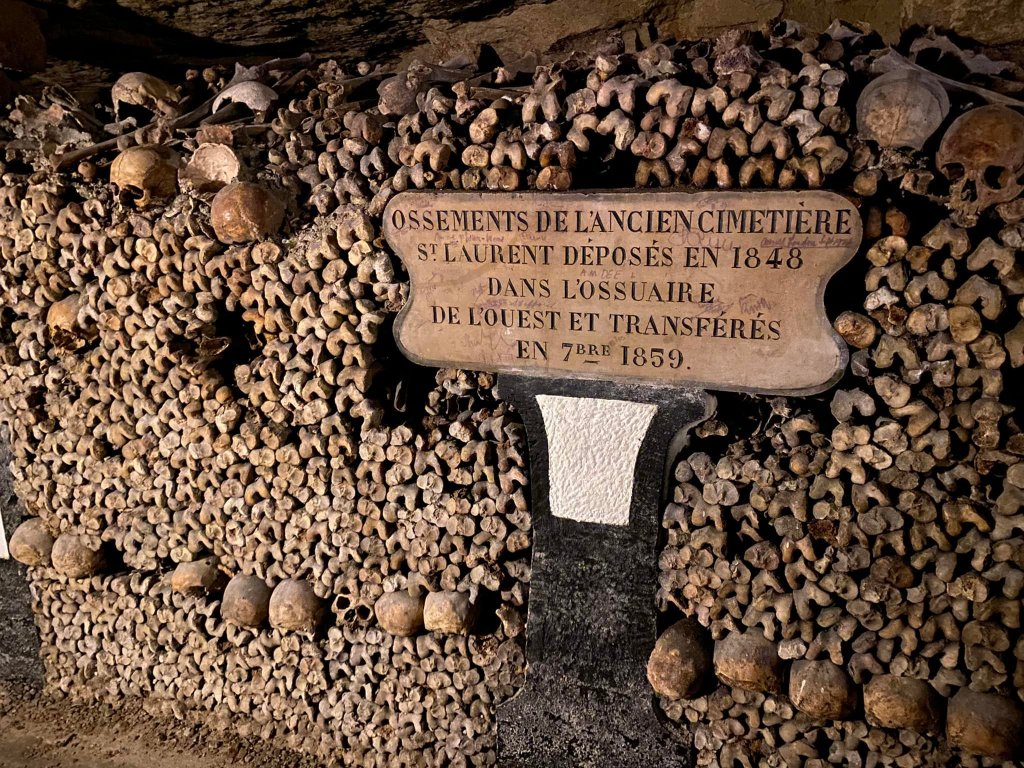
The Catacombs Great Hall in the Louvre 
Napolean’s Apartment in the Louvre Van Gogh 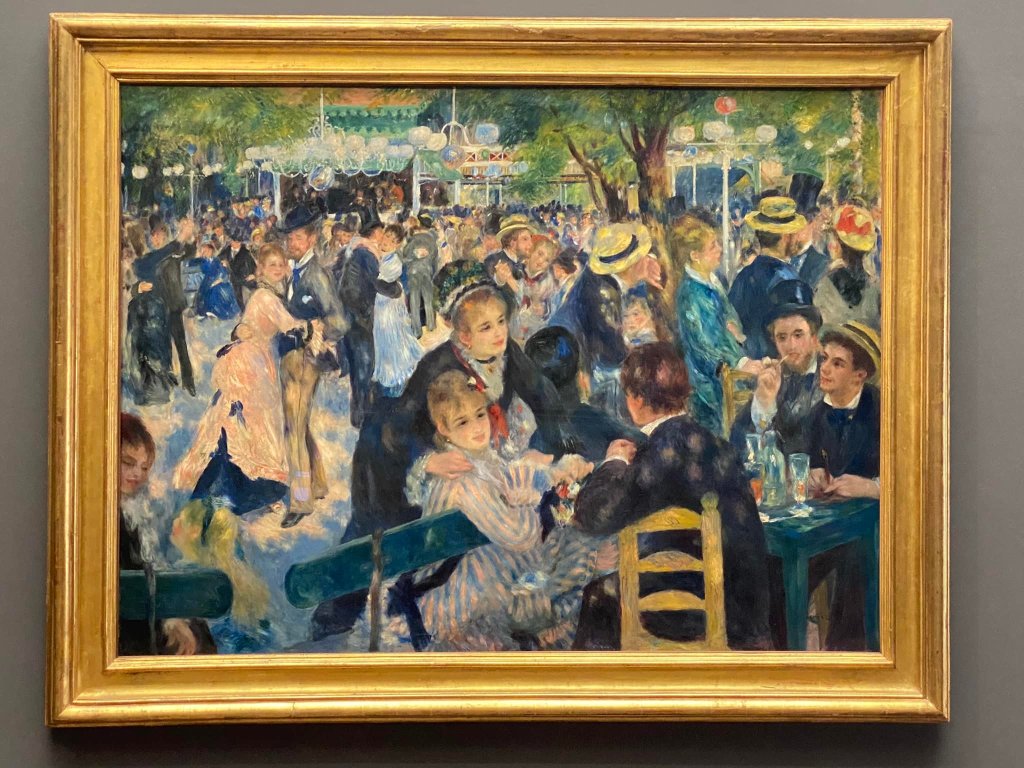
Renoir Arc de Triomphe at sunset 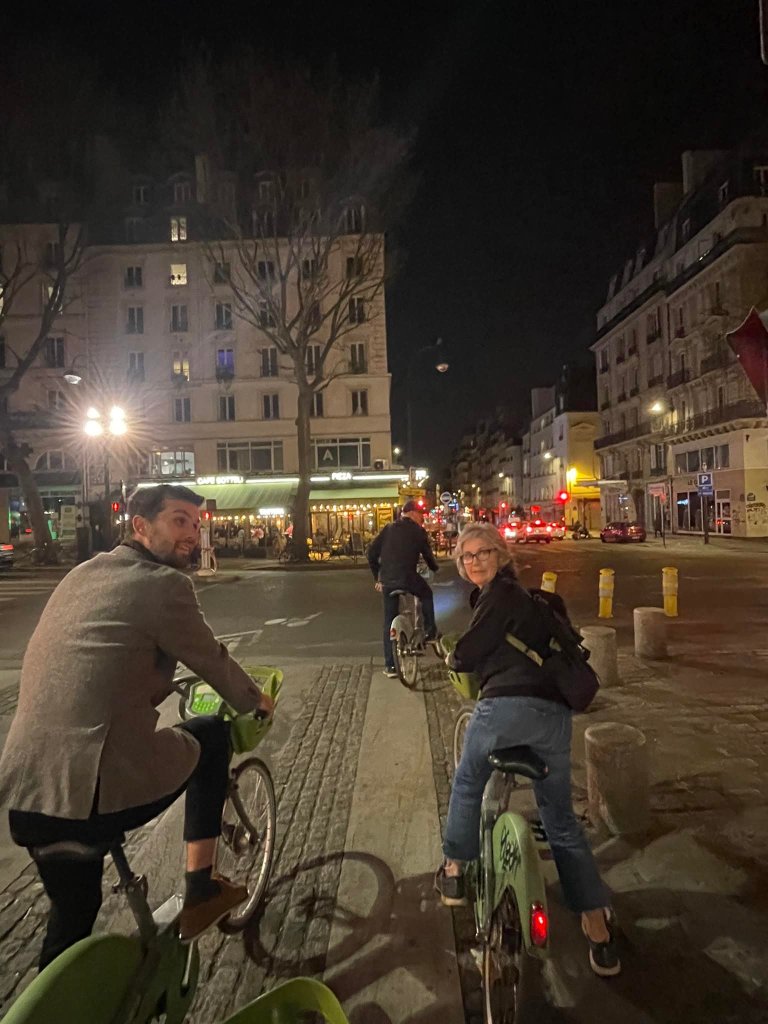
Night biking Le Tour Eiffel 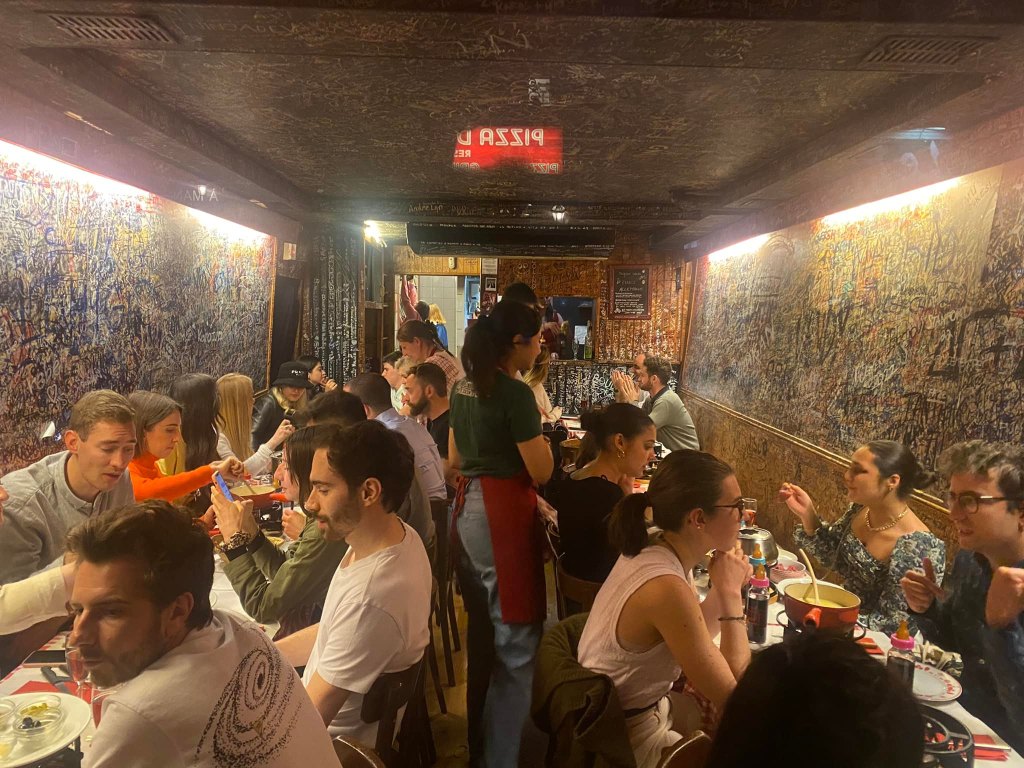
Montmartre restaurant


| Dates | Destination | |
|---|---|---|
| Days 9-12 | Normandy & Brittany | Lodging details below |
Leaving Paris after eight days, we began our circuit around France with four days traveling through Normandy, with our first day exploring Giverny and Rouen and then on to Bayeux, our base for visiting Normandy’s D-Day sites. Finally, we continued on to Mont-St-Michel before arriving in the walled city of Saint Malo on the coast of Brittany.
| Duration | Destination | Where We Stayed |
|---|---|---|
| 1 day | Giverny & Rouen | St. Nicholas and the Carillon of the Cathedral |
| 2 days | Bayeux & D-Day Sites | Manoir Sainte Victoire |
| 1 day | Mont-St-Michel / Saint Malo | Hotel Le Nautilus |
Giverny and Rouen
We caught the train from Paris’ Gare Nord to Giverny to visit Monet’s Gardens, a very nice 3 hour diversion. Then on to Rouen via train for a one night layover on the way to Normandy. Rouen is 1,000 years old, the original Norman capital, and where Joan of Arc was burned at the stake for heresy by the English at age 19, after inspiring the French people to fight back against English invaders. France, of course, won that war and Joan was credited, as the king had been weak and ready to be subjugated. This was an excellent stopover en route to Normandy. Highlights:
- Walk the Rue du Gros Horloge from the Cathedral to Place du Vieux Marche and St. Joan of Arc Church. The market is terrific for every kind of fresh food imaginable, and the church, at the site of Joan’s death, is entirely unique — shaped like a Norman ship. La Couronne, the oldest auberge in France and site of Julia Child’s first French dinner (and very expensive!), is also right there.
- The massive Cathedral in Rouen, as big as Notre Dame in Paris, was one of Monet’s favorite subjects. He painted it over 30 times from the same location but in different weather and times of day, letting the changing light and mist “hang from the structure” to lend different impressions. Thus, Impressionism.
- Dinner at Bistro Nova was good, French country fare. Be careful ordering beef, as they deliver huge cuts (don’t be thinking NY strip steaks) and more rare than you’d get stateside. If you like medium rare, order it medium.
Monet’s Garden, where water lilies inspire Light and images reflected on water 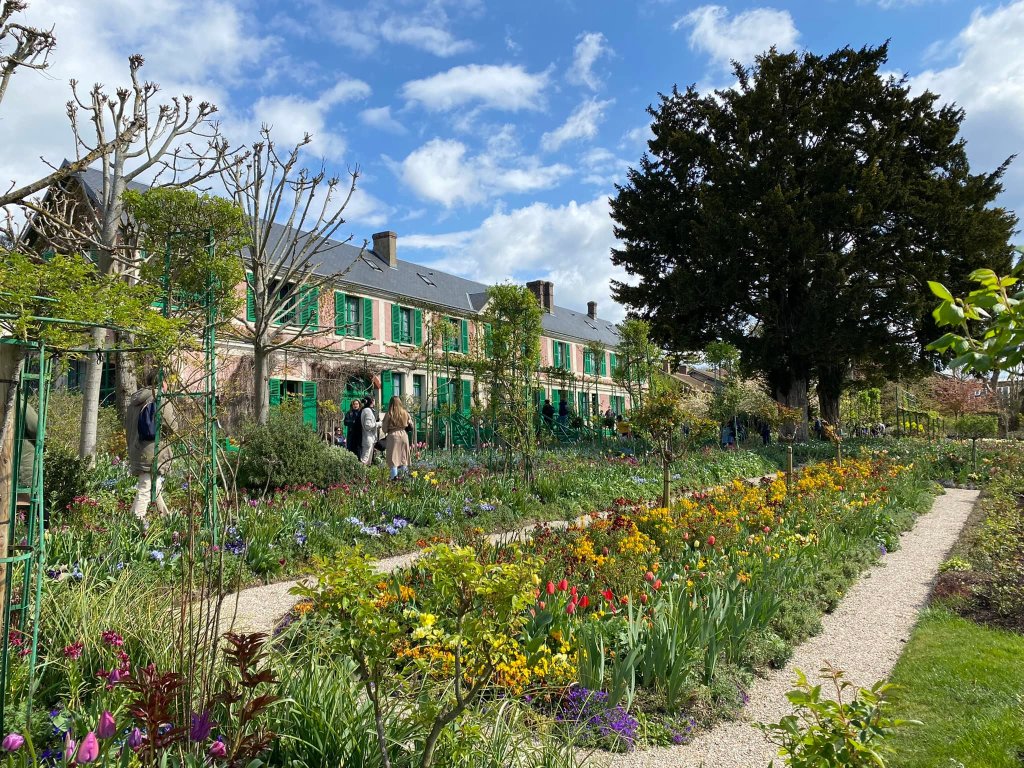
Monet’s house and flower gardens Rouen’s main street and Gros Horloge 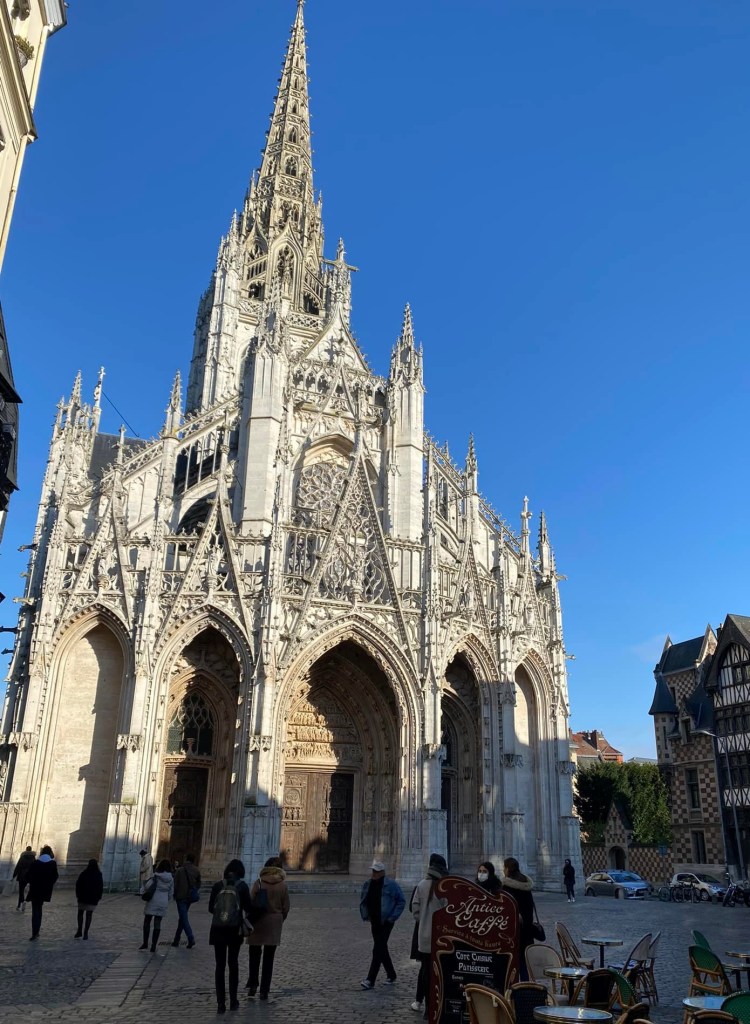
Rouen Cathedral 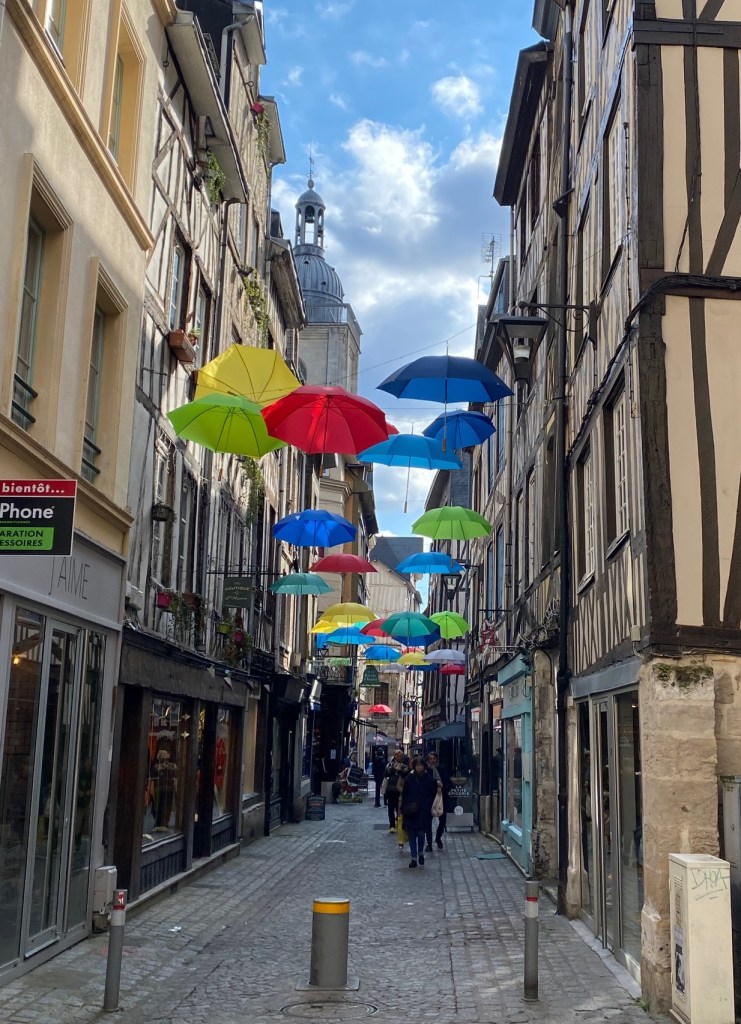
Rouen side street 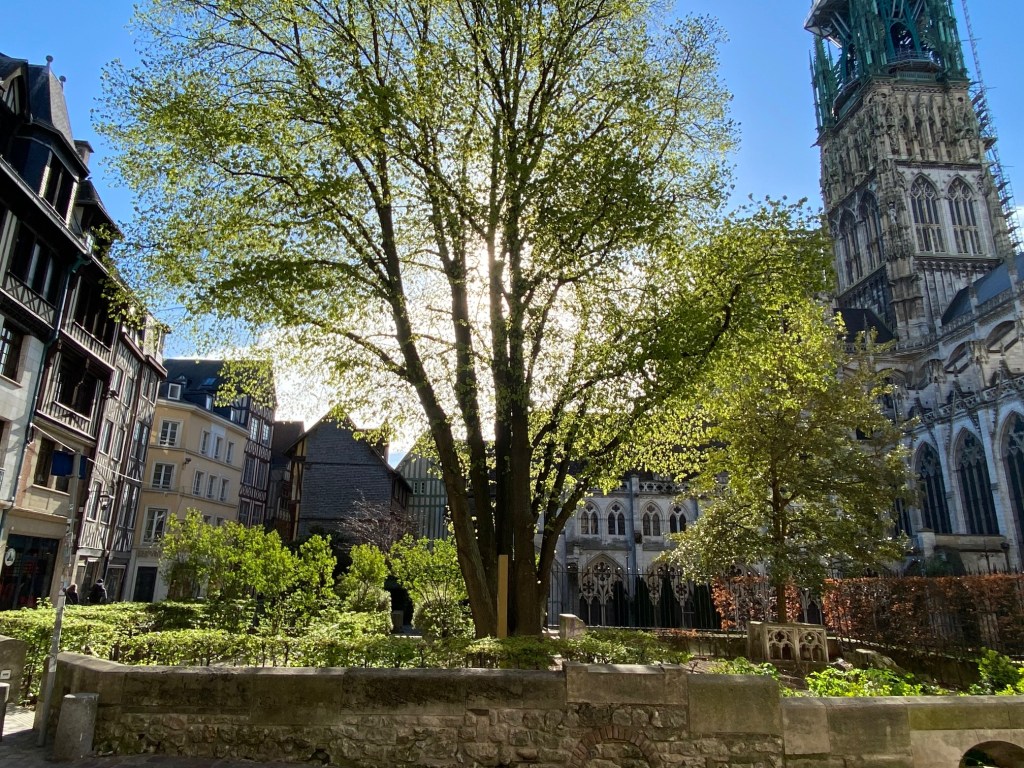
Park next to the Cathedral 
Saint Joan of Arc’s Church 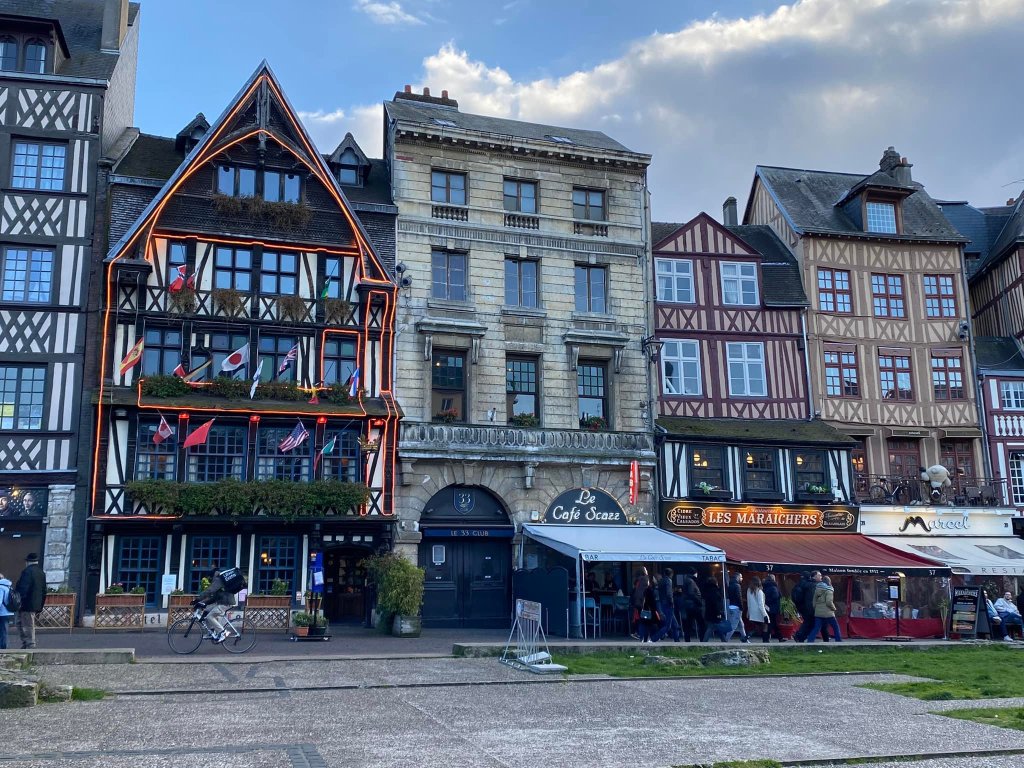
La Couronne


Side note: We also picked up rental car here, much better rate than Paris. Small cars are the best for small villages; our Mini Cooper was perfect for two people. We used Sixt, although EuropCar is a good company as well; we’ve had good luck with both.
Bayeux


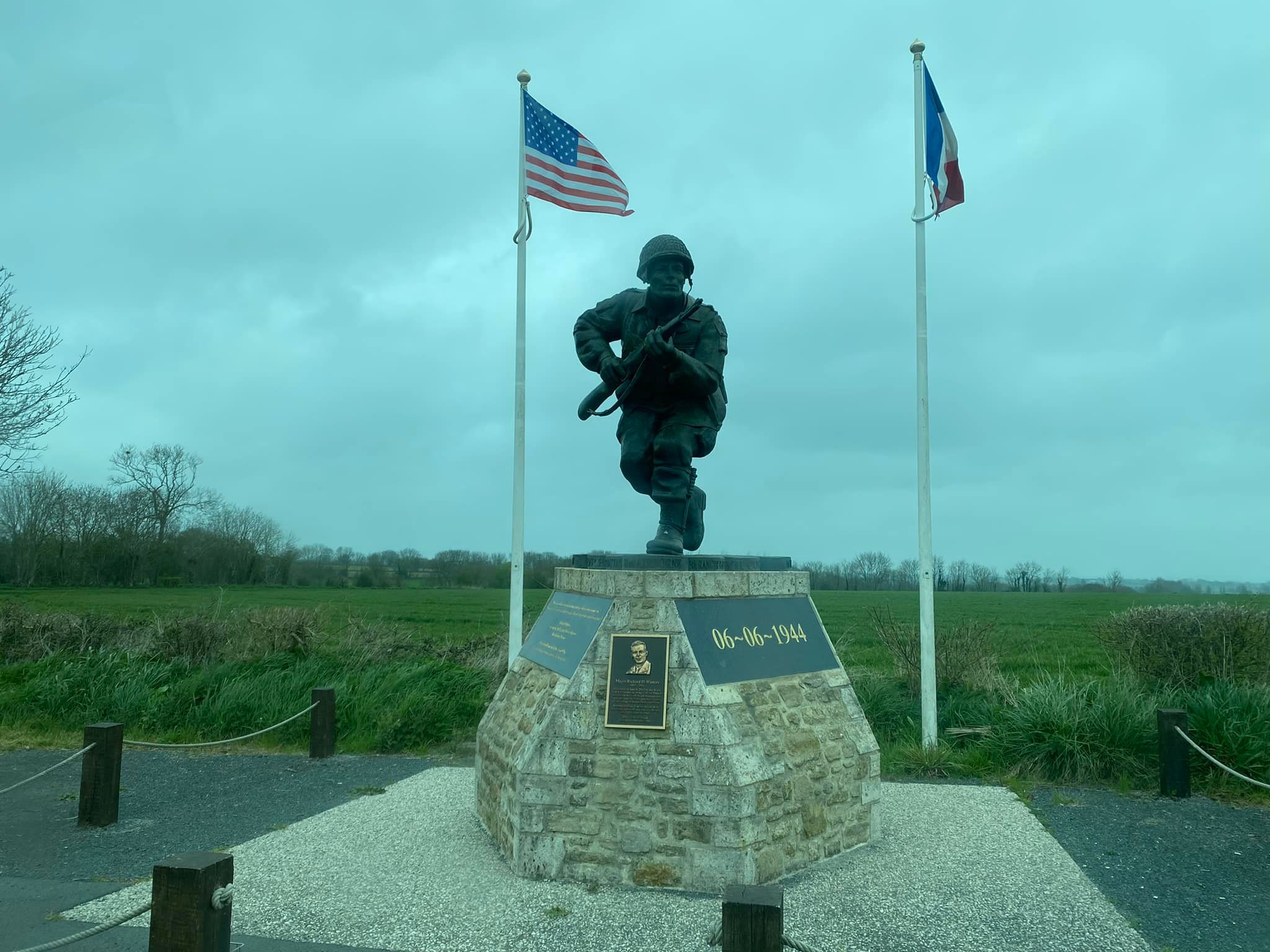
We had been looking forward to touring the coast of Normandy’s D-Day sites for the first time, and Bayeux was perfectly situated as our home base and a great little town. It was also the first liberated by the Allies after D-Day. While every place we have visited so far has been beautiful, our guided tours of the D-Day sites, and hearing just a fraction of the heroic stories from those crucial days, will always be a highlight of this trip. Everyone should do it, given the chance. Two days was just the right amount of time. Highlights:
- Highly recommend our lodging, and our host Frank Brunel was superb (TripAdvisor review here). His English is about the same as our French, but we both had a marvelous time trying our best.
- Our first two truly outstanding dinners in France. La Rapiere, reputedly the best in the region, was incredible and our hostess (and proprietor) was super friendly and fun. Advance reservations required. Le Pommier was excellent as well and we were able to go spur of the moment.
- The Bayeux Tapestry Museum is home to a 1000 year old, 70 meter long tapestry retelling the entire history of the Battle of Hastings, in which William the Bastard reclaims the throne from the usurper Harold in 1066, after which he is forever known as William the Conqueror. The tapestry is incredible! Audio guide essential.
- Full day, guided tour of D-Day landing zones, including Sainte-Mere-Eglise (see photo below with replica of Pvt. John Steele hanging by his parachute from the church steeple), Utah Beach, Omaha Beach, Pont-du-Hoc, and Longue-sur-Mer Gun Battery. We had booked Edward Robinson (https://www.battleofnormandytours.com/) at my sisters’ and BIL’s recommendation, but he got COVID the day before and referred us to another excellent guide, Bertrand. There are cheaper tours, but I thought it was very well worth the price (600 Euros). To fully prepare, watch the 1962 movie “The Longest Day” before visiting.
- The American Cemetery at Colleville-sur-Mer was very powerful, a must-visit. Free, one hour guided tour centered on visits to the graves of three particular fallen soldiers, where we heard their life stories told and the promises they’d made to their loved ones. Very special way of honoring those who might otherwise not be remembered.
Bayeux Tapestry 
Manoir-Ste-Victoire 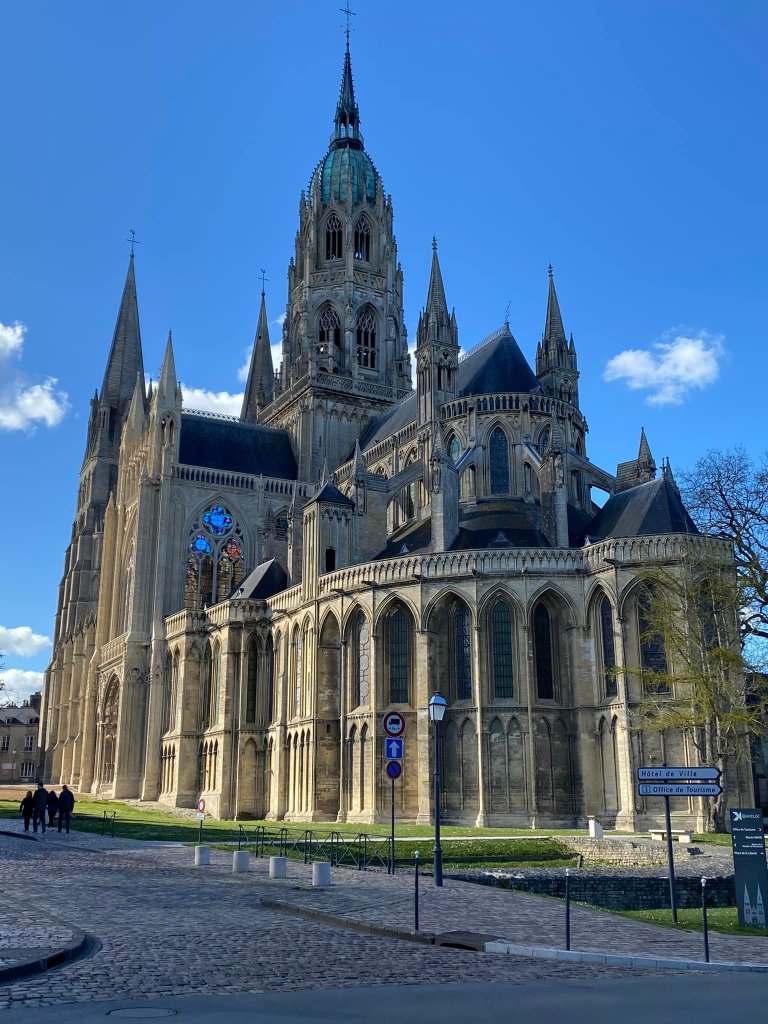
Bayeux Cathedral 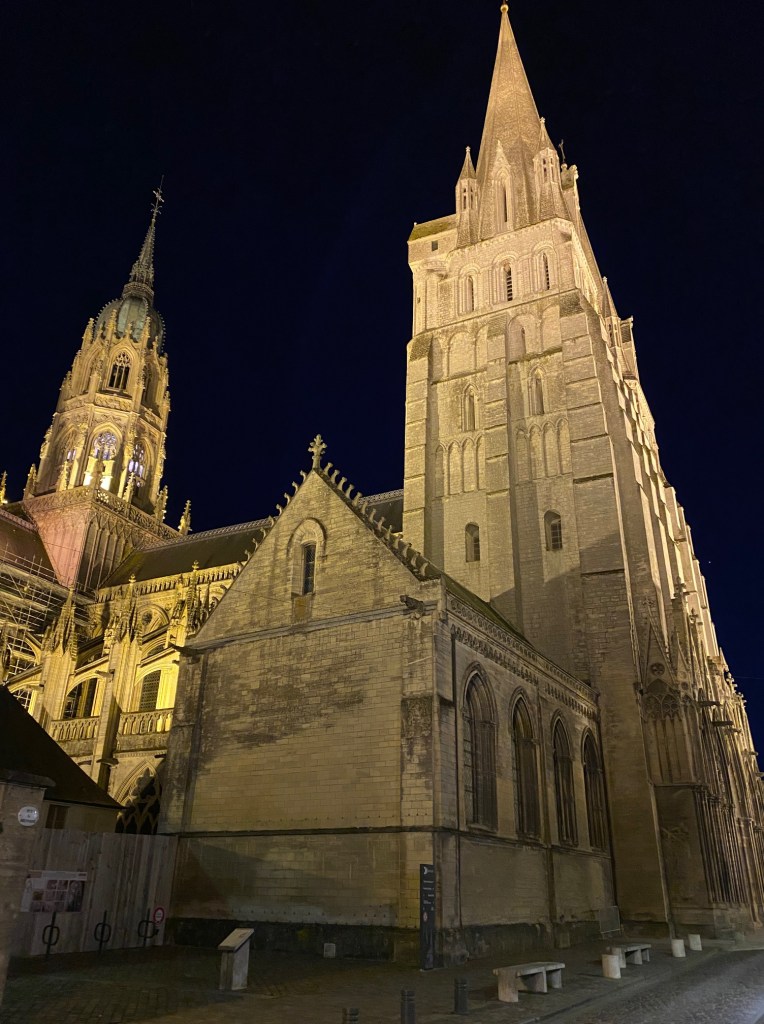
Cathedral at Night 
Colleville-sur-Mer 
Ste-Mere-Eglise 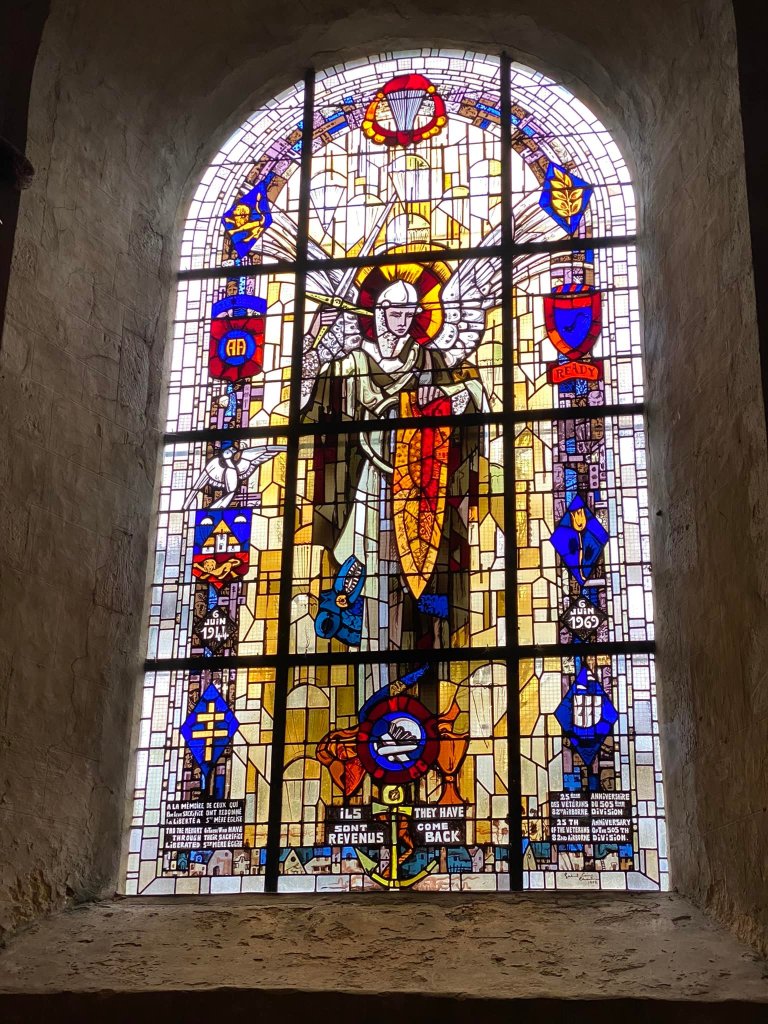
Ste-Mere-Eglise 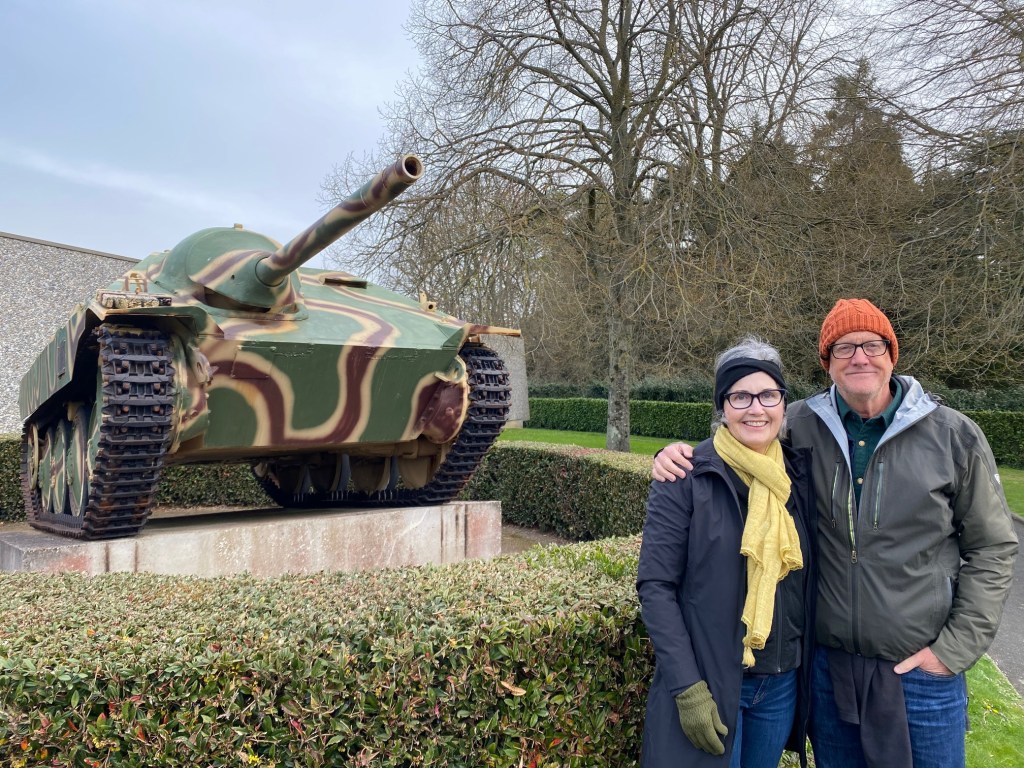
Panzer Tank 
Utah Beach 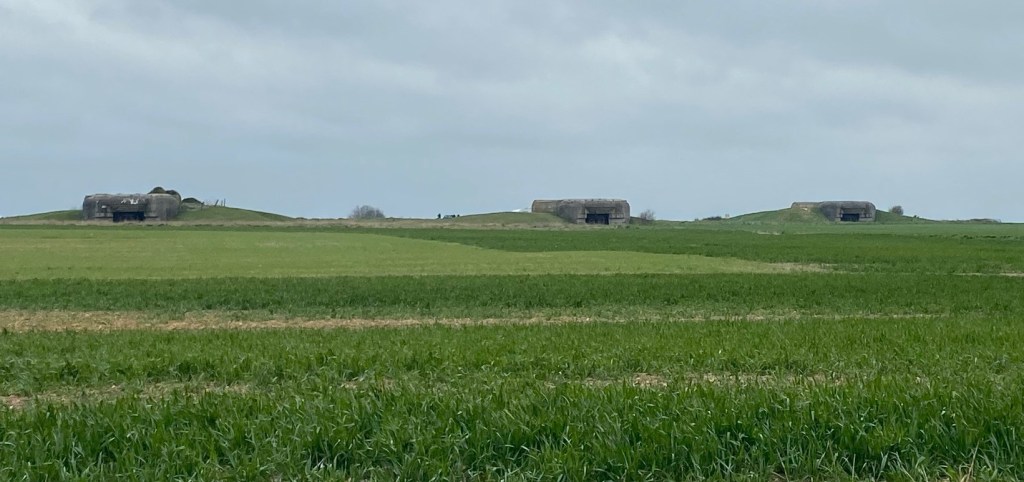
Longue-sur-Mer 
Longue-sur-Mer gun 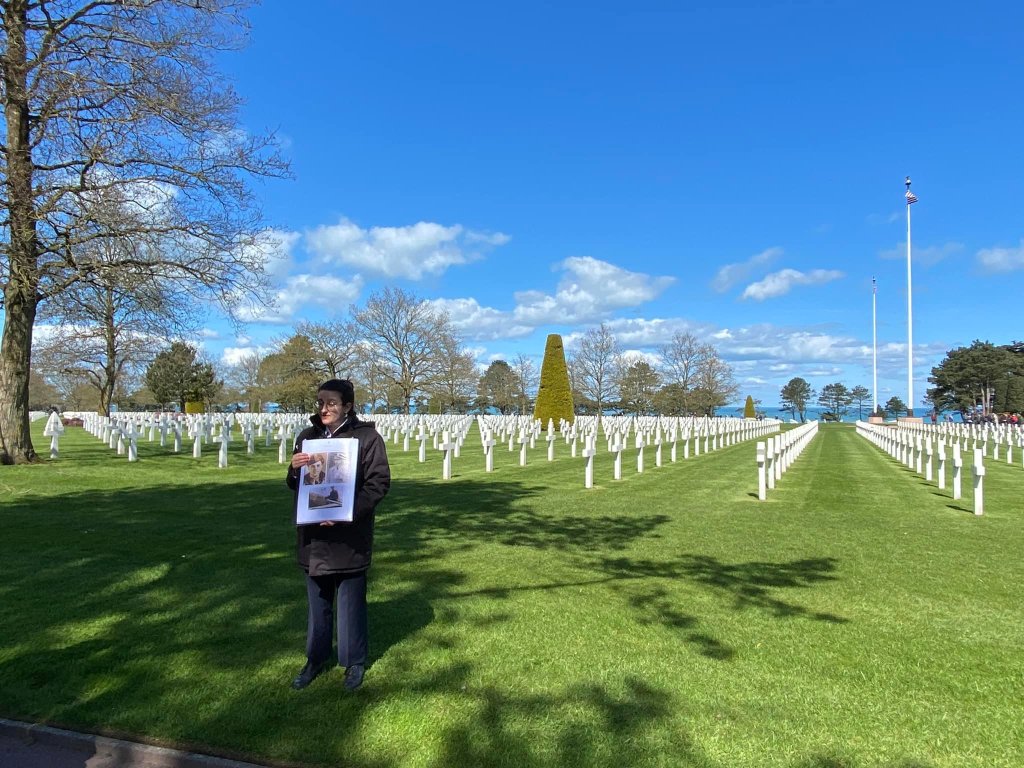
American Cemetery 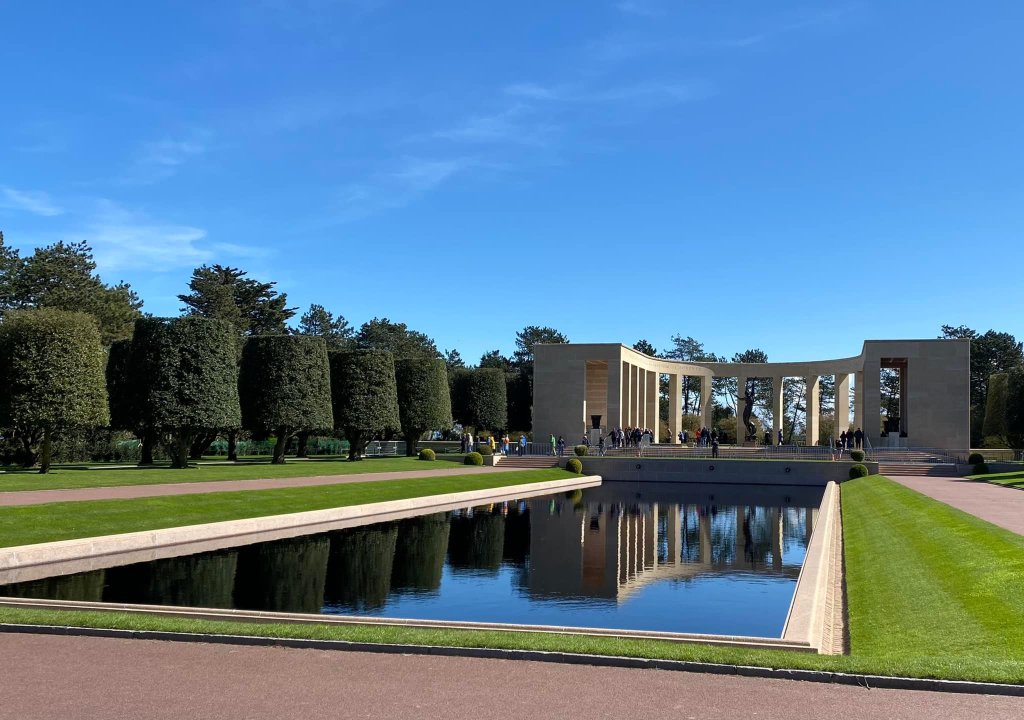
American Cemetery

Mont-St-Michel and Saint Malo

We hit the road from Bayeux early to get to Mont-St-Michel by 9am, trying to time our arrival to coincide with optimal tide for best access and views of Mont-St-Michel (check the tide tables in advance). Wished we had walked the 35 minutes from the parking lot to the entrance instead of waiting for the bus. It was a great place to see and visit, but we were advised not to overnight there – it’s like Disneyland overrun by tourists. Instead, we drove 30 minutes and spent the night in the walled, oceanfront city of Saint Malo, setting for the book “All the Light We Cannot See” (great book, btw). This was a great call and I highly recommend both the town and our hotel – small, but inexpensive, very comfortable, and awesome owners Edward and Aurélie (TripAdvisor review here). Highlights:
- Mont-Saint-Michel is well worth it, a hugely important religious pilgrimage destination and an astonishing monument. Take Rick Steves’ recommended back route to the top to avoid the crush of tourists.
- Walk the ramparts of old town Saint-Malo’s city walls, preferably twice – once at low tide and once at high tide. The difference is mind-blowing (see photos below, abt six hours apart).
- Le Fabrique was a cool bar just inside the walls, a great stop after a long walk. Try the Calvados!
- Dinner at L’Entracte was amazing, both the food and service were outstanding. Highly recommend!
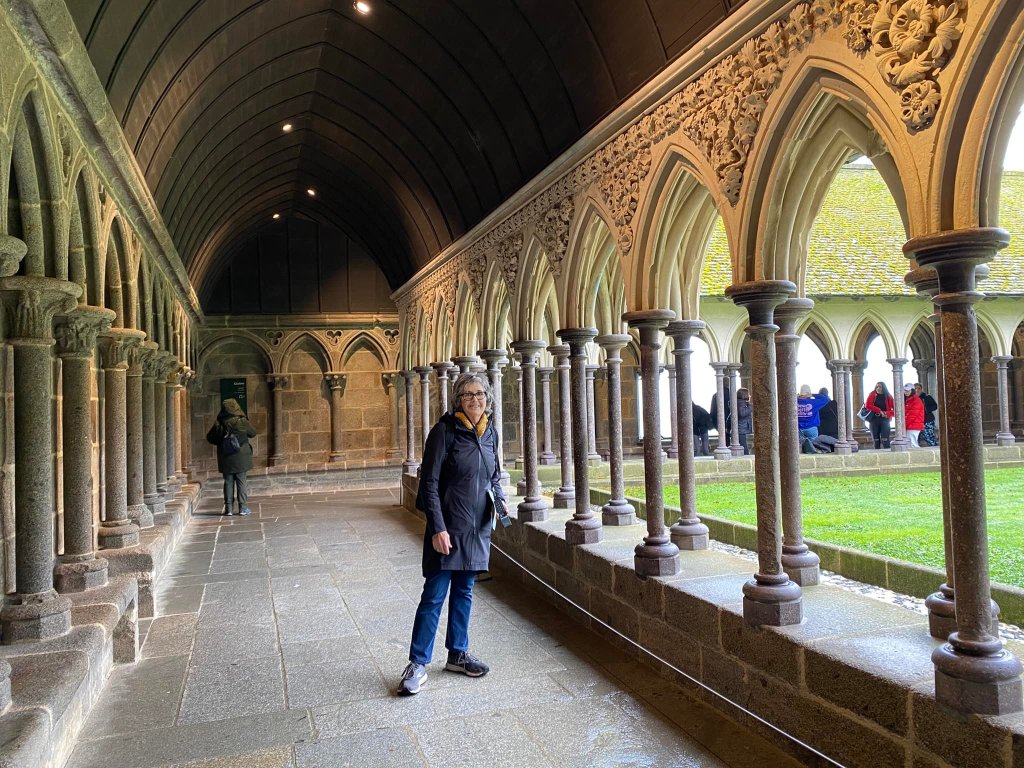
Mont-Saint-Michel cloisters 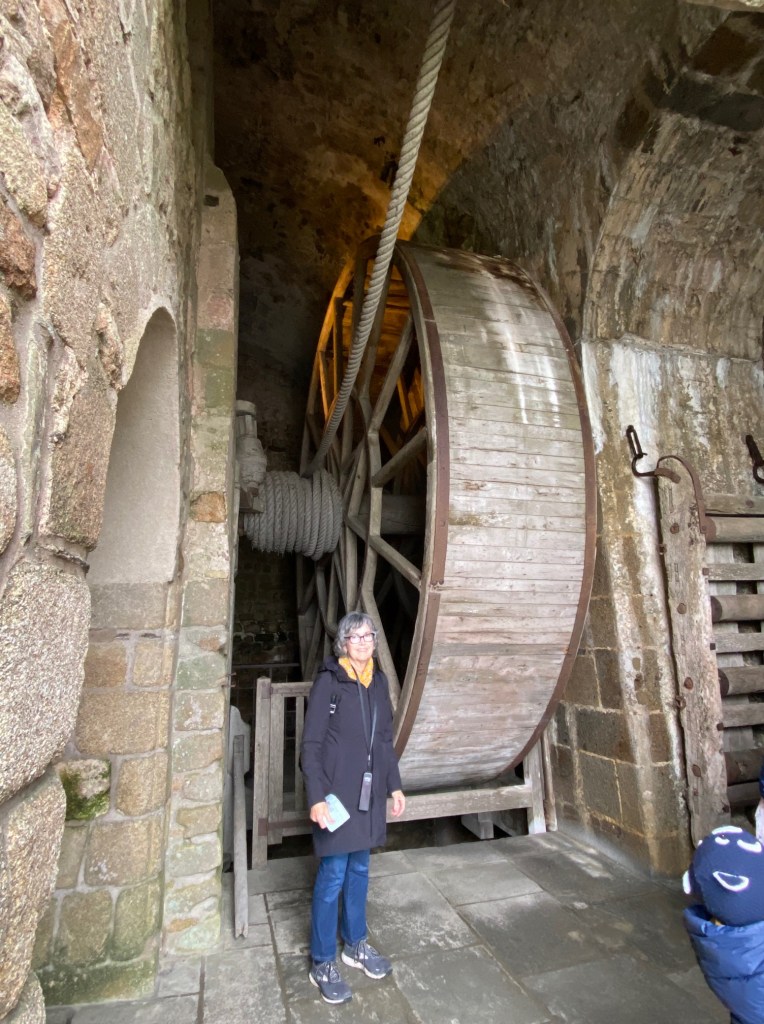
Human-powered wheel to haul supplies up the wall 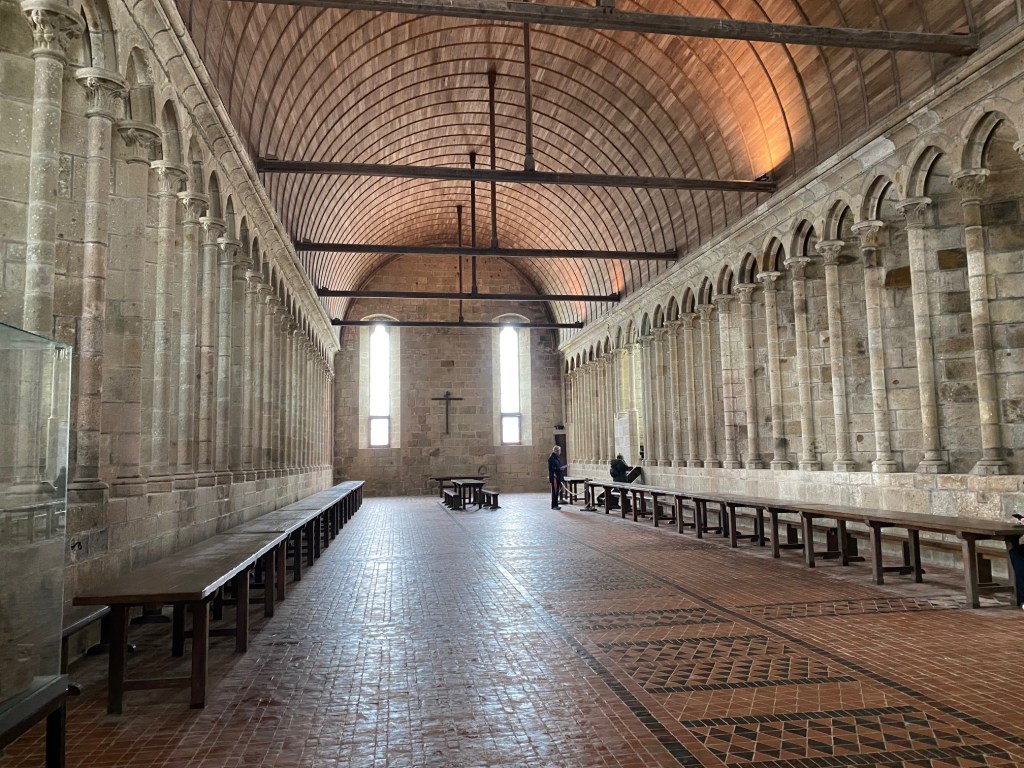
Mont-Saint-Michel abbey Running the tourist gauntlet back down 
Outside the abbey 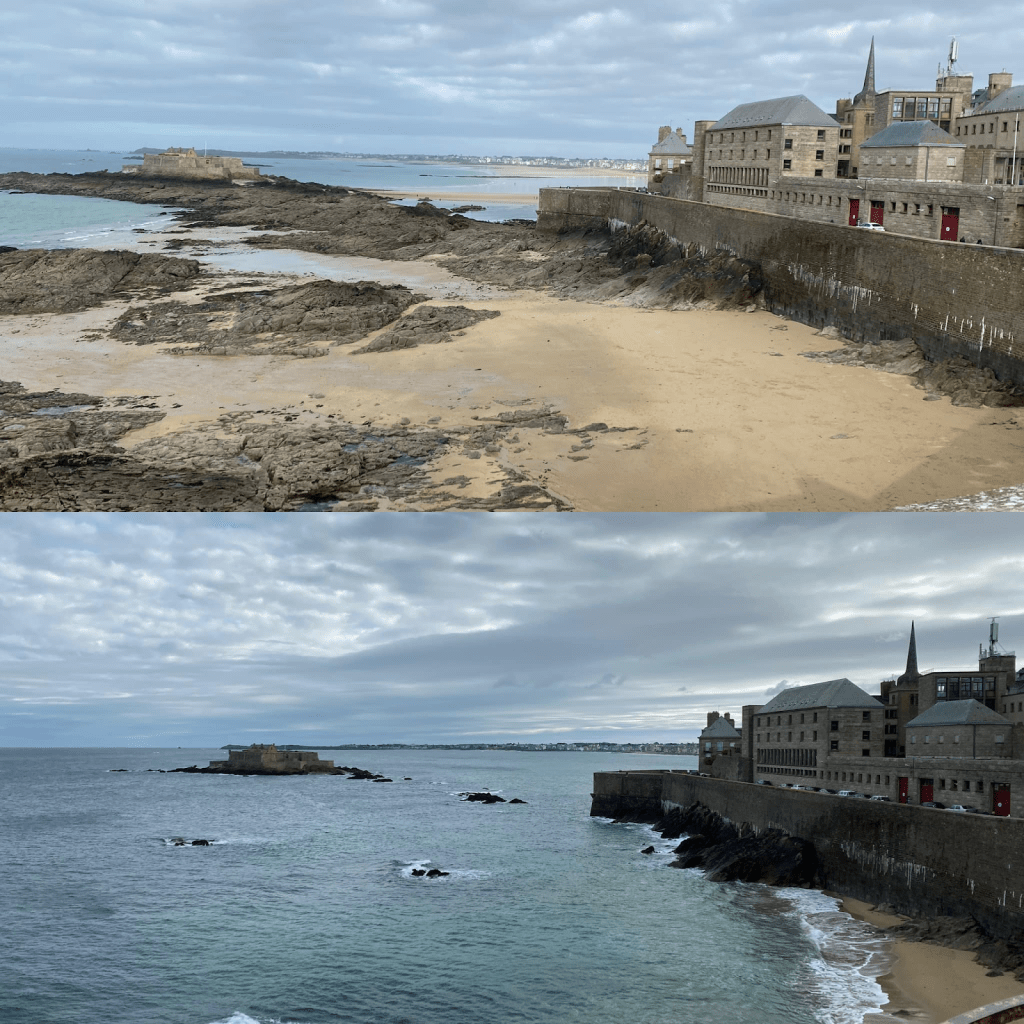
Low and high tides from the west wall 
Low and high tides from the south wall 
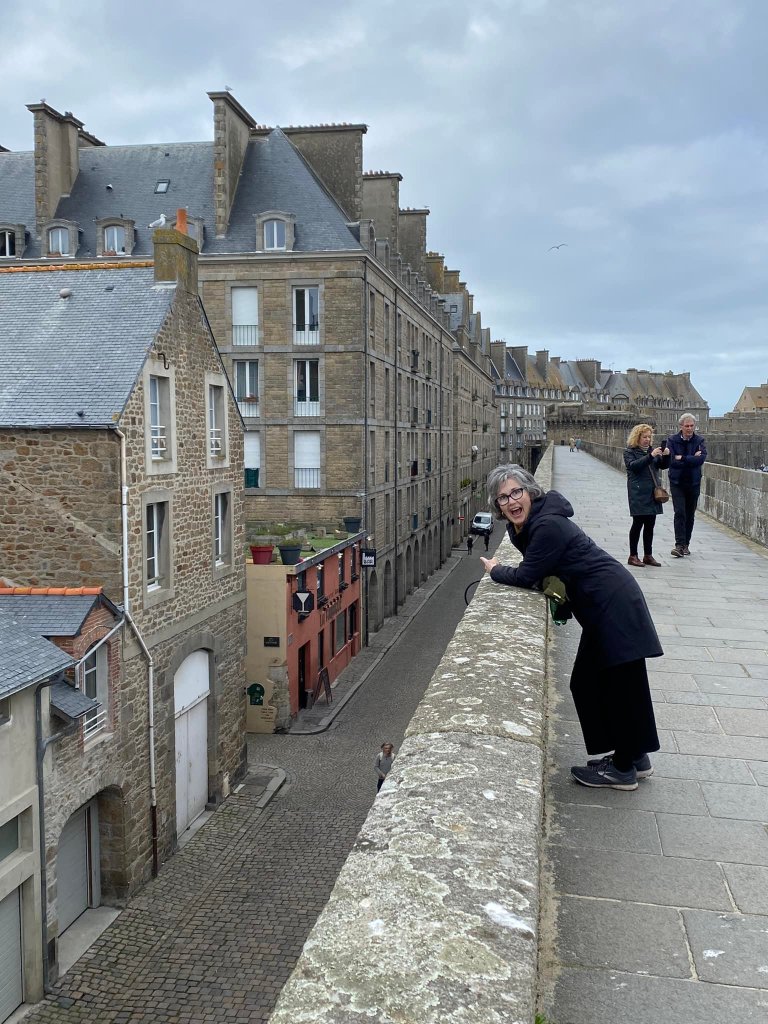
Michelle spots a watering hole! 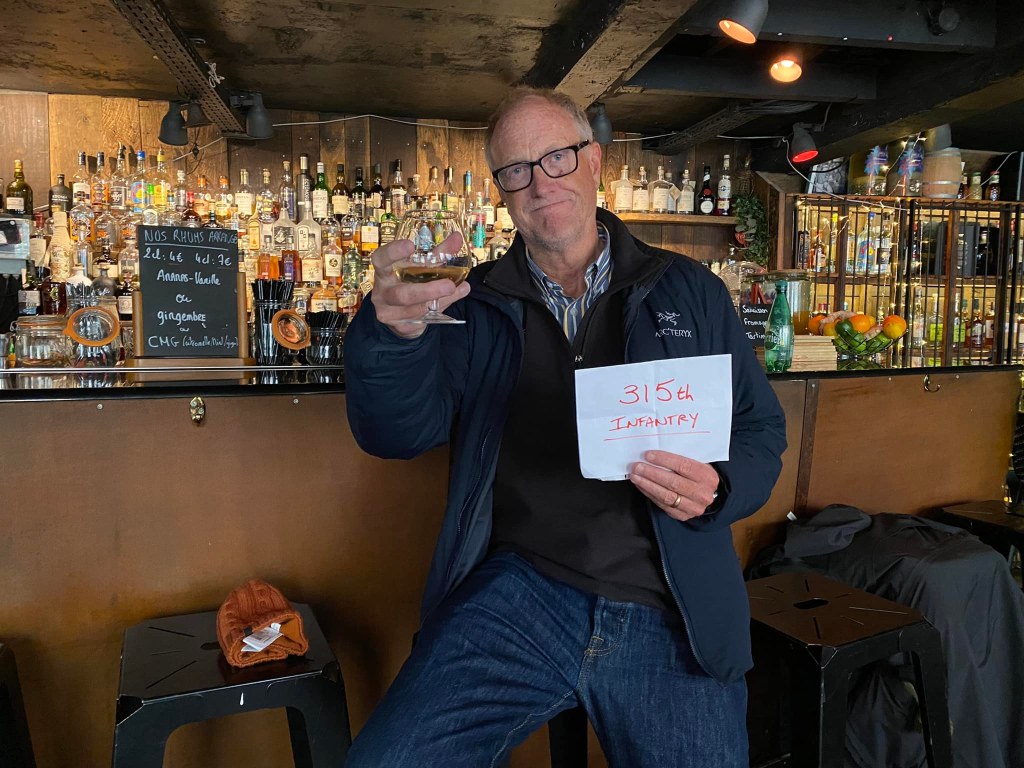
Calvados toast to the 315th Infantry

| Day 13-14 | Amboise (Loire Valley) | Le Manoir les Minimes |

We began our two days in the heart of the Loire Valley, famous for its huge chateaus and white wines, with a 3-hour drive from St. Malo to the spectacular Chateau Azay-le-Rideau (another Rick Steves recommendation that did not disappoint), just west of Tours. Then onward to our home base in Amboise, an excellent base for a day and a half of chateau-hopping and fine dining. Two days was just about right. Highlights:
- Dinner at Chateau de Pray, a Michelin-star dining experience that could not be topped. Seriously, the food was amazing and we had no less than five specialists waiting on us, always on time – never intrusive, but our wine glasses never ran dry.
- Chateaus Chenonceau, Cheverny and Chambord in a day. They just have to be seen to be believed. The last was the biggest, but the first two were the best. Truly awesome.
- Dinner at Les Arpents, a short walk from our manor house. Not nearly as decadent (and pricy) as Chateau de Pray, but another excellent Michelin restaurant nonetheless.
- Our base at Manoir les Menimes was attractive, comfortable and ideally situated; a little stuffy for my liking, but some would just call it classy. Well stocked, but un-tended bar required you to ask the front desk for service. Location and parking were perfect.

Chateau Chenonceau Chenonceau interior (bedroom) 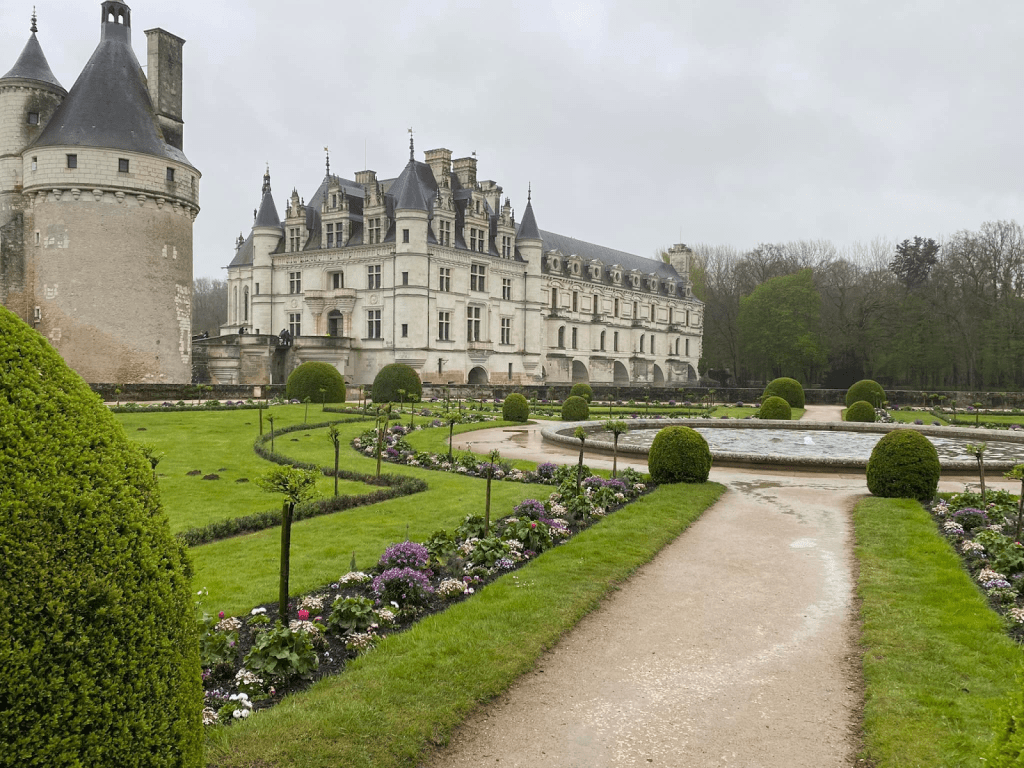
Cnenonceau Garden 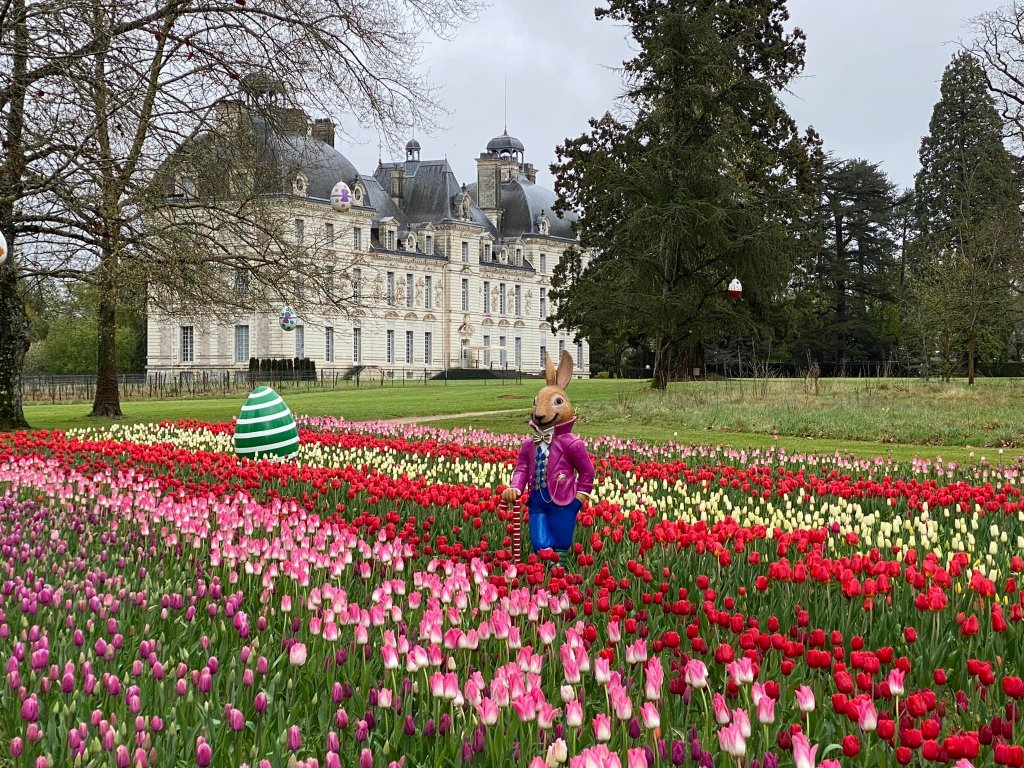
Cheverny’s tulip garden at Easter 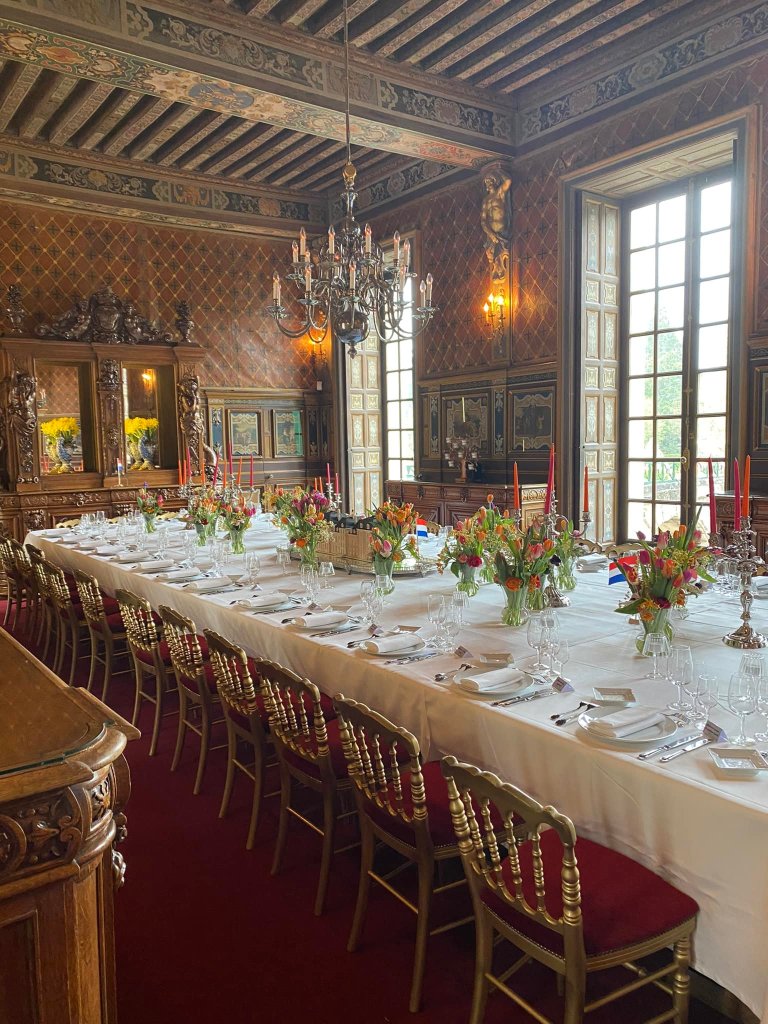
Cheverny dining room 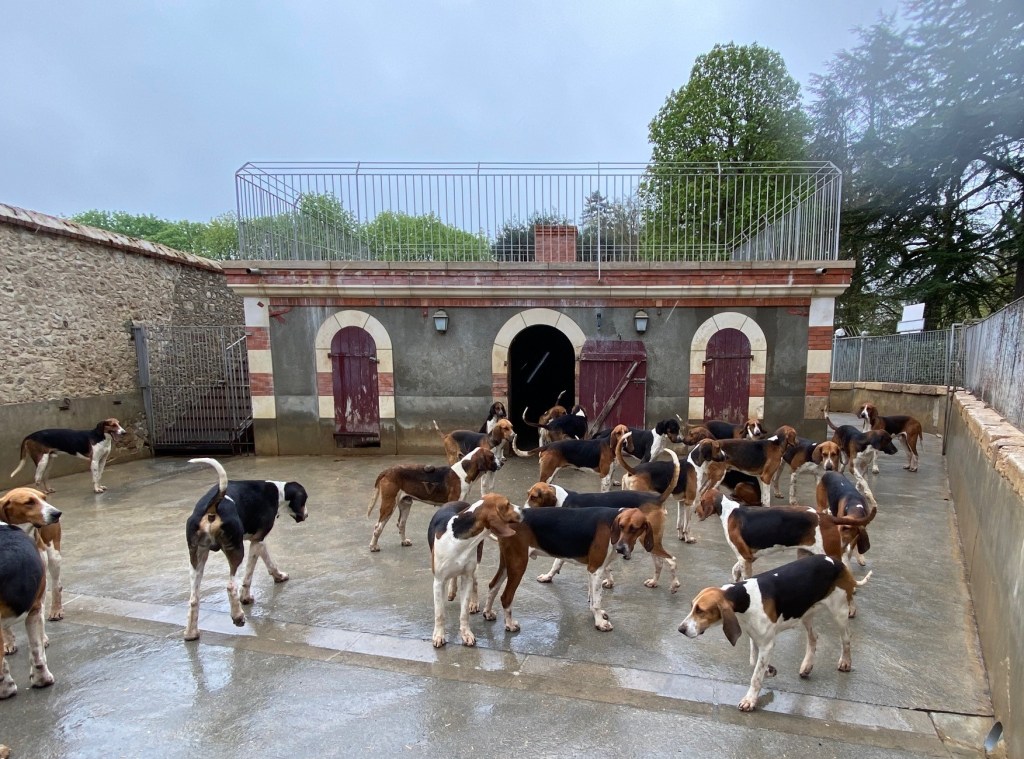
Cheverny’s famous hunting hounds 
Chambord kitchen 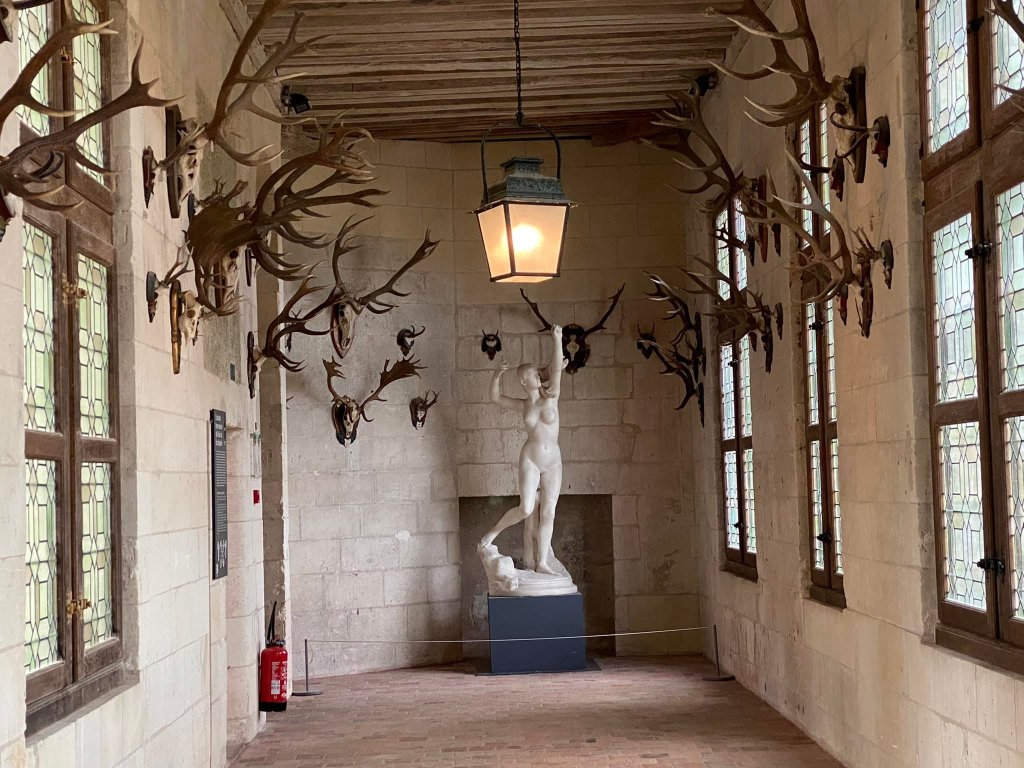
Chambord Hall of Trophies 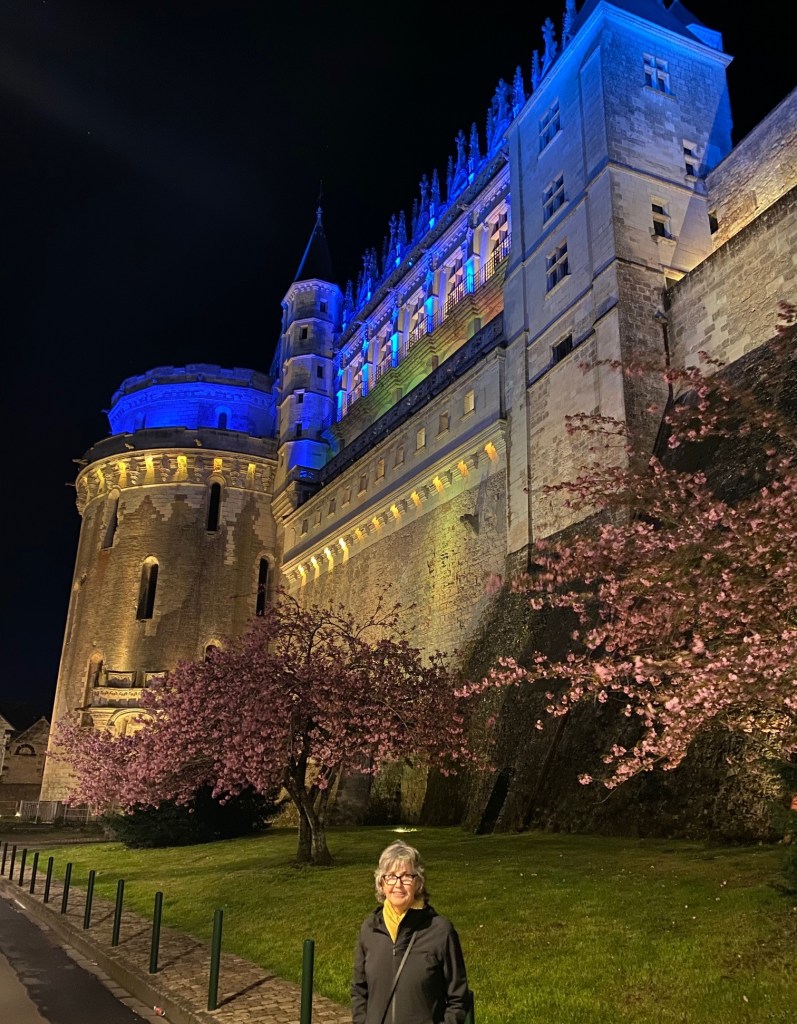
Amboise Castle at night 
Chateau-du-Pray 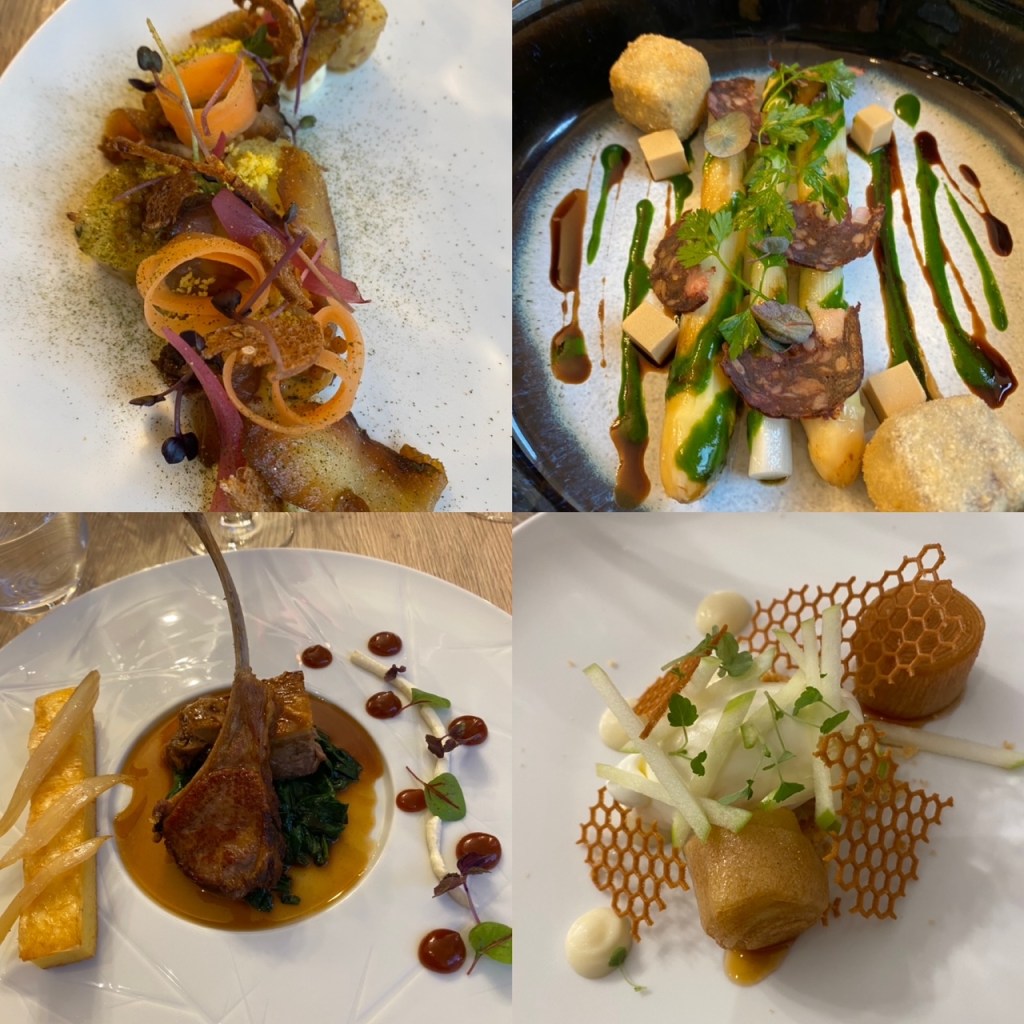
Les Arpents 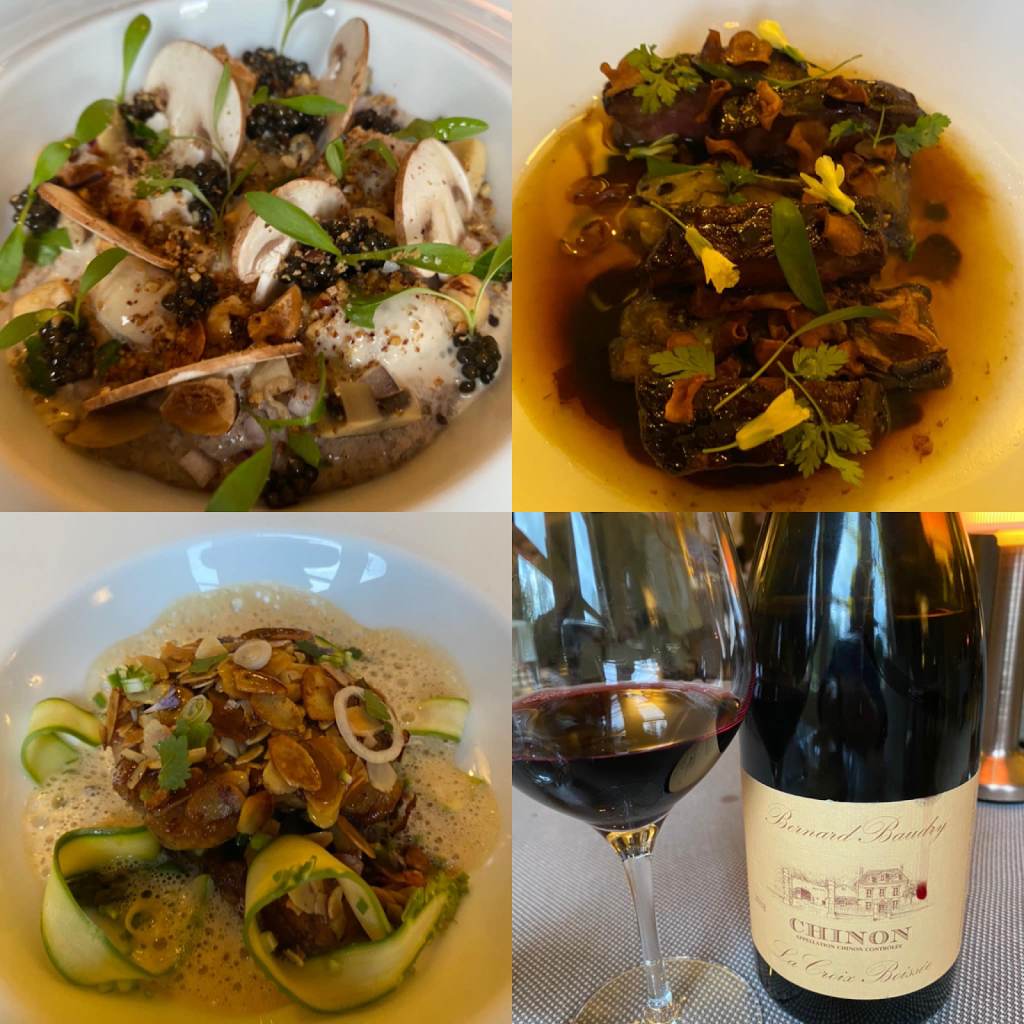
Chateau-du-Pray

| Day 15-17 | Bordeaux | Key to Bordeaux |
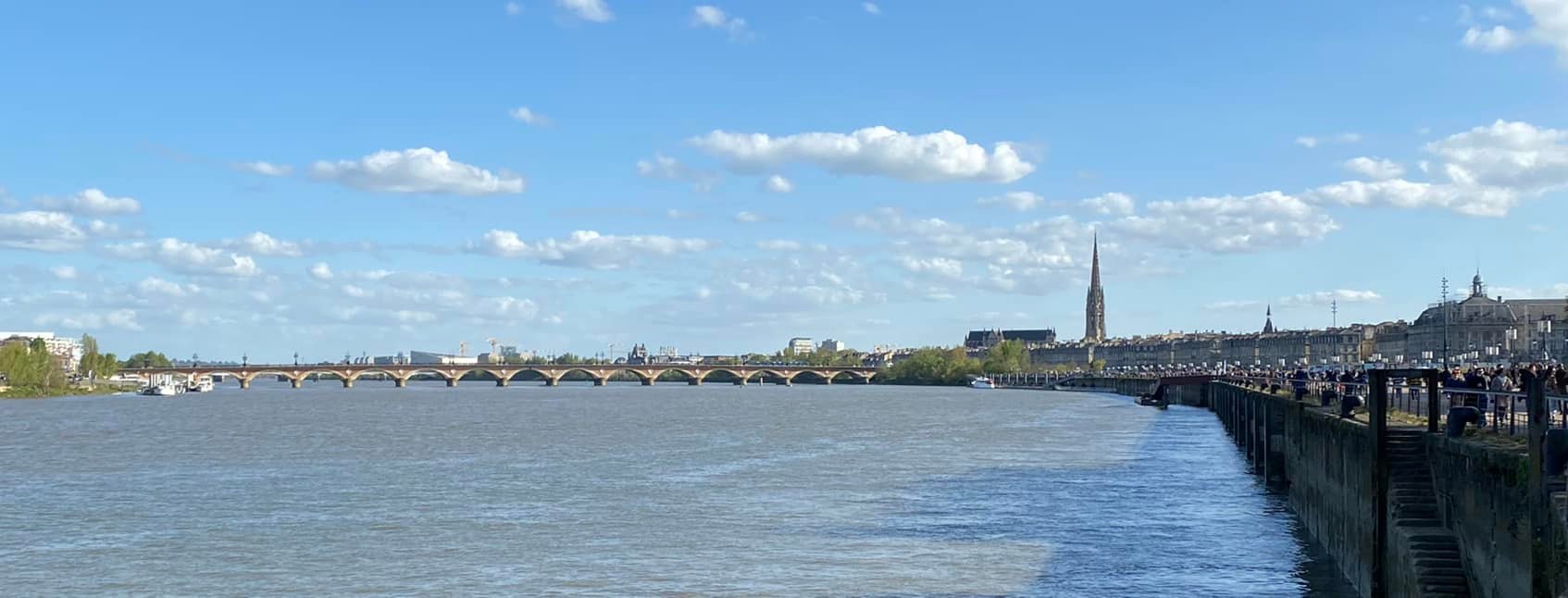
We drove south to Bordeaux for three days of better weather, more great food and wine country, including a day trip to Saint-Emilion. We had originally planned a day trip to Cap Ferret on the coast for oysters as well, but decided we needed a leisurely down day instead. Turns out the oysters in Bordeaux were perfectly excellent! While I did not have particularly high expectations for Bordeaux, we were pleasantly surprised by our lively neighborhood and excellent dining, drinking and people-watching scene. Highlights:
- Dinner at Blisss. A complete unique, Michelin-starred dining experience with NO menu, just a 10-small-course, 3 hour dining experience where the chef prepares what inspires him based on fresh products in season. With riddles to guess the magic ingredients in each dish. Very good, very fun, but location is not particularly convenient to the center. 30 minute bus ride to get there and $50 taxi to get home.
- Dinners at Brasserie Bordelaise (French regional, the penne with fois gras, morels and bacon was out of this world) and Le Petit Commerce (seafood) were also both excellent, especially the former. Better than Blisss for a big, sumptuous meal in the old city center.
- Day trip to St. Emilion was well worth it. Easy to reach by train or car. Guided tour of the Monolithic Church (in French) booked with the TI was very interesting. Largest church carved out of a single rock in Europe. Walk the stone streets of town from there up to the King’s Keep for great views. We only stopped at one winery and a wine shop; I definitely recommend more, as this is why one comes to St. Emilion.
- Late breakfast of oysters and chilled white wine at the Marché du Capucins (the “Belly of Bordeaux”) was a high point. The entire covered market is lively and full of great food. Combine with the outdoor market day and you’ve got a real winner.
- Stroll the riverfront promenade along the Quai St. Louis if the sun is shining. Good view of the bridges and good people watching.
- Our apartment location at Porte Caillou / Place du Palais was perfect. Porte Caillau is a beautiful landmark, easy to find, and good cafes and bars in the immediate vicinity.
Grosse Cloche, over the old juvenile dungeon 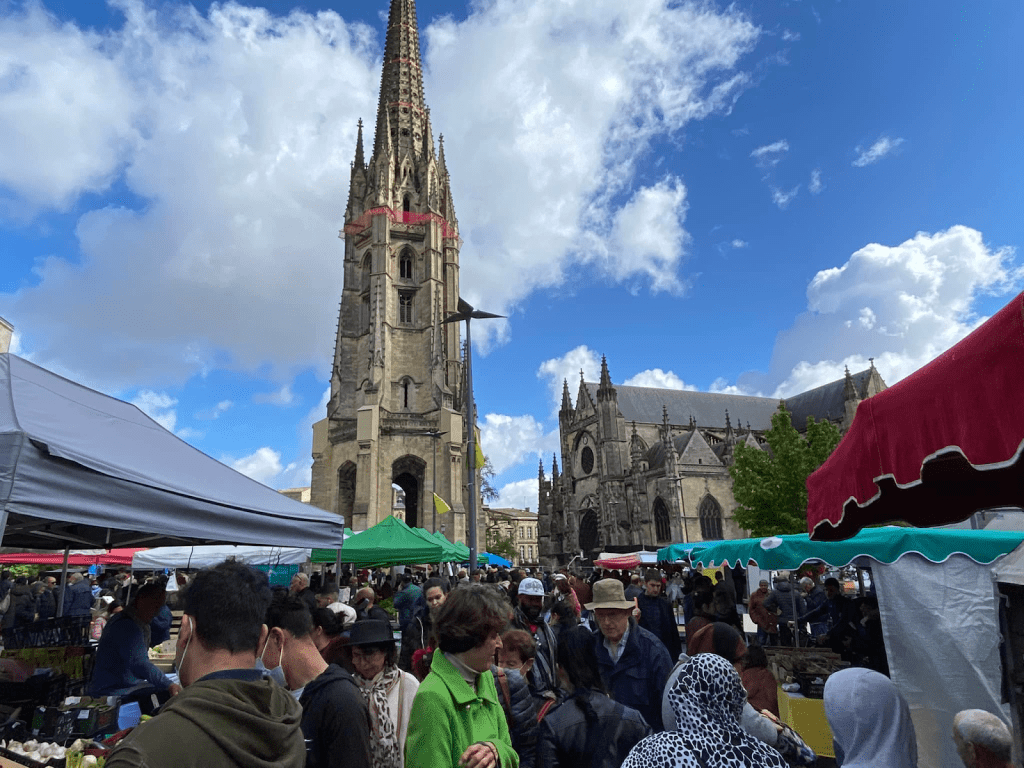
Bordeaux Market 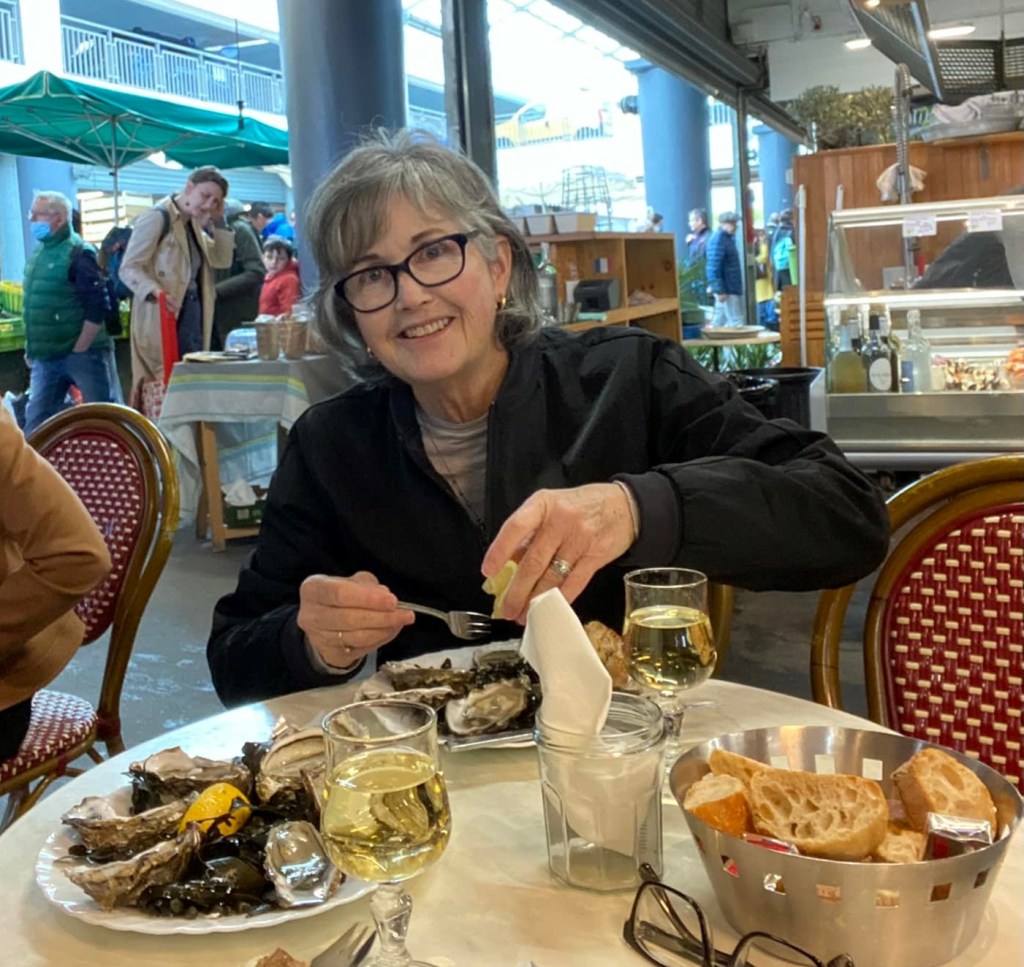
Oysters and wine for breakfast? Mais oui! 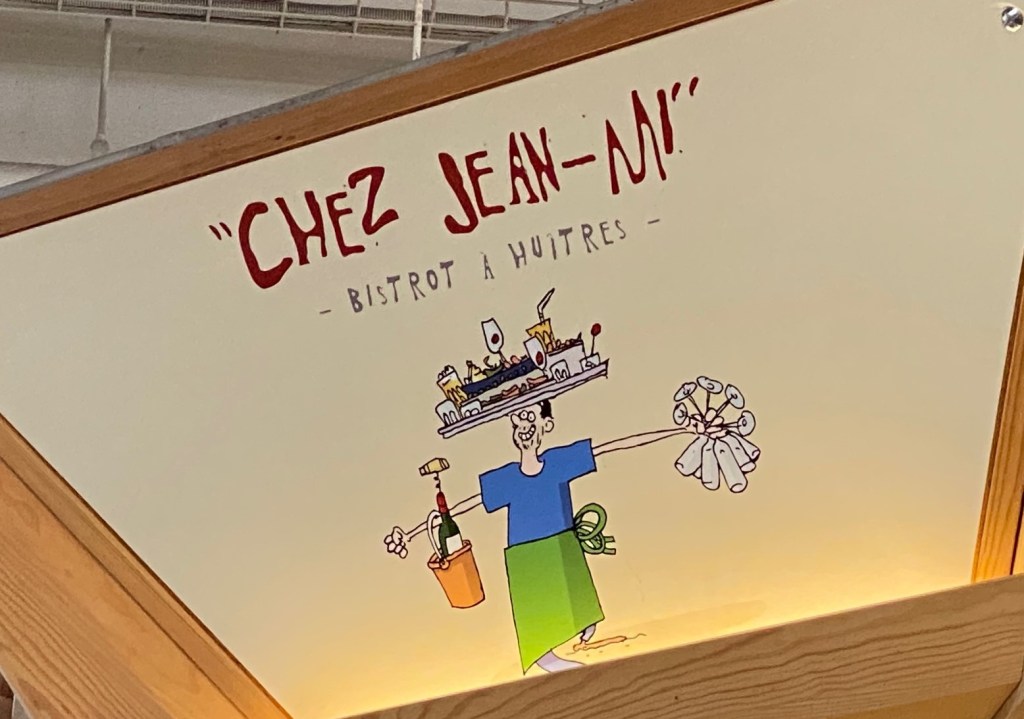
Hot spot in the Marché des Capucins 
Rue Ste Catherine 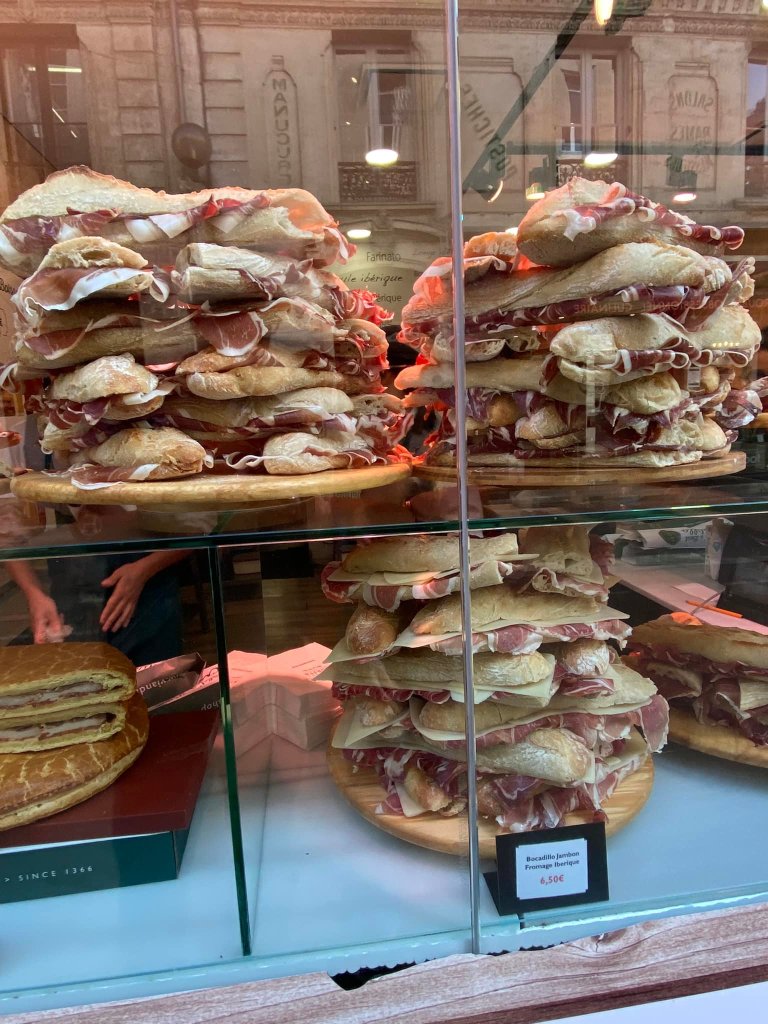
Panini shop 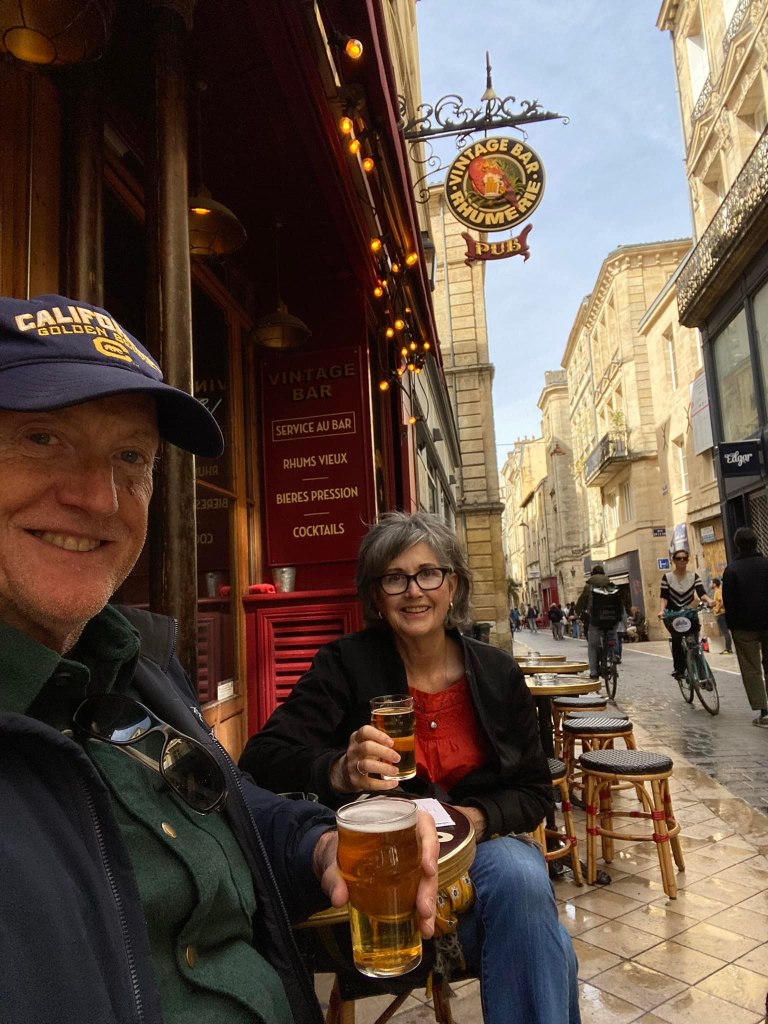
Beers for a change at Vintage Bar 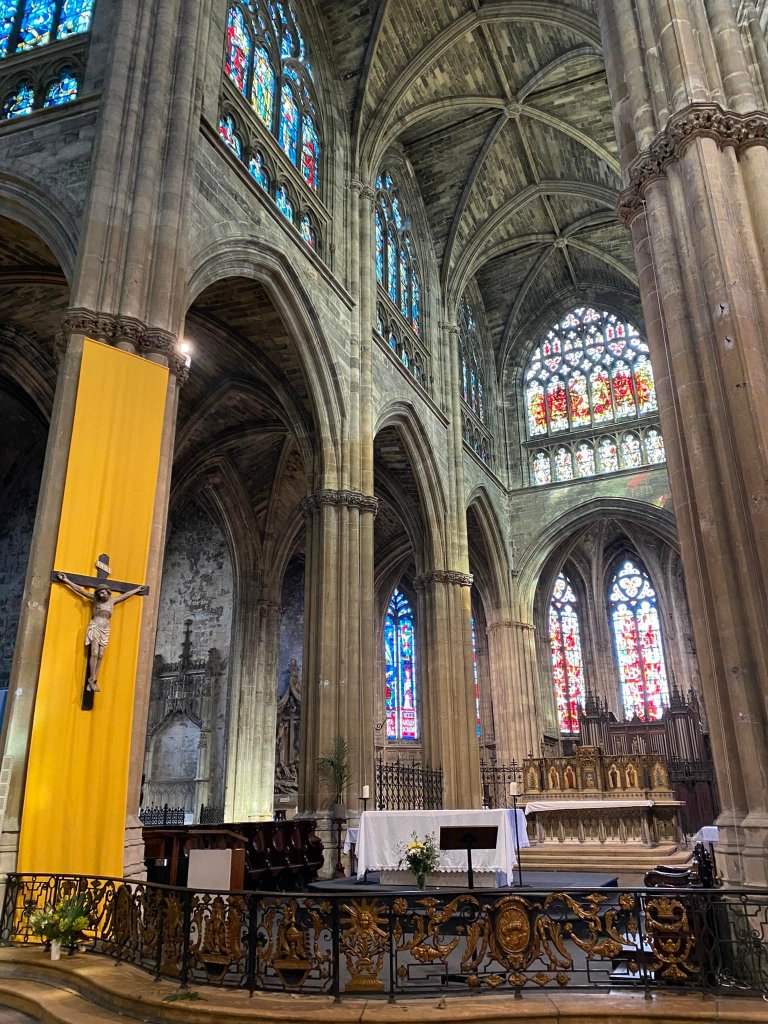
Basilisque Saint-Michel 
Brasserie Bordelaise 
Bordeaux’ outstanding reds 
Porte Caihlau at night 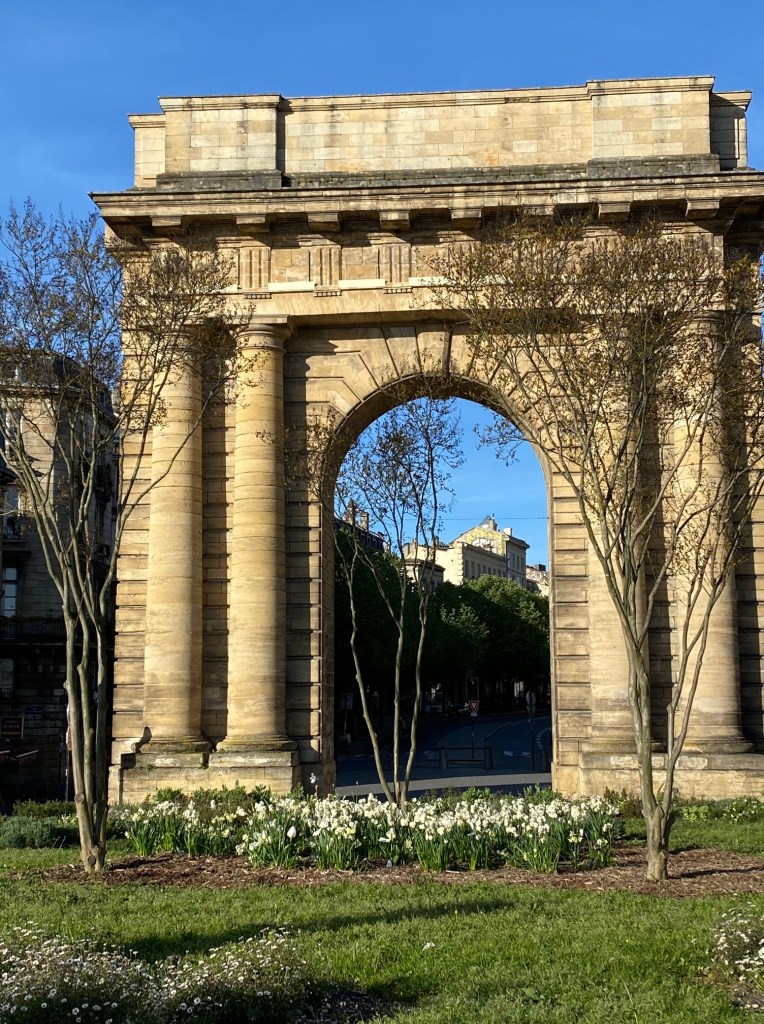
Porte de Bourgogne 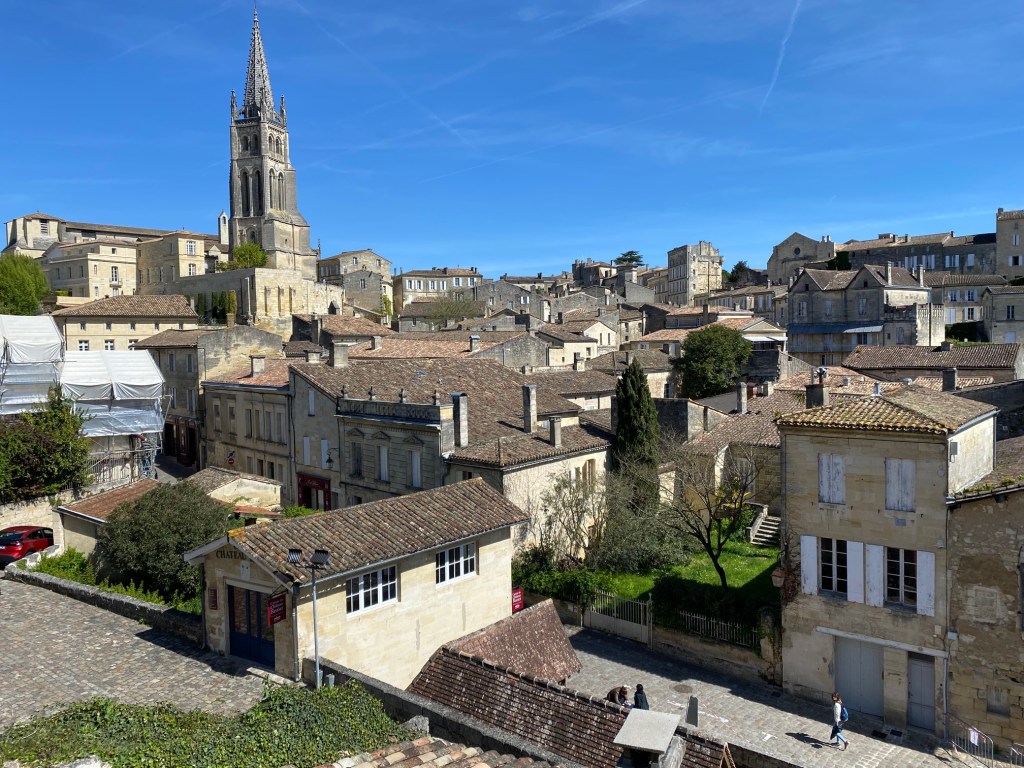
St. Emilion 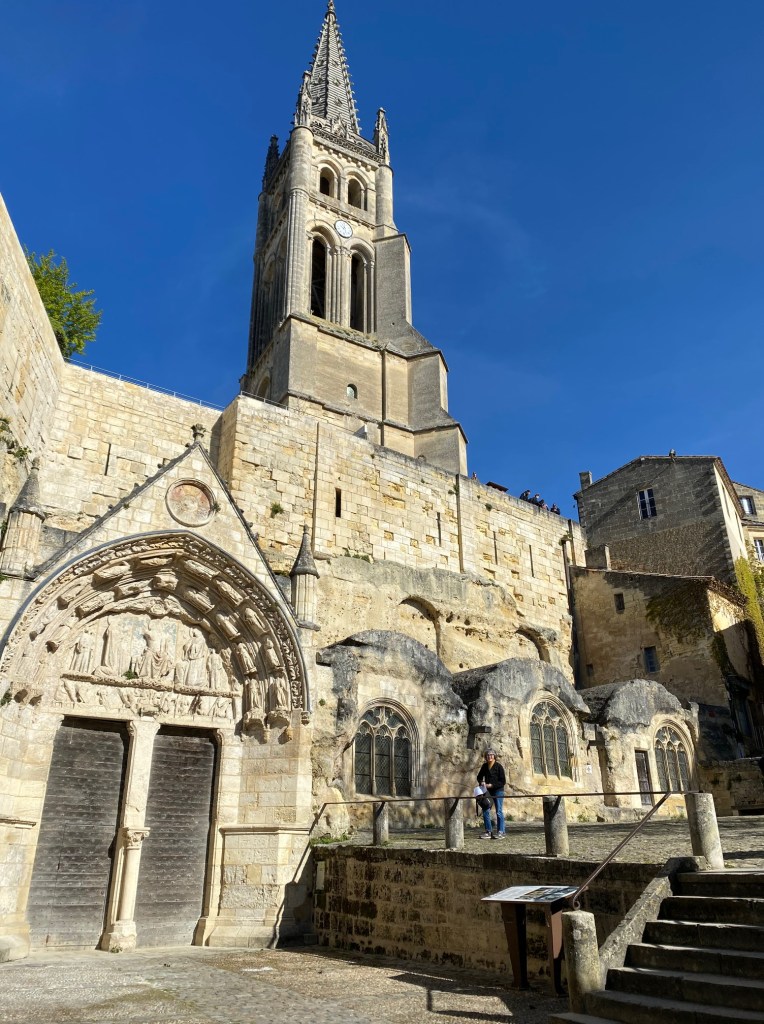
St. Emilion Monolithic Church 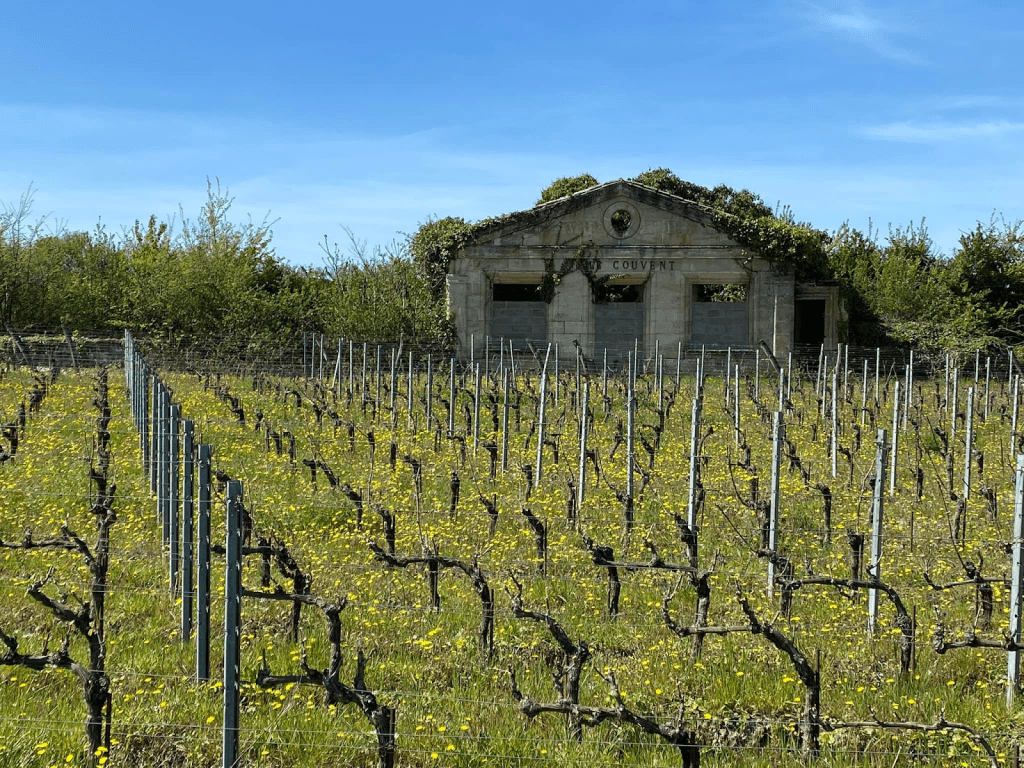
St. Emilion vineyard

| Day 18-20 | Perigord / Languedoc | Lodging details below |

| Duration | Destination | Where We Stayed |
|---|---|---|
| 2 days | Dordogne River / La Roque-Gageac | Manoir de la Malartrie |
| 1 day | Carcassonne | La Maison d’Alix |
La Roque-Gageac, Dordogne River
We left Bordeaux early for our 3-hour drive to the Perigord Noir in the Dordogne River Valley, famous for riverside castles, truffles and fois gras. The small villages along the river proved to be one of the unexpected highlights of our trip, and our base just outside La Roque-Gageac was exquisite. The drive there was beautiful, too, as we passed through one of the most famous regions in the world for prehistoric cave art. The main town in the region is Sarlat-la-Canéda, which made a very nice day trip to explore, especially on market day. In warm weather, kayaking the river from Betrac to Beynac is the ideal way to spend half a day. Highlights:
- Our base for two days was Manoir de la Malartrie and it was our favorite place on the entire trip. Just spectacular. Here’s my review on TripAdvisor. Easy walk into La Roque. Enjoy a bottle of local wine high on the garden terraces. Stay there, you will love it.
- Fois gras. OK, this is controversial to some and we can’t even get it at home, but this is ground zero and it is soooooo good. Unbelievably good. I ate it every chance I got, and je ne regrette rien. (Truffles were out of season, so I didn’t see them.)
- Explore the small villages of La Roque-Gageac, Beynac-et-Cezenac, and Domme. Le Belvédère is a nice lunch spot in Domme with a fabulous view overlooking the entire river valley.
- Chateau Beynac, a massive castle built high on the edge of the cliff overlooking the Dordogne River, was a very cool experience (audio guide very helpful). After defeating the French, Richard the Lionhearted lived here for 10 years.
- Dinner at La Belle Etoile in La Roque was outstanding, another Michelin star treat. La Petite Tonnelle in Beynac was also good, more of a local place for families and couples, with super friendly service and a dining room built into a rock cliff face.
- Driving the country roads linking Sarlat-la-Canéda and the Dordogne River towns. It’s just a beautiful drive and the loop only takes an hour.
- Given the chance, explore some of the prehistoric sites north of the river valley. Lascaux caves are most famous, but now you can only visit a replica. We hit Grotte Font-de-Gaume, with the best, multi-color cave paintings (25,000 years old), including bison, horses an reindeer, still open to the public. Admission is strictly limited, so you must get there very early during high season. Remarkably, we got in late with a near-private tour because COVID continues to keep travelers away. Also visited Le Roque-St-Christophe, a huge troglodyte cave “city” dating back to Neanderthal man (50,000 years). Both unique-in-the-world stops and well worth it.
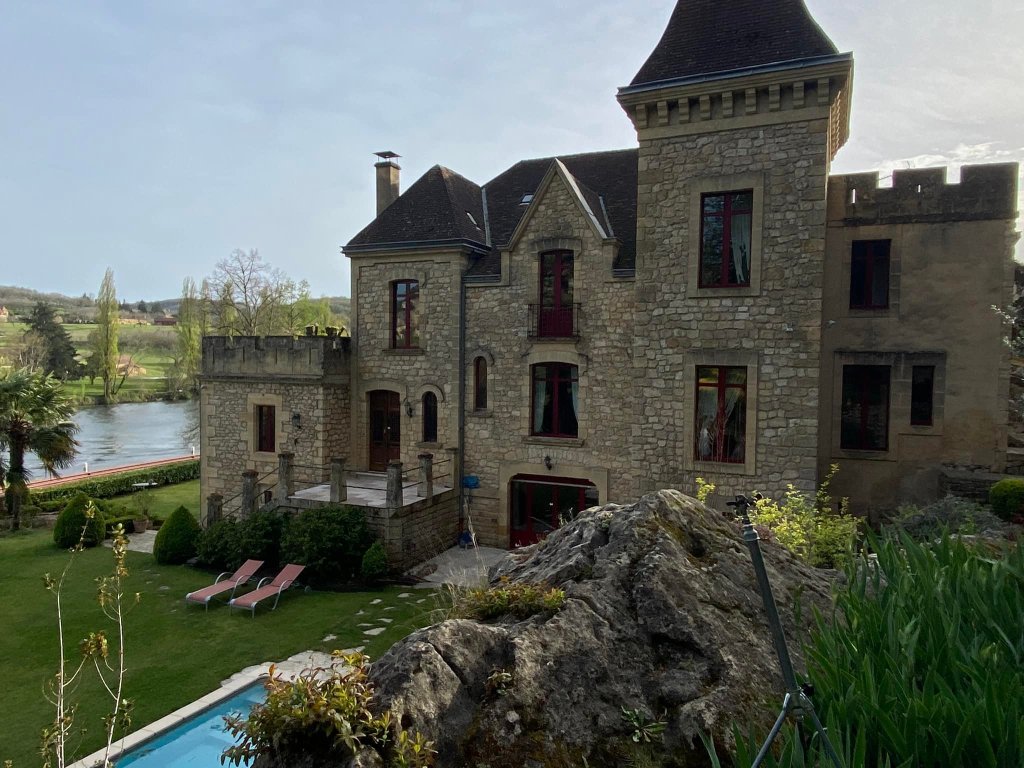
Marnoir de la Malartrie One of the terraces above the Manoir 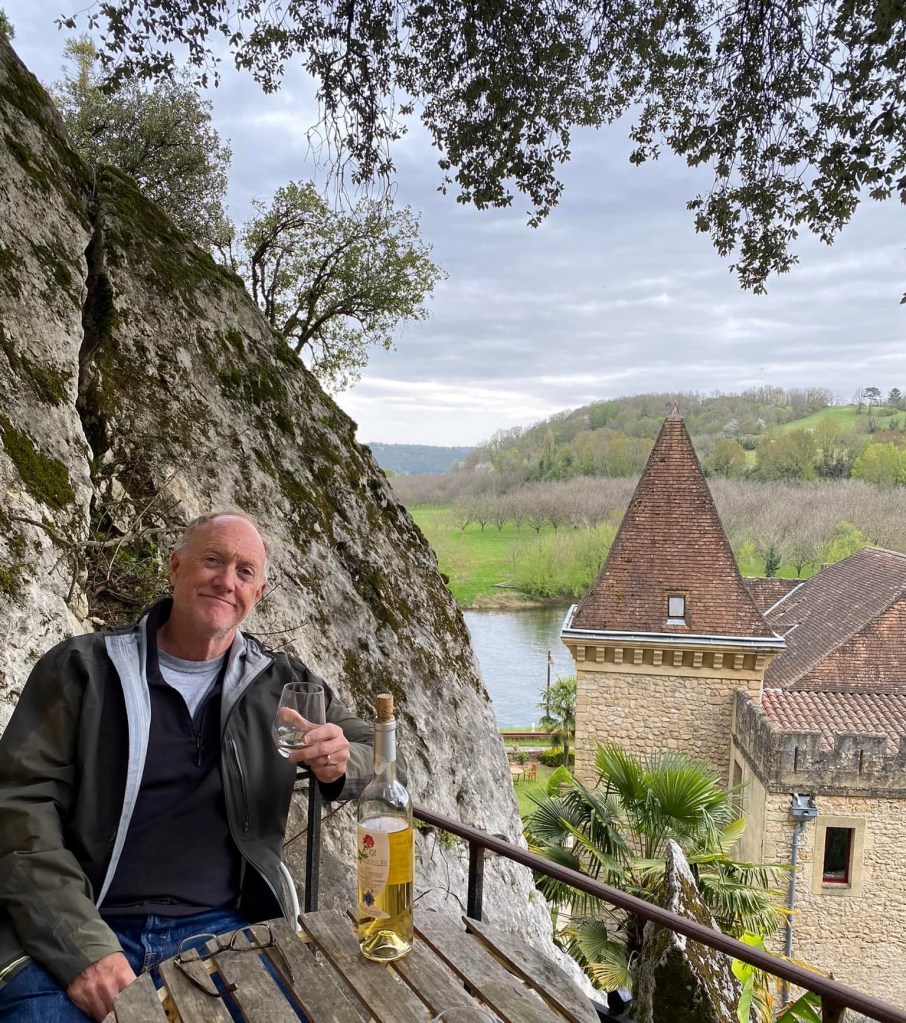
Not a bad spot for a nice bottle 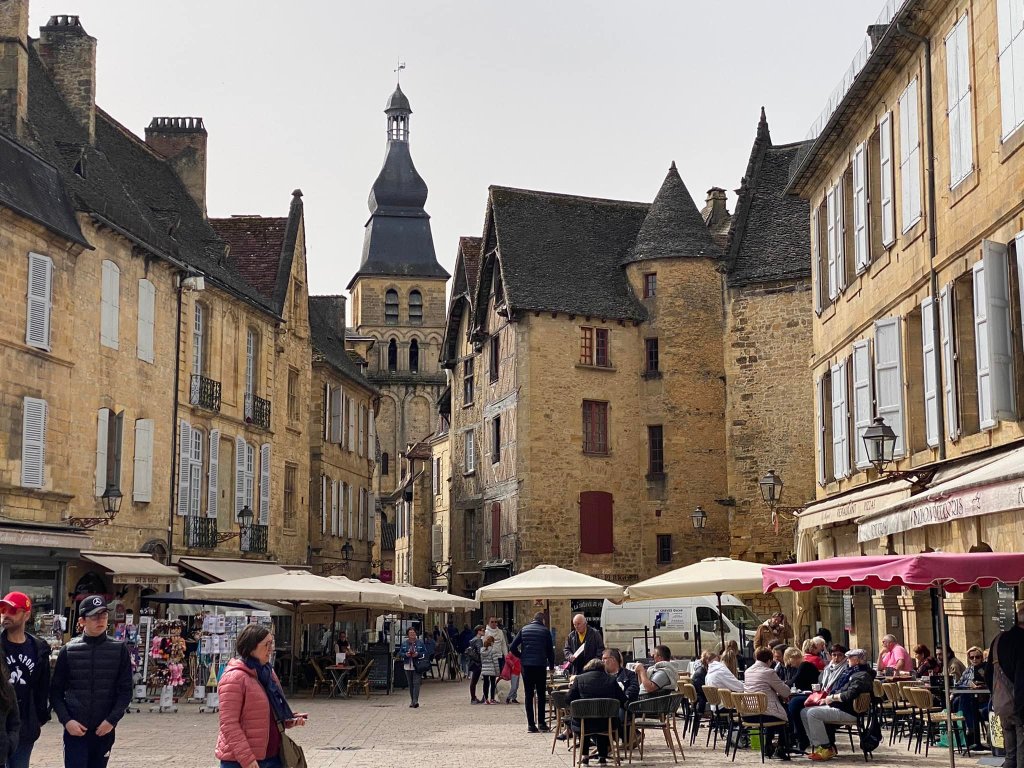
Sarlat-la-Canéda Wednesday is Market Day in Sarlat Castle Beynace (just the top) 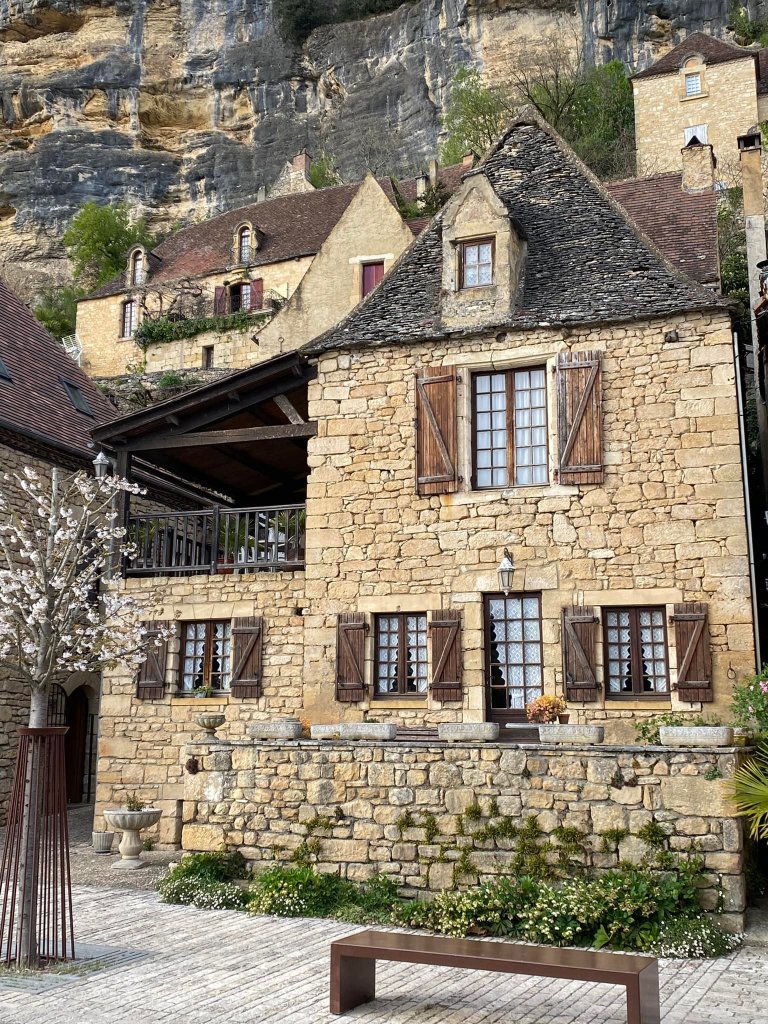
Typical La Roque house 
La Roque at night 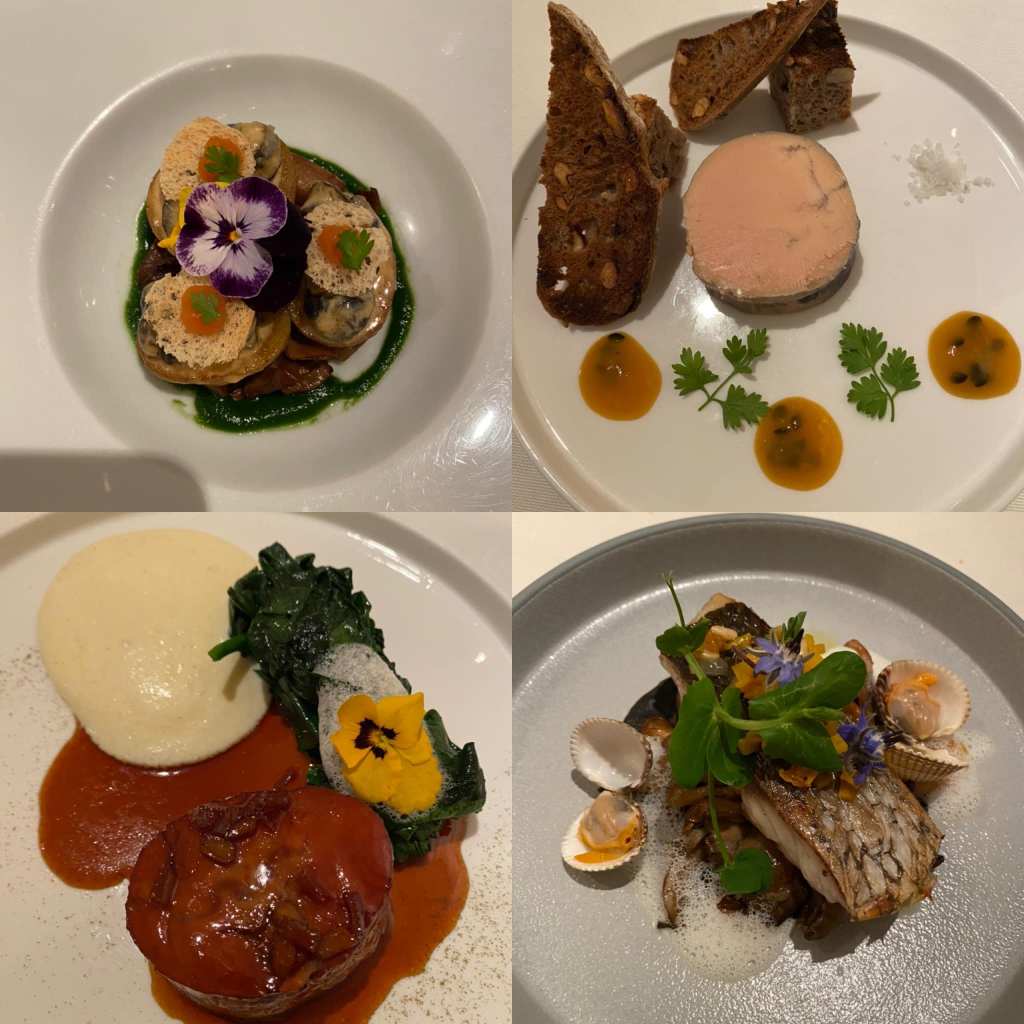
5-star dining at La Belle Etoile 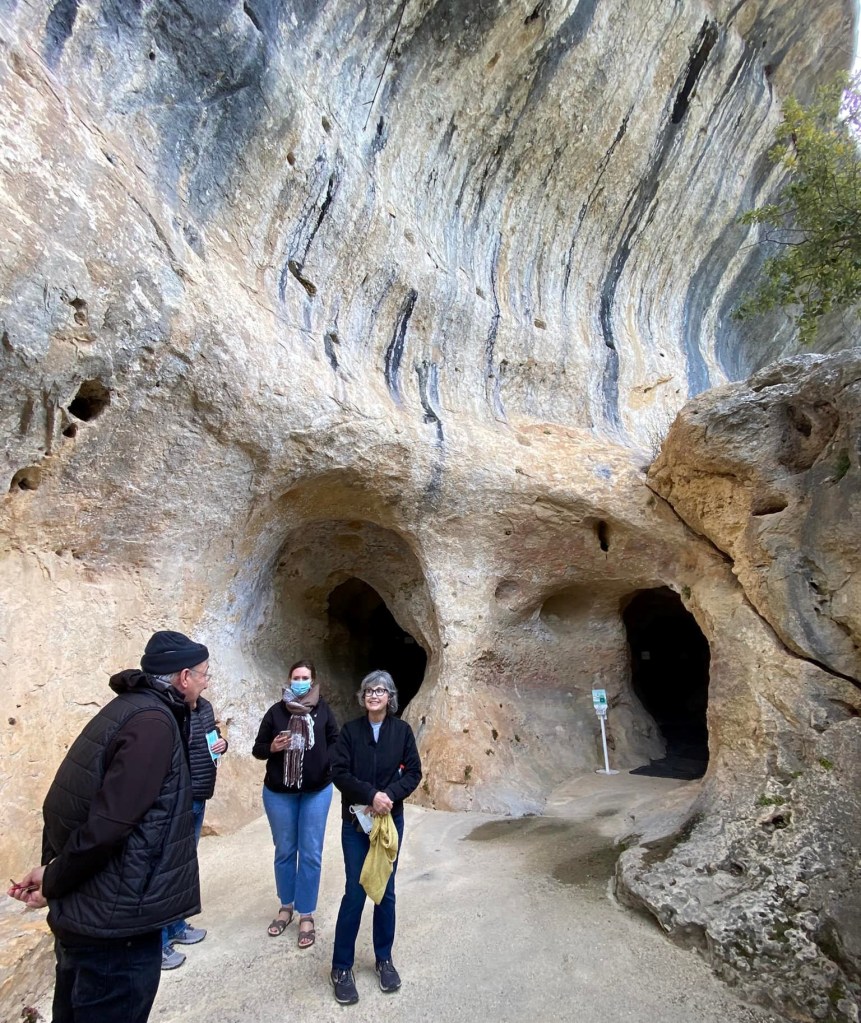
Entrance to Grotte Font de Gaume 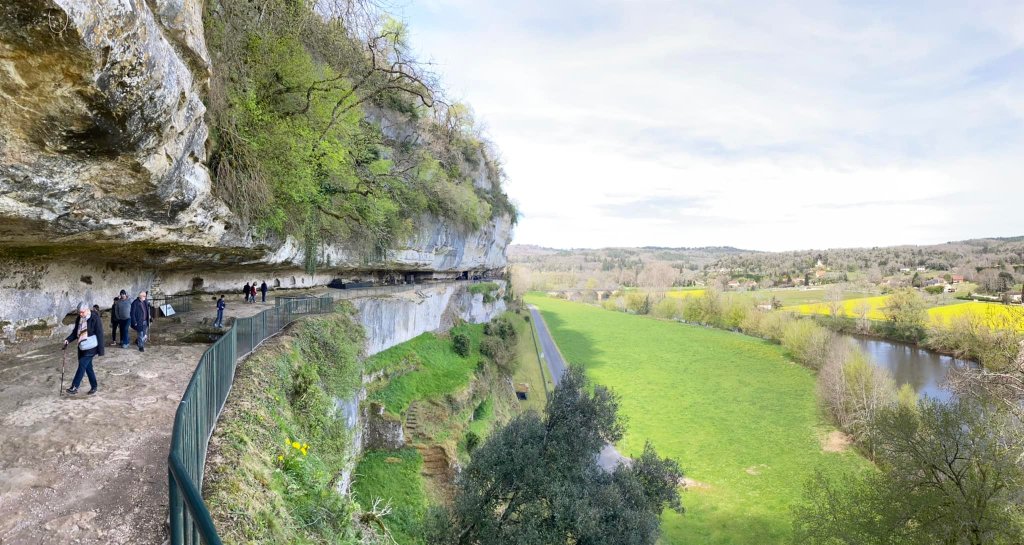
Le-Roque-St-Christophe


Carcassonne

Another 3-hour drive south to Carcassonne, 13th century medieval citadel, a good halfway stop en route to Provence. We went principally for its famous Cassoulet at the recommendation of a friend who lives in the south of France. The walled city itself — a UNECSCO World Heritage site — has a fun history and was impressive, if not a little packed with tourists and souvenir shops. If you have time, it’s worth a day. If we had to cut anything out, it would be this. Highlights:
- The library bar in the Hôtel de La Cité was very cool, if not pricey. Nice change of pace.
- The gothic church, Basilisque Saint Nazaire, is very cool, with beautiful 13th century stained glass and a stone carved Pieta.
- Dinner at Le Chaudron, according to some the best cassoulet in town. It was very good.
- The apartment bills itself as “luxury”, and that’s a serious overstatement, but it was perfectly located, inexpensive, and came with free parking close to the city walls. So that’s something.
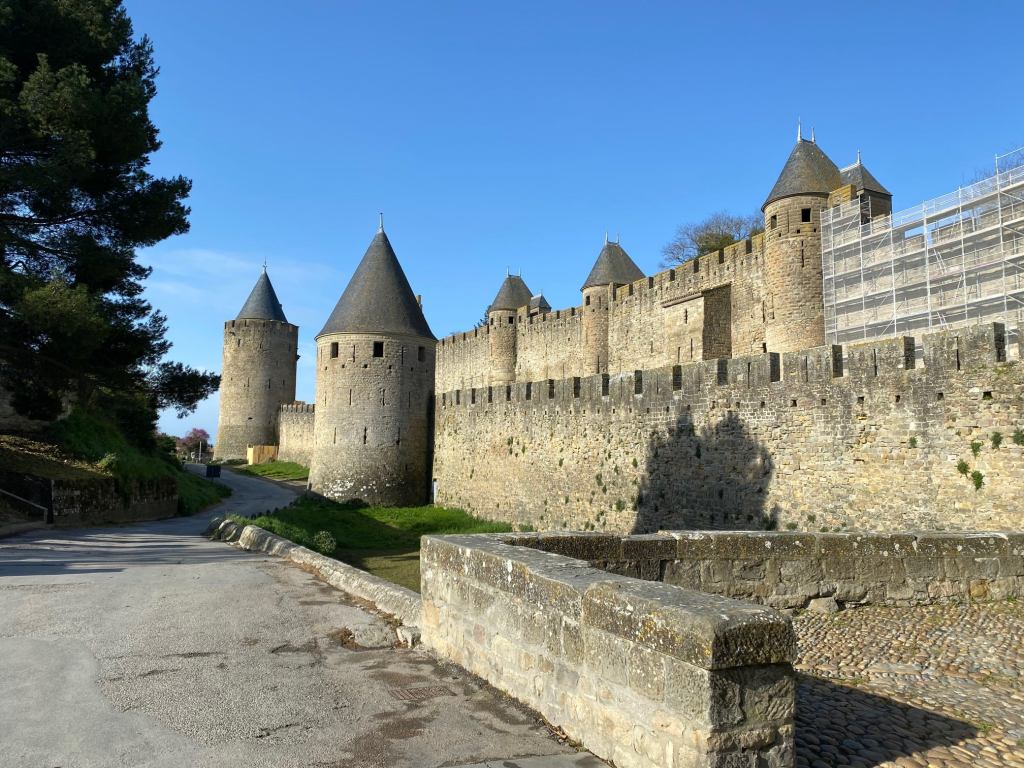
Carcassonne city walls Chateau Comtal inside the walled city Saint Nazaire altar 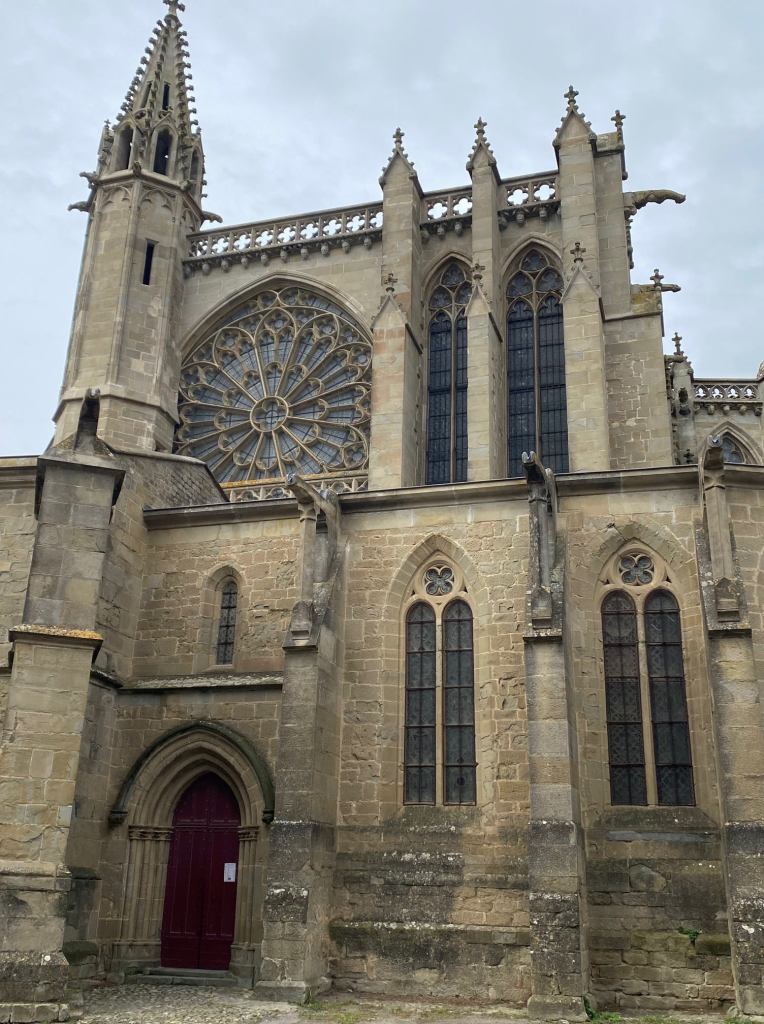
Basilisque Saint Nazaire Le Chaudron 
Mmmm… cassoulet! 
Hotel de la Cite Library Bar


| Day 21-27 | Provence – Luberon & Côtes du Rhône | See lodging details below |

Finally off to Provence! For various reasons, we spent two nights each in St. Remy-de-Provence, Menerbes, and Aix-en-Provence, three very different towns, working our way from west (Carcassonne) to east (toward Nice airport), with a day in Gigondas along the way. We visited the Pont du Gard, a must-see, on the drive to St. Remy. Gigondas is north of the Luberon in the Côtes du Rhône wine country, and we planned to spend our anniversary there with a full day guided wine tour. It was a fantastic experience and well worth the diversion.
This itinerary, while busy, actually worked out very well with this being our first visit to Provence. If I could change anything in hindsight, it would have been to skip Aix-en-Provence and spend two more days in the Luberon, possibly Lourmarin (which we loved during our lunch stop on the way to Aix) or more time in any of the first three stops. Menerbes, by the way, is the central hilltop village from Peter Mayle’s book “A Year in Provence” and movie “A Good Year”.
When we return, it will be at least a week in one spot in the Luberon, probably two, making day trips from a single base residence. Among those side trips we will be sure to hit some of the places we wanted to see but just didn’t have time, notably Avignon, Arles, and Uzes. Here’s a more detailed, chronological breakdown of each place we stayed and visited:
| Duration | Where We Stayed | Lodging | Day Trips To… |
|---|---|---|---|
| 2 days | St. Remy-de-Provence | Hotel du Soleil & Spa | Les Baux, Bonnieux, Roussilon |
| 1 day | Gigondas | Hotel Les Florets | Côtes du Rhône and Châteauneuf-du-Pape |
| 2 days | Menerbes | A L’Ombre de la Citadel | |
| 2 days | Aix-en-Provence | Hotel Le Pigonnet | Lourmarin |
Provence Highlights
- En route to St. Remy, we stopped at Pont du Gard, one of the world’s largest Roman aqueducts. Built in approximately 50 AD, the main arch is the largest surviving Roman arch in the world and the bridge is the second tallest Roman structure anywhere, just 6 feet shorter than the Colosseum. No mortar used in the construction at all! It was truly amazing and the riverbank below made a great picnic lunch spot.
- Dinner at Les Cocottes in Saint-Remy was a lovely find and our best dinner of our two nights here. Great food, wine and service, and a wonderful extended chat with a German couple at the table next to ours who had been coming there for years. Highly recommend.
- Les Baux de Provence: Ruined 10th century, hilltop castle/fortress, a short, pretty drive from St. Remy. You can climb the highest towers for incredible views, just be careful!
- A short walk below the castle at Les Baux, deep in an old stone quarry in the mountain, is an amazing art installation called Les Carrières de Lumières. Huge projections of multi-layer images, some in motion projecting remarkable depth, covered every surface. Accompanied by classical music, the show on the history of Venice, literally immersed in the dynamic art, was mind-blowing. One of the coolest things I’ve ever seen. We will hit this again for their latest installation when we return.
- Our villa in Menerbes was the best Airbnb I’ve ever seen. Perched high on a bluff overlooking the Luberon valley, huge, beautifully appointed, built into a rock cliff face, hot tub in a private courtyard with high rock walls, and a short walk to the cafes in Menerbes. Short drive to all the other Luberon towns you’d want to see, including Bonnieux (nice lunch, beautiful town), Gordes (post-card view) and Roussillon.
- The Ochre Cliffs trail walk in Roussillon. The town itself was very small, perched on a hill, but made a nice café stop after our hike.
- Lunch at Le Comptoir in Lourmarin was a favorite stop, mostly because a) Peter Mayle raved about the carpaccio lunch in his book “My 25 Years in Provence” (he was right, it was great) and our chance meeting with an American expat who’d been living in Provence for the past 10 years with his artist wife who owns a gallery in town.
- Our hotel in Aix, Le Pigonnet, was a lavish luxury to finish our trip. Not as nice as Manoir de la Malartie in the Perigord (and 3x the price), but it was still very plush, beautiful gardens, a spa/hamman (that I used quite happily), and an excellent restaurant.
- The Cathedrale Sainte-Savoire in Aix was very impressive, and unique inside. Surrounding the large, full-immersion baptismal font are huge paintings depicting each of the seven sacraments.
- While there are hundreds of restaurants, cafes and bars in Aix’s pedestrian-friendly city center to choose from, we enjoyed excellent casual dining at Di Micheli Trattoria (pizza) and Le Forum (pasta, burgers, etc.).

Pont-du-Gard 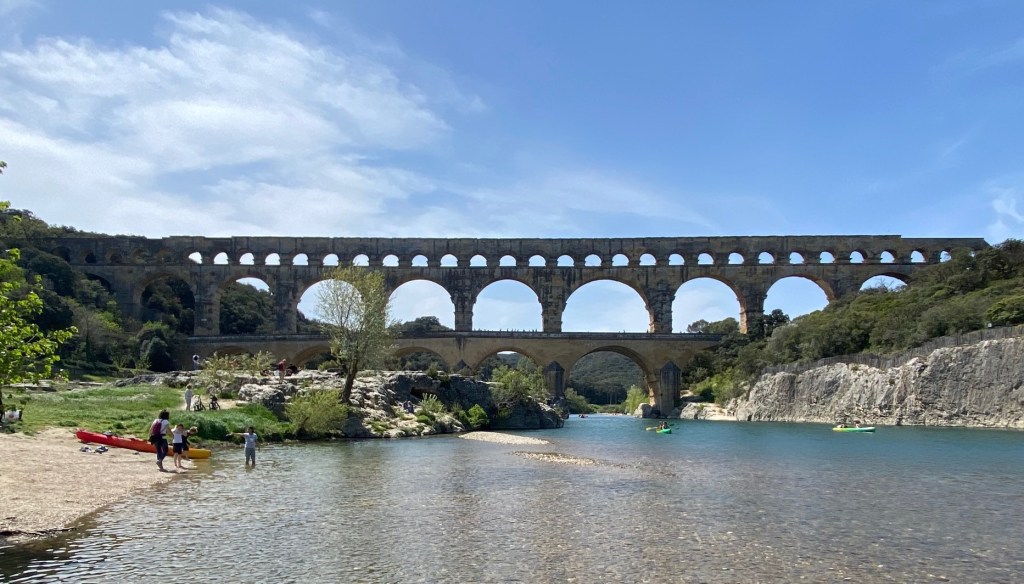
Pont-du-Gard over the River Gardon 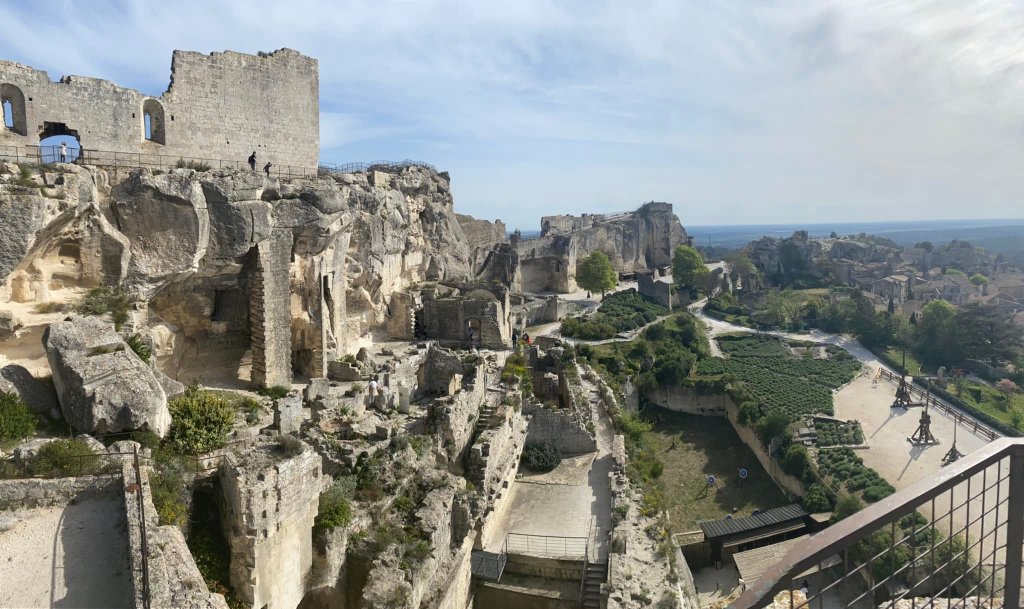
Les Baux-en-Provence 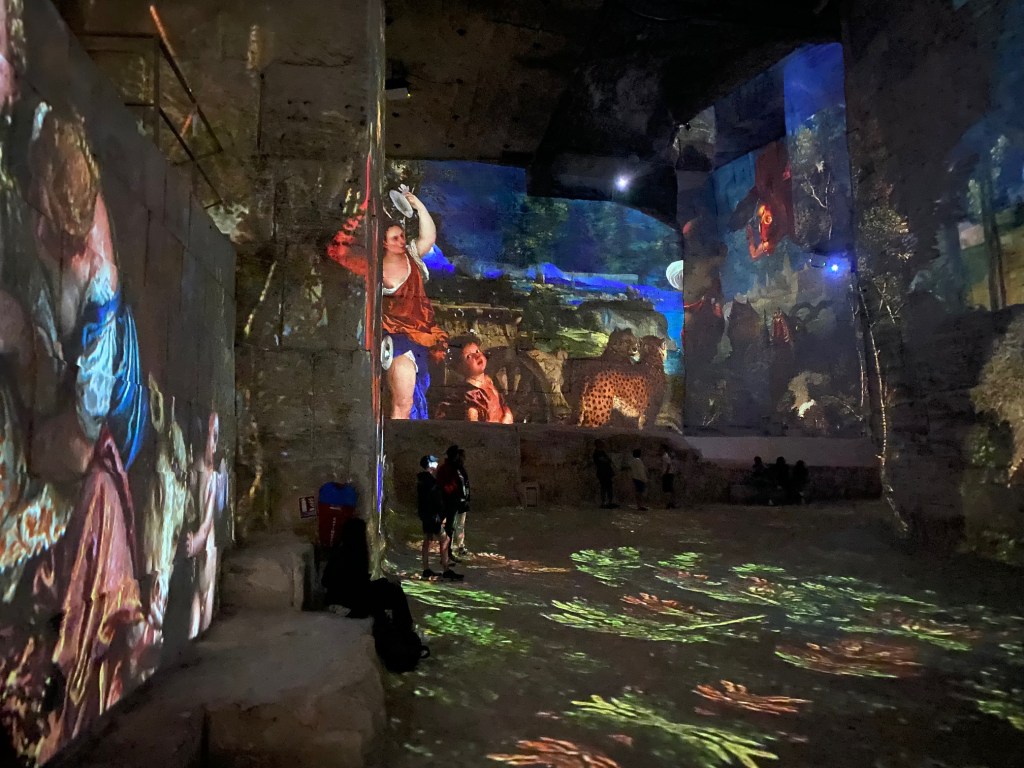
Carrières de Lumières 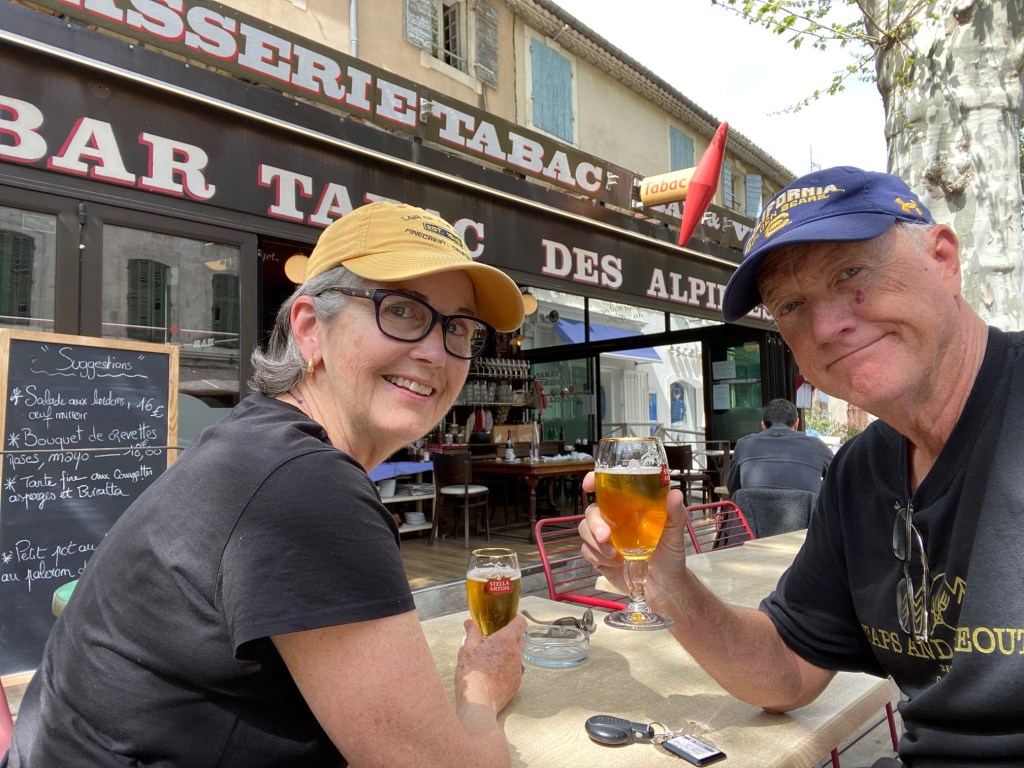
Bar Tabac in St. Remy – Michelle’s favorite stop 
St. Remy at night 
Hilltop village of Gordes 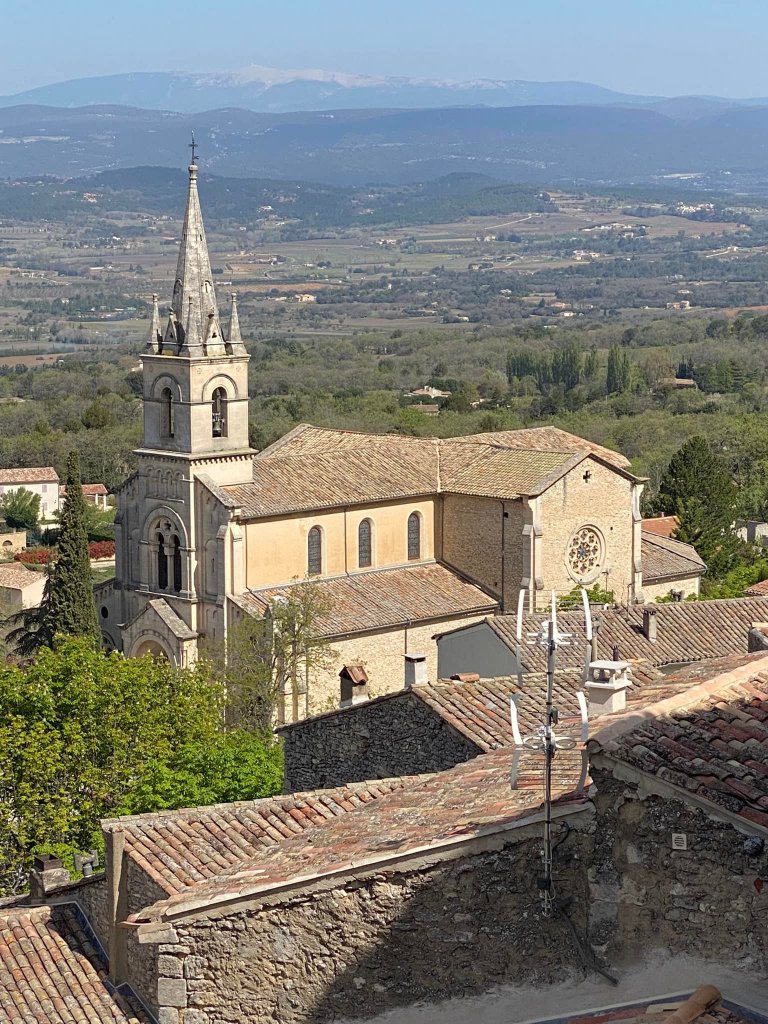
Bonnieux overlooking the Luberon 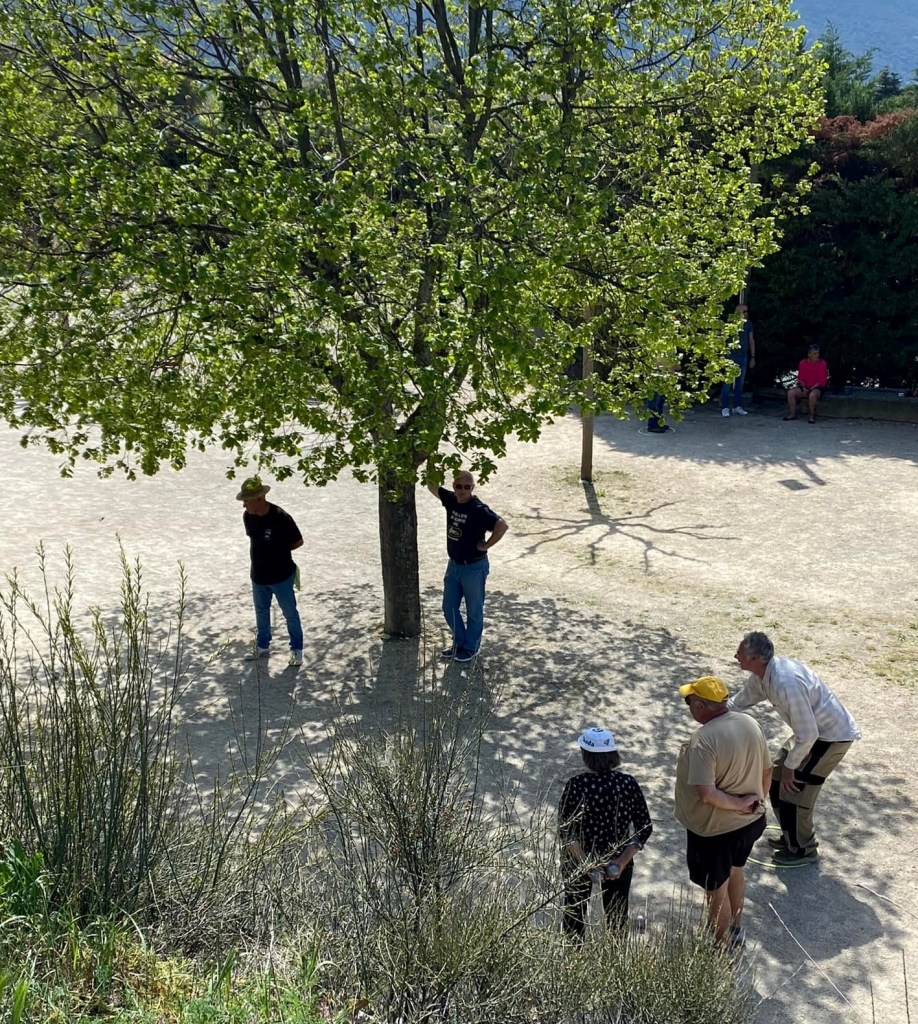
Locals playing Petanque, the national sport 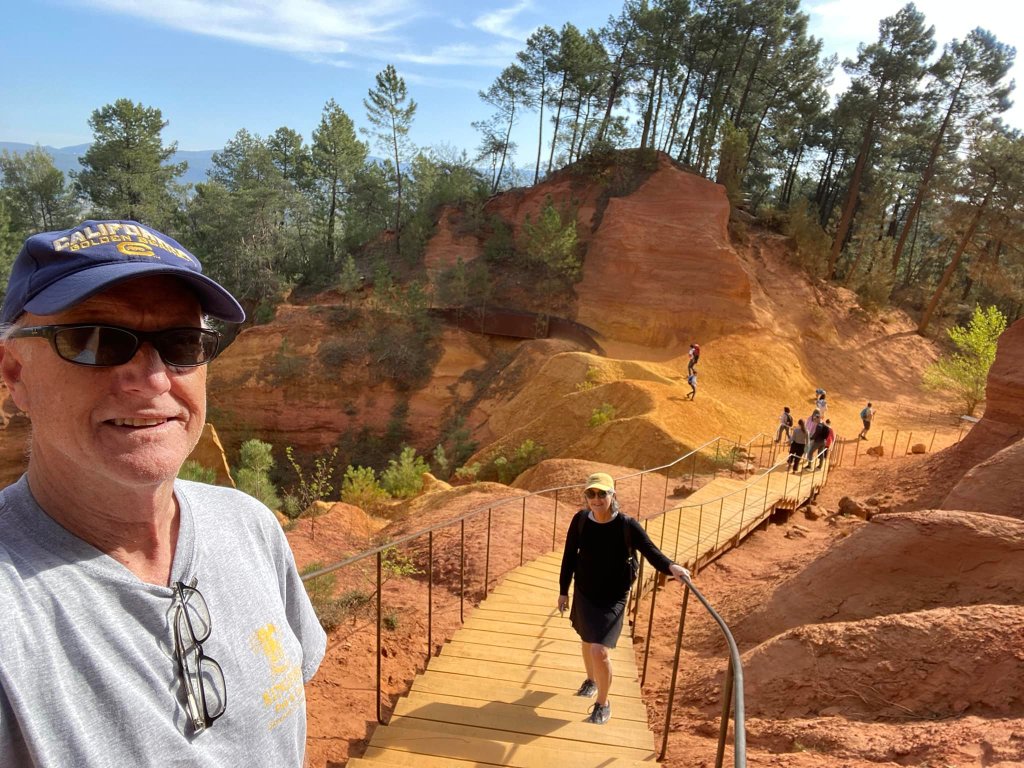
Roussillon’s Ochre Cliffs Trail 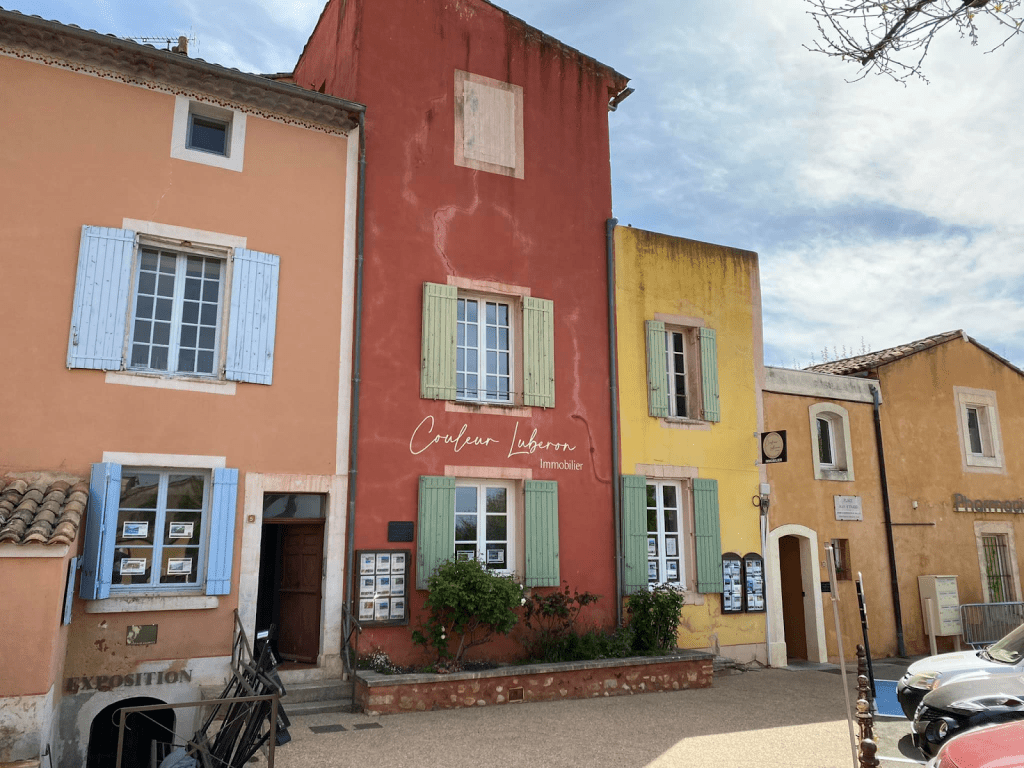
Colors of Roussillon 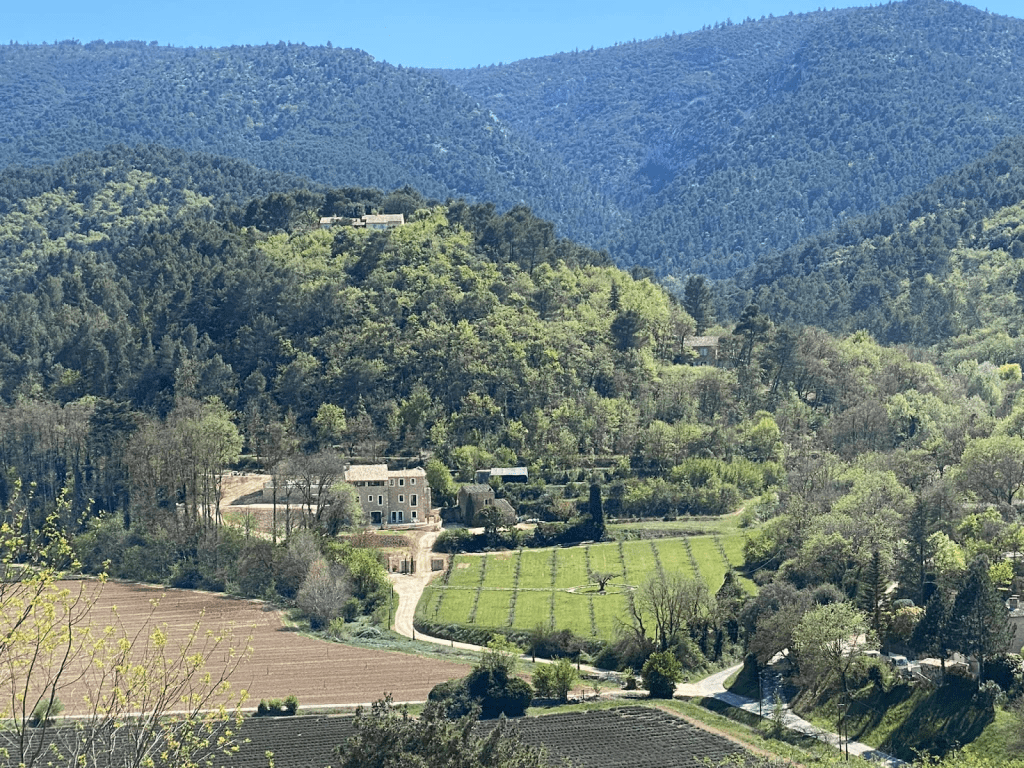
Menerbes vista 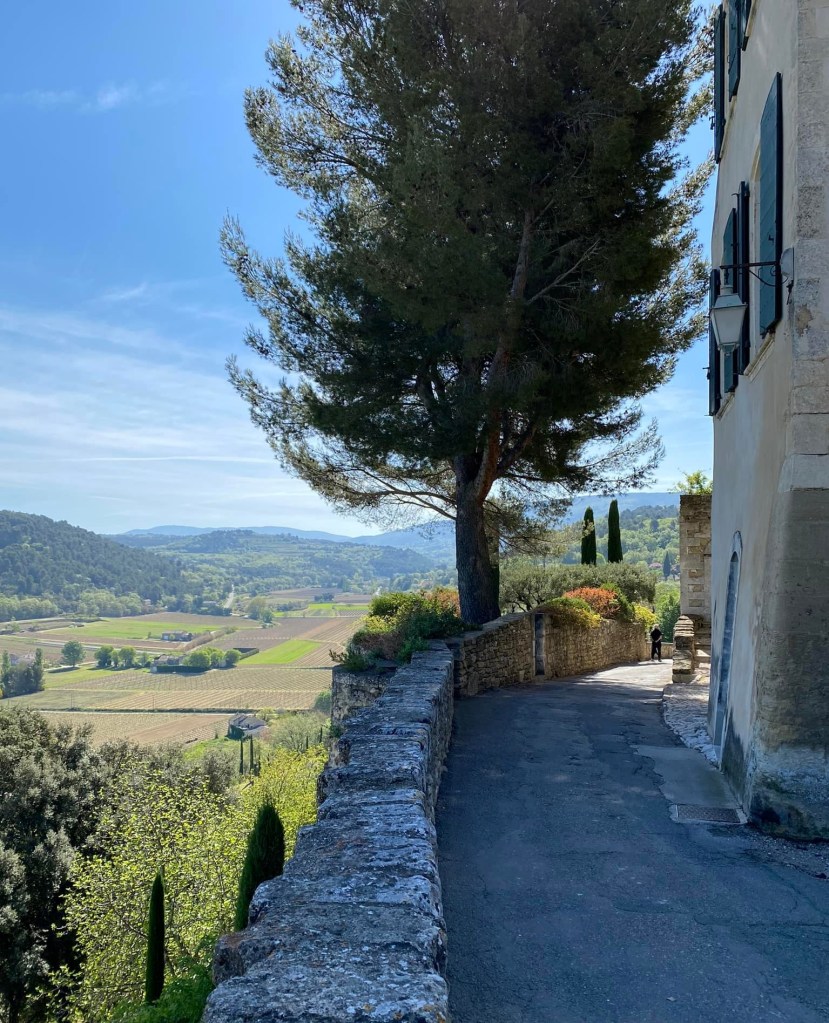
Our street on clifftop Menerbes 
When in France… 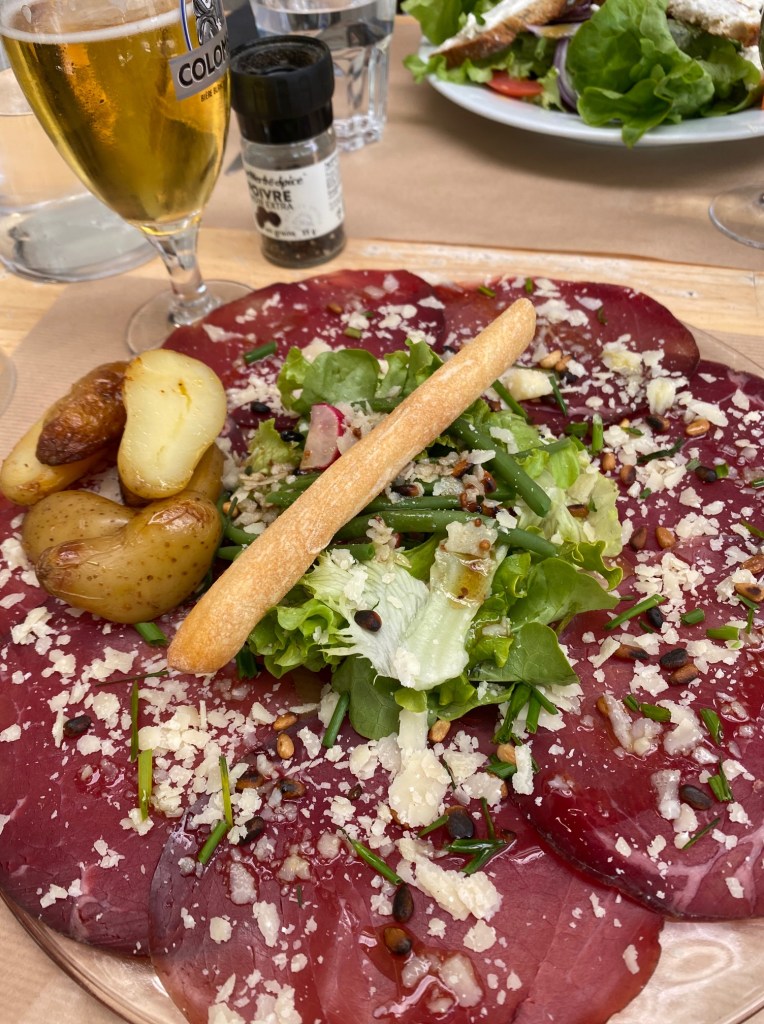
Carpaccio at Lourmarin’s Le Comptoir 
Lourmarin’s pedestrian center
Côtes du Rhône Highlights
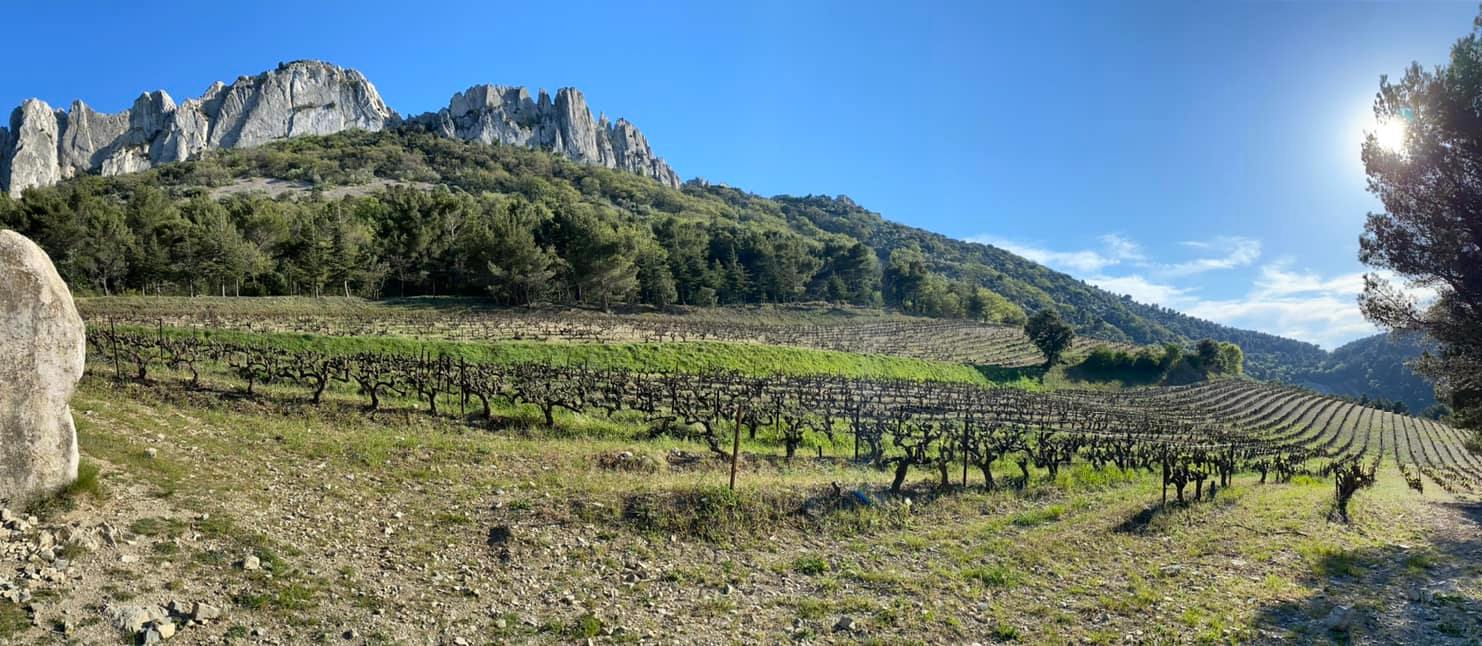
- Our guided/chauffeured Côtes du Rhône and Châteauneuf-du-Pape wine tour with Olivier Hickman’s Wine Uncovered was a terrific introduction to French wine, with an emphasis on terroir and the differences between the local subregions. Generous tastings of 4-5 wines at each stop. Hickman was extremely knowledgeable and very funny. A great day.
- Hotel Les Florets, high in the hills above Gigondas, was a fantastic spot to spend a night and enjoy our anniversary dinner. The chef surprised us with a special candlelit dessert and lovely Beaumes-de-Venise Muscat to celebrate. Here is my TripAdvisor review. The easy hike from the hotel up into the Dontelles was spectacular as well.
- Rick Steves’ Côtes du Rhône wine country drive. We did the loop from Gigondas > Vaison-la-Romain > Crestet > Suzette > Beaumes-de-Venise, with a stop for Easter Mass in the little town of Rasteau (100% locals, all French), before driving back to the Luberon. A beautiful one-hour drive and the mountain pass by Suzette was particularly stunning. Miles of vineyards and rugged mountains.

With Olivier Hickman at Châteauneuf-du-Pape 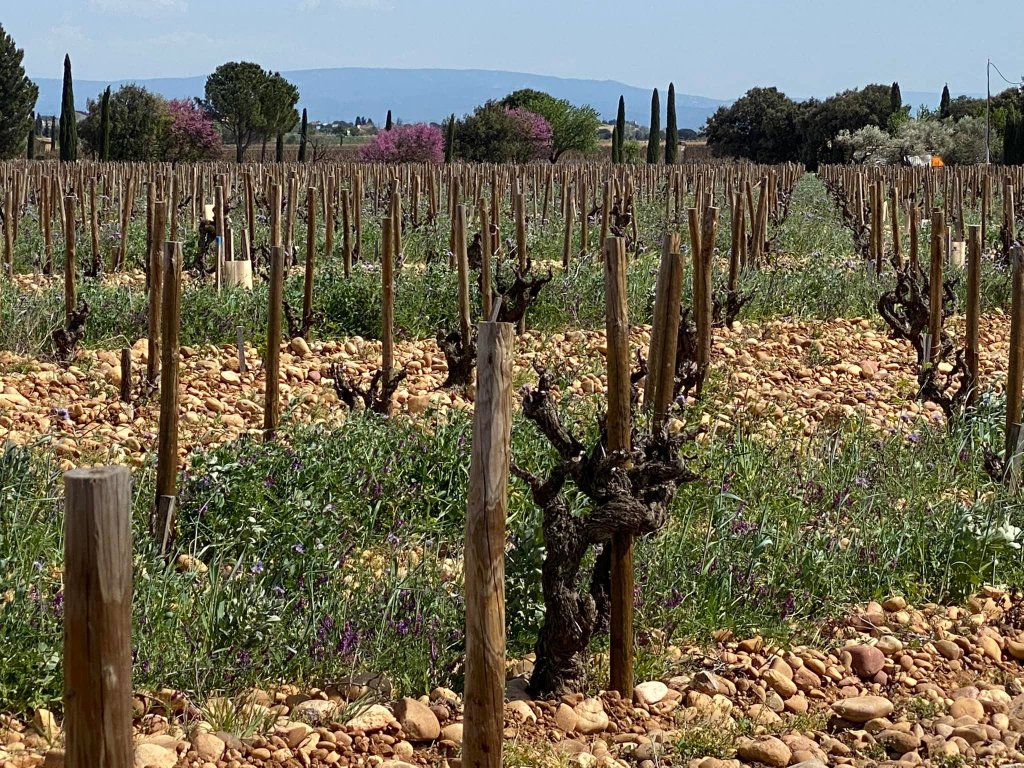
Chateauneuf de Pape’s rocky terroir 
Dontelles and Gigondas vines 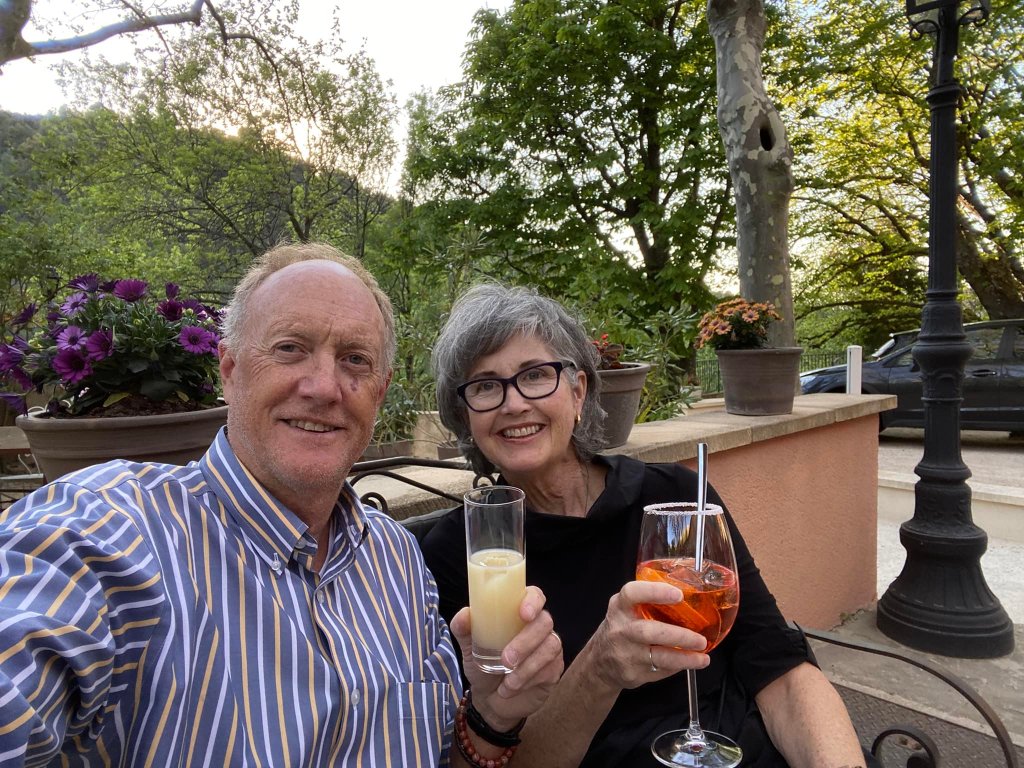
Aperitifs at Hotel Les Florets 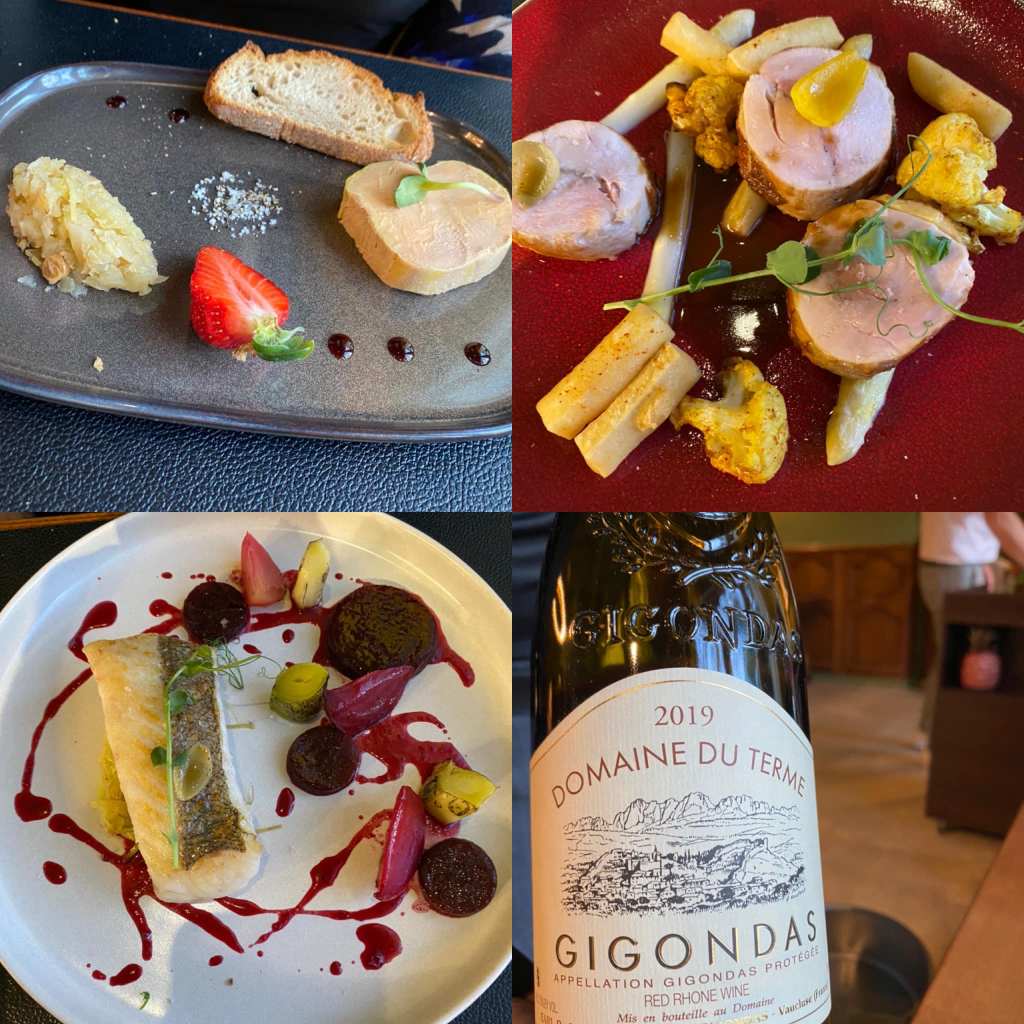
Les Florets dinner as incredible 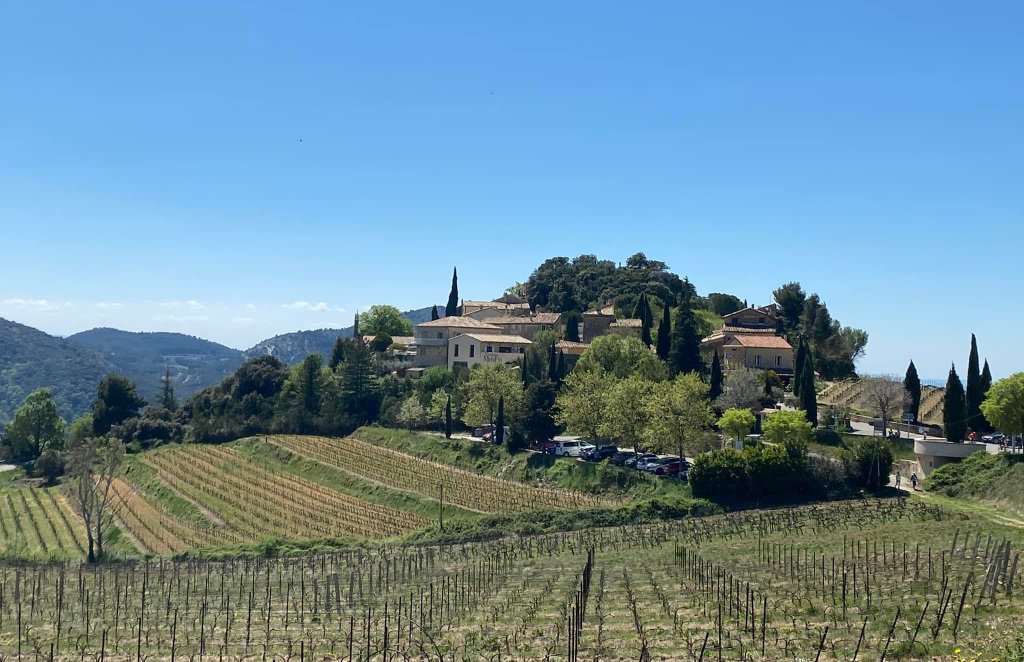
Village of Suzette on Côtes du Rhône wine road
Thus ended our incredible four week journey exploring the various regions of France. With another week or two, we would have loved to also visited Burgundy — especially the town of Beaune, which my sisters raved about — and the mountain region of Chamonix and Mount Blanc. Lastly, while the famous Côte d’Azur (French Riviera) has never been a big draw for me, especially the glitzy tourist meccas like Nice, Cannes and St. Tropez, I would like to spend a few days in the smaller seaside towns of Antibes and Villefranche-sur-Mer, which was our originally planned finale to this trip before we re-routed to…
Swiss Surprise Ending
Our original plan to spend our last two days/nights in Villefranche-sur-Mer on the Cote d’Azur before flying home from Nice was altered by daughter Emily’s and fiancé Alex’s surprise wedding announcement. Instead, we flew from Nice to Zurich, where we met up with the entire family, before heading on to Heiden for the wedding the following day, then took the train to Ticino for three days on Lake Maggiore with the girls and sons-in-law before flying home from Zurich. If France was a seven course meal, this was dessert — the the centerpiece being Emily and Alex’s wedding cake, of course!
| Dates | Destination | Where We Stayed |
|---|---|---|
| Day 28 | Zurich Old Town | Hotel Rossli |
| Days 29-30 | Heiden | Zur Fernsicht |
| Days 31-33 | Locarno (Lake Maggiore) | Villa Ginia |
Highlights:
- The WEDDING, of course!
- Dining after the wedding at Zur Fernsicht, where the wedding was held and we all stayed, was also fantastic. Two Michelin stars.
- Pre-wedding dinner at Oepfelchammer in Zurich Old Town, my favorite restaurant in town.
- Long hikes in the hills around Heiden, with views across Switzerland, Germany and Austria.
- Our apartment, Villa Ginia, in Locarno was spacious, comfortable, and perfectly located a short walk to the lakefront and the heart of Locarno.
- Valle Verzasca. Took the bus up the valley and hiked down the beautiful riverside trail from the town of Brione to Lavertezzo. The valley is stunningly beautiful, deep and lush with a vibrant, bright green river. At the bottom of the valley sits the Verzasca Dam, famous as the site of James Bond’s bungee jump at the opening of “Goldeneye”. Lunch at Osteria Paradiso (“the Grotto”) in Lavertezzo was excellent.
- Boat ride from Locarno to nearby Ascona (scenic waterfront cafes) by way of the tiny island Isole di Brissago and its botanical gardens was a very nice way to spend a day on the water.
- Pizza in Locarno. All the pizza was great.
Dinner at Oepfelchammer in Zurich 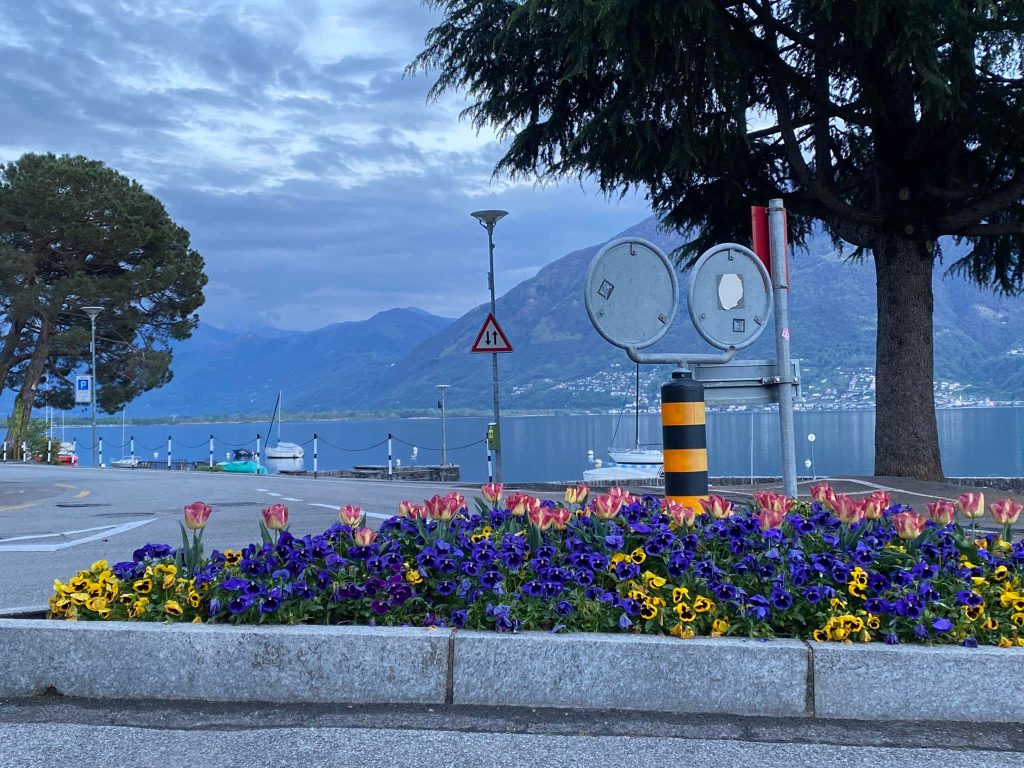
Locarno waterfront on Lake Maggiore Valle Verzasca hike Valle Verzasca house Valle Verzasca 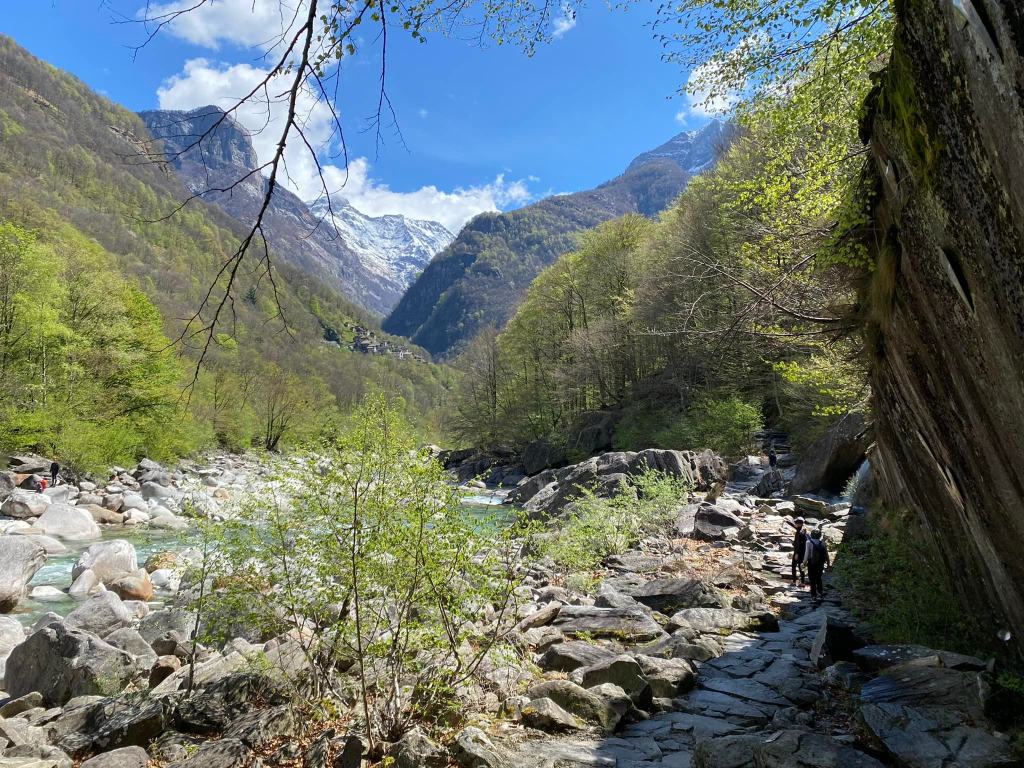
Valle Verzasca 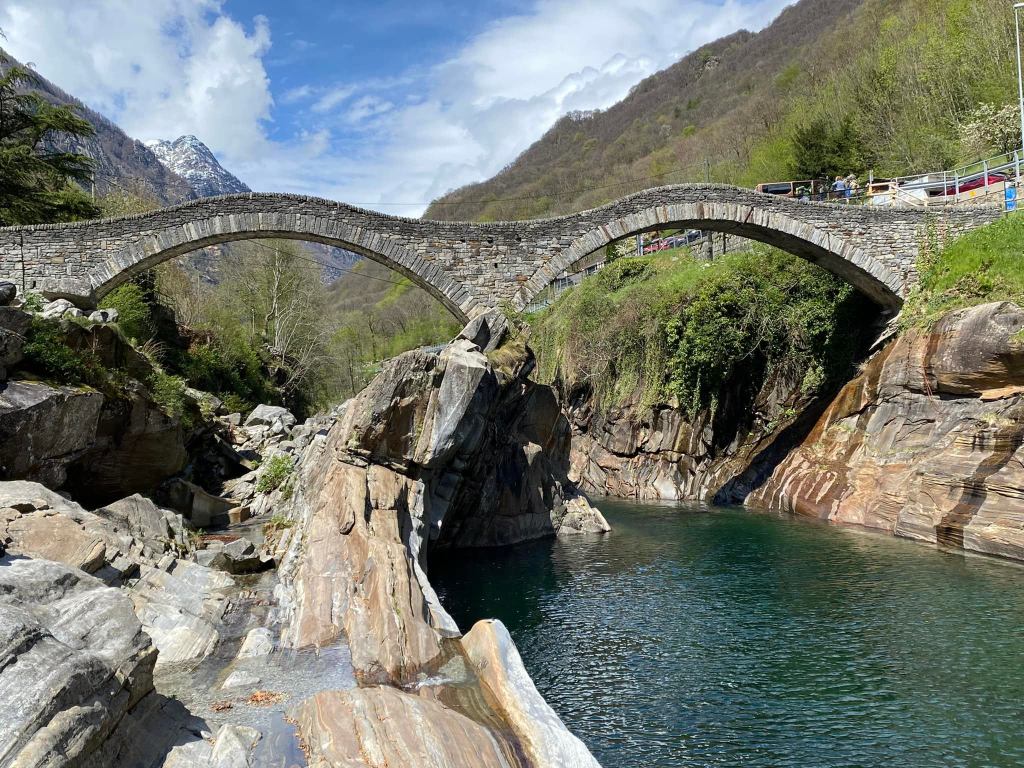
Roman Bridge over Verzasca River 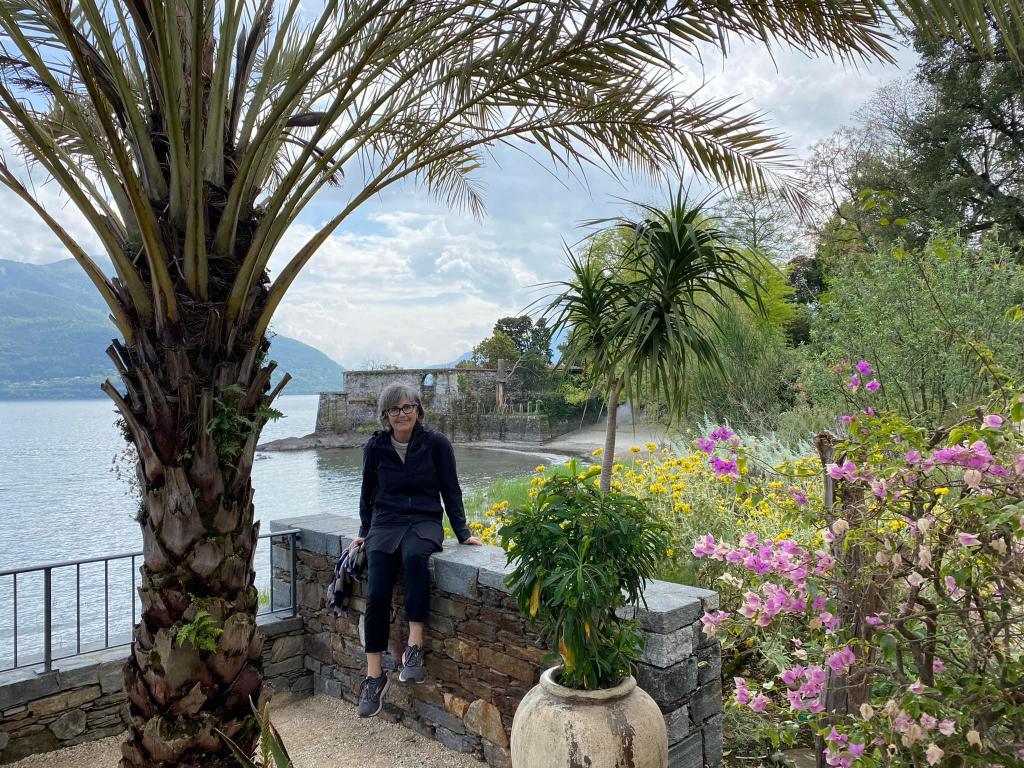
Isole di Brissago 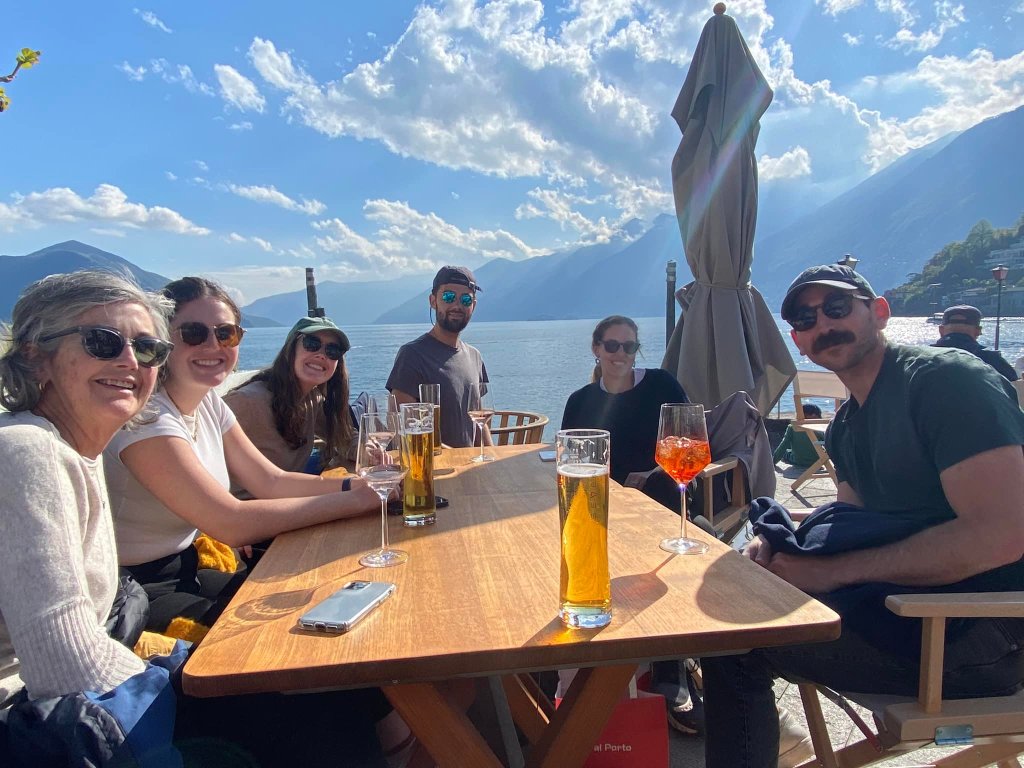
Ascona on Lake Maggiore


More Photos of Zurich/Heiden and Heiden/Locarno


 Once in a while you get shown the light...